2025 Repress
Roberta returns to her own Night Moves label with her most accomplished work to date on NMR012. After a string of recent underground hits on prominent labels like NDATL, Worldship Music, and Innermoods, it is easy to wonder where she would go next. With all that cachet built up, a return to her roots with increased confidence has paid off in this exquisite and refined record.
"Your Touch" kicks off with Roberta's signature dusty drum sound before sultry vocals and electric piano drop in, setting a proper atmosphere for dancefloor action. Moody strings along with instrumental solos including one from James Duncan on mute trumpet elevate this track to an even higher level, certain to be big with the best deep and soulful house DJs across the globe.
On the flipside, "All The Things" works with a similar sound palette, but focuses more on harmony. Jazzy Rhodes chords slide over each other into an extremely infectious and memorable pattern, playing off the bumping and melodic bassline. The vibraphone solos are the cherry on top of what would be an A1 killer on any other record. Here it has to settle for being an unreasonably hot B side jam for the heads.
Cerca:act one
Riding high on a prolific wave of output, Kloke returns to Mindgames with Lucidity — an album that confirms his position at the forefront of modern jungle.
Andy Donnelly has been actively releasing a broad swathe of electronic music since the late 00s, but it's his sharpened focus on jungle and drum & bass over the past 10 years that has cemented his reputation. As well as working closely with fellow scene leaders like Tim Reaper, the Australian artist has hit a flow state with his productions where the quality and quantity seems limitless. Since Mindgames started as a Samurai Music sub-label, Kloke has been a core part of the imprint's identity. Having already dropped the Mindgame 8 EP earlier this year, Donnelly is back with a full-length salvo of advanced jungle heavy on the technicalities and even heavier on the vibes.
Lucidity makes its mark from the very first blast of breakbeat science that opens up the title track. From that point on Donnelly works at full tilt, edging gritty textures into his sampling and capturing classic jungle's melancholic mystery through an expansive palette of re-pitched hooks. This is carefully crafted soundsystem music in thrall to the tradition of jungle, but at no point does it sound tired or throwback. One key element is the dynamic intensity of Donnelly's arrangements, shifting gears with devastating poise whether darting through the starry-eyed arps and deft breaks of 'Mobius Strip' or chopping around the jagged angles and noirish licks of 'Goose Cuts'.
Donnelly folds many moods into his jungle tapestries. 'Paradiso' conjures a smoky, haunting atmosphere while 'Nightfall' leads on techy darkside stabs before unfurling shadowy jazz licks that flicker like ghosts through the dense forest of drums. At all times, the commitment to mind-bending configurations of compound breaks drives the album forwards. No two beats roll the same as Donnelly indulges his precise and profound instinct for next-level edits and heavyweight production.
Gritty, raw and true to the roots of the culture, Kloke stands tall on Lucidity. It's the kind of detailed, deep and deadly album that shows jungle at its absolute best — a sound that still feels like the future in the right hands.
BABY BLUE COLOUR VINYL
The Beths occupy a warm, energetic sonic space between joyful hooks, sun-soaked harmonies, and acerbic lyrics. Their debut album Future Me Hates Me, forthcoming on Carpark Records, delivers an astonishment of roadtrip-ready pleasures, each song hitting your ears with an exhilarating endorphin rush like the first time you heard Slanted and Enchanted or 'Cannonball.'
Front and center on these ten infectious tracks is lead singer and primary songwriter Elizabeth Stokes. Stokes has previously worked in other genres within Auckland's rich and varied music scene, recently playing in a folk outfit, but it was in exploring the angst-ridden sounds of her youth that she found her place. 'Fronting this kind of band was a new experience for me,' says Stokes. 'I never thought I had the right voice for it.'
From the irresistible title track to future singles 'Happy Unhappy' and 'You Wouldn't Like Me,' Stokes commands a vocal range that spans from the brash confidence of Joan Jett to the disarming vulnerability of Jenny Lewis. Further honeying Future Me Hates Me's dark lyrics that explore complex topics like being newly alone and the self-defeating anticipation of impending regret, ecstatic vocal harmonies bubble up like in the greatest pop and R+B of the '60s, while inverting the trope of the 'sad dude singer accompanied by a homogenous girl-sound.'
All four members of The Beths studied jazz at university, resulting in a toolkit of deft instrumental chops and tricked-out arrangements that operate on a level rarely found in guitar-pop. Beths guitarist and studio guru Jonathan Pearce (whose other acts as producer include recent Captured Tracks signing Wax Chattels) brings it all home with an approach that's equal parts seasoned perfectionist and D.I.Y.
'There's a lot of sad sincerity in the lyrics,' she continues, 'that relies on the music having a light heart and sense of humor to keep it from being too earnest.' Channeling their stew of personal-canon heroes while drawing inspiration from contemporaries like Alvvays and Courtney Barnett, The Beths serve up deeply emotional lyrics packaged within heavenly sounds that delight in probing the limits of the pop form. 'That's another New Zealand thing,' Stokes concludes with a laugh. 'We're putting our hearts on our sleeves—and then apologizing for it.'
BABY BLUE COLOUR VINYL
The Beths occupy a warm, energetic sonic space between joyful hooks, sun-soaked harmonies, and acerbic lyrics. Their debut album Future Me Hates Me, forthcoming on Carpark Records, delivers an astonishment of roadtrip-ready pleasures, each song hitting your ears with an exhilarating endorphin rush like the first time you heard Slanted and Enchanted or 'Cannonball.'
Front and center on these ten infectious tracks is lead singer and primary songwriter Elizabeth Stokes. Stokes has previously worked in other genres within Auckland's rich and varied music scene, recently playing in a folk outfit, but it was in exploring the angst-ridden sounds of her youth that she found her place. 'Fronting this kind of band was a new experience for me,' says Stokes. 'I never thought I had the right voice for it.'
From the irresistible title track to future singles 'Happy Unhappy' and 'You Wouldn't Like Me,' Stokes commands a vocal range that spans from the brash confidence of Joan Jett to the disarming vulnerability of Jenny Lewis. Further honeying Future Me Hates Me's dark lyrics that explore complex topics like being newly alone and the self-defeating anticipation of impending regret, ecstatic vocal harmonies bubble up like in the greatest pop and R+B of the '60s, while inverting the trope of the 'sad dude singer accompanied by a homogenous girl-sound.'
All four members of The Beths studied jazz at university, resulting in a toolkit of deft instrumental chops and tricked-out arrangements that operate on a level rarely found in guitar-pop. Beths guitarist and studio guru Jonathan Pearce (whose other acts as producer include recent Captured Tracks signing Wax Chattels) brings it all home with an approach that's equal parts seasoned perfectionist and D.I.Y.
'There's a lot of sad sincerity in the lyrics,' she continues, 'that relies on the music having a light heart and sense of humor to keep it from being too earnest.' Channeling their stew of personal-canon heroes while drawing inspiration from contemporaries like Alvvays and Courtney Barnett, The Beths serve up deeply emotional lyrics packaged within heavenly sounds that delight in probing the limits of the pop form. 'That's another New Zealand thing,' Stokes concludes with a laugh. 'We're putting our hearts on our sleeves—and then apologizing for it.'
A-grade disco don Monsieur Van Pratt shares duties on his latest missive with so-called "cosmic funk slinger" Disco 86 as both artists take one side each. MVP is first up with 'Lovers' with its saucy male vocals and funky basslines littered with Chic-style hooks. 'All I Do' layers in plenty of filtered synths and noodling bass hooks to a classic vocal and then it's over to the B-side. 'Shoot Me Baby' is a low-slung and sleazy sound with smooth and sexy vocals and meandering bass. 'Disco Galaxy' is a more upbeat sound with funky brass, leggy drums and a lavish arrangement that is full of action. Another unmissable platter in this new limited Illegal Disco series.
- A1: Orchestre Du Jardin De Guinée Sakhodou
- A2: Orchestre De La Paillote La Guinée Moussolou
- A3: Bembeya Jazz National Guantanamera-Seyni
- A4: Bembeya Jazz National Sabor De Guajira
- B1: Balla Et Ses Balladins Sakhodougou
- B2: Balla Et Ses Balladins Samba
- B3: Orchestre De La Paillote Kankan-Yarabi
- B4: Myriam’s Quintette Solo Quintette
- C1: Pivi & Les Balladins Ka Noutea
- C2: Horoya Band National N’banlassouro
- C3: Orchestre De La Garde Républicaine Sabouya
- C4: Keletigui Et Ses Tambourinis Samakoro
- D1: Keletigui Et Ses Tambourinis Miri Magnin
- D2: 22 Novembre Band Kouma
- D3: Les Frères Diabaté N’fa
On October 2 1958, after over 60 years of colonial rule, Guineans voted overwhelmingly for their independence, and Guinea was declared a Republic with Sékou Touré as President. Guinea was the first of West Africa’s Francophone colonies to gain independence. To free Guinea from its colonial legacy, president Touré sought to restore dignity to his nation and give cause for Guineans to take pride in their culture, history and newfound freedom. To achieve this, he instructed his government to implement new cultural policies that were intended to revitalise and celebrate indigenous culture. The focus of these new policies was on music.
In 1961, President Touré launched authenticité, the name of his new cultural policy for Guinea. One of its first acts was to assemble the best Guinean musicians into a new state-sponsored orchestras that were tasked with presenting traditional Guinean music in a new and modern style. All musicians in Guinea’s orchestras were officially designated as members of the public service. During the years of Sékou Touré’s presidency (1958 – 1984), the government’s cultural policy of authenticité was applied strictly to the creative arts. Guinea’s sole political party, the Parti Démocratique de Guinée exercised complete authority over artistic production. The scale of the Guinean government’s commitment and efforts to invigorate its indigenous musical cultures was unmatched in Africa, and it presented a clear contrast to the minimal endeavours undertaken by Guinea’s former colonial rulers.
From 1967 to 1983, Guinea’s government presented selections of songs from the Voix de la Révolution catalogue on its own recording label, Syliphone. These recordings were described as ‘the fruit of the revolution’. Syliphone was revolutionary in many aspects: it was the first recording label to feature traditional African musical instruments such as the kora and balafon within an orchestre setting; it was the first to present the traditional songs of the griots within an orchestre setting; and it was the first government-sponsored recording label of post-colonial Africa. Syliphone represented authenticité in action, and over 750 songs were released by the recording label on 12-inch and 7-inch vinyl discs. All are highly sought after by collectors worldwide.
This first volume of a two-volume series presents a selection of the best of early Syliphone recordings. The songs demonstrate not only the essence of Guinea’s authenticité policy and of its subsequent Cultural Revolution, but of a confluence of musical styles from Cuba, jazz, highlife and the diverse influences of Guinea’s cultural groups.
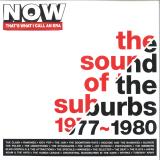
- A1: London Calling
- A2: Blitzkrieg Bop
- A3: Lust For Life
- A4: Going Underground
- A5: Teenage Kicks
- A6: Boys Don't Cry
- A7: Love Will Tear Us Apart
- A8: Making Plans For Nigel
- A9: Rat Trap
- B1: Hanging On The Telephone
- B2: Hong Kong Garden
- B3: Top Of The Pops
- B4: Ca Plane Pour Moi
- B5: Banana Splits
- B6: Cool For Cats
- B7: Into The Valley
- B8: Shot By Both Sides
- B9: Death Disco
- C1: The Sound Of The Suburbs
- C2: No More Heroes
- C3: Babylon's Burning
- C4: Cherry Bomb
- C5: Another Girl, Another Planet
- C6: (I Don't Want To Go To) Chelsea
- C9: Because The Night
- D1: Brass In Pocket
- D2: Roxanne
- D3: Geno
- D4: Time For Action
- D5: Airport
- D6: Echo Beach
- D7: Over You
- D8: Is She Really Going Out With Him?
- E1: Gangsters
- E2: The Prince
- E3: On My Radio
- E4: Mirror In The Bathroom
- E5: Food For Thought
- E6: Life In Tokyo
- E7: The Number One Song In Heaven
- E8: Rock Lobster
- F1: Dog Eat Dog
- F2: C30 C60 C90 Go
- F3: Money
- F4: Nightclubbing
- F5: Are Friends Electric?
- F6: Underpass
- F7: Messages
- F8: Video Killed The Radio Star
- C7: Roadrunner (Once)
- C8: 2-4-6-8 Motorway
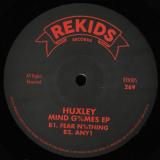
Huxley debuts on Rekids with the ‘MIND G%MES’ EP.
UK DJ, producer, and Dumb Safari label head Huxley joins Radio Slave’s Rekids for the first time with the ‘MIND G%MES’ EP, dropping 25th July 2025. The first track, ‘M%ND’, kicks off with woozy and alluring pads swirling round a cuddly but kicking Deep House groove. Soulful vocals and delicate, cosmic melodies rise out of the mix to bring it to a close in style. 'CLUB SH%T' ups the ante with zippy synths injecting some texture to slamming drums that straddle the House and Techno divide, while wispy stabs and warm daubs of sound dance around the cowbells to make this an evaluated late-night tool.
'FEAR N%THING' is a new school cut, with fi ltered loops, sugary chords, and pent-up energy all surging through the dance fl oor. Last but not least is 'ANY1', a sleazy House pumper featuring moody spoken word, a big, rubbery bassline, and slinky, Garage-infl uenced percussion.
Active in the underground music scene for two decades, former Rinse resident and sometime Aus, Shall Not Fade and Unknown To The Unknown artist has had one hell of a career. From huge breakthrough tracks like ‘Let it Go’ on Hypercolour and ‘Box Clever’ on 20:20 Vision to his 2014 ‘Blurred’ LP on Aus, he’s seen universal critical acclaim as well as massive support from DJs and dancefloors globally. In recent years, his Dumb Safari label, the online community R Trybe (co-founded by Ramin Rezaie/BAKKIS) and collaborations with Steve Bug are just a handful of his projects, while his ‘MIND G%MES’ EP for Rekids is already feeding the fi re with support from Jen Cardini, Cromby, I.Jordan, Jennifer Loveless and big room dons, Michael Bibi and Solomun.
For many italo disco fans, Dyva is nothing short of a mythical name. A cult act surrounded by mystery, legend, and endless debates fueled by pure passion. And it all started with their iconic track “Oh Mama Tonight”, which, adding fuel to the fire, was released only as a promo single. That rare Boot Legs vinyl became the holy grail for collectors, a lifelong hunt for true italo enthusiasts.
After just three official releases (the last one in 1990), Dyva seemingly vanished from the face of the earth… Until the early 2000s, when Finnish italo aficionado Kimmo Salo tracked them down in Sestri Levante, Italy. That unexpected meeting sparked a brand-new chapter, both for Kimmo’s soon-to-be-born label Flashback Records and for Dyva’s founding members Roberto Calzolari & Massimo Traversoni. Encouraged by Kimmo, the duo returned to the studio to bring back to life not only their long-lost 80s demos but also fresh new material.
This album is a true time capsule, covering the period between 1986 and 2024, featuring never-before-released single versions, true gems. For any die-hard Dyva fan, this is nothing less than an essential addition to the collection.
- 1: My Sweet Potato
- 2: Jericho
- 3: No Matter What Shape
- 4: One Mint Julep
- 5: In The Midnight Hour
- 6: Summertime
- 7: Working In The Coal Mine
- 8: Don’t Mess Up A Good Thing
- 9: Think
- 10: Taboo
- 11: Soul Jam
- 12: Sentimental Journey
Initially serving as the house band for Stax Records, organist Booker T. Jones, guitarist Steve Cropper, bassist Lewie Steinberg (later replaced by bass monster Donald ‘Duck’ Dunn), and drummer Al Jackson Jr. were instrumental in creating the “Memphis Sound.’ They recorded the basic tracks for well over a hundred records, including backing some of the greatest artists of all time: Otis Redding, Sam & Dave, Rufus Thomas, and Albert King, all the while breaking barriers as one of the South’s first integrated acts. 1966’s And Now!’ is the first to feature long-term bassist Duck Dunn, who helps create a nightclub feel that alternates between some of their most aggressive recordings and most sultry. No stranger to being in the U.S. and U.K. music charts (in both the Hot 100 & R&B categories), the jazzy first single off the record, “My Sweet Potato,” landed them yet another top 40 placement.
- 1: Think Twice
- 2: It’s An Action
- 3: This Thing Called Progress
- 4: In My Headache
- 5: Underage
- 6: Self Abuse
- 7: Cult Band
- 8: Last One
- 9: Pure Hate
- 10: Castration
- 11: Reggae (I Hate)
- 12: Give It Up
- 13: Think Fast
Formed in Portland, OR in 1980, Poison Idea debut record features 13 songs in 13 minutes. Poison Idea were one of the first hardcore bands to inspire artists across multiple genre lines. Poison Idea’s 1983 Debut Release!!! Iconic Original Artwork! New Liner Notes by Jerry A. Features Sticker, Lyric Sheet, Credit Sheet, and Liner Notes.
The incredible story that began with The Most Mysterious Song on the Internet (TMMS) now enters an exciting new chapter: Skyscraper, the debut album by FEX.
Skyscraper features ten original tracks recorded in the early to mid-1980s-carefully re-transferred, remastered, and brought back to life. The album cover, designed by Darius S., brings the story full circle. Darius is the very person who preserved the now-iconic track Subways of Your Mind by recording it from NDR radio in the mid-80s. Without him, FEX may never have been discovered.
FEX's debut opens with its namesake, Skyscraper-a brooding, previously unreleased track the band once described as part of their "psychedelic phase." With haunting synth-helicopter textures and deep guitar riffs, it immediately sets the tone and raises tension.
The release flows naturally into the energetic and fully remastered studio version of Subways of Your Mind. This version of the TMMS - re-discovered on the "yellow label tape" by Reddit user Marijn-was long believed to be from a smaller home studio, but was actually recorded in November 1984 at Hawkeye Studios in Ganderkesee, near Hamburg.
Goldrush, first teased in raw form on FEX's YouTube channel, bends toward mechanical rhythm and shimmering synths, a snapshot of the band's experiments with programmed drum machine sound. Rückwardt's lyrics point to greed and criticizes materialism, and while the music leans toward pop sensibilities, it carries a raw, fractured edge.
Heart in Danger and I've Got My Eyes On You offer contrasting experiences-one rooted in classic post-punk tension, the other floating in melodic synth layers. The latter in particular feels like a fragment from a parallel radio history: a precise and one of a kind synth pop love song with a progressive touch.
From a rehearsal tape comes Dirty Slapstick, its urgency intact. Missing keyboard parts were later reconstructed by Michael Hädrich using his original DX7 synthesizer-recovering lost elements without rewriting the past. The lyrics take a wry look at forced optimism. Also included are the songs Talking Hands, Jenny and Strange Feeling, the latter being a slower blues-tinged cut, revealing yet another facet of the band's reach and Rückwardt's songwriting diversity.
The album closes where the legend began-with the original radio recording of Subways of Your Mind from Darius' cassette. This version of The Most Mysterious Song features alternate vocal effects, contributing to the track's enigmatic aura. Digitally transferred using a high-end Revox machine and carefully remastered, it now has its long-deserved official release.
The cover features a photo of the Eichenberg Bunker in Kiel-one of FEX's original rehearsal spaces and a symbolic monument to their sonic legacy.
“Rob wanted the world of The Northman to feel harsh and uncomfortable, and for everything to feel like it was caked in mud and dry blood, so it was crucial for the score to mirror that.” Composers Robin Carolan (Tri-Angle Records) and Sebastian Gainsborough (Vessel) were given a task of epic proportions when director Rob Eggers (The VVitch, The Lighthouse) asked them to create the score for his ambitious and highly anticipated new film The Northman, releasing on April 22nd. They needed to make a score that both honored the immense research that had gone into the authenticity of this Viking era period piece and complimented the cinematic maximalism of the film for a modern audience. The artists stretched themselves to the depths of their creativity and the resulting album is a gorgeous sonic tableaux that places the listener right in the center of the film.
While arranging the score the composers consulted musician and ethnographer Poul Høxbro for inspiration and insight into the history of Viking music. Having backgrounds in left field electronic music, Robin and Sebastian felt liberated by the constraint of using a small selection of musical tools for this piece. “Electronic music has almost limitless potential when it comes to making sounds and that’s obviously an incredible thing, but you can also go down the wormhole and get lost in it sometimes. There’s no risk of that happening when you only have a few primary instruments to draw upon.” Robin remarked.
They utilized traditional instruments such as the tagelharpa, langspil, kravik lyre, and säckpip to build the cinematic world of The Northman but they also took creative freedoms in adding instruments likes drums, which some academics believe wouldn’t have played a big part in Viking musical culture, simply due to the lack of archaeological evidence of actual drums. “One of the pieces we wrote was intended to emulate the sound of a bullroarer; an ancient instrument used in sacred rituals or in battle to intimidate enemies. It makes a really disorienting roaring vibrato sound and low frequencies capable of traveling insane distances.” Robin says when asked about one of the more unique aspects of the score. Everyone involved put so much effort into both their research and their creativity and this richness is evident in every track. The album as a whole is a cinematic masterpiece of sound and ambiance, both gorgeous and disturbing, like the film it so beautifully accompanies.
- A1: It's All True
- A2: If I Could Talk I'd Tell You
- A3: Break Me
- A4: Hospital
- A5: The Outdoor Type
- A6: Losing Your Mind
- B1: Something's Missing
- B2: Knoxville Girl
- B3 6: Ix
- B4: C'mon Daddy
- B5: One More Time
- B6: Tenderfoot
- B7: Secular Rockulidge
- C1: If I Could Talk I’d Tell You (Single Version)
- C2: The Outdoor Type (Remix)
- C3: Pin Yr Heart
- C4: Balancing Act
- C5: Galveston
- C6: Arise
- D1: Keep On Loving You
- D2: It’s All True (No Drums)
- D3: Losing Your Mind (Live Acoustic Version)
- D4: How Will I Know (Acoustic)
- D5: I Don’t Want To Go Home
- D6: Fade To Black
- D7: Live Forever
Car Button Cloth' is an extraordinary affair of musical and emotional extremes, a soundscape spanning “the most beautiful piano-led mourning in the history of the broken heart” that switches into perky jangle-pop for fleeting moments and contains the ultimate self-deprecating classic ‘The Outdoor Type’, penned by Smudge cohort Tom Morgan, as well as a cover of the bluegrass standard ‘Knoxville Girl’ and ‘If I Could Talk I’d Tell You’ co-written with The Vaselines’ Eugene Kelly. All bases are covered. “One of the most distinctive voices of the ‘90s” The New York Times. To further unravel where Evan’s head was at during the period of its creation, this deluxe double album comes with a record of exquisite and typically eclectic scene setting covers that occupied B-sides and alternative format versions, plus other super rare offcuts, live takes and remixes. A diet of Volcano Suns, Glen Campbell, The Jacobites, The Sir Douglas Quintet and Whitney Houston influenced Evan’s thinking and added further colour to an album that remains something of a Dorian Gray-style masterpiece. The first side of extras is rounded off with the never before released ‘Arise’, originally set for the remake of Great Expectations and later realised as Rancho Santa Fe on solo album ‘Baby I’m Bored’.
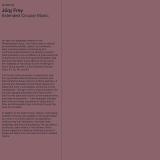
Since its founding back in 2014, Blume has carved a unique place in cultural landscape, issuing free-standing works, spanning the historical and contemporary, that represent singular gestures of creativity within the field of experimental sound. Joining their broad efforts in building networks of context and understanding that already includes the works by Werner Durand, Sarah Hennies, Bruce Nauman, John Butcher, Jocy de Oliveira, Mary Jane Leach, Valentina Magaletti, Alvin Curran, Julius Eastman, Alvin Lucier, and following the first ever vinyl release to attend to James Tenney's legendary Postal Pieces, the label now presents the first LP published by the visionary Swiss composer Jürg Frey. Drawing from the transformative power of breath and resonance, this release represents one of the most profound explorations of musical metamorphosis to emerge from the contemporary experimental landscape.
The completed work represents a "conjunction of these two artists" that has "activated a transformative form of experimentalism." These renderings "dance with an airy lightness, humour, and play, imbuing them with a beauty and emotiveness that can be rare within experimental music." They exist as "breaths, carrying the curiosities of life, belonging to no time and all time, to no one and everyone: a human music to be inhaled and pondered, for which the outcome remains unknown." In this liminal space between composition and interpretation, between breath and resonance, Zurria and Frey have created something that transcends the boundaries of experimental music itself, offering what might be called a metaphysical cartography of sound in its most essential form. As Bradford Bailey observes in his penetrating liner notes, "music is rarely a fixed entity," existing instead in a state of perpetual flux, "taking on the influences of its interpreters and performers." This fundamental truth finds its most eloquent expression in the transformative collaboration between Italian flutist Manuel Zurria and Frey, longtime member of the Wandelweiser Group. Where conventional recordings might preserve a definitive version, this release activates what Bailey calls "states of unknowing and continued experimentation," allowing Frey's compositions to evolve into entirely new dimensional territories. The original string quartet and piano works dissolve into breath-carried architectures of sound, where "the original remains in a constant dialogue with its transformation." This is not mere arrangement but ontological metamorphosis - an alchemical process through which crystalline harmonies are reborn as atmospheric phenomena.
The metaphysical dimensions of this transformation become clear through detailed analysis of the musical result. Where Frey's original compositions operate through what he calls "basic confidence in the clear and restricted material," Zurria's interpretation activates entirely new perceptual territories. Space holds almost atomic sense of weight against the airy punctuations of timbres, textures, and tones, creating "suspensions of time within which questions and identities posed by instrumentation fade." The Extended Circular Music pieces - each comprising "a small number of bars to be repeated an undetermined number of times" - become organizations of sound that defy being definitive or fixed. Originally scored for different combinations of violin, viola, cello, and piano, these works now exist as pure phenomena of breath and resonance, where "hanging, breath-length utterances dance and intertwine amongst complex harmonic clusters and conjunctions."
The philosophical implications of this transformation illuminate a lineage of composers who have moved "away from abstraction and responding to the need to create" something beyond mere technique. Drawing parallels to Morton Feldman's understanding of non-functional harmony, Zurria's approach represents "a transformative form of experimentalism" that activates what Frey calls the "thaumaturgic power" of music - its capacity to heal and transform consciousness itself. The result is "a radical reimagining of ambience: sprawling sonorities and resonances adrift in space, carrying the liberated traces of the work's former incarnations and their truths." In Zurria's interpretation, Frey's String Quartet n.3 becomes something approaching "an organ played in slow motion, its seals leaking," while the Extended Circular Music pieces transform into "glacial chords from a diverse palette of voicings, harmonies, timbres, and tones."
Performed by Manuel Zurria. Recorded and mixed by Zurria at BigCardo, Catania between 2022-2024, with mastering by Bruno Germano at Vacuumstudio, Bologna, this Blume release represents a profound exploration of musical transformation.
Chaz Bear (formerly Bundick) was a musician from birth. Growing up, it was normal to hear music across genres, from Michael Jackson to Elvis Costello to The Specials, in the Bundick household. These influences were quite unique for a biracial kid growing up in South Carolina, contributing to the complexity of Chaz’s self-understanding and expression through his own music.
Chaz began playing and recording original compositions in his preteen years, forming multiple indie bands starting in middle school and continuing until his personal project, Toro y Moi, was signed by Carpark Records in 2009. Before getting signed, he was already an incredibly prolific artist, having released over 10 Toro y Moi albums on his own (and undoubtedly retaining a vast compendium of unreleased songs). His personal work drew upon a vaster array of influences than did his full band. Early Toro work called upon Chaz’s childhood exposure to 80’s R&B, pop and electronic music, while also evolving with his discoveries of acts like My Bloody Valentine and J Dilla and his burgeoning interest in French house. Just before his graduation from the University of South Carolina, where he earned a degree in graphic design, Chaz caught the attention of music bloggers and record labels with his dreamy, bedroom recordings.
Outer Peace, was written and recorded in the Bay Area after Chaz’s return from a one year stint in Portland. It is somewhat of a homecoming celebration, filled with features by friends and saturated with a playfulness that had not previously been embraced in past Toro albums. Outer Peace stands in contrast to the more sparse and contemplative Boo Boo, an album recorded while in Portland in relative isolation. With Outer Peace, Chaz showcases his ability to remain on the cutting edge of music’s evolution while not taking himself too seriously. There are contemporary hip hop references mixed in with funk, Eurodance and ambient elements, all interwoven expertly and retaining that quintessential Toro y Moi aesthetic.
- A1: Itsumosobani (Midicronica×Hiro-A-Key×Shin-Ski)
- B1: Itsumo Soba Ni (Midicronica×Hiro-A-Key×Ko-Ney)
MIDICRONICA, known as the final legacy of Nujabes and the ending theme of the globally acclaimed anime "Samurai Champloo" and singer Hiro-a-key
(origami PRODUCTIONS), who is also active globally under the name Nenashi, have teamed up to release "Itsumosobani" on 7-inch vinyl.
This work is a split album of songs by Shin-Ski, the poster child of Lo-Fi Hip-Hop, and KO-ney, an official AKAI Professional player and one of Japan's leading finger
drummers, and includes two songs, the mellow and nostalgic "Itsumosobani" based on jazz, and the emotional and laid-back Itsumo Soba n".
Hiro-a-key's pale and fleeting singing voice and MIDICRONICA's unadorned words will touch your heart when you think of someone important.
- My Own Way
- Cold Case
- All Of Our Friends
- Cowgirl Suit
- Callin Ya
- Ufo
- Cedar On The River
- I'll Never Know
A self-described chronically-sincere farm girl, Emily Hines grew up on a farm in rural Ohio before moving to Nashville where she played in other songwriters' projects before recording her own songs on a 4-track cassette recorder. Hines worked with producer Henry Park. Together they drew inspiration from acts like Duster, Laura Marling, and Karen Dalton to record simply and add layers one at a time. The resulting collection makes for something truly special; rich and decadent but also earthy and cracked. Emily prioritized creating a recording that feels human and present, and the outcome is palpable throughout These Days. At times we're right there in the room with Emily, up close and deeply personal, at other points it's as if you're straining to hear from the outside listening in; ear to the wall, notes carried and caught in the breeze. "We were drawn to the 4-track because it constrains the urge for perfectionism and encourages authenticity to the moment," Emily explains. "What you get is what you get, the 4-track doesn't afford you to get surgical about the details - and that can be really freeing." "Listening to Emily Hines' lo-fi folk ballads feels like discovering a cult hero's lost demos-these gentle, heart-mending recordings crackle with intimacy and seem to unfold as you're listening.' Paste Magazine 'Hines sings plaintive and romantic acoustic ballads, small moments of a life that build to something far greater within the woozy timber of her voice." - Gold Flake Paint
- A1: 1000 Light Years Dub (Feat. High Times Players, Lloyd Obeah Denton)
- A2: In The Shadow Dub (Feat. Vin Gordon, Glen Dacosta, Sheldon "Atiiba" Bernard)
- A3: Whitewater Dub (Feat. Ibo Cooper, Lew Chang)
- A4: Memories Of Old Dub (Feat. Ernest Ranglin, Tyrone Downie)
- A5: Rose Hall’s Birds Dub (Feat. Vin Gordon, Glen Dacosta)
- B1: Squirrel Inna Barrel Dub (Feat. Ernest Ranglin, Vin Gordon, Karl Bryan)
- B2: Under The Cotton Tree Dub (Feat. Glen Dacosta, Ibo Cooper, Cat Coore)
- B3: 45 Charles Street Dub (Feat. Roots Radics, Dwight Pickney, Dean Fraser)
- B4: Everlasting Love Dub (Feat. Sly & Robbie, Dean Fraser, Peace Diouf)
Bringing together over 50 of Jamaica's greatest session musicians, whose work spans from the birth of reggae in the late 1960s until today, Roots Architects is the largest gathering of Jamaican musical talent on one all-instrumental album. Never before have so many veterans, who helped create the immortal rhythms that made reggae internationally successful, been assembled to play on new material without vocals. This project aims to celebrate and pay tribute to the unsung heroes of reggae music: the rhythm builders or Roots Architects. Following the outstanding success of the first chapter of the project, From Then 'Til Now (2024), Fruits Records is pleased to reveal the dub album From Dub 'Til Now. A veritable immersion in the mythical sound of Kingston studios in the late 1970s. Dub master Roberto Sánchez sublimates the work of the Roots Architects with wildly inventive sound experiments. Reminiscent of the finest years of King Tubby, Lee "Scratch" Perry and Scientist.
The project is the brainchild of Swiss keyboardist and producer Mathias Liengme. In 2013, he travelled to Kingston, Jamaica, to produce The Inspirators project, an all-star album gathering Leroy ”Horse-mouth” Wallace, Lloyd Parks, Earl ”Chinna” Smith and Sangie Davis, the four of them acting both as musicians and vocalists. This first experience in Kingston studio life paved the way to what would become the Roots Architects project. In February and March 2017 Mathias Liengme travelled for the fifth time to Kingston to record as many of reggae’s greatest living veteran musicians as he could. With the help of a few of these Architects like Robbie Lyn, Fil Callender or Dalton Browne, he managed to gather over 50 session musicians aged 60 to 85 on nine instrumental songs.
Roots Architects are legends back together in Kingston studios doing what they do best: creating in-strumental music all together!
- God's A Different Sword
- Hotel Tv
- The Actor
- Moth Song
- I'll Find A Way
- Cathode Ray
- Foreign Bird
- That's All She Wrote
- Sarah
- Mary's Playing The Harp
Folk-Musik hat die schlechte Angewohnheit, als eine todernste Angelegenheit dargestellt zu werden. Sie ist etwas, zu dem man weint, sie ist übermäßig heilig, sie ist feierlich von Kritikern und Historikern betrachtet. Aber das Folk Bitch Trio, die ehemaligen Highschool-Freundinnen Heide Peverelle (,they/them"), Jeanie Pilkington (,she/her") und Gracie Sinclair (,she/her"), haben einen gemeinsamen Sinn für Humor , der tief in ihre Musik eingebettet ist und sie zum Leuchten bringt, sicher vor den selbsternsten Fallen des Genres. Now Would Be A Good Time, ihr Debütalbum, erzählt lebendige, viszerale Geschichten und ist witzig und dunkel-ironisch in der Art von Schriftstellerinnen wie Mary Gaitskill oder Otessa Moshfegh. Ihre Musik klingt vertraut, aber die Songs sind modern, jugendlich, singen akut durch dissoziative Tagträume und ärgerliche Trennungen, sexuelle Fantasien und Medienüberflutung, all die belanglosen Ressentiments und kleinen Demütigungen, die Anfang zwanzig in den 2020ern sind. ,Cathode Ray" beginnt mit Vorsicht, seine ersten Harmonien kommen in großen, schleifenden Seufzern an. Es ist verletzlich, aber auch ein wenig bedrohlich, mit , einem weit offenen Refrain und einem geräumigen, luftigen Beat, der alles verankert. ,Moth Song", ein Song über unerwiderte Liebe und ,von so durchgedreht zu sein, dass man sich wie im Wahn fühlt und verrückte Dinge halluziniert", bildet das sparsame Herzstück des Albums, wobei Anita Clarks wogende Geigenstimme wie in einem Traum in den Fokus hinein- und wieder herausdriftet. Andere Songs sind nicht so schräg, sondern schildern brutal vertraute Momente am Ende von Beziehungen: Der spannungsgeladene, emotional flüchtige Torch-Song ,The Actor" handelt laut Peverelle davon, ,zur One-Woman-Show deines Partners zu gehen und dann Schluss zu machen". In ,Hotel TV", einer hypnotischen, nächtlichen Träumerei, geht es darum, ,einen Sextraum über zu haben, während man neben seinem Partner sitzt, und der Partner ist ein Lügner", erklärt Pilkington. Die stärkste Verbindung zwischen dem Trio, abgesehen von der Freundschaft, ist Musik. ,Wir haben alle darüber gesprochen, dass wir Musik liebten, als wir aufwuchsen, , und dass wir wussten, dass Musik ein großer Teil unseres Lebens sein sollte", sagt Pilkington. Dieses Gefühl, dass Musik eine angeborene Berufung ist, im Gegensatz zu Hobby oder Torheit, war berechtigt: Das Folk Bitch Trio tourte bereits auf durch Australien, Europa und die USA und unterstützte dabei so unterschiedliche Bands wie King Gizzard, Alex G und Julia Jacklin. Sie haben bei Jagjaguwar unterschrieben, einer Heimat für einzigartige Ikonen und Ikonoklasten (Bon Iver, Angel Olsen, Sharon Van Etten, UMO und andere), und sie haben ihre ersten eingefleischten Fans mit schillernden Harmonien und bissiger Lyrik gefunden, die über Genreerwartungen und Publikumsgrenzen hinausgehen. Das sind die Herausforderungen: Es geht darum zu lernen, wie man ein Leben ohne Liebeskummer und Verlierer-Ex lebt, wann man im zeitgenössischen Nihilismus versinkt und wann man mit seinen Freunden lacht, und warum sich das Leben so flüchtig und unwirklich anfühlen kann. In diesem Sinne fühlt sich Now Would Be A Good Time wie ein Handbuch für das moderne Leben an: eine Botschaft dreier stolzer Folk Bitches, die gemeinsam Schönheit und Weisheit finden, wo sie können.