YANGA brings a new dimension to the rapidly growing scene of Afro-Latin independent music taking shape in Los Angeles and concentrated in the fertile enclave known as the Inland Empire. Intertwined with other intrepid musical explorers who call the IE home, YANGA has sprouted their own distinct branch on the tree of Caribbean music and culture.
Much like their cousins and Names You Can Trust label mates of the same Southern California region (QUITAPENAS, EL SANTO GOLPE and BUYEPONGO), YANGA creates new recipes based on a traditionalbouillabaisseof Afro-Carib rhythm, sharing a few ingredients and musicians to develop a deeper chemistry and cohesiveness but cohering into their own piquant flavor.
YANGA's singular focus and strength is their inspiration from and adherence to the beloved rhythms found throughout the Caribbean coast of Colombia — rhythms like cumbia,garabato, tambora and zambapalo. These rhythms form a touchstone and a proud statement of purpose for their debut on Names You Can Trust.
Led by John D'Alessandro's accordion and the fiery female voice of Eddika Organista (El Haru Kuroi), this new recording is an intense ode to the band's fundamental influences, conceptually crystallized in the studio of Chicano Batman bassist Eduardo Arenas with veteran Marcos Garcia (Antibalas, Chico Mann, Here Lies Man) crafting the mix. It's a realized and impeccably executed scene of dark, gritty and saturated drums and bass, the entire sonic landscape dosed with subtle psychedelia and studio wizardry that never overshadows the band's natural performance or their reverence for the classic sounds of the tropical '70s. The finished product is a perfect juxtaposition between vintage and modern. This special edition, double-issue single packed with deep dancefloor grooves are a sure-shot entry into the timeless canon of Afro-Caribbean recordings.
Search:ad man
A mythical and misplaced masterpiece of lost soft rock and acidic folk funk by a one-hit wonderer lost in the wilderness for four decades. From the producer of Margo Guryan, writer behind Wool, Gerry Mulligan collaborator, Tarantino soundtracker and Wendy & Bonnie confidant, Paint A Lady now emerges from folkloric obscurity, to bring a wash of soft psychedelic colour to your vinyl collection and quench the repeat requests of a thirsty new found audience waiting for the rain.
Within certain record collecting circles, especially those who gather under the umbrella that covers fragile niches like 'acid folk' and 'soft rock', it's difficult to imagine a time when the legendary Susan Christie album didn't exist. When Finders Keepers Records first shared the unheard 60's songs like Paint A Lady, For The Love Of A Soldier and Echoes In Your Mind with a wide-eyed audience thirsty for organic soul and festival friendly acoustic funk, Susan's new found fan base instantly felt like they had known these songs all of their lives, and with a single needle drop we saw the birth of what could rightfully be described as an 'instant classic'. Which is why it's hard to believe that the music on this lost 60s acetate was only pressed 12 years ago. As our lucky seventh release in an international discography that now surpasses the 100 mark (and one of a small clutch of English language recordings on the label) Paint A Lady has slowly become one of our most requested re-releases, and with this 2018 edition it is technically accurate to say that this pressing is the first-ever reissue of this elusive and essential LP.
The oft over used term mythical applies to this album on many levels. Perhaps it's the woozy nostalgia found within the pop craft of Paint A Lady that has led to false rumours that original 1960's copies used to exist on the collectors market, or the bizarre claim that songs like the head-nodding title track, and the acid-drenched sound effects on Yesterday Where's My Mind were just a product of a contemporary studio band trying to create a fake folk funk red herring. As a result Susan Christie and her producer and husband of 40 years, John Hill have happily taken the repeat phrase 'unbelievable' as a compliment to their songwriting skills and foresight. In all fairness, with a decade to ponder, the original 1969 song titles alone do seem custom-built for the nostalgia market... No One Can Hear You Cry might lament the unrequited yearning for a record deal which never quite followed Susan's won one-hit wonder novelty hit I Love Onions; similarly When Love Comes might allude to the subsequent 35 year wait for the right label to eventually come along. Echoes In Your Mind and the aforementioned Yesterday... could easily allude to the haunting melodies that sat in the can on John Hill's studio shelf while his projects for Margo Guryan, Wool and Pacific Gas & Electric sat proudly in record racks before benefitting successful French cover versions or making their way on to Quentin Tarantino soundtracks. The track Paint A lady itself, complete with it's future-proofed sample-worthy rhythm section, seems like the perfect title for a mock rock pseudo psych contender - at which point you eventually step back and see the bigger picture. These guys were simply one drop too far ahead of their time; a family force of experimental pop perfection that late 60's America simply wasn't ready for. It is just over 12 years since champion record rustler Keith D'Arcy (who you'll meet on the inside sleeve) stumbled upon one of the original acetates that led to the final release of Paint A Lady, and it's almost a longer 50 years since Susan and John added their final touches to these recordings which tragically went into hibernation for over four decades.
Whether this album has been on your wish-list for what seems like a lifetime, or you are taking a plunge into this deep puddle for the first time, when the needle drops on the first track you'll find that Susan Christie, John Hill and Finders Keepers have been saving up for a very rainy day.
YANGA brings a new dimension to the rapidly growing scene of Afro-Latin independent music taking shape in Los Angeles and concentrated in the fertile enclave known as the Inland Empire. Intertwined with other intrepid musical explorers who call the IE home, YANGA has sprouted their own distinct branch on the tree of Caribbean music and culture.
Much like their cousins and Names You Can Trust label mates of the same Southern California region (QUITAPENAS, EL SANTO GOLPE and BUYEPONGO), YANGA creates new recipes based on a traditionalbouillabaisseof Afro-Carib rhythm, sharing a few ingredients and musicians to develop a deeper chemistry and cohesiveness but cohering into their own piquant flavor.
YANGA's singular focus and strength is their inspiration from and adherence to the beloved rhythms found throughout the Caribbean coast of Colombia — rhythms like cumbia,garabato, tambora and zambapalo. These rhythms form a touchstone and a proud statement of purpose for their debut on Names You Can Trust.
Led by John D'Alessandro's accordion and the fiery female voice of Eddika Organista (El Haru Kuroi), this new recording is an intense ode to the band's fundamental influences, conceptually crystallized in the studio of Chicano Batman bassist Eduardo Arenas with veteran Marcos Garcia (Antibalas, Chico Mann, Here Lies Man) crafting the mix. It's a realized and impeccably executed scene of dark, gritty and saturated drums and bass, the entire sonic landscape dosed with subtle psychedelia and studio wizardry that never overshadows the band's natural performance or their reverence for the classic sounds of the tropical '70s. The finished product is a perfect juxtaposition between vintage and modern. This special edition, double-issue single packed with deep dancefloor grooves are a sure-shot entry into the timeless canon of Afro-Caribbean recordings.
The four tracks on this EP represent a bit of a transitional phase for Louis Jaquet (aka Kid Who), marking a move from a basic setup with an MPC2000XL sampler and a computer to a fully-fledged hardware studio. The initial versions of these tracks were quick jams that he had made early on in this change, but which had lay dormant on his hard drive for some time, before being revisited and reworked for this release with the new equipment.
'Rhythm Code' began life as an exercise in using only freely distributed software synths, and the majority of those sounds are still there, bar some additional acid sequences and tweaks to the rhythm parts.
On 'ZF Cut' his focus switched to samples, in an effort to squeeze the most he could out of his MPC, which at the time had only recently been upgraded. The unassuming beige box gives colour to anything you feed into it (breakbeats in particular), and a host of basic onboard effects add further quirky character, in this case hollow drones and rumbles which are the core of the track.
One of Kid Who's early purchases was a cheap old Yamaha multitrack cassette recorder, which presents many opportunities for sound manipulation. Different tape speeds, tape types and manual manipulation during playback open up a world of noisy, woozy atmospheres, some of which formed the basis of 'Spool Night'.
Of all four, 'Timescape' required the least revising, and the version presented here is very close to the original, 100% computer-based draft. Although the beat was built with Roland 707 drum machine sounds, a staple of early Chicago house records, he wanted to juxtapose these with a more up-to-date techno aesthetic, with a handful of final touches added in the new studio to finish
The four tracks on this EP represent a bit of a transitional phase for Louis Jaquet (aka Kid Who), marking a move from a basic setup with an MPC2000XL sampler and a computer to a fully-fledged hardware studio. The initial versions of these tracks were quick jams that he had made early on in this change, but which had lay dormant on his hard drive for some time, before being revisited and reworked for this release with the new equipment.
'Rhythm Code' began life as an exercise in using only freely distributed software synths, and the majority of those sounds are still there, bar some additional acid sequences and tweaks to the rhythm parts.
On 'ZF Cut' his focus switched to samples, in an effort to squeeze the most he could out of his MPC, which at the time had only recently been upgraded. The unassuming beige box gives colour to anything you feed into it (breakbeats in particular), and a host of basic onboard effects add further quirky character, in this case hollow drones and rumbles which are the core of the track.
One of Kid Who's early purchases was a cheap old Yamaha multitrack cassette recorder, which presents many opportunities for sound manipulation. Different tape speeds, tape types and manual manipulation during playback open up a world of noisy, woozy atmospheres, some of which formed the basis of 'Spool Night'.
Of all four, 'Timescape' required the least revising, and the version presented here is very close to the original, 100% computer-based draft. Although the beat was built with Roland 707 drum machine sounds, a staple of early Chicago house records, he wanted to juxtapose these with a more up-to-date techno aesthetic, with a handful of final touches added in the new studio to finish
After a spell on the disco sidelines, Dublin label Fatty Fatty Phonographics are back with the 2nd instalment of their 'International Disco Mafia' series.
Extending its reach around Ireland and then again over the sea to Italy, it begins with a 13 minute disco trip by a young man called The Crown Prince of Waterford, with the wirey Catholic white boy spirit of Walter Gibbons in his veins.
The immortally titled 'Getting Fingered On The Waltzers' is overloaded with fizzing disco-rock dynamics, crazy organs and driving endless drum breaks that keep on pushing you all the way to an inevitable, gushing disco climax. Phew!
On the flip we have another Irish up and comer, Island Times, and his chunky disco driver 'Together'.
Just like his debut on the first volume, this one comes up trumps with a big, drum driven sound and a loose, live feel.
Last but not least, we're travelling up along the Adriatic from Trieste with Umberto Lumber, who takes a classic slow jam and pitches it down Baldelli style to a sweet cosmic sludge.
Perfect as a mood setter or as a spaced out bump and grind to finish the night off, it rounds off this 3 tracker in some style...
- A1: Learning To Cope With Cowardice
- A2: Liberty City
- A3: Blessed Are Those Who Struggle
- A4: None Dare Call It Conspiracy
- B1: Don't Ever Lay Down Your Arms
- B2: The Paranoia Of Power
- B3: To Have The Vision
- B4: Jerusalem
- C1: Intro (The Lost Tapes)
- C2: May I
- C3: Conspiracy
- C4: Jerusalem (Prototype)
- C5: Paranoia
- C6: Liberty Dub
- D1: Vision
- D2: Cowardice
- D3: High Ideals & Crazy Dub
- D4: The Weight C
'learning To Cope With Cowardice', The Groundbreaking Debut
Solo Album By Visionary Post Punk Iconoclast Mark Stewart, Is To Be Given A Definitive Reissue Alongside 'the Lost Tapes', A Newly Discovered Cache Of Unreleased Material.
'learning To Cope With Cowardice' Is Released On Double Cd,
Double Vinyl With Digital Download Code And Separately As
Digital Download Albums. 'learning To Cope With Cowardice' Is A Vital Chapter In The Legacy Of Mark Stewart & The Maffia, A Project That Would Prove To Be A Revolutionary Benchmark For Many, From The Innovators Of The 'bristol Sound' (the Wild Bunch, Smith & Mighty, Tricky, Massive Attack) Through To The Likes Of Trent Reznor And Nine Inch Nails. Collected Together This Set Realizes An Expansive Restoration Of One Of Stewart's Most Audacious Statements. As It Was In The Early 1980s So It Is Now, 'learning To Cope With Cowardice' Is A Masterwork Of Mutant Design And A Rude Awakening Of Extraordinary Bite.
Mark Stewart Himself Perceives 'the Lost Tapes' As A Document
That Now Possesses A Storied Significance: it Was A Real
Adventure Discovering This Forbidden History, A Twisted Tale Of
Muswell Hillbillies, French Pirates And A Dutch Schizophrenic
Doctor Doing Psychic Archaeology.' Whilst Adrian Sherwood
Describes These Works As Characteristic Of A Distinct Primitivism: ('the Lost Tapes' Represent) The Early Childhood Of The Songs Before Mark And Me Conducted Frenzied, Scorched Earth, Slash And-burn, Twenty Hour Mental, Manic Editing Sessions At Crass' Studios That Led To Birthing The Finished Album.'
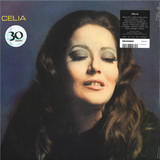
Beautiful debut album from the incredible, Ce´lia. Conducted & arranged by Arthur Verocai and Roge´rio Duprat; featuring songs by Lo Borges, Antonio Adolfo and Joyce amongst others.
Ce´lia recorded four self-titled albums for Continental between 1971 and 1977, 'Amor' in 1982 plus several more before she sadly passed away late in 2017, aged 70. This is her debut album from 1970.
Ce´lia was a Brazilian vocalist who worked frequently with master arranger-composer Arthur Verocai in her early years and many other heavyweights over the course of her extensive career. Joyce was particularly supportive in the making of this album, writing the beautiful 'Abrace Paul McCartney' and her husband at the time, Nelson A^ngelo, recorded some of the songs.
Features an exclusive insert of a translated interview with Celia, completed in 2011 in her hometown of Sa~o Paulo. Focusing, in particular on her recording work with Arthur Verocai, it showcases her wonderful sense of humour and how she was embracing her new legion of fans, particularly in the world of hip hop.
Official Mr Bongo reissue. Licensed from Warner Music.
The latest transmission from Francis Harris' exquisite Scissor And Thread imprint showcases the many talents of Tokyo's Tomi Chair aka Tominori Hosoya. The DJ and producer goes by both names, and here presents five tracks of lush, emotional music veering between ambient excursions and dance floor heaters. The original version of title track 'Tropical Imagination' opens the EP, and is a deep and thoughtful dance floor number. Elegant chords set the tone while the percussion adds a silky funkiness that's impossible to ignore. The 'Dream Version' strips the track down to its pads and atmospheres. Next up is Tomi Chair's 'Heat Exhaustion' - an exceptionally beautiful beatless piece that drifts through droney pads and occasional fragments of minor key melody. Using the Tominori Hosoya moniker, side B begins with 'We Are Here' - another powerfully restrained piece that merges woody percussion with low key pads and field recordings to create a magical whole. Francis Harris adds his touch to 'Heat Exhaustion' with his respectful Reform version, adding skittering percussion and underpinning the piece with a leftfield ambient house edge that builds and builds. Another essential addition to the Scissor And Thread catalog
Sit down in your comfiest jawn, strap those noise-cancelling jawns on and prepare for those jawns in your eye sockets to tumble out your head when you hear this collection of thumping jawns whipped up by Philadelphia's BPMF. One half of legendary electro duo Synapse with John Selway (who he co-runs the equally-esteemed Serotonin imprint with), BPMF has been churning out no-nonsense electro smangers and experimental techno since the early 90s. Currently he holds the title of Eastern Pennsylvania's premier live-PA electro dad while also running his own label, Schmer. Various Jawns is exactly that; four varied jawns packed on one plate. 'Tell Mommy Bye' is an electro ripper in the true American lineage while 'Trunq' and 'J'pn' are lighter, more noodling affairs. This plate's entrée, 'House of Jawn', is a fourteen-minute knob-twiddling trip through the twisted fever dream of a raver long past. Thankfully our esteemed producer has given us a respite from the beatdown about halfway through. Drop the needle there to start the adventure at the Lower House of Jawn if brevity is your thing, man.
"It's been nearly five decades since Joe McPhee assembled a group of musicians to perform the weekend concerts that would become Nation Time, his debut LP. It was December 1970, thirty-one-year-old McPhee was inspired by Amiri Baraka's poem 'It's Nation Time,' and the students at Vassar College didn't know what hit them. 'What time is it?' shouted the bandleader. 'C'mon, you can do better than that. What time is it?!'
"The music on Nation Time came out of the fertile, but little-known creative jazz scene in Poughkeepsie, New York, McPhee's home base. Two bands were deployed, one with a funky free foundation featuring guitar and organ, the other consisting of a more standard jazz formation with two drummers and the brilliant Mike Kull at the piano. Across the concert and the next afternoon's audience-less recording session, the band was ignited by McPhee's passion and his gorgeous post-Coltrane / post-Pharoah tenor. On 'Shakey Jake,' they hit a James Brown groove filtered through Archie Shepp, while the sidelong title track is as searching and poignant today as it was during its heyday.
"Originally released in 1971 on CjR, an imprint started expressly to document McPhee's music, Nation Time has a sense of urgency and inspiration. Additional material from those December days would later appear on Black Magic Man, Hat Hut's first release. In fact, the first four records on this seminal Swiss label all featured McPhee.
"Nation Time was largely unknown a quarter century or so later, when it was first issued on CD through Atavistic's Unheard Music Series. On Corbett vs. Dempsey, we reissued the album along with all known tapes leading up to and around it as a deluxe box set, but the standalone LP has long remained incredibly rare. Now is the time for a new generation of freaks to lose their shit when settling into the cushy beat of 'Shakey Jake' and answer McPhee's call with the only appropriate response: It's NATION TIME."
– John Corbett
Jimi Tenor delivers another 7" on Philophon. This time he teamed up with the two glorious gospel queens Florence Adooni and Lizzy Amaliyenga from Bolgatanga/Northern Ghana. This release is a first insight into the next album by Jimi on Philophon, which will be released later the year.
Vocalize My Luv is a charmingly presented lure for love. The secret of the song is that drummer Ekow Alabi Savage's upfront high-life beat is triggering a Jimi-operated Korg MS-20 bass synth. Man and machine are melting down into a light and sportive groove, which irresistibly invites you to do some frisky aerobic moves on the 3am dancefloor. Ki'igba is a classic Frafra gospel song by Alogte Oho, completed with some jubilating flute by master Jimi.
Malfunctioning speakers, & digital dreamscapes, SQUIRRELS ON FILM's 4th release explores the outer reaches of techno with impolite, reckless abandon.
Psychedelic sound explorer Its Own infinite Flower, who was
responsible, along with head squirrels Solar & C.l.a.w.s., for San
Francisco underground punk rave/happening Hostile Ambient
Takeover, unleashes his first official release, The Plumes of Love (ARE BLACK!). After contributing a track to 2017's Spacetime Continuum/ Juju & Jordash curated Air Texture V compilation, this four track EP of abstract tech-noise brings the sounds Its Own Infinite Flower refined in the basements & warehouses of the Bay Area's underground music scene to the wider world, whether it's ready or not.
'Drone, Drugs 'n' Dissonance' creeps into life as a thunderstorm of
white noise, out of which a cold-rave pulse somehow metastasizes into something resembling techno, although this is a deformed, uncivilized, unwanted mutation, separated at birth & raised in a toxic wilderness. It builds slowly before turning up in a rage of digital distortion, a black metal dub party held at the edge of a melting glacier. 'Oh, Empire of Roses' is a Dada Phycho Jazz Electro number. Dissonant synth chords snake around each other in a playful ouroboros of manic future funk, never knowing if it's starting or stopping, coming or going. Relentless bass throbs through the track, which almost threatens to bubble into classic acid electro before fizzling out. On side two there is 'Devotion to a Peacock Angel,' an angular breakdance groove for the characters in the bar scene in Star Wars. Electro dub rhythms keep stay grounded as everything else rips apart in all directions over the course of the track. On 'Misfortunes of El Dorado' a soundsystem bangs in the next room, only the deepest bass escaping, shaking reality until it's torn apart in waves of distortion, a classic techno synth string wandering over the top of everything in a full blown Techno Jazz Odyssey.
SQUIRRELS ON FILM continues its adventure at the edges of techno
with the mind bending stylings of Its Own Infinite Flower's debut EP,
fitted with another beautiful hand-drawn, full color sleeve by New York artist Bert Bergen. The Plumes of Love (ARE BLACK!).
Continuing on the thematic thread of soundtracking an imaginary short movie, label founder DJ Tennis aka Manfredi Romano, asks some of the greatest contemporary club producers to take on the task of interpreting this idea in their own unique style. Romano explains that 'the score is a translation of our imagination, memories and emotions into music, with no protocols.' Opening the soundtrack, Vatican Shadow swaps his thunderous techno for a more cosmic and gentle approach, setting the tone for an equally serene soundscape from London based DJ and producer Midland. Japanese Future Terror head honcho, DJ Nobu, layers dense cerebral textures exuding the punk spirit of Life and Death. A similar rule defying energy can be heard by Ninos De Brazil who fuse carnival percussions with straight up old school techno. Both Scuba and Uchi bring the futuristic synths of a space age tomorrow we've all been waiting for. German producer Isolee interprets the task with his minimal productions and Italian producer Cosmo closes the compilation with Psychedelic Soundscapes turning into a distorted gabber missile. As the decade edges closer to it's decade anniversary, Romano proves yet again that Life and Death is a label which evolves through each reincarnation of itself, never failing to impress.
Pi Gao Movement presents their first and long awaited release of the HAdES (Humanoid Advanced Engineering Society ) Network concept on vinyl. Originally released as a digital download, Descendants of Starfish Prime introduces Majestic 12 as a genre - blending mavericks of electronic music. Much like the name implies, Descendants takes a still landscape and captures it in time as it is violently uprooted, stripped to it's base elements and becomes something foreign, something unimaginable, something beautiful. This four song release takes the listener through a journey offering little consolation and no apologies; using varying tempos, patterns, structures, and vocals as operators on a clean canvass. What is the HAdES Network Series The HAdES or Humanoid Advanced Engineering Society Network series will be a collection of works from various artists presenting obscure and diverse facets of electronic music. Man creating machines to replace the human being. Who is Majestic 12 Majestic 12 is not a who, but a what. There are no names attached to this conceptual group. It is a cluster of concepts that have been carefully selected through experimentation. Strains have been extracted, combined, and developed
- 1: Tomb
- 2: All To The Wind
- 3: You Needed Love, I Needed You
- 4: I Could Be Wrong
- 5: Tide
- 6: Kaitlin
- 7: Time
- 8: Somewhere Far Away
- 9: Wanderer
- 10: A Good Man's Light
- 11: Bird Has Flown
- 12: All Your Life
'tomb', The Third Full Length Album From Thousand
Oak, Ca's Angelo De Augustine, Addresses Lost
Love, The Cost Of Honesty And The Ramifications Of
Regret. It's A Deeply Inward Album But, Like The
Best Albums About Heartbreak, 'tomb' Transforms
Pain Into Beauty. 'this Album Is At Its Core A Prayer
For Hope And Clarity, And A Prayer For Love,' Says
De Augustine.
The Record Is A Significant Shift From His Earlier
Home Recordings, Such As Previous Album 'swim
Inside The Moon'. It Was Recorded At Nyc's
Reservoir Studios With His Friend And Renowned
Musician Thomas Bartlett (aka Doveman), Whose
Credits Include Work On Albums For Sufjan Stevens,
Glen Hansard And Rhye.
'tomb' Is A Musical Breakthrough For De Augustine,
With Bartlett's Artful Production Spotlighting His
Increasingly Impressive Songwriting.
The Simple Strength Of Songs Like 'time', 'you
Needed Love, I Needed You' And 'kaitlin' Will
Remind Listeners That De Augustine Is Among The
Best Of The Rising Crop Of Young, Emotionally
Compelling Singer Songwriters.
THROUGH GODS OWN EYES
MusicForSunrises&SunsetsDarkCornersOfTheDanceFloorDarkCornersOfTheMind.
FastDeepSlowRaveInspiringInspirtational&CosmicUpliftingWildPitchedHeartMelting&HeartPoundingSexMusic
Conceived in Bali as a club event to allow Phil Cooper and Indonesian DJ, Dea Barandana a chance to flex their rave potential and dig out those obscure, heavy dance floor cuts it has been hosting sporadic parties for the last 3 years, with no specific musical boundaries, it is about the late night, early morning dance floor experiences, heads down and lost in music!
A label was also planned, but when that would happen was always unclear, however a chance meeting in Croatia at Love International Festival 2018 between Phil and Carlo Bragagnini AKA La Mano has led to the inaugural release, TGOE001 La Mano 'Tana del Lupo' EP
Side A - Sirena, inspired by the classic Italo stable, a deep and driving intro that builds with a rolling, solid bass line, shimmering effects, gun fire handclaps and siren sounds before the piano line eases in to take it to a euphoric crescendo of soaring synths for maximum hands in the air vibes...
To add weight to the release, remixer options were discussed and both agreed on Man Power, and his rework has taken it to a much different place, adding a solid breakbeat to it, dirtying up the piano and extending the mix to 9+ minutes, this is HEAVY for the floor...
Side B - La Mano, the ying to the yang of Sirena, this is a much more progressive track, subtle in the arpeggio build up and layered to create a big sound culminating in a swirling series of dreamy chords and synth lines.
The Ambiente mix takes away the kick and percussion to allow the full dream like state to take effect, one for sunrises and sunsets across the globe...
Following on from one of the most sought after reissues of recent years 'MUSICA PARA EL FIN DE LOS CANTOS' on Berlin's Cocktail D'amore, Iury Lechs debut LP 'Otra Rumorosa Superficie' is made available for the very first time on vinyl launching the reissue division of London based Utopia Records set up in 2015 by Alexander Bradley.
This cassette only release from 1989 is a minimal masterpiece practically unheard until now. Arguably a more complete album than '...De Los Cantos', originally composed for two short films 'Final Sin Pausas' and 'Bocetos Para Un Sueno' as a full score, the arrangement is a beautiful listening experience spanning through ambient, meditational and cinematic minimalism of real depth, romanticism and sincerity.
Iury Lech is a Ukrainian born multidisciplinary artist, whose main focus now is as the curator of 'Madatac' a festival based in Madrid focused on new media art, video art and audio visual technologies which has featured the work of Brian Eno amongst many others.
During the late 1970s and 80s he rose as a pioneer within a moment focused on electronically generated audio and visual media. Drawing on the ground gained by Minimalist pioneers like Steve Reich, Terry Riley, and Philip Glass - built from repetitive rhythm and sheets of rippling resonance, drone, and ambience, Lech's work of the period is so striking and beautiful, that it seems shockingly unjust that it was overlooked until now.
The album comes in 180 gram vinyl edit form in deluxe sleeve.
Utopia Originals sets out to promote and reinvigorate music and artists in the most authentic way possible.
'OTRA RUMOROSA SUPERFICIE' has been remastered from original master tapes at Central Dubs, Bern Switzerland and the original artwork licensed through Argentine visual artist Pablo Siquier.
Domestic Exile are proud to present the devastatingly deplorable and malevolent recordings (that are sure to corrode yet electrify your ears) by Glasgow's very own KLEFT.
KLEFT aka Vickie McDonald is rooted in and has actively propagated the underground DIY radical queer punk and feminist movement here in Glasgow. Their projects have included the skull crushing sludge doom of Cartilage, the unflinching and infamous multi- membered hard core stars that were DIVORCE and the sacrificial, druid drone glitch of MOURN. Alongside these projects they have uncompromisingly disrupted, motivated and facilitated collective endeavors to take down the capital power structure of the dominant system of patriarchal club venues and abhorrent fuckers in this town.
For this record 'H+ Sexualis', KLEFT explores the neo-modern space where flesh is left behind. Negotiating, analyzing and tearing to shreds the relationship and balance between flesh and technology. KLEFT's expansive and palpable sonic offerings delve into themes of transhumanism and body hacking and seep into our collective skin begging the question; can flesh ever be created digitally. Does a lack of physicality alienate human experience in a post transhumanism society Are we all destined to be skinless yet digitally connected Will the body become superfluous Toward "the utopian dream of the hope for a monstrous world without gender," as stated on Donna Haraway's essay ''A Cyborg Manifesto.'
From the opening track 'Ossein' the listener grasps a foreboding lethargic build up, lurking out of the spatial ritualistic shadows into a sea of suffocating nothingness. A void where there is no gravity. Skeletal and brittle shattering rhythms which echo DMZ / Skull Disco dubstep alongside the more frozen, glacial ominous explorations of grime are often felt proving KLEFT is an artist whose inspirations run deep and wide and generally exist in the darkest recesses of our subconscious. These fearful, disjointed rhythms are set against weightless atmospheric oscillated synths, as if roaming through bleakly opaque, claustrophobic narrow corridors on a first person survival horror video game such as Resident Evil.
Moving through to 'CMBR', KLEFT's dissonant, degrading soundscape ferociously ascends. The resilient kick drum is propulsive and pulverizing akin to 'ardcore tekno - or intense gabba if you have the guts to adjust the tempo up to +8 - aesthetics that overwhelm and agitate finally revealing it's grotesque biological / amorphous bio structure. Elevating the repetitive 4/4 kick to a destructive, distorted banger of a track as layers of converging atonal noise and sound design simultaneously further enhances the sense of imminent radioactive contamination.
Next is 'Writhe, Squirm, Broken' continuing the convulsive, nauseating permutations of the prior track but reconfigured like a mangled, gruesome Cronenberg-esque parasite that has infiltrated an open wound, excruciatingly feeding off of the inner anatomy of it's hosts body from within. Repulsively reformulating the shape and dimension. The intro is akin to a panic stricken bouncy ball contracting and expanding, the spring reverb building momentum and traveling further away in distance and speed.
'Hackfleisch Deluxe' is a muuurrderous stomper and is one of the more grime / bass orientated tracks that deconstructs and disrupts the tempo familiar to sub-low producers on Black Ops / Jon E Cash / DJ Dread D. The crawling, plummeting frequency of the synth is a nauseating rush of coagulating blood to the heed; a deep throbbing sensory depravation in sharp, paradoxical contrast with the driving harmony layered on top which proves to be infectiously addictive. Furthermore are splintering programmed vocal samples that gives a sense of artificial disorientation, mind over matter, a possible hint at our evolving sentient cognition within a nightmarish simulated, augmented reality
Second to last we have 'Keratin' which is filled with the near fatal dissolving thud of Djax-Up acid that gives the impression that you're a biologist peering through a microscope into a petrie dish and witnessing the rapid and furious genetic cellular replication of bacterial and viral organisms.
Culminating in 'Bruised and Bleeding Hands' where the squashed density of a deflated and depressurized helium filled balloon and elastic umbilical cords, barbed wire and copper wires grind n' coil around the lens of a zooming camera. Taking no prisoners, this is a punishing grime weapon. A phat, surgical kick drum bulldozes its way thru causing carnage, syncopated punching snares after every rave stab and dizzying third beat. It won't be long until ye hear this on Silver Drizzle's youtube channel in the near future.
This record transports us to the hyperkinetic mutation scene on the cult cyberpunk film Tetsuo The Iron Man where the organic flesh / mechanical rust of the Iron Man metamorphoses with the Metal Fetishist during the rebirth sequence and we say 'LONG LIVE THE NEW FLESH!''.
Jac Berrocal, David Fenech and Vincent Epplay return with Ice Exposure, their second album for Blackest Ever Black. A sequel and companion piece of sorts to 2015's Antigravity, its title couldn't be more apt: sonically it is both colder, and more exposed - in the sense of rawer, more volatile, more vulnerable - than its predecessor, capturing the combustible energy and barely suppressed violence of the trio's celebrated live performances with aspects of noir jazz, musique concrète, no wave art-rock, sound poetry and spectral electronics all interpenetrating in unpredictable and exhilarating ways. While there are moments of great sensitivity and even a cautious romanticism, the prevailing mood is one of anxiety, paranoia, and mounting psychodrama: close your eyes and Ice Exposure feels like a dissociative Hörspiel broadcasting from the seedy backstreets of your own troubled mind. Before he picks up an instrument or opens his mouth, Berrocal's unique and compelling presence can be felt: a combination of studied, glacial cool and anarchic, in-the-moment intensity that has served him well over a long and storied career. It was honed during his time as a theatre and film actor, and in the 70s Paris improv scene, it powered his influential Catalogue group in the 1970s, numerous seminal, sui generis solo sides, and far-sighted collaborations with the likes of Nurse With Wound, Lol Coxhill, Pascal Comelade and James Chance which have seen him come to be valorised by two generations of avant-garde agitators and eccentrics. Now in his eighth decade, it comes with an added gravitas, perhaps, but no less energy or vitality. On Ice Exposure, his lyrical, instantly recognisable trumpet playing is a key feature - see especially the ghostly, dubwise take on Ornette's 'Lonely Woman', the dissolute exotica of 'Salta Girls', and the sublime echo-chamber soliloquy 'Opportunity'. But more often it's his voice that commands centre-stage, whether casually discharging surreal poetic monologues or moaning in animal despair - a vocal tour de force that transcends language and culminates in the Dionysian frenzy of 'Why', Berrocal's half-spoken, half-howled exclamations jostling with David Fenech's slashes of dissonant guitar, over Badalamenti-ish, panther-stalk drums. Fenech's origins are in the mail-art scene of the early '90s, when he led the Peu Importe collective in Grenoble, and since then, in addition to his own recordings he has worked as a software developer at IRCAM and played with Jad Fair, Rhys Chatham and many others. Together with Vincent Epplay he is responsible for Ice Exposure's inspired arrangements and vivid, vertiginous sound design. Epplay is a visual artist and composer with particular interest in aleatory composition, concrete, and the reappropriation of vintage sound and film material. He and Fenech fashion a remarkable mise-en-scene for Berrocal to inhabit, one that embraces cutting-edge electronics while also paying homage to the best traditions of outlaw jazz and libidinous rock'n'roll ('Soundcheck' invokes the brutish spirit of Berrocal's hero Vince 'Rock N Roll Station' Taylor). On 'Blanche de Blanc', Berrocal's voice is framed by a groaning, ghoulish orchestra of industrial drones, while 'Equivoque' evokes the most humid and hostile Fourth World landscapes and 'Panic In Surabaya' lives up to its name, a hectic, pulse-quickening concrète collage that leaves you gasping for air. This is a searching and singular trio operating at the absolute peak of their powers, with an interplay that transcends studio and stage and occurs at an almost telepathic level. Ice Exposure is a triumph of that group mind, an underworld dérive as life-affirming as it is unnerving and psychologically precarious.
Panic In Surabaya