Music springs eternal. Recognising the enduring power of timeless albums to guide us through life, Forever Records is a reissue series dedicated to rediscovering lost musical treasures from across the spectrum of head-feeding, heart-rending electronic music.
Established by Rush Hour co-founder Christiaan Macdonald and Delsin founder Marsel van der Wielen, Forever Records places heartfelt faith in a carefully curated sequence of seminal, largely forgotten records from disparate eras, scenes and spaces within electronic music history. Tipped towards the mellow and introspective, these are albums that stop time when the needle hits the groove, stirring only when it's time to flip over before you sink back into the experience. That's what albums were always meant to be about, back then, right now, always and forever.
The Release:
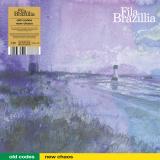
Striking the sweet spot between sampledelic downtempo and earth-rooted deep house, Fila Brazillia's Old Codes New Chaos is a maverick patchwork of grooves and soundscapes. Crafted in North East England in the vibrant period before chill-out was co-opted by advertising, Steve Cobby and Dave McSherry's sharp-eared funk formula remains a cult classic suite of exquisite productions spanning deep house, broken beat and ambient shot through with wry humour.
Last physically released in limited quantities in 2002, Forever Records are revisiting this 1994 gem with an extensive reissue led by a triple vinyl pressing. As well as a new LP edition of the album, there will also be a uniquely numbered, limited edition housed in a gatefold sleeve that comes with a bonus 10" featuring two previously unreleased tracks.
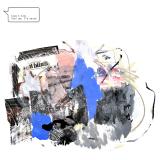
'Chemistry' and 'Rankine', plus an exclusive print of Catherine Brennand's watercolour painting that graces the front of the album. All editions also features liner notes by veteran music journalist John McCready.
Press response to Old Codes New Chaos:
"The album that made the world finally sit up and take notice of the avant funk grooves coming from Hull's immaculately stoned tech funk magicians." Frank Tope, Mixmag, UK 1994.
"This album… stands out a mile from most of its peers as a work of untouchable genius." Bill Brewster, DJ Mag UK 1994.
"Fila works because they fit into that no man’s land, the space in your record collection where ambient seems too much like wallpaper and house seems just too braindead for your bedroom " Frank Tope, Mixmag, UK 1994.
"Having already created the perfect desert island disc, "Mermaids" and explored the darker side of sub bass on the 17-minute extravaganza "Fila Funk", Fila Brazillia have just unleashed their moving debut LP, "Old Codes New Chaos", and to be quite honest, you'd be fool to miss out this time around." Mandi James, Melody Maker, UK 1994.
“Where Cobby and Man rip up the rulebook on the four to the floor and probably make the greatest afterhours house album in the word”. Tony Marcus, Mixmag, 1996.
Search:ad man
2026 Repress
A notoriously jaw-dropping folk-funk classic, long treasured by the Balearic fraternity, the self-titled LP from the brothers Batteau nevertheless remains a criminally underheard gem. Appealing to fans stuck on Ned Doheny's scorching blue-eyed soul as well as Gene Clark's rich country-rock, it's an honour to present the first officially licensed vinyl reissue of this undoubted masterpiece of proto-Yacht-Rock.
Like a forgotten piece of baroque folk caught in 1973, Batteaux's eponymous album somehow sounds magically timeless. A full 45 years after the fact, it remains a mystery as to why they weren't better known. The lush production and virtuoso playing conforms with the ruling aesthetic of the time - well-crafted, melodic songs performed with precision and balance - whilst the shimmering AOR atmosphere and sun-dappled vocal washes align neatly with the best Crosby, Stills & Nash records.
Throughout, the beautifully penned tracks hold traces of Jimmie Spheeris, America and Seals & Crofts. The immaculately orchestrated percussion and additional instrumentation (electric piano and fiddle to name a few) are performed by perennially celebrated West-Coast cats including Tom Scott, John Guerin and Andy Newmark.
It's no surprise that the heavenly "High Tide" is such a Balearic touchstone. A free soul aqua-space groover, its sophisticated rhythms predict the swing of CSN's canonical "Dark Star" by a full four years. An alternative measure of its enduring magnificence can be gauged by MF Doom sampling Paul Horn's wonderful version, subsequently used by Ghostface Killah.
The highlights are many and memorable. Gorgeous opener "Tell Her She's Lovely" is the perfect example of the addictive, melody-driven songwriting which really should have earned them stardom. Moody ballad "Living's Worth Loving" is nothing short of heartbreaking whilst the chugging elegance of "Wake Me In The Morning" showcases their bewitching harmonies. The hypnotic yearning of "Lady Of The Lake" is an exquisitely string-drenched, piano-laced favourite that achieves a peculiar strutting-funk. It's that good.
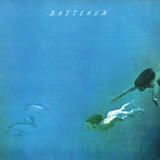
This lovingly curated reissue enables a long overdue reappraisal of the hitherto buried genius of Batteaux. The serene aqua artwork which adorned the original jacket - their father worked on a dolphin-human communication project in Hawaii, hence the infamous design - and sumptuous inner sleeve have been faithfully restored. Whilst, with access to the original tapes, Simon Francis' sensitive mastering elevates the sound throughout and, as ever, it has been pressed at a reassuringly weighty 180g.
Take Me, I’m Yours is the first collaboration album between Alan Abrahams and Jan Jelinek. Released through the latter’s faitiche, it builds upon multi-layered vocal sketches by the former. The Paris-based artist, primarily known for his work as Portable and Bodycode, supplied Jelinek with multi-layered song sketches that the German artist subjected to a rigorous process of manipulation, excavating the ambiguities of the original material and transforming its rhythms into subtle pulses. Take Me, I’m Yours is neither a typical Abrahams record nor a classic Jelinek album—it is something third, mediating between the physicality of the voice and the abstraction of electronic sound design.
The two had crossed paths before really getting to know each other after Abrahams invited Jelinek to play at one of his Süd Electronic parties. The idea of a collaboration emerged slowly. “It started as an experiment, and over the past few years grew from a few tracks into this album,” says Abrahams. He describes recording the basic material as a “tantalizing” process, not knowing how Jelinek would transform his material, some of which was based on wordless chanting, while other tracks were working with lyrical content. However, their mutual trust allowed Jelinek to remove the harmonies, radically reduce the rhythms, and concentrate on Abrahams’ voice.
Jelinek heard something “fragile” in this voice, “moments of doubt and dark premonitions.” He points to Forever as an example. “Alan’s original song reminded me of classic vocal house, but his voice seemed to almost break,” he says. “This contradiction made the piece even bigger, because we hear a singer in the moment of an awakening.” He further accentuated such tensions through arrhythmic synth modulations and time-stretching algorithms, while also adding concrete sounds from a variety of sources. With its dedication to both transforming and amplifying the emotional qualities hidden within Abrahams’ pieces, Take Me, I’m Yours functions as a dialogue between those two singular artists.
- 1: Alive! - Skindo Le Le (4.05)
- 2: Emilio Santiago - Bananeira (.53)
- 3: Carlos Franzetti - Cocoa Funk (5.0)
- 4: The Robin Jones Seven - Atlas (6.58)
- 5: Airto Moreira - Jump (4.13)
- 6: Antonio Adolfo - Cascavel (2.57)
- 7: Hannibal - Mother’s Land (5.09)
- 8: Doug Richardson - Salsa Mama (5.00)
London Jazz Classics originally came out in 1993 - the first album ever to be released on Soul Jazz Records. The album brought together rare and obscure dance tracks in a unique mix of jazz dance and fusion, funk, Brazilian and Latin grooves.
The album was ironically titled - none of the music was from London, none of the music was traditionally classified as jazz, and all of the tracks were at the time practically unknown to most people. Instead these were tracks that were filling dancefloors in a nascent jazz dance scene in London being created by a small group of DJs – Paul Murphy, Gilles Peterson, Sylvester, Patrick Forge and a few others.
As demand for these rare groove jazz tracks grew, previously unknown records such as Alive!’s ‘Skindo Le Le’, Doug Richardson’s ‘Salsa Mama’, Carlos Franzetti’s ‘Cocoa Funk’ and Emilio Santiago’s ‘Bananeira’ became sort after and even-harder-to-find items with original copies going for £100s of pounds.
These tracks became part of the soundtrack to this jazz dance scene which has now spread across the world. This music paved the way for the arrival of many of the UK’s new wave of current artists such Shabaka Hutchings, Nubya Garcia and Ezra Collective who today offer a uniquely London sensibility of fusing jazz with wide-ranging cultural influences – everything from afrobeat to soul.
London Jazz Classics was the first album to bring this jazz dance music featured here to a wider audience. More than 30 years since its initial release Soul Jazz Records are releasing this new 2026 edition, bringing the music once more to a new generation of listeners.
W.R.F. was formed in 2015 by Nina and late studio partner Andrew Weatherall to help wrangle the vast output recorded together beyond his solo releases.
Spotlighting nine tracks from the Apparently Solo series of EPs recorded between 2016- 2019 and released on Bandcamp in 2023, this lustrous time capsule marks the culmination of Walsh and Weatherall’s creative relationship born after they clicked at London’s earliest acid house clubs, becoming partners then managers of their Sabres Of Paradise/Sabrettes labels before taking different paths by the late '90s.
An accomplished musician, Nina had learned the art of studio technology by the time they reunited and started working together in 2012. Created at her Facility 4 Studio situated in the dangerous, gang-ridden no man’s land between Streatham and Mitcham, Anamchara captures the super-prolific creative stretch starting in 2015 that produced Weatherall’s Convenanza and Qualia solo sets, W.R.F.’s The Phoenix Suburb (And Other Stories) plus a whole lot more. According to Nina, Andrew envisioned the spectacular ‘Borderland’ as natural successor to ‘Smokebelch’, his most revered track. When it came to his remix, Nina enlisted renowned viola virtuoso Sarah Sarhandi and composed new harmonies with Pachelbel’s Canon in D Minor in mind.
The set also catches the breakthrough period when, through Nina’s careful coaxing, Andrew started using the computer system she’d set up to better express his musical visions by arranging the elements, grooves and melodies she sent him. Still considered the UK’s greatest DJ-producer, Andrew’s arrangements were inspired by his club-igniting sets. “This allowed me to mix the colours for his palette whilst he was painting the picture,” says Nina. Anamchara straddles the gamut of musical styles explored by W.R.F. at this time, from slower paced psychedelic “drug chug” outings ‘We Two’. ‘Heat To Meat Ratio’, ‘Hidden Watchers Part 1’ to banging acid house and techno sometimes inspired by the violence outside the studio door, including ‘SCHLAP’, ‘Crack-Ed’ and churning acid juggernaut ‘Yacidik’ (“After much dangling of the acid carrot, Andrew took a bite and, after one familiar raised eyebrow, never looked back,” says Nina).
Many tracks fly elements from the enormous sonic library Nina inherited from late partner Erick Legrand that she called The Akashic Library of Sound. Marking Andrew’s 2016 admission into the vault, ‘Rattly Old Puffin’ boasts Erick’s psychedelic guitar and tumbling drum loop Weatherall would run with, including on ‘Borderland’. “Erick was like our third member,” says Nina.
Bringing down the curtain, ‘Alma’’s exquisitely poignant melody that unfolds over thirteen time-stopping minutes was composed by Nina while navigating Erick’s birth and departure date anniversaries to accompany Andrew’s reading from Gordon Burn’s 1991 same-named novel at 2018’s Durham Literary Festival. Burn’s novel imagines early 60s popstrel Alma Cogan, who succumbed to cancer in 1966 surviving to reflect on fame. “Now it just makes me think of Erick. And every time I hear those well-placed cymbal crashes I can only think of the Captain himself.”
A beautiful grand finale for this astonishing selection of pure gold from the vaults.
Kris Needs / 2026
- 1: Clive Zanda - Ogun
- 2: Michael Boothman's Family Tree - Tabu
- 3: Lancelot Layne - Umbawa
- 4: Andre Tanker - River Come Down
- 5: Black Truth Rhythm Band - Save D Musician
- 6: Art De Coteau - Kerieka Woman
- 7: Mansa Musa - Beat The Drum
- 8: Sensational Roots - Calypso Zest
- 9: Frends - Mystery Music
- 10: Abdul Malik De Coteau - More Weight
Kaiso Power is a collection of rare jazz, calypso and percussive gems from Trinidad and Tobago from the revolutionary generation of the 1970s, bringing radical new political vision and reclaiming ancient spiritual consciousness through music. At the dawn of the 70s a shift was taking place all around the world. The streets of Port of Spain thronged with Black Power marches, trade union demonstrations and Carnival protest bands - one epicentre in a growing global exchange of ideologies and strategies among Pan Africanist circles in Jamaica, Guyana, London, New York, Montreal, Lagos, Accra and beyond. And when the meetings were over, the revolution moved to the cramped secret dance halls, the Carnival fetes, the steelband yards. The music always had a sharp edge. Searing commentary has always been part of the various types of music in Trinidad, and in the absence of lyrics, the defiant use of the drum maintains the resistance, as well as the re-framing of the playing of European instruments to the needs of the message. Lancelot Layne, Delano Abdul Malik De Coteau, Andre Tanker, Clive Zanda, Mansa Musa were more than artists, they were teachers, community workers and advocates for justice. These recordings are as raw as an all-night Carnival jam, the horns loud, the percussion ringing out, the bass dripping with joy and rebellion. Under the modern influences is a solid rhythm, an unbroken connection to Africa, the songs and keys and cadences brought across the middle passage. These songs are a peep into the untapped treasures of a revolutionary generation, looking at the world with fresh eyes and believing that music was a central part of the mission to build consciousness and regain confidence.
- A1: Vine Solita
- A2: De Todas Las Flores
- A3: Pasan Los Días
- B1: Llévame Viento
- B2: El Lugar Correcto
- B3: Pajarito Colibrí
- C1: María La Curandera
- C2: Caminar Bonito
- C3: Mi Manera De Querer
- D1: Muerte
- D2: Canta La Arena
- D3: Que Te Vaya Bonito Nicolás
With the release of De Todas las Flores, Natalia Lafourcade returned with an album of entirely original material for the first time in seven years.
Musically, De Todas las Flores, dives into a wide variety of Latin jazz and folk genres, such as bolero, cumbia, bossa nova, and samba. Lafourcade describes the album as her musical diary, exploring themes of heartbreak, loss, and grief. She drew inspiration from nature, particularly her home garden in Xalapa, Veracruz.
Lafourcade enlisted the help of her former neighbour, Adán Jodorowsky, for production. The musical touch came from musicians such as the guitarist Marc Ribot (Tom Waits, John Zorn) and the bassist Sebastian Steinberg (Soul Coughing, Eddie Vedder, Fiona Apple).
De Todas las Flores is available as a limited edition of 2000 individually numbered copies on transparent vinyl and includes an insert and printed inner sleeves.
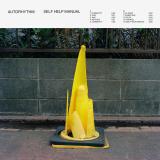
/// First track, Symmetry, debuted on BBC Radio 6 New Music Fix, 10th February: "A beautiful, beautiful album" /// I got my life back. On 17 February 2025, 1024 rays of ultra sound converged at an operation table in Bern, Switzerland, and disconnected a noisy circuit on my brain. 90% of the manifestation ceased – of a disease that I no longer wish to mention by its name. During the same period, I completed my new album: Self Help Manual. I’ve read more current research about the nameless disease than my neurologist, who despite that I didn’t follow his advice on suitable treatment, called me after the successful operation: a brave, brave man. I have composed the music in the same way as in my previous album – Songs for the Nervous System – through layers upon layers of improvisations in dialogue with my synthesizers, most of which are the same age as me. I made the majority of the songs in my studio in the remains of Old Hagalund in Solna. I edited the recordings in my bed during the waking hours of clarity at night. Some songs – NAC, Ketosis, Overkill – were recorded in the basement of my childhood home in Skutskär, in Norduppland, where I’d returned to be nurtured by my retired parents – who during a night when I couldn’t turn over in bed, or pull the blanket over me – made a list of what would happen to my belongings. To my friends who have stood out with me despite my disease, I want to state: you will not inherit me yet. On the new album, the electric bass takes on a leading role. ESG and Liquid Liquid have been important when I reinvented my baselines, limited and liberated by my poor fine motor skills. Plasma is my homage to Summertime Rolls by Jane’s Addiction, that I listened to frequently in my youth. I guess that no one will hear the resemblance. In several songs, the Fender Rhodes plays an important role, a magical instrument that I bought shortly after my diagnosis over a decade ago, and for a long time didn’t dare to touch out of respect for Herbie Hancock and Fela Kuti. A couple of songs draw inspiration from the Horn of Africa – Inner Nile and Delta. At first, subconsciously in the reverb-drenched Inner Nile, then more consciously in Delta. I’m sorry it doesn’t swing the right way, but it was my attempt to return to the cradle of humanity. Longevity is possibly my favourite. The melody is played by an arpeggiator that I controlled by pressing down different keys in an exhilarating sense of freedom. One song in particular, the second track – One – has caused friends to associate freely: one thought it sounded like Patrick Cowley, another like Sly & Robbie meets Kraftwerk, a third like Air – Moonlight Safari. I made one song just before the surgery: opening track Symmetry. It’s the mightiest and most minimal song. I made one song after the surgery: finishing track Self Help Manual. My previous medication pump is heard through the microphone of my Ovation Magnum. It’s the most hopeful song on the album. I took the cover photos with my Hasselblad during walks in Tokyo suburbs of Ōmori and Kamata more than ten years ago. It was something about the faith of the traffic cones that fascinated me – born in the same streamlined form, they had over the years become increasingly individual and lovable. The mixing was finalized by Christoffer Roth in the newly built Studio Dubious in Nacka. Rashad Becker, who in an interview said that he listens as much with his mouth as with his ears, mastered the album at Clunk in Berlin. Right now it feels like anything is possible. My recovery is perhaps a small step for mankind, but a giant leap for me. I hereby leave the music to you. Joakim Forsgren
FELT wade deeper into the murky waters of contemporary Scandinavian electroacoustic music following the recent reissue of Johan Wieth’s Health & Safety project on sub-label LEFT and established gems from the likes of Civilistjävel!
Gintė Preisaitė, a Lithuanian artist and graduate of Copenhagen’s Rhythmic Music Conservatory, reveals her first solo release under her own name, following a collaborative effort with Toshimaru Nakamura in 2025 and a number of cassettes as “Baraboro”. The deliberately genre-blurring sound Preisaitė deploys works with composed pop vignettes, sustained drones, FX manipulations and guttural bursts of noise. Sparse piano movements, sample-laden psychedelia and moments of big beat/trip-hop rhythms gel with crowd noise, close mic’d intimacy and experimental percussion with a focus on instrumental timbres and extended techniques.
With a background in composing for large ensembles, Preisaitė's multi-instrumental approach is evident across the eight tracks, moments of dense concrète-style sound collages anchored by the human voice never being far away. She laments on fantasy, absurdity and relationships as a cast of players contribute string, brass, accordion, and guitar parts. Passages move from delicate acoustic folk motifs through to wide-eyed, cut-and-paste glitch electronics and spectral melodic riffs, making the album an unorthodox and welcome addition to Denmark's current world-class music scene.
2023 Repress
Voices From the Lake (consisting of Donato Dozzy and Neel) mark the 10th anniversary of their influential self-titled album with a fully remastered reissue on Spazio Disponibile. It arrives in full on vinyl for the first time, as well as on digital formats, first quarter of 2023 as the pair continues to play select live shows around the world. The release will see the light of day as a 4-set vinyl LP release, including download. Italians Dozzy and Neel have been friends united by a shared vision of music since their teenage years. They are immaculate sculptors of sound who fuse evocative ambient and leftfield techno into multi-layered soundscapes. For many years they worked as established solo artists but came together in 2011 to craft what is now regarded as one of techno's most pure and absorbing listening experiences. It's often said that the best music comes about as a happy accident, and that is certainly true of Voices From the Lake. The career-defining album first arose in the thoughts of Dozzy and Neel when the latter was preparing a mix for the former's wedding and named it Voices From The Lake. It was a pertinent title that stuck in the mind: both grew up by waters around the coast of Italy, and in their early days the pair even held private parties on the shores of a lake. Fittingly, Japan's celebrated Labyrinth festival at that time was also held by a river and a lake in the middle of a forest on a serene mountainside. It was that exact setting the pair envisaged when making music to play live on stage. During preparations, they "accidentally" wrote an entire album. It has only ever been performed live a few times - once at Japan's Labyrinth festival in 2011, at London's Barbican, Barcelona's Mira Festival, Paris' Marathon Festival and once during 2022's Amsterdam Dance Event. Those shows saw the pair using banks of analogue and digital equipment to improvise in the moment and essentially remix the album live on stage. That spontaneity is captured in the original Voices From the Lake recordings and on later LPs such as Live at Maxxi in 2015, and the most recent EP Quarto Freddo from 2020. But the debut album remains a standout achievement. A decade on, it's quiet intensity, musical storytelling and slowly unfolding tension remain in a class of one. Each sound is meticulously designed and placed, and the spaces left behind are just as important in conveying such a captivating mood and emotion. Rather than traditional kick drums, hi-hats or snares, this is music crafted from layers of real-world sound - dripping water, chirping birds, rustling leaves or a distant breeze - and it's that which defines the album's organic allure. From deeply contemplative to cautiously optimistic, pastoral organic scenes to more underwater worlds, Voices From the Lake is a cohesive collection of tracks that add up to one inseparable whole.
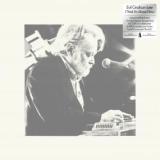
At the age of 72, "Evil" Graham Lee, the legendary pedal steel pioneer and veteran of the iconic Australian band The Triffids, delivers his first ever album under his own name titled ‘I Think I’m Alone Now’. In addition to his work with The Triffids, Graham’s place in ambient history was cemented in 1990 when his evocative pedal steel became the soulful centerpiece of The KLF’s masterpiece, Chill Out (specifically on the highlight “Baltimore to Fair Play”).
I Think I’m Alone Now is a profound exploration of the instrument's emotional range, blending traditional country infused melodies with vast, reverb drenched ambient textures. The album spans six tracks, anchored by the Side B title track, a 15 minute textural piece that leans heavily into the ambient genre. From the delicate melancholy of "Seeking Beauty in Sadness" to the curious abstraction of "Nursery in the Beehive," Lee uses his pedal steel and an array of pedals to sculpt unique, haunting soundscapes that exist between tradition and the avant garde.
The connection is brought full circle with exclusive liner notes written by The KLF’s Bill Drummond. Reflecting on a forty year friendship that began when The Triffids served as the backing band for Drummond’s solo debut, The Man, Drummond provides a personal and poignant context for this long awaited solo bow.
A 180g pressing housed in a full sleeve designed by Bradley Pinkerton with metallic sticker and bespoke inner sleeve featuring liner notes signed by Bill Drummond.
FELT enter 2026 with a newly established sub label for reissues, retrospectives and oddball adjacent non-FELT material under the anagram catch-all LEFT. First on the agenda is a vinyl issue of a modern classical tape by Danish post-hardcore/late 2000s rock guitarist Johan Surrballe Wieth, founding member of the band Iceage (Escho/Dais/Mexican Summer/Matador).
Initially released on a limited cassette edition and plucked from the vast catalogue of the Copenhagen label Posh Isolation, the solo project Health & Safety can be read as composers meditation on anxiety, depression, insomnia and all the damned things they entangle. Wieth moves across the spectrum with dour, deliberate keys, mangled drone fx, barely-there violin scrapes, erratic chimes and whistles and with a knowing pace that feels akin to a guiding hand. We’re unsure if the form of each piece is meant to directly correlate to the drug so referenced but the quiet fever dream atmosphere of the 25 minutes also blurs each piece into a whole.
This quote from Wieth certainly rings true for the highly introspective nature of Health & Safety - “You should be very careful listening to too much music when you're writing an album. It has a tendency to become a little too explicit”
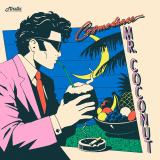
With Mr. Coconut, Cosmo Dance delivers a four-track EP that strengthens a distinctive sonic identity, blending retro aesthetics, club culture and cinematic sensibility into a cohesive body of work.
The title track unfolds through refined dynamic control. Warm multilayered percussion, textured guitars and a deep yet restrained bassline create an organic groove that evolves gradually rather than relying on obvious drops. The production favors subtle progression and hypnotic growth, resulting in elegant, mature dance music.
Goodbye expands the project’s narrative dimension. Inspired by the atmosphere of Italian ’70s library music, the track represents the protagonist’s theatrical exit from the club — not a melancholic farewell, but a charismatic closing scene. A playful detail emerges when Dandolo (Cosmo Dance’s alter ego) delivers an ironic “cough solo” precisely as an off-voice introduces Mr. Coconut, adding a self-aware cinematic twist.
Dub nuts explores deeper dub-informed territory. Built through layering and subtraction, the track showcases careful spatial control and restrained low-end management.
The EP closes with the Coccappella Version, a stripped-down reinterpretation of the title track focused solely on percussion and voice, revealing the rhythmic backbone of the project.
Mr. Coconut is a refined balance between club functionality and cinematic storytelling — controlled, elegant and unmistakably personal. It’s not about peak-time fireworks — it’s about atmosphere, detail and identity.
If you like cold-wave music and you’re nostalgic of the 80s, “Lines & Parallels” by French Swiss trio Factice Factory clearly reveals multiple parallels with this golden decade of dark music. A delicious propulsive bass, cold synths and lots of atmosphere. A dark and at times even claustrophobic atmosphere.
On the release, two musical sides can be identified: two lines or parallels. An electronic and more hypnotic side with the Neue Deutsche Welle-like “Leuchtturm”, the minimal film noir tribute “Audran”, the eighties sounding “Sway” or the harsh industrial tainted “Extinguisher”. The other line is to be heard in tracks such as the desperate and goosebumping “Defeat”, the oriental sounding “Hatch End” or the melancholic end ballad “The Weeping Willow” These two parallel lines finally merge into one single and united sound pattern, a delight that will surely find its place in the ears of many dark music addicts.
- A1: Queen Omega, Chezidek & U-Brown - Three The Hard Way 07 07
- A2: Capleton - No Sell Your Soul 03 34
- A3: Jah Thunder - Haffi Wi Place 03 09
- A4: Sizzla - Smoke My Herbz 03 12
- A5: White Mice - One Blood 03 33
- A6: Queen Omega - Touch Ina Di Place 03 25
- B1: U-Brown - Run Come Dance 04 30
- B2: Linval Thompson & Eek A Mouse - Conscious Man 03 37
- B3: Chezidek - Wasp Nest 04 34
- B4: Midnight Riders - We A Di Champion 03 40
- B5: Stinging Ray - Don't Let Dem 04 03
- B6: Young Kulcha - Come Pick Me Up 04 23
With over 20 years of intense production work and prestigious collaborations, Irie Ites Records has established itself as one of the most respected reggae labels on the international scene. In 2025, the label continues it's strong momentum with a brand-new volume of it's flagship series: Cream of the Crop 2025. Following the success of the previous editions (2022, 2023, and 2024), which each reached several million streams and gained strong visibility in reggae media and playlists worldwide, this new release stands as a must-have for all roots & culture reggae lovers. True to it's reputation for excellence, Irie Ites Records has once again teamed up with some of the finest musicians and producers in reggae: Mafia & Fluxy, Bongo Herman, Earl "Chinna" Smith, Lone Ark, Naram, The Ligerians, King Jammy, Willy William, among others. All tracks were mixed at the Irie Ites Studio (France), ensuring a warm, powerful, and authentic sound. To conclude the album, four exclusive dub versions add the final touch to this outstanding compilation.
James Curd and Osunlade. After years of playing back to back DJ sets and collaborating in the studio, they decided it was time to create something that could represent both the music they make together and the shows they play. Their sound is a natural meeting point between deep house grooves and soulful roots, reflecting both artists’ histories and shared love fortimeless dance music.
The first single from Nomadic’s is “Better Man”. The track was originally signed to Defected Records,but after creative differences about how the release should be presented, the contract was voided. That decision gave James and Osunlade the chance to put the music out exactly as they envisioned, and the song now finds its proper home on Pronto Records. The package includes the original alongside a set of remixes from some of the most exciting names in underground house.
Dutch producer Frits Wentink delivers a remix in his unmistakable style – raw drum programming, warm analogue textures, and the kind of off kilter groove that has made him one of the most respected names in Europe’s house scene. Mr Ho, co-founder of the cult label Klasse Wrecks, adds his own twist with a version that nods to classic rave and electro energy, while keeping things firmly locked for the dancefloor. Finally, LA based duo Too Easy bring a mysterious touch, layering live instrumentation with electronic drive, showing why they’re quickly becoming ones to watch.
With its story of creative independence, heavyweight remixers, and the credibility of two deeplyrespected artists at the helm, “Better Man” is both a club record and a statement of intent for what Nomadic’s represents.
Saxophonist and producer Ben Vince announces the release of his sixth album, Street Druid, the first in almost six years via AD 93.
Street Druid merges acoustic, manipulated and electronic sound and it has saxophone, synth, voice, guitars and drum machine, and features drum kit from Moses Boyd. It features artwork by Byzantia Harlow. It is at once tender, psychedelic and fierce. It is not interested in genre or category. It lasts just under 45 minutes.
A prelude for the future, hands join to cast a peace spell. Consciousness is vast water seeking divine essence and meaning where colours merge and refract. The street druid walks through the night, a benevolence in the darkness, guiding you home. Immersed in noise, life can feel empty, like hollow vessels, a sentient interlude. At times we are found in Gaia’s rhythm, kinetic and rebuilt, transcending through the impact of sound on the body. Every moment is a new change, a new challenge, a new life, we must ride the wave if we are not to be caught adrift or drown. Trying to keep hope intact, we must not retreat into fear, recognise we all live here in Longville and stop the fire before it engulfs us all.
Let Me In is a sweet drop of musical sunshine, a song of love and yearning distilled in the southern hemisphere and elevated by the dulcet tones of Dub Princess.
The bones were first created by Isaac Chambers in 2015 as a rough sketch, and over the years more elements were added, including a woodwind section played by Jarrod Bremerton and a guitar solo by Prosad Freeman. It stayed as an instrumental until 2020 when Dub Princess added her stunning vocals to lock the tune into its final form.
“I love the long journey this song took to reach the finish line. Some tunes are created quickly and others need to marinate for years before all the ingredients come together” (Isaac Chambers)
On the flip, International Observer is on stellar form, weaving an accordion melody in to the original to create a taut, bass-forward dub mix.
Longtime Observer observers will recognise many of his distinctive production trademarks, originally developed in the eighties and honed further still since his debut release on Different Drummer in the early noughties set audiophiles ears aflame.
"What a pleasure it was to take a deep dive into dub with Isaac and Dub Princess” (Tom Bailey)
Finally, finally, FINALLY! After many years of fruitless praying, a true collector grail can finally grace every turntable the world over. Bright And Shining is a miraculous leftfield library classic from the genius mind of Barbara Moore. It's Highly Addictive Happiness Music TM and one of the coolest records to come out of anywhere...ever! With originals almost impossible to find - and, when they do, going for over £300 - you already know how crucial this beautiful reissue is.
Recorded in 1981 for Sylvester Music Company, Bright And Shining is breezy, dreamy and funky in a perfectly smooth jazzy-soul-groove fashion, with Moore's patented celestial male-female vocal harmonies this time benefitting from the addition of Fender Rhodes and pumping bass lines.
As one particularly enthusiastic Discogs user put it: "If Eno is responsible for Music for Airports, Moore is responsible for Music for Holidays." Indeed, this is brilliantly unique, "maximum happiness music". If you miss the sun-dappled soft-psych soul of Koushik, the heavenly vocal arrangements of the great Library Music doyenne Barbara Moore - her depth, richness, sophistication and warmth - will see you just right.
The gigantic title track, "Bright And Shining", gallops out the gate, all sophisticated, jazzy leisure-soul with sax and guitars backing Moore's effortless vocal swag in this relaxed, mid-tempo head-nod strut. Worth the price of admission alone. Up next, the sunny, vibey "Fly Me High" features strolling, "unworded" vocals (aside from the refrain of the title) alongside breezy alto sax and electric guitar. Pastoral and perfect. The slow'n'sultry "Affluence" presents a moody elegance, a classical "downlifting" gem. Another crucial highlight is the breezy "Going On Holiday". It's happy. It's sunny. It's lively. It's cool and happy. Did we say happy? A mid-tempo, romantic sax workout, "Alto Sex"presents smooth jazzy funk before the first side closes out with the soaring, jazzy "Stay With Me". Seriously uplifting.
Side B opens with "Feel Fine", an excellent uptempo and bright jazz groove. Up next, "Canon" is wracked with refinement, a peaceful, smooth vocal harmony over repeating bass making for an elegant, late-night classic. It's followed by the laconic "Smooth And Soft", a laidback, casual sophisticated soul and easy-feeling jazz gem. The jazzy "Real Thing" is another exercise in strolling sophistication, complete with wordless vocal harmonies. The fairly self-explanatory "Voice Over Sax" sounds precisely how you would expect; a relaxed sax number with heavenly vocal support! To close, the carefree "Feeling Free" is a pleasant, light and breezy mid-tempo groove.
The audio for Bright And Shining has been meticulously remastered by Be With regular Simon Francis, ensuring this release sounds better than ever. Cicely Balston's expert skills have made sure nothing is lost in the cut whilst the records have been pressed to the highest possible standard at Record Industry in Holland. The original, iconic sleeve has been restored here at Be With HQ as the finishing touch to this long overdue re-issue. We'll grant the final word to MillionDollars. on discogs from about 10 years ago: "If you listen to the record on a sunny day you feel like going out surfing in a white linen suit with a blunt on your lips, catching a cool breeze."
Samurai Music offshoot SAIBAI welcomes legendary producer ASC to expand upon the label's widescreen strain of electronic music plumbing the depths between techno, electronica and broken beat.
ASC is the flagship project for James Clements, a prolific veteran of the scene who started releasing his distinctive twist on drum & bass back in the late 90s. Across a variety of aliases and many different label projects and collaborations, Clements has retained a strong artistic identity defined by steely atmospherics, rhythmic intrigue and precisely sculpted sound design. He brings those qualities to SAIBAI3.
On 'Raijin' the tempo prowls at 90 BPM, all the better to carry the bass snarls and haunted melodies hovering in the middle distance. 'Rasetsu' meanwhile hides its much sprightlier 150 pace behind a half time construction punctuated by a tactile, almost organic set of percussion. 'Kyubi' sinks into a deep, inky well of spatial sound design with just a light smattering of percussion and a weighty kick for guidance. 'Shigure' completes the picture with a mesmeric tapestry of shifting textures and brooding melancholy.
Clements has devoted much time recently to his ambient output, and it shows in the richness of the space he shapes around his needlepoint patterns, while his roots in more propulsive club music show their hand in subtle, understated ways. It's this balance that makes the release the perfect addition to SAIBAI's evolving story.
Limited to 200 copies