“I’m closing a chapter in my life,” Barbie Bertisch says to me from a park bench in Greenpoint, “I spent the last four years working towards gaining confidence around my ideas and my creative perspective. This feels like a culmination of that process” The “this,” in question is Bertisch’s debut record Prelude, a collection of eleven songs that chronicle 5 years of Bertisch’s life. The legendary musician Anna Domino describes the record best: “Prelude is a record of layers and depths. The melting phases and soaring distances.”
Raised in Buenos Aires and Miami, Bertisch has called New York home for most of her adult life. When she started piecing together Prelude, she was in her Brooklyn kitchen. It was early quarantine. Stuck at home instead of DJing at clubs, she found the space to parse through the archives. What she previously considered unworthy of attention in the era of distractions, finally made sense as a whole once all the noise was turned down. Compiling a list of songs in various states of completion, Bertisch dreamed up an album, a chronicle in growth and healing frustrations of the past, an honest account of someone trying to find her own voice. That in and of itself was a journey. It took years for Bertisch to accept that she was an artist. “I felt like I was surrounded by men who ruled every space. I constantly felt like I had to ask permission to enter, always around bands but never the girl in the band” she says.
Prelude is an introspective record. It explores all of the valences of being and feeling. Some songs are chaotic and choppy. Others are soft and searching. There is rage and innocence, and moments of forced stillness, like capturing the aftermath of panic attacks, as in “After The Storm”. Bertisch also focuses on rhythm, bass guitar being her main instrument, and no stranger to the power of the beat. The record also draws on influences as varied as Kaitlyn Aurelia Smith, Cocteau Twins, Berlin School, and pioneering producer François Kevorkian. Both sonically and conceptually, Prelude is a portrait of who Bertisch is as a person.“Is This What You Wanted?” is fiery, a pointed provocation to domineering figures from her past. It’s full of strobing, strident synths, and heady lines of bass. It gives off the same vibe as a fire alarm, as a big room dance track that subverts your expectations of what it means to dance in a sea of bodies. “28,” the record’s opening track is more peaceful. It’s all languid keyboard arpeggios with the occasional flourish of a cascading synth effect.
Since most of the songs already existed in some form or another, Bertisch’s job on Prelude was to refine and reimagine music that had previously been private. She spent time rearranging, rewriting, adding elements newly available to her, such as the saxophone, and pushing the limits of the rough mixes to mold the universe she envisioned. Along the way, Bertisch grew more excited about her abilities as a musician. The resulting record is one that is inherently confident.
Prelude is also a homespun release. It’s coming out on Bertisch’s own label, Love Injection Records, which she runs with her partner Paul Raffaele. The two also DJ and make zines under the name, which started in 2015. Love Injection is a love letter to New York. Prelude is a word of encouragement to those struggling with self-actualization. The record was mixed by Justin Van Der Volgen and mastered by Walter Coelho. Love Injection Records holds the remix tradition in high regard, and they’ve enlisted reworks by some of Barbie’s favorite producers. It’s all a labor of love for Bertisch. Prelude is her: Barbie the musician.
©℗ Love Injection Records 2022
quête:add noise
Lonefront puts out his first EP on wax with Kajunga Records. Two raw and hypnotic techno tracks channeled from deep.
“Additive spectra” uses the basics masterfully to draw in the mind and body and transport the spirit to ancient spaces. A deep kick and bass drive through the whole track while the high end remains sparse with a subtly shifting pulse and restrained hi hats keeping the tension alive.
On the B side, “South of Forever” is an even more stripped back, slow burner. Nonstop kick and trance inducing percussion anchor the listener in while resonations and reverberations are twisted and mangled to create a strange evolving space out of darkness.
Lonefront is an artist out of MN by way of the bay area. He produces raw explorative techno tracks and performs live using modular hardware. His stripped back productions shift between the speculative future of progress and the drone of decay. Get in tune with carcasses of factories, a chorus of tongues spouting silent mantras, a silent stream of error-riddled program scripts: the flux and snap of trauma incants the noise beyond language that compels movement, and sets you free.
- 1: Born For This Bullshit (Feat. Sad3)
- 2: My Adventure (Feat. Sally Seltmann)
- 3: Parents Get High (Feat. Washington)
- 4: Crooked Tree (Feat. Zooey Deschanel, Eric D. Johnson)
- 5: Like This Or Like That
- 6: Arsehole (Feat. Georgia Maq)
- 7: The Good Stuff
- 8: Sex & Drugs & Rock N Roll
- 9: Slow Down (Feat. Shamir)
- 10: Cowards
Indie-pop singer-songwriter, composer and producer Australia’s Ben Lee releases his 14th solo studio album “I’m Fun!”. The new album features guests Zooey Deschanel, Christian Lee Hutson, Money Mark, Megan Washington, Georgia Maq, Eric D Johnson.
On the album, Ben Lee says “This album, this moment in my career, is all about balancing some hard-earned wisdom from a 30-year long career with the vigor and energy of youth. That’s why it was as important to me to collab with artists like Jon Brion and Money Mark who I’ve both known for over 2 decades, as much as people like Shamir and Georgia Maq who are young and lit up with creative adrenaline. I like being a generational bridge between freaky artists. They are my tribe!”
Even before the launch of his solo career, Ben attracted attention in his teens as a member of the Sydney band Noise Addict. Following the band’s demise in the mid-90s, he began issuing a string of acclaimed solo albums while taking part in several side projects, including The Bens (Ben Folds, Ben Kweller, Ben Lee).
In his 30-year music career, Ben Lee has been gloriously prolific and unpredictable. The 4x ARIA award winning artist boasts an enviable catalogue including ‘Grandpa Would’ 1995, ‘Something To Remember Me By’ [1997], ‘Breathing Tornados’[1998], 2x ARIA Platinum album ‘Awake In New Sleep’[2005], ‘Ripe’ [2007], ‘The Rebirth of Venus’[2009], ‘Deeper Into Dream’ [2011] which have collectively spawned a multitude of chart hits, including “Cigarettes Will Kill You”, “Gamble Everything For Love”, “We're All in This Together” and “Catch My Disease”
- A1: Signe" (Eric Clapton) - 3:13
- A2: Before You Accuse Me" (Ellas Mcdaniel) - 3:36
- A3: Hey Hey" (Big Bill Broonzy) - 3:24
- A4: Tears In Heaven" (Clapton, Will Jennings) - 4:34
- B1: Lonely Stranger" (Clapton) - 5:28
- B2: Nobody Knows You When You're Down And Out" (Jimmy Cox)
- B3: Layla" (Clapton, Jim Gordon) - 4:46
- B4: Running On Faith" (Jerry Lynn Williams) - 6:35
- C1: Walkin' Blues" (Robert Johnson) - 3:37
- C2: Alberta" (Traditional) - 3:42
- C3: San Francisco Bay Blues" (Jesse Fuller) - 3:23
- D1: Malted Milk" (Robert Johnson) - 3:36
- D2: Old Love" (Clapton, Robert Cray) - 7:53
- D3: Rollin' & Tumblin'" (Muddy Waters) - 4:10
Strictly limited to 10,000 numbered copies, pressed on MoFi SuperVinyl at RTI, and mastered from the original master tapes, Mobile Fidelity's ultra-hi-fi UltraDisc One-Step 180g 45RPM 2LP collector's edition enhances the blockbuster work for today – and the ages to come. Surpassing the sonics of any prior version, it peels away any remaining limitations to provide a transparent, lively, ultra-nuanced presentation of a record that won six Grammy Awards – including prizes for Album of the Year, Best Male Rock Vocal Performance, and Best Rock Song. The expanse and depth of the soundstage, fullness of tones, natural snap and extension of the guitar strings, realistic rise and decay of individual notes, and roll of Clapton's vocals all attain demonstration-grade levels.
Housed in a deluxe box, the UD1S Unplugged pressing features special foil-stamped jackets and faithful-to-the-original graphics that illuminate the splendor of the recording and the reissue's premium quality. No expense has been spared. Aurally and visually, this UD1S reissue exists as a curatorial artifact meant to be preserved, touched, and examined. It is made for discerning listeners that prize sound quality and production, and who desire to fully immerse themselves in the art – and everything involved with the album, from the images to the finishes.
Truly, everything about Unplugged matters. Having sold more than 10 million copies in the U.S. and more than 26 million copies worldwide, the 1992 work resonates with listeners of all generations and speaks a universal language. Recorded for MTV before a very small audience on January 16, 1992, the 14-track set became the signpost for future acoustic-based endeavours that witnessed artists of all stripes re-examining their catalogues and, in many instances, as Clapton does here, placing familiar originals in fresh contexts and unveiling spirited versions of cover material. Needless to say, Clapton's session turned MTV's series into can't-miss programming for which the likes of Rod Stewart, Tony Bennett, Nirvana, Pearl Jam, and more would soon participate.
Kicking off his performance with a spirited instrumental to establish the mood, Clapton immediately wades into the style that originally caught his attention as a British teenager in the early 1960s: American blues. Backed by a superb band that includes guitarist Andy Fairweather Low, pianist Chuck Leavell, bassist Nathan East, and drummer Steve Ferrone, Slowhand delivers a rhythmic, toe-tapping rendition of Bo Diddley's "Before You Accuse Me" that announces he's come to reconnect with his muse. What follows over the course of nearly the next hour stirs the heart, shakes the soul, moves the mind, and invigorates the senses.
Of course, there's no talking about Unplugged without keying in on "Tears in Heaven," the striking ballad Clapton penned about the death of his four-year-old son. More emotional, direct, spare, and healing than the studio version released a year prior, it crackles with an intimacy, maturity, poignancy, honesty, sweetness, and integrity that inform the entire concert. Indeed, how Clapton frames other favorites here – transforming "Layla" into a relaxed, comfortable stroll and ruminating on the seasoned ripples flowing throughout "Old Love," for example – indicate both a creative rebirth and gleeful acceptance of the next phase of his career.
And that very direction (two of Clapton's next three albums would be all-blues projects) is what really makes Unplugged so indispensable. Equivalent in mastery if not in volume to the output that earned him his "God" nickname, interpretations of Jesse Fuller's "San Francisco Bay Blues" (complete with kazoo!), Big Bill Broonzy's "Hey Hey," Robert Johnson's "Walkin' Blues" and "Malted Milk," and Muddy Waters' "Rollin' & Tumblin'" showcase a learned professor in his element and all the wheels turning.
In every regard, Clapton's Unplugged session was appointment listening when it came out in August 1992. With the arrival of MoFi's UD1S pressing, that sensation is more urgent than before.
More About Mobile Fidelity UltraDisc One-Step and Why It Is Superior
Instead of utilizing the industry-standard three-step lacquer process, Mobile Fidelity Sound Lab's new UltraDisc One-Step (UD1S) uses only one step, bypassing two processes of generational loss. While three-step processing is designed for optimum yield and efficiency, UD1S is created for the ultimate in sound quality. Just as Mobile Fidelity pioneered the UHQR (Ultra High-Quality Record) with JVC in the 1980s, UD1S again represents another state-of-the-art advance in the record-manufacturing process. MFSL engineers begin with the original master tapes and meticulously cut a set of lacquers. These lacquers are used to create a very fragile, pristine UD1S stamper called a "convert." Delicate "converts" are then formed into the actual record stampers, producing a final product that literally and figuratively brings you closer to the music. By skipping the additional steps of pulling another positive and an additional negative, as done in the three-step process used in standard pressings, UD1S produces a final LP with the lowest noise floor possible today. The removal of the additional two steps of generational loss in the plating process reveals tremendous amounts of extra musical detail and dynamics, which are otherwise lost due to the standard copying process. The exclusive nature of these very limited pressings guarantees that every UD1S pressing serves as an immaculate replica of the lacquer sourced directly from the original master tape. Every conceivable aspect of vinyl production is optimized to produce the most perfect record album available today.
MoFi SuperVinyl
Developed by NEOTECH and RTI, MoFi SuperVinyl is the most exacting-to-specification vinyl compound ever devised. Analog lovers have never seen (or heard) anything like it. Extraordinarily expensive and extremely painstaking to produce, the special proprietary compound addresses two specific areas of improvement: noise floor reduction and enhanced groove definition. The vinyl composition features a new carbonless dye (hold the disc up to the light and see) and produces the world's quietest surfaces. This high-definition formula also allows for the creation of cleaner grooves that are indistinguishable from the original lacquer. MoFi SuperVinyl provides the closest approximation of what the label's engineers hear in the mastering lab.
SACD
Mastered from the original master tapes, Mobile Fidelity's numbered hybrid SACD enhances the blockbuster work for today – and the ages to come. Peeling away remaining sonic limitations to provide a transparent, lively, ultra-nuanced presentation of a record that won six Grammy Awards (including prizes for Album of the Year, Best Male Rock Vocal Performance, and Best Rock Song), it places Clapton and company in your room. The expanse and depth of the soundstage, fullness of tones, natural snap and extension of the guitar strings, realistic rise and decay of individual notes, and roll of Clapton's vocals all attain demonstration-grade levels. A perennial audiophile favourite, Unplugged now tosses its hat into the ring as a demonstration disc.
40-plus years since its original release, the pop-punk-new wave inventions of Anthony
Moore’s ‘Flying Doesn’t Help’ are freshly remastered, blasting the sparkling, angular
sounds into today with perfect vitality.
After spending the early years of the 1970s making experimental music first as a solo
artist, then with Slapp Happy and Henry Cow, 1976’s ‘OUT’ sessions had reinvigorated
Anthony’s youthful love of the naive pop melodies of pop radio, the undeniable excitement
of songs. While ‘OUT’ ultimately went unreleased at the time, the iconoclasm clouding the
late ’70s air was addictive and transformative for Anthony. England seemed to be roiled
as violently as it had been in counter-cultural days a decade earlier; the UK pop charts
breathlessly reflected the changing spectrum with equal parts aging hippie and prog
delicacies alongside new ascendant sounds: rough-hewn pub and punk rock, plus dub
reggae and disco and ska and Stiff and Krautrock. This proved to be an ideal environment
for Anthony to make records by exploring, as he puts it, the “deep connection between
minimalism, repetition, working with tape and celluloid and forming the modules of a
three-minute pop song.”
Caught up in a no-holds-barred era, Anthony was more than happy to play the out-of-hishead madman, raving through outrageous exchanges with the press, while ‘Judy Get
Down’ received Single Of The Week honours from the NME (with review penned by Brian
Eno). Represented by Blackhill Enterprises, Anthony did production work throughout
1978-1979, on Kevin Ayers’ ‘Rainbow Takeaway’, Manfred Mann’s Earth Band’s ‘Angel
Station’ and the first This Heat album, meanwhile cutting his own songs on a dead time
deal at Workhouse Studio with engineer / producer Laurie Latham. Through the wee
hours of countless nights, the two pieced together ‘Flying Doesn’t Help’, with a little help
from friends (an inspired bunch, including Bob Shilling, Charles Hayward, Chris Slade,
Robert Vogel, Festus, Matt Irving, Sam Harley, Bernie Clark, Edwin Cross and Martine
Moore on the telephone).
Building upon the axis of pop and experimental impulses that distinguished ‘OUT’, and
informed further by the raw sensibilities exploding everywhere, ‘Flying Doesn’t Help’
blasts out of the speakers with its own unique blend of sophistication and aggression,
Anthony’s keyboard flashes between arpeggiations and outright stabs among the noise of
slicing guitars, funk basslines and the reverbed blare of the drumkit. Opening with
Anthony’s greatest hit, ‘Judy Get Down’, and containing a noise-laden remake of the
Slapp Happy/Henry Cow number, ‘War’, among other delightful sweet-and-salty
confections, ‘Flying Doesn’t Help’ never stops moving, fuelled with raw outrage and dark
satirical intent, churning with the energy of next-gen types like Tubeway Army and DEVO,
while shimmering with the elegance of the still-challenging old guard types, like Cale and
Bowie.
Clearly, ‘Flying Doesn’t Help’ was steeped in the time, and the original release reflected a
deep mistrust of the corporation mindset. Information was a dubious concept, and
connections to any recognizable organization were seen as untrustworthy, so facts like
musician credits were left out of the package, and even Anthony’s name was altered (he
was credited as A. More on the album and Tony More on a single release). The label
name QUANGO was conceptual as well, standing for ‘Quasi Autonomous NonGovernmental Organization’; each record was sealed with red tape that the listener was
required to cut through in order to get to the music. Rather than recreate the conditions of
the original release of ‘Flying Doesn’t Help’, this reissue instead embraces the changed
environment of the current time and place: instead of no credits, now they are complete,
with Anthony’s full name restored and even the artwork subtly ‘relocated’ to reflect a new
set of relationships. All of which brings the forward-looking sounds of ‘Flying Doesn’t Help’
into the more independent-minded 21st Century syntax where it belongs.
- 1: Scroll
- 2: Montana (Main Theme)
- 3: Noise Destroys Something
- 4: Wonderful
- 5: Pesticides
- 6: Revenge
- 7: Comtech
- 8: Greyhound
- 9: Second Test
- 10: Desecration
- 11: Tell Me Your Heart
- 12: Dark Materials
- 13: Becky's Theme
- 14: Blue Tunnel
- 15: Manifesto
- 16: Ranger Gary
- 17: At Peace - Freedom Club
- 18: Prophecy
- 19: Skidders
- 20: Montana (Reprise)
Ted K. Kaczynski is notorious for both tragically murdering three people (and wounding an additional 23) via bombs sent in the mail and for his numerous writings on the evils of technology he composed during his primitive residency in the woods of Montana. Film director Tony Stone's choice to have the renowned electronic artist Blanck Mass score the film is somewhat ironic and creates an obvious tension perfect for the controversial and complex subject matter. 2020 saw the first Blanck Mass movie score, for the soundtrack to Nick Rowland's acclaimed cinematic debut Calm with Horses. This expansion into new areas of melodic composition and textural exploration won Blanck Mass many new fans, with the BBC's acknowledged number one film buff Mark Kermode proclaiming the work the soundtrack of the year. In 2021, Blanck Mass won the prestigious Ivor Novello Award for Best Original Film Score and has firmly established himself at the forefront of the latest wave of experimental soundscape wizards. Recording during lockdown at his studio in Edinburgh, Scotland, Blanck Mass's Ben Power was in the perfect setting for a musical piece intended to capture the isolation central to Kaczynski's story. Power was also working with a director in a time zone 10 hours behind and thus many sessions required working in the middle of the night, which added a fitting intensity to the composition process. He said of the project "I wanted it to feel like an `epic'" and drew on the legends Sergio Leone and Ennio Morricone for inspiration in encapsulating the energy of the perceived good vs. evil. The gentle madness of sound achieved is exquisite and slowly builds in intensity and desperation as the score moves along. Power is able to perfectly capture the complexity, the terror and the deep emotionality of the film while presenting an often breathtakingly beautiful and always masterful album that stands on its own as a work of art. For Fans of Tim Hecker, Oneohtrix Point Never, DJ Shadow, Coil, Arca, Andy Stott, Fuck Buttons.
Tape
The trio Susana Santos Silva / Torbjörn Zetterberg / Hampus Lindwall emerged in 2015 with their first album, which was received with critical acclaim. The unique conceptual approach to composition & improvisation rooted in both free jazz and contemporary classical music was described as “guaranteed a unique listening experience” (JazzIn), “It is art!” (Gapplegate Music Review) and “unique sound and style” (New York City Jazz Record). On their new album »Hi, who are you?«, they have taken the musical creation a step further by adding live electronics for real time sound treatment. Different techniques from experimental electronic music is juxtaposed with simple use of electric guitar effects to obtain tight and highly emotional sound.
Susana Santos Silva - trumpet Torbjörn Zetterberg - double bass, and electric noise on track 5 and 10 Hampus Lindwall - pipe organ and live electronics
- A1: Scroll
- A2: Montana (Main Theme)
- A3: Noise Destroys Something
- A4: Wonderful
- A5: Pesticides
- A6: Revenge
- A7: Comtech
- A8: Greyhound
- A9: Second Test
- A10: Desecration
- B1: Tell Me Your Heart
- B2: Dark Materials
- B3: Becky's Theme
- B4: Blue Tunnel
- B5: Manifesto
- B6: Ranger Gary
- B7: At Peace - Freedom Club
- B8: Prophecy
- B9: Skidders
- B10: Montana (Reprise)
Ted K. Kaczynski is notorious for both tragically murdering three people (and wounding an additional 23) via bombs sent in the mail and for his numerous writings on the evils of technology he composed during his primitive residency in the woods of Montana. Film director Tony Stone's choice to have the renowned electronic artist Blanck Mass score the film is somewhat ironic and creates an obvious tension perfect for the controversial and complex subject matter. 2020 saw the first Blanck Mass movie score, for the soundtrack to Nick Rowland's acclaimed cinematic debut Calm with Horses. This expansion into new areas of melodic composition and textural exploration won Blanck Mass many new fans, with the BBC's acknowledged number one film buff Mark Kermode proclaiming the work the soundtrack of the year. In 2021, Blanck Mass won the prestigious Ivor Novello Award for Best Original Film Score and has firmly established himself at the forefront of the latest wave of experimental soundscape wizards. Recording during lockdown at his studio in Edinburgh, Scotland, Blanck Mass's Ben Power was in the perfect setting for a musical piece intended to capture the isolation central to Kaczynski's story. Power was also working with a director in a time zone 10 hours behind and thus many sessions required working in the middle of the night, which added a fitting intensity to the composition process. He said of the project "I wanted it to feel like an `epic'" and drew on the legends Sergio Leone and Ennio Morricone for inspiration in encapsulating the energy of the perceived good vs. evil. The gentle madness of sound achieved is exquisite and slowly builds in intensity and desperation as the score moves along. Power is able to perfectly capture the complexity, the terror and the deep emotionality of the film while presenting an often breathtakingly beautiful and always masterful album that stands on its own as a work of art. For Fans of Tim Hecker, Oneohtrix Point Never, DJ Shadow, Coil, Arca, Andy Stott, Fuck Buttons.
Rock'n'Roll hits adapted and sung in Italiano to seduce an exotic and difficult music market. A tradition that saw many stars (Mick Jagger, Françoise Hardy...) test their pronounciation skills with swinging (but always very fun) results. Now its The Courettes' turn, to translate two of their newest songs for a special limited single 7'', released in time for their southern Europe tour and the Record Store Day 2022. Anzi, LE FAVOLOSE COURETTES, volevamo dire “the real deal” (Vive Le Rock, UK) “the real sound of now busting through your door” (Rolling Stone, USA)! “the world’s greatest two person rock n’ roll ensemble” (The Next Big Thing, UK) “Your new favourite band once you ve heard them!” (Louder Than War, UK) The Courettes. “A force to be reckoned with. Matching the garage rock ferocity of The Sonics to prime early 60s girl group, the band’s output is utterly feral in the most addictive possible way. Reminiscent of The Ronettes given a Ramones style overhaul, their evil charms arrive covered in blood-soaked glamour. Twanging guitar and raucous percussion, a wild head-long charge into the unknown.” (The Clash Magazine, UK) The Courettes is an explosive rock duo from Denmark and Brazil who found the perfect blend between garage rock, 60s Girl Group, Wall of Sound, surf music and doo wop. Like The Ronettes meet The Ramones at a wild party at Gold Star Studios echo chamber. Praised by the biggest music magazines around the world, in 2020 the band signed with legendary British label Damaged Goods, putting them on the same roster as top international rock icons like Buzzcocks, Manic Street Preaches, Atari Teenage Riot, New Bomb Turks, Amyl and the Sniffers, Billy Childish, Captain Sensible and many others. Their last and third album, “Back in Mono” was released in the Fall 2021 and is a truly milestone in the career. The album brings the band in top form, showing great songwriting skills and with broader nuances, influences and sound qualities to their garage rock recipe. Their last singles, “Want You! Like a Cigarette”, “Hop The Twig” and “R.I.N.G.O.” all got airplay at BBC 6 Radio in England and radio stations in Europe and the USA. “Back in Mono” got top reviews in the main music magazines like Mojo, Classic Rock and Shindig and was featured in countless Best Albums of 2021 lists: “Exuberant third release, a giddying rush of noise” (MOJO, UK) 4 out of 5 stars “Seems like the best record you’ve ever heard. A rock n’ roll sacrament from your new favourite band.” (Classic Rock Magazine, UK) 9 out 10 stars “Sensational good album!” (Ox Magazine, Germany) 9 out of 10 stars “Just keeps getting better and better” (Shindig!, UK) 4 out of 5 stars “Fantastic album” (Louder Than War, UK) 4,5 out of 5 stars “A complete riot” (The Arts Desk, UK) 4 out of 5 stars “14 new original tracks–all killer” (Add to want list, UK) “The whole album is one long highlight” (UK Rock n’ Roll) “Exciting combination of Wall of Sound and Fuzz” (El Periodico, Spain) 4 out of 5 “A collection of perfect songs, full-blown instant classic” (Triste Sunset, Italy)
- A1: Djemeregne - Muluqen Melesse
- A2: Etu Gela - Mahmoud Ahmed
- A3: Harer Dire Dawa - Abonesh Adinew
- A4: Selam Temagwet - Tekle Tesfa Ezghi
- B1: Aha Gedawo (Live Cape Town) - Getatchew Mehurya
- B2: Emnete (Live Addis Abbeba) - Mulatu Astatqe
- B3: Bati (Live Addis Abbeba) - Traditional
- B4: Zoma (Live Paris) - Martha Ashagani / Zelalem Mekuria
- C1: Lale Lale - Abrar Abdo / Abrar Abdo
- C2: Anchi Bale Game - Tegenu Balkew / Tegenu Balkew
- C3: Yedao - Rahel Yohannes / Yilma Gebereabe
- C4: Bemgnot Alnorem - Bahta Gebre-Metwet
- D1: Shinet - Tadesse Alemu / Traditional
- D2: Demamaye - Ephrem Tamru / Akelilu Siyume
- D3: Yefikir (Live London) - Tezera Haike-Michael / Tezera Haike-Michael
Imperial Tiger Orchestra's Mercato 12th years Anniversary Edition includes the best of both albums Mercato & Addis Abeba remastered with bonuses live recordings in London, Paris, Addis, Tokyo & Cape Town.
Imperial Tiger Orchestra, the finest connoisseurs and grooviest performers of Ethiopian music from the Golden Age.
Back in 2007 in underground Geneva, band leader Raphaël Anker decides to gather musicians for a one off live performance revisiting the golden age of Ethiopian music.
A memorable event that forced all the musicians to carry on.
As Imperial Tiger Orchestra.
Consisting of members with very diverse backgrounds (free jazz, noise experimentations, contemporary music, twisted pop…) the Orchestra soon travels to Addis-Abeba where they perform with local luminaries and deep learn about the large diversity of Ethiopian music.
A life-changing experience which brings them back to the studio and to a plethora of successful gigs around Europe, Eastern Europe, Japan and Africa.
The Tiger's unique sound is a mesmerizing re-interpretation of Ethiopian music's golden age mixed with the digitalized themes that appeared in the 80s and filtered through their eclectic influences, a sort of retro-futuristic and progressive Ethiopian rock. This Anniversary edition brings back thunderous rhythms and feverish hooks, down tempo moments and fast paced epiphanies, electronic sounds and ambient nirvanas.
The content of this email is confidential and intended for the recipient specified in message only. It is strictly forbidden to share any part of this message with any third party, without a written consent of the sender. If you received this message by mistake, please reply to this message and follow with its deletion, so that we can ensure such a mistake does not occur in the future.
- A1: Seventh Mirror
- A2: Ionization
- A3: Cloud Chamber
- A4: Harmonic Oscillator
- A5: Transfiguration
- A6: Urzeit
- A7: Cybernetic Dreams
- B1: Interference
- B2: Computer Garden
- B3: Pyramid
- B4: Halide Crystals
- B5: Integratron
- B6: Imaginary Forces
- B7: Phantom Lfo
- B8: Opticks
- C1: Mannequin
- C2: Mind In Light
- C3: Palantir
- C4: Vertigo Of Flaws
- C5: Exit Syndrome
- C6: Stasi
- D1: Atomic Voyage
- D2: Ultraviolet
- D3: Violence Cascades
- D4: Traumsprache
- D5: Zeitgeber
- D6: Prism
- D7: Threnody
- D8: Mind Oscillation
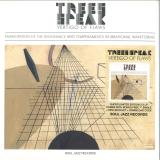
Trees Speak are back!
Speak’s new album, “Vertigo of Flaws: Emancipation of the Dissonance and Temperaments in
Irrational Waveforms” comes as a double-vinyl edition, single CD and digital release. The limitededition first pressing only of the vinyl includes a bonus 45 enclosed in an 8-page 7”x7” booklet
insert housed within the gatefold sleeve with cover artwork created by Soviet Union propaganda
artist Lazar Markovich Lissitzky in 1911.
Trees Speak are back!
This new release is a vast leap into an ocean of space and sound, a quantum leap into cybernetics, biology, anti-gravity,
time travel, dream speech and transfiguration. A seriously next step release!
Showing no signs of slowing down their rapid creative pace – incredibly this is their fourth album in the space of just over
one year – ‘Vertigo of Flaws’ is a mighty 29 tracks, one and a half hours of music across one double album that is surely
going to be a defining point in their musical career, a giant leap into the sonic unknown, an epic exploration of intensity
and sound.
Alongside their now trademark German krautrock motoric-beat rhythms, angular New York post-punk attitude, tripped-out
60s spy soundtrack, psyche-rock, and 70s synthesizers and vocoders, here you will also hear a new cosmic spacial
awareness (both personal inner space and galactic outer space) and a truly wilful pushing of sonic boundaries - as police
sirens, static noise, alarms, radio signals, avant-garde voices, and orchestral string quartets, all collide to add beautiful
dissonance to uber-powerful, intense, addictive and propulsive rhythms - in the process creating a truly unique
soundscape that Trees Speak have made wholly their own.
If you ever wanted to hear Can, Hawkwind, Destroy All Monsters, Pere Ubu, electric eels, John Cage, Liquid Liquid,
Tangerine Dream, Suicide, Neu!, Laurie Spiegel, Art Ensemble of Chicago, John Barry, Mother Mallard’s Portable
Masterpiece Company, Sun Ra, Stockhausen, John Carpenter, Electro-Acoustic and Musique Concrete and Mars in one
band - then this is it!
Trees Speak are Daniel Martin Diaz and Damian Diaz from Tucson, Arizona and their music often draws on the cosmic nighttime magic of Arizona’s natural desert landscapes. ‘Trees Speak’ relates to the idea of future technologies storing
information and data in trees and plants - using them as hard drives - and the idea that Trees communicate collectively.
Special guests from the hyper-creative hub of the Tucson music scene on this release are Gabriel Sullivan, Ben Nisbet, Saul
Millan, Stephani Guilmette, and Davis Jones.
The album Vertigo of Flaws was recorded in Brooklyn, New York, and Tucson, Arizona during the plague of 2021.
Extract from Vertigo of Flaws sleevenotes:
‘As we travel through space and time, avoiding the discarded remains of the industrial period, the
deconstruction of social norms through the expression of art, music, and philosophy guide the human
experience towards the unknown.
All that remains are musical echoes scattered throughout the universe, like ancient vibrations that now
populate the cosmos. These waves now show signs of decay. Melody, beauty, tonality have all but fallen
away as dissonance blossoms. As John Cage wrote in 1937,
“Whereas, in the past, the point of disagreement has been between dissonance and consonance, it will be,
in the immediate future, between noise and so-called musical sounds. New methods will be discovered,
bearing a definite relation to Schoenberg’s twelve-tone system and present methods of writing percussion
music and any other methods which are
free from the concept of a fundamental tone”.
Similarly, George Van Tassel claimed the Integratron as capable of
rejuvenation, anti-gravity, and time travel. So, what remains of the
“people”? We have adopted from them our own Zeitgeber: their pulses
now guide our sun, our planets, our earths, and are the new circadian,
diurnal, and ultradian rhythms of the galaxy. Traumsprache, dream
speech, is now the internal language of trees.
Decaying metal and machines liberated the note unto nature’s table,
and we sip the delicious nectar of music once more irrational, elaborate,
violent, vast. The past is the future, musical disintegration its own rebirth.
We are nature, once more the computer of the Universe.’
With their duo debut, Dean Spunt and John Wiese invite you to experience
the frenzy of percussive space and discreet sound found inside ‘The Echoing
Shell’.
This is the first official collaboration between the two veteran music-makers,
though their connection goes back to 1999. As John recalls, “Dean was in a
high school arts program at CalArts. A friend and I were recording the first
Sissy Spacek demo in the design studios there, and taking a tape to my car
over and over again to check the mix. Dean was walking through the parking
lot with a Locust shirt on, we said hello, and he immediately got into a car
with two strangers to ‘listen to a tape’.”
The tape-listening ended well, apparently. Dean and John became friends
and fellow travellers in LA circles and beyond: in 2005, John did a remix for
Dean’s first band, Wives; in 2007, Dean played percussion with Sissy
Spacek’s 13-Tet Los Angeles; John toured with No Age several times and
collaborated live with them in 2010.
Under the Sissy Spacek name as well as his own, John’s recordings for his
own Helicopter label and many others kicked things off for him around the
end of the century; since then, he’s been constantly engaged in solos and
collaborations on record, performances, and installations around the world.
In addition to Dean’s ever-growing discography with No Age, he curates his
own label, Post Present Medium. In 2018, Radical Documents released
Dean’s solo debut ‘EE Head’, which explored concrète and experimental
techniques in a four-part, album length piece.
‘The Echoing Shell’ is born of Dean and John’s shared understanding, using
John’s process common to Sissy Spacek: elaborate sound-collage works
using source material originating from punk, hardcore and improvised music.
A series of impositions, tape manipulation and edits recompose the material,
cracking open the crust of the source, freeing its implied guts to steam forth
in gushes of extreme noise. On ‘The Echoing Shell’, this is as often noise as
it is extreme intimacy, seeming at times to be sourced from within Dean’s
drumkit, at other times appearing to emanate from the capsules of
microphones and the circuits of the signal path itself.
One may read these collaged sounds as abstraction, but there is a unique
language conveyed in their assembly, forming something like word-shapes
and meaning. And intention: the two side-long pieces, comprised of many
short sections, form a linear whole, creating alternately ripping and
discriminating music - and meaning - in the process.
‘The Echoing Shell’ is a fantastic conception in contemporary musique
concrète, combining incendiary post-rock power, dry humour and astonishing
depth of field. Whether projecting the sound through headphones, ear buds,
bookshelf speakers or your own personal amp stack, crank up ‘The Echoing
Shell’.
This first-ever vinyl reissue, remastered from the original analog tapes, includes a gatefold jacket and inner sleeve with restored, new, and alternate art and photos by Terry and Jo Harvey Allen; an insert with lyrics, original notes, and Terry’s letter to H.C. Westermann about the songs; and a high-res download code. Deluxe CD edition features a trifold jacket and inner sleeve. Recorded exactly two years after acclaimed visual artist and songwriter Terry Allen’s masterpiece Lubbock (on everything), the feral follow-up Smokin the Dummy is less conceptually focused but more sonically and stylistically unified than its predecessor it’s also rougher and rowdier, wilder and more wired, and altogether more menacingly rock and roll. Following the 1973 Whitney Biennial, in which songwriter and visual artist Terry Allen and fellow iconic artist Horace Clifford “Cliff” Westermann both exhibited, Allen maintained a lively long-distance correspondence and exchange of artworks and music with Westermann, whose singular and highly influential art he admired enormously. In a February 1981 letter to his friend and mentor, written shortly after the late 1980 release of his third album Smokin the Dummy, while he and his family were living in Fresno, California, Terry explains the genesis of the album title: Westermann died shortly after receiving this letter, enclosed with a Smokin the Dummy LP, the minimalist black jacket of which Allen suggested that Cliff fold into a jaunty cardboard hat if he didn’t like the music. That response was unlikely, since Westermann loved Terry’s music, calling his debut record Juarez (1975) “the finest, most honest and heartfelt piece of music I ever heard.” The Panhandle Mystery Band had only recently coalesced during those 1978 Lubbock sessions, Lloyd Maines’s first foray into production. Through 1979, they honed their sound and tightened their arrangements with a series of periodic performances beyond Allen’s regular art-world circuit, including memorable record release concerts in Lubbock, Chicago, L.A., and Kansas City. Terry sought to harness the high-octane power of this now well-oiled collective engine to overdrive his songs into rawer and rockier off-road territory. His first album to share top billing with the Panhandle Mystery Band, Dummy documents a ferocious new band in fully telepathic, tornado-fueled flight, refining its caliber, increasing its range, and never looking down. Alongside the stalwart Maines brothers co-producer, guitarist, and all-rounder Lloyd, bassist Kenny, and drummer Donnie and mainstay Richard Bowden (who here contributes not only fiddle but also mandolin, cello, and “truck noise theory,” the big-rig doppler effect of Lloyd’s steel on “Roll Truck Roll”), new addition Jesse Taylor supplies blistering lead guitar, on loan from Joe Ely (who plays harmonica here). Jesse’s kinetic blues lines and penchant for extreme volume were instrumental in pushing these recordings into brisker tempos and tougher attitudes. Terry was feverish for several studio days, suffering from a bad flu and sweating through his clothes, which partially explains the literally febrile edge to his performances, rendered largely in a perma-growl. (By this point, he was regularly breaking piano pedals with his heavy-booted stomp.) Like the album title itself, the songs on Smokin the Dummy ring various demented bells. The tracks rifle through Terry’s assorted Obsessions especially the potential energy and escape of the open road, elevated here to an ecstatic, prayerful pitch and are populated by a cast of crooked characters: truckers, truck-stop waitresses, convicts, cokeheads, speed freaks, greasers, holy rollers, rodeo riders, dancehall cheaters, and sacrificial prairie dogs, sinners seeking some small reprieve, any fugitive moment of grace. A reigning deity of a certain kind of country music since the mid-70s. – The New York Times // The kind of singular American artist who expresses the fundamental weirdness of his country. – The Wire
Very limited vinyl pressing, 500 copies in a gatefold sleeve, a printed inner housing white and marbling effect vinyl with full download included. CD in a 4 panel digipack with a 4 page booklet. New Heavy Sounds is very proud to bring you Moongazer, the 2nd album by the 4 piece stoner rock powerhouse from Italy, TENEBRA. The band had already made waves on the scene with their debut album ‘Gen Nero’ before delivering ‘What We Do is Sacred’ their debut EP for New Heavy Sounds last year, 3 killer tracks that were but a taster of things to come. Moongazer takes the story a stage further with 9 slabs of crushing fuzzed up grooves, fuelled by 70’s proto metal, hard rock, punk, psych-blues and noise, loaded with great riffs and melody and topped off by gutsy soulful vocals. Musically, you could say that TENEBRA occupy similar musical terrain to bands such as Graveyard, Witchcraft, Kadaver and other bands of that ilk, but TENEBRA are very much their own beast. They have all the chops of course, but are musically less slavish, often adding a twist that keeps the songs fresh and now. There’s also very little reliance on Sabbath-isms (apart from one cheeky nod) and though occult rock is also part of the vibe, the music steers well clear of the cliches. In fact the band bring a clutch of left field influences into their melting pot as well, from June of 44 and Love Battery to the Misfits and the psych grunge of Screaming Trees. Of the 4 members, Claudio (bass), Emilio (guitar) and Mesca (drums) came from the hardcore and post-hardcore squat scene that gathered around Bologna, whereas their formidable vocalist Silvia (the youngest of the crew) is immersed in the underground rock of the '60s and' 70s. When you hear her sing you’ll know where she’s coming from as she has one helluva rock voice, laced with whiskey, smoke, grit, late nights and a whole lotta soul. Think Maggie Bell meets Betty Davis with a smattering of Gillan, and you'll be in the right ballpark. So what you get with ‘Moongazer’ is a band revelling in the spirit of 70’s rock rather than recreating it. ‘Heavy Crusher’ lulls you with its dreamy intro, but it’s not long before the riffs hit with Silvia in full effect. This pretty much sets the tone for the record, coiling proto metal riffs, executed with gusto and joie de vivre. And as with every track on this album, Silvia belts it out like she absolutely means it man. ‘Cracked Path’ continues the journey and ups the heavy fuzz a notch or 2. First heard on ‘What We Do Is Sacred’ (full length album version). ‘Black Lace’ is a brooding beast, epic and melodic, almost a ballad, with a heap of soul lurking within, courtesy of Silvia’s mighty voice. ‘Carry My Load’ keeps the brooding vibe going till the loping off kilter killer riffs kick in. This is definitely Silvia at her most Gillan-esque. ‘Winds Of Change’ does just that, dial things down to bluesy, almost psych feel, with dreamy solos and a hooky guitar break. ‘Stranded’ is a full on stoner rocker as is ‘Space Child’ with its short homage to the dark lords, there’s even a a sax solo. Never one’s to just play it straight these guys. ‘Dark And Distant Sky’ is pure proto metal, a la Bloodrock or Grand Funk, it truly rips, and once again, it’s construction veers it away from anything approaching what you’d expect. ‘Moon Maiden’ is the album’s closer, featuring Gary Lee Conner (no less) of the aforementioned grunge legends Screaming Trees, guesting on guitar. It’s a fitting and epic closer, by turns hard ‘n’ heavy, psychedelic and chock full of great ideas. MOONGAZER is without doubt an accomplished sophomore release that deserves to be heard and appreciated, purely because, though it may appear to reside in the world of stoner, it is so much more.
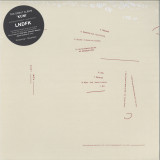
LNDFK (aka Linda Feki) presents her ground-breaking debut album, "Kuni" on Brooklyn-based Bastard Jazz Recordings. Undeniably on the rise after her 2019 breakout performance at Primavera Sound, LNDFK has already caught the attention of Pitchfork, Rolling Stone, Clash Magazine, Noisey, and Brooklyn Vegan (among many others) while being championed by the likes of Gilles Peterson, Tom Ravenscroft, and Jamz Supernova & landing spots on tastemaker playlists like Spotify's "Pollen" and "Fresh Finds."
"Kuni" is a spellbinding exploration of dichotomies: Love & Death (Eros & Thanatos), Flower & Fire, Delicacy & Violence, Poetry & Realism, Purification & Destruction. These opposites are reified in the 10-track LPs multifarious and multifaceted sounds, elegantly meandering through a variety of styles and genres, spearheaded by Linda and features the production wizardry of Darrio Bassolino who co-wrote the album.
"Kuni" opens with "Hana-bi," an ambient instrumental piece that sets the tone for the album. Inspired by the Takeshi Kitano 1997 film of the same name – particularly Joe Hisaishi's stunning soundtrack, as well as Kitano's paintings which appear in the film. "Hana-bi" expresses the dialoguing opposites of flowers and fire, the first of many dichotomous representations throughout the album. "Takeshi" acts as an extension and to "Hana-bi," albeit one of opposing sound, with its driving, highly syncopated drums (which reappear throughout "Kuni") – à la Karriem Riggins, Questlove, or Yussef Dayes – frenetic bass line, and jazz chords. Linda's sultry voice is interspersed, initially jumping around in scat fashion, being triggered as if a sample, before her lyrics come in; her vocals are used like an additional instrument, adding to the song's rich texture. "Kuni" truly hits its stride with the next song, "Smoke – a moon or a button" (its title lifted from the 1959 book by Ruth Krauss and Remy Charlip), which is structured like a jazz standard yet flows into neo-soul territory sonically with those prodigious drums a highlight once again.
LNDFK touches on experimental hip hop in two songs on the record (both of which were released as singles in 2021): "Don't Know I'm Dead or Not (feat. Chester Watson)" – track #4 – and "How Do We Know We're Alive (feat. Pink Siifu)" – track #9. Although they embrace a more hip hop-leaning sound, these songs by no means shy away from the exploratory theme, and feature two of the alt-rap scenes rising stars with Chester Watson and Pink Siifu who offer provocatively impressing verses, combining dense word play with unconventional flows. While these tracks may first appear to be outliers on the album, they are undeniably in tune with "Kuni's" message and sonic palette, acting as testaments to LNDFK's willingness to explore and experiment.
Meanwhile, "Ku" – the third and last single before the album release – furthers the pre-established future soul sound while meandering through nu jazz and left-field electronic. Inspired by the graphic novel and film, "Sin City," and its female assassin protagonist Miho, "Ku" is a musical interpretation of Miho's story, incorporating both her beauty – the first half of the song – and murderous tendencies – the second half – to create a stunning juxtaposition, culminating in an ambient finale that suggests the character's vulnerability and inner peace. The song gracefully bridges the gap between Hiatus Kaiyote-esque songwriting, Dilla's rhythmic syncopation, and Thundercat's instrumental prowess (LNDFK has shared a stage Brainfeeder labelmate Kamasi Washington).
Mixed in throughout "Kuni" are a series of instrumental pieces that function as something akin to an interlude. The aforementioned intro, "Hana-bi," and the album closer "se mi stacco da te, mi strappo tutto:" act as bookends, while "Om" indicates the half-way mark, and "Ktm" sees Jason Lindner add his sound the album. These tracks are the ambient foundation of "Kuni," representing the thematic duality of the work. Clocking in at only 24 minutes, "Kuni" packs an astonishingly diverse array of sounds, styles, and themes, all while showcasing virtuosic musicianship and instrumental prowess.
Appearing on "Hana-bi" and "Ktm," renowned international artists Asa-Chang and Jason Lindner add an additional perspective to "Kuni": Asa-Chang on "Hana-bi," and Jason Lindner on "Ktm." Asa-Chang - famously of the Japanese avant-garde group Asa-Chang & Junray - provides vocals and percussion to an alternate version of the instrumental opener, while the acclaimed keyboardist Jason Lindner offers his synth expertise on "Ktm." These features highlight the spirit of collaboration found in LNDFK's music, always willing to try out new ways of working.
LNDFK is a singer and songwriter, born of two cultures – an Italian mother and Arab father. She grew up in Naples, away from her father, the Sahara, her homeland and traditions, which has helped nourish the desire to rediscover – through art – an engagement to her roots. Her music melts with jazz, neo-soul and hip-hop influences, filtered through her experiences and sensibility.
Her first EP, "Lust Blue," was composed with the artistic production of Dario Bass and released by Feelin' Music; after that she released several singles that saw international radio support (BBC, NTS, Wordwide FM) and gained a massive audience on digital platforms. Together with her band, she toured around Europe, performing alongside such notable artists as Kamasi Washington and Mndsgn, among others. Most recently she toured Italy, and performed at Primavera Sound Festival 2019 in Barcelona.
"Kuni," is due out on NYC label Bastard Jazz Recordings in February, 2022, while the vinyl LP will follow shortly after.
JOYFULTALK returns with its third album for Constellation; another vibrantly divergent stylistic take on the analog materiality and sensibility of electronic composer-producer Jay Crocker, whose previous two records forged trance-inducing polyrhythmic intricacy, each from a distinct angle and sound palette, each enlisting a single instrumental collaborator. Familiar Science rallies contributions from a larger cast of musicians into a looser, cosmic recombinant combo_still shot through with JOYFULTALK's singular mixing desk kinetics, but this time deep-diving into gnarled and twisted, spliced and diced out-jazz. Crocker draws inspiration from 1980s M-Base music and Ornette Coleman's harmolodic funk period, while his own prior history as an improv guitarist also resurfaces for the first time in many years_an element in this polyvalent artist's chemistry set that hasn't appeared prominently in his own music for over a decade. Familiar Science finds Crocker folding time (as lockdown will do), immersed in his present-day kaleidoscope of solitary art and music practices in rural Nova Scotia, while channeling his former life as a bustling jazz collaborator in Calgary, Alberta. Building outwards from roiling resampled acoustic drums, Crocker extracted additional sonic and rhythmic textures, then formed the head of each song using dusted-off archival recordings and his own bass, keys and midi sequencing. Albertan percussionists Eric Hamelin (Ghostkeeper, Chad Vangaalen) and Chris Dadge (Lab Coast, Alvvays) provided improvised drum tracks to be chopped and harvested; Nova Scotia-based Nicola Miller (Ryan Driver, Doug Tielli) laid down resplendent excursions on saxophone and flute; Crocker's own dexterous guitar appears on several cuts. Familiar Science also poignantly features samples from live recordings by the late Calgary saxophonisticonoclast Dan Meichel, catalysing some of the album's heaviest contortions. Crocker weaves all these raw materials into exuberant compositions that blur the line between sizzling corporeal combo and sampledelic futurist jamz, variously conjuring (leftfield) Flying Lotus, (later) Tortoise, BADBADNOTGOOD and Squarepusher's Music Is Rotted One Note. The rubbery hyper-compression of boom-bap opener "Body Stone" initiates the séance, and the album offers a panoply of skittering grooves and soaring melodic pathways thereafter, through quags of heady jazz alternately streaked with dayglo delirium and other more vaporous states of revelry. Crocker's own wordless stacked vocals are the giddy secret sauce on several cuts, and his lead guitar work (in kinship with the lean progressions of Mary Halvorson or Jeff Parker) features on "Take It To The Grave", "Stop Freaking Out!" and the album's title track. More honeyed passages on songs like "Blissed For A Minute" and "Ballad In 9" center around Miller's bouyant alto sax and flute. Familiar Science is a rousing feast of noise-tinged polychrome electronic avant-jazz: richly harmolodic compositions teeming with intersecting textures and turbulences; exploratory, exhilarated and indeed joyful.
Closing out another breakthrough year, Anfisa Letyago has established herself as one of techno's most talked about names. An intrepid selector with a positive attitude regarding all things art and dancefloor related, the Russian born starlet has been making seismic waves within the industry for a number of years. Past releases have been featured on revered labels such as Carl Cox's Intec, Nervous Records, Hotflush and Rekids. Letyago returns now with a brand new project primed and ready for her own imprint - N:S:DA. Originally a celebration of her own dark-brooding style of techno, the label has entered a metamorphosis of sorts, welcoming in a host of established producers to remix the labels first releases.
The unapologetically raw house sound of DJ Seinfeld opens up the third and final remix EP, putting his own spin on Letyago's deep cut 'Insidia'. Cavernous synthlines occupy the track's main body, reminiscent of late seventies golden-era Chicago house. The remix is laced with hard hitting percussion and bubbling sound fx, a supercharged production primed for widespread club usage. Seinfeld welcomes us into the project with his trademark, rough and gloriously danceable sound palette.
Letyago follows suit by revisiting 'Nisida', reshaping the track into an electro-acid workout adorned with sharply tuned drums and heavily-treated shimmering vocals. The euphoria-inducing breakdown at the center point of the arrangement unfolds weightlessly, building into an energetic barrage of low-end frequencies. Letyago's ability to raise and release tensions within a track is truly exceptional, a technique she has perfected over several years of DJing, witnessing at first hand the importance of building up to moments of high intensity on the dancefloor for maximum impact.
Drum and bass royalty, Calibre offers his dark and brooding interpretation of 'Don't Hide'. The original track has been wickedly morphed into an after-dark roller fit for extensive basement usage. Commanding and minimal, Calibre's remix has been executed with devastating precision, perfectly balanced space-age pads glide seamlessly across the disjointed rattle of breakbeats and white-noise imbued hi-hats. A painter, fine artist, multi-instrumentalist, writer and producer, this multifaceted Belfast producer never ceases to disappoint.
Closet Yi concludes the compilation with a slow burning techno metamorphosis of Letyago's 'Listen'. Subterranean and primal, the track unfurls from its ambient beginnings into a low-end focused four-to-the-floor rhythm steeped in misty reverb and distant chords. Based in Seoul, South Korea, Yi has played at some of the most respected underground clubs in the capital, including Cakeshop, Faust, Pistil, Contra and more. A welcome addition to the remix project and a seductive end to this shadowy collection of tracks.
Dälek, “the subversive indie hip-hop outfit” (Pitchfork), release their eighth album, ‘Precipice’, via Ipecac Recordings.
Forged in the fires of the East Coast underground music
scene of the late ‘90s, experimental hip-hop pioneers
Dälek have spent the past two decades carving out a
unique niche fusing hardcore hip-hop, noise and a
radical approach to sound. Their brutal sonic
temperament pushes rap music’s capacity for noise and
protest to exhilarating conclusion.
Following in the footsteps of Public Enemy while drawing
influences from My Bloody Valentine and Faust, Dälek
have succeeded in adding completely new textural and
structural dimensions to rap music.
Predominantly the work of Brooks and Manteca (aka
Mike Mare), ‘Precipice’ was recorded and mixed by the
two band members at their Deadverse Studios in Dälek’s
hometown of Union City, N.J.
Tool’s Adam Jones guests (guitar / synth) on ‘A Heretic’s
Inheritance’. The band have supported Tool on tour
previously.
The album’s cover was created by Paul Romano
(Mastodon, Withered) with interior packaging featuring
the art of Afrofuturist painter, Mikel Elam.
The band have toured with and supported a wide range
of acts in the hip-hop, rock, metal and experimental
genres, including KRS One, Tomahawk, The Melvins,
Grandmaster Flash, Jesu, Dillinger Escape Plan,
Pharcyde, RJD2, De La Soul, Flying Lotus, The Bug,
Mastodon and Fantomas, among many others.
Hotel Paral.lel, released in 1997, marks the full length debut release from Austrian Christian Fennesz, originally released by MEGO, following the twitching drone as found on the 1995 EP Instrument, also included in this deluxe 2LP reissue. Once launched, Hotel Paral.lel was to instigate a sublime exploration of a wide variety of forms, from formal abstraction to shimmering drone around to ground zero glitch pop.
Recorded just before mobile computing devices became omnipresent it was an investigation into the sonic possibilities residing in guitar based digital music. Sz launches the career with a constantly buzzing sound that resembles a fax machine encountering a G3 laptop for the first time, realising the game is up. Nebenraum is the first foray into the style for which one would attribute to Fennesz. A glacial drone unexpectedly morphs into a gorgeous melody and microscopic groove. Adding pulse and melody was hearsay in the radical end of experimental music up until this point and with this single gesture, everything changed, for everyone. Blok M nails this trajectory home with a straight up 4/4 beat. Such rhythm also features on Fa with a euphoric mix of a thudding beat, sharp splinters of noise and a devastating exploding melody. Repetition plays heavily through this album as the hyper metronomic beat on traxdata lays a bed for all manner of buzzing electronics. On the closing “Aus” we see a glimpse of what was to come in the future works of Fennesz, an experiment in popping, bubbling pulse pop. A far more darker and experimental work than Fennesz’ subsequent work. This is an exquisite radical field of freeform noise, sliced techno beats and subtle ambient texture all coming together to create a timeless work. There’s little out there in the world of music, still to this day, that sounds remotely like Hotel Paral.lel.
With a radical reinvention of music Hotel Paral.lel is an essential addition to collectors of pioneering music in the late 20th Century and sounds as enthralling today as it did to the shocked ears occupying 1997.
Remastered by Stephan Mathieu.
The Ricardo Villalobos / Samuel Rohrer partnership has yielded increasingly interesting results over the past few years, with the former’s remixes of the latter’s trio Ambiq being supplemented by further reinterpretations of Rohrer’s solo work and live meetings at select events like Berlin’s Funkhaus and Radialsystem V. As should be the case with any strong collaboration, this partnership has been based on mutual challenge rather than compromise,
seeing each participant shuttle key technical and emotive aspects of the other’s work to previously unexpected places.
Those who have been closely following this relationship will notice a definite sense of continuity between previous outings and the new collaborative release entitled MICROGESTURES. As with those earlier Villalobos / Rohrer pairings, these four new pieces are defined by a special quality of being many things that once: that is to say, depending on the listener’s own level of focus, these can feel very tightly constructed and disciplined, or playful and freely wandering. That the tracks are equally engaging regardless of one’s chosen listening “mode” is a testament to the level of thought put into them; you could almost imagining the creators poring over some elaborate sketched set of architectural blueprints rather than coolly monitoring the usual multi-track editing software.
Altogether the music here is firmly a-melodic and percussive, but within these deliberate limitations there is still a greater variety of individual sounds than most would bother with. Each track is its own observatory of microgestures clustering together into a dense communicative fog or a sort of robotic sound swarm. Yet while all
these tracks are variations on that theme, each one has its own character and, consequently, its own rewards in terms of the exact sectors of the imagination that it activates.
Take for example “Cochlea” and its twin “Helix,” on which the magnetizing, busy layers of percussion are tempered with mischievously disruptive blossomings of digital noise, as well as sampled radio communications (which again bring us back to the idea of listeners’ attentiveness changing the meaning of this music - these
curious transmissions can either be taken as a purely aesthetic element or as something to be actively decoded).
Club-oriented elements are also not absent from this suite, particularly on “Incus” with its traditional sequenced baseline, crisp synthetic trap and hats, and dizzily sliding set of bell-like tones laid on top.?
Yet this track, too, is powered as much by its restless desire to deviate as by its rhythmic consistency: throughout the eleven-minute running time, a mass of ambiguous and restless machine sounds build a parallel narrative, and will maybe prompt the occasional glance over the shoulder as they seem to be taking on their own life. “Lobule” rounds out the program with the most rhythmically eventful sound set off the five.
What this all adds up to is a confident music which builds that quality from its faith in possibilities rather than firm conclusions: it’s an inspiring addition to both the musical landscape and reality in general


![Imperial Tiger Orchestra - Mercato [12th years Anniversary Edition] (2LP, RM)](https://www.deejay.de/images/l/3/6/996136.jpg)