Dub Consistency proudly presents its debut release, showcasing the hypnotic sound of 23.4 with a special remix from Berlin-based Argentinian artist Volpe.
On this four-track EP plus two locked grooves, Lille producer 23.4 distills over a decade of studio experience into a fast-paced yet deep Dub Techno journey.
Rolling percussion, weighty low-end and subtle atmospheres recall both the raw soul of Detroit and the spacious echoes of Berlin.
Adding his own signature, Volpe-a talent of Berlin's club circuit and producer for labels such as a.r.t.less and Frenzy-delivers a powerful rework that blends Dub, Deep and Tribal influences for peak-time impact.
Mastered by Conor Dalton, this first Dub Consistency outing is built for vinyl and the dancefloor alike: immersive, heavy, and unmistakably club-oriented.
quête:add
2026 Repress
Dasha Rush resurfaces on Sonic Groove, her fourth EP for the label and her hardest offer yet! The Russian born, Berlin based producer drops four fierce tracks decidedly for dancefloor use and abuse. Starting with some enticing meticulous and exciting EBM flavored hard beats “El Kinky” seems poised to be a summer Berlin classic, with Dasha’s haunting vox riding the groove. “Psycho Runner” simply said, is an olympic, punishing piece of acid TB303 techno that will be one of the darkest things recorded this year. Her B-sides take it a little deeper, with the hypnotic, industrial and marching in-your-face flavored sounds on “Gallic Message” and finally ‘Darkness Digital” which presents an , EBM- esque groove, with wild broken hard beats patterned underneath another ear- worm sequence. Another great release added to Dasha’s already prolific discography
“We know what jazz is when we hear standards or music that is close to the same source, to a recognized pattern. But what is jazz? Here, a starting point. "Blow" showcases an accumulated CITIZEN:KANE techno vocabulary but it quickly tones down the sensation by introducing frequent breaks in the rhythm, as in "Peiote". But even there we are able to "feel" techno by recalling Wolfgang Voigt's M:I:5 and its parallel yet contrasting rhythmic grids. Elsewhere, manifestations of opposite forces: the beat keeps a body firm on the floor, eminently physical but not commanding; and melodies, cosmic threads, suggest ascension as well as a drive towards the within, creating space for feelings and/or rationalization. "The Fence" or "Montreal" stand as good examples. One less evident aspect of beauty in this record is the apparent coldness of the music, almost rigid and devoid of passion, and thus we declare it more true. As the mind performs a synthesis of what was learned after a class, last track "Family" (expressively) gathers impressions of what went before, adding poetry to the moment. "Blow" may be a reference to the most familiar instruments used in jazz but it can also figuratively mean an explosion, an aesthetic liberation, even with (our) knowledge that for now, and theoretically, the artist chose to concentrate on this thing called jazz.”
- A1: State Of Grace
- A2: Holy Ground
- A3: Red
- A4: The Lucky One
- B1: Mean
- B2: 22
- B3: Mine (Acoustic)
- B4: You Belong With Me
- C1: Sparks Fly
- C2: I Knew You Were Trouble
- C3: All Too Well
- D1: Love Story
- D2: We Are Never Ever Getting Back Together
A decade ago, Taylor Swift was already a world-renowned and dominant force in the pop world. In 2014, she was on a world tour that took in a stop at Tokyo Saitama Arena on June 1st and the recording of it captures the electrifying energy of her sold-out performance during the iconic "Red" world tour. This live album showcases Swift at her early peak and delivering heartfelt ballads and powerful pop anthems with her signature charm and stage presence. Fan favourites resonate with emotion and live energy, while quieter moments like 'All Too Well' highlight her storytelling prowess. The Saitama Arena crowd adds to the magic throughout.
- A1: Lost In The Maze
- A2: Around The Finger
- A3: High Winds
- A4: Slow Down
- B1: First Light
- B2: Radiant Sun
- B3: Afterglow
Black Moon Mother blends light and heavy soundscapes that pull from elements of Psych-Rock, Pop, Doom Metal and Shoegaze. Formed out of a Nashville music collective in 2017, the band put together a demo EP that became their live set, kickstarting their musical journey. At the beginning of 2018, Black Moon Mother began writing new material and continued the show-a-month ritual, while adding a new song to the live set one by one. January 2020 brought Black Moon Mother to Dark Art Audio in Madison, TN where they worked with engineer and producer Mikey Allred. Their newest album Illusions Under the Sun showcases an expanded musical depth and songwriting maturity, while exploring themes of nature, purpose, and perspective.
Phosphor’s fourth release connects two promising talents from Barcelona’s underground scene: French producer Vince Void and Mexican DJ Gamba. Together, they deliver a finely crafted EP that blends punchy club dynamics with dreamy, psychedelic touches. From electro with 80s Italian accents to glitchy grooves and spacey breaks, PHP004 stands as a floor-ready release, moving with a subtle balance of tension and elevation.
Vince Void takes the A-side with two effective cuts. “Thunder” builds on a saturated Italo-style bassline and crisp, stripped-back drums, creating a steady tension that works perfectly at the start of a set. “Fashion Victim” switches the mood with acid-tinged grooves, glitchy stabs and a playful swing. It’s less linear but just as effective, adding contrast and movement to any DJ set.
On the B-side, DJ Gamba goes deeper. “The Universe”, in collaboration with Quim, weaves lush pads and shimmering arps into a rolling club structure, with subtle breakbeat accents that add lift and fluidity. To close, “Your Vision” slows the pulse slightly, blending filtered melodies, melancholic textures and a steady groove, locking in emotion without losing the club energy.
Daydream returns with a new various-artists release. Four tracks from label regulars Nayve and Twelve Clouds sit alongside contributions from two exciting new additions to the crew, Coral O’Connor and Paul Rudder. Together they deliver strong, club-ready house filled with deep, dubby sounds.
Partisan’s stacked catalogue continues to evolve with another spaced out whirlwind. Heading up the release is jack-of-all-trades iO (Mulen), whose versatile sound and consistent craftsmanship have long defined his reputation for distinct, high-calibre production. His Hyperspace EP delivers four high-energy, acid-tinged cuts that pay testament to his trademark precision — modern in execution yet infused with a nostalgic rave soul. Leaning into techno, new beat, and gritty tech house with attitude, each track feels purpose-built for peak-time impact. It’s no surprise that a label as established as Partisan and a timeless producer like iO (Mulen) have crossed paths, exceeding the high expectations their names evoke.
Another essential addition to Anthea’s Partisan artillery.
A reflective mood shapes this new ENSOULED compilation, which leans into thoughtful deep house and rhythmic exploration. Italian producer Kikko Esse sets the tone with 'Nightfall Chroma', a spiritual cut guided by warm chords and the sort of slow burn groove that is like sinking into a lush bath, and is later reworked by Alton Miller, whose Detroit-rooted style adds some lovely swing. On the reverse, Cee ElAssaad and Masaki Morii deliver 'Tribe', a more prickly percussive cut underscored by dub effects and spoken word. Hugo LX closes the 12" with a deeper club reinterpretation that keeps you locked.
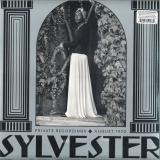
Disco legend Sylvester comes to Dark Entries with Private Recordings: August 1970, an intimate collection of vintage jazz, blues, and gospel. While Sylvester is best known for his chart-topping collaborations with producer Patrick Cowley, such as “You Make Me Feel (Mighty Real),” this release reveals his passion for the sounds of the 30s and 40s. In 1970 a 22-year-old Sylvester had moved to San Francisco and found himself involved with the Cockettes, the infamous psychedelic performance art troupe. Among this milieu was Peter Mintun, a pianist and record collector living in a commune devoted to retro culture. According to Mintun, “We were like hippies who lived in the twenties. We lived in a house that didn’t have anything modern in it. Nothing in it was made after World War II.” Mintun and Sylvester bonded over their love of Black singers of yore and were allotted a slot during Cockettes performances reviving the music of the Prohibition Era. One afternoon, Sylvester and Mintun recorded a number of their shared favorites using a high-end microphone a friend had acquired. Private Recordings features 9 songs from this session, including standards like “Stormy Weather,” “Happy Days Are Here Again,” and “God Bless the Child.” Sylvester’s unmistakable falsetto brings depth and a dash of camp to these familiar tunes. The recordings are casual and intimate, even capturing banter between Sylvester and Mintun; their brief rendition of “When My Dreamboat Comes Home” has the duo working out a melody in real time. In addition to their sonic explorations of decades past, Sylvester and Mintun also staged photographic shoots in vintage couture. Private Recordings comes with a 16-page booklet on firm cardstock featuring images from these never-before-seen shoots as well as liner notes from Mintun detailing his friendship with Sylvester and their experiences recording. All this is housed in a metallic silver sleeve designed by Eloise Leigh featuring a 1920’s Art Deco aesthetic. The record will be released on September 6th which would have been Sylvester’s 76th birthday, and all proceeds from Private Recordings will go to the two charities that Sylvester left his royalties after his death: Project Open Hand and PRC (formerly AIDS Emergency Fund). This essential release documents the earliest known recordings from one of disco’s greatest talents.
- A1: Monsters
- A2: Alien Point Of View
- A3: Cardinal Newman
- A4: Fat Cow
- A5: Nothing To Hide
- A6: People Like You
- A7: Regress For You
- A8: Christian Lovers
- A9: Exorcism
- B1: Bathroom Sluts
- B2: Pie On A Ledge
- B3: Push, Push, Push
- B4: Alice's Song
- B5: Praise The Lord
- B6: My Mommy's Chest
- B7: Slave
- B8: Poets (Early Version)
- B9: Pretty Vacant
- C1: Miscarriage
- C2: Scandinavian Dilemma
- C3: Poets
- C4: Confession
- C5: She Works For Safeway
- C6: Bible Stories
- D2: Green Tile Floor
- D3: Bathroom Sluts (Demo)
- D4: Waterpiss
- D5: Baby Face
- D6: Berlin Red Head
- C7: Dyptheria
- D1: Castration
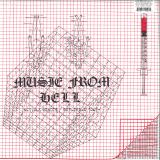
Nervous Gender’s legendary synthpunk LP Music From Hell burbles up from infernal depths to resurface on Dark Entries. Confrontational, unhinged, and unabashedly queer, Music from Hell is an unholy grail for fans of the strangest underbellies of post-punk, minimal synth, and early industrial music, and is presented here newly remastered and on expanded double LP.
Nervous Gender (de)formed in LA in 1978 at the hands of Phranc, Gerardo Velaquez, Edward Stapleton, and Michael Ochoa. Phranc, the androgynous embodiment of the band’s name, left in 1980. Following her departure, a wide cast of LA freaks would find themselves drawn into the band’s orbit, including Alice Bag of the Bags, Paul Roessler of the Screamers, the Germs’ Don Bolles, and an 8-year old drummer named Sven Pfeiffer. In 1980, Nervous Gender appeared on the seminal Live at Target compilation alongside Factrix, uns, and Flipper. With the band’s notoriety cemented, Music from Hell followed in 1981 on Subterranean Records (as no LA label would touch this material).
Side A, dubbed “Martyr Complex”, presents a more punk-forward sound with live drum salvos and slabs of aggressive synth. These twitchy, unsettling shockers ooze with the kind of snotty misanthropy that will endear them to fans of the Screamers or Crass.
Side B, known as “Beelzebub Youth”, is a live performance the band labeled "an electronic bruto-canto dissertation on the banality of spiritual transcendence." Mutant melodies cede way to synthesized clangs, whirs, bleeps, manipulated tapes, and howls of despair.
In addition to all the material from the original LP, we’re treated to a full disc of the band’s demos, the material from the Live at Target compilation, and early live recordings. Included are unrecognizable covers of Carly Simon and Lou Reed, and the Sex Pistols that are so despairingly skewed they fall into the void. This reissue of Music From Hell includes a 36 page lyric booklet, foldout poster, and gatefold sleeve with photos, flyers, and news-clippings designed by Eloise Leigh. Tackling taboo issues like sexual kinks, mental illness, drug use, and childhood molestation, Music From Hell is still surprising – even shocking - over 40 years after the album’s release. Nervous Gender stand as one of the most genuinely anti-establishment outfits in underground music, a colossal fuck you to social norms from religious strictures to gender essentialism.
Gloria Scott’s ‘What Am I Gonna Do’ is considered by many as one of the greatest soul records of all time. A masterpiece produced by Barry White, that oozes class, lush instrumentation and the remarkable vocal talent and emotive delivery of Ms Scott.
Selector Series are proud to present arguably the two best songs from the album, the Modern Soul scenes favourite, ‘(A Case Of) Too Much Love Makin’ backed here with the impeccable LP opener ‘What Am I Gonna Do’. Paired together officially for the first time on a 7” since it’s initial limited release in 1975.
Another essential addition to the ever-growing Selector Series discography! Don’t sleep.
2026 Repress
As electronic music pioneers and co-founders of Soma Records, Slam have continually shaped the landscape of underground techno. With their forthcoming album, Dark Channel, they present a raw, club-focused record that stands as both a reflection of our turbulent times and a celebration of the dance floor's enduring power.
In 2025, the world feels fractured, dominated by division and extremism. Amidst this chaos, the dance floor remains a rare sanctuary-one of unity, self-expression, and collective escape. Dark Channel is an unapologetic tribute to this sacred space, where rhythm dissolves barriers and music serves as a universal language. Through relentless energy, deep textures, and hypnotic grooves, the album embodies the essence of club culture: a place where we reconnect with ourselves and each other.
Slam make no mistake when it comes to the sonic tone of the album as it opens with the tribalistic Use It, Lose It before the discordant sounds of title track Dark Channel hints at the relentless nature of things to come. The intensity continues with Parametric Factor & Glide - both pushing a pulsating, synth driven trip; the later leading on a more traditional Slam percussive workout. The dance floor warping Morganatic pursues dark territory while Infinit Spaces adds trippy FX to an already animated synth hook. The beautifully crafted Kuture Version delves into a more immersive sound as more direct, chord driven elements take the lead. The pace quickens yet again with Ghost Dancer highlighting sub tones whilst still crafting ominous intonations with its modulating FX. Approaching the conclusion, the ferocious Beat On The Drum delivers a lesson in rhythm and energy before the contorted Irregular Object completes proceedings in a suitably hypnotic fashion.
Mastered By Conor Dalton @ Glowcast Mastering
After a series of successful outings alongside sidekicks Ofofo and Zongamin, studio wizard MYTRON turns in his debut solo full-length for Multi Culti World Records. With contributions on Invisible Inc, Calypso, Bongo Joe, Kalahari Oyster Cult, LYO, Codek Records and Earthly Measures, Mytron has carved out a name for himself in a carefully-curated left-field quadrant of the indie-dance galaxy. Tuning his oscillators to myriad sounds — from dub and disco to krautrock — the London-based producer perhaps most notably channels the pristine compositional style of Kraftwerk. While most apparent in the use of vocoder, there’s a consistent efficiency of arrangement that recalls the man-machine in effervescent, idealistic fashion. Mytron manages to keep it simple, funky and musical — whimsical tunes that bop along with analog grit, wilderness, and wonk. There’s a warmth and wit that shine through every synth line, an understated confidence that speaks of years spent tangled in wires and waveforms, with an inclusive sonic eclecticism that flattens hierarchies between genres, geographies, and generations. Each influence is invited to the table, treated not as pastiche but invited to dine and dance in a space where kosmische dub disco and Afro rhythms can coexist without borders. The sleeve design echoes this philosophy: video-feedback patterns hinting at our modern screens, both portals and filters — coloured, distorted intermediaries through which we perceive the world. In the trippiest sense, the record is both reflection and refraction — a sonic mirror held up to an interconnected, glitchy reality. Tailored equally for DJ use and home-listening head trip, the album is meticulous, mischievous and merry.
BanBanTonTon review:
On Mytron’s debut long-player for Multi Culti groovy 21st Century leftfield house gear collides with Daniele Baldelli and Beppe Loda’s hugely influential `80s afro / cosmic. The 9 tracks are chunky, chugging and full of funky, funny noises. Old school B-lines mixing with eccentric electronics. Spinning, spiralling sounds.
Sugar is an electro-pop, vocoder confection, cut from the same sonic cloth as cult classics like Codek’s Tam Tam. Created from tough trap drums, splashing effects and a mutant Giorgio Moroder bass arpeggio. The title track, Propellor, pits Kraftwerk-esque hardware harmonised vocals against a bongo loop and a whistling hook. Playground has simian shrieks surround tumbling tom-toms. Highway Maintenance adds kosmische synths to a dance of woodblocks and buzzing bottom end. Keep On Dubbing is an organ-led, clip clopping percussive canter.
Tracks such as Speaker Can Talk, shot through with disco lasers blasts and recalling Curt Cress’ Dschung Tek, also lift the tempo up, but the bulk of the music here is a mid-tempo, techno drum circle. Squelchy sequences gurgling in and out of programmed percussion. On Quasar, spiky acid edges in and slowly takes over.
Key references that come to mind are Baldelli’s own turn-of-the-2000s Cosmic Sound Project productions, and Wolf Müller’s scene shaking sides on Themes For Great Cites, from around a decade later.
5 track EP including 2 remixes.
Embracing a rich Italo-heavy sound infused with global music elements, 'Ritmomento' firmly positions the duo as modern-day producers carrying on the legacy of both the late '80s Italo wave and the cosmic, tribal, and Afro-influenced Italian 90's electronic scene. In addition to the EP's three original tracks, London-based South African DJ/Producer Esa and Amsterdam’s Masalo both contribute stellar remixes and re-interpretations that transport the originals to new dimensions.
The EP kicks off with 'Luna Manga', where a strong Italo synth bassline and a catchy, Mory Kante-inspired vocal hook set the tone for the journey ahead. Following this is 'Echo Danza', with mid-tempo grooving rhythms and captivating vocals that highlight the duo's unique interpretation of the diverse influences that defined the late '90s Italian electronic scene - also showcased in 'Nakarap', a track featuring infectious synth stabs that delivers a classic cosmic vibe, paying homage to the genre's rich roots.
With Esa's live band version of 'Nakarap' things are taken up a notch, introducing a lively bassline and dynamic drums that weave throughout the track. Lastly, Masalo adds his unique touch to 'Luna Manga', transforming for the peak-time dancefloor with hypnotic arpeggios and an ecstatic build-up.
As far as disco bangers go, they don't come much better than 'To Be With You Again'. The shock is hits is actually a brand new tune on a new label rather than an unearthed old gem. It's a heart-swelling sound with symphonic strings and swooning energy all finished in magnificent style by the stunning vocals from the Choir of Angelic Disco Angels. Getaway Jones adds the tight bassline and some superb keys to make this a must-cop 12" this is guaranteed to fly off the shelves. An instrumental on the flip is just as moving, but it's the vocal-fuelled A-side that really soars.
- A1: C’est Loin
- A2: Là Où Tu Veux (Deixa A Gira Girá)
- A3: Pas Tant De D'chichi Ponpon
- A4: Assez
- A5: Le Soleil En Haut
- A6: Tout L’or
- B1: Désillusion
- B2: Attends-Moi
- B3: O Sapo
- B4: Horssaison
- B5: Presque Rien
- B6: Vou Festejar
For his sixth solo album, Ezéchiel Pailhès returns with a new collection of songs infused by a sunny wandering spirit.
Within each of the twelve songs on SOL is a thread of melancholic happiness that has permeated much of Pailhès’ music and songwriting. He addresses love, the passing of time, hope, lost illusions, fleeting moments of grace, the temptation of forgetting, a need to escape, and desire. All this is
insulated by understated orchestrations that blend acoustic and electronic instrumentation with deft confidence.
The Portuguese and Brazilian concept of saudade—a form of melancholic longing and nostalgia— pervades, thanks in part to Pailhès decision to record the album in Rio de Janiero and to reinterpret some of the finest works of Música Popular Brasileira (MPB). In particular, he revisits a handful of
lesser known classics from the mid-century samba and bossa nova era—originally written or performed by talents including Vinícius de Moraes, João Gilberto, Tom Zé, Dorival Caymmi, João Donato, Os Tincoãs, and Ataulfo Alves.
The shift from Brazilian Portuguese to French and the decision to adapt rather than perform a straightforward cover versions, allows Pailhès to invent a form of prosody and euphony (the musicality and harmonious combination of words) that feels vibrant and unlike anything else in today’s French
chanson landscape.
“Some lyrics are simple translations from Portuguese, in what I’d call an expanded version. For others, I started from a single word or a single phrase and embroidered an entirely new text that carried me elsewhere,” explains Pailhès. “I allowed myself great interpretive freedom, while preserving the humanist dimension of the original songs. I’ve always been deeply moved by the way Brazilians transfigure reality through heightened emotion. I love this visceral and spontaneous country, which always seems to live through emotion. And above all, I love its music both popular and unifying,
bringing together all social classes. In that sense, it’s very political music, but even more so utopian, made by the people and for the people.”
On this new album, however, the French artist was keen to avoid cliché. Each song is therefore built around a carefully balanced interplay between Pailhès’ piano and synthesizers, alongside restrained arrangements of percussion, brass, bass, and cavaquinho (a small four-string plucked guitar). These parts were recorded in Rio de Janeiro with two musicians who regularly perform alongside the legendary Caetano Veloso—Kainã Do Jêje and Alberto Continentino—joined by Thomas Harres, Antônio Neves, Eduardo Neves, and Gabriel Loddo.
Since the 1960s, France and Brazil have shared a long-standing cultural and musical relationship. Some Brazilian artists, most famously Gilberto Gil, took refuge in France during the dictatorship years (1964–1985). But above all, French chanson quickly fell in love with the richness and ingenuity of
bossa nova and samba, translating and reinventing them in the language of Molière. Throughout the 1960s and 1970s, albums and hits by Henri Salvador, Georges Moustaki, Pierre Barouh, Pierre Vassiliu, and Claude Nougaro all drew from the MPB repertoire.
Fifty years later, with SOL, Ezéchiel Pailhès reinvents this rich Franco-Brazilian musical legacy, bringing to it a personality and modernity that stand confidently alongside those of his forbears.
The Ron Trent Collection Vol. 1 launches the long-awaited return of the legendary Nite Grooves label, revisiting the deep house roots that helped define the sound of New York’s underground scene.
Kicking off the relaunch with house pioneer Ron Trent, this first volume brings together a selection of his productions and aliases from the label, including New African Orchestra, Lost Tymeez and USG.
With deep rhythms, rich percussion and hypnotic grooves, these tracks showcase the musical depth and spiritual house sound that has made Ron Trent one of the genre’s most respected producers.
As the first release in the relaunched Nite Grooves catalogue, this collection offers strong appeal for both deep house DJs and collectors of classic New York house.
A strong opening chapter for the return of Nite Grooves and an essential addition for stores supporting deep and soulful house.
- 1: When Hamlet Left Town 0:32
- 2: Radio Four 05:45
- 3 34: E 03:34
- 4: Solid Ground 0:25
- 5: Arc 04:37
- 6: Aelita 03:12
- 7: All Tomorrows Past Part Ii 04:26
- 8: Interlude 03:26
- 9: Henry & The Ghosts 03:22
- 1: Space Minor 03:22
- 2: Loop D 03:36
- 3: Tomorrows Past Part I 0:11
- 4: Modest Farewell 03:5
- 5: Nordlead 03:3
- 6: Momo 03:12
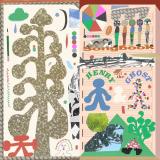
On his new album, Micha Acher rearranged compositions for bands such as Tied & Tickled Trio and Ms. John Soda from previous years.
Why are we interested in ghosts? What fascinates us about the eerie? According to cultural theorist Mark Fisher, the allure that the eerie possesses is not captured by the idea that we „enjoy what scares us“. It has, rather, to do with a fascination for the outside. For that which lies beyond standard perception, cognition or experience, as he writes in his book „The Weird and the Eerie“.
In fact, also none of the 15 pieces from Henry and the Ghost is really scary. On the contrary, they all feel strangely familiar. Like revenants or doppelgängers, which in fact they are. They have all been released before. But in a different form. In different line-ups. With different band projects such as Tied & Tickled Trio, The Notwist or the Alien Ensemble.
With the „Songbook“, Micha Acher's aim was, as he says, to find out how the familiar pieces sound in a chamber music instrumentation. Therefore he met with Theresa Loibl (bass clarinet, piano), Timm Kornelius (bassoon), Markus Rom (guitar, banjo, electronics) and Simon Popp (drums, percussion) in his living room for a musical séance in the summer of 2022. The séance lasted two days. Afterwards, Markus Rom (Oh No Noh), added some haunting electronical ideas.
The mood of most of the pieces is melancholic. There are surprising twists and siren-like melodies. Just as ghost stories should be. However, most of the songs sound very light-footed. With their feet in pop, folk, jazz and classical music. Pieces such as „Johanna“ with its wheezing harmonium and spooky piano, or the dreamy „Modest Farewell“ on the other hand have a cinematic flair. Immediately faces and scenes arise in the mind. But at the beginning, there is „Hamlet“. It starts with ghostly electronics and merges into a calm, almost classical guitar piece. Could it be that the ghost of Hamlet's father is hiding between the strings?
„34E“ begins with a banjo. Then the deep humming of Micha Achers sousaphone and the other brass instruments kick in. In the slow, solemn „Aelita“, the sousaphone starts a dialogue with a children's piano. With the banjo and the other wind instruments acting as mediators. The title of „All Tomorrow's Past“ brings Velvet Undergrounds „All Tomorrow's Parties“ to mind. Another ghost from the past. What connects the two pieces is free-floating percussion, which accompanies the sumptuous melodies.
„Arc“ takes us on an exhilarating voyage at sea, with the sousaphone providing powerful propulsion. Towards the end, things get quite turbulent. With the clarinet stirring up the water, before the sea calms down again. „Henry and the Ghost“ is characterised by a ghostly mood change between major and minor. In „Radio Four“ the banjo with its stoic chords keeps the lively brass section in check. „Solid Ground“ is imbued with melancholy. „Space Minor“ takes us into outer space, with the power of sousaphone and percussion.
„Tomorrows“ is filled with cautious optimism. And the concluding „Nordlead“ turns out to be a revenant of the instrumental „N.L.“ from The Notwist's legendary album „Shrink“ from 1998. In the new version, the piece sounds like a distant echo. One that also brings to mind how Micha Acher's music has evolved. Which new worlds he explored and opened up since the nineties. And yet Acher's signature is recognisable in every single note of this fascinating „Songbook“.
- A1: From Loch Raven To Fells Point
- A2: Calliope Wailer
- A3: Tightroping
- B1: Critical Masses
- B2: Reservoir Drop > The Summer Song
Jeffrey Alexander and the Heavy Lidders return with their best album yet, and a UK tour this August. Press by Silver PR
‘’On the alternate timeline where the Meat Puppets inherited the bulk of the Grateful Dead’s tourheads when Jerry Garcia died in 1995, none of this would be necessary, because Jeffrey Alexander and the Heavy Lidders are a household name for evolving their own musical space that overlays dusty folk, cosmic jazz, deep psych, free improv, and even (gasp!) indie rock, building an audience that ranges from open-eared curiosity seekers to deep committed music weirdos that’s also yielded the Heavy Lidders, an infamous sub-cult of concert tapers that you’re already sick of hearing about. A lot of other things are better over on that timeline, too.
But in this consensus reality (and probably the other one, too), Liquid Donnon catches the Lidders at their heaviest, “heavy” in the Lidderverse being far from a monolithic musical idea. There’s heavy like the album-opening “From Loch Raven to Fells Point,” one of several tracks with elegant and gnarled conversational jams featuring the core Lidders lineup of Alexander alongside guitarist Drew Gardner and bassist Jesse Sheppard (both of Elkhorn) and drummer Scott Verrastro. But there’s heavy, too, like “Calliope Walker” and “Tightroping,” featuring Gardner shifted to dream-space vibraphone, the former with saxophonist Tacuma Bradley, the latter with Christina Carter of Texas noise-psych legends Charalambides on veil-crossing wordless vocals, her first collaboration with Alexander in some 20 years.
But then there’s also heavy like the cover photo of Alexander’s late friend and album namesake Donnon, taken at a Dead show at Rich Stadium in Buffalo in 1989, a spirit threading through the songs and weaving unexpectedly into Alexander’s life decades later, emerging especially when Alexander passed through a near-death experience of his own. But, taken together, the different heavies of Liquid Donnon add up into a state of musical grace, where all the Heavy Lidders from all the universes come together as one. Just, like, imagine.
Convened in 2019 on Alexander’s relocation back to his native east coast, the Heavy Lidders are the latest hard-touring expression for the guitarist’s music, joining a vast and tangled discography (and tape list) that includes the beloved long-running west coast Dire Wolves Just Exactly Perfect Sisters Band and, before them, the Iditarod and Black Forest/Black Sea, as well as a bushel of solo play-all-the-instruments projects, a stint with Jackie-O Motherfucker, sessions with Kemialliset Ystävät and Avarus and others, and you’ll have to keep digging for the rest.
And while it’s not hard to find tapers at Lidders gigs (and they encourage you to be one), or to track themes and songs over Alexander’s many live releases, Liquid Donnon makes a new primary text, the original versions of six new pieces for the repertoire. The album closes with a devastating pairing of “Reservoir Drop” into “The Summer Song,” floating into a duo between Alexander’s guitar and Carter’s voice. Catch a half-dozen Lidders shows this summer, and you might not ever catch them playing it like that again, but you just might open the doorway back to that better place." - Jesse Jarnow (writer, WFMU DJ, producer and host of The Good Ol’ Grateful Deadcast)