Suburban Base legend Mark XTC is back! Starting out at The Hacienda, and working in the mighty Eastern Bloc record store at the height of the rave scene, DJ XTC was on every major Rave flyer nationwide throughout the period. Going on to form Da Intalex with partner Marcus Intalex, releasing incredibly influential Drum & Bass during the earliest stages of its evolution. Mark XTC is currently a resident on Kool FM continuing to bring cutting edge music to a worldwide audience.
Collectors that have his Subbase releases Intalex Productions presents The X, and Ill Figure can now grab the next instalment! A four track EP of banging tunes celebrating the golden eras of Rave and Drum & Bass!
Genuine uncovered unreleased DATs from the period, Mark breaks down some info on these hidden gems!
'Unite' - Mark made this in the mid/ late 90s after working with vocalist Charmaine. Big distorted bass, 'Amen' drums and his trusty EMU sampler.
'To The Beginning' - Another late 90s creation, adding some P-Funk to the Amen drums with a Sub Bass filling the tune with heavy vibes.
'Oldskool Massive' - A more recently made dedication to the classic Belgium techno of early rave, with heavy 4/4, acid riffs and of course those distorted stabs and hoovers.
'Taking It Back' - Mark made this in 1998, and even then was taking you back to that classic 94 Jungle sound and loops.
Search:add
Next up on _NRV, CHKLTE takes us on a mesmerizing journey. "Enchanted Alley" establishes a hypnotic groove with deep basslines, perfect for late-night sets. "Fallen Algorhythm" delivers a dynamic auditory experience with a driving tempo and ethereal synths. "The Other One Follows" features a rolling bassline and snapping percussion, a straight groove torpedo launched from the kind of sub we'd rather be around. Cristi Cons's remix of "Fallen Algorhythm" adds a pulsating bassline and slicing percussion, creating a high-energy rave weapon sure to vaporize anyone standing in front of the speakers, all while maintaining the essence of the original, if you were at Sunwaves 32, there's no way you didn't hear this bomb drop.
Rain and experimental music have had an interesting connection for decades. Under the umbrella of American film music promotion, Hanns Eisler was already looking for "Vierzehn Arten, den Regen zu beschreiben” (fourteen ways to describe the rain) in 1941. A good 20 years later, The Cascades interpreted the periodicity of rain as a rhythm of mourning. For the Beatles ("If the rain falls, they run and hide their heads"), the precipitation inspired the band to use backward running tapes. However, it seems that there has always been a lot of rainfall in popular music. In the early seventies, David Toop and Paul Burwell even had a band project with the great name Rain In The Face...
That was a long time ago and today, rain, which in the age of climate catastrophe mainly occurs as heavy rain or an enervating endless loop, has lost a great deal of its inspiring quality. Perhaps as a reminder of the musical quality of rain, but knowing full well that it can only be enjoyed in theory, Razen call their new album "Rain Without Rain". In the music of the Brussels collective led by the two multi-instrumentalists Brecht Ameel and Kim Delcour, it certainly pours down on the roofs. In fact, the album opens with the sound of pouring rain before we hear the sequence of an oscillator played through a guitar amp on the first track „Lazy, Lazy Eye“.
The album is the captivating result of an one-night mobile studio field recording in an abandoned pedestrian tunnel in the centre of Düsseldorf, and it is finding beauty with brutal(ist) means: recorder, oscillator, guitar amp and reverberation, two musicians and four microphones, early electronics versus Early Music. “Suicide meet Hildegard von Bingen”, as Stefan Schneider, who recorded the session, admits. “Ghostly occurrences”, he adds.
Brecht Ameel states: “We do put a lot of weight and care on acoustics. On some of our recordings, the room acts as another band member, or as the main ‘mixing board’. Most of the albums we have recorded so far are not mixed in the traditional sense: they are simply „captured”, and we let the room decide what is left on the tapes. The studio recordings, then, give us the possibility of bringing other elements to the fore; precision of interplay, or tiny variations in breathing.”
The group Razen exists since 2010 and has since released numerous records on labels such as KRAAK, Marionette and Hands In The Dark. "Rain Without Rain" is their debut on the Düsseldorf label TAL. If there has been an increased international interest in experimental music from Belgium in recent years, this is not least due to musician collectives such as Razen. In terms of its electro-folkloristic intensity and instrumentation, Razen's music is quite unique worldwide. What does Razen actually mean? “We took the word from a poem by Paul Van Ostaijen, not specifically because of its meaning but because of the way it looked on paper”, Ameel explains. “But the meaning goes in the direction of ‘thundering / raging / speeding’ … although we prefer playing with a strong notion of restraint, building our world from (and with) silence.”
Olaf Karnik, Köln 2024
- A1: Hosanna (Meridian)
- A2: First Born (Redeemed)
- A3: When Angels Speak Of Love
- A4: Doubleupptown (Larocque)
- A5: W-I-S (Above Every Other)
- A6: Pistol Poem (Leadbelly)
- A7: Whip Appeal (Pipn8Ez)
- A8: Seven Trumpets
- A9: Giz'aard ($Uckets)
- A10: Helpmeet (Iyadunni)
- B1: Flir2A
- B2: U&Me (Decemberseventeen)
- B3: Illbethere, 4Everandever
- B4: Alàáfía (Cita's World)
Original Cover[27,52 €]
Honour's debut album is a ligament stretching from Lagos to London and to New York, curling across the diaspora and brushing the darker hues of blues, hip-hop, free jazz, ambient, gospel with Christian mythology and Yoruba folklore. As cinematic as it is painterly, Alàáfíà is a meditation on themes of life, death and love that pulls inspiration from the unexpected poetic profundity of casual conversations, field recordings, literature, ephemera, or personal archives. The result is an impressionistic vision in Black and Blur that both exhausts and implicates language_substantiating a mythos proposed by Fred Moten that sublimates boundaries between everywhere and nowhere; history and the present; the individual and the universal. Alàáfíà delineates a gothic landscape cut by overdriven beats, swooping orchestral blasts, choral bursts and ear- splitting fuzz, where the fleshly and spiritual realms commune. Dedicated to Honour's late grandmother, the title track began to take form after their last embrace and remains steeped in her influence and spirit_a tape-saturated composition that starts in Lagos and ends in London's smoke-stained cityscape, the song's dream-like quality developed out of the artist's grief and PTSD coping with this loss. Beneath the stretched guitar drones and stuttering loops, their grandmother's shared faith bubbles to the surface. "When Angels Speak of Love," borrows its title from two works by Sun Ra and bell hooks, respectively. Sculpting echoes of praise music into disorienting spirals perforated with syrupy DJ Screw-inspired breaks and sharp splinters of melancholic guitar, "When Angels Speak of Love" engages a conceptual dialogue with the spirits of both late thinkers, folding them into Honour's pantheon of ancestral guides. The album's ninth track, "Giz Aard ($uckets)," is a dirge of regimented drums which anchor this somber melody as it whirls into a blizzard of heartache, uncertain if its consequence will be death or eternal joy. The album's sole lyrical offering, "Pistol Poem (Lead Belly)," begins with a darkly humorous bar, "He went thru hell and back/ came back/ 2 get the strap," that swells into a haunting allegory based on the life of Philip "Hot Sauce" Champion. A modern take on the Blues, Honour's lyrics reify the artist's status as a student of both literature and popular culture, crossbreeding the artist's clever wordplay with additional references to Richard Pryor, Robert Johnson, Kelly Rowland & Bryon Gysin. Setting core principles of hip-hop, R&B, jazz and gospel music to atemporal soundscapes and compositions, Honour crafts a record that marinates in its own knotty contradictions. The ghosts that sit on the artist's shoulders have never been more tangible than with this emotive debut.
returning, dream’ is the second album from Paradise Cinema – the‘Fourth World’ inspired project led by multi-instrumentalist Jack Wyllie (Portico Quartet/Szun Waves). While Wyllie’s other projects move between tightknit electronica, widescreen minimalism and improvised ambient sounds, ‘returning, dream’ contains nods to Jon Hassell, Terry Riley, Don Cherry and Midori Takada as well as more contemporary electronic, ambient and non-western music and even draws inspiration from physics and science fiction.
The first, eponymous, Paradise Cinema record, released in 2020, was recorded in Dakar (Wyllie lived in Senegal for a while in the late 2010s) and featured the dense rhythms of Mbalax music combining with Wyllie’s textural saxophone and synth playing, but here he takes a step into the unknown:
The music is no longer built primarily around the rumbling
propulsiveness of Mbalax, but takes its inspiration from the Many-Worlds Interpretation of quantum mechanics, which suggests that there are many different worlds that branch off from our own. Wyllie explains: “It is an imagining of what music could be like in a different time and space, ancient and futuristic from everywhere and nowhere at once. I was listening to a lot of physics podcasts when I created this record. I loved the many-worlds interpretation of quantum mechanics; about the multiple paths we are taking each time a quantum decision is taken. The different worlds then splitting off like branches on a tree. I could imagine different histories and worlds and multiple versions of myself, others and even other societies existing. In this album I’ve dug into these ideas andattempted to make music that would come from those different spaces, trying to poke my finger through to the other selves and stories. Effectively a form of composed science fiction, the music is an idea of what might be occurring or have occurred on a branch of the tree in a different world. But I like to think the tracks might actually have been composed somewhere or sometime.”
Created in London by Jack Wyllie with additional recordings from Dakar and Sydney, ‘returning, dream’ blends sounds that do not typically live together. It features Khadim Mbaye (sabar drums) and Tons Sambe (tama drums) who provide the dense Sengalese rhythms, plus Szun Waves colleague Laurence Pike, also on drums.
The mighty U Roy is the originator, the man who put the DJ phenomenon on the map and made it an artform. From Kingston Jamaica to the corners of all the Dancefloors, Clubs and Sound Systems across the world. U Roy (B. Ewart Beckford, 1942, Kingston, Jamaica) began his musical career spinning records for Doctor Dickies Sound System way back in 1961. The mid sixties saw him working for Sir George The Atomic before moving in 1967 to the man who best shaped his sound King Tubby on his Home Town HI - FI. Tubbys work in the dub field, dropping out vocals on his versions for the Sound Systems allowed U Roy to voice over these spaces adding to the excitment of the Dance!!!
U Roy moved into the recording arena firstly cutting two disc's for Producer Lee Perry 'Earths Rightful Ruler' and 'OK Corral' and then following this with 'Dynamic Fashion Way' and 'Riot' for Producer Keith Hudson. Producer Duke Reid seeing the protential in this new found form brought U Roy to his Treasure Isle Studios to voice over his back catalogue of Rocksteady Hits. His first three releases for Duke Reid 'Wake The Town', 'Rule The Nation' and 'Wear You To The Ball' held the Top 3 positions for 12 weeks in early 1970's.
We have compiled some of U Roy's best loved cuts from his mid 70's period when all were still looking at him for guidence. The opening cut Call On Me sees him working over Delroy Wilson's 'Got To Be There'. You Never Get Away gets U Roy answering Delroy Wison's 'Keep On Rocking'. Johnny Clarke's 'Time Gonna Tell' with rootsy bassline turns into Every Knee Shall Bow. Cornell Campbell the Gorgon himself gets his 'Check Mr Morgon' turned into Gorgon Wise. Johnny Clarke's Hold On gets reworked. Jeff Barnes 'Blowing In The Wind' tuned into Number 1 and alongside King of The Road which sees Lennox Brown blow his saxophone over the instrumental 'In The Swing of Things', was one of U Roys first releases. Linval Thompson's 'Let Jah Arise' is versioned to Joyful Locks. I Originate which lends us to the title of this compilation, says it as it is, a classic built over Dave Barker's 'Shocks of Mighty'. Linval Thompson again provides the backbone with his Cool Down Your Temper cut for U Roys version. The mighty Burning Spear's Creation Rebel although providing our next track, it is Johnny Clarke's version that gets worked over. Leo Graham's 'Birds of A Feather' turns into Stick Together. Soul Syndicates instrumental 'Goliath' grows into Riot. A big hit for Max Romeo Wet Dream sounds great under U Roy's new rendition.
Two extra tracks for the CD release of this album sees the great voice of Slim Smith on his 'Let's Stick Together' becomes ‘Ain’t To Proud To Beg’ and Cornell Campbell's 'Stand Firm' works with
U Roy to sign us off with ‘I Shall Not Remove’. A fine collection i hope you agree to the Daddy of all DJ's who in his own words ''I Originate, so you must appreciate, while the others got to imitate'' says it all really……
"A Dream Is All We Know" lässt die auf Nylonsaiten basierenden Arrangements von "Everything Harmony" hinter sich und kehrt zu dem Stil zurück, den die Brüder erstmals auf "Do Hollywood" vorstellten. "A Dream Is All We Know" verbindet die Theatralik und den Glam-Rock des Lennon-McCartney-Songbuchs mit zeitgenössischen Erzählungen, explosiven E-Gitarren-Riffs sowie den sonnigen Harmonien und ausgeklügelten Aufnahmetechniken der Wilson-Familie und bringt die Liebe zum Detail und die Fähigkeiten der Brüder als Multiinstrumentalisten zum Vorschein. Mit fast einem Jahrzehnt an Songwriting auf dem Buckel zeigt "A Dream Is All We Know" deutlich die Entwicklung der D'Addario-Brüder von rehäugigen Teenagern, die Musik machen wollten, die an ihre Helden erinnert, zu jungen Männern, die die Bühne mit PHOENIX, BLEACHERS, ARCTIC MONKEYS und ihrem musikalischen Helden TODD RUNDGREN teilten, von ELTON JOHN, THE ZOMBIES, GERARD WAY und IGGY POP gelobt wurden und sich zu visionären Songwritern und Arrangeuren entwickelten, deren Werk selbst eine Quelle der Inspiration für andere Künstler ist. "A Dream Is All We Know" wurde komplett mit historischem Equipment aufgenommen und von Brian und Michael selbst abgemischt und gemastert. Das Album zeigt THE LEMON TWIGS, wie sie nach Jahren der Perfektionierung ihres Handwerks mit einem neu entdeckten Sinn für Intuition spielen.
Reissue
'Find Me Finding You', the new album from the new organization called the Laetitia Sadier Source Ensemble, manages to strike new chords while touching familiar keys in the song of life.
From its percolating opening beat, 'Find Me Finding You' locates new systems within the sound-universe of Laetitia Sadier. This in itself isn't a surprise - Laetitia has relentlessly followed her music through different dynamics and into a variety of dimensions over the course of four solo albums since 2010 (not to forget her three albums with Monade and the long era of Stereolab) - but the nature of the construction here stands distinctly apart from her recent albums. Laetitia was inspired by a mind's-eye envisaging of geometric forms and their possible permutations. As she sought to replicate the shapes in music, this guided the process of assembly for the album.
Part of the freshness of 'Find Me Finding You' comes from working and playing within the Source Ensemble and exploring new sound combinations via a set of youthful and evolving musical relationships. Laetitia recognized the energy of the tracks in their initial form and sought to preserve their vitality by not retaking too many performances - instead, the rawness in the tracks was retained and refined at the mixing stage, maintaining an edge throughout. When we hear synth lines diving, lifting and drifting, unusual guitar textures, the plucked sound of flat wound bass strings or the bottomless pulsing of bass pedals stepping out of the mix with an exquisite vibrancy, this is the sound of the Source Ensemble.
A key to Laetitia's music is her use of vocal arrangements. Throughout 'Finding Me Finding You' the shifting accompaniment creates space to bring this element gloriously forward. Arranged by Laetitia with Joe Watson and Jeff Parker making string charts that were subsequently transposed to vocal parts for several songs, richly arranged choirs of voices provide depth along with the thrilling presence of extra breath in the sound. Laetitia's community-politic is well-served by the groups of voices lending support to the machining of the song craft, providing additional uplift to her quintessentially forward-facing viewpoint - as well as massed voices from three different countries sharing space in harmony.
Working in collaboration is Laetita's tradition and a key to this album's view on being free together. The designation of Source Collective implies a new togetherness phase, alongside long time collaborators Emmanuel Mario and Xavi Munoz, keyboard and flutes parts played by David Thayer (Little Tornados) were essential contributions, as well as further keys, synths and electronics from Phil M FU and several intense guitar sequences from Mason le Long. Chris A Cummings (aka Marker Starling, Laetitia's favourite composer) graciously wrote 'Deep Background' for her. The duet with Hot Chip's Alexis Taylor on 'Love Captive' (not to mention Rob Mazurek's distinctive coronet playing) gives voice to an ideological cornerstone of 'Find Me Finding You'
ercury Rev take you on a swan dive into the mystic: a rapture of ballad-dreams and emotional memoir at the crossroads of The Dharma Bums, Pet Sounds and Side Three of Electric Ladyland. A profound, transcendant trip from the psychedelic explorers who brought you Deserter's Songs.
David Fricke In upstate New York, deep in the seam between the Catskills mountains and the Hudson Valley, a richly swelling, spellbound sound emerges, eddying and flowing like the local Esopus Creek, or in the slipstream of the grander Hudson river, carrying the flotsam and jetsam of our hopes, dreams, fears. A sound composed of organic and electronic; guitars, keys, brass, strings, woodwind, drums - and a voice of incantations, tapping streams of consciousness that similarly eddy and flow.
Spiritually, literally, psycho-geographically: where else does Mercury Rev’s ninth album Born Horses spring from? This cascade of gleaming, glistening psych-jazz-folk-baroque-ambient quest that searches its soul but can never truly know the answer? A sound and vision linked to their exalted past whilst quite unlike anything they have created before?
The answer is somewhere between the homes of founder members Jonathan Donahue (the hamlet of Mt Tremper) and Grasshopper (the town of Kingston), in their veins and brains of their now-legendary tapping of musical cosmology, and the vital presence of new permanent member Marion Genser (keys), plus long-term ally Jesse Chandler (keys) and guests Jeff Lipstein (drums), Martin Keith (double bass) and Jim Burgess (trumpet). A place that feeds off the levitating mood of their last album, 2019’s expansive tribute Bobbie Gentry's The Delta Sweete Revisited, and the instrumental psych explorations under the names of Harmony Rockets and Mercury Rev’s Clear Light Ensemble, and the spiritual guidance of avant-garde artist Tony Conrad and Beat poet Robert Creeley, to whom Born Horses is
dedicated.
Belarusian post-punk / synth pop group Molchat Doma have always exuded the kind of brutalist aesthetic of the architecture that adorns their album art. It's cold, gray, imposing, industrial and yet there are human hearts beating within those foundations. In the wake of their breakthrough success in 2020, the trio endured a polarity of experiences, from the nadir of an uprooted life and forced relocation away from their native Minsk to the apex of headlining massive shows across the world. It was in this headspace that the band settled into their new home of Los Angeles to finish writing their fourth album Belaya Polosa, a testament to change in difficult times, a love letter to the digital pulse of the `90s, and a technicolor reinvention of the band's somber dancefloor anthems. From the opening synth swell and drum machine throb of "Ty Zhe Ne Znaesh' Kto Ya," to the goth / post-punk austerity of "Son", to the swirling electronic textures mixed with reverb-drenched guitar flourishes, expansive space, and yearning vocals of title track "Belaya Polosa" - that suggests Depeche Mode at their most reflective or The Cure at their most downtrodden - to the sultry and seductive "Chernye Cvety"_ a track reminiscent of Duran Duran's early `90s output in its fusion of dreamy guitars and authoritative mechanized beats _ and the interwoven layers of instrumentation, soaring chorus, and melodic sophistication of "Ya Tak Ustal", it's clear that Molchat Doma are operating on another level. Molchat Doma gained following with earlier albums that sound like third-generation bootlegs of banned recordings from the Eastern Bloc made after a few key entries in the Factory Records catalog were smuggled in from the West. Belaya Polosa propels them into a new direction while retaining their cold minimalist delivery they're known for. The basement grime and dirty tape-head sound of their previous work are now making space for digital luster and shimmering production values. And while Molchat Doma's broadened aural spectrum adds a synesthetic power to Belaya Polosa, the mood remains rooted in stark and unflinching self-reflection. Molchat Doma retain the duality of being both cold and feverish in their delivery while pushing their music into expanded territories through an armory of new textures. The trio continue to harness the sound of harrowing beauty thriving under harsh realities.
Admittedly, I'm not a great salesperson when it comes to running our little label. I do my best not to give into hyperbole or build something up too intensely if someone has not heard a new artist yet. I prefer to simply present the music and let the listener decide how they feel about it. However, we live in an age when the "story" put together by publicists, labels, and managers are often the driving force of an artist's ascension into the zeitgeist. And for me, that's always felt rather artificial, even when the narrative is genuine. But every once in a while, a project comes along that takes on a life of its own. And I can say without a doubt that the growth of Pale Jay's reach since we first started working with him has little to do with conjured narratives or clever marketing, but more to do with how the music makes the listener feel. It's that simple. In fact, Jay is so enigmatic and without a narrative that the mere absence of a story has become the story. Who is he? Where is he from? What's next? Some questions are better left unanswered in my opinion, my friend. Including the question, "Why does this music make me feel so much?" You're better off just sitting back, disconnecting, and letting Low End Love Songs by Pale Jay wrap you up. Enjoy and spread the good word. - Terry Cole
"Low End Love Songs", more so than previous releases, is a diary in form of song. I knew I just had to wait for the songs to be ready to be picked, like ripe fruit from a tree. Each tune encapsulates a distinct moment in my life, with music serving as my means of processing complex and sometimes conflicting emotions. In this album, I depart from loop-based song structures towards more intricate and lush compositions. Latin influences permeate the music, adding new layers of rhythms and textures to my soul-music roots. - Pale Jay
Crime In Australia follows 2022's The Real Work, the first Party Dozen record that (some) people were actually waiting for; the one that Nick Cave sang on; the one that had a track that billy woods jumped on for a rework; the one that took them to the USA, Europe (twice), Japan, China and New Zealand; the one that saw Party Dozen hook up with a cool US label (Temporary Residence Ltd.); the one that made Bandcamp, Stereogum, Brooklyn Vegan and a whole swathe of Australian radio stations declare it their Album of the Day/Week/Epoch; and the one that made KEXP invite the band in for a live session, and made Sub Pop add to their hallowed Singles Club. The Real Work was not the first Party Dozen record, but it was in many ways where Party Dozen really started to put it all together. Crime In Australia continues to build on their arc, and elevates their ascent with a slew of new songs that are simultaneously more focused and more feral than anything they've ever done. And there are no guests on this one.
Aki is an emerging jazz collective led by drummer Anke Verslype. The core of the group consists of guitarist Willem Heylen, bassist Ruben De Maesschalck and harpist Marjolein Vernimmen. They perform atmospheric jazz with at its base uncomplicated, restrained melodies whose boundaries are pushed during improvisations.
With two previous EPs, "Warm Days" and "Niobe," aki has already impressed. In the fall of 2022, they surprised their audience with the debut of their first full-length album,
titled "Nader," released under W.E.R.F. records. This album featured an exciting collaboration with Joachim Badenhorst on clarinet, who added a new dimension to their sound.
For theirlatest album and upcoming tour, aki once again joins forces with Joachim Badenhorst and asked Niels Van Heertum (euphonium) as a guest. This expansion enriches the color palette of their music and brings out a new depth. Together they create a unique sound that takes listeners on a journey of warmth and melancholy, somewhere between cinematic landscapes, jazz and minimalism.
Isik Kural returns with Moon in Gemini, a luminous scrapbook of slow-flowing narratives couched in intuitive and symbolic storytelling. Bending a playful take on environmental music to the folk song form, Isik's vocals coo atop pastoral field notes, airy chamber instrumentation and archival recordings culled from a curious musical life. A tender pastiche coalesces across the suite of Moon in Gemini's fourteen pieces, and Isik invites the listener to daydream as-deep-as-possible. "The songs on Moon in Gemini don't mind being slower or taking their time to reach the listener," says Isik, who wanted the title to speak to the album's dreamy, liminal nature. "I enjoyed how the phrase could be used to describe an object, a time or a place simultaneously," he explains. Similarly and subsequently, these songs contain a multiplicity of sonic artifacts, moments and spaces that span Isik's rich musical career to date. With the bulk of the album realized between Amasya, Turkey and Isik's current home in Glasgow, in both domestic and studio recording environments, additional tracks unearthed from his personal recording archive lend their lush patina. The record emerged as a fertile space to reimagine a handful of previously unreleased songs and unfinished ideas spanning the past fifteen years of his life and work, including streetside sounds documented while growing up in Turkey and recordings made while studying music engineering in Miami, Helsinki and Glasgow. Looking to the more recent past, Isik found himself wanting to build upon some of the methodologies and textures explored on his 2022 album in february, seeking a newly intimate, vocal-forward sound. He points to the track "film festival" from that album as a door through which to enter Moon in Gemini, where sample-based arrangements are presented in the context of asymmetrical "build ups and progressions" and ambience and vocals intertwine. Inspired in part by listening to iconic, if not sometimes misunderstood, singers such as Nina Simone, Aldous Harding and Ed Droste of Grizzly Bear, Isik aimed to carve out a new space for his voice on Moon in Gemini, experimenting with novel recording and mixing techniques. Captured at his aunt's farmhouse in Amasya during an extended three week recording session, we find Isik's vocal high in the mix, front-and-center and on newly expressive terms. As a songwriter, Isik is an intuitive and playful lyricist who allows his deep love of literature to flow through his off-kilter texts. Here, echoes of Silvina Ocampo's poem "Dialogues of the Silence" reverberate from the margins of "Most Beautiful Imaginary Dialogues". Likewise, Elliott Smith and Virgina Astley shapeshift through "Behind the Flowerpots," some lines of which were based on misheard lyrics from Smith's "Stickman" and Astley's "Some Small Hope." Attuned to the magic of happy coincidences, other unexpected "themes and connections between tracks flourished" during the recording process, resulting in some songs being more "thematically and lyrically connected to each other compared to previous records." The duos "Prelude" and "Interlude" as well as "Grown One Iota" and "After a Rain" explore connected stories, while "Almost a Ghost" and "Behind the Flowerpots" serendipitously emerged out of a conversation with Stephanie "Spefy" Roxanne Ward, whose balmy vocals heard highlighting in february return and call out to Isik's in sweet dialogue. Plumbing these new potentials of structure and songwriting, Isik also developed a taste for an expanded sonic palette, one enriched by the lulling undertones of live woodwinds and strings. The resulting collaborations with flutist Tenzin Stephen, harpist Kirstin McCarlie and clarinet player Giulia Tamborino envelop the record in an altogether "dreamier sound," swaying pastel and awash in lunar light. Moon in Gemini, brimming with natural imagery and lullaby-inflected tones, tunes into states of being where the wonder filled sound of everyday is heard and felt, perfectly imperfect in its poetry; where the invisible steps forward; where dauntless ghosts wait around every corner and play enriches the soul; where bird song fills sun-soaked afternoons and carries us on its wings into each enchanted evening. Isik Kural's Moon in Gemini will be released on vinyl, Japanese import CD, and digital editions on September 6, 2024. On behalf of Isik and RVNG, a portion of the proceeds from this release will benefit Mor Çaty Women's Shelter Foundation, whose social work at their solidarity centers and shelters supports women building lives unhindered by gender-based discrimination and male violence under free and equal conditions.
On August 16, Toronto-based musician and producer David Psutka aka ACT! (fka Egyptrixx / Anamai / Ceramic TL) will release his latest project ‘Face to Face, Day by Day’ for his own Halocline Trance imprint.
This is is Psutka’s third album proper as ACT! following the release of the “sonic mixtape” ‘Universalist’ in 2018 and the augmented reality soundtrack ‘Grey Matter AR’ in 2021; a series of Snapchat filters created by artist Karen Vanderborght and soundtracked by ACT! which explored the poetic and existential potential of AR and social media.
“Aesthetic accidents in the periphery of the ‘work’ can be the message. In 2018, at an Egyptrixx concert at Bagni Misteriosi de Teatro Franco Parenti - a gorgeous, sprawling outdoor pool theatre in Milan - I had a clarifying moment. Gigs around then had mostly been in pummelling, dark music venues, so I wasn't prepared for this expansive space (and the thoughtful work of the organisers who had layered sheets of plastic film on the pool to parallel eco-materialist themes from a previous album). It was the midday soundcheck that struck me most - brittle digital sounds from the set echoed off the colonial Milanese facades and ricocheted down the Via Carlo Botta, pinging off buildings in the distance and clashing with the noise of traffic, tourists and whatever else. It was a strange, collisionist moment, and a reminder that my essential approach to music is, above all, a preoccupation with the materiality of sound.
Everything on Face to Face, Day by Day began as an improvisation. Openness to accidents and the emotional complexity that comes from centering them in composition has become important to my work, and helps the music go beyond the possibility of what is playable, imaginable. I also wanted to channel adventurous solo pop records of the 1970’s and 80’s, like Yasuaki Shimizu, Jon + Vangelis and Stevie Wonder. These came from an interesting era in commercial music as studio production techniques became increasingly formalised as compositional devices, like AMS RMX16 percussion sounds and early digital stereo effects.
Like many musicians, I’ve been travelling and performing less since the pandemic and as a result, have wanted studio sessions to feel more collaborative and improvisational. There were great writing and recording sessions for this album. Vox, synth, sax and guitar jams - much of what ended up on the record isn’t edited much, if at all. I jammed a sm57 into Colin Fisher’s sax bell and created feedback loops using various preamps and distortion units. The clunky sounds were sampled and used as percussion elements. I also had a great synth jam session with Jeremy Greenspan at Barton Building Studio in Hamilton, which was recorded by filmmaker Liz Adler.
I’ve had a few months to sit with this album and see clear throughlines connecting it to previous projects. There are aspects of the experiential and structuralist sound design ideas from the EGYPTRIXX records; and also some arrangement tricks borrowed from ANAMAI - specifically, the use of interruptionist sound events. Perhaps most of all, it feels connected to the Ceramic TL + Ipek Gorgun record ‘Perfect Lung’ and its splattered take on musical complexity. “ (David Psutka)
In addition to ACT!, Psutka has released music with numerous projects including Anamai, Egyptrixx and Ceramic TL, he has collaborated widely with artists such as Junior Boys, Ipek Gorgun, and Kuedo as well as Jessy Lanza (2016) and an official remix for Massive Attack’s ‘Hymn of the Big Wheel (2012). The contributions on this album, from Robin Dann and Ben Gunning, reflect the deeply collaborative nature of the Halocline Trance label and the Toronto creative scene more broadly.
Many of Psutka’s releases have received critical acclaim from media outlets such as Pitchfork, Exclaim, The Quietus and Resident Advisor. As a live performer, he has toured extensively including performing at Sonar Festival, Roskilde, Mutek, MOMA PS1 Warm-UP and CTM Festival. He’s also presented sound installations at various institutions such as Galeria Civica Commune di Modena, and Art Gallery of Ontario (AGO).
In 2015, Psutka launched Halocline Trance as a home for his various sound projects, events and collaborations. Now a creative collective and label, it has grown to include a diverse array of artists including Casey MQ, Xuan Ye, Myst Milano, Colin Fisher and others. The label is described as “genre-agnostic” and conceptually open, supporting work across a wide spectrum of creative fields including soundtrack recording, AR design and traditional artist albums. Their impeccable roster also includes, theorist/improviser Eldritch Priest, and AR/VR artist Karen Vanderborght. In recent years, Halocline Trance has established itself as a platform that facilitates many of Canada’s most exciting creative music projects. Many of the releases have received critical acclaim from outlets including Pitchfork, Exclaim, Bandcamp and Resident Advisor.
- 01: Johnny April - She Had A Pikanese (Feat. Mat Matthews Quartet)
- 02: Lu Elliott - Common Sense
- 03: Lloyd Fatman - No Big Thing (Pt.1&Amp;2)
- 04: Billy J - Teacher Teach Me
- 05: Wayne Johnson - Scram Gravy Ain&Apos;T Wavy (Feat. Brigade)
- 06: 4 Dimensions - Hipper Snapper
- 07: The Villagers - Funky Broadway
- 08: The Rippers - Honesty
- 09: Exceptional Citizens Band - Proud Mary
- 10: Gus Brendel - Sax On The Rocks
- 11: The Hornets - Seven Days To Tahiti
- 12: Bret Breitinger - Jive Samba
- 13: Downtown Trio - Summertime
- 14: Onyx - Break It Loose (Pt.1)
- 15: The Shake And Bake Band - Shake And Bake (Pt.1&Amp;2)
- 16: Lou Jackson - Outside Looking In
- 17: Energy Crisis - Tough Times Blues
- 18: Soul Unlimited - Do It
- 19: Soul Unlimited - Darkside Of Town
** INITIAL 400 LPs CONTAIN A BONUS 7" SINGLE **
MOVEMENTS Vol.12 – A bag full of rare rhythm & blues, mod-jazz, and mid 70s funk.
Side A starts with rhythm & blues from the 1960s. Most of the tracks were pulled from hopelessly obscure 7" singles. The only names of which some of you might be familiar with are most likely Mat Mathews and Lu Elliott. However, both original 45 RPM singles are pretty hard to find these days, especially in playable condition.
Side B is all about deepfunk this time. "Hipper Snapper " is a prime example of that genre. Some say its groove is reminiscent of Charles Wright's "Express Yourself. Agreed! The Villagers are responsible for the first 'aha' moment. Their (previously unreleased!) version of "Funky Broadway" would have certainly astounded even Dyke & The Blazers. Representing Germany on this volume: The Rippers, also called the "Offenburg Beatles"! Back in the USA, John Fogerty has probably never heard of this heavy school-funk cover of "Proud Mary". Drum breaks galore!
Side C begins with another German contribution. Saxophonist Gus Brendel delivers a mod-jazz belter of the highest order as do The Hornets. Definitely sure-shots for any dance floors! High time for 'aha' moment #2. Many bands have tried their hands on a cover version of the Nat Adderley jazz classic, incl. vibraphone player Bret Breitinger! The perfect choice to finish this side is Downtown Trio's smooth and groovy cover of Gershwin's "Summertime ".
Side D is reserved for proper 1970s funk. ONYX's "Break It Loose " has become a certified Rare Groove classic. Here you can enjoy it for the first time with the blessing of the band! Glenn Doughty and his Baltimore Colts Shake and Bake Band of the 70's is the first musical group consisting of former NFL All-Pro players that Tramp Records has partnered with in its history! Watch out, "Shake and Bake " will be re-released on a good old 45 RPM single, too!
Those of you who have been enjoying the detective work of the people behind the label over the past 21 years know that the Movements series can be easily considered as the flagship compilation series on Tramp. So, after having listened to the entire selection of this brand new volume we sincerely hope that we will have achieved our aim to surprise, delight, and enlighten you once again!
Key selling points:
- initial 400 LPs contain a bonus 7" of a SUPERRARE funk 45
- incl. full album download code
- deluxe double-gatefold LP with detailed liner notes & unseen photographs
- ALL but three songs appear on CD, LP & digital for the very first-time
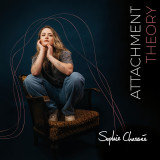
Gemeinsame Auftritte mit weltbekannten Gitarristen wie Jon Gomm, Joscho Stephan oder Peter Finger, sowie Engagements als Live-Bassistin bei Alli Neumann oder der Band AnnenMayKantereit. Mit letzterer spielt Chassée bis heute in ausverkauften Hallen in Deutschland, Österreich und der Schweiz und veröffentlicht ihr 4. Studioalbum auf Roof Music!
'Attachment Theory' (VÖ: 06.09.24 via ROOF Records) ist das neue Album von Sophie Chassée. Insgesamt zehn Songs, die Herzensbrüche und kaputte Beziehungen verhandeln, als gäbe es da tatsächlich eine Theorie, eine Formel, um diesen verdammten Schmerz erträglicher zu machen. Und wenn es sie gibt, dann, das macht 'Attachment Theory' klar, muss diese Formel lauten: Gezupfte Gitarren a la Ben Howard, Tracy Chapman oder Andy McKee addiert mit einem wunderbar zarten, warmen Colbie-Caillat-Gesang und multipliziert mit großen Folk-Popmomenten, wie man sie noch aus frühen Taylor Swift-Songs kennt. Dazu Lyrics, die so klar alles 'Toxische' zurück in die Dunkelheit der Nacht singen, dass da nur noch Licht bleibt, etwa in 'What Fathers Do: Your words don’t met your actions/ You never heard of self reflection'. Mit 'Attachment Theory' erscheint nun bereits das vierte Studioalbum der Singer-Songwriterin. Da sind viele Genres, mit denen man Chassées Musik zu beschreiben versuchen könnte: Modern Fingerstyle, Folk oder Acoustic Pop. Vielleicht reicht es aber auch, diese Songs als das zu benennen, was sie sind: Große, ehrliche, tiefe Lieder. Solche, die die Landschaft vorbeiziehen lassen, Pflaster über die Wunden auf der Seele kleben – und die Hoffnung ein bisschen heller leuchten lassen.