Mint Condition - A record label focused on excavating the outer fringes of classic House and Techno. Unreleased mixes, classics, overlooked gems and never heard before material, mined from the last 30+ years of contemporary dance music are the order of the day. From Chicago, Detroit and New York to London and beyond. Mint Condition have got their digging hats on to bring you exclusive heat and those rarer than rare jams that have been in your wants list for years.
Dig in....
Eze-Ozo's 'How To Stay Alive' is a bonafide bass 'n' bleeps classic that has topped wants lists for decades. Originally released in 1991, this groundbreaking
2 tracker took the Warehouse Scene by storm and ensured it would never be the same again. 'How to Stay Alive' opens with lush pads and sparse percussion, the heavyweight sub-bass drops , then in come breakbeats that really deliver the funk. There's bubbling synth riffs and stabs aplenty, whilst sublime strings add
to the track's emotive quality. Over on the flip 'Kick The Break In' features more bass-bin rattling sub-bass, but rolls with an infectious acid line. The percussion passages are deftly programmed, as beak beats intertwine with more electro-tinged 4 to the floor rhythms, there's those ever essential bleeps and strings, both sinister and elevating give the track a more melancholic feel.
This very sought after slab of wax is an essential rarity that has achieved a cult status amongst the most discerning DJs and record collectors alike. It has been legitimately re-released with the full involvement of Ezo-Ozo, lovingly remastered by London's Curve Pusher from the original DATs especially for Mint Condition. 100% legit, licensed and released. Dug, remastered, repackaged and brought to you by the caring folks at your favourite reissue label - Mint Condition!
Buscar:add
As we emerge into the Now with a fresh perspective and renewed vigour, Red Laser Records usher in a novel epoch of Manctalo movements for our post-COVID enjoyment.
Entrusting piloting duties to four well decorated RL commandos, the EP serves to remind us all that despite everything that's happened, we can still find solace in red lasers, smoke machines and high-powered strobe lights.
Splitting open the collective dancefloor inertia is Kid Machine's 'Only Machines Allowed'.
A cybernetic b-boy jam straight outta the planet MEGOH circa 4044. Guided by electrified vocoder lines and a plutonium-grade, armoured groove this impenetrable battle rocket should issue the much needed power boost to get your body kinetics firing again when they release the e-barriers to hedonism.
Returning star fleet lieutenant Count Van Delicious has been collecting entities from the outer galaxies since his appearance on RL EP 9 ('Dark Fruit' w/ Senor Chugger).
Here he announces his return with an end-credits epic, an #inabiteveryoneelse theme from this young vet on a pants-off permo-buzz, up-scrolling through technicolored c64 visuals and deploying his now trademark zoopa-arps, euphoric synth stabs and thunderous low end shudder to deadly effect.
Meanwhile, Ste Spandex continues his cybernetic realignment surgery, dissecting a well circulated disco meme and adding voluptuous gender-neutral enhancements that'll be getting the next generation of androids frisky, despite their lack of reproductive organs. Fizzling synths, spherical repetition and a multi-dimensional mix of high voltage rhythms leaving that vocal line permanently downloaded in your memory cloud. No sharing necessary.
Scottish deep space observer Ernesto Harmon provides some cosmic ruggedness to close off our mission. Reinforced & galvanised low-end rhymix coalescing with humanoid synth expression and an infinite, carbon-free energy source keeping momentum plateaued through the morning after the night before. There's no off switch baby!
For astral travellers seeking solace in the new Now, EP12 kindly acts as an upgrade to your possibly dormant dancing system as you stumble out into the new nocturnal environment. Hopefully reminding us that the simple act of moving alongside one another in a pitch black, laser-guided club space hasn't changed that much...
Limited press, with artwork which could be the next top selling NFT, we urge our RL family to bag this collectable chronicle from the Red Laser Corp.
The Vicious Seeds from St. Petersburg have been putting out 45s with their blend of raw cinematic grooves and deep funk instrumentals for a while, here they introduce us to vibraphonist Pavel Chiznik, who adds his midas touch to the group's well seasoned rhythm section. Reminiscent of early CTI recordings and - of course - Roy Ayers, the band delivers their own version of summer jazz dope beats, with sample-friendly drumbreaks, funky basslines, psych guitars and lush vibes. With communication to the group largely cut off or heavily censored, we leave it to the music to do the talking and spread the band's message. "Make records, not war".
The disjointed space between personal happiness and global sorrow is
where Smrtdeath's new album it's fine makes its home
Written and recorded during the pandemic, one of the most dramatically isolating
experiences of our lives, the album finds Smrtdeath's Mike Skwark in a
surprisingly contented state, newly coupled up and living in bliss.'It's Fine' was
produced by Matt Malpass, who Skwark calls "fucking incredible." He's a Grammynominated producer who has worked extensively with Blink 182, along with other
artists surfing across similar genre borderlines as Smrtdeath, like Trippie Redd,
Machine Gun Kelly, and 311. His bombastic approach to sound blends perfectly
with Smrtdeath's near-spiritual use of harmony.
it's fine is loaded with amazing featured artists, a who's who in the pop punk
scene. The first song recorded for the album , "Adding Up," features Blink 182's
Mark Hoppus on vocals and guitar, and his presence brings an epicness to the
track. On "Sober," it's clear that falling in love has helped him grow up—but not too
much. Skwark calls the song, which features both Lil Lotus and Lil Aaron, the
result of "an internal conversation I've been having." It balances both the
seriousness of the subject with the fun he wants to leave behind perfectly.
"I like this album the most out of anything I've done, and I want everyone to like it
the most," Skwark says. He hopes to tour the record when the pandemic allows,
with a live band. "I want to do something less familiar to everyone, something
more like, Whoa. Something where I'm larger than myself," he says.
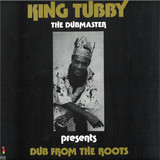
Tubby did three original dub albums, “Dub From The Roots, “The Roots Of Dub” and the third is “Brass Rockers” with Tommy McCook ’pon the flying cymbals. Where he mixed it with the horn going in and out in a dub way and one named “Shalom Dub” you can call Tubby’s too because he mixed the versions as they were off the forty fives.
King Tubby and Producer Bunny “Striker” Lee are intertwined in the birth of Dub Music. After discovering a mistake that made a “serious joke” (more of which later…) they went on to release the first pressings of this new musical genre namely “Dub Music”. Tubby’s vast knowledge of electronics and Bunny’s vast catalogue of rhythms would lay the foundations of what today is taken as a standard…. The Remix / Version cuts to an existing vocal tune.
Osborne “King Tubby” Ruddock was born in Kingston, Jamaican the 28th January 1941 and grew up in the High Holborn Street area of downtown Kingston. He studied electronics at Kingston’s National Technical College and also on two correspondence courses from the USA. When he had qualified, Tubby began repairing radios and other electrical appliances in a shack in the back yard of his mother’s home. His work in the early days included winding transformers and building amplifiers for Kingston’s Sound Systems. Tubby built his first Sound System in 1957 playing jazz and Rhythm and Blues at local weddings and birthday parties His reputation as a man who knew and understood both electronics and music grew steadily and as the sixties drew to a close. Tubby purchased his own basic two track equipment. He installed this alongside his dub cutting machine, a homemade mixing console and his impressive collection of Jazz albums in the back bedroom of his home at 18 Dromilly Avenue which he christened his music room.
Dynamic Sounds upgraded to sixteen track recording in 1972 and Tubby purchased, again with the help of a deal brokered by Bunny Lee. The old four track equipment and the MCI console from their Studio B. The four tracks now gave him far wider scope to work with and he began to create a new musical form where the bass and drum parts were brought up while the faders allowed Tubby to ease the vocal and rhythm in and out of the mix. It was only a matter of time before Tubby’s dub plate experiments began to make it on to vinyl and the first ever long playing King Tubby releases would feature a collection of his mixes to a selection of Striker’s rhythms. So please sit back and enjoy this historic set of sounds. Lovingly restored and with a few extra gems added to the CD editions. These releases were the first to carry the name of King Tubby and the first to credit the great musicians that contributed so much to the rhythms that made these albums possible.
Hope you enjoy the set……
Augustus Pablo's unique sound which was created around playing what could best be described asa child's musical toy, the melodica. It made him a very popular session player in the late 1970's and early 80's.It was not only his unique talent of playing the instrument but also his talents on a piano and the keyboard.
Pablo worked on a varied amount of sessions for all the top Jamaican producers but especially for King Tubby at hi studio in the heart of the Waterhouse district of Kingston Jamaica.
We have compiled a set of rhythms that have King Tubby and Phillip Smart at the controls and Augustus Pablo adding his musical flavour to the mix to make what we believe to be a great album...
Hope you enjoy the set....
- A1: The Wind Of Ages - When A Human Can Be A Human
- A2: Mamma Aiuto
- A3: Addio!
- A4: Bygone Days
- A5: A Picture In Sepia
- A6: Serbian March
- A7: Flying Boatmen
- A8: Doom - Trap Of Clouds
- A9: Porco E Bella
- A10: Fio - Seventeen
- A11: Women Of Piccolo
- A12: Friend
- A13: Partnership
- A14: Madness - Flight
- B1: To The Adriatic Sea
- B2: In Search Of The Distant Era
- B3: Love At The First Sight In The Wildness
- B4: At The End Of The Summer
- B5: Lost Spirit
- B6: Dog Fight
- B7: Porco E Bella - Ending
- B8: Le Temps Des Cerises
- B9: Sometimes Old Stories
... The Original Release of 'TJJA-10023' was on the 25th July, in 1992. Score by 'Joe Hisaishi', Album including 23 tracks. Theme song “The Time Of The Cherries” Ending song “Once In A While, Let’s Talk About The Old Days” / Vocal: Tokiko Kato. ... Committed to acoustic sound, this album was recorded by full orchestra of 70 people.
"Marvin Gaye's Trouble Man adapted and conducted by Low Res"
Marvin Gaye was extremely proud of his pioneering film score for the “blaxploitation” film “Trouble Man”. In 1982, he commented:
“The "Trouble Man" film score was one of my loveliest projects and one of the great sleepers of all our time. I'll probably be dead and gone before I get the probable acclaim from the "Trouble Man" album, musical track, that I feel I should get. And put to a symphony, if someone took my album and did a symphony on it, I think it would be quite interesting.”
American musician Daniel Zelonky (AKA “Low Res”) had been captivated by this record for decades. Given the opportunity to recreate and conduct the entire film score live with a 36 piece orchestra at Voohuit, a beautiful classical venue in Gent, Belgium he set about meeting this daunting challenge: to be faithful to the feeling of the original and yet to create something "new", to expand upon certain elementts in a formal way, no "jamming" on the themes.
After a very successful performance, the resulting recordings were augmented in studio with additional instrumentation, and with the vocals of Blackwolf, singer of the late, lamented "Kings Go Forth" (Luaka Bop Records).
We think that the crate-digging denizens of the original soundtrack, and the curious Marvin Gaye fans alike will find much to enjoy in this 50th Anniversary tribute to Marvin's Blaxploitation masterpiece!
In March 2020, Tahiti 80 had a plan to start recording their new album in the studio. That plan, of course, along with everything else in the world, got derailed. But the five-piece group was resilient and resourceful. They quickly shifted to a socially distanced plan B that included file swapping and virtual sessions, all refereed by producer Julien Vignon. The result, due for release in March 2022, is the buoyant Here With You, a collection of eleven upbeat songs that unfold like a prescription for a post-pandemic panacea.
“When lockdown in France happened, we said, 'We're not going to stay at home not doing anything,'” says singer-guitarist Xavier Boyer. “And our new plan became a hopeful thing, waking up every morning and seeing what the other guys had worked on. It wasn't always easy, but this new method allowed a freer approach where we could really go all the way with an idea without being influenced by each other’s suggestions. It must've been overwhelming for Julien, who ended up selecting all our arrangements. But he stayed positive all the way through.”
To help stay inspired and focused during their time in isolation, the band created a mood board, with the centerpiece a photo of an early '90s rave in the UK.
Boyer says, “Whenever you see pictures from this era, people seem very innocent. There are no cell phones and everybody is in to what they are experiencing. We kept that picture in mind as a kind of mantra that would help everyone feel connected to this idea of people celebrating, gathering and just having fun. We were missing the connection with people, and thought it would be great if we could create music that would inspire that kind of emotion.”
Indeed, the songs on Here With You are brimming the feeling of communion that we've all been missing over the past two years. It's there in the catchy opener Lost in the Sound, which walks the walk with Chic guitar flicks, urban nightfall sparkles and an inviting chorus (“Your heart grooves like a thousand 808s on the right time”). It's there in the Jackson 5-style syncopated bounce of “Vintage Creem,” the lush, dreamy “Breakfast in L.A.” and the panoramic sweep of “UFO.” And it's there in the first single “Hot,” which matches an irresistible groove with a neon-lit, percolating arrangement that evokes the disco clubs of 1979.
What's remarkable is that though Tahiti 80 displays a clear affection for sounds of the past, from bubble gum to '70s soul, they never trade in mere pastiche. Their take is more a slightly warped and playful carnival mirror mash-up of classic pop styles, given depth through Boyer's hang-gliding, coolly emotive vocals and lyrics that often rub against the euphoric grain of the music.
“I like to think of songs as a three-minute drama,” says Boyer. “This concept of drama definitely adds different levels to our music. There's the melody, the lyrics, then the production that can maybe emphasize or counterbalance the interaction between the yin and yang in a song.
“There's a difference between the very upbeat, sunshine-y soft rock and the lyrics, even on our past albums,” he continues. “Not dark, but a little more melancholy, and also looking for some kind of motivation, talking to yourself. Like with a lot of Motown songs, you get that feeling where you body’s dancing while your mind’s reflecting, reminiscing.”
That alluring blend of happy-sad has been a signature part of the Tahiti 80 sound from the time Boyer and bassist Pedro Resende formed the group in 1993, as students at the University of Rouen. Taking their name from a souvenir t-shirt given to Boyer's father in 1980, the duo recruited guitarist Mederic Gontier in 1994, and with the addition of drummer Sylvain Marchand a year later, the lineup was complete. The foursome released a self-produced and self-financed EP, 20 Minutes, in 1996, which resulted a record deal with French label Atmospheriques in 1998. Their full-length debut Puzzle, produced with Ivy's Andy Chase and mixed by Tore Johansson, went gold and featured the international hit “Heartbeat” that established the band throughout Europe and Asia.
In the years since, Tahiti 80 – with the additions of Raphaël Léger on drums and Hadrien Grange on keys - has released eight acclaimed albums. The band has fused what MOJO called a “glorious entente of old and new technology” (including singles like “Yellow Butterfly,” “1000 Times,” “Sound Museum,” “Crush!” and “Big Day,” which was featured on a FIFA video game soundtrack), while collaborating with such producers and arrangers as Richard Swift, Tony Lash and Richard Anthony Hewson, who famously arranged The Beatles' “Long and Winding Road.” Boyer has also put out two solo albums, the first under the anagram Axe Riverboy and the second under his name. In 2019, the band released Fear of an Acoustic Planet, a stripped-down reimagining of some of their best-loved tracks from the previous twenty years. It served not only as a look back but a reminder of their formidable songwriting skills.
Boyer is definitely a student of the timeless three-minute pop song format pioneered by '60s artists like The Beatles and The Beach Boys. He says, “I see it as kind of a frame for a painting. Most of the songs on this album, I wrote a verse, pre-chorus and chorus. There aren't many middle eights. I wanted it to be very concise. I feel like people have less attention. There's so much music. It's too easy to switch off or skip to another track, so I want to hook the listener. The three-minute song is kind of an easy code to crack, but at the same time you have to figure out a new way to tell the stories that we've heard before.”
And the stories on Here With You are very much about the longing for connection. Of the album title, Boyer says, “In the world right now, that can mean a lot of different things. Like missing our fans, missing going to concerts. In a way, it can be a statement of what happened last year, and a wish of 'I want to be here with you again.' It's our ninth album. We've had some had some very open, conceptual titles like Puzzle, Activity Center. Sometimes they were more specific like Fosbury orWallpaper for the Soul. Here with You, seems more personal, more engaging in terms of relationships. When I suggested that title, everyone in the band said, 'Yeah, that's it.'”
Until Tahiti 80 can resume a full tour schedule, Boyer says he hopes the new record will make that personal connection. “If I see from the point of view as a music fan, sometimes I see albums I like as companions throughout my life. So if we can be a part of people's existence, even if it's a song that reminds them of the time they were driving with the windows open and it was sunny. Or a sad song that resonates with them after a breakup. That's what we're all looking for when we're making music. You do this very personal thing and you want it to touch as many people as possible.”
Growing up in the Californian sprawl and the vast suburbs of Phoenix, Arizona, Caleb Dailey largely dismissed the country and western music that surrounded him. Instead, he was drawn to independent rock, experimental zones, and other genre-defying forms, which led him to create skewed rock music with Bear State and establish the “minimal art label” Moone Records with his brother Micah Dailey in 2013. But in the early half of the 2010s, Dailey began to hear things differently. Drawn into the left-of-center works of artists like Gram Parsons and Blaze Foley, a more idiosyncratic take on country, folk, and roots music began to swirl in his imagination.
Wandering into the form’s cowboy chords and lonesome scenes, Dailey found himself wondering what his own country album might sound like. The result is his debut solo album, a collection of covers called Warm Evenings, Pale Mornings; Beside You Then. Produced by John Dieterich of Deerhoof, Keiko Beers, and Dailey himself, it’s a melancholy charmer, rooted in traditional ideas but free roaming in its scope. Laced with synths, pedal steel, acoustic guitars, and commanded by Dailey’s full and woozy voice, it owes as much to the busted waltzes of Lambchop and the homespun lo-fi folk of Little Wings (whose Kyle Field appears on the album via a spoken intermission) as it does to the songwriters and performers who provide its source material, which include Parsons, Foley, Elvis Presley associate Chips Moman, steel guitarist Buddy Emmons, and others.
“The subversive nature of country music isn’t as much at the surface as some other genres,” Dailey says. “But the deeper down the ‘country hole’ I went, the more I wanted to be part of it. It is truly a strange world.”
The hands of Dailey and his collaborators, which includes a wide roster of DIY experimentalists like James Fella of art punks Soft Shoulder, Jay Hufman (Gene Tripp), Lonna Kelley of Giant Sand, Japanese DIY hero’s Koji Shibuya and Tori Kudo, Nicholas Krgovich, Markus Acher of The Notwist, and more, that strangeness is accentuated. Dailey doesn't aspire to retro Nashville fetishism or sanctioned notions of “realness” so much as a genuine outsider authenticity. Take his version of Gordon Lightfoot’s “If You Could Read My Mind” for example: a highlight of the record, it pairs familiar genre signifiers like pedal steel and guitar strums with warbled synths. Then there’s his read of “Dreaming My Dreams,” originally made famous by Waylon Jennings (who also did time in the Arizona desert), which morphs from a mournful ballad into a wash of far-off sonic noise.
The attention here is on the songcraft itself, with Dailey inhabiting these songs and turning them inside out to reveal unexpected tenderness and playfulness.
Recorded at home with an acoustic guitar and 4-track, Dailey began open correspondences with his collaborators, who fleshed out ideas and added touches, often working with skeletal frames before Dieterich and Dailey shaped it into a cohesive whole. “John is the reason this album exists,” Dailey says. “He sculpted all these parts together in such an otherworldly way. He is truly a magician.” Deeply allergic to insincerity, Dailey avoids any trace of irony. He’s created a cohesive gem out of disparate parts, uniting Americana songcraft with experimental disassemblage. From this bric-à-brac, he’s made something touching and beautifully strange.
Ltd. Pink Vinyl initial pressing. Lucius returns with their highly-anticipated new album Second Nature. Produced by Dave Cobb and Brandi Carlile, the album features ten new songs, with writing contributions from BRIT Award and Mercury Prize nominated Jenn Decilveo, amongst others. The new album is a portrait of singer and songwriters Holly Laessig and Jess Wolfe's shared reflection, chronicling each other's seismic life shifts_motherhood, divorce, unplanned career pauses. On Second Nature, Wolfe explains, "It is a record that begs you not to sit in the difficult moments, but to dance through them. It touches upon all these stages of grief_and some of that is breakthrough, by the way. Being able to have the full spectrum of the experience that we have had, or that I've had in my divorce, or that we had in lockdown, having our careers come to a halt, so to speak. I think you can really hear and feel the spectrum of emotion and hopefully find the joy in the darkness. It does exist. That's why we made Second Nature and why we wanted it to sound the way it did: our focus was on dancing our way through the darkness." Recorded primarily at Nashville's historic RCA Studio A, the 10-song album was written by Laessig and Wolfe and features their longtime band members Peter Lalish, Dan Molad alongside Solomon Dorsey with additional contributions from Drew Erickson, Rob Moose and Gabriel Cabezas with mixing by Rob Kinelski and Molad as well as Carlile and Sheryl Crow on backing vocals. Second Nature is Lucius' third full-length album and first since 2016's Good Grief. Widely acclaimed since their debut album, The New York Times declares, "Luscious, luminous, lilting lullabies," while NPR Music asserts, "gorgeous, joyful songs" and Pitchfork praises, "powerful voices and a keen sense of melody." In addition to their work in the band, Holly Laessig and Jess Wolfe have recorded with Sheryl Crow, Harry Styles, The War on Drugs, Ozzy Osborne and John Legend and toured extensively alongside Roger Waters.
Lucius returns with their highly-anticipated new album Second Nature. Produced by Dave Cobb and Brandi Carlile, the album features ten new songs, with writing contributions from BRIT Award and Mercury Prize nominated Jenn Decilveo, amongst others. The new album is a portrait of singer and songwriters Holly Laessig and Jess Wolfe's shared reflection, chronicling each other's seismic life shifts_motherhood, divorce, unplanned career pauses. On Second Nature, Wolfe explains, "It is a record that begs you not to sit in the difficult moments, but to dance through them. It touches upon all these stages of grief_and some of that is breakthrough, by the way. Being able to have the full spectrum of the experience that we have had, or that I've had in my divorce, or that we had in lockdown, having our careers come to a halt, so to speak. I think you can really hear and feel the spectrum of emotion and hopefully find the joy in the darkness. It does exist. That's why we made Second Nature and why we wanted it to sound the way it did: our focus was on dancing our way through the darkness." Recorded primarily at Nashville's historic RCA Studio A, the 10-song album was written by Laessig and Wolfe and features their longtime band members Peter Lalish, Dan Molad alongside Solomon Dorsey with additional contributions from Drew Erickson, Rob Moose and Gabriel Cabezas with mixing by Rob Kinelski and Molad as well as Carlile and Sheryl Crow on backing vocals. Second Nature is Lucius' third full-length album and first since 2016's Good Grief. Widely acclaimed since their debut album, The New York Times declares, "Luscious, luminous, lilting lullabies," while NPR Music asserts, "gorgeous, joyful songs" and Pitchfork praises, "powerful voices and a keen sense of melody." In addition to their work in the band, Holly Laessig and Jess Wolfe have recorded with Sheryl Crow, Harry Styles, The War on Drugs, Ozzy Osborne and John Legend and toured extensively alongside Roger Waters.
- A1: The End Of A Robot
- A2: Monster On Saturn 1
- A3: Visitors Of A D 2022
- A4: Galactic Adventures Of
- A5: The Outer Space Fleet “Hope”
- A6: Hit Parade In The Light Year 25
- B1: The Whistling Astronaut
- B2: Murder In The Space Station
- B3: Flirtation On Venus
- B4: Dance On Mars
- B5: Man Out Of A Test Tube
- B6: Just Walking On The Moon
Back in 1968, a pair of Germanic behind-the-scenes sound
librarians called Horst Ackermann and Heribert Thusek left a
tiny but indelible pinprick on the history of German Pop in the
misshaped form of a sexy horror cash-in concept album called
‘Dracula’s Music Cabinet’. Shelved at a micro-cosmic axis
where Krautrock meets lesbian vampire Horrortica and easy
listening meets psychedelia, the delayed reaction of this mutant
concoction eventually exploded in the mid-1990s in the hands of
a generation of ‘record diggers’ sending currency-crushing
tremors through the wallets of mods, rockers, hip hoppers and
psych nuts around the plastic-pillaging planet. The vinyl junkies
had resurrected a monster but, like addicts do, they ravenously
sucked it dry and moved on looking for the next fix to feed their
habit.
Luckily for some, Ackermann and Thusek were also creatures
of habit. And it wouldn’t take a genius to figure out that they
were holding the next dose, but by the turn of the millennium
the mad scientists had been given a thirty-five-year head start
on the pop archaeologists and their mythical sequel was literally
light-years ahead of their previous draconian instalment.
Encouragingly, the unclosed cabinet left a shiny white clue in
the form of its closing track ‘Frankenstein Meets Alpha 7’.
The Ackermann and Thusek duo were far from dynamic. They
were undercover agents hiding behind user-friendly mock-rock
monikers and, like most B-Musicians, the only way to sniff them
out would be to read the small print. But when an unidentified
record on an unknown label with a title like ‘Science Fiction
Dance Party’ crops up in the Eins Deutschmark crates it’s not
exactly rocket science - although the track titles might suggest
otherwise. ‘The End Of A Robot’, ‘Monster On Saturn 1’,
‘Galactic Adventures Of The Outer Space Fleet’, ‘The Whistling
Astronauts’, ‘Death Rays Out Of The Universe’… The tell-tale
signs are all there and if that doesn’t clench the deal then what
will?
Even rarer than its horror counterpart, this ultra-rare record
regularly reaches sums in excess of €400 plus online.
Seabear return with a new album. After a hiatus of 12 years - the bands most 'recent' LP dates back to 2010 - the much loved Icelandic collective presents »In Another Life«, a mesmerizing collection of songs, oscillating between indie pop and classic singer-songwriter material.
Sometimes, a long break is all it takes. Seabear, the band featuring the talents of Guðbjörg Hlín Guðmundsdóttir, Halldór Ragnarsson, Kjartan Bragi Bjarnason, Örn Ingi Ágústsson, Sindri Már Sigfússon (aka Sin Fang) and Sóley Stefánsdóttir (aka Sóley), did exactly that. Producing an album takes up a lot of energy. You do promotion, you tour quite a bit and afterwards you... well, you just do different things. "We had all focussed on other projects", Kjartan Bragi explains. "Solo careers, playing with other projects, other forms of art, working 'normal' jobs to make a living etc. It's nice to finally come together again with old friends and make music." During the break, music has been an integral part of the members’ daily lives. Sóley started a remarkable solo career (she just released her fourth solo-album), as did Sindri, under the name of Sin Fang, while Guðbjörg worked with Sigur Rós. However, all this was made possible by the disarming folk music of their 2007 debut LP »The Ghost That Carried Us Away«.
"We stayed in touch all along", adds Sindri. "During dinners etc. one question came up again and again: What would Seabear sound like today? After accomplishing so much together, we were indeed thinking a lot about the past, how it all began. This is what sparked the reunion and is also reflected in the lyrics, resurrecting our youth, hopes and dreams."
Now, in 2022, the band is ready to set a mark in the musical landscape once again – with 11 new songs coming straight from the heart, aimed at all who value emotions, the warmth and intimacy of songwriting, big yet subtle soundscapes, capturing the smallest tones and feelings.
"We have all matured on our different paths apart. It's exciting to make something new", says Kjartan. "We are 6 friends coming together again 10 years later to make songs and have fun doing it. We are now in a more relaxed environment to compose the music."
The songs on »In Another Life« sound and come across like a musical diary of sorts. A diary found by accident, split across 11 records, without any further info and all details scratched out. There is just the music to speak for itself. Even if you are familiar with Seabear's previous music: the opener »Parade« will make you wonder who came up with this wonderful tune, full of assuring harmonies, delicate melodies and compositional surprises. Seabear once more are delivering the perfect soundtrack for all kinds of emotional states. With driving yet subtle drums, intimate, yet fleeting vocals and lyrics, an orchestral sense of production, emphasizing small details rather than counting on the big "studio bang". An approach which came naturally: "The album reflects our relaxed attitude when it comes to recording and exchanging ideas."
»In Another Life« indeed feels like the start of a new chapter. Full of hope. And hopefully, all Seabear fans won't have to wait as long anymore in the future.
"Gregory Porter’s GRAMMY-nominated debut studio album Water was released in 2010, and is now re-issued on Blue Note.
The album was recorded in the summer of 2009. The tracks include love stories, such as Illusion and Pretty, or protest for African-American civil rights, such as 1960 What? which recounts the 1967 Detroit riots. Gregory Porter also covers saxophonist Wayne Shorter's Black Nile with added lyrics. He also did an a cappella rendition of Feeling Good, made famous by Nina Simone in particular. Water was hailed by fans and critics alike, elevating Gregory Porter to the status of the next great male jazz star and marking the beginning of his successful career:
“Porter aptly refers to Water as “an album of love and protest,” though love is the clear victor. From the starkly beautiful “Illusion”, a hushed ode to a lost paramour; and rapturous “Pretty”, reminiscent of “A Taste of Honey”; to the percolated joy of “Magic Cup”, Porter knows how to get to the heart of the matter."" - Christopher Loudon, JazzTimes."
Repress
"Bravery is being the only one who knows you're afraid. KRTM is back with his second work for the label addressing his beautiful knowledge of mixing different purely Rave scenes in one single place.
The artist shows his growth and the brave desire to show to the world his creativity without any filter, for us Artists like this means everything as express fully who we are today, but at the same time reflects what is the sound of our Rave for the future. KRTM is back with a very personal work, "Playtime".
Morcheeba has sold over 10 million albums and toured the world the last two decades. They mix trip hop, rock, folk rock and downtempo, and have produced nine studio albums since 1995. Two of which reached the UK top ten.
Morcheeba’s The Antidote is a special one. It is the album which features Daisy Martey on vocals, who replaced Skye Edwards. Martey´s psychedelic influences were added to Morcheeba´s standard mix of soul, hip hop, country and electronics. In addition, The Antidote was recorded live altogether and features furthermore “Wonders Never Cease” and “Everybody Loves A Loser”.
The Antidote is available on black vinyl.
The start of the new "Live At Fabrik Hamburg" series on Jazzline in
cooperation with the legendary venue and NDR Kultur - is this previously
unreleased concert from jazz greats Freddie Hubbard and McCoy Tyner
from 1986
It will be released as a double CD in a three-part digipak and as a triple LP in a
triple gatefold cover that includes detailed Liner notes by Michael Laages. In the
Altonaer Fabrik in 1986, the master trumpeter Freddie Hubbard was a guest in the
trio of one of the most important pianists of contemporary jazz: McCoy Tyner,
whose extremely powerful attack always added percussive power of the most
energetic kind to his virtuoso playing.
McCoy Tyner died in March 2020, the recording from 1986 (he was 58 years old
at the time) show him at the height of the unmistakable jazz expression that
defined him. His piano and the enormous radiance of the Hubbard trumpet (born
in the same year as Tyner in 1938, but died in 2008) are the outstanding
protagonists. But the recording also features bassist Avery Sharpe, born in 1954
and with excellent acoustic and electrical credentials, as well as Louis Hayes, still
today the most indestructible of all modern drummers at well over 80 years of
age. Together they refine the nine titles of this two- hour concert on this truly
remarkable evening of music!
180g vinyl pressing of Norwegian trumpeter Mathias Eick's 2021 ECM
album 'When We Leave'
Eick's expressive playing, which according to the New York Times radiates a
"pristine yet penetrating tone", is remarkably well complemented in the company
of his gifted supporting players and fellow travelers. Violinist Hakon Aase, one of
the outstanding improvisers of his generation, shadows the leader with lines that
reflect a profound background in folk as well as jazz. Drummers Helge Andeas
Norbakken and Torstein Lofthus mirror their exchanges, as they interact with
purring precision. Near the centre of the action, pianist Andras Ulvo and bass
guitarist Audun Erlien ferry ideas between frontline and rhythm section and make
statements of their own. On several tracks, the delicate swell of Stian
Carstensen's pedal steel guitar adds a dimension of mystery.
'When we leave' was recorded at Oslo's Rainbow Studio in August 2020.
Mathias Eick: trumpet, keyboard, vocals
Hakon Aase: violin, percussion
Andreas Ulvo: piano
Audun Erlien: bass
Torstein Lofthus: drums
Helge Andreas Norbakken: drums, percussion
Stian Carstensen: pedal steel guitar
Merrin Karras’ 2020 foray into extended compositions combining his Berlin School tendencies and expansive ambient is finally pressed-up on cloudy transparent 12”. Remastered by Rafael Anton Irisarri and featuring revisited art by Noah M / Keep Adding.
~
Conceived and composed in two days, Silent Planet is Brendan's first attempt at a fully continuous piece of music. Normally, albums under his Merrin Karras guise take many months, if not years, to put together:
"I wanted to challenge myself to create a mini-album in a short amount of time, not to think too much about it, but just to let it flow and see what happened. Everything was created in one project, but it's comprised of six distinct sections. Several motifs and elements are re-used at various points throughout the work. It's also the first time that I've used percussion elements in a Merrin Karras work".
The mood spans from brooding to almost Balearic at points, with strong elements of Berlin School and Space Music, classic Trance, and Ambient all intertwined.


![[KRTM] - Playtime EP](https://www.deejay.de/images/l/0/1/994501.jpg)