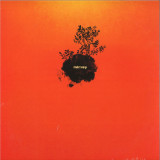
Kapingbdi came together in Liberia, West Africa, during the late 1970’s and had their own unique style. This six to seven-piece band played original compositions in a vibrant mix of African Rhythms, Soul, Spiritual Jazz, Funk and Rock. Led by Kojo Samuels on sax, flute and vocals “Born in The Night” presents the essential tracks from their rare studio LPs produced between 1978-1981. The work has been carefully edited and remastered in 2019 for vinyl LP and a 6-Page Digipack CD, which includes two additional recordings. Kapingbdi toured through Europe and the U.S. and were the only Afro funk band to ever come out of Liberia.
Kapingbdi hail from Liberia, West Africa and have their own imitable style. They effortlessly combine traditional African music in a modern mix of Jazz, Funk, Soul and Rock. The band is a fusion of the old and the new.
The word "Kapingbdi" is taken from the Sierra Leone language Mende and means "born in the night". Kojo Samuels was given the name by his Latin teacher whilst attending high school in Freetown, They often meet and debate at night in the city and soon after Kojo is called Kapingbdi. The name serves as a description of his origin. Born In Lagos, Nigeria in 1943. The son of slave children. His mother from Nigeria and father from Sierra Leone who moved the family to Liberia, during the 1950’s.
Kojo has played music for as long as he can remember. He starts with the harmonica and later becomes a drummer and percussionist in his first band at school. During his art studies 1965-1972, he tours Germany and works as an art teacher in the USA. His band Kapingbdi is reorganized five times and consists of up to seven musicians. In a VW-Bulli he drives the group from concert to concert and if the drummer fails, he jumps in himself. Between 1978 and 1981 three Kapingbdi LPs are produced for the independent label Trikont, recorded in Hamburg and Munich. During this creative period, the band plays at festivals in Africa and Europe. In 1984, the band tours the United States and shortly after, they came to an end.
At their best, Kapingbdi would rouse the audience with original compositions like "Human Rights", justice for all, especially for South Africans, and "You Go Go You Go Come". The officials and employees in the government departments have no time for the common man, for any questions such as job search, scholarship or similar, he receives the answer "go, come back tomorrow" and the same thing the following day. Or "Now Is The Time For Cry For Love." Now it is time to scream for love and finally, time for humanity and justice. Despite immense difficulties, the musicians consciously live and work in Africa and are at home in Liberia.
On April 12, 1980, ordinary soldiers and non-commissioned officers organize a coup against the government. This is an attempt to put an end to a policy of exploitation of the Liberian people. Whilst efforts to eradicate poverty, lawlessness and illiteracy are obvious throughout the country, Liberia is still Americanized to a high degree. This is evident, as the radio programs of that time almost exclusively played American disco music. Under these conditions, the people seek a reconnection to their folk music, and Kapingbdi were aware of this. Kojo tried many times to come together with traditional Liberian musicians. This passion takes him north of the country. Meeting and playing with the old hornblowers and playing music on traditional instruments, such as the elephant tusk.
Kapingbdi make high quality tape copies of their own vinyl LPs and patiently try to displace all unauthorized tapes from the domestic "market". Nevertheless, it is hard to make a living through music in Liberia. Kapingbdi, is now celebrated. The radio plays are in abundance, but royalties are not forthcoming. Their musical link is the feeling of Afrobeat and Highlife, which is found in each of the many Kapingbdi pieces. They embody Jazz, which is understood to be the most refined example of black music outside of Africa. In Liberia, Jazz is virtually impossible to hear. Bright shining names such as John Coltrane, Charlie Parker or Miles Davis were widely unknown. Thus, the Black Jazz, including its Back-To-Africa movement of the 60’s and 70‘s, passes by without leaving a trace in Africa itself.
Kojo's claim at the time, was to make African music with the depth, sensitivity and the freedom of the technical level of Jazz. This makes Kapingbdi the torchbeares. The underpaid prophets in small Liberia. It is the passion with which the founder of the band continues to work on their music for years. Tirelessly, stimulating and encouraging his fellow musicians. This is ultimately responsible for the success of Kapingbdi in Liberia itself. The local audience seems to listen to the band in fascinated astonishment. One wonders about the ability to develop as demonstrated by Kapingbdi on the basis of their music. It is African and unusually jazzy, danceable and better than the American disco music heard on the radio.
Rather than chase the money and the job opportunities in Europe, Kapingbdi are firmly rooted in Africa. The musicians live in Monrovia, the capital of Liberia, at the Kabingbdi workshop, located in the Congotown area on the eastern edge of the sprawling city. Kojo works here as a sculptor, painter, batik artist and musician. The sales revenue that his activities generate, gives him the opportunity to support the development of African Jazz music. The highest percentage of funds are from Germany and Kojo’s work ethic is “to work on your own thing“. The stance taken aims to support the welfare of Liberians and Africans. The other musicians of the group live in a second house that is nearby.
For the sake of consistency, Kapingbdi is a full-time band. However, the revenue, from all of the sources, could not keep them afloat. Equally, as important to the group are Kojos's knowledge of traditional African music and his sculpting skills. His knowledge is shared with others at the afternoon workshops. It is here that they discuss new lyrics, engage in political debate and the self-imposed task of improving conditions in Africa. At times the debate became heated, especially during rehearsals. This was regarded as good and integrative, sowing the seeds of innitiative to keep the band together.
From 1980 to 1985 Kojo also opened and ran the club "Panjebota", located on the grounds of the U.S. Consulate in Monrovia. Almost every evening Kapingbdi perform the song "Wrong Curfew Walk", whose lyrics lament the killing of citizens during the curfew imposed by the Liberian government. When the head of state Samuel Doe hears the song, he behaves agressively and forces Kojo to close the "Panjebota". Kojo had already moved on. Soonafter he meets Fela Kuti at the Africa-Festival and plays concerts in Germany with Cecil Taylor's workshop band.
Kapingbdi is for thinking, dreaming, dancing. What they sing about is what they have experienced. Kojo Samuels is 76 years old today and still follows his vocation as a critical musician, artist and activist.
Ekkehart Fleischhammer / Sonorama 2019 (with the help of original press sheets and the memories of Kojo Samuels)
Search:add
"In Vivo" is the result of the photographic work of Klavdij Sluban at the Fleury-Mérogis Young Offender Institution (France) from 1995 to 2016 Beds in addition to his work from Izalco prison, located in El Salvador, from 2008 visiting rooms connected to the music of Gareth Davis.
Gareth Davis is an artist, composer and musician living in Amsterdam. He plays clarinet(s), the result of a somewhat impulsive purchase whilst window shopping in Covent Garden, London, around ten years before the turn of the century. The serendipitous location of a rather wonderful (and equally important, rather cheap) second hand record shop less than 10m from the bus stop required for seven years of schooling, combined with delivering newspapers on a daily basis, lead to a somewhat eclectic, dusty and generally unclassified taste in music.
The result. Activity covering sonic art and contemporary classical music through rock, improvisation and noise with collaborations that have included the premiering of new written pieces by composers such as Bernhard Lang, Peter Ablinger, Toshio Hosokawa and Jonathan Harvey, soloist with orchestras including the SWR Symphonieorchester, Warsaw Philharmonic and Orquesta de la Comunidad de Madrid, performances with groups and performers ranging from the Neue Vocalsolisten and Arditti Quartet through to improvisers Elliott Sharp and Frances Marie Uitti, electronic artists Robin Rimbaud and Merzbow and multimedia work with artists including Christian Marclay and Peter Greenaway.
"In Vivo" is his second solo release after to have recorded a bunch of collaborative albums with artists such as Scanner, Machinefabriek, Steven R. Smith, Kleefstra Brothers, Frances-Marie Uitti, Merzbow, Adain Baker, Duane Pitre and more...
Klavdij Sluban, winner of the European Publishers Award for Photography 2009, of the Leica Prize (2004) and of the Niépce Prize (2000), main French prize in photography, is a French photographer of Slovenian origin born in Paris in 1963.
He develops a rigorous and coherent body of work, nourished by literature, never inspired by immediate and sensational current affairs, making him one of the most interesting photographers of his generation. The Balkans, the Black Sea, the Baltic Sea, the Caribbean, Central America, Russia, China and the Antarctic (first artistic mission in the Kerguelen islands) can be read as many successive steps of an in-depth study of a patient proximity to the encountered real.
His images have been shown in such leading institutions as the Metropolitan Museum of Photography of Tokyo, the Maison Européenne de la Photographie in Paris, the Rencontres d’Arles, the Museum of Photography in Helsinki, the Fine Arts Museum in Canton, the Musée Beaubourg, the Museum of Texas Tech University. His many books include East to East (published simultaneously by Actes Sud, Dewi Lewis, Petliti, Braus, Apeiron & Lunwerg with a text by Erri de Luca), Entre Parenthèses, (Photo Poche, Actes Sud), Transverses, (Maison Européenne de la Photographie) and Balkans -Transit, with a text by François Maspero (Seuil). Since 1995, Sluban has been photographing teenagers in jails. In each prison he organizes workshops with the young offenders to share his passion. First originated in France, in the prison of Fleury-Mérogis with support of Henri Cartier-Bresson during 7 years, as well as Marc Riboud and William Klein punctually. This commitment was pursued in the disciplinary camps of Eastern Europe –Serbia, Slovenia, Ukraine, Georgia, Moldavia, Latvia – and in the disciplinary centres of Moscow and St Petersburg as well as in Ireland. From 2007 to 2012, Sluban has been working in Central America with imprisoned youngsters belonging to maras (gangs) in Guatemala and Salvador. In 2015, he started photographing imprisoned teenagers in Brazil. In 2013, the musée Niépce showed a retrospective of K.Sluban’s work, After Darkness, 1995-2012. In 2015/16, he was awarded the Villa Kujoyama Residence in Kyoto, Japan. K.Sluban is member of national and international jurys, such as prix Niépce, prix de la Jeune Photographie de Niort, prix Leica, All About Photo…
- A1: Chong The Nomad - Lip Bite
- A2: Chong The Nomad - Docile
- A3: Chong The Nomad - For Tonight
- A4: Chong The Nomad - Chest Pains
- A5: Chong The Nomad - Enchant Me
- A6: Chong The Nomad - In Conclusion
- A7: Chong The Nomad - Pompelmo (Bonus Track)
- B1: Stas Thee Boss - Found Parking
- B2: Stas Thee Boss - Tried It
- B3: Stas Thee Boss - Solo
- B4: Stas Thee Boss - Bummer
- B5: Stas Thee Boss - Before Anyone Else
- B6: Stas Thee Boss - Melt
- B7: Stas Thee Boss - No Service (Feat Jusmoni)
- B8: Stas Thee Boss - Diamond Doris
- B9: Stas Thee Boss - Gon Phishing
- B10: Stas Thee Boss - Sex Pack
- B11: Stas Thee Boss - S'women
This split LP offers two short albums on one disc, providing two entry points into Seattle's flourishing underground hip-hop and electronic music scenes. On one side is “S’WOMEN,” the highly-anticipated solo debut from THEESatisfaction’s Stas Thee Boss. “Love Memo,” on the flip is a runaway success from EDM wunderkind Chong The Nomad. Both women are producers, singers, beatmakers, and queer artists of color. Crane City Music is proud to press up both projects on limited-edition, deluxe numbered vinyl. Every single record is a different color with spatter accents. Chicago’s Dusty Groove Records praises this split vinyl, citing its “hypnotic, abstract hip-hop vibe, moody, insistent beatcraft, and vocal samples... It’s solid all the way.” Pitchfork adds that "this is a sharp solo debut doused in heartbreak and identity." The Needle Drop's Anthony Fantano is also a fan, saying "Chong The Nomad is fucking awesome. There's not a thing about this I don't like. This music literally made my day."
"Bobby Ro$$" is the debut full-length from Perry Porter. It's a vibe-heavy hustle through the landscape of art, blackness, and self-love. Porter inhabits the alter ego of Bobby Ro$$, a trap music avatar of the much-beloved PBS painter, rapping alongside a who's who of the top up and coming music producers from the Northwest. The album also incorporates snippets of interviews with cultural luminaries such as Kara Walker, Jean-Michel Basquiat, Kerry James Marshall, and Maya Angelou into a narrative lattice, with Porter painting himself into the canon of black art. The Seattle Times describes the album’s many opposing moods, from "annihilating a trap beat on a breathless five-alarm banger (“Sink or Swim”) to cooling down with beatific cuts like album closer “Watercolor”... Porter does equally beautiful things with 808s and acrylics." Indeed, in addition to rapping and music, Perry Porter is also an acclaimed visual artist. His dreamlike watercolor portraits and lush murals have been shown in art galleries across the nation. His music has appeared in several major video game releases, including Cyberpunk 2077 and
Tripe. It’s what graces the cover of Cassels’ third album, A Gut Feeling. It looks gross. And Cassels are a rock band who’ve often sounded gross. You know the adjectives. ‘Discordant’. ‘Angular’. ‘Cynical’. Shellac quickly mentioned. I’ve done it already, see?Listening to A Gut Feeling, though, Cassels sound different. Not too different – the molten riff of advance single ‘Mr Henderson Coughs’ puts paid to the idea that the London-based duo have taken a hard 180. But instead of writing as quickly as possible, riding the churn forced on DIY bands by an indifferent ecosystem, the Covid-19 pandemic gave the brothers Beck (Jim, guitar/vocals, and Loz, drums/BVs) some time to mull things over. Instead of sticking with the stripped-back recording approach of previous LPs, Jim and Loz spent time at Tom Hill’s Bookhouse Studios in South London, considering tone, layering tracks, and bringing new instruments into the fold. Lyrically, the approach has changed too. Rather than presented as personal experience, Jim notes that his words this time around “are an intentionally muddy mix of experience, opinion, red herrings and fiction,” adding, “I found that setting myself the brief of writing character pieces offered a nice way of sneaking quite personal things into the songs without being explicitly autobiographical.” The result is the most satisfying and unexpected collection of songs in the Cassels catalogue. Instruments at turns razor-sharp and bludgeon-blunt provide the backing track to a savage, hilarious, and tender collection of short stories. Jim notes that “writing can be a great way of unearthing hang-ups and becoming acquainted with your own anxieties”. Hardly new ground for a rock band, but presented in this third person format – unbiased and filled to the brim with human warmth – these songs are more empathetic than anything the band have written before. You might have been Michael on his daily commute. Perhaps you’re Sarah, or have a mum like her. And many of us will recognise ourselves in the heart-breaking ‘Family Visits Relative’. It’s clear that the band still aren’t afraid to tackle weighty subjects too, with A Gut Feeling picking up where their previous album, The Perfect Ending, left off. ‘Charlie Goes Skiing’ pulls a similar trick to Future of the Left’s ‘Goals in Slow Motion’ – setting a screed against consumerism to one of the most propulsive, catchy tracks on the record. It’s followed by ‘Dog Drops Bone’, a rustling loop overlaid with sad, simple chords reminiscent of a Sparklehorse tune, which uses the internal monologue of a beloved canine companion to question the true depth and sincerity of human relationships. This kicks into the breakneck ‘Beth’s Recurring Dream’ – a track exploring a sexual identity crisis which owes as much to early Los Campesinos! as it does Steve Albini. Of ‘Your Humble Narrator’, the album’s punishing, pulsing opener and A Gut Feeling’s thematic frame, Jim explains: “I liked the idea of introducing an unreliable narrator who frames the album as an exercise in manipulation for personal gain. When a person engages with a piece of art they are invariably being manipulated by the artist to some degree – that’s part of the fun. The artist aims to elicit some sort of emotional response, the audience buys into the conceit at the promise of experiencing some form of escape.” as listeners, we experience that manipulation first-hand on A Gut Feeling. But the fact Cassels have packaged it up as offal feels like another bleak wink. This is far from a stinking by-product, salvaged and sold to maximise profit. It’s nothing less than the most complete, relatable, and fully realised piece of art the duo has produced to date. Emotional response elicited. Conceit embraced.
These three offerings from Michael James might fit into the minimal/tech bracket comfortably but there's a free flowing, shuffling sense of funkiness that undeniably runs through them all that defies all the usual 'shoulder twitch' stereotypes about the genre. 'Signal Issues' employs a panther-like bass hovering under the radar, with the briefest of breakbeat snippets adding the growing syncopation. 'Still Waiting' continues the technofunk mission, a sea of underplayed bleepery augmenting the groove, while 'Rush Hour' has a breezier and more open vibe and perhaps a more classic techno feel, proper graceful like.
Influential house and techno titan wAFF is branching out with his own new label, Nature. As well as donating a portion of profits to animal charities, the label will become a platform for music that in some ways heals us, just like nature itself. The innovative DJ and producer kicks it off with his own new three tracker, Colours.
You name it, wAFF has done it. The UK artist has headlined every major club and festival in the world, has released for labels like Cocoon, Hot Creations, Desolat and Moon Harbour Recordings and always brings his own flavours every time he steps out. It is now almost a decade since he broke through, so is the perfect time to start his own imprint.
Says wAFF, "There’s so much that’s happened over the past two years that I really wanted to create a platform of expression and creativity that would be meaningful not just for me but for everyone. I hope the label will be something that brings us back down to earth, to ground us. Nature is so important to me so I wanted something that felt like an extension of myself and what I care about so much. Nature, provides all life with what we need, nature heals us and that’s something I like to think of with this label. By providing the best quality of music for everyone, it can help with healing."
The stylish Colours is a taught, driving house track with slinky hi hats and rubbery drums. The monstrous bassline bobbles away down low and is sure to lock in any crowd. Django is another inventive groove, with lush claps and a knotted bassline that drives the track along beneath infectious percussion and silky smooth synths. Switchin is the most raw of the lot with its busy leads, razor sharp tech house drums and glitchy effects. Add in some turbocharged chords and you have a sleazy and standout banger.
These are three vital tunes that start off this label in fantastic fashion.
Retromigration's debut on Handy comes in strong with a killer remix from Byron the Aquarius. Five silky housey and breaky cuts that will leave you in awe!
Nostalgic, dreamy and excellently produced, the on-form Retromigration delivers a killer 12” fit for various dancefloor occasions.
Moodyman-esque house flows through the A side with gorgeous and perfectly executed deep house, with Byron adding a little more euphoria and drive to the remix.
The B side notches up the tempo and takes us on a trip through slinky breaks, squelchy but subtle acid and precise sample work.
Maniacal Laughter quickly gives way to a non-stop onslaught of irresistible electronics and a ceaseless, pounding groove. Boom! You are embedded in Maedon’s world. Dark and futuristic, her album “Now I have Become Death” is another worthy addition to the Sonic Groove catalogue. This is music that works the body and captures the mind. It’s her 3rd release for the imprint, following up 2020’s “Escape to Berlin” and 2019’s “Against His Will” EP. Maedon crafts some very melodic jams, with refreshing song structure and storytelling trips achieved through excellent sample work and programming prowress. Make no mistake, this is fghting music. It’s blazing hard, with grueling energy, and a fair for the dramatic. Maedon likes relevant content, as tracks like “Rave-Act Never Forget” expose pathetic pledges from poser politicians who have dared to protest against the dance music scene in their past. You have been exposed Biden. The madness continues with the menacing “Destroyer of Worlds”, a massive rave jam with otherworldly synths based around the words of a certain man’s famously guilty post-atomic quote from the Hindu scripture known as the Bhagavad Gita. It’s a reminder of your sins, Oppenheimer. The selection continues to concoct clever experiments with pressure and feels at times like riding a roller coaster thru outer space “Destroy the Status Quo” with subtly pitch-shifting metallic highs and ravey tone-work captivates the mind as gravity drops jerk the body into uncontrollable motion. “Rudersdorf Trip” is a sick adventure into the darkness, with whispered vocals ‘this is what you want this what you need’ leading the charge of hypnotic, spiraling acid. “Childhood dreams” is an excellent ending to the LP, an innovative melodic charmer with nostalgic future vibes pumped up by a broken techno beat. In truth, all the tracks stand out; a solid efort from start to fnish. It serves as a lesson in production for her peers. She enjoys the process, creating a chance for all to dance away their pain. For Maedon, our ears are like trophies to collect. no one is safe.
Joseph Carvell returns to Karaoke Kalk with his sophomore album under the Pink Shabab moniker. »Never Stopped Loving You« was for the most part written between Spring and late Summer 2020 in his Camberwell home and like his 2019 debut »Ema by the Sea« recorded in the South of France together with Emmanuel Mario, better known as Astrobal. It’s a record informed by feelings of nostalgia, love, longing, romance and loss and, much like his previous album, displays Carvell's knack for making introversion sound extroverted. As a bassist, his approach to songwriting is both rhythmic and melodic, making the resulting music just as visceral as it is emotive. Much like the record’s title can be understood as both a lament or an expression of joyful dedication, the music on »Never Stopped Loving You« is profoundly ambiguous.
»I was lucky with the timing for this record,« says Carvell and at first that may sound counterintuitive: managing to play only one show in Zurich in early 2020, he had to cancel his planned European tour and go back to the United Kingdom, which soon went into lockdown. He made the best out of the situation, recording electric and upright bass for Nick Krgovich, Daniel O’Sullivan and Zooey’s new records while also working on tracks and demos by himself. »The world seemed to have stopped and I had more time to think about the past and find the best grooves, the suitable keyboard touches and the right words,« says Carvell. Everything came together slowly before he boarded a train to France with his keyboard: »The pace of life completely dropped and between takes Ema and I were going swimming and taking walks,« he says of the sessions.
»Never Stopped Loving You« is notably more electronic than its predecessor, but also full of the small melodic and harmonic details that made »Ema by the Sea« such an outstanding record. »I was listening to more 1990s dance and house music and 1980s pop and also a healthy amount of ambient music,« explains Carvell. These influences are clearly audible on songs like the Chicago House-esque beats of »Show Your Love« or »Why Did I Leave You that Morning«, the skittish rhythms on »Let Go« and the near-Balearic »San Junipero«. Especially the latter makes it clear that Carvell spent much time devoting himself to movies and TV shows, but also incorporated more piano sounds in his songs—he learnt the instrument by playing along to classic Beatles and Beach Boys songs.
Despite being more upbeat on a rhythmic level than before, Carvell’s use of texture and his peculiar voice add another note to the music. Even an anthemic song like »Run Away«, his first composition to follow a classic verse/chorus structure, is profoundly ambivalent, both overjoyed and deeply melancholic. By the same token however, even a torch song like »You Stepped Out of My Life« is enormously consoling. This, after all, has always been Carvell’s strength: creating music that will cheer you up when you’re down while also injecting a sense of futility into every moment of euphoria. It never shone more brightly than on »Never Stopped Loving You.«
All Nations Records offers another splendid roots tune produced at Conscious Sounds studio by master chief Dougie Wardrop. This is another great one drop riddim with the notable participation of some top musicians regularly working for that studio: I David on keys, Hughie Izachaar on guitar and bass and Zinxx on drums! With the addition of great lyricist Danny Red from Kingston Jamaica
delivering another very relevant song warning all bad minded men to not trouble any roots daughter, this is a very fine roots tune fit for 2022.
"Social injustices are implanted into our society, and the powerful are not willing to make way for real change. Urgency is the force driving us both in musical improvisation and life. Our sounds are war sirens against an ongoing disaster."- Simon Grab & Francesco Giudici
Simon Grab & Francesco Giudici's 'No Surrender' is a strong and uncut manifest against social injustices, packed into screaming feedbacks and towering drones. Grab lures tender noises and pulsating frequencies from his fragile no-input-mixing-setup, while Giudici adds linear and visceral guitar drones, opening a dialogue between the two musicians, the room, and the surrounding context. Together, they create a uniquely soft but angry musical creature that feeds from emotions of loss and anger to become a haunting call for change.
The album's cover presents a portrait of 'Madame Rochat' by photographer and film maker Aline d'Auria. The seemingly indestructible concierge was stripped from her home of half a century on the day of her retirement. Still, she persistently continued to fight for the working class' rights. '
Focusing on reduction and the peculiarity of self-referential systems, Simon Grab plays fragile feedbacks, pulsating drones and opulent outbursts of noise on a no-input-mixing setup. His has previously released"Posthuman Species" and "Extinction" on -OUS, while "Diamonds", a collaboration with Togolese rapper Yao Bobby and Asian Dub Foundation's Dhangsha, came out via LavaLava.
Experimental musician and sociologist Francesco Giudici plays guitar in bands and creates music for films, installations and theatre pieces. He has released three albums with his band 'Black Fluo' on PulverUndAsche Records. His research as sociologist and demographer focuses on social and economic inequalities, social gradient in health, gender inequalities, occupational and familiar life trajectories.
First Word Records is very pleased to present a brand new full-length album from Sarah Williams White! Emanating from the "hilly fields of Lewisham" in South London, Sarah Williams White is a singer songwriter, multi-
instrumentalist and producer. Her sound is a unique blend of psych-soul, folktronica and experimental synth-pop.
Sarah released her acclaimed debut album 'Of The New World' on First Word in 2015, which was written, produced and performed by Sarah from her home studio, with the assistance of drummer, engineer & husband, Timmy Rickard. Her projects have seen support from the likes of Lauren Laverne, Tom Ravenscroft, Nemone & Chris Hawkins (BBC 6 Music), Jamie Cullum (BBC Radio 2), FIP Radio, Clash & The Guardian, to name a few, and she's toured the UK with Dan Le Sac vs Scroobius Pip and Golden Rules (Lex). There have been additional collaborations with label-mate Quiet Dawn (on the 2021 compilation / EP 'A Family Affair') and with her brother, Paul White - a revered producer in his own right, with credits including Danny Brown and Sudan Archives.
Following a hiatus, Sarah now brings us her sophomore album, 'Unfathomable'. A project that offers up escapism from the mundane, enticing us to connect with our natural planet in this prevalent time, via the eyes of a new mother.
In her words, Sarah states that the album is "about escape. It's about deflating the ego by looking up to the endlessness of outer space, connecting with the greatness of mother nature, and loving how unfathomable the universe and life itself is".
11-tracks in all, including the recent singles 'Nebula', 'Green' and 'Monsters', this opus sees Sarah's buttery lathing of vocals merged with cutting beats and atypical pop sensibilities across the project, again entirely self-produced from home, defining her as one of the UK's most irresistible DIY psych-soul talents.
With a voice reminiscent of Peggy Lee, tapestried harmony akin to Hiatus Kaiyote, beats fit for Little Dragon, and experimental production evocative of Kate Bush, Sarah Williams White's signature genre-defying sound invites us into a world uniquely hers.
'Unfathomable' is released on vinyl and digital in late January 2022.
AD 93 presents the new album from Polish composer Wojciech Rusin. Syphon is the second instalment of an ‘alchemical’ trilogy which started with The Funnel on Akashic records. The record consists of speculative medieval and renaissance music, imagined composed in the future, where it is reconstructed from the ashes of the past, via incomplete fragments.
"In a future where the old semantic systems don't apply anymore, what we are left with is some kind of delirium."
The album features 3D printed instruments, multilayered bagpipe chanters, double recorders and other hybrids. With additional voices of soprano Eden Girma and Emmy Broughton.
Artwork by Wojciech Rusin and Nicola Tirabasso. Mastered by Rupert Clervaux.
Jeff Beck's Guitar Shop is the fifth studio album by one of the most influential lead guitarists in rock, Jeff Beck. Together with keyboard player Tony Hymas and drummer Terry Bozzio he recorded this album. They won the award for Best Rock Instrumental Performance at the 1990 Grammys for this release. The instrumental fusion tunes are diverse and on no other album Jeff tried out mixing so much musical styles. His excellent guitar play and the memorable melodies marks this release as one of his finest albums. 'Behind the Veil' is a subtle song, leaning on a reggae groove and Beck's lower register statements. The more sensitive tune 'Where Were You' makes Beck almost sing the melody on his guitar. The album is wonderful produced and a strong addition to his impressive catalogue.
Mimsy describes himself as someone with many interests and few skills, and sure, you can put it that way. But more precisely, he is a seeker and finder who has always felt more at home in the intermediary spaces. Since his first releases on Karaoke Kalk under the names Saucer, Motel and Wunder in 1997, he has mostly been active as Wechsel Garland, working with samples beyond recognition and thus blurring the lines between his own songwriting and the musical material he uses.
In 2011, he ended the project with the album »Dreams Become Things« and is now opening a new chapter as Mimsy with »Ormeology.« The album was ten years in the making and saw the producer work with sounds, voices and text fragments that were gathered over time. The twelve pieces—based on guitar pickings, looped textural sounds, rhythm boxes and shimmering organ sounds—install themselves in the unconscious through sound, melody and subtle rhythmic shifts to send the listener’s perception on a journey into the unknown.
The name Mimsy is a nonce word coined by Lewis Carroll in his famous nonsense poem »Jabberwocky,« a combination of »miserable« and »flimsy,« while the term »Ormeology« refers to the Italian film »Le Orme« (»Footprints on the Moon«), in which the main character is haunted by memories of a fictional film of the same name. While this alone creates a rich thematic frame of references for the album, it does not at all define its themes. Instead, the references are reflected in the methods with which the pieces on »Ormeology« were designed—sound and language orbit freely around one another, images within images are being layered, following their path unconsciously. In »Sans mobile apparent,« the lyrics get to the heart of this: »die Widersprüche aushalten / die Folien übereinanderlegen« (»enduring the contradictions / laying the foils on top of each other.«) Creative frictions emerge not out of binary decision-making patterns, but from additive layering.
Mimsy followed traces forth and back through time and space, collaborating for a few tracks with set designer and musician Lydia Schmidt and letting Wolfram Wire record various lyrics based on automatic writing that were gathered by Mimsy. Furthermore, he asked the photo blogger Lilia Katherine from Brazil and the Canada-based Andrea Hernandez to translate and record his lyrics in their own respective languages. Human global coincidences resulted in collaborations which are presented as discrete and thus make the album as a whole and even more complex meditation on the interplay of the concrete and the abstract. This is best exemplified by the song »Ginster,« throughout which Schmidt and Mimsy’s voices overlap more and more until they enter a sort of call and response pattern, although they never seem to address each other directly.
»Ormeology« is an album that whirrs and flickers, seeking to mediate between the tangible world and the intangible by blurring the boundaries between words and sounds and space. It is an archipelago that is in many ways connected to what surrounds it, while at the same time opening up a space of its own.
South London genre-blending story tellers Alabama 3 are set to further add to their rich musical heritage with a new single ‘Whacked’, available April 30th via Submarine Cat Records, with an album to follow later inAugust.
‘Whacked’ is the first taste of fresh Alabama 3 material since the tragic passing of their beloved and unconventional frontman and songwriter Jake Black, aka The Very Reverend D. Wayne Love, in May of 2019. Jake had Addison’s disease and passed away several days after falling ill during a show at the HighestPoint Festival in Lancashire at only 59 years old.
Then, with the Covid-19 pandemic and lockdown upon the world, the band got creative and submerged themselves in their music, teaming up with producer Cam Blackwood(George Ezra, Jack Savoretti, Tom Walker, Frank Carter and the Rattlesnakes…) to focus their minds on something vital, new and fresh. This can clearly be heard in ‘Whacked’, a song which pays respect to the late co-writer of the song, Pete Dunne.
"A product of old skool Brixton, the legendary Seven Kevin’s Pete Dunne threatened us with this song prior to his untimely death,” explains founding member Larry Love. “Despite the heavy manners we are proud to declare we rose to the challenge."
“Whacked was made in the early weeks of the first UK lockdown in March 2020,” remembers producer Cam Blackwood. “I think the hedonistic spirit of the song was amplified a million times by the fact we were making the record remotely - with the musicians in the band recording their parts at home, sending them all to me to collate and arrange - then I would send the instrumental track to Larry to record vocals on. The energy was pretty insane - we were like caged animals desperate to get out.
“We managed to find time three months later (when the first lockdown ended in July 2020) to get together and put the finishing touches to the song,” continues Cam. “Being in the studio with a few beers seemed like a fitting way to finalise the tune and put the last 1% of energy into the recording. This song feels like classic Alabama 3 to me. It’s a banger!”
Indeed it is. A low-slung groove propelled by frontman Larry Love’s infamous throat rattle, with the addictive chorus refrain ‘everybody’s getting whacked on something, something that makes them feel good,’ ‘Whacked’ will loop around your brain like a recurring dream you can’t wake from. These are hedonistic conscious unconscious times.
“You can praise the Lord, you can pass the ammunition, you can be woke you can be wicked you can have the wisdom of Solomon but unless you are ready to get whacked with Alabama 3 there’s no point in dreaming,” states Larry. “Rearrange the rubble, paint your bomb shelters and make sure everybody in the neighbourhood feels good cos we feel like getting stooped and you need to get whacked.”
Alabama 3 are very much back. Time to get whacked.
Union Records is an afro house music label with contamination of latin sounds, founded by Peppe Citarella in 2017.
Since its start, Union Records, has released many hits involving singers and musicians from all over the world and in particular from the Latin American world.
Now Peppe and Union Records presents the first vinyl release with two different tracks feat. the wellknowed India.
"Tacalacateo" and "Mamafrica" have also two addition version: “Citarella Dub Piano Mix” and “Terry Hunter Club World Remix”.
The Slow Show release their fourth studio album, their first for three years, entitled ‘Still Life’,
via PIAS. The four-piece, who first formed in Manchester, will support the release with a
European tour in February and March 2022, culminating in an already sold-out hometown show
at Manchester’s Hallé St Peters on 4th March.
Lead track ‘Blinking’ is a perfect taster to the new direction ‘Still Life’ offers. Same but different
again. “An ode to love and loyalty. The song is a defiant pledge to never giving up on the
people you love. Musically we wanted the song to have impact, a directness and powerful
punch that we’d previously shied away from.” - Robert Goodwin (vocals)
The making of ‘Still Life’ has been quite the ride. Following their breakthrough album, ‘White
Water’, it was clear The Slow Show were not just ‘another band from Manchester’. The legacy
of The Smiths, Joy Division and all those other great predecessors is not something to be trifled
with, but The Slow Show didn't need to wear their address on their sleeve: this was something
else, fully formed, with a mesmerising sound, rich in atmosphere and melody.
With the band’s desire to push each other outside of their respective comfort zones during the
recording process, ‘Still Life’ subsequently offers a more diverse, rich and interesting sound
than previous albums.
“We did develop our sound,” says Rob Goodwin. “We had to try something else. We felt we
owed that to ourselves, and to the people that come and enjoy the music. We explored a lot of
stuff: different sounds, different feelings, different ideas, different processes as well. Some of
them didn’t work at all, but some did. It was difficult and challenging, but it felt good in the end.”
This experimental side to the creative process allowed the band to introduce new elements to
their work. “Some new approaches and sounds crept in,” keyboardist Frederik ‘T Kindt admits.
“Some were far from our older work. For instance: after some initial encouragement from me,
Rob was keen to sing a bit higher on this record. Chris was encouraged to make his drums a
bit more present; some things almost sound like a breakbeat to my ears.”
Recorded remotely over the course of the past year, with Goodwin recording vocals from
Dusseldorf in Germany and the rest of band recording in the UK, ‘Still Life’, as a concept, takes
inspiration from the experiences of lockdown: “Before the virus arrived, I had a busy life;
spending two weeks in Germany with my girlfriend, and then flying to Manchester to work with
Fred or to a gig.” Goodwin remarks: “And then all of a sudden, life came to a halt. It took a little
getting used to, but I actually had a really nice realisation during that time. I understood that the
slower life got, the more I saw. I spent a lot of time in nature, seeing things in a different
perspective. And that's what you need when you're trying to create. You have to really look,
and then you see things happening everywhere.”
The tracks themselves are brimming with emotion and reverence towards the significant
relationships we encounter in life. Stand-out anthem ‘Blinking’ is a defiant pledge to never
giving up on the people you love. Musically the band wanted the song to have impact, a
directness and powerful punch that they’d previously shied away from. Whilst ‘Woven Blue’
deals with the aftermath of uncoupling. The idea that meaningful relationships are very often
woven and complex, making resolve difficult.
These very personal tracks are counterbalanced with the more topical, ‘Breathe’, which
documents some of the unjust and heart-breaking scenes of 2020 with spoken word references
to John Boyega’s emotional rallying cry in support of Black Lives Matter movement in London’s
Hyde Park.
In all, Still Life marks another evolution of a band that have never tried to fit in any particular
box but have inhabited their own unique universe.
LP pressed on white viny