2019 marks the 20th anniversary of ‘Low Birth Weight,’ the second album by Piano Magic, then a loose collective of musicians centred around founder songwriter, Glen Johnson. Though a year later, the collective would take shape as a bona fide internationally touring group, in 1999, Johnson had one foot in his native Nottingham and the other in his new home of London where, finding himself label manager at Rough Trade Records, also became highly prolific, releasing his own records across a myriad of micro-labels (Che, Wurtlitzer Jukebox, Darla, Rocket Girl, etc).
By his own admission, ‘Low Birth Weight,’ owes much to the East London experimental group, Disco Inferno who, embracing sampling technology, attempted to turn pop music inside out. By 1995, the Inferno had burnt out but Johnson remained inspired by their playful, subversive manifesto and thus, the album here, partly produced by “Nottingham’s own Martin Hannett,” Martin Cooper, is difficult to pigeonhole either at the end of the millennium or even now. Drum kit signals are fed through a tiny amp literally inside a cardboard box; breathing is employed for rhythms; kick drums are replaced with broken glass; there’s a ragbag of tablas, huge slap back delay and phase, theremin, shortwave radio, and more.
Aside from the DI benchmarks, ‘Low Birth Weight’ bears the marks of an infatuation with the dreampop of the time – the guitar saturated in delay and overdrive – inspired by the likes of AR Kane and Kitchens Of Distinction and not the more languid “shoegaze,” which has oft been levelled at LBW.
There’s a revolving door of guests on the album, including Pete Astor (The Loft/The Weather Prophets) on a cover of Disco Inferno’s ‘Waking Up’; Simon Rivers of The Bitter Springs supplies lyrics and voice to ‘Crown Estate’ and ‘Dark Secrets Look For Light’; Jen Adam, then an American art student on a year’s placement in London, writes and sings ‘The Fun Of The Century,’ a personal account of being pushed off a roof at a party by someone she thought a close friend.
‘Low Birth Weight’ is undoubtedly of its time, though undoubtedly more playful and literary than much of the music made during the late 90’s and a fascinating bridge between dream pop and experimental electronic music.
Suche:adm
* The original sister label to Ram Records from the old Ram HQ studio in Essex, Liftin Spirit Records now celebrates it’s 25th year with a special ‘RELOADED’ limited vinyl series of remastered classics, alongside rare and previously unreleased tracks since the beginning in1992.
* DATs from artists such as Andy C, Ant Miles, Shimon, Joint Venture, Flatliner, Interrogator and Red One have been located in the archives. Also from the Ram & Liftin HQ came tracks for the Deep Seven label in 1993 and all these rare DAT masters have been located and now re-cut by Simon, the original Ram & Liftin vinyl masterer at ‘The Exchange’. Initially, Deep Seven remasters will present on a printed white label and unreleased tracks will have a black label.
* The year is 1994 and the awesome combination of Flatliner & Ant Miles gave life to the infamous tracks ‘The Big Bang’ / ‘No Boundaries’. Release no 9 on RAM records tore up sound systems at every Rave in the country. A follow up was on the cards and ‘Flatline’ was born. Put to one side to make way for the Big Bang/No Boundaries remixes, somehow it never resurfaced again... until now!
* A similar story evolved for the A side ‘Just Stop’. A track made in the latter part of 1995, Flatliner comes with yet another amen monster, but this time taking things on more of a rolling Drum & Bass vibe. A golden nugget to own on vinyl for any true Jungle/Drum & Bass fan.
FILE UNDER: jazz, modal jazz, spiritual jazz
- 2xLP gatefold- 180g pressing- free download card
With 20 years passing since his first foray into recorded jazz, Nat Birchall now ranks as one of the premier saxophonists of his generation. With several highly acclaimed albums in the locker, he now returns with his most ambitious project yet – a tribute to the legend that is Yusef Lateef.
"The Storyteller - A Musical Tribute to Yusef Lateef"
"When Jazzman Gerald first mentioned to me the idea of doing an album as a tribute to the jazz giant Dr Yusef A. Lateef, my first thought was "Where on earth do I start?" Lateef was such a colossus of music, and his scope so broad, that I couldn't hope to begin to cover his musical universe. He was a master of the tenor saxophone, a master of the flute, a master ballad player, a master blues player. Not to mention his skills as a composer and arranger and of course his exploration and use of musical methodology and instruments from all over the world."
"I've always been a great admirer of Lateef, and the challenge was intriguing, so I decided to give it go. We interpreted some of his own compositions (Brother John, Morning & Ching Miau) as well as some compositions by others that he made his own by careful arrangement and interpretation (Love Theme from Spartacus, Ringo Oiwake). I also wrote some original songs that, while certainly not written in his style, might be said to fall into his very broad approach to music making."
"I also wanted to utilise as many different instruments as possible, something I hadn't explored too much until this album. So it was a nice opportunity to finally get around to playing some of the many small instruments I've collected over the years; the Turkish zurna, the mbira from Zimbabwe, the balaphon from Mali and the arghul from Egypt. We have also tried to use varied time signatures in the music, so we have songs in 3/4, 5/4 and 7/4 time, as well as the standard 4/4."
"Ultimately the best music tells a story to the listener and takes them to places they might not have imagined themselves. Yusef Lateef certainly did that, and as such was a master storyteller."
Nat Birchall
- A1: Catherine Brénot – Et Tout Est Yin Et Tout Est Yang (Club Mix)
- A2: 1 Plus 1 – Coming Up For Air (Instrumental)
- A3: Fragile - We've Got Tonight, Boy
- B1: Jarmaz – Night City Life (Disco Remix)
- B2: Friend Of Mine – Just Your Pride
- B3: Mac & Monica – You’re So Good To Me
- B4: Sala & H – Feel The Love
- C1: Alexandra – Fantasia (Fantasy)
- C2: Gioia – No Secrets (Instrumental)
- C3: Janelle – Don’t Be Shy (Dub)
- D1: Alessandro Scellino – Dinner In The Jungle (Erotic Mix)
- D2: Brian Tatcher – Hot Love (Instrumental Dub Version)
- D3: Preludio – Mysterious Nights
Should you find yourself taking a Thames-side stroll in the shadow of the City of London, keep an eye out for the headphone-clad figure of Ilan Pdahtzur. While be-suited bankers and frustrated office workers scurry home to their families, Ilan can frequently be found casting admiring glances towards the blinking lights of towering skyscrapers while filling his ears with the synthesizer-driven sounds of lesser-known 1980s dance music.
Ilan, an avid but little-known record collector best known for sharing the artwork of obscure and under-appreciated early-to-mid ’80s club cuts on his popular Instagram feed, has been digging for vibrant, kaleidoscopic records since his teens. Now, thanks to Spacetalk, he’s been given a chance to offer a glimpse into his neon-lit nocturnal musical world.
The result is Night City Life, a killer collection of 1980s synthesizer songs inspired by Ilan’s admiration for the glow of London’s late night skyline. Over the course of 13 essential tunes, Ilan escorts us on a vibrant sprint through rare Italo-disco, steamy South African synth-boogie, fizzing American freestyle, oddball Austrian electrofunk and so much more.
There are naturally a fair few sought-after cuts present, but also a fine selection of under-appreciated gems that for one reason or other have been all but ignored since they were released three and a half decades ago. In fact, some selections are so obscure that barely any information exists about them online.
Check for example Preludio’s “Mysterious Nights”, an evocative fusion of slow electronic grooves, dreamy chords and twinkling piano motifs previously buried on a lesser-known album of unremarkable German synth-pop, or the dollar-bin brilliance of Fragile’s sweet synth-pop gem “We’ve Got Tonight, Boy”, a cut that Ilan says is capable of “wrapping itself like tendrils around your soul”. He’s not wrong.
At the other end of the scale you’ll find the ultra-rare Italo-disco breeziness of Friend of Mine’s incredible “Just Your Pride” and Mac & Monica’s soulful 1986 South African synth-boogie cut “You’re So Good To Me”, copies of which regularly change hands for hundreds of pounds online. Ilan originally reached out to the men behind the record last year to tell them how one of their other forgotten gems had been played on a Boiler Room session; naturally, they were thrilled.
There’s plenty to admire elsewhere on the compilation, too, from the waves of analogue synths, bubbly melodies and bobbing beats of the instrumental dub version of Brian Tatcher’s “Hot Love” – a cold-war era cut inspired by the idea of love blossoming in the midst of a nuclear meltdown – to the Bobby Orlando-esque freestyle bustle of Janelle’s “Don’t Be Shy (Dub)” and the sparkling post-boogie brilliance of Jarmaz’s “Night City Life (Disco Remix)”, a track Ilan has listened to countless times while admiring the midnight skyline of his home city.
In 1975, Pepe Willie booked time at Cookhouse Recording Studios in Minneapolis to demo five original compositions. Known colloquially as “The Cookhouse 5” these recordings showcase a 16-year-old guitar prodigy named Prince Rogers Nelson. A crucial document concerning the origins of the Minneapolis Sound, the B-side boasts instrumental versions of each infectious tune, providing an even greater vantage point from which to admire the Purple One’s expressive playing style, already evident in his teenaged years.
Now available to international accounts for the first time, now with a direct to board jacket with gold foil stamping. Limited to 300 copies.
- A1: Boards Of Canada - Olson
- A2: Erasmo Carlos - Vida Antiga
- A3: Gene Williams - Don't Let Your Love Fade Away
- A4: The Chosen Few - People Make The World Go Round
- A5: Esther Phillips - Home Is Where The Hatred Is
- A6: Delegation - Oh Honey
- B1: Velly Joonas - Käes On Aeg
- B2: Stereolab - The Flower Called Nowhere
- B3: Kiki Gyan - Disco Dancer
- B4: Admas - Anchi Bale Game
- C1: Francis Bebey - Sanza Nocturne
- C2: Thundercat - For Love I Come
- C3: River Tiber Ft. Daniel Caesar - West
- C4: Charlotte Day Wilson - Work
- C5: The Beach Boys - Don't Talk (Put Your Head On My Shoulder)
- C6: Donnie & Joe Emerson - Baby
- D1: Les Prospections - Lido
- D2: Grady Tate - And I Love Her
- D3: Badbadnotgood - To You (Exclusive Andy Shauf Cover Version)
- D4: Steve Kuhn - The Meaning Of Love
- D5: Lydia Lunch - You, Me And Jim Beam (Exclusive Spoken Word Piece)
Canadian quartet BADBADNOTGOOD take on creating the ultimate late night' selection of tracks from their record collections, set for release on 28th July 2017. The original trio of Matthew Tavares, Alex Sowinski and Chester Hansen formed while studying music at Toronto's Humber College (they've recently added Leland Whitty to the line-up). A shared appreciation of hip hop and instrumental covers of Gucci Mane and Earl Sweatshirt suggested a worldly outlook and reciprocated love from Tyler The Creator and Ghostface Killah, which whom they made 2015's Sour Soul.
This is an international effort: Velly Joonas' Estonian version of 'Feel Like Makin' Love', Kiki Gyan, Admas and Francis Bebey representing Africa (Ghana, Ethiopia and Cameroon respectively), Les Prospection from France, Scots' Boards Of Canada and fellow Canucks River Tiber and Charlotte Day Wilson.
Finally, there's the no-small-matter of the Late Night Tales cover version, in which BADBADNOTGOOD take on Andy Shauf's 'To You' is turned into a mournful delight. while the Queen Of Siam herself, Lydia Lunch, delivers a sexual sermon involving only you, her and Jim Beam.
We were really excited to have the chance to put together a Late Night Tales compilation, it's a great organisation. We decided to use it as a vehicle to show everyone all the amazing music we have gotten to experience by touring and meeting new people. Every track on this comp was either shown to us by an incredible person or made by one of our friends. We also included a little cover of a song by one of our favourite current musicians, Andy Shauf.
These artists, as well as many, many others, have infuenced us to create and kept our deep love of music alive. This mix will keep you company on a quiet night by yourself or with friends. You can check it out on the plane, the bus, a long walk, or any situation where you want a soundtrack for reflection and meditation.' - BADBADNOTGOOD May 2017
Joonam is here. The new project from fellow NY friends Elon Admony & Nima Khalilian is landing its
breaks and techno laden debut EP on Vakant this Summer. On remix duties we welcome OCB from
Casa Voyager.
Fotography by Expreso Nova (Valentín Rodríguez)
No many words needed for this record except that we are more than pleased to welcome into our home an artist that we always admired a lot, who always knows how to surprise, and this time even more, with a record that shows another side of him that had not emerged too much until now. This is our next. This is Chris Moss Acid. Mastered by Alden Tyrell
Seven Swiss artists & collectives sharing the same passion for music came together for a unique collaboration. The result is a sequence that evolves through rhythm and each contributor‘s colour of sound. Artists involved: Melodiesinfonie, Jack Pattern, Lexx, Look Like, Alma Negra, Manuel Fischer, Les Points.
If you draw a map of electronic music today, you will come to realise that Switzerland still represents a blind spot for many people. Even if you see from the inside the many talented artists romping about in such a small space, you have to admit that interest from the outside is virtually non-existent. Therefore there is only one way: Teamwork! The MEGAMIX is a statement for it.
Navy Cut are pleased to welcome Ramsez! The Bremen ??born, Netherlands ??resident, creates a style of bass music that is deep, modern and energetic.
“Bigboi”, admittedly Ramsez’s most powerful track to date, has a big, bubbling bassline and well-rounded style.
The swinging off beat hats, inspired Ramsez for the title “Swinger Club”. A throwback half-step rhythm with modern sound design.
With a rolling bassline and snarling mid-bass, “Talk Crime” is deep and upfront; one of Ramsez’s most proudest works yet, he is excited to unleash it to the masses.
- A1: Intro
- A2: Phone Call
- A3: Communication/Obama
- A4: Prison Break
- A5: Flying Out Of Kansas
- A6: It Took A Miracle
- B1: Enlistment
- B2: Coming Out Trans
- B3: Flashback
- B4: It Might Actually Change Something
- B5: Court Sentence
- B6: New York
- C1: Intelligent Analyst
- C2: Lisa’s Theme
- C3: Haunted
- C4: Icon
- C5: War Requiem
- C6: Mother’s Theme
- D1: Coming Of Age
- D2: Trauma
- D3: New Administration
- D4: Fighting Back
- D5: Running For Senate
- D6: Alt Right
- D7: Night Drive
- D8: Let It Out Ft. Jehnny Beth
Arsenik Displays is a two part vinyl compilation and a collaboration between the label and artists across 7 countries.
The tracks are made by artists that have been long time supporters of our label and whom we admire for their work. Despite the range of artists, they still manage to deliver music associated to the label’s sound.
It’s a pure honor to accomplish this project together with Newa, Nihad Tule, Oisel, Savas Pascalidis, Albert Van Abbe, Pfirter, Dustin Zahn & Johanna Knutsson, and Sonia Sagan who shared her drawing for the A-side labels.
Arsenik Displays is a two part vinyl compilation and a collaboration between the label and artists across 7 countries.
The tracks are made by artists that have been long time supporters of our label and whom we admire for their work. Despite the range of artists, they still manage to deliver music associated to the label’s sound.
It’s a pure honor to accomplish this project together with Newa, Nihad Tule, Oisel, Savas Pascalidis, Albert Van Abbe, Pfirter, Dustin Zahn & Johanna Knutsson, and Sonia Sagan who shared her drawing for the A-side labels.
XOA, led by London based producer and musician Nick Tyson, is setto
release debut album 'Way West' via Five Easy Pieces.
XOA means to look outwards; to draw inspiration from many
sources.'Way West' is alive withthis: steeped in the rich analogue sonics
of the past,the warmth of machines and influence fromthe sounds of
London's fervent musicscene.
Featuring a blend of contemporary electronic production and
liveinstrumentation, 70s Afrobeat inspired drums and cosmic melodies
are thrustintothe present day with strong cues from house and techno.
Three vocalists contribute across the album, with Tyson choosingto work
with singers he has apersonal admiration and friendship with. HollieCook,
known to many for her ethereal pop tingedreggae, delivers a
sumptuouscontribution on 'Heartland', adding a beautiful emotional
dimensionto the hornled track. Lulu Jones' vocals are treated more as a
sample for the garagetinged 'CallOn Me' and Ruby Wood, of Submotion
Orchestra, has worked with Tysonover a number ofprojects and their
shared love of 90s soul comes to the fore onthe laid back grooves and
sunkissed 'Only One Thing'.
Following on from big recent releases from Neue Grafik & Oliver Night, CoOp Presents Sivey, with an all-new double-header of heat, 'Nobody Else' and 'Somebody Samebody'.
For those that don't know, Manchester-based Sivey became a player in the future beats scene a couple years back, releasing music with the LA-based collective Soulection, as a solo artist and via collaborations with Evil Needle, which came to fruition after a series of online beat battles, as well as releases and remixes with labels like Astral Black and Ninja Tune.
His last wave of output was greeted with enthusiasm by fans of soulful beats championed by artist collectives such as HW&W and Darker Than Wax, and saw Sivey subsequently spinning at events across the UK, and perform shows as far afield as Los Angeles and Tokyo.
Rooted in hip hop production, Sivey's largely instrumental tracks have brought together elements of millennial R&B, neo-soul, UK garage, jazz and 80s funk. In the few years since his previous releases, Sivey has continued to experiment with new ways of exploiting his diverse influences in his productions. As his listening habits became increasingly orientated around jazz and obscure 70s fusion records, his own productions began to reflect the shift.
The recent resurgence of the broken beat movement was something that also inspired him, admiring the balance between musicality and danceability of the genre. He made his first experiments with bruk in 2017 and found that it mixed perfectly with what he'd already been creating. Eager to share the results with the world, it made perfect sense for his first offerings of this ilk to find a home here with us at CoOp Presents.
These two tracks exemplify the ever-evolving progression of Sivey's sonics; the familiar deep keys and synth sounds of his previous productions are there, but nestled alongside more uptempo grooves, and the lush rhythmic complexity of bruk. Tied in with his love for jazz fusion, 'Somebody Samebody' sees Sivey reinterpret a late 70's track by Japanese guitarist, Kazumi Watanabe; this one also enlisting the help of Trian Kayhatu on keys. As well as the original tracks, prolific Selectors Assemble crew member Danvers adds in his own tasty heads-down version of 'Nobody Else', and label co-founder IG Culture (who recently received a Worldwide Award for 'lifetime achievement'!) provides a dope bruk-funk flip of 'Somebody Samebody' to close out the set.
For the second release on the Galaxiid imprint, a label of electronic music archeology and quality, we are transported to the strange sonic world of an elusive 90s pioneer. Solar X's 1997 album X-Rated will be released for the first time on vinyl, as well as reissued digitally, with new artwork by the Japanese artist Keiichi Tanaami. Two worlds connecting sonically, visually and culturally.
Solar X enjoyed a burgeoning career in post-Perestroika Moscow making playful, low-tech electronica from Soviet analogue instruments, which he masterfully configured to forge animated compositions and dancefloor rarities. Fascinated by chaos and complexity, his music explores the ways in which our minds can be manipulated by structure - an endeavour quite plausibly linked to his other career as a lecturer and researcher of AI, information theory and cognitive science, his interest in which was in turn triggered by his young experiments in computer music.
Solar X gained international attention at a time when Russia was (quite unfairly) seen as a vacuum for electronic music, but was exploding in the period of piracy, poverty and freedom following the collapse of the USSR. Young Russians had benefited from the soviet education system and there was a strong DIY computer programming and music scene, fuelled by hackers, gear freaks and party animals. Viewed from today, the album is reborn at a time of further political and social strife, which many see as fuelling the huge creativity and radical thinking of modern Russia's young creatives.
X-Rated treats tempo and form as fluid concepts, administering sudden changes to its sonic landscape with disorienting effect, underlain with a subtle dose of humour and experimentation. Downtempo trip-hop sits alongside frenetic IDM and blistering electro, all bound together by peculiar melodic inflections and lively distortions. Warm, trippy harmonies and robotic synths are offset with angular drums, shifting erratically through moods and genres with cunning intent. Much like his contemporaries from the era, it's his ability to breathe life into a humble production setup that makes his music so compelling some twenty one years later.
The track titles are from a book of call girl cards in London phone booths, that reached the artist in Moscow in 1995. "I liked the titles from these cards, which were self-promoting and offering pleasure (e.g. "Mistress awaits you"). So, I thought since my tracks also offered some kind of pleasure, they might as well advertise this through their titles.'
Label head Nina Kraviz was introduced to the work of the 83 year old sensei Keiichi Tanaami by Ukawa Naoshiro, founder of Dommune in Tokyo, one of the brightest figureheads for the arts in Japan, responsible for the graphic design of the cover. In September 2017 Nina played for the opening of Tanaami-san's first exhibition in Moscow at Gary Tatintsian Gallery. Nina performed a live sound palette, to accompany the looping 7 minute animation, of experimental music from the Soviet Union, Russian pioneers of electronic music like Species Of Fishes and SolarX, Soviet-time pioneer Lev Termen, Kuryochin, avant-guard rock mixed with some Stockhausen and just pure abstract sounds, as well as treasured artists like Biogen.
Tanaami's illustrative work has strong sexual elements, so out of the five art pieces Nina selected and commissioned for Galaxiid, the first fits perfectly for 'X-rated'. The vertical line of text on the left is the traditional form for Japanese covers of foreign releases. The cover, together with the accompanying poster and sticker, are printed in Japan to ensure the highest print quality and purity of the colours.
With a discography held in such high esteem amongst fans of conceptual French pop and soundtrack composition, the likelihood of finding an unturned stone amongst maestro Jean-Claude Vannier’s fertile psychedelic rockery falls somewhere between slim and skeletal. Even the most intrepid explorers of the most fearless and fastidious nature should naturally expect to encounter one or two shadowy characters when braving the oblique corners of the Vannier vault, but few lost souls cast a darker silhouette than the cinematic obscurity known only as La Bête Noire (The Black Beast).
Lost and presumed missing for decades the soundtrack tapes to this lesser-known 1983 French thriller (featuring a cast culled from films such as Alphaville, The Modern Couple and Sweet Movie) captures the revered composer and arranger of Serge Gainsbourg’s Histoire De Melody Nelson embarking on a darker exploration of free jazz, frenzied batucadas and cyclic carousel psychedelia. Counting key players of the French jazz scene within its ranks, The Insolitudes group comprises a crack team of Palm/Futura/Actuel/Saravah regulars such as saxophonist Philippe Mate´ (Acting Trio/Mate´-Vallancien/Tacet) alongside drummer Bernard Labat (Mad Ducks) and legendary Arpadys/Voyage rhythm masters Marc Chantereau and Pierre-Alain Dahan (Brutus Drums) all of whom alongside Michel Zanlonghi (Ensemble De Percussion De Paris) make up this thunderous, tumultuous, four-headed rhythm machine bridging an authentic gap between The Jef Gilson Groups and France’s signature “cosmic” revolution. Naturally these previously unheard compositions are spearheaded by lead pianist and composer Vannier and for devotee’s of his 1972 concept album L’Enfant Assassin Des Mouche there is much to admire and cross-reference herein.
Having been the most loyal and long-running guardians of Jean-Claude’s monster archive over the past two decades Finders Keepers Records are proud to present this first catch of newfound vintage Vannier discoveries on this limited and unlikely free jazz 45 single (which should find a perfect home between coveted Euro jazz 7”s by Krzysztof Komeda, Franc¸ois Tusques and Brussels Art Quintet). Almost 15 years since Finders Keepers once liberated the Mouches it is now time to set free another Black Beast amongst discerning listeners.
Following their hotly tipped 2018 debut album 'On' - Altin Gün returns with an exhilarating second album. 'Gece' firmly establishes the band as essential interpreters of the Anatolian rock and folk legacy and as a leading voice in the emergent global psych-rock scene. Explosive, funky and transcendent.
Some words from the label:
The world is rarely what it seems. A quick glance doesn't always reveal the full truth. To find that, you need to burrow deeper. Listen to Altin Gün, for example: they sound utterly Turkish, but only one of the Netherlands based band's six members was actually born there. And while their new album, Gece, is absolutely electric, filled with funk-like grooves and explosive psychedelic textures, what they play - by their own estimation - is folk music.
'It really is,' insists band founder and bass player Jasper Verhulst. 'The songs come out of a long tradition. This is music that tries to be a voice for a lot of other people.'
While most of the material here has been a familiar part of Turkish life for many years - some of it associated with the late national icon Neset Ertas - it's definitely never been heard like this before. This music is electric Turkish history, shot through with a heady buzz of 21st century intensity.
Pumping, flowing, a new and leading voice in the emergent global psych scene.
'We do have a weak spot for the music of the late '60s and '70s,' Verhulst admits. 'With all the instruments and effects that arrived then, it was an exciting time. Everything was new, and it still feels fresh. We're not trying to copy it, but these are the sounds we like and we're trying to make them our own.'
And what they create really is theirs. Altin Gün radically reimagine an entire tradition. The electric saz (a three-string Turkish lute) and voice of Erdinç Ecevit (who has Turkish roots) is urgent and immediately distinctive, while keyboards, guitar, bass, drums, and percussion power the surging rhythms and Merve Dasdemir (born and raised in Istanbul) sings with the mesmerizing power of a young Grace Slick. This isn't music that seduces the listener: it demands attention.
Altin Gün - the name translates as 'golden day' - are focused, relentless and absolutely assured in what they do. What is remarkable is the band has only existed for two years and didn't play in public until November 2017; now they have almost 200 shows under their belt. It all grew from Verhulst's obsession with Turkish music. He'd been aware of it for some time but a trip to Istanbul while playing in another band gave him the chance to discover so much more. But Verhulst wasn't content to just listen, he had a vision for what the music could be. And Altin Gün was born.
'For me, finding out about this music is crate digging,' he admits. 'None of it is widely available in the Netherlands. Of course, since our singers are Turkish, they know many of these pieces. All this is part of the country's musical past, their heritage, like 'House of The Rising Sun' is in America.'
As Verhulst delves deeper and deeper into old Turkish music, he's constantly seeking out things that grab his ear.
'I'm listening for something we can change and make into our own. You have to understand that most of these songs have had hundreds of different interpretations over the years. We need something that will make people stop and listen, as if it's the first time they've heard it.'
It's a testament to Altin Gün's work and vision that everything on Gece sounds so cohesive. They bring together music from many different Anatolian sources (the only original is the improvised piece 'Soför Bey') so that it bristles with the power and tightness of a rock band; echoing new textures and radiating a spectrum of vibrant color (ironic, as gece means 'night' in Turkish). It's the sound of a band both committed to its sources and excitedly transforming them. It's the sound of Altin Gün. Incandescent and sweltering.
Creating the band's sound is very much a collaborative process, Verhulst explains.
'Sometimes me or the singer will come in with a demo of our ideas. Sometimes an idea will just come up and we'll work on it together at rehearsals. However we start, it's always finished by the whole band. We can feel very quickly if it's going to work, if this is really our song.'
Just how Altin Gün can collectively spark and burn is evident in the YouTube concert video they made for the legendary Seattle radio station KEXP. In just under 20 minutes they set out their irresistible manifesto for an electrified, contemporary Turkish folk rock. It's utterly compelling. And with around 800,000 views, it has helped make them known around the world.
'It certainly got us a lot of attention,' Verhulst agrees. 'I think a lot of that interest originally came from Turkey, plenty of people there shared it.'
That might be how it began, but it's not the whole tale. The waves have spread far beyond the Bosphorus. What started out as a deep passion for Turkish folk and psychedelia has taken on a resonance that now travels widely. The band has played all over Europe, has ventured to Turkey and Australia and will soon bring their music to North America for the first time.
'Not a lot of other bands are doing what we do,' he says, 'playing songs in that style and seeing folk music in the same way.'
serenitatem, the fifteenth installment of FRKWYS, RVNG Intl.'s collaboration series pairing intergenerational artists in creative conversation, joins Visible Cloaks with Yoshio Ojima and Satsuki Shibano, two trailblazers of the Japanese avantgarde music and visual arts scenes of the 1980s and 90s.
Yoshio Ojima began his career as a composer of environmental and ambient music, with a particular interest, and optimism, in the possibilities of generative software. His compositional pursuit of human synthesis with computerized forms was realized in its fullest potential alongside Satsuki Shibano, a pianist renowned for her interpretations of Erik Satie and Claude Debussy. Together, they were among a handful of influential Japanese artists whose innovations still resonate, if not more vibrantly than ever, well beyond the tightly-knit scene's original core. In the early 90s, Ojima was among the programmers of the influential satellite radio experiment St. Giga, a constantly-evolving sonic landscape that combined field recordings and sound collage with occasional readings of Japanese poetry. Satsuki was a regular reader for the station. This musical terrarium bloomed out of sight in a small Tokyo studio, a greenhouse of sound with no set start or finish time that audiences could tune into, absorb, and immerse.
The perpetual flow state of St. Giga — recordings of which Ojima shared with Visible Cloaks — would be highly influential to serenitatem's constitution. As Visible Cloaks, the Portland, Oregon duo of Spencer Doran and Ryan Carlile have developed their own set of creative strategies that form an aesthetic fuse point between human intention, aleatoric composition, and improvisation.
These are notions most recently reflected in 2017's Reassemblage and Lex, a respective album and EP in which the duo combined generative software and virtual representations of global instruments into lacy, interlocking patterns. Long time admirers of Ojima's work on albums like 1988's Une Collection Des Chainons, Doran and Carlile discovered after an online introduction that they shared with Yoshio and Satsuki an abiding interest in pre-classical composers, the Lovely Music, Ltd. label, and the British avant-garde, as well as a mutual respect for one another's techniques and processes.
The four musicians met in Tokyo, Japan at Sounduno Studios in December 2017, at the tail end of Visible Cloaks' first Japanese tour, to commence work on serenitatem. Leading up to the studio sessions, Doran and Carlile sent Ojima processed sound sketches recorded while on a European tour, which Yoshio would add to and return. Visible Cloaks would then fold Yoshio's edits back into the original compositions, which Doran and Carlile brought to the exploratory recording session. During that week together in Tokyo, the quartet made use of a number of creative strategies — 'echoing sound together,' as Yoshio puts it. Among the strategies, MIDI randomization gave the quartet melodic lines and what Doran calls 'randomized clouds,' or 'tightly grouped notes that become smeared tonal clusters functioning more like chords in themselves.' Carlile would also feed Ojima and Satsuki's text into Wotja, a generative music software which produced a MIDI language around which the quartet expanded their compositions.
'The aim,' Doran says of serenitatem, 'was to make a work that was not specifically ambient (or environmental), but something more multi-hued, weaving these deconstructive concepts into an album that has a deeper architecture underpinning it.' Accordingly, serenitatem is a marvelously sharp record, its sutures between human and machine virtually impossible to find but suggested everywhere you turn. The collaboration among Ojima, Satsuki, and Visible Cloaks is both musically and conceptually inseparable from the technology that made it possible. Throughout the album, Shibano's playing resonates like Satie's, her rhythms cascading like drops from leaves an hour after the rain. Overtones are stretched and warped like modeling clay, then spun around and shown off from multiple angles.
A single soaring note might seem to be suddenly plunged underwater, its richness of sound made shallow and its sharp edges blunted. Pittering chimes and rapidly warping vocal samples hang in the luxuriously glossy space, water trickles from ear-toear, familiar melodies rise from nothing and dissolve before they can be traced. With the depth of its emotional charge, serenitatem burns away the easy cynicism of the day, presenting itself as the kind of delocalized work of art the internet promised us decades ago — a synthesis of artistic visions, technological sophistication, futurist ambition, and, occasionally, ancient polyphony. Listening to it can feel a bit like tuning in to a 21st Century version of St. Giga: It's a place where the future still grows.
Visible Cloaks, Yoshio Ojima, and Satsuki Shibano's serenitatem, FRKWYS Vol. 15, will be available across LP, CD, and digital formats on April 5, 2019. The quartet will perform select live shows throughout 2019.
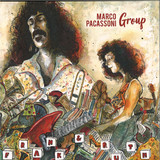
I cannot exactly remember when the idea of this album was born in my mind. What I am sure of is that I always wanted to complete such a project, which was to realize the dream of a vibraphone and marimba tribute to the music of my favorite musician composer, Frank Zappa. I met Marco Pacassoni about six years ago. I called him because we were looking for a vibraphonist for a tour with the artist Bungaro. We immediately developed a real friendship and when I told him about my idea and my fascination with Ruth Underwood, explaining that for me the best Zappa albums were the ones on which she played, he admitted that he knew only a part of that music, but that he would love to learn more. So I began to feed him tunes to listen to, sharing with him an imaginary track list. When Marco decided to really go for it (about two years ago), his first statement was that it was impossible not to include Peaches en Regalia and The Black Page on the album. That made me very happy because those are two of my favorites, and there was no better way to acknowledge the technical challenges behind this adventure. Marco studied Ionisation by Edgard Varese when he was in Conservatorio Rossini of Pesaro, even before he graduated in percussion at Berklee. It was strange for me that he could know more about Varese than about Zappa! I liked his idea of playing The Black Page alone at the marimba, just adding the beat, as if hearing the footsteps of an imaginary listener turning around. Who could it be My very first wish was to include Pink Napkins with Zappa's guitar solo played at the vibraphone.