Plush shag carpeting, jazz flutes, analogue synths, funk grooves, exotica, and sultry, Italian-style vocalising: Erotica 70 is the new album from Larry Manteca, known for their inventive, tongue-in-cheek reimaginings of classic Italian soundtrack aesthetics.
This time around, the Milanese collective sets its sights on the distinct sonic landscape of 1970s commedia sexy—a film genre that, for better or worse, defined an era and fed richly into the cinematic education of Larry Manteca’s members.
Through this lens, Erotica 70 also becomes a way of celebrating Piero Umiliani in his centenary year—a composer whose name is closely linked to the erotic comedies of the time.
The nod to Umiliani is baked right into the details, starting with the choice of vintage gear like the Eminent synth and the Wurlitzer electric piano. These instruments deliver that particular blend of jazz, groove, electronics, and sensual charm that made the golden age of Italian film music so unique.
Standout track “Lando” is a joyful, playful homage to actor Lando Buzzanca, who starred in numerous films scored by Umiliani, including the iconic 1973 comedy La schiava io ce l’ho e tu no (My Darling Slave).
Larry Manteca is spearheaded by multi-instrumentalists Alessandro Paiola and Riccardo Danieli, flanked by the cinematic flute of Carlo Pelsa, the swinging drums of Andrea Quattrini, and the magnetic vocals of Valentina Castelli and Alessandra Maria Manzoni.
Recorded across various studios in Northern Italy, Erotica 70 is the imaginary soundtrack to an Italy that no longer exists, recreating its atmosphere while rendering it in full, vivid colour. It’s a record whose music seems to come straight out of a provincial cinema, a smoky late-night club, or a long-lost 70s film. But while it looks back to a bygone era, it does so only to bring it straight into the present, making the past sound surprisingly fresh and contemporary.
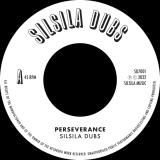
Silsila Dubs is a brand new label emanating from the backrooms and dancehalls of West London. Deeply inspired and rooted in the long standing traditions and dialogues of sound system culture, the label's output will echo the myriad musical foundations laid at various local historic venues including Southall Community Center and the Tudor Rose respectively.
Energized by the sounds of Jah Shaka, Aba-Shanti-I (Falasha Recordings), The Disciples, Manasseh, Conscious Sounds and more, the Silsila Dubs sonic aesthetic is that of classic 1990s sounds and recording techniques, lovingly channelled and dubbed via the cult Soundcraft Ghost Mixing Desk at Silsila HQ.
This debut release from the label has been written, produced and mixed by Govind Singh of the burgeoning Mya Hi-Fi crew who are closely related to Silsila and it's output. Across 2 mixes 'Perseverance' offers us a meditative and uplifting space in which to enrich our ears and our minds to carry on, no matter what life throws at us. Positive sounds for all to absorb.
For Louis Johnstone, making music has never been about waiting for the right equipment, the right environment or the right moment. Across more than a decade of work as both Wanda Group and A Large Sheet Of Muscle, the Huddersfield-based musician has built one of British experimental music's most singular bodies of work by embracing whatever happens to be within reach, allowing instinct, improvisation and circumstance to shape the outcome as much as conscious composition.
"'Chinese Benefits' was made over a year ago on an iPhone that had a broken microphone and was on its way out," he explains. "I have made many records after this with clearer sounds. Sharper ideas. That is never the point, though. You work with what you hold in your hands."
Recorded entirely on a failing iPhone 6 that stopped working shortly afterwards, 'Chinese Benefits' isn't a record about damaged technology. It is a record shaped by it. Rather than resisting the limitations of the device, Johnstone allows them to become part of the music itself, where distortion, interference and deteriorating fidelity are inseparable from the recording process.
Across twenty brief but disquieting pieces, corroded spoken word, environmental recordings, abrasive noise and fractured electronics continually emerge and dissolve. Voices drift in and out of range, reverberation stretches everyday sounds beyond recognition, and bursts of white noise interrupt moments of uneasy calm. There are echoes of radio transmissions, field recordings and musique concrète throughout, yet 'Chinese Benefits' never settles comfortably into any one tradition. Instead, it inhabits a space where accident and intention become almost impossible to separate.
That philosophy has long defined Johnstone's work. Through a vast catalogue of self-released recordings on his Umbro G imprint, alongside releases for labels including The Trilogy Tapes, he has consistently favoured immediacy over refinement, embracing imperfection not as an aesthetic but as a practical reality. His recordings are less concerned with perfection than with capturing the conditions in which they were made.
Looking back on 'Chinese Benefits', however, Johnstone's own assessment is characteristically understated.
"Listening back fully, it's quite a nice record actually. Fair enough, I make them and never really listen again TBH. Even better, it was the last Large Sheet Of Muscle record made on that phone with grit and damaged guts."
Like much of his work, 'Chinese Benefits' offers few fixed meanings. Its titles remain cryptic, its voices partially obscured and its structures deliberately unstable. What emerges instead is a deeply personal document of process over perfection, where the limitations of the tools become inseparable from the music they produce, and where the act of making something matters far more than the conditions in which it was made.
Teen of Denial: Joe’s Story is a freshly reimagined take on Car Seat Headrest’s beloved breakout, Teens of Denial, now celebrating its 10th anniversary.
On the original album, Toledo often used the name “Joe” as a pseudonym – a sly homage to Daniel Johnston. Revisiting Teens in the run-up to its 10th birthday, he felt called to give Joe a unique backstory and began tweaking the album to tell that tale. The group returned to the studio with Teens producer Steve Fisk to update accordingly – tweaking lyrics, revising arrangements, and recording new songs in the “Denial-style,” including ‘Optimistic Son” and the anthemic ‘Joe Drives Again’. The result retains Teens’ dark edge and youthful cynicism, but allows a bit of hard-won compassion into the mix.
From Will Toledo:
Sometime last year, it was suggested to me that we do something for the ten-year anniversary of ‘Teens of Denial,’ so I started looking back on the album to see what we might do. In spite of some of its songs being a regular part of my life for the past decade, it wasn’t a record I’d thought much about as a whole since it came out. Most of the songs I’d come up with over a two-year period at the end of my college days, when I was struggling a lot with cynicism and misplaced aggression. But by the time the songs were done, I was living in Washington, Car Seat Headrest was a full band with a record label, and in spite of the turmoil of the writing process, the final album was pretty enjoyable for everyone to work on.
This time, looking back at the songs, I started to feel like there was a story being told through the album, though I’d never imagined it as being a narrative work. On ‘Hi, How Are You?’ Daniel Johnston had used the name “Joe” in the titles of a few tracks –“No More Pushing Joe Around,” “Keep Punching Joe” – as a sort of joke, a stand-in for himself. I borrowed the idea, and the name, for titling songs on ‘Denial.’ This time, I started thinking - who is Joe? And how do the songs, in the way they’re sequenced on the album, reflect what he’s going through? As I started asking this question, a story emerged with startling wholeness and clarity, like finding the foundations of an ancient city while digging in my backyard. As I kept digging, certain songs from the original album fell by the wayside, as they seemed misplaced in this new context; others asked for new lyrics, to fully give birth to the story contained in the music.
The resulting work feels more like the album ‘Teens of Denial’ was meant to be. When you’re writing from a dark space, it’s hard to have perspective on where you’re at. This time, I could pull from memories of that darkness, and use the distance and additional perspective of ten years of life to shed a fuller light on the experience. Joe is a character going through some of what I experienced, and some of his own problems. Telling his story, and not just my own impressions of life at the end of the teen years, brought a new level of compassion and wholeness to the album. It gave us the opportunity to write new material in “Denial style”, embracing a snappy and simple(ish) rock aesthetic, and in an additional blessing, we were able to team up once with Steve Fisk, a joy and inspiration to get back into the studio with after ten years. We mixed the material at his house in Tacoma, and were constantly amazed at the lack of divide between past and present, as we’d punch in vocal overdubs ten years later into the same gear, hearing my voice now running alongside a 2015 Will. For someone coming across this album or this band for the first time, this is how they’d hear the record, not as a relic of the past but as a new piece. It was immensely rewarding to experience that on our side.
For anyone familiar with ‘Teens,’ comparisons with the original will be inevitable, but I do hope that as much as possible, people can come to this album on its own terms, approaching it as a teen, hearing the music and story for the first time. I believe music is an ongoing story, and albums don’t always do justice to its dynamic, ongoing nature. What gives it life is the new ears that hear it, and the new hearts that engage with it. I’m so grateful that this is a work that people have kept coming to, and I hope that this presentation does them honor with a fresh offering to the conversation. We’ve known that “it doesn’t have to be like this”; now we can wonder - “what it if were like this?”
Tomorrow’s World is the new album from synth-punk/darkwave artist N8NOFACE. Fully produced by Dave Sitek of TV on the Radio, the record also features contributions from Hudson Mohawke, Snow Wife, and Angélica Garcia.
On Tomorrow’s World, N8NOFACE pushes beyond the DIY spaces that formed him, delivering his most ambitious album yet: a collection of hard-as-nails songs that manage to be furiously catchy. In line with N8's cyberpunk aesthetic, Tomorrow's World's title comes from the 1960s British TV show of the same name about tech and science. N8 came across the show when he found a clip of Kraftwerk performing and breaking down their music on it, with Tomorrow's World being credited in breaking the band to a wider audience. In N8's words, the album sees him “imagining what the punks and the street kids might be listening to in 2077.”
On its latest album »Music For Air«, the Berlin-based interdisciplinary duo Gamut Inc explores new possibilities of the computer-controlled pipe organ — from hypervirtuoso excess to nuanced automation and rhythms beyond the fixed grid. Composed and recorded during a two-week residency in Toulouse, the pieces move between harmony and noise, conjuring a euphorically intoxicating maelstrom of overlapping, accelerating sound.
Gamut Inc’s work with the computer-controlled organ actually began in 2009 with a commission from ON – Neue Musik Köln for the Kunst-Station Sankt Peter — at a time when few congregations were ready to open their instruments to this kind of work. When the duo of Marion Wörle and Maciej Śledziecki officially founded the ensemble in 2013 as an interdisciplinary project, they first developed their own music machines with instrument builder Gerhard Kern, returning to the organ in 2018 when more churches and venues had opened their doors … and Gamut Inc carried their practice across Europe and beyond, developing AGGREGATE (first a concert series and then an annual festival) into a platform dedicated to organ music of the 21st century.
Sharpening a critique of mechanisation, digitality, and the human in between, the project is conceived around the construction of pre-modern instruments and the control of these instruments by contemporary technologies, resulting in an aesthetic that bridges the very old and the very new. Recent works include the human-machine trilogy »Over The Edge Club« (2021), »Rossum’s Universal Robots« (2022), and »Zeroth Law« (2023, performed at Deutsche Oper Berlin with the RIAS Chamber Choir and the Logos Robot Orchestra), and »Black Square« (2025), a wind-dynamic modular organ built by Tony Decap, inaugurated at CTM Festival and broadcast on Deutschlandfunk Kultur and SWR Kultur. Their organ installation AGGREGAT#10, commissioned by Sónar Festival, was acquired for the permanent collection of Palau Güell Barcelona in 2022.
Gamut Inc’s latest album »Music For Air« was composed and recorded during a two-week residency in Toulouse on the wind-dynamic organ »L’Explorateur«, with individually computer-controlled wind pressure per pipe. The seven pieces move between harmony and noise, conjuring a euphorically intoxicating maelstrom of overlapping, accelerating sound and again exploring new possibilities of the computer-controlled pipe organ — from hypervirtuoso excess to nuanced automation and rhythms beyond the fixed grid. Sensual and ecstatic.
Madelyn Byrd returns to Glasgow’s Somewhere Press with a hazed set of weightless soundscapes. »Night Rider« opens in widescreen with the chirp of cicadas dancing across a desert landscape, before Shiroishi’s saxophone eventually cuts through the dark like neon. The story Byrd tells is close to their heart: they spent their teenage years in the Sonoran Desert, the vast subtropical expanse spanning parts of Arizona, California, and Mexico. Its seemingly alien landscape — pocked with giant, tree-like cacti and looming rocky outcrops — is lodged in the cultural memory, a quality Byrd draws on as they slowly reveal their poetic narrative.
The album plays like a road movie of sorts, moving through Byrd’s memories and setting them to very different rhythms. Clattering drums emerge on »Of Nature, Of Bodies, Of Dreams«, while Byrd’s soft tones, processed to sound almost otherworldly, glide gently across the metallic clangs. Each track highlights a form of movement: there is the microscopic, insectoid crunch of »Imprint«, where guitar prangs meet Shiroishi’s spirited runs, while »Into Sonoran Pool« creates motion from the atmosphere itself, recreating the thick desert air with shimmering electrical currents and psychedelic processes.
At this point, the album begins to echo Robert Ashley’s late-period theatrical work: compositions that broke with familiar formats, juxtaposing dialogue with knowingly experimental orchestral flourishes. Byrd strikes a similar note through a fusion of poetry, sound design, choral music, and chiming, listless ambient elements that also recall Harold Budd. Budd grew up in the Mojave Desert, which borders the Sonoran, creating an eerie parallel with the moods he conjured throughout his long career.
Byrd finds a similarly aesthetic link to the West Coast landscape, referencing the history of experimental music while establishing their own voice. As the album rides into the sunset with a roar of engines, they offer a distinct vision of pop: »What Is, What Was« integrates a chugging break and ketamised vocal hook, while the finale, »In Perfume, Remember«, lands as a James K-like heartmelter.
out of Stock
Last delivered 2 days ago available to reorder, subject to availability
Brazilian artist Rubel isn’t one to be pigeonholed and typecast into staying in one sound. Casas, the follow-up to his debut album Pearl from 2015, brought a bigger, more epic, and richer production quality to the table. Fusing the worlds of MPB and hip hop, Rubel’s sophomore LP built on the momentum of its predecessor, gaining a Latin-Grammy nomination along the way. Mr Bongo is proud to be giving Casas its first worldwide release on vinyl and CD outside of Brazil and Japan.
The cliché they say is that the second album is always the trickiest; however, Rubel doesn’t seem to have had any problems on Casas. It’s a fountain of creativity and originality, marking an artist in full flow.
Conceived after Rubel spent six months living in Los Angeles, Casas is MPB-leaning at its core but is also driven by a hip hop inspired pulse. There is a clear influence from hip hop’s aesthetic across the 2010s woven subtly but fundamentally throughout. Nods to Frank Ocean, Kendrick Lamar and Tyler, The Creator can be heard across an album full of playful edge and personality. Luscious string-led arrangements and tracks that explore the rich folkloric rhythms of Brazil, sit next to songs with low-fi drum machines and features from acclaimed Brazilian rappers.
One of the highlights of the album, ‘Mantra’, starts with a traditional Brazilian rhythm that morphs into a hazy hip hop beat. A sublime song with a hooky call and response chorus, it features a guest appearance and verse by the Brazilian MC Emicida. Another highlight is the epic ‘Colégio’ (College) which further showcases the melding of stripped back drum machine beats with cinematic, sweeping arrangements. Elsewhere, ‘Partilhar’ is a swaying, heartwarming hug. A tale of longing and love that has become a singalong fan favourite at Rubel’s concerts.
Casas also shines a light on a string of key players in Brazil’s new vanguard, such as Pedro Fonte, Gus Levy, and Brazilian rapper / poet Rincon Sapiência to name a handful. The record has pop sensibilities yet also feels underground. It beats with the heart of a singer-songwriter, a feeling that was felt so strongly on Pearl, yet this time is bolstered by a level of arrangement and richness of sound that take it to another dimension - soaring horn and string sections elevating the songs from home recording to stadium-ready anthems. Keeping that intrinsic beauty and simplicity of a well-constructed song yet reframing it within a pop context is the true gift of this album.
Casas cemented Rubel’s status as one of Brazil’s leading contemporary talents and a key figure enriching the country’s already effervescent scene.
out of Stock
Last delivered 18 days ago available to reorder, subject to availability
Futurismo proudly present a vital compilation born in the shadows of American punk; AMERICAN GRAVE Gothic Punk / Deathrock USA: 1978-1988, the third volume in their Altered Vision anthology series.
Drawing from darkest depths of the American spirit, American Grave is testament to a subculture spawned from late night savagery, graveyard hangouts and suburban isolation. Deathrock, post-punk, goth, whatever term you prefer, this compilation showcases the sounds and aesthetics of a tarnished golden era, an underground movement that took the DIY concepts of punk and the velocity of a burgeoning hardcore scene and immersed it in echoes, distortion, tribal rhythms and macabre vocals, thematically preying upon cult horror flicks, surrealism, and the manipulation of religious iconography. Whilst the UK had a counterpart scene many would hail as Goth, this was different, this was a truly American incarnation, a new breed of youth haunted by the ghosts of old blues, garage and glam, bleak theatrical imagery dressed up to evoke a response, smeared eyeliner, leather, bones…black. This was a backlash against a culture in decay, bucking against a puritanical oppression brought on by the archaic social standards set by their parents. It was aggression manifested as gloom, it was a ceremony, the celebration of death.
American Grave has been co-curated by Wesley Eisold (Cold Cave/American Nightmare/Heartworm Press) in collaboration with Futurismo head honcho Del Jae, to bring you a haunting tracklist ranging from the all important integral mainstays of the genre to those rarer and more elusive artists, including many recordings that have never been reissued before on any format. Featuring the music of Christian Death, T.S.O.L., The Cramps, Of A Mesh, The Gun Club, Twisted Roots, Kommunity FK, The Brainz, Theatre Of Ice, Burning Image, Fur Bible, PSI Com, Shadow Of Fear, Super Heroines, 45 Grave and more.
The music on this compilation is reinstated further from a visual perspective by an array of incredible images by famed punk photographer Edward Colver, and lovingly designed to the level you would expect from a Futurismo release.
2xLP on limited edition ‘Splintered Tomb’ coloured vinyl. It is housed in a gloss laminated outer sleeve with colour inner sleeves and contains a large fold-out poster with unseen photos by the great Edward Colver, words by Lisa Fancher and liner notes by Wesley Eisold of Cold Cave/American Nightmare.
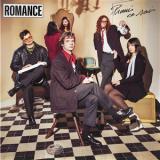
ROMANCE is redefining the French rock landscape with a distinctive identity that blends punk urgency, infectious melodies, and lyrics sung in French. Rooted in the legacy of the Rennes music scene while looking firmly to the future, the band transforms a wide range of influences into a sound that is instantly recognizable. Their debut album, Promis ce soir, is driven by memorable hooks, a strong artistic identity, and a live energy that has already made an impression. Produced with James Eleganz, the record showcases a mature band capable of appealing to both indie rock audiences and a broader mainstream public. The singles Alizée, Le Net, and D'la faute à moi perfectly illustrate this crossover potential. With a striking aesthetic, evocative songwriting, and a genuine live DNA, ROMANCE is emerging as one of the most exciting new acts in French-language rock.
DPRTNDRP make a long-awaited return to Infernal Sounds with 'Byrnei', a release that's been quietly building anticipation across the 140 scene. Following their acclaimed 'What Ya Mean' EP in 2020, the duo are back with five heavyweight cuts that showcase exactly why they've remained one of dubstep's most respected production outfits for well over a decade.
Opening with the title track, 'Byrnei' wastes no time setting the tone. Rolling with DPRTNDRP's unmistakable swing, weight and groove, it's a certified soundsystem weapon - built to lock dancers into its hypnotic rhythm while delivering devastating low-end pressure.
Next up, 'Jiaozi' shifts into overdrive. A relentless barrage of razor-sharp percussion, cavernous basslines and seismic energy, it's an uncompromising slice of peak-time dubstep designed to hit with maximum impact from the first drop to the last.
'Fury' explores a deeper side of the duo's sound, drawing influence from their dub-focused alias, D-Operation Drop. Rich in space, texture and heavyweight sonics, it perfectly blurs the line between traditional dub and modern 140, combining meditative atmospherics with chest-rattling low-end.
Adding another dimension to the EP, Causa steps in to rework 'Fury', twisting the original into a hypnotic, distorted roller. Layered with his unmistakable wobble-heavy aesthetic, the remix pushes the track into darker territory, delivering an immersive journey of oppressive bass weight and razor-sharp sound design.
Bringing the release to a thunderous close, 'Backfire' is pure, uncompromising pressure. Stripped back, direct and devastatingly effective, it's arguably the heaviest moment on the EP; a no-nonsense soundsystem destroyer that leaves a lasting impression.
From start to finish, 'Byrnei' is a statement of intent. It's a masterclass in weight, groove and precision, reinforcing DPRTNDRP's status as true innovators within the 140 landscape. With five expertly crafted cuts destined for dancefloors and soundsystems worldwide, this is another landmark release from two producers operating firmly at the top of their game.
New full-length from MINIATURa, following Geometria Prohibida (Keroxen, 2020). Espectral was recorded inside the iconic Keroxen oil tank in Tenerife — a brutalist chamber whose metallic resonance seeps into every track.
Motorik tension, post-punk restraint, shoegaze and darkwave undertow surface and dissolve throughout, but this is no genre exercise. The album feels lived-in and physical: drums hanging in open air, guitars stretching into steel-lined decay, moments of synthetic clarity torn open by abrasion. Propulsion and erosion move side by side.
There’s a rawness here that isn’t aesthetic — it’s architectural. The tank becomes a silent collaborator, shaping space as much as sound.
Lyrically, Espectral unfolds through elliptical micro-poetry, tracing life, love, death and social fracture in fragments rather than declarations. Nothing is fixed; everything hovers.
One of the strongest independent statements to emerge from the Canary Islands in recent years, Espectral finds MINIATURa operating on its own frequency — austere, immersive, and built to linger.
A Modern Revisit to a Cult Classic: A fresh "Twentysix Mix" of the 2016 underground staple In Your Body, updated for 2026 dancefloors with contemporary BPM and sharp remaster.
Ten years after defining the early sound of his own label, Berlin-based electronic explorer Cosmin TRG revisits a cornerstone of his discography. In Your Body (Twentysix Mix) sees the Romanian-born producer breathe new life into the 2016 underground anthem that helped cement the Sportiv label's reputation for high-end, functional techno.
This updated iteration retains the propulsive, hypnotic spirit of the original while sharpening the edges for a contemporary club environment. The package is rounded out by the driving, industrial-tinged cuts "Erodat" and "Iradiat," plus an exclusive digital remix by mysterious newcomers TRYL. Delivered as a classic hand-stamped white label, this release continues the Sportiv tradition of marrying stripped-back, high-impact club aesthetics with meticulous sound design.
out of Stock
Last delivered 4 days ago available to reorder, subject to availability
The third release on Sapore Italiano dives into the hypnotic and untamable power of fire.
At the heart of the release is Fuoco, a contemporary reinterpretation of Lino Rufo’s composition, reworked by Devozioni into a warm and emotionally driven club anthem.
On remix duties, a carefully selected cast pushes the record into deeper club territory, blending Italo disco, tech house and cosmic grooves with modern production aesthetics. The result is a versatile EP that moves effortlessly between peak-time moments, sunrise sets and leftfield dancefloors.
Essential for fans of: Italo, Cosmic, Indie Dance, Modern Disco and underground house music.
out of Stock
Last delivered 8 days ago available to reorder, subject to availability
03: A Post-Modern Object-Oriented Chaotic Cellular Microtonal Teledildonic Virtual Simulacra! (Buzzwords (that might have gotten you tenure) for sampled orchestra)
01: Martigny (1991) for computer-controlled synthesizer
02: 24 Chorales for Chris Mann (1991) for computer-controlled synthesizer
EM Records is proud to release Three Movements from “Some Kind of Seasoning” by the eminent Warren Burt: composer (and performer, writer, instrument builder, educator) of genius. Burt was born in 1949 in the USA, and moved to Australia in 1975. Throughout his long and inspired career, his expansive aesthetic has eagerly embraced microtonality, improvisation and technology, fusing these elements in often humorous and/or irreverent compositions based on live interaction with intelligent or semi-intelligent machine processes. He sets up machine-generated musical environments and then “wanders through” their rules and behaviors, exploring the resulting possibilities in a manner which never results in tech-driven alienation or alienating randomness; Burt’s keen and personable musical intelligence is always evident. This release features music from the final sections of a near-six-hour epic cycle of interactive computer and synthesizer pieces from 1990-91, investigating the magical intermediate space between the human and the mechanical. Dedicated to Kenneth Gaburo, the music draws on wide-ranging inspirations including Sun Ra and Elliott Carter, Quincy Jones’ “Setembro” and Charles Ives, Portsmouth Sinfonia and ancient Greek modes. With good-natured humor, an openness to the excellence of “mistakes” and a wide range of timbres, the music includes progressions of "traditionally musical" pitches, delicate textures of sustained electronic tones, raucous and noisy combinations of sound. Available on 12” LP, CD and DL, with liner notes by the composer.
c 03: A Post-Modern Object-Oriented Chaotic Cellular Microtonal Teledildonic Virtual Simulacra! (Buzzwords (that might have gotten you tenure) for sampled orchestra) 1991 for computer-controlled synthesizer
[c] 03: A Post-Modern Object-Oriented Chaotic Cellular Microtonal Teledildonic Virtual Simulacra! (Buzzwords (that might have gotten you tenure) for sampled orchestra) [1991] for computer-controlled synthesizer
[c] 03: A Post-Modern Object-Oriented Chaotic Cellular Microtonal Teledildonic Virtual Simulacra! (Buzzwords (that might have gotten you tenure) for sampled orchestra) [1991] for computer-controlled synthesizer
| Palace Vinyl presents Brixton Row’s third instalment from US tech-house pioneer, Adam Collins alongside Torin Lawson and featuring Harrison Andrew.
With a breaks record on each side paired with two 4X4 tracks, the four-track EP displays the aesthetic Adam is known for whilst also pushing new territory. A nod to late 90s / early 2000s breaks can be heard on either side with measured, rolling groove and warm low-ends permeating throughout.
The B2 features a spoken vocal from Adam over a rhythm track punctuated by piano chords and playful percussion reminiscent of the acid house flavour.
Written and produced by Adam Collins & Torin Lawson. A2 ft. Harrison Andrew. B2 by Adam Collins.
Mastered by Justin Drake.
Pressed by Vinyl Presents.
Distributed by Palace Vinyl.
out of Stock
Last delivered 9 days ago available to reorder, subject to availability
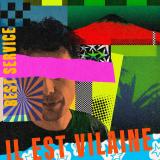
Four years after Les Mystères de Lorient, Il Est Vilaine returns with Best Service, a rich and cosmopolitan album that broadens horizons in a bleak era.
Twelve tracks and interludes crafted with the aesthetic the duo has been refining since its inception: a blend of analog electronics, techno, vintage rock, and synth-pop.
Tailor-made atmospheres, oscillating between raw energy, groove, and dark romanticism, provide perfect spaces for unexpected guests.
out of Stock
Last delivered 8 days ago available to reorder, subject to availability
"Prior to the vinyl release of the debut work “Vapor Curve”, which suffered a one-year delay due to manufacturing errors, the release of the mini-album “grainy film” has been confirmed."
Following the artist's previous release, this album completely eschews the use of computer-based DAW (Digital Audio Workstation) software. By relying exclusively on a strictly limited setup of hardware—synthesizers, samplers, and delay units—the artist pursues a meticulously woven, highly original take on minimal harmony.
At the core of this record lie exquisite ambient textures and beautifully shimmering synthesizer arpeggios. These are layered with the organic warmth of the sampler, vividly sketching out the contemporary "sound of Tokyo." As the album title suggests, the gritty, Lo-Fi texture of the sampler evokes the imagery of a vintage, low-fidelity film reel in the listener's mind. Pushing further than the predecessor, this approach embraces a more abstract, dubby, and deep soundscape aesthetic, elevating the album's artistry to new depths.
Describing this stoically refined electronic music, Maruyama reveals that it is "music for a cigar." It is not an assertive sound that demands to be the center of attention in the room. Instead, the moment the needle drops, it possesses an overwhelming power to transform the very particles of the room's air. The nostalgic and melancholic melodies, much like the shifting and fading trails of cigar smoke, embody the aesthetic of shogyo mujo (the impermanence of all things). Amidst a constantly changing world, it offers a desire to simply drift away in the slumber of sound—a supreme deep-listening experience guaranteed to transport you.
Mothers of All is Mark Gomes' second album as Blue Chemise for Students of Decay, following 2018’s acclaimed Daughters of Time. Though built from very different materials, it shares its predecessor's economy, sense of proportion, and fascination with the ways domestic life can open onto larger and less easily defined realms. Where Daughters of Time evoked tender, if alien, nursery songs, Mothers of All takes the form of spectral salon music heard at a temporal and geographic remove.
These pieces feel fundamentally receptive, with Gomes allowing his chosen fragments to retain their own histories - both personal and aesthetic - while revealing unexpected tonal relationships through their idiosyncratic arrangement. The resulting music is at once deeply personal and strangely unmoored, a space where the intimate and the distant occupy the same plane.
What lingers about this project as a whole is the paradox that the most private experiences can also be the least singular: that family, memory, and devotion become most legible at the point where they cease belonging to any one life.
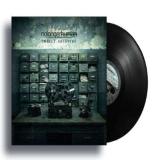
Ein spannender Mix aus Terrortekk, Electro und Dark Ambient.
Vier klassische nolongerhuman-Tracks in definitiven Versionen (Stand 2026)
Komplett neu abgemischt aus den Original-Session-Dateien, inklusive neu aufgenommenem Gesang
Erste Vinyl-Veröffentlichung dieses Materials
Weltweit streng auf 300 Exemplare limitiert
Klassisches schwarzes Vinyl, passend zum Artwork ausgewählt
Artwork und Konzept von Vlad McNeally
Etablierte Fanbasis in den Dark-Electro-, Industrial- und Aggrotech-Szenen
RIYL Suicide Commando, Hocico, Grendel, Combichrist, Aesthetic Perfection, Tactical Sekt, God Module, Psyclon
Nine, Velvet Acid Christ, Unter Null
Unterstützt durch Promotion in deutschen Medien, Charts, Clubs und sozialen Netzwerken sowie durch DJ-Support
The fourth album from the prolific Australian outfit, the record signifies the next chapter for the acclaimed Crooked Colours; dreamy, poignant and unapologetically emotionally vulnerable.
As a body of work Crooked Colours (Philip Slabber) effortlessly genre-hops, from alternative euphoric builds to upbeat melodies to electronic stabs alongside his instantly recognisable heartbreaking vocals, stacked to perfection.
Key singles ‘Pink Limo’, ‘Come Thru’ and ‘I’m All Yours (feat. Georgi Kay)’ upholding the original elements Crooked Colours have become known for; yet with a modern 2026 approach proving an ever-evolving sonic escape.
Title track ‘Dirt Road Gold’ steps outside the traditional Crooked Colours sound; guitar plucks, raspy vocals and train rhythm snare. Truly highlighting Slabber’s storytelling ability in that space.
Bookended by ‘Oxford’ and ‘Honey Dog’ encapsulating the Crooked Colours aesthetic as a whole, delicate instrumentation and catchy sing-a-long hooks.
out of Stock
Last delivered 17 days ago available to reorder, subject to availability
The practice of dub techno and its tendrils is a fundamental for me, both aesthetically and from an engineering perspective.
I start every recording session with a dub inspired jam, the first piece I ever recorded in 1996 was an effort to recreate Phylyps Trak with only a Korg X3 and an Ibanez PUE5 (borrowed from Gary Howell). It was an awesome introduction to jamming, and the footing stones of noise, delay and saturation were explored with my foot hard on the enthusiasm pedal.
These practice jams are in some sense cathartic, the first step taken again & again, which helps me move forwards each session and additionally helps to 'warm the circuits' both of myself and the machines.
After realising the genius of Basic Channel is akin to the genius of peasant food, using every ingredient with nothing left to waste, (up to and including the oft maligned working noise of the machines themselves), this was a watershed moment for my own subjective progression. No longer tied to just emulation of something inspiring, but taking these learned tools into other areas of music helped to break free from a strong current of influence and also to progress into other areas with the new toolbox.
Dub:
The importance of the dub pioneers should never be understated, in modern music and my own practice. Yet with my initial inspiration being two german dudes issuing extreme techno variants with obscured label designs, who then signposted their listeners to their own inspirations (via their Wackies re-issues or nodded to on their Rhythm & Sound/Burial Mix sub-labels), meant that I started late and travelled backwards.
Learning to notice the live mixing of Mikey Dread or Lee Perry when the faders are bleeding through even when turned down, (echoed in BC's Quadrant Dub), or the brash send effects literally thrown into the mix also taught me that 'rough' mixing can inject a recording with life, uniqueness and the most right wrongness. Looking back Basic Channels very few elements helped me realise that the rules to be understood, are also the best ones to be broken.
Push the mixer into the red.
Amp that noise up from the tape delay cos it sounds sick.
Pseudo side-chain effects cos the kicks are way too loud and the mixer can't sum it nicely.
Spam the send knob into the delay units now, now and now.
Carelessness.
Noise:
Once I wrapped my head around the intrinsic 'noise' element that set those records apart, this became a torchlight into the alt noise movements which I was tentatively exploring at the time, and also is evidently a connection or thread into them.
Whether the Industrial/Post Punk UK scene (This Heat, TG, A Tent, F.E.) or the prolific output of the US Noise scene (Wolf Eyes, Live & Shave in LA, and subsequently following the lineage all the way back to Chrome's Alien Soundtracks), I had finally discovered a connection from techno to this 'free for all' corner of music.
This input from the Noise arena of sound is, in my experience, an all important step for a sonic artist, taking it's roots and extending out from Stockhausen/Pierre Henry and utilised/warped/mangled by thousands of adventurous pioneers ever since, I now see the line separating the high brow and the low brow is actually an artery carrying information from the head to the heart.
Vault is a selection of these jams that precede each of my solo recording sessions, for 30 years I've recorded hundreds of these 'workouts'. They are never intended as serious statements, just moments of naive enjoyment, yet most importantly they are time & space captured as practice.
The objective is always a warm up exercise, but sometimes those exercises turn a different corner, with a certain focus or direction dependent on what random samples are left in my machines from the previous session, instead of conscious choices, these unconscious elements can facilitate those 'positive mistakes' that make a piece of sound retain a different feel or colour and thus become special, or at least special to the creator.
I am quite conscious that the 'record everything' aspect of my ethos has been invaluable in cataloguing and saving these jams, while the attitude of carelessness during this process (after all, it's only a warm up jam) invites more enjoyment than seriousness ever could. Even if you don't feel the piece at the time, record it, because some years later it may well fit, or become relevant in a way you never intended.
-Miles
out of Stock
Last delivered 18 days ago available to reorder, subject to availability
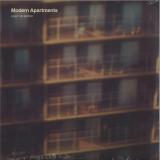
Modern Apartments arrive on Dark Entries, with Light on Water, an LP featuring 8 cuts of instrumental cosmic-kosmische analog synth workouts. Modern Apartments is Ryan Ambridge, the musician and producer best known for his work with dark synth projects Linea Aspera and Lust Pattern. While both of those outlets lean towards the greyscale and robotic, Ambridge wanted to explore a more colorful palette with Modern Apartments, a livelier, looser sound. The medium of film plays a major role here; Ambridge works as a projectionist, screening archival prints of 35mm and 16mm films, and the textures and temporality of the medium fed directly into the Modern Apartments aesthetic. But it isn’t all blurry edges and fuzzy optimism on Light on Water. Says Ambridge, “Regular beats from old rhythm boxes and the sharp angles of post-punk found their way in. The contrasting imagery from those old film prints, of dense cities and open countryside, is reflected back in the dialog between looser sounds and rigid stylistic choices.” This tension shines through on tracks like album opener “Completely,” which pairs the icy minimalism of John Foxx with the meandering grooves of Cluster, or the eponymous “Light on Water” which leans even further into the sun-bleached vibes of Roedelius. Artwork for this record was designed by Eloise Shir-Juen Leigh. Light on Water is perfect late-summer listening, as the last gasps of seasonal radiance fade into autumnal splendor.
out of Stock
Last delivered 19 days ago available to reorder, subject to availability
Radically exploratory, Raphael Loher’s Figuren is an album shaped by process and experimentation. Guided by intuition, listening, and a deliberate distancing from his primary instrument—the piano—, the LP marks a decisive step in the Swiss pianist and composer’s artistic development, expanding his sonic vocabulary while maintaining a distinct and personal language.
Figuren draws on ten intimate concert recordings from Keemuun—Loher’s debut for Three:four Records—created during the pandemic and performed in his studio for just one or two listeners. This source material was subsequently developed during a residency in the Blenio Valley, where Loher deconstructed melodic elements, isolated individual tones, and extracted resonances, reassembling them into new configurations. The process generated around 30 initial pieces and also informed his sophomore album, Hug of Gravity, released by Hallow Ground in 2025.
In a further stage of transformation, Loher processed these fragments through a Revox B77 tape machine, subtly altering their pitch before digitizing and reshaping them once again. This iterative cycle of manipulation and recombination forms the core of Figuren’s sonic language.
Departing from the more structured frameworks of his earlier work, Figuren foregrounds experimentation as both method and aesthetic. The compositions range from finely layered rhythmic microstructures to sparse, evolving melodic fragments, each unfolding with a precise sense of restraint.
The Montréal psych-ambient synth-droners return with Sequence Three, their first album in five years and the final instalment in the group’s opening trilogy of records that began with Sequence One in 2019. The spectral supergroup co-founded by Stephen Ramsay (Young Galaxy) and Jace Lasek (The Besnard Lakes), usually joined in some capacity by Lasek’s Besnard bandmate Olga Goreas, deliver another dose of its trademark longform slowburn jams, forged from restored vintage synths and analogue electronic gear. Lasek and Ramsay don their seasoned producer hats to apply rockist sound design to minimalist tracks, saturated with tube compression, drenched in pink and brown noise, all queasy modulation, sparse beats, and languorous melodic lines. Evoking a humid dawn on a gas giant, these alien drone anthems meld the numinous transcendentalism of Spiritualized and Cluster with the eroded grit of William Basinski and GAS. Light Conductor has been tagged “heavyweight analogue synth nirvana” by Uncut Magazine and praised for its “fabulous, epic, shimmeringly radiant kosmische” by Electronic Sound, among other accolades. Sequence Three consolidates these strengths, while leaning into the darker disquietude that has always been an undercurrent of Light Conductor’s aesthetic.
Sequence Three rounds out a satisfying trio of full-lengths that Light Conductor has released on Constellation, featuring vibrantly minimal geometric cover art designed by label co-founder Ian Ilavsky that integrates the trilogy as a visual series as well. In keeping with the previous two albums in the set, the Deluxe 180gLP includes a 12”x24” art poster. Thanks for listening.
The Montréal psych-ambient synth-droners return with Sequence Three, their first album in five years and the final instalment in the group's opening trilogy of records that began with Sequence One in 2019. The spectral supergroup co-founded by Stephen Ramsay (Young Galaxy) and Jace Lasek (The Besnard Lakes), usually joined in some capacity by Lasek's Besnard bandmate Olga Goreas, deliver another dose of its trademark longform slowburn jams, forged from restored vintage synths and analogue electronic gear. Lasek and Ramsay don their seasoned producer hats to apply rockist sound design to minimalist tracks, saturated with tube compression, drenched in pink and brown noise, all queasy modulation, sparse beats, and languorous melodic lines. Evoking a humid dawn on a gas giant, these alien drone anthems meld the numinous transcendentalism of Spiritualized and Cluster with the eroded grit of William Basinski and GAS. Light Conductor has been tagged "heavyweight analogue synth nirvana" by Uncut Magazine and praised for its "fabulous, epic, shimmeringly radiant kosmische" by Electronic Sound, among other accolades. Sequence Three consolidates these strengths, while leaning into the darker disquietude that has always been an undercurrent of Light Conductor's aesthetic. Opener "She Glitters The Dust" fades up slow with intertwining detuned synth loops, a languorous lullaby beat dropping at the 3-minute mark, accompanied by insectoid shimmers and a tease of melody that's eventually given free reign over the song's second half. Aptly titled, it's as if a transmission captured within a cosmic dust cloud has provided the raw material for the band to jam on, tease out, and terrestrialize. An echo of that beat sets the tranced pulse for "Omenize", the centerpiece of Side One and the fulfilment of Light Conductor's one-vocal-track-per-album directive. With layered harmonies by Goreas and Lasek, this is the group at its ethereally anthemic best, the devotional floating-in-space bliss attenuated by another gently warped denouement. "Ghost City Radio" closes out Side One with the band's most overtly anxious tune to date, deceptively stolid in its simple bass guitar riff and filter-swept hi-hat: groove stripped to its minimum as the foundation for an extended spokenword sample of a doomsaying prepper/preacher, a sort of homage to that early hallmark of their Godspeed compatriots, done up through the lens of Light Conductor's inimitably destabilized celestial ambience. (Lasek mixed the most recent two GY!BE albums.) Side Two offers up "High In The Orange Air", a beatless, squelching, bubbling ostinato drone and the album's most orthodox ambient kosmische track. This provides the set and setting for 15-minute closer "Supercontinent", which starts off in similar territory but gradually yields to a submerged and reversed techno pulse pumping through coruscated chordal drone, gaining in woozy mesmeric psych intensity over its inexorable hypnagogic trajectory. Sequence Three rounds out a satisfying trio of full-lengths that Light Conductor has released on Constellation, featuring vibrantly minimal geometric cover art designed by label co-founder Ian Ilavsky that integrates the trilogy as a visual series as well. In keeping with the previous two albums in the set, the Deluxe 180gLP includes a 12"x24" art poster. Thanks for listening.
BRAT is a New Orleans-based extreme metal band known for their "bimboviolence" or "Barbiecore" aesthetic. Founded in 2020 during Mardi Gras, they have quickly made a name for themselves in the hardcore, death grind, and power violence scenes by pairing blistering heavy riffs with bright, Y2K-inspired feminine imagery and pop samples.
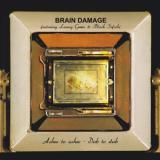
By 2004, dub had a history stretching back more than thirty years. This remarkable longevity can easily be explained by the evolving nature of this musical genre, which is constantly changing both artistically and technically, from Kingston to London, New York, and more recently Berlin, Paris, Lyon and Saint-Étienne. For example, it is worth noting that for some years now, in France and elsewhere, a good number of artists have been thinking in terms of dub from the outset, breaking free from the original Jamaican model, which involved drawing inspiration almost systematically from an existing vocal track. Thirty years on, with the release of their second album, Brain Damage aim to reconnect with this tradition. Recent collaborations with the two vocalists, Learoy Green and Black Sifichi, have indeed provided the ideal source material for the creation of five tracks, each rendered in their respective dub versions, thus forming an album with a symmetrical, even geometric character - from its very structure right down to its title: 'Ashes to ashes / Dub to dub'. At the heart of the project lies the astute choice of two guests, each operating in diametrically opposed spheres yet brought together for the occasion, thereby emphasising a certain 'unity of the circle': 'the unity of the circle'. Born of a genuine artistic vision, this geometric, symmetrical aesthetic-omnipresent in every detail of the album, both auditory and visual-complements Brain Damage's 'square' and robotic side, with its three-dimensional evocations. Always working in close collaboration with the very latest digital technologies. This brings to mind 'the balance of the cube'. Finally, the title itself, 'Ashes to ashes / Dub to dub', should be understood as a reference to the transience of all things in this world, against a backdrop of widespread, globalised, international, national and local crises_
»Pipe Dreams II & III« presents two new, side-long organ works by Mary Jane Leach, extending the sonic investigations of her 1989 landmark »Pipe Dreams«. Recorded in Ghent and Cologne, the two side-long pieces use shifting stops, resonance and beating tones to turn the pipe organ into a vivid, physical field of sound.
When »Pipe Dreams« was issued on vinyl for the first time by Blume in 2017, it was effectively the first time many of us encountered Mary Jane Leach’s music, finally placing her work in its proper historical context amid the searching Downtown milieu of Julius Eastman, Arthur Russell, Arnold Dreyblatt, Ellen Fullman, Philip Corner, Daniel Goode, and Peter Zummo. Leach collaborated with most of these artists at one point or another, either in Downtown Ensemble or as a guest on their records.
Now »Pipe Dreams II« and »Pipe Dreams III« arrive, recorded in 2023 and 2024 at Miry Concertzaal in Ghent, Belgium, and Kunst-Station Sankt Peter in Cologne, respectively.
»When I was a young child, my family lived next door to a church, where my mother was the organist. I spent many hours lying on the floor of the sanctuary listening to the music, letting the sound of the organ envelop me. I also liked to play the piano loudly with the pedal down, producing clouds of sound, much to my family’s annoyance. These two organ pieces explore some of my earliest musical interests and aesthetics.
In 1989, I lived in a tower attached to St Peter’s Church in Cologne, where I had access to its organ. It had two sets of pipes, front and back, which could create antiphonal effects. I spent countless hours exploring the possibilities of all the permutations of notes, space, and the resulting sound phenomena. I wrote »Pipe Dreams« for that organ. Fast forward to 2023, when I was asked to create a piece for organ for a concert at the Miry Concertzaal in Ghent, Belgium: »Pipe Dreams II«. I had a few days to familiarise myself with the organ, its available stops, and the layout of the console. I choreographed stop changes for a volunteer, as I couldn’t reach them myself. Some amazing sounds began to happen, and at one point the sound was so visceral that I felt as though I were taming a wild beast.
»Pipe Dreams III« was performed in 2024 on the organ that I had spent so much time playing in 1989–90. One big difference, though, was that the console was totally new and computerised. Having access to the organ for only a few hours before the concert, I decided that I did not have enough time to feel comfortable with the console and should not attempt to recreate the piece I had written in 1989. I would instead use the same sequence of stops and perform an improvised piece. I loved the sounds that were being created, and I was having so much fun that at one point I even started to laugh quietly. I began to visualise the beating notes as if they were atoms, opening them up to expose their innards, with the beating, higher-pitched notes — neutrons and protons — shimmering at the top, and the lower notes — the electrons — throbbing away at the bottom. I was playing notes not so much for their pitch value, but for how they affected the notes and sound phenomena already being played. Instead of a time signature, I timed the entries by listening to the beating patterns, waiting for the right moment to enter. And no, I wasn’t hallucinating.«
Marcal has emerged as one of the most distinctive voices of a new generation of techno producers, combining rhythmic precision with an instinct for detail, tension and movement. On Four Small Escapes, he delivers four tracks built around subtle shifts and carefully placed moments of surprise, where intricate sound design and groove remain in constant dialogue. Opening with Smoke from Respawn, Marcal immediately establishes the record's character. Syncopated rhythms, intricate percussion work and subtle sound design details unfold within a streamlined framework, creating a groove that feels both spacious and forward-moving. Wooden rimshots and glassy textures interact across an open arrangement, giving the track a fluid and trippy quality. Arapuca shifts into darker territory while maintaining the same sense of control. Organic percussion, rolling low-end momentum and sharply placed accents continuously reshape the groove, creating a track that feels alive through movement rather than dramatic intervention. On Ultimamente, Marcal introduces one of the record's most immersive moments. Fleeting sonic details appear and disappear throughout the arrangement, while a carefully integrated vocal element adds depth and emotional weight without disrupting the flow. The result is a track that invites complete immersion while remaining firmly focused on the dancefloor. Closing the EP, The Surprise Test delivers its most direct statement. Rough and driving without leaning into industrial aesthetics, the track is powered by rolling energy, syncopated claps and a series of subtle electronic details that continuously animate its surface. The contrast between rawness and precision gives the record a powerful closing moment. Across all four tracks, Four Small Escapes highlights Marcal's ability to create tension through detail rather than excess. Reduced yet expressive, the EP balances functionality with a strong sense of character, allowing small gestures and unexpected shifts to leave a lasting impact.
out of Stock
Last delivered 2 days ago available to reorder, subject to availability
Curses' dark, romantic take on electronic music is often linked to EBM, new beat, synth-pop, and the offshoots in between - but, as the artist states, it's feelings, not genres, that motivate his music. Especially the underground and its niche sounds, brimming with collective energy, drive and passion, make for a major impetus. It's no coincidence that he's drawn to the era when man turned to the machine, as a collaborative force, and a new kind of liveliness, timelessness, emerged. In Curses' practice, this synergy translates into an enticing mix of synthesisers and voices, electronic drums and guitars. Nostalgia operates as an influence rather than a motive, though: despite its affinities with the past, his music is stridently contemporary and idiosyncratic. On the "Perfect High" EP, this approach is rendered in a resolutely dancefloor-oriented selection. It's rich in detail and constantly evolving; each time a new element appears, it's treated with such delight and care that you could imagine the track to flit off and turn it into the main theme. This doesn't happen, however, as the sense of cohesion and momentum is paramount: there's a relentless forward drive that keeps engagement tight from start to finish. The detuned, chorus-heavy leads of title track "Perfect High" and the clockwork-tinged percussion of "Weapon Of Time" jell with lustrous hooks. The ominous choirs on "Dare To Dream" and the proto rolling-and-scratching squelches of "Killer Instinct" similarly fall into place. Bravado never stands in the way of flow. Everything is kept in check by gated R-50 rhythms, and in the vocal department, Curses finds the sweet spot between his own voice and a slew of off-kilter samples. On closer "Blasted" NYC royalty Andi joins for a slab of synth-driven groove. It's shiny and sensuous, like patent leather - a perfect distillation of club music channeled through pop aesthetics, and thus a right coda for ALT028.
out of Stock
Last delivered 25 days ago available to reorder, subject to availability
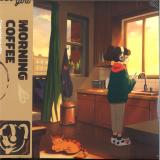
The ultimate Limited Edition double LP repress of "Morning Coffee" is finally here! ☕
Treat yourself to this ultra-exclusive double LP featuring an incredible liquid-filled vinyl. It's the perfect opportunity to acquire an exceptional collector's piece that is as hypnotic to watch as it is to listen to.
✨ Vinyl Features
Ultra-Rare Liquid-Filled Disc 1: much more than just a vinyl record, it's a technical marvel. This first disc contains a moving, coffee-colored liquid that comes alive to the rhythm of your turntable, offering a hypnotic and extremely rare visual experience.
Stunning Coffee-Marbled Disc 2: to perfectly pair with the liquid disc, enjoy a beautiful brown marbled vinyl that captures the warm aesthetic of a freshly brewed cup of coffee.
22 Remastered Tracks: 54 minutes of carefully selected, soothing melodies, remastered to bring a gentle warmth to your morning coffee routines.
Specially designed for fans who couldn't secure the original first pressing due to its instant sell-out, this limited reissue is the missing centerpiece your collection deserves.
out of Stock
Last delivered 26 days ago available to reorder, subject to availability
DE-CMG / DE15YR Dark EntriesBooks21.09.202621.SEP.26
Dark Entries Collected Music Graphics Compiled by Josh Cheon and Eloise Shir-Juen Leigh To celebrate 15 years of Dark Entries, this zine showcases the label’s visual aesthetic, bringing together some of the most iconic designs that we’ve released. While Dark Entries’ sonic mission has included sounds as diverse as synth-pop, Italo disco, darkwave, house, and techno, it is equally staggering to see the breadth of visuals the label has encountered and collected over the years. Included here are selected typography, logos, and illustrations from the label’s extensive catalog — well over 300 releases to date. Designs have been created using DIY analogue techniques as well as more contemporary digital approaches. A full discography is included at the end for reference and an essay by Shawn O’Sullivan (Led Er Est, Further Reductions). This zine serves as a source of inspiration for artists as well as a means of preserving and documenting these distinct graphics. DARK ENTRIES RECORDS is a San Francisco-based record label that was born in July 2009. Helmed by Josh Cheon, a vinyl-focused DJ and collector, the label has focused largely on excavating the 1980s underground era – but releases have spanned from sultry vintage disco to bleeding-edge contemporary techno. Graphic designer Eloise Shir-Juen Leigh has been responsible for most of the label’s artwork, whether reproducing original designs accurately for reissues or creating exciting new ones. Much care and attention is given to each release to represent the music in a memorable way as well as tell the stories behind these projects. Hand-stamped and limited to 200 numbered copies. 64 pages with neon cardstock covers. Measures 5×7 inches.
Houston’s premier street griot is stepping into his most profound chapter yet with his highly anticipated upcoming album, O.Y.N. Throughout a decorated career that spans over 1.2 billion global streams and a fiercely loyal fanbase, Maxo Kream—born Emekwane Ogugua Biosah, Jr.—has established himself as one of rap’s most authentic, uncompromising storytellers. From the raw trenches of Alief to the critically acclaimed triumphs of Punken, Brandon Banks, Weight of the World, and his triumphant 2024 independent pivot Personification, Maxo has long been celebrated by Pitchfork, NPR, and Complex for his cinematic, hyper-detailed world-building. Now, O.Y.N. finds the Houston icon turning his gaze inward, pairing his signature Texas grit with an expansive, global perspective that redefines his artistic boundaries.
If his previous work was about Maxo taking full creative control as an independent force, O.Y.N. is about him uncovering who he is at his core. Following the passing of his father, Maxo found himself searching deeper for his family origins, leading to a pivotal moment of artistic and personal rebirth. For the first time in his life, Maxo traveled to Lagos, Nigeria, anchoring his new music in a profound celebration of his Nigerian heritage. The emotional centerpiece of this journey is the JPEGMAFIA-produced single “Time Out,” an introspective track that moves away from the frantic energy of his past releases to offer a stripped-back look at love, loss, and legacy. Featuring a heavy, resonant drum presence on the outro, the song’s accompanying music video was filmed on location in Lagos, capturing Maxo navigating his ancestral roots in real-time.
While O.Y.N. reaches new emotional depths, it doesn't sacrifice the hard-hitting, volatile street persona that made Maxo a star. The album expertly balances soul-baring vulnerability with cutting-edge hip-hop experimentation, showcasing elite chemistry with some of the genre's most forward-thinking visionaries. Look no further than “Fake Jeezy,” a collaborative explosion featuring Denzel Curry and masterminded by JPEGMAFIA. The track is a masterclass in industrial chaos, combining sharp lyricism and early-2000s trap imagery with cold, surreal visual aesthetics. This duality highlights Maxo's unique positioning in the culture as a trusted street general who can effortlessly trade bars with rap's avant-garde elite.
From his early days flipping Kendrick Lamar's “Rigamortis” to sharing marquee tracks with the likes of A$AP Rocky, Travis Scott, and Tyler, The Creator on hits like “Big Persona,” “Cracc Era,” and “Cracc At 15,” Maxo Kream has always been a rapper's rapper. O.Y.N. represents the ultimate synthesis of this incredible journey. It is an album born from the soil of Alief but elevated by the spirit of Lagos—a raw, beautiful, and heavy-hitting testament to an artist who has survived his past, honored his losses, and fully embraced his destiny.
Brazilian artist Rubel isn’t one to be pigeonholed and typecast into staying in one sound. Casas, the follow-up to his debut album Pearl from 2015, brought a bigger, more epic, and richer production quality to the table. Fusing the worlds of MPB and hip hop, Rubel’s sophomore LP built on the momentum of its predecessor, gaining a Latin-Grammy nomination along the way. Mr Bongo is proud to be giving Casas its first worldwide release on vinyl and CD outside of Brazil and Japan.
The cliché they say is that the second album is always the trickiest; however, Rubel doesn’t seem to have had any problems on Casas. It’s a fountain of creativity and originality, marking an artist in full flow.
Conceived after Rubel spent six months living in Los Angeles, Casas is MPB-leaning at its core but is also driven by a hip hop inspired pulse. There is a clear influence from hip hop’s aesthetic across the 2010s woven subtly but fundamentally throughout. Nods to Frank Ocean, Kendrick Lamar and Tyler, The Creator can be heard across an album full of playful edge and personality. Luscious string-led arrangements and tracks that explore the rich folkloric rhythms of Brazil, sit next to songs with low-fi drum machines and features from acclaimed Brazilian rappers.
One of the highlights of the album, ‘Mantra’, starts with a traditional Brazilian rhythm that morphs into a hazy hip hop beat. A sublime song with a hooky call and response chorus, it features a guest appearance and verse by the Brazilian MC Emicida. Another highlight is the epic ‘Colégio’ (College) which further showcases the melding of stripped back drum machine beats with cinematic, sweeping arrangements. Elsewhere, ‘Partilhar’ is a swaying, heartwarming hug. A tale of longing and love that has become a singalong fan favourite at Rubel’s concerts.
Casas also shines a light on a string of key players in Brazil’s new vanguard, such as Pedro Fonte, Gus Levy, and Brazilian rapper / poet Rincon Sapiência to name a handful. The record has pop sensibilities yet also feels underground. It beats with the heart of a singer-songwriter, a feeling that was felt so strongly on Pearl, yet this time is bolstered by a level of arrangement and richness of sound that take it to another dimension - soaring horn and string sections elevating the songs from home recording to stadium-ready anthems. Keeping that intrinsic beauty and simplicity of a well-constructed song yet reframing it within a pop context is the true gift of this album.
Casas cemented Rubel’s status as one of Brazil’s leading contemporary talents and a key figure enriching the country’s already effervescent scene.
Four years after Les Mystères de Lorient, Il Est Vilaine returns with Best Service, a rich and cosmopolitan album that broadens horizons in a bleak era.
Twelve tracks and interludes crafted with the aesthetic the duo has been refining since its inception: a blend of analog electronics, techno, vintage rock, and synth-pop.
Tailor-made atmospheres, oscillating between raw energy, groove, and dark romanticism, provide perfect spaces for unexpected guests.
"Based in Thiers (63), Ernest Bergez, also known as Sourdure, has been walking a tightrope for the past ten years, combining a spirit of experimentation with a personal, handcrafted approach to traditional music. Affirming and transfiguring the ""Sourdure-esque"" aesthetic, Outredore unfolds a surprising array of discoveries in Occitan and French: hallucinatory laments, oblique rhapsodies, and carnivalesque odes.
A generous and respectful invitation to build unexpected bridges between disparate sonic worlds, the album extrapolates the modal vocabulary specific to traditional Occitan music, blending it with stylistic elements from around the Mediterranean. Carried by a voice more raw than ever and caught in the ebb and flow of a troubled era, Outredore's songs explore the relationship between the personal and the political.
Vulnerable, faltering and visceral, Outredore evokes a nova cançon occitana that has traded folk guitars for electronic machinery."
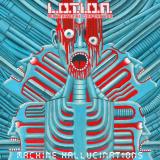
L.O.T.I.O.N. Multinational Corporation have been percolating in the NYC underground for the past 10+ years - gaining notoriety for their unique brand of industrial cyberpunk with intense live shows, fiercely political lyricism and striking visual aesthetics (masterminded by the band’s vocalist, noted visual artist Alexander Heir.) Blending noisy electronics and pumping beats with live instrumentation, the band draws inspiration from the militant minimal techno of Detroit, 90s Gabber, and the thrashing riffs of Hardcore Punk. The upcoming release "Machine Hallucinations" is their most fully realized to date. Exploring topical themes of artificial intelligence, the horrors of ICE raids and the corrupt modern military industrial complex, "Machine Hallucinations" is a violent and sobering critique of the current fractured state of The USA. Recorded and Produced by Ben Greenberg (Uniform) and featuring guest appearances from Iggor Cavalera (Sepultura, Cavalera Conspiracy), LA electro-punks La Pregunta? and vocalist Lulu (Fairytale, Twisted Thing) - as well as an expanded dual-guitar line-up, "Machine Hallucinations" broadens the sonic spectrum only hinted at on previous releases.
With “La Fiesta Seria y Nuevas Formas de Tecnaco”, the fourth chapter in the ESTADO DE BIENESTAR series, the project continues to delve deeper into a singular sonic territory, situated at the fringes of experimental electronics and free from any aesthetic constraints, moving unapologetically between tribal dub, primitive electro, hypnotic ambient and even classical piano structures, articulating a musical discourse that is as disconcerting as it is coherent.
Most of this work emerges from the use of CV sequences which, with their distinctive human groove, trigger iconic synthesizers from different generations, giving rise to a new radical exploration of proto-electronics as an open and constantly evolving language.
Recorded almost entirely in analog, the album preserves a lo-fi aesthetic that has become one of the project’s defining characteristics.
Previously described by various international specialist media outlets as “a new genre because of its unclassifiable nature”, ESTADO DE BIENESTAR continues to develop a language of its own: one that follows no one and, in its own way, follows everyone. A sonic territory that, at Oráculo, we have chosen to call Transelectronica.
Celebrating dubwise origins, Mole Audio delivers two fresh remixes of their very first release: Andy Martin ft. Gavsborg's Plato & Caves.
Gavsborg is a towering figure in Jamaica's dancehall scene. So when Andy found an acapella, he set to work on a renegade edit. Subsequently approved and embraced by Gavborg himself, Andy's interpretation provided the launch point for Mole Audio - and is re-envisioned twice more here.
Paired with the original A-side, the B-side remix comes courtesy of south London’s legendary Dub War. Benny ill & Bill Robin are progenitors of the original London Dubstep sound, and their Dub War releases on Tempa are highly prized among collectors.. Pairing hypnotic beats with spacious textures, an insistent analog bass line weaves its way through an infectiously dystopian atmosphere.
Taking a minimalistic house-driven approach, Andy's all-new Mad Magnetism Version brings Gavsborg's original vocal to a prime time environment. Sizzling high hats and diving bass drops combine to keep the dancefloor in motion before insistent dub chords further elevate the urgent atmosphere.
Combined with the original and Nit Yardman's remix, the resulting package once again showcases Mole Audio's unique approach to modern dub aesthetics.
out of Stock
Last delivered 19 days ago available to reorder, subject to availability