
Search:af

- A6: In My Room; Noises, Producer
- A1: Don't Go; Written-By – Clarke*
- A2: Too Pieces; Written-By – Clarke*
- A3: Bad Connection; Written-By – Clarke*
- A4: I Before E Except After C; Voice
- A5: Midnight; Written-By – Moyet*
- B1: Only You; Written-By – Clarke*
- B2: Goodbye 70'S; Written-By – Moyet*
- B3: Tuesday; Written-By – Clarke*
- B4: Winter Kills; Written-By – Moyet*
- B5: Bring Your Love Down (Didn't I); Written-By – Moyet*
d A4 I Before E Except After C; Voice [Extra Chit-chat] – Eric's Mum; Written-By – Clarke*
[f] A6 In My Room; Noises, Producer [Additional Production] – Daniel Miller; Voice [Extra Chit-chat] – D. Davis (2); Written-By – Clarke*
[d] A4 I Before E Except After C; Voice [Extra Chit-chat] – Eric's Mum; Written-By – Clarke*
[f] A6 In My Room; Noises, Producer [Additional Production] – Daniel Miller; Voice [Extra Chit-chat] – D. Davis (2); Written-By – Clarke*

- A1: Coro Del Amanecer (Feat. Vero´nica Valerio)
- A2: Corazon De Rubi (Feat. Minu¨k)
- A3: Tlacotlan
- A4: Juku (Feat. Rumbo Tumba)
- A5: Chucum
- A6: Complete (Feat. Feat. Dina El Wedidi)
- B1: Xica Xica (Feat. Uji & Barrio Lindo)
- B2: Brigantes
- B3: Papan (Feat. Citlaly Malpica & Pablo Emiliano)
- B4: Ynglingtal (Feat. Jhon Montoya)
- B5: Madre Tierra (Feat. Luzmila Carpio)
11
also available
BLUE Vinyl[29,62 €]
Repress!
Wonderwheel recordings is proud to present the first full-length album from
producer Robin Perkins, aka El Buho. Balance represents a meeting of different currents that make up Buho's music: a fascination with the natural world, and its protection, a fascination with the rhythms, traditions and sounds of Latin America and a fascination with modern electronic music and production aesthetics. The album is peppered with Cumbia, Son Jarocho, Andean instrumentation & Afro-Colombian rhythms. Mixed with this, Robin integrates this idea of "nature music" - putting the sound of a misty forest, the songs of birds, of crunching leaves under foot or the rhythmic tapping of rain alongside synthesized sounds, electronic clicks or claps, deep basses. Trying at once to give them their own space but in a new, surprising perspective - it draws electronic music into something more soft, natural, different and appealing.
Balance is also an album that celebrates community and collaboration, showcasing collaborations with ten different artists form Latin America and beyond, both producers, instrumentalists and singers. Including more of a lyrical presence than his previous EPs, Perkins solicited the participation of talented singers like Dina al Wedidi from Cairo, Luzmila Carpio from Bolivia and the incredible decimas of Mexican poet Citlaly Malpica. The album also features the likes of harpist Veronica Valerio, Argentine multi-instrumentalist Rumo Tumba, jarana player Pablo Emiliano from Mexican Son Jarocho group Semilla and members of the Shika Shika family (the global collective he co-run's) Uji, Barrio Lindo, Kaleema, Minük and Jhon Montoya.
El Buho's music has an incredible power to convey feelings, atmospheres, memories or messages. The message that sits behind this music is to value on the one hand the power of community, of collaboration and of our modern, globally, connected world but also the remembrance, protection and celebration of the very earth we depend upon for our existence.

4 years after his last solo record on his Wych imprint “BB-8 / Barbarossa”, K-LONE returns for another 2 track EP of bleepy melodic 140, this time reminiscent of Bristolian Purple dubstep aesthetic. Saw waves, cheesy 80s chords and flute melodies continue the signature sound of Wych with "Squelch / With Luv". Mastered by Beau at Ten Eight Seven. Artwork by Annie Foyster.

14
“Ti Ho Sposato Per Allegria” (1967) is a comedy directed by Luciano Salce, taken from the theatrical play of the same name (1965) by Natalia Ginzburg. The main characters are Pietro and Giuliana, respectively interpreted by Giorgio Albertazzi and Monica Vitti. A lawyer from a good family, serious, accustomed to a calm and regular life who got married to a indolent and dazed girl with a difficult past a month after meeting her at a party. Despite Giuliana's inability to transform herself into a good housewife, his relationship with Pietro continues to flourish, because he seems to find enjoyment in each of his wife's many mistakes. The reason for their union lies not in love but, perhaps, in a genuine sympathy, as strong as it is mutual. The story has become a minor classic with each new representation. On both stage and screen the themes of everyday life, and the more complex and existential ones, are addressed. The subtle irony of the work relies on recounting problematic events in a carefree tone: realities such as abortion, death, separation and the couple's incommunicability are underplayed with naturalness. The funny events of the film are commented on by Piero Piccioni's music, published for the first time on vinyl by Musica Per Immagini, with an harmonious tracklist. For this first orchestra rehearsal with the director, which will be followed by other important soundtracks, the composer makes an effective and elegant synthesis: on the one hand he reworks moods and aesthetic intuitions of some previous and happy experiences, while on the other he identifies and anticipates the first bars of that unmistakable sound between bossa nova, funk and lounge nuances that will characterize almost all the production of the Seventies. In fact, the Turin-native artist simplifies in a positive sense the articulated harmonic structures that have always distinguished his authorial figure – where the so called jazz features are to be considered more than central in the musical texture, as prominent elements of the harmonic syntax – and he tries a melodic reduction that will make the compositions more catchy or memorized, but not easier for this. Lightness of spirit and rarefied elegance are the keys of this new Dionysian world.

- A1: Deon Cole Ft. Terisa Griffin - Where The Freaks At (Terry Hunter Club Mix)
- A2: Culoe De Song - Aftermath
- B1: Anané — Walking On Thin Ice (Louie Vega, Sebastien Grand, Alex Finkin Remix)
- B2: N.w.n. - Girl
- B3: Tal Fussman - Parallel Reality
- C1: Dailly - Autonomy (New York Drums Mix)
- C2: Copy Paste Soul — The Fall (Laurent Garnier Remix)
- D1: Carlo Ruetz - Proton
- D2: Marco Bailey — Full Steam
- D3: Mary Droppinz - The Cycle
- E1: Sammy Virji & Flowdan — Shella Verse
- E2: Rohaan - Easy For Them
- E3: Taxman — All Crew
- E4: 2Xm & Neil Macleod — Hear My Call (Neil Macleod Remix)
- F1: Regents, Cartridge, Strategy — Greengate Adhesive
- F2: Benny L — Salute
- F3: Cocktail Party Effect - Collapse
- G1: Loma - I Swallowed A Stone
- G2: Phiorio — Spark (Doubtingthomas Rework)
- G3: Bardino - Tília
- H1: Equiknoxx — Urban Snare Cypher
- H2: Dialog — Book Of Life (Feat. Benji)
- H3: Kang Brulèe — Out Of Time
- H4: Melody Gardot — You Never Ask (From 'Madame Sean Connery')
24

6
Civilistjävel! x Mayssa Jallad’s ‘Marjaa: The Battle of the Hotels (Versions)’ is a radical response to Mayssa Jallad’s 2023 original LP, a lyrical account of epochal events in Beirut at the dawn of Lebanon's civil war. ‘…(Versions)’ sees Civilistjävel! (aka Swedish producer Tomas Bodén) apply a stripped, dub methodology to Mayssa's rich stems, refracting the Arabic source through the hazy prism of Northern European electronica. Retaining ‘Marjaa…’s deep spatial framing and vaporous, shifting nature, traces are lifted and set down in a new landscape: a ghost of a ghost. Informed by Tomas' singular strand of ambient, minimalist, dub techno, ‘… (Versions)’ recalls the reductive, shimmering pulse of pioneering Berlin-based practitioners Basic Channel/Chain Reaction, but with the parameters stretched into the ether. Where versions typically focus on a rhythm, here the anchor is the tone and texture of Mayssa’s voice, around which a new world has been constructed. Disembodied and liminal, it conjures an eerie panorama that feels like a postscript to the original, further emphasizing the geopolitical events that have had such devastating effect in Mayssa’s homeland of Lebanon since that record’s release. ‘Marjaa…’ (tr. ‘reference’) combined Mayssa Jallad’s two main vocations: music and urban research/architectural history. The album was co-written with Fadi Tabbal and based on Mayssa's Historic Preservation master's thesis (‘Beirut’s Civil War Hotel District: Preserving the World’s First High-Rise Urban Battlefield’). The thesis examined a 5-month conflict that took place within Beirut's skyscraper-laden luxury hotel district of Minet El Husn near the start of the Lebanese Civil War. Addressing a post-war generation who have never been taught this difficult history, ‘Marjaa…’ was an attempt to process trauma, and “a call to protest for the renewal, rather than the recycling of the political class that once destroyed the country and holds us, to this day, hostage of its violence.” Often perceived as a mysterious, shadowy presence, Civilistjävel! has come increasingly to the fore in recent years through a consistently dazzling stream of records, released both anonymously and via Fergus Jones’ FELT imprint, often appearing with scant information and tracks for the most part untitled. Having featured tracks from ‘Marjaa…’ on mixes, and included the album in his picks of 2023, in early 2024 Tomas asked Mayssa to provide vocals for a track on his album ‘Brödföda’. Mayssa remembers, “Tomas asked me to choose one of the tracks he was working on. I was in Boston at the time, so I took a walk and chose a track. I wrote the lyrics at the public park, wondering if I was the only one around that was losing sleep over the genocide in Palestine and the war in South Lebanon. I went back to the apartment and recorded the vocals on my phone, while listening to the track on headphones. Tomas reworked it with the voice and sent it back. I liked it immediately.” Despite the geographical distance from Beirut to Uppsala, Sweden, where Tomas resides, Mayssa’s contribution sounds very much at home in Civilistjävel!’s atmospheric, contemplative sound-world. Tomas’ request was reciprocated by Mayssa soon after, resulting in the spectral, glassy ambience of ‘Etel, Kharita (Version)’. This was followed by an invitation to work on more tracks, which Tomas immediately embraced, intensively jamming out versions live to two-track tape in downtime between travelling. If not entirely dissimilar to his regular working practice, the immediacy of it was unusual. Much was improvised live with just a keyboard (not tethered to a grid), and a restricted set-up that largely forbade later edits - only the rhythm tracks are programmed. A sharp conceptual thinker and composer, Tomas takes creative liberties with Mayssa’s songs in a way that is deeply felt and sympathetically aligned, whilst unashamedly outside of the original context of the record. The voice is leaned into as an instrument, without the clear, specific details of language, and this axis provides an uncertain, amorphous footing - structure is often suggested or hinted at, before disappearing or collapsing into fog, and folding back into the message within the song. A somewhat unprecedented source for an album of versions, even those familiar with ‘Marjaa: The Battle of the Hotels’ may at points struggle to hear the songs these versions are rebuilt from, despite the vocal narratives remaining virtually intact. The light has shifted; eroded buildings are foregrounded; fragments of memories appear in chiaroscuro. Signs and signifiers have been replaced. Shorn of the original's warm guitar, ‘Baynana (Version)’ feels like an ominous visitation, the sun no longer visible. ‘Holiday Inn (March 21 to 29) (Version)’ is a molten, clattering invocation. The beat-less tracks nod towards the cold, otherworldly sound-scaping of late '90s isolationism. More propulsive and embodied, ‘Holiday Inn (January to March) (Version)’ and ‘Kharita (Dub)’ are strobing, iridescent techno - lithe, shifting and mutating with almost implausible finesse. A stunning addition to Civilistjävel!’s growing catalogue, ‘…(Versions)’ is a luminous counterpoint to ‘Marjaa…’, and a welcome reminder of how incredible that record remains.

No Drama, the label helmed by Roy Rosenfeld, reflects his musical vision and personal philosophy, showcasing artists whom Roy respects not only as innovators of new sonic landscapes but also as individuals of character. The imprint proudly introduces its third release: a two-track offering by Khen.
Known for his groovy and melodic house sound, Khen has earned international recognition for his unique style.
The opening track, Back in the Days, introduces modulated deep vocals that stamp the composition with a signature sound. Intelligent, percussive, and hypnotically repetitive, the piece maintains a poised charm, deliberately breaking rhythmic expectations through carefully crafted and precisely timed shifts.
The second track, Usual Madness, stretches the emotional range, layering buoyant basslines with arpeggiated melodies and textured and evocative background elements that enrich the arrangement with thoughtful sonic choices. As the piece unfolds, sound effects and an evolving sense of joy coalesce into a meditative structure that seamlessly weaves musical elements with emotional nuance. After a brief moment of calm, the track builds into a commanding crescendo, delivering a final, cathartic release.
Together, these two works represent an essential addition to any discerning playlist.

Sweden’s Tiger Stripes returns to Rekids with the ‘Dance For Peace’ EP, following on from February’s ‘All Night Long’ and 2024’s ‘I Heard It Through The Bassline’ EPs. Across four warm and funk-fuelled cuts, he delivers another essential selection of House grooves primed for peak-time moments and deep, late-night sessions alike, already supported by Oliver Dollar, Riva Starr, Anja Schneider, and more.
The opening track, ‘Time For Peace,’ is a brilliantly loopy roller, featuring bouncy drums, muted synth motifs, and a vocal swirl of soulful cries that ramp up the energy. It’s a stylish tension-builder, paving the way for ‘Rockin’, a chunky jam with funky melodic riffs buried in the beat and wordless ad libs teasing out the soul. ‘The Street’ keeps the vibe flowing with swinging drums, knotted guitar licks, and subtly filtered vocals worked into a steamy, party-starting groove. Closing things out is ‘A Dance’, a deeper cut drenched in lush chords and hazy vocals—perfect for blissed-out dancefloor moments.
Founder of the Strange Idols label, Tiger Stripes has spent over two decades forging his own path with standout releases on Hot Creations, Get Physical, Kwench Records, and Rekids. After stepping back to focus on his indie-rock project Little Lies, he made a full return in 2024 and quickly recaptured the form that’s made him an international favourite.

DJ support: Fabio, Skeptical, Visages, Zero T, Makoto, DJ Marky and more
Alix returns to the imprint after last year's release of his revered mini album 'Entanglements'. Oddments Vol.1 continues down the soulful drum and bass path, offering 2 solo ventures as well as 2 collaborations featuring 2 of the UK's finest lyricists - Confucius MC & Verbz.

'Que Vida É Essa' is a certified samba-rock classic from 1973, taken from one of Wal's sought after 7"'s. Uptempo for the dancers, with percussive grooves, chic and even some wave sounds for extra sunshine vibe.
'Atôa Atôa' is a samba-jazz-fusion classic by Ronald 'Ronie' Mesquita, featuring Burnier & Cartier. Taken from the sought after 'Ronie & Central Do Brasil' LP on Tapecar. Previously unreleased on 7".

- A1: Voces Fugaces (Cautivo Y Desarmado)
- A2: Mirando Atras (En La Rebelión)
- A3: Radical (Noctámbulo)
- A4: Fuera De Lugar (Tierra Negra)
- A5: Entre Bastidores (Sobre Otra Ruta)
- A6: Una Vez Mas
- B1: La Frontera Perdida
- B2: El Éxodo (Es Solo El Comienzo)
- B3: Bajo Un Cielo Abierto
- B4: Sinceridad (Contra La Naturaleza)
- B5: Un Hombre Solo
- B6: Paisaje Rural
12
Décima Víctima were a Spanish-(Swedish) band that, during their short-lived career between 1981 and 1984, developed a very personal sound reminiscent of Joy Division, The Cure and other British post-punk bands. Although commercial success evaded them, rarely has any Spanish band achieved such a high degree of quality and coherence in their music and personality. This LP contains previously unreleased tracks recorded by Décima Víctima in November 1983, one month before their last concert. Seven of these songs feature different lyrics to the ones later recorded for the "Un hombre solo" album. This is the way they performed them that night on the Rock-Ola stage, so this record can be considered, to some extent, an approximation to their last show and to their powerful live sound. After many years a rehearsal session that DV had recorded on an old cassette tape has been resurfaced. It had originally been laid down on a four-track recorder but unfortunately the tape got lost.The story of these tracks goes back to the last weekend of October 1983, when DV went to record at friend Paco Trinidad's family home in the mountains north of Madrid. Paco recorded the latest songs on a four-track tape recorder at the house. It was done live, except for extra takes of clarinet and some guitar details. The garage sound, as the name suggests, was achieved in the garage and an adjoining room where the drums were played. The sleeve design is a photo montage of our performance for the Maqueta de Oro (Gold Demo) at the Diario Pop awards in March 1983, plus another photo of the band in the dressing room at Rock-Ola after playing our last gig. The directness and passion of the tape makes it an interesting item for collectors and fans and the fact that some of the lyrics were not the definitive ones is an added rarity that reveals the development process for the following LP "Un hombre solo".

A. Noelita - Sambalanca
Quirky, upbeat samba, originally released in 1973 on Copacabana. Organ and horn lines bubble under the drum groove and percussion.
Taken from her only LP 'Quando Me Sinto Só' released in 1975. Sought after and expensive in it's original form.
AA. Doris Monteiro - E Isso Ai
The instantly recognisable, original version of the classic and much covered 'E Isso Ai'. Beautiful laid back samba/MPB, drenched in horns and percussion.
Taken from her 1971 Odeon LP.
This is the second time the hugely prolific Doris Monteiro has featured in our Brazil 45's series; previously with 'Se Vocé Quiser Mas Sem Bronquear' on number 9.


-Combo Chimbita formed in 2016 as a loose combination of friends and bandmates, many of whom had played together in other groups, all of whom were products of the Colombian diaspora who ended up as first generation New Yorkers making their way in the city's fertile music scene
-Dímelo marks the group's first release on Wonderwheel Recordings and in many ways marks a return to the band's roots, as well as a hint of what's to come
-The track was recorded in late 2023 alongside their last single "Margarita" with Victor Axelrod aka Ticklah (Antibalas, Sharon Jones & the Dap-Kings)
-Busy Twist is one of the leading artists of the new global dance underground with his sophisticated fusion of Afro, Latin and UK bass
-Busy Twist has worked with artists like Bomba Estereo, Alewya, Kevin Flores to name a few, and released music on labels like Soundway, Sony Colombia, Because London, and Jamz Supernova's Future Bounce
-They have released music on iconic and cult-favorite labels such as Anti- Records, Names You Can Trust and Figure & Ground
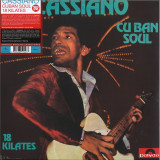
9
"Cuban Soul-18 Kilates" is Cassiano's third studio album, released in 1976, and stands as a milestone in Brazilian soul music. It combines Brazilian rhythms with classic American soul elements, creating a unique fusion. Cassiano's smooth, soulful vocal style and the album’s larger-than-life arrangements, reminiscent of Tim Maia's sound, give it a rich, deep feel.
The standout track, ‘Onda,’ is a relaxing anthem evoking beach vibes that has become a DJ’s favorite in recent years and also made it into several compilations. "Cuban Soul-18 Kilates" has earned cult status over the years, securing its place as one of the most coveted Brazilian records of all time. Remastered from the original tapes and pressed on 180g vinyl. This release is part of a new reissue series that will include many other outstanding Brazilian classics like Evinha “Cartão Postal” or Gerson King Combo.
"Cuban Soul-18 Kilates" is Cassiano's third studio album, released in 1976, and stands as a milestone in Brazilian soul music. Influenced by artists like Otis Redding, Eddie Kendricks, Stevie Wonder, and others, it combines Brazilian rhythms with classic American soul elements, creating a unique fusion. The album features 9 tracks, with ‘A Lua e Eu’ becoming a major commercial hit and the theme song for the soap opera “O Grito”. Cassiano's smooth, soulful vocal style and the album’s larger-than-life arrangements, reminiscent of Tim Maia's sound, give it a rich, deep feel. The standout track, ‘Onda,’ is a relaxing anthem evoking beach vibes, with its captivating bassline, subtle percussion, and natural sounds of the sea, making it perfect for moments of relaxation. This song, along with the album’s other tracks, showcases Cassiano's mastery of Brazilian soul, making “Cuban Soul-18 Kilates” a definitive and cherished record in the genre. This album has earned cult status over the years, securing its place as one of the most coveted Brazilian records of all time. Once incredibly rare and expensive, it's now at the top of every serious collector's wishlist. After not being available outside of Brazil for years, it’s finally been reissued – don’t miss your chance to own this legendary piece of music history.

4
KITCHEN FUNK: The Groove Legacy of Funk, Hip-Hop, and House
Founded in 1999 in Lorient by Tabasko and Ramirez, key figures in the Breton underground scene, KITCHEN FUNK fuses hip-hop, soul, funk, acid jazz, and house music into a unique sonic universe. Combining punchy rhythms with captivating grooves, the duo made a name for itself in the 2000s, marked by the excitement of clubs and radio stations.
"LETUGO": A Forgotten Treasure Finally Rediscovered
Among their notable collaborations, "LETUGO," recorded with Karl the Voice, embodies the very essence of KITCHEN FUNK. This powerful track, blending funky vibes and soulful energy, didn't receive the promotion it deserved upon its release.
25 years later, the story takes an unexpected turn. After rediscovering local archives, RAMIREZ and JULIEN LO BONO decided to reissue "LETUGO" on vinyl to mark the project's anniversary. The initiative sparked immediate interest: Breton radio stations picked it up, and the record finally found its audience, proving that KITCHEN FUNK's groove is timeless.
A resounding success with "PUSSY CALL"
Before this resurgence, KITCHEN FUNK had made a lasting impression with "PUSSY CALL", a hit that received critical acclaim on Europe 2, NRJ, and RADIO FG. This success allowed the duo to sign with CHRYSALIS PUBLISHING and then 909 RECORDZ (WARNER FRANCE), confirming their place in the French music scene.
A promising future
And this is just the beginning... Boosted by this renewed interest, KITCHEN FUNK is preparing new projects, supported by Jean Jérôme, a key player in the success of "PUSSY CALL." A return to the stage is in the works, ready to rekindle the flame of funk, hip-hop, and house music for a new generation of enthusiasts.

6
also available
Black Vinyl[23,49 €]
The Nigerian princesses of afro-funk arrived on the international scene with 1976’s Danger and never looked back. Produced by multi-instrumentalist Adeniyi “Biddy” Wright, the six-song LP is a low-slung affair, awash in dreamy psychedelic guitar, crisp hi-hat shuffles, and telepathic harmony vocals from twins Taiwo and Kehinde. This 2025 remaster is housed in a deluxe tip-on jacket and includes lyrics in both Yorurban and English. Danger, danger, danger please come on back.
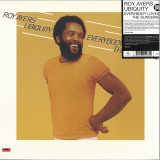
10
Mit "Everybody Loves the Sunshine" (1976) vermischt Roy Ayers nahtlos die Genres Soul, Funk & Jazz und erschafft einen zeitlosen Sound, der Musiker und DJs auf der ganzen Welt noch immer beeinflusst, mit dem Vibraphon als zentrales Instrument, ein Ansatz, der Ayers einzigartigen Stil definiert. Im Jahr 1976 veröffentlichte der legendäre Musiker und Komponist Roy Ayers mit ELTS eines der bedeutesten Alben seiner Karriere. Dieses Album festigte nicht nur Ayers' Stellung als Schlüsselfigur in der Welt des Jazz, sondern markierte auch einen Meilenstein in der Soulmusik und im zeitgenössischen Jazz-Funk. Es zeichnet sich durch eine raffinierte Mischung aus unwiderstehlichen Grooves, sanften Melodien und einem einzigartigen Sound aus, der über die Jahre hinweg nicht verblaaste und für mehrere Generationen von Musikern und Hörern zu einer Referenz wurde. Mitte der 70er Jahre hatte sich Ayers bereits mit seiner Band Roy Ayers Ubiquity und seinem unverwechselbaren Einsatz des Vibraphons, das zu seinem persönlichen Markenzeichen wurde, einen Namen gemacht. Und mit ELTS wagte sich Ayers an einen noch zugänglicheren Sound, auch als Reaktion auf den Aufstieg von Disco und das wachsende Interesse an Musik afro-amerikanischer Prägung überhaupt. In den zehn Tracks des Albums schafft Ayers eine Klangatmosphäre, die sowohl die Wärme des Sommers als auch die Raffinesse des Jazz jener Zeit heraufbeschwört, alles vor dem Hintergrund des modernen Soul. Produziert von Ayers selbst zusammen mit seinem Engineer und Freund David R. Williams zeichnet sich ELTS durch den wunderbaren Klang des Fender Rhodes Pianos von Phillip Woo sowie die kraftvolle Energie der restlichen Band aus, wodurch eine unverwechselbare Authentizität und Frische erreicht wird. Zu den bekanntesten Songs gehören der Titeltrack, "The Golden Rod" und "The Third Eye", die schnell zu Klassikern des Jazz-Funk und Soul wurden. Dieses Album ist für Roy Ayers' Karriere von entscheidender Bedeutung, da es seine Fähigkeit unter Beweis stellt, in einer sich ständig verändernden Musikindustrie relevant und kreativ zu bleiben. Im Laufe der Jahre wurde "Everybody Loves the Sunshine" zu einem Kultalbum, das häufig in DJ-Sets von Künstlern wie Gilles Peterson, Theo Parrish und Lefto gespielt Verwendung findet. Der Sommer-Soul-Klassiker jetzt wieder auf klassischem schwarzem 180g-Vinyl!

8
The collaboration between influential DJ/producer Eli Escobar and acclaimed vocalist/songwriter Nomi Ruiz has been a long time in the making. The two Puerto Rican New York native’s first collaboration, the electrifying track ‘Desire’ in 2011, set the stage for a series of projects, including their recent joint effort ‘Dance 4 Love ’99’. Now, they are set to release their debut LP, ‘Love Louder’.
‘Love Louder’ captures Eli and Nomi’s experiences of love and loss, reflecting their enduring connection to New York City and its vibrant, yet fading, nightlife culture. The album, while featuring dancefloor gems like ‘Heathens’ and ‘Full Fantasy’, takes an emotional turn, focusing on the themes of loss and presence in a rapidly changing world. The title track opens with lyrics invoking the late Donny Hathaway, reflecting a more profound introspection from the duo. They share their pain over loss, particularly the passing of mutual friend James Dewitt (DJ BluJemz), whose absence profoundly affected their creative process.
Escobar recently opened a club in Brooklyn named Gabriela, honoring a friend who passed away during the pandemic, emphasizing their commitment to preserving New York's cultural landscape. ‘Love Louder’ serves as a love letter to their hometown, intertwining celebration with mourning. In the poignant track ‘Go Be Gone’, Ruiz expresses the difficulty of embracing change and saying goodbye.
As they honor the past, they also aim for a brighter future through their music.
