Wah Wah 45s are very proud to announce the release of Kalba, the first album from Ghanaian xylophone master Isaac Birituro and Leeds-based producer and singer- songwriter Sonny Johns AKA The Rail Abandon. The boundary crossing duo were introduced to the world via the first two singles released in early 2019, Yesu Yan Yan and Für Svenja, and the reactions to the project have been overwhelmingly warm.
There are many differences between Isaac and Sonny, but a powerful similarity -- which gives Kalba its element of relatability -- is that desire to hear the usual done unusually and play with the shared influence of the music from afar. Named after the town in North Ghana where Isaac resides, the album is a combination of differences; a magnifying glass over the Venn diagram of our lives, the unfathomable meeting of parallel lines.
“It was clear to me that, though he played a traditional instrument in a traditional way, Isaac was influenced by the Western tinged music that filled the streets of Accra - in fact his father, Edmund, introduced him with “He plays the modern way!” Partly dismissive, mostly proud,” said Sonny. “And as this Viking sat before him played the guitar, it sounded too much like the stringed instruments of Mali for it to be just a coincidence.”
There are so many stories behind each track on this album, but the common denominators are clearly the importance of community, of preserving and presenting local cultures, the ardent desire to contribute to changing the world around us, and, of course, the love and power of music created from a genuine place.
Suche:afa
- A1: Dengue Dengue Dengue - Semillero (Nicola Cruz Remix)
- A2: James Stewart - Nolias
- A3: Blood, Wine Or Honey - The Forest Is Expecting You (Hieroglyphic Being Remix)
- B1: Mnanda - Pambana / Shouts (Sam Jones Construct)
- B2: Khalab - Dense (Maghreban Remix)
- B3: Planet Battagon - Lord Battagon's Rhumba Party
- B4: Penya Ft Sarathy Korwar - Why So Angry (Live)
The must have DJ tool is back for a third chapter
Label boss Pete OntheCorner has dipped into his secret stash of firelighters from around the globe.
On the Corner’s backroom and basement workout ‘Versus’ is brimming with heat and is once again the essential tool for discerning DJs.
The very latest productions, new signees, dubs and remixes bring a future taste of the action On the Corner. This uncompromising and unrivalled collection brings the label’s global family together on wax.
Versus III features tracks from Dengue Dengue Dengue, Khalab, Penya, Planet Battagon, Blood, Wine or Honey, James Stewart and the uncompromising street sounds of Mnanda from Dar es Salaam. Flexing their remix might for this 12”: Nicola Cruz, Mahgreban, Hieroglyphic Being and Sarathy Korwar goin’ in live.
There are some familiar faces occupying this tasty wax and some new comers.
Get your atlases out again as OtC criss-crosses the globe introducing you to artists from afar-afield as Dar es Saalam, Chicago, Hong Kong, Lyon, South London, Peru and Rome.
The past few years, we've watched from afar as Tokyo based DJ Haruka has established himself as one of Japan's top DJs and a crucial figure in the dance music scene. Since inviting him to play a Butter Sessions party in Melbourne and catching him multiple times in Japan, our online curiosities were met in real life with his impeccable taste and personalised style of house and techno. Needless to say, when Haruka sent us his debut EP "Senko", we instantly heard something special in his approach to music creation.
The three original tracks, entitled by their respective BPMs, encapsulate everything we loved about his DJ sets - bold, acidic and relentless synth sequences that are as intense as the Shibuya crossing, paired with masterful live percussion and drumming from Izpon (of Japanese salsa band Banderas) and Shigekazu Otake (of cult group Cro-Magnon) to create a unique sonic space. The recordings snarling nature reflects the pure force of DJ Nobu's Future Terror crew, of which Haruka is a key member. Additional live dubbing and mixing work from Naoyuki Uchida of Dry & Heavy - "Flying Rhythms" glues this raging bull together while purveying it's raw energy.
On the flip side, label heads Sleep D offer an unflinching club-ready version of "120", while French royalty Zadig contributes a mesmerising 14+ minute dubbed out, psychedelic burner that brings a new focus to the soundscapes of the original.
d 4. 120 (Sleep D Remix) feat. Izpon, Shigekazu Otake & Naoyuki Uchida
[e] 5. 106 (Zadig Remix) [feat. Izpon, Shigekazu Otake & Naoyuki Uchida]
[d] b1 | 120 (Sleep D Remix) [feat. Izpon, Shigekazu Otake & Naoyuki Uchida]
[feat. Izpon, Shigekazu Otake & Naoyuki Uchida]
[d] b1 | 120 (Sleep D Remix) [feat. Izpon, Shigekazu Otake & Naoyuki Uchida]
[feat. Izpon, Shigekazu Otake & Naoyuki Uchida]
[d] b1 | 120 (Sleep D Remix) [feat. Izpon, Shigekazu Otake & Naoyuki Uchida]
[feat. Izpon, Shigekazu Otake & Naoyuki Uchida]
[d] b1 | 120 (Sleep D Remix) [feat. Izpon, Shigekazu Otake & Naoyuki Uchida]
[feat. Izpon, Shigekazu Otake & Naoyuki Uchida]
AFAS Records follows up some head turning early EPs with another fantastic offering, this time in the form of the Treating Patient B EP by label founder Mike Chetcuti aka People Places & Things with Gabe Gurnsey on the remix.
Over the last 12 months, People Places & Things has released on the likes of the legendary R&S Records, as well as here on Art For Arts Sake (AFAS) with two releases that soundtracked the Adidas Spezial campaign
Here, two more terrific journeying tracks, inspired by a recent trip to LA get served up, to further cement his reputation.
PR at press radio & DJ will be handled by Justin at Dispersion.
- A1: La Tuna Club (S. Mantequilla' Font)
- A2: Azul Trompeta (S. Mantequilla' Font)
- A3: Whisky Jazz (S. Mantequilla' Font)
- A4: Jamboree (S. Mantequilla' Font)
- A5: Blue Note (S. Mantequilla' Font)
- A6: Full De Ases (S. Mantequilla' Font)
- B1: Moanin' (Timmons)
- B2: Not Problem (Marray)
- B3: Blues 3/4 (S. Mantequilla' Font)
- B4: Atmosfera (S. Mantequilla' Font)
- B5: Vat 69 (S. Mantequilla' Font)
- B6: Balada (S. Mantequilla' Font)
Salvador Font studied violin, clarinet, composition and harmony at the Conservatori Municipal de Barcelona, but very soon started to gain notoriety as a saxophonist in the rich jazz scene of 1940s Barcelona. Font would soon be playing tenor sax and clarinet in the Orquesta Gran Casino. He was in his early twenties and his hot swing technique was already praised through the citiy's scene, he would grow to be considered the best saxophonist in Spain by playing in many orchestras and combos, among them: José Puertas', Antonio Vilá's Virgina, Bonet de San Pedro's band, Pierre Michel, El Lirio Campestre, Los Marios, Luis Rovira y su orquesta, Orquesta brasileña Fon-Fon, Jaime Camino, Los Embajadores, Italo Leone's... With these and others, Font toured constantly, visiting many countries and even staying on some for long seasons: Mexico, Morocco, Switzerland, Egypt... Hungarian violinst of Turkish ancestry Kurt Dogan gave him the "Mantequilla" surname - he felt "Mantequilla" (which means "butter") fit Font's mellow yet swinging improvisation style.
Mantequilla y su conjunto
In the early sixties, "Mantequilla" had the chance to lead his own combo, Mantequilla y su conjunto, with which he was to record the three splendid EPs that are compiled on the present album. All these 7" have become elusive collector pieces in the record market, with sellers demanding from 200 to as much as 950 euros per copy.
In 1961 "Mantequilla" was at his best moment, his gigs at the Jamboree Jazz Cava had brought him back to the first line of Barcelona's jazzmen after he had been working abroad for a long time, and was approached by the Belter label to record an EP. On the sessions he was accompanied by Manolo Mercedes on trumpet, Pedro Ferré on piano, Rafael Lizandra on double bass and Rafael Verdura on Drums. The material chosen for the disc were four original compositions by Salvador Font which had a high West Coast flavour all over: "La Tuna Club", "Whisky Jazz" and "Jamboree" named after famous jazz clubs and "Azul Trompeta", dedicated to Manolo Mercedes.
In late 1962, after spending some time in Madrid working as members of the Italo Leone combo, "Mantequilla" and pianist Manuel Gas came back to Barcelona for the recording of the second "Mantequilla" EP, also on Belter. We find again Manolo Mercedes on trumpet, Pedro Ferré on piano and Rafael Lizandra on double bass, the drummer this time was José Farreras. Another news is that Manuel Gas also sat on piano and vibraphone. The songs chosen for the occasion were two tunes from the Art Blakey Jazz Messengers repertoire: Bobby Timmons' classic "Moanin'" and the Jacques Marray track "No Problem" from the soundtrack of the Les liaisons dangereuses film (mispelled "Not Problem" on the sleeve and label), plus the Salvador Font penned "Blue Note" and "Full de ases" - on "Full de ases" "Mantequilla" trades his sax for the violin, which he also mastered under high influence from Stephane Grapelli. The record was released on Belter in early 1963 and showed "Mantequilla" adding a certain aggressivity to his sound, in a soloist style which has been compared to that of tenor saxophonists Barney Wilen or Benny Golson.
1965 was the year of release of Mantequilla y su conjunto's third EP, now on the Discophon label. Mercedes and Farreras are again present in the recording sessions, joined by Ricardo Miralles on piano and Enrique Ponsa on double bass. Four original Font compositions make up the fantastic EP: "Blues 3/4", "Atmósfera", "Vat 69" and "Balada".
There would be a further EP on Belter, released in 1971 as Mantequilla Group it was a cash-in operation to take some redits of the ye-yé discothèque phenomenon, it gets quite afar in style from the jazz works of Mantequilla y su conjunto, so we just left it aside for the present edition.
"Mantequilla"'s career would continue, in 1968 he would settle in Majorca and form a swing band with Bonet de San Pedro and Manuel Bolao. He played in local orquestras and also with first class world acts like Gerry Mulligan, Tete Montoliu, Errol Gardner, a.o. He was even approached by Henry Mancini to play sax on The Pink Panther Theme in a gig Mancini did with his orchestra in Palma de Mallorca in 1975, He also joined his son Salvador Font (a demanded drummer himself who has played with Máquina!, Orquestra Mirasol, Música Urbana, Gary Burton Quartet, Georgie Fame, and many others) and his peers Carles Benavent, Emili Baleriola, Josep Mas 'Kitflus' and Jordi Bonell with whom he recorded his acclaimed "Mantequilla" album in 1987.
Now, for the first time ever, the legendary three ultra rare and imposible to find EPs by Mantequilla y su conjunto are compiled in a lavish vinyl LP with remastered sound, featuring liner notes and photos and a fantastic period inspired, three backflaped, front laminated sleeve. It is a stricly limited edition of only 500 copies and they are expected to sell out very soon, do not miss your chance of getting yours - it may be the last chance of chasing the Mantequilla sound on vinyl at a reasonable price!
l
"The kind of melancholia I'm talking about, by contrast, consists not in giving up on desire, but in refusing to yield. It consists, that is to say, in a refusal to adjust to what current conditions call 'reality' - even if the cost of that refusal is that you feel like an outcast in your own time." (Mark Fisher, Ghosts Of My Life, Zero Books 2014, p. 24) In Ghosts of My Life: Writings on Depression, Hauntology and Lost Futures', the author Mark Fisher outlines - to put it in a big way - a resistant melancholy. This stands in contrast to leftist melancholy resignation', as well as something which Fisher does not talk about: its common masculine counterpart, habitual post-left cynicism - as in seen it all before'. Fisher calls this hauntological melancholy. Haunting, spooks, ghosts and apparitions are an almost constant presence on I Started Wearing Black', the second album by the Cologne-based artist Sonae (pronounced so-nah'). The term hauntology shares a fate with retro-futurism when it comes to inflationary overuse and abuse. It's a conceptual container that looks good and can hold a lot, indeed, too much. Furthermore, hauntology has its peak season behind it, a term on the threshold of its expiration date. Nevertheless, I would like to rehabilitate hauntology and use it properly to characterize I Started Wearing Black', because the term is rarely as compelling to describe music as is the case here. The most recent other example could be Asiatisch' by Fatma Al Qadiri, but with a completely different frame of reference. What are the ghosts of this music It rustles, crackles, ruffles, crunches, rattles, scrapes, sometimes a beat emerges from the constant noise, sometimes an obscure voice mumbles incomprehensibly, sometimes a melancholy piano figure is prevented by this noise from coming too much to the foreground. It definitely is eerie - to bring into play another term used by Fisher in the title of his latest book, The Weird and the Eerie'. In British pop-jargon, eerie first occurred to me more often when referring to particularly leftfield, spooky and... well... ghostly dub, a bass-heavy, echoing noise, from Augustus Pablo to Creation Rebel to Burial. Unlike the Wald & Wagner records by Wolfgang Voigt, Sonae is not a kind of neo-romantic veiling with a tendency for escapist nebula. It is more a noise of latency. The noise signals a latent - not necessarily acute - threat, a latent uneasiness about... yes... about what About a System Immanent Value Defect' That's the name of a track on I Started Wearing Black' where something that sounds like a French Horn (or a foghorn) battles for attention through or against the background noise. An email from Sonae: The piece 'System Immanent Value Defect' should actually be called 'I See Turkey'. I wrote it for my fellow student Elif - she is a pianist and Gezi Park activist from Istanbul. Through her I witnessed the inner conflict and agitation that political circumstances can create: her feelings of guilt when there was an attack, with her safe in Germany as a student, watching the events from afar. It was horrible. When her mother begged her not to come home because she feared for her safety, I felt a cold shiver run down my spine. I started with the piece from this mood, beginning with the piano, then the noise (modulated sinusoidal curves), which reminded me of waves and the then heatedly discussed Mediterranean sea: atmospheric, melancholy motifs. In contrast is the anger, the pressure, represented in corresponding sounds - hopefully audible! - During this time I started to think about world views as they can be found around the globe, in how far they held by societies and their political representation. I realized that I know of no political system that is actually about the people and what would do them good. It's always about positions, power, money. I thought that was a lot more frightening on a global scale than merely viewing Turkey in isolation. That's why the piece is called "System Immanent Value Defect", because our world suffers from precisely that. Everywhere, it's all about the wrong things.' Between the wrong things there are happy moments. In the title track, after 184 seconds of rattling and hissing, a beat is unleashed, like an arrow released from a spanned bow, a beatific relief, if there is such a thing. White Trash Rouge Noir' first meanders along spookily, then after 144 seconds it transforms itself into a distant cousin of Einstu¨rzende Neubauten's Yu¨ Gung', but there is no Big Male Ego to be fed here, and the black in the album title is a completely different type of black from that of the Neubauten. Furthermore, I Started Wearing Black' was finished long before the black dresses were worn at the Golden Globes as a sign of protest against sexual violence. Sonae writes that she herself started wearing black some time ago. Her reasons are so-called personal ones: ... resulting from an individual situation (lovesickness), I started to wear black (gaining weight and feeling ugly).' The political dimension of gaining weight, feeling ugly and therefore dressing in black in I Started Wearing Black' lurks within the noise and never becomes explicit and only rarely manifest - or a manifesto. Sonae writes about the track We Are Here': A piece for minorities... in this case, considering the current pop-feminist discourse, explicitly for women. Female artists have long been saying loud and clear that 'we are here' and 'electronic music is not a boys club!' But this pop-feminist moment should only be seen as one part of the dedication of the piece. It is for minorities, for the oppressed, who didn't belong enough.'
Klaus Walter
People Places & Things is the single project of Manchester born & London based Mike Checuti. Mike grew listening to a heavy mixture of horror & film soundtracks an equal dose of the early electro via the legendary Spin Inn records & then the hedonistic sounds of The Hacienda & the more underground Thunderdome nightclub.
Mike was encouraged to press ahead with the project after a visit to Los Angeles & spending time in the studio with Atticus Ross (Gone Girl & The Social Network soundtrack composer).
Treating Patient A is the first in a trilogy of releases by People Places & Things each pulling from the above mentioned influences but each EP having it's own variation whilst keeping the references points clearly audible along with People Places & Things own take of these sounds at the forefront.
People Places & Things along with Gabe Guernsey of Factory Floor have recently just composed the soundtrack for the latest film for the forthcoming Adidas Spezial range which commemorates 30 years of Acid house.
Artwork for each 12" is designed by Andrew Jackson & each sleeve is individually hand printed thus having its own unique imprint and limited to only 200 copies.
The press & publicity for the release and project as while will be handled by 'The Rest is Noise'
On the Corner's DJ tool and eclectic favourite, Versus is back for a second instalment. There are some familiar faces occupying this tasty wax and some new comers pushing the needle further-out On the Corner.
As 2015's Versus sold-out we'd already acquired some fresh production talents and sent stems over to new and old friends alike.
Get your atlases out as we criss-cross the globe introducing you to artists from afar-afield as Nairobi, Manchester, Pune, Iringa, Detroit, and South London.
We kick off with Jinku, self-proclaimed space monkey hitting OtC wax for the first time. The producer is one-fifth of the East African Wave, a collective of young DJ Producers who are revolutionising the East African arts scene. As a 'sponge' of different influences, Jinku lays down a balearic reworking of fellow Nairobian, Makadem's 'Nyako'.
Of the returning artists none is quite as mysterious as the elusive and incomparable Black Classical - discordant-Ra-like organ meets Brazilian poly-rhythmic percussions bludgeoned with a heady slab of rave breaks make for 'Jeje': already a firm fave of Gilles Peterson.
Boundary pushing Contours brings a new swing to the 'Agama' groove, following the underground smash from Al Dobson Jr back where it all started with the release of Tamar Collocutor's first album in 2014.
Wonky psychedelic perambulations through the Traab al-Beidaan (Sahara) from Sam Jones who adds another construct to his mantle. Group as Salaam have a cassette release forthcoming and this construct comes from field recording sessions conducted during a feast out in the shadow of Africa's largest Windfarm by label head Pete OntheCorner. Vibes!
On the B-side, sprightly producer Daisho from the Indian hotbed of Pune brings a layered percussive heater hanging in the atmosphere with ominous synth b-lines and rightly tipped to be in the realms of and early Four Tet mover.
The release enters into a deeper shamanic dance territory in the final third: the beathead's elixir, M.I.X.G. and their massive xylophone (Embaire) are back and gets a heavy acid rerub as South London's FYI Chris appear OntheCorner wax again with
'Drop the beat'.
Peter Croce, head of Detroit's Rocksteady Disco brings it deep into the early hours for this euphoric 4am fix of OntheCorner's
afro-latin-electronic party experimentalists, Penya.
Thatmanmonkz and Simba have both been dropping loads of tight house releases this year.
Over at GAMM HQ we've been admiring their music from afar but have now managed to team them up together with a solid EP of house inspired reworks.
Split up over 4 tracks they snap elements from hip hop (Tribe Quest), R&B (E. Badu) and disco.
It's all deep, edgy and comes with a real gritty feel...just the way we like it.
Following well received EPs from Myriadd and Q-Chip, Gnosis are ecstatic to have prolific UK producer Nigel Rogers (aka Ellis De Havilland, Operator Tracey, Orpheus, Pagan Ritual, Sir Leon Greg etc.) on board for their third release.
'Drowning In Your Eyes' is a four track EP recorded under his Perseus Traxx handle. A name he's used for a mass of relentlessly creative output on Bunker, Chiwax, I Love Acid, M>O>S Recordings, Solar One Music, Barba Records and Hardmoon London to name but a few.
Ethiopian UrbanandTribal Music(Recorded By Ragnar Johnson&Ralph Harrisson)
Mindanoo Mistiru / Gold From Wax
- A1: Drum Dirge
- A2: Wub Allem Beautiful World
- A3: Galla Song
- A4: Afar Divination Chant
- A5: Two Afar Flutes
- A6: Anuak Toum Thumb Piano
- A7: Nuer Harpnuer Har
- B1: Lome, Dorze Song
- B2: Jigsaw's Give Me Money Song
- B3: Bagana
- B4: Habeebe (My Love) Ma
- B5: Nuer Dance
- B6: Konso Dance
- C1: Eyo Dorze Song
- C2: Anche-Lej-Amaleh
- C3: Kofu
- C4: Bagana
- C5: Galla Song
- C6: Harambeh Africa
- C7: Konso Song
- C8: Msgana
- D1: Fanno Mary Armeede
- D2: Fila Flute Dance
- D3: Nuer Wire Strung Harp
- D4: Jung Nai
- D5: Anauk Toum Thumb Piano
- D6: Walla-Lam
- D7: Afar Flute
Mindanoo Mistiru means 'What is the Unknown' and Gold From Wax refers to the layers of meaning in Amharic poetry.
Ethiopia has many languages and styles of music.
These recordings were made in the Empire of Ethiopia in 1971. The music recorded in Addis Ababa uses masenko fiddles, craar and bagana lyres, washint flutes and kabaro drums. There is folk music played in Addis Ababa tej beit bars with vocals, craar, masenko, washint and kabaro, Ethiopian Christian songs accompanied by the bagana large 'Harp of David' and Mary Armeede's craar accompanied Amharic sung poetry. There are Afar chants and flutes from the Danakil Desert, Anuak thumb piano, Nuer harp, laments and drumming, a Konso dance and a Gidole flute dance from the Sudan and Kenya borderlands.
Keep on keeping on, that's what they say. We are here at Hizou. So we are delighted to be back with this the ninth release on our main label, another exciting various artists affair and a follow-up to the well-received limited edition EP, Keepin' The Legacy.
First up is the house music equivalent of a heavyweight tag-team in the shape of respected veterans Chez Damier and Abacus, producers with credentials so impressive and lengthy it's eye-watering, alongside the rising talent that is Jorge Caiado (Balance/Groovement). The trio's dub mix of their cut Closer is proper deep-down-and-dirty bumpin' house of the old-school kind.
Another man with an impeccable pedigree, in-demand musician and producer James Duncan (Le Systeme/Real Soon), makes a welcome return to the label with the hypnotic 416 Zone Dub, an irresistible groover aimed squarely at the more discerning dance floor.
Making his debut here at Hizou is yet another seasoned artist, Jacksonville, owner of Doppler Records and gun-for-hire with the likes of Atmospheric Existence and Inner Shift. Having eyed his chugging and infectious Twilight Industries from afar, we are delighted to finally nail it onto our vinyl.
Keeping the fire burning and more than holding his own in such fine company is label head Satore, who unleashes his inner disco diva with the groovy, soul-drenched Keep On.
Red Motorbike blazes through once again ! A Various Artists selection this lap, with label boss Eddie laying down a downright irresistible rewire of a smooth sitar laced groover. Label regular Koosh offers up 'Way Out Of It Man' A saturated Stones out-take perhaps While taking up the whole of the A Side, Frasier takes on a beautiful brass hooked, Afro-Disco workout in fine Red Motorbike style ! Another keeper... Hand - stamped, vinyl only business
The enigmatic Amara Touré from Guinée Conakry finally getting a well deserved compilation showcasing all of the 10 songs ever released between 1973 and 1980. Cuban influenced music of a different kind featuring amazing spaced-out guitar works!! Analog Africa compiles a complete collection of Amara Touré's Afro-Cuban compositions, originally released between 1973 and 1980."Lamento Cubana and Temedy are the two finest Afro-Cuban compositions ever recorded. As if they were played in a smokey, poorly lit ballroom where dark rum was sipped ever so slowly" - Vikram Sohonie - Ostinato Records
Analog Africa to release a compilation by Amara Toure, the enigmatic Afro-Cuban musician from Guinea-Conakry, showcasing all of the 10 songs he ever released between 1973 and 1980.
"Latin music, is it really foreign to us Africans I don't think so. Listen to the drums, to the rhythm. It all seems very close to us - it feels like it's our own culture," declared enigmatic singer Amara Toure. It is the late 50s, and Senegal is going crazy to the groove of Son Montuno and Patchanga. Brought to West Africa by Cuban sailors in the early 40s, these styles were immediately adopted by a flourishing music scene that did not hesitate to embrace the Caribbean sound, mixed it with their own Folklore, and, in the process, created something new. Through the unique cultural fusion of West African and Caribbean influences, Latin music took on a new and unique sound - the format was reinvented. Producer Ibra Kasseì and his Miami nightclub acted as the spearheads of this movement. They brought a breath of fresh air into Dakar's nightlife, further energising one of West Africa's most exciting cities. The demand for ballroom parties and live acts exploded, attracting numerous musicians from surrounding countries. One of the musicians who answered this call was percussionist and singer Amara Toureì, from Guinea-Conakry. Spotted by Kasseì while performing with Dexter Johnson, Toureì was asked if he would like to be part of a new project. Little did he know that this project would become a phenomenon.Immensely important for the development of Senegalese modern music, Le Star Band de Dakar, led by Mady Konate, became a sort of musical incubator and workshop, where many musicians learned and practiced their trade before moving on to become stars in their own right. Toureì's talent on percussion was undeniable, but it was his powerful and raw voice that captivated the producer. The fascinating way Toure interpreted Cuban music was unparalleled, and it was this feature that encouraged Kasse to recruit the unknown artist.
Although already brimming with incredible talent, Amara Toure's joining of Le Star Band de Dakar in 1958 began the band's meteoric rise to the top. The band quickly became Dakar's number one orchestra, and it cemented the reputation of the Miami nightclub as the hottest spot in the country. The place was packed nightly, and Dakar was boiling.
Amara Toure's Senegalese adventure lasted for ten years when he received an irrefutable offer and in 1968, joined by a few talented Senegalese musicians, headed to Cameroon and immediately formed the Black and White ensemble. Many live gigs later and it was time for the first songs to be recorded. A total of three singles were produced between 1973 and 1976. These singles, representing the first six songs on this compilation, fully epitomise and distill the essence of what Toureì had learned during his career. His Mandingue roots fused with the Senegalese sound that he had mastered - the perfect foundation for the Toureì's Cuban interpretations.
If Toure's intention was to create the most sensual music ever recorded in Africa, he might very well have reached this goal. The musicians on the recording sound like they are playing in a smokey, poorly lit juke joint, where dark rum was sipped ever so slowly, and the pulse of the music took up a life of its own. How many couples have danced, swayed, and melted together to the distinct sound of Amara Toure Nobody can say for sure ...
Amara Toureì's success poured across the borders of Cameroon, and in 1980 he went to Libreville, Gabon, to team up with the powerful Orchestre Massako. Toureì recorded an LP at that time which is hailed by many music aficionados as one of the very best African albums. The songs from that LP are the last four on this compilation. It took only ten songs for Amara Toureì to become a legend. These ten treasures, representing Toure ìs complete discography, have been carefully re-mastered from original session tapes and vinyl records, and will be released by Analog Africa on 22 June 2015. After the release of his LP in 1980, Toureì seems to have disappeared. Apparently he was last seen in Cameroon but it is unknown if he is still alive today. His music though is definitely alive.
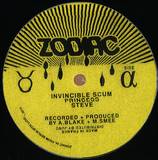
Warriors of the Acid Clan unite! Finally our cup runneth over! Your saviours return from the dark fold and bring with them treasures from afar, our bravest and most noble heroes of the Invincible Scum are here to save you from our once certain fate. A bounty of golden acid and precious gems lies before you and is yours alone for the devouring. HEAR the mystical 303 weave it's tales of yonder and FEEL the pounding of the electronic drum deep in your soul....seize the moment and celebrate this day for it is ours!
ZTAUR is the fourth of 12 releases from Z O D I A C 4 4. One for each sign of the stars and then Z O D I A C 4 4 is forever dead and gone. Forever gone and dead.