It is during the 2018 harvest of a winery near Bordeaux that Italian producer and multi-instrumentalist Fabio Bordignon decided to create his project Allez Kiki, an affectionate nickname given by his colleagues. 3 singles followed, produced behind Fabio's computer until he took out his double bass and gathered a drummer, a keyboardist and a vibraphonist to create his backing band Fermentation.
Their first album is titled Gusto di Luce (taste of light) and refers to the taste wine takes when left too long in the sun. It contains 8 neat and electrifying jazz-funk instrumentals as tasteful as a glass of good wine in the summertime.
quête:affect
**Debut album from former 'Eighties Matchbox B Line Disaster' front man Guy McKnight's new band.** **ORANGE MARBLE COLOURED VINYL - VERY LIMITED!!** The DSM IV’s debut album, “NEW AGE PARANOIA,” is an impressive collection of stories, beats, guitars, and noise. The album seamlessly weaves together sobering but dream-filled songs that explore the ways in which our collective minds are influenced by mass media, entertainment industries, and social media. Formed by Guy McKnight of critically acclaimed and cult favourite The Eighties Matchbox B-Line Disaster. The DSM IV has a dark sound that blends noise-rock, synth-pop and industrial, that delivers a unique musical experience. Their music is cacophonous and epic, featuring rich textures and melodic hooks that keep listeners captivated. The band’s powerful soundscapes, combined with their thought-provoking lyrics, create a mesmerizing atmosphere that both entertains and encourages introspection. The album prompts important questions about our society, such as what’s driving the normalization of a narcissistic culture that prioritizes personal desires over altruism. It delves into the ways in which technology, social media, and mass media shape our collective psyche and affect our relationships with ourselves and each other. The DSM IV’s music offers a timely and compelling commentary on these issues. The DSM IV is a band that creates music with a powerful message that resonates with people who feel that a kinder world is possible. Their songs are both nasty and nice, reflective and entertaining. With “NEW AGE PARANOIA,” The DSM IV has crafted an album that will captivate and inspire listeners, while also prompting deeper reflection on our society’s values and priorities.
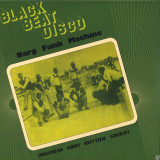
Nigeria is known as ‘The Giant of Africa’. It’s the most populated country in Africa with more then 250 ethnic groups and many different languages and dialects that gives to the country a rich diversity. This diversity also affects music which plays an important role in every aspect of social life. We, at DTW’s stable are happy to announce the reissue of “Narg Funk Machine” an explosive nigerian “black beat” disco originally released on Coconut in 1979. If you are looking for something weird here you’ve found it. Basically these four tracks are well represents the tangle of richness of nigerian music in this period, They are a melting pot of styles and sounds , where afrobeat, funk, highlife, juju, and psych rock are mixed all together in a cozy and captivating sound. Ready to bring some warmth and hypnotic sound to the dancefloor around the world.
- A1: Om Mani Padme Hum
- A2: Bohemia After Dark
- A3: Companionship
- A4: Stoned Ghosts
- A5: Jay-Jay
- B1: Dijar
- B2: Con Alma
- B3: Ct & Cb
- B4: The Turk's Bolero
- B5: Talk Some Yak-Ee-Dak
- C1: Calypso Blues
- C2: Balafon
- C5: I'm A Fool To Want You
- C4: Insensatez
- C5: Invitation
- D1: Yah-Yah Blues
- D2: Serenata
- D3: Just Give Me Time
- D4: Birn To Be Blue
- D5: Sconsolato
Jazz music has more than its fair share of overshadowed figures that whilst contributing much to the music have little presence in its collective conscious. One such musician is the talented multi-reedist, Sahib Shihab. Born Edmond Gregory, as he was known before he adopted the Muslim faith in 1946, Sahib Shihab's music background shows a deep and significant evolution, influenced by Thelonious Monk, Dizzie Gillespie (his experience in Dizzie's band marked Sahib's switch to Baritone, the instrument he became most readily associated with), and above all by Charlie Parker's Bop. Had it not been for the post-war migration of many top American jazz musicians to Europe, it is quite likely that the legendary Clarke-Boland Big Band might never come into existence. Sahib, one of this musicians disillusioned with the politics and racism of the United States, accepted to join the band of Quincy Jones for an European tour in 1959. When the tour ended, Shihab he remained in Europe where he joined, in 1961, the Clarke-Boland Big Band. The collection 'Companionship', whose line up consists of seven elements which derives from this original band, spotlights the consummate musicianship and individuality of Sahib Shihab and is testimony to his special musical gifts - not only as a top-rank flautist and baritone saxophone but also as a composer. Furthermore, it provides a welcome reminder of the high quality of the Clarke-Boland Big Band's rhythm section, the lively style of vibraphonist Fats Sadi and the power and personality of two of the C-BBB's horn-playing stalwarts, Benny Bailey and Ake Persson. Here's a real rarity, surely a desert island disc. This double album has it all from frantic banging percussive workouts to modal numbers to beautiful ballads. It's a staggeringly good piece of music and worth every penny of the price tag it commands. Let's have a look to the most significant pieces. Francy Boland's "Om Mani Padme Hum", taken from a Tibetan prayer, shows Shihab in exuberant mood, playing against a vigorous percussion background and making dramatic use of his special technique of combining voice and flute. Boland contributes an incisive, effervescent solo. "Bohemia After Dark", a classic original by bassist Oscar Pettiford which he first recorded back in August 1955, finds Shihab in exultant form on baritone. "Companionship" has a Bossa Nova beat and features Bailey on flugelhorn and Shihab on flute, playing with a limpid, floating sound. Bailey's minor-key original, "Stoned Ghosts" was, he says, inspired by listening to some music written by Bela Bartok before he emigrated to the United States. The piece has an infectious back-beat pulse and showcases the superb walking technique of Jimmy Woode. In "Con Alma" Shihab's mellow flute set against a churning 12/8 beat in this stylish Boland arrangement. Woode's performance of the superb Mei Torme ballad, "Born To Be Blue", reveals his great affection for the song. "lt is the perfect combination," he says, "a beautiful melody married to a great lyric. I really love that tune." It is a song of rueful resignation, putting a brave face on the blues. "Balafon" is an up-tempo Francy Boland original written for the French mime artist, Marcel Marceau. The rhythm section really cooks on this track with Kenny Clarke's cymbal work outstanding. Boland's solo here is notable for its neat, left hand punctuations. "Calypso Blues" has been written by Nat King Cole and Don George. lt tells the wry and wistful tale of a Trinidadian in New York desperately homesick for the land where everything 5 so much cheaper (in New York "a dollar buy, a cup of coffee and a ham on rye") and the girls more natural than the artificial, painted beauties of New York. Woode's composition, "Sconsolato" is a haunting theme in A minor and it brings to a close a truly fascinating album. This is dynamic music played with vigour, verve and vitality - and it is an enormous pleasure to rediscover it. A shadowy fugitive from his home in the land of jazz, Sahib Shihab remains a true unsung figure, worthy of more attention. With his equally expert technique on Baritone, Flute, Alto and Soprano saxophones and his capacity to adapt easily to a variety of musical settings. His warm, individual, singsong sound in improvisation and his unusual and interesting compositions mark him out as a hidden treasure in the dusty corners of jazz archive.
- A1: Dreams (Feat Xênia França&Zé Leônidas)
- A2: Kismeti (Feat Matthias Schriefl)
- A3: Asase (Feat Eric Owusu)
- A4: Sábado (Feat Zé Leônidas)
- A5: Carrossel (Feat Zé Leônidas)
- B1: Caio & Eric (Feat Eduardo Camargo)
- B2: Ndiyakhangela (Feat Bongani Givethanks &Amp; Mpho Nkuzo)
- B3: Agôra (Feat Matthias Schriefl)
- B4: Oblique Sunshine (Feat Rebekka Ziegler)
Global pointing Brazilian jazz trio releases their new album Agôra, that sparkles with electric funk and Herbie-esque eclecticism. It features a myriad of guest vocalists and musicians including Brazilians Xênia França and Zé Leônidas, Jembaa Groove's Ghanaian singer Eric Owusu and South African artists Bongani Givethanks & Mpho Nkuzo
Re-wiring the concept of 'fusion' for 2023, Agôra is Brazilian trio Caixa Cubo's resurgent new record with the title referring to 'now', based upon the intuitive and fluid nature of the trio's method, and this inspired recording. With shoots to black music culture, from Brazil to Brooklyn, Ghana and South Africa, Agôra is the group's ninth album yet is their first where they've invited guests, mainly singers, onto each track and follows their last, Angela from 2020, released on Heavenly Records, which won a BBC 6 Music Album of the Year (Huey Morgan's selection) granting them much deserved international recognition.
The core musical elements of Caixa Cubo are Henrique Gomide (keys), João Fideles (drums) and Noa Stroeter (bass), all from São Paulo, Brazil and where they met as teenagers and would continue their friendship and musical bond at the Royal Conservatory in The Hague, Netherlands. Now all in their mid thirties, João and Noa live back in the city where it all started but Henrique has settled in Cologne, Germany where the recording of Agôra took place, over the course of 3 days, at the home cum studio of Chris 'Dusty' Doepke, their friend and owner of the label they signed to, Jazz & Milk.
In line with all their creations where flow and energy provide the magic, allowing what the moment provides, the album shines not only for its virtuosity but for its minimalism, the depth of space, and for the first time, the ability to figure in and outside of the jazz fold, as the trio decided, for the first time, to bring in singers and add a new aesthetic to their sound.
"Agôra is a wake-up call to reality, a reminder that the infinite possibilities of technological progress should not disconnect us from the earth, from eye-to-eye relationships, and from moments lived in person" the band are keen to point out. "And that we must not be consumed by greed, for all we truly possess.... is the NOW."
Turning hope and metaphor into music, the debut single Sábado, an electrified future- jazz-fizz reflects perfectly the spontaneity that permeated the entire recording of the album. "When we got to the studio, we had no idea what we were going to record. We started playing a groove, kind of inspired by Gilberto Gil's 80s albums, and our drummer João started singing this funny song 'Sábado Barrigudão' (Big Belly Saturday) alongside the bass groove and that was that". Inspired by their city of birth, São Paulo, it features long time collaborator and vocalist Zé Leônidas, with cuicas, tamborim, agogo and shakers providing the most obvious Brazilian affect from the album.
Dreams is the band's first foray into R'n'B melding the group's simple and sporadic instrumentation of drums, keys and bass into a Jill Scott inspired song that could have been born in Brooklyn yet sung by Brazilian singer and Grammy nominated Xênia França and Zé Leônidas in both English and Portuguese. Xênia recently performed online for hip-to-it website Colors and it's her latest collaboration with Caixa Cubo, having first met in 2009 for a series of live performances.
South African artists Bongani Givethanks & Mpho Nkuzo come to the record with a wholly different approach on Ndiyakhangela, providing spoken word and vocal refrains on top of an Afro-Brazilian percussion jam with a delivery and verse in Xhosa, Zula and Ndebele. Asase is the album opener and features vocals of Eric Owusu who is part of highlife pioneer Pat Thomas's live band and most recently, co-leader of Jembaa Groove, an Afro-soul band from Berlin. It's a synth wig out with djembe grooves and offers a brand new take on Afro-soul-jazz.
Other contributions come from Cologne based jazz singer Rebekka Ziegler (Oblique Sunshine), São Paulo based guitarist Eduardo Camargo (Caio & Eric) and trumpet player Matthias Schriefl on Kismeti, a gorgeous and rolling number that ebbs and flows, exemplifying the group's effortless ability to craft a sound energised by a belief in one-self and the idea of having faith without the need to look at each other for verification.
As drummer and percussionist João Fideles perfectly surmised upon arriving for the recording session, "What drums do you have? Whatever you have, I'll use it". Agôra is testament to nearly 20 years of camaraderie, friendship and most importantly, trust.
- A1: Golden Skies (Feat Lydia Waits)
- A2: It's Never Late In Neon Signs (Feat Lydia Waits)
- A3: Fake Fur (Feat Helle Larsen)
- A4: Hold That Thought (Feat Helle Larsen)
- A5: Sandcastles (Feat Helle Larsen)
- B1: Today's Tales Of Tomorrow
- B2: This Kitty Got Claws (Feat Helle Larsen)
- B3: Rhythm Cast A Spell On Me (Feat Lydia Waits)
- B4: Not Supposed To Be Me (Feat Lydia Waits)
- B5: Let's Stay Right Here (Feat Helle Larsen)
Beatservice Records are beyond thrilled to announce the arrival of Kohib's hotly anticipated studio album 'Today's Tales Of Tomorrow'.
DJ, producer and club organiser Øivind 'Kohib' Sjøvoll has been in truly dazzling form of late, serving a series of mesmerising singles that served as a tantalising taster to his latest album – the third he's crafted for Beatservice. Actively producing immaculately crafted sounds for over two decades, sonic alchemist Kohib continues his deft aptitude for sculpting genre-defying compositions, with 'Today's Tales Of Tomorrow' playing host to some of his most compelling material to date. From pitch black introspection to rousing dancefloor abandon, the album is every bit as far-reaching as we've come to expect from this singularly talented artist.
The collection bursts into life via the club-focused thrust of 'Golden Skies', featuring the seductive vocals of enigmatic songstress, Lydia Waits, whose stirring performance shines like a beacon as it soars over Kohib's slick four/four groove. Crisp drums drive the hypnotic rhythm over a subaquatic bass line, as icy pads and pitched synth percussion combine to stunning effect, effortlessly building to Waits' rousing chorus section. Subtly shifting the mood, we arrive in the heads-down throb of 'It's Never Late In Neon Signs', where glistening arpeggios and snarling bass caress Lydia Waits' honeyed vocal, the pristine instrumentation undulating over a mesmerising, radio-friendly arrangement.
'Fake Fur' arrives with deliciously brooding intent, with (Kohib's High Heeled Giants bandmate) Helle Larsen's bewitching vocal gliding over immersive instrumentation and otherworldly textures. Evocative harmonics combine with ethereal synth leads and dramatic aural waves, the hypnotic percussion gently driving the groove deep into the half-light of a crisp autumnal haze. Next, 'Hold That Thought' mischievously switches the rhythm, as thick sub bass and searing synth motifs power over broken drums while Helle Larsen's affecting vocal rises from delicate verse into dramatic chorus bursts.
'Sandcastles' once again sees Helle Larsen grace the stage, lacing waves of cinematic pads glide and live bass as scattered percussion forms an alluring rhythm. Sparse and precise, the evolving music ebbs and flows as the tides, gorgeously caressing Larsen's emotion-rich vocal as she weaves her seductive lyrical metaphors. The album's title track 'Today's Tales Of Tomorrow' sees sinister lead synths exploding over deviant bass as the pulsating rhythm drives the cut through distant vocals, the low-slung groove proving magnetic as the nocturnal melody works its magic.
The tempo rises rapidly, with the pounding bass arpeggio of 'This Kitty Got Claws' purposefully marching through cascading synth textures, euphoric chords, and self-assured lead vocals. Expertly displaying his expansive production finesse, the rhythm once again switches as we sashay into the utterly bewitching 'Rhythm Cast A Spell On Me', with Lydia Waits' indelible vocal providing a profoundly atmospheric moment. A sublimely constructed bed of neatly woven keys, xylophone strikes and haunting bass clarinet elegantly embrace the ethereal lead vocal.
The mystical melodies of 'Not Supposed To Be' echo over a misty woodland landscape, with Lydia Waits' unfeigned vocal flowing over jagged synth textures and gently broken rhythms, before Helle Larsen returns with the sensual swansong 'Let's Stay Right Here'. Sumptuous keys shimmer over a steady tempo, with warm bass and sugary melodies supporting the intoxicating lead vocal for a gorgeously heartfelt finale.
Vividly illustrating Kohib's unthinkably vast sonic repertoire, 'Today's Tales Of Tomorrow' looks set to further enhance the Norwegian producer's already glowing reputation, with each exquisitely-formed track combining to create a collection that's at once powerfully memorable and profoundly coherent.
- A1: Report From The Frontlines
- A2: Ask Believe Feel Receive
- A3: Lost In Solitude
- A4: Art Is The Only Real Translation Of Living For Me
- B1: We Belong To Never
- B2: Pain
- B3: Superrare
- B4: We Want To Feel Love
- C1: Musik Ist Meine Sprache
- C2: Equalista
- C3: Mirrors
- C4: Skin
- D1: Free
- D2: Still Feat Pascal Schumacher
- D3: Afterhour
ENARCHY is the debut album by Leipzig-based producer and singer Maria die Ruhe. It is the result of a deep and thorough look the
artist took into both her own inner workings and the world around her. In 14 tracks, she explores different types of energy,
oscillating between head and heart. Final destination of this sometimes painful process of self- exploration is the embodiment of
her own power and creativity; the realization, that she manifests her role as catalyst, healer, and fighter for freedom and equality
by reporting on her experiences. These songs are about nothing less than that. And you can also dance to them.
In a musical sense, Maria surpasses herself compared to previous releases. She is bolder, more explorative and dissolves genre
boundaries. Acoustic instruments like the cello and the piano unite playfully with electronic beats. Her expressive voice speaks and
sings from the lowest lows to the loftiest heights. Her self-disclosing lyrics communicate the deepest messages of the soul. One can
tell right away: something is at stake here, this is about a real human living through something real, and now reporting from the
front lines of the human experience.
With lines like „Things are changing all the fucking time“ (ENARCHY) she posts a reminder for the current zeitgeist and the resulting
global uncertainty. „Some things need to be destroyed before they can heal“ is a demand for openness towards change, even if it is
challenging, requires energy, and leaves behind some scars.
In ART IS THE ONLY REAL TRANSLATION OF LIVING FOR ME, Maria uses sentences like „I’ve been trying to please you, I got headaches
and I still don’t fit“ to express her desperation with existing structures of injustice and the lack of livability of the artist lifestyle.
„Ah, you’re an artist - and what do you do professionally?“ Everyone loves music and art! When, o when, will the understanding
follow that there need to be people who make this art as a central part of their lives?
Frustration takes turns with hope and a growing acceptance of the self. In EQUALISTA, Maria discusses antiquated conditions like the
inequality between the sexes in a kind of manifesto, with a simple proposal for solution: „Let’s both be selfish and raise our
energies, to create a whole world with all the things we need.“
In WE BELONG TO NEVER, Maria sings about the everyday horror of toxic relationships. Lines like „Disengagement and rage, I’ve become such a slave.“ express the despair of the emptiness that results from a lack of affection. She also describes treacherous
narcissistic manipulation: „You cut me small just to feel tall.“
In SKIN, she confesses: „I’m not as enough as everyone else.“ and describes the long and painful way from rejecting her own body
to loving herself unconditionally. „I hate what I feel, while I pretend to be free“ means she doesn’t want to be reduced down to
her body, doesn’t want to be seen as an instagrammable, thoroughly designed product; she wants to be acknowledged as an
individual.
In LOST, she poses a question that many are currently forced to ask themselves: „What do we do with all this solitude?“ Maybe
making use of the reclusion by exploring the shadow self. „Can you cope with the truth?“
The conclusion: energy is being freed up through the means of self-experience and living through the personal darkness -
ENARCHY. The realization: every human being is self-determined and should simply do what they feel. It is everyone’s right to
choose their own life’s path. Here, intuition serves as a signpost. This is both feminine and strong.
ENARCHY celebrates an embodied anarchy by working through the personal shadow and the genuine, healthy integration of the
struggle survived - not as a destructive rebellion, but as a testament of shameless, joyful self-empowerment.
„In the end, I want to be alive, because in reality, I’m free.“
Featuring music from a lost tape of devotional keyboard jams, field recordings of migrating birds, mysterious bells, meditative noise and crooked new beat/EBM, made god-knows-when and subsequently discovered in a Thessaloniki charity shop years later. It now somehow finds its way to vinyl, newly mastered by Rashad Becker, and sounding like a lost Hype Williams x Muslimgauze madness.
Originally discovered in a musty charity shop by Live Adult Entertainment, and issued in minuscule numbers on CD in ’21, Christian Love Forum’s raverential debut ‘Naked Light’ documents the fraternal post-church jams of siblings, Scott, Kiro and N•X, plus their mate Steve, who would regularly channel the light and pain of Sunday mass sermons into their ecclesiastic crud.
As previously heard on their blink ’n miss ‘Unconditional Love’ tape, the trio express their higher purpose thru ribboning microtonal keyboard jams that sound like Gurdjieff with a Casio and a knackered drum machine after too much sacramental wine. They hit the strangest, most affective seam of religious cinematic epic soundtracks, gnarled noise and clandestine Belgian new beat that seriously pushes our buttons, sounding quite unlike anything in the contemporary sphere, but eerily also echoing sentiments explored on record by James Leyland Kirby or Bryn Jones.
Now reshuffled and clad in custom artwork, ‘Naked Light’ is unveiled to believers and skeptics as a definitive article of faith. The lord works in mysterious ways within, manifest in stages of sun-bleached post-church field recordings, whirligig melodies, blown-out bouzouki and choral tape howls and a Béla Tarr soundtrack-like campanology on the A-side, before letting their passions flow in ‘Wicked City (Parts I-IV)’; a spellbinding side-long collage of slurred synths, neo-noir hardbeat rhythms and speaking-in-tongues vox recalling V/Vm’s new beat apocrypha as much as bits from Hype Williams’ hypnagogic ‘One Nation’, thee dustiest gooches of Dirk Desaever’s archive, or even aspects of Rat Heart at his cruddiest.
‘Naked Light’ rarely fails to induce uncontrolled eye movement in susceptible skulls, destined to become an occult hit with lapsed churchgoers, new beat fiends and anyone missing the enigma and ineffable flavour of ‘00s underground noise tapes in this auspicious year of AD2023.
After last year’s Black Clouds Above The Bows, Amsterdam-based collective Wanderwelle presents the second entry of their trilogy for Important Records, which is dedicated to telling the story of the climate crisis and its effects on coastal areas around the globe. For this album the artists incorporated the sound of a dying organ, fatally wounded in a climate related event.
All Hands Bury The Cliffs At Sea consists of electro-acoustic threnodies for an environment at risk due to the effects caused by receding coastlines around the globe. Wailing odes tell the story of the catastrophic activity of eroding waves and winds shaping the land that are enhanced by the climate crisis. First hand experiences and meetings with local maritime experts on the subject of these receding coastlines inspired Wanderwelle to compose these albums.
During their travels, the artists stumbled upon a small church in a town on the east coast of Scotland. The building was quite damaged, the roof was being stabilized and the ancient walls showed great tears running vertically down the structure. One of the church’s volunteers told Wanderwelle that the damage had been caused by a nearby cliff that collapsed in the sea. An event increasingly common in the region.
The church organ was ruined in such a way that it was deemed unplayable, as most of the pipes were gravely damaged and in dire need of restoration. Musical instruments directly affected by the environment -and especially the climate crisis- are quite rare. Despite the damage, the artists were allowed to record a few tones of the instrument with their equipment, which was actually meant to be used for field recordings later that day.
In Black Clouds Above The Bows, antique cavalry trumpets were recorded and manipulated by Wanderwelle to sound an environmental alarm in the same manner as they were once used to warn men on the battlefield. Similar processing was used on the recordings of the dying organ, resulting in spectral, deconstructed tones beyond recognition. In addition to the damaged organ, the artists recorded piano, cello and harmonic additive synthesizers in later stages of the composition process, manipulating these sounds to mimic the perpetual activity of the sea shaping the land.Furthermore, a great deal of inspiration was found in maritime superstition, lore and mythology.
As told in the legend of Aspidochelone, a legendary sea creature of enormous size, was once mistaken for an island. After sailors docked and lit a fire, the beast submerged resembling a land mass sliding into the sea. The album’s title is derived from the saying ‘All Hands Bury The Dead’, a maritime burial phrase, as the duo likes to think ‘All Hands’ refers to all of mankind since we are all responsible for these impending catastrophes.
Cello, violin, voice, pipe organ (damaged), bowed guitar, EBow, Prophet-6 synthesizer, modular synthesizer, field recordings.
RIYL: Oliveros/Deep Listening, Arvo Part, Lambda Sond, Sarah Davachi
Arma Records is about to drop its 25th release, an album by Vakula, an Ukrainian producer, active contributor to the underground community that has been united around Moscow's Arma17 since early 2010s.
On the 25th of June, '108 Mysteries' — a double vinyl comprising 9 tracks created by Vakula at his studio, mostly by the artist himself, few in collaboration with the vocalist Amrita Ananda — will be available on major distribution platforms.
Affected by circumstances, the release was repeatedly postponed until a mutual decision to move forward with its publication was made by the artist and the label. The tragedy that was forced upon Ukrainian and Russian people, throwing both nations into an unthinkable circle of pain, hatred and death, had a devastating effect on our cultures, historically perceived as a whole. The catastrophe unwraps further, taking lives, burning homes, destroying connections between people. At that terrifying moment we, the community of artists, still have the voice that used to bring us together — our music.
Philosophical and meditative, '108 Mysteries' is a new chapter in Vakula's discography. 'Highest Love', 'A Breath Of Life', '?????? ?????', 'Spirit Okarine' are a high-spirited mix of oriental and Ukrainian folk motifs — an unusual combination that happens to sound so full of life.
- A1: Alix Perez & Ebb - Shallow Affect
- A2: Hijinx - Relapse
- B1: Ebb & Ill Figz - C Beams
- B2: Trail - Velasquez
- C1: Monty & Visages - Tek
- C2: Paige Julia - Ease Your Mind
- D1: Scout - Meltdown
- D2: Metrodome - Icj
- E1: Monty & Trail - Ferns
- E2: Alix Perez - Not Alone
- F1: Visages - Love Conspiration
- F2: Cesco - No Fuss
Atlas 3[36,56 €]
For us at 1985 Music, our Various Artists series are extremely important. It not only provides a great platform to celebrate music from a wide range of artists, but it also enables us to promote both veterans and newcomers in the scene and to introduce them as part of our extended family. We are very excited to share the second part of our Atlas series which includes both new and familiar faces.
- A1: Amelie Lens - Affection
- A2: Kmyle - Glass Eyes
- B1: Sam Paganini - Rave (Adam Beyer And Layton Giordani Remix)
- B2: Farrago - Flavours Of Youth
- C1: Alt8 - Cairo At Night (Aero Remix)
- C2: Elise Massoni - Tourmaline
- C3: Der Lehmann - Unloved Hate
- D1: Amelie Lens - Trippin
- D2: Airod - Smoking Clouds
- D3: Bones 33 & Sens-Id - Uncount
- E1: Raven - Metal On Metal
- E2: Annē - My Universe
- E3: Luca Eck - Hide (Feat Lvra)
- F1: Swart - Downfall
- F2: Ahl Iver - Time Traveller
Global Underground ist sehr stolz, "#GU44 Amelie Lens - Antwerp" ankündigen zu können. Ein atemberaubender Mix der wohl größten Underground-Techno-DJane der Welt. Er enthält 14 bisher unveröffentlichte, exklusive melodische Tracks und Musik von Anyma & Chris Avantgarde, Farrago, Florian Meindl, Sam Paganini, Adam
Beyer, Maxxi Rossi und Amelie Lens selbst. GU44 ist ein furioser Ritt durch Peaktime-Techno zu exklusiven melodischen Tracks und fängt die Essenz von Amelie Lens' Vollgas-DJ-Sets ein
The album began to take shape duringJanuary 2019.
It has been recorded live by Matt Bordin ad Inside Outside
Studio, in Veneto, Italy. The choice of this method is due to the
desire to avoid the use of any post-production tool, to
maintain a natural sound and a hard impact on the listener.
"Robox" is made of nine instrumental songs characterized with
A furious post-punk full of violent and high impact riffs.
The artwork has been realized by Lacy Faery: nine monstrous
creatures, everyone of which portrays a song.
The cover art is the final portrait: the representation of
Dante's infernal journey, here embodied by the Robox, who
goes through the nine circles of Hell and faces the ancestral
traumas that affect the human psyche during its
trasformative path.
On Oct. 14th "Hard Pop" - first official single, published along
with a video - has been released.
The video has been realized by Mauro Romanzi in the ''lounge''
room of the Astro Club in Fontanafredda.
In few days the video reached more than 10k views on Youtube.
A red suite, a robot mask, violent riffs and
furious post-punk: this is Robox.
Francesco “Cesco” Cescato – Bass
Carlo Veneziano (One Dimensional Man, Orfaust, Julinko) – Guitar
Franz Valente (Il Teatro Degli Orrori, Buñuel, Snare Drum Exorcism) – Drums The Robox project was born out of the idea of making music that points towards future and innovation. This music wants to escape
from the monotony and from general music trends of the music industry.
The band uses the sound as a carrier for the lightning of the senses, to give a strong emotional shake to whoever listens to it.
After a long period made of musical experiences and geographical
distance, the Robox project starts to take shape in 2016.
During this period the songs start to sound defined, also because of
the practice coming from the first live shows.
Cesco, struck by a vision, since the first gigs starts to go on stage with a specific outfit: a bright red suite and a golden mask, evoking the image of a robotic man, the Robox: a superhero that fights the eternal struggle between instinct and reason.
The Havoc guys have been on an enforced hibernation through the winter due to a lurgy that had been affecting the planet. They have remained in the cave throughout this time huddling up to keep warm and exploring what had become their home away from home for months on end. One night, whilst lighting a fire, trying to find motivation for the next release (basket weaving had lost its appeal) they spotted a glint across the way – On further inspection, it was a small bottle and had a label of sorts – It looked to be medicine or smelling salts – Liquid Gold. Curious creatures they are they all took a long good sniff of this elixir. And just like that, they rummaged around the records stacked in the corner put some more coal in the old computer and began their work.
Soon the A-Side of the new EP was born. Most certainly a step up in the BPM from the previous A-Side off EP1. A1 kicks off with a Germanic Proto Throb Job, that's sure to cause errr...Havoc on the dance floor. Whilst A2 is a Bassline Driven, Reconstructed Austrian Euro Pop Monster. One for late-night Discos.
After a while they had stopped sweating, hearts had stopped beating quite so quick. Whilst the creative juices were flowing a few more records were dug out and a log put on the fire and a cup of fungus juice imbibed. B2 came rattling out the speakers in no time at all in all its chugging glory, the vocals take in a nod to god after the devil has done his dirty work.
At this point, the sun was starting to peek through the mouth of the cave and a new day was upon them. One last record had been found, earlier, that was decided would work at this time, actually after consideration, any damn time... B2 Is like a familiar Balearic Back rub with pop-infused French vocals and beats for days...So now EP2 is complete. Back out into the world our intrepid or is it tepid threesome went... Let's only hope their wives haven't left them after all this time locked away.
DJ Support:
Jim (HMD)
Bill Brewster
Kelvin Andrews
Eric Duncan
Al Mackenzie
James Holroyd (Begin)
Pete Herbert
Phil Mison
Nick The Record
Justin Robertson
Coyote
Mind Fair
Steve KIW
Craig Christian
Dr Rob
Dave Jarvis
Max Essa
Andy Simms (Soft Rocks)
Howler
Jaye Ward
Nancy Noise
Andy Taylor (WATS)
Graeme Fisher
Severino (HMD)
In The Land of Silence is the first full length album by experimental artist Ireen Amnes. The founder of the London based collective Under My Feet. debuts on Sonic Groove with an immaterial journey contemplating suffering, liberation, the importance of affection and unity. This ambient album reveals a hidden connection between these human emotions. From anger and rejection, to love and unity, the sounds explored by the artist represent a recent journey within. Recollections of distant memories are expressed with nostalgic sounds; by contrast, darker tracks are symbolic of those moments when it is more dif ficult to accept reality for what it is. Ireen expresses in this album that there wouldn’t be any joy without suffering.
Sounds created out of emotions that cannot be spoken. Beats that pulse out of gestures that can no longer be performed. Tones that screech out of bodies that can no longer be human. Echoes of all unspoken words reverb into the wounds of time; that constant ebb and flow of existence; that relentless stomping of exchanges. The slur of life is now noise – she collects its torn pieces with her bare hands and holds them close to her pounding flesh. She now sways in and out of consciousness, transported by nothing but his will to life, his ecstatic memory, his murmured love that now forms this soundtrack to her life.
collecting orders for repress...!
"Milan, Italy, 1983. In the midst of the 80s economic boom, which gave an injection of optimism after the heavily political 70s, a group of young local musicians meet every night in a basement to rehearse and record a peculiar breed of Italian disco music. Originated from the ashes of various other projects, and rooted in the broader jazz-funk tradition, the group creates music which is equally inspired by contemporary fusion as well as by the first wave of the italo-disco sound. Over approximately 3 years the band has recorded and played live, until the dismantling of the project towards the mid 80's.
Fast forward 35 years and the genuinely mediterranean flavor of Qvark's demo recordings are still enjoyable, both for the actual resurgence of the Italian disco tradition and for the groovy quirkiness of a project which has been too long forgotten. After an intense work of audio restoration of such tapes, heavily affected by time, Early Sounds is pleased to present a compilation which is an important find to define the sound of late 70's and early 80's Italian club sound."
Gidge is a production duo consisting of Jonatan Nilsson and Ludvig Stolterman. Based in the northern parts of Sweden, Gidge quickly built a solid fan base with releases of their albums Autumn Bells, LNLNN and Lulin. The music of Gidge seems to affect their audience in an emotional way, which eventually resulted in the duo taking the top spot as Best New Artist at XLR8R's readers poll, as well as having the 3LPs ending up on numerous end of year lists. Their main source of inspiration is the vast, snow-covered woodlands of the North. Gidge have for instance recorded all of their percussions in the forest, using only the sticks and rocks that can be found there. 'For Seoul' though came about after the duo went on a trip through Asia, and spent a number of days in the South Korean capital. They fell in love with Seoul, and later on created this two-part hymn for the giant city. Applescal created a remix for the track, which you can listen on the b side.
Here is the first musical highlight of Enough! Music in 2017. The label owners of Enough! Music will tell the next awesome story with their music project. The following releases are bind together with each other through the same tale. Each release gets you closer to the whole story.Enjoy listening to the invited third artist Basti Grub ( Hoehenregler,Desolat, Baile Musik). Four excellent and magnificent tracks from Danilo Schneider and Basti Grub. The different but affectionate selection is the secret of the whole EP. Enjoy our third journey !
Black magic, what is that supposed to be A spell that seeks to do harm to others Usually yes, however Taron-Trekka are animated by the best intentions, rather aim for the magic of the night and as always want to merely destroy the dancefloors of this world in a symbolic way. In fact, nobody has comes to grief with the four tracks of their "Black Magic EP" (the last part of their "Magic" triology) - nevertheless, they possess a certain magic.
However, Taron-Trekka don't make jumbo jets disappear, they don't walk through the Chinese wall or initiate other cocky tricks à la Copperfield. They are more like thimbleriggers. Or card jugglers. You know, those guys who surprise you when you least reckon with it. Those who have already outsmarted your mind when you were still thinking that it was just about to really begin. Taron-Trekka have the groove and cast a net of loops, which magically creates a tremendous energy. Loops with which the smallest shift can open up worlds. Worlds, which admittedly appear accessible, but are hardly decipherable. This way, tools become magical tracks. Furthermore, house becomes a music, which brands itself to the last corners of a soul. Just like the trick that you haven't understood until today.
A1 Black Magic Taron-Trekka's ride through the night starts funky and dry with the title track of the EP. The effects bleep here and fade away there, however over distance a magical pull develops. A pull that can only be escaped from with great difficulty.
A2 Monofile Regarding "Monofile", Taron-Trekka conjures a groove as selfwilled as enchanting by initially making vocals and keys appear on a dead straight beat and then letting this very same one stumble over itself. At the right moment it engenders at least as much "Ohs" as "Ahs" in a club, you bet.
B1 Red From black to red, from night until morning. For exactly this moment "Red" was made, which brings every last person to the next afterhour with its swing and depth.
B2 Distance Entirely against its own title, "Distance" may indeed affect one deeply. Namely then, when one wants to delve into funk as subtle as extensive. That is Jan Jelinek at a gallop or SND with more punch. Both are fantastic
- Intro
- Can't You See
- Prom King
- I Can't Be Your Superman
- Ridiculous!
- Fall Harder
- Bounce Is Back
- Affairs
- All I Want
- Cash Wednesday
- Fiona Coyne
- Carousel
- Cry Wolf
- Why Do You Wanna Dance
- Practice
- Song For Rio
- Fall Harder (Single Mix)
- Fall Harder (Demo)
- Affairs (Demo)
When Ryan DeRobertis announced the name change of his project from Saint Pepsi to Skylar Spence, there was no indication of any stylistic departure, though the change arrived with a musical shift toward faster tempos and more pristine production. Whereas Saint Pepsi had often used decades-old boogie, disco, and new wave as grist for the sampling mill, Skylar Spence is intent on trafficking more overtly in those genre aesthetics through his own production techniques and vocal contributions. With Prom King, DeRobertis reorients his music for his new full-band live act and winds up with an album full of tight and enveloping dance tunes.
Working with Carpark Records 'gave me the confidence to 'go big' with the new material: to write pop songs with universal messages in the sonic wrapping paper that I've grown accustomed to,' DeRobertis says. 'A few songs on Prom King are about specific events in my life—a party where I got too messed up, watching a friend's life spiral out of control and trying to help—but I tried hard not to be too autobiographical because I want my music to unite, above all else. I'm much more interested in connecting with the listener than mystifying my personality.'
While DeRobertis' previous long-players have been more amorphous collections in the style of beat tapes, Prom King is compact and cohesive, with the album's varied stylistic references (new wave, UK garage, boogie) united through strong guitar melodies and Todd Edwards-ian cobblings-together of tiny vocal samples. 'I slowed some music down and called myself an artist,' DeRobertis sings on lead single 'Can't You See,' acknowledging in his lyrics what is already apparent in the music's tone—he can maintain fidelity to his vision while working in more uptempo, disco-based song structures.
'Ridiculous!' and 'Bounce Is Back' are big groovers that capitalize on jacking hi-hats and hand drumming, respectively, and both have an air of Balearic warmth and smoothness. On the title track, DeRobertis entwines a chorus of unintelligible but expressive samples with his own vocals—what feels like a synthesis of two approaches—and the result is an affecting pattern of build and release. More contemplative sophisti-pop numbers like 'Fall Harder' and 'Affairs' add a realist's breadth of scope: thoughts of past foibles bleed into present-dwelling and dancing.
Prom King is DeRobertis making sense of missed opportunities. His high school did not have a prom king; he has filled the position with an imaginative album of personal and musical revisionism.
- A1: ) Colour Chant
- A2: ) Still & Moving
- A3: ) The Reader’s Lamp
- A4: ) Sun In My Room
- A5: ) Carry A River In Your Mouth
- B1: ) Catch Up, Isobel
- B2: ) A Ship In The Sky
- B3: ) Some Circling
- B4: ) There Was Always A Golden Age
London quartet The Leaf Library return with their bold new album After The Rain, Strange Seeds. A luminous collection of pastoral indiepop, drawing inspiration from suburban isolation, unreliable memories and the surreality of the weather. Their most immediate and melodic work to date, the richly evocative songs brim with chiming guitars, buzzing organs and warm, dulcet strings, evoking Yo La Tengo’s more contemplative moments, The Clientele’s autumnal jangle pop and early Stereolab’s motorik melodicism. The sound of the album is defined by mixer John McEntire, whose work with Stereolab and Yo La Tengo (as well as a member of Tortoise/The Sea And Cake) have been major inspirations to the band.
The album explores themes of memory and place, albeit through an abstract haze – returning again and again to specific moments frozen in time: midsummer bright hot days in the Chilterns (“Sun In My Room”), meteorology and the strange movement of the weather (“Colour Chant”), red kites circling over suburban motorways (“Some Circling”), and the uncanny feeling of dusk and nighttime creatures on “The Reader’s Lamp” (titled by celebrated film director Peter Strickland). The lyrics are vivid yet elliptical, strung with abstract ideas and imagery, conjuring a gently unsettling, though never unwelcoming atmosphere. Not quite trusting your own recollection of things, while marvelling at the oddness of the natural world, the album’s title a good summation of the mix of strangeness and hope contained within.
As on past albums the band - founded by singer Kate Gibson and ex-Saloon guitarist Matt Ashton in the mid 2000s, and now completed by drummer Lewis Young and bassist Gareth Jones - have involved their extended musical family, including guitarist Mike Cranny (of fellow drone pop travellers Firestations) and keyboardist Irina Shtreis, both members of the Leaf Library live band. The album also sees the return of James Underwood’s Iskra Strings, a quartet that features on 4 tracks, with sumptuous arrangements by Daniel Fordham, as well as regular contributor Melinda Bronstein on vocals and Will Twynham (Dimorphodons) on harpsichord. They also welcomed Paddy Milner (on Hammond organ) and Scott McKeon (guitar) – both current members of Tom Jones’ band – for a startlingly delicate rolling crescendo to closing track “There Was Always A Golden Age”.
After The Rain, Strange Seeds is their 4th studio album. The result is The Leaf Library’s most accomplished and affecting work, John McEntire’s mix bringing a bold clarity to the band’s meticulous arrangements – closer to how they sound live than anything they’ve done before.
From the depth of transient memories comes ‘Some Leaves Must Fall 聽其自然’, Temple Rat’s latest EP and the inaugural release for Martin Gilleshøj’s ‘Buttheads’ label.
Across 6 tracks Temple Rat distills fragments of spatial memory, merging conceptual ambience with the mystic, spatial, and driven edges of deep trance and hypnotic techno. A pensive and functional synthesis, one played out like an ode to the sustained.
Through 2024 while moving between Berlin and Sichuan, Temple Rat conceptualized and finished ‘Some Leaves Must Fall 聽其自然’. At its core, the work is an exploration of how the personal memory of cities and their particular acoustic environments can be transmuted in musical form. For these places, altered by the passing of time and the shifting of contexts, mirror the fluid and generative nature of sound itself.
Creatively this approach was borne out in a kind of archaeology of sound: by sampling and capturing auditory fragments Mei was able to preserve otherwise fleeting moments of experience. Sonics which not only embodied the emotions of the present but served too as a mechanism of recall, pulling memory back into focus even against the erasures of time.
In its method this project seeks to transform the sonic textures of urban and natural environments into high-energy dance tracks, exploring the tension between the certainty of space and the uncertainty of time. A tension operating not only within the structural logic of the sound itself, but so too as an affective experience, extending into the listener’s body and perceptual field.
For we are not the first to note that in a world of pervasive temptation and fragmented information, sustained listening has become rarified. Through this project, Temple Rat hopes to counter this tendency; to encourage a deeper mode of listening that restores attention, re-establishing our essential connection with the present.
All music is written, recorded, arranged, and produced by Temple Rat aka Yuxin Mei
Mastered by Giuseppe Tillieci at Enisslab
Distributed by One Eye Witness
- A1: Sunlight Zone
- A2: Clarion-Clipperton Zone
- A3: Oreison
- B1: Twilight Zone
- B2: Fracture
- B3: Abyss
- B4: Polymetallic Nodule
- B5: Hadal
- B6: Sunlight Zone (Strings Version) *
Laurel Halo returns with an album of original soundtrack music, composed for the film Midnight Zone by visual artist Julian Charrière. Following the path of a drifting Fresnel lighthouse lens as it descends through the Clarion-Clipperton Fracture Zone — a remote abyssal plain in the Pacific Ocean, rich in rare metals and increasingly targeted for deep-sea mining — the film traces a descent into one of Earth’s last untouched ecosystems.
Charrière’s film reveals the deep not as void, but as a luminous biome teeming with fragile life: bioluminescent creatures, swirling schools of fish, and elusive predators. The suspended lens becomes an abyssal campfire, attracting species caught in the tides of uncertainty, their futures hanging in the balance.
Echoing this tension, Halo’s compositions evoke a sensory freefall, where gravity falters and light and sound flicker in uncertain rhythms. Midnight Zone is a sonic drift through the space between what we seek to extract, fail to understand, and must protect.
Halo’s score evokes the life that exists beyond our physical airbound capacity. The material features long, subtle passages of electro-acoustic ambient, drone and sound design, slowly flowing and unfolding with rich detail. The music, composed largely on a Montage 8 synthesizer and Yamaha TransAcoustic piano at the Yamaha studios in New York City, possesses an uncanny quality: that of synthetic waveforms being amplified and sung through the stringboard of the physical body of the TransAcoustic piano. Combined with stacks of violin and viol da gamba, the music on Midnight Zone possesses trace elements of a human hand in an otherwise sunken landscape. Patient, submerged, and alive. The album will be the third on Halo’s imprint, Awe.
The film is central to Charrière’s current solo exhibition Midnight Zone. The exhibition engages with underwater ecologies, exploring the complexity of water as an elemental medium affected by anthropogenic degradation. Reflecting upon its flow and materiality, profundity and politics, its mundane and sacral dimensions, the solo show acts as a kaleidoscope, inviting us to dive deep.
Jesper Lindell and his band have come a long way in a short time.
Since the release of the acclaimed 2022 album “Twilights”, they played well over 100 shows all over Europe to an ever growing number of fans.
The new album “Before the Sun” will establish Jesper Lindell as a major Swedish and international artist. Ten brilliant songs steeped in a classic, timeless sound!
Press quotes “Twilights”;
“soulful Americana… a roots sensation” - PopMatters
“Can a Swedish ex-soccer player sing soulful roots music with as much warmth, heart and feeling as Van Morrison or The Band? The answer, which will be obvious as soon as you hit play on Jesper Lindell’s second album, is a resounding “oh yeah”.” - Holler
“it’s clear that Lindell is destined for big things” - Glide Magazine
“a near-perfect wedding of deeply affecting, imaginatively arranged Americana/rock material, soulful, raspy vocals, and consummate performances” - BlogCritics
- Side A. Gypsy Song
- Side B. Never Land
After traveling through Mexico, Miami, the Bahamas, and New Orleans, Nishioka recorded his fourth album South American Journey in Los Angeles,
released in 1979. From this album, two of his most celebrated tracks—“GYPSY SONG”, a fan favorite with numerous cover versions, and “NEVER LAND”,
featuring the distinctive sound of steel pans and a Japanese reggae vibe are now being pressed on 7-inch vinyl for the first time in a limited edition!
The recording features members of the So What Review band, including Junshi Yamagishi (guitar) and Osamu Ishida (guitar), along with renowned steel pan
player Robert Greenidge, known for collaborations with Van Dyke Parks and Taj Mahal.
(FLATT THE LAIDBACK)
Kyozo Nishioka Profile
(Born May 7, 1948 – Died April 3, 1999)
Singer songwriter from the Shima Peninsula in Mie Prefecture, affectionately nicknamed “Zo-san”.
After enrolling at Kinki University and moving to Osaka, Nishioka became a regular at the folk cafe Dylan in Namba, opened in August 1969 by Masaji Otsuka
and Yoko Ishimura. Dylan was a gathering spot for folk music enthusiasts from all over Japan.
Nishioka formed the folk group The Dylan with Masaji Otsuka and You Nagai, performing at folk camps and the Nakatsugawa Folk Jamboree. In 1971, Nishioka
left the group, and Otsuka and Nagai continued as The Dylan II. Nishioka wrote and composed the song “Puka Puka” under the pen name Zokyozo, which became
one of his signature works. The song was first released in July 1971 as the B-side of The Dylan II’s single “Otoko rashii tte Wakarukai” on URC Records.
Nishioka began his solo career, releasing his debut album “Dylan nite” in July 1972, produced by Kinji Yoshino on Bellwood Records, which included his own
version of “Puka Puka”. In September 1973, he appeared at the farewell concert of Happy End titled CITY – LAST TIME AROUND at Bunkyo Public Hall in Tokyo.
His 1974 album “Machiyuki Murayuki” was produced by Haruomi Hosono, and his 1975 album “Rokka My Baby” featured support from Shigeru Suzuki’s band
HUCKLE BACK. Nishioka recorded three albums under Hosono’s production, deepening their friendship.
Together with his wife and lyricist KURO, Nishioka wrote songs for artists such as Eikichi Yazawa. The couple traveled the world, recording overseas albums such
as “Nanbei Ryoko” (1977), “Yoh-Sollo” (1979), and “New York to Jamaica” (1981), incorporating reggae, calypso, and other global sounds. In the 1980s, he released
works under the duo name KYOZO & BUN with Yoshifumi Okajima, and in the 1990s returned to solo projects with albums like “START” (1993) and “Farewell
Song” (1997).
After KURO’s passing in 1997, Nishioka continued his musical activities until his own death in 1999 at the age of 50. His music transcended the boundaries of folk,
blending jazz and tropical elements to create a unique world view, leaving an indelible mark on Japanese music history.
Having transitioned between London, Lisbon and back again as a DJ and producer, as well as across the world as the drummer in beloved pop group, Metronomy, Anna Prior remains an essential and independent force in alternative and electronic music culture. The current epicentre of this creativity is undoubtedly Prior’s own label, Beat Palace. Established in 2021, it has showcased the talent and diversity of FLINTA producers carving an esoteric space within alt-pop and electronic music.
Returning to the imprint for the first time since its inception, Anna Prior utilises this vital platform to refine her own craft across the five-track ‘Firefly’ EP, exploring new moods and styles, balancing playfulness with vulnerability, shadow and light. Prior describes ‘Firefly’ as, “a collection of moments - some fleeting and some stubbornly lingering.... Each track came together almost by accident, but now feels to me like they've always belonged together.”
Lead single ‘True For You’ pulsates with soft euphoria, as Prior weaves softly cascading synths with her own earnest declarations, composing a sensual, sophisticated drama about “letting other people's differing truths sit alongside your own” that nonetheless carries a distinct club energy. In contrast, title track ‘Firefly’, written alongside co-producer Matt Karmil, unfolds as a spoken-word piece, investigating memory, “the tricky mirror that reveals more than it conceals”. Throughout, Prior’s inquisitive, native Yorkshire accent anchors a wide-eyed soundscape that gradually, impressively escalates into the cinematic.
Centerpiece track ‘Silence’ turns this approach inside out, escalating the tempo and revealing a DnB-influenced shade of Prior’s work that is certain to surprise and impress, scattering elegant syllables amongst serious soundsystem pressure as Prior navigates the feeling of being ghosted; by friends, lovers and even her own work. ‘No More Drama’ returns to pop, presenting a bold cover of Mary J. Blige’s classic that inverts the original’s unmatched intensity for a more serene, but no less affecting rendition.
Finally, ‘Beside You’ delivers one last, sublime blend of Prior’s songwriting and sequencing instincts, a simple pop incantation that coaxes dancers into a soft trance while concluding with a reminder from Prior that “amid life’s unanswered calls and fleeting highs, there is always space to feel safe and unjudged.” Concluding this sublime EP, Prior finds new ground to settle into her talents.
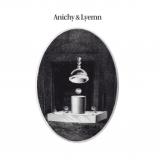
Shrouded in myth and working quietly at the edges of modern composition, the enigmatic Anichy & Lyemn announces the release of their newest recording on the esteemed Swiss imprint Fabrique d'Instruments—a new label championing radical, visionary sound.
This deeply affecting work unfurls as a meditation on impermanence, memory, and the slow unravelling of time. Across its extended movements, they create a sound world that is at once symphonic in scale and intimate in breath, echoing the aching resonance of William Basinski’s The Disintegration Loops, the spectral drift of The Caretaker, and the luminous stillness of Gavin Bryars.
Strings sigh, distant sounds dissolve, and tape-worn melodies return like half-remembered dreams. It is music that feels remembered more than heard—a fragile architecture built from erosion, decay, and the stubborn persistence of beauty.
Adding to its mystique, the record features previously unheard collaborations with a legendary British minimalist composer, whose identity remains deliberately withheld. These rare sessions—long thought lost to time—reveal the artist exploring harmonic minimalism with a disarming tenderness, the composer’s unmistakable signature woven delicately through Anichy & Lyemn’s drifting orchestral shadows.
At a moment when the world feels increasingly unmoored, this record arrives as a quiet monument to what slips away, and what remains.
Artist is available for very limited interviews.
- Clean Living
- Echo Park Donut
- Hungry Animal
- Loose White Paper
- Shake Me Awake
- Bed Time For Eddy
- Love Means Light Year
- Early Spring
- Emotional Volley
- One Heavenly Body
- One Zero
On Hungry Animal, Luke Temple continues to trace the invisible lines between the personal and the cosmic _ between what we feel, what we observe, and what we inherit simply by being alive. The album reunites Temple with Doug Stuart (bass) and Kosta Galanopoulos (drums), the core of his Cascading Moms ensemble, whose instinctive chemistry anchors the record's balance of rhythmic precision and melodic drift. Together they shape a sound that feels handmade and fluid, delivering sharp observations in soft focus. The album opens with "Clean Living," a tenderly libidinous groove, unraveling purity myths and self-discipline _ less a confession than a celebration of the futility of striving for perfection in a flawed world. From there, "Echo Park Donut" shifts into the memory of an unsettling vignette drawn from a violent incident outside Temple's Los Angeles home. The band moves with a quiet pulse beneath the story, suggesting both detachment and the surreal intimacy of fear. The title track, "Hungry Animal," grounds the album's broader questions: how well can we really know one another, or ourselves? Temple's lyrics circle around the idea that we are animals among animals, driven by instinct and affection alike. It's both playful and philosophical, one of the record's emotional centers. Temple's bandmates bring an understated mastery to these pieces. Stuart's melodic, infectious grooves converse fluidly with Galanopoulos's drumming, which breathes life into each song even as it gently propels them forward. The trio's interplay feels both weightless and deeply rooted _ commanding the listener's attention and empathy without ever forcing it. With Hungry Animal, Luke Temple and the Cascading Moms create a world where reflection becomes rhythm and consciousness gains texture _ a record of quiet revelations and deliberate grace.
- A1: Lovers Rock
- B1: Dancehall
Mudline presents BRAINS (MUDL003) — the label’s first mixtape, curated by Leo Gibbon and Joshua Brinksman. A hazy transmission built from Sufferers Rock, Yard Lovers, and tough dancehall rhythms — music for vacant rooms and slow hearts.
Please note there are 5 different covers for the tape.
Mudline presents BRAINS - MUDL003.
First mixtape for the label, selected and assembled by Leo Gibbon and Joshua Brinksman.
A transmission dragged from dust and static - built from Sufferers Rock, Yard Lovers, and Tuff Dancehall.
Rhythms for vacant rooms and slow hearts.
All proceeds from the tape will be donated to support communities in Jamaica affected by the recent devastation of Hurricane Melissa.
Bert At the BBC is a comprehensive collection of Jansch’s appearances at the BBC, featuring over eight hours of rare and unreleased recordings, including live-on-air spots, studio sessions and full concerts straight from the BBC vaults, delving further into this legendary performer’s canon. Bert Jansch was the very essence of folk music, providing inspiration for everyone from Paul Simon and Neil Young to Led Zeppelin and countless folk revivalists. This unparalleled limited-edition compendium is available as a 4xLP and 8xCD set, housed in a coffee-table book set with a lavish 40-page book tracing the recordings from Bert’s earliest moments at the BBC. It includes interviews and insights from Lauren Laverne, Jools Holland, Johnny Marr, Jacqui McShee, Bob Harris, Bernard Butler, Mark Radcliffe and many more. Twenty broadcasters, producers and collaborators contribute at length to the booklet, with great affection for this gentle, maverick genius. Bert’s BBC legacy remains the most significant and exciting untapped reservoir of his music. The undeniable advantage of recordings made for broadcast is that they were, by their nature, created for public consumption and, barring live-on-air appearances – which might go well or go badly, but were going out either way – were explicitly signed-off by the artist as representations of his art that were good enough to be heard. The set is compiled by Colin Harper, author of Dazzling Stranger: Bert Jansch and the British folk and blues revival (Bloomsbury, 2000), who contributes detailed liner notes to the package. The release is mastered by IFTA award-winning engineer Cormac O’Kane. The vinyl release features 48 tracks on LP and is accompanied by a download card with over six hours of extras spanning 1966–2009, including BBC4’s St Luke’s concert (2003), and a complete Queen’s Hall, Edinburgh concert (2004) for BBC Radio Scotland. It is also available as a special 8xCD set containing all 147 tracks and encased within a coffee-table book. Bert Jansch At The BBC is an epic and enduring trail, 45 years in the making. “He was that rarity, a musician who really did deserve to be regarded as a legend.” The Guardian // “As a guitar player there was no one like him. He was jazz and blues and folk but there was a whole world in there that was just him, esoteric”
- A1 1: Brian
- A2 2: Que Voy A Hacer
- A3 3: Radio / Tv / I'm In Love
- A4 4: So Young
- A5 5: Gonzo! Fc
- A6 6: Goodbye Rock And Roll
- A7 7: Me And Tony
- A8 8: Drive Drive Drive
- A9 9: Nobody's Son
- A10 10: Forever Shining
In 2022, In the Red Records released The Great Confrontation, an album of instrumental electronic music by Chip Kinman. It was Chip’s first solo album; his previous recording, This American Blues, by his band Ford Madox Ford, was issued just prior to the 2018 death of his brother Tony. The Kinmans had been partnered musically since they were teens, in a variety of now-legendary projects: the OG California punk band the Dils, the pathfinding cowpunk unit Rank and File, the ear-shattering electro-rock duo Blackbird, and the Western music twosome Cowboy Nation.
In the wake of The Great Confrontation, Chip and In the Red plotted another record. The resultant collection, Chip Kinman, is reflective, soulful, and profoundly affecting, a statement of identity and a look back at life that avoids the pitfalls that could derail an autobiographical work.
"I had to figure out something to write about, and I thought, it’s time to make that record," Chip says. "A long time ago, Tony and I were talking about singer-songwriters, and he said, ‘If you’re going to sing about your life, you better have had a fucking interesting life.’ And I thought, I have. I’ve gotta deep-dive into that. I figured, if I was going to write about what it was like, how was I gonna approach that? How was I going to say that without being nostalgic or without being maudlin or without being over-celebratory? It it was, well, just say it like it was."
Georgie Jesson was born in London to a Bosnian mum and British father. One, a communist turned neurotic capitalist, the other a private school boy cast-off turned heroin addict. Georgie fell in love with poetry through music and lyric writing at an early age. She has since performed her work to music, written extensively for various music magazines as a journalist and culture writer, and written biographies and forewords for acclaimed artists including Baxter Dury and photographer Ewen Spencer.
Her debut collection traverses grief and love in equal measure, reflecting on family memories with a sharp honesty and a blurred edge. The book charts the changing ways the passing of time can affect us. They are conversational and confessional poems, coloured by images of bittersweet family holidays and hospital trips; sleepy Balkans bars and long London nights. Poems from the heart, about the effects of life on the heart.
“we collect figurines to make a monument of memory / to help ignore the wastage of life”.
The collection features illustrations by Greek artist Maro Michalakakos, whose work has been displayed internationally in galleries including MCA - Chicago, The Guggenheim, Tate, FNAC - Paris and many private collections. The book’s foreword is written by musician Grian Chatten, notably the lead singer & lyricist of critically acclaimed band Fontaines D.C. and whom has also released solo work under his own name.
Shadows Lifted from Invisible Hands is an autobiographical record, comprised of four songs that Hoff refers to as ambient media. Each track is composed from sources drawn from his own involuntary aural landscape, specifically musical earworms and tinnitus frequencies.
Neither sound nor a daydream, the earworm (or stuck song) emblematizes music as a commercial form—immediate, ubiquitous, and persistent. Likewise, tinnitus is inaudible and unscrupulous, manifesting across a spectrum of frequencies at will. The cognitive swirling of these phenomena provides an ambivalent, internal soundtrack that scores a person’s movement through the world.
Those suffering from tinnitus or those who have grown accustomed to the “Tinnitus Effect” in movies will likely recognize the buzzing pitches on the record, but will likely not recognize the songs. Distorted and distilled, Shadows Lifted from Invisible Hands features altered versions of four commercial pop songs: Blondie’s “Heart of Glass,” David Bowie’s “Space Oddity,” Madonna’s “Into the Groove,” and Lou Reed’s “Perfect Day.”
Having been haunted by these songs on and off for years, Hoff tweaks the tracks, transposing and recomposing them for orchestral instrumentation. Speaking back to these involuntary echoes, these tracks go to great lengths to obfuscate their sources; to be sure not to simply re-introduce each earworm, as though they were samples. Otherwise, what’s the point? No one needs another stream.
Besides, earworms are not music, although we perceive them as such. They are non-cochlear and exist as an affective force that is neither subjective nor objective, which is to say they are an invasive—and alien—phenomenon. Like tinnitus, they are aggravated by economic, social, and environmental forces as well as emotional states, mental health, and aging. Hoff doesn’t underplay his own struggles with mental health in discussing the record—noting a long history of depression and its acuteness over the last few years, which serve as the backdrop to the composition of this record.
Scratch any pop song hard enough and you’ll find sadness underneath it. Subdermal, the songs on this record evoke a type of ephemeral weariness and despair. By recasting the original songs through their shadowy doubles, Hoff provides a window into the dark core of pop music. At the center of which lies capitalism’s desperate attempt to replicate itself through a cheap high built on echoing refrains. Just below the surface the listener finds a hangover of shadows dancing through the mind.
- Prelude
- Bitter Water
- There Beneath
- In The Blue Hours Of Morning
- Exeunt
- Caesar
- This Will End
- Pale White Horse
- Where Is Your Rider
- Soldier, Poet, King
- Dear Wormwood
- Danse Macabre
- Thus Always To Tyrants
TEN YEAR ANNIVERSARY[33,57 €]
Dear Wormwood acts as a volume II to Through the Deep, Dark Valley. While Through the Deep, Dark Valley is about the protagonist's past, Dear Wormwood is about the character's future. The duo explains, "This album is a collection of letters, all written by a single protagonist and addressed to a single recipient, a conversation to which the listener is an observer as a relationship gone wrong reaches its breaking point - the words and music are at times affectionate and bittersweet, at others resigned and resolute."
French musician, producer, and live artist Contre Soirée aka Olivier Decodts makes a significant return to Veyl with 'Psychiatry', a four-track EP shaped by deeply personal experience and emotional intensity. Rooted in post-punk, the release blends electronics with guitar parts, everything performed by Olivier himself.
What may have initially sounded like a PR stunt quickly revealed itself as anything but: ’Psychiatry' was conceived, completed, and sent to the label during Olivier’s stay in a psychiatric hospital. The first three tracks form a raw and honest narrative, tracing the events and emotional journey leading up to his hospitalization and explore the boundaries between vulnerability and resilience.
Closing the release is a cover of the Pixies' 'Gauge Away', a long-time favorite of Olivier’s. His rendition pays tribute to the original while placing it firmly within the emotional and sonic context of the EP, a final note of reverence and catharsis.
'Psychiatry' is a fearless expression of personal truth, pushing beyond the dancefloor to uncover something more intimate and affecting.
- No More Lies
- I Should Have Asked Your Name
- Stood Out In The Storm
- Everywhere I’m Searching
- Losing It All To The Blues
- What Have We Done
- Did You Think That I Was Lost?
- What If
Previously we’ve mentioned influences from the 1970s self-reflective work of Nick Drake & John Martyn to the lovelorn tragedy of troubadours such as Elliott Smith and Jeff Buckley creating a fusion of 1960s/70s folk and blues.
Now Cardiff-based indie folk singer-songwriter Ivan Moult returns with his most personal work to date, Stood Out In The Storm, due to be released on November 7th through Bubblewrap (home to The Gentle Good). The album follows the acclaimed Songs From Severn Grove (2023), which drew praise for its warmth, intricacy and timeless songwriting, cementing Ivan’s reputation as one of Wales’ most compelling contemporary voices.
While Songs From Severn Grove captured moments of renewal and joy - written in lockdown and
during the early days of fatherhood - its follow-up takes a braver, more vulnerable step. Stood Out
In The Storm was written in the aftermath of a personal crisis and charts Ivan’s gradual process of
healing and recovery. The record traverses darkness and light, despair and resilience, offering a
deeply honest exploration of fragility, survival and hope.
Ivan’s signature sound remains at the core: a seamless blend of 1960s/70s folk and blues infused
with modern textures, drawing influence from John Martyn, the late great Terry Reid and Ry
Cooder. On Stood Out In The Storm, that familiar intimacy is expanded with a greater presence
of guitars and organs, adding new depth and urgency to the sound. As with his previous records,
Ivan wrote, played, recorded and mixed the album at his Cardiff home studio, and the record sits
as a companion piece to Songs From Severn Grove.
Over the years, Ivan has gained support from BBC Radio 6 Music, BBC Radio Wales and KLOF
(Formerly Folk Radio UK), earned festival slots at Cornbury Festival, Festival of Voice and Sŵn,
and shared stages with the likes of This Is The Kit, Becca Mancari and Willy Mason. Now, with
Stood Out In The Storm (out November 7th), he offers his most powerful and affecting work yet –
an album born of struggle, but defined by resilience.
“Exquisite”- Folk Radio UK
“Beautiful” - Huw Stephens, BBC Radio
“Utterly wonderful” - Adam Walton, BBC Radio Wales
”There is a wonderful delicateness that resonates through Ivan’s heartfelt lyrics, deamy music and vocals. Ivan is able to take listeners on their own journey of growth through his soft melodies and blissful atmosphere”
- Amplify The Noise
- The House With The Red Door
- Enthralled
- The Chamber Of Breathtaking Delights
- Consorting With The Devil
- What Once Was Shall Be Again And What Is Shall Be No More
- Apocrypha Through The Keyhole
- Hell On Earth New Eden
- Behind The Green Door
The story of Suffering began in the UK's West Midlands in 2012 and since those nascent days they have released a nefarious collection of occult black metal offerings, beginning with their debut album, 11, in 2018 and most recently the Symphonies: Diabolis EP in 2024. They have also built a reputation for intense, diabolical live performances, appearing alongside the likes of Esoteric, Ghost Bath, and Mol. The band recently signed with infamous label, Apocalyptic Witchcraft, with label founder Conor Droney describing Suffering's music as "dark, unflinching, and deeply atmospheric, exactly what we stand for." And now the first fruits of that new alliance are about to be unveiled, in the shadowed form of Things Seen But Always Hidden. Things Seen But Always Hidden is an enveloping nightmarish journey through temptation and spiritual destruction, an immersion in contrasting states of terror and ecstasy - it bewilders, consumes and possesses the power to change and scar. Each song seeps into the next, binding them into a grimoire of dehumanising ritual, yet they exist as powerful individual entities. There is 'Enthralled', constructed from classic black metal riffs and raw vocal exhortations_and something more, something imperceptible but profoundly affecting; 'What Once Was Shall Be Again And What Is Shall Be No More', a glimpse beyond the veil, a fall down the endless paths of inherited memory that binds you to this album, this place constructed from arcane sound; the fear filled and imperious 'Hell On Earth New Eden', driven by a ravenous, unholy hunger_each chapter in this tome of unmaking and desecration will burn itself into your mind. A fusion of blackest metal, ritualistic doom and unsettling, distressing atmosphere Things Seen But Always Hidden will never leave you, no matter where you run. The way to Things Seen But Always Hidden will be revealed by Apocalyptic Witchcraft on November 28th. But remember, once you have set foot on this path there is no way back_
- Regresar / Recordar
- Ker
- Dilación
- Casi No Estar
- Palabra
- Riesgo
- Reanimar El Cuerpo
- Control
Lorelle Meets The Obsolete return with their seventh album. It's the Mexican duo's finest, most ferocious work to date which sees them turbo-charge their psychedelic post-punk with a new electronic engine. Mixed by Antoine Goulet (live sound engineer for SUUNS) and mastered by Mikey Young (Eddy Current Suppression Ring), the most obvious comparison in terms of mood and mode is Primal Scream's classic XTRMNTR, another record that processed personal and political conflicts and spat them out as distorted dance music. It shows the influence of the duo's DJ sets and last year's radical Remezcla remix collection on their way of thinking and why they are now namechecking the likes of Moor Mother, MF DOOM, Patrick Cowley, The Bug, Paula Garcés, Phil Kieran, Coby Sey, Run the Jewels and Anadol."Playing other artists' music is different," says Lorena Quintanilla about the change of direction towards the dancefloor. "You're not just listening, you're watching how energy flows and how it affects other people. It gives you the chance to witness what moves other bodies." And Corporal, as the title suggests, is all about the body. "The body is what carries the weight of stress, exhaustion, sadness. It's the body that the system breaks first," explains Lorena. "Unintentionally, while composing the album, our bodies were seeking joy in the songs. Reconnecting with pleasure became a way to open new dimensions - a way to escape, yet remain present." The theme is carried over into the lyrics which, according to Lorena, variously refer to "the bodies that disappear, the abused bodies, the bodies we miss, the bodies that march together in protest, the bodies that are being controlled".
GATEFOLD DOUBLE VINYL WITH SPOT UV FRONT COVER
Following the skewed-unself-help-brilliance of ‘Sus Dog’ (which marked his first full foray into songs, abetted by Thom Yorke), and its companion piece ‘Cave Dog’, Chris Clark returns to the dancefloor’s simple, but no less affecting pleasures, with ‘Steep Stims’.
“I found it hard to pull away from listening to this record, hard to stop making it, I had to remove myself from the Stims and stop enjoying it at some point. The album feels like nature to me. I love it when electronic music feels more naturalistic than acoustic music, more potent, that’s the devil’s trick, the promise of electronic music.” comments Chris.
“I used an old synth - the Virus on all of the tracks. I used it at Mess in Melbourne - run by my friend Robin Fox - I loved it so much I had to buy one when I got back to the UK, it took a while to find. They’re a bit clunky to program but make some of my most favourite sounds.”
‘Steep Stims’ marks a back-to-basics approach, invoking the early years of gung-ho creativity enforced by limitations in technology at the time. “Most of the tracks on this album capture the spirit of making music on old samplers, which don’t have much memory time”, explains Clark. “It reminds me of making ‘Clarence Park’, my first album, where I would have to finish tunes in the session, as they would be saved on floppy disks and I couldn’t easily go between tracks. This new record is just a few synths and a few choice sounds; the writing is the important thing.”
Made quickly, ‘Steep Stims’ reflects the immediate rave energy of his live show, but that’s not to say it’s basic floor fodder, as it’s rife with personality, synth magic, and knack for melody. Although swift and impressionistically captured rather than laboured over, it’s still formidably deft, with plenty of oddball weirdness lurking beneath the dancefloor.
Soft, orange, scorched, brutal, the opening track ‘Gift and Wound’ captures the classic dance music dread / awe / euphoria combo perfectly, before ‘Infinite Roller’ merges sparkly-minimalism with snarling bass and soft sines, which turn more dense and metallic as it progresses.
The melancholic smoke belch of ‘No Pills U’ gives strong classic vibrations, which is belied by its creation, made in just 20 minutes. “I love working quickly sometimes”, comments Clark. “Inspiration hits, rough and ready. It’s off the cuff but also screams ‘don’t gild the lily with nonsense, keep it simple keep it clean’”. Segueing into its elder brother, the piece becomes bigger and beatier on ‘Janus Modal’, where it permutates for over 7 minutes of fluttering, beatific club majesty.
At ‘18EDO Bailiff’ you inexplicably find yourself at a clearing, things have suddenly got much quieter. You enter a decrepit and eerie old house, and as you move through its unsettling interior, you arrive at ‘Globecore Flats’. A real piano tuned to 18 notes per octave gives the pair of tracks a haunted, olde worlde feel, which promptly gets eaten by a huge tech step tearout monster, birthing a strange but exotic beast.
The white hot ‘Blowtorch Thimble’ is all hooktasm-rave-hyper-amen-energy, whilst acidic flute leaps around like Ian Anderson on pingers throughout the catchily simple jump-up lurch of ‘Civilians’.
“‘In Patient’s Day Out’ is like some sort of Morricone-does-kraut-rock-with-drum-machines, but that’s probably just in my head” says Clark. “I made several versions of this then went with the early mix but cranked through some choice outboard because it just had something.”
Drumless, yet still full of exhilarating-big-trance-drama, ‘Who Booed The Goose’ flashes by in stroboscopic fast forward, then ‘5 Millionth Cave Painting’ gives a palate cleanser, letting “the virus with its delicious broken, luxurious reverb have a moment”, before ‘Negation Loop’ swoops down in all its glory, with Clark’s tweaked vocals leading deconstructed trance breakdowns, tape edits and brutal noisebursts.
An antidote to the bombast of its predecessor is ‘Micro Lyf’, which closes the set on a poignant note, of sorts. Muted staccato gives way to field recordings “that gradually put it in this outside space; alien in a meadow somewhere nameless. It feels like a sinkhole. The record kinda swallows itself up and then is gone”, ends Chris.