'Enjoy Youth', the follow up to Bright Light Bright Light's #1 UK Dance Album 'Fun City', sees him at his most confident and euphoric. Aiming to bring as much joy as possible with the album, Bright Light Bright Light has worked with some artists and producers who have brought him joy through his teenage years up to now. Guest vocalists include GRAMMY nominee Mykal Kilgore, dance icon Ultra Naté, Beth Hirsch of Air's 'Moon Safari Album', and Berri who had a monster Top 5 smash with 'Sunshine After The Rain'. Co-producing the tracks are Scissor Sisters' Babydaddy, UK pop superstar Richard X (Kylie Minogue, Alison Goldfrapp, Sugababes), Jon Shave (Charli XCX, Girls Aloud, Miley Cyrus) and Ian Masterson (Bananarama, Dannii Minogue). 'Enjoy Youth' is an uplifting, dancefloor- forward record bursting with energy and reverence for the music and artists that shaped him.
quête:after work
Technical death metal troupe Cognitive are back with Abhorrence, their fifth full length album and a tremendously worthy successor to 2021’s Malevolent Thoughts of a Hastened Extinction. This is the New Jersey powerhouse quintet at its brutal best – unrelenting riffs leave the listener stunned, while a wave of thoughtful, devastating lyrics washes over. The album is a turbulent, draining but ultimately fulfilling experience. Cognitive started work on Abhorrence while touring Malevolent Thoughts of a Hastened Extinction, sending tracks back and forth to each other while trekking from one intense gig to another. This promises to be a big year for Cognitive, as they take Abhorrence on the road and bring more people into their vile new world. 13 years after the release of their debut EP, the band’s fifth full-lengther sees them continue to make giant strides forward while retaining the elements of their past efforts that got them this far. Abhorrence may provide therapeutic commentary about how messed up the world currently is, but also, ironically, provides a breath of fresh air. We’re all in this together, so catch Cognitive on the road this year.
““Do One” is the last song I wrote for the new album, and the first song on that album, as well as the first single. So it’s a summation of what I’m trying to say with this record, a record about survival and defiance, but also one with a sense of fun and self-deprecation.
19 years into my solo career, I’m still standing up and putting out some of my best work. It feels good.”
“Undefeated” is my tenth solo studio album, and in many ways I’m pleasantly surprised by that statement. I feel very fortunate that I’m still making records and touring - fortunate
and proud. The record is fired by that feeling, and a new sense of energy and liberation. It feels like a new chapter for me - after the pandemic, back in the independent world, the
new lineup of the Sleeping Souls, and a slightly bewildered sense of gratitude that I’m still standing, still have something to say.” - Frank Turner.
Allchival present their second look at the music of Roger Doyle and Operating Theatre (a little known proto synth-pop act and experimental theatre group that he led.)
In reverse chronological order the second disc contains music from the United Dairies release of 1979 – ‘Rapid Eye Movements’. Experimental tape work heavily influenced by the French school of music concretists and recorded at various points during the 70s in Finland, Holland and Ireland, although it is most certainly a Roger Doyle solo record the label ran by Nurses With Wounds John Fothergill decided to release it under the group name for reasons now lost to the fog of time.
After this a volte-face towards a more accessible sound, coming via his friendship with future Hollywood actress Olwen Fouéré and her connection to the theatre. It also featured the vocals of a young Spanish immigrant Elena López- bucking the 80’s trend by moving to rather than from Dublin. With Fouéré adding the theatrical element to the group (an almost essential part of any early 80s synth act) alongside pulsing synths, brass, a vocoder and the electro acoustic production talents of Doyle himself, it was the first time a Fairlight sampler was used in an Irish studio setting and gives a prescient but alternative take on the new wave sound that came to dominate the charts soon after.
Doyle’s work on the newly released Fairlight sampler had brought him to the attention of U2’s Bono who had seen a feature about his sampling experimentations and reached out to him for piano lessons. This led to a deal on the bands embryonic Mother records for what Doyle calls his first “popular song” - Queen of No Heart - which alongside “Spring is Coming” made up the backbone of the EP which was released some years later (1986) on the Mother Records label. Established by U2 in 1984 and initially intended to launch Irish bands, many of the acts – including this one – were subsequently unhappy about the label’s haphazard approach to releases and lack of promotion. The record was released as a die cut 7 inch with the two main tracks and a 12 inch EP with additional tracks – ‘Part of My Make-Up’ / ‘Atlantean’ / ‘Satanasa’. The Mother experience was for Doyle and the rest of the group a frustrating one with no promotional plan and no tour. After that Operating Theatre as a quasi pop project ‘just kind of fizzled out’ says Doyle.
Doyle, the musical maverick at the heart of the act, continues to produce to this day and has released 30 albums. A frequent collaborator we round out the record with a remix from another Irish outsider - Morgan Buckley of the Wah Wah Wino fame.
Bruno Berle, the young songwriter and poet originally hailing from Maceió, the capital of Brazil’s Alagoas state, crafts songs that are simple, direct, and full of tender nuance. With his first album No Reino Dos Afetos (which translates to "In the Realm of Affections” and was released in 2022), Berle firmly established himself as a unique and important voice in the burgeoning scene of new Brazilian artists making a global impact, including peers like Ana Frango Elétrico, Tim Bernardes, Bala Desejo, Sessa and more. Now back with his second album, No Reino Dos Afetos 2, he stretches that further.
Bruno Berle’s music lives between two worlds – a traditional Brazilian folk talent steeped in history, and a contemporary, dreamy electronic pop; the result is songwriting that’s genre-bending, intentional, iconoclastic and consuming, spacious and sinewy and singular, a striking reflection of its composer while leaving space for the listener to settle in. The album follows Bruno’s relocation to São Paulo, and the songs are a reflection of his past and present. A rebuke of former categorizations of his work in Brazilian music scenes, and an idea of where his music can move, unfettered.
Berle’s music is purposeful in being a true portrait of himself, and a reflection of the music, art, and fashion scenes he personally moves through. Berle aims to provide an entrypoint for Black queer joy in his music, in his storytelling, in his presence and vision as a creative. For him, it feels subversive to be playing MPB laced with dubstep and lo-fi, a sort of intentional sacrilege, capturing a dialogue of modernity in traditional music.
Berle wrote most of the arrangements and co-produced his new album, Reino Dos Afetos 2 with longtime friend and musical partner Batata Boy, who is also from Maceió; the album was recorded in Rio de Janeiro, Maceió, and São Paulo, his new home, and picks up the conversation begun in 2022 on Berle’s debut album No Reino dos Afetos. Both records are the result of a nonlinear but coherent seven-year music creation process culminating in these albums, holding hands across space and time.
“Tirolirole,” the first single from the record, was released at the end of 2023; sun-soaked rhythms and soft voice coat the song, the lilting refrain of “Tirolirole” throughout – hushed, gentle, but somehow almost tactile, a golden-hour moment unlocked in the mind. “Tirolirole” is a triumphant future classic about the temporality of a blossoming love, with Bruno’s stunning vocal soaring over melodies which ebb and flow like the waters on the Atlantic shore. Of the track, Berle explains: “Despite ‘Tirolirole’ being an expression that evokes my childhood, just like the light words about nature, the harmony, and the poetry are epic, carrying a great hope for love.”
In fact, the guiding theme of No Reino dos Afetos 2 is a relationship, unfolding in the arc of a weekend. It traverses the innocence of an early young love, how that can be formative, can stretch on to take new shapes, or shape you. The album happens at the genesis of meeting someone and falling for them, before the relationship is thrown into overdrive – set in a big city, against a backdrop of major life changes, rising energy, the sound of São Paulo.
Something transcendental emerges in “Dizer Adeus,” with an arrangement that echoes a gospel atmosphere (evangelical and Catholic environments were pivotal to Berle’s upbringing). On “É Só Você Chegar,” piano and flute gracefully intertwine, a dance, while “Quando Penso” skews sparser, the voice-and-guitar minimalism somehow cultivating an entirely different shape – somehow both cozy and melancholy, with the background sound of a rainy day. Coupled with the lo-fi aspects that shape much of the album’s personality in the vocals and the production, No Reino Dos Afetos 2 is meticulously elaborated by Berle’s sonic alchemy, like on the mid-album instrumental “Sonho,” which feels like floating. “It’s the apex. It’s when lovers are sleeping together,” Berle explains of the feeling he wanted to encapsulate in the song.
On “Love Comes Back” Berle interprets Arthur Russell, the late Iowa musician who only reached greater visibility after he died in 1992. “His way of making music is similar to mine,” Berle explains. “He sings in a more fragile way, has more of an experimental way of recording, letting ‘chance’ appear in the final work.”
Even so, Berle doesn’t want his music to be buried in sentimentality – and the purposefulness of his craft serves as a sort of north star. The production, the arrangements, his restraint and intentionality in crafting his songs feel just as vital as their emotional cores. His songwriting is amorphous, fluid, an encompassing genre-bending movement in-and-of-itself, quietly daring. The songs are often in conversation with other works – drinking in fountains as diverse as the filmmaking of Ingmar Bergman, the poetry of Walt Whitman, the rhythm of Djavan, and the painting of Maxwell Alexandre. Musically he weaves together a rich tapestry of Brazilian folk, UK 2-step garage/dub, trip hop and sun soaked west coast songwriters; something akin to the worlds of Milton Nascimento, Arthur Russell, James Blake, Feist, and Sade colliding into one. But even then No Reino Dos Afetos 2 floats separately, a romanticism driven by a simplicity and intimacy, an open-ended possibility, Berle’s singularity as an artist at the helm of the ship.
Though their album was cut in two days over the course of 2 eight hour sessions their arrangements shine through what was a scattered recording session. "We really worked hard in the studio even though we didn't have enough time to do all the things we wanted to do with music," bassist Robb Murphy remembers. "We were pretty excited. We just had no experience with that sort of thing. We had heard things but never had any experience.
We were really babes in the woods. It was a terrific experience looking back on it. It was really a hell of a lot of fun, we loved the idea of being able to overdub even though we didn't get to do too much of that, it was still fun. That was pretty high tech in those days, being able to lay down a couple of tracks with your voice." guitarist Mike Barnes recalls.
Similar to the Bosstown sound (Orpheus, Ultimate Spinach), Tiffany Shade lean towards harmony-driven vocals that combine their clever pop sensibilities with a versatile showcase of keys, organ, and scintillescent guitars. After their album's release in '68, they had the opportunity to open for Big Brother & Holding Co., but because of poor sales (and like many Mainstream artists) the band didn't last and went their separate ways in '69.
- A1: Fink - Covering Your Tracks
- A2: Alfa Mist - Mulago
- A3: Charlotte Day Wilson - Mountains
- A4: Moreton - Count A Heart (Feat Jordan Rakei)
- B1: Puma Blue - Untitled 2
- B2: Connan Mockasin - Momo's
- B3: C Duncan - He Came From The Sun
- B4: Oso Leone - Virtual U
- B5: Joe Armon-Jones - Idiom (Feat Oscar Jerome)
- C1: Snowpoet - Eviternity
- C2: Maro - Forever & Always
- C3: Homay Schmitz - Speak Up
- C4: Bill Laurance - Singularity
- D1: Jordan Rakei - Lover, You Should've Come Over (Exclusive Jeff Buckley Cover Version)
- D2: Cubicolor - Counterpart
- D3: Jordan Rakei - Imagination (Exclusive Original Piece)
- D4: Alejandro Gonzalez Inarritu - Imagination (Exclusive Spoken Word Piece)
Original[27,69 €]
“I wanted to try and showcase as many people as I knew on this mix. My idea of Late Night Tales was to distil a series of relaxing moments; the whole conceptual sonic of relax- ation. So, I was trying to think of all the collaborators and friends that I knew, who’d recorded stuff with this horizontal vibe. Plus, I was also trying to help my friends' stuff get into the world. I know the story of Khruangbin blowing up after appearing on the series (in fact, I think that's how I discovered them). So, the main idea was to create a certain atmosphere, but also to help some of my favourite collaborators and bud- dies to give their songs a little push out into the world. Hope you like it” Jordan Rakei
Due for release on 9th April, Late Night Tales celebrate their 20th anniversary with the release of multi-instru- mentalist, vocalist and producer Jordan Rakei’s majestic compilation. The 28-year-old modern soul icon effortlessly stamps his own jazz and hip-hop driven sound all over this gorgeous array of handpicked tracks. A beautifully layered blend that is mirrored in the music he’s made, itcomes as no surprise that such a supremely gifted songwriter should deliver a mix that is all about the song.
Rakei, born in New Zealand, but raised in Australia, moved to the UK in 2015; he released his debut album, Cloak, with Oz label Soul Has No Tempo, but his two subsequentLPs, Wallflower and Origin, came out on Ninja Tune, the former#2 in Album Of The Year for Gilles Peterson’s Worldwide poll, while Origin was nominated for Best Album at the AIM Awards. Jordan had this to say on his upcoming mix:
As Jordan says,there’s so much more to the song selection on Late Night Tales’latest outing than a random collection of artists. Many have some sort of personal connection, so just as Bonobo provided a platform for the breakout of Khruangbin on a previous LNT, this may have the same ef- fect for Rakei’s friends. After a soothing opener from Fink, good friend and big influence Alfa Mist (part of the Are We Live collective) delivers ‘Mulago.’ “I want to champion their sound and show the world how good he is, and I thought it’d be fitting to start the mix with family,” says Jordan.
Next up is Charlotte Day Wilson with ‘Mountains,’ followed by ‘Count A Heart’ from Moreton, an exclusive collab- oration with Jordan, who grew up on the same street in Brisbane, Australia. “She was the first artist I ever collabo- rated with, and one of the first artists to be involved in mycareer,” he explains. Elsewhere we hear Scottish producer and multi-instrumentalist C Duncan’s haunting ‘He Came from the Sun,’ Barcelona collective Oso Leone deliver a dreamy ‘Virtual U’ and Bill Lauren’s ‘Singularity,’ which evokes a striking sense of time and place.
Snowpoet’s ethereal ‘Evitenity’ is a “long mediative nar- rative over a beautiful soundscape,” which at times seems chaotic, nicely juxtaposed with undeniable beauty, and Maro’s kooky songwriting shines on ‘Always And Forever.’ Long-time buddy Armon-Jones contributes ‘Idiom,’ and Jordan’s exclusive cover version is a two-for-one, Radio- head’s ‘Codex’ merging with ‘Lover, You Should’ve Come Home’ by Jeff Buckley and another exclusive,original com- position by Jordan, ‘Imagination.’ The latter works as a piece with the spoken (Spanish) word voiced by movie director Alejandro González Iñárritu (Babel, Birdman, and The Reve- nant,) who is a big fan of Jordan’s. “He messaged me when I went to L.A and asked to come to my show. I was in such shock and we hung out after. I thought it would be nice to get him to do this in his native tongue, because I don’t think that’s been done yet on the series.” It certainly is a familyaffair. Not theblood is thicker than water kind, but certainly musical kindred spirits.
repress !
Following acclaimed singles from Powell, Blood Music, Shit & Shine and Prostitutes, the next release from Diagonal is a landmark. It marks both the London label's first full-length album release, and the return of abrasive and furiously funky hip-hop deconstructionists Death Comet Crew, one of the most quietly influential underground acts to emerge from the creative melting pot of 1980s New York.
Ghost Among The Crew documents the group's return to studio operations for the first time since the 80s, as well as their first ever full-length studio album. It's a remarkable trip: a consolidation of their early feral disassemblies of hip-hop and electro, but also broader in scope, chewing up and spitting out fragments of soul, jazz fusion, punk and industrial music.
Death Comet Crew were founded in New York City in 1983 by Stuart Argabright, a founder member of post-punk/industrial mavericks Ike Yard and the mind behind Dominatrix and later Black Rain. Their sound, then as now, was a singular proposition: urban in mood, exploratory, often compellingly danceable, yet confrontational. It emerged from the interweaving talents of the group's varied members: guitarist Michael Diekmann (of Ike Yard), bassist Shinichi Shimokawa (later of Black Rain) and Nick Taylor aka DJ High Priest, frequently joined by the late, great hip hop artist and graffiti writer Rammellzee. Having recorded two studio EPs - 1985's At The Marble Bar (featuring Rammellzee) and its follow-up Mystic Eyes - the group disbanded barely a year after forming. They left behind a reputation for their incendiary live performances, several recordings from which were gathered on crucial 2004 compilation This Is Riphop.
The musical climate that first birthed Death Comet Crew was one of fertile cross-pollination of styles. In the late 1970s and early 1980s, the seeds of modern day urban musics - hip hop, punk and post-punk, no wave - were taking root in the streets of recession-struck New York City. Argabright recalls dancing at the downtown Mudd Club around 1980 to a bold mixture of styles, with DJs cutting from synth-pop and post-punk to funk, soul and early hip-hop: Bowie and James Brown next to Run DMC, Ultravox and Gary Numan. Indeed, the names of his New York contemporaries operating around the same time - the likes of Liquid Liquid, Run DMC, Afrika Bambaataa, Arthur Russell, ESG, Swans, Sonic Youth, Bill Laswell and more - have since been inscribed in modern music history.
With previous projects Dominatrix and Ike Yard having recently become inactive, in 1984 Argabright formed Death Comet Crew as a means of exploring new sonic avenues. He'd been experimenting with tape, recording and procesing the sounds of his surrounding environment and dialogue from films and TV. Joined by Shimokawa, Diekmann and Taylor, and using drum machines, turntables, spidery guitar and bass, the group assembled a scrambled collage of rhythms and sampled voices. Their live performances were, in Argabright's words, "aurally violent, sharp-edged, downright lacerating", hacking gleefully away at hip hop and electro's rhythmic frameworks. Rammellzee joined the group to vocal 1985 debut EP At The Marble Bar; his MC turn on highlight 'Exterior Street' is all the more remarkable for having been entirely freestyled in the studio. When Death Comet Crew reformed in 2003 for a string of live shows, he continued as an active member of the group, touring and working with them during the recording of Ghost Among The Crew, until he sadly passed away in 2010.
After reforming, Death Comet Crew began writing and recording new material. Now, following on from their just-released Galacticoast 12" through Citinite, Ghost Among The Crew - its title a homage to Rammellzee - hones the group's abrasive early experimentations while tripping into bold and astrally minded new territory. Alongside the core quartet of Argabright, Diekmann, Shimokawa and Taylor are new voices, including Rapscallion (a friend of Rammellzee's), Jessica 6/Hercules & Love Affair singer Nomi Ruiz, and Carolyn 'Honeychild' Coleman. Its eight tracks are steeped in the impulsive spirit of electric Miles and the deep space romances of Sun Ra, and possessed of an enigmatic yet undeniable pop edge. But equally they're pricked with urban paranoia and dread, traits that have long been hallmarks of Argabright's musical projects.
'Me Czar Of The Magyars' opens the album in a twist of tension like the turning of a ratchet. Its taut electroid shudder is paired with machine gunned cymbal hits and a voice telling of "wormwood and opium dens" - the sound of being teleported from everyday city streets into the astral plane, where every sensory input is heightened and the promise of danger or pleasure lurks unseen around every corner. Later, Coleman's lyrics pay tribute to Rammellzee on the sci-fi funk of 'Deep Space Woman'. 'Let The Clubs Ring' melts lounge bar organs and frazzled guitar into freakishly unstable shapes, while 'Drag Racing' matches its title, rocketing along frantically atop clattering drums. 'Moons On Titan's Seas' is halfway interlude pause for rest, like an exotic cocktail in a bar orbiting some as-yet-undiscovered new world. These varied strands are somehow all summarised in album closer 'Ignition Spark', which sets Ruiz's vocals alongside Taylor's and Argabright's. The zone the trio inhabit in this final track exists in perpetual push-pull between contemplation, memory, intrigue and violence, a decisive opening of a new chapter in Death Comet Crew's history.
As with all Diagonal releases, the initial vinyl pressing will be packaged in unique, specially designed artwork.
Maximilian Skiba, an Eminent Figure in the World of Electronic Music, Makes a Triumphant Return to Skylax After an Absence Spanning Over a Decade. His Resurgence Is Nothing Short of Exceptional, as He Joins Forces With the Legendary Snax to Deliver a Musical Offering That Rekindles the Very Essence of House Music's Illustrious origins.
Skiba's Two New Tracks, "Pushing My Buttons" and "In Motion," Serve as a Compelling Testament to His Impeccable Craftsmanship as a Producer. the Influence of the Pioneering triumvirate—Larry Levan, Ron Hardy, and Frankie Knuckles—is Palpable Within These Compositions. Both Tracks Are a Masterful Blend of Nostalgia and Innovation, Perfectly Aligning With the Playlists That Once Defined the Heyday of House Music's Most Celebrated luminaries.
"Pushing My Buttons" and "In Motion" Evoke an Air of Sophistication, Exuding a Smooth, Velvety Quality That Transports Listeners to the Cherished Era of Original Disco. Drawing Parallels to the Timeless Classics Like Dinosaur’s "Kiss Me Again" or Loose Joints "Is It All Over My Face", Skiba's Creations Pay Homage to the Bygone Era While Injecting a Modern Edge. This Phenomenal Ep Goes Beyond Skiba's Original Works, Offering Two Exceptional Remixes That Elevate the Experience. the First Remix, a Balearic Interpretation by the Emerging Talent Maltitz, Adds a Refreshing Dimension to the Tracks. the Second Remix, Helmed by the Skilled Apollon Telefax, Ingeniously Transforms the Already-Classic Tunes Into an Explosive Italo-Disco Sensation. These Remixes Seamlessly Weave Together the Past and the Present, Creating a Bridge Between Different Eras While Keeping the Music timeless.
In Essence, This Ep Is Not Just a Musical Offering; It's a Journey—a Seamless Fusion of History and Innovation That Transports the Listener to an Era of Musical Brilliance, All the While Redefining the Boundaries of Contemporary Sound. Skiba and Snax's Collaboration Is Not Merely a Comeback; It's a Testament to the Enduring Legacy of Electronic Music, Encapsulating the Spirit of House Music's Golden Age While Breathing New Life Into Its Timeless Allure....
Warehouse Find!
Last month saw the re-release of the this stone-cold classic from 1988. Now we give you the re-edits from The Black Madonna, Adjowa and Jimpster. The Black Madonna should need little by way of introduction seeing as she is almost singlehandedly regenerating Chicago's House music legacy through brilliant
her brilliant productions as well as her position as booker and resident at the legendary Smart Bar. It seemed only right and proper to have the youngest generation of Chicago native revisit such an infuentional classic from the first wave of House. With only the stereo track to work with she stretches things out
and teases with a filter-frenzied arrangement and plenty of twists and turns to bring a fresh new spin to In The Heat Of The Night.
Adjowa grabbed our attention after his amazing Science And Soul 10' last year and seemed the perfect choice to bring some seriously raw warehouse vibes to the release. He certainly goes for the jugular with a more in depth remix adding extra bass and beats with plenty of grit and dirt. Finally, Jimpster gives us his Stretchdit, keeping the vibe of the original intact but offering up an extended DJ friendly version with extra hats, FX and a
sprinkle of pixie dust adding sizzle and drama. We hope you agree that with club music like this sounding every bit as mind-
blowing today as it did in 1988 it seems only right to help introduce such innovative, influential and timeless music to a wider audience.
Runar Magnusson is an Icelandic/Danish sound artist and musician, currently based in Austria. With a masters degree in Electronic Music Composition from The Royal Academy of Music, Aarhus, Denmark, he is inspired by the sounds of nature, noise, and meditation. Magnusson specialises in atmospheric disturbances through minimalist compositions. A sly humour cuts through the dark hues of his works.
Magnusson writes: "The two works which make up "Inside Out of Chaos" are somewhat related. They were made at the same time and share the same source materials somewhat – a pool of sounds I had been experimenting with for a couple of years. Two separate projects created the opportunities for me to realise them in these finished forms.
At the beginning of 2020 I was invited to participate in an acousmatic concert series at the Traktorfabrikken in Vienna. Curated by Austrian composer Christian Tschinkel and performed on his Akusmonautikum sound system this particular event, titled Kill & Kaoss, was the last in the series. I named my piece after the event and dedicated it to Tschinkel´s Akusmonautikum system. Without my knowing, I had witnessed this system in action half a year earlier at a concert at the Hermann Nitsch Museum in Mistelbach, with Hermann Nitch playing the organ and Tschinkel operating the sound system – a profoundly enjoyable performance. I was very happy when I connected the dots soon after the invitation to participate. I intended my work for Kill & Kaoss to be a way to greet the new lunar year of the rat – a year which held many surprises… The event took place on 22nd of February 2020 at Traktorfabrikken, Vienna.
"Inside Out (for Trattner)" was composed for Austrian artist Josef Trattner. It was the soundtrack for a film that was a part of his exhibition "Inside Out" at the Kiesler Foundation in Vienna, 2020. I assisted with the installation of the exhibition, itself a filmed action that evolved into the movie of which this is the score. The installation was a very hard physical process that left me bloody and blistered. It was also a fascinating, trance-inducing experience. Mining with ones bare hands, digging out this huge structure and creating a womblike cave, a tunnel system, a playground, a hideaway while experiencing ever-increasing pain in the fingers and hands. The exhibition ran from 27 February 2020 until 23 December 2020.
I consider this release as the final part of a trilogy I refer to as "the three sisters of sorrow". These three releases are an insight into my state of mind at the time – a mental collapse, somewhat triggered by a move to a new country, the death of my friend Jóhann Jóhannsson and the loss of my father a year later. Between 2018 and 2021 I had the trilogy almost ready but had not been able to finish them. I sought professional help to lift me up from the deep and was diagnosed with ADHD, which explained many things in my life. Only after the darkness had lifted could I see that these three releases were connected. They depicted both the mental state I had been in – an incapacitating downward spiral, a crushing chaos – and also my search for the light, a way out of the maze and my path up to the surface."
Runar Magnusson, Vienna, 13 November 2023
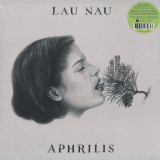
The title of the Lau Nau's 10th album, Aphrilis, derives from the Latin word aperire, meaning "to open." A fitting verb for the month of the year it is closely associated with — April. And while the images of plants and blossoms coming back to colorful life after a long, cold winter feels appropriate when listening to the rich and lustrous bloom of music on Aphrilis, another definition of open feels even more apt. For under the abundance lies the memory of times of austerity, the friction of hard choices, the acceptance that nothing is fixed and the future is unknown. This literal and metaphorical exploration of complexity and contradiction makes Aphrilis a multi-dimensional antidote for our troubled times, one that emphasizes the quiet and communal over noise and spectacle. Laura Naukkarinen, the Finnish artist behind this project, has long kept her mind and spirit open to whatever sounds and creative ideas felt appropriate for the moment. For the past six years that has meant primarily working with modular synthesis — learning how to build modules and releasing acclaimed work centered on its sounds like 5x4 (2023) or Puutarhassa (2022). Running parallel to this work, however, has been a continued exploration of acoustic instruments and group performances with her trio Lau Nau ja Seitsemäs Taivas. Aphrilis arrives then like fresh growth in a creative season cycle. A companion to her brilliant 2017 release Poseidon, the album, says Naukkarinen, "felt like a needed moment to embrace songs with lyrics again." And through the creation of this work, she remained open not only to her own creative muse, but also the input of her chosen collaborators. Each player on Aphrilis — Matti Bye on celesta and synths, Pekko Käppi on jouhikko, Hermanni Yli-Tepsa on violin and contrabass, Topias Tiheäsalo on electric guitar, Samuli Kosminen (Múm) on various instruments — was given free reign to arrange their own parts to accompany Naukkarinen's compositions. Kosminen’s lush fingerprint can also be heard in the mixing and production of the album, as with Poseidon six years ago. The moniker of this project may be taken from Naukkarinen’s own name, but Lau Nau feels more like a band than ever before. The delicacy and softness of the music is reflected in Naukkarinen’s lyrics. Each song is rife with imagery and creatures from the natural world. The spiders in the forest. The animals that keep a young woman company in her refuge in the woods. Wet grass. The feeling of the music is almost tactile, as if listening to the album will leave a bit of dew or sap on your fingers. The theme of this material, says Naukkarinen, runs even deeper. “The songs tell about cracks and changes of direction in different histories: personal, societal, planetary,” she says. “About moments when a yes can become a no and vice versa. The album wants to propose that at the moment of a crisis there is a possibility to influence the histories by our choices.” That may feel like a lot for such a fragile sounding collection of songs to bear. But Aphrilis is an album of surprising strength and resilience
The band was founded on January 20, 1966 by Cologne students, initially as a political cabaret. The group grew out of the Cologne APO Non-parliamentary Opposition in Germany (Außerparlamentarische Opposition APO) around the SDS German Socialist Students‘ Union, its political orientation evolving over the years towards a clearly dialectical and Marxist position. Independently of each other, group members joined the DKP German Communist Party between 1970 and 1973. On September 6, 1970, the band performed at the Fehmarn Festival following Jimi Hendrix; this was their last appearance for a long time. In 1973, Floh from Cologne performed as part of a West German delegation at the 10th World Youth Festival in East Berlin. From 1980, part of the band (with Vridolin Enxing as chairman) was active in “Rock gegen Rechts” Rock against the extreme right; in the same year, the band was awarded the Deutscher Kleinkunstpreis with Gerhard Polt.
After more than 3,000 concerts in Germany and Europe, Cologne Floh disbanded in May 1983 after a farewell tour. The farewell concert in Cologne‘s sports hall attracted 6,000 spectators and lasted 14 hours, with the participation of numerous musicians such as Hannes Wader, Dieter Süverkrüp, Franz-Josef Degenhardt, Hanns-Dieter Hüsch, Die 3 Tornados, BAP and Ina Deter. In 2023, the group was awarded the Holger Czukay Honorary Prize by the City of Cologne for its lifetime artistic achievement.
With the rock band cantata „Mumien“, the group reacted in 1974 to the 1973 putsch in Chile, notably by setting to music the last speech of deposed president Salvador Allende. In the same year, the band worked with Hans Werner Henze on alternative musical settings of Chilelied (“Dieser chilenische Sommer war süß” / This Chilean summer was sweet; 1974), lyrics: Rudi Bergmann (* 1950), first performed on May 31, 1974 in Essen (Grugahalle: memorial concert for Víctor Jara, at the same time a demonstration of solidarity with the resistance in Chile). „Mumien“ has not yet been reissued on vinyl, and the only CD version (with the album „Vietnam“) dates from 1995.
Nick Llobet (they/them) was ready to throw in the towel. Llobet, who grew up in South Florida, learned to play guitar at a very young age, dabbling in everything from classical, blues, classic rock, and flamenco. They'd spent much of their early 20s searching for their voice as an artist and as an individual, as well as for a musical community Llobet would eventually move to Brooklyn, but after three years of looking for a hopeful artistic breakthrough, they spent much of their time in seclusion, consumed by social anxiety and imposter syndrome-and they were considering abandoning songwriting completely. One day, while commuting through Penn Station en route to their partner's family home in Virginia (that would also lead to the crucial purchase of a secondhand Tascam cassette recorder), they noticed Patti Smith sitting alone, waiting for a train. The typically shy Llobet decided to approach the icon, who was, in turn, delighted to see that Llobet was carrying a guitar. At the end of their interaction, Smith offered some parting wisdom: "She wished me luck and said, 'Practice hard, Nick.'" Llobet took her advice to heart, and this chance encounter kicked off a personal and artistic rebirth. They started performing as youbet, a play on their last name, and began "changing their vision for what a song could be." youbet's debut, Compare & Despair, a delightful gem of a record that showcases Llobet's propensity for freewheeling whimsy and emotional intensity. In May 2019, inspired by a song-a-week writing group that produced Compare & Despair, Llobet started a second club in which contributors would upload that week's song to a private Bandcamp. Invigorated by this small musical collaboration, the feedback, and the accountability, Llobet wrote 18 songs throughout the duration of the club, twelve of which became Way To Be. After this songwriting marathon, Llobet spent 2020 focusing on instrumental guitar work and political engagement. By the summer of 2021, they were ready to revisit the Way To Be tracks. Over the next year-and-a-half, Llobet worked on the record relentlessly, refining the lyrics, recording, and arrangements from their apartment. Llobet self-produced Way To Be and describes the process as an enormous, labor-intensive undertaking that felt akin to "making a whole film." Along the way, Llobet was joined by collaborators, including Julian Fader (Ava Luna), Adam Brisbin (Buck Meek), and Daniel Siles. Across Way To Be's 12 delightfully off-kilter tunes, Llobet uses wordplay and tongue-in-cheek humor to obliquely explore dysfunctional relationships, regret, self-confidence or the lack thereof, queerness, and self-discovery. Fuzzy at the edges and filled with playful, kinetic arrangements, Way To Be is a bridge into the entrancing world of youbet. You won't want to leave.
Nick Llobet (they/them) was ready to throw in the towel. Llobet, who grew up in South Florida, learned to play guitar at a very young age, dabbling in everything from classical, blues, classic rock, and flamenco. They’d spent much of their early 20s searching for their voice as an artist and as an individual, as well as for a musical community. Llobet would eventually move to Brooklyn, but after three years of looking for a hopeful artistic breakthrough, they spent much of their time in seclusion, consumed by social anxiety and imposter syndrome—and they were considering abandoning songwriting completely. One day, while commuting through Penn Station en route to their partner’s family home in Virginia (that would also lead to the crucial purchase of a secondhand Tascam cassette recorder), they noticed Patti Smith sitting alone, waiting for a train. The typically shy Llobet decided to approach the icon, who was, in turn, delighted to see that Llobet was carrying a guitar. At the end of their interaction, Smith offered some parting wisdom: “She wished me luck and said, ‘Practice hard, Nick.’” Llobet took her advice to heart, and this chance encounter kicked off a personal and artistic rebirth. They started performing as youbet, a play on their last name, and began “changing their vision for what a song could be.” youbet’s debut, Compare & Despair, a delightful gem of a record that showcases Llobet’s propensity for freewheeling whimsy and emotional intensity. In May 2019, inspired by a song-a-week writing group that produced Compare & Despair, Llobet started a second club in which contributors would upload that week’s song to a private Bandcamp. Invigorated by this small musical collaboration, the feedback, and the accountability, Llobet wrote 18 songs throughout the duration of the club, twelve of which became Way To Be. After this songwriting marathon, Llobet spent 2020 focusing on instrumental guitar work and political engagement. By the summer of 2021, they were ready to revisit the Way To Be tracks. Over the next year-and-a-half, Llobet worked on the record relentlessly, refining the lyrics, recording, and arrangements from their apartment. Llobet self-produced Way To Be and describes the process as an enormous, labor-intensive undertaking that felt akin to “making a whole film.” Along the way, Llobet was joined by collaborators, including Julian Fader (Ava Luna), Adam Brisbin (Buck Meek), and Daniel Siles. Across Way To Be’s 12 delightfully off-kilter tunes, Llobet uses wordplay and tongue-in-cheek humor to obliquely explore dysfunctional relationships, regret, self-confidence or the lack thereof, queerness, and self-discovery. Fuzzy at the edges and filled with playful, kinetic arrangements, Way To Be is a bridge into the entrancing world of youbet. You won’t want to leave.
Heavenly, crystalline psychedelic sounds, in our favored stereo mix! Jazzy, acoustic guitars and stacked Association-like harmonies showcase Tiffany Shade's gorgeous originals and a rendition of Love's "Softly To Me." Pressed on lavender vinyl! After a chance meeting in a record store, this Cleveland band got their start on Upbeat!, a local teen dance show similar to American Bandstand. Though their album was cut in two days over the course of 2 eight hour sessions, their arrangements shine through what was a scattered recording session. "We really worked hard in the studio even though we didn't have enough time to do all the things we wanted to do with music," bassist Robb Murphy remembers. "We were pretty excited. We just had no experience with that sort of thing. We had heard things but never had any experience. We were really babes in the woods. It was a terrific experience looking back on it. It was really a hell of a lot of fun, we loved the idea of being able to overdub even though we didn't get to do too much of that, it was still fun. That was pretty high tech in those days, being able to lay down a couple of tracks with your voice." guitarist Mike Barnes recalls. Similar to the Bosstown sound (Orpheus, Ultimate Spinach), Tiffany Shade lean towards harmony-driven vocals that combine their clever pop sensibilities with a versatile showcase of keys, organ, and scintillescent guitars. After their album's release in '68, they had the opportunity to open for Big Brother & Holding Co., but because of poor sales (and like many Mainstream artists) the band didn't last and went their separate ways in '69.
Aural Imbalance has enjoyed a colourful and celebrated journey through music over the years, taking in ambient soundscapes, deep house and of course, a pioneering role in atmospheric drum & bass. With Spatial, he has unearthed a pure, varied musical prowess seldom seen, with the ability to control both the lighter aspects of the mix as well as expert breakbeat craft. Infinity Spectrum showcases the breadth of talent Aural Imbalance possesses in one incredible package, not to be missed.
A1 - Aurealis
Opening the album with a wonderfully serene track, Aural Imbalance delicately rolls out his trademark smooth ambience with building cymbals and an energetic break merging perfectly in the mix - along with a great, pounding undertone of bass. Riddled with old-school sensibilities, Aurealis layers the building blocks until the track opens up further through a superbly lush breakdown, blooming like a flower in the summer sun before the breaks return.
A2 - Glistening Stars
Washing strings and the chitter-chatter of playful effects introduce Glistening Stars, before familiar, crisp old school breaks steal the limelight. A happy earworm melody soon reveals itself, and the breaks are gradually filtered back in following an other amazing breakdown before the melody takes on new life. Packed with detail and soul, this track will repeat on you long after you've moved on.
B1 - Alpha
Curious, apprehensive tones punctuate a fascinating intro, with a deep old school bassline creeping out first to greet us, before the hi-hat laden break loses its inhibitions and roams free.
Crafting a deliciously textured atmosphere, Aural Imbalance continues to showcase the breadth of his production techniques in his Spatial form, flecking the track with sumptuous melodies to create yet another gem.
B2 - Stargazers
This piece opens with a special blend of quiet, epic serenity, evoking hope and wonder as amen cymbal work and a stabbing snare-heavy break pattern rise and fall in the surrounding symphony. The quietly musical bassline plays a key role in the aural world-building here, complementing the breaks it harmonises with superbly. Aural Imbalance allows the composition to breathe and flourish for a superbly executed final act. Delightful.
C1 - Slow Motion
Introduced with quietly filtered breaks, Slow Motion dials back the pace with a break pattern which relaxes the snare while still maintaining a playful energy as the kicks and bass bumble along below. A uniquely atmospheric yet eccentric melody takes shape with dreamy pads filling the backdrop, and calming scatterings of echoing effects colliding and combining to generate a blissful collage of sound.
C2 - Apparition
Switching up the vibe we have Apparition, which boldly utilises long, tranquil yet purposeful pad work before an immense break pattern riddled with stark snares and a jumpy bassline which rides the smothered kickdrums so well, they appear to be fused as one. The breaks on this are truly special and will move the discerning dancefloor for sure, Aural Imbalance continuing to reveal a never-ending depth to his sound.
D1 - Artificial Satellite
Introduced with smooth synths and DJ-friendly hi hats, Artificial Satellite sees Aural Imbalance laying down a fresh showcase of old-school breakbeats, laced with that inimitable Spatial flavour. A swirling low-key sci-fi vibe punctuates the breakdown before the beats re-emerge. A deep, brooding bassline pulses beneath throughout, while the perfectly executed breaks enjoy their final flourish.
D2 - Unknown Forces
Finally, up steps Unknown Forces for a blistering finale to the LP. Aural Imbalance is at his amen-editing best here with a truly superb showcase of analogue break patterns to nourish the ears and set pulses racing on the dancefloor. Deep bass elevates the gentle intro before thumping kicks begin an epic workout, chopped to perfection with synths and strings flying gracefully above. We couldn't have a Spatial LP without an amen banger could we? What a way to end
Words by Chris Hayes (Spatial/Red Mist)
Arriving as the third album on Supreems ‘Sweet Sun’ label – an imprint gathering a reputation for future-facing, storytelling electronic music – Sloucho's 'NPC' explores the duality of his main character and non-playable lives. With a strong Irish artistic presence featuring Rory Sweeney, EMBY, Curtisy and more, Sloucho navigates through Cloudcore-inspired broken beats, bass-driven percussion, alternative dreamscapes and wubby fuck-steps on his most complete release to date, laying the foundation for an origin-story in the process.
Garnering support from Surusinghe, Roza Terenzi, Two Shell and more; some of the tracks on NPC have already been heard in clubs around the world - from Antwerp to London and Mumbai to Paris. ‘Mind Traveller’ offers an ambient introduction to ‘Athrú’, Sloucho’s home world, as the artist's pitched vocals act as the listeners guide into the island's core. ‘Mutant’ features experimental electronic artist Rhoshi on a track that follows the kaleidoscopic sonic-themes of Sloucho’s previous Cloudcore releases ‘Slow Feet’ and ‘Silver Veil’, before the Rory Sweeney-featuring ‘Come Around’ ignites the dance with its dutty screw-face two-step, balanced by moments of melodic contemplation before evolving into a techno-dancehall hybrid.
‘Brand New’ stays on the steppy aesthetic, and brings MCs EMBY and Zack Oke into the frame with a 3D Meta-human video created in collaboration with respected, exhibiting digital artist Aisling Phelan. Using a motion capture suit, they captured EMBY and Zack’s performance and imported it into Unreal Engine, using different environments scanned from around the Greek Islands as the backdrop. The result is mind-blowing; a complete digital realm, shot like a real-life rap video as EMBY and Zack spit bars across an elasticated garage riddim. Full video is on YouTube.
‘Super Maramu 2000’ is a cut of alien-club beamed directly from ‘Eile’, the afterlife of Sloucho’s Neolithic ancestors. A waltzer-ride through Latin-bass and techno with an oxymoronic blend of maximalist and minimalist futurism, it’s as silly as it is serious, before the stuttering, juke-influence of ‘Make It Work’ brings the album’s rapid first half (and a bit) to a close.
Sloucho seamlessly weaves from front left of the club to dark, fume-filled rooms on ‘Two Thousands’ (featuring EMBY and Curtisy), ‘Rocks’ (featuring Zack Oke, who sounds remarkably like experimental spoken-word artist Coby Sey here, and Chilean artist Vatican Jail) and ‘Lights On’ (featuring Yamagōchi), Sloucho explores a previously unseen side to his sound, meandering through alternative trap and hip-hop laden beats that are both dreamy and nightmarish, bringing NPC to its starry-skied climax.
Tulsa, Oklahoma's Unwed Sailor have been on a tear over the past few years. Following a quiet phase through much of the 2010s, they reëmerged with the aptly titled Heavy Age (2019), and two more full-lengths, Truth Or Consequences (2021) and Mute The Charm (2023), that chart a remarkable evolution of their bass-led, pop-leaning post rock. On Underwater Over There - their ninth LP overall - a current of 80s goth and jangle-pop runs beneath a litany of memorable hooks and compositional left turns, creating a propulsive and intricate world of sound. The band worked collectively on all elements of mixing and production to craft a meticulously layered environment, while maintaining an air of spontaneity and experimentation across the set. Early standout, "Final Feather", drifts through varying landscapes of airiness and haze on a high-neck bass hook, while the hum of voices adds a contrast of angelic comfort. Bearing influence from New Order and The Cure in particular, its balance of gravitas and shimmer is the result of founding member Johnathon Ford's intuitive writing method: the lead bass line comes first, followed by supporting melodies, drums, guitars, keys, and final detailing. "Dusty" is a prime example of this process, as Ford's powerful, low-end groove anchors a full-spectrum array of guitars, bells, and arpeggiations along with Matt Putman's energetic drum section. Its fluid pacing provides a perfect establishing shot, with shifting moods that gather into a coda guided by David Swatzell's harmonized, glittering guitar riffs - a sunrise after a moonless night. In quick succession, "Blue Tangier" widens the aperture with a pounding percussive refrain, vibrant bass tone and an unforgettable, fuzzed-out melodic motif. Sprawling centerpiece, "Junko", is a loose callback to 2003's The Marionette and The Music Box, its deliberate stride and interwoven melodies evoking the hands of a mechanical clock, and the anticipation of something long-awaited but nebulous. It drifts effortlessly from innocence to intrigue, expands into a mesmerizing howl, and vanishes abruptly into mist. While honoring their forebears in winks and nods, Unwed Sailor remain totally inimitable in their approach and style, twenty-five years into an acclaimed career. The band's clear vision for Underwater Over There has yielded some of their most indelible work, and their inventive, passionate approach gives a strong sense of plenty more beyond the horizon.