After their recent LP Mirages (Kraak Records, 2025) with French turntablist Guilhem’All, the group continues to explore collaborations with artists and instruments from diverse musical traditions. Building on decades of uncompromising acoustic exploration, Razen delves deeper into their practice with five improvisational pieces that unfold slowly in time and space. The duo’s radical core - Brecht Ameel and Kim Delcour - finds in Van der Harst a longtime kindred spirit, united by the impact of sound, intonation, and the sheer joy of playing.
To be released on April 24 via VIERNULVIER Records, the artwork for Stained Glass Starling was created by American visual artist Robert Beatty (Oneohtrix Point Never, Christina Vantzou, The Weeknd, Tame Impala). The physical release comes with a 16-page booklet including artwork and an interview.
A long-standing artistic kinship lies at the heart of this project, with first encounters dating back to the early 2000s in Belgian musical improv theatre. Van der Harst’s lifelong experience in improvised music and music theatre, spanning back to the 1980s, combined with a vast arsenal of rare and historical instruments, opens new tonal territories within the Razen universe.
These explorations are not incidental: his family roots in the former Dutch East Indies — through his great-grandfather — provide a quiet backdrop to his enduring affinity for Asian musical traditions. Instruments such as erhu, Javanese kacapi, and others introduce timbres
that bring the music its most pronounced Asian inflections to date.
Yet despite this shift in colour, the underlying ethos remains unmistakably Razen. Working from sound rather than form, the ensemble approaches music as painters approach a canvas: adding layers, contrasts and shades with care. There is no soloist’s ego here; all voices are equal, echoing principles found in gamelan traditions.
Over the decades, Razen and Dick Van der Harst have crossed paths repeatedly, notably through cult theatre productions by Belgian theatre maker Eric De Volder, including Zwarte vogels in de bomen (2002) and Huis der Verborgen Muziekjes I–II (2000–2006). Recording an albumtogether had long been a shared aspiration — a wish that crystallised after a 2024 concert at Concertzaal Miry in Ghent, part of the Ruiskamer series by VIERNULVIER Art Centre.
Search:after work
- 1: Mash It (Ft. Ranking Glad(Stone))
- 2: Freedom Inna Babylon
- 3: Don’t Cry (Never Gonna Run)
- 4: Free At Last
- 5: Come From Africa
- 6: Time Has Come
- 7: Free At Last Dub
- 8: Don’t Cry (Never Gonna Run) Dub
FOR THE FIRST TIME EVER: THE LONG-LOST RECORDINGS OF BIRMINGHAM ROOTS REGGAE PIONEERS NATRUS Mastered from the original tapes by Guy Davie at Electric Needle Mythology, the label founded by music writer, author and broadcaster Pete Paphides, is thrilled to announce the archival release of newly-discovered recordings by Birmingham reggae band Natrus. Comprising members of the same family – seven in total – Natrus were a ubiquitous presence of the live circuit within and beyond the West Midlands in the late 1970s. Used as an ad hoc “Wrecking Crew” by local producer and promoter Toney Owens, NATRUS frequently provided live accompaniment to visiting Jamaican artists such as Sugar Minott, Johnny Osbourne and Freddie McKay. With an age span ranging from 9 to 25, NATRUS’S live work had to be structured around the educational obligations of their younger members. But when they weren’t playing live, they would frequently hone their own compositions at Owens’ studio in Saltley, Birmingham.
During their collective lifetime, NATRUS released one very limited edition single Mash It, with a stellar guest vocal from deejay Ranking Glad(Stone). Featured alongside Mash It on this release are a selection of recordings previously thought lost by the group who laid them down. They were only discovered after Toney Owens’ alerted Needle Mythology’s Pete Paphides to the existence of some 60 quarter-inch reels featuring all the music recorded by Owens over a period of ten years or so. When Paphides finally tracked down NATRUS rhythm guitarist Owen Taylor, he was stunned to hear of their existence. After a meeting with Taylor and his siblings, Needle Mythology collaborated with NATRUS on the restoration and remastering of the tracks featured on this, their very belated debut album. As well as Mash It and its original flipside Come From Africa, highlights on ‘NATRUS’ include a superb version of Slim Smith’s The Time Has Come and the deep roots entreaties of Freedom Inna Babylon, both showcasing the soulful vocal of lead singer Fitzdonald “Fitz” English and the almost psychic sense of musical attunement that percolates right down the the formidable rhythm section of Beverley Stewart (bass) and Clinton Gordon (drums).
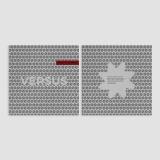
Mutual Rytm spawns new sub-label ‘Versus’ with debut EP from longtime techno associates Regent and Chontane. Continuing to expand its creative world, SHDW’s Mutual Rytm imprint now introduces ‘Versus’ - a new sub- label crafted for creative symbiosis between two artists across one shared release. Opening the series with authority, Regent and Chontane man the debut offering - two close friends and native Berliners who have been shaping techno for more than 15 years. Both long-standing members of the Mutual Rytm family, having released multiple times here before, the pair have always created music informed by life immersed in their local scene. Having both mutually influenced one another over the years, here they present their shared interpretation of techno with individual artistic DNA, forming a unified sound that represents the best of both worlds. Regent goes first, leaning towards functional, anthemic, dance-floor-focused techno. ‘Ephemera’ is tight, minimal but forceful; ‘Slow Burn’ has synth tension rising through the dark, next to glitchy percussion; and ‘Afterglow’ lets in more light, bringing otherworldly synths that hang above the groove and consume your focus. Chontane then explores a more musical and unconventional approach. ‘Plaxaric’ is supple, warm, and deep techno that tunnels into an abyss. ‘Grounding Factor’ is just as economical in design, but with introverted funk and evolving layers of sound. ‘Mental Lab’ spins out into complex rhythms inspired equally by IDM, jungle, and techno. It’s a mental workout as well as a physical one. Both artists add a pair of digital bonus tracks. Regent’s ‘Control Room’ and ‘Rarely Enough’ deliver elevated, hypnotic tools, before Chontane’s ‘Escore’ and ‘Outside In’ bring extroverted drum patterns along with contrasting melodic unease
- 1: Glass Bottom Boat
- 2: Paper Screen
- 3: Awhile
- 4: Fog On Mirror Glass
- 5: Old Universe
- 6: Makeshift Room
- 7: Your Dreaming Eyes
- 8: Valley Floor
- 9: Usual Phantom
- 10: Bamboo
Fog On Mirror Glass introduces a new aesthetic amongst Donald Beaman albums. After four albums of varied full-band arrangements, this album emerged as an idea to present solo performances in conversation with full-band work. The bulk of the songs were recorded in the same place they were written: Beaman’s living room. Long time bandmate and producer Kirt Lind set up a makeshift studio at Beaman’s house to record the guitar parts in the same room where they were written, using the same guitars on which they were first played.
Unfurling with a measured pace, the resulting album combines elegiac lyrics with elemental arrangements played with an almost jazz-like reverential expressiveness, calling to mind the works of Cass McCombs, Will Oldham, and Jake Xerxes Fussell. Album opener “Glass Bottom Boat” sets the tone for the album with just Beaman and his guitar – written during the final months of a decade-long stay in New York City, the song was finished upon his arrival back in California. Meanwhile the title track, long a staple in live sets, lands near the middle of the album to recalibrate the mood, featuring the ghostly guitar work of longtime collaborator Ken Lovgren. “Old Universe” lifts things up a bit, propelled by the brushwork of drummer Michael Nalin and the jaunty bass playing of Kirt Lind. Finally, the album ends much the way it began, with Beaman and his guitar on album closer “Bamboo”.
“The dictionary definition of less is more.” - ---- Mojo
“His ability to carve universal empathy from mundane domesticity is remarkable.” - ---- RNR Magazine
“...a collection of evocative scenes and vivid emotions sung to sparse musical arrangements in Beaman’s distinctive sonorous tones” - Americana UK
“...pure and simmering, like a tattoo dedicated to a long lost friend, slightly fading from years in the sun, a memory that will always bring a tear in those quiet reflective moments.” - Psychedelic Baby Magazine
- 01: Devotional Fade
- 02: Clown Car
- 03: Morocco
- 04: Cool Whip
- 05: Soft Hold
- 06: Seven On The Floor
- 07: Arpeggio
- 08: End Of The Horn
Matt Gold and Dustin Laurenzi present Devotional Fade, a collaborative record of electroacoustic rhythmic improvisations – equal parts meditation and dance, released on We Jazz Records, 24th April. Laurenzi and Gold, key collaborators in the Chicago creative scene and with genre spanning artists such as Bill Callahan and Makaya McCraven, step forward here with a major artistic statement, a product of extended improv sessions capturing the duo's hypnotic interplay. This is the sound of two of Chicago's most vibrant instrumental voices listening deeply, communing in sound.
Recorded in Laurenzi's attic studio, Devotional Fade emerged from a series of weekly sessions over the course of a single month. The duo kept the tape rolling continuously each day and selected a number of immersive sonic worlds to present, oscillating between patient, sacred minimalism and wild, dancefloor-worthy combustion.
The pair set two parameters to heighten the sessions' stakes: editing would be kept to a minimum, and a rule of "no pitched overdubs" was put in place – ensuring that all melodic and harmonic gestures would have to be committed in real time. Laurenzi and Gold held true, only sparingly adding a stray shaker or brush to these already largely complete improvisations. Devotional Fade is imbued with quiet propulsion and ecstatic repetition.
Matt Gold is a guitarist, multi-instrumentalist, songwriter, and producer based in Chicago, IL. His work pulls from diverse traditions of electric and acoustic music. Matt has performed across six continents and contributed to over fifty recordings as a collaborator and instrumentalist, garnering critical praise from Pitchfork for playing "one of the most exhilarating guitar solos of recent memory, in any genre." Gold has several long-running collaborative bands spanning jazz, folk, experimental, and chamber music including Sun Speak, Storm Jameson, and Tin. He performs and records with an array of creative artists including Makaya McCraven, Marquis Hill, Jamila Woods, Natalie Merchant, and Greg Ward. Gold co-curates the record label and concert series Flood Music.
Chicago saxophonist/multi-instrumentalist Dustin Laurenzi has developed a personal approach to improvisation and composition that has garnered the attention of the city's creative music community. Laurenzi's music is inspired and informed by jazz, folk, and improvised music. His inventive improvisational sensibilities have made him a sought-after musician in many circles of Chicago's vibrant music scene and beyond. Laurenzi has toured extensively with songwriter Bill Callahan and is featured on Callahan's 2024 release Resuscitate! He has toured with Grammy award-winning artist Bon Iver and appears on the band's critically lauded 2016 release 22, A Million. Laurenzi has also performed with Jeff Parker & The New Breed, Marquis Hill, Makaya McCraven, Matt Ulery, Japanese Breakfast, and This Is The Kit.
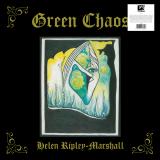
Fresh Hold Releases presents Helen Ripley-Marshall's mysterious Australian ambient electronic album "Green Chaos", reissued for the first time on vinyl LP. Originally released in 1988 on Sydney based private press label Freefall, "Green Chaos" marks the sole release from Ripley-Marshall.
In the late 80's Ripley-Marshall lived a Bohemian lifestyle in inner city Sydney; "surrounded by musicians, actors and artists, there was an amazing creative experimental vibe going on". While playing in new wave/art rock band "D Face" she began Green Chaos as a personal project to counteract the creative friction sometimes experienced within a group dynamic, heavily inspired by Arnold Frolows' "Ambience" radio show on Australia's Triple J and particularly the music of Tangerine Dream, Harold Budd and Brian Eno.
Initially a solitary endeavour, once she decided to record in a studio Green Chaos morphed into a somewhat collaborative, improvisational project with other musicians invited into the studio to improvise and add their own interpretations and ideas, additional layers and dimensions, resulting in a work that combines a clear influence from the electronic repetition of the Berlin school with a meandering, futuristic lyricism. Although influenced by the long form sonic journeys of artists like Tangerine Dream, Ripley-Marshall's background in art rock and new wave brings a more concise approach, each song a self-contained universe that says only what is necessary in the arrangement.
After completing a sound engineering course Ripley-Marshall recorded the album at Sydney's Exeter House Studio over several months alongside studio engineer Andrew Knight, met through a fellow member of D Face. Knight ran Freefall, a private press recording label releasing folk and bluegrass music, which had Green Chaos as its sole ambient release. Ripley-Marshall self distributed the album to local inner city record stores and dropped a copy to Triple J, where it became a regular staple of Arnold Frolows' show.
These days Ripley-Marshall has moved away from music and is predominantly focused on visual art. "Green Chaos" stands as the only released product of her musical years, both a personal window into the vibrant experimental art scene of late 1980s Sydney and a deep, timeless anomaly of Australian electronic music.
Splatter Vinyl[23,74 €]
Baby T is a space away from her work as B.Traits in which Brianna Price can lean more into the junglist, drum ‘n’ bass and hardcore sounds which she loves so dearly. With BSHEE02, the second drop on Price’s own Banshee label, Baby T delivers a darkside masterclass of an EP. This record is a quartet of system blowers which doesn’t let up for a single second from start to finish.
Opener ‘Times Up’ is urgent from the off - the initial strains of this joint find sirens wailing in the monitors over a twitchy kick/drum/hats combo. From here on it’s distilled raver perfection, the drums taking us on a wild Wipeout-style ride as the subbiest of bass skulks at the bottom of the mix. Imagine a more technoid take on the classic breakbeat freerides of Skanna and you’re not far off the ‘Times Up’ sound.
A remix of ‘Times Up’ from man like Aloka leans with devilish glee into the murky underworld that lurks beneath Baby T’s original. Aloka’s version is extremely eerie in a manner which makes you think of the darkest corners of a DMZ party. When things really kick into gear, driven by an irresistible kick dembow, the effect is hypnotic - think the dubwise junglism of the UVB-76 cohort.
BSHEE02’s B-side kicks off with ‘Coercive Control’. This is a cut which delivers on its title in spades, putting the listener in a trance with an interplay of low-slung bass, whirligig synth tones and more of those perfectly executed broken beats. The acid starts to kick in around the minute mark, and it turns out to herald a total earworm of a lead melody.
There’s plenty of dimly-lit malevolence to BHSEE02 closer ‘Dense Dickwood’s grinding atmospherics and gurgling bass throbs. However, Baby T opting for a half-time drum break here gives the cut a vibe not dissimilar to the weightiest jams of classic Massive Attack - that is, until an absolutely remorseless switch-up occurs halfway through, delivering volley after volley of intense drum hits.
Neon Green Vinyl[16,39 €]
Baby T is a space away from her work as B.Traits in which Brianna Price can lean more into the junglist, drum ‘n’ bass and hardcore sounds which she loves so dearly. With BSHEE02, the second drop on Price’s own Banshee label, Baby T delivers a darkside masterclass of an EP. This record is a quartet of system blowers which doesn’t let up for a single second from start to finish.
Opener ‘Times Up’ is urgent from the off - the initial strains of this joint find sirens wailing in the monitors over a twitchy kick/drum/hats combo. From here on it’s distilled raver perfection, the drums taking us on a wild Wipeout-style ride as the subbiest of bass skulks at the bottom of the mix. Imagine a more technoid take on the classic breakbeat freerides of Skanna and you’re not far off the ‘Times Up’ sound.
A remix of ‘Times Up’ from man like Aloka leans with devilish glee into the murky underworld that lurks beneath Baby T’s original. Aloka’s version is extremely eerie in a manner which makes you think of the darkest corners of a DMZ party. When things really kick into gear, driven by an irresistible kick dembow, the effect is hypnotic - think the dubwise junglism of the UVB-76 cohort.
BSHEE02’s B-side kicks off with ‘Coercive Control’. This is a cut which delivers on its title in spades, putting the listener in a trance with an interplay of low-slung bass, whirligig synth tones and more of those perfectly executed broken beats. The acid starts to kick in around the minute mark, and it turns out to herald a total earworm of a lead melody.
There’s plenty of dimly-lit malevolence to BHSEE02 closer ‘Dense Dickwood’s grinding atmospherics and gurgling bass throbs. However, Baby T opting for a half-time drum break here gives the cut a vibe not dissimilar to the weightiest jams of classic Massive Attack - that is, until an absolutely remorseless switch-up occurs halfway through, delivering volley after volley of intense drum hits.
Stevie Cox and Ansboy: two powerhouses of the Glaswegian club scene join forces for their collaborative debut EP on Rhythm Section INTL- ‘Twice Like Rice’. It’s a weighty four-track EP designed for the dancefloor, taking in myriad influences from dub techno, breaks, trance and good old fashioned house music. The Ep is full of deep, pulsating rhythms, lush textures and emotive peaks - all road tested in Stevie’s Iconic home turf: Sub Club.
Stevie Cox has long been a name long ruminating on everyone's lips, as a resident DJ of the iconic ‘Sub Club’ with an ever-growing tour schedule and back catalogue of releases via the likes of Klasse Wrecks and Optimo. Whilst the name Ansboy may be new to some, it is a fresh alias for the grammy nominated producer and mixdown engineer Robert Etherson who has long been a staple in the Scottish scene with an international touring repertoire under his belt.
The two friends met in their hometown of Glasgow and began their musical journey together last year after Robert taught Stevie how to do mixdowns. The pair clicked effortlessly, quickly discovering they shared the same passion for emotive, deep and progressive dance music. Their first track together - which took shape in the form of ‘Drift’ - a high-energy synth led anthem, came out with a special selection of tracks curated by Bradley Zero for his exclusive SHOUTS Summer sampler in 2025.
For the Twice Like Rice EP, their work evokes all corners of the dancefloor, kicking things off with ‘GC’ - a peak time breaks-infused trancey-heater - a master class in building dancefloor tension which gives way into a searing crescendo. Things spin towards a darker percussive focus on the more intense ‘Twice Like Rice’.
On the b-side things return to blissful euphoria with ‘Virgil’ - a warm up dub-techno ballad, before the emotional release of ‘Subculture closure’ inspired ‘Carter21’.
- 1: Requiem For Johan
- 2: In Distance Pavilion
- 3: You Get So Far Away
- 4: Breath Inside Your Breath
- 5: Through Nameless Air
- 6: Without Which Nothing
- 7: Traces Disappear
- 8: Like A Sadness We Get Used To
- 9: Nevertheless
- 10: Watching You Collapse
- 11: All Flesh Is Grass
Nevertheless, the latest album from Hammock, exists in a state of awakening. Across 11 ambient guitar string, and piano works, ethereal light crests and contrasts with darkness, giving shape to physical forms and feelings. Amidst sorrow and grief, melodic motifs and refrains echo from the past to reanimate dreams and faded memories. As Nevertheless asks questions of permanence and purpose, beauty takes shape in the intangible_the traceless connections that gave, and give, meaning. "Nevertheless has been one of those words that has outlasted my upbringing," says Hammock's Marc Byrd. "Being from the deep South, I most often heard it said or read at funeral services. It's meant to imply a type of sacred pause . . . a space of in between. Between the grief of being broken by the world and the impossibility of moving into a future that feels more like empty space and less like solid ground. This album is for a friend who lost a daughter and a son to addiction within a couple of years of each other. Requiem for Johan sets up the context for what is to follow throughout the rest of the album. . . a passage through the aftermath of devastation. Unfortunately, and fortunately, these seasons of loss are what we all share in common. Nevertheless . . . we limp on."
- 1: Quiet Girl
- 2: A Volta
- 3: The Eyes Of Love
- 4: Helen's Song
- 5: The Surest Things Can Change
- 6: Pieces Of Dreams
- 7: How Long?
- 8: Francisco
On "Enduring Sonance," saxophonist and flutist Steve Wilson reflects on a lifetime of lyrical, deeply felt songs drawn from jazz, pop, and film—brought to life by an all-star ensemble featuring Renee Rosnes, Joe Locke, Jay Anderson, and Kendrick Scott. *** Certain songs have a way of lingering in the imagination—resonating long after we’ve last heard them, sometimes for a lifetime. On his breathtaking new album "Enduring Sonance," veteran saxophonist and flutist Steve Wilson celebrates the music that has left the deepest imprint on his musical life. “Some of the tunes on this record have stayed with me for, in some cases, over 50 years from the time that I first heard them,” Wilson says. “I wanted to put some music out there that people can connect with, no matter what kind of music they like.” Originally conceived as a ballads project, Enduring Sonance evolved into something broader and more personal. Rather than focusing on tempo or style, Wilson gravitated toward a sense of lyricism—music whose emotional clarity and melodic resonance endure across genres, decades, and listening habits.
To realize this vision, Wilson assembled a deeply intuitive ensemble featuring pianist and arranger Renee Rosnes, vibraphonist Joe Locke, bassist Jay Anderson, and drummer Kendrick Scott, with special guest Kevin Newton (French horn, Imani Winds) appearing on two tracks. Each musician brings a rare sensitivity to melody, texture, and space, allowing the material to unfold with warmth, restraint, and quiet authority. The repertoire draws from a wide musical landscape, including works by close collaborators and modern jazz masters Billy Childs and George Cables, alongside enduring songs by Michel Legrand, Quincy Jones, Milton Nascimento, Gino Vannelli, Bill Lee, and Eliane Elias. These are not standards in the traditional sense, but deeply personal selections—songs that have accompanied Wilson through different chapters of his life. The album opens with Childs’ “Quiet Girl,” its subtle rhythmic motion enhanced by Newton’s luminous French horn, and travels through cinematic ballads, soulful grooves, and reflective lyricism. The title Enduring Sonance speaks both to the lasting resonance of these songs and to Wilson’s enduring musical relationships—most notably with Rosnes, whom he has known for nearly four decades and whose sensitive arrangements help unify the album’s diverse repertoire. “These songs are the soundtrack of my life,” Wilson says. “I’d love it if listeners came away from this album with the same kind of enduring sound and feeling.”
- 1: Pass Between Houses
- 2: Theatre For Change
- 3: Real Home
- 4: Treat Me A Stranger
- 5: Utopia Of Bog
- 6: Void Attentive
- 7: My Love, Let's Take The Stage Tonight
- 8: The Kiss
- 9: He Had Always Led
Cathartic avant-rock, literate DIY folk & experimental composition exploring displacement, love, climate change, belonging & the places we call home - RIYL Jim O’Rourke, Richard Youngs, This Heat, Richard Dawson, Flying Nun. ‘Real Home’ is the new album by the Manchester-born, London-based artist Kiran Leonard. His sixth album proper (not including innumerable tour-only CD-Rs and short-run cassettes), since his precocious debut in 2013, ‘Real Home’ finds Leonard invigorated by inspiration and experience, making passionate, literate, and mercurial music that explores displacement, love, memory, climate change, connections to home and more. Encompassing songs recorded after moving to South London, ‘Real Home’ reflects on ideas of belonging and domesticity through folkloric, stream-of-consciousness songwriting. Across nine tracks, Leonard traces lived impressions of the household and the city, expressing sentiments of dislocation, alienation and stasis, but contentment too. Infusing the avant-rock effervescence, terraced dynamics and visionary lyricism of his music with what he defines as a greater sense of openness, Leonard is as versatile, fervent and imaginative as ever on ‘Real Home’, yet his music is somehow more intimate, affecting, and acutely expressive. Shaped by dual considerations of simplicity and formalism, ‘Real Home’ is by turns beautiful, allusive, and ruminative, an album on which Leonard considers what his songs have resembled in the past and what they mean now. In recent years, Leonard has crafted eloquent chamber music inspired by the likes of James Joyce and Clarice Lispector (‘Derevaun Seraun’), responded to contemporary politics and communication breakdown in the digital age (‘Western Culture’), and compiled solo works and ensemble recordings for a longform ode to Jonas Mekas and to one of Leonard’s enduring themes; home (‘Trespass On Foot’). On ‘Real Home’, Leonard reiterates this abiding thematic focus yet ascends to new, different heights, in music of cathartic delicacy and dissonance where all the myriad dimensions of his work to date seem to crystallize. There are sinuous songs about struggle and defying the pace of city life through drift and diversion (‘Pass Between Houses’), stirring songs of intense feeling and crescendo, described as a form of speculative detective fiction (‘Theatre for Change’). There are touching solo piano ballads (the title track), symbolic contentions with carbon capture and climate change (‘Utopia of Bog’), modes of experimental minimalism (‘Void Attentive’), and other profuse feats of compositional range, embroidered with wild tendrils of narrative and lyrical depth. A record to pore over, and get lost in. Exemplifying the vast aesthetic scope of Leonard’s music, lead single ‘My Love, Let’s Take The Stage Tonight’ is inspired by country lodestar Hank Williams, Russian poetry and a late period love poem by William Carlos Williams. Yet for Leonard, the song signals a sense of accessible materiality, and is the product of a more linear approach to writing songs: “My imitation of the great Hank Williams, in spirit if not in substance…This is one of the best efforts on Real Home at a song-as-object. Looking at it now I realise I was trying to write a song that made itself known as a song to the listener, and I wonder whether that’s crucial if you want a song to transcend its context. And that this is either accomplished through a total openness – by being inviting, by laying the tricks of the song out plain to see, as Williams and his many ghostwriters did so well – or by adopting a knowing aloofness, positioning oneself against the listener but letting it be known that that’s what it’s doing. In this song I try both, but mostly the former: as in, I wanted to write a song where every line follows on from the next.” Imbuing the endlessly elaborate and inventive qualities of his music with a newfound streak of candid, clear-cut melodicism, Leonard has reached a special place in his artistry, on a record that feels familial, and expresses closeness. Assembled with affiliates including Lauren Auder, Otto Willberg, Jasper Llewellyn (caroline), Tom Hardwick-Allan (Shovel Dance Collective), Magda McLean (caroline, The Umlauts), Alex Mckenzie (caroline, Shovel Dance Collective), Isabelle Thorn (Dear Laika) & more, the recording process had a significant influence on the subject matter of ‘Real Home’, in sessions defined by close-knit camaraderie and artistic eccentricity: “The theme of the home obviously recurs throughout the record; the album was mostly recorded in domestic spaces with friends, and the name of the album is Real Home. I like the qualifier ‘real’, like you’re getting past the cloak of the word and towards the thing-itself…also nearly all the percussion in this record was recorded on items from my dad’s shed (jam jars, sandpaper, blocks of wood, etc). Real home record!” ‘Real Home’, like anything by Kiran Leonard, is a record of dazzling multiplicity. Yet it’s a companionable prospect with a central premise; a collection of songs where listeners old and new can find a home. An album led by a scene; of Leonard standing at the threshold, ready to welcome you inside. “Exceptional songs that linger” - The Guardian // “An autodidact of amazing talent & energy” – Pitchfork // “A ridiculous amount of talent…confrontational, celebratory, provocative or perverse – he manages all of these emotions & more” - The Quietus /
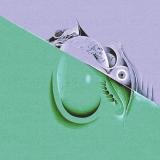
Music From Memory presents inrain, a collaborative project by Rudy Tambala of A.R. Kane and Alison Shaw of Cranes, originally recorded in the early 1990s.
inrain brought together two artists who were at the time shaping distinct yet quietly influential currents within alternative music. Through A.R. Kane, Tambala had helped redefine the possibilities of guitar music, placing atmosphere, abstraction, and emotional ambiguity at its centre in ways that would later resonate across dream pop, shoegaze, trip hop and experimental pop. At the same time, Shaw’s work with Cranes was establishing a singular vocal presence and a deeply intuitive approach to mood and space. inrain emerged at the intersection of these sensibilities.
The project began after Tambala was introduced to Shaw by Geoff Travis, leading to sessions at H.Ark! Studios in Stratford, East London. Working outside the expectations of their primary bands, the pair recorded informally over several months, building songs from minimal foundations. Early sampling technology, drum machines, acoustic guitar, and voice were used sparingly, with arrangements left open and space treated as an active element within the music. Vocals were often improvised, first takes preserved, and the atmosphere of the studio — calm, unhurried — became part of the sound itself.
Originally released in limited form during the early 1990s, the recordings carried subtle traces of the surrounding musical landscape: the low-end experimentation of emerging jungle, dub-influenced rhythmic structures, and a restrained melodic sensibility shaped as much by classical textures as by contemporary underground culture. Though modest in scale, the music feels quietly expansive — intimate, patient, and emotionally direct.
For this release, all tracks have been newly remastered from the original DAT tapes. This edition also includes the additional track 'Biology', written and recorded in 2012
The Dubplate series comes to the label’s spiritual home of Hackney, the stomping ground of the Douglas “Dougie” Waldrop and his Conscious Sounds label with the spin off Dub meets Funk project. The music of the Dub Specialists is presented with extended re-edits by label owners Piers Harrison and Stuart “Chuggy” Leath, alongside rising selector star Millie McKee and studio master extraordinaire Matt Bruce (Vanity Project).
Formed in 1989, Conscious Sounds and the Conscious Music studio have been mainstays on the UK Digital Roots scene to this day, working with the likes Bush Chemists, Johan Dan, Kenny Knots and Pablo Gad. The Dub Specialists was a project created by Dougie to put aside studio sessions and explore a new interest in samplers, working with friend Chris Petter (Love Grocer) and his interest in Jazz and Funk.
Using the Atari 1040 running Cubase, with a Soundcraft mixer, drum loops and Reggae basslines were played over Funk samples and layered with Petter’s chords to create a series of short tracks for DJ play. Releasing 3 albums between 1995 and 1999 on the sub label Crispy Music, they have more recently been gaining cult status.
The tracks chosen all come from the first and increasingly sought after LP, Dub To Dub Break To Break and have been extended, stretched, looped and dubbed by the label family to form a club friendly EP. From the dance floor jams of Dub De Funk and Funkin’ Dub to the deeper Movin Ya (with additional flute by Millie) and Murderous Style, this is a unique fusion of Funk and Digidub that fits perfectly the ideals of the Dubplate Series.
Break The Mystery.
Rising star Storm Mollison lands her debut on Heist with an ep blending House & R 'n B and we're completely hooked.
The future is looking bright for Storm Mollison - Heist's newest. Marked as artist to look out for by Shazam on their fast forward 2026 list, Storm's got a bright and busy year ahead, after an already big 2025. Last year alone, she featured on Kiki's hit 'Getting ready for the party', featured on a Mixmag London event and a Raw Cuts X Heist ADE party, had her first cover feature on Spotify, multiple radio 1 appearances, released several singles, a full EP on Noir Fever and a Luuk van Dijk remix.
If that's not enough to get you excited, we suggest you just listen to her 'Act like that' EP on Heist. In Storm's own words: "it's the most exciting music I've made so far" and we couldn't agree more. Her EP is a perfect blend of her love for house music and soulful R 'n B with its 4 tracks smothered in deep chords, smooth vocals and crunchy textures.
EP opener 'Doing Sumthin'' has been a staple in Dam Swindle's sets ever since receiving Storm's first demo and has never failed to make the crowd bounce from left to right with its quirky and equally cool vocal courtesy of Aaron Pfeiffer. Sometimes, you just need someone to tell you which way to move and before you know it, the whole club is doing it. The beat is chunky, and the sax lick is a nice wink to the old school house that has influences Storm's sound so much.
Act Like That - the EP's title track -, is a modern R' n B song that could have easily been on Rochelle Jordan's latest album. The lyrics are perfectly delivered by Storm herself and celebrate women who stand up to unreliable men. It could well be the badass soundtrack of womanhood for 2026 delivered in a silky-smooth package that'll live rent-free in your head for the foreseeable future.
On the flipside is "Gotta Go', an undercover dancefloor burner with lush keys and a lean-back groove. The track relies on crisp textures and little frizzles all throughout the track, with a big breakdown for ultimate release.
Ep closer 'Workin' takes us back into R 'n B territory, this time in a very danceable form. Storm's soft vocals lie on top of a steady beat with deep chords and a bassline so sexy It'll make you get down no matter where you're hearing this.
It's hard to speak about a breakthrough for an artist that has already seen such a rise in the scene, but if we're talking about her music, this will be the record that people come back to after years and say, "remember when she releases ALT!?"
As always, enjoy the music and play it loud!
Yours, Maarten & Lars
Certain paths necessitate and call for one singular long sequence in order to arrive at a fully formed conversation or reasoning. Nothing seems to broadcast it more clearly than the trajectory Brussels based Italo-Vietnamese artist Nguyễn Zen Mỹ embarked on during the last decade as Radio Hito.
After a string of highly cherished and sought out tape releases, Radio Hito’s new album ‘L’uso e gli attributi del cuore’, co-released by Maple Death & Meakusma, unfolds with devastating
clarity, a profound balance of depth, minimalism and emotional grounding. A ten-sequence song cycle for voice and MIDI soundfonts adapted from the 2021 book by French poet Claude
Royet-Journoud.
Written and recorded between January 2023 and August 2025, the cycle evolved through nearly 80 live performances from Galicia to Kazakhstan before arriving at its recorded form. Set to an Italian libretto adapted from Royet-Journoud’s text ‘L'usage et les attributs du cœur’ (POL, 2021), the work revisits the tradition of the 19th-century Lied — art song built on existing poetry— transposed into a radically economical contemporary setting: voice and Casio CTK workstations.
"I was interested by this incompleteness CRJ mentions - by the ‘suspension’ of meaning questioning readability and intelligibility. I ‘resisted’ to CRJ’s texts since I met him and got to know his work. … It seems to me that when playing the songs, I submit an object to be completed by the audience."
Radio Hito’s distinctive approach to setting poetry to music — spare arrangements, strophic repetition, and a voice suspended between recital, fm transmission and canzone — creates a language of its own, reaching new heights on ‘L’uso e gli attributi del cuore’, songs that are formally rigorous, emotionally restrained, and shaped by the discipline of sustained live performance, interlocking into a coherent cycle.
Rather than illustrating the poem, Radio Hito approaches it as a space of suspension. Royet-Journoud described poetry as a “profession of ignorance” where meaning remains incomplete; these songs extend that trembling state, allowing repetition, digital timbre, and restraint to hold the text open.
Often misread as minimal synth or romantic chanson, Radio Hito’s practice is rooted instead in the lineage of the art song and song cycle: open structures, close attention to language, and a live performance economy that pushes the voice at the heart of the stage. The choice of accessible keyboard workstations — light, portable, and embedded in contemporary popular culture — replaces the historical piano.
Radio Hito creates fantastical, mirage-like songs, intimate yet elusive. Her music is forlorn chanson for the digital age; bringing her haunting and beautiful vocalisations into conversation with MIDI soundfonts and humble-yet-deep casio compositions. Music that strides for simplicity, yet lands miraculously within an entire new universe, a uniqueness achieved from like-minded spirits such as Ghedalia Tazartès, Savina Yannatou & Lena Platonos, Dorothy Carter, cycles that trickle down into estuaries.
“Radio Hito's set is superb. Sitting on the altar steps with a synth, her fabulously expressive vocals colour sparse, pensive compositions.” The Wire
Official reissue of a German under-the-radar disco tune. The original from 1979 is a bubbling dancefloor stomper with freewheeling synth lines. For the flipside of this 7" Korkut Elbay created a spaced out balearic dub rework. Picture sleeve with a funky painting by Holger Kurt Jäger that picks up on the original.
The melody of 'Butterfly Dance' came to Dieter Bührig's mind as a butterfly floated through the recording studio during a session break. The resulting track landed on a compilation with mostly cover versions of disco hits. Now, more than 45 years later, the tune found its well-deserved single release on funkscapes.
Korkut Elbay is a fixture of Cologne's electronic music scene for over 20 years. He's part of the Cómeme camp and with remixes and edits for labels like Permanent Vacation or funkscapes he prooves his sensitive feel for the dancefloor. So does he on this rework, giving the orginal space to breathe and calm down without leaving the dancefloor.
Dieter Bührig studied electrical engineering and sound recording in Berlin. Afterwards he worked several years as a sound engineer for the music industry and as a producer. Later on he worked as a teacher for physics and music, trained trainee teachers for secondary schools and wrote articles and publications on musical education, choir and band arrangements. Nowadays he's writing, among other things, musical crime stories.
For Metro Beirut’s latest release, Cem Mo steps forward with his debut vinyl EP, a record that bridges the roots of Chicago and Detroit house with his own deep and textured approach to groove.
Born in Ankara and having taken piano lessons at an early age, Cem drifted from classical into jazz, re-teaching himself harmony and improvisation before finding his way into production. After moving to Amsterdam in 2016, the city’s community and music scene expanded his horizon, shaping a sound that treats producing like improvising, with curiosity for grain, color, and repetition, where subtle shifts make all the difference. Along the way, Cem has released on Handy Records and Rhythm Section, while his project Nowhere People has appeared on Artisjok Records.
This EP brings together a tight circle of artists who deepen its character. Saxophonist Moritz Schuster, known for his work across electronic music and past work with Cem and Malik Kassim, formerly known as Retromigration, delivers a striking, free-flowing performance charged with raw intensity. On “The Hard Way”, Franco Corica joins Cem for a deep, soulful, jazz-leaning moment that feels both reflective and quietly defiant. Finally, longtime friend Malik pulls up with a dancefloor remix that preserves Cem’s melodic sensibility while adding his own loose, resulting in a circular dialogue between two artists who’ve grown side by side.
Artwork: Shahd Issa
- A2: Tap The Brakes Twice
- A3: Itt Tech
- B1: Fear Of God (Feat. Conway The Machine)
- B2: Come Back Around (Feat. Dreamcastmoe)
- B3: Cutthroats
- C1: Aspen
- C2: Triple Platinum
- C3: Bag It Up
- C4: Burn In Hell
- D1: It Factor (Feat. El-P)
- D2: Say Less
- D3: Conversational Pieces
LA-based producer Real Bad Man and Detroit rapper Boldy James return with their third collaborative album, Conversational Pieces, out now via Real Bad Man Records. The project features the singles “Come Back Around” featuring DC polymath dreamcastmoe, and “It Factor” featuring El-P. Their creative chemistry has never been clearer: this new album sees the duo pushing into fresh sonic territory through an expanded production palette that Real Bad Man continues to evolve and experiment with.
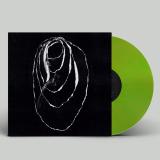
Recorded immediately after their 2022 album Killing Nothing and revisited in 2023 following Boldy’s serious car accident, Conversational Pieces is a deliberate, reflective body of work. It captures two distinct periods in the artists’ lives—documenting their growth as musicians, fathers, and long-time collaborators. The album’s artwork, along with the accompanying single art, draws inspiration from Rorschach inkblot tests—abstract visuals that invite interpretation and spark conversation, mirroring the album’s introspective nature.