Crystal Tides’ long-awaited debut album Toothpaste is the sound of a band truly coming into their own. Written and recorded completely independently, the record embodies the spirit of resilience, creativity, and raw honesty that has carried the Portsmouth outfit through their journey so far. “We wanted the focus of this album to showcase our independence as a band. We felt it important, given our journey thus far, that it come from us in as raw form as possible.” The seeds of Toothpaste were planted back in 2022 with rough voice notes on lead singer Billy’s phone, evolving into a collection of songs that capture both the band’s infectious energy and their most personal reflections to date. From collaborative writing sessions in the practice room to late-night home demos, every track carries the DNA of Crystal Tides’ unity and determination. Working with long-time collaborator and producer David Evans, the result is a bold, heartfelt body of work that celebrates their independence while delivering polished, stadium-ready anthems. The album takes its name from one of its most intimate tracks. Toothpaste was born out of Billy’s battle with Ulcerative Colitis, which led to life-changing surgery. A passing joke about naming the album after the song became a moment of clarity. It's unusual, striking title felt like the only choice, a symbol of the band’s authenticity and ability to find meaning even in the unexpected.
Suche:after work
Stoop Kid is the jangly indie rock project of Diest-born Jens Rubens. After Camp Careful (2021) and Mount Cope (2023), Stoop Kid returns with his third full-length album Office Overdue, a ten-song collection that captures the quiet fatigue, flickering humor, and
fragile hope of keeping it together in a world that won't slow down.
'Office Overdue' is a collection of songs Jens made at home in his modest home studio. For this album, he wanted to let go of pressure and expectations more than ever, and only work on music when he genuinely felt like it.No fancy studio, no producer, just walking upstairs and messing around. The result doesn't always sound perfectly polished: the drums are sometimes clumsily programmed and more than a few wrong notes made it onto the record. The guitars were allowed to hit a bit harder this time, with the '90s slacker vibes coming through more prominently. The result is a record that feels raw and honest, and above all, was made purely out of enthusiasm.
Office Overdue explores the attempt to keep functioning in everyday life while the world around us feels on the verge of collapse. The songs move between mental exhaustion and self-reflection, carried by a dry, sometimes bitter humour that helps lighten the weight. The album focuses on repetition and routine, and on the tension between wanting to care for others and being trapped inside one's own head. Themes of anxiety, guilt and dissociation recur throughout, but are always accompanied by small moments of connection, gentle resistance and acceptance. Office Overdue embraces the mess, the doubt and the false notes, without drawing grand conclusions. Not everything is resolved, but the persistence remains.
'Flowers', the new EP from Elizabeth Davis, finds itself at the cross-section of many factors. In part, it’s the result of Davis’ obsession with a seminal folk song. But it also coincides with her rediscovery of the voice and language as an instrument. It was recorded during an autumn residency at Sternhagen Gut, the cultural refuge run by Gudrun Gut and Thomas Fehlmann, located deep in the Uckermark countryside halfway between Berlin and the Baltic coast.
The six tracks on 'Flowers' all take Pete Seeger’s ‘60s protest-folk song 'Where Have All The Flowers Gone' as their starting point. However, they veer off in different directions, from vocal loops and deconstructed lyrics, to instrumental drones and glitchy, manipulated rhythm tracks. Like many musicians, Davis has learnt composition by a process of disassembly, analyzing musical works piece by piece, and 'Flowers' began as one such forensic exercise. “But sometimes,” says Davis, “a source is so loaded up on meaning that the studies and experiments can become worthwhile and meaningful works in their own right.” 'Flowers' began to take on a life of its own, raising renewed questions about age-old themes such as war, authorship, translation and historical structures.
Davis is no stranger to cover versions. From studying violin to playing in free jazz and punk bands, interpreting other artists’ works has long been a key part of her musical approach. And since her radio show 'Deep Puddle' recently drew to a close after seven years, her experiments with narration and sound collage have found their way into her musical work once again. For 'Flowers', she cut up the source material (with a nod to Gysin and Burroughs), and reassembled the lyrics, the musical notes, and recordings by different performers, to create uncanny new forms.
But perhaps the biggest influence on 'Flowers' was conversations about music, art and pop subcultures with Gut. These dialogues helped Davis find a balance between far-out sound design experiments and catchy melodies, combining a certain avant-garde element and modern day songcraft. And it’s this sense of conversation, this revisiting of topics and renewal of ideas, that will keep us coming back to 'Flowers' long into the future.
- Mama Ku Dile - Mama Nao Chores
- As Cinco Sociedades - O Isangela Itanu
- Tambi Mua Ngola - Obito Em Angola
- Ngongo Mua Ngola - Sofrimento Em Angola
- Tribalismo - Katungu
- Ufolo - Liberdade
- Katete Ngila - Catete É Um Passaro
- A Luta Continua - O Nvunda Ki Ia Bue Lua
- Mona Ku Jimbe Manhenu - Filho Nao Esqueca A Sua Mae
- Undenge Uami - A Minha Infância
- Nguma - Inimigo
- Kamba Diami - O Meu Amigo
David Zé - Mutudi Ua Ufolo / Viúva da Liberdade is a major milestone in Angolan music, intensely blendingsemba, rumba, and bolero, recordedat the height of the country"s liberation struggle. Both soulful and political, the album resonates far beyond Luanda, carrying a universal spirit akin to that of Bob Marley. Originally released on CDA with Conjunto Merengue, it captures David Zé at his creative peak. Sung in Portuguese and local dialects, it combines rhythmic elegance with deep commitment, weaving links between Afro-Brazilian and Latin American traditions. After his assassination in 1977, the album was banned for several years, before being reborn as an essential work of resistance and beauty. In 2008, his legacy found a new echo when Damian Marley and Nas sampled "Undenge Uami" on Distant Relatives.
- Elegia
- Voce In Xy
- Canti Delle Sfere
- Frammenti Di Sonno
- Movimenti E Silenzi Per Spazi Bianchi
- Antico Adagio
- Ondulazione Melodica
- Motus
- Frammenti Di Suono
- Vocis
- E Echi Armonici Part 1
- F Echi Armonici Part 2
For the first time, all the 1978 recording sessions of Lino Capra Vaccina's legendary Antico Adagio - including Frammenti da Antico Adagio and Echi Armonici da Antico Adagio - collected in one definitive deluxe edition. Minimalism, and so much more. Sheets of resonance, stunning harmonic interplay, intricate rhythms rising as one. Sidelong works of pulsing, hypnotic, ritualistic drone built from vibraphones, marimbas, gongs, bells, and cymbals, threaded by the sustained vocal tones of Juri Camisasca and Dana Matus. A trance-inducing, meditative, cosmic world of sonic interplay - the world beyond, joined with that which lays within.
Before an aberrant idea of progress ludicrously sped up our daily lives, even in hectic Milan it was possible to "play slowly" - with no pressure, simply following the path your art was showing you. This music moves between modal fascinations, ritual evocations, and states of hypnotic trance, evoking the acoustic environment of Tibetan and Zen Buddhist ceremonies and the temporal structures of Noh theatre, from which Vaccina took the name of his original label, Nō. Now, fittingly, this complete collection appears on Ubi Kū, the label of the Italian Buddhist Union.
Lino Vaccina (1953) first gained note as a member of Aktuala, creating a hybrid of rock, avant-garde, and ancient musics while incorporating sonic traditions from across the globe. After leaving in 1974, he studied at Milano's Civica Scuola di Musica, collaborating with Franco Battiato and Juri Camisasca, and forming Telaio Magnetico in 1975. In 1978 he self-released Antico Adagio in a tiny edition and wouldn't be heard from again until 1992. From 1979 to 1985 he was percussionist with the Orchestra of Teatro alla Scala under maestros such as Abbado and Ozawa. His career has been marked by an incredibly high bar of quality and a tragically slim recorded output - a rigorous and sensual language fusing Oriental, Mediterranean, and African influences with ritual elements and a cosmic sense of time.
As Massimo Torrigiani writes: "Lino Vaccina's music captivates through its internal coherence and its ability to generate states of suspension and deep listening - through undulations, small melodic fragments, dialogues between acoustic instruments and resonances that seem to evoke a phantom orchestra. An example of personal exploration, discipline and openness that speaks across time to anyone willing to be drawn into its sound."
Frammenti da Antico Adagio and Echi Armonici da Antico Adagio contain material from the original sessions, restored and issued by Die Schachtel in 2014 and 2017. The new masters, prepared by Giuseppe Ielasi, are based on those restorations and the original material. The package includes previously unpublished photographs from the May 1978 sessions and liner notes by Mauro Radice in Italian, English, and French. Cover art by Dana Matus. Printed by Legno, Milano & Mother Tongue, Verona.
Personnel: Lino Capra Vaccina (vibraphone, marimba, tablas, wooden drums, darbuka, cymbals, gong, metal sheets, bells, bass drum, tom, snare drum, piano, voice), Dana Matus (voice, percussion, cetra), Juri Camisasca (voice), Mario Garuti (violin), Roberto Mazza (oboe). Original production by Massimo Villa & Lino Vaccina with Piero Cannizzaro. Recorded May 1978 at Circle Studios, Milano.
The heights of the Italian avant-garde, at their very best.
- A1: Madre Terra
- A2: Destino
- A3: Occhi Fissi Feat. Madbuddy
- A4: Viaggio Nella Musica
- A5: L’attesa (Skit)
- A6: No Drama Feat. Claver Gold
- B1: Sott’ E Sop’
- B2: Sulle Nuvole
- B3: La Multa (Skit)
- B4: Funk4Ass
- B5: Riti Oscuri
- B6: Per La Mia Gente
- B7: L’attimo (Bonus Track)
Joe Allotta's solo project (drummer, composer, and singer) was born from his need for freedom of expression after numerous experiences
as a session musician for artists such as Davide Shorty, Johnny Marsiglia, Funk Shui Project, Mario Biondi, Leburn Maddox, Giles Robson,
Amy True, and Imaani (Incognito).
His compositions embody the desire to make jazz, in its various forms and influences, accessible to the widest possible audience without sacrificing the impact of an engaging and captivating live performance.
Joe Allotta blends hip hop, funk, and drum 'n' bass with contemporary jazz, perfectly blending vocals with his performances. He combines
his rhythmic exploration with a sweet and surprising voice, capable of lending further emotional depth to his music.
"Transition" is a musical journey that reflects a life in constant motion, where everything seems fleeting, fast, and fleeting, immersed in the
frenetic rhythms that surround us every day. The title also encompasses a more intimate dimension: the growth of his artistic identity. Joe is
no longer just a drummer and composer, but also a singer. His intense and surprising voice intertwines with his drumming in a continuous
dialogue, opening up new expressive possibilities and adding further depth to his musical language.
The album was produced in the studios of the Sghetto Club in Bologna, where Joe, together with his producer Jacopo Trapani, spent weeks
researching and experimenting: rehearsing, playing, processing and synthesizing sounds, developing and arranging ideas, thanks also to
the collaboration of extraordinary musicians. The result is a work that blends instinct and research, intimacy and openness, movement and
transformation: exactly what Transition aims to convey.
CREDITS
Giuseppe "Joe" Allotta: Compositions, Vocals, Drums, Bass, Keyboards
Jacopo Trapani: Compositions, Recording, Mixing
Chicco Allotta: Piano (Track 1)
Giovanni Galdo: Bass (Track 1)
Riccardo Dalle Vedove: Trombone (Track 1)
Piergiorgio Perrella: Guitar (Tracks 2, 5, 8, 9)
Elijah Lee Last Jacinto: Piano (Track 6)
Matteo Diego Scarcella: Sax (Track 6) Francesco Brini: Master
In his own time, in his own tone and in his own company.
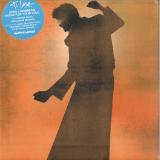
‘Win and lose without losing oneself’’ This line from French rapper Oxmo Puccino greatly accompanied David Walters while composing his fourth studio album. Over the eleven tracks on ‘Ti Love’, David took his time to find the right tone and in turn, tell his truth.
‘Ti Love’, is a French-Creole abbreviation for “petite love”, meaning ‘little love’, evoking that sweet fondness found in those small gestures and little acts of kindness.
Think of things like young kids' brotherly love or a stranger lending you a helping hand, while expecting nothing in return. It’s these motions that allow this album to feel full of real life, carried by beating drums that also pull at our heart strings.
Basing himself in a small village in Martinique, where David had not long since scattered the ashes of his late mother, the multi-instrumentalist decided to remain there and let the writing of Ti Love pour out from deep inside him. Taking influence from around the island, the energy from his makeshift studio set up in Fort de France, allowing a resilient yet grieving man to recount, let go and come to terms with his recent loss.
So embracing these new circumstances, on the rugged coastal Caribbean island of Martinique, David took up an artist’s residency in the island’s capital Fort de France, located near the town’s port is the ‘Manoir des Artistes’, a bustling recording studio space. A place where the walls shake as the latest sounds being created are blasted by locals and visitors alike. Most studio doors are wide open; as music here is a huge part of everyday life, feedback from encouraging neighbouring musicians is on hand and welcomed. A contrast to the isolation often assumed with working in more traditional music studios.
It was here in this stimulating environment that David recorded Ti Love’s initial demos.
With his first collaborator onboard, Neeweed, a 25-year-old producer and gospel expert who David met at the Martinique Jazz Festival.
Of the album’s initial versions of the record David recollects: ‘It took me three years to write it, then I rewrote it, reworked it. In the end I'm really glad I stepped back and listened to myself.’ I found a great ally in GUTS, who ended up being the artistic director of the record”
David surrounded himself with the right people who helped him express himself in the best possible way. He called on other friends and musical comrades; album opener and title track, ‘Ti Love’ features the incomparable Fatoumata Diawara (World Circuit Records / Africa Express) and further along additional production came in from; Izem, Art Of Tones, and GUTS himself, who all added just the right amount of ‘little love’ to this
project. Further helping hands came from Californian producer and DJ Captain Planet, who David was introduced to a few years ago. Closer to home, here in Europe, the German producer Bluestaeb appears on two tracks: the very catchy disco funk ‘Mr Maraboo’ and ‘Kite Koule’, the latter being the first single lifted from the album, where David invited Nigerian guitarist Keziah Jones.
Elsewhere on the album, fellow Heavenly Sweetness recording artist Blundetto contributed two tracks; the reggae ‘Voodoo Love’, which is David's tribute to Studio One, and the very sweet and resilient ‘Bon Voyage’, which closes the album... "It's gold, it doesn't need anything changing.” remarked David - ‘Bon Voyage’ is a goodbye to his mother, whose voice called him from the bottom of the sea one night while he was surfing during the full Moon.
Released almost 20 years after his debut album ‘AWA’ released on French imprint Ya Basta, home to Gotan Project and many others, David boasts a long list of radio supporters including; Gilles Peterson, Cerys Matthews and Don Letts at the BBC, while further field Cosmo Radio in Germany, and KCRW in Los Angeles.
On this new record, David has shown sincerity and vulnerability, while still honouring the infectious groove that he is known for the world over. Despite the upsets, a little love can indeed go a long way.
CREDITS:
Produced by Bluestaeb / Blundetto / Captain Planet / Izem / Art of Tones
A&R : Guts
Mixed by Mr Gib @ Onetwopassit
Except "Bon Voyage” and "Voodoo Love" mixed by Jerome “Blackjoy” Carron
Mastered by Benjamin Joubert @ Biduloscope
Art by Elliott Walters
- A1: For Safety
- A2: I Don't Like It
- A3: Lies And Flies
- A4: Pain In My Heart
- A5: My Guns
- A6: Puzzle
- B1: Slither
- B2: Slow Soak Poetry
- B3: Throw It Out
- B4: Sexy Machine (Feat. Cosmo Vitelli)
- B5: Love In A Nutshell
- B6: Myaa
After nearly five decades of relentless innovation, Truus de Groot's Plus Instruments project shows no signs of slowing down. The ninth album, Unnoticed, finds the `dutch Pioneer diving deeper into the experimental synthesiser palette than ever before, delivering 12 tracks of minimalist, analogue noise and her signature vocals.
Recorded at The Ranch in Escondido, Unnoticed showcases her continued evolution as an artist. Often referred to as the "Queen of the Dutch Underground," de Groot has is a stalwart of the experimental underground music scene since establishing Plus Instruments in 1978 in Eindhoven. Her journey has taken her from the punk rock explosion of the late '70s Netherlands to the No Wave scene of early '80s New York.
The Plus Instruments project has always been characterised by its ever changing nature and collaborative spirit. She has worked with an impressive roster of artists over the years , spanning continents and genres, including James Sclavunos (Nick Cave), Jim Duckworth (Gun Club), most recently, Miguel Barella and Cosmo Vitelli, who co-writes, produces and adds programming to standout track "Sexy Machine." This creative partnership has opened new avenues for de Groot's explorations, as she continues to plough yet another field of creativity.
Now based back in the Netherlands, she continues her work while maintaining the core elements that have made Plus Instruments a touchstone for electronic music innovators. Her influence can be heard in everything from Electroclash to Cold Wave, with younger artists regularly seeking collaboration with the veteran experimentalist. Unnoticed arrives as de Groot enters her sixth decade of music-making, proving that true artistic vision only grows stronger with time.
Echonomist drops debut Rekids EP with ‘My Religion’. He follows his recent remix for Frankey & Sandrino on the label with collaborations with OVEOUS and Ede.
Greece’s Echonomist, aka Petros Manganaris, returns to Rekids with the ‘My Religion’ EP, arriving 30th January 2026 and featuring collaborations with OVEOUS and Ede. It follows his 2025 remix for Frankey & Sandrino, which won plays from HAAi, John Digweed, Auntie Flo, and more, alongside recent music on labels like Habitat, Innervisions, and its sublabel, Exit Strategy.
Echonomist’s ‘My Religion’ EP opens with the title track, where he teams up with Hyper Soul founder OVEOUS for a loopy, hypnotic cut driven by an alarm-like sequence and tripped-out spoken word vocal. OVEOUS returns on ‘We Surrender’, adding psychedelic, warped phrases over deep bass and an infectious clap-led groove. On the fl ip, Echonomist joins fellow Innervisions artist Ede for ‘The Heat’, a heavy-hitting, party-starter packed with larger-than-life
sirens, big snare rolls, and funky sample work. Petros closes the EP solo with ‘Master Groove’, pairing the drums back while echoing spoken lines ride above an irresistible bassline, rounding off a versatile release built to land with adventurous listeners and on peak-time fl oors alike.
Greek DJ, producer, and live performer Petros Manganaris became Echonomist in 2008 and has since become known for his prolifi c output on labels Innervisions, Afterlife, Kompakt, TAU, and more, alongside collaborations with the likes of WhoMadeWho and numerous top-tier remix projects for Âme, Ry X, and Stephan Bodzin.
London-via-Accra artist BLACK FONDU shares his seven-track debut EP ‘BLACKFONDUISM’, following the underground momentum of singles ‘im not sleeping’ and the Steve Lamacq BBC 6 Music-premiered ‘holla back girl’. Available on vinyl, and with a self-directed video for ‘#music’, the project marks the first full expression of a voice emerging as one of the UK’s most uncompromising new forces.
‘BLACKFONDUISM’ captures that evolution in its rawest form. The EP came together quickly through instinct and freestyling, recorded between his room in London and a short period in Paris. Each track reflects a world he understood only after living through it. ‘IN D4 CLUB’ channels the exhilaration of acceleration, ‘BOYS’ explores the foundation provided by maternal love, ‘im not sleeping’ confronts denial after more than twenty revisions, ‘C00N V2’ marks a moment of creative rebirth, and ‘BLACK1E’ navigates the tension between self-perception and the world’s gaze. Closing track ‘#music’ distills the entire project into one statement.
Working alone has brought challenges, but he has learned to trust the emotional volatility that fuels the work. “I care so much and would die for this, but I cannot let it kill me. I have to trust myself the same way I trust myself when I make music.”
At 21, BLACK FONDU has carved out a sound that collides hyperpop, noise, rap, punk energy and abstract grime into something instinctive and volatile. Influenced by everything from Rachmaninoff to MF DOOM to Xiu Xiu, he writes, produces and performs every element, including the fractured visuals that accompany his tracks. Praise from BBC 6 Music, Pitchfork, NME, The Quietus, Pigeons & Planes, METAL and Line of Best Fit has positioned him as one of the most intriguing new voices in the UK underground, with explosive live shows across London, the UK and Europe.
With BLACKFONDUISM, he introduces a universe that refuses to sit still. “I wanted this EP to act as an introduction to my worlds. It felt important to put this out so I can do anything after.” He hopes listeners feel alive when they hear it, and jokes that he wants the record to “evolve music, even just a little.”
BLACK FONDU’s sound remains a paradox, abrasive and fragile, chaotic and meticulous, always guided by instinct. Or, as he puts it, “A bit fucked. But alive.”
Repress
Anthony Naples returns with his second full length album, "Take Me With You", arriving first as a 'Mixed Version' cassette inspired and commissioned by the Good Morning Tapes series, followed by Digital, Vinyl and even Long Sleeve T-Shirt formats.
Originally conceived as a D.J. mixtape dedicated to friends and the time spent with them in the morning hours after the parties over (or beginning) - it quickly morphed into a soft focused meditation on all things warm and intangible.
'Take Me With You' fires off in all styles - the opening triptych of the extra-cosmic 'Alto', post-rave pianos of 'Goodness' and slow-dance-inducing 'Drifter' bring the attention inward — taking cues from a host of personal favorites including: 'Space' LP by Space, The Theater Of Eternal Music, Panda Bear's 'Person Pitch' , Atlas Sound's 'Let The Blind Lead...', Arthur Russell's 'World Of Echo', Suzanne Ciani's 'Buchla Concerts: 1975', The Microphones 'The Glow Pt. II' & 'Mount Eerie', A mixtape of Krautrock from DJ Ivan Berko and most definitely Holger Czukay, 'Take Me With You' is a fresh turn for Naples as he ascends into a blend of his most personal work to date — touching on trip-hop, psychedelic pop, ambient house, and much more along the way.
Make no mistake - 'Take Me With You''s message is undoubtedly about escapism, given away by its happy-abductee cover art done by the legend Biscuit— but first and foremost it reflects on that lingering feeling one gets when walking away from the ones they love.
Força Maior combines the vital saxophone explorations of Pedro Alves Sousa with the infinitely subtle electronic processing of Pedro Tavares. Sousa (aka Má Estrela) is known for manipulating his woodwind through guitar pedalboards & amplifiers, creating far-from-ordinary sonics rooted in unceasing curiosity. For his part, Tavares (aka funcionário) conjoins video & sound work to create space for the pensive wanderings where memory and imagination interlace.
The album Morte Lilás was recorded over a week in June 2023 in Pedro Alves Sousa's family farm, located in the village of Ferreirim, near Lamego, in Portugal. The partly abandoned farm served as the residency, studio, and inspiration for the album: it is a 400-year-old granite farm that belonged to a member of the "40 conspirators"—a group that led the revolution for Portugal's independence from Spain in the 17th century.
Morte Lilás is a remarkable album of committed meditation. Each day on the farm was a recording day for the two Pedros: Sousa on sax & electronics, Tavares on sampler & processing. Apart from slight sonic incursions from the surrounds—the birds on 'Quinta à tarde'—and the sporadic use of sine tones, the source sounds all start from the saxophone. It is then processed both by Sousa & Tavares. The album unfolds as a saxophonic tapestry that breathes with quiet intensity. Each piece invites close listening, revealing fine gestures and tonal shifts that shape a contemplative, ambient space. Força Maior move with calm precision.
The album opens with the unhurried overture 'Quinta à Tarde' a Portuguese pun on Eno's Thursday Afternoon that announces the textures at play. Sousa's breathy entrance is paired with a soft, delicately shifting, backdrop. As the track progresses, time seems to stretch. The arrangement resists urgency, favouring subtle evolution over dramatic turns. Pensive layers shift & drift, creating a sense of suspended motion that brings the listener into the environs of Morte Lilás. 'Quinta à Tarde' is a long-form fade, shifting emphasis from Sousa to Tavares.
'Cubos' continues the gauzy feel, but with a more up-tempo tilt. Rhythmic clicks & pings setup a swung time for the sax to interpose melodic lines that are fed back & bent with cascading delays. Força Maior in distilled form.
Força Maior is in top form on the title track 'Morte Lilás', a sprawling centrepiece that showcases their command of atmosphere & emotional pacing. By turning up the reverberation & leaning into a continuous format, they dissolve the gap between hypnotic trance & articulate reverie. Then, a moment of stillness. The track pauses, not abruptly but like a tide pulling back, revealing the contours beneath. What follows is a return to the album's more relaxed architecture: understated rhythms, softened textures, and a sense of spaciousness that opens space for reflection. It is a transition that feels organic, as if the song itself needed to exhale before settling back into its contemplative groove.
'Menta' is another short-form miniature of the band's signature contours: beautiful loops of air pressure gradients that carry an emotive weight & light.
The album closes with 'Cascata do Inferno'. The title suggests violence, but the music whispers instead—an atmospheric cascade of breath & tone that emerges in slow, deliberate waves. Short melodic cycles are matched by shimmering electronic chords. It's a piece that rewards patience, draws the listener in to drift downstream, eyes closed, into the serene turbulence of its current.
Swiss artist Lukas Traxel releases his powerful debut album One-Eyed Daruma on We Jazz Records, March 10. The trio features Traxel on double bass, Otis Sandsjö on sax and Moritz Baumgärtner on drums. Compact, deep, and organic to the bone, Traxel & co's sound echoes the innovations of rhythmically driven avantgarde jazz while keeping things moving at all times. There's both drive and freedom to this sound.
ONe-Eyed Daruma features eight new compositions by Traxel, who crafted the outline for the album while dealing with the loss of his father. The group came together after an open invitation from the Zurich jazz club Moods to present a new group. The trio of Traxel, Sandsjö and Baumgärtner creates a full, symphonic, and powerful body of sound despite the instrumentation without a harmony instrument. The trio functions as a collective where the boundaries between composition, melody, and accompaniment are in flux, while keeping the common goal of creating new music together in sight at all times. Traxel reports that after playing bass in various groups with guitar and/or piano, he wanted to create a counterpoint of sorts with his new group and specifically go about it with a more sparse setup. As One-Eyed Drama proves, the idea behind the trio dynamic is a strong one and the unit makes use of their extra space in creating evocative, moody, swinging creative jazz with a distinguishable fingerprint of its own.
Lukas Traxel says:
"The process of composing this music while dealing with the loss of a loved one resulted in a writer's block at first. The notes would just not flow out of my pen until I noticed a mysterious-looking figure in the right upper corner of my piano. It was a daruma, an eyeless figure that in the Japanese tradition brings luck and prosperity. According to the myth, the first eye must be drawn onto the figure while expressing a wish. The second eye can be added only if the wish comes true. My daruma is meant to stay one-eyed as my wish, strongly connected and intertwined with my now gone father, is not meant to be fulfilled. The feeling of unfulfillment and imperfection of life serves as a common thread throughout this album, right down to its title. In a similar fashion, a composition remains incomplete until it is interpreted by musicians, and given form as music. That being said, for me playing together with this trio symbolises the upside: the sense of fulfillment in music and life.
Our musical influences include the American composer and singer Caroline Shaw, Swiss pianist Colin Vallon's trio, and composer/singer-songwriter Gabriel Kahane. In addition, I have listened a lot to the trio albums of Jimmy Guiffre and Sonny Rollins. Besides that, my musical heroes like Charlie Haden, John Coltrane, and Keith Jarrett always flow into the music. Another very important influence in the music is the work of American visual artist Agnes Martin, in whose works the imperfection of a multiplicity of repetitions results in a lively big whole in the end. (See "Wild Flower")
Live, the trio takes a lot of freedom in interpreting this music, yet we have a deeper, almost pop-like attitude towards the live performance as an experience. For me it's always important to build a strong narrative with the band while on stage."
One-Eyed Daruma by Lukas Traxel is released on 10 March 2023 by We Jazz Records on LP/CD/digitally. The LP edition is shelved in an inside-out sleeve and pressed on white vinyl. The CD is housed in a cardboard digisleeve with UV lacquer finish.
- More Guitar
- I Wish
- Youth
- Across The Bardo
- Double Bounce
- New Way Up
- Oo
- Follow The Water Down
Guitars On Life solves a nagging mystery about the fate of a musician who stood out as a singularly spectacular bloom even in the verdant creative fields of the San Francisco Bay Area at the turn of the century. After more than two decades of recording silence and about a dozen years away from the bandstand, Jack West is back, still immediately recognizable as a guitarist and composer but miles from the last stop on his ongoing musical journey. There’s poetic symmetry in discovering that his detour from life as a performing musician involved fruitful work devising innovative solar technologies, as he had similarly distinguished himself as an inveterately inventive musician. When we last heard from West he’d carved out a vibrant niche as a guitarist with a percussive attack and lustrous group sound. Wielding a custom-built eight-string acoustic guitar with uncommon rhythmic dexterity, he released six albums featuring his original tunes, mostly recording with his band Curvature (though he also played mesmerizing solo recitals). West’s knack for crafting glistening, minutely detailed soundscapes full of surprising twists and oddly inviting textures prompted NPR to describe his work as “a whole new sub- genre of jazz.” Drawn back to performing in recent years, West saw guitarist Walter Strauss at Berkeley’s Freight & Salvage in 2022 and suspected he’d found a kindred spirit. Intrigued by Strauss’s unusual approach to guitar, West “wondered what a musical conversation might sound like between two guitarists who had developed such uniquely different ways of playing the instrument.” An invitation to play together led to them writing the tune ‘More Guitar,’ the bravura opening track that launches Guitars On Life. Several months later they spent a week in Florida together writing intensively, resulting in most of the material for this consistently thrilling project.
St. David Unleashes 'Deep House Damage EP' on Definitive Recordings.
Definitive Recordings is proud to present a brand-new four-track outing from Italian house innovator St. David, titled 'Deep House Damage EP'. Following his acclaimed remixes earlier this year for label classics like 'Good Music' (John Acquaviva, Dan Diamond, Alex D'Elia, Nihil Young) and 'Do It' (Las Americas), St. David now steps forward with a full EP that delivers nothing less than pure oldschool house fire.
The release opens with 'Touch Me (Sexy Hard Dub)', a shuffling house cut with a vintage edge, driven by a rolling bassline and a sensual spoken-word female vocal that sets a playful, club-ready tone. 'I Like It Deep' heads into deep house territory, pairing organ stabs and a steady oldschool beat with both male and female spoken-word phrases, creating a hypnotic, afterhours mood. On 'Dub Swagin'', the energy kicks back up with stomping drums, chopped samples, and filtered percussion. All wrapped in unmistakable 90s house flavor. Closing things out, 'Gonna Work It' is a peak-time smasher stacked with classic vocal samples and grooving organ chords that lift the track into euphoric territory.
Born in Bari, St. David (real name Davide Disanto) has carved a reputation as one of today's most authentic purveyors of oldschool house. Deeply inspired by the American house scene, his tracks blend groove, funk, and raw analog warmth, consistently topping vinyl charts and earning support from global heavyweights like The Martinez Brothers, Riva Starr, Jovonn, and Chris Stussy. He is the founder of Theory of Swing Records, a vinyl-only label dedicated to preserving the magic of 90s house. His music has been featured on Cinthie's DJ-Kicks and he has released on respected imprints including Snatch! Records, Body N' Deep, Heist Recordings, Skylax, and Let's Play House.
With 'Deep House Damage EP', St. David confirms his role as one of the most vital voices in contemporary house, channeling the spirit of the past into tracks made for the dancefloors of today.
- A1: Pale Dogwood (4:21)
- A2: Field Drab (5:14)
- A3: Ceda Chast (5:10)
- A4: Wild Blue Yonder (8:39)
- B1: Inchworm (6:23)
- B2: Vetiver (3:50)
- B3: Orange Crayola (7:37)
- C1: Black Olive (5:19)
- C2: Wild Strawberry (4:00)
- C3: African Violet (6:39)
- C4: Deep Sky (4:52)
- D1: Permanent Geranium Lake (6:23)
- D2: Carnelian (4:09)
- D3: Helltrope (7:56)
Ivan The Tolerable returns with Chromophobia, an expansive new double album and his fourth for Riot Season after ‘Water Music’ & ‘Vertigo’ (both 2024) and ‘An Orphan Form’ (2025)
Chromophobia carries with it a deep personal history. The earliest recording sessions date back to 2018 at the IDI in Middlesbrough, engineered by longtime collaborator Nigel Crooks over the course of three weekends. The material was left unfinished for years, shelved for reasons that accumulated and compounded - until the tragic passing of Crooks in 2023. His unfinished work lingered, and the desire to complete it became a mission.
“In the end, I finished this record for Nigel, above all else,” says Oli Heffernan (Ivan The Tolerable). “It always annoyed him that it never got done.”
To bring the album to completion, the original stems were passed to producer Hugh Major (formerly of Benefits) in early 2024. Across a year of meticulous experimentation - countless versions, radical reconstructions, entire songs torn down and rebuilt - the album transformed into something wholly new. The final collection spans 14 tracks, reimagined from the ground up yet still anchored to the spirit of the sessions that began it.
“It’s a very different beast from where it started,” Heffernan adds, “but I think Nigel would really like it - and be glad it was finally finished.”
Chromophobia stands as both a reinvention and a tribute: a document of persistence, creative overhaul, and the enduring impact of a lost collaborator.
" Shake away " After many hours of work, the no wave, synth punk crooner has produced his best album yet. The voice is soulful and deep, and each track seems paradoxically spontaneous and thoughtful, while the production is perfect for bringing out all these catchy hits.It inevitably brings to mind Alan Vega at his best, but with that Australian touch that makes this album so personal .
JAF Trio emerges on Helsinki's We Jazz Records with their debut LP on 3 July. The young Finnish-Danish band includes saxophonist Adele Sauros (of Superposition), bassist Joonas Tuuri (of Bowman Trio)
and drummer Frederik Emil Bülow. After a string of lauded live performances over the past couple of years (the band was awarded with the "We Jazz Rising Star" accolade at We Jazz Festival in 2017), the trio is now ready to present their first studio work.
Sound-wise, JAF Trio has an approach which brings the band very close to the listener, "loft jazz" style. The sax, bass and drums are right there at the forefront together, creating a remarkably strong presence. The original material of the band has depth and groove alike, at times leaping forward with giant steps, at times calming things down to really stretch time. The music is very melodic and rhythmic, as withnessed by single tracks "Ninth Row of the Fifth Floor" and "Dark Sparkle". There's a sense of playfulness in the repetitive riffing on "Something New" and an air of sombre melancholy on "Shades of Tomorrow".
"JAF Trio" will be released by We Jazz Records on 3 July on vinyl, CD and digital. The vinyl version comes in a heacy-duty "old school" tip-on sleeve. The cover design features the artwork "Red" by Finnish visual artist Maija Lassila.
Gothenburg trio Dark Horse present their new album "Listen", released by We Jazz Records on 13 November. The band, comprising of John Holmström (piano), Alfred Lorinius (bass) and Mårten Magnefors (drums) recorded their second album in a remote cabin by the ocean in Norway, owned by Holmström's family. The natural sound of the album owes a lot to the relaxed surroundings and the result is some high degree of improvised music turning into collective composition as the music unfolds.
The album recording took place at a very active spot in the trio's calendar, following extensive touring in Europe, Japan and their native country Sweden. The two days of improvising were edited down to highlights that easily fill an album's worth of quality listening and reveal what playing live brought to the three musicians: A natural ability to react to ideas, build on them and form coherent, compositional tracks on the spot. A task much easier said than done.
"We're a non-conceptual basement band all the way", laughs pianist Holmström. "We have been moving from free form music into collective composition and this is our pinnacle recording with that idea thus far. We just set out to play as honestly as possible and this is what followed."
A testament to the power of a fixed band unit developing over time, "Listen" comes across as a work by a group constantly keeping its nose to the wind when it comes to developing their music. The long-form opener "Allas Favorit" is a monumental piece building and releasing tension along its 12+ minute length. First single "Brutet Groove" assumes a fascinating, almost mechanic-sounding swing while assembling and reassembling the pieces of the puzzle, and the closing track "Fjäll-låten" gives us something of an ever-shifting sonic landscape in glorious colors, much akin to its name ("Mountain Song" in Swedish).
"That one Fjäll-låten includes some of the best musical moments of my life so far" confirms bassist Alfred Lorinius. "It's actually an edit of a 20-minute improvised sequence, and it has the real feeling of the band coming together and doing something new and fresh in the moment. I feel it's something you can revisit as many times as you like and there's always something to find in there."
Dark Horse formed in 2012 after Lorinius joined Holmström and drummer Mårten Magnefors to complete the group. Things quickly started taking shape musically from there on, but the group took their time in honing their craft with a method they now refer to as "tryout development". Their self-titled debut album appeared in 2015 and the current We Jazz album "Listen" marks the first internationally distributed release for the trio.The roots of Dark Horse lay firmly in the buzzing creative music scene of Gothenburg, Sweden, where the members have close ties with local establishments such as the legendary venue BrÖtz, and the city's vast scene of highly-regarded musicians.
In brief, "Listen" presents Dark Horse gloriously putting into use their musical philosophy what they describe "improvising as composing together".
"Listen" by Dark Horse is released by Helsinki's We Jazz Records on 13 November 2020 on vinyl and digitally. The vinyl comes in a heavy duty tip-on sleeve and the album design features the painting "Overwhelming Structure" by the Helsinki-based visual artist Maija Lassila.
- 1: Prelude
- 2: Lewisham Conversation
- 3: The Toughening
- 4: Everythinglessness
- 5: Please Don't Tell My Mother
- 6: Sgns Of Life
- 7: These Are The Days
- 8: Interlude
- 9: Talk
- 10: To Feel Love
- 11 21: Missed Calls
- 12: Her Final Breath
- 13: Requiem
- 14: The Softening
The news arrives in tandem with the release of two powerful new singles, "The Toughening" and "The Softening", shared in recognition of World Mental Health week At its core, 'Everythinglessness' is a record about masculinity and the mental health crisis facing young men, a subject Wolfe has lived through and now gives voice to with unflinching honesty. Turning his own experiences of depression, anxiety and ADHD into something raw, intimate and cinematic, Wolfe invites listeners into a world where vulnerability is not weakness, but a form of survival. Written after a period of intense personal reckoning, including time spent in a mental health rehab facility in 2023, 'Everythinglessness' is Wolfe's most emotionally resonant work to date, an album that unpacks what it means to be a man in a society that often demands silence and stoicism instead of softness and support.
Wolfe's voice channels the emotional resonance of Justin Vernon of Bon Iver and Nick Cave, while his songwriting explores everything from grief and generational trauma to love, loss and survival. The singles have been getting loadsa positive press. Radio support includes interviews and live performance on BBC London, Times Radio & 5 Live. More to come. Album launch show in Hastings, followed by UK and Europe tour supporting Alice Merton.