Unreleased electronic / jazz / madness from two titans of jazz and experimentation: JOHN SURMAN and KARIN KROG.
I could now write a load of blown up puffery about how amazing this is, but everyone does that, and a lot of the time it’s all a load of bollocks. But basically this was sent to me by Karin / John when I asked if they had anything hanging about that had not been released. This came through and blew my tiny mind. Like something from prime Annette Peacock “Pony” period. Here is what John Surman said…
John Surman writes:
Back in 2012/13 there had been some talk about a big futuristic open air urban dance/theatre production for about 80/100 actors/dancers with lasers and all kinds of lighting effects on different stages. I was invited to get involved and, together with Ben and Karin, we eventually decided to get to work on some ideas. I think that the original plan was that in performance there would be a mixture of live music and electronica.
Not altogether surprisingly, bearing in mind the complexity of the project, it never moved forward and developed into anything more than an interesting idea. It was probably over ambitious & I guess the funding never came through.
The only information I that I can find relating to the production refers to two silent movies made in 1927/1928 by the filmmaker Eugene Deslaw, entitled `La Marche Des Machines´ and `Les Nuits Électriques.These were clearly intended to act as inspiration for the project.
After months turned into years it became obvious that the project was going nowhere, and so the recorded music laid around gathering dust until Johnny Trunk asked Karin if she had any interesting music that he might be interested in releasing. One thing led to another and so, finally, Electric Element found a home!
For anyone interested in the equipment used this will have to be an approximation since the memory might be playing tricks. Karin was probably using a Yamaha Rex50 f/x unit, a Roland VT-3 Voice Transformer and an Oberheim Ring Modulator. I was playing Bass Clarinet and Contrabass Clarinet through various f/x units together with a Yamaha WX5 wind synth. All the instruments and voice were also processed through Ben´s equipment. After writing this I asked Ben for his recollections and he came up with the following:
John, Karin and I created this music in 2 or 3 days in the winter of 2013 at their studio in Oslo, Norway. I followed up with another 2 or 3 days of mixing, editing and post-processing . We kept a collaborative, improvisational and free-form approach to the sessions. I grew up immersed in music such as Cloudline Blue, the 1979 duo album of Krog/Surman, and this felt like a similar approach. I have mixed sound for many of their live duo concerts and I would use effects and electronics as an
accompaniment and counterpoint to the performed music. The relation of organic and artificial sound sources in music has always fascinated. In this case, I used some contemporary digital signal processing to introduce my own aesthetic into the conversation, in particular using granular synthesis to recombine small 'clouds' of sound into alternate forms. Some of the software tools I used included Ableton Live, Max/MSP and Reaktor.
Поиск:after work
Все
- A1: Vespertina
- A2: Glitches
- B1: Chaldean Oracle
- B2: In A Wonderland
Steve Queralt, bass player of pioneering shoegazers RIDE, and the writer and film-maker MIchael Smith have joined forces for a stunning four-track EP, released on Bytes in October. Over Steve’s exceptional electronic soundscapes, Michael provides spoken-word vocals in his lulling Hartlepool tones, distilling excerpts from his new book to fit with the music.
The duo were introduced by Joe Clay from Bytes during lockdown, when Steve revealed that he was looking for vocalists to work with on some music he was putting together. Joe had met Michael when he collaborated with the late, great Andrew Weatherall, who composed a soundtrack to accompany Michael reading melancholic musings from his 2013 novel, Unreal City. Joe felt that Michael could be the perfect foil for Steve and after an experiment on Vespertina, a track that had previously featured sample dialogue from Penélope Cruz, they realised they had something special and decided to work on a full release together - four tracks in the classic RIDE EP format.
“Michael’s voice has so much depth and character and I love his eye-rolling, withering view of the world,” Steve reveals. “The subject matter seemed to glue itself effortlessly to the music as if we’d been together writing in a studio working towards some grand concept.”
After more than a decade of music-making, Durand Jones & The Indications have blossomed as a unit and are basking in their successes. On their aptly titled new album, Flowers, The Indications unfurl their true colors _ embracing all their roots and influences, maturation and confidence, and share them with the world. Blue Iceberg Splash Vinyl. Since forming in 2012, the road has taken The Indications from those origins at Indiana University, Bloomington to the global stage, selling out shows across Europe, Japan, Australia, and New Zealand to the West Coast_ where DJI has a strong following among the lowrider and vintage soul enthusiasts. For as far as Durand Jones & The Indications have come, Flowers grew from the desire to return to their roots in a Bloomington basement, a space where they first found camaraderie in gritty funk and Southern soul that would inspire their self-titled debut. Pulling sonically and spiritually from each of the group's previous releases and solo work, Flowers is the next stage of DJI's inspired soulful discography. DJI are not only accepting their flowers, but indulging in their sweet and sexy fragrance.
- A1: Pharoah Jones
- A2: Ghost Gospel
- A3: Ill Feeling
- A4: Capital Punishment
- A5: Do Not Adjust
- A6: Cool Green Trees
- A7: Chill Scratch
- A8: Poisonous Fumes
- A9: Welcome Aboard The Starship
- B1: Keep On Runnin
- B2: Sounds Impossible
- B3: Painted Faces
- B4: The Knew Style
- B5: Chicken Wing Blues Sauce
- B6: Kool Breeze
- B7: Sexx Bullets
- B8: Soul Child
- B9: Take Off Runnin
- B10: Centurian
- B11: Bozack
- B12: Church
- B13: Splash One
- B14: Hank
- B15: 73 Goatee
"Chasing the funky symphonies that filled my head and my dreams..."
December 25th, 2023 - an Instagram post. Stimulator Jones shared half a dozen FIRE tracks from his beat tape archive. We were immediately drawn to the rough hewn boom bap.
"I'd release that", Rob commented.
Hours of material was shared and the result is this: Cool Green Trees (1999-2005). A collection of beats and loops Stimulator Jones created between the ages of 14-20 at home in his basement, bedroom and computer room in Roanoke, Virginia.
You will not believe the profound soulful genius contained within these naive schoolboy melodies.
December 25th, 1998 - 25 years ago to the day and his much-coveted Yamaha SU10 sampler was finally bestowed upon young Stimmy AKA Sam Lunsford: "I immediately hooked up a CD Walkman to the input jack and looped the beginning two bars of Grover Washington Jr.'s "Mercy Mercy Me". I don't know what exactly was so thrilling about hearing two measures of music repeating over and over but it was so infectious and hypnotizing and enthralling to me. I'll never forget that ecstatic rush of making my first loop - an uncontrollable, gleeful smile plastered all over my face." When you hear the pocket breakbeat symphonies featured here on Cool Green Trees, you'll feel the same sense of frisson.
In the wake of his Stones Throw breakthrough - Exotic Worlds & Master Treasures - Stimulator Jones was pegged by many as a 90s throwback artist. However, he literally IS a 90s artist. He's been recording music most of his life and he's now 40. He created the bulk of Cool Green Trees as a teenager. Everything before 2004 was recorded when Sam was still in school. He was in 8th grade when he made the 1999 tracks - he didn't even have his learner's permit. This album is a snapshot of a young man in a simpler time. Things were still mysterious back then and he was flying blind, relying on his ears and having to figure things out for himself: "I had no road map for becoming a beatmaker. I have been collecting music since I was a kid, I am a lifelong digger and seeker of cool and interesting sounds. I was there in the golden age of Hip Hop, and while I may have been a suburban white kid in Roanoke, Virginia, I was tuned in and I bought so many classic albums when they came out. I was attracted to Hip Hop because of the musical and poetic quality. I was hypnotized by the rhythms, partially because I was a drummer. I didn't brag about collecting my breakbeat records or making beats - it was something I did in isolation. It wasn't something I generally wanted to bring attention to and it didn't really score me any cool points. I certainly wasn't flexing on social media about it."
Hell, he can do that now!
Opener "Pharoah Jones" was inspired by Yesterday's New Quintet and Madlib's ability to capture that classic 70s sound whilst playing all the instruments. Sam created this one stoned afternoon by laying down a 2 bar loop and a shaker loop on his Yamaha SU700 sampler. He hung a microphone from the ceiling and played his Yamaha Stage Custom drum kit over the top before adding ender Rhodes and playing his dad's Selmer tenor sax through an Electro Harmonix Memory Man echo pedal. Yes! Up next, "Ghost Gospel" utilises a dope loop from a gospel record and adds some soul-funk drums overtop, whilst working that filter knob. Says Sam: "The loop reminded me of something Ghostface would rap over. The sample was in 3/4 waltz time but I flipped it for a 4/4 groove, a technique I picked up from RZA. "Ill Feeling" uses sped-up pieces from a dusty old funk record and putting them over a classic NOLA drum loop; gain chopping up a slow, bluesy 3/4 time signature and bending it to a 4/4 groove. Classy shit. "Capital Punishment" features drums tapped in live, inspired by MF Doom's Special Herbs series. "Do Not Adjust" consists loops found on a compilation of 70s French music at Happy's Flea Market, a classic Roanoke digging spot.
The sublime, evocative title track, "Cool Green Trees" was created when Sam was still living at home. He dumped samples off his SU10 into the family desktop and arranged them in a demo version of Pro Tools: "This track was sort of my ode to the DJ Shadow style of sample based production. Super spacey, slow, and moody. The heavily filtered drums were inspired by Alec Empire's 'Low on Ice' album. I later added some scratches and sounds from a Spider Man storybook record." "Chill Scratch" snags the final bit of a bossanova record and pairs it with a drum loop before adding experimental scratching run through an Electro Harmonix Memory Man echo pedal. "Poisonous Fumes" was made using a sampler, mixer and a turntable; a kind of mixtape beat collage with added scratches and sounds from various records. Using dialogue from superhero records was a nod to Madlib. "Welcome Aboard The Starship" is dark, downtempo trip-hop with a spooky bent. Sam paired a slow, hard drum loop with a guitar sample grabbed off a psychedelic rock record. To finish, he added various backwards sounds and weird atmospheric effects and a little scratching. Swoon.
Side B opens with "Keep On Runnin", made on a borrowed Roland SP202 sampler. Having always loved the sound of the Lo-Fi filter on those machines, reminiscent of the Emu SP1200, Sam always imagined Del or another of the Hieroglyphics crew rapping over this beat. You can certainly hear why. "Sounds Impossible" sees Sam experimenting with layering multiple kick samples at different volumes to create patterns similar to those heard by Showbiz and Lord Finesse during their God-level 1995 period. "Painted Faces" was made by chopping up a REDACTED record which he had gotten from Happy's Flea Market and paired it with a REDACTED drum loop. By the time Sam recorded "The Knew Style", he had acquired a shitty old 1960s portable turntable off eBay. It didn't function properly when he bought it but his brother opened it up, cleaned it out and got it working: "I remember he told me that there was a bunch of sand inside of it when he opened it up, as if its previous owner had taken it to the beach. I would take that turntable on my Happy's Flea Market digs so I could preview records...that's how I found this loop."
"Chicken Wing Blues Sauce" loops up a classic blues joint and pairs it with some REDACTED drums. A bit of filtering and arranging et voilà! "Kool Breeze", from 1999, is one of Sam's oldest surviving beats, as is "Sexx Bullets". The Roots sampled the same record, leaving Sam frustrated yet vindicated. "Soul Child" was an early SU10 creation, looping a dusty old Soul Children 45 and pairing it with 70s rock drum loops to great effect. "Take Off Runnin" was another loop found digging with a portable turntable. Paired with some boom bap drums it makes for a hypnotic head-nod groove. "Centurian" was intended to be a little beat interlude a la Pete Rock. The sample is from a sun-dappled soft-psych record and it's paired with a Robin Trower drum loop that just happens to fit perfectly. Sometimes you slap things together kind of haphazardly and magic happens. "Bozack" was the first beat Sam made using Pro Tools, his first foray into using chopped sounds instead of loops, an exciting new world. "Church" is beat interlude using a Phil Upchurch loop with the "Long Red" drums - a favourite break of Dilla et al. Sam was really on a tear in late 2004, probably because he was unemployed and phoneless and able to just make beats all day. He made "Splash One" on a borrowed Yamaha SU700 and again was experimenting with tapping the drums in live with his fingers, instead of using a loop or sequenced pattern. Channeling 9th Wonder, Sam used a water splash sound effect from a Batman record as a percussive element, hence the title (also a 13th Floor Elevators reference). The main loop is a backwards portion of one of his favourite Roy Ayers songs.
"Hank" is another fun little beat interlude thing, created on a borrowed Roland SP202 sampler with the fantastic Lo-Fi effect that resembled the Emu SP1200 at a fraction of the price. "73 goatee", from 99, is another of his oldest surviving beats, created in his bedroom with his Yamaha SU10 and his brother's Vestax MR-300 4-track recorder: "This one will always feel special. I can remember having a feeling all the way back then on the night that I created it that this was a solid beat with a catchy loop. There was something in the Fender Rhodes melody that resonated with me emotionally, and I had never heard a producer sample that portion before. I felt like I had found my own unique sound, my own unique loop. It came from an Ahmad Jamal '73. I actually even recorded myself rapping and scratching over this beat way back then, I still have that version in all its imperfect sloppy glory."
Sam explains just how much these tracks mean to him: "They all have immense historical and sentimental value and I'm proud of them. These beats come from an innocent, simple time when I was just figuring out how to craft these sounds. They're something very personal to me. They are the initial part of a journey that I really was taking *alone*. There was no YouTube. I couldn't Google shit. I didn't even know any other beatmakers, producers or DJs in my town that could teach me anything. It was always just me, alone, in a room with some equipment - chasing the funky symphonies that filled my head and my dreams. What I was doing wasn't cool. Most of my peers thought I was a weirdo and couldn't care less. Creating these sounds was an anti-social endeavour. In a sense, I felt like it was me against the world, and all I had to instruct and assist me were the recordings produced by my heroes - RZA, DJ Premier, Erick Sermon, Beatminerz, Showbiz, Diamond D, Beatnuts, Prince Paul, The Bomb Squad, Pete Rock, Q-Tip, E-Swift, Mista Lawnge, DJ Shadow, Cut Chemist, Peanut Butter Wolf, El-P and so many more...I dedicate this collection to them, and to my older brother Joe who has always been a musical and technical guiding light for me.
This was a time before every kid was a self-described producer and beatmaker, before everyone had a DAW, before Kanye and "chipmunk soul", before Red Bull beat battles, before there was any social media beyond chat rooms and AOL Instant Messenger, before Soundcloud, before SP-404 mania, before lo-fi beats to study to, before Splice, before targeted ads for MIDI chord packs, etc. In 99 when I told people that I had a sampler and made beats I was mostly met with bewildered confusion and indifference. Kids and adults alike would wonder why I got this weird machine for Christmas instead of something worthwhile like a Playstation or a mountain bike or even a guitar for that matter because at least that could be used to make "real music". Back then, sampling was still not widely respected as an art form - it was seen as lazy, talentless and unoriginal at best and outright criminal theft at worst. I had gotten respect for playing drums and guitar and things of that nature but this was a step in the wrong direction in the eyes of many."
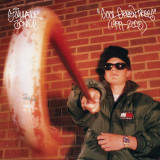
The cover photo is a picture of Sam standing on his back porch in the latter part of 1998, just before he got his first sampler. He was 13 years old, in 8th grade. His dad took the picture with his 35mm film camera: "I actually wanted to be pointing my dad's .22 pistol at the camera lens but he wouldn't let me. He gave me an old walking cane to use instead. The Tommy Hilfiger puffer jacket came from the lost and found at William Fleming High School where my mom worked as a secretary. I was thrilled when she brought it home because we never spent money on expensive name brand clothing like that - we were for the most part strictly a sale rack, bargain bin, thrift store, yard sale, flea market kind of family when it came to clothes. My watch is some cheap off-brand fake gold department store watch." Mastering for this vinyl edition was overseen by Be With regular Simon Francis and it was cut by the esteemed Cicely Balston at Abbey Road Studios to be pressed in the Netherlands by Record Industry.
- Judgement Day
- Fast Pace
- Under The Streetlight
- Doesn't Matter Much Now
- Midnight Ferry
- Brassic
- Gaslight
- Don't Stand Alone
- Streetrat Skallywag
- Parasite
- It's A Mad World, Baby
- Doing Time
- Celine
- See You Around
- Bottom Shelf
50 years after the genre turned the music world upside-down, GRADE 2 bring the raw power of old school punk to a new generation. Their second release on Tim Armstrong"s legendary Hellcat Records is a thumping 15 track tour de force melding the uncompromising ethos of punk with the howl of contemporary injustice, personal identity and frustrations of Gen-Z youth, authentically told by three lads with punk coursing through their veins. Formed on their native Isle of Wight when they were just 14 years old, Jack Chatfield (guitar & vocals), Jacob Hull (drums) and Sid Ryan (bass & vocals) honed their craft covering punk pioneers before creating a sound uniquely theirs: ten years on, the eponymous Grade 2 is their magnum opus. The new album was produced by the band along with Tim Timebomb (Armstrong) and T.J. Rivers at Armstrong"s Ship Rec Studio in Los Angeles. "Returning to Ship Rec Studio resparked that magic dynamic" says guitarist Jack Chatfield. "When we"re in there I feel like we reach our full potential. Tim would offer tweaks and tips for some songs, while others he"d compliment as finished first time we played them." "We worked flat-out recording this record," says drummer Jacob Hull, "but we never felt pressured, Tim keeping us in the zone to make the best tunes of our lives.
VERY LIMITED 2025 REPRESS ON BEAM OF LIGHT VINYL .
Everything changed for The Beths when they released their debut album, Future Me Hates Me, in 2018. The indie rock band had long been nurtured within Auckland, New Zealand’s tight-knit music scene, working full-time during the day and playing music with friends after hours. Full of uptempo pop rock songs with bright, indelible hooks, the LP garnered them critical acclaim from outlets like Pitchfork and Rolling Stone, and they set out for their first string of shows overseas. They quit their jobs, said goodbye to their home town, and devoted themselves entirely to performing across North America and Europe. They found themselves playing to crowds of devoted fans and opening for acts like Pixies and Death Cab for Cutie. Almost instantly, The Beths turned from a passion project into a full-time career in music.
Songwriter and lead vocalist Elizabeth Stokes worked on what would become The Beths’ second LP, Jump Rope Gazers, in between these intense periods of touring. Like the group’s earlier music, the album tackles themes of anxiety and self-doubt with effervescent power pop choruses and rousing backup vocals, zeroing in on the communality and catharsis that can come from sharing stressful situations with some of your best friends. Stokes’s writing on Jump Rope Gazers grapples with the uneasy proposition of leaving everything and everyone you know behind on another continent, chasing your dreams while struggling to stay close with loved ones back home.
"If you're at a certain age, all your friends scatter to the four winds,” Stokes says. “We did the same thing. When you're home, you miss everybody, and when you're away, you miss everybody. We were just missing people all the time.”
With songs like the rambunctious “Dying To Believe” and the tender, shoegazey “Out of Sight,” The Beths reckon with the distance that life necessarily drives between people over time. People who love each other inevitably fail each other. “I’m sorry for the way that I can’t hold conversations/They’re such a fragile thing to try to support the weight of,” Stokes sings on “Dying to Believe.” The best way to repair that failure, in The Beths’ view, is with abundant and unconditional love, no matter how far it has to travel. On “Out of Sight,” she pledges devotion to a dearly missed friend: “If your world collapses/I’ll be down in the rubble/I’d build you another,” she sings.
“It was a rough year in general, and I found myself saying the words, 'wish you were here, wish I was there,’ over and over again,” she says of the time period in which the album was written. Touring far from home, The Beths committed themselves to taking care of each other as they were trying at the same time to take care of friends living thousands of miles away. They encouraged each other to communicate whenever things got hard, and to pay forward acts of kindness whenever they could. That care and attention shines through on Jump Rope Gazers, where the quartet sounds more locked in than ever. Their most emotive and heartfelt work to date, Jump Rope Gazers stares down all the hard parts of living in communion with other people, even at a distance, while celebrating the ferocious joy that makes it all worth it -- a sentiment we need now more than ever.
The first and most independent of all independent producers, Joe Meek needs little introduction. He was the first to chart in both the UK and the USA with an independently produced song -which was actually recorded in his home’s kitchen- when The Tornados' Telstar took the world in 1962. Meek was, of course, one of the most in vogue producers of the first half of the 1960s, providing the soundtrack to the evolution of UK Rock’n'Roll to Swinging London, scoring hits with actors like John Leyton (Johnny Remember Me), showmen like Screaming Lord Sutch and bands like The Outlaws and The Tornados. He also produced a wide stream of R&B and freakbeat 45s that are nowadays hardly sought after by the collectors with the biggest bank accounts.
Joe Meek experimented with all kinds of recording techniques in his home studio, his tricks and gimmicks won his productions chart placement and critical and public acclaim, but none of his projects was so advanced and way out as the avantgarde experimentation showed in his I Hear a New World electronic symphony from 1960. Aided by The Blue Men formed by Rod Freeman (group leader, guitar, vocals), Ken Harvey (tenor sax, vocals), Roger Fiola (Hawaiian Guitar), Chris White (guitar), Doug Collins (bass), Dave Golding (drums) -also known as Rodd-Ken and The Cavaliers- who provided a tight base to his electronically produced sounds, Meek came up with what he envisioned as the soundtrack of the future, the sounds he envisioned were to be heard in outer space. It was too way out for its time, certainly. To the point that of all the opus, only four tracks saw the light of day on a 7" EP released on Triumph, Meeks very own label. It wouldn’t be until 1991 that the whole recordings from the I Hear a New World sessions would see the light of day on a CD issued by the RPM label.
Wah Wah offers a new reissue of this now classic early electronics masterpiece, housed in a beautiful front-laminated back-flapped sleeve and offered as a limited 400 copies only black vinyl version and an ultra-limited 100 copies only transparent purple vinyl. Get yours before they fly!
RIYL : Delia Derbyshire and The BBC Radiophonic Workshop, Louis and Bebe Barron’s soundtrack to Forbidden Planet, Raymond Scott, Tom Dissevelt & Kid Baltan, Morton Subotnick…
The first and most independent of all independent producers, Joe Meek needs little introduction. He was the first to chart in both the UK and the USA with an independently produced song -which was actually recorded in his home’s kitchen- when The Tornados' Telstar took the world in 1962. Meek was, of course, one of the most in vogue producers of the first half of the 1960s, providing the soundtrack to the evolution of UK Rock’n'Roll to Swinging London, scoring hits with actors like John Leyton (Johnny Remember Me), showmen like Screaming Lord Sutch and bands like The Outlaws and The Tornados. He also produced a wide stream of R&B and freakbeat 45s that are nowadays hardly sought after by the collectors with the biggest bank accounts.
Joe Meek experimented with all kinds of recording techniques in his home studio, his tricks and gimmicks won his productions chart placement and critical and public acclaim, but none of his projects was so advanced and way out as the avantgarde experimentation showed in his I Hear a New World electronic symphony from 1960. Aided by The Blue Men formed by Rod Freeman (group leader, guitar, vocals), Ken Harvey (tenor sax, vocals), Roger Fiola (Hawaiian Guitar), Chris White (guitar), Doug Collins (bass), Dave Golding (drums) -also known as Rodd-Ken and The Cavaliers- who provided a tight base to his electronically produced sounds, Meek came up with what he envisioned as the soundtrack of the future, the sounds he envisioned were to be heard in outer space. It was too way out for its time, certainly. To the point that of all the opus, only four tracks saw the light of day on a 7" EP released on Triumph, Meeks very own label. It wouldn’t be until 1991 that the whole recordings from the I Hear a New World sessions would see the light of day on a CD issued by the RPM label.
Wah Wah offers a new reissue of this now classic early electronics masterpiece, housed in a beautiful front-laminated back-flapped sleeve and offered as a limited 400 copies only black vinyl version and an ultra-limited 100 copies only transparent purple vinyl. Get yours before they fly!
RIYL : Delia Derbyshire and The BBC Radiophonic Workshop, Louis and Bebe Barron’s soundtrack to Forbidden Planet, Raymond Scott, Tom Dissevelt & Kid Baltan, Morton Subotnick…
After two decades, the indietronic veteran returns with a powerful sonic reflection on today’s sociopolitical climate and a poignant reminder of music’s enduring ability to heal, unite, and inspire. Blending experimental electronics with krautrock sensibilities, the album thrives on spontaneity, collaboration, and the beauty of ‘happy accidents’.
While many of Nitrada’s sonic trademarks remain — intricate, rickety beats; enigmatic field recordings; and gut-punching string melodies — EVERYTHING THAT IS NOT COUNTED WILL BE LOST marks a shift in approach. Experimenting with different constellations of musical machines, Christophe Stoll, the mind behind Nitrada, recorded hours of improvisations (some shared on his Instagram). These sketches became the raw material for more elaborate, carefully structured arrangements.
True to his collaborative spirit, Stoll brought in like-minded artists to shape the final album: Jan Sturm (aka STURM) lends his touch to the shimmering FRAGMENTS OF LIGHT. The euphoric dystopian WE DANCE IN THE CHAOS features Landobe (Marco Heinle) and Patrick Siegfried Zimmer on vocals. Luca di Mira (of Giardini di Mirò fame) contributes synths, cello, and delicate textures to some tracks, while Johannes Schardt’s guitar work brings a visceral, post-rock edge to NO HYMN FOR NOBODY and IL ROMANTICISMO DELL’APOCALISSE, nodding to Stoll’s roots in punk and indie.
“The goal is to take listeners on a journey through different timbres and sonic landscapes — a collage of diverse ideas and inspirations,” says Stoll about his album which effortlessly juxtaposes experimental ambient soundscapes, heavy jagged guitars, and minimal techno pulses, making them feel as though they’ve always belonged together. Because, in the end, they do – all part of the shared vocabulary of our universal language: MUSIC.
- Mire
- Static Vision
- Smokey
- Traveler's Moon
- Tuning Tree
- Moss
- Lizard Brain
- Other Planets
- Flower Of Salt
LTD. SOLID RED VINYL[24,58 €]
Seven years after their last release (Helltown, 2018), Electric Citizen returns with their fourth album, EC4-a powerful statement of renewal and raw energy. Written by Ross Dolan with contributions from the full band, the album was meticulously crafted over several years and recorded with Mike Montgomery and John Hoffman at Candyland Studio in Dayton, KY. The album was mixed by Collin Dupuis (Lana Del Rey, The Black Keys) in Detroit and mastered by JJ Golden at Golden Mastering in California. The album art was created by Neil Krug (Lana Del Rey, Tame Impala, Weyes Blood), who the band worked with for their first album, Sateen. Now signed to Heavy Psych Sounds, the band is ready to unleash their most potent work yet-a fusion of hypnotic grooves, searing guitars, and Laura Dolan's mesmerizing vocals. EC4 is both a homecoming and a rebirth. Electric Citizen is back!
Black Vinyl[21,81 €]
Solid red vinyl, limited to 350 copies. Seven years after their last release (Helltown, 2018), Electric Citizen returns with their fourth album, EC4-a powerful statement of renewal and raw energy. Written by Ross Dolan with contributions from the full band, the album was meticulously crafted over several years and recorded with Mike Montgomery and John Hoffman at Candyland Studio in Dayton, KY. The album was mixed by Collin Dupuis (Lana Del Rey, The Black Keys) in Detroit and mastered by JJ Golden at Golden Mastering in California. The album art was created by Neil Krug (Lana Del Rey, Tame Impala, Weyes Blood), who the band worked with for their first album, Sateen. Now signed to Heavy Psych Sounds, the band is ready to unleash their most potent work yet-a fusion of hypnotic grooves, searing guitars, and Laura Dolan's mesmerizing vocals. EC4 is both a homecoming and a rebirth. Electric Citizen is back!
Skinned' ( released digitally in 2020) - the debut album from Danish composer, producer and singer ML Buch.
Comes with lyrics printed the inner sleeve.
After releasing her debut EP Fleshy in 2017 - Skinned that takes her expansive guitar work and catchy melodies to another territory.
With her unique experimental pop and vocals that seem to slide into your ears as fluorescent liquid, ML Buch portrays the reality of intimacy in a digital era. Working primarily with synthetic midi sounds, the general love of songwriting and guitar music is ever present.
As if in search for something real, ML Buch takes the listener on the other side of the skin. Led by tender love songs like I’m A Girl You Can Hold IRL and Can’t Get Over You With You we journey through her throat and into her intestines, discovering a fascinating realm of shiny mucus and bile in flesh and yellowish colors. Panoramic images were captured by a small pill camera travelling through the body of ML Buch and act as extensions of the architecture of the music. This literal way of internalizing modern technology is symbolic of Skinned where eclectic instrumental compositions share the space with strong hooks and ML Buch’s spherical voice.
credits
All songs composed, arranged and produced by ML Buch
All lyrics by ML Buch
‘Touching Screens’, ‘O’ and ‘I Feel Like Giving You Things’ co-written by Oliver Nehammer
Bass on Can You Hear My Heart Leave, Touching Screens and Mw by Johan Polder
Drums on Touching Screens and Mw by Kristof Gasior
Viola on Stone Bridge by Astrid Sonne
Midi drums and keys on Touching Screens by Oliver Nehammer
Mix by ML Buch, Oliver Nehammer & Jacob Brøndlund
Mastered by ET Mastering
Cover photo by David Stjernholm
Artwork by Aske Zidore and ML Buch
Any15 - Anyines 2020
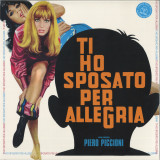
“Ti Ho Sposato Per Allegria” (1967) is a comedy directed by Luciano Salce, taken from the theatrical play of the same name (1965) by Natalia Ginzburg. The main characters are Pietro and Giuliana, respectively interpreted by Giorgio Albertazzi and Monica Vitti. A lawyer from a good family, serious, accustomed to a calm and regular life who got married to a indolent and dazed girl with a difficult past a month after meeting her at a party. Despite Giuliana's inability to transform herself into a good housewife, his relationship with Pietro continues to flourish, because he seems to find enjoyment in each of his wife's many mistakes. The reason for their union lies not in love but, perhaps, in a genuine sympathy, as strong as it is mutual. The story has become a minor classic with each new representation. On both stage and screen the themes of everyday life, and the more complex and existential ones, are addressed. The subtle irony of the work relies on recounting problematic events in a carefree tone: realities such as abortion, death, separation and the couple's incommunicability are underplayed with naturalness. The funny events of the film are commented on by Piero Piccioni's music, published for the first time on vinyl by Musica Per Immagini, with an harmonious tracklist. For this first orchestra rehearsal with the director, which will be followed by other important soundtracks, the composer makes an effective and elegant synthesis: on the one hand he reworks moods and aesthetic intuitions of some previous and happy experiences, while on the other he identifies and anticipates the first bars of that unmistakable sound between bossa nova, funk and lounge nuances that will characterize almost all the production of the Seventies. In fact, the Turin-native artist simplifies in a positive sense the articulated harmonic structures that have always distinguished his authorial figure – where the so called jazz features are to be considered more than central in the musical texture, as prominent elements of the harmonic syntax – and he tries a melodic reduction that will make the compositions more catchy or memorized, but not easier for this. Lightness of spirit and rarefied elegance are the keys of this new Dionysian world.
Civilistjävel! x Mayssa Jallad’s ‘Marjaa: The Battle of the Hotels (Versions)’ is a radical response to Mayssa Jallad’s 2023 original LP, a lyrical account of epochal events in Beirut at the dawn of Lebanon's civil war. ‘…(Versions)’ sees Civilistjävel! (aka Swedish producer Tomas Bodén) apply a stripped, dub methodology to Mayssa's rich stems, refracting the Arabic source through the hazy prism of Northern European electronica. Retaining ‘Marjaa…’s deep spatial framing and vaporous, shifting nature, traces are lifted and set down in a new landscape: a ghost of a ghost. Informed by Tomas' singular strand of ambient, minimalist, dub techno, ‘… (Versions)’ recalls the reductive, shimmering pulse of pioneering Berlin-based practitioners Basic Channel/Chain Reaction, but with the parameters stretched into the ether. Where versions typically focus on a rhythm, here the anchor is the tone and texture of Mayssa’s voice, around which a new world has been constructed. Disembodied and liminal, it conjures an eerie panorama that feels like a postscript to the original, further emphasizing the geopolitical events that have had such devastating effect in Mayssa’s homeland of Lebanon since that record’s release. ‘Marjaa…’ (tr. ‘reference’) combined Mayssa Jallad’s two main vocations: music and urban research/architectural history. The album was co-written with Fadi Tabbal and based on Mayssa's Historic Preservation master's thesis (‘Beirut’s Civil War Hotel District: Preserving the World’s First High-Rise Urban Battlefield’). The thesis examined a 5-month conflict that took place within Beirut's skyscraper-laden luxury hotel district of Minet El Husn near the start of the Lebanese Civil War. Addressing a post-war generation who have never been taught this difficult history, ‘Marjaa…’ was an attempt to process trauma, and “a call to protest for the renewal, rather than the recycling of the political class that once destroyed the country and holds us, to this day, hostage of its violence.” Often perceived as a mysterious, shadowy presence, Civilistjävel! has come increasingly to the fore in recent years through a consistently dazzling stream of records, released both anonymously and via Fergus Jones’ FELT imprint, often appearing with scant information and tracks for the most part untitled. Having featured tracks from ‘Marjaa…’ on mixes, and included the album in his picks of 2023, in early 2024 Tomas asked Mayssa to provide vocals for a track on his album ‘Brödföda’. Mayssa remembers, “Tomas asked me to choose one of the tracks he was working on. I was in Boston at the time, so I took a walk and chose a track. I wrote the lyrics at the public park, wondering if I was the only one around that was losing sleep over the genocide in Palestine and the war in South Lebanon. I went back to the apartment and recorded the vocals on my phone, while listening to the track on headphones. Tomas reworked it with the voice and sent it back. I liked it immediately.” Despite the geographical distance from Beirut to Uppsala, Sweden, where Tomas resides, Mayssa’s contribution sounds very much at home in Civilistjävel!’s atmospheric, contemplative sound-world. Tomas’ request was reciprocated by Mayssa soon after, resulting in the spectral, glassy ambience of ‘Etel, Kharita (Version)’. This was followed by an invitation to work on more tracks, which Tomas immediately embraced, intensively jamming out versions live to two-track tape in downtime between travelling. If not entirely dissimilar to his regular working practice, the immediacy of it was unusual. Much was improvised live with just a keyboard (not tethered to a grid), and a restricted set-up that largely forbade later edits - only the rhythm tracks are programmed. A sharp conceptual thinker and composer, Tomas takes creative liberties with Mayssa’s songs in a way that is deeply felt and sympathetically aligned, whilst unashamedly outside of the original context of the record. The voice is leaned into as an instrument, without the clear, specific details of language, and this axis provides an uncertain, amorphous footing - structure is often suggested or hinted at, before disappearing or collapsing into fog, and folding back into the message within the song. A somewhat unprecedented source for an album of versions, even those familiar with ‘Marjaa: The Battle of the Hotels’ may at points struggle to hear the songs these versions are rebuilt from, despite the vocal narratives remaining virtually intact. The light has shifted; eroded buildings are foregrounded; fragments of memories appear in chiaroscuro. Signs and signifiers have been replaced. Shorn of the original's warm guitar, ‘Baynana (Version)’ feels like an ominous visitation, the sun no longer visible. ‘Holiday Inn (March 21 to 29) (Version)’ is a molten, clattering invocation. The beat-less tracks nod towards the cold, otherworldly sound-scaping of late '90s isolationism. More propulsive and embodied, ‘Holiday Inn (January to March) (Version)’ and ‘Kharita (Dub)’ are strobing, iridescent techno - lithe, shifting and mutating with almost implausible finesse. A stunning addition to Civilistjävel!’s growing catalogue, ‘…(Versions)’ is a luminous counterpoint to ‘Marjaa…’, and a welcome reminder of how incredible that record remains.
KITCHEN FUNK: The Groove Legacy of Funk, Hip-Hop, and House
Founded in 1999 in Lorient by Tabasko and Ramirez, key figures in the Breton underground scene, KITCHEN FUNK fuses hip-hop, soul, funk, acid jazz, and house music into a unique sonic universe. Combining punchy rhythms with captivating grooves, the duo made a name for itself in the 2000s, marked by the excitement of clubs and radio stations.
"LETUGO": A Forgotten Treasure Finally Rediscovered
Among their notable collaborations, "LETUGO," recorded with Karl the Voice, embodies the very essence of KITCHEN FUNK. This powerful track, blending funky vibes and soulful energy, didn't receive the promotion it deserved upon its release.
25 years later, the story takes an unexpected turn. After rediscovering local archives, RAMIREZ and JULIEN LO BONO decided to reissue "LETUGO" on vinyl to mark the project's anniversary. The initiative sparked immediate interest: Breton radio stations picked it up, and the record finally found its audience, proving that KITCHEN FUNK's groove is timeless.
A resounding success with "PUSSY CALL"
Before this resurgence, KITCHEN FUNK had made a lasting impression with "PUSSY CALL", a hit that received critical acclaim on Europe 2, NRJ, and RADIO FG. This success allowed the duo to sign with CHRYSALIS PUBLISHING and then 909 RECORDZ (WARNER FRANCE), confirming their place in the French music scene.
A promising future
And this is just the beginning... Boosted by this renewed interest, KITCHEN FUNK is preparing new projects, supported by Jean Jérôme, a key player in the success of "PUSSY CALL." A return to the stage is in the works, ready to rekindle the flame of funk, hip-hop, and house music for a new generation of enthusiasts.
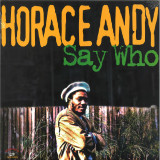
Horace Andy has always commanded a place high on the list of Reggae singers from Jamaica. His distinctive haunting vocal style stands strong on any rhythm,song or style he chooses to cover. Of the singers on that long list, he has managed more so than any other, to crossover to a new generation of listeners due to his individual style, helped also by his collaborations with the likes of Massive Attack. Horace Andy (b. Horace Hinds,1951,Kingston Jamaica) like many otherJamaican singers began his musical career at Coxsonne Dodd's Studio One. So impressed with the youth, Coxsonne decided on a name change for theyoung artist and called him after his top songwriter of the time Bob Andy. So Horace Hinds became Horace Andy. His first tune for Coxsonne 'Something On My Mind' was a slow burner in Jamaica, but his belief in his young protégé paid off when followed later by 'Skylarking' a tune that burst the singer all overthe radio and sound systems of Jamaica. After numerous singles and two albums worth of material, Horace moved on to work with many of the topflight Jamaican producers, among them Keith Hudson, Augustus Pablo and Niney the Observer, but it was his work with producer Bunny Lee in the 70's that he cut most of his hits for and from this stable of work, that we have compiled this set. Some of his late 60's classics were recut in the popular1970's style, working with the rhythm kings themselves, Sly Dunbar andRobbie Shakespeare. They have added some shine to the tracks, 'SomethingOn My Mind' and 'Skylarking' and made them hits all over again. Such wasHorace's delivery to the covers he sang like Delroy Wilson's version of theTams 'Riding For A Fall', the Heptones 'My Guiding Star', John Holts'Man Next Door' and Bill Wither's 'Ain't No Sunshine', that these finetunes were made his own. The roots end of his musical style was covered by
Andy originals such as 'You Are My Angel', 'Zion Gate','Money Money'and the cut which we have taken our edited title, the timeless 'Just SayWho'.A bass heavy cut to Bob Marley's 'Natural Mystic' works so well inthis style also. Another nickname Horace acquired was the affectionate title of Sleepy, as he was always hanging around the yards and studios of Jamaica waiting his turn, sometimes so long he would fall asleep. His enthusiasm to get back in the studio to work some more of his magic, to a catalogue of material that has developed into one of the finest in Jamaica. I hope you will agree, this fine set of 1970's classics will sit alongside.
O B8 | AIN'T NO SUNSHINE
- A1: Intro
- A2: Back Then
- A3: Flossin' (Feat. Big Moe)
- A4: Still Tippin' (Feat. Slim Thug And Paul Wall)
- B1: Got It Sewed Up (Remix) (Feat. Juicy J And Dj Paul)
- B2: Scandalous Hoes (Feat. Lil Bran)
- B3: Screw Dat
- B4: Turning Lane
- C1: Laws Patrolling (Feat. Cj Mellow And Lil Bran)
- C2: 5 Years From Now (Feat. Lil Bran)
- C3: Cuttin' (Remix)
- C4: What Ya Know About... (Feat. Paul Wall And Killa Kyleon)
- D1: Know What I'm Sayin' (Feat. Bun B And Lil Keke)
- D2: Type Of N**Ga U Need (Feat. Brighteyes) D3. Grandma
It takes grindin' to be a king and Houston's Mike Jones' work ethic of "You Don't Work, You Don't Eat, You Don't Grind, You Don't Shine" had his phone blowing up in 2005 with the release of his major label debut Who is Mike Jones? on Asylum/Swisha House/Warner Records. Mike Jones started rapping in the early 2000s and he released a couple of independent albums on his own label Ice Age Entertainment before linking up with Michael "5000" Watts of Swisha House. He recorded the underground single "Still Tippin" with Texas contemporaries Paul Wall and Slim Thug, which appeared on the Swisha House compilation The Day Hell Broke Loose 2. The song, full of southern hip-hop slang and braggadocio, was an ode to the classic car culture in Houston, Texas, and could be heard bumpin' out the trunks of cars nationwide with its heavy bass and classical string loops. Before the release of Who Is Mike Jones? girls would ignore him, but after the release of "Still Tippin" they were all up on him, which led to the release of the single "Back Then" where he shouted out his real cell phone number that played a major part in the marketing and promotion of the album.You could call 281-330-8004 and get his voicemail and leave a message, but sometimes he would answer, which led to spreading the word of Mike Jones' debut album. "Back Then" was also a top-selling ringtone because (back then) you had to buy and download ringtones, unlike today. Mike truly went viral before going viral was even a thing. After dropping the two hit singles, Who Is Mike Jones? was released on April 19th, 2005, and would sell over a million copies that year, leading to certified platinum status. Twenty years later, this Texas Rap classic still holds up with features from other H-Town legends including S.U.C.'s Big Moe (RIP),Bun B, Paul Wall and Lil Keke. Juicy J & DJ Paul of Three 6 Mafia added their Memphis touch to the "Got It Sewed Up Remix" and the album ends with a heartfelt dedication to Mike Jones' late Grandmother on "Grandma". Get On Down is proud to present the first vinyl reissue of Who Is Mike Jones? in a limited edition silver and red color-in-color pressing packaged with a full color printed insert tocommemorate the 20th anniversary of this H-Town classic
After the explosive Comme à la radio, infused with the free jazz energy of the Art Ensemble of Chicago, Brigitte Fontaine and Areski Belkacem released six albums together or separately between 1972 and 1977. Their music, often stripped down to voice, guitar, and percussion-or performed a cappella-stood in stark contrast to the orchestrated French pop of the time. This minimalist and spontaneous approach highlighted the poetic power of the lyrics and the intimacy of the melodies, earning them recognition in the counterculture and underground scenes. By the end of the 1970s, Fontaine sought to make her work more visible without losing its originality. The Baraka album marked this transitional moment, initially recorded in a home studio without external musicians. Its title (meaning "blessing" in Arabic) hinted at a desire for success. Mixing introspection, absurd humor, and bold stylistic choices, the album was technically ambitious, featuring stereo duets and layered vocals, and lyrically rich, tackling everything from metaphysical themes to playful nonsense. However, the project ultimately veered off course. After moving the recordings to the massive Studio Davout and bringing in producer and guitarist Martial "Mimi" Lorenzini, the album lost its original intimacy. Overproduced arrangements clashed with the simplicity of Fontaine and Belkacem's initial intent, resulting in an album-renamed Les églantines sont peut-être formidables-that the artists later disowned, refusing to allow its commercial release. Recently rediscovered demo tapes, stripped of their bombastic layers, reveal the raw, emotional core of the songs-showcasing the duo's voices with a rare authenticity. These recordings bridge a missing link in their discography, between their experimental lo-fi years and their later, more accessible work. Decades on, Fontaine and Belkacem remain defiant originals, never settling into a formula, always evolving, and continuing to shake the foundations of French chanson.
- Sauna Motif I
- Päiväkahvit
- Afternoon Springs
- Go North
- They Came In Through The Front Door (Fadi Tabbal Rework)
- Tropic Movements (Amulets Rework)
- Bottles + Birds
- Sauna Motif Ii
- The Vala River (Чудья Жени – Post-Dukes Rework)
- Badminton On The Shore
- Miten Aloittaa
- A Pale View Of Dem Hills (Jeremy Young Rework)
- Veden Yli
When the trio of Sontag Shogun gathered at Laura Naukkarinen's home on the Finnish island of Kimitoön in the summer of 2019, they had not the slightest inkling that the world was about to change irretrievably with the onset of a long-predicted pandemic the following year. By the time their collaborative album, Valo Siroutuu ("The Light Scatters"), was released nearly two years later, the intimate and reflective nature of the work they had created together had taken on new meaning, resonating powerfully (and quietly) with a world in which the proverbial cracks in the wall only seem to be widening.
Päiväkahvit completes the story that began with Valo Siroutuu, featuring 9 songs from the original sessions as well as 4 interpretive reworks courtesy of Amulets, Fadi Tabbal, Post-Dukes, and Jeremy Young. Available digitally and in a one-time vinyl pressing of 300 copies, the album flows seamlessly from beginning to end, incorporating field recordings, tape, sublime vocal melodies, and a host of acoustic and electronic instruments. Richly textured and immersive, Päiväkahvit positively crackles with warmth and a sense of creative embrace.
"We invite the listener into the sauna, out to the garden and onto the trampoline, to sit by the water’s edge and to take a coffee in the waning afternoon light, and to stay as long as they like." – Jesse Perlstein
Lau Nau, aka Laura Naukkarinen, is a Finnish composer whose music is imbued with an idiosyncratic, finely honed sound world. Her palette consists of acoustic instruments, singing voice, modular synthesisers, reel-to-reel tape recorders and field recordings. To date Lau Nau has released ten albums on record labels in Europe, the USA and Japan and a large number of collaborative releases. Lau Nau is known for her music to films and multi channel sound installations. She was awarded the Finnish State Prize for the Performing Arts 2021 as a sound designer. She has toured abroad for over 20 years, playing in venues such as Super Deluxe in Tokyo, the Lab & Castro Theatre in San Francisco and Blank Forms & Issue Project Room in New York.
Sontag Shogun is a collaborative trio that makes use of analog sound treatments and nostalgic solo piano compositions in harmony to depict abstract places in our memory. Textures built from organic materials such as sand, slate, boiling water, brush and dried leaves, both produced live in performance and recorded to weathered 1/4" tape warm up the space between lush piano themes. All of which is abstracted coolly in the reflective digital space of treated vocals and a live-processed feed from the piano. Bringing us back, like a faded passing scent or any natural emotive trigger, but to where? The wordless journey there will inevitably be more revealing than the destination itself.
- A1: You’ll Lose A Good Thing
- B1: Love Me Tonight
This is the very first reissue on 7” single of these super rare and gorgeous early Reggae tracks by one of the most underrated voice of Jamaica. Both these tracks were produced by Dandy Livingstone and released in 1969 on the Downtown label, a Trojan sublabel, on two separate singles:
- DT-436: Audrey "You'll Lose A Good Thing" with Desmond Riley "If I Had Wings" on the flip.
- DT-414: Audrey "Love Me Tonight" with Brother Dan All Stars "Shoot Them Amigo" on the B side.
NOTE: Desmond Riley "If I Had Wings" is featured on our companion single also to be released on June 21, 2025.
This reissue brings these two rare gems together for the first time on a 7” single allowing enthusiasts and collectors to experience their gorgeous sound.
The original pressings have become highly collectible, with copies fetching big sums in the collectors' market.
This exceptional release will be available on our website and in select record shops worldwide from June 21, 2025.
Audrey Hall, aka Audrey was born in Kingston in 1948, sister to Pam, Trevor & Raymond Hall, all Reggae artists. She began her career as a duo, Dandy & Audrey with Dandy Livingstone. She recorded two albums with Dandy as a duo in 1968 and 1969.
She also recorded a handful of solo singles on the Down Town label with Livingstone as a producer. Dandy was a key producer shaping Jamaican sounds in Britain at that time. Although these tracks are actually all quite nice, two tracks really standout: “You’ ll Lose A Good Thing” and “Love Me Tonight” both released together for the first time on this single.
After the Skinheads craze subsided in Britain, Audrey moved to New York. During much of the 1970s and early 1980s, she worked as a backing singer alongside her sister Pam Hall. She made a real come-back as a solo artist in 1985 with producer Donovan Germain and scored many hits in the U.K.including “One Dance Won’t Do”, "Smile" and "The Best Thing For Me".
While she gained wider success in the 1980s with lovers rock hits, she did not quite get the recognition her outstanding singing skills deserved and she remains one of the most underrated voice of Jamaica…