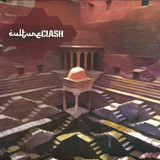
Lost Futures is a new label that explores experimental and often radical approaches to dance music from the past. In a musical landscape that increasingly claims to seek and reward new forms and ideas, Lost Futures delves into the recent past to revisit forward-thinking, optimistic projects that, owing to the social, musical or outright political climate, perhaps struggled to find an audience. Allowing only time to re-contextualise these leftfield, sometimes misunderstood and ultimately human bodies of work, Lost Futures taps into the inherent idealism of rave.
LF001 trips back until the early nineties to revisit the alternative scene emerging from the Dutch city of Utrecht. Here, three young men - DJ Zero One (Sander Friedeman), TJ Tape TV (Arno Peeters) and DJ White Delight (Richard van der Giessen) - joined forces to form 'The Awax Foundation'. Inspired by the transcendent and revolutionary electronic music arriving on their shores imported from Chicago and Detroit, combining their knowledge, gear and ever-expanding vinyl collection allowed additional freedom in paying sincere tribute to these intoxicating sounds, while also developing their tastes in a more personal, eclectic direction.
The musical flavours of Awax initially leaned toward acid house and the roots of techno. However, with three different mindsets in the mix, their tastes were rarely fixed. One thing each shared in common was a devotion to collecting rare sounds, specifically more adventurous and international samples than those emanating from the increasingly-hard, masculine dance music emerging from the Netherlands during the period. Inspired by the cross-over global sound of bands like Suns of Arqa, or 'World Music', as it was perhaps patronisingly termed at the time, the trio became interested in the idea of making techno with 'ethnic instruments'.
Of course, this being 1992, none of The Awax Foundation had access to such instruments, instead, they had a vast, collective library of samples from all over the world. There were no collaborations and no clear plan. Instead, they set to work using a Yamaha TX16W sampler, the legendary Atari 1040ST computer, a cheap mixing desk and a couple of low-end synths and FX machines. When Richard mentioned the project to his friend, Akin Fernandez, the London DJ and owner of cult label Irdial Discs, Fernandez was intrigued enough to invite the trio to record a one-hour show for his 'Monster Music Radio' series on London's then-burgeoning Kiss FM.
Forced to come up with a name, 'CultureClash' seemed like the obvious choice, even if the members of Awax were only creatively sparring among themselves. Along with the term 'ethno-techno', slightly dubious to a hopefully more conscious Western audience in 2017, these were the only guiding principles to the quietly ambitious project that soon combined cutting-edge machine rhythms with samples sourced from everywhere from Bolivia to Togo, and inspired by everything from Ravi Shankar's epic soundtrack to the Oscar-winning movie Ghandi, to the technical limits of their own setup requiring a dazzling degree of cut-and-paste work. Some tracks even emerged out of academic studies within the ethnomusicology department at The University of Amsterdam.
The show aired on October 2nd, 1992, recorded in one blistering take and without any rehearsals, traversing a huge variety of tempos and styles. If the performance wasn't seamless, it was undeniably thrilling, fresh and ambitious. As such, several labels, including Fernandez's aforementioned Irdial Discs expressed an interesting in commercially releasing CultureClash, while another imprint proposed a series of twelve-inches and an album. But the sheer complexity of the project meant that it never saw the light of day, while the trio embarked on different journeys ahead, both creative and personal.
Twenty five years later, and the original CultureClash lineup and founding members of The Awax Foundation provide the sound of the first release from Lost Futures. An otherworldly, ambitious and optimistic compilation, accompanied by extensive sleeve notes from the trio, CultureClash is a timeless ode to experimentation in dance music's ever-overlapping culture.
quête:akin
Hotly Anticipated Album From The Acclaimed Australian
Duo.
The Album Consists Of Two Acts Across Seven
Movements That Represent The Different Facets Of The
Dionysus Myth And His Cult And Takes The Musical Form
Of An Oratorio, Which Has Informed Both Spiritual And
Secular Pieces Of Music As Far Back In History As The
Early 16th Century.
Two Years In The Making, Perry Has Amassed An Array
Of Folk Instrumentation And As Often Heard On Previous
Albums Takes Inspiration From Across The World, Tracks
Evolve Less Like Songs More Akin To Fragments Of The
Cohesive Whole.
Deluxe Lp Format Is Pressed On Heavyweight
Transparent Purple Vinyl Accompanied By A Copy Of The
Album On Cd Plus A Deluxe 16-page 12' X 12'
Hardback Picture Book With Padded Cover.
Standard Lp Format Is Heavyweight Black Vinyl In A
Gatefold Sleeve.
16 Date European Tour Next Year, Including Two
Headline Shows At London's Hammersmith Apollo
We are excited to release a 6-track EP from San Francisco based DJ, producer, and remixer Sepehr Alimagham. The San Jose native has been a fixture in the Bay Area house and techno scene for quite awhile now — on the dance-floor, behind the decks, in the studio, or all of the above. Early influences like Boards of Canada, Aphex Twin and post-hardcore bands later in high school started his affinity for off-kilter, underground music. In 2017 he began performing live PA sets, utilizing his immense production backlog to perform vivid and electric sets, from potent dance music to psychedelic and esoteric soundscapes.
"Body Mechanics" is six tracks of acid drenched dance music that ebb and flow from floor filling club thumpers to more cerebral soundscapes. Inspired by the new wave of the acid sound as well as nostalgia from his formative years in the San Francisco music scene, 'Body Mechanics' takes a functional, yet psychedelic approach to 303 styled techno and electronica. Attention demanding basslines, indiosyncratic structures and hallucinatory atmospheres provide an effective framework for Sepehr's vision. The themes of the track titles take root from a series of dreams Sepehr had with a common atmosphere of strange characters and textures, akin to scenes from David Lynch's 'Twin Peaks'. All songs have been mastered by George Horn at Fantasy Studios in Berkeley. The vinyl comes housed in a jacket featuring a dark and inviting cyborg hand holding a rose designed by Nicole Ginelli.
- Silent Night
- O Come O Come Emmanuel
- We're Goin' To The Country
- Lo How A Rose E'er Blooming
- It's Christmas! Let's Be Glad!
- Holy, Holy, Etc
- Amazing Grace
- Angels We Have Heard On High
- Put The Lights On The Tree
- Come Thou Font Of Every Blessing
- I Saw Three Ships
- Only At Christmas Time
- Once In David's Royal City
- Hark! The Herald Angels Sing!
- What Child Is This Anyway?
- Bring A Torch, Jeanette, Isabella
- O Come, O Come Emmanuel
- Come On! Let's Boogey To The Elf Dance!
- We Three Kings
- O Holy Night
- That Was The Worst Christmas Ever!
- Ding! Dong!
- All The King's Horns
- The Friendly Beasts
- The Little Drummer Boy
- Away In A Manger
- Hey Guys! It's Christmas Time!
- The First Noel
- Did I Make You Cry On Christmas Day? (Well You Deserved It!)
- The Incarnation
- Joy To The World
- Once In Royal David's City
- Get Behind Me, Santa!
- Jingle Bells
- Christmas In July
- Lo! How A Rose E'er Blooming
- Jupiter Winter
- Volume 5, Side B
- Sister Winter
- O Come, O Come Emmanuel
- Star Of Wonder
- Holy, Holy, Holy
- The Winter Solstice
For over a decade and almost every Christmas, Sufjan
Stevens recorded a Christmas album that he gifted to
friends and family. The recording process took place
every December, for one week, usually at home,
provoking collaborations with friends, roommates and
musical peers. In 2006, Stevens' label, Asthmatic Kitty
Records, released 'Songs For Christmas', a CD boxset
compiling the first five of these albums, Volumes I-V.
And in 2012, the label released 'Silver & Gold', a CD
and vinyl boxset compiling of Volumes VI-X. However,
the first five volumes have never been released to
vinyl.
This holiday season, Asthmatic Kitty Records are
finally releasing 'Songs for Christmas' (Volumes I-V) as
a 5xLP vinyl boxset. The boxset includes fan favourites
like 'Sister Winter', 'That Was The Worst Christmas
Ever', 'Only At Christmas Time' and 'Put The Lights On
The Tree'.
'Hardly a straight-ahead Christmas album, then...
Whatever, it's Sufjan Stevens. He's a modern wonder,
and now he's just made Christmas better as well!' -
BBC
'The season's most thrilling holiday release.' -
Entertainment Weekly
'There are moments of quirky holiday splendour -
moments akin to some of the best material on
'Greetings From Michigan And Illinois' - that make
plowing through the entire five-EP set a pleasure.' -
Allmusic
- A1: Emad Youssef - Al Bareedo Ana (The One I Love)
- A2: Abdel El Aziz Al Mubarak - Ma Kunta Aarif Yarait (I Wish I Had Known)
- B1: Kamal Tarbas - Min Ozzalna Seebak Seeb (Forget Those That Divide Us)
- B2: Madjzoub Ounsa - Arraid Arraid Ya Ahal (Love, Love Family)
- B3: Khojali Osman - Malo Law Safeetna Inta (What If You Resolve What's Between Us)
- C1: Zaidan Ibrahim - Ma Hammak Azabna (You Don't Care About My Suffering) (Live)
- C2: Saied Khalifa - Igd Allooli (The Pearl Necklace)
- C3: Taj Makki - Ma Aarfeen Nagool Shino! (We Don't Know What To Say!)
- D1: Hanan Bulu Bulu - Alamy Wa Shagiya (My Pain And Suffering) (Live)
- D2: Abdelmoniem Ekhaldi - Droob A Shoag (Paths To Love)
- D3: Samira Dunia - Galbi La Tahwa Tani (My Heart, Don't Fall In Love Again)
- E1: Mohammed Wardi - Al Sourah (The Photo)
- E2: Abdullah Abdelkader - Al Zaman Zamanak (It's Your Time)
- F1: Mustafa Modawi & Ibrahim El Hassan - Al Wilaid Al Daif (The Youth Who Came As A Guest)
- F2: Ibrahim El Kashif - Elhabeeb Wain (Where Is My Sweetheart)
- F3: Mohammed Wardi - Al Mursal (The Messenger)
In Sudan, the political and cultural are inseparable. In 1989, a coup brought a hardline religious government to power. Music was violently condemned. Many musicians and artists were persecuted, tortured, forced to flee into exile — and even murdered, ending one of the most beloved music eras in all of Africa and largely denying Sudan's gifted instrumentalists, singers, and poets, from strutting their creative heritage on the global stage.
What came before in a special era that protected and promoted the arts was one of the richest music scenes anywhere in the world. Although Sudanese styles are endlessly diverse, this compilation celebrates the golden sound of the capital, Khartoum. Each chapter of the cosmopolitan city's tumultuous musical story is covered through 16 tracks: from the hypnotic violin and accordion-driven orchestral music of the 1970s that captured the ears and hearts of Africa and the Arabic-speaking world, to the synthesizer and drum machine music of the 1980s, and the music produced in exile in the 1990s. The deep kicks of tum tum and Nubian rhythms keep the sound infectious.
Sudan of old had music everywhere: roving sound systems and ubiquitous bands and orchestras kept Khartoum's sharply dressed youth on their feet. Live music was integral to cultural life, producing a catalog of concert recordings. In small arenas and large outdoor venues, musical royalty of the day built Khartoum's reputation as ground zero for innovation and technique that inspired a continent.
Musicians in Ethiopia and Somalia frequently point to Sudan's biggest golden era stars as idols. Mention Mohammed Wardi — a legendary Sudanese singer and activist akin to Fela Kuti in stature and impact in his music and politics — and they often look to the heavens. A popular story is of one man from Mali who walked for three months across the Sahel to Sudan because the father of the woman he wanted to marry would only allow it if he got him a signed cassette from Wardi himself. Saied Khalifa is said to be the one of the few singers to make Ethiopian emperor Haile Selassie smile.
Such is the stature of Sudanese singers and the reputation of Sudanese music, particularly in the "Sudanic Belt," a cultural zone that stretches from Djibouti all the way west to Mauritania, covering much of the Sahara and the Sahel, lands where Sudanese artists are household names and Sudanese poems are regularly used as lyrics until today to produce the latest hits. Sudanese cassettes often sold more in Cameroon and Nigeria than at home.
But years of anti-music sentiment have made recordings in Sudan difficult to source. Ostinato's team traveled to Ethiopia, Somalia, Djibouti, and Egypt in search of the timeless cultural artifacts that hold the story of one of Africa's most mesmerizing cultures. That these cassette tape and vinyl recordings were mainly found in Sudan's neighbors is a testament to Sudanese music's widespread appeal.
With our Sudanese partner and co-compiler Tamador Sheikh Eldin Gibreel, a once famous poet and actress in '70s Khartoum, Ostinato's fifth album, following our Grammy-nominated "Sweet As Broken Dates," revives the enchanting harmonies, haunting melodies, and relentless rhythms of Sudan's brightest years, fully restored, remastered and packaged luxuriously in a triple LP gatefold and double CD bookcase to match the regal repute of Sudanese music.
A 20,000-word liner note booklet gives voice to the singers silenced by an oppressive regime.
Take a sail down the Blue and White Nile as they pass through Khartoum, carrying with them an ancient history and a never-ending stream of poems and songs. It takes two Niles to sing a melody.
Taking a turn to some of its roots, Emotional Rescue offers a reissue of Ramjac Corporation's UK house/breaks anthem Cameroon Massif!. First released on the increasingly cult-status Irdial Discs in 1990, this was very much the sound of the big bang explosion of Acid House morphing and splintering, as subsequent multi-genres developed, formed, imploded and reformed in new ways that still subsists today.
Within the melting pot of anything goes, chemically-enhanced optimism that spread across the UK during that return to the summers of love from 1987 onwards, the nascent sounds coming from Chicago and Detroit were mixed with a hybrid of 80s British influences, taking in European synth pop, US electro, new beat, hip hop and reggae. Out of this appeared a new sound, mixing that love of techno and house with dub bass and break beats into a proto-jungle swirl.
Like many growing up through the ever-evolving 60, 70s & 80s British music scene, Paul Chivers' early years of learning piano and guitar, moved from Beatles era pop to take in punk, jazz and anything an eager musical mind could explore. Developing a long-term interest and study of Cuban and Afro-drumming, his acquisition of an Atari and sampler soon moved to programming of both drum machines and TB303 and with that, Ramjac Corporation was born.
Playing live at some of the earliest raves in 1988, as often through luck and "right time, right place", including the infamous Back To The Future and Energy parties, Ramjac went from playing from 50 to 10,000 ravers in a matter of months, as the nation was gripped, depending on your cultural standing, by either a mixture of drug apocalypse paranoia or ecstatic celebration.
It was a meeting with Akin Fernandez, founder of Irdial Discs, that led some of the first studio experiments and creation of Cameroon Massif!. Utlising Akin's in-house studio and production skills, alongside Chivers' jazz influenced outlook of improvisation over arrangement, the track took shape, mixing the live programmed percussion, heavy doses of phase, delay and reverb and Sun Ra inspired keys that resulted in a number of mixes of Massif!.
Collected here are the original 12" "Massive" and "Massing" mixes, plus a special live version taken from the "Live At The Brain" reunion gig of 2009. The sought after 1990 versions and original Live mix are taken a step further with this 13 mins + mix, in essence a resampling and remixing reversion with didgeridoo and live on mic MCing, that gives a real glimpse of those early live sets. With more Ramjac Corporation material upcoming and a live reel-to-reel show appearing soon, the return of Cameroon Massif! is now.
* "Of all the dubplates in my bag from this last few years, the ones I've selected most often have Walton's name scribbled on the sleeve. 'Black Lotus' is a unique creative statement; I'm very proud to release it on Tectonic and to support Walton, who I believe is a true talent." Pinch
* On July 6th Tectonic recordings presents the game-changing second album by 26 year old Mancunian Sam Walton, better known as simply Walton.
* 'Black Lotus' follows his inclusion on Tectonic's landmark 100th release - Riko Dan's 'Hard Food' EP, plus the 'Praying Mantis'/ 'Koto Riddim' 12' (also on Tectonic) and the 'Taiko' EP on Kaizen - the latter two of which hinted at the album's sound, but didn't fully prepare us for the brilliance to come.
* Abstract electronics, grime, dubstep and new styles that don't even have a name yet coalesce perfectly on this classic in the making. It finds Walton at peak power, reaching just as far (if not more so) than anything on the Pan, Different Circles, Boxed or Tectonic catalogues for pure futurism and new-terrain-traversing brilliance.
* Spacious and modern sounding, with just the right amount of grit, on 'Black Lotus' Walton has taken things the next level - setting an impressive new high bar. This is the best music to take inspiration from far eastern culture since Photek's seminal 'Ni - Ten - Ichi - Ryu' and 'The Water Margin'.
* Cinematic may be a term bandied about too often, but on this record it unquestionably applies, with the whole thing playing out like an epic movie, full of highs, lows, action, reflection and changing scenes.
* The album kicks off with 'Black Lotus', which makes it quickly evident that this isn't just another generic longplayer; a weightless/sino style intro segues into a mystical kalimba line, which is then is enveloped by huge waves of synthesized, pitched-down brass.
* 'Point Blank' offers locked, harsh mechanical funk, full of aggravated excitement, before sleek, spacious grime and disguised pop garage achieve twisted anthem status, on the hugely satisfying 'Koto Riddim'.
* 'No Mercy''s Yakuza crime riff is perfect for Riko Dan's threatening menace, especially at the point his voice gets distorted into a guttral and unsettling, demon-like wretch.
* 'Mad Zapper' is abstract, comprised of simple yet challenging beats, tones and stutters, whilst 'Angry Drummer''s taiko/kumi-daiko style percussion has a rousing, heavy thump.
* 'Pan' sounds equally enthralling whether soundtracking a dark movie scene of impending danger, or carying enratptured ravers on a danceflor journey, especially one suited to the synapse-prodding drama of a high production, lazer-heavy festival set.
* Choppy drums and bouncy bass tones are laced with the georgeos melody of 'Ehru', and 'Vectors' is sleek 'n' deep breakbeat-garage-meets-IDM.
* Although already known for elements of musicality, Walton raises his game even higher with the beautiful closing track 'White Lotus', which has a wow factor akin to hearing Aphex's Twin's 'Jynweythek Ylow' for the first time.
* 'The title came from the idea that I wanted it to be sweet and melodic in areas, but dark and grimey at the same time', recalls Walton. 'I never really listened to much Japanese and Chinese music before working on this, and that element originally came from listening to a lot of Sino grime stuff. It wasn't until I was deep into the process of making the album that I started listening to loads of traditional stuff on YouTube for melodic ideas, which changed how it turned out. The whole dubstep techno crossover thing was also a big influence.'
* 'I'm really happy to have Riko Dan & Wen on there', he adds. 'I've done a few remixes of Riko tunes which have had a great response, so it's been wicked to get some original material done together. The track with Wen was first started a while back, so I'm glad it was finally finished and will see a release.'
* Walton has been steadily gaining serious clout through releases since 2011 on Hyperdub, Keysound, Tectonic and Kaizen, with supporters including Mumdance, Logos, Slimzee, Laurel Halo, Wen, Hodge, Mary Anne Hobbs, Giles Peterson, Paleman, Teki Latex, Commodo, Loefah and Kode9. Key club, festival and radio shows include FWD at Plastic People, Fabric, Outlook, NTS, Rinse and BBC 1xtra.
Cardiff-based singer-songwriter Ivan Moult returns with his latest collection of rich, confessional songs on new album Longest Shadow, out now via Bubblewrap Collective.
The album reflects Moult's progression through the fledglings of blissful romance into the fragmentation of embittered break- up. Each track combines Moult's intricate guitar plucking skills with his warm, soothing vocal to create something both compelling and incredibly moving throughout. His latest single Lay Me Down revolves around the feeling of giving in to depression whilst simultaneously fighting against it. Moult's beautifully natural vibrato soars effortlessly over the cinematic musicality to create something akin to that of Nick Drake or Jeff Buckley's distinctive songwriting charm.
Ivan's soft , subtly shattered vocals are complemented by the orchestral compositions and double bass of Callum Duggan, the precision percussion of Sam Thomas and backing vocals from Kadesha Drija
''Longest Shadow truly is a stunning piece of work and if the likes of Damien Rice, Nick Drake, Willy Mason are your thing, it's a safe bet that you will thoroughly enjoy this - Folking
Winter thaw marks the return to Furanum of Uncto, the Silesian dyad Domink Muller and Rafal Furst, with their first full release of collaborative material since 2013's seminal FU009. Like its predecessor, Unctuous offers four cuts of viscerally engineered and rhythmically exacting dystopias, each ably situated within a striking 'synth-etic' narrative. It is this latter aspect of each arrangement that perhaps most noticeably demonstrates the pair's singular and evolving approach to composition, born out in the calculated emphasis on hardware-based expressionism.
The opening title track stands as a testament to the above: while deceptively sparse at the outset, its ponderous advance, both heavyset and indomitable as it gathers pace, is framed in the midst of an unfolding panorama of stark analog wails. Further interspersed with resonant timbres more akin to the vocalizations of some hell-beast luring its prey, the eponymous behemoth ingratiates its listener, beckoning submission to its will with the promise of exhilaratory assimilation. Such a hive-mind state attained, exhilaration does follow, yet so does a concomitant loss of agency, leaving one thoroughly subjugated and enslaved to its cadence. Perhaps as a manifestation of dramatic resistance to such a fate, 'Trust No One' daringly defies the impositions of its predecessor. Instead, it animates and emboldens the beholder through its rhythm, ineluctably driven by a sense of accelerating linear intensity. Thus arriving at a climactic percussive build whose isochronal blows shatter any remnants of doubt, angst transforms into raw conviction as one is propelled into a delirious realm of solipsistic certitude.
Situated amidst the foreboding sound of blade clashing with blade, 'Cold Knife', on the other hand, is driven by an entirely disparate off-beat progression. As its anticipatory rhythmic thrusts cut through an advancing fog of shivering drones with frigid precision, one seemingly undergoes a cyclical plunge into a state not unlike one marked by the visceral dopaminergic rush of contact with extreme cold. Finally, 'Metzgers Tochter' ('Butcher's Daughter') closes the EP with a ruthless exploration of the contrast between the gruesome and the feminine. In a similar way to the opener, the track's meter is staggered and undulating, yet also steadily punctuated with breathing room between its crushing blasts. Such scenery thus serves as a canvas for the expression of the titular character's 'beauty and the beast': a paradoxical synthesis of attraction and aural brutality, held in tension by the unceasing throbbing of the composition's beats.
Mastered & cut by CGB at Berlin's Dubplates & Mastering,
In 1982, a group of friends deep into post-punk, jazz and dub got together in Mad Professor's studio and lay down their youthful interpretation of a NYC disco cut. Their unique take included trombone, vibraphone, piano, and an ital dose of tape delay. They called the song Trouble and released two versions (vocal and dub) on their friend Tony McDermott's !Drum! label with artwork inspired by Russian Constructivism. TIP!
.
The group, comprised of Justin Langlands, Chrysta Jones, John Schofield, Tom Dixon, and Dave Killen, decided to call themselves A-Team, having no idea that Mr.T and Co. would make them almost totally ungoogle-able 30 years later. The result of their adolescent studio idealism sounds akin to otherdisco misfits like Arthur Russell, Maximum Joy, Talking Drums and wouldn't sound out of place on legendary NYC label 99 Records. Remastered with an extended Club Dub formaximum dance-floor action.
For its third release, Here To Hell welcomes Melbourne (via Adelaide) veteran, Rambl, and his incredible groover 'Doss'.
This third release on the label happened purely by surprise, and what a discovery! The track itself is no accident, but the signing took place after a chance encounter. Richard Campbell aka Rambl, who is one of Melbourne's best and most consistent DJs since the last two decades, had developed a small cult following of viewers via facebook, where he had been providing live video coverage of Australia's wild weather in a kind of comedy-weatherman format. Once these updates caught our attention, the magical facebook algorithm placed all of his content at the top of our feed.
One day his video moved away from the wild South Australian coast and into the studio. Rich - who we also know for his huge stature akin to an NBA basketballer, and his brain for Mathematics and Computational Biology - was bopping that giant brain up and down and making his 'bass face', with a mixing desk and some speakers (and some beers) in the background. The soundtrack to this video was completely mesmerising. We sent him a private message immediately: 'what the hell is THIS!!!'
His reply: 'This is one of mine, it's not finished yet but it feels good'. Our reply: 'It feels INCREDIBLE!!! Finish it and let's put it on wax!'
So today we bring you 'Doss' and we expect you'll love it.
On the flipside we've invited another Melbourne man, Sly Faux, to demonstrate why he's appearing in the playlists of Richie Hawtin and Maceo Plex, and why his EP on Nicole Moudaber's Mood was a bestseller. He's also just remixed The Presets and continues to impress with his tight productions. Sly Faux's remix takes the original Detroit-inspired techno-funk and twists it into a different kind of main room banger.
Norm De Plume has been quietly making a name for himself the last eight years with remixes for Tornado Wallace and Ben La Desh and EP's for Kolour LTD and his own vinyl only imprint Plumage winning him a solid fol- lowing along the way. His passion for all things disco and deep, dubby, un- derground house inspired by his musical hero Ron Hardy feeds through into his production style as well as his recently formed Peaches & Prunes party which boasts an audiophile sound system and vinyl-only sets from the DJ's. So when the opportunity arose to do a full EP with Norm we jumped at it. Here we present you with the Castlecrag EP, a nod to the Londoner's new adoptive home of Sydney, Australia, and whilst his sound may be more akin to the recent musical movements of Melbourne, the laid-back sun-kissed melting pot of The Harbour City certainly shine through in the two originals and Folamour remix on offer here.
Title track Castlecrag leads the charge with a deep mood-setter driven by a cowbell riff and filtering pads. The spacious mix and less is more arrange- ment ensures that the drums and rolling bassline punch through making for a track that sounds both unique yet accessible and demonstrates Norm's sense of musicality as well as DJ instinct for setting the right mood on the dancefloor. Next up we have Whole In One which treads a similar path whilst dropping the BPM's a touch and building up layers of synth strings to create a subtle yet engaging track to immerse yourself in. Finally, man of the moment Folamour gets busy on the remix of Whole In One working his magic by upping the tempo and going heavy on the jazz- inspired drums. By laying down a driving groove and pushing the string stabs to the fore, the Lyonnais producer behind the wonderful Moonrise Hill Material label has delivered a fresh-sounding take that will work like magic on discerning dance floors out there.
Soul Jazz Records' latest album 'Yoruba! Songs and Rhythms for the Yoruba Gods in Nigeria' is newly recorded in Lagos, Nigeria. The album is co-produced by Soul Jazz Records label head Stuart Baker and Laolu Akins (founding member of the legendary 1970s Nigerian Afro-Funk/Rock group Blo). Yoruba! features an array of local master drummers led by Olatunji Samson Sotimirin and singers (featuring the lead vocals of Janet Olufanmilayo Abe) performing heavyweight Afro-rhythms, with talking drums, Bata and Dundun drums and a mass of percussion in these deep spiritual and sacred songs used to honour and worship the traditional and ancient Yoruba gods in Nigeria, West Africa.
The enormous impact of Yoruba and West African music and culture is worldwide - from the first Afro-centric explorations of African-American jazz musicians in the 1950s such as Art Blakey, Randy Weston and Dizzy Gillespie, the explosion of Nu Yorican Latin music in New York City starting in the 1960s - Mambo, Boogaloo, Latin funk and soul - through to the sacred and powerful Afro-derived music of the religions of Santería in Cuba, Candomblé in Brazil and Voodoo in Haiti, which all came into existence on account of the Atlantic slave trade which began over 400 years ago. On a wider scale West African music remains the primary root of all African-American musical forms - from New Orleans jazz to Bronx rap, gospel, soul and more.
This album features songs honouring the Nigerian gods of the Yoruba traditional religion - Yemoja, Obatala, Ogun, Sango and others - as well as a selection of instrumental cuts focussing on the Bata and Dundun drums. The album comes complete with extensive text and photography included in the 40-page outsize booklet/gatefold double vinyl + inners showing the influence of Yoruba culture throughout the world and the social and historical context for the music contained here.
Watch out for a limited edition remix of the project by Osunlade, also forthcoming on Soul Jazz Records.
Since the early 1990s, keyboard player Jessica Lauren has been a familiar part of London's alternative music scene. Jessica's keyboard skills have augmented the live performances and studio recordings of world renowned artists such as Jean Carne, Tom Browne, Dexter Wansel and James Mason, Japan's United Future Organisation, and UK soul diva Juliet Roberts.
Her previous Freestyle album 'Jessica Lauren Four' (2012) highlighted Jessica's minimalist approach, something rare and refreshing in the jazz world: she instills her compositions and playing with a refined sense of space which makes her music as much about what she doesn't play as what she does.
The albums' opener - Kofi Nomad is a deeply percussive afrocentric epic, featuring the beautiful baritone saxaphone of Tamar 'Collocutor' Osborn, one of the most in demand woodwind players working today, underpinned by a powerful foundation of percussion courtesy of Richard látúndé Baker, Phillip Harper and drummer Cosimo Keita Cadore.
Jessicas' amazing skill for writing simple, understated yet superbly memorable and catchy hooks remains undiminished. Highlights in this new collection are almost too numerous to mention, but Amalfi is a breezy bossa, which conjures up images of easy living days and sun dappled Mediterranean coastlines, whilst the angular and brooding Simba Jike has something of an Eddie Harris style deep, dark groove over which Jessica riffs and solos beautifully on grand piano - and Tamar once again blows freely, whilst 'level' Neville Malcolms' upright bass figure roots the entire thing in a solid, almost primeval sound.
The albums closing statement Argentina is a masterpiece of pathos and perfectly demonstrates Jessicas' approach which is almost akin to a minimalist architecture style of composing and playing, such is the strength of its atmosphere and subtlety.
Re-issue of forgotten minimal techno abstraction from Hamilton, Ontario. The unsung genius of Secret Werewolf is fully on display on this 1996 gem.
Rubbery and polymetric, akin in mood to Robert Hood/Metroplex productions of the same era, but full of eerie metallic timbres and flexing grooves which combine into a lysergic hypnosis unlike anything else from then or now.
A taste of the forthcoming Geej re-issue project surveying the Steel City Records catalogue, a wellspring of unsung, singular dance music that arose from the abandoned industrial spaces and uncompromising producers of the fertile but secluded techno zone of Hamilton, Ontario Canada circa 1995-1997.
First time pressed in over 20 years, vinyl only.
2x12"
Tinfoil is the project of DeFeKT and Sunil Sharpe. Initially forged as a studio collaboration in 2014 (and later as a live show), the pair have since racked up an impressive catalogue of 12s on their own self-titled label. Tinfoil's sound is unique in today's scene, reflecting the versatility of both artists, plus a combined know-how of techno and electro. Their music comes primarily from live studio jams, enforced by a desire to get quickly to the point in what they do. This is no surprise given the fast, technical way in which they each perform solo.
For their debut album, Tinfoil provide a varied but cohesive collection of tracks. Following the intro's epic synth blasts, they open with a bang through 'Caravan Life' - a sinister, bassline-driven destroyer that builds and builds over a blend of claps, filter zaps and crying feedback. 'Beads' continues in a heads-down vein, this time with a more musical EBM type bass and knocking rimshots that mark the first appearance of Sunil's role-playing, haunting lead vocals.
'Friendly Safe Fumes' marries playful bass notes to a singing lead line, as fizzling closed hats and busy claps whip things into a frenzy. Next enter the otherworldly mutant electro of 'Meadow Pulse', signaling a well-timed lull in mood to explore a silkier side to Tinfoil's production. 'Every Saturday Night' starts with a taxi conversation about horses and carbolic soap in bygone Dublin days, before launching into a volley of clattering beats and hip-shaking FM sequences.
'Multi-DOMINATION' retains some of the FM wonk and treads a broken-beated path, featuring vocals this time akin to a ritualistic chant or perhaps the murmurings of a possessed baby. 'Both Roads To Triogue' meanwhile, brings us to a short intersection, splicing odd voices with a dense tribal rhythm. 'The Wolves Of Hellfire' is Tinfoil in more minimal dancefloor mode, as drones filter in and out under a resonating bass that detonates at all the right times.
Closing with 'Resting Point', the climax becomes deadly. The beats are stepped and the bass boisterous, while pained screams become quickly uncontrolled, setting up for a crescendo of roughneck rhythms, ricocheting kicks and turbulent modular wails.
Tinfoil have been on a roll since the beginning but maybe 'On A Roll' emphasizes this a little bit more now.
* In his first release for Milan's Haunter Record, Berlin-based producer Broshuda generates simple yet complex emotional vignettes. Evading all definitions, he makes use of an an array of tools and techniques akin to those of classic dub and contemporary sound design on obscure/ random equipment, drawing from a limited pool of sound sources while paying a lot of attention to detail in the construction of sound. His post-rave power ambient poems, coalescing with a pronounced melodic element, give the release a profoundly introspective and earthy character. Blurring and masquerading different layers of sound into new forms and shapes.
'Y.O.U' is an emotive album of tripped out ambient hip hop instrumentals by FROM, written and recorded in the mid 90s under Trevor Jackson's infamous production persona The Underdog. Originally planned as a vocally-led, song-based project that should've surfaced between his production for The Brotherhood's legendary British hip hop album 'Elementalz' in 1996 and his acclaimed debut PLAYGROUP release in 2001, for multiple reasons it hasn't seen the light of day, until now.
Only Available as a ultra limited edition Vinyl and CD release, the LP consists of 11 tracks. Dream-like synth lines, ambient melodies, blissful guitars, raw beats and soft, fractured vocals draw you into a hallucinatory 12bit world. Drawing on Jackson's progressive and jazz rock influences as well as psychedelia and early electronics, the album closes with 'Belladonna'- a piano-sampled homage to the east coast golden age hip hop pioneers. NB: The CD features a longer version of 'Veratrum' not available on the vinyl version. All created on an Akai S950 mono sampler (limited to only 20 seconds sampling time), an Akai MG1212 12 channel mixer (which recorded on Betamax style tapes) and primitive outboard gear, Jackson honed his skills from his bedroom, where he produced the majority of his output at the time. With a huge collection of obscure vinyl, he dug deep into uncharted territories for samples and sound clips
- using material no one knew about (or would think about touching) in the mid 90s. The Underdog's initial releases were on Jackson's own Bite It! recordings label, which was started in 1991. A unique platform for UK hip hop with a visual aesthetic and ethos more akin to ECM and Factory
than other rap labels, its mission was to push artists beyond musical and cultural limitations prevalent at the time.
Home to artists like The Brotherhood, Scientists of Sound, Little Pauly Ryan and Lewis Parker (who later signed to Massive Attack's Melancholic label), Bite It! became a great success;
finally British rap had artists and releases that looked and sounded as good as their revered American counterparts. In 1993 Richard Russell (who had just started running XL recordings) asked Trevor to remix House of Pain, resulting in a top ten record, which helped launch Jackson's musical career via further remixes Massive Attack, Run DMC, U2, The Cure and countless others. Off the back of his remix success, The Brotherhood signed a deal in 1994 with Virgin Records. Their 'ELEMENTALZ' album was produced by Jackson and is still lauded by many as one of the finest British hip hop albums of all time.
Jackson continued to remix and produce as The Underdog until managerial issues forced him out of the project he'd been instrumental in instigating.
Soon after his close friend and manager tragically passed away - which when combined with the UK hip hop scene becoming increasingly volatile and the moral demise of rap culture in general - convinced Trevor to hang up his hip hop hat for good.
After leaving The Brotherhood he started Output Recordings. Internationally and sonically diverse, it gave Jackson a free reign to do as he pleased, with genre twisting releases from the likes of Fridge, Four Tet, Sonovac, Colder, his own PLAYGROUP project, The Rapture and LCD Soundsystem. With a non-compromising attitude, strong DIY aesthetic and consistently groundbreaking releases across its ten year life between 1996 and 2006, it became one of the most important and respected independent labels in the world.
On this new EP, DJJ's trademark jagged take on filtered French house is still present, but with Chicago bump, techno and more random elements thrown in for good measure.I Keep Trying To Convince Myself is the tougher, more rugged and even funkier cousin to DJJ's hotly-hyped 2016 summer anthem just a lil. Chi house meets soca in this carnivalesque new classic, which hits the perfect spot between sweetness and dirt.Yn Y Ty is fast, jerky funk and almost a new genre in itself. Both melancholy and pumping, think DJ Rush meets the Tetris theme in an oddball, groovy-as-hell work of genius.The cut-up, loopy loops and tough, tribal beats on Apilli are deranged in a good way and - as with the rest of the EP - demonstrate a quirkiness and subtle humour akin to Basement Jaxx's early golden period.A big sample drives the jacking, sweaty, glitz of Upsqwar's warped take on handbag, which channels the spirit of Modjo and features a ponderous, almost chiptune melody drifting subtly over the top.The EP closes with the Greek flavoured stomper Glas, which wouldn't sound out of place on Richie Hawtin's 1999 mix album Decks, EFX & 909. This new EP is first release since jus a lil for Crazylegs, which gained high praise from NPR, Resident Advisor, Indie Shuffle, Mixmag, Dummy, Hyponik and FACT - who commissioned a video and coined the tongue-in-cheek genre name 'outsider Ibiza'. Comparisons have been made to Thomas Bangalter, Alan Braxe, Todd Edwards and David Morales - albeit a skewed reinterpretation. Like the punks' assimilation of rock and roll, DJJ's fresh and irreverent take on highlights from dance music history make for some of the most exciting sounds since Daft Punk's first forays.Although distorted and with lowered bit-rates, to call theses tracks 'low fi' is to do them a disservice, as DJJ's manipulation of frequencies, distortion and samples is deceptively simple yet not easily matched. There's a mastery of sonics and leftfield sensibility at play, akin to fellow EQ tweakers Heiroglyphic Being, Aphex Twin and Adrian Sherwood.DJJ is a member of the Bristol-based label/collective Crazylegs, alongside artists including Gage, Sudanim, Finn (all of whom remixed just a lil). He's also one half of ISLAND, whose grime-flavoured Nokia EP was release in 2015 - also on Crazylegs.
Following some ear-catching manoeuvres across releases like last year's self-released 'Only' and 'Lagata', which gained her early fans like Bjork and Dev Hynes (who she supported in the USA), 'Tommy' marks Klein's deepest plunge yet into the deep, dark ocean' of her musical imagination on her Hyperdub debut. On 'Tommy' her vocals play with Fifties-esque melodies before switching to familiar tones akin to Brandy and Rodney Jerkins, her live voice and live piano playing filtered through hyper-glitchy and looped production with a loose, internal logic, cutting from angular atonality to pockets of skewered harmony. 'Tommy' also steps things up in conceptual terms. Its eight tracks are broken down into acts that are rooted in themes of vulnerability, sisterhood and death, threading the chaotic sonics with modern operatic undertones and a Shakespearean sense of tragedy. There's a lot of bluster about originality in contemporary UK music and what rises from the noise here is a creative voice who, by her very nature, plays with the construct of what pop is. This is Klein's world ... it's on us to get with it.
For our fourth release, we're pleased to welcome The Showfa inside the Excursions kitchen, to cook us up something sizzling for your mind, body & soul. Wielding a nifty set of disco scissors, he's selected the finest of gospel cuts and brought them neatly to the boil, serving up three delectable dishes of hot spiritual gumbo. Soul food of the highest calibre.
Taking us to church straight off the bat, 'Thankful' builds and builds along an infectiously uplifting piano-heavy hook, an edit that bubbles away effortlessly akin to a Moodyman-esque disco groove, perfectly crafted for the dancefloor.
'He'll Answer' drops the tempo and tone to something slower & lower, lending its sound to that of the most proficient beat-masters, incorporating moody synths and haunting strings, in a true future gospel style and pattern.
The last serving on the plate is 'Jus' A Little Talk' - a cheeky flip of a classic that's destined to make the AOR diggers and connoisseurs salivate profusely. This retro yacht rock bumper closes out this joyously ethereal platter perfectly.
Already finding its way into the crates of selectors such as Gilles Peterson, Horse Meat Disco and Patrick Forge, it's also received love in Mixmag and across the airwaves, from NTS to Mi-Soul to Rinse FM.
Another essential Excursion on wax, and one that will never leave the box.
Translated from Spanish as 'The Shade', Chip Wickham's debut album La Sombra drops after a 25-year career touring, recording and experimenting across three decades of jazz, funk, soul, hip-hop, Latin and electronica. La Sombra is a monumental record for Chip as it symbolises the moment he stepped out into the light as a director of his creations with freedom to explore his roots, express and tell his version of jazz and pay testament to his heroes Roland Kirk, Yuseef Lateef & Harold McNair.
Now living in Dubai after an intense and productive six years in Madrid, it was Manchester where Chip studied in the late '80s and became enmeshed in the chaotic and thrilling music scenes emanating from one of the world's most culturally prominent cities of the time. Recording and generally 'keeping things real' with Manchester's hip-hop collective Grand Central Records, Rae & Christian, The Pharcyde, Fingathing, Nightmares on Wax, Graham Massey (808 State), Chip was in a city that was undergoing a music revolution with the Haçienda as its temple. Yet it was the headlights of the M62 motorway and not the strobe lights that were lighting Chip's path during his student years ('88-'92). The lure of the jazz and funk clubs of Leeds, where The New Mastersounds were breaking out and building the blocks that would lead them to UK funk royalty status, proved too strong.
In the 1990s Chip continued to refine his craft in the rainy city and the gigs booked were growing in stature. It wasn't long before he was on the road with Roy Ayers and Badly Drawn Boy. Around that time Chip met up with trumpeter Matthew Halsall that was the beginning of a friendship that lasts to this day. Chip was a recording artist on Matthew Halsall's breakout album Sending My Love and continues to work with him, with live dates confirmed in spring 2017. This close connection with Halsall gave rise to other collaborations, such as with Nat Birchall and Go Go Penguin's Rob Turner.
Three decades after his late night excursions to Leeds, Chip found himself recording with Eddie Roberts from The New Mastersounds in Madrid, as part of their new band, The Fire Eaters, which he'd formed soon after he moved to sunny Spain in 2007 - the same year he released the Fried Samba album under his moniker Malena, his electronic Latin band that became a hit at the turn of the century for Freestyle Records. During his time in Spain he connected with the local scene and brought together many of his musicians colleagues from the UK to Spain and it was for a local and well established label, Lovemonk, that he released two 45s blending raw funk and Latin. These new roads and musical leanings led to an invitation to play for the prestigious Craig Charles Fantasy Funk Band. Based on a poll from Craig Charles' top rated BBC6 radio show, Chip was chosen to play alongside the cream of the UK funk & soul scene: James Taylor (JTQ), Snowboy, The Haggis Horns (Mark Ronson), John Turrell (Smooth & Turrell), and Mick Talbot (The Style Council).
La Sombra takes an altogether more rooted direction than Chip's recent collaborative work, with the jazz of the late '60s and early '70s a dominating influence to the recordings. Comprising of seven tracks recorded in Madrid with musicians assembled by Chip from Madrid's jazz scene, it combines contemplative explorations akin to Yusef Lateef's early work on tracks like 'La Sombra' and 'Pushed Too Far'. There's a fiery cover of Camarón de la Isla's classic 'La Leyenda Del Tiempo' and tracks like 'Sling Shot' and 'Red Planet' are locked in a groove harking back to Freddie Hubbard's Blue Note era and Luv N Haight's Nathan Davis.
In the wake of Blocks & Escher's recent outings on Metalheadz, Critical, and Zomby's Cult Music, Narratives present the first solo
excursions on the label from one of its founders, Blocks. Varied, emotive and beautiful, the Séance EP is innately Narratives Music in sound and yet unlike anything the label has delivered previously. The Séance EP fleets between ethereal vocals, forlorn strings and analogue bursts of glassy synths, while drum machines dance with live kits that would be fitting of 90s Mowax records. Bass lines loom heavy throughout, simple and driving rhythms that bed the delicate keys and story telling harmonics above. As immersive as it is succinct, Blocks has created an extended player awash with feeling and juxtaposition; again displaying why Narratives Music has been lauded across electronic music from the likes of Goldie and
Com Truise to Zomby and Rob da Bank. Forming the veritable gem of the collection, is the vocal laden 'Haven', a collaborative piece between Blocks and the hugely talented Jennifer Hall. Live instrumentation of bowed strings and bass provide canvas for the heart wrenching tones of Hall. Doc Scott describes the track as 'Deep, deep blues'. More akin to a personal reflection of the artist than the frenetic speed of a club, more Twin Peaks meets Portishead than dance floor energy; this is music at a Drum & Bass tempo by a producer that doesn't want to be caught in a debate on style or subgenre. In essence it seems to emphasise a recent quote by Blocks, 'Drum and Bass is anything you can get away with'. Label support from Goldie, Kuedo, Doc Scott, Rockwell, Benji B, Paul Woolford, Zomby, Friction, ASC, Jubei, Teebee, Pedestrian,
Rob Da Bank, Midland, Kasra.
“A Typical Night in the Pit” is a collection of new music by Los Angeles’ Nick Malkin. It is an album that finds the artist absorbed in the density and chaos of the urban complex. It is unquestionably an “LA album”, but not the LA of hi-fi listening bars and twinkling, Instagram-ready New Age. Rather, Malkin navigates something more akin to the LA found in the films of Robert Altman or Alan Rudolph — overheated, tense, hazy, frayed — with blue-lit, nocturnal compositions that at times recall Mark Isham’s noirish scores for those subversive (anti-)Hollywood pictures. Enlisting a revolving cast of LA experimentalists, Malkin has assembled a record that is as chameleonic as it is cohesive, offering up vignettes ranging from the skewed MIDI-jazz of “Sixth Street Conversation” to the skulking menace of “Estacionamiento Privado,” before giving way to the wide-eyed, cloudy closer “View From Two Perspectives.” C’mon, let’s go in here and get outta this heat.
Mastered by Kassian Troyer at D&M, Artwork by Alex McCullough and Niall Wynne Lewis.
Iggy goes West! Soda Gong welcomes back Kansas City-based musician Iggy Romeu with his latest collection as Mister Water Wet. "Cold Clay from the Middle West" is a (characteristically) sharp left turn from his last two records, with Romeu offering up a surprising and addictive melange of crackpot Americana and smoky noir beat science. “Cold Clay Suite” opens the record, a five-part ride into the sunset that features Cooder-esque guitars, cat-gut fiddle, horse-hoof percussion, stadium organs, penny whistle, and bleary-eyed polysynth ruminations, among sundry other ephemera. Multi-instrumentalist Will Yates, known to most as Memotone, shows up three times on the album, lending clarinet, keys, guitars, banjo, sarangi, and vibraphone to these kaleidoscopic productions. It’s a wild ride of a record akin to following a dotted bridleway on a crumpled old map, marvelously variegated and stitched together as only MWW knows how. Get along, now.