Xavier Boyer, the lead singer of Tahiti 80 and one of the most distinctive voices in French indie pop, returns solo with a melodic and timeless new EP entitled "Soda Coda".
After "Tutu To Tango" (2007, under the name Axe Riverboy), "Some/Any/New" (2017), and not forgetting Tahiti 80's nine studio albums, Xavier Boyer has composed five songs navigating between soft rock, folk sounds and pop experimentation. "On previous albums, I'd done everything on my own, but this time I was looking for something more lively, more organic, more collective. I also wanted to exchange ideas with other musicians.
This mini-album (the vinyl version will include five alternative versions recorded on a 4-track cassette) was created with the help of three emblematic figures from the French music scene, Mehdi Zannad (Fugu, April March, A Girl Called Eddy) on keyboards, Laurent Blot (Le Superhomard) on drums and Stéphane Laporte (Domotic, Egyptology) on mix.
Recorded between tours and studio sessions with his main band, "Soda Coda" once again confirms his talent as a melodist and his appetite for sonic adventures. The power pop of "D Day" or the lyricism of "Children Of The Sun" would not be out of place on albums by Emitt Rhodes or Richard Swift (producer of Tahiti 80's "Ballroom" in 2014). "Oh Liza" is as smooth as an Elliott Smith novelty.
The singer assumes his influences: "My aim has always been to write timeless songs without pretending it's 1975, or 1998. I want my music to remain rooted in its time." "Read The Room" blends Jamaican music and avant-garde pop with its crystalline guitars and soaring synths, while "Soda Coda" brings a touch of Soul to the EP with its distorted piano and slap-back vocals.
More than a journey or a nostalgic trip, Soda Coda is a succession of luminous songs, and as Xavier Boyer sings on the eponymous track: "I'm singing something good, I can hear this tune lighting up my path".

Suche:al read
Having (barely) survived the inaugural vinyl detonation of Powerman 5000’s Tonight the Stars Revolt!,
we’re back with its predecessor, 1997’s Mega!! Kung- Fu Radio. But the blast radius on this one might
even be bigger... after all, the initial title of this record (their first studio album) was The Blood Splat
Rating System. Once that release won awards from the Boston Phoenix Reader’s Poll for Best Metal
Album, Best Rap Album, and Album of the Year, DreamWorks signed PM5K and re-issued Blood
Splat under the Mega!! Kung-Fu Radio title in remixed, remastered, and supercharged form with a
couple of new tracks, the title cut and the great “20 Miles to Texas 25 to Hell.” Just as was the case
when we released Tonight the Stars Revolt, this baby’s never been on vinyl before, and we’re
pressing it in blue with black swirl vinyl complete with a printed inner sleeve. Duck and cover.
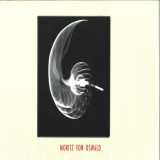
What are the differences and similarities between human and artificial sound, between oscillations generated by vocal cords and synthesizer voices, voltage amplified by speakers? On Silencio, his latest album for Tresor Records, Moritz von Oswald works with a 16-voice choir to explore this concept.
Drawing from the ensemble works of long-standing inspirations Edgard Varèse, György Ligeti and Iannis Xenakis, von Oswald and Vocalconsort Berlin delve into the space between sounds, creating a deeply textured collection that shifts between light & ethereal and
dark & dissonant.
As masterfully demonstrated in the early work of von Oswald and Mark Ernestus’ influential Basic Channel project, repetition and reduction are key elements here, much in the tradition of techno and minimalism. The vast dynamism of the human voice adds to the
profound weight of electronics while offering up a rhythmic source and sonic noise palette unexplored in von Oswald’s repertoire. In Silencio, von Oswald dredges a dank murk, pulling clouds over a distant pulse. It hangs, ready to take on new forms.
The compositions were written in von Oswald’s Berlin studio on classic synthesizers, such as the EMS VCS3 & AKS, Prophet V, Oberheim 4-Voice and the Moog Model 15. These abstract recordings were transcribed to sheet music for choir by Berlin-based Finnish composer and pianist, Jarkko Riihimäki and performed by Vocalconsort Berlin in Ölberg church in the city’s Kreuzberg district, only few metres down the road from where Dubplates & Mastering and Hard Wax opened their doors for music enthusiasts for many years so long. The recordings of the choral versions were then incorporated into the synthesized parts of the album and brought into anew electronic context; in Silencio, the focus is not on using one means to imitate the other, but to sonically discuss the tensions and harmonies between the two worlds and create a dialogue between them.
The relationship between von Oswald and Tresor Records goes back thirty years, all the way to Blake Baxter’s Dream Sequence in 1991 - which von Oswald engineered alongside Thomas Fehlmann. The collaboration with Fehlmann lived on, seeing the duo team up as 3MB with Eddie Fowlkes or Juan Atkins. More recently, the Detroit-Berlin connection continued as Juan Atkins & Moritz von Oswald present Borderland.
For von Oswald, Tresor Records and also the participating guest musicians of the choir, this release brings together audiences from other musical areas, cross-pollinating; Silencio is an album that stands for itself beyond the musical genre boundaries.
Daneshevskaya (Dawn-eh-shev-sky-uh), the project of New York's Anna Beckerman, writes songs steeped in the folklore of her own personal history. Her artist (and real middle) name comes from her Russian-Jewish great-grandmother, a person whose presence she has always felt although their paths never crossed in real life. Beckerman grew up in a musical family; her father is a music professor, her mother studied opera and her own songs often feel spiritual, less so by any religious connotation and more as a hymn-like, archival record of Beckerman's own past, present and future. Her first release on Winspear, Long is the Tunnel, contemplates how the people you meet impact the pathway you travel. Through songs like the poignant "Somewhere in the Middle," the lilting "Challenger Deep" and the surreal "Big Bird," the EP paints a distinctive collage between traditional songwriting and modern turns of phrase that remain spellbound in the unadulterated luster of self discovery. The seven songs read as both patchwork memories/diary entries and elegies to those in her life. Co-produced by Ruben Radlauer and Hayden Ticehurst of Model/Actriz and Artur Szerejko, the final versions of these initial demos also saw contributions from Lewis Evans of Black Country, New Road (saxophone), Maddy Leshner (keys) and Finnegan Shanahan (violin), adding to the gleaming instrumentation that makes each song sound like a world within itself. Long is the Tunnel is filled with hyperreal imagery that denotes a form of escapism: two of the songs reference birds, which Beckerman describes as about being transfixed by something you can't take your eyes o‑ while also being able to leave at will. Long is the Tunnel prolongs this feeling of being completely immersed: by desire, emotion, and fantasy, though the somber melancholy of her love songs are often more manifestations to her internal self than anyone else.
Zero Years Kid is the alter ego of Joachim Badenhorst, one of the most fascinating and adventurous Belgian jazz musicians from the last 2 decades. He plays with the international band Carate Urio Orchestra but also as musician with Naima Joris or Chantal Acda.
Zero Years Kid started of as a solo project, but has grown into a full and organic live band.
Badenhorst sees Zero Years Kid as a kindergarten to explore other ideas and interests besides of jazz. Together with Jan de Vroede, Lennart Heyndels and Erik Heestermans he brings a colorful amalgam of hip-hop, pop, dance and r&b with playful and poetic lyrics in his native language: Dutch. Next to his clarinet and sax he adds samples and electronica which results in a surprising fantasy world where it is wonderful to wander.
In 2019 debut album Ongerijmde Rijmen was released. Successor Geen Grenzen is ready and will be released on November 10th of this year on Klein. Geen Grenzen is an ode to breaking boundaries, to color outside the lines and to don’t get hung up on expectations.
The title track is a rework of No Limits by 2Unlimited. The song got translated, slowed-down and distorted to the universe of Zero Years Kid. The album is a poetic and humorous trip with a melancholic twist, and themes like the covid pandemic, intense arguments that are forgiven, writers-block, desire and love.
Bas Jan return with a polished and poignant collection of perfectly-crafted pop songs that retains their authentic indie edginess. 'Back To The Swamp' is a heady tussle between their incorrigible DIY ethics and new responsibilities. Serafina Steer, Charlotte Stock, Emma Smith and Rachel Horwood cast an examining eye over modern times, lost love, Tarot intuition and long days in an everyday swamp. Awash with lush chorale effects, orchestral hewn loops, pin sharp electronic beats and sublime harmonies. Back To The Swamp is filled with thought-provoking stories, it's a reflective worldview. It's a polished and poignant collection of perfectly-crafted pop songs that retains their authentic indie edginess. These new studio recordings feature more accomplished pop production; filled with cerebral one-liners that pluck at the senses. And, there's a nod to an eclectic mix of influences; The Pet Shop Boys, Lizzy Mercier Descloux, Kate Bush, Heaven 17 and Jon Hassell by way of Brian Eno. Witches, Tarot readings, road signs, Salt-N-Pepa namechecks and a river all cried out, welcome to the swamp_ "Beautifully fractured art-pop" MOJO
Geordie Kieffer doesn’t f**k around. The impish, self-proclaimed “God Father of Agro Pop” writes hard core pop bangers that bark and bite, drawing influence from both his questionable past and the city-wide playground of his L.A. hometown. His sound is something novel: a sexy and comedic dark romp through Pop, Hip-Hop and Electro that dives head first into your brain and just won’t get out.
After the breakout of his first two singles, “Red Line” and “Swinger,” a sold-out headlining tour in Canada, he’s ready to drop his debut album, Just Kill Me Already, a heavy hitting and ferociously playful Alt Pop jamboree of self introspection and bravado. Like a charming outlaw dwelling on the outskirts of pop music, Geordie Kieffer is dangerous and oddly refreshing. His music will no doubt inspire fist fights and flirtation, anger and elation
Take the 101 north out of Los Angeles, and you'll pass by Agoura Hills, where the core duo of the band Dub Thompson grew up. Whatever you see in that town won't readily prepare you for the music they wrote while there, but you're free to look."Most everyone who's in a group who's our age lives on the Internet," says guitarist Matt Pulos. "The kinds of things that have shaped our band aren't anchored to any one time or place."Pulos and his bandmate, drummer Evan Laffer, are currently both 19 years old, and are putting that line of thought to the test; their musical influences travel from the Midwestern malaise of Big Black and Pere Ubu, to Kraut pioneers Can and Kraftwerk, while bowing to the British belligerence of The Fall and This Heat.Recording the album while living with Foxygen's Jonathan Rado at his rented house in Bloomington, the band had its first taste of a heavy Indiana summer, and all the humidity and insect life that buzzes along with it. "We woke up every day, ate hard-boiled eggs and stood on a porch," says Pulos of the experience.Their first collection of songs slyly unties the shoes of genre and convention, shapeshifts mischievously, and tramples on the promises delivered on the name itself.There are only eight songs on this rangy debut.Intense blasts of hook-filled noise rock ("Hayward!"), rocksteady marionette stomp ("No Time"), hypnotic bouts of doomy poetics ("Epicondyles"), outlandishly sexy groove rock ("Dograces"), and a number of other bite-sized forays into parts unknown are made manifest across 9 Songs. The vibes are strong here. Pulos sings and plays like he's working out long-standing grudges, pulling the most sinewy tones from an acoustic guitar and ripping huge chunks of demon flesh out of his electric. Laffer matches him step for step on the drums, an exacting presence behind the kit who pushes even the band's more placid moments into bouts of tension. Together they succeed in animating their musical ideas to startling, almost unnatural life. Reverb units, keyboards, samples and processing gluing everything together, saturated in the August heat and worn in until they sound second nature, it's like somehow you've been listening to these songs forever.
Lately, if you blink you may miss Goose fly by. Attributing much of their success to a dedicated and exponentially expanding fan base, steady creative output, and a collective commitment to improvement, the band is now universally recognized as a premier musical act nationwide. Dripfield, Goose's forthcoming studio offering, is a tale of introspection, carefully dissecting the details of the journey. Produced and engineered by D. James Goodwin at The ISOKON in Woodstock, NY, Dripfield is the band's first full-length project completed exclusively with an executive producer. Known for his unconventional recording style and eclectic equipment collection, Goodwin guided Goose through an entirely new process of album creation. Undoubtedly the product of multiple sold out concerts and consistent recording and songwriting, Dripfield is anchored by the theme of balance. Fittingly, the project features a mix of unheard originals and re-imagined catalog staples.
Flora Yin Wong’s ravishing interiority finds lucid expression on an absorbing second album for Modern Love, manifesting her instrumental storytelling in a syncretic bind of supernatural themes with hyperrealist, concrète sound design.
Through ten parts, Flora crystallises the ennui that followed an uncanny, disorienting trip to East and Southeast Asia. “On an unexpected stopover in Hong Kong after five years away, my friends took me to a Bazi reader one night - something I was curious about, but much of a ritual for them - ” Flora recalls. “My father told me that when I was born, he had obtained an auspicious reading that since stayed like a guiding talisman with me. It was almost past midnight but people were still lined up, rather shaken and visibly upset, to see the old man. He had kind eyes and asked me why I was there and I said I was at a crossroads. He asked me my time and date of birth, and told me to pick one of his four little white canary birds as a vessel for divination.”
This was the final stretch of an ultimately aimless few months across the continent, including a 20 year overdue return with her father to his adoptive family in his hometown Kuala Lumpur - for many reasons, ended up as a strange and uncanny trip. She spent solitude in a haunted house during the quiet snowfall of Kyoto, where she might have offended some spirit... and nights in mountain temples with South Korean monks, and an equally strange feeling return to the Island of the Gods.
“It culminated in what felt like a final disillusionment with Asia - sudden deaths and a breakdown in beliefs - somewhere I never really have or will be able to connect with. The process of the reading summoned a final blow to my gut - an overwhelming sense of rootlessness, and understanding that all there is is emptiness and entropy. No birth-divined protection, just a measurement of the night sky based off nothing and everything.”
Heavy with a sense of nightmarish dissociation and grief, Flora read about Giuseppe Tartini’s ‘Violin Sonata in G Minor’, aka the Devil’s Trill Sonata, a notoriously tricky c.18th composition which attempted to transcribe music heard in a dream, which the composer felt he could never fully bring into reality. It’s this soporific motif that binds and underpins ’Cold Reading’, finding Flora chasing the dragon of fleeting fantasy through passages of etched melancholy, pinched with hypnagogic jerks that linger in the memory.
From her use of the ‘Devil’s Trill’ Sonata in ‘All My Dreams are Nightmares’ through evocations of subtropical humidity in the Bryn Jones-esque, resonant hand-played percussion of ‘Konna’ and ‘Banjar’, to a breathtaking dreampop denouement ‘Nectar Dripping’ and the Enya-like lush of ‘Beautiful Crisis’, Flora blooms her ideas with an openended ambiguity so often missing from so called Ambient music, ushering the listener into a soundworld that disturbs and displaces, just as much as it calms.
I want to introduce this work ‘Halos of Perception’ to you in the way Lisa introduced me to it, through the sharing of experiences.
Lisa and I met for a walk near South Yarra station to talk about this work, when inclement weather made it too wet to visit the tunnels. Moving almost seamlessly from a world of leisurewear, infinite milk alternatives and blaring neons to stretches of green by the water that brimmed with sounds and life, we saw a few people climbing the Burnley bouldering wall, butterflies suspended in the hot wind and lots of plants I wish I knew the names of. Overhead the cars rumbled like a ceaseless animal as we talked about hidden ecosystems, imagined spaces and networks of care.
Stemming from a serendipitous encounter with an original Cave Clan member that led to many underground adventures, this work explores the worlds that exist outside of our perceptions. By the river, I leafed through a selection of tunnel photos Lisa had printed off at Officeworks, revealing alien textures, tunnels that stretch on into abysses of their own, underground flowing streams. Light is sparse and delicate, something reflected by the flickering and wavering in Lisa’s piano compositions.
As we walked, we noticed the ways in which infrastructure is often designed to keep people out—cut doors into fencing and clipped wires show an active and ongoing defiance of this. We spoke about how her Cave Clan friend used to go down to this painted room and read in solitude, using candles for light. The way sound exists underground, encased in these hollow cement tunnels, a painted room with its own deep hum. How people used to hold underground shows, how there were rules for safety (no exploring after rain, never alone) that was shared with each other. This warmth and absorption of other’s experiences is present in Lisa’s work—it’s immersive, like wading in water.
We paused on the walk to eat berries and talk about how The Caretaker creates transitory worlds with recorded sound, how this technology captures memory, and the exploratory pursuits of Pauline Oliveros’ Deep Listening Band. These citations of memory and deep listening inform Lisa’s use of analogue and classical instruments, playback artefacts and acoustic feedback in her own world-building. When speaking about ‘Halos of Perception’, she describes it as a fascination with timbre and acoustic artefacts.
Ideas of networks and enmeshment are felt deeply in Lisa’s compositions, motifs overlaid over each other evoking the image of many hands interlinking playfully, tenderly, softly. The way her compositions delve into refraction and echo makes me think about the tunnels and the way they splinter off into many possibilities. Manipulated textures reminiscent of the chalky, earthy, moss air that perfumes the tunnels’ subterranean air. Tactile details that gesture towards close attention, verging on obsession.
This work is also about imagining ecosystems of potential. Lisa shared with me that during this project, she has been reimagining subterranean networks in dreams, thinking about oral traditions, and the way water moves—from the sky to the earth, through the ground, connecting all these spheres. Realised in collaboration with hyperreal video artist Tristan Jalleh, Lisa’s dream landscape melds waterfalls, leaks, flower graffiti, and hidden messages lit up by imagined light sources with existing subterranean networks. There’s a real sense of wonder in this world she has built, how the city can reveal itself to you with some patience and care, how the city and its secrets can find its way into your dreams.
— Panda Wong
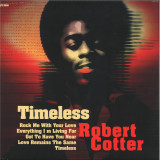
Worthy re-issue of Robert Cotter's second late 70's soul album! Comprising five songs, with four of them being quite lengthy and well-structured for the dance floor, was entirely recorded in the United States by top-notch American musicians. "Timeless", a fresh and lively expression of late 70s soul music, was recorded at the Sundragon Studio in New York. This studio was home to legendary bands such as Talking Heads and Ramones, as well as a few 'disco studio groups' like Andrea True Connection, Tony Valor Sound Orchestra, and Camouflage, who recorded songs that later became considerable hits. For this reason, it's believed that the positive outcome of the album can be partially attributed to Ned Liben, an eclectic New York musician and co-founder of the studio in the Flatiron district of Manhattan, served as an exhaustive interlocutor for any artistic and technical needs. He was also the arranger of "Rock Me With Your Love", the most significant song on the album. Ned's successful mission was to capture the maximum timbral fidelity of Robert Cotter's voice using appropriate recording techniques, assisted by Michael George Ewing, a talented engineer who had previously worked on similar projects with well-known artists like Carol Williams, Maryann Farra & Satin Soul, Touch and Tony Valor. In fact, the piece features original and melodious lines, coupled with an excellent steady rhythm, spanning approximately 8 minutes and 30 seconds - in short, "a delightful sound for every beat." This ensured that the performance of the young singer-songwriter from New Jersey was faithfully reproduced without neglecting the overall musical landscape. The other four songs, arranged by Ben Lazzaroni with the same musicians as the first piece, are no exception. Best Record also delivered on the promise to Robert's older brother, Karl Potter, a powerful percussionist transplanted to Rome, for whom the roman label produced "Sweet & Salty Cha-Cha-Cha" (12", 1986). Robert Cotter, an artist about whom almost nothing has been written, is poised to gain recognition once word spreads about his album, which has been entirely remastered by Dom Scuteri and features a more congenial tracklist. This album is destined to be truly 'timeless', ready to captivate audiences around the world. Even the new cover artwork, created by Nerina Fernandez, pays homage to an artist who, despite expressing himself with elegance and simplicity, radiates energy and exudes love. "Timeless" is an inevitable revelation for anyone who missed it at the time, and for the next 40-plus years, it will remain an absolute must-listen for Robert Cotter's many fans, leaving them all in awe. In addition to the reissue on the classic glossy black vinyl, a strictly limited edition on red vinyl will be released exclusively by Clone Distribution.
Worthy re-issue of Robert Cotter's second late 70's soul album! Comprising five songs, with four of them being quite lengthy and well-structured for the dance floor, was entirely recorded in the United States by top-notch American musicians. "Timeless", a fresh and lively expression of late 70s soul music, was recorded at the Sundragon Studio in New York. This studio was home to legendary bands such as Talking Heads and Ramones, as well as a few 'disco studio groups' like Andrea True Connection, Tony Valor Sound Orchestra, and Camouflage, who recorded songs that later became considerable hits. For this reason, it's believed that the positive outcome of the album can be partially attributed to Ned Liben, an eclectic New York musician and co-founder of the studio in the Flatiron district of Manhattan, served as an exhaustive interlocutor for any artistic and technical needs. He was also the arranger of "Rock Me With Your Love", the most significant song on the album. Ned's successful mission was to capture the maximum timbral fidelity of Robert Cotter's voice using appropriate recording techniques, assisted by Michael George Ewing, a talented engineer who had previously worked on similar projects with well-known artists like Carol Williams, Maryann Farra & Satin Soul, Touch and Tony Valor. In fact, the piece features original and melodious lines, coupled with an excellent steady rhythm, spanning approximately 8 minutes and 30 seconds - in short, "a delightful sound for every beat." This ensured that the performance of the young singer-songwriter from New Jersey was faithfully reproduced without neglecting the overall musical landscape. The other four songs, arranged by Ben Lazzaroni with the same musicians as the first piece, are no exception. Best Record also delivered on the promise to Robert's older brother, Karl Potter, a powerful percussionist transplanted to Rome, for whom the roman label produced "Sweet & Salty Cha-Cha-Cha" (12", 1986). Robert Cotter, an artist about whom almost nothing has been written, is poised to gain recognition once word spreads about his album, which has been entirely remastered by Dom Scuteri and features a more congenial tracklist. This album is destined to be truly 'timeless', ready to captivate audiences around the world. Even the new cover artwork, created by Nerina Fernandez, pays homage to an artist who, despite expressing himself with elegance and simplicity, radiates energy and exudes love. "Timeless" is an inevitable revelation for anyone who missed it at the time, and for the next 40-plus years, it will remain an absolute must-listen for Robert Cotter's many fans, leaving them all in awe.
Spirit of Sundaze Ensemble (SOSE) is the latest evolution from London based DJ / producer, label and party series Secretsundaze. Sitting at the intersection of live music and electronic music innovation, leading contemporary musicians reimagine, record and perform a selection of tracks which have been foundational across Secretsundaze’s 20+ year history, embracing a myriad of influences from Balearic to synth pop to Brit funk.
EP 1 opens with their first single, a re-imagination of Photek’s seminal ‘Mine to Give’. Featuring Wayne Snow on vocals and garnering wide support from the likes of BBC 6 Music heads Gilles Peterson and Nabihah Iqbal, through to NTS and Worldwide FM tastemakers including Zakia, Moxie and Colleen ‘Cosmo’ Murphy, the tempo is slowed and explored in a more synthy 80s production style.
Next is their take on Joyce Sims’ (RIP) ‘Come into My Life’, moving the original Mantronix production into a more contemporary UK / Street Soul / Balearic territory.
The B-side sees them take on beloved Phil Asher (RIP) production, Nathan Haines’ stunning ‘Earth is the Place’, a classic Secretsundaze record if ever there was one. Featuring the vocals of Cherise, the SOSE version is a dance floor ready update which will appeal to all lovers of proper deep, soulful-leaning house music, one for the heads.
Closing the record is a flip of Wbeeza’s ‘Coast Spotting’. Featuring synths from the excellent Hinako Omori, this one goes in with an extended late night transcendental electronic / jazz rework with the original’s looped lead line modulating throughout the piece.
Leading musicians feature on the record including Myele Manzanza (Theo Parrish, Sound Signature), Lewis Moody (Zeitgeist Freedom Energy Exchange), Nikos Ziarkas (Theon Cross, Chelsea Carmichael), Oli Savill (Basement Jaxx), and Johnny Brierley (Fofoulah).
Following their debut sold out show at Southbank’s Centre Queen Elizabeth Hall, the Ensemble next take to the London stage at the iconic EartH Theatre, Dalston on September 21st for an EP launch party as well as a headline open-air concert at Las Dalias, Ibiza as part of Beat Hotel on September 30th.
All in all, an impressive debut showcasing the breadth and scope of this exciting new live project from Secretsundaze founder James Priestley, one to watch.
Your favourite lez-loonatics Roza & D. Tiff are back at it with the Tapestry Of Sound; Reloaded - revamped and ready to rock your local dancefloor. With 3 freaky sleek OG cuts from the dynamic duo and a deliciously danceable remix from the progressive prince Olsvanger, you’d be a stupid boy to miss out on this one.
Expect all the classique Step Ball Chain-isms & more, tongue & cheek techno, percussive paradise and bass heavy bombs, with a few naughty noughties references for the True HeadsTM.
Introducing the 2nd Volume of Super Biton of Segou’s Afro.Jazz.Folk collection, led by Malian conductor Amadou Bah, also known as “The Armstrong Malian”.
Deviation Records is thrilled to present this collaboration with The Mieruba Label Team, showcasing the diverse musical roots of 1970s Mali, combining Afro-Latin percussion, Mandingo songs, jazzy brass, and funky guitar. The album also features the captivating ArtCollage of Emma Margo incorporating visuals of Segou, Mieruba Art Center, and Françoise Huguier.
The graphic design is conceived by Les Mouches Graphic Design, with a selective varnish made from traditional Bogolan fabric of the Segou area. The audio was remastered by Raphael Jonin and cut by MB Mastering Studio in Aubervilliers.
Get ready for a full sensory experience!
Prisoners Of Love And Hate' is an offering to community, to desires that imprison and liberate, to people in all their divinity and ugliness. Apostille - aka Night School Records’ captain Michael Kasparis - presents is third album with a bang, a bursting ball of NRG, empathy and bristling living.
Like its predecessor 'Choose Life', 'Prisoners…' was recorded at Full Ashram Celestial Garden in Glasgow with Lewis Cook (Free Love) through 2022. A nine song treatise on pop music, trauma, ecstasy and the mundanities between the extremes, Kasparis takes on classic 80s synth pop, 90s house music, 00s trance, wistful balladry, 70s power pop. The thread that runs through the album is a boundless energy, an openness to the moment, to living
the pains and joys equally, open armed.
This is a place of no judgement, of possibility, challenge and comfort. The nine songs on 'Prisoners…' can be read as separate ruminations on the feelings and desires that imprison our experience. Through it all the narrator struggles against them, transported and fooled by love and longing, peering through the bars of anguish, flailing in a cell of emotions. 'Saturday Night, Still Breathing' breaks the album open with an invigorating scream and pounds into the night with a nod to Whigfield, Kasparis’ punk roots and house music. Over a thumping 909 kick and bassline, Kasparis pens a love letter to being with people, the collective energy of hearts in a room, thrumming together, making it through together. Written as private ritual magic, manifesting community during a time of isolation, it’s as if the party is the most important thing in the world. 'Rely On Me' imagines 80s Mute synth pop, Erasure fronted by Bruce Springsteen, romance doomed and forever perfect in the mind. 'Spit Pit' completes the opening triptych of fast paced rollercoasters, an ode to childhood forged out of change and discomfort told with a bold, epic production by Lewis Cook, AFX breakbeats, 160BPM kicks and a commanding vocal performance.
On 'People Make This City', Kasparis eases off the gas, lets the mist blowing in from the Clyde River blow over his version of Glasgow. A wistful ballad about small town gossip and coming through anger to leaving it all behind, it provides some shadow to the bright light of the vibrancy of the album. 'Natural Angel' owes much to 70s and 80s power pop, guitar melodrama, Thin Lizzy and Rick Springfield through the prism of co-dependence in relationships. It’s a theme that’s picked up in slow burner 'Nothing But Perfect', a hazy synth soul-inflected song about building your own mythology, constructing a dream to hide in, to hold on to. The most surprising track of the album, 'Summer of ’03' re-imagines the trance music of early noughties Europe into a lament for an eternal summer or as a fan once put it, “Meat Loaf with a donk on it.” A recognition that all ecstasy has tragedy laced within it, it’s a theme that is sewn throughout the LP and continued on the final song 'Feel Good (You Can Make Me)'. Referencing Shalamar’s 1982 mega hit by way of N-Trance’s piano riffs, the epic closer is riddled with heartbreak, vulnerability and power. It’s a testament to the new confidence in Kasparis’s songwriting, sure, but also to the enduring power of people to come together in mutual dependence and love. If ecstasy is always laced with tragedy, then 'Prisoners of Love and Hate' can always reach out between the bars to meet in the middle, the eternal now.
“I hope you die by my side, the two of us at the exact same time, I hope we die not long from now, the two of us at the exact same time”
By the time Molly Nilsson released History, she had already established a fledgling cult status built on homemade YouTube videos and home-burnt Cdrs. Writing from a distance, it’s clear that History is the first classic album in her canon and arguably a classic of the 21st Century underground music panorama.While the methodology on History hadn’t changed from Nilsson’s previous 3 albums – it was recorded solo at The Lighthouse, Nilsson’s home studio based on a Berlin crossroads – on this record the songwriting reached a new peak and the emotional scythe cut deeper. Here, Nilsson managed to combine a cosmic, outward looking perspective with an intimate knowledge of the human condition and its place in these turbulent times. In truth, no other songwriter has excavated the modern psyche so clearly and perfectly.
The tracklist to Nilsson’s fourth album reads as an early greatest hits for Molly Nilsson followers and also serves as the perfect entry point to a whole world the artist has been building for the last 10 years. In Real Life crystalises the millenial obsession with relationships built online, with a generation paying for the baby boomer’s excesses with their anxiety towards the harshness of every day life. It’s a call to arms for a generation who fell in love on Skype. On I Hope You Die, one of Molly Nilsson’s most iconic songs, the songwriter flips the song title into a tale of doomed romance, a relationship based on discommunications and the thrill of the other. It’s also one of the most heartfelt songs full of pathos written by anyone, an ode to obsession. Doomed romance, life lived on the flipside of day and the role of the outsider in society are themes that crop up through-out History. On
Bottles Of Tomorrow, the narrator is sweeping up, in love with the night and examining the remains a society leaves behind.
On City Of Atlantis, Nilsson veers from the plaintive balladry she had begun to make her name with, embracing trance-like synth and dance music details to create an unlikely anthem using the mythological city as a means to comment on the patriarchal rendering of history by power. With by now trademark panache, she turns complicated subject matter into a glorious song that transforms into an ecstatic pop moment.
Hotel Home, another Nilsson classic, paints loneliness not as a debilitating anxiety, but as a powerful to that propels the artist forward through her travels. It’s a song that hints at an endearing self-awareness also; the writer is never at home, living life on the road, content that “the world will find me when the time is ripe.”
There’s never been a greater time.