
нет на складе
Закажите сейчас, и мы закажем товар для вас у нашего поставщика.
Последний логин: 4 г. назад
11,30 €
Закажите сейчас, и мы закажем товар для вас у нашего поставщика.

Закажите сейчас, и мы закажем товар для вас у нашего поставщика.

* 15 brand new and exclusive cuts from some of their favourite producers, alongside another 13 tracks that have been the soundtrack to your clubbing experience their nights. If you have been to any of their nights in the last few months then you may well have heard these being road tested.
* Highlights include the Spectrasoul remix of LSB's 'Rollings Sideways' and the sublime Vanguard Project rework of BCee's 'Lost & Found'.
* Support from High Contrast, LTJ Bukem, Fabio, London Elektricity, Rockwell, Etherwood, Technimatic and a whole load more...
Закажите сейчас, и мы закажем товар для вас у нашего поставщика.

* Hospital Records present their latest compilation 'Fast Soul Music' - a welcomed lesson in the art of soul-inspired drum & bass of the high-speed variety. After nineteen years spent building upon it's lounge-core esthetic their extensive library of smooth-rolling sounds is at the ready, now it's time to get retrospective.
* From the work of thirty artists, a carefully selected forty-six tracks highlight the quintessential sounds of soul music in the Hospital Records back catalogue. Not only effortlessly blending classics from Hospital mainstays London Elektricity, High Contrast, Danny Byrd, Nu:Tone, S.P.Y and Logistics but also showcasing the fresh wave of talent that's reached our ears in recent years. The work of Fred V & Grafix, Hugh Hardie, Keeno, Etherwood, Anile, Tokyo Prose and Technimatic showcasing just how prominent soul music is in drum & bass today.
* Accompanying this two-CD collectors item is a perfectly polished mix by longstanding practitioner and newest member of the Hospital A+R team, Nu:Tone. With over two hours of soul-inspired sounds that effortlessly create the ideal soundtrack for any daydream-filled afternoon.
* With a nod back to London Elektricity's '03 classic 'Fast Soul Music' and a look forward to the fresh influx of talent passing through, Hospital Record's latest compilation provides any drum & bass fan with a chance to rediscover those once forgotten gems and dust off the cobwebs from their favourite nostalgia-fuelling drum & bass anthems.
* Digital Marketing: Youtube upload schedule for music and video content on Hospital Records YouTube channel - (260k subscribers), cross promotion exclusive mix upload with UKF Youtube channel.
* Press / Promotion: Comprehensive campaign in-house serving all UK music and dance titles as well as national, regional and student press - Mixmag, DJ, Trap, Notion, Music Week, Future Music, Time Out, Metro, London Evening Standard, The Guardian, The Independent, Dazed + Confused, Vice, The Wire, The Fly, Vice Magazine, Clash. Kmag (interview), D&BA (interview). UKF Website and Youtube Channel. Reddit AMA, FACT Mag TV interview.
* Radio / Internet: Comprehensive in house campain from Hospital Records. BBC Radio1 & 1Xtra support from Mistajam, Friction, B Traits, Annie Mac, Andi Durrant (Kiss), Eddy Temple-Morris (X-FM), DJ Hype (Kiss), D&BA TV Takeover, Rinse FM Hospital Records Show, Hospital Podcast Hospital Records Podcast USA series, Kmag Podcast, Ministry of Sound Podcast. D&BA Podcast, Hospital records Website, Hospital Facebook (262K Likes), Twitter (64K Followers), Soundcloud (48k followers), YouTube (238k subscribers), Hospital Records Mailing List (53k Subscribers)
aG CD 1-7 | Logistics feat. Nightshade and Sarah Callander 'Crystal Skies'
DISC 2
Закажите сейчас, и мы закажем товар для вас у нашего поставщика.
Reissued on Pascal Pinkert's new label 'Phantom Sounds'. Originally release 2019, now remastered with bonus track included! TIP!
Excerpt from the original release text
"On the album, you’ll find a touch of the old and a great deal of new material. ‘Geen Genade’, ‘Wat Voel Je Nou’ and ‘Verloren’ still stand strong in pride of place, reminding us why we love De Ambassade so much in the first place. The opener and title track, ‘Duistre Kamers’ has a dark industrial vibe that is a perfect introduction of what is to come. Somehow ‘Zo Hoog Als De Bogen’ feels warm and cold simultaneously, it maintains an almost spooky tone; ‘Malefica’ in comparison sounds raw, uncut and almost upbeat. ‘Niet Van Mij’ is one of the reasons the album is so special. Its unexpected wavering synths create another contrast of the melancholic and the joyful in one, and the heavy percussion and echoing vocals tie it in with the rest. ‘Laatste Uur’ kicks you in the face, again with this industrial, moody feel and beautifully handled synths. The closing track ‘Wapengekletter’ is elegant, and a new favourite here. The dark vocals, haunting melody and cleverly tempoed percussion conclude the album wonderfully. Overall, De Ambassade has hit the nail on the head and produced this autumn’s must have Amsterdam album."
он должен быть опубликован на 30.09.2026

Presenting the 3rd outing from the DMV crew, thank you for waiting patiently inline. On the A we have Busta Bus, flexing his lyrical flow all over Rick’s sweet Mary Jane. On the flip side, 90s underground stalwart “Red Hot Lover Tone” gives his approval to the Stars in Herbie’s eyes.
Товар уже находится на пути к нам и, как ожидается, будет доставлен из 01.10.2026.

For the label's latest, Oath is proud to present 'Honey Tangerine', the newest mini-album from producer extortionaire Olsvangèr, who serves up his signature blend of hyper-kinetic, ever-shifting dance music.
Olsvangèr's sound and musical journey are forever rooted in the liminal spaces that make up the broad-reaching and ever-shifting electronic music landscape, with his records consistently channeling that in-betweenness that imprints lasting impressions. A classically trained musician with a profound passion for house and techno, Olsvangèr's sonic palette is one of both broad and delicate brush strokes, applying an array of compelling motifs within amorphous arrangements that blend and blur perspectives. His records seek out the faraway fringes as much as focusing on the intensity found in the detail, creating cavernous soundscapes that are impeccably tuned and effortlessly free-flowing. Seemingly genreless, his records are anchored in all that is known and loved, yet due to the music's perspective situated at the intersectionality of electronica, a beautiful anticipation resides within every stanza of his tracks at what may come next. His musical language has found him releasing on the likes of Kalahari Oyster Cult, Hooj Choons and Craigie Knowes, and follows through within his imprint Tofistock, which has been pushing some of the most forward-thinking dance music of recent times.
'Honey Tangerine' touches upon the classic motifs of Olsvangèr's sound, and as always, the room for growth within the record's parameters remains truly endless. Over six tracks, Olsvangèr lays bare the directions of travel, with paths unravelling that feel well trodden yet with some that branch out towards new horizons. 'Source of Thought' opens up proceedings with a captivating ambience, where twinkling hues and lively tones paint the parameters of sound. The chuggy breaks that land deep within the mix drop in and out of view, allowing a deft balance between pure ambiance and rhythm to exchange dialogue between one another. 'In a Nutshell' shifts gears in atmosphere and energy, with all eyes placed upon the club. The shifting rhythm section lifts the acidic melodic features up above, with driving bass notes and a euphoric vocal like lead linking the depths to the heavens. 'Tulpa Nine' swings into heads-down territory, where the drums swing slow and the throbbing bass hits heavy. The auto-tune vocal line up above creates an atmosphere of hazy, smoke-filled rooms, where the party yearns for downtime in anticipation of the next shift in energy.
'Sunrise on the Lips' gives over further chill out room vibrations, where the lights remain low, and smiles reside all around. The enriching drums provide the basis for sitars and glossy keys to glide across the top ends, with the mind invited to dip deep within this enthralling ensemble. 'Zoom It Out' provides the release into the room, with the ante upped. A breaky house leaning number, this cut grooves through its chiming melodic section and groove-laden bass line, with the polyrhythmic drumming pattern doing much to keep the energy residing very high indeed. The record is wrapped up with 'Some Air', which gives over one final jaunt through the airy, slowed-down slipstreams. A wondrous beat is complemented by melodic elements that chime, absorb and quiver, glowing through the night with such charm and feel. An engrossing composition that demonstrates what Olsvangèr is all about - a crafter of sound, where adventure is sought and found, never wavering but curating new connections, feelings, and tones, with an eye on what might come next.
Whether softly undulating or boundlessly expressive, Olsvangèr's music remains a beautiful enigma that serves up both the glorious knowns and the captivating unknowns - 'Honey Tangerine' is yet another chapter in his glorious discography.
он должен быть опубликован на 02.10.2026

Twenty-five years after his debut album I’m Serious permanently altered the DNA of Southern hip-hop, Tip "T.I." Harris is officially closing this chapter with KILL THE KING, his twelfth and final studio album. For a man who has spent over two decades as the self proclaimed “King," the project’s title speaks volumes. This is not a surrender of the crown to a rival, but rather a symbolic death of the ego. T.I. is choosing to dismantle the moniker on his own terms, trading the battlefield for peace, legacy, and the freedom to step out of the booth and into the next phase of his life as an actor and family man.
Rather than leaning on pure nostalgia, KILL THE KING proves T.I. is walking away while his pen is still razor-sharp. The project is anchored by the certified gold lead single "LET 'EM KNOW," produced by long-time collaborator Pharrell Williams, which sets an immediate tone of veteran-level precision and polished bravado. Across the 18-track album, T.I. pulls together a masterclass of multi-generational talent that bridges the gap between his trap origins and modern dominance. The album boasts heavy-hitting Southern anthems like "DOPE BOYS ACADEMY” featuring 2 Chainz, Jeezy, and T-Pain, alongside soulful reflections from the Dr. Dre produced track "WHERE I’M FROM" with Anderson .Paak, Atlanta eloquence with Usher on "GORGEOUS," and moody, atmospheric cuts featuring Summer Walker and YoungBoy Never Broke Again.
Ultimately, KILL THE KING is designed to leave nothing unsaid, directly addressing the trials, tribulations, triumphs, and the undeniable imprint he’s left on global hip-hop culture. To mark the end of this historic era, T.I. isn't just letting the music speak for itself; he will be taking his final bow on the road with The King Succession Tour, bringing his sons Domani and King along to officially pass the musical torch. With this final statement, T.I. ensures that the trap music foundation he helped lay the framework for what will endure long after he sets down the mic. The King is dead; long live the legacy.
он должен быть опубликован на 02.10.2026
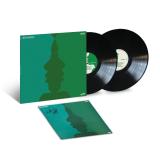
With her 3rd Blue Note album Synonym, Meshell Ndegeocello presents a remarkable album of duets on classic songs that are known, loved, and diverse in tone, “genre”, intent, and BPM. This is an album about joy, love, selfhood, individual representation and universal experience that explores expressions of desire, care, heartbreak, friendship, disappointment, and love in all the forms. All the songs feature two singers who identify as the same gender, wherever that might be on the continuum, and are musically matched for contrast or compliment including Cynthia Erivo, Cat Power, Robert Glasper, Chaka Khan, Madison Cunningham, Laura Lee (Khruangbin), Emily King, Lizz Wright, Lianne La Havas, Moses Sumney, Brandi Carlile, ANOHNI, WILLOW, Bill Callahan, Chris Thile, and more.
он должен быть опубликован на 02.10.2026

Larry June has built a career on making hard work look effortless, and his album Who Coppin’ stands as a masterclass in smooth, lifestyle-driven West Coast hip-hop. The album delivers a high-grade mix of Bay Area luxury, entrepreneurial motivation, and unbothered charismatic flows. Spanning a laid-back audio palette designed for early-morning juice runs and late-night freeway cruises alike, Uncle Larry balances the discipline of a hustle-first mindset with warm, sun-drenched production anchored by crisp organic instrumentation and heavy-knocking bass.
The album features a tightly curated roster of collaborators who align seamlessly with Larry's signature aesthetic. Spoken-word encouragement from Wallo267 sets an intentional tone on the opener "Go Outside Intro," framing the record around execution and focus. Soulful contributions from Jhené Aiko on "California Dream" and Musiq Soulchild on "Pretty Green Eyes" provide lush R&B textures, while NorCal legend B-Legit and longtime partner DJ.Fresh reinforce June’s deep West Coast roots. Meanwhile, Swizz Beatz injects high-energy bounce into "Flex," offering a vibrant contrast to Larry’s understated, cool-headed cadence.
Behind the boards, top-tier producers like Cardo, Teeko, Beat Butcha, Jay Versace, and June Santana craft a nostalgic yet modern backdrop filled with warm sample flips, smooth G-funk synthesizers, and relaxed soul grooves. The project builds to an emotionally grounded conclusion on "God Got Us (Ain't Too Many)," where June strips away the flexes to offer direct encouragement to his audience, proving once again that consistency, self-belief, and steady progress remain the ultimate luxuries.
2xLP, Gatefold Jacket, 18x24 Poster Included
он должен быть опубликован на 02.10.2026
Per Hammar returns to his own Dirty Hands imprint with the four-track ‘Ontario EP’, once again showcasing his raw, robust and groove-led style.
Swedish producer and DJ Per Hammar has steadily carved out a reputation as one of the most distinctive voices in contemporary underground electronic music. As the founder of the acclaimed Dirty Hands imprint, Hammar has built a platform synonymous with deep, groove-led and uncompromising club music, while other productions have found homes on some of the scene's most respected labels including Sushitech, Kalahari Oyster Cult and Craigie Knowes. Here we see him returning to his own home and delivering stripped-back late-night tools, psychedelic excursions and deep, hypnotic dancefloor journeys. Hammar consistently balances functionality with personality, a quality that has established him as one of Europe's most respected underground talents.
Title cut ‘Ontario’ leads with Per laying down crisp, crunchy drums alongside dubby bass tones, fluttering stab sequences and intricate modulations, all delicately ebbing and flowing throughout the composition. ‘Off Disk’ follows, fusing organic percussive elements with weighty sub-bass, shifting synth flourishes and bubbling, delayed melodies that steadily unfold across the groove.
On the flip side, ‘Oops All Sixes’ shifts into more acid-tinged House territory, built around a squelchy acid bass hook and saturated drums, while sporadic, expansive delays and hypnotic reverberations drift atop the track’s raw, loopy foundation. ‘Airex’ concludes the release by diving deeper, stripping things back to oscillating percussion, a snaking low-end pulse and airy chords.
он должен быть опубликован на 02.10.2026

SKY BLUE VINYL[23,49 €]
Die Synthesizer-Künstlerin und Komponistin Emily A. Sprague verbindet intuitive Klangstrukturen mit ausdrucksstarkem Songwriting und schafft so weitläufige Klangwelten, die unmittelbar und mitreißend sind. Nach ersten Experimenten mit Gitarre und Keyboard als Teenager gründete Sprague Anfang der 2010er Jahre die Indie-Band Florist und gewann damit ein treues Publikum. Nach einer Reihe gefeierter EPs nahmen Florist fünf Studioalben auf, die sich durch ihre intime Weltgestaltung und durch Spragues gefühlvollen Gesang auszeichnen. Den Soloalben "Hill, Flower, Fog" aus dem Jahr 2020 und "Cloud Time" aus dem Jahr 2025 - einem Album mit modularen Synthesizern, das live in Japan aufgenommen wurde - nachfolgend, ist "Cyano" ist ihr erstes Soloalbum, das Spragues intuitive Synthesizer-Musik mit dem Songwriting verbindet, für das sie mit ihrer Band Florist bekannt ist, und führt Gesang in ihr bisher rein instrumentales Schaffen ein. Absichtlich minimalistisch gehalten, ist Spragues Gesang wie eine rauschbehaftete Übertragung, die einen technischen und symbolischen Wendepunkt markiert - mit experimenteller, formloser Musik, die die eher konventionellen Songstile von Florist dekonstruiert. Emotional verankert und von Vergänglichkeit getrieben, spiegelt das Album sowohl Spragues inneren Raum als auch den konzeptionellen Planeten "Cyano" wider und setzt sich mit dem Selbst, dem Anderen, der Ökologie und dem Leben in einer fernen Welt auseinander. Spragues musikalischer Ansatz ist geprägt von einer zutiefst persönlichen Atmosphäre, die darin wurzelt, Geschichten über sich selbst und andere - Formen der innerpersönlichen und zwischenmenschlichen Verbindung - sowie die Unbeständigkeit dieser Versuche zu ergründen. Durch intime phänomenologische Erkundungen bietet "Cyano" subtile und eindrucksvolle Klangtexturen, die Verletzlichkeit einbeziehen. Emily A. Sprague erschafft eine komplexe Welt und erweitert dabei ein Klangspektrum, das zugleich vertraut und zutiefst neu ist - ein Spiegelbild ihres inneren Spektrums, das in andere Welten blickt.
он должен быть опубликован на 02.10.2026

Die Synthesizer-Künstlerin und Komponistin Emily A. Sprague verbindet intuitive Klangstrukturen mit ausdrucksstarkem Songwriting und schafft so weitläufige Klangwelten, die unmittelbar und mitreißend sind. Nach ersten Experimenten mit Gitarre und Keyboard als Teenager gründete Sprague Anfang der 2010er Jahre die Indie-Band Florist und gewann damit ein treues Publikum. Nach einer Reihe gefeierter EPs nahmen Florist fünf Studioalben auf, die sich durch ihre intime Weltgestaltung und durch Spragues gefühlvollen Gesang auszeichnen. Den Soloalben "Hill, Flower, Fog" aus dem Jahr 2020 und "Cloud Time" aus dem Jahr 2025 - einem Album mit modularen Synthesizern, das live in Japan aufgenommen wurde - nachfolgend, ist "Cyano" ist ihr erstes Soloalbum, das Spragues intuitive Synthesizer-Musik mit dem Songwriting verbindet, für das sie mit ihrer Band Florist bekannt ist, und führt Gesang in ihr bisher rein instrumentales Schaffen ein. Absichtlich minimalistisch gehalten, ist Spragues Gesang wie eine rauschbehaftete Übertragung, die einen technischen und symbolischen Wendepunkt markiert - mit experimenteller, formloser Musik, die die eher konventionellen Songstile von Florist dekonstruiert. Emotional verankert und von Vergänglichkeit getrieben, spiegelt das Album sowohl Spragues inneren Raum als auch den konzeptionellen Planeten "Cyano" wider und setzt sich mit dem Selbst, dem Anderen, der Ökologie und dem Leben in einer fernen Welt auseinander. Spragues musikalischer Ansatz ist geprägt von einer zutiefst persönlichen Atmosphäre, die darin wurzelt, Geschichten über sich selbst und andere - Formen der innerpersönlichen und zwischenmenschlichen Verbindung - sowie die Unbeständigkeit dieser Versuche zu ergründen. Durch intime phänomenologische Erkundungen bietet "Cyano" subtile und eindrucksvolle Klangtexturen, die Verletzlichkeit einbeziehen. Emily A. Sprague erschafft eine komplexe Welt und erweitert dabei ein Klangspektrum, das zugleich vertraut und zutiefst neu ist - ein Spiegelbild ihres inneren Spektrums, das in andere Welten blickt.
он должен быть опубликован на 02.10.2026
Mining the rich seam between transcendental escapism and crushing physical pressure, Sciama delivers his first album for Samurai Music. Exploring an energetic pitch between half-time and full-tilt 170, the London-based producer sculpts brooding soundscapes of sheer peaks and deep pits, driven by unrelenting but light-footed forward motion and an imposing strain of sound design. As Sciama, Michael Watters has been marking out his exacting sound since 2019 with an assured run of albums on ASC's Auxiliary label. His second EP for Samurai — the Wave Interaction 12" released earlier this year — pointed to his current area of focus inspired by the teachings of electronic music pioneer Daphne Oram. Contemplating the relationship between precise electronic frequencies and human perception, Celetal Form now delivers the full findings of his exploration. Oram coined the term 'celetal' in her 1972 book An Individual Note of Music, Sound and Electronics, trying to sum up a connection between the celestial and electrical. It's this spiritual dimension contained within sound waves Watters is concerned with, and the shape of the music on Celetal Form follows suit. In an opening statement of abyssal ambience, 'Overload Into Silence' establishes an atmosphere that endures throughout the album. Caught between steely textures, vaporous reverb tails and subtle harmonic interactions, the glacial shift of the many layers under Watters' control reveals an intense amount of detail at play even before drums and bass come into play. From there on in, the intensity ramps up from one heavyweight stepper to the next. There is agile, brittle top-end percussion at work on the likes of 'Induced Resonance' and 'Consuming Pulse', perhaps the most closely connected to D&B, while 'Rational Echoes' and 'Scanning Waveband' deal in urgency and techno-coded tension. A half-time roll guides the huge kick drum undulations of 'No Panacea', and 'Celetal Emergence' opens up into more spacious surroundings to let the subtle microtonal inflections of the synth tones set a curious mood. The two 'Intermodulation' tracks bring Watters' exacting approach into sharp focus, pushing the drums back and foregrounding alien frequencies that coalesce into unfamiliar yet strangely uplifting forms. Throughout Celetal Form this uncanny sensation charges the music with a power that reaches beyond its immediate, surface level impact. This intentional reflection on Oram's visionary thinking charges the current sound of Sciama with energetic intrigue that stands apart and invites a mindful, maybe even spiritual, engagement.
он должен быть опубликован на 02.10.2026

Anting brings to vinyl the natural evolution of a project born on Bandcamp: a release built around honest audio and the human connection between the artists involved. It also gives a clear view into Alessio Landini’s musical universe, tied together by one thread: intense rhythms, hypnotic spaces, and raw analog textures, with a subtle nod to organic and traditional tones, all built for the sound system.
With contributions from Ketch and Uväll, the release opens up the palette while keeping it tight and coherent: a physical record that hits in the club and holds up for deep listening.
он должен быть опубликован на 02.10.2026
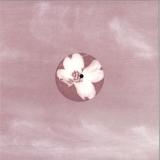
Entre Nous is the debut album from Eden Aurelius. A beautifully poised collection for Short Span. A gorgeous showcase of her singular talent within a sparkling scene. Recorded in Brooklyn, NY, this is an innovative, and graceful body of music that feels truly contemporary.
This album felt important for us to have out in time for summer. Emerging out of the heat, a feeling brought alive with the sun. Music that evolves throughout seasons and carries a spectrum of emotional range.
Entre Nous is tight, but expansive. Its depth and complexity is languid but has gravitational pull. Like much of her work, this record feels so refreshing because its tracks are both sensory and illusory tones built in gossamer and transitory layers of satin. They have a remarkable sense of presence and pressure - floating rhythmically without sharp edges. There is guidance and gentle control that lead throughout the record.
The B side opens with “Ion” featuring Pontiac Streator. The song is formed out of a textural haze. A glistening, iridescent light appears, broken through fabric, projecting a blurred image onto the surface nearby. A hypnotic and evocative collaboration. The shared connection between the two artists’ command of rhythm and ambient language.
Mastered and cut by Mike Grinser at Manmade.
Art by Lucas Dupuy.
Есть у нас в наличии и готов к отправке

ATA00BS will be released in a Number Stamped Edition, with Full Cover Art made by Pepe and will be Sealed / Shrinkwrapped.
'Keep it simple' 103636;"Reissue- Tracklist A1. Unknown A2. Pain Is Full B1. Damaged Memory B2. Damaged Memory ( Iori Remix ) Shortinfo: Roberto Bosco has selected Kiny's music to better prepare his first 12, consisting of four tracks, named 'Damaged Memory'.The track Unknown (A1) leads off the dance of the release on Last Drop Records imprint. It's a proper exploration in an unknown sonic territory to most of the people, and also a difficult element to make out for those who are novice to the visonary component in the musical poetic of Kiny. The track starts with rounds of recurring sirens, almost deafening, framed by dark and ghostly noises. Something not easily identifiable, ambiguous and unknown, as the title itself says, is perceptible in its sound. All this helps to shape a bad presage that fades away into the mystery. On the same side we find Pain Is Full (A2) that, according to the producer, was born in a moment of pain which can be overcome only by fighting. In fact, the track is characterized by a more combative and insistent tone, made up by the sound of snare and tom entering since the start and determining an atmosphere of contrast able to shake the listener until the end. Shouts of encouragement suggest an initiation rite in which there is struggle for survival. The titletrack, Damaged Memory (B1) has more quiet register with less ghostly vocals, perceived at times, unlike the previous tracks. The sounds have a vanished effect, such as when you create a halo on a white sheet with the dust of a pencil just sharpened. You will hear a sort of democracy among the sounds held together by the voice, a metaphor of a damaged memory, as the title itself recite, that always makes the same process till the end: it commences by recalling but then forgets. Last, is the version of the producer Iori, Damaged Memory (B2), on the same side.
он должен быть опубликован на 02.10.2026

он должен быть опубликован на 02.10.2026

On Last Night At Marienbad's latest, the imprint brings together three of the brightest souls found within the realms of Jazz, namely Mauricesax, 9ick and Milan93, with their collective talents synergising effortlessly on 'A Garden Between Us', alongside a stellar cast of remixers who add even further delight between the grooves….
As a genre, Jazz has perhaps lent itself the most to other musical universes, in that its curious heart, endlessly experimental nature, and parameter-defying spirit have wrapped itself deep within the core of countless albums, scenes, and music makers. It's a genre that welcomes reinvention, consistently defying its contents and always reaching out to find new methods of expressionism. Electronic music, in its many forms, has truly embraced Jazz perhaps like no other movement of music has, with a truly astonishing array of records surfacing in the past 40 years which have blended Jazz's unique motifs with grooves, chords, and emotive excellence. From 90s Jazz house and UR Techno, through to Future Jazz, downtempo, and Hip Hop, and around many other suns, there remains such an intrinsic and symbiotic relationship between the two musical realms that caters to those who wish to live music both within and out with themselves.
As practitioners of blending electronica and Jazz, few do it like the trio of Mauricesax, 9ick, and Milan93. All three are known for their distinctive soundscapes, yet share commonalities in terms of musical language, feel, and sense of progression. Bringing them together allows for overlaps in their sounds to emerge, and just like Jazz itself, this is where the intrinsicness of sound begins to blossom. 9ick brings his softly evolving vibe to the table, one which was so prevalent and celebrated on his 2025 album 'SMIL'; Milan93 draws from his focal point of exploring fill-laden grooves and a myriad of emotive sensibilities; and Mauricesax draws up his extensive musicality that exists at the corner of jazz, electronic, and experimental music, along with running musical workshops all over the globe.
'A Garden Between Us' represents the trio's core tenets, with this immediately obvious from the record's opener, 'Rhodora'. A gentle solo piano quickly evolves into a series of powerful rhythmic pulses, with brass lines bringing vitality and feel to proceedings. The track shifts gears with purpose, transitioning between musical vignettes of the highest order, with the synth work doing much to bind the transitions together. 'Tulip' emerges slightly differently, with glossy Rhodes tones and an unravelling rhythmic undercurrent setting an enthralling stage. The track flourishes amongst sweeping textures, coming up for air amongst a deeply hypnotic rhythmic section that holds on and never lets up. 'Honeysuckle' lands next, which sees the trio emerge with a boundless, dynamic soundscape. The drums shift within the undertones, as keys, chords, horns and hip-hop vocal samples dance around the pulse, capturing the imagination with their narrative-like placement. Wrapping up the A side comes 'Camellia'. A dazzling array of harmonic sounds converges around the transfixing rhythm section, which emerges from deep below to lavishly roll out over the midsection, with the delicateness of the instrumentation a real highlight here.
The B side features two exquisite remixes, with Pacific Coliseum's version of 'Tulip' landing first. Beginning with a signature four to the floor to get things going, his careful handling of the source material is seen in the tactful introduction of the blissful elements that made the original cut so impactful, with great focus placed on emotive fidelity. The result is a summer-bound house number that reimagines the original in all the right ways, flipping it into a euphoria-driven jazz-laden pacer that reaches for the heavens as much as it drives right into the heart. Teuteu then showcases their take on 'Honeysuckle', and at 9 minutes long, represents the longest cut on the record - and the experience is all the richer for it. Leaning heavily into dance music flavours, Teuteu shifts perspective totally into the realm of the club, with the walls beating hard to the kicks. The sax lines that drift ethereally up top keep eyes closed and souls full, as the dance shifts into the next phase.
An experience that drifts from the daydreaming, to soul-warming through to the club shaking - what else is left to experience, except for 'A Garden Between Us' and how it will brighten up life itself….
он должен быть опубликован на 02.10.2026

SECOND REISSUE ON THIS HEAT’s OWN NEW IMPRINT FOLLOWING ‘THIS HEAT’ (TH01LP) WHICH WAS UNCUT ‘REISSUE OF THE MONTH’ RECENTLY WITH 9/10 REVIEW + 4-PAGE FEATURE WITH Q+A.
*24 bit/96 kHz re-master from original analog tapes.
*Heavyweight 180gm vinyl and heavyweight sleeve with pantone printing to match original 1979 release.
Simon Reynolds on Health and Efficiency:
“For some fans, Health and Efficiency is This Heat’s peak achievement – their most concentrated blast of visceral intensity and wayward experimentalism….Lead track “Health & Efficiency” combines fierce angular rock that fully lives up to Cunningham’s belief that This Heat could become a postpunk King Crimson, with a multi-part babble of vocals, clattering percussive timbres, and found sounds.’’
Flipside “Graphic/Varispeed” is more subdued and hypnotic: a wavering tonescape whose duration depends on whether you play it at 45 rpm or 33 rpm. This reissue reproduces the original release’s striking cover image of a human figure painted in blue by Pete Cobb, along with the cryptic flipside of text in many different languages.
Although widely considered to be Post-Punk’s finest, This Heat actually began performing and recording their music in 1976, the early days of London’s punk era. Within their two albums and an EP they perfected a strange and volatile new strain of avant-garde rock that time has proved to be massively influential, a blueprint for much that would follow: post-rock, math rock, homemade musique concrète, experimental electronica. Numerous critics have recognised the band's influence on the music of Sonic Youth, Glenn Branca, Steven Wilson, Public Image Ltd., Radiohead, Swans, Shellac, Young Knives, Black Dice, Lightning Bolt and numerous other experimental and post-rock bands.
Disbanding in 1982 they have left an undeniable legacy that has only continued to grow in stature and relevance.Having recently passed the 50 year anniversary of their first gig, and the recording of material that appears on their debut album, the group’s surviving members Charles Bullen and Charles Hayward, true to their DIY roots, have set up an imprint to release their recordings for their growing fan base that is increasingly recognising their influential place in music history.
‘They went beyond punk before punk had properly started…the entire album is a controlled explosion of ideas. Nearly fifty years on, This Heat’s debut is something the world has still not completely caught up with.’ - Simon Reynolds
‘Over the years, there have been bands to play as aggressively, or even as strangely, but very few have been able to rise from their collective influences and histories to create music so singularly distinctive and inspiring.’ – Pitchfork 9/10
‘This Heat sounded like the future then ... and still do now.’ - Dan Snaith (Caribou)
‘This Heat had a certain kind of force the post-punk bands were unable to adequately control without falling foul of rawk excess, and which the punk bands—albeit blitzing and rowdy—were too basic in form to build.’ – John Calvert , The Quietus
он должен быть опубликован на 02.10.2026

This VA release brings together four producers who share a common language: hypnosis, movement, and an obsessive attention to sound design. Across two sides of vinyl, the record moves through different shades of deep and mental techno, held together by a sense of restraint and clarity rather than force.
Na Nich opens the A-side with a mental yet groove-driven piece, where impeccable sound quality meets a clean, deliberate design. LFO-driven elements float underneath the surface, almost speaking, giving the track a voice of its own without ever breaking its hypnotic hold.
Forest On Stasys follows with a tribal and deep approach that still hits with weight. Shakers and layered percussion drive the movement forward, building a rhythmic body that feels both organic and controlled.
On the B-side, Translate stays true to a purely mental identity: repeating LFOs and speaking tones that fold in on themselves, always kept clean and precise, letting the repetition do the work.
Save Your Atoll & Gabriele Santucci close the record with a deep, tribal-leaning cut full of groove and motion. Bongos, shakers, and background percussion build a danceable hypnosis, where every element serves the movement.
Four tracks, four voices, one shared sense of direction — a record built for the floor, but never at the expense of detail.
он должен быть опубликован на 02.10.2026

The latest release from Rainbow Disco Club’s label imprint, Beyond Space And Time, is the debut compilation from The Melting Hours, a live project by Wata Igarashi and Kuniyuki. WataIgarashi continues to make his mark on the history of techno, whilst Kuniyuki has long been revered as one of Sapporo’s greatest treasures. The two artists, who have long held mutual respect for one another, met whilst performing at the Draaimolen Festival 2025, and this encounter gave rise to The Melting Hours.
‘Blue Sun’ is imbued with a freshness reminiscent of the ambient jazz masterpieces released by prestigious labels such as ECM and Windham Hill. ‘Liquid Dunes’ sees the organic tones of the flute and percussion melt into over ten minutes of abstract sound textures, whilst the breathtaking ‘Cloud Touch’ awakens amidst a swirling vortex of pulsating downbeats and arpeggios. It is said that ‘Blue Sun’ was created by reconstructing studio rehearsal recordings, whilst ‘Liquid Dunes’ and ‘Cloud Touch’ were crafted from live recordings at Draaimolen 2025. The essence of these works—and indeed of the project The Melting Hours itself—lies at the heart of their improvisational nature.
It brings to mind the Rainbow Disco Club event back in 2026, where they wove their sounds amidst fresh greenery and surrounded by listeners under a clear blue sky. It felt as though the pulsating energy was spreading across the dance floor, guided by a session from The Melting Hours that seemed almost like a living creature. The organic breath one senses in this work not only evokes precisely that scene but also allows us to feel the unique, ephemeral nature inherent in this project—and, consequently, the boundless possibilities that stem from it.
Rainbow Disco Club のレーベル・ライン'Beyond Space And Time'から放たれる最新作は、Wata IgarashiとKuniyukiによるライブ・プロジェクト、The Melting Hoursによる初の音源集だ。テクノ史に残る実績を現在進行形で刻み続けているWata Igarashi、長きに渡り札幌の至宝として尊敬を集めてきたKuniyuki。兼ねてよりリスペクトを送り合ってきた両名がDraaimolen Festival 2025への出演を契機に邂逅し、始動したプロジェクトがThe Melting Hoursである。
ECMやWindham Hillといった名門レーベルのアンビエント・ジャズ傑作群を彷彿とさせる瑞々しさを湛えた"Blue Sun"。10分以上に渡るアブストラクトなサウンド・テクスチャーの中にフルートや鳴り物のオーガニックな音色が溶ける"Liquid Dunes"と、そして鳴動するダウンビートとアルペジオの渦に覚醒する圧巻の"Cloud Touch"。"Blue Sun"はスタジオでのリハーサル音源を、"Liquid Dunes"と"Cloud Touch"はDraaimolen 2025のライヴ音源を、それぞれ再構築し楽曲化したものだという。これらの作品、ひいてはThe Melting Hoursというプロジェクト自体のエッセンスは、その即興性を核としている。
WataとKuniyukiがゼロから音を立ち上げ、お互いのエレクトロニクス/生楽器を操る技術、それぞれエレクトロニック・ミュージック以前にフリージャズやニューウェイヴ/インダストリアル等に傾倒した時期を含む、音楽家としての半生を持ち出し合う感覚。そこに、例えばDraaimolen出演時に降り出した雨や、リハーサル時にスタジオに迷い込んだ蜂のような、外的かつ偶発的な要因、感情やムードの起伏までもが絡み合う様相。互いの予想を越えるスリルの中で曲が形づくられるプロセスこそが、この作品とプロジェクトを特別なものとしているのだという。
快晴の元で新緑とリスナーに囲まれ音を紡いでいった、去る2026年のRainbow Disco Clubを思い出す。まるで、生き物のようなThe Melting Hoursによるセッションに導かれ、脈動するエネルギーがフロアに伝播していたようだった。この作品から感じられる有機的な息遣いは、まさにそんな情景を思い起こすものであると同時に...このプロジェクトが宿すその場/その時限りの唯一無二性と、それ故に広がっていく限りない可能性をも感じさせてくれる。
он должен быть опубликован на 02.10.2026
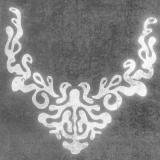
»Baby Ghost« is the debut album by double bassist and vocalist Jordan Sand. Released through Hallow Ground, it blurs the lines between different genres and modes of expressions, improvisation and composition and showcases the unique playing style the composer has developed. Sand blends her voice with the bowed harmonics and subharmonics of her double bass. At once conceptually rigorous and musically open-ended, Sand’s wordless meditations on death and what comes after are both visceral and explorative.
Sand is a boundary-crossing instrumentalist, performer, and session musician who has worked in folk, free jazz, pop, classical and new as well as experimental music. In 2020, she took a hiatus. When she picked up the bass again, she began stripping down the relationship to her instrument to its core elements, searching for a way to melt the sounds of bow and voice together. This resulted in the appearance of ghost notes, tones emerging from the addition or subtraction of two frequencies, and harmonics that she adds with her falsetto.
On »Baby Ghost,« Sand utilises this acoustic sound and the spontaneous precision of her improvisational practice for pieces that deal with the subject of dying. They move from more polyphonic improvisations toward abstraction, touching upon harsh noise and minimalistic bow-chants before returning briefly to a melodic soliloquy, and finally landing on an extended subharmonic drone. This progression reflects the journey of the spirit after death; the experience of visions, memories, ecstasies and terrors before the dissolution of the self.
Sand performs this process physically, blending her voice with her instrument to explore how the senses might dissolve and merge when they enter a state between life and beyond-or-between-life. Born out of the moment and dedicated to a lost friend, »Baby Ghost« is quite literally an otherworldly achievement.
он должен быть опубликован на 02.10.2026
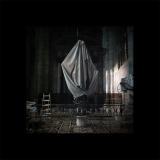
4/5 REVIEW IN MOJO: “HEARTBEAT TONES DISSOLVE INTO BEAUTEOUS SHIMMER AND STELLAR SYNTH MEDITATIONS GIVE WAY TO CAREFULLY ORCHESTRATED ELECTRONICA.”
4/5 REVIEW IN UNCUT: “IT'S MASTERFUL, THOUGH IT WILL LEAVE YOU FEELING LIKE A SPECK OF GRAVEL IN A SELF-DESTRUCTING WORLD.”
NME - 8/10 review (w/c 14 October) "He’s mastered this stylistic skittishness and you’ll do well to find much dispute about his talent."
NARC - 5/5 review (October issue) "An immersive soundtrack to your own personal psychodrama."
WIRE - ONE PAGE REVIEW (October issue) "The sentiments it stirs to life are shadowed and ambiguous, simultaneously personal and impersonal. It is also fantastically immersive, dragging the listener into its turbulent undertows, then washing them back on dry land, intact but changed.’’
Virgins was recorded during three periods in 2012, mostly in Reykjavik, Montreal and Seattle, using ensembles in live performance.
While this album remains committed to a painterly form of musical abstraction, it is also a record of restrained composition recorded live primarily in intimate studio rooms. This record employs woodwinds, piano and synthesizers towards an effort at doing what digital music does not do naturally—making music that is out of time, out of tune and out of phase.
Some pieces go off the rails before forming into anything, others eschew crescendo
compositional structures or bombastic density while going sideways instead. It points to the ongoing development of Hecker's work. It suggests illusory memories of drug- hazed jams or communal music performance that may have never been performed or been heard.
It is an offering of music into the void, a gift of digital filler between distractions. Yet hopefully it also stands as a document of the enduring faith in the narcotic, enigmatic function of music as long-form expression.
Mixed by Valgeir Sigurðsson and Tim Hecker. Additional assistance by Randall Dunn and Ben Frost. Mastered by Mandy Parnell at Black Saloon Studios in London, UK.
он должен быть опубликован на 02.10.2026
TECH043 brings A.B.E.L. and Eluna Vex together through a shared sense of rhythm and purpose.
Both authors have already developed a clear and confident approach, even if wider recognition has yet to catch up. Their music is ready to reach beyond the circles that already know their work.
Across both sides of the record, firm drums, driving percussion and deep atmosphere keep the motion steady. Each track has its own shape and detail, while the shared weight and mood allow the four tracks to be heard as one complete work. DJs get four reliable cuts that can build tension, hold the groove or move a set forward without a break in tone.
The difference between the artists is clear, but never disruptive. Eluna Vex and A.B.E.L. bring separate ideas to the record, yet their tracks feel closely related in character, depth and attitude. This balance gives TECH043 range without losing focus: two artists and one consistent physical drive.
A1. “Unsafe Road” opens the record by setting its rules: full pressure, forward drive and several lines developing at once. It tests the listener’s attention, offering a choice between following the whole structure or focusing on one thread within it.
A2. “Getting Away” works like a spell that pulls the dancefloor together. It follows one clear narrative and a direct sequence of events, building towards a climax where every element lands as one shared impulse.
B1. “Test And Run” opens a more exploratory side of the record. It moves through changing forms and gradually reveals its language, without showing the full picture at once. Structurally complete on its own, the track invites the listener into less predictable territory.
B2. “Subconscious” is built on balance, giving equal weight to every part of the sound without allowing one element to take control. It makes no loud statement, but closes the record with a complete and carefully held form.
он должен быть опубликован на 02.10.2026

r.hitect opens a new chapter with a refined vinyl release that signals both evolution and intention. Exploring subtle textures, intricate rhythms, and a deeper, more introspective sound, this record marks a shift toward a more personal sonic identity.
The release also introduces Croquis, a new label concept focused on capturing music in its purest form — raw, spontaneous, and essential. More than just a label, Croquis is a space for stripped-back expression and meaningful sound.
This vinyl sets the tone for what’s to come: minimal, emotional, and deeply authentic.
Товар уже находится на пути к нам и, как ожидается, будет доставлен из 02.10.2026.
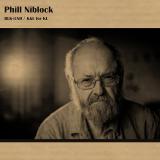
Phill Niblock completed BLK+LND in late November 2023. It is one of Phill Niblock's final compositions and was commissioned by bassist Robert Black (who passed away in the summer of 2023). The piece is based on recordings of acoustic bass and bass clarinet performed by Neil Leonard and Robert Black under Niblock's direction in 2021.
Phill Niblock (1933-2024) as an artist whose fifty-year career spanned minimalist and experimental music, film and photography. He has been a maverick presence on the fringes of the avant-garde. In the history books he is the forgotten Minimalist. Since 1985, he served as director of Experimental Intermedia, a foundation for avant-garde music based in New York with a branch in Ghent, and curator of the foundation's record label XI. Known for his thick, loud drones of music, his signature sound is filled with microtones of instrumental timbres that generate many other tones in the performance space. He said: 'What I am doing with my music is to produce something without rhythm or melody, by using many microtones that cause movements very, very slowly.' In 2013, his diverse artistic career was the subject of a retrospective realized in partnership between Circuit (Centre d'art contemporain Lausanne) and Musée de l'Elysée (Paris). The following year he was honored with the prestigious Foundation for Contemporary Arts John Cage Award. Since 1968 he also put on over 1000 concerts in his loft space in New York.
"On January 6, 2024, two days before his passing, Phill called me to discuss the premiere and tour of BLK+LND. To distract him from his rapid decline, I engaged in his touring plan, only for him to reveal that all the details were still in his head and none of the events had been confirmed. He was entrusting the project to me. Phill would have been thrilled and honored by this concert at the Donaueschinger Musiktage. The thought of one more performance with Robert Black, whom he greatly admired, presenting his new work for low-pitched instruments that he was particularly fond of, andreconnecting with old and new friends in Donaueschingen would have meant the world to him." - Neil Leonard, Berklee College of Music, Boston
он должен быть опубликован на 02.10.2026

GRAMMY® Award-winning reggae icon Buju Banton returns to familiar ground with renewed purpose, setting the tone for a bold new era. Officially reunited with longtime partner VP Records, this full-circle moment reconnects one of Jamaica’s most influential voices with the label that helped define a pivotal chapter of his career. “Butterflies” serves as the first offering from his upcoming al bum, arriving Summer 2026. Produced by internationally acclaimed hitmaker Supa Dups (Rihanna, Drake, Bruno Mars), the track delivers a vibrant, feel-good sound anchored on a re-lick of the ‘Answer rhythm.’ Buju’s unmistakable cadence glides effortlessly across the track, blending classic dancehall energy with a modern sonic edge. The single exemplifies a confident return, one that bridges legacy with evolution while reintroducing the essence of dancehall to a new generation!
он должен быть опубликован на 02.10.2026
The third release on the All City imprint Gurriers, with Rustal and Chaz Moloney coming together for their first release as a duo after years of playing live. The four tracks were started during a six-day session in Chaz’s studio in Friedrichshain, Berlin, and completed together in Dublin. Drawing on a shared love of techno, Pressure Kiss moves through dub, Detroit and raw ’90s influences, with a hypnotic and experimental edge. Opening with the heavy, driving pulse of “Inertia Cycle”, the EP sets the tone for four tracks that keep things stripped back, hypnotic and moving. “Pressure Kiss”, “Born From Oak” and “Head Of The Wolf” continue the journey across two tracks per side.
он должен быть опубликован на 02.10.2026
Djrum's first release since 2019, the Meaning’s Edge EP is an introduction to a whole new world. For the artist also known as Felix Manuel, it was created in the final stretches of six rather traumatic years work. Having carefully honed his techniques and aesthetics, and learned some hard-won emotional lessons over this time, finally he began to work in a quicker, lighter fashion – and to cleanse his palate a little by bringing in a fresh ingredient: his own flute playing. For listeners, though, it will serve as an appetiser, a way into the delights and complexities of this new phase of his creativity.
It’s a serious work in its own right, mind. The use of flutes – including Bansuri, Shakuhatchi, Western Classical, and synthesised all blending and blurring into one another – gives it a coherence and a sense of airiness that unites the five tracks over half an hour, however divergent their beats get. And as in all his music, Felix’s whole life is in here. Ethnomusicology studies, untold hours of DJing everywhere from the gnarliest squat raves to the most rarefied deep house clubs, explorations of his own neurological and emotional makeup, and the technical finesse of someone who is never not creating music or art, all roll into an experience that’s dazzling, delightful and keeps on giving.
Just the opening track ‘Codex’ alone touches on OG dubstep, Aphex Twin-like braindance, post-classical exploration, movie themes and more. The gentle tones and melodies that rise up out of it perfectly conjure Felix’s running theme of a protective bubble that provides a sense of safety and tranquillity even as the beats and acid gurgles and spurts all around it conjure up the slings and arrows of life’s difficulties.
The tone set, the EP moves through ultra-rarefied glass-like percussion in an almost ambient setting, hints of grime’s counterintuitive patterns, and even more hectic patterns influenced by Tanzania’s hyperspeed singeli style of dance music – but always with that perfect balance of chaos and control, unpredictability and protection. It rewards playing and replaying endlessly, it’s a profound and often joyous experience… and it’s only just the beginning. This is the return of a master craftsperson more focused than ever on his vision and vocation and ready to blow your mind all over again.
Mastered and cut on 140g black vinyl by legendary mastering engineer Matt Colton at Metropolis Studios, London. Pressed at optimal media, Germany.
он должен быть опубликован на 05.10.2026

In 1996, Busta Rhymes delivered his debut album, The Coming, three years after the Leaders of the New School unofficially disbanded. Though his talents were evident on those Leaders of the New School releases, Busta went on a series of features that only built up the public's desire for a solo Busta album. Right out of the gate, Busta dropped his classic debut single "Woo Hah!! (Got You All in Check)" that made it abundantly clear he was to be mentioned among Hip Hop's greatest solo artists. The energy and originality packed on that one song set a tone for the album that displays Busta's raw talent and ability to bend words with his ever rambunctious flow. The album features production by Easy Mo Bee, DJ Scratch, Q-Tip, and J Dilla. Songs such as "Everything Remains Raw", "Abandon Ship", and "Still Shining" all rise above as The Coming's stand-out tracks, but "Ill Vibe" is the album's crown jewel moment. Busta sounds right at home over this J Dilla beat, trading verses with his Native Tongue cohort Q-Tip. The Coming was a critical and commercial success for Busta Rhymes. It reached #6 on the Billboard 200 chart in 1996 and has since received a platinum certification from RIAA. As mentioned, The Coming boasts the hit single "Woo Hah!! Got You All in Check " which reached #8 on the Billboard Hot 100 chart in 1996. It was nominated for a 1997 Grammy Award for Best Rap Solo Performance. It also ended up sporting another hit single, It's a Party featuring Zhané. The Coming shows amazing variety where Busta can break free from the bells and the whistles of the Busta Dungeon Dragon flow to explore other ways of leaving our jaws open by his incredible lyricism. The Coming surely lives up to its title, as Busta delivers a performance that ignited his impeccable solo career.
он должен быть опубликован на 05.10.2026

Clear Vinyl - Repress!
Trumpeter Don Cherry, an Ornette Coleman soulmate and a world musician decades ago, became one of jazz's many early losses 10 years back. But saxophonist Pharoah Sanders, who joins him on this fizzing 1966 set, has since ascended to cult status, and he is still around to admire . In the 1960s, he knew no melodic fear at all, in which respect he was aptly partnered with Cherry. This is a quartet set, strongly influenced by the melodic approach of Coleman, but with a fierce abstraction of tone quite different from Coleman's playful lyricism.
Moreover, the rhythm team of Ed Blackwell on drums and Henry Grimes on bass provides a scintillating underpinning for the music that is worth listening to all on its own. Sanders' mix of Coltrane's yearning long notes, Ayler's ghostly, fluttering wail, Coleman's fast, bumpy phrasing and his own manic bagpipe screams certainly separates the faint-hearted from the stayers on the opening Awake Nu. But the conversation between Sanders and Cherry is light, lyrical and engaging on The Thing, and the saxophonist even gets into a stubborn, Sonny Rollins-like repeating Latin vamp on There Is the Bomb. An unflinchingly quirky classic. (THE GUARDIAN)
он должен быть опубликован на 05.10.2026

2x12"[30,21 €]
Often credited as the father of multi-media theatre, Alwin Nikolais (1910-1993) took complete creative control over his productions - including cutting-edge approaches to lighting and costume that transformed human bodies into shifting sculptural shapes, while also composing wildly innovative electro-acoustic and synth-based audio as accompaniment.
After initially experimenting with musique concrète and tape manipulation (as demonstrated on the 1959 LP Choreosonic Music of the New Dance Theatre of Alwin Nikolais) Nikolais became the first owner of Robert Moog's synthesizer at the Audio Engineering Society convention in New York in late 1964. Relying heavily on the Moog and later the Synclavier synth/sampler, these 21 tracks document Nikolais' highly-prescient compositions across the mid 1960s through to the late 1980s - existing not only as extensions of his other-worldly choreographic productions, but standalone pieces of foundational mid-century American electronic and experimental music.
"Born in Southington, Connecticut in 1910, Nikolais’s early years and early career were in acting, music and puppetry. It was not until the late 1930s that he began his work as dancer/choreographer in Hartford, Connecticut, where he was commissioned by the Avery Memorial Theatre, a part of the Wadsworth Atheneum, to create an evening-length work to the music of Ernst Krenek. Previously his work and study as a pianist-organist found him accompanying silent films. This sort of accompaniment required from the musician not only a playing skill but also a versatility in improvisation, matching movement to sound, and evoking mood to situation.
Nik was drawn initially to dance by his involvement with the percussion scores used by the illustrious early twentieth century German dancer Mary Wigman. In trying to learn more about percussion, he was lured into dance class and thus his career began. His development of music and dance occurred simultaneously. His introduction to the twelve-tone technique opened his mind to the expanding areas of atonal music, and his dealing with music as sound per se. In 1948, after being appointed director of the Henry Street Playhouse in New York, Nikolais formed the Playhouse Dance Company, later known as the Nikolais Dance Theater, and began his aesthetic orientation toward dance as a study of motion. By the 1950s, he had ceased creating literal dances and began his explorations and eventual milieu as an abstractionist.
Sound became an important part of his abstract theatre. For his first dances, which involved his new thinking of dance as both a visual and kinetic art, he used live percussion scores in which he directed his dancers to play instruments of all nature. There was a combination of children’s toy instruments as well as harsh and resonant automobile brake drums, and other pitched auto parts which he also used to accompany classes. Once he installed his own tape recording machines, he quickly used the limited range these instruments provided in a new way, slowing and increasing speed and reversing sound. He also made the sounds adhere to the choreographic structure (not the other way around), thereby giving the dance its independence from the musical phrasing. But the real need remained: the search for new sound. Nik made a sound library, recording noises and percussion and vocal sounds, which the French aptly called musique concrète. Needless to say, he became a master at splicing bits and pieces.
From 1956 to 1962 Nikolais composed eleven major scores for his theatre pieces using such techniques. In 1963, James Seawright, who at the time was assisting Nik in his productions and also working at the Columbia-Princeton Center for Electronic Music, recorded a sound bank for the production Imago (1963). With this material, Nikolais created his first synthesizer score. Imago won the Paris Grand Prix in 1968 and launched the Nikolais Dance Theatre towards its national and primarily international acclaim.
During the same period, Seawright came to Nik and told him of a young man who had invented and constructed a simplified synthesizer and insisted that Nik visit the electronic fair currently being held in New York. Nik did so and met Robert Moog. He was completely taken by the new machine and after making some suggestions to Moog, (which Moog made), Nik bought the inventor’s first machine with the aid of a Guggenheim Fellowship. Moog himself was astonished by what his machine could produce for Nik. This machine was later acquired by the Museum of Musical Instruments at the University of Michigan at Ann Arbor as the first Moog synthesizer. The Synclavier was Nik’s next source of sound and since the mid-1970s remained the major instrument in the Nikolais soundroom.
Alwin Nikolais has been honored and awarded throughout the world. He has received the French Legion of Honor, the Kennedy Center Honors, National Medal of the Arts, two Guggenheim Fellowships, as well as Mellon, Ford, and Rockefeller grants. He has been a recipient of NEA grants since 1966, been awarded five honorary doctorates, all for his remarkable achievements in Dance Theater. His genius has influenced several generations of artists."
—Murray Louis
он должен быть опубликован на 05.10.2026

'Double Seven, released by Trojan in late 1973, was the last album Lee 'Scratch' Perry would release on the label for some considerable time, and it was essentially the final album project he put together before establishing his own Black Ark studio. Opening track 'Kentucky Skank' sets the tone with a slow creeper whose frying sounds underscore its role as a praise song to the Colonel's KFC recipes; the cosmic Moog blips come courtesy of Ken Elliott at Camden's Chalk Farm studio, also prominently featured on U-Roy's double-tracked, stereo-panned gambling ode 'Double Six.' David Isaacs' 'Just Enough' was cut a few years prior, which makes it slightly out of phase with the rest of the set, though the enigmatic 'In The Iaah' sounds mightily fresh, with its uncredited chorus said to come courtesy of the Wailers. Perry's own 'Jungle Lion' has hilarious roars from the maestro at the start, strangely grafted atop a reggae re-make of Al Green's 'Love and Happiness.'
'Overall, Double Seven melds the soul, funk, reggae and dub elements that were constant in Perry's work during this phase. His enhanced audio spectrum and endless reference points would keep his music continually apart from that made by his peers.'
—David Katz (excerpt from the liner notes)
он должен быть опубликован на 05.10.2026

Accomplished trumpeter, composer, bandleader and educator, Kamal Abdul-Alim has been actively involved in creative music for decades. He has toured Africa, Europe, the Caribbean and the United States. He has recorded with all kinds of bands, large and small, and performed in festivals all over the world. “He takes the postbop of the 50s and free-form jazz of the 60s and turns it into an even balance of fine textures. Alim, who is highly underrated, has one of the most beautiful tones and concepts of jazz. A master of improvisation, he knows the art of weaving different ideas, whether they stem from Manhattan’s lower East Side or Europe” (Hugh Wyatt, New York Daily News). “Dance” was recorded in 1983 but first released on vinyl in 1987. Rhythm section includes drummer Idris Muhammad. Original pressings are extremely rare and expensive. “Brotherhood” is a much sought after track on the jazz dance scene. There is a high demand for this title again on vinyl and pressings are limited to 1000 copies, all individually hand numbered.
он должен быть опубликован на 05.10.2026

Manchester-based producer Lily Mumby, the creative force behind Lapalace, has chosen Lavender as her botanical muse for this sixth instalment. Like the aromatic herb that grows from tiny seeds to fragrant purple stalks, her compositions unfold with a similar patience and elegance. Her synthesisers breathe with a natural rhythm, creating textures that emerge and recede like morning dew on lavender buds waiting to bloom.
The standout track ‘new age night’ – a stunning love child of William Basinski's decaying tape loops and Aphex Twin's intricate programming—carries subtle lavender-inspired tones, balancing the plant's calming essence with hypnotic rhythms. Just as lavender requires thoughtful tending before rewarding the gardener with its distinctive aroma, Lapalace's landscapes reveal deeper complexities with each listen.
Much like gardening itself, Mumby demonstrates an innate understanding of when to intervene and when to allow natural development. This approach echoes throughout her career, from her debut EP "Ephemera" which caught the attention of Insult to Injury Records' Timothy Clerkin, through to her contributions to Chez De Milo's "So It Goes" Remix EP and Manchester label Skiptrace's various artists compilation.
Her work across BBC Introducing and fossil.radio reflects this same philosophy – creating environments where sound, space, and organic movement find their natural harmony. But this composition really feels that Mumby has come of age. "Music To Watch Seeds Grow By Vol. 6" represents the continued cultivation of Lapalace's distinctive sound and demonstrates the maturity of an artist way beyond her years. This music stands as a lighthouse through a thick fog of nostalgia, much like lavender standing tall amidst an English cottage garden.
Early DJ support including - Auntie Flo, Ruf Dug, Courtesy, Vladimir Ivkovic.
он должен быть опубликован на 05.10.2026

Emerging from the house scene of the 2000s with his label Place Blanche, Greg Kozo has been a bartender in naughty bars, music director at Galeries Lafayette, bassist in funk bands, and legendary producer and DJ with his former band Make The Girl Dance. Far from settling down, he returns to the arena with a sharp sound. Several catchy tracks such as "Reviens" and "After" are sultry and subversive electro-pop songs, reminiscent of the sensuality of French Touch House or 80s Synth Pop. These tracks are performed by La Montespan, a mysterious creature and poetess of carnal desires, who gives them a gently erotic tone. In the dead of night, "Flamingos," "The Room," "Who Take Me Higher," and "Club Melancholia" take us to the depths of Paris' hottest clubs, where the beats pound like bodies on fire. "Magnolia" feat. Coeur (from the punk-rock band Schlasss) is a return to raw electro-rock, like a total experience of letting go. Finally, to climb the stairs out of the club, "Amour Fou" and "Turbulences" are hymns celebrating pure love in a couple who have weathered all the dangers of the nighttogether.
он должен быть опубликован на 05.10.2026

Known for his deep, melodic sound and genre- blending approach, Bop enlists the vocal talents of DRIIA and Doktor, alongside a collaboration with bass music specialist Chime. 'Cravings' sets the tone with lush melodies and deep atmospherics and a hypnotic vocal. Minimal yet powerful, this is some of Bop's drum & bass work at its finest. The second track on the EP, 'Siren Eyes', sees DRIIA's ethereal toplines intertwine with Doktor's signature dancehall energy. DRIIA, a rising star in the electronic scene, has been named one of BBC Radio 1's Future Stars for 2024, while Doktor's powerhouse vocals have graced multiple collaborations with the likes of Chase & Status, Sigma, and Friction.
'Dormant' brings a fresh twist with Leeds- based producer Chime who's influence injects a unique blend of melody and weight, crafting an immersive soundscape through mind- boggling sound design. Closing the EP, 'Fungification' dives into Bop's garage influences. Weighty and stepping, expect intricate rhythms, evolving textures and an absolute bouncer of a bassline.
он должен быть опубликован на 05.10.2026
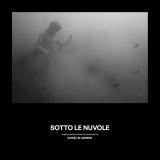
In Gianfranco Rosi’s portrait of Naples, Sotto le Nuvole, the ground shakes periodically. Between Mount Vesuvius and the Tyrrhenian Sea, the fumaroles of the Phlegraean Fields hiss volcanic gas and steam. Below the sleeping volcano, modern day Naples emerges in black and white and fills with voices, with lives. From the traces of history and the concerns of the present, Rosi documents a city immersed in its continuous past, with Daniel Blumberg’s minimal soundscape hovering in a sonic space between liquid and air.
Tasked with creating a soundscape that would suspend space within Rosi’s film, Blumberg called upon the extended technique of saxophonists Seymour Wright and John Butcher to create a gossamer fabric of traces and sounds abstracted from their instruments. Having transitioned from theoretical physics to the saxophone, John Butcher has always deeply considered space in the context of his playing. His concerns are with flow, density and how the saxophone is situated in the living world. Zeroing in on the core sonic properties of the mechanical and acoustic components of the saxophone, Seymour Wright has integrated its every breath, reed vibration, keypad clatter and hissed microtone of his alto into his own, unique improvisational language. In his work with these two seminal players, Blumberg makes his most concentrated soundtrack to date - reinforcing the film's sense of overlapping time and space, and pushing at the limits of experimentation.
Initially recorded in Daniel’s flat in London, Butcher and Wright centre themselves around long, consistent tones, so soft that it seems breath is being gently pulled from the saxophone's bell by an invisible hand. Blumberg himself adds haunting bass harmonica, and recordings of Wright’s launeddas - a traditional and ancient triple pipe polyphonic reed instrument from Sardinia, Italy. Blumberg then travelled to the volcanic region of Baia, next to Pompeii. Once a flourishing classical Roman city loved by Nero, Baia slowly sank under hydrothermal pressure, leaving the city in a kind of geological purgatory. Using specialised geophones and hydrophones, Blumberg took those initial recordings and amplified them underwater, sending them calling out across the ruins of Baia’s mosaics, Nymphaeum statues and villas.
“It was important to me that the music was whispered in the same landscape that Gianfranco has worked for the past three years, so that you can hear the volcanic air gulping, the lapping of the waves, the steam and bubbles popping against John and Seymour’s saxophone breaths – an echo from a suspended time.”
What emerges is deeply melancholic, tender, subtle and right at the edges of audio technology. Submerged in an aquarian mausoleum, the mysterious vibrations of the saxophone and its bell become an echo of an echo, wading from the future into the past. ‘Sotto le Nuvole’ is less a soundtrack than a process of aeration - a sonic puncture in the material of the film which allows its central message to breathe, and a remarkable experiment at the limits of the saxophone’s possibility.
он должен быть опубликован на 05.10.2026

Podcast platform and event promoter based in Milan since 2019, Clausura now launches its label imprint with a vinyl-only four-track VA. The release features contributions from the label’s founders, Brolpi and THEOREM, alongside guest artists who embody the project’s musical vision.
This first record sets the tone for the label’s future direction, shaped by its community, a spirit of musical exploration, and a strong focus on the dancefloor.
он должен быть опубликован на 05.10.2026
