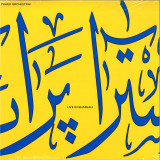
Early, yet mysterious collaboration between Sun City Girls and Life Garden reissued on Unrock. Recorded live on Sept. 22, 1991 and originally released by visionary operator Nick Schultz on Majora Records, Tsunami .2↑ was, still is, and will remain a mysterious album. Because the music didn’t represent or sound like either of the bands involved, they decided to call the group Square 9 and chose to leave everybody’s names off of it. No further information was given, only "Recorded at Grand Theater, Buenos Aires, Argentina". Until today, nobody knows exactly who was behind the record. Rumors came up that is was part of the Sun City Girls legacy, but the "truth" lingered in the dark. So unusual and experimental the approach to record this album was, so remarkable it finally turned out. By the time it was released back in 1992 only a few dedicated core followers were aware of its existence. Everybody played anything and everything on this recording, no specific instruments are assigned to players. Different instruments, various percussion instruments, a piano and other sound sources. Insiders maybe recognize the voices of Su Ling and Alan Bishop or a piano sounding like Richard Bishop playing it. Some of the live sounds have been treated and processed live by W. David Oliphant. It was an impromptu series of improvisations by Sun City Girls and members of Life Garden (W. David Oliphant‘s main working group after Maybe Mental) and probably the last recordings made by members of Sun City Girls before the band fully re-located to Seattle. In retrospect it is a belonging and relevant part of the history of both bands, which needs to be broadcasted to a wider audience. 30 years after the recordings were made, a remastered version of the album is made available through Unrock. While the original release was two side-long tracks, the remastered version is split into 6 separate tracks, remixed and mastered by W. David Oliphant. Vinyl cut by Peter Koerfer at Ivory Tower. Square 9 were (in alphabetic order) Alan Bishop - Richard Bishop - Charles Gocher - Su Ling - W. David Oliphant - Peter Ragan
Search:alan master t
"On October 15, 1965, tenor saxophone master and composer Wayne Shorter recorded The All Seeing Eye, a brilliant and ambitiously multi-layered album for Blue Note. Shorter’s goal for the album was to use “a wider range of colors and textures” while continuing his explorations of “life and the universe and God.” Joining Shorter in his quest are Freddie Hubbard on trumpet, Grachan Moncur III on trombone, James Spaulding on alto saxophone, Herbie Hancock on piano, Ron Carter on bass, Joe Chambers on drums, and, on one track, Wayne’s brother Alan Shorter on flugelhorn.
Blue Note Records’ Tone Poet Audiophile Vinyl Reissue Series is produced by Joe Harley and features all-analog, mastered-from-the-original-master-tapes, 180g audiophile vinyl reissues in deluxe gatefold packaging. Mastering is by Kevin Gray (Cohearent Audio) and vinyl is manufactured at Record Technology Incorporated (RTI)."
Audio premiere for Povratak na Parni Pogon on Monday 24th of May via Music is my sanctury
Video premiere via Clash or Twisted Soul
Airplay - dom servini (soho radio), WYEP Pittsburg (dubmission), WKDU Philadelphia (eavesdrop radio), Jocks & nerds (soho radio), Basic Soul Show, Bondfire Radio NYC + many smaller stations across EU, UK & US
LP review - Mojo, Songlines agreed so far
Key selling points:
Kozmodrum are pioneers of the Croatian nu-jazz scene
Kozmodrum's second albumGravitywon the highest award in Croatia, Porin
Individual members of Kozmodrum as well as Kozmodrum as a collective are acclaimed musicians in the Balkans and have won numerous prestigious awards for their work
Their music is like a DJ set played live - as all the music is played live with 'traditional' instruments by the Kozmodrum ensemble
numerous great reviews, but not many in English - we're looking to introduce the band to UK audiences with this release -- this is one review in english for their album Gravity:https://exclaim.ca/music/article/kozmodrum-gravity
Our PR for this 3rd album by Kozmodrum is done by Francesco Soragna (Jus Like Music) with specific focus on UK market.
BIO:
Kozmodrumhave been pioneering a new approach to electronic music in Croatia, often described by the band as Organic Dance Music. Techno, House and Dub styles intertwine through a continuous set, played by a live band on guitars, drums and keyboards.Simultaneously, the tradition of jazz ensemble performance is stitched into the architecture of music itself.
Kozmodrum have released 2 albums, 'Na Tragu Satelita' in 2016, and 'Gravity' the following year, receiving a Porin Award for the latter (the Croatian Grammy). Individual band members also received numerous awards for their accomplishments and are considered by many to be pioneers in the Croatian nu-jazz scene. Kozmodrum's main influences are Tycho and Elektro Guzzi, as well as Jaga Jazzist with whom they performed live. The band have played numerous festivals and concerts, with Kozmodrum's members performing with Hans Joachim Roedelius, noise/art/sound figure Sunao Inami, as well as jazz masters Reggie Washington, Peter Erskine, David Liebman, Alan Broadbent, David Murray and Saskia Laroo.
Onstage, Kozmodrum is a five-piece ensemble that adds a third dimension to their music, written and produced by the band's founder Janko Novoselić. Using the framework of a DJ set, the compositions are made to be played openly, where the beat is 'looped' until a cue is given to make a change or switch to another part. The pieces are often minimalistic to start with, but evolve over the performance into more complex patterns, harmonies and melodies. With constant shifts between the natural and the artificial, organized and improvised, quiet and loud - Kozmodrum create an unforgettable, mantric performance.
In 1970, Kevin and David met whilst they were working in the Labour Exchange Office on Aytoun St, Manchester. Both played guitar and had been searching for other musicians who played atmospheric music. Kevin had been playing in small clubs in Manchester and David performed in a few local bands. One evening, they jammed together at Kevin’s family home, and quickly realized that their playing blended together to form the basis of the sound they had been looking for. In the late ‘70s, the music scene in Manchester was bursting with new bands and music.
However, Kevin and David had little in common with the local acts, being disciples of a more meditative approach. They followed a path of their own, reaching for an otherworldly sound that they heard from artists like John Martyn, David Crosby, Erik Satie, Terry Riley, Eberhard Weber, Alice Coltrane, and Ralph Towner. They experimented combining their acoustic guitars and David’s bass with various effects pedals and techniques to try and achieve a warm and expansive sound that rides the line between ambient, jazz, and psychedelic folk Music.
Towards 1981, they had written eleven songs and accompanied a few with Moog synthesizer laid down by Rob Baxter. All were recorded on cassette decks in their simple home studios. They named this collection of music “Light Patterns”, after a poem Kevin had written. With Light Patterns complete, they set out to find a label to represent their music. They started playing a few gigs in Manchester; Band On The Wall, the Gallery, and other venues, such as Rotters which local promoter Alan Wise had organized. They set up with small amps along with their effects and played as though they were back at home. As Kevin remarks, “It was unusual, to say the least, to play such venues in a low volume chilled out way. However, people listened, often in shocked curiosity, and some even asked for tapes.”
Peter Jenner, of Blackhill Enterprises, eventually picked up the album for his new label, “Sheet”. Peter had managed lots of experimental bands and solo artists, including Pink Floyd in their early Syd Barrett days. He always favored outsiders! The tapes were taken to Strawberry Recording Studios in Manchester, who were surprised when Kevin and David walked in with just a couple of home-produced cassette tapes. Fortunately, they liked them and agreed to master the album. It was then sent to Portland Recording Studios in London for final mastering to vinyl. George Peckham, aka “Porky”, did the pressing with a personal message in the deadwax; “Kaftans, Candles and be Cool Man”. The artwork for the album cover was done by the late Barney Bubbles, a truly visionary artist.
After the album’s release, the pair continued to play together regularly until David moved away from the city. Kevin still resides near Manchester in the rolling hills outside of the city. He continues to experiment with dreamy music in his loft, and we are set to share a selection of his ethereal archival and current compositions in the coming months. David lives a quiet life in a small coastal town in the South, he likes to sail and is an avid cricket fan. We’re excited to make Light Patterns accessible again for the first time in nearly 40 years, remastered from the original tapes. As the original press release said, “Put the album on, lie back and enter the land of no floors”.
'Deutsche Krimi passionnel' oder 'Ostalgie fuer begeisterte Kranken'? Well, this album may very well have been the perfect soundtrack of some very obscured 5-year-planned and very mentally disturbing, for truly some very fucked-up alienating D.D.R. / East German Democratic People's Republic remake of Tarkovski's old sci-fi classic 'Stalker' and that somehow, thank God, never made it to the Elevated Socialist Working Masses, for otherwise that 'Berliner Mauer' would have collapsed much earlier and certainly with a hell lot of more drastic damage! I mean, ''Mein Selbstmord! Im Monschein hinter dem Baum!'', now, what psychotic poetry of Goethean-Nietzschean 'Faustian' 'Sturm und Drang Tragoedie' and Romantic Mass-Industrial 'Todestrieb' Mantra is that? 'Das Ewig Weibliche (oder gibt's vielleicht auch Das Ewig Maennliche?) des alten Werthers Leiden in Teutobuerger Schwarz-und-buchenwaldklinik?' For this dark synth-guided croonin' could have turned into the ultimate 'Alan Vega Suicide' Project of the Soviet Bloc, its bloody very last Collective Act! Mastered by Guy Tavares.
2021 Repress
Erstmals auf Vinyl erhältlich: das hochgelobte Debütalbum "Spanish Breakfast" aus 2009 des französischen Produzenten Rone, u.a. auf #17 in den "Top 25 Records of 2009" bei Electronic Beats. Eine fantastische Melange aus Electronica, Ambient und Techno, gemastered von Rashad Becker, Dubplates & Mastering (Berlin), die massiven Support von Laurent Garnier, Optimo, Jean-Michel Jarre und Sasha erfuhr.
Drumcode treasures Alan Fitzpatrick and Joel Mull link for their debut collaboration, complemented by a rare Adam Beyer remix. This is special in every sense.
Tis the season for something different; interesting collaborations and the broadening of creative boundaries is the order of the day. Long-time friends and techno colleagues Alan Fitzpatrick and Joel Mull are the latest to connect for a fresh production outing, ‘We Don’t Know Anything Yet’. Inspired by the Buddhist saying ‘Nothing is forever except change’, the duo work alongside Swedish band Frangie to craft an ascendent techno cut that explores existential questions about the future, all the while being propelled by a strong rhythmic underbelly.
Beyer’s first remix in two years is inspired. The boss sharpens his focus on the vocal, while teasing out the melody, ripening the track for a mid-morning post-peak-time moment when the sun starts to bathe the dancefloor is a hazy gentle glow. A masterstroke.
“Listening to the track, it’s obviously very connected to what’s going on in the world right now. When I heard it for the first time, I fell in love with the parts so much I decided to do a remix on the spot. It’s two of the old school crew, so the release is very dear to my heart.” – Adam Beyer
- 1: The Ballad Of Crowfoot
- 1: 2 Peruvian Dream (Part )
- 1: 3 Charlie
- 1: 4 Broker
- 1: 5I Pity The Country
- 1: 6C Razy Horse
- 1: 7L Ouis Riel
- 1: 8 S Hool Days
- 1: 9 Te Carver
- 1: 0O Canada!
- 1: Down By The Stream (Starlight Maiden)
- 1: 2 Rattling Along The Freight Train (To The Spirit Land)
- 1: 3 Pontiac
- 1: 4 The Pacific
- 1: 5 Nova Scotia
- 1: 6 The Dreamer
- 1: 7 Sonnet 33 And 55 / Friendship Dance
- 1: 8 Wounded Lake
- 1: 9 Métis Red River Song
- 1: 20 Son Of The Sun
- 1: 2 The Lovenant Chain
- 1: 22 Bear And Fish
- The definitive overview of one of Canada's unsung musical heroes - Rare/previously unreleased recordings, photos, and interviews - Lyrics, discography, and filmography - Audio re-mastered by John Baldwin Mastering - Artwork by Christi Belcourt and Alanna Edwards - Liner notes by Kevin Howes (Voluntary In Nature) - Contributions from the Dunn family, Bob Robb, and Alanis Obomsawin (OC) // How did you first experience the poetry, music, and film of Willie Dunn? In a Montreal coffeehouse during the mid-1960s? On a CBC Indian Magazine broadcast with host Johnny Yesno? At a Toronto record store or Native Friendship Centre at the turn of the 1970s? Waiting outside of the Mohawk Nation Longhouse? Maybe in your parent's record collection on the Rez? A White Roots of Peace gathering? Pow wow? The Mariposa Folk Festival? Or was it that Save James Bay Benefit back in '73? On a good friend's stereo? Sitting around a crackling campfire? How about an old NFB film reel or VHS tape in high school? Or while attending Manitou College? A German concert hall in the 1980s? Maybe a direct action protest on the colonial streets of Canada? Busking in Ottawa during the 1990s? College radio? At Willie's celebration of life service in 2013 alongside Alanis Obomsawin and Willy Mitchell? LITA's Grammy-nominated Native North America (Vol. 1) compilation or the very anthology you hold in your hands? There should be no judgment for coming to things when you do. All that's important is remaining open to life-changing messages such as these_ Willie Dunn shared truth through song and celluloid. His original composition, "I Pity the Country," is an unparalleled statement on the greed and hate created by humankind, recorded in 1971 and still unfortunately needed today. "It's like the reason you're supposed to make music," said Kurt Vile about the song to MOJO Magazine in 2015. With "Charlie," Willie was the first to deliver the devastating story of Chanie Wenjack and the Canadian residential school system to the music community, nearly 50 years before the much-celebrated Secret Path, yet ignored outside of Indian Country and the folk festival circuit. Dunn's film technique, featured in 1968's The Ballad of Crowfoot (NFB), predates the "Ken Burns effect" to great effect. Are you catching the drift? Willie Dunn was not only a trailblazing leader in his time, but well ahead of the curve, simply without the PR push and big money backing of major label players. "He was our Leonard Cohen," said singer-songwriter Eric Landry about his musical hero. The only difference is that Willie refused to play the Hollywood showbiz game. In talent, he is Cohen, Dylan, and Cash rolled into one and along with Buffy Sainte-Marie, Floyd Red Crow Westerman, and A. Paul Ortega, brought a new set of perspectives and realities to the folk music tradition. Willie spoke directly to his people and Mother Earth through his creations, not only from experience but by examining his roots and connecting with the world in which he lived. We are humbled to help honor Willie Dunn. May he never be forgotten_ PEACE
It didn’t always crave mayhem and destruction. There was even a time when it knew peace.
For centuries, its home was safe. Hidden away in the wintery recesses of MACS0647-JD, Alania provided peace and plenty. But that was before The Invasion. Before the Caucasians desecrated all that was sacred in their campaign for intergalactic dominance.
As one of the chosen, it was taken and forced to endure the horrors of captivity. Every memory and allegiance to its former identity was mercilessly reprogrammed. Forged in the fires of greed and death, Bad Robot was reborn.
Now, blinded by rage and bound to a power-hungry master, it leaves only blood and bones in its wake. One thing is certain: no one is safe. Bad Robot is coming for you.
Hawkwind have always been associated with music festivals, most notably the free festivals, where Dave Brock has said that, at
those events, the band is not shackled to appease an audience by giving them what they expect and have paid to see. With that obligation removed, the band can relax and experiment more than usual and gigs become even more fun. Their sessions, where they played for free, sometimes with the Pink Fairies, at Canvas City, outside the official site of the Isle Of White Festival in 1970, are a matter of legend and Nik Turner gained much attention when he painted his face silver and was much photographed as a result. During his set, Jimi Hendrix referred to him as 'the cat with the silver face'. However, when we think of Hawkwind and festivals, the word Stonehenge leaps to the fore.
The band always loved being there, enjoying the whole event as well as the freedom of how and when they played. This was not a time of business, but a time of fun. The most important one of these was Stonehenge 1984, which proved to be the last festival before the authorities moved in the following year to block the festival from being set up and Hawkwind ended up playing a few miles away instead. It was the sad end to an era. It had taken place twelve times and, had it been allowed one more time, it would have become a public event and the powers that be were determined to prevent that from happening. Happily, the 1984 festival was recorded and filmed and the Hawkwind Solstice Eve and Solstice Morning were both preserved...and we should be grateful for that.
The fact that Hawkwind were playing for free didn't mean it was a basic show. As well as the line-up of Dave Brock, Harvey Bainbridge, Huw Lloyd Langton (who played the evening session, but not the following morning), Nik Turner, Alan Davey and Danny Thompson, there were half a dozen dancers, a mime artist and fire spitting. A free event, it was the ideal time to introduce the new rhythm section to the band in the form of Danny Thompson on drums and Alan Davey on bass, with Harvey moved to keyboards. A move which was to have a long term affect in the way he made music, leading to his solo career, as well as years playing synths for Hawklords, in years to come, after his stint as the Hawkwind keyboards player came to an end.. Danny fitted the bill comfortably and drummed for the band until he left in 1988, to be replaced by Richard Chadwick. Danny went on to play for other bands including Bedouin and Pre Med. He also recorded a cassette album called Skinwalker. Alan made a good team alongside Dave Brock and it can be seen on the video just how pleased he was to be playing alongside Dave Brock, a man whom he had only met for the first time in November 1982, backstage at the Ipswich Gaumont. He went on to be the longest serving Hawkwind bass player, before moving on to pursue solo projects and form a nmber of bands. So in terms of the line-up, Stonehenge 1984 had a notable impact on the formation of the band for a number of years and, indeed, the destinies of Harvey, Danny and Alan. As if that were not enough to make the event special in the annals of Hawkwind, they played an interesting and varied main set in the evening, featuring a blend of old and new Hawkwind songs, along with numbers from Inner City Unit and
Bob Calvert's Lucky Leif And The Starfighters album. In keeping with the relaxed atmosphere, there was a considerably extended
version of Ghost Dance, lasting around ten minutes. The sunrise set was special too, with a long, laid-back, jam at dawn, in fitting with the occasion.
A lovely and relaxing start to the day and the kind of jam they couldn't really play to a paying audience. It's good to have the
memories of this significant festival gathered together in three formats.
Enjoy this special set, which commemorates a special event, not only in the history of Hawkwind, but of the saga of Stonehenge festivals.
When a synth master like Steve Moore joins forces with the legendary KPM, magic must materialise. And so it does with Analog Sensitivity: cinematic, enigmatic synthscapes to both haunt and heal.
New York-based multi-instrumentalist/producer/film composer Steve Moore is probably best known for his synthesizer and bass guitar work as Zombi, together with Anthony Paterra. But he is also part of Miracle and Titan as well as being a prolific solo artist releasing music as Gianni Rossi, Lovelock and under his own name. Steve’s music has found a home across labels like Future Times, Mexican Summer, LIES, Static Caravan, Relapse, Kompakt, Spectrum Spools, Death Waltz and Ghost Box, and much of his recent work has been scoring films like The Guest and Cub. Prolific indeed.
The story of Analog Sensitivity starts with those soundtracks, or more specifically the time in between them. Rather than being commissioned by KPM, this LP comes from music Steve was recording sporadically and tinkering with for over three years during the downtime between his film projects. There were no ideas about what it was nor a plan for how it would be released, or even if it was going to be released at all.
However, after Jon Tye invited him to play on the Ocean Moon project for KPM Steve realised that the hallowed library label might be the perfect home for what he had been working on. The people at KPM agreed. Finishing production in late 2019 in Albany, NY, he came up with the track sequencing and suddenly, he had an album: Analog Sensitivity.
The LP opens with the dystopian electronic minimalism of “Eldborg”, its dark synth bass unfolding to ominous synth pads, shadowy sustains and glistening arpeggios. “At The Edge Of Perception” brings an unsettling retro-future of edgy analogue leads and desolate FX. The sound of a robotic core tears through the sparse textures of the enigmatic “Rose Of Charon”. A chilling breeze blows through a persistent, hypnotic synth sequence on “Time Freeze”. Title track “Analog Sensitivity” is a sparkling transcendental synthscape of melody, drones and celestial synth. The brooding “Behind The Waterfall” winds down the first side, building subtle strings and a desolate sound beneath its haunting organ.
“Mirror Mountain” ushers in side two, its woozy bass and arpeggio unfolding to envelop the muffled, muted echos of its organic leads. "Syzygy" emerges you in bubbling sequences, airiness and ambient electric guitar tones. It’s followed by the cinematic minimalism of “Pentagram Of Venus” and its trickling FX. The wind swirls through the otherworldly “Of Dust Thou Art” kicking up clouds of unsettling, plodding synth sequences leading to the uneasy atmosphere of “Message From The Beast” which builds to the echo of the last refrain of some choral incantation. Closing track “Urge Surfing” is as cool a climax as you’d hope from something so brilliantly titled, riding along hushed waves of brooding electronics.
With the clue right there in the title, Analog Sensitivity is built up from the quieter aspects of the sound Steve has been exploring and evolving for over 20 years. It’s a layering of ambivalently dense and airy, muffled and echoing sounds from his collection of synthesizers and other electronic music hardware. And whilst some of Steve’s other work uses this vintage equipment to conjure the past, that wasn’t his intention here. Steve explains “I wanted Analog Sensitivity to feel atemporal, as though it could have been released any time over the past 30 or 40 years. While not specifically in the spirit of any particular album, I’m really into old KPM artists like Alan Hawkshaw and Brian Bennett”.
- 1: Fourth Of July
- 2: Hearing Voices
- 3: Spook
- 4: Summertime
- 5: Way Up High
- 6: Listen, The Snow Is Falling
- 7: Sorry
- 8: Melt Away
- 9: King Of Spain, Part Two
After producing two albums celebrated by a thirsty underground network of fans, Galaxie 500 released what turned out to be their unexpected swansong, This Is Our Music. The title is an intentionally declarative statement. After being labeled masters of the disengaged and forlorn, Damon Krukowsi, Dean Wareham, and Naomi Yang delivered a full-length comprised of their most stately material. Here, one can hear potential realized, as well as changes afoot. "Fourth of July" is a surprisingly up-front song for the band, with rolling drums and a bass-heavy refrain, and it proved to be their most popular single. The track sets the stage for the dynamism of This Is Our Music. When Galaxie 500 sounds wistful ("Summertime"), it sounds like years of yearning actualized; when the band sounds regretful ("Sorry"), it comes pleading on its knees. The trio found a beautiful balance between increased production values and knob-twiddler Mark Kramer's oddhanded approach. For the first time since its original pressing, This Is Our Music is available again on vinyl. Cut by vinyl ace Kevin Gray from a remaster by Kramer and Alan Douches, the album sounds more vibrant than ever, and Galaxie 500 exists again as one of the most enrapturing and glorious bands to emerge from the underground in the past 25 years.
3 x LP - Live in Sharjah Box Set + Booklet. designed by Lorenzo Mason Studio.
If you’ve ever travelled to Egypt and wandered through its crowded streets, you probably ended up buying a cassette or a CDR of popular synth based music heard in most cabs, cabarets, or alleys around town: the almighty Shaabi.Raed Yassin and Paed Conca based their project PRAED on research between Shaabi and Mouled (traditional trance music from Egypt) and the hypnotic structures of both these genres. Repetitive beats, loud Mizmar and loads of energy, with a strong influence from psychedelic rock, free jazz and electronica.
During the years in which the duo produced 4 albums and performed on an endless number of stages around the globe, PRAED started working on anambitious expansive project: an orchestra that could transpose this study of rural and popular culture into an immense, iconic work. In autumn 2018, supported by the Sharjah Art Foundation, PRAED Orchestra! premiered “Live in Sharjah”, interpreting new material merged with some of the band’s iconic pieces. The composition process started with the choice of musicians: the line-up consisted of some of the most innovative artists coming from a wide spectrum of musical practices. Each musician was chosen for a defined role, and the common denominator was their capacity to interpret written material, and their ability to improvise effortlessly. Each role was clearly set to work in unison with the rest of the group, while simultaneously sustaining a centrality in the choir. Solo parts masterfully drawn over the structure as a fil rouge connecting every piece of the entire concert; massive and powerful orchestral sections leading to a breathtaking trance-like state of mind; all of this material ultimately coalescing into an Egyptian Operette that narrates the sorrow, love, and deeply rooted culture of this urban music called Shaabi.
Paed Conca: Clarinet, Electric Bass, Electronics
Raed Yassin: Synthesizers, Vocals, Electronics
Alan Bishop: Alto Saxophone, Vocals
Nadah El Shazly: Vocals, keyboard, Electronics
Christine Kazarian: Electric Harp
Hans Koch: Bass Clarinet, Soprano Sax
Martin Kuchen: Tenor Saxophone, Baritone Sax
Maurice Louca: Keyboard, Organ
Radwan Ghazi Moumneh: Buzuk, Vocals, Modular Synthesizer
Sam Shalabi: Electric Guitar, Oud
Ute Wassermann: Vocals, Mouth Harp, Whistles
Khaled Yassine: Drums, Percussion, Darbuka
Michael Zerang: Drums, Percussion
Recorded live at Calligraphy Square on November 3rd, 2018 in Sharjah, UAE by: Sudish Suman & Shuaib Ahmad Poonthala
Edited by: Rabih Beaini at Morphine Studio, Berlin, Germany
Mixed by: Radwan Ghazi Moumneh at Hotel2Tango Studio, Montreal, Canada. Mastered by: Harris Newman at Grey Market Studio, Montreal, Canada.
Artwork by Lorenzo Mason Studio.
Project manager : Simsara Music
The successful Canadian singer-songwriter Alanis Morissette released her seventh studio album Flavors Of Entanglement in 2008. She wrote and recorded the album with the British composer Guy Sigsworth (Björk, Madonna etc.). The album was written during a very challenging time in her personal life (break-up with actor Ryan Reynolds). It is the reason that she combines a lot of different musical genres in the sound of the album, including hip-hop, electronic and alternative rock. The album is hailed by critic as a longstanding masterpiece, fully understandable when you listen to the depth and structured layers of the songs. She shows her personal feelings in the tracks of heartbreak, regret and anger.
The first track on the album, “Citizen Of The Planet” focuses on her new sound, while the first single “Underneath” is about difficulties in communication.
- A1: Brian Bennett - The Swan 1
- A2: Francis Monkman - Stargazing
- A3: Steve Gray - Billowing Sails
- A4: Frank Ricotti - Vibes
- A5: Frank Reidy & Eric Allen - Reflections
- A6: John Cameron - Tropic 2
- B1: Orlando Kimber & John Keliehor - One Language
- B2: Johnny Scott - Utopia Revisited
- B3: Les Hurdle & Frank Ricotti - Dissolves
- B4: John Cameron - Floatation
- B5: John Cameron - Drifting
- B6: John Cameron - Trek
- B7: Alan Hawkshaw - Saturn Rings
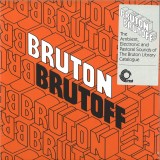
Rare musical magic from the Bruton library catalogue – ambient, spacey, pastoral and electronic. Music by John Cameron, Alan Hawkshaw, Fran-cis Monkman, Brian Bennett and more – all total masters of the scene. All very cool. All very now. All will sell very fast.
Over the last three decades Jonny Trunk has collected and written about library music. But he’s never had a great deal of luck with the Bruton catalogue. By this he means that he’s never stumbled across a massive stash, or lucked-out buying a huge run for practically nothing –that’s the kind of thing that used to happen in the 1990s and the early noughties if you were out there looking hard for library music. But he did manage to get about 25 in one hit about 20 years ago when the BBC shut down their “TV Training Department” near Lime Grove and also when a box of Brutons ended up being dumped at a hospital radio, and they didn’t want the records, so Jonny got a call.
There are lots of Bruton albums in existence – over 330 LPs in the vinyl catalogue, issued between 1978 and 1985. That’s a lot of music to wade through if you are looking for sublime modern day sounds. For many years now the “trophies” from the Bruton catalogue have been the beat or action driven LPs – the two Drama Montage albums (BRJ2 and BRJ8) have always been the big hitters, and others such as High Adventure (BRK2) too.
But Jonny has always found himself drawn to the lime green LPs, the pastoral, peaceful albums (The BRDs), which were full of the kind of gentle, lovely music that would turn up in Take Hart as Tony was paint-ing a woodpecker or a badger or an Autumn tree. The other Brutons he likes are the orange ones (The BRIs) simply because they are full of ex-perimental futuristic electronics and would remind him of 1980s ITV backgrounds. This LP series includes Brian Bennett’s cosmic classic Fantasia (BRI 10). Jonny has been knows to refer to this style of library music as “Krypton Factor library”, because it’s exactly what that strange but successful 1980s TV quiz show sounded like.
In recent years as interest in library music has expanded, we’ve watched
the price of a handful of Brutons really going through the roof - not the just the action and drama ones, but the more esoteric and experimental LPs too – like the BRDs and the BRIs. Jonny gets the vibe that people fi-nally want to hear this other more interesting and experimental side of the Bruton catalogue. So what better time than now to put together a compilation of such sublime period sounds.
Not only does this album bring together a set of fabulous cues that would cost the average man in the street a month’s wages (if the origi-nals were all wanted and if you could even track them all down), but it also chops out the need to listen to other tracks on library albums that are nowhere near as good.
The cues here all date from between 1978 and 1984. They come from the BRD, BRI, BRH, BRJ, BRM, BRR and BRs catalogues.
The composers are all legends within the genre, and here, were doing what great library composers do best – fulfilling a brief and utilising modern studio equipment to both commercial and beguiling effect.
- A1: Unoxuno - Manifestación En La Superficie
- A2: Quum - Persecución
- A3: Alan Courtis- Los Fieltros
- A4: Pabloreche - Residuo
- A5: Alfredo Horacio Pérez - Avalokiteshvara I
- A6: Unoxuno - Buenos Aires Psicótico
- A7: Luis Marte - Simples Máquinas
- A8: Quum - Stress
- A9: Pabloreche - Rompo
- A10: Conducto - Círculos
- A11: Esófago Zombie - On-Off
- B1: Las Cintas Magnéticas - Pistas Nro 4 & 8
- B2: Zigo - Delureos
- B3: Conducto - Malla
- B4: La Espora Invasora - Comegato
- B5: Jaime Genovart - Querandíes
- B6: Francisco Ali-Brouchoud - Bashō
Late 20th Century outsider music from the outskirts of Buenos Aires featuring Alan Courtis, Pablo Reche, Quum and many more artists from the Argentinian underground.
Setting out as an archaeological excavation, literally exhuming material which has been under the surface for more than two decades, this special compilation features work by established and under the radar artists that helped set the now fertile Argentinian underground.
All tracks were directly digitized from the original cassettes masters (half of them never previously released either). The emphasis being to maintain the original sound quality as it was produced at the time (hence the cassette format). The compilation also showcases a broad spectrum style of music that was done at a specific time with very primitive gear - not by choice but because of the obvious economic restrictions of accessing sophisticated equipment forced these musicians on the DIY road. Domestic tape recorders making cassette loops, broken record players, toy keyboards and the noisy ‘fingers on circuitry’ long before Nicolas Collins championed it on Hand-made electronic music.
Whilst some artists actually had access to professional synths and drum machines (Unoxuno, Quum, Jaime Genovart), they still lacked of standard recording equipment. A crucial document then showing how their unique approach to music making influenced the forthcoming experimental scene of South America making these artists influential cult figures of the underground.
Compiled by Juan José Calarco y Pablo Reche
Digitized & Mastered by Juan José Calarco
Faze Action return with the 3rd instalment of their 4 part series featuring Zeke Manyika. "Sununguka", sung in Zeke's native Shona, is literally translated to mean, "To unravel oneself and unlock yourself".
It's set over an infectious reggae, boogie rhythm, with an early proto house feel. Featuring backing vocals from Sharon Manyika and heavenly keyboard solos from Rob Lee, this EP is set to take us into summer and beyond.
The package comes with a stunning remix from Alan Dixon who has been lighting up dance floors with his releases on Running Back and more. Here he turns the original into an Italo/electronic Aend of night classics, managing to seamlessly Amerge Zeke's African vocals with a serious bass line, ahead of the curve, contempory production whilst placing the release firmly in the credible main room department.
On "A2" we have Rwendo where Zeke really stretches his songwriting skills as the whole track manages to fuse a variety of rhythms together to create a beautiful downtempo masterpiece.
Finishing off we have the "Special Extended Dub Mix" which strips back the original and turns it into a balearic house gem made for the summer ahead.
Following a successful EP in 2019, featuring remixes from Osunla
& Pocz, Olindo Records are proud to present “Wono”, the debut collaborative album from Koichi Sak& Afla Sackey.
The album is a deep exploration of Koichi's love of both electronic and West African music, in close collaboration with Ghana-born master percussionist, singer, band leader, teacher and songwriter, Afla Sackey.
Featuring 7 tracks ranging from the meditative “Yamb”, which features master kora player Kadialy Kouyate, to the acid infused, slow house workout of “Niege”. Passing through a contemporary highlife take on advance single “Suolo” and an album version of the previously released “Jingo”.
Koichi Sakai is a London-based producer and DJ, a well-known head in London music circles thanks to his role in co-founding the legendary Afrobeat Vibration nights alongside Dele Sosimi. He has previously recorded and released music with Kay Suzuki as Afrobuddha, and they recorded a set together for Boiler Room.
Afla Sackey is leader of 10-piece afro funk and highlife orchestra, Afrik Bawantu, and the man who the likes of Kokoroko call when they need some extra power on the percussion or a singer to lead their Church of Sound tribute to Ebo Taylor.
Koichi Sakai & Afla Sackey’s first collaborative project on Olindo Records, the “Wono” EP released late last year, received widespread support, particular from Gilles Peterson on BBC Radio 6 Music, Defected Radio, Mafalda, Hector Plimmer & Zakia (NTS), Tony Minvielle (Jazz FM), Tim Garcia (Música Macondo/Jazz FM), Music is my Sanctuary, TwistedSoul, Mari* & Papaoul (Worldwide FM), Alan McKinnon and DJ Harv.
We still have copies of Koichi Sakai’s Wono ep OR004 and Betsayda Machado LP ORLP003 should you like more.
We are proud to welcome Fear-E for his Dark Entries debut ‘Grey Skies In A Dear Green Place’ out February 28th. Fear-E is the moniker of Scott McKay a Glasgow based DJ and producer. Scott has already made a name for himself as one of Glasgow’s most technically-gifted and diverse selectors over the past decade. Then a slew of releases on the home-grown Dixon Avenue Basement Jams and Super Rhythm Trax introduced Fear-E, equally skilled studio operator, to the world.
‘Grey Skies In A Dear Green Place’ contains six club-ready tracks to “smash sound systems and illuminate sweaty warehouses.” The title is a reference to a nickname that Glasgow has, coming from Cumbric, means 'green hollow' or (dear) 'green place'. Layering cut-up vocals with warm thumping beats, Scott creates a stripped-back yet deeply jackin’ vibe. Call these tracks what you will, “acid attacks”, “club destroyers”, “pickle ticklers?!” All songs have been mastered by George Horn at Fantasy Studios. For the cover, Scott commissioned legendary Detroit illustrator Alan Oldham, who’s artwork has graced established an identity for Transmat and DJAX-UP-BEATS, to create a futuristic portrait of Glasgow in black & white and with green kryptonite flourishes by Eloise Leigh.d
- A1: Brian Bennett - Canvas
- A2: Wil Malone - Death Line
- A3: Syd Dale - Huckleberry Fine
- A4: The Harry Roche Constellation - Spiral
- B1: The Ivor & Basil Kirchin Band - Jungle Fire Dance
- B2: The Laurie Johnson Orchestra - The New Avengers Theme
- B3: James Clarke & Sounds - Folk Song
- B4: The Reg Tilsley Orchestra - Strike Rich
- B5: The Barry Gray Orchestra - Joe 90
- C1: Keith Mansfield - Soul Thing
- C2: Ccs - Whole Lotta Love
- C3: Syd Dale - Artful Dodger
- C4: John Gregory & His Orchestra - Jaguar
- D1: Nick Ingman - Down Home
- D2: Barbara Moore - Steam Heat
- D3: Alan Parker - Angels
- D4: Alan Moorhouse - Face Up
The 36 track 2CD album comes with 50-page book featuring text, biographies and photography. It also comes in a limited run two volume double-vinyl super-loud super-heavy gatefold sleeve editions. Compiled by Stuart Baker (Soul Jazz Records) and sleevenotes biographies by Jonny Trunk (Trunk Records).
TV Sound and Image features British composers who worked in television, film and music libraries the second half of the 20th century.
Aside from John Barry, whose work on the James Bond films made him a household name, or Tony Hatch and Laurie Johnson, the majority of composers featured here - Simon Park, Keith Mansfield, Reg Tilsley, Syd Dale, Keith Papworth – remain relatively unknown. And yet ironically they have created some of the most recognisable songs in British popular culture, their music widely disseminated on television.
A quick role call of these would include Neil Richardson (who composed the theme tune to Mastermind) and Barry Stoller (who wrote Match of the Day). The Simon Park Orchestra’s Eye Level, theme song to the BBC series Van der Valk, reached number one in 1973. CCS’s cover of Led Zeppelin’s Whole Lotta Love was the theme tune to Top of the Pops. And so on.
This album is not however a stroll through the TV memories of the mind, but an exploration of the serious contribution that these creative musicians have on the landscape of popular music in Britain.
Here then is a guide to the amazing music of many of the composers (both well-known and obscure) responsible for some of the most widely known music ever to come out of Britain in the second-half of the 20th century.
Reviews:
Quietus
Der Spiegel: "spannende Klänge ... die oft funky und immer lässig klingen"
"thrilling sounds.... often funky and always chilled"
New Zealand Herald: ***** "Every track is a killer... This is more than just music to mooch too."
Irish Times: **** "downright funky"
Volkskrant: "Ze leverden spanning op maat, die onbekende makers van fenomenale Britse film en tv-muziek. Door de cd TV Sound and Image opnieuw in de aandacht"
Evening Standard: "deeply funky"
Uncut Magazine "excellent 36 track set ... welcome additions to your collection"
Q Magazine: ****