The multi-faceted and multi-talented Alberto Melloni returns once more to Bordello A Parigi to unveil his musical multi-verse. “Lago Lungo”, the title piece, sets the tone for the quartet of tracks. Steady kicks thud next fizzing hi-hats as a rich and full-bodied piano melody takes hold, Melloni’s instrumentation creating sheer peaks and creamy amber plains. “Promised Land” offers a different audio topography. Key stabs are bolstered by incising beats as a late-night italo infused romp undulates from speaker cones. Underscoring the EP are influences from both disco and house, sun-kissed chords countered by textured percussion. These twin inspirations combine in the groove laden “Paradise Pie”. Clean notes are refracted in neon, undercurrents of acid lurking just below the vibrating hardwood floor. The mirrorball takes the limelight for the finale. Breathy, smokey vocals orbit funk dipped lines of “Only You”, warbling vocoders dancing under the glittering beams to the close.
quête:alberto
Chromium Dioxide brought Leitstrahl’s sound to world. The three man group of Stoff, Paul Raal and Boogaloo Steve return alongside Alberto Melloni with Azimuth. Bordello A Parigi’s own Furór Exotica are drafted in to help with the Dee D. Jackson inspired “Automaton Lover”. Disco infused and bombastic, this powerful piece employs bold synthlines and breathy vocals to devastating effect. The title work follows. An addictive melody is cut by a crisp beat in this bright and inviting instrumental.
Thick basslines and a mirrorball groove introduce “Spectral Fantasy”. Featuring the smoky lyrics of Vongold, a tale of unexpected encounters and possibilities unfurl amidst warbling analogue strings. Slung back basslines and a low throb are central in “Light Years”, a smooth longue affair to finish this diverse 12”.
A concentrated dose of club energy weaving together house, electro, obscure disco, and groove. This is the new vinyl adventure from Raibano Records and Mondo Groove, two Romagna-based labels that have long championed an uncompromising and authentic vision of the Italian electronic scene.
The 12” brings together six unreleased tracks, three per side, crafted by Raibano’s founders Alberto Melloni and Gianmaria Gamberini. On one side, hypnotic rhythms and pulses for the darkest corners of the dancefloor; on the other, Balearic echoes and textures designed to take you far beyond it.
Huayno has its roots in the Andes during the colonial era, when indigenous peoples began to blend their music with influences brought by European settlers. During this process the Spanish guitar naturally became very prevalent, incorporating the tunings, finger-style and rhythms of the traditional Andean harp along with it.
The late Alberto Juscamaita Gastelú, known as Raktako, was a renowned guitarist, composer and mentor to generations of guitarists from his home in Ayacucho, southern Peruvian Andes. His unique style also blended techniques from the Spanish lute and other instruments brought by colonisers, such as the violin and accordion. For over a century, Raktako preserved Ayacucho's musical traditions and the Andean guitar form.
In 2022, the last disciple of Raktako, Gustavo Yashimura, shared with Sound of the Andes' Hánkel Bellido a series of astonishing home recordings made by Raktako between approximately 1930 and 1940. These recordings, made with the sparsest of equipment, had never been published before and represent an invaluable cultural treasure. The guitarist, who lived for over 100 years and passed away in 2023, had been largely forgotten until recently, when the Ministry of Culture of Peru officially recognised him as Meritorious Personality of Culture. His legacy, which includes a profound influence on Peruvian music, especially the Ayacucho guitar tradition, is finally being acknowledged.
A Milan-born multi-instrumentalist of Venetian heritage, Alberto Baldan Bembo was a gifted vibraphonist, organist, pianist, arranger, and composer whose work bridged jazz, pop, and film music. By the early 1960s, he was performing with Italy’s leading ensembles, including I Menestrelli del Jazz and Bruno De Filippi’s group, and soon became an in-demand session musician. For several years, he toured with the legendary Mina, providing the piano and organ backbone to her live shows—a role that sharpened the cinematic sensibility and refined musicianship that would later define his soundtrack work. In the years to come, he would be celebrated for his scores to films such as L’Amica Di Mia Madre (1975) and Lingua Argento (1976), earning a place alongside Piero Umiliani, Alessandro Alessandroni, Berto Pisano, and other luminaries of Italy’s golden age of soundtrack and library music.
Io E Mara is the soundtrack to a film that was never made. Originally released on the CGD label in 1969, this debut album from the brilliant Maestro Baldan Bembo is a sophisticated concept-album tracing 24 hours in the life of two young lovers. Told entirely through music, the record unfolds as a continuous suite of ten tracks, where cinematic lounge, bossa, and jazz flavors mingle to create a dreamlike atmosphere. Baldan Bembo’s signature piano and organ are masterfully complemented by Mara’s ethereal vocals, while immersive soundscapes of crashing waves, seagulls, and rain showers enhance the feeling of a deeply personal and intimate journey. A cast of exceptional musicians brings this vision to life, including Bruno De Filippi on electric guitar and sitar, Carlo Milano on electric bass, Rolando Ceragioli on drums, and Pasquale Liguori on sound effects. This singular work not only showcases the burgeoning talent of a future soundtrack master but also features the original pop art front cover by Italian cult illustrator Guido Crepax.
"Chicago-based composer, improviser, multi-media artist and underground legend, Rob Mazurek, joins forces with modular-synth maestro and light magician, Alberto Novello for a blacklight invocation that hurls us out into new and uncharted sound-dimensions.
Born of a chance encounter, Alberto Novello and Rob Mazurek's improvised collaboration, Sun Eaters, was recorded in a single afternoon at Dobialab, an experimental artist run space in Northern Italy. Alberto provided a loose rythmic and timbral bedrock over which Rob Mazurek sketched and weaved delicate harmonies with trumpets, adding atmosphere with bells and sampler.
Sun Eaters is a dizzying and disorientating space ritual, a totally out excercise in telepathic collaboration and psychedelic sound."
Modular Synth by Alberto Novello.
Trumpets, sampler, bells by Rob Mazurek.
Produced by Alberto Novello.
Recorded at Dobialab, Italy on 6th February 2024 by Michele Pegan.
Mixed by Alberto Novello at Ni Dieu Ni Maitre Studios Italy & Air Residency Austria.
Mastered by Hrvoje Nikšić, Croatia.
Artwork by Giulia Spanghero.
Dedicated to the memory of Filippo Novello.
After the success of his first two albums, both received with critical acclaim, and his productive collaborations with Peter Greenaway, Peter Lindbergh and many others, Italian composer/multi-instrumentalist Luca D’Alberto is to release his third album entitled “In our hearts.”
A symphony in three acts that pursues his research into the perfect balance between neoclassical and electronic music forms.
Introducing Alberto Castellana and his electrifying nine-track debut album. Hailing from Italy, Castellana brings the classic Italian signature Nu-Jazz sound to the table.
Accompanied by a trio of exceptionally talented musicians on the piano, guitar, and Rhodes piano, Castellana's debut album promises an in-depth journey through various electronic genres, including House, Break Beat, Drum & Bass, as well as the realms of Jazz.
Timeless minimalist approach to composition braced by repetition and playfulness.Alberto’s music reflects calm, focus and intimacy. Ethereal and atmospheric, his pieces operate within the digital as well as the analogue realm in equal measures. Sampling, Midi sequencing and field recordings are the instrumentation used in these 15 songs recorded on a four track reel to reel tape. Highest possible recommendation for fans of Suso Saiz,Jon Hassel, Eno or Harold Budd
“Haizetxe” which stands for wind house, is the first ever record consisting of unreleased material recorded between mid 80’s and 90’s by musicianAlberto Lizarralde in Zaldibia, Basque Country.
One of the founders of the first school of Improvisational jazz and contemporary music (Jazzle) established in San Sebastián to In the early 1990s,Alberto is a well-known figure among Basque musicians but not so much among the general public. In his professional curriculum we find the direction of the Plaza Festival, the Zirrara record company, his work as a producer, editor (editions 3e argitalpenak), the direction of the audiovisual installation JAArtzeren Unibertsoa, the arrangements and composition for the Iparraguirre 7 project, etc...And even so, he has managed to stay away from the spotlight.
In all this time he was composing and recording music, but the right circumstances never arose for its release.Thus, it has remained stored in a drawer all these years. Finally the music of Alberto Lizarralde sees the light on Hegoa label in a limited run of 300 LPs.
K-Noiz presents the 2020 versions of the Italo Disco hit “Pretty Face” (over 400,000 copies sold in over 20 countries) with five new versions by Andrea K, Joe Mangione, Diego Mates, Daniele Ippolito and Sweet Suite and with the original voice of Alberto Styloo. This record marks Alberto Styloo’s “return” to dance after a period of work on different genres.
- A1: Antonio Arena - Magic Door
- A2: Space Craft's Men - Crossing
- A3: Elageron - Week-End Playback
- A4: Alberto Baldan Bembo - Nitrogen
- A5: Fabio Fabor & Antonio Arena - Screw Driver
- A6: Domenico Di Vito - Spensieratamente
- B1: Albert Verrecchia - In The Space
- B2: Lamberto Macchi - Vision (Feat. Anthony Sidney)
- B3: Modern Sound Quartet - Sagittarius
- B4: Flip Flop Group - Music
- B5: King Zérand Orchestra - Blue Magnolia
- B6: The Astral Dimension - Stella Nova
With FBNM now celebrating their fifth year of operation, Lorenzo has marked the occasion by assembling his biggest project to date - an impeccably curated collection of obscure Italian production music circa 1974 - 1985. The project, nearly a year in the making, has been very close to Lorenzo's heart - beginning unexpectedly in the record fairs of Buenos Aires and leading him on several trips to Rome and Milan, tracking down the original musicians and licensors.
"In this compilation, I have tried to include some of the most interesting cuts I have collected over the years. Tracks like the entirely electronic "Nitrogen" from Alberto Baldan Bembo's "Sound Orchestra" LP on Star Track Records, featuring a wild evolving bassline leading us through frantic rhythmic experimentations. "In the Space", by French born composer Albert Verrecchia and taken from Italian poliziesco drama 'Il Tempo Degli Assasini' (Season for Assasins), tells the tale of wistful longing, played out with serenity on strings and keys, but unexpected interruption from its stop-start arrangement brings an unforeseen tension into the mix... And how could I not include the wonderfully charming "Screw Driver" by Fabio Fabor, from his collaborative album "Superman" with a young Antonio Arena. Featuring an orchestra of beautifully programmed ARP and Oberheim sonorities alongside the Commodore 64 programmed graphical artwork by Antonio Arena himself."
The music itself was partly sourced from Lorenzo's own collection, archived and then restored especially for this release. Where possible, tracks (such as "Vision", "Nitrogen" and "Blue Magnolia") have been lifted directly from the original master tapes kindly lent by the repertoire owners. Every track, however, has been carefully restored, remastered and cut for vinyl by the cautious hands of Andreas (LUPO) Lubich at Calyx Mastering, Berlin.
REPRESSED !!
Detroit veteran Len Bartush (Mutate) returns to advance the series that began with the now classic Circle 1. A full round kick and jack style upbeats are all that's necessary to support the deep, modulated synth lines that travel through lush plates of reverb. Alberto Pascual hits a homerun with his remix that will move any club, festival, or warehouse party. Project 313's remix supplies moving synth lines are stripped down and replaced with driving rhythms and pulsating bass making this a superb techno offering. The Plankton remix turns up the tension with warehouse style percussion and intertwining rhythms complimented by science- fictionesque stabs and pounding bass.
The 'Circle 2' EP is an essential piece of Detroit minimalism. Detroit veteran Len Bartush (Mutate) returns to advance the series that began with the now classic 'Circle 1'.
The EP starts off with Mutate's 'Circle 2' (Machined) original. A full round kick and jack style upbeats are all that are necessary to support the deep, modulated synth lines
that travel through lush plates of reverb, creating an atmosphere perfect for any techno desire from dance floor, to living room, to headphones.
Alberto Pascual hits a homerun with a remix that will move any club, festival, or warehouse party. Big room percussion, moving sub bass, and funky rim shots compliment the dark synths from the original.
Project 313's remix delivers with an interpretation that celebrates the true spirit of the original. Moving synth lines are stripped down and replaced with driving rhythms and pulsating bass, making this a superb techno offering.
The Plankton remix turns up the tension with warehouse style percussion and intertwining rhythms, complimented by science-fictionesque stabs and pounding bass.
DJ's Supporting release:
A.Trebor, Alberto Pascual, Altstadt Echo, Angel Alanis, Anthony Jimenez, Audio Injection , Brendon Moeller, Bruno Ledesma, Chris Liebing, Claude Young, Dadub, Daegon, DCibel, Developer, Drumcell, DVS1, Erphun, Exium - Hector, Exium - Valentin, Felix Lorusso, Hyperactive, Jeff Derringer, Joachim Spieth, Joel Morgan, Justin James, MADA Cedric, Mas Teeveh, Material Object, Measure Divide, Memnok , Monocraft, Morgan Thomas, Octave, Onoffon, Project 313, Rene Walther, Ricardo Garduno, Sigha, Sone, Submerge, Tommy Four Seven, Tony Kasper
- 1: El Vaticano Va A Arder
- 2: Matar Jipis En Las Cies
- 3: Las Tetas De Mi Novia
At the genesis of one of the most essential bands in Spanish pop-rock of the 1980s, this rarity presents early versions of what would later become some of the most chanted songs in Siniestro Total's repertoire: 'Matar jipis en las Cíes' and 'Las tetas de mi novia,' along with Germán Coppini's original composition 'El Vaticano va a arder.' With limited resources but plenty of energy and humor, a three-song demo was recorded in August 1981, now available here on vinyl for the first time. The songs came first, and only later did the band take a name-initially Mari Cruz Soriano y los que afinan su piano, and shortly after, Siniestro Total. 'Matar jipis en las Cíes' is an original composition by the band's founding members Alberto Torrado, Julián Hernández, and Miguel Costas, while 'Las tetas de mi novia' is a loose version of the song 'I'm a Rocket' by the Dutch band Gruppo Sportivo. 'El Vaticano va a arder' was contributed by Germán Coppini, the mysterious fourth member of this singular lineup, inspired by 'Religion,' the anti-religious rant included on Public Image Limited's debut album. This single is an essential document for both Siniestro Total fans and Spanish-language punk enthusiasts. First-ever vinyl edition.
This first-time reissue of Quinteplus’ 1971 album revives a key moment in Argentine jazz, featuring crisp trumpet and tenor sax, electric piano-driven funk and modal grooves, and a tight, spacious rhythm section. It showcases prominent figures like Jorge Anders and “Pocho” Lapouble.
==================================
Quinteplus was born in Buenos Aires at the end of the 1960s, emerging directly from the ideas and experiments of the legendary Agrupación Nuevo Jazz. Founded in the early ’60s, this collective brought together some of the most forward thinking figures in Argentine jazz functioned as a creative lab where musicians questioned where jazz could go next. Among the key ideas discussed was the fusion of jazz with Argentine folk styles such as zamba, chacarera, malambo, cueca, and candombe, as well as a deeper look into African rhythms as a bridge between musical worlds.
Two members of that collective, keyboardist Santiago Giacobbe and bassist Jorge “Negro” González, carried those ideas forward when they formed Quinteplus in 1969. The group came together naturally: all the musicians already knew each other and had played in different projects around the Buenos Aires scene. They shared a strong admiration for Julian “Cannonball” Adderley’s quintet, along with a clear goal—to develop a modern jazz language grounded in local Argentine rhythms.
From the start, Quinteplus stood out for its openness and adventurous spirit. Rhythm was central, and so was experimentation. The band belonged to a generation of Argentine jazz musicians eager to explore electric instruments and new textures, anticipating what would soon be known as jazz-rock. This was happening in Buenos Aires at the very same time Miles Davis was opening new doors with “In a Silent Way” and “Bitches Brew”. Giacobbe introduced one of the first Fender electric pianos in Argentina, while González pioneered the amplification of the upright bass and even developed a hybrid electric, boxless version of the instrument. Trumpeter Gustavo Bergalli, meanwhile, maintained close ties with the emerging Argentine rock scene, collaborating with Luis Alberto Spinetta and appearing on Almendra’s first album.
In 1971, Quinteplus recorded its first and only studio album for EMI. The original lineup featured Jorge Anders on tenor saxophone, Bergalli on trumpet, Giacobbe on keyboards, González on upright and electric bass, and Norberto “Pocho” Lapouble on drums and percussion—who also illustrated the album’s iconic sleeve. The record is a refined showcase of the band’s musical vision: original compositions, fluent jazz language, folk-derived rhythms, funky electric textures, tight ensemble playing, and standout brass solos. Though critically praised, the album received little label support and sold modestly, eventually becoming a sought-after collector’s item.
Quinteplus disbanded in 1973, their music was perhaps too bold and unconventional for its time.
Tip on sleeve.
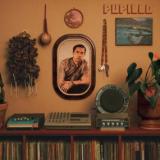
Latin Grammy-Winning Producer Pupillo Unites Global
Artists on his new album
Co-produced by Mario Caldato Jr. (Beastie Boys), featuring collaborations with Rodrigo
Amarante, Carminho, Adrian Younge, Gaslamp Killer, Cut Chemist, Hervé Salters, and more
Drummer, percussionist and producer Pupillo, one of the most influential figures in Brazilian
music and a four-time Latin Grammy winner, releases his first original album through the Los
Angeles–based label Amor in Sound. The record brings together an impressive and diverse
group of collaborators from Brazil and abroad. Amor in Sound is run by Samantha Caldato,
the project’s executive producer and creative director, and Mario Caldato Jr. (Beastie Boys),
who co-produced the album alongside Pupillo. The project was developed in a free,
experimental environment, allowing the artist to explore the many rhythmic and sonic
territories that have shaped his career — from Northeastern Brazilian traditions to jazz, hip
hop, and cinematic soundscapes. Listen here.
The album features special appearances by Brazilian artists such as Céu, Rodrigo Amarante,
Agnes Nunes, Amaro Freitas, Davi Moraes, Alberto Continentino and Pedro Martins,
alongside a strong roster of international collaborators, including Carminho, Gaslamp Killer,
Loren Oden, Adrian Younge, Cut Chemist and Hervé Salters (known for his work with
General Elektriks). The album’s 12 tracks were further enriched by contributions from
Jeremy Gustin, Roberto Schilling, and other musicians who make Amor in Sound Studios in
Los Angeles a place of creative exchange.
Beyond his work as the drummer of Nação Zumbi, Pupillo has built a prolific career as a
producer and collaborator with some of the most important names in Brazilian music,
including Gal Costa, Nando Reis, Erasmo Carlos, Céu, and Otto, helping to shape the sound
of multiple generations. This trajectory has earned him four Latin Grammy Awards.
From Pernambuco, Pupillo is also an acclaimed composer for cinema, having written
soundtracks for films such as Arido Movie and Blue Blood (directed by Lirio Ferreira), The
Assailant (directed by João Daniel Tikhomiroff), among others. This cinematic sensibility
permeates the album, which unfolds like a film, moving through richly textured soundscapes
that cross continents and musical traditions.