Yore drops the second Alfonso Bottone 12”, The Bar Floor EP.
Four cuts of deep-as-midnight, jazz-soaked house – lush melodies, rich textures, and grooves that hit straight to the floor. Emotional enough for the sunrise, driving enough for peak time.
Limited pressing – once they’re gone, they’re gone.
Suche:alfonso x
- 1
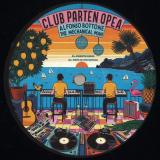
Welcome to Club Partenopea — a masterclass in understated elegance and deep, introspective grooves.
Side A: Sunset Sessions – The Soundtrack Toward Night
A1. “Smooth Rides”
An energetic yet fluid track, “Smooth Rides” blends warm analog synths with a swinging groove, creating an immersive listening experience. It invites the listener to drift into its layered soundscapes and lose themselves in the rhythm.
A2. “Hope Is the Refuge”
The ultimate soundtrack for relaxation and good vibes. This soft-textured piece weaves shimmering pads with subtle piano flourishes, while hushed, ethereal vocal samples float in and out—not as a lead, but as an ambient layer—adding to its dreamy, gently melancholic mood.
________________________________________
Side B: Blending Into the Party-Time Pulse
B1. “Club Partenopea”
A deep house groove that shines with infectious piano riffs, acting like rhythmic exclamations. Joyous and unifying, it’s made for the dancefloor — pure, celebratory energy wrapped in elegance.
B2. “Timer Groove”
Your late-night companion. “Timer Groove” fuses the lush, immersive tones of deep house with a buoyant, uplifting bassline. It’s the perfect 1 AM tune—when the crowd gets intimate, the energy softens, and the music becomes a trusted guide through the night.
Yore returns with Alfonso Bottone bringing it so Deep, it literally hurts.
This four track EP is by far the deepest shit we've heard in quite some time. Fans of the Deep4Life sound will love this. Deep, Bright and with so much warmth.
Strictly limited to 200 Copies worldwide (no repress). Grab yours while they last.
Brian Jackson dives into the world of Alfonso Lovo
Legendary musician Brian Jackson, known for his pioneering work in neo-soul and modern hip hop, has lent his extraordinary talents to retouch two tracks from Alfonso Lovo's remarkable album "Terremoto Richter 6:25 Managua.”
As one-half of the influential duo Gil Scott-Heron and Brian Jackson, Brian began his career at an early age, having recorded nine albums by his 27th birthday. He is widely celebrated as a musical innovator, with New Yorker Magazine recently hailing him as “a musical pioneer” in a 2022 article.
Alfonso Noel Lovo, moved by the devastating earthquake that struck Managua on December 23, 1972, recorded his first album in New Orleans the following year. "Terremoto Richter 6:25 Managua" stands as a testament to resilience and artistic fusion, featuring a stunning blend of psychedelic rock, mazurka, jazz, Louisiana blues, and African folk.
Alfonso Bottone debuts on Dailysession Records, with 4 tracks
incl. Monchan Remix! Hot mixture ny house, broken beat and
jungle grooves.
Following the digital release of the single “Meu Canto” in early February 2026, Gerardo Frisina and singer Luzia Dvorek return to Brazilian music with a new and compelling interpretation of a timeless classic, “A Lenda do Abaeté” by Dorival Caymmi; the release of this 45rpm single brings to a close a special project entirely dedicated to Bahia, the beating heart and symbol of Brazilian culture.
“Meu Canto” takes shape from an original composition by Gerardo Frisina, who signs both music and production, crafting a soundscape that is suspended between delicacy and depth upon which Luzia Dvorek - joined by songwriter Toco, whose refined backing vocals further enrich the song’s emotional dialogue - has drawn the melodic line and written the lyrics. A journey into roots and origins that tells the story of Luzia’s family, deeply embedded in the warm, fertile land of northeastern Brazil. “Meu Canto” sees also the participation of Alfonso Deidda on flute, whose airy timbre introduces new shades of color to the composition.
In “A Lenda do Abaeté”, the 45rpm B-side, Gerardo Frisina weaves an elegant and immersive rhythmic framework, evoking soundscapes that feel both deep-rooted and timeless. Within this setting, Luzia Dvorek’s voice unfolds with emotional intensity, balancing expressive strength and subtle delicacy as it narrates the ancient legend of the Abaeté lagoon. A place steeped in charm and mystery, suspended between myth and reality, whose stories have been passed down through generations in Salvador, in Brazil’s north-eastern region.
The project is further enriched by the acoustic guitar of Francesco Borrelli - who also took care of the tracks mixing and mastering - and Toco’s distinctive vocal contributions, which add depth and nuance to the overall sound.
The Zurich rooted duo H:B:E:M (Antinio Di Benedetto & Alfonso Bianco) deliver a deep and hypnotic journey on Moto Music 22, blending raw techno energy with emotional and atmospheric depth. The opening track “In Orbita” sets the tone with a driving bassline and a subtle oldschool hit sample, perfect for dark peak time moments. The talents from Prince De Takicardie take things into proto trance territory on his remix of “Jupiter Love”, injecting a warm, nostalgic and uplifting vibe. The original “Jupiter Love” dives into mental, melodic deep techno with an addictive bass and immersive flow. Spacetravel delivers on B2 a smooth and atmospheric reinterpretation of “Interstellar Overdrive”, keeping things hypnotic and refined, while the closing track explores breaky ambient textures with swirling rhythms and a dreamy, cinematic feel. A versatile and classy release built for both the floor and deeper listening.
Dailysession blast off the another night club weapon. Side A is from Jonattan Levingstone aka Sloppy J. It's the peacetime dance floor bomb with driving energy that perfectly embodies the essence of deep house. Side B is from DJ Monchan and Alfonso Bottone, creates an immersive soundscape ideal for both late-night listening and the club environment.
'Tema di Susie' is one of the main themes from the soundtrack composed by Alessandro Alessandroni for the 1976 Italian noir Sangue di sbirro, known in English as Blood and Bullets, as well as Knell, Bloody Avenger (the Susie in the original title refers to the female love interest of the film's hero, who is on a mission to seek revenge for the gangland murder of his policeman father).
At once sweet and sentimental, haunting and melancholic, 'Tema di Susie' stands out from the other tracks in the film, which are more action oriented. Like the rest of the score, however, it exemplifies the way in which, during the '70s, Italian film composers created their own version of the sound of American blaxploitation cinema, with its groovy blend of funk, jazz, and soul. It is no coincidence that the film's director, B-movie specialist Alfonso Brescia, specifically requested music in the style of Shaft, the iconic film that defined that sound in 1971.
Though seemingly simple, 'Tema di Susie' is a perfect example of Alessandroni's style – in particular his unique ability to effortlessly blend groove and melody, funk and feeling, into one musical piece. So, we invited different artists with different backgrounds, influences and approaches to bring their individual take on this elegant and now timeless tune.
Neapolitan duo Fratelli Malibu have taken Alessandroni's melodic theme and woven it into a mesmerizing tapestry of rhythmic beats, world percussion and ethereal atmospheres. Drawing inspiration from funk/Afrobeat, synth-pop and Italo-disco, they've conjured a psychedelic-tinged, afro-cosmic groove that's bound to transport you to another dimension.
As the music unfolds, you'll feel like you've stepped into a vibrant, fantasy world. The breaks, outro, and intro are woven with a psychedelic thread that leaves you yearning to return once the final note fades away. And that's not all – they've injected an irresistible pop sensibility into the track with the use of drum machines and synths. The result? A rework that not only amplifies the dreaminess of the original but also seamlessly marries the past with the future.
We love the track so much that we decided to double the fun with a vocal retouch version, courtesy of the Italian funk/soul collective Banda Maje. Their vocalists, Chiara Della Monica and Cristina Cafiero, elegantly infuse cinematic and Balearic vibes into the mix, paying a wonderful homage to Fratelli Malibu's exquisite arrangement.
- Hasiera 00:50
- 2: Iratzarri 0:37
- Sarrakio 02:10
- Dantza Bihurritua 03:50
- Desagertu 03:18
- Meditazioa I 02:09
- Besarkatu Ninduzun (Cdr Y Basandere Ahotsak) 03:50
- Meditazioa Ii 02:53
- Ametza Iii 02:06
- Oroipen 04:04
- Fallen Gaza 03:09
- Atseginzale Dantza 02:14
- Sua Eta Heriotza 00:59
- Agur Maria (Cdr Y Basandere Ahotsak) 03:55
- Bukaerako Dantza 04:03
- Amaiera 00:36
Una interpretación de Soinuarenbidea II debería partir de esta premisa: todo es posible, nada es aleatorio, y en sí mismo es un imposible de aleatoriedades. El escenario planteado explora la idea de realidad aumentada desde una percepción sonora, ambiental y colectiva. La obra transita hacia adelante y hacia atrás recreando experiencias extintas de porvenir incierto, tratando de facilitar un fin pacificador. Cada pieza sonora se crea, se despliega, se repliega y se destruye, en una torsión permanente de toda la realidad que hace posible cada fragmento musical, cada identidad acústica, cada espacio sonoro. Lo onírico, la ficción, y el viaje están continuamente presentes, y es en el transitar de cada fragmento donde se produce el diálogo de la exposición musical. Los elementos de esta ficción se recrean continuamente, en un continuum donde se entrelazan y se van contorsionando a medida que crecen o decrecen con cada fragmento de síntesis concreta. Los temas explícitamente musicales son el magma que conduce a dar voluptuosidad al disco, siendo la piel un contexto o límite que en sí mismo fluctúa indefinidamente en texturas y configuraciones posibles. Y la urdimbre del silencio es la síntesis que está continuamente presente y que trata de cohesionar los fragmentos en continua colisión expresiva. Las grabaciones de campo proporcionan el material sonoro concreto, y como un fractal sonoro cada una de ellas ofrece diferentes grados de interpretación que a su vez conduce a nuevos fragmentos y nuevas creaciones. Así que se puede pensar que esta es una síntesis de una posible realidad, pero interpretable en infinidad de maneras. Un movimiento y una estaticidad implícitas que generan estructuras y dinámicas acústicas. Lo que se escucha no es real, pero en sí mismo forma parte de la realidad, creando un escenario expectante. Lo cinematográfico, plástico y teatral, danzante y dinámico cobra importancia en este juego, porque se trata de contar una historia, una experiencia recreada desde los puntos de vista del arte visual. Es a su vez hilo conductor y entretenimiento, discurso político y puro divertimento. Es desde este espacio de convivencia artística que tiene sentido la totalidad y justifica el formato sonoro planteado. La contradicción de la obra es patente en el formato, y es a su vez el planteamiento de una accidentalidad en el devenir vital. Contenedor de Ruido recoge todas estas contradicciones y las manifiesta en la obra Soinuarenbidea II. Es una historia sonora, es un cuento acústico. Es un fragmento de vitalidad en imágenes audibles. Es una invitación a la reflexión, a la crítica, al disfrute, a la meditación, a la celebración. Y sobre todo es esperanzadora apreciación de la realidad como algo maleable que confeccionamos colectivamente, que requiere de una paciente observación y la participación colectiva global, en un mundo finito pleno de diversidades y del que ignoramos prácticamente todo, al que deberíamos volver con respeto y devoción.
Soinuarenbidea II-ren interpretazio batek premisa honetatik abiatu beharko luke: dena da posible, ezer ez da ausazkoa, eta, berez, ausazkotasun ezinezko bat da. Planteatutako agertokiak errealitate areagotuaren ideia aztertzen du, soinu-, ingurumen- eta talde-pertzepzio batetik abiatuta. Lanak aurrera eta atzera egiten du, etorkizun zalantzagarriko esperientzia desagertuak birsortuz eta helburu baketsua lortzen saiatuz. Soinu-pieza bakoitza sortu, hedatu, tolestu eta suntsitu egiten da, musika-zati bakoitza, identitate akustiko bakoitza eta soinu-espazio bakoitza ahalbidetzen dituen errealitate osoaren etengabeko bihurdura batean. Onirikoa, fikzioa eta bidaia etengabe daude presente, eta pasarte bakoitzaren joan-etorrian gertatzen da musika-erakusketaren elkarrizketa. Fikzio honen elementuak etengabe birsortzen dira, continuum batean, non sintesi zati zehatz bakoitzarekin hazi edo txikitu ahala elkar lotzen eta bihurritzen diren. Esplizituki musikalak diren gaiak diskoari atsegintasuna ematera eramaten duen magma dira, azala testuingurua edo muga izanik, testura eta konfigurazio posibleetan mugarik gabe aldatzen dena. Eta isiltasunaren irazkia etengabe presente dagoen sintesia da, zatiak etengabeko adierazpen-talkan kohesionatzen saiatzen dena. Landa-grabazioek soinu-material zehatza ematen dute, eta soinu-fraktal batek bezala, horietako bakoitzak interpretazio-maila desberdinak eskaintzen ditu, eta horrek, aldi berean, zati eta sorkuntza berrietara eramaten du. Beraz, pentsa daiteke errealitate posible baten sintesia dela, baina hamaika modutan interpreta daitekeena. Egitura eta dinamika akustikoak sortzen dituzten mugimendu eta estatikotasun inplizitu bat. Entzuten dena ez da erreala, baina, berez, errealitatearen parte da, eta agertoki espektakularra sortzen du. Zinematografikoak, plastikoak eta antzerkikoak, dantzariak eta dinamikoak garrantzia hartzen dute joko honetan, ikusizko artearen ikuspegitik birsortutako istorio bat, esperientzia bat, kontatzea baita helburua. Aldi berean, hari gidaria eta entretenimendua da, diskurtso politikoa eta dibertimendu hutsa. Elkarbizitzarako espazio artistiko honetatik osotasunak zentzua du eta planteatutako soinu-formatua justifikatzen du. Obraren kontraesana nabarmena da formatuan, eta, aldi berean, bizi-bilakaeran istripu-tasa bat planteatzea da. Zarata-edukiontziak kontraesan horiek guztiak jasotzen ditu eta Soinuarenbidea II obran adierazten ditu. Soinu istorio bat da, ipuin akustiko bat. Bizitasun zati bat da, irudi entzungarrietan. Hausnarketarako, kritikarako, gozamenerako, meditaziorako eta ospakizunerako gonbidapena da. Eta, batez ere, itxaropentsua da errealitatea modu kolektiboan egiten dugun gauza xaflakor gisa hautematea, behaketa pazientea eta partaidetza kolektibo globala eskatzen dituena, dibertsitatez betetako mundu mugatu batean, ia guztia kontuan hartzen ez duguna, eta errespetuz eta debozioz itzuli beharko genukeena.
An interpretation of Soinuarenbidea II should start from this premise: everything is possible, nothing is random, and in itself is an impossible randomness. The proposed scenario explores the idea of augmented reality from a sonic, environmental, and collective perception. The work moves back and forth, recreating extinct experiences of an uncertain future, seeking to facilitate a peaceful end. Each sound piece is created, unfolds, retreats, and is destroyed, in a permanent twisting of all reality that makes each musical fragment, each acoustic identity, each sonic space possible. The dreamlike, the fictional, and the journey are continually present, and it is in the transit of each fragment that the dialogue of the musical exposition takes place. The elements of this fiction are continually recreated, in a continuum where they intertwine and contort as they grow or diminish with each fragment of concrete synthesis. The explicitly musical themes are the magma that leads to the work's voluptuousness, the skin being a context or boundary that in itself fluctuates indefinitely in possible textures and configurations. And the warp of silence is the synthesis that is continually present and seeks to unite the fragments in a continuous expressive collision. The field recordings provide the concrete sound material, and like a sonic fractal, each one offers different degrees of interpretation that in turn lead to new fragments and new creations. So one can think of this as a synthesis of a possible reality, but interpretable in an infinite number of ways. An implicit movement and staticity that generate acoustic structures and dynamics. What is heard is not real, but in itself is part of reality, creating an expectant scenario. The cinematic, plastic and theatrical, dance and dynamic aspects take on importance in this game, because it is about telling a story, an experience recreated from the perspective of visual art. It is at once a common thread and entertainment, political discourse and pure entertainment. It is from this space of artistic coexistence that the whole makes sense and justifies the proposed sound format. The contradiction of the work is evident in its format, and it is, in turn, the presentation of an accidentality in the course of life. Noise Container gathers all these contradictions and manifests them in the work Soinuarenbidea II. It is a sound story, an acoustic tale. It is a fragment of vitality in audible images. It is an invitation to reflection, to critique, to enjoyment, to meditation, to celebration. And above all, it is a hopeful appreciation of reality as something malleable that we collectively craft, requiring patient observation and global collective participation, in a finite world full of diversity and of which we know practically nothing, to which we should return with respect and devotion.
Paisajes sonoros, diseño sonoro, drones y música grabada, realizada y arreglada para Contenedor de Ruido por David Aranaz. Coro: Basandere Ahotsak. Producido y mezclado por David Aranaz. Mástering: Estanis Elorza. Fotografía: David Aranaz. Texto: David Aranaz. Traducción: Saioa Aranaz Oreja. Trabajo y Diseño artístico: Cristina Martinez. Edición: Contenedor de Ruido Producciones y Sarbide Music. Distribución: Contenedor de Ruido.
Contenedor de Ruido agradece el apoyo en la realización de Soinuarenbidea II al coro Basandere Ahotsak y en especial a Eva Orbara Goicoa.
Soinuarenbidea II está dedicado al pueblo palestino.
Paisajes y objetos Sonoros, samplers y otras músicas transformadas para Soinuarenbidea II
Burlada: Paseos sonoros matinales por Merindad de Sangüesa, Calle Mayor, Capuchinas, Parque Uranga y varias iglesias y plazas. Pasajes del cotidiano: basura de papel, cristal y plástico.
Pamplona: Cementerio de San José. CEIP Sanduzelai /// Quinto Real: Fábrica de Armas, Puerto de Urkiaga y alrededores. Suite del silencio, bosques en movimiento /// Fábrica de armas de Orbaiceta: regatas, biosques, paseo sonoro hasta regata /// Belate: Puerto de Belate y alrededores. Vacas en pradera junto a las turberas /// Bardenas Reales: Suite de guitarra y Suite del silencio, estepa desértica /// Austria: Tranvías de Graz y Viena. Muchedumbre del metro de Viena.
Voces cinematográficas de: Matanza en Texas, Robocop, Espíritu Sagrado, Solo los Amantes Sobreviven, Voces de Gaza, Yojimbo, Terciopelo Azul, Los 7 Magníficos.
La pista A2 está dedicada a la memoria de David Lynch.
La pista B4 está dedicada a Eva Orbara Goicoa.
Pista A4: Contiene interpretaciones de piano de Three Piano Pieces Op.11 de Arnold Schoenberg.
Pista A5: Es una interpretación expandida con síntesis FM del Concerto Op. 24 - Etwas lebhaft - de Anton Webern.
Pista A7: Contiene la canción Besarkatu ninduzun (Letra de Josune López y música de Josu Elberdin) en interpretación de Basandere Ahotsak en la iglesia de Burutain bajo la tormenta.
Pista B2: Contiene la canción Recuerdos de la Alhambra (Fernando Tárrega) en interpretación torsionada de David Aranaz Sarasa.
Pista B14: Contiene la canción Agur María (Letra y Música de Estíbaliz Robles “Estitxu” y arreglo exclusivo de Alfonso Ortiz para Basandere Ahotsak) en interpretación de Basandere Ahotsak.
Equipamiento para Soinuarenbidea II.
Micros de condensador SE7, configuración XY y ORTF; Micros de cinta ORTIZ LUTHIER configuración XY y Blumlein; Grabadoras MARANTZ y ZOOM; Sintetizadores y samplers Elektron MONOMACHINE SPS-1, MACHINEDRUM SFX6 y MODEL:SAMPLES. Dave Smith MOPHO. Torso Electronics S-4. Sintetizador Modular 333 DIY; Guitarra clásica ALHAMBRA 6P; Esculturas Sonoras tipo Baschet, cristal y metales; Mesa Soundcraft FX16ii; Interface de Audio RME Babyface Pro FS; DAW Logic Pro; Procesamiento de modelado analógico con Acústica Audio, Waves, Softube, Brainworx, Sonible, Analog Obsesion, Tokio Dawn. Metering de Logic y RME DigiCheck . Amplificación Hafler PRO2400. Monitorización BW DM602 S3. Mezcla digital; Mastering híbrido.
- 1: Synthtro
- 2: I'm So Tired (Of Living In The City)
- 3: Can't Get Through To My Head
- 4: Someone Else Is In Control
- 5: Goin' Down
- 6: Wish That She'd Come Back
- 7: Thick Skin
- 8: Too Much Tension
- 9: Watching The News Gives Me The Blues
- 10: It's Alright
- 11: Traces
Ltd edition in transparent yellow vinyl!
The Mystery Lights 2nd outing on Daptone's rock subsidiary, Wick, sees them digging deeper into their cavern of influences, taking on tips from Suicide, The Kinks and Television as they look to build on their already party fuelled, raucous sound.
The Mystery Lights story begins in 2004 in the small town of Salinas California when friends Michael Brandon and Luis Alfonso -whose shared fondness for groups like The Mc5, Velvet Underground, Dead Moon, and The Fall (just to name a few) -decided to join forces and craft their own brand of unhinged rock and roll. From there they spent the better part of 10 years touring relentlessly before migrating to Queens, New York in 2014.
With a live show known for its raw, visceral energy and relentless assault –leaving little to no stoppage between songs –they barreled through countless NYC haunts and DIY venues, quickly amassing a fervent local following. The buzz soon caught the attention of Daptone Records execs who were in the beginning stages of launching a new rock-centric imprint, Wick Records. Impressed by the groups’ musicianship, groove, endless supply of energy, and understanding of musical history the Mystery Lights were quickly signed to Wick. Though a rock band at heart, the parallels to what Daptone Records had traditionally looked for in their Soul artists was undeniable. Soon sessions were booked with Producer/Engineer Wayne Gordon, and the release of their debut single “Too Many Girls” b/w “Too Tough to Bear” launched to mass critical fanfare.
Upon the release of their self-titled full-length on June 24th 2016 The Mystery Lights were quickly crowned “one of New York’s finest garage rock bands” by NME. Extensive touring, including multiple stops in Europe, Asia and Australia followed which found the group graduating from support slots at hole-in-the-wall clubs to headlining stages at major festivals worldwide.
After two years of break-neck, non-stop touring, the group settled back into Queens to prepare for their second full-length record, Too Much Tension(out May 2019). With Wayne Gordon in the producer’s chair and several intense writing sessions under their belt the group were back at Daptone’s House of Soul and ready to track. While keeping the hard-hitting approach of the first LP, Too Much Tension finds the group digging deeper into their well of eclectic influences, enriching their sound without echoing the past. Mixing the eerie, insistent synth sounds of groups like The Normal and Suicide, the energy and swagger of punk’s golden age, the pop sensibility of The Kinks, and the stark, deliberate execution of Television -The Mystery Lights are taking their idiosyncratic brand of rock and roll to dizzying new heights.
- A1: Alfonso Zenga, Paolo Gatti – Sparklin' Conversation – 3:10 | From Sensi Caldi (1980) *
- A2: Gianni Ferrio – La Musica È – 3:21 | From L'infermiera Di Notte (1979) *
- A3: Carlo Savina – Una Vergine In Famiglia – 1:28 | From Una Vergine In Famiglia (1975)
- A4: Franco Campanino – Avere Vent'anni (Disco) 2:33 | From Avere Vent'anni (1978)*
- A5: Gianni Ferrio – Quando Vuoi Con Chi Vuoi – 2:52 | From La Liceale Seduce I Professori (1979)*
- B1: Don Powell – Amori Stellari – Giochi Erotici Nella Terza Galassia (Titoli) – 2:11 | From Amori Stellari – Giochi Erotici Nella Terza Galassia (Titoli) (1981)
- B2: Nico Fidenco – Eros Perversion (Orsino Rock) – 3:17 | From Eros Perversion (1979)
- B3: Nico Fidenco – Sexy Night – 3:09 | From Porno Holocaust (1977)
- B4: Pulsar Music Ltd. – Taxi Girl (Ritmico Disco) – 0:53 | From Taxi Girl (1977)
- B5: Stelvio Cipriani – Nude Odeon (Ritmico Funk) – 4:09 | From Nude Odeon (1978)
- C1: Riz Ortolani – L'erotomane (Beat) – 2:50 | From L'erotomane (1974)
- C2: Stelvio Cipriani – What Can I Do – 2:25 | From La Supplente Va In Citta' (1979)
- C3: Bruno Nicolai – Servizio Fotografico – 1:59 | From La Dama Rossa Uccide Sette Volte (1972)
- C4: Franco Campanino – Do It With The Pamango – 4:42 | From Una Moglie, Due Amici, Quattro Amanti (1980) °
- C5: Gianni Ferrio – La Settimana Bianca – 3:02 | From La Settimana Bianca (1980)
- D1: Giuseppe De Luca – Studio X – 2:35 | From L'altra Faccia Del Peccato (1969)
- D2: Giuseppe De Luca – Studio Z – 2:15 | From L'altra Faccia Del Peccato (1969)
- D3: Giacomo Dell'orso – I'm So Young – Versione Coro - 3:01 | From L'infermiera Di Mio Padre (1981)
- D4: Daniele Patucchi – Runnin' Around – 6:23 | From Bionda Fragola (1980)°
- D5: Stelvio Cipriani – Il Sesso Del Diavolo (Finale) – 2:51 | From Il Sesso Del Diavolo (1971)
Black Vinyl[33,82 €]
American director and actor Eli Roth takes you on a forbidden journey across the vaults of legendary Italian soundtrack label CAM Sugar. Setting the mood for his very own red light discothéque, Tarantino’s right-hand man and Italian B-movies connoisseur has sourced and selected 20 juicy tracks, spanning from kinky disco and funk to seductive bossa nova and psych, from Italian Sexy Comedy and softcore films (1969-1981). It includes 9 previously unreleased tracks with 4 previously unreleased on vinyl and music by some of Italian film music's most cult composers, including Stelvio Cipriani, Bruno Nicolai, Riz Ortolani, Franco Campanino, Gianni Ferrio, Nico Fidenco as well as unique vocal performances by actress and Italian sexy comedy actress Gloria Guida.
- A1: Alfonso Zenga, Paolo Gatti – Sparklin' Conversation – 3:10 From Sensi Caldi (1980) *
- A2: Gianni Ferrio – La Musica È – 3:21 From L'infermiera Di Notte (1979) *
- A3: Carlo Savina – Una Vergine In Famiglia – 1:28 From Una Vergine In Famiglia (1975)
- A4: Franco Campanino – Avere Vent'anni (Disco) 2:33 From Avere Vent'anni (1978)*
- A5: Gianni Ferrio – Quando Vuoi Con Chi Vuoi – 2:52 From La Liceale Seduce I Professori (1979)*
- B1: Don Powell – Amori Stellari – Giochi Erotici Nella Terza Galassia (Titoli) – 2:11 From Amori Stellari – Giochi Erotici Nella Terza Galassia (Titoli) (1981)
- B2: Nico Fidenco – Eros Perversion (Orsino Rock) – 3:17 From Eros Perversion (1979)
- B3: Nico Fidenco – Sexy Night – 3:09 From Porno Holocaust (1977)
- B4: Pulsar Music Ltd. – Taxi Girl (Ritmico Disco) – 0:53 From Taxi Girl (1977)
- B5: Stelvio Cipriani – Nude Odeon (Ritmico Funk) – 4:09 From Nude Odeon (1978)
- C1: Riz Ortolani – L'erotomane (Beat) – 2:50 From L'erotomane (1974)
- C2: Stelvio Cipriani – What Can I Do – 2:25 From La Supplente Va In Citta' (1979)
- C3: Bruno Nicolai – Servizio Fotografico – 1:59 From La Dama Rossa Uccide Sette Volte (1972)
- C4: Franco Campanino – Do It With The Pamango – 4:42 From Una Moglie, Due Amici, Quattro Amanti (1980) °
- C5: Gianni Ferrio – La Settimana Bianca – 3:02 From La Settimana Bianca (1980)
- D1: Giuseppe De Luca – Studio X – 2:35 From L'altra Faccia Del Peccato (1969)
- D2: Giuseppe De Luca – Studio Z – 2:15 From L'altra Faccia Del Peccato (1969)
- D3: Giacomo Dell'orso – I'm So Young – Versione Coro - 3:01 From L'infermiera Di Mio Padre (1981)
- D4: Daniele Patucchi – Runnin' Around – 6:23 From Bionda Fragola (1980)°
- D5: Stelvio Cipriani – Il Sesso Del Diavolo (Finale) – 2:51 From Il Sesso Del Diavolo (1971)
Red Vinyl[55,67 €]
"Marombo" is a new track written, arranged and produced by Gerardo Frisina, that anticipates his forthcoming album scheduled for 2020.
Seeing the participation of Gerardo's longtime collaborators Ernesto Lopez on drums and percussion and Alfonso Deidda on baritone saxophone, "Marombo" is another a solid step into the future to explore new music territories: a great mixture of nu-latin and electronic beats with Afro-Cuban rhythm into a massive dancefloor groove!
- A1: Wise Man
- A2: Skylarka
- A3: Wild Man Street
- A4: Cow Town Skank
- A5: Northern Sound
- A6: Convention
- A7: The Joker From La Boka
- B1: Legs Man
- B2: Greenwich Farm
- B3: Girls Town
- B4: Tip Toe
- B5: Gold Coast
- B6: Boys Town
repress !
If one band could be cited for the emergence of Ska music, that band would be the Skatalites.
Formed around June 1965 and built around the many musicians that had honed their craft at the Alpha Boys School in Kingston, Jamaica. The early line up consisted of Don Drummond (Trombone), Roland Alphonso (Tenor Saxophone), Tommy McCook (Tenor Saxophone), Johnny ’Dizzy’ Moore (Trumpet), Lester Sterling (Alto Saxophone), Jerome ’Jah Jerry’ Hines (Guitar), Jackie Mittoo (Piano), Llyod Brevett (Bass) and Llyod Knibbs (Drums).
Named originally The Satellites after the big news of the day, the Soviet space satellite. They became The Skatalites when band member Tommy McCook introduced a play on the characteristic ‘Ska’ sound, made by the guitar when following the’ after beat’ of the music.The group had already cut its musical teeth by playing under various guises around the Jamaican island in numerous ‘hotel bands’. When the big Sound System operators Sir Coxsane Dodd, Duke Reid and King Edwards needed new material to play out with and their usual source of the material, American R & B records were drying up. They turned to this pool of musicians to back up their main singers of the day. Delroy Wilson, Alton Ellis and Lord Creator to name but a few. Also to cut the many instrumental tracks they needed usually under the tutor ledge of Don Drummond, official band leader and main musical director. Their knowledge of the old mento tunes and an understanding of Jazz and R&B music somehow blended to make this musical sound that was to dominate the island from the early 60’s up until around 1966 when the sound would slow down to what we now know as Rocksteady.
The time span of the Skatalites career considering their output of litually 100’s of sides of music, was a relatively short one of just over two years. We have delved into the vaults of Wirl Records and have selected some tunes that show the dexterity of the band and what great sounds this group of musicians were capable of producing and the high quality they maintained. They recorded before they were named as a collective The Skatalites, when personal and financial problems became an issue the band split into two halves. Jackie Mittoo and Roland Alfonso going on to form The Soul Brothers band for Coxsone Dodd. Tommy McCook moving over to work with Duke Reid as musical director. Sadly, Don Drummond suffering for years from depression would see his career cut short ending in Belle Vue hospital in 1969.
But while together they cut some of the finest Ska Sounds to be found on record. We hope you enjoy this set as much as we have in putting it together.
So, stand Up, Listen Hard and do the Ska……
- Gabriel Huentemil - Por David
- Ema Madariaga - Por Sodoma Y Gomorra
- Javier Salinas - Por Despedimiento De Angelito
- Santos Rubio - Por Nacimiento
- Osvaldo _Chosto_ Ulloa - Por Salomón
- Domingo Pontigo - Por Padecimiento
- José Millahuino Castro - Por Noé
- Iván Saavedra - Por Muerte
- Alfonso Rubio - Por José
- Honorio Quila - Por Nacimiento
'Tema di Susie' is one of the main themes from the soundtrack composed by Alessandro Alessandroni for the 1976 Italian noir Sangue di sbirro, known in English as Blood and Bullets, as well as Knell, Bloody Avenger (the Susie in the original title refers to the female love interest of the film's hero, who is on a mission to seek revenge for the gangland murder of his policeman father).
At once sweet and sentimental, haunting and melancholic, 'Tema di Susie' stands out from the other tracks in the film, which are more action oriented. Like the rest of the score, however, it exemplifies the way in which, during the '70s, Italian film composers created their own version of the sound of American blaxploitation cinema, with its groovy blend of funk, jazz, and soul. It is no coincidence that the film's director, B-movie specialist Alfonso Brescia, specifically requested music in the style of Shaft, the iconic film that defined that sound in 1971.
Though seemingly simple, 'Tema di Susie' is a perfect example of Alessandroni's style – in particular his unique ability to effortlessly blend groove and melody, funk and feeling, into one musical piece. So, we invited different artists with different backgrounds, influences and approaches to bring their individual take on this elegant and now timeless tune.
Neapolitan duo Fratelli Malibu have taken Alessandroni's melodic theme and woven it into a mesmerizing tapestry of rhythmic beats, world percussion and ethereal atmospheres. Drawing inspiration from funk/Afrobeat, synth-pop and Italo-disco, they've conjured a psychedelic-tinged, afro-cosmic groove that's bound to transport you to another dimension.
As the music unfolds, you'll feel like you've stepped into a vibrant, fantasy world. The breaks, outro, and intro are woven with a psychedelic thread that leaves you yearning to return once the final note fades away. And that's not all – they've injected an irresistible pop sensibility into the track with the use of drum machines and synths. The result? A rework that not only amplifies the dreaminess of the original but also seamlessly marries the past with the future.
We love the track so much that we decided to double the fun with a vocal retouch version, courtesy of the Italian funk/soul collective Banda Maje. Their vocalists, Chiara Della Monica and Cristina Cafiero, elegantly infuse cinematic and Balearic vibes into the mix, paying a wonderful homage to Fratelli Malibu's exquisite arrangement.
- A1: Ennio Morricone - Mio Caro Assassino (From Mio Caro Assassino/My Dear Killer (1971)
- A2: Bruno Nicolai - La Notte Che Evelyn Uscì Dalla Tomba (Feat Edda Dell'orso - Long Version - From La Notte Che Evelyn Uscì Dalla Tomba/The Night Evelyn Came Out Of The Grave (1971)
- A3: Bruno Nicolai - La Dama Rossa Uccide Sette Volte (Edit - From La Dama Rossa Uccide Sette Volte/The Red Queen Kills Seven Times (1972)
- A4: Stelvio Cipriani - Tribal Shake (From Reazione A Catena/A Bay Of Blood (1971)
- A5: Stelvio Cipriani - Il Sesso Del Diavolo (Finale) (Finale)
- A6: Stelvio Cipriani - Deviation-M1 (From Deviation (1971)
- B1: Riz Ortolani - L'etrusco Uccide Ancora (Titoli) (Titoli)
- B2: Daniele Patucchi - Giallo In Tensione (From Frankenstein '80 (1972)
- B3: Ennio Morricone - Ansimando (Feat Edda Dell'orso - From Macchie Solari/Autopsy (1975)
- B4: Manuel De Sica - Black Dream (From Mystery Tour (1985)
- B5: Paolo Gatti & Alfonso Zenga - Cerro Torre (From Cesare Maestri: Il Ragno Delle Dolomiti (1980)
- B6: Berto Pisano - Greta (From La Morte Ha Sorriso All'assassino/Death Smiles On A Murderer (1973)
- B7: Sante Maria Romitelli - Bambola Sensuale (From La Rossa Dalla Pelle Che Scotta/The Sensuous Doll (1972)
- C1: Adolfo Waitzman - Languidamente (From Pensione Paura/Hotel Fear (1978)
- C2: Nico Fidenco - Il Demonio In Convento (From Immagini Di Un Convento/Images In A Convent (1979)
- C3: Ettore De Carolis - Flavour Of Death (From Il Cavaliere, La Morte E Il Diavolo (1983)
- C4: Marcello Giombini - Un Gioco Per Eveline-M11 (From Un Gioco Per Eveline (1971)
- C5: Carlo Maria Cordio - Absurd (From Rosso Sangue/Absurd (1981)
- C6: Stelvio Cipriani - Devil Dance (Performed By Goblin - From Un'ombra Nell'ombra/Ring Of Darkness (1979)
- C7: Daniele Patucchi - E Tanta Paura-M2 (From E Tanta Paura/Plot Of Fear (1976)
- C8: Marcello Giombini - Orinoco: Prigioniere Del Sesso-M19 (From Orinoco: Prigioniere Del Sesso (1980)
- D1: Franco Micalizzi - Bargain With The Devil #3 (From Chi Sei?/Beyond The Door (1974)
- D2: Stefano Liberati - The Prophecy (Version A - From I Pensieri Dell'occhio (1978)
- D3: Luigi Ceccarelli - Walking Through The Shadows (From Difendimi Dalla Notte (1981)
- D4: Daniele Patucchi - Minaccia Sulla Citta (From Belve Feroci/Wild Beasts (1984)
Red vinyl[28,53 €]
PAURA explores the horror repertoire from the precious CAM Sugar archives taking us on a hypnotic journey into the labyrinths of fear, through the different variations that Italian horror took on from the esoteric and supernatural to the slasher films of the early 1970s; to reinterpretations of Romantic literature and gothic fiction to the splatter films of the ‘80s; and from witchcraft to metropolitan horror. This is not a real “best of” but an eclectic menu full of mysterious voices, childlike lullabies, sweet melodies, obsessive music boxes, obstinate harpsichords, crazy distortions and threatening synthesizers, conceived as a succession of sequences, as if a film edit. The new collection includes some of the most creative music ever written and strives to do justice not only to some of the best known composers in this genre, but also to many great unsung composers: From celebrated composers like Ennio Morricone, Riz Ortolani & Stelvio Cipriani to long-forgotten personalities who fed the industrial backbone of Italian cinema such as Daniele Patucchi, Marcelo Giombini & Berto Pisano. The collection includes 6 previously unreleased tracks plus 3 tracks released on vinyl for the first time and 5 tracks available commercially for the first time (originally released only as a limited promo item).
- A1: Santo Domingo (Feat Samuel Formell Alfonso)
- A2: Hanuman (Feat John Tempesta)
- B1: Ixtapa (Feat Anoushka Shankar)
- B2: 11 11 (Feat Carles Benavent & Teresa Carlota Polledo Noriega)
- C1: Master Maqui (Feat Le Trio Joubran)
- C2: Diablo Rojo
- D1: Logos
- D2: Juan Loco (Feat Carles Benavent)
- D3: Tamacun (Feat John Tempesta)
Previously only available on a limited pressing on the Music On Vinyl label in 2012. Rubyworks are pleased to present a newly remastered tenth anniversary pressing of 'Area 52' by Rodrigo y Gabriela. Recorded in Havana with some of the best Cuban musicians on the island, with a stellar guest line-up including John Tempesta on drums, Anoushka Shankar on sitar, Carles Benavent on bass guitar and Les Trio Joubran on ouds. Newly mastered for vinyl by John Webber at Air Studios in London, working with the original mixes supplied by Grammy award winning mixer Rafa Sardina. This new edition comes on 2 x sky-blue and red splattered 140gsm vinyl records in a spot-UV finish, gatefold sleeve with a 12" x 12" colour insert on 150g art paper. Long unavailable, 'Area 52' sells for upwards of $65.00 on Discogs.
"Matasuna Records" returns to Mexico for a third time to dig for rare treasures. They got their hands on a special gem - two obscure Latin/Jazzfunk tunes by a band called "Colorado" from "Mexico City". The songs were released in 1976 on the Mexican label Peerless and the super rare original 7inch is virtually unavailable. Fortunately, the release is finally available for the first time as an official reissue in a remastered edition. An unjustly under-the-radar Latin jazzfunk highlight!
The song "Colorado", named after the band, opens the "A-side" of the single. The hypnotic fender rhodes puts the listener in the right mood right from the start, before the drums and percussion set the rhythm. The horns also add depth and melodiousness before the song takes a turn and reveals its funky side with guitars, synths and bass. A nice guitar solo also reveals the affinity for rock music without losing sight of the vibe of the song or tipping it a different direction. Definitely a fabulous song that comes up with a lot of ideas and inspirations, offering an unexpected richness in the under 3-minute running time.
The "B-side" also continues musically energetic in the same way with "Para Ti". Here, too, you can feel and hear the playfulness and experimentation of these extraordinary musicians. Atmospherically dense passages alternate with quieter phases and solo parts, before the tension rises again and literally explodes. As in the song "Colorado", rhodes, brass, guitars & bass offer a great and varied interplay. The secret highlight, however, might be the drum and percussion parts in the middle of the track, which will surely enchant not only the B-Boys and B-Girls.
Artist info:
The internet, a source of almost endless knowledge, offers no information about the band Colorado. All the more fortunate that one of the band's founding members, "Emilio Espinosa Becerra", provides detailed info for the reissue.
In 1968 the three brothers "Luis", "Francisco" and "Emilio Espinosa Becerra" from Mexico City started to rehearse together to play wellknown rock & pop songs at friends or family parties. At first, they played on Japanese guitars and a Teisco bass borrowed from a school friend. They saved up money to then buy guitar & bass amps and a microphone, which they always had to rent until then. However, the budget was only enough for Mexican replicas of the legendary Fender Bassman and the Fender Super Reverb. Original equipment was simply unaffordable.
Shortly thereafter, more members joined the band. Three musicians from the school band "Tepeyac": "Marco Nieto Bermudez" (trumpet), "Raymundo Mier Garza" (tenor saxophone) and "Alfonso Romero" (trombone). Another classmate named "Carlos Mauricio Fernández Ordóñez", who studied piano, also joined the group. His father had a chemical factory in the United States and helped bring equipment (amplifiers and a Farfisa Fast 5 organ) - hidden in the back of a truck - to Mexico. In the time that followed, more instruments were acquired, including bass and guitars (from Gibson, Rickenbacher and Fender) and microphones (from Shure) for vocals and horns.

With a larger band and new equipment, they played many parties in their district of "Lindavista" in "Mexico City" and neighboring areas from 1970 to 1973, as well as gigs at various festivals and school events. The group's band name at the time was "Sound Core Brass". However, more and more often people with turntables and speakers showed up at parties, which were also able to heat up. The so-called "Sonideros", a sound system culture that was emerging in the 1960s, charged less than a multi-piece live band, so the band's performances declined.
During those years, three other "Espinosa Becerra" family members joined the band: "Jorge Rafael" (trombone), "Sergio Alejandro" (tenor saxophone) and "Felipe de Jesus" (drums and percussion).
A brother of the musicians, "Carlos Espinosa Becerra", studied electrical engineering at the University. Together with another fellow student, he designed and built a 10-channel console with a variety of functions and features that far surpassed the devices available at the time. They also went to the US again to buy JBL speakers & tweeters to build their own sound system. On another trip to Los Angeles, they bought Phase Linear amplifiers, which offered enormous power by the standards of the time and had an extremely low distortion factor. With this equipment they could turn up the volume really loud and noise-free.
This was also the time when they stopped playing music from English bands & youth groups and changed their repertoire completely. They played mambos, chachachas, pasodobles and tangos on special occasions in big ballrooms and halls. Also, every now and then they hired a string quartet of well-known Mexican violinists to provide the musical entertainment at dinner events.
During those years, classmate "Pablo Rached Diaz" joined the band, playing tenor saxophone. Pablo was very active and organized many parties. He was also the one who helped the band to record on the Mexican label "Peerless". So in 1975 they were asked by Peerles Records to record their own songs. They had recorded a total of 12 songs - six of these songs were released on three vinyl singles (45rpm). Most of the songs were composed by "Gustavo Ruiz de Chavez Sr.". The band was asked to adopt a more commercial name, and so they had chosen the band name "Colorado". In the course of the releases, the band made some promotional tours and appeared in shows on "Televisa", the most important television station in Mexico in those years.
Later, several members of "Colorado" graduated and began to pursue regular professions. They didn't stop playing at events, but priority was given to more formal duties and the band was no longer as active as it had been in its heyday.
About 8 years ago, the band got back together to play again. The next generation of musicians also joined the band: two sons, a nephew and a brother-in-law of the original band members. Currently, they are back playing at friends' parties and family gatherings in Mexico City.
Originally released in July 2021 on blue vinyl – this is a yellow vinyl re-press – original notes below
During 2019, Blondie was invited to perform in Havana, Cuba as part of a cultural exchange through the Cuban Ministry of Culture. This was a 40 year ambition come especially for songwriter & guitarist Chris Stein, who had longed to visit Cuba for most of his life. Artist and director Rob Roth documented this special moment and career highlight by shooting a short film titled “BLONDIE: VIVIR EN LA HABANA”.
The film is broken up into 3 parts — Water, Fire and Air — and present a meditation on the experience as well as highlights from the two-night live musical performances with special guests Alain Perez, David Torrens and Cuban Fusion Pioneers Sintesís at Havana’s famous Teatro Mella.
With narration from Blondie founding members Debbie Harry, Chris Stein, and Clem Burke, providing a glimpse into the passion and beauty they discovered in Havana and the magic moments of performing alongside incredible Cuban artists. “BLONDIE: VIVIR EN LA HABANA” goes beyond the atypical short form film and live music documentary by presenting a portrait of the legendary band’s first experience in Havana and of the magical exchange between musicians from the two cities each call home and their intertwined influences.
The sound track for the film features Cuban musicians Carlos Alfonso, Ele Valdés, María del Carmen Ávila, Alejandro Delgado, Juan Carlos Marin, Jamil Schery, Degnis Bofill, Adel González
Released in July on limited edition pale blue vinyl to accompany the film which will feature throughout 2021 in many prominent Film Festivals inc the Tribeca Film Festival.
For a prolific artist as Gerardo Frisina, almost two years without a new release from him seems like an eternity: this brand new 12" EP entitled 'Soul Drum' breaks the silence, giving us three new works composed by Gerardo, made up of four recordings if we consider the two versions of the title track.
This EP anticipates the full album already in the works, scheduled for release at the end of 2022.
Without losing his Latin trademark, Gerardo continues his research into hypnotic and pulsating rhythmic patterns in both acoustic and electronic form, which are now a fundamental stylistic element of his. As on his previous album 'Moving Ahead', the rhythmic style blends naturally with echoes of tribal voices, piano keys and wind instruments (trumpet, saxophone, flute), creating the 'Joyful Sound' (title of the forthcoming album) that reverberates on the surface. With an artist as meticulous as Gerardo Frisina, it is to be expected that even the simplest beat has been deeply thought out and chosen from a potentially infinite sound palette, and this can be heard perfectly in the depth of sound of the four tracks of this release.
"Soul Drum" is dedicated to the loving memory of bassist Enzo Frassi, who contributed to this EP - along with 'usual guests' Fabrizio Bernasconi, Gendrickson Mena, Alfonso Deidda and Ernesto Lopez.
HIGHLIGHTS! Acting as an artistic ambassador for Cuba, the Orquesta Revé made several tours abroad, traveling to Peru in 1971. This extremely scarce LP was recorded for MAG in Lima and comprises mostly Cuban songs -like the outstanding Vicente Rojas' original 'Mi Son Combinado'- and also a rare cover of Jorge Ben's 'Domingas'. Quite an invisible record even for hardcore collectors, and almost impossible to find in any condition, "De Habana a Lima" is now reissued for the first time. More: In 1956, the percussionist and composer from Guantanamo, Elio Revé, founded the orchestra popularly known as La Revé, which in the space of a few years became the Cuban music group par excellence for foreign audiences. Elio, dubbed the father of changüí for his seminal work on this genre, is also considered one of the forerunners of salsa music and his orchestra included musicians of the stature of vocalist Ibrahim Ferrer; pianists Chucho Valdés, César Pedroso and Juan Carlos Alfonso; and bass guitarist Juan Formell, who left the group in 1969 to form Los Van Van. Acting as an artistic ambassador for Cuba, the Orquesta Revé made several tours abroad in the seventies, traveling to countries such as Spain, Belgium and the People's Republic of Angola, and these journeys are well documented on the internet. However, little is known about their trip to Peru in 1971_ The local record label MAG quickly signed the Cuban groups that arrived in the Peruvian capital and that the head of the label, Manuel Guerrero, agreed to record. The La Revé LP was followed by a Los Compadres album the following year. "De Habana a Lima..." comprises a dozen songs labeled changüis, mostly written by Cuban composers, the exception being the closing track: 'Domingas', an original song by Brazilian artist Jorge Ben. In contrast, the album opens with the distinctly Cuban song 'Guajira guantanamera'.
Taking it back to the classic sound of house from NYC, Chicago and Italy. 3 track EP compiled by JORDAN FIELDS and featuring ALFONSO BOTTONE (aka WEARING SHOES), PETRONIO, and SANDRO PANDULLO. The debut release on OLDSCHOOL GROOVE RECORD & TAPES. First 100 copies on blue vinyl. 1-sided.
Four Flies' new record series, ITALIAN LIBRARY SONGBOOK - Masters of Cinematic Music Reimagined into Song, hopes to build a bridge between the modern and the contemporary. Producers and songwriters from today's music scene put their spin on hidden tracks and outtakes from the catalogues of Italian soundtrack maestros, reimagining them into new, previously unheard songs poised between pop and club culture – a sound nestled somewhere in between Balearic, downtempo, and organic grooves.
Volume I focuses on Alessandro Alessandroni, a composer whose trajectory is emblematic with respect to Four Flies' journey as a label and publisher. Despite being best known in his lifetime for his unmistakable whistle in Ennio Morricone's soundtracks for Sergio Leone's spaghetti westerns, Alessandroni was way more than that. He was a refined composer and multi-instrumentalist, and one always ahead of his time. Partly thanks to Four Flies and its contribution to the rediscovery of the Maestro with releases such as the EP "Afro Discoteca" and the compilation album "Lost & Found", this has become unquestionably clear in the past few years, which have seen his name climb to the top of collectors' want lists and gain recognition in the international music industry.
This release goes back to one of Alessandroni's lesser known film scores, Sangue di sbirro (written for Alfonso Brescia's 1976 poliziottesco Cop's Blood), where he created his own version of the soul-infused jazz-funk music typically found in 70s Blaxploitation movies.
More specifically, Neapolitan producer pAd and London singer-songwriter Jessica Duncan reimagine the original "Philadelphia", which appears on Side B and whose title clearly refers to the city that, back in the 70s, saw the birth of (mellow) disco. The result of their collaboration is "Do You Wanna Get Close?" on Side A, a downtempo, jazz-funk and Balearic gem pervaded by warm, sexy and elegant pop-soul vibes that make it a perfect club track to enjoy the night until the early hours of the morning.
To ensure maximum audio quality, the mastering was done by Fabrizio De Carolis at his Reference Mastering studio in Rome's Prati neighborhood (the same neighborhood that was once the epicenter of Roman library music) while the vinyl cut at the The Carvery, the multiple Grammy-nominated London studio behind some of the best organic grooves records of the past decade. The result is a deep, full, rich and three-dimensional sound that enhances the beauty of both tracks.
The series and volume artwork is by graphic designer and calligrapher Luca Barcellona, an artist used to working with analog tools such as ink, brushes and pencils. He drew inspiration from the world of literature, imagining each release as one of the volumes in an elegantly bound classics book series - an analogy that reminds us of the tactile element that makes vinyl records so unique and precious, while also suggesting the cultural value of a music that aims to connect the legacy of the past and the creativity of the present.
- A1: The Day Of The Cobra
- A2: Escape
- A3: Remember
- A4: Downstairs
- A5: Revenge
- A6: Clash
- A7: Flight
- A8: Revenge (Dark Side Of The City)
- A9: Suspicion (Sexy Lady)
- A10: Run To Live (The Cobra Spies)
- B1: Fear
- B2: Suspicion
- B3: Upstairs
- B4: The Day Of The Cobra (2° Vers.)
- B5: Run To Live
- B6: Hanged Up
- B7: Encounter
- B8: Astonishment
- B9: Spy
- B10: Tim
Cinedelic Records is proud to present Paolo Vasile’s score to Enzo Castellari’s 1980 poliziottesco fim, Il Giorno Del Cobra. This record features one of maestro Vasile’s most iconic themes as featured on various polizio compilations. This release will include three bonus tracks and will be pressed in a limited quantity. The cues on this soundtrack feature a wonderful mix of cool keyboards, horns, funky basslines, and driving kick drums — a perfect reverb-fueled accompaniment to Franco Nero’s onscreen antics. (Alfonso Carrillo)
Cinedelic Records continues on with the release of yet another Paolo Vasile gem, and that is his score to Antonio Margheriti’s 1975 poliziottesco, Controrapina (The Rip Off) starring Lee Van Cleef. This soundtrack runs the gamut from strumming guitar and vocal numbers, to straight up dancefloor heaters. This beautifully produced record incorporates smooth sax, disco strings, wah guitar, and a driving beat — all the essential elements of a first rate 70s Eurocrime soundtrack. This release will be pressed in a run of 400 copies: 400, All will also include a super cool promotional .45 caliber pistol cut-out! (Alfonso Carrillo)
- A1: Ennio Morricone - Mio Caro Assassino (From Mio Caro Assassino/My Dear Killer (1971)
- A2: Bruno Nicolai - La Notte Che Evelyn Uscì Dalla Tomba (Feat Edda Dell'orso - Long Version - From La Notte Che Evelyn Uscì Dalla Tomba/The Night Evelyn Came Out Of The Grave (1971)
- A3: Bruno Nicolai - La Dama Rossa Uccide Sette Volte (Edit - From La Dama Rossa Uccide Sette Volte/The Red Queen Kills Seven Times (1972)
- A4: Stelvio Cipriani - Tribal Shake (From Reazione A Catena/A Bay Of Blood (1971)
- A5: Stelvio Cipriani - Il Sesso Del Diavolo (Finale) (Finale)
- A6: Stelvio Cipriani - Deviation-M1 (From Deviation (1971)
- B1: Riz Ortolani - L'etrusco Uccide Ancora (Titoli) (Titoli)
- B2: Daniele Patucchi - Giallo In Tensione (From Frankenstein '80 (1972)
- B3: Ennio Morricone - Ansimando (Feat Edda Dell'orso - From Macchie Solari/Autopsy (1975)
- B4: Manuel De Sica - Black Dream (From Mystery Tour (1985)
- B5: Paolo Gatti & Alfonso Zenga - Cerro Torre (From Cesare Maestri Il Ragno Delle Dolomiti (1980)
- B6: Berto Pisano - Greta (From La Morte Ha Sorriso All'assassino/Death Smiles On A Murderer (1973)
- B7: Sante Maria Romitelli - Bambola Sensuale (From La Rossa Dalla Pelle Che Scotta/The Sensuous Doll (1972)
- C1: Adolfo Waitzman - Languidamente (From Pensione Paura/Hotel Fear (1978)
- C2: Nico Fidenco - Il Demonio In Convento (From Immagini Di Un Convento/Images In A Convent (1979)
- C3: Ettore De Carolis - Flavour Of Death (From Il Cavaliere, La Morte E Il Diavolo (1983)
- C4: Marcello Giombini - Un Gioco Per Eveline-M11 (From Un Gioco Per Eveline (1971)
- C5: Carlo Maria Cordio - Absurd (From Rosso Sangue/Absurd (1981)
- C6: Stelvio Cipriani - Devil Dance (Performed By Goblin - From Un'ombra Nell'ombra/Ring Of Darkness (1979)
- C7: Daniele Patucchi - E Tanta Paura-M2 (From E Tanta Paura/Plot Of Fear (1976)
- C8: Marcello Giombini - Orinoco Prigioniere Del Sesso-M19 (From Orinoco: Prigioniere Del Sesso (1980)
- D1: Franco Micalizzi - Bargain With The Devil #3 (From Chi Sei?/Beyond The Door (1974)
- D2: Stefano Liberati - The Prophecy (Version A - From I Pensieri Dell'occhio (1978)
- D3: Luigi Ceccarelli - Walking Through The Shadows (From Difendimi Dalla Notte (1981)
- D4: Daniele Patucchi - Minaccia Sulla Citta (From Belve Feroci/Wild Beasts (1984)
Red vinyl[63,49 €]
PAURA explores the horror repertoire from the precious CAM Sugar archives taking us on a hypnotic journey into the labyrinths of fear, through the different variations that Italian horror took on from the esoteric and supernatural to the slasher films of the early 1970s; to reinterpretations of Romantic literature and gothic fiction to the splatter films of the ‘80s; and from witchcraft to metropolitan horror. This is not a real “best of” but an eclectic menu full of mysterious voices, childlike lullabies, sweet melodies, obsessive music boxes, obstinate harpsichords, crazy distortions and threatening synthesizers, conceived as a succession of sequences, as if a film edit. The new collection includes some of the most creative music ever written and strives to do justice not only to some of the best known composers in this genre, but also to many great unsung composers: From celebrated composers like Ennio Morricone, Riz Ortolani & Stelvio Cipriani to long-forgotten personalities who fed the industrial backbone of Italian cinema such as Daniele Patucchi, Marcelo Giombini & Berto Pisano. The collection includes 6 previously unreleased tracks plus 3 tracks released on vinyl for the first time and 5 tracks available commercially for the first time (originally released only as a limited promo item).
The latest installment of Four Flies' exclusive 12-inch vinyl series for DJs features Neapolitan-born producer pAd putting a dance-floor spin on "Manhattan" and "Philadelphia", both from Alessandro Alessandroni's soundtrack to Alfonso Brescia's Sangue di Sbirro (aka Knell, Bloody Avenger, 1976), a pulp/noir score that perfectly embodies Alessandroni's take on the Italian approach to blaxploitation (the main theme is clearly inspired by Isaac Hayes's music for Shaft).
pAd gives each Alessandroni original the double treatment, with a "daylight" and a "nightclub" version. His daylight "Manhattan" combines disco-funk with elements of 80s electro, while his nightclub one is more openly nu-disco/nu-soul and incorporates hip-hop and jazz-funk sounds. In its turn, "Philadelphia" is reworked into a delicate, soulful downtempo track (nightclub), as well as into a dub/leftfield & slow funk version with a sprinkling of Arab influences (daylight).
pAd's brilliant reworks fully respect the spirit of the originals while giving them new life in the present, where the music of a genius like Alessandroni is finally getting the recognition it deserves.
La Castanya is releasing “Gran Sur” on vinyl for the first time, originally released on CD in 2004. Very Limited/Non-Returnable.
Hello Cuca, inspired by the DIY philosophy and the Riot Grrrl movement, toured the United States with The Make Up (Dischord / K Records) and Spain with Bratmobile (Lookout! Records / Kill Rock Stars).
Hello Cuca released on vinyl a handful of EPs between the late nineties and the two thousands and then an album released on CD, Gran Sur, an out of print release right up until now that La Castanya is going to release it on vinyl for the first time.
In Gran Sur Lidia Damunt (the same Lidia Damunt who has now gone solo) was joint by her sister Mabel Damunt on the bass and Alfonso Melero (the same Alfonso Melero from Villarrobledo’s much-missed indie aristocracy) on drums. She sang Mabel’s lyrics about a place in-between the Spanish Levante Coast and the West Coast of the United States. A place for Mabel’s dream-theories about love and sisterhood and how we learn how to be people when we talk to each other, when a name is given to us, when we do things and let the others see we have done them.
There they were, and there they are still. Lidia shouting that madness of lyrics and
playing the guitar and Mabel and Alfonso doing their badaboom-badaboom from behind.
It was incredible to watch, it is irresistible, they are the best without question. I think a lot
about Hello Cuca. — Manolo Martínez, Astrud
During 2019, Blondie was invited to perform in Havana, Cuba as part of a cultural exchange through the Cuban Ministry of Culture. This was a 40 year ambition come especially for songwriter & guitarist Chris Stein, who had longed to visit Cuba for most of his life. Artist and director Rob Roth documented this special moment and career highlight by shooting a short film titled “BLONDIE: VIVIR EN LA HABANA”.
The film is broken up into 3 parts — Water, Fire and Air — and present a meditation on the experience as well as highlights from the two-night live musical performances with special guests Alain Perez, David Torrens and Cuban Fusion Pioneers Sintesís at Havana’s famous Teatro Mella.
With narration from Blondie founding members Debbie Harry, Chris Stein, and Clem Burke, providing a glimpse into the passion and beauty they discovered in Havana and the magic moments of performing alongside incredible Cuban artists. “BLONDIE: VIVIR EN LA HABANA” goes beyond the atypical short form film and live music documentary by presenting a portrait of the legendary band’s first experience in Havana and of the magical exchange between musicians from the two cities each call home and their intertwined influences.
The sound track for the film features Cuban musicians Carlos Alfonso, Ele Valdés, María del Carmen Ávila, Alejandro Delgado, Juan Carlos Marin, Jamil Schery, Degnis Bofill, Adel González
Released in July on limited edition pale blue vinyl to accompany the film which will feature throughout 2021 in many prominent Film Festivals inc the Tribeca Film Festival.
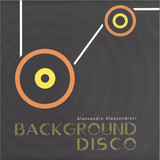
Just say Background Disco and you're quickly reminded of the super-groovy sound that pervaded certain sequences of 1970's Italian films, generally set in discos or clubs with a strong presence of music. Soul, disco, and funk tracks playing in the background, between a dance on the floor and a glass of J&B at the counter, that were supposed not to overcome the dialogues. Two of these jewels, signed by Alessandroni for the sexy comedy FRITTATA ALL'ITALIANA (1976, Alfonso Brescia) and previously released by our label in the collection LOST & FOUND (Four Flies Records 2017), definitely deserve the upgrade to the 12'' format. Therefore, they are proposed in a new edit designed for the dancefloor, each in a double version: the sung one (by lesser known Lorena, a member of Alessandroni's vocal band I Cantori Moderni) and the instrumental one.
Franco Micalizzi CHI SEI(Four Flies Records - FLIES 17)
LP 180gr. Limited Edition 500 copies
liner notes byALFONSO CARRILLO (Rendezvous, LA)
lettering & artwork restoration byLUCA BARCELLONA
Considered one of the finest and most successful works composed by Franco Micalizzi. A 500 limited-edition LP which includes two tracks never before released on vinyl, a reworked painted lettering title designed by Luca Barcellona, and extensive liner notes by Los Angeles'RendezvousDJ/film event founder, and Four Flies collaborator, Alfonso Carrillo: "A film score that was quite unheard of in horror - a funk and disco-tinged soundtrack, with a sound reminiscent of a blaxploitation film. Director Ovidio Assonitis'Chi sei(1974, American title:Beyond the Door) offered horror fans both a familiar sto- ryline and a stylistically unusual score. Recorded in the States, and using American session musicians, Micalizzi created one of horror's most unique soundtracks. He utili- zes soulful lead vocals (sung by Warren Wilson) along with sax and synthesizer, both of which are featured prominently on the score. Along with superb percussion work, this soundtrack features virtuosic musicianship by top session players and easily stands up to the test of time. This was an early foray into the world of soulful funk and an early in- dication of future-funk to come from the maestro". Alfonso Carrillo (Rendezvous, LA)
The first release of Alienata's label is coming from Artificiero, which is the alias of Alfonso Alfonso (Murcia, Spain), an experienced musician who has released nine records with his psychedelic rock band Schwarz. 'Masa Negra' will be his first album with this new project.
In it, Artificiero delivers a sort of 'electronic esoterica', an inner ritual where repetitive beats and drones have an important roll. A ceremony where textures are more prominent than melody.
- 1