"Hollywood, the new album by German pianist Sebastian Knauer is centred around the music and family story of legendary American film music composer Alfred Newman.
He recorded it with the son of Alfred, conductor and composer David Newman and the Deutsches Symphonie-Orchester Berlin.
Alfred Newman, the founding father of the Hollywood sound, composer of the world's most famous fanfare, the 20th Century Fox logo, winner of nine Academy Awards, nominated for 45, friend of Gershwin,Copland, Bernard Herrmann, mentor of Alex North, Elmer Bernstein, Jerry Goldsmith and founder of the most successful film music dynasty: his younger brothers Emil and Lionel Newman (“Hello, Dolly!”), his older son David Newman (“Ice Age”, “Anastasia”), the younger son Thomas Newman (“American Beauty”, ""James Bond: Skyfall""), his nephew Randy Newman ... and his grandchildren are already starting their careers ...
George Gershwin or Aaron Copland, Alex North or Elmer Bernstein, Bernard Herrmann or Jerry Goldsmith - all the composers on Sebastian Knauer's new album have three things in common: they come from the USA, they have naturally intertwined classical composition and film music and they are closely associated with Alfred Newman."
quête:alfred
Alternative Jazz. This is a 5 track EP of brand new, previously unreleased material from The Near Jazz Experience (Terry Edwards, Mark Bedford and Simon Charterton). Whilst recording the new album Terry asked pianist Mike Garson (best known for his work with David Bowie, Nine Inch Nails, Smashing Pumpkins) - whom Terry has toured with if he'd like to play on a track. Mike said yes, recorded a stupendous solo for Character Actor at his home studio and sent it over. All in the space of 24 hours! On hearing the piano part NJE bassist Mark Bedford came up with the idea of having the piano mixed with the original track (as intended) but also using it as the basis for a completely new recording with the piano leading rather than complementing the band. Side 1 of the EP has these two very different versions from the same seed. Unidentical twins indeed. Side 2 of the EP contains 4 outliers from the album sessions. These aren't out-takes or unfinished pieces. They simply couldn't find a place for themselves within the album - along the lines of the tunes Tom Waits put together for his Orphans compilation of 2006. They are standalone tunes which have found a home together on this EP because in some way they all have filmic qualities. Side 1 contains 2 takes on Character Actor (the title being a nod to Cracked Actor, a tune on Aladdin Sane, the album that introduced Bowie fans to Mike Garson), and Side 2 has The Loping Four; Projector; MacGuffin and Lockstep, all titles which contain strong cinematic elements, MacGuffin in particular. It was Alfred Hitchcock's favourite word for a red herring in the plot. The musical cast on this release has a remarkable pedigree. The NJE consists of Terry Edwards (solo artist and session player with PJ Harvey, Franz Ferdinand, Siouxsie, Jimi Tenor, Piroshka, Tindersticks etc); Mark Bedford (Madness, Robert Wyatt, Robyn Hitchcock, Nightingales etc); Simon Charterton (The Higsons, Alex Harvey, Zook, Serious Drinking etc). Alongside featured guest Mike Garson there is an appearance by Oliver Cherer (Aircooled, Miki Berenyi Band) on keys and synth. This is an RSD exclusive, 500 copies on black vinyl in full colour sleeve which reflects the filmic quality of the recorded material. No download. The title track will appear on the next Near Jazz Experience studio album. The 4 additional tracks, however, will remain exclusive to Record Store Day.
- A1: Le Funk Et Moi
- A2: Jezebellearic (Ft Alfredo)
- A3: Spring Calling
- A4: Re-Birth
- B1: Pedestal (Jezebell’s Dizzy Heights Dub)
- B2: Thrill Me
- B3: Hush Hush
- B4: Hypnorise
- C1: Concurrence
- C2: Swamp Shuffle
- C3: Jezeblue
- C4: Red Shift (Jezebell's Inner Child Mix)
- D1: Vibrations
- D2: Trading Places (3Pm)
- D3: Burning Bush
- D4: Bed Heads
Volume 1 - Original[26,85 €]
NO COVER!
Limited edition double vinyl release of Jezebell’s debut new-Balearic epic, which stylishly weaves the history of eclectic club classics through 16 tracks of downtempo, dub, and acid chug.
Support from Trevor Fung, Luke Una, Justin Robertson, Leo Elstob, Bill Brewster, Danielle Moore, Sean Johnston, Duncan Gray, Nathan Gregory Wilkins, Tech Support, Lebollet …
Ardor or Entropy is Nzʉmbe's first album in nine years, following 2015's Titubeo. During this period, philosopher and artist Miguel Prado's sonic output has included synthesizing a sonic Gernika with his band HARRGA alongside Dali de Saint Paul, and crafting a hallucinatory sci-fi mythology for Lucrecia Dalt's latest album, ¡Ay!."
Rewiring the conventions of chamber electronics and postmodern songwriting. Here it is presented A Spanish' song cycle on love and cosmological redshift. The distant echo of Tristan‐and‐Iseult's smoking gun where lovemaking becomes an enactment of entropy, a transformation between the dynamic and the static, the human and the fetish, illustrating the inevitable decline into chaos and stillness.
A beached singing voice (beautifully processed by Rashad Becker) against electro-acoustic backdrops ranging from the caustic, viscous to the bonecrushingly dense worldbuilding shared by HR Giger, Ballard and Pynchon. Transcendental and psychotic vistas that boldly examine human fragility and the surrounding abyss of godlessness.
---------------------------------
Artist: Nzʉmbe Title: Ardor or Entropy Label: Drowned By Locals Catalog Number: DBL31LP Year: 2024
Side A:
Mirror Of TauromachyZone Of AlienationGreat Vitreous TactKarman Vortex Street
Side B:
Serpentine LinesThermocline Anake and EntropyErgosferaAsymptopia
Composed, arranged and recorded by Miguel Prado Casanova
Vocal processing by Rashad Becker Piano on "Anake and Entropy" by Michael PisaroPipes on "Mirror Of Tauromachy" and "Ergosfera" by Wojciech RusinAccordion on "Asymptopia" by Alfredo Costa MonteiroTrumpet on "Asymptopia" by Ruth Barberán Electric bass on "Asymptopia" by Dominic LashElectric guitar on "Asymptopia" by Daniel BennettPercussion on "Asymptopia" by Alex Lázaro
Premixed by Miguel Prado Casanova Mixed, Mastered and Vinyl cut by Rashad Becker
Artwork photos by Lúa Ribeira © all rights reserved, 2024Design by Giovanni Murolo
This album is dedicated to Patricia
Special thanks to Patricia Fraga, Dali de Saint Paul, Mattin, Lucrecia Dalt, Laith Demashqieh, Lúa Ribeira, Rashad Becker
Zur Feier des 20-jährigen Jubiläums von Spider-Man 2 präsentiert Sony Classical die legendäre Originalmusik von Danny Elfman zum ersten Mal auf Vinyl. Unter der Leitung von Pete Anthony und gespielt vom mehr als 100-köpfigen Hollywood Studio Symphony Orchestra enthält diese Special Edition Elfmans meisterhafte Kompositionen für den zweiten Teil von Sam Raimis Spider-Man-Trilogie mit Tobey Maguire, Kirsten Dunst, James Franco und Alfred Molina in den Hauptrollen.
Wann genau die Langhalslaute Bouzouki nach Griechenland kam, ist unklar. Ihre Wurzeln gehen bis ins vierte Jahrhundert vor Christus zurück. Die heutige Form des Instruments, benannt nach "Βυζί", dem griechischen Wort für die weibliche Brust, ist relativ jung und seit etwa 1920 in Athen und auf dem Peloponnes verbreitet. Ursprünglich in Bars und auf privaten Festen gespielt fand es durch das Revival des „Rebetiko“, dem „griechischen Blues“ ab den 1960er Jahren weitere Verbreitung. „Ursprünglich wurde auf der Bouzouki viel improvisiert“, meint Georgios Propkopiou, „viel mehr als später. Denn ab den Fünfzigerjahren wurde ihr Spiel professionell unterrichtet. Da wurde vieles festgelegter“. Seitdem ist der metallische Klang des Instruments fast zum Synonym für die griechische Folklore als Begleitung von Liedern und Tänzen geworden... vor allem bei dem Komponisten Mikis Theodorakis, der mehr als nur ein paar Ohrwürmer hervorgebracht hat.
Die Jazzkarriere der Bouzouki hingegen stand bislang noch aus. Es brauchte einen Umweg über Stockholm, damit etwas in Bewegung kam. „Die Kombination Bouzouki und Jazz liegt erst einmal nicht so nahe“, meint der Pianist Joel Lyssarides. „Für mich persönlich hängt sie mit meinem Großvater zusammen, einem griechischen Zyprioten. Er kam in den 1940ern nach Schweden. Griechische Musik mochte ich immer, ich war aber damit nicht wirklich vertraut. Jedenfalls fand ich die Bouzouki faszinierend. Während der Pandemie habe ich mir ein Instrument gekauft, um es ein wenig zu lernen. Beim Stöbern im Internet entdeckte ich dann Georgios durch ein TV-Konzert, ein Tribute an Theodorakis. Ich war total begeistert und habe in Stockholm herumgefragt, ob ihn jemand kennt. Tatsächlich spielte er zufällig ein paar Tage später in der Nähe in einer Hotelbar ein Konzert“.
Das war im Herbst 2022. Joel Lyssarides hörte Georgios Prokopiou zu, sprach ihn an und sie verabredeten sich zu einer Session. Sie jammten und improvisierten, fanden musikalisch schnell zusammen und im Sommer 2023 spielten sie ihr erstes gemeinsames Konzert. „Es ist sehr unüblich, dass jemand mit der Bouzouki über Changes improvisiert,“ erzählt Joel Lyssarides weiter. „Sie ist ja ein traditionelles Instrument mit klar definierter Rolle, meistens Begleitung mit gedoppelten Terzen und Sexten. Georgios aber macht viel mehr. Ich hatte zunächst keine Ahnung, wie unglaublich virtuos und stilistisch variabel er ist. Seine Vielseitigkeit öffnet viele Türen. Wir hatten von Anfang an sehr viel Spaß an den neuen Möglichkeiten. Und ich hatte vorher noch niemanden gehört, der so spielt. Dafür musste ich unbedingt Musik schreiben“.
Lyssarides erzählte ACT-Chef und Produzent Andreas Brandis von der Idee für das Duo und auch dieser war sofort begeistert: „In der Lesart von ACT steht der Begriff Jazz vor allem für ein Vokabular mithilfe dessen Musiker:innen ihre eigene Geschichte vor ihrem persönlichen kulturellen Hintergrund erzählen. Es ist faszinierend, dass hier immer wieder Konstellationen entstehen, die es vorher nicht gegeben hat. Und die Musik, die Joel Lyssarides und Georgios Prokopiou gemeinsam kreieren ist einerseits absolut überraschend und neu, klingt jedoch gleichzeitig so organisch und natürlich, als hätte es diese Konstellation schon immer gegeben.“
Es sind aber nicht nur die Instrumente Klavier und Bouzouki, die sich getroffen haben, sondern auch die speziellen Charaktere und Geschichten der beiden Duopartner. Der Stockholmer Joel Lyssarides verbindet in seinem Spiel größte Virtuosität mit beeindruckender Leichtigkeit und einem starken Gespür für Stimmung und Dynamik. Er arbeitet mit so unterschiedlichen Künstler:innen wie Anne Sofie von Otter, Benny Anderson, Nils Landgren, Viktoria Tolstoy und ist Teil des Esbjörn Svensson Tributes „e.s.t. 30“. Das ACT-Debüt „Stay Now“ von Lyssarides‘ eigenem Trio wurde seit seinem Erscheinen 2022 allein auf Spotify eindrucksvolle 25 Millionen Mal gehört. Der Athener und Wahl-Stockholmer Georgios Prokopiou spielte zum ersten Mal mit sechseinhalb Jahren Bouzouki, gab mit acht seinen Konzerteinstand und hatte als Zehnjähriger bereits feste Musikengagements in Bars und Bordellen. Seitdem arbeitet er im klassischen Kontext ebenso wie in der Folklore und dem Experimentellen, spielt neben der Bouzouki außerdem Saz und andere Saiteninstrumente.
Die Voraussetzungen für das Album „Arcs & Rivers“ waren daher so vielfältig und offen, wie nur möglich. Nach einem Probekonzert in der Berliner ACT Art Collection, von dem das Live-Stück „Zafeirious Solo“ auf das Album übernommen wurde, trafen sich die beiden noch einmal am selben Ort, um mit Studio-Equipment auch andere Facetten aufnehmen zu können. „Wir wollten zum Beispiel leise Stellen dabeihaben, nah mikrofoniert. Außerdem den großartigen Klang des Flügels, der früher einmal Alfred Brendel gehört hat. Insgesamt aber war vieles sehr spontan. Das ganze Album wurde in einem Rutsch aufgenommen, innerhalb von vier Stunden, meistens mit den ersten Takes. Ich bin sonst oft Perfektionist und verbringe Tage mit der Nachbearbeitung von Musik im Studio. Diesmal hingegen sollte es so direkt und spontan wie möglich sein“. Und es funktionierte: „Arc & Rivers“ ist ein Dialogskizzenbuch mit normsetzender Wirkung. Egal ob neue Kompositionen oder Verarbeitungen traditioneller Rhythmen und Muster wie in „Kamilieriko Road“ – diese Musik hat eine schillernde, klangmagische Kraft. Und das Duo selbst strahlt eine Selbstverständlichkeit der Kulturverknüpfung aus, die die Enge der Stile hinter sich lässt. Und es macht klar: Es ist tatsächlich Zeit für etwas mehr Bouzouki im Jazz, in der Improvisation und auf den Bühnen der internationalen Musikwelt.
Axces Recordings presents the debut EP by CX, the producer alias of label affiliate Søren Kinch. The tracks on this release evoke a sense of melancholy and ethereal beauty, with a refined approach that complements the sound of modern club music.
The three tracks—Formula, Cobra, and Plethora—share a common structure of fast-paced grooves with a patient progression throughout. However, while Formula and Plethora both create an airy and hypnotic atmosphere, Cobra stands out by combining soft vocals with a harsher sound reminiscent of Robert Leiner.
As a teenager, Søren met Torsten aka Helmuth Kool (1976-2015), a beloved figure and promoter from Aarhus who profoundly influenced his approach to music and raves. They often traveled to Berghain in Helmuth's old Saab 900 with only 4 gears. On this EP, Søren has dedicated the final track to Helmuth, who sadly passed away way too young—A playful and soaring track that Helmuth would dance to at his afterparty in heaven.
Søren has been a part of the former Vektor crew and co-founded the renowned, though now defunct, club 'Et Andet Sted' in Copenhagen before joining Axces Recordings—a label that focuses on releasing club music and hosting intimate dance parties. It’s run by Alfredo92, A. Waze, Kasper Marott, Martin Gilleshøj, Matilde Gomes, and Popmix."
- A1: Future & Metro Boomin We Don't Trust You 3 46
- A2: Future, Metro Boomin & The Weeknd Young Metro 3 25
- A3: Future & Metro Boomin / La Chat Ice Attack 3 19
- A4: Future, Metro Boomin, Travis Scott & Playboi Carti Type Shit 3 48
- B1: Future & Metro Boomin Claustrophobic 3 42
- B2: Future, Metro Boomin & Kendrick Lamar / Eazy-E Like That 4 27
- B3: Future & Metro Boomin Slimed In 3 14
- B4: Future & Metro Boomin / Future Magic Don Juan (Princess Diana) 3 40
- C1: Future, Metro Boomin & Travis Scott Cinderella 2 49
- C2: Future & Metro Boomin Runnin Outta Time 3 25
- C3: Future & Metro Boomin / Future Fried (She A Vibe) 3 30
- C4: Future & Metro Boomin Ain't No Love 3 02
- C5: Future, Metro Boomin & Rick Ross / Alfreda Brockin Everyday Hustle 3 46
- D1: Future & Metro Boomin Gta 3 53
- D2: Future & Metro Boomin Seen It All 2 59
- D3: Future & Metro Boomin Wtfym 4 52
- D4: Future & Metro Boomin Where My Twin @ 2 02
Red Marbled Vinyl[28,78 €]
WE DON'T TRUST YOU feierte die historische Partnerschaft zweier kulturverändernder Legenden auf dem Höhepunkt ihrer Kräfte und brachte das Internet fast zum Beben. Die neueste Zusammenarbeit von Future und Metro Boomin ist die Fortsetzung eines musikalischen Vermächtnisses, das bis zu "Karate Chop" zurückreicht, einer elektrischen Single aus dem Jahr 2013, die das dynastischste Hip-Hop-Duo der 2010er Jahre hervorbrachte. Mit Tracks wie "Jumpman" (mit Drake) aus dem Jahr 2015 und "Mask Off" aus dem Jahr 2017, Singles, die zusammen von der RIAA mit 14-fachem Platin ausgezeichnet wurden, haben sie ihre Verbindung weiter gefestigt. WE DON'T TRUST YOU enthält den Track "Like That" feat. Kendrick Lamar sowie weitere "A-List"-Gastbeiträge.
black LP[20,13 €]
“Is that what you wanted, Alfred?” we hear in Miles Davis’ unmistakable rasp at the end of “One for Daddy-O,” making it clear that the legendary (and assertive) trumpeter was not just playing the role of sideman on Somethin’ Else, the sole Blue Note album by Cannonball Adderley.
The alto saxophonist was a member of Davis’ band at the time and the depth of their musical camaraderie lifts this session up to rarefied heights throughout, from the breath-taking performance of “Autumn Leaves” that opens the album to the thrilling call-and-response theme of the title track. Pianist Hank Jones, bassist Sam Jones, and drummer Art Blakey round out the quintet on this timeless classic.
This Blue Note Classic Vinyl Edition is all-analog, mastered by Kevin Gray from the original master tapes, and pressed on 180g vinyl at Optimal.
Yunchan Lim is the one of the most talked-about classical artists on the planet. In 2024 he presents his debut studio album on Decca Classics – the Chopin Études, Op.10 and Op.25. Yunchan Lim became the youngest ever winner of the Van Cliburn International Piano Competition in 2022, aged only 18; his performance of Rachmaninov’s Piano Concerto No. 3 moved his conductor to tears and gathered unprecedented millions of online viewers. In the months following, his rise to stardom has been meteoric, with invitations from the most prestigious concert halls and orchestras. Now, setting down the Op. 10 and Op. 25 Etudes, Lim is putting himself in a direct line with some of the greatest pianists of the past. Lim says “a huge universe of pianists played this repertoire, and I have always wanted to become a fundamental musician like them, so I decided to follow their route.” He has grown up listening to great pianists recording this music, including some of his favourites - Alfred Cortot, Ignaz Friedman, Joseph Lhevinne, Mark Hambourg and Sergio Fiorentino, among others.
"A 'Pear' of albums on one vinyl LP... a combo of heavy psychedelia, drum and bass grooves, bouncy boogie, catchy tunes and sprinkles of tastee horns, keys and strings thrown in... kinda like a thumb over the genre-hose nozzle, something for everyone and nothing for someone... guaranteed! 'Grow A Pear' has been in the works for 5 years. What started as my contributions for the 'new' Butthole Surfers' album that was not to be... turned into a solo album I recorded with contributions from some of my favorite flavor players to create an album that most represents where I came from and bridges to where I'm at right now. My wishes for the future, is that everyone in the world will finally 'Grow A Pear'" - JD Pinkus 'Grow A Pear' features a veritable cornucopia of American Indie music radicals: Åsa Söderqvist and Lina Ericcson of Shitkid, Paul Leary of Butthole Surfers, Sam Coomes of Quasi and Jon Spencer's Hit Makers, Mike Savino of Tall Tall Trees, Walter Daniels of Bigfoot Chester, Mike Alfred of Shed Alford, Jed Willis of Khandroma, Michael Brueggen of Honky and Syrup, and Billy Sheeran.
- A1: Vertigo Prelude And Rooftop
- A2: Madeleine And Carlotta's Portrait
- A3: The Beach
- A4: Farewell And The Tower
- A5: The Nightmare And Dawn
- B1: Love Music
- B2: The Necklace And The Return And Finale
- B3: Theme From Alfred Hitchcock Presents (Funeral March Of A Ma
- B4: Theme From Dial M For Murder
- B5: Mouvements Perpetuels From Rope
- B6: Theme From The Trouble With Harry
- B7: Juke Box #6 From Rear Window
- B8: Prologue; Duet For Four Feet From Strangers On A Train
ORANGE VINYL[14,50 €]
Vertigo is a 1958 American film noir psychological thriller film directed and produced by Alfred Hitchcock. Vertigo received mixed reviews upon initial release, but is now often cited as a classic Hitchcock film and one of the defining works of his career. On this LP you will find the music of the original soundtrack along with some bonus tracks culled from other Alfred Hitchcock films and even from the television series.
An American soul vocal group that would go on to shape the sound of pop music much farther beyond their imaginations, The Ponderosa Twins Plus One featured two sets of identical teenage twins, Alfred and Alvin Pelham, and Keith and Kirk Gardner, along with Ricky Spicer. The group released a couple of singles and a lone album for Cleveland's Saru label in 1971, breaking up and disbanding as adolescence waned. A recent sample darling of both Kanye West and Tyler The Creator, "Bound" has revealed the Ponderosa Twins Plus One as the real Midwest kid soul deal. Numero is proud to present the first official American repressing of the original 1971 release, with fresh remasters from the original analog tapes, two previously unissued bonus tracks, and a replica tip on sleeve, making this an album you're bound to fall in love with.
Die schwedisch/norwegische Melodic Power Metal-Band SAINT DEAMON meldet sich gut dreieinhalb Jahre nach ihrem quasi-"Comeback"-Album "Ghost" wieder mit einem neuen Longplayer zurück: "League Of The Serpent". Dass SAINT DEAMON für qualitativ hochwertigen Sound und eine (im Power Metal-Genre oft schwer zu findende) individuelle Note stehen, dürfte sich herumgesprochen haben. Auch "League Of The Serpent" zeigt sich deutlich die große Qualität von Sangeswunder Jan-Thore Grefstad, Gitarrist Toya Johansson und Bassist Nobby Noberg (ex-Dionysus), sowie Neu-Drummer Alfred Fridhagen (Gaia Epicus) auf. Tracks wie die beschwingte erste Single "At Break Of Dawn", das extrem eingängige "Load Your Cannons" oder der ohrenschmeichelnde Melodic Rocker "The Final Fight" sind typische SAINT DEAMON-Kompositionen, dazu verwebt die Band geschickt progressive Anklänge.
- A1: Dead Already
- A2: Arose
- A3: Power Of Denial
- A4: Lunch W/ The King
- A5: Mental Boy
- A6: Mr. Smarty-Man
- A7: Root Beer
- A8: American Beauty
- A9: Bloodless Freak
- A10: Choking The Bishop
- B1: Weirdest Home Videos
- B2: Structure & Discipline
- B3: Spartanette
- B4: Angela Undress
- B5: Marine
- B6: Walk Home
- B7: Blood Red
- B8: Any Other Name
- B9: Still Dead
With 14 Academy Award nominations, seven Grammy awards, and an Emmy to his credit, Thomas Newman has a track record second to none among modern screen composers (and even among his family, which is saying a lot considering he is son to Alfred, brother to David, and cousin to Randy Newman)! But among all his Academy Award-nominated scores—to classics like The Shawshank Redemption, Wall-E, Finding Nemo, Saving Mr. Banks, and The Road to Perdition—his score to the 1999 Academy Award-winning Best Picture American Beauty (the first of his many collaborations with director Sam Mendes) remains his most distinctive. That’s because Newman made the bold choice of composing a score almost entirely with percussion instruments, brilliantly intuiting that the lack of melodic resolution in the film’s themes would echo and amplify what he termed the “moral ambiguity” of the script. The result was a haunting and wholly original film score that is instantly recognizable to anyone who has seen the picture. Real Gone Music is very, very proud to present this work of genius on blood red rose vinyl to match the original album art (here used for the first time on a vinyl release) and the film’s shattering conclusion!
- A1: Los Hermanos Martelo – Cumbia Cienaguera 02 47
- A2: Los Trotamundos – Cumbia Porteña 02 31
- A3: Antonio León Y Su Conjunto – Cumbia Triste 02 48
- A4: Antolín Y Su Combo Orense – El Pájaro Milano 02 44
- A5: Francisco Zapata – Una Cumbia Para María 03 00
- A6: Crescencio Salcedo – Tipicismo 02 35
- A7: Sonidos De Gamero – La Cumbia Del Negro 03 07
- B1: Los Teen Agers – Cumbia Sobre El Mar 02 40
- B2: Miguel Villalba Y Su Conjunto – Cumbia Manguelitera 02 49
- B3: Calixto Ochoa – El Indio Mapuchi 03 02
- B4: Alfredo Gutiérrez Y Los Caporales Del Magdalena – Aspacanilla 02 26
- B5: El Michi Y Su Combo Bravo – Antonia 02 41
- B6: Los Graduados – Alumbra Luna 03 07
- B7: Gabriel Mesa – La Luna Y El Pescador 03 00
- C1: Adolfo Pacheco Y Su Conjunto – Pájaro Macua 02 24
- C2: El Conjunto Miramar – Cumbia Del Sol 02 58
- C3: El Combo Cienaguero – Fiesta De Cueros 02 21
- C4: La Sonora Universitaria – Margot 02 22
- C5: Orquesta De Marcial Marchena – Lina 02 39
- C6: Rita Fernández – Llora Su Pena 02 05
- C7: Jaime Llano González – Cumbia En Dominante 02 52
- D1: Los Arko – Cumbia Bogotana 02 05
- D2: Aniceto Molina Y Su Conjunto – Cumbia Candela 03 34
- D3: Los Bobby Soxers – Cumbia Sabrosona 02 08
- D4: Catalino Y Su Combo Negro – Cumbia Montañera 02 27
- D5: La Cumbia Moderna De Soledad – Cumbia Soledeña 03 16
- D6: Alejandro Bernal – Al Compás De Las Polleras 02 20
- D7: Grupo La Droga – La Chicharra 02 09
A selection of 28 Colombian cumbia bangers for the dance floor from the deep vaults of Codiscos and associated labels Costeño, Zeida and Famoso, all of them originally released between 1962 and 1983.
“Cumbia Cumbia Cumbia!!!” combines well-known classics and rarities that are difficult to find in their original formats. An invitation to enjoy and be amazed, above and beyond ethnographic and academic concerns.
The historical origins of cumbia in Colombia are nebulous and imprecise. The mythology surrounding it suggests an ancient past when Amerindian, African and European musical sounds were mixed together.
The main record companies in Colombia such as Discos Fuentes, Discos Tropical, Sonolux, Zeida-Codiscos, Silver, Ondina, Discos Atlantic, Vergara and Curro were created between Barranquilla, Medellín, Cartagena and Bogotá from 1936 to 1954. All of them, without exception, recorded Colombian tropical music that over the years was given different names such as porro, gaita, fandango, paseaito, merecumbé, mapalé, bullerengue or, of course, cumbia.
After digging deep into the overwhelming archive of Discos Fuentes in our previous volume, this second instalment in the series “Cumbia Cumbia Cumbia!!!” comprises 28 Colombian cumbia bangers for the dance floor from the deep vaults of Codiscos and associated labels Costeño, Zeida and Famoso, all of them originally released between 1962 and 1983. Legally established on July 1, 1950, Zeida (later Codiscos) was one of the companies that consolidated Medellín as the epicenter of the Colombian recording industry in the central decade of the last century.
“Cumbia Cumbia Cumbia!!!” combines well-known classics and rarities that are difficult to find in their original formats. An invitation to enjoy and be amazed, above and beyond ethnographic and academic concerns.
An American soul vocal group that would go on to shape the sound of pop music much farther beyond their imaginations, The Ponderosa Twins Plus One featured two sets of identical teenage twins, Alfred and Alvin Pelham, and Keith and Kirk Gardner, along with Ricky Spicer. The group released a couple of singles and a lone album for Cleveland's Saru label in 1971, breaking up and disbanding as adolescence waned. A recent sample darling of both Kanye West and Tyler The Creator, "Bound" has revealed the Ponderosa Twins Plus One as the real Midwest kid soul deal. Numero is proud to present the first official American repressing of the original 1971 release, with fresh remasters from the original analog tapes, two previously unissued bonus tracks, and a replica tip on sleeve, making this an album you're bound to fall in love with.
- Lp Tracks: Queen Feat. Kim Jennett
- Ain't Got No Troubles On The Road Feat. Pete Brown, Chris Farlowe & Tommy Schneller
- Try Me Again Feat. Hamburg Blues Band
- Sunshine Of Your Love Feat. Dennis Chambers, Malcolm Bruce & Maya Sage Tomorrow's Blues Feat. Clem Clempson, Marlia Rae, Harry Waters, Alfred Mehnert, Anne Hauter &Detlef Blanke
- Why Are You Ashamed Of Me? Feat. Heidi Solheim
- I'm A Ram Feat. Jed Potts, Paul Jones, Phil Bee, Alex Lex & Paul Jobson
- I Don't Know Where My Heart Is Feat. Beth Morris
- Road Angel Feat. Vanja Sky & Danny Bryant
- Rock'n Roll Hoochie Koo Feat. Curt Cress, Frank Itt & Stoppok
- Do What I Say Feat. Clawfinger & Millie & Luca Crew
- Bust A Button
It is a monster album which unites the who's who of the modern blues and rock scene and took Krissy one year to produce! Friends on the album include rap metal giants Clawfinger, the god of hellfire Arthur Brown, the voice Chris Farlowe, Germany's soul queen Inga Rumpf, legendary singer songwriter Stoppok, the iconic Hamburg Blues Band, elite drummers Dennis Chambers & Curt Cress, Blues singing dynamite Big Daddy Wilson and many more. The album includes 24 songs and is almost 3 hours long with a mix of Krissy's original material and his favourite cover songs. "It was a long time in the making and I managed to get it done. I started the pre-production in November 2022 and went in the studio to begin the meat and potatoes process in January 2023. I wanted to get all my favourite musicians together that I have met on the road in my career. They are not all here by any means, but a good handful are! I did not want this album to have a box, so there are many different genres from metal to blues and jazz to rock'n'roll. But in the end, it is a Krissy Matthews record."
- A1: Goldne Abendsonne, Wie Bist Du So Schön
- A2: Aprilnacht
- A3: Urin Deiner Blüten 1
- A4: Mutter Maria Zwischen Den Himmeln
- A5: Requiem Für Eine Ringelnatter
- A6: Urin Deiner Blüten 2
- B1: Apfelbaum, Kuh Und Backofen
- B2: Nie Kann Ohne Wonne, Deinen Glanz Ich Sehn
- B3: Requiem Für Ein Schwalbennest
- B4: Morgensonne
- B5: Afra Altar Maidbronx
Originally released on tape by SicSic in 2014, Aprilnacht commemorates a decade of music from Brannten Schnüre and marked the spring in a tetralogy of albums about the four seasons when it came out. Back then the Würzburg-based project consisted solely of Christian Schoppik, who later welcomed Katie Rich to take over the vocals. He used to perform as Agnes Beil, but dropped the name when, while making this album realized his music was becoming "much gentler and more fragile". Aprilnacht already captured the particular musical ideas that Schoppik would thoroughly keep exploring, delving deeper and deeper into the use and manipulation of samplers from sources so diverging as to wander between the five continents to post-war German family television and cult cinema. Heir of the ritualistic intensity of Coil, of the intricate sampler assemblies of Ghédalia Tazartès', and of the dusty, dismal old ballads from around the world, Brannten Schnüre manages to make these paths cross in a territory that is as inherent as it is uncanny; sieged by the past and intimate as a hearth. An organic approach to folk, ambient, and sound collage, where ethereal yet thoroughly textured pieces coalesce in enthralling, delicate, and innermost musical rituals.
The album cover paintings reveal the temper: dreary old towns where shadows come to dim the slow passage of crepuscular colors, a soft area of reanimation where wind and light come close and foresee the night of spring. Aprilnacht was inspired by the stories of German philosopher and writer Friedrich Alfred Schmid Noerr, whose work exhaustively examines the conflict between paganism and Christianity, safeguarding myth in a way that Schoppik describes as boldly modern, humorous and unpredictable in its variations of the Germanic folklore motifs. "I wanted to do the same with the music," he states, and the music here could as well be suitable for a night when household deities welcome wandering will-o'-the-wisps, water nymphs, and gyrovagues to discuss Perchta's leadership of The Wild Hunt, but this album is not a folk tale, it's not an elegy to worlds already gone, hidden in years; it's an intersection of routes that open mysteriously before our ears like a congregation of vapors. Aprilnacht is a gathering of voices; "There are too many children, and none of them keeps quiet," reads the last verse of «Requiem für eine Ringelnatter.»
Sensuality drips over the music to celebrate both the voluptuousness and tragic quality of nature; "It's raining on me, urine from your flowers," Schoppik sings in «Urin deiner Blüten» and later on, faced with a snake's erotic features, as if he wanted to be embraced by it: "Your quick, sharp tongue and your warm venom; that's what the pond is missing." Orality is where this profusion of contents thrives. When the voices get closer and condense, the words reveal the saliva employed to pronounce them; we feel the mouth and the tongue, but when breath envelops them in sorrow and softens their edges, they sound distant, diffused in the atmosphere, letting go of the body that held them. These two vocal facets oscillate permanently and interact naturally with the fertile assembly of samplers and instruments that develop throughout the album, which condense and disperse impersonating each other, interweaving to search for a specific syntax. Tangled whisperings of enigmatic phrases, timid voices that stick out to check the scene but hide away quickly, shivering trance chants and monastic ambiances, distant screams and clamors in between chaos and warfare swirl until bursting into subtle songs where even Mother Mary comes forth softly. Soothed by foggy atmospheres and crackling punctuations, these voices shape a vulnerable crowd, an occasion of fragility. Along this swarm of songs thrown into thin air, accordions sound like heavy-breathing lungs; clarinets sigh like curtains shaking; violin solos wander around like bees; Gjallarhorns cries distend like fleeing cattle; glockenspiels evoke remote music boxes and inherited toys; backward emanations emerge like slender waves retreating. On the banks of stretching loops and ember textures is where the songs slowly nest, collecting the words to find their tone.
A poem by Jorge Teillier says, "To talk with the dead you have to choose words that they recognize as easily as their hands recognized the fur of their dogs in the dark. To talk with the dead you have to know how to wait: they are fearful like the first steps of a child. But if we are patient one day they will answer us with a flame that suddenly revives in the fireplace." This may be Brannten Schnüre's main purpose: To find the voice to speak to those of whom we were a vision. Not in mourning, but acknowledging the obscure and volatile nature of spring's regenerative force, searching for the treasure of balance, as evidenced in the lyrics of «Requiem für ein Schwalbennest,» "Its nest was destroyed so many times before it was finished, and despite that, the shallow builds as if it is infatuated." The same idea is here in the words of Schmid Noerr, who made poetry an act of resistance to the horror of Nazism; "Since having seen the ability of a brilliant spirit to die, with a calm mouth that everyone saw, health is true again and we affirm it, even if rivers of blood flow." And as we call for the dusk's kindness, waiting to return home and eat with our kin by the stove, our ears become used to the games of the night. We feel like we're rowing on wetlands, while the "moon musick" keeps us vigilant against the slightest movement of water or sweet moan because eeriness here is imperative for survival. Do not succumb to the insipid howl of death, for nothing may last but mutability. You see, the rock has moved a little during the night; the rest is just wind fleeing from the void.
HARMONY014 is a four-track VA compilation that blends warm rhythm into dreamy groove.
Club-oriented A-side opens with “It’s me bb” tailored by Alfred Czital, setting an intimate, yet vibrant tone of the compilation, followed by Jamida's melodic “Lots Of Love” infused in harmonic vocals.
Side B navigates through deeper-end density fields, suitable on or off the dance floor. Poygonia's “Akkala” encompasses tribal traditions and pulsing beats, while Andy Garvey's Euphorique is finding balance between divine pads and collapsing percussion, wrapping up the compilation.
- A1: Le Funk Et Moi
- A2: Jezebellearic (Ft Alfredo)
- A3: Spring Calling
- A4: Re-Birth
- B1: Pedestal (Jezebell’s Dizzy Heights Dub)
- B2: Thrill Me
- B3: Hush Hush
- B4: Hypnorise
- C1: Concurrence
- C2: Swamp Shuffle
- C3: Jezeblue
- C4: Red Shift (Jezebell's Inner Child Mix)
- D1: Vibrations
- D2: Trading Places (3Pm)
- D3: Burning Bush
- D4: Bed Heads
Volume 1 - No Cover[23,32 €]
Limited edition double vinyl release of Jezebell’s debut new-Balearic epic, which stylishly weaves the history of eclectic club classics through 16 tracks of downtempo, dub, and acid chug.
Support from Trevor Fung, Luke Una, Justin Robertson, Leo Elstob, Bill Brewster, Danielle Moore, Sean Johnston, Duncan Gray, Nathan Gregory Wilkins, Tech Support, Lebollet …
- A1: Tremendous Aron, Alfred & Arthur Kohlaas - Over At Art’s
- A2: Soulchef - Keep On Dreaming
- A3: Flo Badabum - Flyers
- A4: Saib, Beautiful Disco - Namsan
- A5: Matt Wilde - Butterflies
- A6: Swum - Soul Assassin
- B1: Mattari - Cerulean Sky
- B2: Mama Aiuto, Daphné - Devine Variety
- B3: Koralle - Corner
- B4: Astairé - Bellarosa
- B5: Klim - Nyc Parks
- B6: Wun Two - Snow Jazz Rio
- C1: Wieland & Ulrich - Light It Up
- C2: Emapea - They Say
- C3: Juan Rios - Cayenne
- C4: Mecca 83 - Onefourded
- C5: Shuko - Morning Calm
- C6: Konteks - Nowt But Soul
- D1: Kaspahauser - Filthy Casual
- D2: Keeth - Pray
- D3: Sátyr & Flks - Relajado
- D4: Sync.exe - Mustang
- D5: Doidoi - Common
- D6: Farhot - Mouse
Hip Dozer embarked on its journey almost a decade ago, in 2015. Diggers and producers joined this adventure, bound by a shared dedication and passion for the 90s hip-hop music and culture. Nearly 10 years since our label’s creation, the beat-making scene has evolved significantly, tingering closely with its mother genres that are jazz, library music, funk and soul music. We’re happy to be able to illustrate this continuous evolution of the artists’ skills, now richer than ever.
Eight years after the initial release of our 1st Anniversary compilation, our goal remains unwavering and will always revolve around championing the beloved art of beat-making while supporting and highlighting the talents of emerging artists.
This year, we are delighted to collaborate with some of our long-time partners: Konteks, Mama Aiuto, Shuko, KaspaHauser, SoulChef, Emapea, and some new ones—Juan Rios, doidoi, Farhot, and Tremendous Aron.
A massive thanks to all the incredible artists who jumped on board for this project! Your enthusiasm has made the journey exciting from the start, and we have much more in store for you. Thanks to all the listeners who keep tuning in with us.
- A1: And The Folklore Continues
- A2: La Califas Perdido
- A3: I Would Go With You
- A4: No Time For Time
- A5: Calling For Ya!
- A6: Bloodinthemud
- A7: Zapata's Boots
- A8: Mosaic Man
- B1: What Have I Been Doing Since I Was Gone?
- B2: Paper Switchblade
- B3: Never Forget To Remember
- B4: Run With The Hunted
- B5: New Terrain
- B6 40: Summers
- B7: The Simple Man
Yes! Tommy Guerrero’s revered Return Of The Bastard gets its first ever vinyl reissue. Endearingly simple but beautifully beguiling, it's lo-fi dusty break business with the most elegant guitars this side of Vini Reilly and Gabor Szabo. Tommy's breezy drum-machine guitar-soul should be prescribed to soothe an aching world. By rights, he should also be a Balearic god. Here's 14 tracks of drop-dead laconic beauty, all of them combining to create this unheralded masterpiece. Working with Tommy directly, the LP has been fully remastered and sounds as dazzlingly, heartbreakingly beautiful as it did back in 2007.
Coolly opening the album, "And The Folklore Continues" can be said to be both a titular and actual nod to his past work. As ever, there's heavenly Latin guitar stylings that make you swoon and the melancholic vibe is accentuated by the addition of some melodic wordless vocals from Tommy. Just divine. The sparkling "La Califas Perdido" follows, all dreamy melodic guitars and twinkling vibes over dusty drums and a fine bassline. The shuffling, conga-assisted "I Would Go With You" is a gentle, romantic gem whilst the brief but beautiful "No Time For Time" feels in a hurry to let us know that Tommy can work with more propulsive rhythms. In this case, they underpin Tommy's gorgeous, shimmering guitars wonderfully well.
The head-nod funk of "Calling For Ya!" (get it?) features Curumin delivering the clever title as a hypnotic vocal refrain peppered throughout, all hung around some buried spoken word vocals and gorgeous cello work from Lenny Gonzalez. "Bloodinthemud" is a low-down gritty funk workout whilst "Zapata's Boots" is a total low-key groover, all Latin percussion and Morricone muscle aided by a whistled Spaghetti Western melody. The startling instrumental "Mosaic Man" closes out the side with a lean slice of mellifluous, virtuoso guitar bliss.
The reflective "What Have I Been Doing Since I Was Gone?" opens the B-side in glorious fashion, the type of melancholic melodic head music that should soundtrack a bright walk on a cold winter's day. The hypnotic groover "Paper Switchblade" is a razor-sharp fuzz-funk whilst the beautifully downbeat "Never Forget To Remember" is a kaleidoscopic kalimba-koolout. Galloping cop-funk breaks workout "Run With The Hunted" is a rollicking ride and it's followed by the fresh chiming guitar funk of "New Terrain".
The upbeat and bright "40 Summers", featuring congas from Alfredo Ortiz, is as clean and poppy as Tommy gets and it really is a look he wears incredibly well. Just straight up guitar pop. "The Simple Man" a gorgeous, melancholic ballad, closes out the record with deeply yearning vocals from Tommy, a rarity and a treasured one at that.
Meticulously remastered and cut by both Simon Francis and Cicely Balston respectively, it has been pressed to the highest possibly quality at Record Industry in Holland. The original and iconic sleeve, designed by Natas Kaupas, has been restored here at Be With HQ as the finishing touch to this long overdue re-issue.
One of the greatest, heaviest, and most sought-after guitar records from 1970s West Africa, available on vinyl for the first time in over a decade!!!
Bamako, Mali, 1973: Rail Band, the official orchestra of the Malian state railway, drops their self-titled LP. It’s a relentlessly soulful and hypnotic blend of American funk, jazz horns, and Afro-Cuban music, reflected through centuries-old Mandé tradition and blasted at top volume by some of the continent’s greatest artists.
Led by legendary trumpet and saxman Tidiani Koné and held aloft by the intricate web of Djelimady Tounkara’s rumbling, reverb-soaked guitar, Rail Band’s sprawling compositions embody West African storytelling traditions while exulting in the technology and modernity of a newly independent Mali. Vocalists Salif Keita and Mory Kanté, two heroes of African music who would achieve global fame as soloists, are endlessly emotive, oscillating between silky ballads and funk screams. The band’s sound is filled out by layers of percussion, rolling guitars, and melodic horns filtered through the Caribbean.
Starting in 1970, Rail Band played five nights a week, from 2 pm til the early hours, at the Buffet Hotel de la Gare. Their audience was an international array of businessmen, young partiers, and people of the Bamako night. The band was incredibly versatile, switching genres, rhythms, and styles to meet their crowd. It was a volatile mix, one that would fall apart soon after these recordings were made, with Salif Keita’s departure to start the rival Les Ambassadeurs. Though Rail Band continued in many distinguished forms, the eight songs on this album reveal one of the greatest bands to ever exist, at the height of their creative powers.
On “Duga”, a composition dating back to the 13th century and passed on through oral tradition by the jelis (griots), the Rail Band replace balafon with the interplay of Cheick Tidiane’s speaker-rattling bass and Alfred Coulibaly’s tasteful organ. “Marabayasa,” with its iconic sax intro and Mory Kanté channeling James Brown, is a deep-cut favorite of DJs around the world. Part of a long and regal lineage of Malian guitar orchestras initially tasked with translating the region’s traditional music to modern instrumentation, Rail Band morphed and reenvisioned those traditions with a style and energy that has never been matched.
"Waxwork Records is thrilled to present BODY DOUBLE Original Motion Picture Soundtrack by Pino Donaggio. Body Double is a 1984 American neo-noir erotic thriller film directed, co-written, and produced by Brian De Palma (Carrie, Scarface, Phantom of the Paradise). It stars Craig Wasson, Gregg Henry, Melanie Griffith, and Deborah Shelton. The film is a direct homage to the 1950s films of Alfred Hitchcock taking on plot lines and themes such as voyeurism and obsession.
The film tells the story of a struggling actor, Jake Scully, who is offered a gig house-sitting in the Hollywood Hills. While peering through the beautiful home’s telescope one night, he spies on a gorgeous woman dancing in her window. But, when Scully witnesses the woman’s murder, it leads him through an underworld of the adult entertainment industry on a search for answers, with porn actress Holly Body as his guide.
After fighting censorship boards over the rating of his film Scarface - initially rated X and having to battle to make it R - Brian De Palma resolved to make Body Double as a pushback. At the time he said, “If this one doesn’t get an X, nothing I ever do is going to. This is going to be the most erotic and surprising and thrilling movie I know how to make… I’m going to give them everything they hate and more of it than they’ve ever seen. They think Scarface was violent? They think my other movies were erotic? Wait until they see Body Double.”
The film’s memorable soundtrack by legendary composer Pino Donaggio (Carrie, Tourist Trap, The Howling, Don’t Look Now) features memorable and influential cues including the standout track “Telescope”. The dynamic soundtrack music also features striking and exciting orchestral cues that are a throwback to classic Hollywood thrillers coupled with synth driven, electronic dance cues which complement the excessive 1980’s neon-washed porn industry in which the film is set.
Waxwork Records is excited to present the complete Body Double film music by Pino Donaggio for the first time on vinyl as a deluxe double LP featuring 150 gram Body Double red and blue colored vinyl, heavyweight gatefold jackets with film laminate gloss finish, an 11”x11” insert, and artwork by Robert Sammelin. The cover features the film’s classic 1984 original poster art restored."
Sublime Christian folk jazz from 1970s Norway. In the '60s and '70s churches throughout Europe had serious competition for the attention of its younger members. The ecclesiastical establishment was shocked to hear teenagers expressing 'Sympathy for the Devil' rather than sympathy for Christ and his teachings. In Norway at this time the same situation was prevalent as was happening across Europe; teenagers were turning their back on the church and embracing the temptations and pleasures of the flourishing new pop culture. Priest Olaf Hillestad was all to aware of what was going on, and instead of relying on the floundering traditional methods of rounding up his flock, he embraced the musical aspirations of his younger followers. In so doing he founded the Forum Experimentale in Oslo, an organisation that promised in its statutes to "boldly work for a renewal in service life, church music and church art". It was here in the late '60s where That's Why founder members Jan Simonsen and Per Arne Løvold became responsible for the jazz masses at Forum Experimentale's chapel. Together with some top-notch musicians from other Christian music centres around the Oslo district, they recorded two albums in 1970 and 1971 under the moniker That's Why. That's Why blended deep acoustic and electric jazz with elements of Norwegian folklore and Christianity. They also included interpretations of young and old transcendental Norwegian poets such as Sidsel Mørck Krogdahl, Alfred Hauge and Aslaug Vaa, as well as introducing English and Swedish songwriters such as Åke Rosenstrøm and Charles Wesley and even William Blake's "Children of the Future Age" into the mix. This highly original fusion of secular rhythmic music, jazz improvisation and a distinguished selection of transcendental lyrics is one of the standout qualities of That's Why, separating them from more programme-orientated Christian music. The unique mix leads the listener to think they are hearing among the record grooves the tightness of grey, sober Protestantism along with the ecstasy of a lay preacher. This listener, for one, has never heard anything quite like it.
Mutagenicos (in English, "Mutagens...agents of change) were formed at the end of 2008, their base of operations being the wine region of Spain, Logroño in La Rioja. Influenced by traditional garage, surf and rockn´roll, but with their feet firmly planted in the present. Their brilliant, long-delayed, new album is finally out! They started as a quintet playing mainly instrumental songs, but little by little, both the formation and the compositions, have been undergoing mutations, making way for other musical genres with a greater number of sung songs, although always there remains room for instrumentals. For more than 3 years the band had stabilized as a trio: Santi Pequeno (bass) Pablo Magariños (drums and vocals) Alfredo Roto (guitar and vocals). But as they are irresistible to change, Miguel Aguas has joined, contributing percussion, synths, choruses, and much-needed height! But what has never, and will never, change is the is the fundamental driver of the band: fun above all. Which is what rock´n´roll is supposed to be, right?
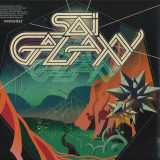
The star-studded Sai Galaxy project returns, bringing together West African legends Steve Monite and Rob with multi-instrumentalist Simon Durrington, guitar maestro Alfred Bannerman and Egypt 80 trumpet player Bade for a second EP of vital Afro-disco and soul.
The EP follows up 2022’s Get It As You Move EP, blending layers of vocal harmonies and synth washes with a rock-solid disco base. The sound stays faithful to the analogue production techniques of the 70s and 80s, adding a modern touch informed by Durrington’s Digital Afrika project.
Lead single ‘Hold You Tonight’ features Nigerian disco icon Steve Monite (best known for his mega hit ‘Only You’), revisiting his 80s origins with a dancefloor-ready slice of dubbed out boogie. ‘Rich Man Poor Man’ (featuring Ghana’s very own ROB) slows down the tempo and brings the highlife influence to the fore, while ‘Sometimes It Rains’ brings a neo soul bump with the Omar-esque sound of Fijian vocalist Kaivili.
Mastered & Cut by Sean Magee at Abbey Road Studios, London
OVERVIEW: Stylotone in association with The Bernard Herrmann Estate, The Hitchcock Trust and Universal Picturesis proud to announce the World Premiere Release of...Marnie. Composed and Conducted by Bernard Herrmann (Vertigo, Psycho, Taxi Driver)
A 4-Track 7” 45RPM Vinyl EP featuring music from the Original Motion Picture Soundtrack to Alfred Hitchcock’s 1964 Production.
“No composer contributed more to film than Bernard Herrmann, who in over fifty scores enriched the work of such directors as Orson Welles, Alfred Hitchcock, Francois Truffaut, and Martin Scorsese.”Steven C. Smith, author of ‘A Heart at Fire’s Center: The Life and Music of Bernard Herrmann’
- A1: Grana
- A2: Vorsichtig - Mutiger - Verloren
- A3: The Idea Of A Horizon
- A4: View From My Parents House
- B1: Folie
- B2: X-Pulse
- B3: Ungeheuer Ist Vieles
- B4: Seance
- B5: Nexus Ii On The Beach
- B6: Langsame Bewegung
- B7: Zwischen Luft
- C1: Chez Charles
- C2: P-Analyse
- C3: La Caduta Degli Dei
- C4: Aavikon (No Water)
- C5: Что Такое Человек
- D1: Dark Matter Art Cabinet
- D2: Hatch On A Hunch
- D3: Theban Constitutional
- D4: Kismet
- D5: No Noosphere
ESP Institute artist Bartellow, one third of the project Tambien and otherwise known in the Contemporary Classical sphere as Beni Brachtel, returns to the label with his second full-length release, Noosphere. While currently heading the SVS label and residency series out of Munich, Beni’s resume expands well beyond electronic music to include immersive sound installations such as The Adven- ture Of The Empty House (solo live performance across seven floors of Walter Henn’s Deckelbau building), a slew of compositions for the Bavarian State Opera (for which he doubled as conductor), and a prolific career of over twenty-five theater scores for institutions such as the Münchner Kammerspiele, Schauspiel Basel, Maxim Gorki Theater Berlin, Berliner Ensemble, Schauspiel Köln, Schaus- piel Graz and with directors Ersan Mondtag, Alexander Eisenach, Jessica Glause and Tobias Staab among others.
Noosphere is a compendium excerpting from theatrical scores WUT (Elfriede Jelinek, at Schauspielhaus Köln, directed by Ersan Mondtag, 2020), Ödipus and Antigone (Maxim Gorki Theatre Berlin, directed by Ersan Mondtag, 2017), Der Zauberberg (Thomas Mann, Schauspiel Graz, directed by Alexander Eisenach, 2017), Hass Tryptichon (Sybille Berg, Wiener Festwochen / Maxim Gorki Theatre, directed by Ersan Mondtag, 2019), Wonderland Ave. (Sibylle Berg, Schauspielhaus Köln, directed by Ersan Mondtag, 2018), Die Verdammten (after Visconti ́s film, Schauspielhaus Köln, directed by Ersan Mondtag, 2019) and Roi Ubu (Alfred Jarry, Theater Neumarkt, Zurich, directed by Alexander Eisenach, 2018).
The work traverses homages, infusing everything from Baroque to Impressionism, and while these types of references are certainly built into the canon of Theatre as a discipline, here we gather histor- ic layers in an even wider net. Under the self-referential thumb of Contemporary Classical music, this sort of "hindsight" approach has been largely avoided, however, in today’s all-access arena, the constant stream of historic causal-chained events has opened a delta where anything is possible. This defines Bartellow’s stance among his colleagues as well as his cultural position as a composer.
Beni considers beauty a fleeting objective in the arts, that expression is often expected to follow notions of Destructivism or the unfulfilled. Art will pore over wounds, collective angst, mourn- ing a loss of natural habitat or a fear of technological invasion, yet there is a bitter irreverence for the friction or salvation in beauty itself. Acknowledging this subjectivity — what one audience considers superficial pleasure may be deeply profound to another — he leans into musical instinct as if composing via divine conduit.
Noosphere conjures a array of suspense, ecstasy, melancholy, and dread, but in isolating the work from its theatrical component, Brachtel directs our focus toward formal qualities, clearing unim- peded space to conceive fresh narratives and examine dynamism and interconnectivity. In sympathy with often difficult theatre pieces, the passages can be dark and transgressive, but more importantly they remain relative to Brachtel’s circumstances at their time of creation. The title Noosphere speaks to the evolution of human thought and knowledge, opening a door to subjective points-of-view. For example, Nexus II On The Beach refers to both Roberto Musci’s Water Messages On Desert Sand as well as the film Bladerunner, invoking the image of an android enjoying the sunset, but whether or not this abstraction may be considered beautiful depends the listener’s cumulative life experience and perspective.
This is hybrid chamber music, augmented by electro-acoustic layers, juxtaposing various periods and successively processing their residual themes into a trans-generational rendering of “now.”
In den Jahren 1961 und 1962 hätte sich der Gitarrist Grant Green eigentlich auch gleich in Rudy Van Gelders Tonstudio in Englewood Cliffs als Untermieter einquartieren können. Denn in diesem Zeitraum war er dort an mehr als zwei Dutzend Einspielungen für Blue Note Records beteiligt. Die eine Hälfte machte er unter eigenem Namen, die andere Hälfte als Sideman von Größen wie Stanley Turrentine, Lou Donaldson, Hank Mobley, Ike Quebec, Horace Parlan und Baby Face Willette.
Um den Markt nicht zu übersättigen, sah sich Alfred Lion dazu gezwungen, einige von Greens Aufnahmen zu archivieren. Fünf von ihnen erschienen erstmals in den 1980ern. Darunter auch das im Januar 1962 entstandene Album “Nigeria”, das zu den unterbewerteten Juwelen des Gitarristen gehört. Zu erleben ist Grant Green auf ihm mit einer wirklich erstklassigen Band und einem ebenso exzellenten Repertoire (mit dem Sonny-Rollins-Klassiker “Airegin” und vier zeitlosen Standards).
BLUE NOTE TONE POET EDITION: Stereo, produziert von Joe Harley, komplett analog von Kevin Gray von den Originalbändern gemastert, RTI-Pressung (180g), stabiles deluxe tip-on jacket, wattierte Innenhülle.
Nachpresssung 2021 als Audiophile Black Vinyl! Doppel-LP auf schwarzem 180gr Vinyl. "Aufheben" oder "Aufhebung" ist ein deutsches Wort mit einigen scheinbar gegensätzlichen Bedeutungen. Über das bloße Aufheben eines Gegenstandes oder das Aufheben einer Regelung hinaus benutzt Hegel den Begriff, um zu erklären, was passiert, wenn These auf Antithese trifft. Als neues Album von THE BRIAN JONESTOWN MASSACRE wurde ,Aufheben" im Studio von Anton Newcombe in Berlin und in der berühmt-berüchtigten DDR-Radiostation ,Studio East" aufgenommen. Mit dabei: Matt Hollywood als Originalmitglied der Band. Außerdem versammeln sich hier Will Carruthers (SPACEMEN 3 , SPRITUALIZED) , Constatine Karlis (DIMMER) und Thibault Pesenti (ROCKCANDYS); zum Gesang trägt Eliza Karmasalo (auf Finnisch!) bei. Hier trifft sich der traditionelle Sound des BRIAN JONESTOWN MASSACRE mit vermischten östlichen Einflüssen und bringt die gesamte Verrücktheit mit, die man in den letzten 40 Jahren entdeckt hat. Das BRIAN JONESTOWN MASSACRE hat sich über die Jahre hinweg zu einer musikalischen Kommune für respektierte Musiker entwickelt und brachte seit den 90er Jahren große Bands hervor: BLACK REBEL MOTORCYCLE CLUB, THE WARLOCKS, THE SILVER ROCKETS, THE BLACK ANGELS, THE RAVEONETTES und THE DILETTANTES (um nur ein paar zu nennen) sprießen aus dem musikalischen Stammbaum des BRIAN JONESTOWN MASSACRES. Die Konstante: Frontmann Anton Alfred Newcombe.
ECORDS
Born out of the creative genius of the two founding members, Alfred Morris III
and Kim Martin, FORCE's 12" EP is a landmark in the Maryland metal scene, in
addition to being a highly sought after record by collectors and Doom Metal
aficionados. Soon available in a limited replica edition, to which will be added
extensive liner notes written by Kim Martin himself, detailing the band's history,
creative process, musical background and much more!
This release will be eternally dedicated to the memory of Alfred Morris III, who
unfortunately left us in 2018. Rest in peace, Alfred! Keep on rocking forever!
Moraes has an uncanny ability and acute gaze for building warm and endearing stories and characters in the old school tradition of Robert Artl and his "aguafuertes". His songs, both powerful and melancholic, are felt portraits of people who have crossed his path at various times in his life. 'Hogar' is his third album as a solo artist, and it includes a variety of genres: ballads and candombe, blues and milonga, like a mix between Bob Dylan and Tom Waits with Eduardo Mateo and Alfredo Zitarrosa. In 'Hogar', Santiago Moraes reaffirms the identity that he had previously explored in his previous works, but now it is revitalized by the participation of the musicians from Transeúntes, as well as several guests from both banks of the river, such as the Nautilus band and Uruguayan guest musicians that give the final touch to a more than interesting production. Hogar is made up of nine songs in which Moraes returns to his lyrical debt to Javier Martínez (in Los Espiritus he had quoted Manal in "Perro viejo", one of the best songs of his career) and manages to mix it with popular sounds that look towards Uruguay, the land of his parents.
Giorgio Gordano and Giorgio Dolce originally produced ''KKK'' back in 1983, and the track was taken into the hearts of the blossoming Balearic scene hovering around DJ Alfredo at Amnesia. It's as gentle and sweet natured as Italo disco can be, and of course it makes perfect sense that Best Records would dig it out of the archives and give it the shiny new reissue it deserves. The ''Club Mix'' of ''KKK'' is a feast of simple, charming programmed melodies and crisp drum machine rhythms with the innocence of the early 80s in its heart. The ''Dub Mix'' and ''Bonus Beats'' on the flip are handy for the technical DJs out there, but the ''Club Mix'' is where it's at for the lovers.
Repress!
First ever reissue of "A la memoria del muerto" (1972), Fruko y sus Tesos' second album, featuring the soaring and soulful vocals of Cali native Edulfamid Molina Díaz, aka "Píper Pimienta". Produced by Fruko's uncle Mario "Pachanga" Rincón, the LP has an uncompromisingly stark, hard sound that is appealing to today's collectors of 'salsa brava' just as it was impactful on the Colombian scene when it was made. Unlike the first Tesos album, with a two-trumpet line-up and fairly simple arrangements, this more mature recording added another trumpet and two trombones for a more robust brass attack. Additionally, instead of basic salsa, there are many different rhythms - guaguancó, bomba, plena, oriza, bolero, cha-cha-chá, descarga and Latin soul. Includes the bonus track 'Tihuanaco' (a cover of Peruvian pianist Alfredito Linares), which appeared on the US edition of the LP. Presented in facsimile artwork and pressed on 180g vinyl.
- 01: Jean-Marie Tjibaou - Discours Melanesia 2000 (Kanaki 1974)
- 02: Joby Bernabé - La Logique Du Pourrissement (Madinina 1985)
- 03: Lena Lesca - Aux Tortionnaires (France 1978)
- 04: Alfred Panou & Art Ensemble Of Chicago - Je Suis Un Sauvage (Benin &Amp; Usa 1970)
- 05: Léon Gontran Damas - Il Est Des Nuits (Guyane 1988)
- 06: Slimane Azem & Cheikh Nourredine - La Carte De Résidence (El Djazair 1979)
- 07: Manno Charlemagne - Le Mal Du Pays (Ayiti 1984)
- 08: Guy Cornely - Où Sont Donc Les Tam Tam ? (Karukera 1969)
- 09: Groupement Culturel Renault - Cadences 1 (France 1973)
- 10: Colette Magny - La Pieuvre (France 1969)
- 11: Salah Sadaoui - Déménagement (El Djazair 1985)
- 12: Võ Nguyên Giáp - Rien & Est Plus Précieux` Entretien À Alger (Vietnam 1976)
- 13: Les Colombes De La Révolution - Hommage À Mohamed Maïga (Burkina Faso 1985)
- 14: Hô Chi Minh - ` Arbitrer Le Conflit `(Vietnam 1964)
- 15: Peloquin & Sauvageau - Monsieur L& Indien (Quebec 1972)
- 16: Francis Bebey - On Les Aime Bien (Kamerun 1979)
- 17: Léon Gontran Damas - Blanchi (Guyane 1988)
- 18: Groupement Culturel Renault - Cadences 2 (France 1973)
- 19: Pierre Akendengue - Le Trottoir D&Apos;En Face (Gabon 74)
- 20: Eugène Mona - Pitié (Madinina 1970)
- 21: Dane Belany - Complexium - After Aimé Césaire (France &Amp; Usa 1975)
- 22: Troupe El Assifa - Extrait De Ça Travaille, Ça Travaille, Et Ça Ferme Sa Gueule (Maurice 1975)
- 23: Dansons Avec Les Travailleurs Immigrés - Versailles (France &Amp; Tunisie 1971)
- 24: Abdoulaye Cissé - Les Vautours (Burkina Faso 1978)