Rave At Your Fictional Borders is not beyond borders. The band simply denies any notion thereof. Driven by a sense of community, it defines human existence as one bio-organism with planet Earth. Now comprising members Dave De Rose, Marius Mathiszik, and Salim Akki, this incarnation of Rave At Your Fictional Borders first released the 'Entanglement' and 'Utopia' tracks in March 2025. Analogue Nomadism is the project's first album release. Recorded in Morocco and then co-produced and mixed by Dan Nicholls, it is an album of dizzying, trance-inducing scope. Rave music stripped of all external signifiers. Repetition, noise, krautrock, avant-garde sensibilities. This is a search for a groove that both connects and interlocks. The soul of improvisation and exploration runs through all seven pieces on Analogue Nomadism. Genres are referenced and transcended. The open-ended is perpetually embraced.
It is neither night nor day, but there is a half-light all the time. What used to be disconcerting is now not alien anymore. The sky boasts a faint light. Certain shapes are laid out, but get changed through communal ritual. Analogue Nomadism is the music of a feeling of community. It builds and breaks down. It is accepting of the psychedelic standards of the groove. Transportative and vertiginous. Endless.
Cerca:alien disco
Are You Alien's first vinyl missive, a compilation style affair showcasing the work of four label affiliated artists, is genuinely packed to the rafters with cuts designed to be played loud on "deep dancefloors and late-night transmissions". HearThuG kicks things off with 'Relax', a post-punk/dark disco inspired slab of early morning hedonism inspired by DFX's 'Relax Your Body' (which itself borrowed heavily from the KLF's 'What Time Is Love'), before Light Blue File charges towards darkened warehouses on the tactile tech-house/stab-happy rave fusion of 'Guante El En Mic'. Over on side B, Briki opts for squelchy acid bass, trippy vocal snippets and spacey sounds on 'Droppin The Pressure', before Ahmet Mecnun adds spoken word vocals and French Touch flourishes to a deep tech-house groove.
- A1: Return Of The Knödler Show 2 52
- A2: The Frogs Of Miwa - Cho (1) 4 52
- A3: Waiting (I) 5 38
- A4: An Old Friend Passes By 3 46
- A5: Coco Bolo Strip (1) 5 25
- B1: Peace And Pipe Utopia 3 14
- B2: Unidentified Dancing Object 1 44
- B3: The Call (I) 2 41
- B4: Wenn Das Rohr Dommelt 4 03
- B5: Mariahilf (Live Version) 3 36
- B6: Watching The Shades (I) 2 59
- B7: Playing The Table Music (Ii) 2 43
- C1: Could Be Nice Too 5 29
- C2: Ox Of Inner Depth 4 51
- C3: Ymir Shows Up 3 58
- C4: Could Be Nice 5 24
- C5: Playing The Table Music (I) 4 23
- D1: Coco Bolo Strip (Ii) 4 52
- D2: Locusts Looking Like Men 5 55
- D3: Waiting (Ii) ︎ 3 36
- D4: No Stove 2 29
- D5: An Old Friend Passes By Again 3 00
- D6: Heimkehr Der Holzböcke 3 16
Black Truffle is thrilled to announce Dalbergia Retusa, an extensive double LP selection of the solo guitar music of Hans Reichel, compiled by Oren Ambarchi. Last heard on Black Truffle as one quarter of the joyously anarchic Bergisch-Brandenburgisches Quartett, Hans Reichel (1949-2011) is one of the great figures of experimental guitar music. Though perhaps lesser known than peers like Derek Bailey, Fred Frith and Keith Rowe, Reichel’s rethinking of the instrument was in some ways the most radical of all. Early on, he dispensed with existing guitars to build a series of his own that explored the use of additional strings and fretboards, moveable pickups, extra bridges, special capos, and other innovations documented in the extensive booklet accompanying this release.
Reichel was a long-term resident of Wuppertal, the small Western Germany city that became an unlikely centre of European free jazz in the late 1960s, also home to Peter Brötzmann and Peter Kowald. His solo debut Wichlinghauser Blues was an early entry into the FMP discography and began a relationship with the label that stretched into the 1990s; all the solo performances heard here were first released on FMP. As Reichel says in the charming archival interview with Markus Müller included here, he was ‘always a cuckoo’s egg at FMP’, a label that began as an outlet for roaring European free jazz. What strikes the listener right from the opening selection on Dalbergia Retusa—‘Return of the Knödler show’, from 1987’s The Dawn of Dachsman—is the extraordinary beauty of Reichel’s music, at once alien in the shimmering sonorities and unconventional pitch relationships made possible by his invented instruments, and deeply lyrical, even romantic in its harmonic content. Growing up in West Germany in the 1960s, Reichel’s formative influences were mainly British and American rock bands, a background that shines through in many of the pieces included here: ‘An old friend passes by’ is haunted by the ghost of Hendrix’s rhythm guitar, and the wild closer ‘Heimkehr der Holzböcke’, taken from a rare 1975 7” and the only piece to use overdubbing, layers errant hammer-on and slide tones over a Canned Heat boogie chug.
Reichel was an important source for the development of Oren Ambarchi’s own extended approach to the electric guitar. Appropriately enough, his selection opens with the very first piece by Reichel he ever heard, on a flexidisc included with a 1989 issue of Guitar Player magazine. Though Reichel collaborated with others extensively in many settings and also performed on violin and his other major contribution to instrument invention, the daxophone, his music for solo guitar remains at the core of his oeuvre. Focusing exclusively on solo pieces recorded between 1973 and 1988, the 23 pieces on Dalbergia Retusa showcase the range and consistency of Reichel’s work, allowing the listener to see how his performances developed hand-in-hand with his instrumental inventions. On a piece from his very first LP, played on an 11-string instrument (partly strung with piano strings and using a schnapps glass a slide), we hear his intensive exploration of fret-hammering to create zither-like, chiming tone, which Reichel would hone further in later years with a double fretboard guitar specifically designed to be hammered rather than fretted and picked. On a piece from 1979’s Death of the Rare Bird Ymir, Reichel uses two steel-string acoustic guitars at once, with beautiful results: ‘some even say too beautiful’, he jokes in the interview included here. Many of the pieces from the 1980s make use of varieties of the ‘pick behind the bridge guitar’, instruments of uncanny harmonic richness primarily designed to be played on the ‘wrong’ side of the bridge. At times the unexpected behaviour of attacks, resonance, and decay can almost seem electronic, conjuring up the technology-assisted work of Henry Kaiser or even Fennesz, but realised solely through Reichel’s unorthodox techniques on his invented instruments. Extensively illustrated with photos and Reichel’s own plans and drawings of his instruments, Dalbergia Retusa is an essential introduction to the unique world of Hans Reichel. Rarely has music been at once so strange and so beautiful.
Mit „ALIENS“ schuf Radiorama 1986 einen echten ItaloDisco-Klassiker: futuristische Synths, treibende Beats und purer 80s-Space-Vibe. Der Track zählt bis heute zu den Highlights des Genres. Jetzt wieder als farbige Maxi-Vinyl
erhältlich.
Als besonderes Highlight enthält das Release neben den Originalversionen zwei exklusive Remixe von Flemming Dalum und DJ Tin Tin, die den Kulttrack neu interpretieren.
Ein Must-Have für Italo-Disco-Fans, Retro-Liebhaber und DJs
- A1: Design - Premonition
- A2: Vision - Lucifer’s Friend
- A3: Richard Bone - Alien Girl
- A4: John Howard - I Tune Into You
- A5: Ian North - We’re Not Lonely
- A6: Selwin Image - The Unknown
- B1: Harry Kakoulli - I’m On A Rocket
- B2: Rich Wilde - The Lady Wants To Be Alone
- B3: Billy London - Woman
- B4: Alan Burnham - Science Fiction
- B5: The Microbes - Computer
- B6: The Goo-Q - I’m A Computer
- C1: Gerry & The Holograms - Gerry & The Holograms
- C2: The Warlord - The Ultimate Warlord
- C3: Die Marinas - Fred From Jupiter
- C4: Dee Jay Bert & Eagle - I Am Your Master
- C5: Peta Lily & Michael Process - I Am A Time Bomb
- C6: Sole Sister - It’s Not What You Are But How
- D1: Alasdair Riddell - Do You Read Me?
- D2: Karel Fialka - Armband (The Mystery Song)
- D3: John Springate - My Life
- D4: Idncandescent Luminaire - Famous Names
- D5: Disco Volante - No Motion
- D6: Dream Unit - A Drop In The Ocean
2025 REPRESS ON TRANSPARENT GREEN VINYL
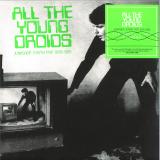
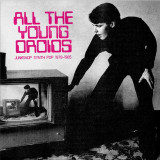
Compiled by Philip King “And then came the rise of synth pop : blokes with dodgy haircuts hunched over keyboard-operated machines stuffed with wires and do-it-yourself tone oscillators making sounds like a brood of geese passing gas in a wind tunnel. Whoopee! This is the way the ‘70s ended : not with a blood-curdling bang bang but with a cheap, synthesized, emasculating whimper.” NICK KENT, NME. All The Young Droids: Junkshop Synth Pop 1978-1985 is a new compilation that charts the underbelly of the epoch-defining sound of the synthesiser in 80s popular music. Compiled by Philip King (previously seen compiling All The Young Droogs, Glitterbest and Boobs - The Junkshop Glam Discotheque), the music here connects the dots between DIY synth enthusiasts grappling with new, cheap synthesisers at the tail-end of punk and wannabe, jobbing songwriters enthral to the new music pioneered by Gary Numan, Depeche Mode and Daniel Miller’s Mute Records. Featuring rare tracks of auto-didactic progressive pop music, proto-techno punk, shoot-for-the-stars-land-in-the-gutter chart flops and heralded, underground synth classics, School Daze paints a picture of beautiful failure. Complete with extensive sleeve notes written by King and never before seen imagery, all 24 tracks were remastered by RPM in-house engineer Simon Murphy, many from vinyl copies due to lost master tapes. The story told on All The Young Droids is one of the dawning opportunity presented by both the emergence to the market of cheaper analog synthesisers and the distribution networks plus indie labels that exploded with the advent of punk music in 1976. While the music that sprouted out all over the globe in the wake of these factors was decried as fake, plastic, a refutation of punk’s guitar-led revolution, it’s telling that much of the music on All The Young Droids.. was created in bedrooms, ramshackle studios and home-made set ups with often borrowed equipment. In the era of record labels jumping to capitalise on the success of The Sex Pistols, The Clash (both on major labels, of course) these artists struggled to stand out from a new gold-rush with next to no budget or PR team. With radio and labels desperate for the new Yazoo, what resulted was a testament to necessity being the mother of invention. At the time, the synthesiser was the music of the future, a shiny new machine that could paint like an orchestra with a single finger and a 4-track. In the hands of Manchester avant-pranksters Gerry & The Holograms it’s a pulsing, sardonic weapon.. the only instrument on the Messthetics classic lampooning of New Wave fashion. In Hamburg, a 16 year old Andreas Dorau used it to write and record (with his female classmates on vocals) a global smash in Fred Vom Jupiter (later licensed to Mute Records). The hard-to-find English version (Fred From Jupiter, natch) is included here. Many artists with alreadystoried careers caught the bug and recorded synthesiser-fuelled peons to space, computers, the future and, of course, love-interests. Harry Kakoulli, late of Squeeze, recorded a solo album in 1979 that included the incredible power-synth-pop smash-that-never-smashed I’m On A Rocket. Similarly, Ian North of Neo and American Power Pop stalwarts Milk ’n’ Cookies bought a Korg MS20 and used a tape machine to record We’re Not Lonely, an absolute lost-classic of minimal synth pop. We’re Not Lonely also features on the Junkshop Synth Pop sampler 7” twinned with John Howard unreleased track You Will See, released April 12th 2025. There are plenty of compilation debuts in evidence. Sole Sister were a mysterious trio who were featured on the Scaling Triangles compilation of female-fronted, queer-adjacent post-punk / underground music that also featured The Petticoats. Selwin Image were from San Francisco and featured members of the recently defunct power pop/punk group The Pushups. Their stupidly catchy The Unknown fizzes with New Wave energy - think XTC to Sparks but remains unreleased until now. Dream Unit’s A Drop In The Ocean is an early synth wave cut, positively teaming with Joy Division instrumentation, previously only released on a long-forgotten and super rare, self-released EP. Incandescent Luminaire’s Famous Names belies an archetypal struggle of a small-town trying to make it in a cruel industry but is a thrilling New Romantic-Synth Wave cross over with a OMD gloominess that’s a joy to hear. Feminist Minimal Wave track I Am A Time Bomb by performance artist Peta Lilly and Michael Chance is a revelation destined for new found cult status. It was released on 7” and lost until now. The flipside to the subterranean, never-made-it synth pop mentioned above are the ambitious, even fruity attempts at success that have a perennial elegance to their confidence. New Jersey-ite Billy London (real name Ed Barth) tried to cash in on the synth boom with Woman, released by a major label, a lurching new wave track built on the Louie Louie rhythm and a wonderfully camp Lou Reedstyle sleazy vocal before exploding in the synthesised chorus. The song bombed but with a chorus like this, you have to wonder why? Ex-Glitter Band member John Springate’s My Life is truly epic, with doomed chord progressions and massive sounding drums turning into at least 3 different songs in the course of the track. Before you wonder what’s going on the song resolves with a glorious return to the main refrain. The dry-ice-dressed dance floor is well catered for too. Design’s Premonition and Vision’s Lucifer’s Friend are stone-cold minimal synth bangers, well loved but given a new lease of life here. The Warlord’s The Ultimate Warlord was released in 1978, a homespun proto Hi NRG banger that was later re-recorded by The Immortals in Canada who had a club hit with it. One-man- band Disco Volante’s No Motion was re-issued by Synth wave label Medical in 2012 but makes its first vinyl compilation appearance here. Close your eyes and you can imagine what Lawrence of Felt would have sounded like with some cheap Korgs a little earlier in his career. Gibraltar-based trio The Microbes imagined a computer programming people to dance - how prescient - and ended up with a propulsive, robo-funk track with splendid rubbery bass playing over a tectonic drum machine. Previously picked up by Belgian label Stroom TV, Dee Jay Bert & Eagle’s heavily Euro-accented I Am Your Master demands the listener to “come to paradise!” In a frankly terrifying manner. All The Young Droids is the first compilation to peel away from the narrative that dour, Minimal Synth and Cold Wave were the only musical children of the first rush of synth pop. Philip King and School Daze Records describe a much more complicated world: along with the austere, Brutalist children of Daniel Miller (who produced Alan Burnham’s Bowie-Low-influenced Science Fiction here) was a plethora of desperate cash-ins, accidental mainstream hits, ambitious pop dramas and major label punts that went nowhere. Crucially, the compilation blurs the line between junk and treasure. What if the two things are interchangeable. What if it’s all science fiction?
Imagine it’s 1987.
The neon is glowing, the lasers are cutting through the smoke, and space synth is ruling the dancefloors. Laserdance just dropped their groundbreaking album “Future Generation.” Tracks like “Power Run” and “Humanoid Invasion” are setting clubs on fire, and every bedroom producer dreams of reaching that cosmic perfection.
And in this athmosphere Spacehawk appears shining like an alien spaceship.
Behind the name Spacehawk stands Swedish producer Anton Eriksson, a modern-day craftsman of analog dreams. In his vast studio, packed with vintage synths and drum machines, Anton creates electronic masterpieces so authentic, so rich in melody and power, that even Michiel van der Kuy himself, the godfather of the genre, decided to collaborate with him.
The result? “Space Patrol” – a landmark single that bridges generations of synth lovers.
On the A-side, you’ll find Anton’s stunning original version, pulsating, melodic, and bursting with energy. Flip it over, and you get a remix by Michiel van der Kuy that feels like a time warp straight back to the golden age of Italo-space glory.
“Space Patrol” has it all: soaring melodies, driving basslines, hypnotic rhythm, and that unmistakable intergalactic energy that makes you feel like you’re racing through the stars.
Fans of Laserdance, Rygar, Koto, Syntech, and all things van der Kuy will instantly recognize the DNA of true space synth excellence here.
To top it all off the single comes on a bright yellow vinyl, housed in a stunning retro-futuristic sleeve that looks like it beamed in straight from 1980s sci-fi.
It’s not just a release. It’s a revival.
And if space synth runs through your veins, this is one you simply can’t ignore.
Seeking out the inspirational intersection between free improvisation, rave and ancient mysticism, Plants Heal deliver an album of kaleidoscopic, organic beatdowns to Quindi.
Plants Heal is a collaborative project between Dan Nicholls on synths, Dave De Rose on drums and Lou Zon (aka Louise Boer) on visuals. The roots of the project are entwined with Dan and Lou's London-based event Free Movements, which began in 2018 to explore how instrumental music could merge with live electronics and DJ sets. Dave and Dan found themselves playing together frequently at the event and as part of Dave's free improv project Agile Experiments, with their accomplished track records as multi-instrumentalists reaching across many layers of music culture. The particular synergy of their partnership taps into the subliminal, surreal and transcendental soundscapes, but they're reliably anchored by instinctive rhythms and driven by a natural flow-state.
From the tentative steps of their first collaborations, Dan and Dave coalesced Plants Heal as a more pronounced project with Lou's live visuals, culminating in a first self-released album in 2021 and since organically fed and watered through continued performances across adventurous festivals and intimate club spaces. Every incremental step along the path of the project yielded new surprises and the deepening sense of a unique, powerful energy. The trio opted to pour this energy into two days of studio sessions at Sonic Playground Studios in Athens, maintaining their unplanned approach and letting the music and visuals unfold in the moment. The end result is Forest Dwellers, a sincere document of truly free music that uses the rhythmic structure of dance and trance music as a springboard into heightened consciousness.
Throughout the album you can hear hints of the familiar - dub techno shimmers, trip hop boom-bap, kosmische momentum, snarling bass modulation, new age ambience and even the odd sizzle of disco. But none of these references are explicit, and they weave in and out of less placeable expressions deeply bedded into Dan and Dave's sonic practices. The end result is a swirling tapestry of unspooling groove, wide open and agile enough to shift gears mid-flow - just as comfortable letting the propulsion melt away as locking into a four-to-the-floor throwdown. From the slippery syncopation of 'Avena Moon' to the angular bait-and-switch of 'Alien Hardware', 'Yarrow's starry-eyed reverie and the rolling, warm-hearted funk of 'Space Ballad', the Plants Heal sound world is expansive and equally enthusiastic for immediate musical motifs as much as wild abstraction.
Lou's visual practice is an intrinsic part of the project. During performances she improvises with analogue footage from her library run through video mixers and synthesisers, focused on medicinal plants such as yarrow, hawthorn, nettle and thistle. All those plants feature in processed form on the cover of the record, which was designed in collaboration with Lou's brother Arthur Boer. Meanwhile, Lou recorded additional footage in Athens during the recording sessions to feed into the continued cycle of the project's live evolution.
Forest Dwellers' meaning honours this cycle and its reflection of the eternal undulations of the natural world. It's also a sincere tribute to the spiritual importance and radical potential of the dancefloor, drawn from the freedom taught by jazz and dedicated to reclaiming lost ideas about community, agency, bodies and the enduring allure of the unknown.
- A1: Liminal – Tzatziki Bay
- A2: Joe Harvey-Whyte & Bobby Lee – Smoke Signals (Flying Mojito Bros Refrito)
- B1: Intrallazzi & Piana – Plutos
- B2: Tigerbalm – Mexicana Feat. Joi N’juno (Pete Herbert Remix)
- B3: Lex (Athens) – Stolen Dance
- C1: Payfone – Dime Algo
- C2: Emperor Machine – Eumig
- D1: 40 Thieves – Such A Great Trip
- D2: Bo Wosticz – Bs As
- Bonus | 10”
- A1: Tigerbalm - Mexicana Feat. Joi N’juno (Original)
- B1: Emperor Machine & Mudd – Road To Nikko
When Leng Records founders Paul ‘Mudd’ Murphy and Simon Purnell marked the imprint’s 10th birthday, they did so via a celebratory compilation that mixed classic catalogue cuts, remixes and exclusives. Five years on, and with the label’s 15th birthday upon us, they’ve decided to look to the future via a compilation made up entirely of fresh productions from Leng’s roster of current and new artists. Presented on limited-edition gatefold double vinyl with a bonus 10” single, the collection offers an updated showcase of Leng’s much-loved trademark sound, a distinctive fusion of mid-tempo sleazy-disco, Balearica and chugging house interspersed with elements of electronic psychedelia and synth-powered space disco. Fittingly for a compilation that wholeheartedly looks to the future, you’ll find first contributions from a handful of label newcomers.
Fast-rising duo Flying Mojito Bros give their spin on ‘Smoke Signals’ by label debutants Joe HarveyWhyte and Bobby Lee, turning in a heady and inspired revision that sits somewhere between dusk-ready cosmic disco and flash-fried desert blues. There’s also an appearance from Swedish producer Bo Wosticz with the dreamy and ultra-deep nu-jazz of ‘Bs As’. Naturally, you’ll also find plenty of heat from those who have already proved their mettle through prior releases on Leng. Danish duo Liminal, who made their debut earlier this year with the much-played ‘Keep Coming Back To Me’, open proceedings with the tactile, slow-disco flex of ‘Tzatziki Bay’ where sweet synth melodies and a heady electric piano riff ride a warming groove.
Roberto Intrallazzi and Dario Piana from Italy’s original Afro-cosmic movement return with ‘Plutos’, a typically deep dubbed-out cosmic chugger. Then there’s Rose Robinson AKA Tigerbalm, whose ‘Mexicana’ featuring singer Joi N’Juno is presented across the package in two different forms. Pete Herbert, who contributed to some of the earliest Leng releases, drops a driving dub disco take on the main compilation, while Robinson’s original mix – a more organic, percussive and horn-heavy affair blessed with plenty of hallucinatory intent – opens the bonus 10”.
There’s a welcome return to Leng for the brilliant Payfone, whose ‘Dime Algo’ is a typically classy, analogue-rich affair in which attractive Rhodes riffs, atmospheric female vocals and pitched-down house pianos rise above shuffling drum machine beats and a slow-motion bassline. Long-serving label contributor Lex (Athens) delivers the loose-limbed nu-disco breeze of ‘Stolen Dance’, while the imprint’s San Francisco connection – the ever-brilliant 40 Thieves collective – drop the dubbed-out Bay Area brilliance of ‘Such A Great Trip’.
Then there are the contributions of the label’s most storied artist, Andrew Meecham AKA Emperor Machine with ‘Eumig’, a deliciously slow, synth-rich chugger full of colourful chords, bubbly electronic melodies and jaunty electronic bass. Then, to round off the bonus 10” single, Meecham joins forces with Paul Murphy (as Mudd) on ‘Road To Nikko’, an extended, Japanese musical culture-influenced slab of pitched-down alien-funk packed to the rafters with squelchy synth sounds, effects-laden percussion, chiming melodies and rubbery bass guitar.
Este nuevo lanzamiento de BAOX marca una pauta que creemos fundamental: continuar luchando
para comunicar nuestras ideas.
En un mundo tan saturado de propuestas genéricas, copias y grandes corporaciones, tanto privadas como gubernamentales, llenando el cyber-espacio y lo tangible con propaganda y silenciando ciertos temas actuales y queriendo controlar nuestra información, nos refugiamos en la música para intentar movernos sigilosos pero efectivos.
Todos sabemos el reto de seguir lanzando música en formatos físicos, tanto de producción como
económicos, pero esperamos que los sellos y artistas independientes no se den por vencidos y
sepan que no están solos, muchos seguimos intentando conservar esta cultura tan pura del disco,
desde las fábricas, las tiendas, distribuidores, los ingenieros de audio, los artistas e incluso
nuestras familias y amigos que nos apoyan.
Crazed Behaviour's second vinyl release features Volruptus, the Alien Boogie Commander, with his electrifying EP Overload. This intense, alien-infused electro journey delves into the chaos of extraterrestrial encounters and technological overload. With pulsating rhythms and otherworldly synths, Overload transports listeners to a distant, uncharted galaxy where alien forces and scientific anomalies collide. Each track pulses with the frenetic energy of a world consumed by alien invasions and cosmic chaos, blending futuristic electro with a sense of impending alien discovery. Get ready for a high-energy ride into the unknown.
- A1: Topo & Ruby - Under The Ice
- A2: Scotch - Pictures
- A3: Gaznevada - I C. Love Affair
- A4: Fun Fun - Baila Bolero
- B1: Laserdance - Cosmo Tron
- B2: Brand Image - Are You Loving?
- B3: Cyber People - Void Vision
- B4: Koto - Japanese War Game
- C1: Ken Laszlo - 1-2-3-4-5-6-7-8
- C2: Baby‘s Gang - Challenger
- C3: Claudio Mingardi - Star (Medley With Starman)
- C4: Grant Miller - Colder Than Ice
- D1: Savage - Only You
- D2: Valerie Dore - Lancelot
- D3: Den Harrow - To Meet Me
- D4: Marx & Spencer - Stay
- E1: Brian Ice - Talking To The Night
- E2: J D. Jaber - Don‘t Wake Me Up
- D3: P Lion - Dream
- E4: Radiorama - Aliens
- F1: Tango - Computerized Love
- F2: Lena - Run To Me
- F3: Ocean Wings - Loving In The Snow
- F4: Malcom & Leo - Living In The Dark
- H3: Quinn Martin - One More Mission
- H4: Joe Yellow - Runner
- G1: Felli - Diamond In The Night
- G2: Diego - Walk In The Night
- G3: A G.f. - Loved By You
- G4: Jaco - Spanish Run
- H1: Alba - Only Music Survives
- H2: Roy - Shooting Star (Six Times)
Die legendäre Vinyl-Serie für alle Italo Disco-Fans geht in die nächste Runde!
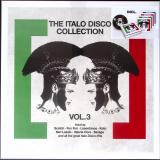
Mit The Italo Disco Collection Vol. 3 erwartet dich eine exklusive 4LP-Box, randvoll mit den größten Klassikern der Italo Disco-Ära der 80er Jahre – ein Muss für Sammler, Nostalgiker und Liebhaber des typischen Synthie-Sounds.
Diese Box bringt den Sound der Tanzflächen der 80er Jahre zurück – authentisch, analog und mit jeder Menge RetroFeeling. Ideal für DJs, Fans der Italo Disco-Szene oder als stilvolles Geschenk.
Having carved out a place in the contemporary club scene with releases on Glitterbox/Defected, Boogie Angst & Lovemonk Records amongst others, Madrid's Casbah 73 recently shed his skin and is now ready to introduce The Jade, a live ensemble that prioritises emotion, excitement and the art of the song. Led by Oli Stewart (Casbah 73), the project brings together a remarkable group of players. At its core, this is about people: musicians in dialogue, shaping rhythms and melody, singing songs from the heart, that shared pulse based on a timeless musical vocabulary.
Opening with the exuberant 'Let The Light In', this is sizzling hi-jazz and sunny soul, shot through with a dose of funky Afro-Latin rhythms for good measure. Josh Hoyer leads the charge, delivering a powerhouse vocal performance, while Nia Martin and Deborah Ayo bring that gospel glow. As, indeed, they continue to do so throughout, especially on the deep, soulful standout 'When Love Left' or the shimmering, street soul meets Brit-funk feel of 'Change!' Experience the spontaneity and playful nature of tracks like 'Si No Me Quieres Esperar' (with Cuban maestro Ale Gutiérrez on vocals) infused with funky Latin and Brazilian rhythms, as well as sparkling, alien disco dub in the form of 'Space Lines'. There's no-holds, hands-in-the-air, fluid disco club grooves on 'What It Takes' and driving, riotous soul-jazz on 'Being Seen'. Just when you think you've got it figured out, the band change it up and stretch out with beautiful jazz-funk instrumentals like 'At The Queensboro' or lush sonic gem 'On That Strange', a track that feels like a long, blissful afternoon fading into evening, with things left unspoken in the air and mystery in its kinky grooves.
The Jade's sound is post-pout, studs up, raw soul, free from modern dancefloor tyranny.It's intimate disco, dead-selfie freedom, Afro-Latin jazz-dance and Iberian funk all rolled into one, rooted in emotion and shot through with a healthy dose of funky bad ass groovism. Genres that blend and bleed into each other following one simple idea: songs and the expressive power of live instrumentation.
A hard to find sci-fi Detroit techno classic - it's featured everywhere from Marcel Dettmann to Zip's SW sets.- gets a timely reissue complete with a new, super solid Delano Smith remix. It's hard not to love the original in all its futuristic glory, led by a sturdy four-to-the-floor pummelling but boasting a throbbing neo-disco bassline - imagine a lost Gorgio Moroder classic being remade by Jeff Mills in PurposeMaker mode. But the Delano Smith remix updates it for modern palates, ironically by delving back even further, to the early 70s model Kraftwerk from whom he borrows some very austere but classy synth sounds and a touch of electro syncopation. Take your pick according to mood, they both do the job admirably.
- A1: Design - Premonition
- A2: Vision - Lucifer’s Friend
- A3: Richard Bone - Alien Girl
- A4: John Howard - I Tune Into You
- A5: Ian North - We’re Not Lonely
- A6: Selwin Image - The Unknown
- B1: Harry Kakoulli - I’m On A Rocket
- B2: Rich Wilde - The Lady Wants To Be Alone
- B3: Billy London - Woman
- B4: Alan Burnham - Science Fiction
- B5: The Microbes - Computer
- B6: The Goo-Q - I’m A Computer
- C1: Gerry & The Holograms - Gerry & The Holograms
- C2: The Warlord - The Ultimate Warlord
- C3: Die Marinas - Fred From Jupiter
- C4: Dee Jay Bert & Eagle - I Am Your Master
- C5: Peta Lily & Michael Process - I Am A Time Bomb
- C6: Sole Sister - It’s Not What You Are But How
- D1: Alasdair Riddell - Do You Read Me?
- D2: Karel Fialka - Armband (The Mystery Song)
- D3: John Springate - My Life
- D4: Incandescent Luminaire - Famous Names
- D5: Disco Volante - No Motion
- D6: Dream Unit - A Drop In The Ocean
MB Crystal Vinyl[32,73 €]
LTD Trans Pink Vinyl[32,82 €]
LTD Trans Pink Vinyl[27,69 €]
Compiled by Philip King
“And then came the rise of synth pop : blokes with dodgy haircuts hunched over keyboard-operated
machines stuffed with wires and do-it-yourself tone oscillators making sounds like a brood of geese
passing gas in a wind tunnel. Whoopee! This is the way the ‘70s ended : not with a blood-curdling bang
bang but with a cheap, synthesized, emasculating whimper.”
NICK KENT, NME.
All The Young Droids: Junkshop Synth Pop 1978-1985 is a new compilation that charts the
underbelly of the epoch-defining sound of the synthesiser in 80s popular music. Compiled by Philip
King (previously seen compiling All The Young Droogs, Glitterbest and Boobs - The Junkshop
Glam Discotheque), the music here connects the dots between DIY synth enthusiasts grappling with
new, cheap synthesisers at the tail-end of punk and wannabe, jobbing songwriters enthral to the new
music pioneered by Gary Numan, Depeche Mode and Daniel Miller’s Mute Records. Featuring rare
tracks of auto-didactic progressive pop music, proto-techno punk, shoot-for-the-stars-land-in-the-gutter
chart flops and heralded, underground synth classics, School Daze paints a picture of beautiful failure.
Complete with extensive sleeve notes written by King and never before seen imagery, all 24 tracks
were remastered by RPM in-house engineer Simon Murphy, many from vinyl copies due to lost master
tapes. The story told on All The Young Droids is one of the dawning opportunity presented by both the
emergence to the market of cheaper analog synthesisers and the distribution networks plus indie labels
that exploded with the advent of punk music in 1976. While the music that sprouted out all over the
globe in the wake of these factors was decried as fake, plastic, a refutation of punk’s guitar-led
revolution, it’s telling that much of the music on All The Young Droids.. was created in bedrooms,
ramshackle studios and home-made set ups with often borrowed equipment. In the era of record labels
jumping to capitalise on the success of The Sex Pistols, The Clash (both on major labels, of course)
these artists struggled to stand out from a new gold-rush with next to no budget or PR team. With radio
and labels desperate for the new Yazoo, what resulted was a testament to necessity being the mother
of invention.
At the time, the synthesiser was the music of the future, a shiny new machine that could paint like an
orchestra with a single finger and a 4-track. In the hands of Manchester avant-pranksters Gerry & The
Holograms it’s a pulsing, sardonic weapon.. the only instrument on the Messthetics classic lampooning
of New Wave fashion. In Hamburg, a 16 year old Andreas Dorau used it to write and record (with his
female classmates on vocals) a global smash in Fred Vom Jupiter (later licensed to Mute Records).
The hard-to-find English version (Fred From Jupiter, natch) is included here. Many artists with alreadystoried careers caught the bug and recorded synthesiser-fuelled peons to space, computers, the future
and, of course, love-interests. Harry Kakoulli, late of Squeeze, recorded a solo album in 1979 that
included the incredible power-synth-pop smash-that-never-smashed I’m On A Rocket. Similarly, Ian
North of Neo and American Power Pop stalwarts Milk ’n’ Cookies bought a Korg MS20 and used a
tape machine to record We’re Not Lonely, an absolute lost-classic of minimal synth pop. We’re Not
Lonely also features on the Junkshop Synth Pop sampler 7” twinned with John Howard unreleased
track You Will See, released April 12th 2025.
There are plenty of compilation debuts in evidence. Sole Sister were a mysterious trio who were
featured on the Scaling Triangles compilation of female-fronted, queer-adjacent post-punk /
underground music that also featured The Petticoats. Selwin Image were from San Francisco and
featured members of the recently defunct power pop/punk group The Pushups. Their stupidly catchy
The Unknown fizzes with New Wave energy - think XTC to Sparks but remains unreleased until now.
Dream Unit’s A Drop In The Ocean is an early synth wave cut, positively teaming with Joy Division
instrumentation, previously only released on a long-forgotten and super rare, self-released EP.
Incandescent Luminaire’s Famous Names belies an archetypal struggle of a small-town trying to
make it in a cruel industry but is a thrilling New Romantic-Synth Wave cross over with a OMD
gloominess that’s a joy to hear. Feminist Minimal Wave track I Am A Time Bomb by performance artist
Peta Lilly and Michael Chance is a revelation destined for new found cult status. It was released on 7”
and lost until now.
The flipside to the subterranean, never-made-it synth pop mentioned above are the ambitious, even
fruity attempts at success that have a perennial elegance to their confidence. New Jersey-ite Billy
London (real name Ed Barth) tried to cash in on the synth boom with Woman, released by a major
label, a lurching new wave track built on the Louie Louie rhythm and a wonderfully camp Lou Reedstyle sleazy vocal before exploding in the synthesised chorus. The song bombed but with a chorus like
this, you have to wonder why? Ex-Glitter Band member John Springate’s My Life is truly epic, with
doomed chord progressions and massive sounding drums turning into at least 3 different songs in the
course of the track. Before you wonder what’s going on the song resolves with a glorious return to the
main refrain.
The dry-ice-dressed dance floor is well catered for too. Design’s Premonition and Vision’s Lucifer’s
Friend are stone-cold minimal synth bangers, well loved but given a new lease of life here. The
Warlord’s The Ultimate Warlord was released in 1978, a homespun proto Hi NRG banger that was
later re-recorded by The Immortals in Canada who had a club hit with it. One-man- band Disco
Volante’s No Motion was re-issued by Synth wave label Medical in 2012 but makes its first vinyl
compilation appearance here. Close your eyes and you can imagine what Lawrence of Felt would have
sounded like with some cheap Korgs a little earlier in his career. Gibraltar-based trio The Microbes
imagined a computer programming people to dance - how prescient - and ended up with a propulsive,
robo-funk track with splendid rubbery bass playing over a tectonic drum machine. Previously picked up
by Belgian label Stroom TV, Dee Jay Bert & Eagle’s heavily Euro-accented I Am Your Master
demands the listener to “come to paradise!” In a frankly terrifying manner.
All The Young Droids is the first compilation to peel away from the narrative that dour, Minimal Synth
and Cold Wave were the only musical children of the first rush of synth pop. Philip King and School
Daze Records describe a much more complicated world: along with the austere, Brutalist children of
Daniel Miller (who produced Alan Burnham’s Bowie-Low-influenced Science Fiction here) was a
plethora of desperate cash-ins, accidental mainstream hits, ambitious pop dramas and major label
punts that went nowhere. Crucially, the compilation blurs the line between junk and treasure. What if the
two things are interchangeable. What if it’s all science fiction?
AN ATLAS OF LOSS
Do minerals dream of becoming semiconductors? Do they yearn to carry charges, amplify, switch, and convert energy into emotions comprehensible to humans? And what if, from the darkness of the underground, they had been listening to us sing in caves before the emergence of the first flute? Could they have guided us, through the course of history, to find them, extract them, and create new sounds through sinusoidal waves, to form valves and bend circuits?
If so, minerals would transition from what philosopher Eugene Thacker defines as the ‘planet’—that virginal and unreachable realm for humans that we study through geology, paleontology, and environmental sciences—to the ‘world,’ the space we inhabit, interpret, and synthesise in our daily lives. Sadly, we only remember the world when it erupts violently, through climate catastrophes or when a new virus emerges. Sometimes a tsunami collides with a nuclear plant, or viruses are cultivated as biological weapons in high-security laboratories, provoking a deep biological anxiety, hard to quell, which we all feel beneath our skin.
There exists a third realm, disconnected from both the world and the planet: the ‘earth’, an immense, dense rock floating in space alongside other planets, situated in the cosmological dimension. Relating to the earth is so complex that we only do so through theoretical speculations of a scientific nature or through science fiction, interweaving until one becomes the prophecy of the other, in an infinite, pendular dance. Beyond the darkness of space and Lovecraft’s cosmic horror, the fantasy of human extinction is the most recurrent: to reach a collapse so devastating that we do not survive it, even though the earth does, without us.
In a world where we quantify everything through body sensors, financial algorithms, nanometre-scale robots, and surveillance drones—a world in which everything that can be domesticated and controlled can also be commodified—a superior artificial intelligence would survive the collapse of the species (some speculate it might even cause it) and learn from our mistakes, thanks to our obsessive gathering of data.
Long after our voices fade, minerals will persist in the darkness of screens, in the silicon of chips, and in their pure form, still unexploited underground. Over the millennia, this intelligence might piece together fragments of our reasoning, as if an alien civilization finally connected with one of our spacecrafts loaded with messages cast into the void. It would sort through endless streams of data, unable to grasp the depths of emotion behind what it quantified, recreating simulations of our past, stripped of the nuance that once defined us and conducting experiments in sandboxes.
Some remnants of our existence—faint echoes of forgotten beauty—would be pieced together in an atlas of loss, buried beneath layers of numbers, decayed bots, and corroded hard drives. What will follow? Perhaps bison will once again roam—trotting to the strange pulse of techno, their ancient forms framed by the ruins of our cities.
Buildings will crumble, slowly dissolving under the soft touch of ambient music, and a thousand flowers will bloom with that ancient music created through electrical signals and computation. 7 songs for a future both improbable and inevitable—a final message from a world lost to itself, from planet Earth to planet Earth.
Alfons Pich, 2025
Welcome to the kickoff of DemoDc's 5-EP series, where he reflects on the complexities of our times. Coining "Meiosistosis" from mitosis and meiosis, DemoDc creates a unique vocabulary to express his deep perspective. Released through Heart Heart Records, the music follows a non-linear, cyclic journey, with each track standing independently, guiding listeners through an evolving experience.
"A1 - Awake" opens the series, celebrating those brave enough to face their flaws in a world of false promises. With introspective melodies and harmonies, the track encourages self-discovery and reflection, urging listeners to seek their own truths.
"A2 - Not From Around Here" embraces individuality, using its ethereal tones to highlight the strength found in being different and celebrating the alien within us all.
"B1 - Glimpsed (Original Mix)" offers a brief taste of the profound mysteries of the present, reminding us that truth is personal and elusive.
"B2 - Glimpsed (Metapattern Mix)" the remix by Berlin's Metapattern transforms the original track into a deep, pulsating techno piece perfect for DJs, adding a powerful twist to this captivating musical journey.
“Okie Dokie It´s The Orb On Kompakt“ is already the 13th album of one of Britian's most prized cult bands. We feel it's better that way, because the music of The Orb only has an intensive effect when taken in as a long playing full length. And it proves with this lovingly conjured collection of songs brought together like a collage. The first half of Okie Dokie showcase The Orb´s love for minimal Techno and Schaffel/Shuffle as it is so obviously present in the foreground, while the second half is only reserved to the classic Orb-ish ancestral domain. There are wonderful guest appearances by Schneider TM and Kompakt´s ambient-guru Ulf Lohmann. As many of you know, there is so much history about The Orb you could write a book. Since Jimmy Cauty and Alex Paterson, in the flush of euphoria invented Chill Out and Ambient House in the first summer of love 1988, an incredible amount of things have occurred. The following timeline should give you a rough idea. - Alex Paterson gives up his job as roadie for Killing Joke. - “A Huge Ever Growing Pulsating Brain That Rules From The Centre Of The Ultraworld” is not only the record with the longest title of the world, but it also marks the departure into the new sonic worlds of post-Rave Ambient. - While Cauty goes different ways with The KLF, The Orb re-form themselves and have a big hit with Little Fluffy Clouds in 1990. - The debut album “The Orb´s Adventures Beyond The Ultraworld“ hits the Top 30 in England. - The Orb produce “Higher Than the Sun“ for Primal Scream. - The Orb perform “Blue Room“ as chess-playing aliens at Top Of The Pops. Everything goes. - “Blue Room“ clocking in at 39:58 minutes goes into music-history as the longest time for a chart single ever. - The Orb achieve great success in Glastonbury '92 + '93. - The Copenhagen double concert “to the sunrise and sunset” is eternalized on record: “Live 93“ - Previously a floating member of The Orb, Thomas Felmann becomes a fix member in 1997 - No joke: Robbie Williams takes part of The Orb for a short time. The collaboration “I started A Joke“ is released on a benefit compilation - After 2002 The Orb found with Kompakt a new ambient-loving partner and release a row of singles and play live, as the trimmed-down version as Le Petit Orb. And one more for the extra hush-hush: The Orbs first album “A Huge Ever Growing Pulsating Brain...” was actually a Kompakt release. You can check it out. Besides the actual label Wau! Mr. Modo you can read... Kompakt Discos. Ha!!
Mit „Okie Dokie It´s The Orb On Kompakt“ liegt nun das circa 13. Album der britischen Kultband vor. Das ist gut so, denn The Orb's Musik wirkt eigentlich erst im Longplay-Format so richtig intensiv. Die Stücke sind, wie man das von ihnen kennt, liebevoll collagenhaft miteinander verwoben. In der ersten Hälfte tritt The Orb's Liebe zu Minimaltechno und Schaffel in den Vordergrund, während die zweite Hälfte ausschliesslich der Orbschen Ur-Domäne Ambient vorbehalten ist. Es gibt wunderbare Gastauftritte, wie etwa Schneider TM und Kompakt's Ambient-Guru Ulf Lohmann. Zur Geschichte von The Orb könnte man ganze Bücher schreiben, denn seit Jimmy Cauty und Alex Paterson im Rausch der Euphorie des ersten Summer of Love anno 1988 Chill Out und Ambient House erfunden haben ist viel passiert. Extrem viel. Die folgende Auflistung soll einen ungefähren Eindruck davon vermitteln. -Paterson hängt seinen Job als Roadie für Killing Joke an den Nagel -„A Huge Ever Growing Pulsating Brain That Rules From The Centre Of The Ultraworld“ ist nicht nur bis dato die Platte mit dem längsten Titel der Welt sondern markiert den Aufbruch in die neuen sonischen Welten des Post-Rave Ambient. - Während Cauty mit The KLF andere Wege geht, reformieren sich The Orb und landen 1990 mit “Little Fluffy Clouds“ einen Riesenhit. -Das Albumdebut “The Orb's Adventures Beyond The Ultraworld“ geht Top30 in England -The Orb produzieren „Higher Than The Sun“ für Primal Scream -The Orb performen „Blue Room“ als schachspielende Aliens verkleidet bei Top Of The Pops. Alles geht. -“Blue Room“ geht mit 39.58 Minuten als längste Chart-Single ever in die Musikgeschichte ein - The Orb legen 92 + 93 Glastonbury flach - Ein Copenhagener Doppelkonzert zum Sonnenauf- und Untergang wird auf Platte verewigt: „Live 93“ - Bisheriges „floating member“ Thomas Fehlmann wird 1997 festes Mitglied - Ohne Scheiss: Robbie Williams wird für kurze Zeit The Orb-Bestandteil. Die Kollaboration „I Started A Joke“ erscheint auf einer Benefiz-Kompilation. - Ab 2002 finden The Orb mit Kompakt einen neuen ambientverliebten Partner und veröffentlichen eine Reihe wunderbarer Maxis und treten live, vornehmlich in abgespeckter Form als Le Petit Orb in aller Herren Länder auf. Ein kleiner Treppenwitz am Rande für Erbsenzähler : Schon The Orb's erste Platte („A Huge Ever Growing Pulsating Brain...“) war eigentlich eine Kompakt-Veröffentlichung. Ihr könnt nachschauen. Neben dem eigentlichen Label Wau! Mr. Modo stand nämlich folgendes ...Kompakt Discos. Ha!
Alkanova presents some old unreleased gems from Voxigo's discography
Jonas Orbiting presents his second EP on Immersive Patterns, featuring four tracks that show meticulous attention to detail and a deep passion for sound design. Each piece offers a unique exploration of techno’s diverse shades, intricately woven with dub influences that resonate throughout.
Field Duty surges with unrelenting energy, blending deep dub textures with shifting rhythms. Its hypnotic groove pulses forward, creating tension with fractured beats and atmospheric layers while maintaining an immersive, driving intensity.
Lighthouse unfolds with a slow-burning groove, intertwining syncopated basslines and dubby textures into a warm, evolving soundscape with a nod to Disco. As soft pads rise and the bass deepens, it evokes the calm and glow of early morning light.
Anger Management advances with a heavy sub-bassline and intricate, evolving rhythms. Sci-fi sweeps and zaps create an otherworldly tension, while a shifting alien organ motif and dynamic percussions introduce captivating variations throughout the track.
Pressurized drives with a chunky rhythm and playful unpredictability, embodying a strong sci-fi vibe. Evolving, abstract synth arpeggios weave through the layered textures, creating an energetic atmosphere that pulses with intensity.
- A1: Konkparty (7 Inch)
- A2: Baby Dee
- A3: Sokalokamoki
- A4: Honeymoon Side
- B1: Your Life (7 Inch)
- B2: Elephant
- B3: Cool Out Gar (Third Stone From The Sun)
- B4: Suave Y Caliente
- C1: Love Attack
- C2: Machine
- C3: Alien Jam
- C4: Soka-Loka-Moki (7 Inch Part I)
- C5: Soka-Loka-Moki (7 Inch Part Ii)
- D1: Tonton Macoute (Live At Cbgb 81)
- D2: Alamo (Live At Cbgb 81)
- D3: High On The Hill (Live At Cbgb 81)
- D4: Fela (Live At Cbgb 81)
- D5: Frog Talk (Live Broadcast To Paris)
- E1: Konk Party (Uptown Breakdown)
- E2: Konk Party (Master Cylinder Jam)
- E3: Konk Party (Bonus Beats)
- F1: Your Life (12 Inch)
- F2: Your Life (Skull Whip)
- F3: Your Life (What U Want Dub)
Repress!
This year, get ready for KONK! with the ultimate collection The Magic Force Of Konk 1981-1988. This white hot Limited Edition 3xLP set is a lovingly composed Deluxe retrospective, showcasing the Definitive Sounds Of A New York Jazz Punk Afro Funk Disco Machine.
The Magic Force Of Konk 1981-1988 is a testament to the bands artistic staying power, the music sounding as fresh now as it did then, from the crossover funk grooves of the ‘Planet Rock’ inspired ‘Konk Party’, to the innovative punk funk synth bass of club hit ‘Your Life’, the bands influence indisputably lives on in this specially created deluxe collection. This beautifully designed package is a feast for the senses, looking as good as it sounds and sure to please fans of Liquid Liquid, ESG, Pigbag, James Chance, Soul Sonic Force, LCD Soundsystem, to name but a few, or simply those intrigued by those tales of wild nightlife that have become synonymous with the vitality of 1980’s downtown New York City.