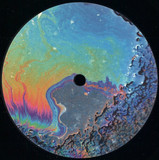
Photonz is the alias of Marco Rodrigues a DJ, producer and driving force of Lisbon's underground scene. For little over a decade now, he's been crafting his own deeply personal style of Portuguese house and techno for labels such as Créme Organization, 20:20 Vision, Don't Be Afraid, Skylax, Unknown To The Unknown and his own One Eyed Jacks. As a DJ, Photonz grew a reputation for deep crates and intensely euphoric sets and in 2017, together with Violet (co-founder at his Radio Quantica) and Lisbon's own Rabbit Hole collective, he started the now infamous Mina parties - a monthly, sex-positive, queer and intersectional-feminist techno party aimed at using the dissociative potential of intense raving to create a temporary space of suspension away from patriarchal expectations.
Etheric Body Music is Photonz's debut 6-track EP for Dark Entries and a simultaneous reference to hermeticism and EBM (Electronic Body Music). Marco loves that 'aesthetic when 80s industrial and EBM bands split up and start to make trance in the early 90s and all the ritual magick pushes them to zen stuff and they do ecstasy.' There's this concept in theosophy and hermetic philosophy of the Etheric Body, which is an energy body superimposed and connected to the physical body, similar to the acupuncture idea of an energetic body. That idea manifests itself as six primal club cuts, which also channel early techno, Drexciyan rhythms, balearic & old school jack. Raw arpeggiated synth lines and bass blast jut against metallic stabs and highly percussive shakedowns to create mournful atmospheric warped house. All songs have been mastered by George Horn at Fantasy Studios in Berkeley. The vinyl comes housed in a psychedelic jacket with snakey green and purple velvet in an electric acid spewing weird biological alien energy form designed by Eloise Leigh.
quête:alien t
'Sublunar', comes from a lovely and spontaneous collaboration between some of the guys who mostly contributed to the growth of Suburban Avenue, since its beginning: Asymptote & Z.I.P.P.O
The whole Ep, is quite far from the style they are used to propose in their singolar projects; it's rather an infusion of their nearest influences, that you can listen especially in their eclectic dj set: from electro, to acid house, ambient and reverberating stuff from their Soul.
A1, 'Sublunar' is a Dystopic, with Drexciyan reminisces Electro track; A2 'Green Line' is an emotional and 707 dreamy stuff, the perfect bridge which prepare to the A3, 'Alienata': an intense and expertly executed ambient trip.
The entire B side is a Fabulous, Acidic and party-guaranteed package, ready for the heated dancefloors.
A true love never ends.
The journey continues... deeper into the unknown universe, stretching the seams of time and space.
The maiden voyage for this new label out of Birmingham was a success. The second release is a collaborative effort from Nicky B (Simple Elements/HOG) and fellow Brummie, Anthony Ellis - working together as Koheziv Mindz.
The tracks are the result of years of tuning in to the sounds seeping out of the speakers in choice local clubs and buying the latest imports on vinyl from Europe, Chicago and Detroit.
The day-to-day living in Birmingham has certainly etched into their creative consciousness, the hustle, bustle and alien like chorus of a vibrant environment resonates through their work, from a city that never sleeps.
Emotive, incredibly lush and shot through with the kind of romanticism displayed in the work of second generation Detroit pioneers Kenny Larkin and Carl Craig. This is a glimpse through a keyhole, a snapshot of two producers taking steps into a bigger world, a whole galaxy.
There are two remixers on board, hand picked to see how the artists would interpret the originals - Darren Nye (Firescope/polarity) and Mihail P (Verdant Recordings/Distant Worlds)- both artists add weight to their already impressive back catalogue of work and display why they are hot and tipped for the top.
Submerge your mind into the rich celestial tapestry of sound, safe in the knowledge you're among good company.
International Black's 6th release comes from critically acclaimed electro supergroup London Modular Alliance. Operating from a refreshingly simple credo of: 3 men, 0 computers, many patch cables - LMA create their music on the fly using soley modular synthesis. Consisting of Koova (brokn toys), Pip Williams (Central Processing Unit) and Yes Effect, these three experienced producers have blown minds with their ecstatic live performances across the globe. Coming in hot after releases for Kirk Degiorgio's A.R.T. Records and Hypercolour, their release for International Black takes no prisoners. Opening the A side is 'Same Repeated Cycles', an ice cold electro inspired groove featuring LMA's signature modular synthesis. Engineered to perfection and mastered by Matt Colton, this cut delivers a new level of toughness to the International Black catalogue. On the B Side, 'Acid Lab' takes a more gentle approach: slo-mo electro drenched in acid. The lead tb303 riff floats in an abyss of dubbed-out dystopian psychedelia. Closing the record is 'Volatile State' , an otherworldly piece of alien sound design which simmers ominously for over 2 minutes before exploding with an extra-terrestrial electro force which simply can't be ignored. Each listen reveals a new detail of this impossibly intricate yet incredibly effective record. Designed for the club, engineered for the mind.
The Eskapist with his second statement of personality, handing in a seasonal Ep ranging from a seriously immersive Opener to the shuffling full-force rhythms of 'Islet Observer', gently flowing tides on 'Brittle' and finally some soulful electrifying alien techno, as 'Voluptuous Brittle' takes us home. This is where the Eskapist dwells, here we find freedom.
Electro master Dez Williams joins the Discos Atónicos camp for the label's 4th installment and delivers 5 dystopian cuts infused with his signature sound - crunchy bass lines, spaced out drama, alien funk and a touch of acid. Strongly recommended!
Hailing from the north of England, he is no stranger to the global electronic music scene yet prefers to stick to the underground and stay true to his own artistic and creative spirit.
Dez started releasing in the early 00's and has tracks on such labels as SCSI-AV, Cheap, Bass Agenda, Earwiggle, Killekill, Mechatronica, Bedouin, Shipwrec, New Flesh as well as his own imprint Elektronik Religion.
The debut release from new Scottish producer North Sea Dialect, Local Guide is a dense musical world made of uneasy ambience, shimmering distortion, subdued rhythm and propulsive melody.
Buried in its soundscapes are the echoes and surrealness of alienated life - expectant youth, distant voices and broken folklore. It's industrialised music tied together with found sound, adrenaline fuelled synthesis and the depths of late night solitude. Conceived during a move from Glasgow across Scotland and composed in isolation, a blistering sense of reality creeps through the recordings.
Local Guide is accompanied by three videos for the tracks Mossy Cyphol, Subarctic Baltasound and Gloup. The short films are haunted and illuminated by the serenity of rural freedom, the power of the sea, and the collapse of industry.
Optimo Music presents a 5 track EP & also a debut release from Nashville's Stranded, including a remix of title track 'Celine's Dilemma' by RSD, aka Rob Smith of Smith & Mighty fame.
Despite hailing from Nashville, Stranded has a longing appreciation for the dance centric cities throughout the world whether it be Detroit, Manchester or Berlin, hence the moniker. Alienation, romantic rendezvous, 9 to 5 unease, and an apprehension of the future are just a few of the topics that surface on the debut EP, Celine's Dilemma, on Optimo Music. Sweeping and droning synths, jagged guitars, rolling bass, yearning and weary vocals, and disco beats propel the music and ideas showcased in the project. While using the backdrop of post punk, disco, and synth pop the music is a sonar call to places where people are gathering, working, and dancing.
Coasting into the nebula from parts unknown, Admiral takes the helm with a debut LP release coming on Panoram's Wandering Eye Imprint. Ommitting rhodes licks, cosmic lunar drones and warbled space-funk, it exists in an ameobic state between the past, future and present, distilling down ideas of genres and musical innovation once played in clubs across the 9th planet. Alien terms such as "jazz", "brazillian music", "boogie and "left-field pop" could be said to grace it's bows - past ideas and innovations that would be eventually lost to glacial shifts, pacific waste dumps and rise of industrialised states.
Coming 14th October, it's the last ride out, with the final destination The tumescent aural seascape of the inner mind
'Shlom Hatzibur' - 'Yanshuf al Anaf Gavoha' a repress of a long lost new wave single along with edits by 'The Models' and 'Mule Driver'.
'Shlom Hatzibur', a band formed by Yuval Banay and Oren Elazary, was active between 1984-1985. This was the year in which the band 'Mashina' paused their activity. ('Mashina' was established in 1983 - and is considered by many ones of the most influential rock bands in Israel). In 1984, they independently published two singles, one of which was 'Yanshuf al Anaf Gavoha'.'Yanshuf al Anaf Gavoha' (Owl on a High Branch) represents a rare moment in Israeli musical history and culture: a moment of disillusionment and expression of personal voice, contemporary sound, and rhythm which stood out during a turbulent political period.
During the First Lebanon War, in the 80s, a generation of young people traveled on the weekends from the battlefields of southern Lebanon and flocked to the rising nightclubs in Tel Aviv. From army discipline to individual freedom, from the threat of death to the city's vibrancy. It is a song of adolescence in a divided and alienated society, and its reissue is more relevant than ever.
The song mixes industrial rhythm with Post-Punk, Rock and Ska. The unusual musical production and the use of a drum machine were influenced prominently by the musical soundtrack played in Tel Aviv's record shops and alternative nightclubs (eg, 'Fuzz', 'Penguin').
Das Heise Experiment 2" marks the 6th album of The Exaltics. Lovely presented on double 10" vinyl with full cover artwork from non other than the mighty Godspill, who also designed the pre release of this album with an amazing looking shape picture disc. To hold things special the guys from SolarOneMusic put a full comic with the story of "Das Heise Experiment" in each record. The music ranges from dark experimental techno, electro, ambient and soundtrackish nightmares which goes perfect with the story of the comic. Also Drexciya's Gerald Donald collaborates with The Exaltics for one track , which is one of the highlights of the album. This music is nothing for the club its much more, a complete story to feel. Turn your headphones on and dive into the world of aliens, scientists and distant gallaxies. All records come with a comic book!!!
After a string of acclaimed EPs on Heist, Dirt Crew and Quartet Series, Amsterdam's Nachtbraker presents 'When You Find a Stranger in the Alps', his first longplayer on his own Quartet Series imprint. The good-humoured Dutchman - tongue always firmly in cheek - has always refused to stick to the 'sound du jour' and the industry's conventions, following his own path instead, continually willing to step out of his comfort zone. 'When You Find a Stranger in the Alps', a nod to his favourite Coen Brothers' movie, is testament to Nachtbraker's studio prowess and drive to explore new sonic pastures and styles. The album consists of thirteen tracks, made over the course of 2,5 years in his studio at Volkshotel Amsterdam. Constantly shifting through different settings and moods, the album feels like a deep dream, with vivid details, blurry edges and a warped sense of time. The word 'stranger' in the title references to this dream state in which you sometimes can be a stranger to yourself. Album opener 'The Dream Sequence' sets the mood with a lo-slung hip-house groove that relies heavily on field recordings, like the sound of one of the capital's trams. 'Flambo', a delectable slice of up-tempo French filtered house, is aimed straight at the dance floor. Nachtbraker dims the lights on 'NSFW', cleverly manipulating samples from adult oriented flicks, and turns in a hilarious skit with 'LOL'. Flip over for 'Randy', a quintessential Nac
If you check the credits of The Rolling Stones' Goats Head Soup LP from 1973 you'll find a certain "Pascal" listed on the percussion section. That is none other than Los Angeles based artist Nicolas Pascal Raicevik (1933-1994), aka 107-34-8933, aka Head, aka Nik Pascal, aka Nik Raicevic. Besides his hitting the bongoes on the Stones album, Nik was a great artist on his own, both as a painter and as a musician. As a musician, he was a pioneer in the use of synthesizers, preceeding the Berlin school by some years when his Head LP was released on on Buddah in 1970. Buddah probably saw in Head the opportunity to cash in some money from the remains of the psychedelic scene - the three tracks on the LP are named after drugs used in the late sixties. The sounds, however, are accomplished works that show Raicevic as one of the most interesting pioneers in the use of synths. The album probably didn't do too well, since Buddah didn't renew the contract with Raicevic, who instead took his own way releasing his works on his very own Narco Records and Tapes label. Between 1968 and 1975 Narco would issue 4 LPs credited either to Nik Raicevic (Beyond The End... Eternity) or Nik Pascal (The Sixth Ear, Magnetic Web and Zero Gravity) plus one credited to 107-34-8933 (Numbers, which is in fact the same LP as Buddah's Head, albeit with different cover art). Copies of these LPs came with an ironic sticker over the shrinkwrap that read "Do not listen to this LP if you are stoned".
1972 saw the release of The Sixth Ear (Narco NR666), this time credited to Nik Pascal. A more complex work than Beyond The End..., it adds consistent rhythmic patterns to the mix with the addition of bongoes and also explores some interesting chord progressions.
Besides his musical explorations, Nik was also an interesting painter. His paintings are auctioned from time to time, and are consciousness expanding works influenced by abstract cubism and surrealism, some kind of Salvador Dalí on drugs exploring the outter and inner space. All the artwork on the sleeves of his LPs is done by himself. Spacey landscapes and psychedelic colours that fit perfectly to the music they contain.
"Nik Raicevic's music is at the intersection of radical psycho-electronic weirdness and kraut kosmische music (in particular the scifi-hypno-minimal modules of Conrad Schnitzler in Grun, Rot and Blau). It presents mega epic & tripped out electronic improvisations.
"This is an absolute must for collectors and fans of visceral, neurotic soundscapes." (progarchives)
"As far as late-60s / early-70s American Bedroom' Electronic Music goes, these LPS have to be among the first transmissions from this sector, made all the more attractive when coupled with Raicevic's alien topographIes - the covers are high-color portrayals of Venusian lanes, knotted growths, & future-past architecture in a style you might equate with Vintage' sci-fi pulp-novel covers - & copious Downer' sentiment. This music is imbued with a sort of lonely, anti-social sensibility that's about as far as you can get from the Academic' Early Electronic vector. I will say that if the Steve Birchall, Cellutron & the Invisible, and/or Pythagoron™ seed your garden, this will likely do the same." (twoheadeddog)
Never reissued before on vinyl format, the Wah Wah reissue features original sleeve artwork made of paintings and drawings by Nik himself and reproduction of the famous ironic "Do not listen if you are stoned" sticker. Limited edition, 500 copies only.
If you check the credits of The Rolling Stones' Goats Head Soup LP from 1973 you'll find a certain "Pascal" listed on the percussion section. That is none other than Los Angeles based artist Nicolas Pascal Raicevik (1933-1994), aka 107-34-8933, aka Head, aka Nik Pascal, aka Nik Raicevic. Besides his hitting the bongoes on the Stones album, Nik was a great artist on his own, both as a painter and as a musician. As a musician, he was a pioneer in the use of synthesizers, preceeding the Berlin school by some years when his Head LP was released on on Buddah in 1970. Buddah probably saw in Head the opportunity to cash in some money from the remains of the psychedelic scene - the three tracks on the LP are named after drugs used in the late sixties. The sounds, however, are accomplished works that show Raicevic as one of the most interesting pioneers in the use of synths. The album probably didn't do too well, since Buddah didn't renew the contract with Raicevic, who instead took his own way releasing his works on his very own Narco Records and Tapes label. Between 1968 and 1975 Narco would issue 4 LPs credited either to Nik Raicevic (Beyond The End... Eternity) or Nik Pascal (The Sixth Ear, Magnetic Web and Zero Gravity) plus one credited to 107-34-8933 (Numbers, which is in fact the same LP as Buddah's Head, albeit with different cover art). Copies of these LPs came with an ironic sticker over the shrinkwrap that read "Do not listen to this LP if you are stoned".
Magnetic Web was released in 1973. It appeared under the Nik Pascal monicker and showed a clear evolution in sound, favoured by the addition of an Arp 2600 and some rhythm boxes. It also included percussions and cymbals. The Two Headed Dog site thinks "this is his masterpiece in all of its acid-laced glory."
Besides his musical explorations, Nik was also an interesting painter. His paintings are auctioned from time to time, and are consciousness expanding works influenced by abstract cubism and surrealism, some kind of Salvador Dalí on drugs exploring the outter and inner space. All the artwork on the sleeves of his LPs is done by himself. Spacey landscapes and psychedelic colours that fit perfectly to the music they contain.
"Nik Raicevic's music is at the intersection of radical psycho-electronic weirdness and kraut kosmische music (in particular the scifi-hypno-minimal modules of Conrad Schnitzler in Grun, Rot and Blau). It presents mega epic & tripped out electronic improvisations.
"This is an absolute must for collectors and fans of visceral, neurotic soundscapes."
"As far as late-60s / early-70s American Bedroom' Electronic Music goes, these LPS have to be among the first transmissions from this sector, made all the more attractive when coupled with Raicevic's alien topographIes - the covers are high-color portrayals of Venusian lanes, knotted growths, & future-past architecture in a style you might equate with Vintage' sci-fi pulp-novel covers - & copious Downer' sentiment. This music is imbued with a sort of lonely, anti-social sensibility that's about as far as you can get from the Academic' Early Electronic vector. I will say that if the Steve Birchall, Cellutron & the Invisible, and/or Pythagoron™ seed your garden, this will likely do the same."
Never reissued before on vinyl format, the Wah Wah reissue features original sleeve artwork made of paintings and drawings by Nik himself, and reproduction of the famous ironic "Do not listen if you are stoned" sticker. Limited edition, 500 copies only.
If you check the credits of The Rolling Stones' Goats Head Soup LP from 1973 you'll find a certain "Pascal" listed on the percussion section. That is none other than Los Angeles based artist Nicolas Pascal Raicevik (1933-1994), aka 107-34-8933, aka Head, aka Nik Pascal, aka Nik Raicevic. Besides his hitting the bongoes on the Stones album, Nik was a great artist on his own, both as a painter and as a musician. As a musician, he was a pioneer in the use of synthesizers, preceeding the Berlin school by some years when his Head LP was released on on Buddah in 1970. Buddah probably saw in Head the opportunity to cash in some money from the remains of the psychedelic scene - the three tracks on the LP are named after drugs used in the late sixties. The sounds, however, are accomplished works that show Raicevic as one of the most interesting pioneers in the use of synths. The album probably didn't do too well, since Buddah didn't renew the contract with Raicevic, who instead took his own way releasing his works on his very own Narco Records and Tapes label. Between 1968 and 1975 Narco would issue 4 LPs credited either to Nik Raicevic (Beyond The End... Eternity) or Nik Pascal (The Sixth Ear, Magnetic Web and Zero Gravity) plus one credited to 107-34-8933 (Numbers, which is in fact the same LP as Buddah's Head, albeit with different cover art). Copies of these LPs came with an ironic sticker over the shrinkwrap that read "Do not listen to this LP if you are stoned".
Nik's last album, Zero Gravity (Narco NR123) came under the Nik Pascal name and had a fantastic side long piece on the title track which reminisces of the works of Cluster. B side features four tracks that also bear some Conrad Schnitzler reminiscences. This was to be Nik's last LP before he would sell all his synths to ex car racer and future electronic/ambient music star Steve Roach.
Besides his musical explorations, Nik was also an interesting painter. His paintings are auctioned from time to time, and are consciousness expanding works influenced by abstract cubism and surrealism, some kind of Salvador Dalí on drugs exploring the outter and inner space. All the artwork on the sleeves of his LPs is done by himself. Spacey landscapes and psychedelic colours that fit perfectly to the music they contain.
"Nik Raicevic's music is at the intersection of radical psycho-electronic weirdness and kraut kosmische music (in particular the scifi-hypno-minimal modules of Conrad Schnitzler in Grun, Rot and Blau). It presents mega epic & tripped out electronic improvisations.
"This is an absolute must for collectors and fans of visceral, neurotic soundscapes."
"As far as late-60s / early-70s American Bedroom' Electronic Music goes, these LPS have to be among the first transmissions from this sector, made all the more attractive when coupled with Raicevic's alien topographIes - the covers are high-color portrayals of Venusian lanes, knotted growths, & future-past architecture in a style you might equate with Vintage' sci-fi pulp-novel covers - & copious Downer' sentiment. This music is imbued with a sort of lonely, anti-social sensibility that's about as far as you can get from the Academic' Early Electronic vector. I will say that if the Steve Birchall, Cellutron & the Invisible, and/or Pythagoron™ seed your garden, this will likely do the same."
Never reissued before on vinyl format, the Wah Wah reissue features original sleeve artwork made of paintings and drawings by Nik himself, and reproduction of the famous ironic "Do not listen if you are stoned" sticker. Limited edition, 500 copies only.
"At the crux of American-born, Shanghai-based producer Eli Osheyack's debut album, Sadomodernism, is a question of agency. Borrowed from film theory, the album title was originally coined by writer Moira Weigel to describe a waning European art house tradition that vehemently rejects 'naïve pleasure'—the tranquilizing comfort of conventional cinematic narrative, like mainstream Hollywood—and opts for violence and pain, with the aim of shaking audiences out of cinematic manipulation and into their own position vis-à-vis the malaise of contemporary life. Echoing the work of sadomodernist auteurs, Osheyacks's Sadomodernism is a deeply political project with critical ambitions. The smashing and blending of genres, from techno, industrial, noise and gabber to ballroom and metal, even opera, and spontaneous percussion arrangements, sometimes mixed with distorted spoken word, do not mean to please, but provoke through disorder and chaos. Laden with Brechtian alienation affects, Sadomodernism interrogates the notion of autonomy in contemporary music, club culture, and social-political life."
- 01: Adrift
- 02: Become Real
- 03: Cipher
- 04: Lithic
- 05: Isolation Waves
- 06: Vanta
- 07: Across Time
- 08: Hymnal
- 09: Blood Rain
- 10: Prima
- 11: Fragility
- 12: Bodied
- 13: The Circle Is Complete
Planet Mu are excited to announce Ital Tek's 'Bodied', the follow up to his acclaimed 2016 album 'Hollowed'. Stepping in a different direction from that album, It's as if Hollowed's detailed world has been fleshed out and filled with the spectre of human voices.
As on his last album, the sounds on 'Bodied' are highly designed, but this time barely a whisper of dance music remains. Instead it's built around acoustic elements and ghostly choral arrangements, refracted and transformed into atmospheric, alien forms which are given the time to settle and transform. Rhythm is used only as a tool to give his world a sense of dark, mechanical momentum.
Alan explains; "After completing 'Hollowed' I had over a year away from writing any of my own material. I was working, composing music for a video game and a number of different projects. I needed to find a way back in and I rediscovered the joy of music being a release as opposed to a job. I was getting up really early and sketching out lots of ideas very fast, squeezing in quick bursts of writing at the beginning or end of long studio day spent working on other musical projects."
"It was important for me to define the world that the album was going to inhabit before taking it any further, so I put a much greater focus into the sound design and palette than I had before. I wanted to make the music sound very physical, geometric, and monolithic, as if it inhabited a physical space."
"On 'Bodied' the music focuses on the interplay between the minuscule and the vast, beauty and brutalism. With this album I was much more concerned with dynamics and the discipline of holding tension; the use of space and silence to provide a counterpoint to the intensity."
"Most importantly, I was keen for there to be a human acoustic foundation, so I did a lot of live recording of cello, violin, harp and guitar - anything I could get my hands on. I was certain that I wanted there to be a greater vocal presence - nothing lyrical or at the forefront but to give it an underlying organic quality - to impart some humanity into the music."
As Ital Tek moves further from his roots, he's creating new sounds and spaces in which his music can exist. It's up to the listener to decide what kind of world 'Bodied' evokes, but it's certainly one that's beautiful and rewarding to spend time in.
This special limited edition DAVID BOWIE 7" picture disc, is a double A-side of the radio edits of 2018 versions of ZEROES and BEAT OF YOUR DRUM. Both tracks are from NEVER LET ME DOWN (2018), a new version of the 1987 album featured in the forthcoming boxset LOVING THE ALIEN (1983-1988) which is released on 12th October.
NEVER LET ME DOWN (2018), is a new production of Bowie's final 'solo' album of the '80s. Producer Mario McNulty worked on the tracks at Electric Lady Studios in New York with longtime Bowie musicians Sterling Campbell (Black Tie White Noise, Outside, 'hours...', Heathen, Reality and The Next Day) on drums, Reeves Gabrels (Tin Machine, Black Tie White Noise, Outside, Earthling and 'hours...') & David Torn (Heathen, Reality and The Next Day) on guitars and Tim Lefebvre (Blackstar) on bass.
ZEROES, the lyrics of which reference Prince's Little Red Corvette was Bowie's salute to the '60s. He described it as 'The ultimate happy-go-lucky rock tune, based in the nonsensical period of psychedelia'. Mario McNulty commented, "Stripping this song down to its core revealed a track that could have been right at home on Hunky Dory, I kept Peter Frampton's sitar (which was originally owned by Jimi Hendrix) as it still fits against the new guitars from Reeves Gabrels'.
Of BEAT OF YOUR DRUM Mario McNulty says, 'David Torn's ambient guitars start the song that now lead into a much darker world than its shiny predecessor. David sang all the backing vocals on this which I have kept.'
Y
- 1: Landing
- 2: Beneath The Ice
- 3: Endless Tide
- 4: Station Life
New 4-track Ep From Austin, Texas Analogue Hardware Enthusiast Bill Converse. Immersed In The Early Days Of The 90s Midwest Rave Scene, Bill Began Djing At A Young Age In Lansing, Michigan. Luminaries Such As Claude Young, Traxx, And Derrick May Were Key Early Influences. Techno, Noise, Ambient And Tape Processing Are All Part Of His Uncanny Sound Palette. His Debut Album 'meditations/industry' Was Released On Cassette In 2013 And Edited For A Vinyl Release On Dark Entries In 2016 Followed By Two 12' Singles 'warehouse Invocation' And '7 Of 9' The Same Year. In 2017 Converse Released His Second Album 'the Shape Of Things To Come' Followed By The Double Ep 'salt Of Mars'.
'hulled' Is A 25 Minute Journey Spread Across 4 Tracks Of Glacial Abandon. All Tracks Were Recorded Directly To Tape With No Overdubs, Made At Converse's Home Studio. Bill Says These Tracks Represent 'ocean Waves In Stormy Conditions, Dark Grey Blue Water, Or More Generally Speaking Something Ominous And Beautiful.' The Songs On This Album Reveal A Sublime Influence From Detroit Techno, Idm, And Acid. Built Around Vintage Synthesizer Lines And Gritty Drum Machine Percussion, The Tracks Ebb And Flow Like The Effect Of Sun Shimmering On Water, Woozy, Gauzy And Ephemeral. All Songs Were Mastered For Vinyl By George Horn At Fantasy Studios In Berkeley.
Each Ep Is Housed In A Die-cute Jacket Designed By Eloise Leigh With Peachy Pink Patterns Landing On An Alien Water Planet And Seeing Mysterious Playing Forms Under The Turquoise Water. Each Copy Includes A Postcard Featuring Photo Of Bill With Notes.
Cat.no.: De 222
Format: Ep
Tracklisting
June 2018, Amsterdam, Nl: 12 Months Ago We Concluded A Series Of Experiments With A Test Subject Named Ben Penn. A Year On, We Decided To Repeat This Experiment At His Tilburg Base. Once Again, The Results Were Starting.
.
After Being Provided With A Sizeable Dose Of An Enhanced And Notably Stronger Derivative Of 4-ho Met (codenamed St011), Penn Not Only Reported Intense Hallucinations But Also Enhanced Music Production Capabilities. With The Aid Of Electronic Instruments And Hardware, He Worked Quickly, Producing Both His Trademark higher Level Inter-dimensional Funk' And Compositions That Defied Our Previous Expectations.
During The Early Stages Of His St011 Experience, Penn Completely Ignored The Provided Rhythm Composer And Instead Crafted A Colourful, Humid, Jazzy And Beat-free Track Entitled nix', Which Boasted Loose And Fluid Synthesizer Motifs. As His Hallucinatory Experience Intensified, Penn Giddily Tapped Out Tropical Rhythms On The Provided Beat-making Device, Smothering Them In Alien Electronics And Sticky Melodies. When We Asked What This Devilishly Good Cut Was Called, He Simply Replied: not Important'.
As The Test Went On And The Most Intense Symptoms Died Down, Penn Was Much Like His Old Self. Before The St011 Wore Off Completely, He Was Able To Finish Two Examples Of His Trademark inter-dimensional Funk': The Skewed, Introspective, Bassline-driven Wooziness Of ben' And The Mazy, Kaleidoscopic Goodness Of people'. The Latter Composition Was Particularly Potent And Ear Pleasing, Suggesting That His St011 Experience Had Finished On An Intense High.