The music world is most fortunate that the past two decades have witnessed the rediscovery of mind-opening music that went under-recognized when originally released, and the wellspring of musical content produced by a generation of brilliant musicians. One such musician was the late great drummer Steve Reid, whose reissued eclectic recordings on his own Mustevic Sound label gave his career a second wind.
Though teased on a well-received compilation, one Mustevic release never saw reissue: New Life Trio’s Visions Of The Third Eye, a tremendous collaborative effort between Reid, guitarist Brandon Ross and bassist David Wertman.
Due to overwhelming demand, Early Future Records and Finders Keepers Records are proud to announce a second limited edition pressing of the classic and final Mustevic recording. The release also includes a 20-page written zine featuring an in-depth testimonial and interview with Brandon Ross, and an explorative essay by Finders Keepers’ Andy Votel, as well as a wealth of archival photos, scores and reviews.
Reid’s long and varied career began in his native New York City, where he was involved early on as a member of the Apollo Theater House Band and the R&B scene of the 1960s, including recordings with Martha Reeves and James Brown. In the late 1960s, Reid spent three years in West Africa absorbing musical traditions and experimenting with artists such as Fela Kuti, Guy Warren and Randy Weston. After a stint in prison for dodging the draft as a conscientious objector, the drummer came out swinging in the 1970s. He worked regularly as a session and Broadway musician even while immersing himself into the jazz world, from the straight-ahead styles of Freddie Hubbard and Horace Silver to the otherworldly sounds of Sun Ra and Charles Tyler.
The do-it-yourself ethos of the New York Loft Scene inspired Reid to create his own label, Mustevic Sound, on which he began releasing his own recordings and those of a couple of friends. One of these trusted friends was David Wertman, a young bassist from New York who released his own Kara Suite on Mustevic in 1976.
New Life Trio’s story began when Wertman moved from New York to the more sedate but creatively vibrant town of Northampton, Massachusetts. Here Wertman met Brandon Ross, a young guitarist from New Jersey who had relocated there with his brother to join a coterie of New York expats who had found a comfortable, collaborative environment amidst the liberal college towns in the area, including avant-garde legends Archie Shepp and Marion Brown. Wertman and Ross became friends and began to perform together regularly, both formally and informally.
A string trio of Wertman, Ross and violinist Terry Jenoure was set to record, but Jenoure dropped out just prior to the date. This led Wertman to call his friend Steve Reid to come join the two at the Tin Pan Hollow Studios in Vermont to record what would become Visions Of The Third Eye on December 6, 1978. Originally conceived as an all-acoustic date, the recording would morph slightly when Ross added electric guitar muscle on a number of pieces. Reid would then take the helm and release the recording in 1980, giving a very auspicious birth to what has now become a classic spiritual jazz recording.
Fast forward to 1995…..New Life Trio gets a belated second wind from Stuart Baker’s inclusion of the Ross-voiced “Empty Streets” on his Universal Sounds of America compilation. The brief, haunting lead track just hinted at what the full Visions Of The Third Eye album had to offer. Audience awareness resulted in the pursuit of out-of-print original LPs, thus the rarity of Visions Of The Third Eye led to it becoming a kind of “holy grail” record for collectors of jazz and creative music. The album’s cover image was even incorporated into the cover of Freedom, Rhythm & Sound (SJB, 2009), a wonderful coffee table book presenting album covers from those revolutionary decades in Black creative music. The recording’s legend was cemented.
New Life Trio’s legend continues to grow partly due to the brevity of its existence. The triumvirate of Reid, Ross and Wertman would never work together again. Each member would continue along his own path, finding success in numerous projects. Reid’s career was reinvigorated with the reissue of the bulk of his Mustevic Sound recordings in the early 2000s, which led him to a rewarding partnership with Four Tet’s Kieran Hebden until Reid’s untimely passing in 2010. Wertman balanced life between Florida and Massachusetts as a regular in the local jazz scene, recording numerous projects with his wife, Lynne Meryl, before passing away in 2013. The fantastically creative Ross has remained active in the New York creative music scene with a number of projects, most notably with Henry Threadgill, Cassandra Wilson and Harriet Tubman, a wildly eclectic co-led band with underpinnings of rock, dub and free jazz.
Поиск:all black
Все
They are as their name suggests, an act who strike unexpectedly
And they are sensational...an enervating wall of noise given a focus by the
incredible presence of singer, the Burkina Faso griot, Kaito Winse. The best kind
of buzz." -- Louder Than War
Avalanche Kaito: A Burkinabe urban griot (vocalist and multi-instrumentalist Kaito
Winse) meets a Brussels noise punk duo. A new alloy that deconstructs both
traditional and futurist knowledge.
This thrilling ensemble is releasing their self-titled debut album hot on the heels
of their acclaimed 4- song EP Dabalomuni (January 2022), that The Wire called
"freaked, juddering electronic punk."
A mysterious matrix that echoes disparate (but strangely compatible) sonic
strands: deep griot traditions, Fugazi, Can, 70s era Zappa, Black Midi, the full
throttle rush of Nyege Nyege Tapes.
London-based composer/bassist, Daniel Casimir returns with his solo debut album Boxed In, a dynamic collision of pulsing modern jazz and orchestral instrumentation.
Featuring Casimir's quintet of fellow British jazz luminaries, including Nubya Garcia, Moses Boyd, Al MacSween and James Copus, the album astutely bridges traditional and contemporary jazz forms enveloping strings, woodwind & brass arrangements.
Boxed In represents Casimir's debut set of compositions written for orchestra. Despite his interest in writing for orchestra while studying jazz and classical music, attending conservatoires and completing a masters degree at Trinity Laban, he was never given the opportunity or choice to fulfil his aspiration. Casimir notes that as only one of two black musicians in his study cohort the normalisation of the situation made it almost easy to miss its inherent injustice.
Coming up through the essential development foundation Tomorrow's Warriors, Casimir has gone on to feature on all of Nubya Garcia's recorded output to date as well as projects by Makaya McCraven and Ashley Henry and has performed with Lonnie Liston Smith and Jason Rebello amongst others.
This album reflects the experiences of navigating prescribed labels traditionally placed on black musicians. As well as being inspired by Wayne Shorter's hybrid orchestral jazz projects, Boxed In was also influenced by a conversation Casimir had in 2018 with legendary composer and producer Quincy Jones who talked a lot about classical music orchestration.
The album is also inspired by Derek Owusu's book Safe which reflects on the Black British male experience and becomes the broad thematic skeleton of Boxed In with the track Safe split into three parts across the album, the first of which opens proceedings in a purposeful up-tempo style with stylistic touches of Roni Size-esque drum & bass (in part courtesy of producer/polymath Moses Boyd). The album's title track follows, with Garcia's soaring tenor taking lead, followed by New Waters and the introduction of vocalist Ria Moran.
Flute, woodwind and brass melodies envelop Casimir's charming string arrangments on Your Side and Safe Part 2, showing off Casimir's command and ease in an orchestral setting. Get Even and Rewind The Time confirm Casimir's penchant for weaving brooding pop vocals with jazz composition while the fanfaric Into The Truth leads literally into The Truth where Copus and MacSween engage throughout to the track's triumphant close.
The closing track Outro is a lively Afrobeat-tipping style with Casimir's deft bass manoeuverings and large ensemble arrangement on full show.
A question popular among followers of Thrash Metal is undeniably this, “Which is considered the fastest Thrash Metal album of all time?”. There would be a high percentage of answers supporting “Reign In Blood”, Darkness Descends” or “Pleasure To Kill”. Now here’s a startling reality. Wehrmacht’s debut album makes those albums sound as if they were meant to be listed under progressive Metal. The sheer ferocity of these guys is enough to convince you why they were considered the fastest Heavy Metal band in the underground. So what is it that makes this record worthy of being called an underground classic? Right from production to musicianship, the concoction of several different ideas results into one colossal and inevitably unique style of their own. Many of you would probably wonder that there might just be a natural leaning towards sloppy playing especially considering my description of their astoundingly fast nature earlier. But the major surprise here is that all the musicians are extremely tight and precise with no single riff, solo or beat falling out of place. Tito Matos is one of the most versatile Thrash singers one has ever heard till date. His clarity of words and ability to keep up with the rest of the band with his lightning fast singing is simply commendable. The songs in here are all ridiculously speedy pieces of Thrash Metal with practically little or no remorse for the listener. The title track with that brilliant rendition of the famously eerie “Jaws” theme kicks off the onslaught with a tearing main riff that shreds away with speed and precision. Teutonic, Bay Area and a few east coast Thrash Metal bands have been instrumental in forging the whole genre altogether but taking the intensity a couple of notches higher was undoubtedly achieved by bands like Cryptic Slaughter, Soothsayer and finally Wehrmacht. For a year that was 1987, “Shark Attack” was way ahead of its time and has been highly regarded as the release that influenced many a band in the Grindcore and Black Metal genres. To testify this statement of mine, U.K Grindcore pioneers Napalm Death have covered Wehrmacht on one of their studio compilations, thus proving the exemplary effect this band had in the years to come. Yet the irony still stands out as to why only the most devoted of Thrash Metal/Crossover freaks know about this band. As for some of you guys, quit wasting your time listening to the senseless offshoots of Grindcore and shitty Black Metal and get a hold of this classic instead.
Two years may seem like a very short stop gap between original release and reissue, but when the music comes at this kind of grade who's complaining? Much like his contemporaries such as Fred P and DJ Qu, Patrice Scott's take on deeper-than-deep house conjure up ambient fantasies coloured with twinkling synth lines and slowly exhaled pads. It's not all fuzzed-out bliss though, as "2000 Black" sneaks a warm and snarling bassline amidst the soothing elements around it. "Mind Rhythms" especially shines with its combination of heavy groove and intricate melodies bubbling away under the surface.
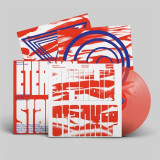
On their first official collaboration, Japanese noise pioneer Masami Akita aka Merzbow and Australian sound sculptor Lawrence English present a harrowing, surrealist portrait of nocturnal industrial activity, spawned by field recordings made in a sprawling factory complex seven hours north of English's home in Brisbane. He characterizes the area as "uneasy and unsettling," awash in the sickly glow of smelters and refinement machinery, somehow not of this world - a liminal quality vividly captured in Andrei Tarkovsky's sprawling purgatorial opus, Stalker, to which the title alludes. Akita, too, described early drafts of Eternal Stalker as feeling "like the soundtrack to a dystopian science fiction opera." A mood of mechanical dread and ruined futures permeates each of the album's seven potent compositions. Opener "The Long Dream" sets the stage with steady rain on sheet metal, punctured by thunder and metallic echoes, reverberating to the rafters in a collapsing warehouse. Quickly the tempest rises. "A Gate Of Light" and "Magnetic Traps" both convulse in churning furies of electric demolition and rattling chains, roaring and relentless. "The Visit" and "Black Thicket" operate more at a distance, surveying the topography of steam, rust, and liquid metal from above, their flickers of violence swallowed by blankets of darkness. This is noise at its most elemental and unknowable: brooding, bristling, and opaque, stalking forbidden peripheries of chaos and creation. Discussing Akita's music, English refers to its "intense substrata that is purely psychedelic; it consumes and confounds." The seasick swells of friction and fracture subsume the listener, forcing an auditory surrender: "this saturation of the senses can be a euphoria." Proof comes halfway through "The Golden Sphere," when the howling mayhem subtly recedes, revealing an eerie siren drone hovering in the void, like the resonance of a dead star galaxies away. Slowly a seething, venomous wall of volume returns, shredding the signal until its frequencies fray, whipping away into the eye of the storm. The combined effect merges obliteration and liberation, rapture and ravagement; it's the sound of dissolution as resolution, uprooted and unmoored, finally freed from form.
- A1: When War Comes
- A2: Independence Day
- A3: 7 Screaming Dizbusters
- A4: Od’d On Life Itself
- A5: Ii Duce
- A6: Bombs Over Germany
- A7: Before The Kiss (A Redcap) (A Redcap)
- A8: Three Sisters
- A9: Quicklime Girl (Mistress Of The Salmon Salt) (Mistress Of The Salmon Salt)
- A10: The Red & The Black
- A11: Dominance & Submission
- A12: Shadow Of California
- A13: Cities On Flame (With Rock & Roll) (With Rock & Roll)
- A14: Half Life Time
For fans of Blue Öyster Cult, Blue Coupe, and Classic Rock! Albert Bouchard is best known as one of the founding members of Blue Öyster Cult. The original band sold millions of albums for Columbia Records with such classic songs as “Don’t Fear the Reaper” and the #1 hit on the Billboard Mainstream Rock chart “Burnin’ For You”. As a songwriter, he wrote many BÖC songs including the very popular “Astronomy” (which was covered by Metallica on their 1998’s release Garage Inc) and the live staple “Cities on Flame with Rock and Roll”, which he also sang lead vocals. “Imaginos 2 – Bombs Over Germany (minus zero and counting)” sees Albert continuing the Trilogy of Imaginos, a concept album about an alien conspiracy that is brought to fruition during the late 19th and early 20th century through the actions of Imaginos, an agent of evil. The album weaves scripts and poems by the late Sandy Pearlman. It features guests Ross The Boss (Dictators), Joe Cerisano (Silver Condor, TSO), and reunites original Blue Öyster Cult members Eric Bloom, Donald “Buck Dharma” Roeser and Joe Bouchard, as well current BOC member Richie Castellano, who all contribute to this latest installment. The album also features reworks of classics like “Cities on Flame with Rock and Roll”, “The Red and the Black”, and “Dominance and Submission”. Due to the overwhelming response to Imaginos II, we are now releasing a Double LP gatefold version which includes an extended version of “Independence Day”, plus the bonus “When War Comes (Instrumental Mix)”.
Benefits are an issues-based music collective from Teesside in the
North East of England. They write songs about the urgencies that
concern them, and they play them loud.
Forming in 2019 and consisting of Kingsley Hall on vocals, Robbie
Major and Hugh Major on synths and noise, and Jonny Snowball
on drums, they quickly evolved from a standard shouty punk rock
outfit into a minimalist, overtly political band that merges noise,
hip-hop and industrial rock, creating an effect that feels urgent,
darkly hilarious and unsettling all at once.
Thus far, Benefits have been completely DIY yet, via a succession
of digital singles and accompanying videos through 2021, they
built a following that enabled them to complete a sold-out headline
UK tour in March 2022. They also gained fans in high places,
including Sleaford Mods, Black Francis, Garbage and Elijah Wood
and Steve Albini.
James and Ryan of Yard Act were also instant admirers and that’s
where their label Zen F.C. comes in. Using their ill-gotten major
label gains Zen F.C. are pressing Benefit’s single ‘Flag’ (backed
with ‘Empire’) on vinyl.
On working with Yard Act, Kingsley comments: “I think Benefits
come at some of the same subject matter that they talk about but
from a slightly different angle (and by ‘slightly different’ I really
mean ‘more frequent swearing’, though we've never said the C
word in a song unlike...ahem). We appreciate every bit of help
we’ve had off them, we just wish we could somehow repay that
kindness (not monetarily mind, we're totally skint).”
Yard Act’s James Smith says of the release: “Lots of bands are
saying all this stuff so what makes Benefits so special? Why do I
need to be told what I already know over and over again by a
shouty man from Teesside? Well, because no one else is saying it
with such physicality they sound like their voice box is about to
leap from their throat and eat your eyeballs. With that little bit of
influence we’ve garnered and the small fortune of money we now
have kicking about, I’m so glad we can play a part in spreading the
word on Benefits, because I think they’re well on their way to a
classic debut album, and I’m going to fucking love being able to
brag about how important I was in making it all happen.”
- A1: Live At The Sahara Tahoe, 1973 (Remaster 2022)
- A2: Farben Says Love To Love You Baby (Remaster 2022)
- A3: Muskeln (Remaster 2022)
- B1: Suntouch Edit (Remaster 2022)
- B2: Farben Says As Long As There's Love Around (Remaster 2022)
- B3: 6Ff (Remaster 2022)
- C1: Beautone (Remaster 2022)
- C2: Farben Says So Much Love (Remaster 2022)
- C3: T Microsystems (Remaster 2022)
- D1: Raute (Remaster 2022)
- D2: Silikon (Remaster 2022)
- D3: Farben Says Love Oh Love (Remaster 2022)
On textstar+ Jan Jelinek brings together the material from the CMYK series, four EPs he released between 1999 and 2002 under the pseudonym farben (the German word for both colours and paints), on a vinyl double LP for the first time. The selection of tracks has been remastered from the original tapes, joined by two additional pieces that appeared on compilations during the same period.
A Polaroid. Still life with tangled leads and consumer electronics, late twentieth century. Black and various shades of dirty white are the dominant non-colours. The image’s spatial depth remains diffuse, the links between its elements speculative. A note stuck to the wall (a legend, perhaps, or an all-explaining blueprint in text form?) is impossible to decipher. You can’t see what connects the picture’s signs. You have to hear it.
farben says: Every sound is a text. A bearer of meaning in search of a reader. Hoping the ideas inscribed in its autonomous existence will be understood as intended. While its beauty lies precisely in misunderstanding, in reading the coded message a new way every time. A thousand colours of sound, a thousand different ways to hear, to see, to understand.
On textstar+ Jan Jelinek brings together the material from the CMYK series, four EPs he released between 1999 and 2002 under the pseudonym farben (the German word for both colours and paints), on a vinyl double LP for the first time. The selection of tracks has been remastered from the original tapes, joined by two additional pieces that appeared on compilations during the same period. Another new element is the Polaroid, showing the origins of a world: Jelinek’s home studio in Berlin at the time.
farben says: Move your body! The project has its roots in Jelinek’s love of house as a reductionist vision of soul. Of four to the floor as a proposition that can be accessed anywhere. Of electronic dance music as a realm of possibility that can be continually expanded. farben was written as contemporary house music. As a text about excitement and euphoria. The arrangements were made directly while recording to DAT, on a twelve-channel mixing desk. Several track titles suggest a link to live concerts, coupled with the context of machine music and bedroom recording. Others affirm pop music’s most extravagant stock phrases about various states of love.
Jelinek produced the tracks with the aim of making music for dancefloors. An idea that failed very productively. In the locations to which it was originally addressed, the project barely figured. But people did listen, and they listened all the more closely to this music that opened up new acoustic and associative scope for house. farben is the opposite of genre: a music spawning new terms (clicks & cuts, micro-house) that never manage to fully capture it.
farben says: Signifiers. The four CMYK EPs are designed as a network of references that cannot be missed but that can also never be precisely deciphered. The vectors of sound, word and image point to Isaac Hayes and Ornette Coleman, to Detroit and the first generation of the Red Army Faction, to Karl Marx and Friedrich Engels. So multifarious that they are distorted to the point of recognition. Overall we hear sonic docufictions whose appealing vagueness derives precisely from this oscillation between clarity and ambiguity, which is also the source of their poetry: the lyricism of the pure circulation of signs.
The artwork is based on photographs of former Red Army Faction members, broken down into the four colours of the CMYK model. The motifs dissolve into individual dots of a single colour, so close to the faces that their expressions are only hinted at. Taken together, the individual colours compose a new whole out of fragmentary material, defying definition and thus maintaining their vibrancy. The same occurs on the level of sound. The sampler Jelinek used for these tracks had to be fed with floppy disks, imposing a memory limit of 1.44 megabytes per audio quotation from soul or jazz records. As a necessary consequence of this, the individual references, like the dots of colour, are dissolved into details and abstractions. They appear as splinters that recombine in new ways to create new meanings. The joy of collapsing metaphors.
farben says: New departures. Even two decades after its original release, textstar+ does not come across as an epitaph to the modern era. Instead, it appears as a euphoric affirmation of the utopias of the twentieth century, translated into new sound texts via the aesthetic strategies of abstraction, collage, networking and speculation. 1.44 megabytes of history, one thousand signifiers, one album. From “Live ...” to “... Love”.
Arno Raffeiner, 2021
- A1: Mentiras Con Carino (Feat Ile)
- A2: El Paraguas (Feat Gabriel Garzon-Montano)
- A3: Idolo (Feat Angelica Garcia)
- A4: Hielo Seco (Feat Marc Ribot & Money Mark)
- A5: El Payaso (Feat Girl Ultra)
- A6: Tus Tormentas (Feat Mireya Ramos)
- B1: Puedes Decir De Mi (Feat Gaby Moreno)
- B2: Eso No Lo He Dicho Yo (Feat College Of Knowledge)
- B3: Esclavo Y Amo (Feat Natalia Clavier)
- B4: Ya No Me Quieres (Feat Jaron Marshall)
- B5: El Leon (Feat Rudy De Anda)
- B6: El Muchacho De Los Ojos Tristes (Feat Tita)
Adrian Quesada announces the release of ‘Boleros Psicodélicos’,
a sprawling and singular tribute to the golden era of balada music.
The brand-new album from the GRAMMY-nominated guitarist,
producer and Black Pumas co-founder serves as a celebration of
the super funky, slightly delirious and deeply soulful sounds that
transcended the cultural boundaries of Latin America throughout
the late 1960s and early 1970s.
Featuring vocals from Puerto Rican icon, GRAMMY-winner and
former Calle 13 member iLe, Colombian-American visionary
Gabriel Garzón-Montano, Mexican R&B star Girl Ultra, as well as
Angelica Garcia, Gaby Moreno, contributions from living legends
such as Marc Ribot and Beastie Boys musician Money Mark, and
many more, ‘Boleros Psicodélicos’ consists primarily of original
Adrian Quesada compositions, as well as covers of La Lupe’s
‘Puedes Decir De Mí’, Jeanette’s ‘El Muchacho De Los Ojos
Tristes’ and other balada classics.
All twelve tracks were produced, engineered, mixed and largely
performed by Adrian Quesada, honouring and extending the
influence of a personal obsession that he has cultivated over the
past 20 years.
Similar to his acclaimed 2018 album ‘Look At My Soul’, which
traced the deep roots and relationship between Latin and Texas
music, Adrian Quesada sees every song on ‘Boleros Psicodelicos’
as both a history lesson and a step towards a newly imagined,
more united future: “I always wanted to pay tribute to that sound
that I was already hearing in my head without realizing that people
had already done it. Balada changed the face of Latin music
forever. If something like that happened today, it would be normal
because everyone’s connected on Instagram. Think how powerful
this sound had to be for everyone to be connected through the
songs. As someone who grew up speaking two languages and
living on both sides of the border, I love how much music can
transcend barriers and boundaries. It really is a universal
language, especially back then.”
3rd album by Have You Ever Seen the Jane Fonda Aerobic VHS? Artist: Have You Ever Seen the Jane Fonda Aerobic VHS? Genre: Garage pop Formats: Digital + vinyl (Black Vinyl + Ltd Edition Yellow Vinyl) Finnish“flower-garage”3-pieceHave You Ever Seen the Jane Fonda Aerobic VHS? have carved out a unique sound for themselves, opting to use keyboards instead of guitars. This is after songwriter Ekku Lintunen and drummer Janne-Petteri Pitkälä, on seeing the film Drive, instantly decided to form an 80ssynth-pop band as a side project to the garage-rock act they were in at the time. When Susse Stemma-Sihvolacame in on vocals, bringing her scuzzed out bass tones with her, it ended up being garage-rock with a twist. They are further shaped by the aesthetic and sonics of the underground cassette culture punkbands in their small town of Kouvolarely on, as well as the thread of styles that have tied the towns musical history together through the decades. Amish-mash of 60s girl-groups, punk, glam, grunge and NYC/Manchester indie coming together generates their electrifying style that has given rise to one of the most exciting and infectious bands to come out of the Nordics in recent years. Lintunen likens his songwriting to crafting surreal movies. Starting with a picture in his mind, he throws out lyrical phrases to create this image for the listener. Enough is held back though that there are more questions than answers. Like all great films, the listener interprets as they do. After their debut album Teenage Sweetheartwas released in autumn 2015and following with their sophomore album Jazzbelle 1984 / 1988the trio have been praised in the international music media, and gathered fans around the world.
Propelled by his 1956 Lee Hazlewood-produced hit "The Fool," Sanford Clark was already a rockabilly legend in his own right by the time he swapped his hair gel and switchblade for a pair of cowboy boots on They Call Me Country. Recorded between 1965-67 and originally released as a series of singles for Phoenix's Ramco label, the 12 tracks on this LP borrow Bakersfield's outlaw sound and ignore Nashville's countrypolitan flair, standing as a true lost masterpiece of country music's third generation. Clark's booming baritone tells tales of bar fights, heartaches, and drinking til you can't stand, while Waylon Jennings provides a backdrop of fuzzed out guitar twang. Mastered from the original session tapes and back on vinyl for the first time since the Nixon administration.
Federico Albanese is a composer born in Milan, Italy in 1982, and currently based in Berlin. His musical versatility is a natural gift that pushes him to explore music in all its facets. Albanese's compositions are airy and cinematic, blending classical music, electronics and psychedelia. Federico started studying piano and clarinet as a child before becoming fascinated by rock music. As a teenager he studied bass and became a self-taught guitarist and soon became one of the leading figures of Milan's underground scene, performing in several bands. Influenced by black music, folk, electronic, modern and contemporary classical music his skills as a composer soon emerged, He worked for 5 years as prop man in several film sets. This experience made him understand the power of the connection between music and images and helped him to develop his personal musical path. In 2007 Albanese met singer and songwriter Jessica Einaudi and together they founded the avant-garde duo ""La Blanche Alchimie"". Composing songs with Jessica he rediscovered his love for the piano, which from that moment on, became his main instrument. Since then Federico has scored several films, short films and documentaries, including a documentary on a project commissioned by Ermenegildo Zegna in the National Museum of XXI Century Arts in Rome. In February 2014, Federico Albanese will release his debut album entitled ""The Houseboat and the Moon"". He found a place, an imaginary place, where, whenever he wanted to, he could jump on and just float away. On this moving shelter, traveling across memories and imagination, lulled by water and led by the moon, Federico wrote the 13 compositions of his debut. He recorded all of the piano parts with a 1969 German tape recorder, the Uher Royal Deluxe, which allowed him to catch all of the tiny hidden shades, the imperfections, the noises of the piano and its surrounding space. Federico melts this rarefied sound with electronics, live recordings, strings, and homemade instruments. The result is a combination of contrasts and colors with a variety of atmospheres that wonderfully represents Federico's musical universe. Vinyl: thick gatefold covers, 180g vinyl,free download.
From the very beginning in 2011 the concept was simple and crystal clear.
Mad Mats & Tooli's new label Local Talk had two main focus points.
First, the actual music was to be inspired around those magical 4/4 house rhythms...and beyond.
Second, the logo! The idea was that a simple and direct visual point together with a strong dance MUSIC message would make the label stand out among other labels in their northern neck of the woods.
In Scandinavia, the main theme is electronic 4/4 rhythms (techno, tech-house etc) and with Local Talk being more inspired by black dance music this has made them the black sheep in the hometown of Stockholm.
To set the musical direction straight from the very start they released Bassfort's 'Moon Shadow' which got instant attraction from both house heads and the more open-minded clubbing community.
With its warm, melodic chords, infectious piano theme and big strings it's always been the label's fave jam from their now +150(ish) releases.
When they decided to choose a track that would define the label for their 10-year anniversary, the choice was simple.
Mats & Tooli thought long and hard about who they wanted to interpret 'Moon Shadow' and after months of discussing options they decided that the only one they could trust to give the track a quality boost was NYC legend Joe Claussell.
Back in the late 90's, Mats used to book Joe for his legendary Raw Fusion parties in Stockholm so the connection and mutual respect were already in place. The result is a +11 minute long musical house journey that builds and builds until those characteristic piano chords make an entrance and transform the dynamics into a rainbow of sounds. Epic is not a word big enough to explain this grand musical production !
But the goodness does not end there, we're only halfway in on this anniversary release. The blood brothers Javi & Luis aka Kyodai (and 2/3 of Bassfort) made their own mix on the B side track from the original release, Moonlight.
As schooled jazz musicians they diverted from the electronic soundscape and went for a live jazz-funk production.
The final product is a warm and musical version with live drums, bass, piano, strings and even vocals from the brothers themselves.
The track almost comes across as something 4 Hero would put out back in the day.
All we can say, enjoy the dance!
- A1: Blues Run The Game
- A2: Milk & Honey
- A3: Soho
- A4: It Ain't Me Babe
- A5: East Virginia
- B1: Geordie
- B2: In Memory
- B3: Love My True Love
- B4: Let No Man Steal
- B5: Ethusel
- B6: Setting Of The Sun
- B7: Boxful Of Treasures
- B8: Who Knows Where Time One 1967
- C1: Carnival
- C2: Don't Seem To Know You
- C3: Gerrard Street
- C4: Motherless Children
- C5: Moves Through The Fair
- C6: Time Has Come
- D1: Little Bit Of Rain
- D2: Go Your Own Way My Love
- D3: Seven Virgins
- D4: Blue Tattoo
- D5: Cradle Song
- D8: Who Knows Where Time Two 1968
- D6: Quiet Land Of Erin
- D7: Fotheringay
Gold Vinyl[31,05 €]
Double black vinyl LP, compiling the rare Home Recordings of Sandy Denny. Never pressed to vinyl and in partnership with the Sandy Denny estate. Twenty-seven 1960s recordings of pre-Fairport Sandy Denny – nearly all making their vinyl debut! This essential collection includes two different demos of her classic “Who Knows Where the Time Goes” (and other songs penned by her – some later recorded by Fairport), plus heartfelt covers of songs by Jackson C. Frank, Fred Neil, and traditional folk songs. The definitive collection of Denny’s home demos and authorized by her estate.
While Bauhaus have been waiting to continue their reunion shows, founding member David J has been trawling through his archive of tapes and diaries from the early 80s in coll;aboration with sound sculptor Tim Newman to present two volumes of unique spoken word and songs, including a vocal contribution from Black Francis of The Pixies and guitar overdubs by Warren Defever of His Name Is Alive and Adrian Utley of Portishead. Sleeve notes by Andrew Brroksbank of the Bauhaus Archive.
Never released on vinyl before and pressed on black wax, an essential pressing from seminal songwriter Maria McKee. A lost gem, never released on vinyl, from the re-awakened singer/songwriter that falls between her Americana incarnation as Lone Justice and her near-operatic five-star stunner ‘La Vita Nuova’. From 2005, ‘Peddlin’ Dreams makes a vinyl debut in all its unbridled glory, as AllMusic mused, it’s “moving, utterly beautiful and carefully, artfully wrought. It is the work of a masterful songwriter whose senses of time, place and character are impeccable.”
New compilation, pressed on black vinyl. Featuring many unreleased recordings and rarities from the cult favourite and all endorsed by the Tom Rapp estate. The grand masters of acid folk, Pearls Before Swine outline the genius of leader Tom Rapp on an album created from a dusty box of tapes left behind by the incisive tunesmith. Never before heard recordings remastered to create the perfect route into the essential ‘Balaklava’ and ‘One Nation Underground’ albums that kick started a whole genre. This new vinyl compilation was made in collaboration with, and fully endorsed, by the Tom Rapp estate.