Suche:all inn

Styles
Alle
LOS SPEAKERS - EN EL MARAVILLOSO MUNDO DE INGESON LP

Last album recorded by Colombian rock pioneers Los Speakers in 1968 after leaving behind its affinity with yéyé and go-go music. One of the most brilliantly whacked-out psych LPs to emerge from South America. Originally self-released on their own Producciones Kris label, this is an almost impossible to find cult record. Officially reissued for the first time. By 1968, Colombian rock had left behind its affinity with yéyé and go-go music. In Medellín, Discos Fuentes had terminated its contract with Los Yetis, whose farewell record "Olvídate" set a strong anti-establishment tone. While the fire of protest that had spread rapidly among students in Paris was dying out, young people in Bogotá voiced their discontent. Aware of the effervescent political climate across the world, Los Speakers wrote their last record between June and September of the convulsive year of 1968. In order to give shape to these new songs they needed a space where they could experiment freely with sound. The music historian and critic and sound engineer, Manuel Drezner, made a providential appearance and offered the innovative Ingeson studios to the trio under one condition: that his company's name was included in the title of the record. For four months, Rodrigo, Manuel and Roberto created a record that was completely different to anything on the Colombian rock scene at that time. Los Speakers used cutting-edge equipment to record and mix "El maravilloso mundo de Ingeson", It was the first time local musicians had access to a multichannel mixing desk where they could experiment with all kinds of bold sound effects. The silences between songs were replaced with brief intervals of sound including the noise of a train running over a passer-by, a bomb exploding_ Although it's often labelled a conceptual record, the four compositions that each of the band members contribute reveal different aesthetic personalities. From the strong influence of Renaissance and Baroque poetry and music to the virulent social critique and pacifist statements, suffused with religiosity and mysticism. Armed with the demo tape, Los Speakers presented the project to CBS, Philips, Sonolux and Bambuco. The labels' verdict was unanimous: not very commercial and very costly. The group reacted to this negative response by pooling their personal savings, inventing a fictious record label called Kris and released the record just as they had imagined it. This led to the creation of a graphic concept unheard of in Colombia: the record included a booklet containing photos, texts and illustrations. Although there was a big media roll out, which included TV appearances and features in newspapers and magazines, as predicted the album was a commercial failure_ "El maravilloso mundo de Ingesón" is one of the most brilliantly whacked-out psych LPs to emerge from South America.

vorbestellen30.09.2022

erscheint voraussichtlich am 30.09.2022

24,58
Beck, Jeff and Johnny Depp - 18 LP

Beck,JeffandJohnny Depp

18 LP

12inch0081227881436
Warner Music International
30.09.2022

In a collaboration you might never have expected but somehow makes perfect sense, original Brit blues mastermind Jeff Beck teams up with a little known American by the name of Johnny Depp to render some of the latter's songs alongside some finely selected covers. From The Beach Boys to John Lennon, The Velvet Underground to Killing Joke and more besides, this is the sound of two lifelong music lovers letting it all hang out and playing with the impassioned energy and innocence of youth. More than just a throwaway side project for a global superstar, this is a deeply discerning project which frames Depp's music in a whole new light.

vorbestellen30.09.2022

erscheint voraussichtlich am 30.09.2022

36,77
Various - Intimate Chopin LP

Chopin, der als Mensch nicht sehr gesprächig war, hat
die Geheimnisse seines inneren Wesens - und nicht etwa
Vertraulichkeiten oder Bekenntnisse - allein dem Klavier
vorbehalten. Es ist, als wäre das Klavier sein
Doppelgänger, der in Harmonie mit seiner Sensibilität
schwingt und seine Gefühle, seine Eindrücke, ja sogar
seine Halluzinationen aufnimmt.
In diesen kurzen Stücken, in denen seine harmonische
Sensibilität es ihm ermöglicht, eine besondere
Behandlung des Klangs zu schaffen, um die zartesten
Schimmer und die feinsten Nuancen hervorzubringen.
Die hier versammelten Klavierwerke werden von
großartigen Pianisten wie Samson Francois, Alexandre
Tharaud, Nikolai Lugansky, Andrei Gavrilov, Nicholas
Angelich u.a. gespielt.

vorbestellen30.09.2022

erscheint voraussichtlich am 30.09.2022

22,90
Matt Berry & The Maypoles - Matt Berry & The Maypoles

Fresh from the red carpet, award-winning Matt Berry dusts off another of his many bows to bring us a stunning live album.

To be released on November 20th 2015 through Acid Jazz Records, this record, which sees Matt perform his greatest musical moments, lands on shelves the same month that Matt Berry returns to our screens in his BAFTA award-winning comedy series The Toast Of London, placing him once more at the forefront of the public eye.

This album is the perfect opportunity for fans to prepare themselves for the upcoming Matt Berry & The Maypoles tour in December.

Whether you're familiar with Matt's Live shows or want to understand what they are like, this album takes you there! From the excited audience chatter to the clarity of his pulsing KORG, each element resonates with perfect clarity. Berry and The Maypoles' musical prowess shines through their prog-folk excursions and trombone flairs which are reminiscent of an early Acid Jazz release, all with the a nod to Berry's surreal and panoramic world-view.

Available, on Limited Gatefold coloured vinyl, CD, Standard vinyl and digital download. This release offers a format suitable for every Matt Berry fan. It is the first Acid Jazz release to come with a digital download code.

First Live Album
Limited run of coloured vinyls
Each vinyl with download card
Released in the same month as Matt returns in Toast Of London on Channel 4.
A month before Matt Berry UK tour in December
Arrives in the midst of a heavy marketing and promotion campaign based around Matt's TV, and music and his authorial debut.

vorbestellen30.09.2022

erscheint voraussichtlich am 30.09.2022

26,68
The Gqom Trilogy - The Gqom Trilogy	LP 3x12"

DJ Scriby - Izingoma zeGqomu / DJ MARIIO - ZULU MAN / DJ Skothan – Nevegation. Highlighting the continuing evolution of Durban's globally influential gqom sound, this special trilogy of releases showcases three separate artists from South Africa's fertile musical landscape. The set captures a fresh wave of gqom innovation from veteran producer DJ Skothan/DJ Scoturn, DJ Scriby, and 20-year-old DJ MaRiiO. DJ Skothan/DJ Scoturn has been a key figure in Durban's underground scene for many years, producing alongside Phelimuncasi, Bhejani, Tweeyking, Lafaristo, MaRiiO and DJ MP3. His gqom and house tracks have quietly provided a rumbling engine for the city's scene, and "Nevegation" is his debut full-length, providing a complex diagram of his dancefloor versatility. This isn't the gqom you might expect to hear: immediately on opener 'The Gringo' familiar sounds - shovel kicks, chopped vocals, sampled gasps, horror movie strings - are shuffled into atypical patterns, creating jerky soundscapes rather than the expected four-on-the-floor bump. 'Salut to DJ Lag' pays respect to Durban's Beyoncé-approved pioneer, but twists the template into a propulsive new form, adding rolling and evolving percussion that teases fractal shapes each bar. But the album's most unexpected and forward-thinking moment arrives with the aptly titled 'The King of Gqom', a track that simmers the genre's percussive sounds into limber sci-fi club futurism, tweaking the bass sounds into patterns that nod to dubstep, Jersey club and ballroom. 25-year-old DJ Scriby has been working behind the scenes since 2013, assisting the first wave of gqom innovators promote their sound both inside Durban and beyond. In 2017 he joined London's Trax Couture to release "The Clermont EP", and here he introduces his long-awaited follow-up "Izingoma zeGqomu". Scriby's approach to gqom is well-studied and self-aware, which gives him the ability to stretch the sound's scope across the diaspora: just peep the Atlanta trap synths on the dynamic 'Friday 13th', or the absorption of tight grime snares on opening track 'Goi'. Scriby's engineering skill pushes his productions to the next level, lending slithering downtempo tracks like 'Ouuu1' and 'Igqom Libuye' a widescreen, big-room punch without losing the genre's undulating funk. And the producer even eyes the EDM mainstage with 'Qumqum!!', balancing saccharine synths with jerky kicks, claps and rolling toms. The youngest artist featured in the collection, DJ MaRiiO started producing when he was just 12 years old, watching YouTube production videos. "No one told me how to use FL Studio," he admits, "and no one helped me doing different genres." This might be why his music sounds so completely unique; the basic structure of gqom is still present, but MaRiiO augments these elements with youthful energy and carefree use of unusual sounds and production methods. "Zulu Man" opener 'GQom NyeGe' manages to mash together trance synths, DMZ bass and a driving woodblock rhythm that reminds you of its Durban roots, while the bizarre 'Ngom ya Phesh', featuring MaRiiO's regular collaborator Hot Chicks on vocals, pushes the gqom template into the red, with overdriven kicks and disorienting environmental sounds. All three records provide a 360 degree view of Durban's contemporary underground, nodding to the past, present and future of gqom. It's a genre that's constantly in flux as it moves from South Africa's bedrooms and basements to main stages and movie screens across the globe.

vorbestellen30.09.2022

erscheint voraussichtlich am 30.09.2022

33,57
T. Gowdy - Miracles

T. Gowdy

Miracles

12inchCST165LP
Constellation
30.09.2022

(Cargo Collective Title) RIYL: Barker, burger/ink, Andy Stott, Shackleton, Monolake, Jan Jelinek, Perila, Fax. 180gLP in 350gsm jacket + 190gsm inner + DL. CD in custom mini-gatefold paperboard jacket. T. Gowdy has kept up a productive albeit mostly virtual pace since the release of Therapy With Colour (his third full-length album and first for Constellation) which dropped just as things were locking down back in spring 2020: performances at numerous festivals including MUTEK Montréal, Node Festival and NEW NOW; audiovisual pieces exhibited at various European galleries and events; a track and video for Constellation’s Corona Borealis Longplay Singles Series; sound design for the documentary Atalaya by filmmaker Emma Roufs. Gowdy now returns with Miracles, his second full-length for Constellation, which draws on source materials originally performed in 2018 for an unreleased audio/visual project based around surveillance footage—a precursor to video1capped, monitor-based horizons that soon took on new meanings. Re-immersing himself in those recordings, Gowdy disassembles and deploys them as raw source material for new experiments with vactrols, noise gates and analog-to-digital triggering and aliasing, the original recordings juxtaposed anew amidst their successive textural and rhythmic treatments. Gowdy keeps this re-composition process stripped down, elemental and purposive, guided by an ascetic Aufhebung: synthesis as sublation—subjecting a temporal material/theme to analysis and transformation, reintegrating to form a whole that overcomes what it preserves without erasure, reshaping and intrinsically carrying its origins forward. Where Therapy With Colour was strictly and rigorously a set of stereo live performances, Miracles fuses iterative—though still spartan—layers of performance. “Therapy With Colour was about healing through self-hypnosis; Miracles is about forging a future with memory through subjection to trigger mechanisms” notes Gowdy. The result is a captivating collection of minimal IDM and oscillated electronics from the Montréal/Berlin producer, working primarily in a 120-140 BPM zone of tonal percussion and corrugated pulse. Gowdy’s sensibility and sound palette gets deeper and dirtier, summoning new pathways of alluvial flicker and abraded euphoria. As the album progresses, low-pass gate vactrols coalesce into a clear and vital theme, conveying immanence through woody timbres at times reminiscent of the Shinrin-yoku aesthetic (Japanese ‘forest bathing’), though always with a grainy transcendence rather than invoking any clean pure sheen. Gowdy consistently heats and heightens the presence of each component in the mix, balancing different elements in democratic compression/distortion, attaining an unornamental and earnest form of mantric-industrial majesty. Miracles is live, corporeal, activated electronic music of the highest caliber, deployed with monastic and meditative focus. Tracklist: 1 350J 2 Miracles 3 Déneigeuse 4 Transcend I 5 U4A 6 Vidisions 7 Clipse 8 Transcend II

vorbestellen30.09.2022

erscheint voraussichtlich am 30.09.2022

23,74
JAZZKANTINE - Discotheque LP

Jazzkantine

Discotheque LP

12inchIN228761
Rap Nation
30.09.2022

Gold Vinyl

Die Jazzkantine hatte nie Berührungsängste beim Manövrieren zwischen den Genres, das neue Studioalbum "Discotheque" stellt dies eindrucksvoll unter Beweis. Gründer und Bandleader Christian Eitner hat es geschafft, die vielköpfige Charaktertruppe im Kern seit fast 30 Jahren zusammenzuhalten. Gestählt durch unzählige Gigs in kleinen schmuddeligen Clubs, aber auch in piekfeinen Theatern und in riesigen Arenen. Die Jazzkantine hat bis dato um die 1.500 Konzerte gespielt, das Schönste und Schlimmste, Aufregendste und Außergewöhnlichste aus allen Musikwelten erlebt. Und sie hat noch lange nicht genug. Wir müssen wieder tanzen. Wir müssen wieder singen. Und so taucht die Jazzkantine ein in die Welt der "Discomusik", die in ihren Ursprüngen vor 50 Jahren im Milieu des New Yorker Undergrounds viel diverser und innovativer ist, als man vermutet. Eine Melange aus ersten DJ-Techniken und neuen bombastischen Sound-Systemen bietet auf privat organisierten House Partys viel Raum zur Entfaltung der LGBT-Community. Noch heute erinnert alljährlich der Christopher Street Day an die Stonewall-Riots und somit an eine Zeit, als noch gleichgeschlechtlicher Tanz verboten ist. Vor allem David Mancusos "Loft" ist Anfang der 70er eine Keimzelle für den Disco-Sound, der erst viel später mit Hits wie "Stayin' Alive" und "Le Freak" zum internationalen Boom wächst - auch die Rolling Stones, Abba und Kiss springen bekanntlich später auf den Zug auf. Parallel verbinden aber auch Jazzgrößen wie Herbie Hancock, Miles Davis und Chick Corea die Raffinesse des Jazz mit der rhythmischen Intensität des Funks zu "Fusion". Und Fred Wesley sagt: "Discomusic ist Funk mit einer Krawatte". Wie es sich für die experimentierfreudige Jazzkantine gehört, entsteht auf "Discotheque" ein Sound, den man "Disco Jazz" nennen könnte - alles im gewohnten Mix aus Funk, Soul und Rap. Songs, die Lust machen, die neun Musiker endlich wieder live auf der Clubbühne zu erleben.

vorbestellen30.09.2022

erscheint voraussichtlich am 30.09.2022

23,91
Ralph White - Something About Dreaming

Here’s artist Max Kuhn on hearing the new Ralph White recordings for the first time: “I was driving a familiar round trip across the high desert when I first put it on. It immediately spoke to me. In the lyrics there's a familiar geography for me, a familiar emotional landscape for all of us. And maybe it was driving an almost 40 year old truck on sun baked & cracked asphalt in July, but it's like you can hear his songs coming apart- the cadence, the rhymes stumbling & defying expectations, consistency but they just keep moving. You have no choice but to go with it. Probably a good lesson for how to live in this era we're in, cracking up but keeping it all running somehow, trying to make something pretty with the time.” Recorded in Austin, Texas in March of 2020, just days before the city and the rest of the world shut down, Ralph White spent two days with producer, Jerry David DeCicca (Will Beeley, Ed Askew) and recording engineer, Don Cento, capturing a raw and wild set of performances. Ralph, having recently converted his van into a mobile living and touring quarters equipped with a wood-burning stove, left Austin, the city where he was born 70 years ago, and retreated to an Arizona commune where he began building a new house in the desert hills to escape the virus and insanity of daily living. Ralph takes us on a journey through his myriad of travels: from Dock Boggs to Syd Barrett to William Faulkner to Stella Chiweshe to Blind Uncle Gaspard…scratching banjo, rasping train whistle hollers, rolling kalimba, rousing accordion, taut shimmers of guitar, caustic fiddle and lyrics - that could have been hidden amongst the dusty inner groove of a lost Harry Smith 78 - weaving in and out of streams of consciousness, time and place. In addition to his solo work, White has recorded or performed with a diverse group of folk and avant-garde musicians: Thurston Moore of Sonic Youth, Jandek, Jack Rose, Eugene Chadbourne, Michelle Shocked, Sir Richard Bishop, and Michael Hurley. “This is what Ralph White really sounds like. It’s what time passing really sounds like. It’s what a look really feels like. This record is someone touching you all over!” --Bill Callahan “Striking, electrifying acoustic music from an underappreciated legend of the American Southwest. Here, tight song structures meet open, unadorned instrumentation: guitar, banjo, kalimba, accordion, fiddle, and White's elastic voice, unspooling pitches and syllables. White draws listeners in on his terms. Lyrics wind and twist and pull back: "Motel 6, Motel 6, Altoona, Altoona; missing you, missing you so, great big hole in my--..." Brave, beautiful, a high point in White's long career. And this is just Volume 1!” - Eli Winter. "What Ralph White puts on albums and onstage is so mind-boggling and vast, it forces those of us in the description business down a treacherous path." --Darcie Stevens, Austin Chronicle. “White was a member of well-loved punk bluegrass outfit Bad Livers, but his solo work is possessed of a much more lonesome spark, exaggerating the implied drone at the heart of the music of Dock Boggs and The Stanley Brothers…White plays wooden six-string banjo, violin, button accordion and kalimba and his voice has a high, eerie quality to it…extremely psychedelic.” --David Keenan, The Wire Tracklisting: 1. Gun Barrel Polka 2. Misinformation Shuffle 3. El Golfo 4. Something About Dreaming 5. Rye Straw 6. The Stovepipe Blues 7. No Stranger 8. Morning Sickness 9. Lord Franklin

vorbestellen29.09.2022

erscheint voraussichtlich am 29.09.2022

23,95
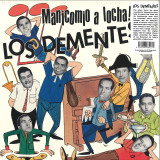
LOS DEMENTES - MANICOMIO A LOCHA LP

This album marks the debut recording for Venezuela's Velvet label by pianist Ray Pérez and his trombone-led salsa band Los Dementes. Heavy dance numbers and the distinctive vocals of Perucho Torcat make this historic 1967 rarity a sought-after collector's item. Now the LP has been lovingly restored, mastered from the original tapes, with its original artwork intact, preserving the legacy of Los Dementes for today's generation of salsa lovers everywhere. First time reissue. Salsa pianist, vocalist, composer and arranger Ray Pérez, acquired his nickname "Loco" by being a free, independent spirit, an innovator and iconoclast who was initially branded as "crazy" for the freshness and audacity of his sound. Amazingly, he is not that well known in the US, where he spent some time in the late 1960s and salsa was king during the 1970s. Yet he was quite popular in his home country from the beginning, especially amongst the working class of Caracas and Maracaibo, who adopted Cuban music played by New York Puerto Ricans as their own and called it "salsa" years before the term was employed by US labels like Fania as a marketing tool. Pérez is revered in Venezuela, as well as in Mexico and Colombia, and his storied career, which spans seven decades and thousands of concerts, has yielded more than 35 albums recorded by his various bands, including Los Dementes, Los Kenya, and Los Calvos, all of which are collector's items today. At the start of 1967 Pérez debuted Los Dementes, with vocalists Claudio Zerpa and Perucho Torcat backed by an ace band featuring only trombones in the brass section. Titled "¡Alerta mundo! Llegaron los 'The Crazy Men'" the record was released on the small Venezuelan label Prodansa. Soon after, Prodansa folded and Los Dementes were left without representation or much compensation for their efforts, being paid only in records. In the end of February of that year, Pérez returned to Caracas from a stint in Maracaibo in order to finish his first LP with the well-established and larger Velvet label, entitled "Manicomio a locha". In the first quarter of 1967, Velvet unleashed a trilogy of salsa records in order to compete with rival label Palacio and their recent success with Federico y su Combo Latino: "Porfi '67 Salsa & Boogaloo" by Porfi Jiménez y su Orquesta, "Guasancó" by Sexteto Juventud and lastly "Manicomio a locha". The LP begins appropriately with the boisterous title track, written by the band's conguero Carlos "Nené" Quintero, who would become a legend in coming years. Torcat describes a jam session in mental institution and introduces the band, with tasty solos by trombonist Rufo García followed by Ray on piano. Already you can hear something was different about Ray and his "Crazy Men"-a sound as wild and innovative as what was happening in New York with Eddie Palmieri, but with a more unhinged, raw feeling in line with Willie Colón and other younger Nuyorican bands. Next up is an intriguing track sung in a mix of Italian, English, Spanish and Papiamento by Pérez himself, performed in the complicated rhythm of the mozambique, an Afro-Cuban carnival beat developed in the early 1960s. This is followed by the heavy dancer 'Rico guaguancó', penned by Angelito Pérez, which changes from the guaguancó to the mozambique rhythm mid-way through, proving that Los Dementes were "different from the rest" as the lyrics say. 'Puerto Libre', sung by Torcat, is dedicated to the Venezuelan island of Margarita in the Oriente region, and the independent spirit of its working people. The rhythm changes from guaguancó to guajira and back again but remains danceable all the way through. The side closes out with a "3 in 1" medley inspired by the popular formula of the mosaicos of Billo's Caracas Boys, seamlessly knitting together several different tempos, rhythms, moods and compositions. Side two starts strong with the fierce yet satirical 'Corte e' patas', then 'Alma Cumanesa', a typical folk song refashioned as a guaguancó. This is followed by the funky 'Guajira con Boogaloo'. The tune echoes the sound of young Latin New York, pointing out the connection between Cuban and African American soul music. The pace picks up again with 'Fiesta de trombones', a hot descarga and then the album closes with another medley. Though this marks the end of a rather short album, it also signaled the emerging success of Los Dementes and their involvement with the salsa boom in Venezuela, quickly selling out of its initial run of 1000 records and making for a memorable debut on the Velvet label. Now this rare and sought-after LP has been lovingly restored, mastered from the original tapes, with its original artwork intact, preserving the legacy of Los Dementes for today's generation of salsa lovers everywhere.

nicht am Lager

Bestelle jetzt und wir bestellen den Artikel für dich beim Lieferanten.

24,58

Last In: vor 3 Jahren
Various - NuNorthern Soul 10 Boxset 5x12"

A decade is a long time in music, but it feels less epic when the music in question is timeless, picturesque, and immersive. Founded in London, run from Bali for a period, and now based in Ibiza, NuNorthern Soul has grown from humble roots to become one of the most popular outlets for Balearic music on the planet.

NuNorthern Soul started in the late 1990s, long before the label launched, NuNorthern Soul was a regular Sunday session in a bar in Chester, UK where label founder Phat Phil Cooper and school friend Jim Baron (Ron Basejam, Crazy P, JIM) sat behind the decks and played laidback, eclectic musical selections to wind down the weekend. The name was suggested by one of the event’s regular punters, who likened the community feel of the event to his experiences as a Northern Soul dancer.

Fast forward to 2011. Following a move to London, Cooper was introduced to Ben Smith, a singer-songwriter and producer whose music he’d long admired. After bonding over a few pints of Guinness, Smith offered to hand over a hard drive full of unreleased tracks; together, the pair put together what would become the NuNorthern Soul label’s first ever release: a fine album of beautiful, boundary-free music entitled The Movedrill Projects.

Another EP from Smith, Dedications to the Greats, followed in early 2013, with the sometime Fug and Akwaaba band-member recording emotive, life-affirming cover versions in his signature style. It was followed by an EP of opaque, sunset-ready songs from Ragz Nordset, and NuNorthern Soul was on its way. While the label has subtly moved around musically since, offering up EPs and albums that incorporate elements from a multitude of becalmed and blissful styles, the core ethos remains the same. Significantly, those early Ben Smith and Ragz Nordset releases still stand up to scrutiny all these years on.

Smith has remained a big part of the NuNorthern Soul family ever since, and it’s fitting that two of his tracks – the stunning, undulating downtempo epic ‘Over Land & Sea’, from improvised 2019 album From The Ash, and Jonny Nash’s glistening, shuffling 2015 rework of ‘Hold On To It’ – are featured on this 10th birthday celebration of the NuNorthern Soul story so far.

It’s right, too, that Jim Baron, whose stints behind the decks with Cooper in Chester began the NuNorthern Soul story, also makes two appearances. His chugging, jangling, wide-eyed 2014 Ron Basejam rework of Ragz Nordset’s ‘You Started It All’ – a track that has so far racked up over three million streams on Spotify – was an early label hit, while his fragile, softly spun masterpiece as JIM, ‘Whisper in the Wind’ (featuring none other than Ben Smith on guitar), features here via a deliciously stretched-out, sunrise-ready remix from James Holroyd under his Balearic-friendly BEGIN guise.

Sentimentality aside, the success of NuNorthern Soul is rooted in Cooper’s ability to pick music to release from a wide variety of artists that fits the label’s colourful, atmospheric, and tactile sonic vision. This lovingly curated box set is testament to that, with immersive, yearning efforts from veteran musicians such as Jon Tye (here appearing as Captain Sunshine, via the breath-taking ‘The Oceans Inside’) and the late, great Ryo Kawasaki (remixed by Mancunian, former Body & Soul NYC resident DJ Andi Hanley) being joined by wonderfully on-point productions from relatively recent signings such as Torn Sail (the Balearic folk swell of ‘Disconnected’), George Koultalieris, My Friend Dario and Tambores En Benirras.

10 Years, 5 EPs, 10 tracks, exclusives, previously unreleased and hard to find NuNorthern Soul treasures. Packaged in a full colour commemorative designed box with full colour inner sleeves. 1 track per side of vinyl for maximum audio pleasure. Comes with 4 page NuNorthern Soul insert. Limited edition.

nicht am Lager

Bestelle jetzt und wir bestellen den Artikel für dich beim Lieferanten.

67,19

Last In: vor 3 Jahren
Lee Tracy & Isaac Manning - Is it What You Want LP

As the sun sets on a quaint East Nashville house, a young man bares a piece of his soul. Facing the camera, sporting a silky suit jacket/shirt/slacks/fingerless gloves ensemble that announces "singer" before he's even opened his mouth, Lee Tracy Johnson settles onto his stage, the front yard. He sways to the dirge-like drum machine pulse of a synth-soaked slow jam, extends his arms as if gaining his balance, and croons in affecting, fragile earnest, "I need your love… oh baby…"

Dogs in the yard next door begin barking. A mysterious cardboard robot figure, beamed in from galaxies unknown and affixed to a tree, is less vocal. Lee doesn't acknowledge either's presence. He's busy feeling it, arms and hands gesticulating. His voice rises in falsetto over the now-quiet dogs, over the ambient noise from the street that seeps into the handheld camcorder's microphone, over the recording of his own voice played back from a boombox off-camera. After six minutes the single, continuous shot ends. In this intimate creative universe there are no re-takes. There are many more music videos to shoot, and as Lee later puts it, "The first time you do it is actually the best. Because you can never get that again. You expressing yourself from within."

"I Need Your Love" dates from a lost heyday. From some time in the '80s or early '90s, when Lee Tracy (as he was known in performance) and his music partner/producer/manager Isaac Manning committed hours upon hours of their sonic and visual ideas to tape. Embracing drum machines and synthesizers – electronics that made their personal futurism palpable – they recorded exclusively at home, live in a room into a simple cassette deck. Soul, funk, electro and new wave informed their songs, yet Lee and Isaac eschewed the confinement of conventional categories and genres, preferring to let experimentation guide them.

"Anytime somebody put out a new record they had the same instruments or the same sound," explains Isaac. "So I basically wanted to find something that's really gonna stand out away from all of the rest of 'em." Their ethos meant that every idea they came up with was at least worth trying: echoed out half-rapped exhortations over frantic techno-style beats, gospel synth soul, modal electro-funk, oddball pop reinterpretations, emo AOR balladry, nods to Prince and the Fat Boys, or arrangements that might collapse mid-song into a mess of arcade game-ish blips before rallying to reach the finish line. All of it conjoined by consistent tape hiss, and most vitally, Lee's chameleonic voice, which managed to wildly shape shift and still evoke something sincere – whether toggling between falsetto and tenor exalting Jesus's return, or punctuating a melismatic romantic adlib with a succinct, "We all know how it feels to be alone."

"People think we went to a studio," says Isaac derisively. "We never went to no studio. We didn't have the money to go to no studio! We did this stuff at home. I shot videos in my front yard with whatever we could to get things together." Sometimes Isaac would just put on an instrumental record, be it "Planet Rock" or "Don't Cry For Me Argentina" (from Evita), press "record," and let Lee improvise over it, yielding peculiar love songs, would-be patriotic anthems, or Elvis Presley or Marilyn Monroe tributes. Technical limitations and a lack of professional polish never dissuaded them. They believed they were onto something.

"That struggle," Isaac says, "made that sound sound good to me."

In the parlance of modern music criticism Lee and Isaac's dizzying DIY efforts would inevitably be described as "outsider." But "outsider" carries the burden of untold additional layers of meaning if you're Black and from the South, creating on a budget, and trying to get someone, anyone within the country music capital of the world to take your vision seriously. "What category should we put it in?" Isaac asks rhetorically. "I don't know. All I know is feeling. I ain't gonna name it nothing. It's music. If it grabs your soul and touch your heart that's what it basically is supposed to do."

=

Born in 1963, the baby boy of nine siblings, Lee Tracy spent his earliest years living amidst the shotgun houses on Nashville's south side. "We was poor, man!" he says, recalling the outhouse his family used for a bathroom and the blocks of ice they kept in the kitchen to chill perishables. "But I actually don't think I really realized I was in poverty until I got grown and started thinking about it." Lee's mom worked at the Holiday Inn; his dad did whatever he had to do, from selling fruit from a horse drawn cart to bootlegging. "We didn't have much," Lee continues, "but my mother and my father got us the things we needed, the clothes on our back." By the end of the decade with the city's urban renewal programs razing entire neighborhoods to accommodate construction of the Interstate, the family moved to Edgehill Projects. Lee remembers music and art as a constant source of inspiration for he and his brothers and sisters – especially after seeing the Jackson 5 perform on Ed Sullivan. "As a small child I just knew that was what I wanted to do."

His older brother Don began musically mentoring him, introducing Lee to a variety of instruments and sounds. "He would never play one particular type of music, like R&B," says Lee. "I was surrounded by jazz, hard rock and roll, easy listening, gospel, reggae, country music; I mean I was a sponge absorbing all of that." Lee taught himself to play drums by beating on cardboard boxes, gaining a rep around the way for his timekeeping, and his singing voice. Emulating his favorites, Earth Wind & Fire and Cameo, he formed groups with other kids with era-evocative band names like Concept and TNT Connection, and emerged as the leader of disciplined rehearsals. "I made them practice," says Lee. "We practiced and practiced and practiced. Because I wanted that perfection." By high school the most accomplished of these bands would take top prize in a prominent local talent show. It was a big moment for Lee, and he felt ready to take things to the next level. But his band-mates had other ideas.

"I don't know what happened," he says, still miffed at the memory. "It must have blew they mind after we won and people started showing notice, because it's like everybody quit! I was like, where the hell did everybody go?" Lee had always made a point of interrogating prospective musicians about their intentions before joining his groups: were they really serious or just looking for a way to pick up girls? Now he understood even more the importance of finding a collaborator just as committed to the music as he was.

=

Isaac Manning had spent much of his life immersed in music and the arts – singing in the church choir with his family on Nashville's north side, writing, painting, dancing, and working various gigs within the entertainment industry. After serving in the armed forces, in the early '70s he ran The Teenage Place, a music and performance venue that catered to the local youth. But he was forced out of town when word of one of his recreational routines created a stir beyond the safe haven of his bohemian circles.

"I was growing marijuana," Isaac explains. "It wasn't no business, I was smoking it myself… I would put marijuana in scrambled eggs, cornbread and stuff." His weed use originated as a form of self-medication to combat severe tooth pain. But when he began sharing it with some of the other young people he hung out with, some of who just so happened to be the kids of Nashville politicians, the cops came calling. "When I got busted," he remembers, "they were talking about how they were gonna get rid of me because they didn't want me saying nothing about they children because of the politics and stuff. So I got my family, took two raggedy cars, and left Nashville and went to Vegas."

Out in the desert, Isaac happened to meet Chubby Checker of "The Twist" fame while the singer was gigging at The Flamingo. Impressed by Isaac's zeal, Checker invited him to go on the road with him as his tour manager/roadie/valet. The experience gave Isaac a window into a part of the entertainment world he'd never encountered – a glimpse of what a true pop act's audience looked like. "Chubby Checker, none of his shows were played for Black folks," he remembers. "All his gigs were done at high-class white people areas." Returning home after a few years with Chubby, Isaac was properly motivated to make it in Music City. He began writing songs and scouting around Nashville for local talent anywhere he could find it with an expressed goal: "Find someone who can deliver your songs the way you want 'em delivered and make people feel what you want them to feel."

One day while walking through Edgehill Projects Isaac heard someone playing the drums in a way that made him stop and take notice. "The music was so tight, just the drums made me feel like, oh I'm-a find this person," he recalls. "So I circled through the projects until I found who it was.

"That's how I met him – Lee Tracy. When I found him and he started singing and stuff, I said, ohhh, this is somebody different."

=

Theirs was a true complementary partnership: young Lee possessed the raw talent, the older Isaac the belief. "He's really the only one besides my brother and my family that really seen the potential in me," says Lee. "He made me see that I could do it."

Isaac long being a night owl, his house also made for a fertile collaborative environment – a space where there always seemed to be a new piece of his visual art on display: paintings, illustrations, and dolls and figures (including an enigmatic cardboard robot). Lee and Issac would hang out together and talk, listen to music, conjure ideas, and smoke the herb Isaac had resumed growing in his yard. "It got to where I could trust him, he could trust me," Isaac says of their bond. They also worked together for hours on drawings, spreading larges rolls of paper on the walls and sketching faces with abstract patterns and imagery: alien-like beings, tri-horned horse heads, inverted Janus-like characters where one visage blurred into the other.

Soon it became apparent that they didn't need other collaborators; self-sufficiency was the natural way forward. At Isaac's behest Lee, already fed up with dealing with band musicians, began playing around with a poly-sonic Yamaha keyboard at the local music store. "It had everything on it – trumpet, bass, drums, organ," remembers Lee. "And that's when I started recording my own stuff."

The technology afforded Lee the flexibility and independence he craved, setting him on a path other bedroom musicians and producers around the world were simultaneously following through the '80s into the early '90s. Saving up money from day jobs, he eventually supplemented the Yamaha Isaac had gotten him with Roland and Casio drum machines and a Moog. Lee was living in an apartment in Hillside at that point caring for his dad, who'd been partially paralyzed since early in life. In the evenings up in his second floor room, the music put him in a zone where he could tune out everything and lose himself in his ideas.

"Oh I loved it," he recalls. "I would really experiment with the instruments and use a lot of different sound effects. I was looking for something nobody else had. I wanted something totally different. And once I found the sound I was looking for, I would just smoke me a good joint and just let it go, hit the record button." More potent a creative stimulant than even Isaac's weed was the holistic flow and spontaneity of recording. Between sessions at Isaac's place and Lee's apartment, their volume of output quickly ballooned.

"We was always recording," says Lee. "That's why we have so much music. Even when I went to Isaac's and we start creating, I get home, my mind is racing, I gotta start creating, creating, creating. I remember there were times when I took a 90-minute tape from front to back and just filled it up."

"We never practiced," says Isaac. "See, that was just so odd about the whole thing. I could relate to him, and tell him about the songs I had ideas for and everything and stuff. And then he would bring it back or whatever, and we'd get together and put it down." Once the taskmaster hell bent on rehearsing, Lee had flipped a full 180. Perfection was no longer an aspiration, but the enemy of inspiration.

"I seen where practicing and practicing got me," says Lee. "A lot of musicians you get to playing and they gotta stop, they have to analyze the music. But while you analyzing you losing a lot of the greatness of what you creating. Stop analyzing what you play, just play! And it'll all take shape."

=

"I hope you understood the beginning of the record because this was invented from a dream I had today… (You tell me, I'll tell you, we'll figure it out together)" – Lee Tracy and Isaac Manning, "Hope You Understand"

Lee lets loose a maniacal cackle when he acknowledges that the material that he and Isaac recorded was by anyone's estimation pretty out there. It's the same laugh that commences "Hope You Understand" – a chaotic transmission that encapsulates the duality at the heart of their music: a stated desire to reach people and a compulsion to go as leftfield as they saw fit.

"We just did it," says Lee. "We cut the music on and cut loose. I don't sit around and write. I do it by listening, get a feeling, play the music, and the lyrics and stuff just come out of me."

The approach proved adaptable to interpreting other artists' material. While recording a cover of Whitney Houston's pop ballad "Saving All My Love For You," Lee played Whitney's version in his headphones as he laid down his own vocals – partially following the lyrics, partially using them as a departure point. The end result is barely recognizable compared with the original, Lee and Isaac having switched up the time signature and reinvented the melody along the way towards morphing a slick mainstream radio standard into something that sounds solely their own.

"I really used that song to get me started," says Lee. "Then I said, well I need something else, something is missing. Something just came over me. That's when I came up with 'Is It What You Want.'"

The song would become the centerpiece of Lee and Isaac's repertoire. Pushed along by a percolating metronomic Rhythm King style beat somewhere between a military march and a samba, "Is It What You Want" finds Lee pleading the sincerity of his commitment to a potential love interest embellished by vocal tics and hiccups subtlely reminiscent of his childhood hero MJ. Absent chord changes, only synth riffs gliding in and out like apparitions, the song achieves a lingering lo-fi power that leaves you feeling like it's still playing, somewhere, even after the fade out.

"I don't know, it's like a real spiritual song," Lee reflects. "But it's not just spiritual. To me the more I listen to it it's like about everything that you do in your everyday life, period. Is it what you want? Do you want a car or you don't want a car? Do you want Jesus or do you want the Devil? It's basically asking you the question. Can't nobody answer the question but you yourself."

In 1989 Lee won a lawsuit stemming from injuries sustained from a fight he'd gotten into. He took part of the settlement money and with Isaac pressed up "Saving All My Love For You" b/w "Is It What You Want" as a 45 single. Isaac christened the label One Chance Records. "Because that's all we wanted," he says with a laugh, "one chance."

Isaac sent the record out to radio stations and major labels, hoping for it to make enough noise to get picked up nationally. But the response he and Lee were hoping for never materialized. According to Isaac the closest the single got to getting played on the radio is when a disk jock from a local station made a highly unusual announcement on air: "The dude said on the radio, 107.5 – 'We are not gonna play 'Is It What You Want.' We cracked up! Wow, that's deep.

"It was a whole racist thing that was going on," he reflects. "So we just looked over and kept on going. That was it. That was about the way it goes… If you were Black and you were living in Nashville and stuff, that's the way you got treated." Isaac already knew as much from all the times he'd brought he and Lee's tapes (even their cache of country music tunes) over to Music Row to try to drum up interest to no avail.

"Isaac, he really worked his ass off," says Lee. "He probably been to every record place down on Music Row." Nashville's famed recording and music business corridor wasn't but a few blocks from where Lee grew up. Close enough, he remembers, for him to ride his bike along its back alleys and stumble upon the occasional random treasure, like a discarded box of harmonicas. Getting in through the front door, however, still felt a world away.

"I just don't think at the time our music fell into a category for them," he concedes. "It was before its time."

=

Lee stopped making music some time in the latter part of the '90s, around the time his mom passed away and life became increasingly tough to manage. "When my mother died I had a nervous breakdown," he says, "So I shut down for a long time. I was in such a sadness frame of mind. That's why nobody seen me. I had just disappeared off the map." He fell out of touch with Isaac, and in an indication of just how bad things had gotten for him, lost track of all the recordings they'd made together. Music became a distant memory.

Fortunately, Isaac kept the faith. In a self-published collection of his poetry – paeans to some of his favorite entertainment and public figures entitled Friends and Dick Clark – he'd written that he believed "music has a life of its own." But his prescience and presence of mind were truly manifested in the fact that he kept an archive of he and Lee's work. As perfectly imperfect as "Is It What You Want" now sounds in a post-Personal Space world, Lee and Isaac's lone official release was in fact just a taste. The bulk of the Is It What You Want album is culled from the pair's essentially unheard home recordings – complete songs, half-realized experiments, Isaac's blue monologues and pronouncements et al – compiled, mixed and programmed in the loose and impulsive creative spirit of their regular get-togethers from decades ago. The rest of us, it seems, may have finally caught up to them.

On the prospect of at long last reaching a wider audience, Isaac says simply, "I been trying for a long time, it feels good." Ever the survivor, he adds, "The only way I know how to make it to the top is to keep climbing. If one leg break on the ladder, hey, you gotta fix it and keep on going… That's where I be at. I'll kill death to make it out there."

For Lee it all feels akin to a personal resurrection: "It's like I was in a tomb and the tomb was opened and I'm back… Man, it feels so great. I feel like I'm gonna jump out of my skin." Success at this stage of his life, he realizes, probably means something different than what it did back when he was singing and dancing in Isaac's front yard. "What I really mean by 'making it,'" he explains isn't just the music being heard but, "the story being told."

Occasionally Lee will pull up "Is It What You Want" on YouTube on his phone, put on his headphones, and listen. He remembers the first time he heard his recorded voice. How surreal it was, how he thought to himself, "Is that really me?" What would he say to that younger version of himself now?

"I would probably tell myself, hang in there, don't give up. Keep striving for the goal. And everything will work out."

Despite what's printed on the record label, sometimes you do get more than one chance.

nicht am Lager

Bestelle jetzt und wir bestellen den Artikel für dich beim Lieferanten.

23,49

Last In: vor 3 Jahren
Azoto - Disco Fizz EP

Azoto

Disco Fizz EP

12inchMGLP105
Mondo Groove
26.09.2022

Limited repress

AZOTO is a Celso Valli’s project, one of the most important exponents of Italo-disco. He pioneered the whole italo sound, with incredibly ahead of their time productions going right back back too ’70’s. “DISCO FIZZ” contain ‘San Salvador’, one of the most covered disco tracks of all time, which has reared its head under countless of remixes and cover versions, however if you dig a little deeper this album is packed full of incredible and timeless italo disco: ‘Anytime Or Place’ literally jumps out the speakers to get you moving, while ‘Exalt-Exalt’ showcases their take on the darker side of electronic disco. “DISCO FIZZ” bridging traditional disco from america ‘s 70s with the spaceage syntheziser/vocoder powered Italian brand of Disco that was beginning to invade with new innovations at that time (1979).

The record is officially reprinted on LP for the 1st time from original master tapes, and includes a sticker inside. A must-have for any DJs.

nicht am Lager

Bestelle jetzt und wir bestellen den Artikel für dich beim Lieferanten.

17,23

Last In: vor 6 Monaten
Alina Bzhezhinska - Reflections LP

Issued on BBE Music, “Reflections” is the new album by London based harp player and composer Alina Bzhezhinska, alongside her HipHarpCollective. Following up her critically acclaimed debut album “Inspiration” (Ubuntu 2018), Bzhezhinska puts together a second long player, collaborating with British jazz stars Tony Kofi (Saxophones), Jay Phelps (Trumpet), Julie Walkington (Double Bass) and vocalist Vimala Rowe, strongly supported by international talents Mikele Montolli (Electric Bass), Joel Prime (Percussion), Adam Teixeira (Drums) and Ying Xue (Violin & Viola).

 Alina creates a unique sound on the harp with layered effects and electronics, combining original works and covers to pay homage to some of jazz, funk and hip-hop’s greatest innovators. Throughout the record she draws from a variety of influences, including the likes of Dorothy Ashby’s ‘Afro-Harping’, Alice Coltrane’s spiritual outputs, Joe Henderson’s free-form jazz experimentation, 90s Acid Jazz and Trip Hop.

“This album is very vibrant and reflects directly on London’s multicultural community. We had so much fun making this recording - it truly built up our morale in the middle of the pandemic and I hope our fans will feel this energy too. For ‘Reflections’ I tried to break from any stereotypes and limitations - what you hear is my own choice of sounds and influences, taken from the many mixtapes I've been making since I was a teenager. I put together the music I like to listen to when I am happy or sad, when I feel like dancing or meditating. The tunes we play are my own reflections on what I love the most - a free spirit, courage, innovation and all the beautiful things life gives us. I hope our music can reach people’s hearts and evoke all the spectrum of colours and emotions that only the arts can do.” - Alina Bzhezhinska

 Reflections is released on double LP vinyl, limited edition CD & digital formats.

vorbestellen23.09.2022

erscheint voraussichtlich am 23.09.2022

39,03
Various - Berlin Gets Physical 2x12"

Three years after Reno Wurzbacher’s entry into the series, Cook Strummer now offers up his own Berlin Gets Physical, a collection of all-new and exclusive tracks.

Berlin-based, Belgium-born Strummer has been a Get Physical associate for several years. He has dropped various singles including the standout 'Rising' which also featured on the Words Don't Come Easy series, and always crafts the perfect mix of rhythm and melody with plenty of hints of his homeland's famous cold wave sound. He often uses his own voice, drum machines, synths and guitars in his music, and since his debut album in 2018 on LOK Recordings, he has had high profile support from the likes of Laurent Garnier, Adam Port and Ame. This summer, he dropped 'Atmosphere' on Obsolet Records which proved another successful outing and now Berlin Gets Physical finds him digging deep into the famous city's freshest and most essential house sounds across 15 well-sequenced tracks.

His own new offering 'For Berlin' kicks off with a dark and edgy vibe, gothic vocals and tense drums. Glitchy hits and blurting synths add to the prickly atmosphere and immediately lock you in while Los Cabra & Manuel Sahagun's 'Italian Groove' then takes off on waves of serrated dark disco synths and Freudenthal feat. Nowhere People continue that macho disco vibe with the rugged chug and cosmic rays of 'Cipher.'

The twinkling 'Bad Karma' by Marvin Jam & Le Mythe then allows you to catch your breath with a slower, more spacious dub disco sound and the twanging bass riffs and exotic effects of Daniel Jaeger & Valenti's 'Quarantine Cowboys' rebuilds the atmosphere with some innovative house blues. The mid-section brings brain-frying synth work on 'Out Of The Blue', bubbling dub house and disco courtesy of dramasquad's sprawling 'ziggy' and percussive deep house looseness from 'Abayomi.'

After KEENE's rubbery and rolling Afro sounds comes more cosmic house richness from Dan Buri and Max Joni & MUKKIMIAU, the driving tech of Red Pig Flower & Lulla and heady sounds of Mike Book. There is a raw house heaviness to FreedomB's 'State of Shock' and things shut down with Electronic Elephant's tightly coiled minimal drum funk on 'Ask Yourself'.

This on point collection is an authentic snapshot of the contemporary underground sound of the Berlin.

nicht am Lager

Bestelle jetzt und wir bestellen den Artikel für dich beim Lieferanten.

22,65

Last In: vor 2 Jahren
The Crystal Furs - In Coastal Light

The Crystal Furs are a queer indie pop/rock band from Portland, OR. They write melodic, textured songs about anxiety, architecture, lesbians, and queer feels - loud music for quiet hearts. In Coastal Light is the band’s fifth album, following on from 2020 LP Beautiful and True, and hears them honing their blend of grungey riffs and 60s-girl-group vocals. As featured on: KEXP, WFMU, BBC Radio, Freeform Portland, KBOO Portland, Portland Radio Project, Chasing Infinity on WRUW, Get In Her Ears, Grrls Like Us “Had Portland’s (via Forth Worth) The Crystal Furs been around in the late 80s – early 90s there is a possibility they would have been signed to Sarah Records, home of OG jangle pop bands like The Field Mice and The Sea Urchins. Then again with their sunny, bright melodies, they might have found themselves riding the charts alongside The Bangles.” 50Thirdand3rd “It’s something of a well-worn expression, that adult life is about ‘finding oneself’, but it certainly seems for the Buchanans, and their band, that all of the changes in their life have enabled them to do just that. And what they’ve found are winning alt. indie-pop purveyors in the mould of Helen Love. Beautiful And True is an album whose title could not be clearer: it is what it says it is.” Get In Her Ears “Think of those jangly C86 tunes mixing genteel harmonies, spiraling keyboards, melodic guitar/ bass sounds and wistful vocals and you begin to get the drift here.” Into Creative “From the opening tones of the Farfisa organ on ‘Comeback Girls’ the lo-fi indie pop shines through, with jangly guitars, unassuming instrumental breaks and a naturalistic production that puts the Furs right there in the room with you.” Cambridge Music Review“Retro without being jaded, cute without being cliched what The Crystal Furs do so well – and demonstrate deeply on both tracks in this release – is as we’ve said pair light, sparkling and downright danceable melodies with dark-hearted lyrics emerging from shadowy inner worlds and harder lived experiences.” Popoptica 1. Winter Stars 2. Charlatan 3. Miss Hughes 4. California Misses You 5. Stay With Me 6. Mr Moses 7. Rose-Colored Glasses 8. We Never Sang 9. Please Fade Away10. Girl in the Background

vorbestellen23.09.2022

erscheint voraussichtlich am 23.09.2022

22,90
ARUSHI JAIN - UNDER THE LILAC SKY LP (2x12")

Leaving Records presents Under the Lilac Sky, the debut LP by Arushi Jain, an India-born, US-residing composer, modular synthesist, vocalist, technologist, and engineer. At six songs spanning 48 minutes of ambient synth ragas intended to be heard during the sunset hours, Under the Lilac Sky invites the listener to transport themselves through intentional listening. Jain states, “You know that moment when the sun is bidding farewell to the sky, and the colors turn into beautiful hues of purple and pink and everything in between? That is the moment that this album will shine the most. The deeper you listen, the more shades you’ll see.”

Jain’s work focuses on reinterpreting traditional Indian classical music through the lens of electronic instrumentation. She re-contextualizes ancient sounds in a modern framework, carrying the torch of electronic luminaries such as Suzanne Ciani and Terry Riley while pursuing personal explorations of her musical heritage and upbringing. Under the Lilac Sky is a cinematic statement of intent, an album that reverently nods to Jain’s musical history while presenting a bold sonic point of view. Jain states, “This album is the coming together of two distinct cultures of Hindustani classical and modular synthesizers representing the two parts of me that evolved into one whole in between my time in India and California”

Voice is emphasized as an essential element of the album, not just for the lyrics or the melodies but also as a source of texture. It is most recognizable when Jain sings aalaaps or sargam of the different ragas the songs are composed in, however her voice is deeply embedded in other, sometimes quieter layers of the record. Jain, who spent her childhood studying indian classical as a vocalist says, “At any given point, there is at least one layer in the record that carries my voice. The human voice is powerful and unique to every individual. My voice is unique to me, so I decided it should be present at all times even if it’s unrecognizable.”

Another core theme of Under the Lilac Sky is the time of day, and the role it plays in influencing how one interacts with the music. “Intrinsic to Indian classical music is the concept of Time and Seasonality. For each raga, there is a specific time of the day when it is meant to be heard for it to shine in it’s authenticity. It harkens to the question of when the environment around you is most in tune with your own sound and breath, and how it supports you in realizing your vision of the moment. This album is meant to be an ode to those timely rituals, and is best heard while you take a moment to do what you love.”

Jain’s exploratory musical ethos finds a like-minded home within Leaving Records’ “All Genre” philosophy. Jain is acutely aware of her role as a composer and modular synthesist reinterpreting a historical art form. “For Indian classical music, this is atypical. The music I compose is inspired by a centuries old tradition, yet aestheticized in a novel way, using the tools and technical innovations of analog synth movements. My art is crafted using machines that I’ve slowly fallen in love with and made my own.”

nicht am Lager

Bestelle jetzt und wir bestellen den Artikel für dich beim Lieferanten.

26,01

Last In: vor 3 Jahren
Mark Peters - Red Sunset Dreams

) Mark Peters releases a second solo album Red Sunset Dreams on September 16. The follow-up to his hugely acclaimed debut Innerland, which was one of Rough Trade’s albums of the year when it came out in 2018, it features a number of guest musicians, including former One Dove singer and songwriter Dot Allison and pedal steel legend BJ Cole. Like its predecessor, Red Sunset Dreams is an album about an imaginary landscape. Whereas Innerland was an introspective psychogeographic trip inspired by Mark’s move back to his hometown of Wigan and the memories it stirred up, Red Sunset Dreams looks outwards, across the Atlantic to the United States of America, but very much through a UK prism; a representation of the subconscious Americana that’s buried deep in our collective psyches. The result is an incredibly evocative trip through the landscapes of old Western movies, exploring their links with the North West of England while touching on wider themes such as isolation, freedom and dementia. Sonically, it builds on the palette of the previous record with instrumentation equally inspired by the ascendant ambient Americana movement and classic country-rock. As a result it ends up somewhere between Acetone’s peerless I Guess I Would, Diamond Head-era Phil Manzanera and the dusty instrumentals on the second disc of David Sylvian’s 1986 classic Gone To Earth.Mark has spent the four years since Innerland recording and releasing Destiny Waiving, his third collaboration with Ulrich Schnauss, and recently followed up 2020’s new Engineers recordings (the ambient perambulations of Pictobug) with a reissue series of the band’s much sought after early albums. He has recently put a brand new band together and will be playing a series of live shows following the release of Red Sunset Dreams.

vorbestellen16.09.2022

erscheint voraussichtlich am 16.09.2022

24,58
Marianne Faithfull - Songs Of Innocence And Experience 1965-1995 2x12"

First Marianne Faithfull compilation since 2001’s ‘An Introduction to…’ and the first to contain rare and unreleased material since the Island Anthology ‘A Perfect Stranger’ in 1998. Containing 4 previously unreleased recordings including 1 completely unheard song. In addition to the unreleased material, 22 of the 29 tracks on the LP are making their first appearance on vinyl or first appearance since their original release, and on the 2xCD set, 9 recordings are making their cd/digital debut.


This compilation offers a definitive overview of the first 30 years of Marianne’s recording career on the Decca and Island labels, and features versions of all of her notable singles including the original issue of her final Decca 7” ‘Something Better’ / ‘Sister Morphine’ featuring alternate takes unavailable since 1969: It acts both as a primer to the uninitiated and a rarities collection for those already converted. The title Songs of Innocence and Experience acknowledges the change in vocal style between Marianne’s orchestral folk-pop of her 60’s career with her high pure voice and her new wave punk influenced comeback at the end of the 70’s with Broken English featuring her trademark fractured vocals.


The front cover features a hand drawn pencil image by Lithuanian artist Aiste Stancikaite, commissioned exclusively this for the project, and the packaging contains many rare and unseen images.

vorbestellen16.09.2022

erscheint voraussichtlich am 16.09.2022

34,08
Yutaka Hirose - TRACE: Sound Design Works 1986-1989 2x12"

WRWTFWW Records couldn't be happier to announce the release of Yutaka Hirose’s never-heard before 11-track collection TRACE: Sound Design Works 1986-1989, available on double LP and double CD, with liner notes from the artist.

TRACE is a collection of 11 unreleased tracks produced by Yutaka Hirose between 1986 and 1989, during the Sound Process Design sessions, right after the release of his classic Soundscape series album Nova. Sound Process Design was Satoshi Ashikawa's label, home of the Wave Notation trilogy (Hiroshi Yoshimura’s Music For Nine Postcards, Satsuki Shibano's Erik Satie 1866-1925 and Satoshi Ashikawa's Still Way). Following Wave Notation, Sound Process Design worked with museums, cafes and bars to create site-specific soundscapes, starting with the sound design of the Kushiro Museum. Yutaka Hirose was called to work on these projects.

Rather than simply providing pre-recorded compositions, Hirose sought to create a "sound scenery". To achieve this, he participated in the conception of the space and paid particular attention to the accidental combination of sounds by placing the speakers, using a multi-sound source, and following the concept of "sculpturing time through sound".

The composer explains: "sculpturing time through sound means that time, the space itself, the sound played in it, and the audience all become one sculpture. It is close to the idea of a Japanese tea ceremony where you use all of your 5 (or 6) senses to taste the tea."

TRACE: Sound Design Works 1986-1989 is divided into two parts. The Reflection segment is based on an ambient soundscape. It narrates "a sleep that starts with the sound of water droplets at dawn and slowly disappears into darkness" and feels like a natural and soothing progression of Nova. It was played in entrance halls, at events, in cafes and bars. The Voice from Past Technology segment expresses the dream world born out of that sleep and is based on what Yukata Hirose calls hardcore ambient, environmental music with a noise approach. It was played in museums and science centers.

All in all, TRACE is a crucial addition to every Japanese environmental music fan’s collection, alongside Midori Takada’s Through The Looking Glass, Hiroshi Yoshimura’s Green, Satoshi Ashikawa’s Still Way, Motohiko Hamase’s Notes of Forestry, Inoyamaland’s Danzindan-Pojidon, and Yutaka Hirose’s very own Nova.

nicht am Lager

Bestelle jetzt und wir bestellen den Artikel für dich beim Lieferanten.

25,17

Last In: vor 3 Jahren
Brian Auger & The Trinity - Far Horizons 5 x12"
 
40

The ground- breaking, unique jazz/R&B/pop group Brian Auger & The Trinity were formed from the ashes of Long John Baldry’s and Brian Auger’s previous group bandThe Steampacket, an R&B Revue collective, which also featured a then barely known Rod Stewart and Julie Driscoll.

Adding the UKs then greatest soul/pop singer Julie Driscoll to this new collective meant that not only did the band have a unique, beautiful voice and face to front the group – Driscoll also embodied everything about the 1960s fashionable It Girl; her sound, her clothes, hair styles and make up assured that nearly as many column inches were dedicated to her stylish demeanour as much as the band’s genre bending music.

The group were the one of the first too to intentionally set out to break down musical barriers – Brian himself specifically stated in the sleeve notes for 1968s ‘Definitely What!’ album that his concept “lies along a straight line drawn between pop and jazz and aims at the ‘fusion’ of both elements”. ‘Fusion’ at that time was not even a recognised musical term, reinforcing Auger’s credentials as an originator and innovator.

“Back then the jazz audiences were purists. They really looked down on rock and pop,” he explains. “I had people cross the road when they saw me coming, I was persona non grata at Ronnie Scotts because of themusic we were doing and the clothes we were wearing”.

Happily – audiences of the time didn’t take the same dismissive approach, Julie Driscoll, Brian Auger & The Trinity toured the US and had exploded onto American TV screens as guests of The Monkees, and also scored hits across Europe's pop charts via the singles ‘This Wheels On Fire’ & ‘Save Me’ – but simultaneously appeared on the UK’s ‘Top Of The Pops’ in the same month as headlining major European Jazz Festivals – a feat no other act has equalled since.

Between 1967 and ’70, Brian Auger experienced a four year run of unprecedented creativity – 1967’s Open with Julie Driscoll, 1968’s Definitely What!, 1969’s Streetnoise again with Driscoll and 1970’s Befour – taking the Hammond Organ in new directions with their thrilling fusion of club R&B, jazz and psychedelic cool, engaging both the underground and the mainstream, and bringing the group chart success in the UK and Europe. “I look back on my years with The Trinity as aperiod of discovery,” Auger concludes. “I didn’t know what would happen or where it would take me but we were breaking down barriers and going someplace new.”


King Britt “The Multi-Genre Maestro, Brian Auger is every producer and DJ’s secret weapon. A hero who deserves his flower now”

DJ Format “I have more Brian Auger records in my collection than any other British artist, which says more about my love of his music than words ever could"


FOR FANS OF:
Jimmy Smith, Aretha Franklin, The Spencer Davis
Group, Nina Simone, Georgie Fame, Traffic. Sly &
The Family Stone, Jimmy McGriff.

vorbestellen16.09.2022

erscheint voraussichtlich am 16.09.2022

90,71
Artikel pro Seite:
N/ABPM
Vinyl