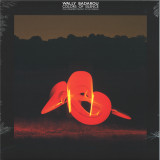
Magna Pia, a.k.a seasoned producer, DJ, and composer Hüseyin Evirgen, announces his second full-length album, ‘QUT’, arriving on Inland’s Counterchange label in March on double vinyl.
After 2 steamrolling EPs of club tracks on the label - now entering its tenth year of action - Magna Pia presents his most complete and advanced body of work to date, weaving a dense narrative of drone, figurative synthesis, bass-heavy electronica, and abstract techno.
Over eight tracks each referencing his rich cultural and musical background, we are treated to a unique overview of a producer at the crest of his art. The word ‘Qut’ is an ancient positive affirmation, in one short word encompassing all that is scared, pure and good. The Old Turkic term meaning not only ‘good fortune’ and ‘joy’, but in shamanic circles, the ‘wonder of the heavens’, permeates the roots of Evirgen’s multi-heritage history.
That Evirgen expresses his interpretation of this central theme through the marriage of bewitching melodies with atonal, experimental and rumbling electronics is a conscious comment on the distortions and mutations of our Modern Era. We now exist in the digital age of the Technosphere for better or worse, and must seek beauty where-ever possible.
The opening ‘Prologue’ invites the listener into a futuristic yet organic sound world, where lush stereo processing goes hand in hand with rumbling bass and subtly detuned drone languages. From the echoes of traditional Uyghur folk music, translated via synthesizers into a glistening slow-diving opus (‘Qizil’), to churning dub-techno adorned with a symphony of evolving sine-waves (‘Venus M’), Evirgen then deploys ‘X’ - a haunting experimental piece composed predominantly with his voice and electronic processing.
The interweaving synth lines of ‘Gudanna’ pierce the fog with a radiant and transcendent club-techno bounce before the ode to the ancient Bronze Age goddess ‘Astarte’ unfolds its snare-driven broken-beat formations. The title track ‘Qut’ embodies by far the heaviest club track of the album, in a deadly, stripped-back moment of future-techno hypnotism. Dancing flames of purple-tongued synthesis are held (just) in line by a wonderfully tough throb of drums.
With his ‘Epilogue’, Magna Pia allows the spectral ideas and concepts laid out across the LP to connect and travel full circle, confirming our suspicions that this could be one of the most coherent and exciting works to emerge in the brave new field of introspective, and sensitive techno-electronic language.
quête:allow sea
"Hungarian guitarist Gabor Szabo (1936-82) issued only three live recordings during his lifetime. Significantly, the first of these, The Sorcerer (1967), remains the most popular album in the guitarist’s all-too abbreviated discography. But there were also More Sorcery (1968) and Gabor Szabo Live with Charles Lloyd (1974), offering Szabo totally in his element and at his bewitching best.
Several more of Szabo’s concert recordings have surfaced in the intervening years, including this one, superbly captured for radio broadcast live in 1976 at the 600-seat Agora Ballroom in Cleveland, Ohio. It is a revelation. There is a sense here that concert patrons may have been hearing an altogether different Gabor Szabo than record buyers.
For one thing, Szabo is heard fronting what is likely his own group, rather than an army of studio musicians. In 1976, Szabo was leading a tremendous quartet with George Cables (or Joanne Grauer) on piano, Tony Dumas on bass and Sherman Ferguson on drums. Szabo had not had a band with this much jazz clout since his famed quartet with Jimmy Stewart in 1967-68 – and it is a union worth savoring: Szabo’s records during this period were light, at best, on jazz.
It’s unclear if any of these musicians are on the Agora date, but as Dumas’s “It Happens” opens the program, it’s a good bet, at least, that the bassist is on board here. But as Szabo’s ’76 quartet is not known to have recorded a studio record, Live in Cleveland is the closest thing to what a mid-seventies Szabo jazz album would sound like.
Gone, are the strings, vocals and concessions to commercial consideration so prevalent on so many of Szabo’s studio records at the time. What is present, though, is fine craftsmanship, tremendous interplay, and the exciting improvisation that good jazz always yields.
This particular concert was part of Sansui’s “New World of Jazz,” a series of 13 hour-long jazz concerts recorded at Cleveland’s iconic Agora Ballroom and broadcast over 40 FM radio stations. The series was sponsored by Sansui Electronics, a Japanese manufacturer of audio and video equipment, which previously sponsored a similar series of rock concerts recorded at the Agora as well.
Sansui was promoting its matrix QS 4-channel sound system – offering, what was considered at the time, superior diagonal separation and stereo compatibility. The firm, partnering with Agora Ballroom and Agency Recording Studio owner Hank LoConti (1929-2014), was looking to take advantage of what they rightly felt was the then-current jazz renaissance.
Each show’s 16-track master tape was mixed through the Sansui QS 4-channel encoder,” according to an August 1976 Billboard article detailing the arrangement, “for distribution to the 40 FM stations throughout the United States that bought the series” – allowing for three commercial spots for local dealers to advertise."
The recording is available for the first time on CD and VINYL. Mastering by grammy-nominated Jessica Thompson.
All of us carry a piece of where we’re from with us, but these parcels of fallow land often in a uniquely mysterious way become the prey that nourishes our aspirations. Agnès Gayraud a refined thinker by day that transforms into la Féline at night left Tarbes many years ago in search of greener pastures. After making a name for herself with Adieu l’Enfance (2014), Triomphe (2017), and Vie Future (2019), the author and musician has evolved once again. Her latest release Tarbes reinvents the circle of life and challenges our preconceived notions. She welcomes us to her hometown with sweet and clear melodies over the backdrop of an electronic hum, reminiscent of Mark Twain classic Tom Sawyer. Tarbes is no more than a listen away. Physically prevented from returning to her hometown by the viral threat we all know all too well, Agnès found her way back with a small Electone home organ. The constraints of off-peak hours that called for some DIY savvy, slowly but surely, roused her spirit. With a drum machine, a bass and a guitar, she succeeded in making the young girl inside her smile again. With 13 songs and just as many adventures Tarbes is a concept album that tells the story of a young woman’s formative years, as spent in her hometown. The returning hymn doesn’t only imprint nostalgia, it paints the full emotional portrait of a town. Because for Agnès, Tarbes is not just her theater, but her whole world, showing how fiercely protective she is of her hometown in the song Solazur. Under a magnifying glass of emotion, and with the sentimental testimony that is La Panthère des Pyrénées, the artiste shows us the skeletons in our own closets. Tarbes, more than a brief stopover in a rail journey to the coast, broaches issues that touch on abandonment, desertification, aging and redevelopment that many French towns and cities face today. Alexandre Guirkinger’s photographs serve as album art that illustrates this strangely unique singularity. While fine-tuning this collection of stories, in an oh-so-intimate album where solitude rips away the mask of confidence, Agnès found solace in uniting with other spirits. For 3 songs Tarbes, Jeanne d’Albret and Fum, inspired by an Occitan poem of Louisa Paulin (1888-1944), she invited the young voices of Conservatoire Henri Duparc a building she knows intimately, despite never feeling allowed to enter as a child to breathe the energy of their adolescence into this record. She also collaborated with Lyon’s own François Virot to imbue his delicate rhythms into her work, as well as Belgian guitarist Mocke Depret. Lastly, La Féline entrusted the last production stages to her eternal partner in music, Xavier Thiry, with Stéphane “Alf” Briat on the mixing board. The final piece has a complex tranquility, surrounded by non-verbality, with Jeanne d’Albret, Louisa Paulin and the Pyrénées safeguarding Agnes’ secrets. With the calm reassurance of her metamorphoses, La Féline delivers a slice of silence to her town, serving as both her cradle and theater. Tarbes’ Théâtre des Nouveautés is where Agnès Gayraud, La Féline, has decided to present Tarbes to its residents on October 14, 2022. While “nouveautés” evokes newness, this theater is reminiscent of a future which is already outdated, where modernity is only vague and fictional, carrying reminders of French haute-kitsch accordionist Yvette Horner, whose parents were the caretakers of what was then called the Cani Eldorado a bastion of virtue through the 30s, with its lineup of Catholic films. However, by the 60s, it would have become a temple of pornographic cinema. Tarbes, “Les Nouveautés”, end card. In the mid 90s, then 16 years old, Agnès discovered the volatile dust and the ghosts of the past that were hidden in this apostate theater. This phantom bequeathed song the teenager with the gift of her undeniable talent at her first appearance on stage a high school performance of a guitar-laden ballad sung in Spanish, a language her Andalusian mother has infused her with. On October 14, 2022, Agnès returns to the stage, bass in hand and joined by François Virot (drums), Mocke Depret (guitar), Léa Moreau (keyboard) and the Conservatoire de Tarbes singers to perform the album in its entirety
Felte Records presents `Glimpse Of Heaven' - a stunning new album by the Hawaii-born, LA-based musician, singer, producer and professional mastering engineer Jess Labrador, AKA Chasms. Labrador's deeply personal work as Chasms has always felt like an unveiling. Following 2019's `The Mirage,' which was a dark, dubby meditation on grief and loss, this new album is both familiar and different. The third full-length under the Chasms name, `Glimpse of Heaven' trades in washes of reverb for starker moments of closeness and intimacy. An exploration of the personal inventory and reckoning necessary to move forward in life, the LP considers not only how we relate to the world, but more importantly how we relate to ourselves. While always distinct, you could previously detect post-punk, shoegaze, and dub sensibilities in the music. Dreamy drift tethered by skittered beats, airy vocals, and melancholic melodies are here like previous efforts too. However, at the same time, Labrador steps into new territory with an expanse of vaporous synths and samples, adding to the project's ethereal electronic pop and dubwise pulse. Lush guitars glisten throughout the album, but this time only in sparse, disciplined embellishments. `Glimpse of Heaven' is a fully realised version of Chasms beyond its influences; to say that this is a seamless evocation of such disparate sounds as Massive Attack, Basic Chanel, Sade, Seefeel and Dif Juz is to say it is wholly unique. While she continues to unfurl her thoughts, there is a shift from opening up to the listener toward allowing the listener to witness her opening to herself. Where the last Chasms record was about various kinds of collapse, `Glimpse of Heaven' is about trying to develop as a whole person. It seems to ultimately be asking whether what we want and what we need align in ways that will get us where we want to be. Can we let go of the comfort of bad habits and steer ourselves toward a less easily obtained but maybe more enduring happiness? `Glimpse of Heaven' is a Chasms record, but really it's a Jess Labrador record. This is the first release operating on her own, and it feels like that's the only way this could have been made. It finds itself in the rare company of those few records that exist within themselves; it's a complete environment. You don't need to know anything to tune in and enjoy the world that she's created. It's a record that feels indebted to itself. It offers premonitions but not directions. It gives us honesty, but doesn't claim to know exactly where that will lead.
(C40 Cassette) Georgian artist Rezo Glonti's debut on Muscut is the label's first take on far Eastern Europe. "Subtropics" was made during sea voyages between subtropical ports.Delicate sound design and ambient experimentations manifest themselves as an audio excursion of the Black Sea region. Currently, Tbilisi-based Glonti has several albums and EPs under the name and the moniker "Aux Field".
Eyelids' new album, A Colossal Waste of Light, does an excellent job of
framing the quintet as one of today's most compelling purveyors of
lopsided guitar pop workouts and earworm-laden vocal melodies
It also proves that great guitar pop can still evoke favorites from a glorious past -
the penetrating moodiness of XTC's Black Sea, or R.E.M.'s Fables of the
Reconstruction, comes to mind - while refusing to waste time on idle nostalgia.
On their 4th full-length album (but 17th vinyl offering if you include previous EPs)
the Portland, OR band also rediscover the beauty of firsts. A Colossal Waste of
Light marks the first time the band wrote songs remotely (it ended up being fun &
weird to send out a very simple version of a song and see who came back first
with another part for it,John Moen looks back), their first reunion at the
Destination: Universe studio post-isolation, and their first batch of melodious new
tunes since The Accidental Falls, the band's 2020 project with poet, lyricist and
Tim Buckley collaborator Larry Beckett (an extra- ordinary pairing that allowed
Eyelids' two frontmen/ tunesmiths, Chris Slusarenko and John Moen, to find a
new, multilayered appreciation for the art of songcraft)
- A1: Breezeplate (2022 Remaster) 03 44
- A2: Squarewave Colorwheel (2022 Remaster) 04 33
- A3: Toypieceplate (2022 Remaster) 03 33
- A4: Dodecatheon (2022 Remaster) 04 21
- A5: Sunsculpture One (2022 Remaster) 03 10
- B1: Sienna (2022 Remaster) 02 42
- B2: Kekker (2022 Remaster) 04 45
- B3: Gauss (2022 Remaster) 02 30
- B4: Billionwatt (2022 Remaster) 03 44
- B5: Continentsunderclouds (2022 Remaster) 03 08
- B6: Sunsculpture Two (2022 Remaster) 04 30
»Holo« by the US-American three-piece Kiln, first released in 1998, is one of those rare records that managed to carve out a niche of its own while also building bridges to variety of genres like Chicago-style post-rock, the ambient mysticism of projects like Rapoon or the music made at the intersection of shoegaze, and electronic music in the late 1990s. Lush textures, subtle rhythms, jazzy inflections and electronic experimentation seamlessly blend into each other over the course of the eleven tracks. This reissue through the German label Keplar makes the fully revised version, self-released by the group in 2007 under the name »Holo re/lux,« available on vinyl for the very first time. »Twenty-five years later this newly mastered vinyl edition is evidence that the sound of ›Holo‹ continues to attract like-minded listeners,« says member Clark Rehberg III. »Which on many levels means that our mission was successful.«
Rehberg had embarked on this mission together with Kevin Hayes and Kirk Marrison in 1993. They had first worked together under the name Fibreforms as a live trio that used treated guitars, kit drums, and tapes of found sound to explore the balance between band composition and recording experiments, while Marrison made heavy use of the Akai S612 sampler as a fabricating strategy with the project Waterwheel. »Kiln seemed to encapsulate the evolution and melding of those previous approaches to one that insisted on the continual opening up of the compositional process, allowing more of the mystery that can be discovered through studio experiments—and accidents—to become important elements of creating our music,« says Rehberg of the trio that is still going strong after three decades. »The word Kiln implies heat and transformation, an attitude that we apply to every sound we use—we begin with notes and performance and then mosaic with shape and colour.«
»Holo« followed up on the trio’s debut self-titled EP that had been recorded in the summer of 1996. »That same year, during a lull in our collabs, Kirk began building pieces on a low-memory Mac using an early 8-channel DAW,« explains Rehberg. Enchanted by the unprecedented fidelity and energy of those recordings, the three reconvened to build upon them and make more music in that manner. »I’d say our intention was no different than any other time: create something immersive and compelling: dense melodic blasts of uniquely constructed but ultimately accessible audio moments.« The group worked individually and in pairs for about 18 months while being spread across the United States. »We poured everything into it that we had at the time, working dead-end jobs by day and on audio in every other open moment. I remember the struggle of that process, but also the pure joy as we pulled down countless moments of magic while the pieces took shape.«
Rehberg says that he still hears »a time-stamp of those efforts and the belief that we were creating a special audio experience« when listening back to »Holo,« a record the band itself chose to revise almost a decade after its initial release. »Ultimately we just felt those pieces needed more impact and we had the tools and ability to make that happen,« he explains. 16 years after that and a quarter of a century after it first introduced Kiln as a force to be reckoned with, the remastered version feels indeed timeless. It is both a snapshot of the first extensive album project by a group whose bond is still »diamond strong,« as Rehberg puts it, and a record that continues to sound fresh, if not visionary also today.
All tracks composed and recorded by Kevin Hayes, Kirk Marrison, Clark Rehberg III.
Originally released on Thalassa in 1998.
Remaster by Stephan Mathieu. Vinyl cut by LUPO.
Cover art by Kirk Marrison & Clark Rehberg III.
Text by Kristoffer Cornils.
LEMON YELLOW VINYL
As mui zyu, Hong Kong British artist Eva Liu navigates the tricky territory of ever-changing identity, merging fantasy and folklore to create a stage for self-acceptance and deliverance. On her debut full-length Rotten Bun for an Eggless Century, Liu utilizes chopped-up sound- scapes, delicate industrial ambience and sweet pop melodies to introduce a character--a guide--who can be stretched across worlds to offer the catharsis of patience, perseverance and understanding. This isn't a character formed from a desire to escape or flee the real world, but rather a way to submerge even deeper into ourselves. Rotten Bun for an Eggless Century is a reflection of everyone, and everything, that made us who we are. On her 2021 a wonderful thing vomits, Liu was praised for her seamless integration of darkened, often ominous instrumentation and pillowy-soft vocals. As the front person of UK indie-rock trio Dama Scout, Liu effortlessly navigates a disorientating genre-bending sonic landscape with a playful, gentle dexterity. Now, with the help of Dama Scout bandmate Luciano Rossi as co-producer, Liu's first solo full-length builds upon these previous worlds to form a blossoming, more upbeat patchwork of lo-fi percussion, poignant lyricism and oddly alluring arrangements. The writing process of Rotten Bun for an Eggless Century prompted Liu to explore more of her Hong Kong heritage, allowing a space for acceptance and celebration. "I am Chinese and I am owning it," she explains. "Before, I would resent it. I tried doing things that would make me like less Chinese somehow." As the album began to take shape, Liu read the traditional Chinese folklore writings of Pu Songling and joined local East and Southeast Asian groups. It opened a portal into a new self, where Liu could blend her love of video games and film scores with traditional Chinese instruments.
"I begin our sixth album by exploring melodies that take me to the boundaries of my voice. I write myself into my highest highs and lowest lows. There is a precariousness in the outer limits of my range that demands vulnerability. As our demos take shape, I realize this will be our first album without any belting, the first time I can’t force my way through the notes," recalls Tennis' Alania Moore. "In the studio, Patrick compresses the shit out of my mic and I sing with the gentleness of breathing. In that softness, lyrics take shape. We want to write a big album—something suited for radio, but our songs don’t follow conventional pop structures. Instead of choruses with universal themes, I write with a specificity that is new to me, narrowing in on the smallest details of our lives. The more we try to broaden our scope, the more we turn inward." "We name the album Pollen. It is about small things with big consequences: a particle, a moment, a choice. It is me in a fragile state; sometimes inhabited freely, sometimes reacted against. It is striving to remain in a moment without slipping into dread. It is about the way I can be undone by a very small thing." Tennis is Alaina Moore and Patrick Riley. Pollen is their sixth album. The two met in the philosophy department at the University of Colorado in 2008 after dropping out of their respective music programs. In the years after graduating, they got involved in Denver’s DIY music scene. Through house shows, they were connected with Underwater Peoples and Firetalk. The band went blog-viral nearly overnight, landing them a record deal with Fat Possum and then Communion Records, but with shifting labels and new interests, Tennis chose an alternate path for their band and career. In 2016, Moore and Riley formed the label Mutually Detrimental and began self-releasing. Their newfound freedom allowed them to return to their sailboat to write their next full-length, this time in the Sea of Cortez. Yours Conditionally, released in 2017, became their most commercially successful album–charting at #4 on Billboard’s Independent list and in the top 100 highest selling vinyl releases that year. They played Coachella and opened for artists like The National, Father John Misty and The Shins–proving their DIY roots as a cornerstone to their sound and narrative. Their follow up Swimmer (2020), was recorded in their home studio with Moore and Riley producing and engineering. The pair brought their long-time touring member Steve Voss in for the second time to drum on record. The singles, Need Your Love and Runner, were Tennis’ most successful releases to date.
- A1: Alpha (Feat Eddie Kane & Rim)
- A2: Pearl Handle (Feat Geechi Suede)
- A3: Chicks, Man (Feat Skipp Whitman)
- A4: 45 (Feat King Spills)
- A5: House Meds (Feat Rim)
- A6: Medley A (Instrumental)
- B1: Get Mines (Feat Casual & Pep Love)
- B2: So Brook (Feat Eddie Kane)
- B3: Lux (Feat Kanetic Source)
- B4: Look (Feat Masta Ace & Planet Asia)
- B5: Omega (Feat Ag Of Ditc & Rim)
- B6: Medley B (Instrumental)
Honoring the craft and the ones that came before him through undeniably infectious beats that brace the weight of his choice samples and original layers. Getting his chops up through his younger days, Shane spent his time developing instrumental obstacle courses for local emcees to dance around including Gift Of Gab (Blackalicious), Spills (NY) Kinetic Source (Ozomatli) and Cashus King (LA.) By the age of 21 Shane threw himself into the ring of the Stones Throw beat making contest. To only the surprise of himself, Shane walked away twice as a weekly winner of the battles. After a small hiatus due to the birth of his daughter Clementine, Shane jumped back on the pads and began crafting the instrumentals for what would become Apostolos. With the instrumentals in flux Shane reached out via Instagram to an upcoming emcee out of the Duck Down Camp, a prodigy of the late, great Sean Price, Rim. After chatting back and forth for a small time, making sure Rim knew Shane was in this project for the right reasons, Rim jumped on board and even helped land other up and coming NY emcees like Eddie Kaine & Spills. From there everything snowballed. One feature led to another and soon enough the album was taking shape with features from not only Rim and Eddie Kaine, but hip-hop heroes such as Masta Ace, Planet Asia, A.G. of D.I.T.C. and Geechi Suede. With a few more instrumentals and spaces to fill Shane reached out to long-time bay area engineer/producer Deegan Mack Adams to help with the mixing and mastering and overall release of the project. Apostolos gets its namesake and back cover imagery from Shane Sounds' great great Grandfather, Apostolos Christakis who immigrated to the United States from Greece at the turn of the 20th century. The documents you see on the back cover are Apostolos’s army registration documents only a week after coming to the United States. We pay our respects to the ones who came before us and allowed us to be here to create this project. Salute!
To celebrate the 10th anniversary of Cloud Nothings' seminal album, Attack On Memory, the band has announced a very special limited edition vinyl pressing. 3000 copies worldwide.
It’s housed in a foil jacket with all new colorized artwork, is pressed on Sky Blue vinyl, and includes two bonus flexi 7"s with two never-before-released tracks, "You Will Turn" and "Jambalaya" from the original sessions at Steve Albini's Electrical Audio.
In 2009, Cleveland’s Dylan Baldi began writing and recording lo-fi power-pop songs in his parents’ basement, dubbing the project Cloud Nothings. His music quickly started making the Internet rounds, and fans and critics alike took note of his pithy songcraft, infectiously catchy melodies, and youthful enthusiasm. Baldi soon released a string of 7”s, a split cassette, and an EP before putting out Turning On—a compilation spanning about a year’s worth of work—on Carpark in 2010. January 2011 saw the release of Cloud Nothings’ self- titled debut LP, which, put next to Turning On, found Baldi cleaning up his lo-fi aesthetic, pairing his tales of affinitive confusion with a more pristine aural clarity. In the interval since the release of Cloud Nothings, Baldi has toured widely and put a great deal of focus on his live show, a detail that heavily shapes the music of his follow-up album, Attack on Memory.
After playing the same sets nightly for months on end, Baldi saw the rigidity of his early work, and he wanted to create arrangements that would allow for more improvisation and variability when played on the road. To accomplish this desired malleability, the entire band decamped to Chicago—where the album was recorded with Steve Albini—and all lent a hand in the songwriting process. The product of these sessions is a record boasting features that, even at a glance, mark a sea change in the band’s sound: higher fidelity, a track clocking in at almost nine minutes, an instrumental, and an overall more plaintive air. The songs move along fluidly, and Baldi sounds assured as he brings his vocals up in the mix, allowing himself to hold out long notes and put some grain into his voice. Minor key melodies abound, drums emphatically contribute much more than mere timekeeping, and the guitar work is much more adventurous than that of previous releases.
For all of early Cloud Nothings’ fun and fervor, Baldi admits that it never sounded like most of the music he listens to. With Attack on Memory, he wanted to remedy this anomaly, and in setting out to do so, Baldi and co. created an album that showed vast growth for a very young band.
One of These Nights occupies an important, unique place in the Eagles' discography given it represents the final album the group made before releasing the bajillion-selling Their Greatest Hits (1971-1975) compilation. The timing is telling. A coming-out party for Glenn Frey and Don Henley's songwriting skills, the studio record – the band's fourth, and its first to hit #1 on the charts – signifies the group's ascent to superstar status. Home to three massive singles (the title track, "Lyin' Eyes," and "Take It to the Limit") and nominated for four Grammy Awards, the quadruple-platinum 1975 effort solidified the Eagles' Southern California-reared sound and made the band a household name.
Mastered from the original analog tapes, pressed on MoFi SuperVinyl, and limited to 10,000 copies, Mobile Fidelity's UltraDisc One-Step 180g 45RPM 2LP vinyl box set takes One of These Nights to the limit. And then some. Playing with reference sonics and a practically indiscernible noise floor thanks to MoFi SuperVinyl's special formula, it provides a rich, dynamic, transparent, and three-dimensional view into a release that moved country-rock ahead by leaps and bounds – and paved the way for the Eagles' ascendancy to global superstardom. The opportunity to zero in on the particulars of the Eagles' golden harmonies, distinct vocal timbres, and cohesive interplay has never been better.
Visually, the premium packaging and presentation of the UD1S One of These Nights pressing befit its esteemed status. Housed in a deluxe box, it features beautiful foil-stamped jackets and faithful-to-the-original graphics that illuminate the splendour of the recording. From every angle, this UD1S reissue exists as a curatorial artefact meant to be preserved, touched, and examined. It is made for discerning listeners that prize sound quality and production, and who desire to fully immerse themselves in the art – and everything involved with the album, from the renowned cover art to the meticulous finishes. As much as any Eagles LP, the connection between the imagery and the music and the band on One of These Nights runs deep. No wonder it led to a Grammy Nomination for Best Album Package.
Devised by West Texas artist Boyd Elder, the striking skull-and-feathers themed piece gracing the front of One of These Nights represents where the Eagles have been and where they were headed. Album art director Gary Burden explained: "The cow skull is pure cowboy, folk, the decorations are American Indian-inspired, and the future is represented by the more polished reflective glass beaded surfaces covering the skull." Moreover, Elder had met the group years earlier when Henley and company performed at one of his gallery openings in California. MoFi's UD1S box set allows Elder's vision (and Burden's debossed treatment of the image) to pop and appear as if it was a stand-alone object.
Of course, what's inside the sleeves, and in the grooves, proves equally compelling. Though One of These Nights marks the final appearance of band co-founder Bernie Leadon on an Eagles LP and contains three of his tunes, the record's tremendous success owes to Frey and Henley's timeless contributions. Taking the next step in their maturation and evolution, the pair crafted several songs while living together as roommates in a rented house in which they converted a music room into a recording studio.
The duo's bond and chemistry pulse throughout the record – particularly in the tight arrangements, tasteful instrumental flourishes, and seamless blending of the folk, country, and rock elements. The musical combinations and partnership not only produced the Eagles' first million-selling single (the slow-dancing "Take It to the Limit," co-written with bassist-vocalist Randy Meisner) and the Frey-led cheating classic "Lyin' Eyes," but the famed title track, which nods to the era's nascent disco scene as well as Kenneth Gamble and Leon Huff's Philly soul platters.
Frey named "One of These Nights" as his favorite Eagles composition of all-time; Meisner's high harmonies alone send the track into a galaxy of its own. Speaking of the latter, Leadon's instrumental "Journey of the Sorcerer" ventures into another universe and was soon used by Douglas Adams as the theme to his "The Hitch-hiker's Guide to the Galaxy" radio series. Inspiration and creative experimentation also dragged the Eagles into the blues. Another Frey-Henley gem, the self-probing "After the Thrill Is Gone" serves as a response song to B.B. King's signature track and more evidence the band was turning the lens inward for lyrical narratives. Like everything on One of These Nights, the song confirms the Eagles were breathing rare musical air.
More About Mobile Fidelity UltraDisc One-Step and Why It Is Superior
Instead of utilizing the industry-standard three-step lacquer process, Mobile Fidelity Sound Lab's new UltraDisc One-Step (UD1S) uses only one step, bypassing two processes of generational loss. While three-step processing is designed for optimum yield and efficiency, UD1S is created for the ultimate in sound quality. Just as Mobile Fidelity pioneered the UHQR (Ultra High-Quality Record) with JVC in the 1980s, UD1S again represents another state-of-the-art advance in the record-manufacturing process. MFSL engineers begin with the original master recordings, painstakingly transfer them to DSD 256, and meticulously cut a set of lacquers. These lacquers are used to create a very fragile, pristine UD1S stamper called a "convert." Delicate "converts" are then formed into the actual record stampers, producing a final product that literally and figuratively brings you closer to the music. By skipping the additional steps of pulling another positive and an additional negative, as done in the three-step process used in standard pressings, UD1S produces a final LP with the lowest noise floor possible today. The removal of the additional two steps of generational loss in the plating process reveals tremendous amounts of extra musical detail and dynamics, which are otherwise lost due to the standard copying process. Every conceivable aspect of vinyl production is optimized to produce the most perfect record album available today.
MoFi SuperVinyl
Developed by NEOTECH and RTI, MoFi SuperVinyl is the most exacting-to-specification vinyl compound ever devised. Analogue lovers have never seen (or heard) anything like it. Extraordinarily expensive and extremely painstaking to produce, the special proprietary compound addresses two specific areas of improvement: noise floor reduction and enhanced groove definition. The vinyl composition features a new carbonless dye (hold the disc up to the light and see) and produces the world's quietest surfaces. This high-definition formula also allows for the creation of cleaner grooves that are indistinguishable from the original lacquer. MoFi SuperVinyl provides the closest approximation of what the label's engineers hear in the mastering lab.
There is an endless abundance of variations that the clarinet can use in changing the colour of a single note. As a privileged listener - and - experiencer, Ben Bertrand through his favourite instrument shared the musical blueprints with me, which resulted in this album. His music has become a vivid part of my almost daily thoughts - allowing what I hear to clash and sing with the patterns and rhythms already established in my mind. A voluntary trip, an absorbing experience in our Brussels vibrant cultural life. With his instrument and countless machines, Ben creates a web of sounds that are hard to pin down but easy to absorb as a whole. Ben Bertrand happened to me. His music, full of beauty, is good to listen to and pleasant to follow. A sense and perception of continued growth too illuminated and overwhelming to resist. While I sense when a new composition is coming, Ben was able in our daily conversations, to progressively untangle a musical mystery and layout the puzzle of a new creation. Listening to his music is like sitting at the sea, watching a slow motion of our crazy life sailing by. You, as a listener, with this record stepped in an early stage of his career, with hardly any involvement of other people, composition wise. Besides composing alone, there have been countless hours when Ben Bertrand worked and interacted with Christophe Albertijn for the recordings. There is also the essence of our regular exchanges and the visions we knit. These are in my opinion just the starting points of plural interactions and musical endeavours to be. It is a matter of his artistic trust and let go, while Ben creates his own language, package and macrocosm. The excellence of Ben Bertrand's music lays in its involving and easily accessible nature, regardless of your personal or musical past experience. Ben Bertrand is all before you for you to dig, and nobody is asking you to file him away under any category. - Tommy Denys
The trashed hotel room and communal living depicted on the cover of the J. Geils Band's sophomore album tell you all you need know about the music, spirit, and energy spilling from within The Morning After. Shot through with raw, lean rock n' roll sparked by juke-joint blues and loose rhythms, the 1971 set comes on like the most fun, party-still-raging hangover any group in the 70s enjoyed. And now it rolls with an abandon that takes you inside the sweaty, smoky roadhouses and wall-to-wall-packed clubs the group dominated in its heyday.
Mastered from the original master tapes, pressed at RTI, and limited to 3,000 numbered copies, Mobile Fidelity's 180g vinyl LP achieves a sonic acumen that brings you face-to-face with the sextet's white-hot instrumental prowess and magnetic personalities. It's always been difficult to single out just one member of the band given the cohesive bluster the ensemble achieves as a whole, but this collectible audiophile edition allows you to do just that if you so choose, by way of superb imaging and separation. As for the band's trademark dynamics? Here, they feel like they're on the verge of exploding.
So go ahead. Twist the volume knob to the right as much as you want. You'll lose none of the focus, detail, placement, or presence no matter how high the decibels climb. The Morning After spills forth with previously unheard tonalities, ranging from the distinctive swells of Seth Justman's slow-burn organ to the live-wire spark of Geils' own downed-power-line-jumpy guitar work to the mooring hi-hat/cymbal/snare combinations of arrangement-steadying drummer Steven Bladd. Friends, this is raw rhythm n' blues, this is how it should feel, and, man, this is how it should sound.
Not for nothing did the Massachusetts-based collective name the album The Morning After. The music within doesn't abide by rules, ignores speed limits, flips the bird at curfews, and digs deep down into America's blues roots to yield organic material at once fresh, exciting, traditional, and original. The back-porch punch provided by the combination of "Magic Dick" Salwitz's searing, melodic, snake-like harmonica and vocalist Peter Wolf's animated, barely controlled deliveries is alone enough to make anyone with a faint pulse to stomp their feet, climb atop a kitchen table, and kick their boot heels until the neighbors call the cops.
Just witness the deceptive smoothness of the snake-like "So Sharp" or Maxwell Street zest of the aptly titled Magic Dick showcase "Whammer Jammer," which will leave you gasping for breath before it even ends. J. Geils Band also knew its way around deep-cut soul. The ensemble's Top 40, howling, adrenaline-to-the-heart rendition of the Valentinos' "Looking for a Love" and swirling, romantic take on Don Covay's "The Usual Place" seamlessly balance drive and emotion. Coupled with rafter-shaking originals such as "Floyd's Hotel" and the riff-propelled "I Don't Need You No More," sent up with typical Wolf vocal flair, and the record parks the band's all-night festivities and go-for-broke attitudes right on your front lawn.
One last word of warning to the uninitiated: The Morning After is not the slick-pop J. Geils Band of "Centerfold." And that is a very good thing.
Eck Echo records is set to release a mixed bag of original songs and remixes by one of digital cumbia's founding fathers, Peru's Tribilin Sound. Plastic Toy Sounds turns "Virgenes del Sol" into a woozy cumbia-dub with bright, shimmering guitar lines. Loris, adds squiggly sawtooth synths to the already irresistible beat of "Sarita", and Chancha Via Circuito offers up an atmospheric take on "Condorcanqui" that sounds like DJ Shadow and Augustus Pablo soundtracking a Peruvian heist while Peruvian duo Dengue Dengue Dengue reinvent "El Carmen's" Afro-Peruvian festejo groove as ageless ambient techno. Eck Echo records is set to release a mixed bag of original songs and remixes by one of digital cumbia's founding fathers, Peru's Tribilin Sound. Jalea is the affectionate term used by seafood-craving Peruvians for one of the country's signature dishes. In this jalea the menu consists of four original tracks highlighting the artist's career on one side, and four selected remixes by iconic producers from Mexico, Argentina, and Peru. Tribi arrived on the scene as digital cumbia was busy spreading its wings from Buenos Aires, soon to take over Latin America (and later the world), with Lima the next city to catch the bug. Ernesto had been DJ'ing in clubs since the mid-90s, and experimenting with Peruvian cumbia since the mid-00s, but the birth of his alias Tribilin Sound allowed him to go wholesale into his beloved chicha, reinterpreting grooves by classic Peruvian groups like La Pintura Roja, Los Titanes and Chacalón y la Nueva Crema, as well as proving to be a dab hand at a mash-up. Soon, he found himself at the heart of a like-minded community, releasing a debut self-titled album with Peruvian label, Terror Negro, and following it up with Aquí Siempre Bailamos (2014) for pan-Latin collective Sello Regional. Coming from a club background, rhythm has always been central to Ernesto's approach, his adopting of Peruvian styles never deviating from the necessity to get bodies moving, and the remixers here seem to take delight in stretching out his rhythms. Mexico's Plastic Toy Sounds turns "Virgenes del Sol" into a woozy cumbia-dub with bright, shimmering guitar lines; another Mexican, Loris, adds squiggly sawtooth synths to the already irresistible beat of "Sarita", and Chancha Via Circuito offers up an atmospheric take on "Condorcanqui" that sounds like DJ Shadow and Augustus Pablo soundtracking a Peruvian heist while Peruvian thunder-duo Dengue Dengue Dengue reinvent "El Carmen's" Afro-Peruvian festejo groove as ageless ambient techno..
Emotional Response presents Elektronik Body Girl, a musical alter-ego of artist Shelbatra Jashari, with production by soFa elsewhere. Spontaneously born out of 2 souls in an imaginary industrial wasteland of earthly survivors, this Belgo-Albanian postpunk extravaganza is perfectly suited for our unreal times.
Infused with raw attitude and improvisational approach, Shelbatra is an artist, dancer, performer, and singer in search of challenges and expressive forms into new territory, with an individual way in dealing with the ""empowering feminine" and its representation - a vision central to her artistic creation.
Teaming up with Brussels based soFa DJ, they debut an EP of challenging story-telling comes backed with a wonderfully conjured beatdown remix by label associate, Tolouse Low Trax, to act as a seal of (dis)approval.
First known as a DJ and selector and then compilation curator of the "elsewhere" series of albums across multiple labels - including Emotional Response (ERS042) - soFa recent collaborations as Mameen 3 on Bongo Joe, CCCVVV on Strangelove Music and the highly praised album with Houschyar and Okay Temiz on Second Circle, has established him as a producer of repute in an incredibly short time space.
Taking a production backseat to underpin Jashari's performance, his percussive, atmospheric oeuvre allows her vocals to explore roots in both Kosova and Belgium, molding a focus on the art of "the other" or the outsider. Outside the "normality"", a different energy is heard. Exploring elements of the human body, the human condition and its representation in various "thinking" systems and political contexts, EBG is manifestation in sound and movement.
Social Joy Records presents Natural Lateral's new album "Tapestry of life", a superb excursion in fusion jazz with a wonderful blend of electronics and subtle elements of spiritual Jazz.
Undeniably on the rise after the success of their first album, "Cogito Ergo Jam", which received support from the British Jazz scene and was featured on Gilles Peterson's BB6 broadcast,the North London Based collective goes a step further this time by carefully crafting a new release of a tapestry of music stemming from rich jam sessions at the Lazy Robot Studio and representing the band's phenomenal musical canvas. Echoing jazz legends like Azymuth, Roy Ayers, Alice Coltrane and Miles Davis by paying tribute to those who paved the way but always searching for new musical territories, this six-track LP is moving, thought-provoking and engaging. It is a musical questing where each band member searches for meaning through sounds and rhythms - giving a new life to Jazz music and dropping the full spectrum of a vibrant tapestry of life into the listener's ears.
The band's work ethic is based on a sense of freedom in the studio filled with live jam sessions where it's all about "catching a moment" and letting the inspiration flow. "We just want to feel a sense of freedom and connection through playing. In the studio, it's the music which connects us all, and we just want to allow that process to unfold".
Alga Marghen presents the last chapter from the Feedback Works documentation series, a brand-new LP including "In Memoriam-Ostinato" and "Danse des Dakinis", two previous unreleased tracks by Eliane Radigue. Among the works of fixed duration from the feedback period, "In Memoriam-Ostinato" is the link between "Jouet Electronique" (ALGA 029LP) and "Opus 17" (ALGA 045LP), and allows you to understand the evolution of her approach. "In Memoriam-Ostinato" is a game of mirroring symbols which glide into a non-measured, bent and elastic, temporality. Eliane Radigue's working method and her aesthetic direction are evident in this work from 1969: her very own unique temporal space of sonic experiences. Even though it bears the same name as the third part of "Adnos III", "Danse des Dakinis" is a peculiar work in Eliane's oeuvre. Conceived in a short time, with all kind of tapes from the composer's past work, it fluently shows a kaleidoscopic vision of Radigue's sensibility for sound. In 1998 she put together a curious self-portrait in sound. There is a feedback ostinato conceived around 1969 and which refers to "In Memoriam-Ostinato" and "Opus 17". All through "Danse des Dakinis" you plunge into the sound of a creek recorded at Mills College campus that brings you back to the field-recordings from the beginning of the 1960s, made on the coasts of the Mediterranean Sea. Such elements construct "Elemental1" (ALGA 029LP) as well. There are also some discreet interventions on the ARP 2500 synthesizer. It is indeed a peculiar work, which doesn't have the same features of her other compositions, especially at that time of her compositional path. There is an explanation for the composer producing this kind of sound material in 1998, and not limited to the sound waves of the ARP synthesizer. Invited to a workshop at Mills College in 1998, Eliane Radigue could not load herself down with her bulky instrument on such a trip. So, she left with just a few tapes taken from her own collection, drawn from different periods, and composed "Danse des Dakinis" with those old elements. There is tension in this composition, a certain wildness, an unpredictability of elements, those which are recognized as fundamental elements, which give structure to the universe. "Dance des Dakinis" is an intimate and wild symphony, alive and unpredictable, which is to be the next-to-last gesture of the composer before completely stopping her work with electronics.
Bristolian power-improv duo Run Logan Run continue their link-up with Worm Discs and producer Riaan Vosloo on Nature Will Take Care Of You – a monumental slab of contemporary energy music that draws on the heavy soul of David Axelrod and the fiery commitment of Archie Shepp. Working with an expanded line-up that includes singer Annie Gardiner (daughter of the late guitarist Ricky Gardiner, who played and collaborated with Iggy Pop and David Bowie) plus a string quartet and a brass section, saxophonist Andrew Neil Hayes and drummer Matt Brown have once again steered Run Logan Run in a dramatic new direction. Churning, future-forwards and emotionally tuned in, Nature Will Take Care Of You reaches out towards propulsive rock and psychedelic soul, while keeping one foot in the radical jazz-not-jazz of Bristol’s ever fertile improv scene.
The core of Run Logan Run’s sound is the dynamic conjunction of Matt Brown’s agile and powerful drums with Andrew Hayes’ looping, pedal-treated sax motifs. No matter how the duo augment and enhance their music, the kernel of their art has always been the spiralling energies generated by this essential musical relationship. Explorations of repetition, dissolution and dervish-like disorientation remain a central part of their project, with Brown weaving a tight rhythmic armature for Hayes’ unshackled journeys into sound. But though they began within Bristol’s improvised music scene, their vision has been increasingly structured and expansive, and the arrival of producer and bassist Riaan Vosloo (Nostalgia 77) for 2021’s For a Brief Moment We Could Smell The Flowers allowed to them move outwards to explore pulsing, cinematic synth-scapes. Vosloo is behind the boards again on Nature Will Take Care of You – and the duo’s vision has broadened a step further.
- A1: Watch Your Tone
- A2: Ready (Feat Nov)
- A3: You Don't Know (Feat Kas, Jarv Dee & Jvde)
- A4: Maybe I Should Move To La
- A5: Heartache + U
- A6: Why Can't We Go Back
- B1: Come Closer (Feat Marcus Harmon)
- B2: Flirtation Avenue (Feat Foreign Tapes & Jvde)
- B3: Easy Come, Easy Go (Feat Jvde)
- B4: Flow (Feat Dave Giles Ii & Cor.ece)
- B5: Do Better (Feat Toribio)
- B6: Always With U
Bad Colours is back with his sophomore album, "Always With U," out on Bastard Jazz Recordings in November, 2022. The London-born, Maryland-raised, Brooklyn-based DJ, songwriter, producer, and multi-instrumentalist - aka Ibe Soliman - continues to build on the well-deserved acclaim from his 2021 debut LP, "PINK," as well as a slew of standalone singles and collaborations with the likes of Shabazz Palaces, Jarv Dee, and Stas THEE Boss.
"Always With U" sees Ibe further develop his talents as a songwriter and producer, while maintaining the signature balance of banging dance music and dense bars that he's quickly becoming known for. The album expands Ibe's role to a collaborator, band leader, and all-around star-of-the-show; it's certainly still a dance record, but there's also so much more. Live instrumentation accompanies every track, with the notable contributions of Nigerian bassist Akin-Alade Ogo heard across the album, as well as the NY-based saxophonist Carras Paton on the jazzy, upbeat house number, "Heartache + U."
The lead single, "Maybe I Should Move to LA," sees the proudly Brooklyn-based Bad Colours contemplate a move out West – an idea that came about following a trip to LA for the 20 Years of Bastard Jazz anniversary party (which he DJed) in November last year. Bright pads, a thumping four-on-the-floor beat, and a catchy vocal line make it the perfect accompaniment to a top-down joy-ride up PCH. The album's second single, "You Don't Know," features frequent collaborator and PNW darling Jarv Dee, as well as KAS and JVDE who have both been making waves in the Brooklyn scene (KAS for his work with Grammy- nominated producer Harmony Samuels featured on BET, and JVDE as the lead-singer of alternative band Blind Benny). "You Don't Know" turns up the heat with Jarv and KAS trading dense, rapid-fire verses over a high-tempo beat and detuned vocal; the kick cuts out for the bridge, replaced by syncopated keyboard stabs and JVDE's stacked vocals. "You Don't Know" is high-energy hip house at its finest: Super catchy and irresistibly dancey.
The two singles are emblematic of the rest of the album, which largely alternates between vocal and hip house, sometimes jazzy, other times touching on R&B or dancefloor influenced pop. Dave Giles II and Cor.Ece (who recently both contributed to Beyoncé's chart-topping "Renaissance" LP and Honey Dijon's "Work" single) feature on "Flow," while Toribio (of the acclaimed Brooklyn band Conclaves) provides vocals for "Do Better;" both tracks are on the mellower side, reminiscent of late-90s New York mid-tempo garage. Rising artist N.O.V. features on the second track, "Ready," rapping over a bass-heavy beat; MarcusHarmon makes a return after appearing on "PINK," with smooth vocals on the romantic "Come Closer." Aforementioned JVDE can be heard throughout the album, contributing to "You Don't Know," "Flirtation Avenue," and "Easy Come, Easy Go."
While Ibe's career has spanned nearly two decades - as both a DJ (alongside the likes of James Murphy, Mark Ronson, and Q-Tip) and producer (for Kendrick Lamar, Faith Evans, Keyshia Cole, and Rick Ross, among others) - the Bad Colours name only came into being in early 2020, with the debut LP, "PINK," being released in February, 2021 on the Brooklyn tastemaker label Bastard Jazz. By tapping into his deep network of artist friends, Ibe compiled a treasure-trove of vocal samples, snippets, sketches, and fresh instrumental loops into a beautiful debut record that touches on hip-hop, house, and left-field electronic, while remaining danceable.
A slew of singles throughout 2020 and 2021 included "Feelin' Like," featuring the Seattle rapper Jarv Dee, has become an underground hit, popping up everywhere from Best Buy ads, Hulu's "Woke," celebrity Peloton instructor Emma Lovewell's playlist, and even as a soundtrack to the Mayor of Madrid's TikTok video. Most recently, "Feelin' Like" had a prominent placement in the #1 Netflix film "Spiderhead," directed by Joseph Kosinski ("Tron: Legacy;" "Top Gun: Maverick") and starring Chris Hemsworth, Miles Teller, and Jurnee Smollett. The breakout success of "Feelin' Like" further led to a collaborative EP with Jarv Dee, titled "BLAKHOUSE," which saw additional features from fellow PNW natives Shabazz Palaces ("Clouds," featured in Hulu's "Shoresy") and Stas THEE Boss ("Black Skin"). This year, Bad Colours dropped the early Summer banger "Hit The Breaks," and served as the musical director for the influential MADE New York festival, a two-day fashion, music, and arts event presented by Public School NYC and Paypal, that saw performances by Nas, Heron Preston, and Bearcat among others.
"Always With U" is a testament to Bad Colours' versatility as a producer and artist, which has allowed him to bring together such a diverse group of friends and collaborators. Yes, the house and hip-hop roots remain, but "Always With U" shows an evolution of the Bad Colours sound into masterfully crafted dancefloor sounds. It's a truly stunning follow-up from an artist undoubtedly on the rise. The album is out on all platforms, via Bastard Jazz Recordings, November 11th, 2022.
Green Vinyl
Föllakzoid are nearly unparalleled in the hypnotic lysergic drenched neo-psychedelic experience. On their debut it is mostly a rather bulky one, determined by the downright dirty, distorted electric guitar, which is also usually accompanied by a spacey, howling and herbaceous howling one. In addition, there is fat bass and powerful drums. During the prolific post-napster musical era dominated by myspace, the Chilean musical field opened up so that many bands could broaden their creative spectrum by taking global and timeless references as an aesthetic holy grail. This experimentation had the internet and specialized forums as a search engine, which not only provided the world parameters in trends, but also allowed to find true hidden gems, bands that were adored by a few connoisseurs of the real quality left behind by the record labels. In this context, a group of university students who have known each other from school began to rehearse in the Caracol Vip underground (Santiago, Chile), in a room owned by a local heavy-metal legend, Juanzer. Equipped with tube amplifiers, Marshall and other custom made, the members of that time: Gonzalo Laguna on vocals, Juan Pablo Rodriguez on bass, Domingo García-Huidobro on guitar, Diego Lorca on drums and Francisco Zenteno on second guitar, they began to play endless jams without a strict sense of songs or directed compositional notion. The rule was to follow the noise in a journey through valleys and peaks that allowed the spontaneous appearance of textures, lyrics, phrases and some invented chords that did not resemble anything that had been heard at that time. The rehearsals were transformed into true live performances without an audience, which were only seen by a few curious, among alcohol, smoke and deafening noise, which could only end when the owner of the room (Juanzer) entered to turn off the equipment. Over time he himself stayed as an auditor, witnessing how the musicians stripped themselves in their rehearsals. Considered at that time as play or fun, the idea of forming a band with a name came with the real live performances to which they were invited, without yet having songs made, at the end of 2006. The myth of their first live performance alludes to a numerical superstition, on July 7, 2007, in a small bar in Providencia (Santiago), which also provided the band with an upward recognition for the psychedelic-punk music they were doing, with a voracious vocalist who destroyed everything on stage and a band that stood firm on the endless songs they built. The name that was invented for that occasion was the result of a nonsense about the German word feuerzeug brought to the group by their close friend Alfredo Thiermann (who would later make the cover of the first album and become keyboardist), which the members of that time took and Spanishized at will. This neologism represents the second founding myth of the band since the interest in bands like Can, Neu! and AMON DUUL II and the characteristic motorik rhythm would soon arrive, in the form of kosmische musik. By 2008 the band had already added several live performances and some songs appeared, among which were Directo al Sol and Loop (nod to the English band), which allowed a greater deployment of ambient-noise resources, almost close to the 'concrete' music. The deconstructed rock of Spacemen 3 was also present in the form of repeated sequences on the bass and drums, as the layers of shrill guitars formed the foam of the tide bursting in the darkness of space. With the ideas and general feeling of the sound that they already had, the band made the decision to record their first album with the sound engineer and Juan Pablo's brother, Ignacio 'Nes' Rodríguez, who later together with JP would form the BYM label to make the first CDs of the forthcoming debut of Föllakzoid and other bands that Nes was recording. Sheltered that winter in the studio that Nes had built in an old house in Recoleta, the band recorded the bulk of the songs on the album with a new jam that emerged in that room composed of 1 note and moments of rising intensity: Sky Input I and II appeared to complete a set of songs that came from rock but were slowly passing to a level of trance and cacophony typical of orchestrated and atonal music. With three takes per song but only one take of the jam, the album was finished with a few extra takes and overdubs, some made in the house of Nes himself, who contributed a guitar to Loop, although it does not appear in the credits, and additional takes of "Pelao" Zenteno with delay and reverse for almost all songs. The names of the songs came from the lyrics that Laguna had worked from the live versions to the studio finals, except for Loop, Sky Input and El Humo. The cover of the album, which as mentioned was made by Thiermann, represents well the spirit of those days, when creative magma looked for an outlet through the instruments without any restriction or explicit direction from any of the members of the group. The image of the tree towards the sky speaks of the roots that rise towards the immensity, the nature projected towards the stratosphere. Ideas that the neo-psychedelia of those years seemed to capture well, echoing in the Chilean bands that at that time were gathering around the BYM label. Both the creative fluency and the lack of a musical director ensured that Föllakzoid was an original band that did not impose themselves a way of doing things or sounding, collective music took shape in the most wonderful way, without characters, without a record name, without faces. Just an instant in space. 2022 GALAXY GREEN coloured vinyl
Anchor and Adjust is the debut album from, Australian synth-pop duo
Syzygy; Rebecca Maher and Gus Kenny both formerly of beloved
Melbourne synth-punk band Spotting
This new project explores a more unadulterated electronic aesthetic combined
with an unabashed pop sensibility.Gus was listening to a lot of 80s synth music
and minimal wave, while Bec was deep into mainstream 80s pop divas and new
wave. The resultant album sits at a crossroads of genre. The melodies of new
wave pop meet the synth tones of 80's coldwave, the vocal dynamics of postpunk and the DIY ethos and raw edges of punk. Layered synths twist and weave.
Featuring celestial, emotive vocals, the album is often bright and upbeat,
danceable, but also moody, thoughtful and clever. It is sparkling and edgy
electronic pop.
The album's lyrics explore the power dynamics in relationships, including the
relationship with yourself. It is about control and being controlled. Attempts to
unravel years of ingrained behaviour and decision making to try and see the world
another way. It yearns for clarity, asking questions and searching for definitions to
try to understand what is perception, what is manipulation and what is truth.
I was speaking to myself, through myself. Both aware of having these feelings
and disconnected from how they were making me feel. Making this record
allowed me to create order and meaning. It was both my wake up call and my pep
talk for changes I desperately needed in my life. Rebecca Maher. Pressed on
Transparent Purple Color vinyl.
GENRE : Synth-pop, Electronic, Darkwave
Vinyl LP[39,45 €]
A "cheval de frise" is a military defensive structure and the name Thomas
Bonvalet and Vincent Beysselance chose for their post rock duo, creating
anxious, agitated music with perpetually changing, almost baroque,
patterns
Urgent, emotional and paradoxically structured and thought out in the finest
detail, it drew much of its influences from the many forms of 90s American posthardcore, while being undeniably singular. The formation was instrumental and
the bass was abandoned for an amplified classical guitar. The band released their
first eponymous album in 2000 on Sonore, a label based in Bordeaux. It was well
received, allowing Cheval de Frise to tour all over Europe. Their second album,
'Fresques sur les parois secrètes du crâne', was recorded in 2002. The band split
in 2004 leaving their mini album 'La Lame du Mat' to be released posthumously.
Remastered by Carl Saff, 'Cheval de Frise' is reissued on New York label
Computer Students and is available for the first time ever in cassette and double
LP. The vinyl version is presented in a beautiful gatefold sleeve with an impressive
poster. The whole thing is packaged in a sealed foil pouch, a trademark of the
label.
"Intense, energetic, and audacious, this music is thrilling, unforgettable." - Pop
Matters
"An impressive debut that lingers in between pleasantry and pandemonium, o?
ering forty minutes of odd, deserving attraction." - Tiny Mix Tapes
"Highly in?uenced by many early jazz artists, this is an album that - in many ways -
de?es description." - Babysue
"This band is incredibly unique, and their music knows very few boundaries. What
these two people do with their instruments is rather amazing." - Ink 19
This record is a representation of everything that has led me to this point
- It's been a long, bizarre path, says Zenizen's Opal Hoyt of both her life
and her journey to make this record
Like Peter and the Wolf, the Russian symphony Hoyt used as a creative
framework, P.O.C. (Proof of Concept) is a series of vignettes "the collection of
which mirrors Hoyt's long journey, from her adoption in Alaska to her many moves
between DC, Jamaica, Vermont, and New York.Along this unconventional path,
Hoyt met the talented cast of musicians who would go on support her in the
recording of P.O.C: variegated bass by Jonathan Maron (Erykah Badu, D'Angelo);
drums by Vishal Nayak (Nick Hakim, Empress Of); moments of magic on horns by
Sly 5th Ave (Prince); guitars by Benamin (IGBO); intricate mixing by Nick Herrera
(Hiatus Kaiyote), Benamin, and Jon Bap; with mastering by Heba Kadry and Davy
Levitan. Then there's Hoyt herself, whose rich alto pierces through with poetic
lyricism, supported by her contributions of Rhodes, synths, and sample
arrangements (think: babbling brooks and birdsong). In other words, Hoyt isn't
just a songwriter in the classic sense. She's also a skilled producer with an ear for
excellent arrangements "the kind of musician who enjoys meandering and
allowing her artistic vision to percolate. Likewise, P.O.C is a record that blooms in
beauty over time "the kind of record that you can take anywhere in any season, as
any version of yourself.
Beth Orton returns after six years with her new album, ‘Weather Alive’.
“Through the writing of these songs and the making of this music, I found my way back to the world around me - a way to reach nature and the people I love and care about. This record is a sensory exploration that allowed for a connection to a consciousness that I was searching for. Through the resonance of sound and a beaten up old piano I bought in Camden Market while living in a city I had no intention of staying in, I found acceptance and a way of healing.” - Beth Orton
Album collaborators include Tom Skinner, Alabaster dePlume, Shahzad Ismaily and Tom Herbert.
Big headline UK tour in October 2022, including a headline show at Koko in Camden, London.
CD housed in digipak packaging. Clear vinyl in a single-sleeve jacket and printed inner. Black vinyl, housed in a single-sleeve jacket and printed inner.
“As the music rises against the ragged pulse of her vocals, the English artist, nearly 30 years into her career, constructs an entirely new landscape for her songwriting - a wide-open space that grows stranger and more beautiful the further inside she leads us.” - Pitchfork
“The musical richness only mirrors Orton’s astounding writing” -MOJO (★★★★)
“Viscerally corporeal music, full of gristle and breath and richly ambient” - Uncut (8/10)
“‘Weather Alive’ is an enormously exciting record” - The Guardian
“Soaring” – NME
“Best New Track” - Pitchfork
“Singular and captivating” - Stereogum
Beth Orton returns after six years with her new album, ‘Weather Alive’.
“Through the writing of these songs and the making of this music, I found my way back to the world around me - a way to reach nature and the people I love and care about. This record is a sensory exploration that allowed for a connection to a consciousness that I was searching for. Through the resonance of sound and a beaten up old piano I bought in Camden Market while living in a city I had no intention of staying in, I found acceptance and a way of healing.” - Beth Orton
Album collaborators include Tom Skinner, Alabaster dePlume, Shahzad Ismaily and Tom Herbert.
Big headline UK tour in October 2022, including a headline show at Koko in Camden, London.
CD housed in digipak packaging. Clear vinyl in a single-sleeve jacket and printed inner. Black vinyl, housed in a single-sleeve jacket and printed inner.
“As the music rises against the ragged pulse of her vocals, the English artist, nearly 30 years into her career, constructs an entirely new landscape for her songwriting - a wide-open space that grows stranger and more beautiful the further inside she leads us.” - Pitchfork
“The musical richness only mirrors Orton’s astounding writing” -MOJO (★★★★)
“Viscerally corporeal music, full of gristle and breath and richly ambient” - Uncut (8/10)
“‘Weather Alive’ is an enormously exciting record” - The Guardian
“Soaring” – NME
“Best New Track” - Pitchfork
“Singular and captivating” - Stereogum
Like the flower from which he takes his name, which is very rare and only grows once a year in one region of the world, the music of Rose Noir cultivates a form of dark and fascinating elegance. Traces of its genesis can be found in the sampling practice of the golden age of hip hop dear to the musician, but it also manages to retranscribe the total aesthetics of the culture of the 60s and 70s, when the stars aligned to give birth to a music bathed in cinematographic influences in the wake of Marc Moulin, Brian Bennet, Azymuth, Janko Nilovic or David Axelrod. Assembled with the help of instruments, Rose Noir’s music has nonetheless benefited from the hybrid background of its creator, an unrepentant digger with a wide-ranging and curious musical culture.
Rose Noir embodies a new phase in the development of a master craftsman, the sound of the French producer is halfway between beat making and majestic arrangements. Though the tracks of this new project Bloom EP wouldn’t be out of place in the soundtrack of a suspense film from the past, they are the reflection of a man in complete control of his art, guided by the same instinctive and passionate searching that has allowed him to evolve from his first starts, by following a trajectory that belongs to him alone. Rose Noir’s compositions are lush and varied, using as much space as they do sound for dramatic and dynamic effect.
The French musician and producer Rose Noir appears to float across different musical time periods, as if touched by grace. But it’s thanks to his iron will, combined with a highly personal and creative approach to music, that he has managed to define new territories and reinvent himself constantly.
Red vinyl LP. Lars Finberg, confirmed genius guy and poet laureate of sunken 21st century Rock, acts as manager in perpetuity of THE INTELLIGENCE, primary vehicle for his prolific creative swirl and a project that has taken on new shapes across myriad trials and shifts. The project began in his Seattle bedroom – a lad and his Tascam cassette 8 track – with the classic Boredom & Terror and has now landed in his Los Angeles studio apartment – an urchin and his Tascam digital 12 track – with Lil’ Peril, a new album that finds Finberg 1000% back at the controls. Over the course of 11 albums (!), The Intelligence has established a backbone that boogies through revolutions, allowing each jam-crammed dispatch to feel and sound admirably unique. The angular sharp shocks heard in earlier years have steadily evolved into the ballooning grooves heard on more recent releases (including Finberg’s recent solo work). Lil’ Peril is a dreamy gamble that captures this current bubbling penchant in The Intelligence’s inaugural homemade mode. With inspirational templates as far-flung as LES PAUL, THE SPECIALS, LEE PERRY and MARY FORD, Lil’ Peril pulls off the absurd shift “from ‘No-Wave SANTANA’ to ‘SCREAMERS recorded by JON BRION’”. Playing shoulder parrot to studio engineers has no doubt informed Finberg’s approach to home recording, specifically in how much further he can go without wincing budget-minded eyes staring him down. This is immediately sensed on the opener “Maudlin Agency,” which begins with canned minimal bleep and closes with a full recreation of the “Brass Monkey” hook. These surprise-attack conclusions are a running current throughout the Lil’ Peril’s program and demonstrates that the main lesson Finberg has learned in The Intelligence is to never reel it in. Centerpiece banger “My Work Here Is Dumb” ranks among the finest Intelligence moments existent and an apex in Finberg’s songcraft, boasting a bonkers arrangement and a thematic gnaw that is both brutal and playful. The collection closes with the epic “Soundguys,” a suite cut-up that fuses CAN and STEELY DAN into one of the most dastardly tunes available for consumption in the plague age. As Finberg himself states, “They may say this is ‘lo-fi’, but I say it’s ‘no-CGI’”. “The band disintegrated, so it devolved back to the core idea: if I do every aspect, it’s indestructible.” 20 years on and Finberg has finally let everyone know what The Intelligence actually means! All those wily experiments and warm flubs have come back full circle and the shit’s pure goddamn gold. Proof positive that there is always some sort of cute trouble, farcical tragedy and Lil’ Peril at play with The Intelligence. - Mitch Cardwell, 2022. Tracklisting: 01 Maudlin Agency 02 70's 03 Keyed Beamers 04 Purification 05 My Work Here Is Dumb 06 Lil Peril 07 Frog Prints In Preset City 08 Portfolio Woes 09 Soundguys
While she might be best known as an improviser (most notably in the Spontaneous Music Ensemble, the Feminist Improvising Group and more recently with the likes of Les Diaboliques), Maggie Nicols’ talents stretch into song, dance, poetry, performance and composition. When Cafe OTO was shut over lockdown we invited her to follow up the wonderful solo ‘Creative Contradiction’ with some time spent singing alone at the piano. ‘Are You Ready?’ comprises an LP of songs and a 2CD edition which includes a companion disk of freely improvised meditations entitled, ‘Whatever Arises.’ Songs - seemingly contradictory to the practices of free improvisation - have been a vital part in Nicols’ relationship to music. It was singing bebop with pianist Dennis Rose which nurtured and challenged Nicols, allowing her to develop her own skills and sound amongst a repertoire of standards sung in clubs and pubs. Singing alongside Julie Tippetts in Centipede showed her how heady experimentation could be woven into composition, and a more recent gig with pianist Steve Lodder played out ‘The Maggie Nicols Songbook.’ Are You Ready? recalls Nicols’ own compositions from memory, working out tunes and turning them over. New routes down old paths form in moments of improvisation and all wrong turns are played out with joyous discovery. What John Stevens dubbed Maggie's “ability to find the ‘rhythmelodic’” meets a willingness to be understood and to understand. Solo at the piano, Nicols is still firmly rooted in the collective however - “Sans Papiers” sets the words of poet Vicky Scrivener to tune; a story of migration and struggle which is as important to Nicols as the songs her mother wrote. Such an intimate recording of her own compositions came with a certain amount of reflection and anxiety - best confronted with time spent freely improvising. ‘Whatever Arises’ - a companion disk to the ‘Songs’ - is a meditation of sorts, a process of ‘following the energy’ which has its roots in John Stevens’ work. “Improvisation gives the confidence to compose,” Nicols told us in an interview about some of her archival tapes, and here the two are as important as each other. Beginning with breath and repetition, ‘Whatever Arises’ allows Nicols’ to find new voices, accompanied by the piano and over dubbings of her tap shoes on the concrete floor. Brilliantly she is able to share her moments of discovery with the listener, finding comfort in vulnerability. Whilst rooted in Stevens’ work, Nicols’ improvisational techniques also remind us of Pauline Oliveros’ Sonic Meditations. They are what has allowed Nicols to find her own sound, to ‘teach herself to fly.’ They have allowed Nicols to grow and share and to be able to keep close the songs that mean so much to her, now shared with us. Recorded at Cafe OTO on July 15th, 16th and 17th 2021 by Shaun Crook. Mixed by Shaun Crook. Mastered by Sean McCann. Artwork by Annalisa Colombara. Lettering by Rosella Garavaglia. Layout by Maja Larrson. ‘Slow Within The Urgency’ inspired by mindfulness teacher Jeff Warren. Original poem ‘Sans Papiers’ by Vicky Scrivener. Original poem ‘You Darkness’ by Rainer Maria Rilke. Music and lyrics to ‘Music Is The Healing Force of The Universe’ by Mary Maria Parks.
As three souls plunge down from the heavens, death and destruction can be felt hanging in the air like a foul stench. Red clouds swirl around a black sun that never sets and an erratic clock ticks off-tempo, moving faster and slower before rewinding and starting anew.
“Let me paint you a picture…” vocalist Mikey Arthur sings, welcoming listeners with a dramatic opening scene. It takes a skillful guide to navigate the darkest depths of hell. And, as The Gloom In The Corner depict in their second full-length album Trinity, death is merely the beginning of the series of chilling adventures
Purposefully aligning their song count with unlucky number thirteen – a reoccurring symbol in the ever-unfolding Gloom Cinematic Universe or GCU – it comes as little surprise to longtime fans that each of the Australian quartet’s enticing tracks intertwine to form an interlocking tale; this time centered around the appropriately labeled unholy trinity.
Comprised of previously deceased characters Rachel Barker, Ethan Hardy, and Clara Carne, the group’s bloody battle is woven throughout the album as the anti-heroes determinedly claw their way back to Earth from the Rabbit Hole dimension, slashing, shooting, and extinguishing anyone who dares to oppose their quest. Yet, for the Girl of Glass, Ronin, and Queen of Misanthropy, there is clearly more to the story than what can be contained within a single package.
Projecting a wide and complex web of lore, plot twists, and tongue and cheek humor, frontman Mikey Arthur, guitarist Matt Stevens, bassist Paul Musolino, and drummer Nic Haberle, have been producing highly detailed concept releases since their formation. And, consistently filling in more missing pieces of the puzzle with every body of work, the band equate each new record to a fresh season of The Umbrella Academy dropping on the streaming service of your choice. Because, just as a great TV series captivates viewers with its music and storytelling, the quartet’s work provides a complete experience designed to allow fans to check in with their favorite characters, all the while enjoying a cinematic new soundtrack.
For those just joining the GCU, as well as those looking for a quick refresh, 2016 debut album Fear Me introduced listeners to main protagonists Julian “Jay” Hardy, a Section 13 agent consumed by anger over his girlfriend Rachel’s death, and Jay’s gloom (later known as Sherlock Adaliah Bones), a demonic entity who at times takes over Jay’s body as a host vessel. 2017 EP Homecoming tells the tale of Jay’s brother Ethan, a war veteran suffering from PTSD, who upon discovering his brother’s struggle, kills himself as part of a Dante-style rescue mission to bring Rachel back to life. In 2019 EP Flesh and Bones, we’re introduced to Clara Carne, a past witness to one of Jay and Sherlock’s crimes, who instead of taking revenge, began a twisted love story with Sherlock, only to be murdered by his forced hand. And 2020’s Ultima Pluvia EP where we finally learn of Sherlock’s past as an ancient warlord under the tyrannical King Baphicho, and see Sherlock and Jay’s deaths ushered in by Section 13 opponent and New Order leader Elias DeGraver and his gloom Atticus Encey.
After 2016’s Fear Me, the band admit that their original intention was to jump straight into the events of Trinity before pivoting to create Homecoming, Flesh and Bones, and Ultima Pluvia. However, upon reflection, primary storywriter Mikey Arthur believes that pushing the timeline back actually provided greater opportunity for the group to properly flesh out the songs and plotlines for their sophomore studio record.
Indeed, while Trinity re-introduces the three central “heroes” of this new arc, it’s important to understand that while familiar, the characters are not carbon copies of who they were earlier in the story. And neither is the band who brought them to life.
Fully embracing the weird and whacky has never been a struggle for The Gloom In The Corner. Rather, it’s together with this attitude that the group come away with special moments such as the fascinating old and new dynamic between neighboring tracks “Red Clouds” – a song whose initial version predates the formation of The Gloom In The Corner as an official band – and “Gravity” in which a demo intended for future material was adjusted to fit the sonic drop.
Mirroring this evolution in the band’s musical approach, a sense of growth can also be seen projected in the characters and story that the quartet chronicle across the thirteen tracks.
Classifying their individual sound as an intricate form of “cinema or theater-core” due to the depth and breadth of their musical approach, features, samples, symphonic elements, and conceptual nature, The Gloom In The Corner continue to prove that they’re more than just a simple concept band.
In fact, similar to character theme music in movies and video games, the group seamlessly play off their diverse sonic story in a variety of ways. Continuing to breathe new life into older staples from their catalog, the quartet reworked their infamous “Oxymøron” breakdown from Fear Me into an impactful moment in Trinity’s “Nor Hell A Fury” and sprinkled audio easter eggs of this sort all throughout their new music for fans to discover.
Listeners are also brought further into the world of the GCU with the help of what The Gloom In The Corner call their “casting process.” Like picking actors for a musical, the band meticulously selected eleven different vocal features and several additional voice actors to bring the album and characters to life. Described as a 50/50 split between notable talents such as Ryo Kinoshita (Crystal Lake), Joe Badolato (Fit For An Autopsy), and Lauren Babic (Red Handed Denial), as well as talented friends and family like Elijah Witt (Cane Hill) and Mikey’s sister Amelia Duffield, each featured artist brought their own touch and realistic spark to the characters they portrayed.
For in the end, as much as Trinity and it’s cast live within the confines of their own supernatural worlds, themes such as falling out of love (Gatekeeper), battling depression (Obliteration Imminent), and standing behind women’s empowerment (Nor Hell A Fury), are ones that many can relate to or understand. And, while most individuals may avoid drowning their woes by way of transforming into full-on egotistical murderers like the Queen and King of Misanthropy and the gang, The Gloom In The Corner have illustrated that time and time again, life’s a little more fun when you can crack a smile. Taking a page from the trinity’s playbook: try to avoid the end of the world. But if you can’t…at least spend it with a killer soundtrack.
NNAMDÏ has never been able to stay in one place. The Chicago
multi-instrumentalist and songwriter set a blistering pace in 2020
with his critically acclaimed genre-fusing LP, ‘Brat’, a punk EP,
‘Black Plight’, and ‘Krazy Karl’, a full-length tribute to Looney
Tunes composer Carl Stalling. Add in his role as co-owner of label
Sooper Records, as well as recent tours with Wilco, SleaterKinney and black midi, and it’s an overwhelming schedule.
However, his latest album, ‘Please Have A Seat’, is the result of a
much needed pause. “I realized I never take time to just sit and
take in where I’m at,” says NNAMDÏ. “It’s just nice to not be on
‘Go, Go, Go!’ mode, and re-evaluate where I wanted to go
musically.” This period of reflection allowed him to take stock of his
life and his relationships. “I wanted to be present,” he says. “Each
song came from a moment of clarity.” ‘Please Have A Seat’ serves
as an invitation to listen. It’s a request to sit down, be present, and
take in a moment. With this quiet introspection, NNAMDÏ found
inspiration in silence and nuance.
While making the record, he decided to stretch the limits of his pop
songwriting: every track had to be hummable. Though he’s written
earworms throughout his career from playing in bands in
Chicago’s DIY community or releasing goofy raps as Nnamdi’s
Sooper Dooper Secret Side Project, here, his shapeshifting hooks
are undeniable. Each of the album’s fourteen songs, which
NNAMDÏ wrote, produced, and performed entirely himself, are
relentlessly re-playable, careening into unexpected and
disorienting places. With NNAMDÏ’s singular vision, ‘Please Have
A Seat’ is yet another leap from Chicago’s hardest working
musician. By taking a minute to sit down and catch his breath, he
re-emerged with the most ambitious, accessible, and nuanced
work of his career.
Coloured vinyl LP format pressed on Walnut Brown vinyl.
The Discomfort Of Evening is the incredible and original soundtrack by prolific Belgian composer Michiel de Malsche to 2020 International Booker Prize winner The Discomfort of Evening by Marieke Lucas Rijneveld. Visceral and virtuosic, Rijneveld's novel follows Jas, a girl growing up in a devout Christian family that runs a Dutch dairy farm, whose brother dies in an accident after she wishes he would die instead of her rabbit. Lost in grief, her family falls apart as she becomes consumed by increasingly dangerous fantasies.
Michiel de Malsche has captured the atmosphere and spirit of Rijneveld's book perfectly, moving through moments of confrontation and introspection, sinking into spirals of despair, stasis and subtle hope and change. Brooding ambient basslines, driven by droning murmurs, are offset with melismatic electro-acoustic pieces that embody the novel's haunting and dissonant world, whilst also incorporating manipulated field recordings such as animal sounds and a church service, allowing for a full manifestation of Jas’s world in a completely new way.
De Malsche achieves this by rallying an unusual combination of acoustic instruments (16 in total) played by top-of-their-field musicians, creating a truly unique sound world and tonal palette, including an Ondes Martenot, a 7-stringed Chinese instrument called a guqin, a marimba, a string 6-tet, a toy piano and a bass flute.
De Malsche always confronts all emotional levels of his source material head-on, making his soundtrack into much more than just a fever dream. It is a precise description of, and accompaniment to, a devastatingly impactful book.
Michiel De Malsche is a Belgian composer, multi-instrumentalist and sound designer. He studied classical composition at the conservatories of Rotterdam and Ghent. His music has been performed all over the world and he has composed and produced dozens of soundtracks for contemporary dance, theatre, movies and documentaries.
Besides his work as a contemporary classical composer, he is active as a studio musician and producer in the world of electronic music.
"They push everything right to the brink and then pull back at precisely the right moment" - Pitchfork
"'Growing Up Pains (Unni's Song) gives a tantalising glimpse of where their future could lie. Matching lucid pop elements to daring innovation, ALASKALASKA allow the song to become a portal to their own potential." - Clash
"It’s impossible to walk away without the repeated promise 'I won’t let you down' in 'Growing Up Pains' stuck in your head – and it’s a mantra we should all be following as we as a species continue to fight for our future." - Beats Per Minute
ALASKALASKA announce their superb new album, Still Life, arriving October 14th on Marathon Artists (Lava La Rue, Courtney Barnett, Pond).
'Still Life' finds writers and producers Lucinda Duarte-Holman and Fraser Rieley embrace a more free-form electronica, giving a taste of what's to come with this fantastic new record produced by Jas Shaw (of Simian Mobile Disco)–full of digital sounds, drum machine and synth melodies cunningly sat beside rich, organic, acoustic instrumentation, it's a looping tug of war between existential dread and everyday simple pleasures.
Listen to / watch the video for 'Still Life' (shot by Jacek Zmarz) here: https://youtu.be/TL7s6QJ3ANc
Four seasons of dawn chorus, panoramically framed by fruit trees and more analog synths than can comfortably fit in a cow shed-come-recording studio...the scene is set for the recording of ALASKALASKA’s second album Still Life. Ordinarily located in South East London, writers and producers Fraser Rieley and Lucinda Duarte-Holman were eager to get out of the city. Taking advantage of this rustic countryside scene, they were able to capture something uniquely their own.
Following their debut album in 2019, they resurface into a new era embracing all the things that first put the band on the map, attracting the likes of Tame Impala, Hot Chip, Porches and Nilüfer Yanya for tour support slots. For Rieley and Duarte-Holman, writing began in 2019, pre-lockdown-era, although the subsequent alone together/together alone time added a new spin on ALASKALASKA's process of experimentation and fine-tuning. The band now push their foundational ideas further and explore the freedom of playing with new sounds. Duarte-Holman explains, “...with everything going on at the time, the restrictions led us to try working in a new way. The limitations were different, but meant we were able to adventure into a more electronic soundscape that we're really looking forward to expressing live."
The ‘Still Life’ LP has been pressed on recycled black vinyl to reduce the carbon intensity of the finished product.
In January 2011 Sam Prekop, Archer Prewitt, John McEntire, and Eric Claridge reconvened at Chicago"s Soma Electronic Music Studios to record their latest release The Moonlight Butterfly. This thirty three minute mini-album finds the band deliverying much more long form and cinematic pieces. The new songs lean upon the band"s more experimental tendencies, taking time to stretch the forms and in someways the new material relates to the way the band re-interpretes some of their songs live. With the band making a shorter than usual record they were allowed to take more chances and ended up with a release that leans a bit more towards the instrumental. Rather than having the vocals be the sole focal point the shifts in emphasis to other instruments facilitated a more open approach. The song "Weekend" from Car Alarm was kind of an unwitting blueprint for some of the new material. Especially the new song "Inn Keeping" where a synthesizer pattern became the armature for the song, a constant to play with and against. "Inn Keeping" is also quite a breakthrough for the band, sounding unlike anything they have done before and breaking the 10 minute mark.
Empathy is the codeword when it comes to The AM’s second solo EP: The ‘Sexworker’ EP. A short story through music and art, allowing you a moment to walk a mile in another seasoned professional’s shoes… Imagine life through her eyes, her thoughts, her feelings, her actions and motivations as her work takes her from flirty fun to a much more severe and fierce role as a vigilante, fighting for justice and retribution for women who’ve been abused and wronged. As the EP progresses, the further we’re plunged into this dark nocturnal world of carnal chaos, deceit and danger.
Sat in a not-so distant neon tomorrow, downtown Detroit, this is the vivid concept and narrative conjured by Detroit native, violinist-turned-techno artist The AM (Ann-Marie Teasley) Sliding into our collections since her debut tracks last year as one half of HLX-1, 2022 has been all about The AM solo releases; in March we had ‘Black Majik’ on Tresor. Now on Deeptrax ‘Sexworker’ is another revelation from the agenda-setting artist who’s crafted a completely immersive narrative that ranges from the playful electro beats of ‘Intercosmic Lap Dance’ to the runaway juggernaut ‘Black Galaxy’ (a collaboration with Scan 7's Track Masta Lou). Each track adding layers of tension and intrigue, cutting through the late night sleaze and exploitation with raw machine soul, ‘Sexworker’ is steeped in detail… But loaded with enough space for your imagination.
Fronted by a stark futuristic city artwork, ‘Sexworker’ takes place in The AM’s stomping ground but could just as easily happen anywhere in the world… Amsterdam, London and right now, our speakers. This bumps in an exciting yet timeless way. It’s AM 24/7 right now.
.
NNAMDÏ has never been able to stay in one place. The Chicago
multi-instrumentalist and songwriter set a blistering pace in 2020
with his critically acclaimed genre-fusing LP, ‘Brat’, a punk EP,
‘Black Plight’, and ‘Krazy Karl’, a full-length tribute to Looney
Tunes composer Carl Stalling. Add in his role as co-owner of label
Sooper Records, as well as recent tours with Wilco, SleaterKinney and black midi, and it’s an overwhelming schedule.
However, his latest album, ‘Please Have A Seat’, is the result of a
much needed pause. “I realized I never take time to just sit and
take in where I’m at,” says NNAMDÏ. “It’s just nice to not be on
‘Go, Go, Go!’ mode, and re-evaluate where I wanted to go
musically.” This period of reflection allowed him to take stock of his
life and his relationships. “I wanted to be present,” he says. “Each
song came from a moment of clarity.” ‘Please Have A Seat’ serves
as an invitation to listen. It’s a request to sit down, be present, and
take in a moment. With this quiet introspection, NNAMDÏ found
inspiration in silence and nuance.
While making the record, he decided to stretch the limits of his pop
songwriting: every track had to be hummable. Though he’s written
earworms throughout his career from playing in bands in
Chicago’s DIY community or releasing goofy raps as Nnamdi’s
Sooper Dooper Secret Side Project, here, his shapeshifting hooks
are undeniable. Each of the album’s fourteen songs, which
NNAMDÏ wrote, produced, and performed entirely himself, are
relentlessly re-playable, careening into unexpected and
disorienting places. With NNAMDÏ’s singular vision, ‘Please Have
A Seat’ is yet another leap from Chicago’s hardest working
musician. By taking a minute to sit down and catch his breath, he
re-emerged with the most ambitious, accessible, and nuanced
work of his career.
Coloured vinyl LP format pressed on Walnut Brown vinyl.
NNAMDÏ has never been able to stay in one place. The Chicago
multi-instrumentalist and songwriter set a blistering pace in 2020
with his critically acclaimed genre-fusing LP, ‘Brat’, a punk EP,
‘Black Plight’, and ‘Krazy Karl’, a full-length tribute to Looney
Tunes composer Carl Stalling. Add in his role as co-owner of label
Sooper Records, as well as recent tours with Wilco, SleaterKinney and black midi, and it’s an overwhelming schedule.
However, his latest album, ‘Please Have A Seat’, is the result of a
much needed pause. “I realized I never take time to just sit and
take in where I’m at,” says NNAMDÏ. “It’s just nice to not be on
‘Go, Go, Go!’ mode, and re-evaluate where I wanted to go
musically.” This period of reflection allowed him to take stock of his
life and his relationships. “I wanted to be present,” he says. “Each
song came from a moment of clarity.” ‘Please Have A Seat’ serves
as an invitation to listen. It’s a request to sit down, be present, and
take in a moment. With this quiet introspection, NNAMDÏ found
inspiration in silence and nuance.
While making the record, he decided to stretch the limits of his pop
songwriting: every track had to be hummable. Though he’s written
earworms throughout his career from playing in bands in
Chicago’s DIY community or releasing goofy raps as Nnamdi’s
Sooper Dooper Secret Side Project, here, his shapeshifting hooks
are undeniable. Each of the album’s fourteen songs, which
NNAMDÏ wrote, produced, and performed entirely himself, are
relentlessly re-playable, careening into unexpected and
disorienting places. With NNAMDÏ’s singular vision, ‘Please Have
A Seat’ is yet another leap from Chicago’s hardest working
musician. By taking a minute to sit down and catch his breath, he
re-emerged with the most ambitious, accessible, and nuanced
work of his career.
Coloured vinyl LP format pressed on Walnut Brown vinyl.
LANGUISH is a band that has relied on speed to deliver their message in the most caustic and devastating way possible, but conversely they’ve taken their time to reach the point they’re now at; they stand on the precipice of releasing their third studio album, Feeding The Flames of Annihilation. World events forced a creative go-slow which granted them time to ‘hyperfocus’ on crafting a sonically pernicious 11-track ode to human beings accelerating their own demise. Despite the album being swathed in nihilism, the occasional glimmer of optimism pushes through in the form of class solidarity and hopeful resistance. But for the majority of the 25 minute runtime, malevolence and misanthropy reigns - articulated more clearly than ever before by vocalist, Sean Mears. Although grindcore continues to make up a good deal of the LANGUISH calling card, a considered leaning towards death metal allows room to enunciate their distaste with more clarity - both literally and metaphorically. The world-weariness felt by its authors is coloured with rage, disappointment and a cycle of hitting rock bottom over and over. Inspired by the socialist anthems of Woody Guthrie, LANGUISH takes swipes at landlords, megacorps, and billionaires - with few escaping their scathing sulfur.
- A1: Another Sketch
- A2: Be Cool (Feat Little Dragon)
- A3: Vera (Judah Speaks) (Judah Speaks)
- A4: Leave It (Feat Charlotte Day Wilson)
- A5: September
- A6: To The Floor (Feat Badbadnotgood)
- B1: Backwards (Feat Sampha)
- B2: What If? (Feat Skiifall)
- B3: Colours
- B4: About Us (Feat Elmiene)
- B5: Still (Feat Sampha & Ghetts)
- B6: Ends Now (Feat Serpentwithfeet)
One of the UK’s most consistently inventive production minds of recent times, Lil Silva has perhaps one of the most varied resumes in the world. Causing a seismic effect on the world of club music with smashes such as ‘Seasons’ and releases with the likes of Night Slugs, production credits for a diverse range of artists such as Adele, BANKS, Mark Ronson and serpentwithfeet, and a collaborative project with George FitzGerald as OTHERLiiNE even before factoring stellar solo releases under the Lil Silva moniker using his own vocal, he has continuously combined a broad range of influences to create a transformative, varied discography. After the release of ‘Backwards’ last month alongside Sampha, today Lil Silva announces his long awaited debut album, Yesterday Is Heavy.
Over 10 years in the making, ‘Yesterday Is Heavy’ is a cumulative product of an already remarkable career filled with highlights. An album about stepping out: outside of a comfort zone, and, for Lil Silva, outside of himself. It’s a debut album of heft and heart, but most of all hope – and trusting the process. Buoyed on by the encouragement of long-time collaborators like Jamie Woon and Sampha early in his career (they both implored him to commit his own voice to record), and bolstered by incomparable session experience working with Mark Ronson, Adele and more, the Lil Silva story that started aged 10 in Bedford is beginning full circle. Created primarily in the town he grew up in (and continues to live now), the pervading solace of home courses through the project, while providing the thrilling moments of sleight of hand that Silva has always been capable of.
As he so often does, Lil Silva shares the spotlight with an astonishing international cast of guests. He fuses well-versed modern legends in the shape of Sampha, Ghetts, and Little Dragon with rising stars serpentwithfeet, Charlotte Day Wilson and Skiifall to thrilling effect, the whole time never allowing his deftly dynamic yet considered touch to be outshone throughout. The album has also been created with musical direction from Louis Vuitton musical director and BBC Radio 1 tastemaker Benji B, as well as creative direction from award winning visual artist BAFIC. It’s with the opening track ‘Another Sketch’ however, where his singular talent introduces itself.
With a visual directed by UKMVA Award winner Fenn O’Meally, ‘Another Sketch’ is a prime example of the vast array of talents that Lil Silva possesses. A video that transcends generations of Black Britons (featuring Lil Silva’s own family as well as Sampha), ‘Another Sketch’ focuses on the subject of time. Looking at generations of black britons as monuments, the visual centres on the idea that despite time being able to wear down your appearance, what’s inside of you can never depreciate. The main centrepiece of this is heritage, with archive and newly recorded footage showing Silva’s family and friends enjoying the same activities they did generations ago, spliced with footage and voice notes from one of the lands of his dual heritage, Jamaica. The track itself focuses on a central theme of actions, their consequences and changing our inevitable future, with Lil Silva’s stunning falsetto shining alongside background vocals from serpentwithfeet and an instrumental that initially opens minimalistically before gradually unfurling to unveil elements of his electronic beginnings; a thumping hip hop infused beat and swelling melodic embellishments.
With ‘Yesterday Is Heavy’, Lil Silva reaps the rewards of over a decade of influence to create the debut album he’s always imagined. Simultaneously riding the line between pertinent storytelling and virtuosic production, ‘Yesterday Is Heavy’ charts the story of one of UK music’s unsung heroes taking his time to build something that is truly timeless. Yesterday Is Heavy, but tomorrow is forever.
"Is it too Sam Prekop?", Sam Prekop asked me in an email conversation in which he delivered his wonderful illustrations which would become the front cover artwork. No, it is not too Sam Prekop at all. His drawings as well as the freeform music on this album are subtly different from anything else he has produced in his solo career. Regardless of the style he is working in, Sam Prekop’s music is always imbued with a sense of wide-eyed discovery and unpredictable exploration.
On »The Sparrow« Sam Prekop expands his electronic cosmos with a remarkable expression of timeless simplicity and coherent execution. It's deceptively simple music that feels accessible without abandoning the experimental legacy of the Modular hardware system which serves, besides a polyphonic Prophet 5 synthesizer, as the centre piece of this production.
The side long title track opens this album with unpredictable synth dissonances and broken step sequenced patterns. »Palm« brings the set to a close with its irregular fragility while »Fall is Farewell« is build around a yearning brassy fanfare which resembles the noir romance theme of Michael Smalls soundtrack for the 1971 film »Klute«. The sparkling essence of »Step and Stair« seems a suitable space for unforgotten summer holidays of our childhood.
On his first solo release for Düsseldorfs label TAL, electronic experimentalist Sam Prekop offers his most captivating yet stripped down modular music. All compositions on »The Sparrow« were gradually developed piece by piece. Best known for his jazz-leaning tropicalismo with The Sea And Cake, a key part of the Chicago scene with the likes of Tortoise or Chicago Underground Duo, he has in recent years established himself as a modular synthesist, building his instrument meticulously to create a unique system that allows him to create highly individual music through mechanical patterns, repetitions and chance. In this context his widely acclaimed community forming public tutorials on fb should be noted as well.
»The Sparrow« is an exciting new chapter in his development as a constant creative influence.
Stefan Schneider, Düsseldorf August 2022