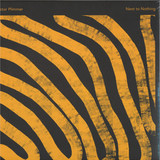
Following on from the release of a spilt EP from rising stars Gramrcy and Gaunt late last year, GlassTalk Records returns in 2019 with the sophomore EP from Bristol's Henry Greenleaf, "Patent".
The unassuming producer has been making waves with his bassy 130bpm productions which seem almost custom-made for the later hours of dark club settings.
Since his debut release on Par Avion last November, Greenleaf has been focused on increasing the sonic scale and clarity of his work; something that's apparent on the whole of "Patent" but especially on the opener, "Inch". A true 'creeper' of a track, the groove and harmonic arrangement of the 3-minute build-up is somewhat
entrancing but then gives way to a head-wringing breakdown.
True to his previous output, Henry doesn't sit still stylistically on "Patent". The EP's second track, "Tare", moves away from the 4x4 structures of "Inch" and into more syncopated territory previously occupied by producers like Mickey Peace or Paleman. "Tare" is a masterclass in polyrhythms with all manner of kicks, claps and vox samples skittering over each other. This deft use of drum programming is complemented by serene and uplifting synth sections, cleansing the tonal pallet before the beat forcefully drops back in.
On the B-Side, "Caved" keeps the energy and the tempos high with supremely processed high hats and a rumbling low-end landscape. Here Henry Greenleaf's adoration of Paula Temple's music shines through more than ever. Much like her output, it's kind of hard to know which way is up in "Caved" with its ever-shifting
palette of sounds and grooves.
Closer and EP title track "Patent" is probably the vastest song Greenleaf has created during his recent mission to grow his productions in scale. It's a mammoth techno track with a pulsing low-end juxtaposed against some sporadic & icey synth pads.
This release solidifies Henry Greenleaf's already hard-to-dispute status as one of the leading lights of the 'Bristol sound'. Almost impossible to define; his work sits in that amorphous sweet spot where techno, dubstep, garage and a load of other UK influences bleed into each other to form something unique. Put your headphones on and let the grooves swallow you up.
Buscar:almost
- A1: Maybellene Aka Maybelline
- A2: Roll Over Beethoven
- A3: Johnny B Goode
- A4: Oh, Baby Doll
- A5: Round & Round
- A6: Come On
- A7: Almost Grown
- A8: Reelin' & Rockin
- A9: School Days
- A10: Carol
- B1: Rock & Roll Music
- B2: Sweet Little Sixteen
- B3: Too Much Monkey Business
- B4: Thirty Days (To Come Back Home) (To Come Back Home)
- B5: Brown Eyed Handsome Man
- B6: Go Go Go
- B7: Run Rudolph Run
- B8: Memphis, Tennessee
- B9: Back In The Usa
- B10: Route 66
This essential LP edition compiles 20 of Chuck Berry’s most emblematic and celebrated songs, taped by the Chess label between 1955 and 1961.
These recordings helped define the exact nature of early rock & roll. All-time classics such as Berry’s car songs (“Maybellene”), his calculated and carefully crafted instant smashes for the 1950s teenage market (“Reelin’ and Rockin’,” “Sweet Little Sixteen,” “School Days”), and his celebrations of the music itself (“Rock and Roll Music,” “Johnny B. Goode,” “Roll Over Beethoven”), are some of the greatest rock tunes ever written.
Take “Johnny B. Goode” specifically - the intro alone is arguably one of the most iconic pieces of music ever recorded, and the subsequent hand in hand energy of both the vocal and the instrumentation not only forms a brilliantly hook throughout the track, but also creates something uniquely Chuck Berry.
This material will convince even the sceptics of Berry’s brilliance. All of these original gems, which have been brilliantly remastered to achieve the most pristine sound, are simple two-and-a-half-minute songs that convey all the sheer power and emotion of rock & roll. Enjoy!
We’ve been waiting a while for this one… Dark Sky return after a brief hiatus with this incredible EP featuring band of the moment Afriquoi. Many of you will already know one particular tune here: ‘Cold Harbour’ used by Bonobo on his Fabric mix compilation back in January. This gem is now backed with three more blissful, vital fusions. All created with different members of the deeply-rooted London-based live band.
‘Valmer’ sets the tone with its chimes, bells and chants, featuring the drumming of percussionist Andre Marmot aka Minioca. It's measured, restrained and impossible not to get goosebumps to, a near-spiritual experience the deeper you get into the groove. Elsewhere ‘Love Walk’ takes a much more subdued sojourn into the cosmic dusk. Mid tempo and much more focused on the rich layers of atmospherics than the beats, this will disarm a crowd at 50 paces. Next our minds are altered by eight-minute synth-striking mystique marathon ‘Cambia’ featuring the Kora playing of Jally Kebba Susso. Finally, ‘Cold Harbour’, one of the highlights from Bonobo’s evergreen mix from the London club institution, the combination of those rattled strings, pregnant bass staccatos, rolling percussion and deep undulating bass make it one of the most versatile and touching tracks Dark Sky have given us so far. And that’s saying something.
Breaking the Dark Sky silence that’s been almost two years, the ‘Clod Harbour’ EP opens up a whole new page in the London act’s legacy. And there’s plenty more to come. Watch this space...
“Experimental trio Giraffe crystalize time on ‘Desert Haze’, their new LP on Marionette. Giraffe is the musical project of Sascha Demand (guitar), Jürgen Hall (keys), and Charly Schöppner (percussion). Sascha Demand is a composer that comes from a contemporary and improvised musical background, collaborating with the likes of Ensemble Integrales and Vinko Globokar. Jürgen Hall works in electroacoustic experimental projects, theatre and film scores, with releases on Staubgold and Edition Stora. Charly Schöppner is known for his popular music releases such as Boytronic on major production companies in the 1980´s and composes for theatre, dance, and film scores. With only a couple of releases to date on the wonderful Meakusma imprint as well as an EP on Marmo, little is known about Giraffe. After letting go of other artistic projects, the trio now focuses solely on Giraffe by continuously searching for and finding their own unique language.
Sascha, Jürgen and Charly have quite diverse musical backgrounds, though morphing into Giraffe they tower into one single composer. Their music is a critical statement, not in a political sense but rather an artistic one. Being mindful about what it means to create and how to position themselves as artists nowadays (without the constant hassle of being en vogue and short-lived trends) shaped their rather rare and stoic artistic stance. It is refreshingly honest to see their expression develop so naturally.
On Desert Haze, they’ve created a vibrant and minimalistic tribal sound that feels inspired by the Saharan traditional music of the Tuareg, Jazz, and German psychedelic krautrock. Giraffe themselves also list the radical music of the Viennese School (Schoenberg along with his pupils Berg and Webern) as well as the Köln School with its early electronic experiments as their main influence and inspiration. More precisely the composition process and the organization of musical material within space and time, where a conceptual and intellectual approach melds with an experimental yet expressive sound searching method.
Side A focuses on the trios studio work; it is built around tone color and pitch analysis of resonating prepared guitar sounds. Through a unique mixture of free improvisation and a serialism "rule set”, they develop instrumental layers and structures to form their tracks. Side B sees Giraffe playing more freely with a reduced setup - representative of what you may hear when listening to them live.
Desert Haze, along with its track-titles, showcases an almost mimetic approach to art. The haptic music grabs the listener not as a passive recipient but as an active resonant body to vibrate through. One can almost feel the Elements, pressure and heat forming a diamond, hypnotic overtones ringing through windy caves, shamanistic rhythms conjuring up mysterious and ancient landscapes - where the constant cycle of sedimentation and erosion reveals structures of fragile beauty - always gentle to the hand’s touch and the mind’s eye.”
- A1: Lotus Eater - Tripholium
- A2: Shifted - K Pop
- B1: Efdemin - Entropie
- B2: L.b. Dub Corp - Look Shiny
- C1: Rrose - The Myth Of Purity
- C2: Lucy - The Goat God
- D1: James Ruskin - From Here On
- D2: Denise Rabe - Paralysed Spheres
- E1: Zeitgeber - Double Down
- E2: Adriana Lopez - It All Adds Up
- F1: Chevel - Va Lavorar
- F2: Alessandro Adriani - Two Journeys
- F3: Serena Butler - Giubia
Stroboscopic Artefacts releases ‘X – Ten Years Of Artefacts’, a 13-track album curated by Lucy, the nom de techno of Luca Mortellaro. It celebrates ten years of his label by boldly confirming its raison d’être: a continual redefinition of modern techno.
‘X – Ten Years Of Artefacts’ is a various artists album in which the label’s key artists respond to its tenth anniversary with fresh compositions. Artists with divergent perspectives and MOs are equally at home expressing themselves. These tracks’ timbres, tempos and moods differ greatly yet—somewhat improbably—they seem together, ideologically unified.
The album will be later complemented by a special remixes EP, with four new reworks of pivotal back catalogue material from the label (Donato Dozzy, Caterina Barbieri, Xhin and Klock). And from fall 2019, Lucy and an incredible cast of Stroboscopic Artefacts artists will begin an extended club tour to mark the anniversary.
On ‘X – Ten Years Of Artefacts’, Mortellaro features solo as Lucy, in collaboration with Rrose as Lotus Eater and together with Speedy J as Zeitgeber. (Rrose also appears alone with “The Myth of Purity.”) Shifted, Efdemin, L.B. Dub Corp (Luke Slater), James Ruskin, Denise Rabe, Adriana Lopez, Chevel, Alessandro Adriani and Serena Butler each feature, representing a group of singular artists whose relationships with the label range from years to months—Stroboscopic Artefacts’ past, present and future must exist simultaneously.
Back in September 2009, Lucy released “Why Don’t You Change/Dub Man Walking,” the first record from Stroboscopic Artefacts, which began a discography that, ten years later, is almost unparalleled in its ambition and vision. Put simply, Mortellaro wanted to create something that didn’t exist. Stroboscopic Artefacts would be respectful of, and indebted to, the great techno and electronic music artists of the past but would develop new paths forward for the label and the genre. The label refused to perpetuate the established dichotomies of electronic music — between the dance floor and home listening, between club music and experimental music, between the past and the future. It took risks knowing it wouldn’t always work. But within a year or so of the label’s inception, it was obvious Stroboscopic Artefacts’ approach had captured imaginations far beyond its Berlin base, showing us that the boundaries of techno are often constructs of limited imagination.
The label pursued constantly evolving methods of releasing music. It created concept-driven series like Monad, Stellate and Totem, establishing frameworks that would give freedom in limitation. Standout albums by Lucy, Xhin, Dadub, Zeitgeber, Chevel, Kangding Ray, Lotus Eater and Alessandro Adriani were deeply considered longform presentations.
With this new album, remix EP and tour, now is the moment for Stroboscopic Artefacts to look fondly at its past while drawing breath, reenergised, and hinting at new chapters.
solid silver vinyl Repress
Aleksei Nikitin, whose first release kindled the GOST ZVUK history (and whose brilliantly sparkish "Ledyanoy Album" was issued on the label a couple of years ago), goes back to Ground Zero after his trilogy on Figure and REKIDS' "Atoner" LP. All four tracks of the eighth GOST INSTRUMENT's vinyl present a rather way-out approach, surprisingly uncommon for Aleksei's form style. But this seemed minimalism tends to be valid only at first glance. Starting from plain rhythm, "Elektromechanika's" further groove is drifting on lots of tousled synths. "Far Voices", an exercise in interweaving of echoes and voice samples, ends right at the moment when you expect track's next iteration. The B-side is not without surprises too: the acid beat of "Oasis" rises almost suddenly after drone-alike "Monothone". Summarizing all the above, getting into this record is not only the extremely clear case, but you should also try to play it from random track, or even in "B2-A1" order.
LIMITED EDITION 500 ONLY COLOURED VINYL LP WITH DOWNLOAD CODE IN GLOSS FINISHED 350GSM BOARD SLEEVE
Way back in 2004, ACID MOTHERS TEMPLE & THE MELTING PARAISO U.F.O. released the CD only album 'Minstrel In The Galaxy' on Riot Season Records. The decision to make it CD only at the time was down to the epic title track being almost 42 minutes in length. Fast forward fifteen years and new technologies and we have the first ever vinyl release of this classic album, with a new edited especially for vinyl mix by main man Makoto Kawabata.
What we said back then ...
‘Minstrel In The Galaxy’ is the sound of the newly slimmed down four-piece AMT recorded in their smoke filled basement Studio in Nagoya during summer 2004. The sounds captured on these three tracks are the first post-Cotton Casino AMT workouts. The diminutive beer and cigarettes goddess has upped sticks and moved to the USA to start a new life and plan her solo career. We’ll miss her that’s for sure but we can’t worry about that now, AMT have another ten albums to lay down before New Year.
The AMT line up for this album features the core trio of Makoto Kawabata (Guitar), Atsushi Tsuyama (Monster Bass), Hiroshi Higashi (Guitar & effects) and new permanent drummer (and ex-Mainliner man) Hajime Koie (Drums). The free jazz style drumming from Hajime has helped give AMT their sense of improvisation back, most of their work is improvised and recorded live to tape which gives that great loose feel they have that takes them off on tangents and makes each new record that little bit different from the last. And with this new studio album I think we can safely say it’s something of a new direction.
They’re joined on this album by Japanese underground queens AFRIRAMPO, who’ve just finished a tour with Sonic Youth and look set for big things themselves in the near future. Musically this album is a slight departure for AMT, anyone buying it expecting a head-melting riff heavy record are going to be disappointed.
To these ears ‘Minstrel In The Galaxy’ sounds darker and more stripped down that any previous AMT release. The title track alone lasts a staggering 41 minutes, over the course of which the band take our heads in a few gentle directions before letting rip towards it’s crushing finale. For me it’s the gentle openings that make me tick, I love the way it rolls for what seems like ever just going round and round in your head. You almost expect it to explode way before it does and that my friends is the art of foreplay AMT style!
It might sound far fetched but here goes: Circadian Rhythms aka Dj Deg brought techno to Belgium before anyone was ready for it. The 1990s collective “Bad Woofers Posse” formed with lifelong friend Mike DMA and their “PK” warehouse parties served as fertile ground for the young producer.
Steeped in this new atmosphere, Deg locked himself up in his bedroom studio at his parents’ place and started developing his interpretation of the freshly imported techno/house sound. In the Belgian way. Combining emotional synth play with neck-breaking drum patterns, sequenced like dreams forever chasing the climax.
BM11 collects six unreleased takes from this almost forgotten period (1989 – 1994).
Adapted Vinyl was a UK based techno label active in the late 90’s that picked up regular DJ support from taste makers of the time ranging from Jeff Mills to Mr C.
This, the label’s 7th record disappeared before a public release when the Integrale Muzique distribution company went out of business in 2008, but now gets its first official release date after years of very limited availability
Label founder Suade is the artist behind this release and these days he is best known as a highly-sought-after mastering engineer working for artists like Dense & Pika, Paranoid London, Jamie Jones and Vitalic.
Focusing his energies into family life and the fine tuning of other peoples music it’s rare to see Suade’s own music on a new release, but this hasn’t stopped him from collaborating on original tracks with the likes of Magda and Radioactive Man in recent years.
The EP has four contrasting tracks all with different moods and tempos all blended with Techno’s classic motoric drive.
With it’s absence from the usual music marketplaces creating something of a mystery this record ended up receiving a new, unofficial name on Discogs - The Citadel EP which is a title taken from the broken-beat second track on the B side of the record.
The Citadel is just one of the highlights on this eclectic EP, as it’s a Latronic Notron sequencer workout that patiently deploys layered synths in ever-shifting cross-rhythms for a languid 5 minutes before its deep, underpinning bass arrives evoking desert travel and arrival.
Baikal, named after the huge freshwater lake in Russia, is another stretched out meditation on tone and harmony acting as a foil to the delicate and vibrant Latin American percussion that filters in and out through a massive stereo Moog Modular system creating an energetic yet static, ritualistic atmosphere.
Trajan - the most driving track on the EP, gives a nod to the Probe era Richie Hawtin sound with a touch of Drexciyan melodics with shuffled percussion and bleeps over a snaking TB303 shaped bassline where the classic Acid box is given the role of control sequencer only commanding the thick, dirty oscillators of the big Moog.
A1 track Felix is a contrast yet again. A big room melodic Techno piece with another massive bassline and an almost orchestral level of layering, building to nine counter-melodies in total before letting rip with a classic TB303 acid line that builds from the heart of the track.
"A work of searching, and in many moments, finding"
Maggie Thornton as Sky Civilian is set to release her second EP this November on Atomnation: At the Seams. It's a stepping stone, from the lyrical, gentle, genre-agnostic electronica of Open Door, to Maggie’s own rounded and angelic take on acid-house.
Maggie’s cinematic, synth-heavy style emerged after a decade of orchestral French horn playing and classical studies. She combines this brass-inspired, synth-forward approach with her weightless, almost-whispered vocals, and dance-floor ready beats. The melding of influences present in her work make Maggie a fresh and promising new artist in the electronic music scene, an artist we hope to hear more from for many years to come.
- A1: Power
- A2: Home
- A3: Anxiety
- A4: Future
- A5: Life & Dreams
- B1: Disco Pregnancy
- B2: Paris
- B3: Primal
- B4: Before America
- B5: Poem Song For Iggor
- C1: Power (Rhythmical)
- C2: Home (Rhythmical)
- C3: Anxiety (Rhythmical)
- C4: Future (Rhythmical)
- C5: Life & Dreams (Rhythmical)
- D1: Disco Pregnancy (Rhythmical)
- D2: Paris (Rhythmical)
- D3: Primal (Rhythmical)
- D4: Before America (Rhythmical)
- D5: Poem Song For Iggor (Rhythmical)
Rooted in the São Paulo contemporary art scene, Laima Leyton’s credentials in the world of music are firmly established as one-half of Mixhell alongside her husband Iggor Cavalera (Sepultura, Cavalera Conspiracy) and for her work with Soulwax.
Now the producer, musician, activist, artist, mother and teacher unites her multifaceted talents with her ambitious double-vinyl debut album ‘Home’. It will be pressed and distributed by The Vinyl Factory and released by Deewee on November 8th. Featuring two records that are designed to be played simultaneously: Laima’s vocal and synth tracks on the ‘TONAL’ disc alongside Iggor’s beats on the ‘RHYTHMICAL’ record. Syncing two records offers an unconventional way to experience the music.
Rather than passively hearing the music, the listener’s need to ritualistically sync both records makes for an immersive experience. There are two key elements that make ‘Home’ such a distinctive project. Thematically it explores how the two core contrasts that inform Laima’s life can coexist. On one hand it’s about domesticity – her love for her family and her frustration with domestic routine. Yet on the other, it’s about her creativity – her desire to express herself artistically while still tending to her role as a mother and a housewife. “It’s almost like a family photo album in another format,” says Laima. “I needed to find the balance in this dichotomy, to feel good with myself in both roles, and be aware of things that really mattered to me. To be a woman, a mum and a female producer: all of these feelings were in the music.”
One of the greatest enigmas of the music scene in mid to late 1970s Harare was The New Tutenkhamen, a band which played an eclectic brand of Zimbabwean township music combining
traditional rhythms and western influences. The band included some luminaries of Zimbabwean township music. Elisha Josamu was an alumnus of the fabulously-named Hallelujah Chicken Run Band (alongside Thomas Mapfumo), and Green Jangano’s long-running Harare Mambos, and would later form Two Plus Two with bassist Christopher “Chex” Tavengwa. Jethro Shasha played the drums, and would arguably become the New Tutenkhamen’s most famous export, making continental waves working with likes of Salif Keita. Paul Sekerani played the rhythm guitar, with Amos Chatyoka on the organ, while the enigmatic Maggie Mbuli provided vocals and F. Manda played the sax. The New Tutenkhamen recorded I Wish You Were Mine at Teal Records, produced by Crispen Matema, a talented jazz drummer in his own right who had played drums on the all-time classic Skokiaan, and had backed Louis Armstrong on his 1960 Rhodesia visit. Combining the
heavyweight producing talents of Matema and the writing chops of Josamu, The New Tutenkhamen band created an album howcasing various musical styles popular at the time. From the afro-jazz jam session aesthetics of “Tutenkhamen Theme”, “Big Brother alcom” and “Forever Together”, to the almost Van Morrison-sounding “Sunday Morning”; from the upbeat rock ballad “True Love”, to the funk-infused dance song “Togetherness”; from the bouncy jazz
exhortations to work hard in “Ane Nungo”, to the brassy, raunchy foot-stomper “Me & Dolly”. The title track “I Wish You Were Mine” is a ska-infused ballad that wouldn’t be out of place in post-war
Birmingham, while the star of the show is “Joburg Bound”, itself a fast-paced rock piece with Motown undertones and funky guitar lines. As a collective effort, I Wish You Were Mine provides a fascinating insight into a fraught time in Zimbabwe’s history, and the bands plying their trade through the turmoil, making music for young people, by young people.
Sam went into an almost psychotic state when making music. He wasn’t himself. He was immersed in the creativity to such an extent that it was almost like a psychotic trance. Here’s an example. He found all this giant kelp down at Western Port bay and he would bathe himself in it for weeks. He would replenish the water and put salt in the bath, but leave the kelp in there. I used to ask Julie, his partner and wife, “How’s everything going?” and she’d say, “Just go and have a look at the bath.” - Tony Rogers
Sam Mallet could have pursued a career as a French literature professor in Paris, but decided his true calling was to remain in Australia, dedicate himself to his music and find the plateau; a word he used to describe the sensory worlds residing in music. Under the influence of Eno, Jon Hassell, Arvo Pärt, John Coltrane and Robert Fripp, Sam explored a wide variety of musical styles and put them to service soundtracking the time based works of his peers. He crafted spatial ambience, somber jazz, and drum computer driven rockers for short films and experimental video works, television shows (including the original Australian Wilfred series), feature films and live theatre. The avant garde Anthill Theatre, known for its departure from conventional staging practices and having a keen eye for talent, enlisted Mallet to provide soundtracks for approximately 40 productions throughout the 1980s and early 1990s.
Sadly, Sam passed away in 2014. A crucial piece of his legacy is undoubtedly the body of work he produced during his life, and the archive of recorded works is vast and deep. Sam seemingly saved everything, from fragments to finished pieces; and often repurposed previously released tracks by collaging them into new pieces. He self released a small number of cassettes and CDs from the mid 1980s onward, the contents of which were culled from soundtrack work and original pieces, but the majority of his music was experienced only within the ephemeral live performances.
Wetlands is the product of countless hours spent with this archive by Rowan Mason (Sanpo Disco/Recurring Dream) and Tony Remple (Musique Plastique), offering a dynamic survey of Sam’s work, and housed in a jacket evoking the minimal design and colour palette of his earliest cassette releases. Two selections of Sam Mallet’s music were featured on the compilation Midday Moon (also produced by Rowan), released last year by Bedroom Suck Records. Along with Left Ear Records’ Antipodean Anomalies, Midday Moon has served to highlight outlier musics and scenes from Australia and New Zealand, and Wetlands plunges deeper into the catalog of this obscure yet groundbreaking artist.
- A1: Next To Nothing Feat Ego Ella May And Emma-Jean Thackray
- A2: Sonnet 17 Feat Ego Ella May
- A3: Still Here
- A4: Somebody Else Feat Andrew Ashong
- A5: Tape Loop
- A6: Stack Feat Pie Eye Collective
- A7: Before The Sun Feat Ego Ella May
- B1: Step
- B2: Joyfulness Feat Alexa Harley
- B3: Circle
- B4 2: Minute Switch
- B5: Wall Street
- B6: Communication Control
Born and raised in South London, Hector Plimmer is a multi-faceted producer, composer and DJ whose sound is drenched in tribal rhythms and beautifully crafted bass. Influenced by beat-makers like Flying Lotus and Theo Parrish, but with the subtleties of the classic Metalheadz era drum and bass, his second album 'Next To Nothing' is released on 25th October 2019. The album features guests Ego Ella May, Emma-Jean Thackray, Andrew Ashong, Pie Eye Collective and Alexa Harley.
After featuring on Brownswood Bubblers 11, curated by Gilles Peterson, Hector proved his talent when he was selected as a winner of the PRS Steve Reid InNOVAtion award. At a performance at ‘Sounds Of The Universe’ Record store, Hector caught the attention of Albert's Favourites' label heads Adam Scrimshire & Dave Koor. A conversation was started which led to the transfer of almost a whole album's worth of material and resulted in his debut full length record ‘Sunshine’.
'Sunshine' was met with rapturous acclaim. The record went on to be awarded Gilles Peterson’s album of the week on his BBC 6 Music show and was championed by both Lauren Laverne and Tom Ravenscroft on the station as well as Jamie Cullum on BBC Radio 2. Its success on the airwaves transcended to streaming with the inclusion in the top 50 viral US chart on Spotify.
"This album has been a real labour of love. I spent the most part of a year trying to make music I thought would be fitting to follow my last album, whilst not actually knowing what that might sound like. 'Sunshine' had been received way more positively than I had anticipated and although praise is a lovely thing, it was the cause of much anxiety when the time came to start on this record. I put a lot of pressure on myself to produce music and kept going down routes that felt forced or just didn’t click for me, in hindsight I realise this was me making music not for myself, but for what I imagined other people might want to hear. In a way 'Next to Nothing' is my first real album, 'Sunshine' was more like a collection of four to five years worth of music compiled into the shape of one. This is my first dedicated attempt at creating a cohesive project, something that shows who I am right now and what got me here."
- Hector Plimmer
As a DJ Hector has a monthly slot on NTS radio. He has played alongside the likes of Gilles Peterson, Kutmah, Alexander Nut, MNDSGN, Onra, Dego, Kaidi, Max Graef & Glenn Astro; Hector finds himself in the good company of those talented selectors who play genres across the spectrum of Hip-hop, Beats, Funk, Soul, Disco, Afro-beat, House and Jazz.
I felt totally unrestrained making this album” says Lindstrøm about his 6th solo album On A Clear Day I Can See You Forever (a title inspired by the 1970’s musical On A Clear Day You Can See Forever starring Barbra Streisand). “I’ve listened to Robert Wyatt’s solo albums and his Matching Mole’s debutalbum a lot lately. It so effortless, fearless and free. And not insisting. I was very inspired by this” In the autumn of 2018, Lindstrøm composed a commissioned piece for Norway’s premiere art centre Henie Onstad Kunstsenter. Sketches from the three sold-out performances became the foundation for the new tracks. “I decided to keep some of the initial ideas and develop them further. All the songs are based on long one-take recordings”, says Lindstrøm “Also I’ve been very conscious about the music on the album not exceeding the length of the physical limitations of the vinyl-format, finding that 2 long tracks on each side were the perfect balance for this album” This is also the first time ever Lindstrøm has made an album entirely with hardware instead of computer-plugins. He utilised thirty plus synthesizers and drum-machines during his performance at Henie Onstad Kunstsenter. The experience inspired him to embrace a similar set-up when making the album. “The joy of making music on actual physical objects and devices makes a lot of sense to me now. After working on a computer for over 15 years, I don’t think I’ll ever look back” he says with an almost childlike excitement. It was the accessibility to his enviable collection of music gear – largely consisting of sought after synthesizers – that allowed Lindstrøm to experiment so freely with ideas and soundscapes. “The title track is a 10-minutes improvisation on the Moog Memorymoog. I liked the loose feel so I decided to keep everything unedited. The other tracks were written and arranged prior to the recordings. I then set up the instruments needed for my sessions, then recorded more or less everything in a single take. I’m really happy with the way this album came together.” Lindstrøm has cited classical music as an inspiration the last couple of years “I used to study classical music at school. Back then I was listening to a lot of Opera, orchestral music and solo music on the piano. Listening to classical music again has been a revisit to my childhood days, just like I did when I embraced the 80s in the early 2000s”
Once embracing the freedom and the joy of making music without inhibitions, immersing himself in to the physical realm of making music with hardware, Lindstrøm learned something new not only about music – but about himself.
“I guess I've been trying to re-educate myself”
Italian producer and Fine Human Records label head Dino Lenny lands on Crosstown Rebels for the first time this November, bringing his distinct and personal style to the label on the absorbing Doctor, also featuring a remix from Nuiton. The haunting, emotive vocals of Dino impress throughout on Doctor, chugging groove moves alongside waves of dark electronics and panic-struck, devilish synth. A track crafted to capture the inner workings of Lenny’s mind, transforming them into a hypnotic piece. Nuiton remixes Doctor on the reverse, adding energy to the original with skipping hats and quirky arrangements, building tension that reaches an intense jazzy crescendo of percussion and brass to leave you in a headspin. On the digital release a dub version loses the voice but retains the mysticism. With almost 30 years of releasing records under his belt, Dino Lenny has naturally built an incredible back catalogue of remixes and collaborations. He’s worked with some of the biggest names in the business, yet his productions retain a unique style that is all his own. A true lover of the 80s, when he needs that extra touch he will add his vocals to the music, always trying to deliver something original that will stand the test of time, often opting for imperfect unique experience over precise emotionless never-ending loops. Alongside this, he has remixed huge names like Missy Elliott and Timbaland and has collaborated with legends including Madonna, Wu-Tang Clan, Seth Troxler and Dixon. Lenny has been named as “a wizard of electronic music” by the Chemical Brothers, played live with Underworld, released music on the likes of Crosstown Rebels sister label Rebellion, Innervisions, Diynamic, Cocoon & Correspondant, and is currently signed to Ellum. Constantly evolving his sound, Dino is unpredictable & eclectic.
Captivity is the next highly anticipated extended EP by Kush Arora aka Only Now, following a triptych of self-released output in 2019. Continuing the project’s ever evolving engagement with themes of time and existence, Captivity encompasses versatile synthesis, mutant kuduro, widescreen sound design, turbulent cold fronts of power ambient and melodic undertones of black metal.
The product of a two-year period in which Arora was contending with transitional shifts in his personal life, Captivity is a culmination of what the project has explored both in a prolific run of recent material and as a whole, across several years of time dilating, mind altering music.
Although shaped by adversity and corresponding sentiments of angst and insignificance, Captivity is pitched at total transcendence. Adopting a meticulous approach to production, a methodology which opens up almost every element to transformation and deconstruction, Arora generates forms which possess a sense of pointillist precision, as well as a keen psychedelic potency.
Despite consistency with his earlier output as Only Now, Captivity is nevertheless an indication of Arora’s ability to challenge internal and external assumptions. The introduction of new hardware – namely, the Nord Drum 3P synthesizer – as well as the incorporation of far-flung atmospherics – closing track ‘Clock Lust’ features field recordings from a trip to Kyoto – delivers fresh enterprise and experimentation, contributing to the expansion of a sound signature which remains as unpredictable and compelling as ever.
With the eponymous opener, Arora combines fathomless underworlds and riotous breakbeats. On ‘Mutants’ a hyper-kinetic onslaught of percussion, low-end and stray cut-ups of noise break out, building to a panorama of thunderous industrial firmaments. ‘Perpetual Slaughter’ maintains momentum with icy, ricocheting FX and concussive, tribal drums, and then unexpectedly shifts into a poignant outro which brings to the fore the enduring influence of black metal on the project. ‘Bound 2’ is cut with relentless sub-bass and rapid syncopation, resembling an abstracted form of juke music, something that could feasibly have been masterminded by Autechre. With the LP’s finale, ‘Clock Lust’, Arora presents a finale of transfixing 3D ritualism, the lone toll of a bell ringing out into a mesmeric emptiness.
Together these form a complete statement from Arora, illustrating the fertile and open-ended territories the Only Now project has arrived at after promising outings on Infinite Machine and Discrepant imprint Sucata Tapes. With Captivity Arora delivers a substantial highpoint and a profound voyage into the world of Only Now.
Sunny & Deck Hussy have quickly become firm favourites with almost everyone who hears them, because they have been making tune after tune, and each one of them has been stronger than the last. This EP continues their amazing run of big tunes, with Hayley's Comet being the standout on a standout EP. Absolutely brilliant in all respects, this EP is a winner and a half. And its only a taste of things to come, with an impressive remix for Hyper On Experience about to land, amongst other huge projects. So get on the Sunny & Deck Hussy train / comet before its too late...
This is a big release for Tectonic as label boss Pinch combines forces with Kahn to produce two killer rhythm tracks that meld deepness with futuristic dancehall powers. Normally this would be plenty to get excited about anyway - but if you then add the vocal talents of Killa P, Irah & Long Range - aka ‘Killa’s Army’ - there is even more reason! Dubstep meets grime meets dancehall, while Bristol meets Brixton.
All three MCs in Killa’s Army have their own, very distinctive but complimentary styles, bringing a hard, uncompromising vocal delivery to match Pinch & Kahn’s tough beats.
Long Range opens the track and sets pace, his rapid, agile lyrical flow bouncing off the distorted thumping of a darkside 142bpm dancehall-flavoured rhythm. Killa P unleashes the chorus with full force, then setting up the next verse. Irah drops it an octave and holds the mood with his unique tone and delivery. The track pulls back then for a moment, like a filmic interlude, before the General himself, Killa P comes in to finish off anyone who might try test, like an end of level boss. ‘Crossing The Line’ will be rattling out of speakers for many years to come, no doubt!
Flip the vinyl over and you’ll find another, instrumental track, from Pinch & Kahn. ‘Send Out’ is a dubstep banger that holds a deep mood whilst pushing the energy levels through the roof. A rhythm track that has been pulled up, wheeled; set dance floors ablaze with it’s almost heavy-metal levels of energy. An early version of ‘Send Out’ originally appeared as an exclusive track on Kahn & Neek’s Fabriclive mix but is now available properly for the first time.
Klein's offbeat singular vision continues to defy classification. Her acclaimed, self-released records – Lagata, Only and CC – along with Tommy for Hyperdub and her theatre musical Care, have allowed glimpses into Klein's uniquely spirally perspective on vocal abstraction, disarming experimentalism and pop culture wonderment. Yet these chapters have also served as masks to conceal the artist's own personal crises of self-belief, misrepresentation and belonging.
An 18-month writing process led to her new album Lifetime. It's an unexpectedly literal body of work which Klein compares to "giving someone your diary." Lifetime embraces the inevitable cycles of existence, phasing through moments of brutality, vulnerability, estrangement and unexpected fortitude. Lifetime embraces the inevitable cycles of existence, phasing through moments of brutality, vulnerability, estrangement and unexpected fortitude. Every sound in Lifetime is intentional, every influence—from 'King of Gospel Music' composer James Cleveland, to early 18th century tonalities in the b side, the work of 'race film' pioneer Spencer Williams, the residue of the religious experience is deeply personal. The 12 songs of the album are pieced together like a puzzle; seamless transitions connect each of its compositions in a reverse chronology, while every chord from every song is echoed someplace else.
What's been hinted at in Klein's live performances is now realised in full for Lifetime. Less vocal work allows her to be even more expressive, and in eschewing a tendency towards brief, truncated sketches, each song serves as its own long conversational piece, committed to realities of a lived experience. The artist who once grappled with self-doubt has set about breaking the cycle of insecurity for others like her, while mindfully chipping away at the conventions of classical music.
Like its artwork, Lifetime addresses intersecting life cycles: the inner and outer selves, hypermodernity versus history, living nightmares and dream states, while seeking the light and darkness in both. Part 1 opens with unmistakable Klein flourishes on the title track. Gusty pads, anxious, frayed-edge static arcs, and craters of deep negative space, all of which melt down to the clean slate of "Claim It," which is a tribute to embracing one's own blessings. "Listen And See As They Take" and "Silent" form their own microcosm, as the sound of crackling kindling burns backwards into imposing structures of distorted strings and disembodied marching drums, before returning to heat and ash again. "For What Worth", in collaboration with sound artist and saxophonist Matana Roberts, explores the kinship between two artists whose shared exploration of lineage leads them both toward uncharacteristically sweet clarity.
Part 2 is further steeped in black expressive styles of the past. "Enough is enough" links the Lifetime narrative to the broader diasporic black experience, inhabiting every chamber of a harmonica with ghostly notes of the present and past, as fragmented gospel chords reflect spiritual bonds between self and the divine. "We Are Almost There" begins the journey with nothing but the looped structures of multitude of voices. The drums and dischord of "Never Will I Disobey" wordlessly create the conditions for "Honour," a near 10-minute composition where crossed boundaries and crossed wires are exposed in real time, and sharp expressions of hurtfulness, accountability and corrupted expectations are rendered beautiful in representational form, via sustained synth tones which hum, jab and flit in natural disharmony. The interlude "Camelot Is Coming" draws on the choir tradition to prelude the spoken word recounts the cycles of trauma and death that form "99." Lifetime closes with the dystopian swirl of "Protect My Blood" a composition which details an excruciating rift, before blooming into serenity as it draws to a close.
Klein's Lifetime is laid bare, from the end to the beginning, and cycled over again. From her place within her family, to their place within her, to viewing the fragility of culture through the lens of memory. It's a lifetime, an embodiment of young livelihood, and an end as much it is a beginning.