2025 Repress
FINALLY! The very first commercial release of two legendary remixes of Arthur Russell's "In The Light Of The Miracle". Both are widely regarded as transcendent masterpieces and very much befitting of the title “holy grails”.
These long-beloved mixes are the types you'd wish would last for eternity. With almost 30 minutes of music here, we very nearly get our desires granted. At last, these jaw-dropping mixes are widely available to every Arthur fan in the world. This is musical perfection.
The deep Loft classic "In The Light Of The Miracle" remained unreleased during Arthur's lifetime, finally discovered when Phillip Glass included the original version on Another Thought on Point Music in 1993. As Steve Knutson told us, when Another Thought was being put together, the plan was to release a companion album of remixes that was overseen by Steve D'Aquisto but the project only got as far as these two remixes of "In The Light Of The Miracle".
Some dodgy scans of some centre label designs suggest that Point Music might’ve been planning to release these on a 12" but it didn’t happen. The story goes that Gilles Peterson heard the remixes on a visit to the Point Music offices and wanted to release them on Talkin’ Loud. We’re not sure how many white label copies made it out into the wild, but again, these remixes didn’t make it to a proper release.
These remixes both extend and undeniably enhance the original, elevating it to new heights. The 13 minute remix on the A-side is by Danny Krivit & Tony Smith with editing duties performed by Tony Morgan. As ever with Arthur, the music is almost impossible to describe: is it Disco? Garage House? Avant Garde? None of these tags do full justice to its sheer majesty. You best just listen. Stretching out the original with some unbelievably great percussive elements, until we're in a deeply spiritual, otherworldly realm, it's just too beautiful for words. As many have claimed, it's the prototype for EVERYTHING.
The "Ponytail Club Mix (Part 1 & 2)", produced by Tony Morgan in the mid-90s, is in a more up-tempo style, with vocals higher in the mix, the BPM upped to 120 and the addition of a housey 4/4 kick drum. A 14 minute epic, you could say this is a more straight ahead "club-friendly" mix (but can things ever be that straightforward with Arthur?!) It also has some really interesting vocal parts not used in the other versions, including some vocals from guest poet Allen Ginsberg.
These remixes are part of the same original project that also produced the Another Thought album so it seems only right that they have a sleeve that matches. Thanks again to Janette Beckman for letting us use another of her photos of Arthur and the rest of the design follows what Margery Greenspan, Tina Lauffer and Michael Klotz did for Another Thought back in 1994.
Simon Francis remastered the original audio for both tracks and Cicely Balston's precise cut for Alchemy at AIR Studios ensures this 12" well and truly slaps. The immaculate Record Industry pressing will ensure this incredibly sought-after treasure finds a home in many more collections, this and every year.
Suche:almost
Berlin-Hamburg duo Session Victim return to the ever-reliable Delusions Of Grandeur imprint with Chapter Two of their Sidequests trilogy, marking yet another high point in their almost twenty year journey through heartfelt, sample-rich music. Overflowing with analog warmth, sundrenched textures and irresistible grooves, the release also features a stellar remix from label cofounder and deep house pioneer Jimpster who kicks off the EP. Here he takes Behind The Glass into spaced out house-not-house territory. With crisp drum programming, trademark Rhodes, and subtle pads that build over time, his version delivers that late-night sophistication he's known for—steering the downtempo original in a clubbier direction without losing its blissed-out essence. Up next we have a brand new collaborative effort with long time friend, label mate and fellow sample nerd Nebraska. Make It Happen is a dusty, slo-mo house groove featuring delicate keys, euphoric strings and that unmistakable sense of journey. It’s just the kind of low-slung epic house they do best—intimate yet club-ready, nostalgic but never retro. Flipping over, Too Soft To Be Loud, another collaboration with Viken Arman, follows with a jazzy, almost samba-esque rhythm and swirling atmospherics. Loose percussion, catchy guitar riffs and Rhodes stabs collide with off-kilter dub FX and soft vocal snippets giving the track a laid-back, live-band feel that harks back to their See You When You Get There era. Hubcap Candy dives deep into funk territory. Nebraska’s on point boogie bassline drives the track forward as crunchy drums and layers of synths create a dreamlike haze. It’s loopy, moody, and finds Session Victim at their very best. Closing out the EP we have the original of Behind The Glass, a headsy, beatdown piece that slowly unfolds over an unconventional brass-like bassline and delicate guitar textures, paying homage to the golden age of Trip Hop haziness and it’s pioneer turntable spirit. Blending crate-digging sensibilities with forward-thinking production, this latest release solidifies Session Victim’s reputation as genre-blurring tastemakers, and their chemistry with Delusions Of Grandeur remains as strong as ever
- Opening Lab
- Natural History Museum
- Voyage
- Zora And Kincaid
- Mosasaur Attacks Yacht
- Zora And Loomis Chat
- Mayday
- Boat Chase
- Fins Attack – Part 1
- Fins Attack – Part 2
- Cave Swim
- Do The Job
- Dino Lovers
- Dino Spectacle
- What’s The Smell?
- Crossing The River / T-Rex
- Climbing The Wall
- Bird Strike
- Gentle Boat Ride
- Mutadons Fly In
- The Old Lab
- Tunnel / Helicopter
- Run To The Gate
- Bella And The Beast
- Sailing Away
Mutant, in partnership with Back Lot Music, are proud to present the physical media debut of Universal Pictures’ Jurassic World Rebirth Original Motion Picture Soundtrack with music by two-time Grammy® and Academy Award®-winning composer Alexandre Desplat.
To create the score for Jurassic World Rebirth, director Gareth Edwards turned to a distinguished friend, two-time Oscar® winner Alexandre Desplat (The Grand Budapest Hotel, The Shape of Water), who worked with Edwards on Godzilla. “I feel very fortunate to be doing the music for a movie franchise like this, which entertained me so greatly, as a filmgoer, for decades,” Desplat says. “I dreamed of writing music for movies like this since I was a teenager, and now, here I am,” he adds with a laugh, “part of Jurassic World, almost a teenager.”
Rebirth represents the second time that Desplat has stepped into a franchise and inherited and adapted iconic musical motifs written by an artist he considers his “forever idol,” the legendary John Williams: Desplat previously took on that challenge with Harry Potter and the Deathly Hallows Parts 1 and 2. “John Williams wrote a fantastic melody for Jurassic Park that I now get to reinvent, rejigger and resculpt in ways benefit our movie,” Desplat says. “My desire was not to quote John’s score bluntly but subtly echo it or make use of it in the original score I have written for the film in playful and meaningful ways.”
"Continuing in the legacy of composers like John Williams, Don Davis, and Michael Giacchino - Alexandre Desplat brings the action packed Jurassic World: Rebirth to life with equal parts bombast, and tenderness." says Mo Shafeek, co-founder of Mutant. "Beautiful piano melodies give reprieve from thundering percussion, in this beautiful and essential addition to the Jurassic franchise.”
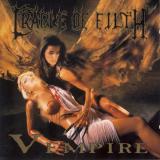
Although it had a very troubled birth, all detailed in the liner notes included with those different versions here, CRADLE OF FILTH almost-album-length 1996 EP V Empire, Or Dark Faerytales In Phallustein proved to be a superb triumph over adversity.
Despite all their legal problems, line-up changes and insane pressure after the gigantic success of their debut album, the Brits nevertheless managed to write and record a slab of new even grander songs, next to a new version of the already classic ‘The Forest Whispers My Name’, some would argue even bettering their debut in the process.
Another undeniable 90s symphonic black metal masterpiece, available again for the first time officially since 2017!
Although it had a very troubled birth, all detailed in the liner notes included with those different versions here, CRADLE OF FILTH almost-album-length 1996 EP V Empire, Or Dark Faerytales In Phallustein proved to be a superb triumph over adversity.
Despite all their legal problems, line-up changes and insane pressure after the gigantic success of their debut album, the Brits nevertheless managed to write and record a slab of new even grander songs, next to a new version of the already classic ‘The Forest Whispers My Name’, some would argue even bettering their debut in the process.
Another undeniable 90s symphonic black metal masterpiece, available again for the first time officially since 2017!
Although it had a very troubled birth, all detailed in the liner notes included with those different versions here, CRADLE OF FILTH almost-album-length 1996 EP V Empire, Or Dark Faerytales In Phallustein proved to be a superb triumph over adversity.
Despite all their legal problems, line-up changes and insane pressure after the gigantic success of their debut album, the Brits nevertheless managed to write and record a slab of new even grander songs, next to a new version of the already classic ‘The Forest Whispers My Name’, some would argue even bettering their debut in the process.
Another undeniable 90s symphonic black metal masterpiece, available again for the first time officially since 2017!
2025 Repress
Portland was produced by our mate Dave Clark aka Sparky and was the first record we released in 2002, about a year before the first ever Numbers party took place.
Originally recorded live to tape using an MMT8, a Microwave II, and an ESi32 in the summer of 1998, it was released on an old label of ours named Stuffrecords and formed part of a somewhat rambling compilation called STUFF001. We hastily stuck this record out without any proper distribution, because at the time we didn't know any better. Despite this the record did pretty well, selling 500 copies to a few select stores who had faith in what we were doing.
Fast forward a year or so to when Numbers kicked off and the track became one of the first bonafide anthems in the club. It was our tune and it would tear the roof off at any of our parties.
A couple of years later, we booked DJ Pete, aka Substance, to play. We're talking about the record in the pub when he suddenly informs us that Ricardo Villalobos is crazy about it and even charted it. This was a deep, almost Drexciyan electro track and here was the king of crazy experimental minimal house music caning it in his DJ sets.
Not long after that night, the Numbers label was up and running and the idea to re-release Portland with a remix from Mr Villalobos was brought up almost as a kind of pipe-dream. Now in 2013, with a little help from Gerd Janson, it has finally happened. Recorded live in one take and clocking in at over 30 minutes long, it's cited as an "experiment" by Ricardo. Designed to play at two speeds, at 33rpm its almost like an early 90s Black Dog track stretched out to infinity, whilst at 45rpm, it's a club-ready groover with an almost Dopplereffekt rhythm to it - the sort you could imagine sneaking into a DJ Assault or Godfather Ghettotech mix. Somehow, it also manages to be classic Villalobos.
To finish off the record Dave gave us a two unheard tracks from those original Portland sessions in 1998. The malevolent electro of 'Jigsaw' would instantly have become another Numbers anthem if only Dave had let us hear it ten years ago, and closer track 'Wilson St' heads down an ambient route.
What About Never debut from Intertoto, who deals a tracky beatdown ace in ‘If I Take You Home’ — a late-night/early-morning house instrumental that hints at ambiguous post-club activity. Bridging the eclectic spirit of the Motor City with the raw, textural styles of European contemporaries like NWAQ and Kassem Mosse, ‘If I Take You Home’ filters these ideas through the experimental aesthetics that have long simmered in the underground of Intertoto’s native Scotland.
Michael J. Blood expands on the after-hours theme with the cannily titled ’Walk of Shame Mix’ — a cracked reflection of the original that channels the essence of Theo Parrish, Delano Smith, et al. His ’Morning After Mix’ flips the pace entirely, layering hypnotic chimes and dark New Jersey–style synths with an almost overwhelming sense of dub-wise dread.
Since their reunion in 2015, Malka Family has been enchanting stages once again and releasing fabulous albums. Le Retour Du Kif (2018) and SuperLune (2022), featuring almost all of the original musicians, have marked their comeback.
Today, Planète Claire, a 16 tracks album, is undoubtedly one of Malka Family’s best works.
It was urgent for the great Funk families to return and give the new generations a lesson of kif…
Back to the Roots
In 1987, after organizing the Chez Roger Boîte Funk parties with Dee Nasty and Actuel/Radio Nova, Joseph Mannix and Isaac Ben Araz (then guitarist and trombonist of the group Human Spirit) decided to create a French-style Funk band.
The group quickly became one of the most spectacular live sensations of the 1990s.
Their self-produced debut album, Malka On The Beach, was released in 1991. Both the press and the public went crazy for these little funkateers, leading to a series of non-stop tours. Their concerts—wild, costumed performances—drew massive crowds. Warner France took notice and signed them.
Their second album, Tous Des Ouf (WEA), a true Space Opera P-Funk featuring guests like Sidney (Hip-Hop), Dee Nasty, Marco Prince (FFF), Juan Rozoff, and more, was released in 1992.
After touring the world multiple times, the band became independent again in 1995 and recorded an EP for Big Cheese Records: Fricassé De Funk.
By the late ‘90s, the rise of DJs and electronic music signaled the decline of large live bands. Due to its logistical weight—the band had over 14 members on their last tour—Malka Family was forced to part ways in 1997 after touring for their album Fotoukonkass (RCA/BMG).
But that was without counting on the resilience and extraordinary freshness of these Funk performers…
Butch’s unmistakable music has always worn the influence of disco proudly on its sleeve. Both his mega-hit No Worries and his first contribution to the Running Back catalogue, Desire, are essentially modern-day disco records. The same goes for his return to the label with Glory Night—perhaps even more so, thanks to its vintage engineering and authentic aural treatment. Equipped with the genre’s signature sounds and arranged like a lost disco edit from the late ’70s, Butch applies the lotions and potions that today’s dancers demand, creating one of those peak-time sensations that make him unique—complete with confetti, a firecracker breakdown on top, and an extra rhythm section bonus tool included. Just Chill and Just Fly continue that narrative. While the first appeals to fans of R&B or funk samples (though no recordings were harmed in the process), it is catchy as hell and creates an inescapable maelstrom. The second, meanwhile, draws on the principles of deep house and exercises itself in contemplation. Be that as it may, here are a couple of tracks that work on almost any floor and at any time. Or, to quote Giorgio Moroder: “Disco is music for dancing, and people will always want to dance.”
- Tired
- We Were Punk First
- Moving Day
- The Punchline
- Bad Indian
- The Art Of Savagery
- Rage
- Dreamcatcher
- World Up My Ass
- This Is Not A Political Song
- Doom Indian
- No One Owns Anything And Death Is Real
Crystal Clear Vinyl, limited to 1000 copies. Who were the first punks? Do The Damned have more of a shout than The Sex Pistols? The Stooges or Ramones? Gregg Deal, the acclaimed visual and performance artist behind his new project Dead Pioneers, is making a claim that Indigenous Americans were the first real punks. Deal suggests that the overarching theme of the album is "an introduction to the band itself". Created with a DIY disposition and the "love of a scene that saves lives", they reel off a roll call of marginalised groups and protected characteristics: "Indigenous rights, Black rights, Brown rights, Asian rights, Gay rights, Trans rights, Workers rights and beyond_". This is central to their identity and focus, saying that "with a North American Indigenous person as the vocalist, being unapologetically upfront on the social, political and cultural side of things doesn't seem necessary, but paramount to the overall tone of the band." This self-titled debut, coming in at a lithe 22 minutes with only one of the twelve tracks exceeding three minutes, is almost over before it begins, but covers a huge amount of ground in that time. Blistering opener 'Tired' sets out their stall; as with the whole album, it is passionate, but never preaching. Capitalised 'Political Music' can be hard to land without coming across as hectoring or earnest, but Deal's literary, humorous lyrics effortlessly cut through complex issues of marginalisation and colonialism.
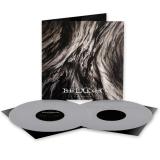
Since their debut, The Frail Tide in 2007, Australian Progressive Death Metal powerhouse BE‘LAKOR has made a huge impact on the international metal scene, turning heads with their technical-driven yet melodic songwriting. Now, almost 15 years later, the legendary five-piece returns with their new album Coherence (out October 29 via Napalm Records), proving themselves to be on top of their game with their most ambitious project yet! Eight tracks on Coherence display BE’LAKOR’s impressive spectrum of musical abilities, ranging from 12-minute-long journeys on “Much More Was Lost” to the atmospheric, fully instrumental “Sweep of Days”. Coherence is full of details that reveal more and more with every listen of the album: BE’LAKOR are not afraid to focus on extensive, cohesive songwriting while still managing to keep the listener on their toes.!
Toko's in-house all-star Si Brad brings forth three fresh jams for the long running UK institution, ensuring record bags are festival fit and nightclub-ready for party season.
Opening with a glitzy, contemporary disco jam, 'Doublestar' provides wide-screen glitterball action with a dazzling instrumental track, busy with key changes and chord progressions that'd make Patrick Adams blush. Sure to have fellow peers like Another Taste and Perpetual Singers checking their wing mirrors, the track is rich with musical decadence - orchestral strings, punchy synth licks and frenetic live bass all shining through this highly dynamic arrangement.
'Compress' moves swiftly into beefy house territory; Si's patented full fat, cushion soft bottom end providing just the low frequency support for a wide array of warehouse-ready bleeps, vocal snips and rave motifs set to cause a whole manner of chaos and confusion come 2AM in the club. A master of functional intricacy, Brad's multi-layered compositions thread together more elements than other producers would care to consider, manifesting almost effortless and involuntary body movement which belies the complexity of the track and is sure to have the dancefloor in a spin.
Concluding with a beautiful piece of Balearic-boogie-beatdown, and with Attaboy muscling in on proceedings; 'Faro Sunset's dreamy and expansive moods cascade over a loose, conga-laden groove glued to the spot with a rugged b-line. Instantly conjuring memories of grilled calamari and poolside play, and sure to garner repeat plays across the familiar party paradises of the Adriatics and beyond; it finds the crew dialling into a deliciously languid vibe that's in contrast to the immediate urgency of the preceding tracks yet retains, assuredly, the sonic trademarks of the producer's hand.
Another unmissable addition to Toko's storied catalogue!
Black Truffle is thrilled to present the first ever solo Donso n’goni recording from octogenarian Swedish multi-instrumentalist Christer Bothén. Active in the Swedish jazz and improvisation scene since the 1970s, often heard on bass clarinet, Bothén travelled to Mali in 1971, eventually making his way to the Wassoulou region in the country’s south where he encountered the Donso n’goni, the sacred harp of the hunter caste of Wassoulou society. Though playing the instrument has traditionally been restricted to those who belong to the hunters’ brotherhood, Bothén found an enthusiastic teacher in Brouema Dobia, who, after many months of intensive one-on-one lessons, gave Bothén his blessing to play the instrument both traditionally and in his own style. Returning to Sweden, he would go on to pass on what he had learned to Don Cherry and play the Donso n’goni in a wide variety of inventive settings, including the driving Afro-jazz-fusion of his Trancedance (reissued as BT118).
The seven pieces of Christer Bothén Donso n’goni offer up a stunning showcase of Bothén’s work on this remarkable instrument, heard entirely unaccompanied, except for the final piece where he is joined on a second Donso n’goni by his student and collaborator, the virtuoso bassist Kansan/Torbjorn Zetterberg, and Marianne N’Lemvo Linden on the metal Karanjang scraper. Recorded in three sessions in Stockholm between 2019 and 2023 in richly detailed high fidelity, the instrument’s buzzing, sonorous bass strings make an immediate, overwhelming sonic impression. Hyper-focused on hypnotically repeating pentatonic patterns, the seven pieces are at once relentlessly single-minded and endlessly rich in subtle variations. The concentrated listening environment turns small details, such as the deployment of the instrument’s segesege rattle on two of the pieces, into major events. Six of the seven pieces are traditional, with Bothén contributing the remaining ‘La Baraka’, but the line between tradition and the individual talent is imaginary here: as Bothén explained in a recent interview with The Wire’s Clive Bell, ‘I play traditional and untraditional, and I play the music forward and backward’. While the traditional Wassoulou pieces provide the rhythmic and harmonic elements, Bothén’s individuality as a performer is alive in every moment, felt acutely in boundless variations of attack, improvisational flourishes, and unexpected accelerations and decelerations. Captured entirely live and bristling with spontaneity, this music is undeniably the product of almost half a decade of Bothén’s devotion to the Donso n’goni and its traditional music.
Accompanied by detailed new liner notes by Bothén and stunning colour photos from his time in Mali, Christer Bothén Donso n’goni is a stunning document of a remarkable instrument, played with an almost spiritual intensity by one of contemporary music’s great explorers.
- A Refugee
- Refuge
- Blood
- Occupied
- At The Diner 2
- At The Penitentiary
- A Beggar
- People!
- A Generic Breakup Ballad
180g, turquoise vinyl. Perhaps the hardest thing about Soul music is convincing. If the place and the experiences don't somehow shine through and meet us, we risk missing out on what's on offer completely. "But first_ are you experienced?" as Jimi Hendrix asked. That's precisely why Soul music is difficult in Sweden. There are few who can portray their experiences in music in a way as convincing as in the Black US Soul tradition. This however seems almost provocatively easy for Bror Gunnar Jansson to do. On the album People, it's as if he pours both lyrics and melodies that have grown slowly in life and that come naturally if you grow up on the right soil. And on almost every song, it only takes a few bars for Bror Gunnar Jansson & The Escapism to show who their musical relatives are. Although Gunnar seems to move freely in musical landscapes ruled by the greats of seventies soul from Al Green, Curtis Mayfield and Aretha Franklin, as well as in some of the fringes of blues and jazz territory, both he and drummer and producer Christopher Cantillo explain that the album has took a long time brewing. And that what may appear obvious and simple has sprung out of a friendship that spans more than half of their lives.
On an evening in November 2020, Belgian artist Nicolas Rombouts (Dez Mona, Stef Kamil Carlens…) and American-then-Brussels-based artist Matt Watts (+2024) met at Studio Caporal in Antwerp, behind Central Station. Just a week after the suicide of friend and artist Loloman (aka Ward Zwart), and in the wake of the end of a marriage marred by pain, addiction, and depression. The two had spoken by phone and agreed to a recording session.
That evening, they shared their loss in conversation, on muted piano, contrabass, and electronics. Compositions were shared and improvised, and by the next day, their album Muted Songs For Piano was complete.
It is meant to be listened to in one full trip from beginning to end. You’ve traveled across the galaxy and are looking back through a telescope at this world and its lonesome mausoleum of memory. Sounds you can almost hear, and movements you can almost feel, though you know it has passed in the time its light has taken to reach you.
Muted Songs For Piano is an impressive and extremely intense listening experience, an album that engages in a heroic battle with the personal nocturnal demons of the two composers.
Mwandishi is one of Herbie Hancock's first departures from his traditional jazz sounds. The album which was recorded in a single session on New Year's Eve is a much more spacier effort compared to his earlier works, created by Hancock's us of electronic effects devices. His sextet is the most progressive ensemble he played with and he took the next step in the future of jazz. The music on Mwandishi is beautifully atmospheric and the long tracks leave plenty of space for improvisations by the group. A fantastic recording with sonic layers of earth, existence and expression.
Herbie Hancock is one of the most prolific jazz pianists of the 20th century. A child prodigy, he played with the greats such as Donald Byrd and Miles Davis. As he was a bit of a geek, he enjoyed gadgets & buttons and he was one of the first to embrace and master the electric piano, but he always stayed true to the acoustic sound. In fact, he always bounced back and forth between his electronic and acoustic sound, touching upon almost every development in R&B, Funk and Jazz while retaining an original and distinctive voice.
- Flying North
- Commercial Breakup
- Weightless
- Europa And The Pirate Twins
- Windpower
- The Wreck Of The Fairchild
- Airwaves
- Radio Silence
- Cloudburst At Shingle Street
"The Golden Age of Wireless is the debut album by English musician Thomas Dolby. The album was originally released in May 1982. Several tracks have a submerged, barely audible layer of almost random sound that serves as a constant (and disturbing) subtext, occasionally erupting into a song. This sonic underworld is all part of Dolby's mechanical wizardry. Rolling Stone magazine awarded The Golden Age of Wireless four stars out of five, calling it ""one of the most impressive debuts"" of 1982. They compared the album's melodicism to the works of Paul McCartney and concluded that ""unlike many synthesizer bands from England, Dolby eschews morbid, droogy drones."" Musician magazine said the album was ""the best damned record to come out of Europe's current fascination with synth-pop. Period."" Theye added, ""Dolby is purely amazing. And best of all, he writes songs.""
The Golden Age Of Wireless is available as a limited edition of 1000 individually numbered copies on silver coloured vinyl and includes an insert. "
Limited first pressing on silver vinyl. Flying Horseman returns with their first new album in five years. Experience their renewed but signature sound with a fresh line-up.
Flying Horseman is back! After a five year hiatus and with a new line-up, the band is ready to once again captivate headphone junkies and live audiences alike with Anaesthesia, their seventh album. It's an urgent and passionate work of intelligent rock'n roll, hazy psychedelia and cosmic folk. Anaesthesia is brooding, angry and dark but at the same time full of life, wonder and sophistication. It's an invigorating, fascinating, electric brew.
Flying Horseman is still centered around the intensely personal song writing, singing and guitar playing of Bert Dockx. The band's line-up has changed,with Louis Evrard (Pruillip, Ottla, Grid Ravage) and Maximilian Dobbertin (Calicos, Frankie Fame) replacing drummer Alfredo Bravo and bassist Mattias Cré. Bravo and Cré were long-standing members, beloved by fans and fellow musicians alike, and they have played an important part in establishing Flying Horseman's musical identity. Today Evrard and Dobbertin are adding a fresh and personal twist to the idiosyncratic sound of Flying Horseman: their groove, their intuition and sensibility, their soul.
Then there's Loesje and Martha Maieu, who have been part of the group for almost as long as its frontman has, and who offer essential ingredients to bring about Flying Horseman's signature flavour, their haunting vocals and atmospheric electronics contrasting beautifully with Dockx' more earthy vocal delivery and his restless, fiery plucking of the guitar strings.
The whole record is fiery, alternately smouldering and violently burning. These are musical sounds capable of setting the listener's heart and mind ablaze. Anaesthesia is very consciously, a political record born out of Dockx and his friends' bafflement at the state of the world, the new rise of fascism, the onslaught of injustice, barbarism and stupidity which we, inhabitants of planet earth, are witnessing day in day out.
How to guard one's sanity in such a crazy world? How to maintain one's dignity? How to feel useful and joyful when surrounded by confusion and hate? These are the questions Flying Horseman is struggling with, as are so many of us today. But there is joy and purpose in the asking; in the struggling; in staying critical of dominant systems of oppression; in thinking or saying: "I don't agree, this is not how it's supposed to be"; in coming together and connecting, sharing, mourning and dreaming. Joy and purpose; questions and confusion; burning hearts and tarnished dreams: it's allhere, in the transportive sound world of Flying Horseman.
Anaesthesia was recorded in Antwerp by Joris Caluwaerts (keyboardist of the inimitable avant-jazz group .STUFF) and mixed by Yves De Mey (one of Belgium's most prominent & avant-garde electronic wizards), two experienced collaborators who know a thing or two about capturing sound and transforming it into a rewarding listening experience. With their help, Flying Horseman has crafted a tight collection of eight art-rock tunes with a clear identity, a rich sound, an original vision and a joyful purpose in the face of encroaching sinister forces.
Teresa Rotschopf, a musician and composer from Vienna, presents her second solo album, »Currents and Orders« – a radical, delicate, yet grandiose sonic journey between experimental pop, new music, and improvised composition. The album will be presented live on August 27 as part of the »Pop-Kultur« festival (silent green, Berlin) and at the »ORF RadioKulturhaus« (Vienna) on 12 September.
»Currents and Orders« was recorded in an unusual location: a stalactite cave in Styria, Austria. Together with a small group of musicians (Maria Gstättner: bassoon, contraforte; Alex Kranabetter: tuba, trumpet, French horn; Patrick Dunst: saxophone, duduk; Florian Klinger: marimba, vibraphone, glockenspiel, cymbals, gong, stalactite; Patrick Pulsinger: gong, stalactite; Ulrich Schleicher: gong) and in co-production with Patrick Pulsinger, Rotschopf recorded the album in June 2023 – deep underground, far from daylight, but all the closer to archaic sounds and resonances.
The cave becomes not only an acoustic stage, but also a symbolic space of memory, retreat, and transformation. The album comprises four pieces – including two large-scale tracks:
- the opening, mantra-like title track »Currents and Orders« (over 10 minutes)
- the final, free-jazz, expressive »I Open My Gates (for You)« (over 20 minutes)
With a minimalist structure, choral voices, vibraphone, percussion, and wind instruments, fragile yet powerful soundscapes emerge, whose spatial depth is also palpable through the cave reverberation.
Rotschopf first developed the desire to record in a cave in the summer of 2022. What began as a visual and sonic image became a concrete project – supported by the Austrian Cave Association. In June 2023, Rotschopf and her musicians spent three days in a cave in the Styrian forest. Almost a kilometer of cable was laid, and equipment and instruments were carried deep underground. Rotschopf describes the recording situation as a kind of return to herself: »I descended into this cave, as if I could descend into myself, into my own womb ... What we did in the cave could just as easily be called ›recording music,‹ but it could also be called ›remembering‹ – remembering the earth, the cave, and humanity.«
»Currents and Orders« is an album like a ritual: haunting, atmospheric, bold in its form, and deeply rooted in both physical and emotional space. Music that takes its time, uses space, and pushes boundaries.
The pre-release single »O Please My Soul (Rest On My Back)« (release: July 17, 2025) is accompanied by a striking music video shot by Antoinette Zwirchmayr on 16mm film: Teresa Rotschopf holds a real owl in her hand – an image that is as magical as it is enigmatic.
Label owner Martin Hossbach read a review of Rotschopf's first solo album, »Messiah,« in 2018 and contacted the artist. Joint releases followed, including a drone album on the sub-label Martin Hossbach Score and a Pet Shop Boys cover version on Martin Hossbach Cover.
Teresa Rotschopf, Musikerin und Komponistin aus Wien, präsentiert mit »Currents and Orders« ihr zweites Soloalbum – eine radikale, zarte und zugleich groß angelegte Klangreise zwischen experimentellem Pop, Neuer Musik und improvisierter Komposition. Das Album wird am 27.8. im Rahmen des Festivals »Pop-Kultur« (silent green, Berlin) und am 12.9. im »ORF RadioKulturhaus« (Wien) live vorgestellt.
»Currents and Orders« entstand an einem ungewöhnlichen Ort: in einer Tropfsteinhöhle in der Steiermark, Österreich. Gemeinsam mit einer kleinen Gruppe von Musiker:innen (Maria Gstättner: Fagott, Kontraforte; Alex Kranabetter: Tuba, Trompete, Waldhorn; Patrick Dunst: Saxophon, Duduk; Florian Klinger: Marimbaphon, Vibraphon, Glockenspiel, Becken, Gong, Stalakmit; Patrick Pulsinger: Gong, Stalakmit; Ulrich Schleicher: Gong) und in Ko-Produktion mit Patrick Pulsinger nahm Rotschopf das Album im Juni 2023 auf – tief unter der Erde, fern von Tageslicht, dafür umso näher an archaischen Klängen und Resonanzen.
Die Höhle wird nicht nur zur akustischen Bühne, sondern auch zum symbolischen Raum der Erinnerung, des Rückzugs, der Transformation. So umfasst das Album vier Stücke – darunter zwei großformatige Tracks: - das eröffnende mantraartige Titelstück »Currents and Orders« (über 10 Minuten) - das finale, free-jazzig-expressive »I Open My Gates (For You)« (über 20 Minuten)
Mit minimalistischer Struktur, Chorstimmen, Vibraphon, Schlag- und Blasinstrumenten entstehen fragile und zugleich mächtige Klangwelten, deren räumliche Tiefe auch durch den Höhlenhall spürbar wird.
Der Wunsch, in einer Höhle aufzunehmen, kam Rotschopf im Sommer 2022. Was als visuelles und klangliches Bild begann, wurde zu einem konkreten Vorhaben – unterstützt vom Österreichischen Höhlenverein. Im Juni 2023 begab sich Rotschopf mit ihren Musiker:innen drei Tage lang in eine Höhle im steirischen Wald. Fast ein Kilometer Kabel wurde verlegt, Equipment und Instrumente tief unter die Erde getragen. Rotschopf beschreibt die Aufnahmesituation als eine Art Rückkehr in sich selbst: »Ich stieg in diese Höhle hinab, so als ob ich in mich selbst hinabsteigen könnte, in meinen eigenen Schoß [...] Was wir in der Höhle taten, könnte man ›Musik aufnehmen‹ nennen, genauso gut aber auch ›Erinnern‹ – Erinnern von Erde, Höhle und Menschsein.«
Currents and Orders ist ein Album wie ein Ritual: eindringlich, atmosphärisch, mutig in der Form und tief verwurzelt im physischen wie emotionalen Raum. Musik, die sich Zeit nimmt, Raum nutzt und Grenzen sprengt.
Die Vorab-Single »O Please My Soul (Rest On My Back)« (VÖ: 17.7.205) wird begleitet von einem eindrücklichen Musikvideo, das Antoinette Zwirchmayr auf 16mm-Film drehte: Teresa Rotschopf hält darin eine echte Eule auf ihrer Hand – ein Bild, das genauso magisch wie rätselhaft wirkt.
Labelbetreiber Martin Hossbach las im Jahr 2018 eine Rezension des ersten Rotschopf-Soloalbums »Messiah« und nahm Kontakt zu der Künstlerin auf. Es folgten gemeinsame Veröffentlichungen – etwa ein Drone-Album auf dem Sub-Label Martin Hossbach Score und eine Pet-Shop-Boys-Coverversion auf Martin Hossbach Cover.