Cerca:alt j

Generi
Tutto
Russell Haswell - Deep Time

Russell Haswell

Deep Time

12inchDIAG066
DIAGONAL
05.05.2025

The indominable Russell Haswell returns! He's a restlessly forward-thinking, multi-disciplinary artist, performer and curator who calls Diagonal Records his home. His past collaborators include Aphex Twin, Gescom, Florian Hecker and Merzbrow. "DeepTime" is Russell's latest LP for the label following on from 2023's 'Reality Therapy'. Whilst "Reality Therapy" was an introverted affair, "DeepTime" is brimming with confidence and aimed squarely at the dance floor.

Russell's club friendly turns are resolutelyprogressivist. Whilst being informed by the works of Claude Young and Jeff Mills, his music feels like it was made in another dimension altogether. Title track, "DeepTime", "Unconformity" and "Atropine" all prove the point. It's techno but it's much more besides.

In Stock

Disponibile in Stock e pronto per la spedizione

28,15
LUC-HUBERT SEJOR - MIZIK FILAMONIK: SPIRITUAL SOUND

180 G. BLACK VINYL WITH LINER NOTES IN CREOLE, FRENCH, ENGLISH

Originally released in 1979, "Spiritual Sound" lives up to its name, a soaring, triumphant album, six tracks of spirit magic from Guadeloupe.

Telluric, intense, terribly alive, the gwoka drums of Guadeloupe carry the identity of a painful and fervent island. Marked forever by the crime of slavery, Guadeloupe's créolité cherishes the ka drums and their natural environment: the low-pitched boula drum with male goatskin, the high-pitched soloist makè drum with female goatskin, the chacha, ti bwa, triangle, calabash and other percussion instruments that surround them, and the voices - the fiery, proud, timbred, urgent voices of the gwoka.


This album is also a legend for its voices: in his then dazzling youth, singer Lukuber Séjor was one of the first gwoka artists to largely feminize the chorus of répondè, who converse with his text delivered in a straight and powerful voice.

And everything here sets new standards. In 1979, Mizik Filamonik - Spiritual Sound proclaimed a spiritual patriotism of ferocious intensity. The album by Lukuber Séjor - whose spelling alone is a battle - sets out to give Guadeloupe the intangible weapons of self-respect and self-knowledge, through a singular practice of traditional music.

The genesis of gwoka music is less straightforward than one might imagine... The drums performed the servile task of accompanying the work of slaves in the fields and during the “corvées” imposed by the administration, before being freely practiced by the common people after the abolition of 1848. At the heart of the conviviality of the Guadeloupeans furthest from the cities - geographically and socially - the gwoka drums come out for carnival, funeral wakes and neighborhood celebrations, but also during strikes, fits of anger and armed vigils of the riots and revolts that have punctuated the island's history. For generations, governors of the colony and then the prefects of the overseas department of Guadeloupe have been viewing the gwoka as a potential for turbulence and a threat to public order.

But as the Beatlesmania, “chanson engagée” and rock revolutions unfolded in Europe, young people turned to the drums of mizik a vié nèg (“bad negro music”, in Creole), which Guadeloupeans had learned to despise by following the “assimilation” process advocated by the school system and most of the political class. At the end of the sixties, in a Guadeloupe mourning the deadly repression of the May 1967 social movement, they played traditional music, refusing to wrap it up in tourist prettiness and madras folk costumes. Instinctively, they played a rough and contemporary gwoka, led by the incendiary Guy Konkèt. This was the era of decisive 45 rpm records such as Robert Loyson's Kann a la richès, which brought to light the fieriest words of union rallies.

At his home in Sainte-Anne, Lukuber Séjor played with flautist Olivier Vamur and his brother Claude Vamur, who cobbled together a drum kit from tin crockery and became, a few years later, the most influential drummer in Kassav'.

These were the years of the Bumidom program, when young Guadeloupeans were encouraged to emigrate to mainland France. At the age of twenty, Lukuber Séjor embarked on the liner Irpinia, disembarking at Le Havre and taking the train to the Gare Saint-Lazare - the route taken by thousands of young West Indians who went on to study or looked for work, all the while trying to maintain a link with their homeland. In this case, it's at the Antony university residence, where Lukuber played the drum and participated in a thousand gwoka updates and aggiornamentos, while exile reinforced the need for a spiritual link with the native land.

In 1978, Guy Konkèt played at the Salle Wagram, a historic event for West Indian music. After serving as répondè - i.e. backing vocalist - on one of his home-recorded albums, Lukuber joined his live band. Little by little, he became one of the key artists on a circuit parallel to French show business. At a student party in Caen, he met a young woman from Martinique who, at the time, was more motivated by her ambitions as a visual artist than by her vocation as a musician. Her name was Jocelyne Béroard and, a few years before she plunged into the Kassav' adventure and became the greatest West Indian singer of her generation, she designed the cover of Lukuber Séjor's LP.

This ambition was obvious and imposed its will. A more or less regular band was formed, with Roger Raspail, Rudy Mompière and Éric Danquin on ka drums, Claude Vamur on ti bwa, Olivier Vamur and Françoise Lancréot on flutes and Annick Noël on keyboards. Lukuber Séjor is set on wanting to extend the gwoka palette to other instruments, as the jazz-rock revolution opens a thousand new doors. Annick Noël will play a wide range of timbres and textures on electric piano and synthesizer. Another novelty: the répondè are two men and two women, Roger Raspail, Olivier Vamur, Françoise Lancréot and Maryann Mathéus ...

Mizik Filamonik - Spiritual Sound is a self-production in which the singer and leader sank all his savings, allowing him no more than a single day in the studio. The first side is more of a musical manifesto, with the first two tracks, Éritage and Penn é plézi, being instrumentals. The third, Son, forcefully celebrates the need for Guadeloupeans to connect with the gwoka. In fact, Jocelyne Béroard's cover shows a tambouyé in the shadow of a cloudy sky, against which a radiant sun is rising and whose light will soon flood the entire landscape. The silhouette and face of this man strongly evoke the immense Vélo, master of the ka, rejected at the time on the fringes of society.

The second side of the LP is surprising. Formally, three tracks are explicitly linked like the three parts of a triptych. Primyé voyaj evokes the appalling tribulation of Africans deported as slaves to Guadeloupe; dézyèm voyaj speaks of the Bumidom program and the economic, political and social forces driving young Guadeloupeans towards the mirage of prosperity in France; twazyèm voyaj closes the cycle with the emigrants' return from Europe after years away from their island...

This gwoka, obsessed with the need to save Guadeloupe spiritually, appeals far beyond the politicized audience. Mizik Filamonik - Spiritual Sound instantly became a classic, although Lukuber Séjor never really made a career for himself as a musician.

After all, the album was released in 1980, with no promotional resources in France or Guadeloupe - and therefore no concerts. The thirty-two-year-old author, composer and performer made his own third trip back to Guadeloupe. He set up a small woodworking business, which he lost in Hurricane Hugo in 1989. His other activity, teaching in a medical-educational institute, became the core of his professional life. He continued to be an active campaigner - a campaigner for the Creole language, a campaigner for the reawakening of identity, a campaigner for special education, a campaigner for a thousand causes that he ignited with his generous and perceptive enthusiasm, such as the defense of breadfruit fries...

The echoes of his 1979 album have not died down. Of course, the use of Penn é plézi as the theme tune for Radio Guadeloupe's funeral notices from 1980 to 1992 kept him in the collective memory, but he continues to sing and compose sporadically, as with his all-female

vocal group Vwapoulouéka... Still convinced that music is a means of liberating the spirit, he continues the journey of a young man eager to deploy the power of Creole music and language.

Bertrand Dicale

In Stock

Disponibile in Stock e pronto per la spedizione

19,75
Poni Hoax - Greatest Hits (Everything is Real) LP 2x12"

Poni Hoax, a French band born in the early 2000s under the impulse of Laurent Bardainne, immediately emerged as the union of converging forces: on one side, the precision of a composer and instrumentalist breaking away from jazz conservatory traditions; on the other, the magnetic presence of Nicolas Ker, a terminal new wave crooner with a sepulchral voice. Surrounded by Arnaud Roulin on keyboards, Vincent Taeger on drums, and Nicolas Villebrun on guitar, they made an instant mark with Budapest—dark and haunting—followed by the unstoppable She’s on the Radio, crafting a unique identity that blended the venomous elegance of Roxy Music, the tension of New Order, and the fervor of Larry Levan. With Images of Sigrid, Poni Hoax achieved the miracle of an instant classic before continuing their journey with A State of War and Tropical Suite, sonic odysseys haunted by memory and distant horizons. On stage, it was either an apocalypse or a revelation—a Formula 1 driven by a gang of Gremlins, a blazing energy leaving only burning embers in its wake. The adventure came to a tragic end with the passing of Nicolas Ker in 2021, as the notes of Laurent Bardainne’s saxophone rose into the gray skies of Père-Lachaise, the final echo of a dazzling odyssey.In 2025, Poni Hoax celebrates its 20th anniversary with the release of Greatest Hits: Everything is Real.

In Stock

Disponibile in Stock e pronto per la spedizione

34,03
DOROTHY CARTER - TROUBADOUR LP

The first official reissue of Dorothy Carter"s folk-music exegesis comes 46 years after its original release, 20 years after Dorothy passed, and 11 years before the centennial of her birth. Yet it seems right on time for a new celebration of her music. Appalachian folk tunes, old and ancient psalms and hymns, Scottish, Irish, French and Israeli melodies, and original tunes flow together effortlessly in hypnotic gardens of eternal world musics. A highly energized, alternately meditative and proselytic recital whose vitality has only burgeoned in the decades since it appeared. As it should be: the music of Dorothy Carter is akin to a portal, linking her and us with the eternal. This edition of Troubadour reproduces the original album package, adding an insert adorned with additional photos of Dorothy and her collection of instruments, as well as notes from Eric Demby exploring the era - his childhood - from a vantage point of some 50 years. This reissue is a long-held family dream come true, and it is dedicated in loving memory to Bob Rutman, Constance Demby, David Demby and Dorothy Carter.

In Stock

Disponibile in Stock e pronto per la spedizione

30,04
Ayane Shino - RIVER THE TIMBRE OF GUITAR #2 REI HARAKAMI  (LP)

Liner Notes by Martyn Pepperell

A collection of ten hypnotic guitar renditions that dive deeply into the traditional compositional musicality that underpins Harakami’s hallucinatory beatscapes before reconsidering them under a fresh, innovative and engaging new light. River: The Timbre of Guitar #2 Rei Harakami signals a new level of awareness and understanding of both Rei Harakami’s significance and Ayane Shino’s undeniable talent.

VITAL SALES POINTS:

In 1996 Tokyo-based label Sublime Records received a cassette demo from Rei Harakami, a 26-year-old Japanese experimental filmmaker, and musician. Within one year Harakami’s debut LP ‘Unrest’ was released. As the 21st century dawned, Harakami was becoming a critically acclaimed figure, and there was a feeling in Japan that Harakami would be an inevitable successor to such luminaries as Haruomi Hosono and Ryuichi Sakamoto. Sadly Harakami passed away at age 40 in 2011, leaving behind a musical legacy that seemed to deserve more recognition. A fitting tribute now comes from the incredibly gifted classical guitarist Ayane Shino. Continuing her album series ‘The Timbre of Guitar’ (the inaugural release of which was ‘Sakura’ - a cover album of Susumu Yokota's seminal album, released through the Swiss label, Mental Groove Records in 2021), she now presents ‘River ???? : The Timbre of Guitar #2 Rei Harakami’. Ayane has reworked some of Harakami’s standout tracks into an album of tranquil yet complex compositions helping to build a new level of awareness and understanding of Rei Harakami’s significance. A collection of ten hypnotic guitar renditions that dive deeply into the traditional compositional musicality that underpins Harakami’s hallucinatory beatscapes before reconsidering them under a fresh, innovative and engaging new light.

In the years that followed Harakami’s untimely passing, Sublime Records continued to sign and support new artists emerging from Japan’s rich and fertile electronic music scene. This eventually led to a meeting with gifted classical guitarist Ayane Shino in 2020. Although a new name within electronica, Shino’s classical resume is impeccable. She has performed with a range of prestigious orchestras in concert halls and at music festivals across Japan, Europe, and South America while playing classical guitar for numerous animations, movies and television commercials and holding various educational roles. These days, she also hosts the Tokyo Harmonics radio show, which is syndicated through Hyogo prefecture’s Ashiya Radio and TJS Radio in Los Angeles.

During her time completing a masters at Tokyo’s University of the Arts, Shino became fascinated by Brian Eno, Aphex Twin, Oneohtrix Point Never, Steve Reich, and, closer to home, Harakami and Susumu Yokota. ”I found myself in an environment where I was surrounded by fellow students who produced computer music, live electronics, and installations,” she explains. Following her meeting with Sublime, Hideoki Amano, the producer and owner of Musicmine, the parent company of the label, asked Shino if she would be open to transcribing and recording an album of covers of the late, great composer, producer and DJ Susumu Yokota’s music in incorporate into then-upcoming events commemorating the 5th anniversary of his death and reissues of his past works. “Yokota made music with the Roland TB-303 bass synthesizer and samplers, not in a way like a conventional instrumentalist, so I was aware it might be more of a challenge for her,” Amano explains. Fittingly, Shino was up for his suggestion, leading to ‘Sakura: The Timbre Of Guitars #1 Susumu Yokota’. Song by song, Sakura highlighted Shino’s free-flowing playing and prowess at translating electronic music into classical guitar shapes.
After considering Harakami’s background as an instrumentalist, Amano felt revisiting his catalogue should be the next step for Shino. Well-versed in how often classical versions of electronic music tend to fall flat, he asked her to examine Harakami’s songs closely, select the musical phrases suitable for guitar and create arrangements that would sound interesting to music listeners with a deep engagement with ambient, techno and electronica. In Harakami’s discography, Shino discovered “a sense of simplicity, warmth, moisture and a floating sensation.” “I was gripped by his songs, which had an array of sounds that gave me a sense of mystery but also coexisted with a sense of familiarity,” she explained. Moving beyond his official releases, Shino began digging through YouTube to find live recordings, radio appearances and obscure outtakes. Within her mind’s eye, imagining playing his songs on guitar was effortless. On her approach to the album, Ayane explains: “For this album, I succeeded in spinning some exquisite, silk thread like delicate tones, interwoven with human warmth, gentleness and simplicity. And I was also able to rework Rei Harakami's distinctive sound with a floating feel to it and transform it into a very classical guitar sound. I hope many people will be able to receive this group of sounds that I created in this album that I played with all my heart.” A record of limitless innate beauty, ‘River ???? : The Timbre of Guitar #2 Rei Harakami’ is a delicate and thoughtful body of work. A true masterclass in deconstruction and subsequent rebuilding, and an eternal lesson in how the art that we leave behind can outlive us all.

In Stock

Disponibile in Stock e pronto per la spedizione

22,27
Franco Falsini , Saverio Celestri - Operation Timeframe EP

”Operation Timeframe” is a fusion of styles between two artists who have made waves in their careers: Franco Falsini and Saverio Celestri. On one side, we have a pioneer of electronic music; on the other, the product of years of evolution.

Franco has a rich musical history and a diverse array of influences: starting from progressive rock and arriving at electro-pop, he approached electronic music with a substantial musical background. After founding and participating in various bands across the United States and England, he collaborated with the renowned record label Polydoor. In the early 1990s, he combined his skills as a guitarist and producer, beginning to perform worldwide. In track A2, “A Molecular Affair,” you can clearly hear this blend, which transports us back a few decades and lets us savor a gem deeply rooted in a quality-rich past.

Saverio also had an initial approach to electronic music partly rooted in rock, though more toward alternative rock. Moving to Berlin at a young age, he developed his sense of electronic music in a city teeming with inspiration. Here, he combined his background in electronic, pop, and rock to create brilliant tracks that captivate dance floors worldwide with his Electro, EBM, Synth-Pop, and more. With the B1 track “Veleno,” Saverio follows in the footsteps of his friend Franco, closing the album with “Traveling,” a track structured in Synth Pop, enhanced by the crystal-clear voice of Brazilian artist Lourene.

This is a record that focuses on that frame in which the two artists perfectly align their past and future, projecting it directly into the present, as only two geniuses can.

In Stock

Disponibile in Stock e pronto per la spedizione

14,24
Medlar - Islands LP 2x12"

South Londons’ indomitable Medlar delivers an ambitious new album

The long-time underground favourite has collaborated with the likes of Dele Sosimi, Rebekah Reid, Deevoenay, Finn Peters, Sam Virdie, Afla Sackey and Arnau Obiols on an album that finds him taking his production to new levels.
From roots playing illegal raves in the South West to building up a cultured catalogue that bounces between house and garage, Medlar has long been part of the underground conversation. He has dropped a previous album and many innovative remixes and edits for the likes of Billy Cobham and Shirley Lites, worked in the studio and on stage with Afro legend Dele Sosimi and most recently released an album under his own name that collected myriad different sonic sketches from the past 15 years.

Islands is an altogether different proposition that comes after establishing himself as a mix engineer and producer of other people's music. In that time, Medlar has honed his skills, learnt new tricks and grown more able to express himself in sound. The result is an album that explores a more electronic palette inspired by '80s fusion sounds whilst maintaining a loose, organic flow through his use of live instrumentation. “The idea for the LP was for a collection of music which could sit alone as club tracks, but would work equally well as part of a whole. The name Islands came from this, as there's some connecting ideas but the tracks sit independently in their own little sonic worlds. I took a lot of inspiration from early 80’s electronic music produced during early years of MIDI technology… proto house, jazz fusion, electronic disco and experimental ambient. I wanted to juxtapose some of these methods with more contemporary production and make something that's ultimately quite fun!” says Medlar of the record which could easily soundtrack a summer road trip.

Across 11 tracks, he blends old-school techniques like a fusion of live instruments, FM synthesis and MIDI triggered vocal samples with more contemporary touches such as punchy, club-friendly drums and dub inspired, speaker-wobbling low end. The result is less reliant on samples than his previous works and makes for a perfect blend of retro authenticity and future freshness.

In Stock

Disponibile in Stock e pronto per la spedizione

29,37
New Regency Orchestra - New Regency Orchestra LP

Announcing the debut album from one of London’s most electrifying acts, New Regency Orchestra. An 18-piece Afro-Cuban big band, inspired by the musical melting pot of NYC in the 1950s, but with the punch and power of a whole host of London’s best Latin and jazz musicians. Blowing new life into these compositions, the album is a reimagining of some of the finest music from that golden era. From early 1950s René Hernandez and Tito Puente, through to the 1970s salsa of Rafael Labasta and Orlando Marin, produced and performed with fresh fire.

NRO is the brainchild of its artistic director, and the man behind Total Refreshment Centre and Church of Sound, Lex Blondin. Through a long-held passion for jazz, Lex discovered the explosive Afro-Cuban rhythms of mid-1940s NYC via the godfather of Afro-Cuban jazz, Mario Bauzá. A time when two musical worlds collided in a fusion of creativity and energy, jazz luminaries like Dizzy Gillespie and Charlie Parker joining forces with Cuban greats like Machito and Chano Pozo. This vibrant sound was music to dance to and found a home at The New York Palladium, a formative space of freedom and expression that was key to the scene’s development.

Although dance-focussed in their makeup, those early recordings are not often heard in modern club environments and Lex dreamt of retelling their story with a contemporary dynamism. A slice of serendipity followed, as a slot at a new festival opened up and Lex jumped at the chance to make this idea a reality, an 18-piece big band breathing new life into these beloved songs.

Enlisting the expertise of some of the capital’s finest talent, Lex and co-captain Andy Wood, of Como No fame, put together a world-class line-up of talent. Bringing in Eliane Correa as musical director and bandleader, a fluid and interchanging 18-piece band was formed.

The album itself is a hand-picked selection of timeless Afro-Cuban jazz classics, reimagined with NRO’s unbridled energy. It contains ten incredible instrumental tracks including 'Pregon' with its anthemic horn stabs and the addictive head nod bounce of 'Mambo Rama', alongside two scorching vocal numbers in 'Papa Boco' and 'Labasta Llego'. Coupling a heavyweight rhythm section with a wall of horns, they provide a fresh spin on songs from Tito Puente and Chico O'Farrill, René Hernandez through to Rafael Labasta.

“Some of the tunes like Tito Puente’s ‘Mambo Rama’ and ‘Scarlet Mambo’ might sound like they went to a gym as extra drums and bass synth were added to them whilst the tune ‘Sahib & Tito’ is a mix of Tito’s ‘Mambo Buda’ and Sahib Shihab’s ‘Nus’. Our intention is to be both respectful to the innovators and inventors of this incredible music and to pay our dues, but also to add something special from London where the city’s new jazz scene connects with its Latin American musicians and the musical influences around us.”

This pure collective joy, shared experience and music you can’t help but move to.

In Stock

Disponibile in Stock e pronto per la spedizione

26,68
ANOTR - On A Trip LP 2x12"

Anotr

On A Trip LP 2x12"

2x12inchANOTROATLP
No Art
08.04.2025

Born from psilocybin mushroom-focused retreats, ANOTR’s second album is
a bold exploration of krautrock, disco, alt-soul, and the deeply personal themes of self-discovery and connection. Featuring shimmering disco, hypnotic alt-soul, raw post-punk/krautrock, and uplifting indie dance, the album marks the duo’s most experimental and introspective work to date ahead of their world tour.

The album also features collaborations with GRAMMY-nominated Cuban artist Cimafunk, PAME, Kurtis Wells, Leven Kali, and Erik Bandt. Previously shared singles ‘24 (Turn It Up)’, ‘How You Feel’, and ‘SET IT ON FIRE’ hint at the expansive sonic palette, while the disco-infused ‘Currency’ and alt-soul single ‘Care For You’ further highlight their evolution from their early tech house-orientated sound.

• Album charts No.6 in US Debut Album Chart & No. 3 in UK

• World tour kicking off on 7th Feb in Paris

• Danny Howard's Radio 1 Hottest Record launch last week, with multiple plays since & Triple J mix up happening this week!

In Stock

Disponibile in Stock e pronto per la spedizione

33,57
Apolinic - Pegasi EP

Apolinic

Pegasi EP

12inchSRWV001
Saraw
04.04.2025

Every label’s first release sets a tone. With "Pegasi EP", Saraw establishes itself with a focus on sonic precision and ethereal atmospheres, exploring the intersection of house, techno, and minimalism. Founded by Root, the label debuts with Apolinic, a project that approaches these genres with a sharp, cinematic aesthetic. "Pegasi EP" emphasizes rhythm, space, and texture, with remixes by label owner Root and seasoned producer Tommy Vicari Jnr.

'Alt Nod De Cravata' (A1) builds around crisp percussion and evolving walls of sound, creating a subtle yet persistent momentum perfect for special peak-time moments. 'Root’s remix' (A2) deepens the original’s swing, heightening its hypnotic effect through morphing basslines, shuffling hi-hats, whispered vocal fragments, and emotive pads. 'Sense Of' (B1) plays like a sequel to A1, delving further into its subdued yet cinematic power, infused with oriental-tinged atmospheres. 'Tommy Vicari Jnr’s Remix' (B2) reshapes the original with a refined, pumping house structure, threading acidic undertones through the same atmospheric palette.

Saraw is centered on refined electronic music—focused, understated, and designed for both dancefloor action and deep listening, and "Pegasi EP" marks the beginning of a carefully curated catalog.

In Stock

Disponibile in Stock e pronto per la spedizione

13,87
X-Plode - First Of Many / Watch This Go

At the start of the 1980’s X-Plode’s dad had a second-hand colour TV business in Bolton, Lancashire where he would buy, sell, repair and trade TVs. He would come back home with all kinds of things he had traded for a TV but the most memorable, to a 10 year old kid at that time, were the keyboards. He use to watch his dad play songs from the 1960’s on these keyboards and when his dad had gone out, Lee X-Plode would sneak on them and start messing about, experimenting with the drum programs and fiddling with the buttons, trying out ideas. He had to move fast though because these keyboards didn’t stay in the house for long as his dad would trade them again for something else; one time that was an old analogue echo chamber, which Lee also messed about with when his dad was out. That echo chamber was a revelation to Lee and opened up the possibilities of what was possible with sound. So by the time Lee was 16, he decided he wanted his own keyboard and started saving. When his 17th birthday came around he had saved up £200 and visited his local Argos where he bought himself a Yamaha PSS 680, an FM synthesizer with memory banks and a basic drum machine incorporated. ‘It was shit quality like, but I didn’t mind. I just wanted it for the programmable drum machine, the synth and the memory banks that came with it” Lee recalls. The year was 1987 and by this time in Lee’s life he was into reggae and hip hop, the latter he first embraced in 1983 by the way of breakdancing and listening to electro, so all he wanted to do when he got his gear was make reggae and electro sounding beats. Recalling his youth and the fun he had with the echo chamber, the next edition to his home set up was to acquire one of those, which he did via a mate of his. But by the time he got his minimal set up sorted in 1988, his musical tastes had changed. House music had landed here in UK and this was Lee’s new passion, so from that point on wards he started experimenting, trying to nail a decent house groove. ‘I wanted 808 sounds, but I didn’t know what one was!’ Lee explains.

Around late 1990 or early 1991, Lee started to improve upon his set up, purchasing an Atari STE, a Cheetah MS6 , a 6 voice polyphonic/multi-timbre analogue rack mounted synth that linked up to his Yamaha – “It wasn’t a great bit of kit, I kept getting electric shocks from it. Eventually it just blew up!” Lee had acquired a cracked copy of Cubase on floppy disk from his local computer game shop but struggled with it. “It was so complicated to understand and took me ages to get used to it. I was stoned a lot back then and I just couldn’t concentrate on anything for long” Lee laughs, continuing “I also picked up a 4 channel sampler/sequencer which plugged into the side of the Atari and that’s when I first started sampling, I think this would have been late 1991. I had the Simon Harris ‘Breaks, Beats and Scratches’ vinyl that he put out on Music for Life which were a godsend back then. I was also sampling a lot from cassette tapes, especially reggae. I would also record the Stu Allan show on Key 103FM, one of the main stations broadcasting out of Manchester. He would do a 3 hour show with hip hop and house, and then hardcore house came along. Eventually he dropped the hip hop altogether and it was just house and hardcore. I recorded the shows onto cassette most weeks and started to learn more about how house and hardcore was put together by listening to those shows.”

In Stock

Disponibile in Stock e pronto per la spedizione

16,18
The Cosmic Tones Research Trio - All is Sound LP

Portland's finest practitioners of Great Black Music offering to the planet! All Is Sound could not be a more apt title for this. Through saxophone, cello, piano, and flutes The Cosmic Tones Research Trio created a truly beautiful record. All Is Sound breaks new ground. At its heart, it's healing/meditation music, but the Gospel and Blues roots are in there too...as well as hints of forward-looking Spiritual jazz.

As sincere a record as you could ever hope for. Music is indeed the healing force of the universe. Formed by alto sax player and composer Roman Norfleet, cellist and multi-instrumentalist Harlan Silverman, and pianist Kennedy Verrett—who also plays a wide variety of wind instruments—, The Cosmic Tones Research Trio focuses on healing music. In All is Sound, delicate, profound melodies create peaceful, immersive soundscapes, which the group develops through their combined background in acoustic ecology, sound meditation, mindfulness, and active community involvement.

A noteworthy follow up to Norfleet’s first length with Mississippi Records (the self-titled Roman Norfleet and Be Present Art Group, from 2023), All is Sound offers the chance to engage with songs intended for healing. Following the steps of musicians such as Sun Ra, Alice Coltrane, and Pharoah Sanders, The Cosmic Tones Research Trio delivers music that is both restorative and sonically rich—each tone falling into perfect place, as if by magic. Praise for Roman Norfleet and Be Present Art Group: “A free-flowing suite.” — The Quietus // “Life-affirming music.

In Stock

Disponibile in Stock e pronto per la spedizione

23,49
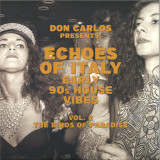
Various - ECHOES OF ITALY – THE BIRDS OF PARADISE – EARLY 90S HOUSE VIBES VOL.2 (2x12")

Googling “paradise house”, the first results to pop up are an endless list of European b&b’s with whitewashed lime façades, all of them promising “…an unmatched travel experience a few steps from the sea”. Next, a little further down, are the institutional websites of a few select semi-luxury retirement homes (no photos shown, but lots of stock images of smiling nurses with reassuring looks). To find the “paradise house” we’re after, we have to scroll even further down. Much further down.

It feels like yesterday, and at the same time it seems like a million years ago. The Eighties had just ended, and it was still unclear what to expect from the Nineties. Mobile phones that were not the size of a briefcase and did not cost as much as a car? A frightening economic crisis? The guitar-rock revival?! Certainly, the best place to observe that moment of transition was the dancefloor. Truly epochal transformations were happening there. From America, within a short distance one from the other, two revolutionary new musical styles had arrived: the first one sounded a bit like an “on a budget” version of the best Seventies disco-music – Philly sound made with a set of piano-bar keyboards! – the other was even more sparse, futuristic and extraterrestrial. It was a music with a quite distinct “physical” component, which at the same time, to be fully grasped, seemed to call for the knotty theories of certain French post-modern philosophers: Gilles Deleuze, Félix Guattari, Paul Virilio... Both those genres – we would learn shortly after – were born in the black communities of Chicago and Detroit, although listening to those vinyl 12” (often wrapped in generic white covers, and with little indication in the label) you could not easily guess whether behind them there was a black boy from somewhere in the Usa, or a girl from Berlin, or a pale kid from a Cornish coastal town.

Quickly, similar sounds began to show up from all corners of Europe. A thousand variations of the same intuition: leaner, less lean, happier, slightly less intoxicated, more broken, slower, faster, much faster... Boom! From the dancefloors – the London ones at least, whose chronicles we eagerly read every month in the pages of The Face and i-D – came tales of a new generation of clubbers who had completely stopped “dressing up” to go dancing; of hot tempered hooligans bursting into tears and hugging everyone under the strobe lights as the notes of Strings of Life rose up through the fumes of dry ice (certain “smiling” pills were also involved, sure). At this point, however, we must move on to Switzerland.

In Switzerland, in the quiet and diligent town of Lugano, between the 1980s and 1990s there was a club called “Morandi”. Its hot night was on Wednesdays, when the audience also came from Milan, Como, Varese and Zurich. Legend goes that, one night, none less than Prince and Sheila E were spotted hiding among the sofas, on a day-off of the Italian dates of the Nude Tour… The Wednesday resident and superstar was an Italian dj with an exotic name: Don Carlos. The soundtrack he devised was a mixture of Chicago, Detroit, the most progressive R&B and certain forgotten classics of old disco music: practically, what the Paradise Garage in New York might have sounded like had it not closed in 1987. In between, Don Carlos also managed to squeeze in some tracks he had worked on in his studio on Lago Maggiore. One in particular: a track that was rather slow compared to the BPM in fashion at the time, but which was a perfect bridge between house and R&B. The title was Alone: Don Carlos would explain years later that it had to be intended both in the English meaning of “by itself” and like the Italian word meaning “halo”. That wasn’t the only double entendre about the song, anyway. Its own very deep nature was, indeed, double. On the one hand, Alone was built around an angelic keyboard pattern and a romantic piano riff that took you straight to heaven; on the other, it showcased enough electronic squelches (plus a sax part that sounded like it had been dissolved by acid rain) to pigeonhole the tune into the “junk modernity” section, aka the hallmark of all the most innovative sounds of the time: music that sounded like it was hand-crafted from the scraps of glittering overground pop.

No one knows who was the first to call it “paradise house”, nor when it happened. Alternative definitions on the same topic one happened to hear included “ambient house”, “dream house”, “Mediterranean progressive”… but of course none were as good (and alluring) as “paradise house”. What is certain is that such inclination for sounds that were in equal measure angelic and neurotic, romantic and unaffective, quickly became the trademark of the second generation of Italian house. Music that seemed shyly equidistant from all the rhythmic and electronic revolutions that had happened up to that moment (“Music perfectly adept at going nowhere slowly” as noted by English journalist Craig McLean in a legendary field report for Blah Blah Blah magazine). Music that to a inattentive ear might have sounded as anonymous as a snapshot of a random group of passers-by at 10AM in the centre of any major city, but perfectly described the (slow) awakening in the real world after the universal love binge of the so-called Second Summer of Love.

For a brief but unforgettable season, in Italy “paradise house” was the official soundtrack of interminable weekends spent inside the car, darting from one club to another, cutting the peninsula from North to centre, from East to West coast in pursuit of the latest after-hours disco, trading kilometres per hour with beats per minute: practically, a new New Year’s Eve every Friday and Saturday night. This too was no small transformation, as well as a shock for an adult Italy that was encountering for the first time – thanks to its sons and daughters – the wild side of industrial modernity. The clubbers of the so-called “fuoriorario” scene were the balls gone mad in the pinball machine most feared by newspapers, magazines and TV pundits. What they did each and every weekend, apart from going crazy to the sound of the current white labels, was linking distant geographical points and non-places (thank you Marc Augé!) – old dance halls, farmhouses and business centres – transformed for one night into house music heaven. As Marco D’Eramo wrote in his 1995 essay on Chicago, Il maiale e il grattacielo: “Four-wheeled capitalism distorts our age-old image of the city, it allows the suburbs to be connected to each other, whereas before they were connected only by the centre (…) It makes possible a metropolitan area without a metropolis, without a city centre, without downtown. The periphery is no longer a periphery of any centre, but is self-centred”.

“Paradise house” perfectly understood all of this and turned it into a sort of cyber-blues that didn’t even need words, and unexpectedly brought back a drop of melancholic (post?)-humanity within a world that by then – as we would wholly realise in the decades to come – was fully inhuman and heartless. A world where we were all alone, and surrounded by a sinister yellowish halo, like a neon at the end of its life cycle. But, for one night at least, happy."

In Stock

Disponibile in Stock e pronto per la spedizione

28,99
GIGI D‘AGOSTINO - Lento Violento...E Altre Storie LP 4x12"

The legendary album „Lento Violento...E Altre Stori“ by Gigi D‘Agostino is now available in an exclusive 4LP edition—a must-have for vinyl enthusiasts and electronic music fans! Originally released in 2007, this groundbreaking album is a milestone in electronic music history, introducing Gigi D’Agostino as the pioneer of the unique „Lento Violento“ style—a fusion of melodic, slow-paced techno beats with powerful, aggressive rhythms.

This special 4LP edition not only preserves the diverse and dynamic tracklist of the original release but also enhances the experience with the unparalleled depth of vinyl sound. A true masterpiece, this album solidifies Gigi D‘Agostino‘s legacy as a visionary and innovator in electronic music. Secure your copy of this exceptional 4LP set and immerse yourself in the signature Lento Violento sound like never before!

In Stock

Disponibile in Stock e pronto per la spedizione

37,40
Lloyd Parks - Officially (Ltd.) (LP )

Limitierte Reissue des Solo-Highlights des legendären jamaikanischen Bassisten Lloyd Banks, "Officially" (1973) mit dem gleichnamigen Single-Hit, das dank der Entdeckung der 4"-AMPEX-Bänder nun erstmals wiederaufgelegt werden konnte. Lloyd Banks war seit den Spät-1960ern Mitglied diverser Reggae-Bands (The Termites, The Revolutionaires, Invincibles, Skin Flesh & Bones, We The People Band, The Professionals), arbeitete mit Legenden wie Dennis Brown, Prince Far I, The Abyssinians, Culture, The Itals oder The Gladiators zusammen und war an Top-Hits wie "Uptown Top Ranking" (Althea & Donna) und "Here I Am Baby" (Al Brown) beteiligt.

In Stock

Disponibile in Stock e pronto per la spedizione

26,01
Cloth - ‘Low Sun’

Cloth

‘Low Sun’

12inchROCKACT150T
Rock Action Records
25.03.2025

Glasgow’s Cloth announce their return with new music by way of a four-track EP and their first release for their new label Rock Action Records. ‘Lucid’ is resplendent yet brooding, offering airy dream-like, haunting vocals over dark guitar riffs and resonating percussion - a perfect moment of minimal alternative rock.

Guitarist Paul Swinton says, “It was the first song we wrote for the EP and it felt like it set a tone for where we should go with the other songs - somewhere darker and bigger. The song is about being wrapped up in a situation you feel you have no control over then realising you do have the ability and agency to change things for the better.” Ice blue coloured 12” vinyl with digital download code. For fans of The xx, Cocteau Twins, Beach House and War Paint.

In Stock

Disponibile in Stock e pronto per la spedizione

16,18
VINCE  GUARALDI -QUINTETA - A Charlie Brown Thanksgiving

Der Soundtrack zum gefeierten Peanuts®-Special "A Charlie Brown Thanksgiving" wird anlässlich des 50. Jubiläums des Specials erstmals veröffentlicht, mit Bonus-Songs und bisher unveröffentlichten alternativen Versionen. Dies ist der vollständige Vince Guaraldi-Soundtrack zusammen mit einigen zusätzlichen Bonusmaterialien, die seit der Aufnahme im Jahr 1973 nicht mehr gehört wurden 21 Tracks. Alle wurden von den originalen 2" 16-Spur-Quellbändern remastert.

In Stock

Disponibile in Stock e pronto per la spedizione

24,33
Tumblack - Tumblack LP

Tumblack

Tumblack LP

12inchBEWITH167LP
Be With Records
21.03.2025

There's iconic. Then there's *iconic*.

A MASSIVE speaker-smashing release, decades overdue. It's been bootlegged - shamefully so, many times over the years - but finally we present the first ever officially licensed reissue of this truly special Afro-disco-not-disco LP from 1979. A favourite of Harvey, Antal, Young Marco and, er, every great DJ to ever play deep records ever, basically. It's not hard to see - or, indeed, *feel* why.

Gem after gem of relentless, irresistibly funky gold, it's an incredibly revelatory album with endlessly complex drum patterns and basslines to dive into, throughout. Truly, this is uniquely FIRE music, unlike anything else you've ever heard, based on Gwo ka music from the gorgeous islands of Guadeloupe and Martinique. A thrilling synthesis of primal, hypnotic drums - the most tribal of percussive elements high in the mix throughout - with the loping synth pyrotechnics of, amongst a whole host of other greats, Wally Badarou and bass power of disco funk don Sauveur Mallia (Arpadys, Spatial & Co.)

Originally released on the seminal French label Barclay, you'd be hard pressed to even find an original copy in nice condition anywhere, let alone for a reasonable price, so it's high time an officially licensed, remastered reissue came around. It's just the latest in a long line of Be With reissues where the music sounds like the - drop-dead dazzling - cover. This here is a true drum attack. BUY ON SIGHT!

Tumblack was a short-lived project, produced and arranged by electronic wizard Yves Hayat and it can certainly be regarded as one of the first examples of Zouk, mixing powerful disco-funk arrangements with Gwo ka, traditional music from Guadeloupe. Gwo ka is an Antillean Creole term for "big drum". You can say that again! It refers to both a family of hand drums and the music played with them, which is a major part of Guadeloupean folk music.Whilst the first side is credited to the exceptional Tumblack band, the flip is given over to "Tumblack & Friends". These weren't just any old friends. Oh no, they were the absolute cream of the French scene (think Arpadys, Voyage, Le Club, Giant, CCPP, Synthesis, Swing Family) such as Sauveur Mallia, Wally Badarou, Marc Chantereau on percussion, Slim Pezin on guitar and Jean-Paul Batailley and Pierre Alain-Dahan handling drum duties.

The urgent, frantic "Fracas" gets things moving straight away with a cavalcade of drums and percussive funk before giving way to the stratospheric "Invocation", one of the album's many, many highlights. It's effectively one long heavenly drum break, a really hard, raw, tribal drum workout without a whole lot else going on - and all the better for it! One to make you sweat, no question. Up next, "Jubilé" is announced with a bellowing accapella voice, chanting the titular name before the heaviest of kicks smashes out your system and lulls you into an absolute state of bliss for nearly 6 minutes. Whoooooosh! Rounding out the sensational A-Side, "Vaudou" is a scratchy, funky patterned drum workout which - yep, yet again - absolutely slays your neck muscles, making them snap and contract in extraordinary fashion. TURN IT UP!

Ushering in the B-Side, the brief, fidgety, African chant-funk of "Parlement" segues seamlessly, beautifully into "Waka", an overwhelmingly rich gem of percussive funk. You do not want this to end, once it hits its stride. For maximum heavenly drum pleasure, you'd need to go a long way than the moment "Waka" feels like it's fading out before it kick-drum-blend into the mighty "Caraïba (Intro)". It's just staggeringly good. It's a minute-long layered drum prelude to the gigantic track which follows. Indeed, "Caraïba" is arguably the best loved and most well-known cut off the LP. And with good reason...featuring that Mallia bass, warm Rhodes and clavs, synth magic, memorably alto sax lines and, of course, tribal chanting.

Another mighty super-ahead-of-its-time classic, the bouncing bass heavy synth funk of "Chunga Funk" deploys Mallia and Wally Badarou (on Mini Moog) exceptionally well. I mean, come on, that bassline is just ridiculous. Try not to move to this one. This extraordinary record closes out with the more traditional Gwo ka sounds of "Bateau La Passé", the tribal chorus making the hairs on the back of your neck stand up.

Tumblack really is a gorgeous late-70s disco-not-disco essential. It's an absolute MONSTER that will completely blow you away; and, yes, it's as compelling and trance-inducing as the cover. The audio for Tumblack has been carefully remastered by Be With regular Simon Francis, ensuring it sounds better than ever. Cicely Balston's expert skills have made sure nothing is lost in the cut whilst the records have been pressed to the highest possible standard at Record Industry in Holland. The cover of Tumblack is so iconic and we sought special permission from original artist Hélène Majera to recreate this at Be With HQ. It absolutely zings off the print and serves as the perfect finishing touch to this long overdue re-issue.

In Stock

Disponibile in Stock e pronto per la spedizione

26,85
Articoli per pagina:
N/ABPM
Vinyl