2024 Repress
Imagine a held-up-in-traffic Wayne Shorter arriving late to a Weather Report studio session and Joe Zawinul, Victor Bailey, and Omar Hakim filling in the time by jamming on a grooving house cut. Had that happened, it might have sounded a little bit like “It Never Stops,” one of two ultra-fresh tracks on Kaidi Tatham's Yore debut. Jazz and house are obviously distinct genres, yet as this irresistible cut makes clear swing is common to both. The other track, the cerebrally titled “One for the Brain,” locates itself closer to house music proper but is no less appealing for doing so.
Given the jazzy vibe of “It Never Stops,” it's fitting that Benji B once deemed Tatham the "Herbie Hancock of the United Kingdom.” Regarded as one of the originators of the Broken Beat sound, the UK-based multi-instrumentalist has worked with many an artist, from Bugz In The Attic and The Herbaliser to DJ Jazzy Jeff, and his session work credits list Slum Village, Amy Winehouse, Soul II Soul, and others. His own discography includes EPs and releases for labels such as 2000 Black, First World Records, Theo Parrish's Sound Signature, Eglo Records, and now, of course, Yore.
“It Never Stops” rolls in on a wave of silky synthesizer textures and percolating precision with a tight, funky groove that instantly pulls you into its velvety world. Triangles, electric bass, and clavinet add collective radiance to the material as the tune struts its way into your psyche. As if to make the jazz connection even more explicit, Tatham works an acoustic piano solo into the cut's second half before shifting focus back to the groove for the coda. “One for the Brain,” by comparison, digs into its chugging house pulse with fervour whilst also sweetening the arrangement with painterly synth flourishes. This one charges with breathless determination and like “It Never Stops” nods in jazz's direction with the inclusion of a freewheeling piano solo. Every minute and second on this strictly limited 12“ release seem's meaningful. No Represses / Limited 200 Copies.
Buscar:am unit
The Space Lady began her odyssey on the streets of San Francisco in the late 70s, playing versions of contemporary pop music an accordion and dressed flamboyantly, transmitting messages of peace and harmony.
Following the theft of her accordion, The Space Lady invested in a then-new Casio keyboard, birthing an otherworldly new dimension to popular song that has captured the imaginations of the underground and its lead exponents ever since, with the likes of John Maus, Erol Alkan and Kutmah being devotees.
Of her early street sets, only one recording was made, self-released originally on cassette and then transferred to a home-made CD. "The Space Lady's Greatest Hits"(LSSN021) features the best of these recordings - mostly covers but with some originals - pressed on vinyl for the first time and features archival photographs and liner notes from The Space Lady herself. 'Greatest Hits' contains The Space Lady's personal favourites; her haunting take on The Electric Prunes' 'I Had Too Much To Dream (Last Night),' a frantic 'Ballroom Blitz' amidst other reconstructed pop music. Included are also 4 originals that easily match for the Pop canon. Following the release of this archive, The Space Lady will be issuing new material and travelling the world to present her message outside the United States for the first time.
In the mid 90s The Space Lady packed away her Casio synth and silenced her distinctive voice, retiring from the streets of San Francisco. Now, more than 30 years after her initial forays on Haight Ashbury, she has surfaced with the first ever official release of her timeless, startling music and, even more remarkably, has re-started her live career. Now in Colorado, The Space Lady continues to spread her message of peace, harmony and love.
VINYL LP: Edition of 500, black Vinyl. Gatfold Poster and printed insert with Download Card.
Warehouse Find!
Seems like something's going on across the pond at the moment with seemingly blossoming, or at least rejuvenated scenes in the United States and Canada. Our last handful of releases on Freerange have included artists from Montreal, Tujuana, Pittsburgh and Chicago and we're about to add Los Angeles to the list with this new one from Justin Jay and Ulf Bonde. The young producers have been steadily building steam with a number of fine releases the last couple of years
and we welcome them to Freerange for their debut EP entitled Indecision. The title track sets the mood with a low-slung, super-deep house groove complete
with an intimate vocal and a charming simplicity which contributes to the powerful end result. Elements come into focus then disappear in a fog of reverb whilst playful guitar picks add a live jammed feel to the loping groove giving things a Bob Moses/Francis Harris kind of vibe. Next up is Justin's own Dub version which steers a similar course but focuses on
a more floor-friendly arrangement and minimal vocals.
Flipping over we have Giegling and White regular Edward taking the reigns and working his magic on an incredible, epic remix of Indecision. Those who follow his every move as we do here at Freerange might have some idea of what to expect.
The result is a glorious, almost ten minute long fusion of ambient, dub techno and deep, sub-aquatic house to lose your marbles to. It's fairly pointless trying to describe the delicate twists, turns and subtle details that make up this piece, suffice to say, it's the kind of track that makes you feel warm and fuzzy inside.
Closing the digital release we have a bonus track in the form of I See You. Once again, Justin and Ulf have created a heady mix of delicate vocals, dubby atmospherics and a crisp beats which drive the groove along perfectly.
Pull the Rope, the new record by Ibibio Sound Machine, casts the Eno Williams and Max Grunhard-led outfit in a new light. The hope, joy, and sexiness of their music remain, but, further honing the edge of their acclaimed 2022 album Electricity, the connection they aim to foster has shifted venues from the sunny buoyancy of a sunlit festival to a sweat-soaked, all-night dance club. Williams and Grunhard attribute this shift to a matter of collaborators, recording Pull the Rope with Sheffield-based producer Ross Orton (Arctic Monkeys, M.I.A.) over the course of two weeks. The way the pair wrote songs changed significantly_rather than Eno penning lyrics to music generated by Max and company's jamming, Orton started with Eno and Max writing together before adding the band. With less time in the studio and a new way of considering how they built songs, the duo found making decisions about Pull the Rope's sound quicker and more instinctual than before. "Ross is from Sheffield, which has an edgier, more industrial vibe than London," Grunhard explains. "He hears things differently than us, is more grounded in rave and grungier sounds, and knew when to add drums or push the instrumentation more. It was very different for us, but it lends itself to where Ibibio Sound Machine is going." In melding their songwriting process, Grunhard and Williams have, impossibly, pulled the trick of making Ibibio Sound Machine a tighter band than ever before, building out from their core in a way that highlights the electrifying group of musicians they play with. Rather than recording with the full band in the room, Pull the Rope was sculpted, elements added and shaped by Grunhard, Williams, and Orton along the way. As a result, Pull the Rope is a nimble, sleek machine that's thrilling from the first note of the opening title track, Eno's otherworldly voice and PK Ambrose's throbbing bass driving through a kaleidoscopic array of house, post-punk, funk, Afrobeat and disco, bangers and ballads, making an argument for unity that begins on the dancefloor. "We are the places we grew up, the places we've been, and the people we've met along the way," Williams says. "Hopping around the globe, we've found that people are fundamentally the same_they're people. Opposing sides push and pull, but there is an alternative to war, violence, and suffering." Lead single "Got to Be Who U Are" literally globetrots, name checking locales across the world that would feel disparate were it not for how well-traveled they are. Eno growing up in the musical melting pot of the Ibibio region of Nigeria and Max being a conservatory-trained musician from Australia, one could call their meeting in London and formation of Ibibio Sound Machine predestined. "Mama Say" and "Let My Yes Be Yes" touch themes of female empowerment. They're indicative of the band's depth as they push further into the electronic; "Mama Say" hits notes of electropop while "Let My Yes Be Yes" fuses electro to Afrobeat. Ibibio Sound Machine have always imbued their music with political consciousness, and the light that shines through in Williams' vocals and voice has never felt more necessary. The sound of Pull the Rope, then, is hope in darkness, bliss in spite of bleakness. Once again, Ibibio Sound Machine are here to provide the soundtrack to the best night of your life, and the better world to come.
"With a career spanning more than eight decades, The Isley Brothers have one of the longest, most influential and most diverse careers in popular music. The group began in 1954 as an American family music group originally from Cincinnati, Ohio, which began as a vocal trio consisting of brothers O'Kelly Isley Jr., Rudolph Isley and Ronald Isley. The Isley Brothers have sold over 18 million records in the United States alone. Go For Your Guns is the fifteenth album by The Isley Brothers. Originally released in mid-April 1977, the album peaked a month later at No. 1 on Billboard's Top Soul chart, and at No. 6 on the Billboard 200. The album Includes ""Footsteps In The Dark"" as sampled by hip hop artist Ice Cube for his hit ""It Was A Good Day"". The song peaked at No. 7 on the Billboard Hot R&B/Hip-Hop Songs chart and No. 25 on the 1993 Billboard Hot R&B/Hip-Hop Songs chart.
Go For Your Guns is available as a limited edition of 1500 individually numbered copies on translucent blue coloured vinyl. The album is housed in a gatefold sleeve and includes an insert. "
Go For Your Guns by The Isley Brothers, released 3 May 2024, includes the following tracks: "Tell Me When You Need It Again (Part 1 & 2)", "Voyage To Atlantis ", "Go For Your Guns" and more.
This version of Go For Your Guns comes as a 1xLP in a(n) Gatefold Sleeve packaging. This release comes with (a) Insert(s).
The vinyl is pressed as a translucent, blue disc.
Pull the Rope, the new record by Ibibio Sound Machine, casts the Eno Williams and Max Grunhard-led outfit in a new light. The hope, joy, and sexiness of their music remain, but, further honing the edge of their acclaimed 2022 album Electricity, the connection they aim to foster has shifted venues from the sunny buoyancy of a sunlit festival to a sweat-soaked, all-night dance club. Williams and Grunhard attribute this shift to a matter of collaborators, recording Pull the Rope with Sheffield-based producer Ross Orton (Arctic Monkeys, M.I.A.) over the course of two weeks. The way the pair wrote songs changed significantly_rather than Eno penning lyrics to music generated by Max and company's jamming, Orton started with Eno and Max writing together before adding the band. With less time in the studio and a new way of considering how they built songs, the duo found making decisions about Pull the Rope's sound quicker and more instinctual than before. "Ross is from Sheffield, which has an edgier, more industrial vibe than London," Grunhard explains. "He hears things differently than us, is more grounded in rave and grungier sounds, and knew when to add drums or push the instrumentation more. It was very different for us, but it lends itself to where Ibibio Sound Machine is going." In melding their songwriting process, Grunhard and Williams have, impossibly, pulled the trick of making Ibibio Sound Machine a tighter band than ever before, building out from their core in a way that highlights the electrifying group of musicians they play with. Rather than recording with the full band in the room, Pull the Rope was sculpted, elements added and shaped by Grunhard, Williams, and Orton along the way. As a result, Pull the Rope is a nimble, sleek machine that's thrilling from the first note of the opening title track, Eno's otherworldly voice and PK Ambrose's throbbing bass driving through a kaleidoscopic array of house, post-punk, funk, Afrobeat and disco, bangers and ballads, making an argument for unity that begins on the dancefloor. "We are the places we grew up, the places we've been, and the people we've met along the way," Williams says. "Hopping around the globe, we've found that people are fundamentally the same_they're people. Opposing sides push and pull, but there is an alternative to war, violence, and suffering." Lead single "Got to Be Who U Are" literally globetrots, name checking locales across the world that would feel disparate were it not for how well-traveled they are. Eno growing up in the musical melting pot of the Ibibio region of Nigeria and Max being a conservatory-trained musician from Australia, one could call their meeting in London and formation of Ibibio Sound Machine predestined. "Mama Say" and "Let My Yes Be Yes" touch themes of female empowerment. They're indicative of the band's depth as they push further into the electronic; "Mama Say" hits notes of electropop while "Let My Yes Be Yes" fuses electro to Afrobeat. Ibibio Sound Machine have always imbued their music with political consciousness, and the light that shines through in Williams' vocals and voice has never felt more necessary. The sound of Pull the Rope, then, is hope in darkness, bliss in spite of bleakness. Once again, Ibibio Sound Machine are here to provide the soundtrack to the best night of your life, and the better world to come.
In the dimly lit corners of a nondescript basement party, amidst the cacophony of laughter and clinking glasses, a pulsating beat cuts through the haze of alcohol-induced euphoria. It's a track that none have heard before, yet it feels instantly familiar, echoing the electrifying energy of Underworld's iconic 'Born Slippy'. The song, discovered by accident during a drunken deep-dive into the depths of an online music platform, becomes the unexpected anthem of the night. Titled "Macht over het Stuur", this track is an odyssey of sound, blending relentless techno rhythms with haunting, ethereal vocals that seem to drift in from another world. The opening notes are a siren call, drawing listeners into a whirlpool of synths and beats that mimic the heartbeat of the city at night. It's music that doesn't just want to be heard; it demands to be felt, pulsating through the veins and igniting a fire in the soul. As "Macht over het Stuur" unfolds, it weaves a narrative without words, telling tales of fleeting connections, electric glances, and the raw, unfiltered essence of human emotion. It captures the spirit of those who chase the dawn, those who find beauty in the blur of lights as they speed past on their way to nowhere. The track is a paradox, both a celebration of the present moment and a longing for something just out of reach, a sound that encapsulates the feeling of being utterly lost yet exactly where you're supposed to be. The discovery of "Macht over het Stuur" on that drunken night feels like unearthing a treasure, a secret shared among friends that would soon ripple out to captivate a wider audience. As word of the track spreads, it becomes more than just a song; it's a movement, a collective memory etched into the minds of those who experienced it firsthand. It stands as a testament to the power of music to unite, to transform an ordinary night into something magical, a reminder that sometimes, the most unforgettable moments are those we never see coming.
- A1: Sharkey - Someone Like Me
- A2: Lynne Ann Kingan - If You Love Me - Hate Me
- A3: James Thornbury - So Tan
- A4: Jim Huxley - Only A Song
- A5: Charlie Webster - Snodland
- B1: The Bob Hughes Band - You Broke My Heart
- B2: Goldrust - Going Yesterday
- B3: Jim Kennedy - You Are The Reason
- B4: Jon Betmead - Marie Elene
- C1: Charles Murphy - The Foot That's Holding Me Down
- C2: Remnant - I Will Set You Free
- C3: Fred Potts - Following Rainbows
- C4: The Superwomen - Lowlands
- D1: Robison Kaplan Ltd - Don't Say Goodbye
- D2: Gary Ramey - You Are His
- D3: John Agostino - Loss Of Love
- D4: Ritchie Tierney - Please Stop Breaking Me Down
A humanity-reminding suite of miracle moments, Someone Like Me unites a geographically unbound cast of real people in pursuit of a meaningful connection. Taping their lived experience in economic studios in quiet English counties, Pacific Northwest woodland retreats and the big city bustle of Sydney and Los Angeles, these kindred spirits rendered sheer beauty in the process. Custom pressed folk songs of love, loss and the lord saviour.
Illuminating minor works from seasoned players such as former Syndicate Of Sound chart-topper Sharkey and late-era Canned Heat lynchpin James Thornbury, the collection simultaneously honours the fleeting amateurism of hobby musicians. With their one shot at tangible vinyl, freshman Lynne Ann Kingan realised her loose bubblegum rocker on campus time, while U.S. Navy recruit Fred Potts cut his unconditionally serene ballad remotely stationed on a Spanish naval base. Spartan production continues to reign with Jon Betmead’s hair-raising gospel, howling into infinite space, and Goldrust’s stripped back garden hymn.
Throughout the hour-long reflection, faith has an intermittent yet revelatory presence, most overtly with the divine choral soul of Seventh-day Adventist quartet Remnant. More subtly, Gary Ramey and Jim Kennedy both turned to song in their spiritual quests, offering their all to a universal power. An irrefutable compilation cornerstone, the National Office For Black Catholics showcased Charles Murphy’s lionhearted account of the Black experience at a 1971 concert. Five years earlier, high school seniors The Superwomen would use their hauntingly angelic harmonies to address racial inequity with a breathless take on ‘Lowlands’.
Reaching the furthest corners, Someone Like Me secures the inaugural licence of three homespun masterpieces. Discovered by fluke in the digital haystacks of Youtube and Soundcloud, Jim Huxley’s bedroom pop earworm melds peacefully into Charlie Webster’s synthesized reverie. Meanwhile, Hollywood’s John Agostino introduces us to the bizarre world of tax scam records, with the artist only now learning that his tender psych-folk demos were leaked via a 1977 bootleg.
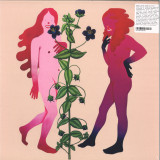
Compiled and lovingly restored by armchair digger Mikey Young (Eddy Current Suppression Ring/The Green Child), Someone Like Me pays due service to seventeen rarefied journals of truth and devotion. Adorned with visual artist Chris Fallon’s figure and flora dream extractions, the uniting songbook is further detailed by expansive track-by-track liner notes and a forward from San Franciscan poet Rod Roland.
With $10 Cowboy, Charley Crockett didn’t set out to make a themed record. He had released a concept album in 2022, the critically acclaimed Man From Waco, propelling Crockett to new heights and establishing him as one of the leaders of a sparkling revival of traditional country and folk music. For the follow up album, Crockett wrote freely, over a two-month period, as he wound his way across the United States on the back of a tour bus. The resulting songs—raw, personal, vivid portraits of a country in transition—ended up being connected after all. “This material is written at truck stops, it’s written at casinos, it’s written in the alleys behind the venues, it’s written in my truck parked up on South Congress in Austin,” explains Crockett. “A ramblin’ man like me, a genuine transient, is in a pretty damn good position to have something to say about America.” As the album unfolds, you begin to understand that a $10 Cowboy is anyone who has hustled to get by, who didn’t fit in, who has slept on other people’s couches, or the street, who has fallen down, gotten up, and ventured from home chasing a paying gig, or a new start. “Being out on the road gives you a first-hand experience of how different kinds of Americans see themselves as going through some kind of great struggle,” Crockett says. “The roughneck working the oil and natural gas fields in West Texas. The single mother raising kids by herself. The young man working a street corner because he thinks it's his only option. I would be dishonest if I said I couldn’t see the thread. Each of ‘em feel invisible. I am struck by the battles they are fighting internally, and the ways they have been entrapped by what America says they are.” The album was recorded at Arlyn Studios in Austin, produced by Crockett and his long-time collaborator Billy Horton. It was recorded live to tape, with anywhere from 6-12 musicians and backup singers on each track, giving the songs the feel of a live performance. It’s a sound Crockett has been after for years. “Reason I cut it on tape is because when you got the right people in the room, and the great players rise to the occasion when that red light is on and the tape is rolling, you get the magic of a great performance.” It's exactly what he achieved with $10 Cowboy. Regular bandmates Fox, Nathan Fleming, and Mayo Valdez are joined by some of the genre’s most talented players—Rich Brotherton, Kevin Smith, Dave LeRoy Biller, T. Jarrod Bonta and others, including a string quartet. Lauren Cervantes and Angela Miller sing on the album. While the musicianship and accompaniment are exquisite, they are also subtle, placed joyously, yet judiciously across the album. No, Crockett didn’t set out to write a themed record. Or, through his studied eye, to find America. But with $10 Cowboy, he might have done both.
Wolfgang Tillmans’ latest album, Build from Here, is driven by a desire to explore and to expose. It navigates joy and heartbreak amid ruin and rebuilding, embodying hopeful defiance in uncertain futures. The songs vary in style, from propulsive and catchy to contemplative, featuring lush instrumentals transitioning into danceable beats. Tillmans’ voice, whether growling and confrontational or tender and stripped down, maintains its prominence throughout, serving as the album's core.
Released on 180-gram vinyl including sleeve notes and rare photos.Recorded Live at Basins Nightclub in February 1987, 12 songs including the hits that made Desmond Dekker an international reggae star. Desmond Dekker's contribution to Jamaican ska, rocksteady and reggae is unique with his amazing songwriting and wonderful vocal talent.His song "Israelites" reached the top of the UK Singles Chart in 1969 and was one of the first reggae songs to gain widespread popularity outside of Jamaica. The song's success helped bring reggae music to a global audience. Desmond Dekker's music often featured themes of everyday life, love, and social issues, and he played a significant role in popularizing Jamaican music genres.Desmond's other successful songs include "007 (Shanty Town)," "It Mek," and "You Can Get It If You Really Want".His contributions to the development of Jamaican music have left a lasting impact, and he is remembered as one of the pioneers of reggae and a key figure in the genre's international success.Recorded Live at Basins in 1987, here you have a live performance of 12 songs including the forementioned hits that made Desmond Dekker an international reggae star.
Ever since their auspicious beginnings, more than a decade ago, Laughing Bastards have giddily delighted in impurity. Initially a reeds-guitar-bass trio modeled after the classic Jimmy Giuffre 3, the band has remained truthful to its original spirit. Saxophone player Michel Mast and guitarist Jan-Sebastiaan Degeyter have remained its core, but the band went through several permutations, first welcoming Eline Duerinck (cello) and Marcos Della Rocha (for Unanimal in 2019) and solidifying its present-day line-up with bassist Cyrille Obermüller.
Bastards. It's kind of a rude word to throw around carelessly, but there has always been that element of being irregular, being too stubborn to comply with what is expected, that has set them apart. This is nowhere more evident than in the material contributed by Degeyter, who wrote more than half of the album's compositions. A talented illustrator and designer (he created a few of their striking album covers) as well as a versatile guitarist, Degeyter always manages to add a strong visual component to his material. In combination with his knack for pulling exotic influences into the band's overall sound, it leads to a playful, cinematic eccentricity.
"Tigraman" and "Black Spoon" are examples of this. Both are infused with an Ethiopian-tinged sound, but while the first one develops the catchy throbbing of a trance-like soul/rock tune, the second exudes the lush cadence of Golden Age Ethio jazz, the kind that gets under your skin with those sensual, irrepressible rhythms. They are a nice match with the increasing drama of the Slavic-tinged "Red Lemon", the slow, dreamy flow of the Jamaican dance hall-inspired "Sand", a strong feature for Duerinck, and "Dosi", that shows Obermüller's knack for propulsive melody.
The synesthete in Degeyter gets free reign in "Calliope", chamber jazz in which sweeping sax and cello are kept grounded by guitar, bass and drums. Mast's odd meter-song "Fetish" is another showcase for the band's effortless dancing and some gorgeous tenor schmooze. Della Rocha's "Turquoise" starts off in brooding, contemplative way and keeps simmering on a low, glowing fire. To top it off, there are a few covers that remind you of the band's origins. A new take on Giuffre's rootsy "The Train and the River" stresses their loose flexibility with an Americana style somewhat reminiscent of Charlie Haden, while Carla Bley's evergreen "Vashkar" gets a carefully constructed makeover to close out the album with grace.
On their latest album, Laughing Bastards prove they are a quintessential Belgian band - soaking up sounds and influences from all over the place while maintaining a tight unity - with an international appeal. Combining jazz and chamber music with ideas from pop music and multi-colored strains does not only give their music an iridescent edge, but also keeps the interplay fresh and inspired, something to return to while waiting to see them live on stage.
Black Vinyl[26,26 €]
Honed on the sounds of krautrock, post-punk, no wave, and drone, American instrumental trio Verstärker is a sound and a vision united in the quest for motorik space exploration. Following on from
their sold-out 2015 debut ‘Aktivität’, which saw the band pick up a fastgrowing reputation in the psych underground, Verstärker’s second album ‘Jenseits’ is released in April 2024 on Fuzz Club.
Edoardo Florio Di Grazia is a Cantautore (singer-songwriter) and story collector from the Amalfi coast, born in Florence and living in Paris, of a Neapolitan family..
Edoardo tries, like an antenna, to pick up signals and transform them into songs. Writing songs allows him to travel and unite distant worlds, to create imaginary landscapes on which to dream up new music: the Amalfi rocks of Tangier harbor can lead directly to a house in Belleville overlooking a Florentine piazza.
Edoardo is also a writer, with a PhD in medieval history from the University of Florence, a podcast author, radio show host, and DJ Selector, a compulsive Digger constantly on the lookout for the rare gem. He will publish next spring "Italia Express" the podcast produced by Radiooooo. It is a journey in five stages through the main Italian cities (Naples, Rome, Bologna, Milan, and Genoa) to discover music and history, from the post-war period to today.
After a first EP “Indossare Il Mare” released in June 2023, the spring of 2024 will see the release of “Ambra e Corallo”, Edoardo Florio Di Grazia’s first album, produced by the Parisian afro-beat label Comet Records (Tony Allen, Ebo Taylor, etc.). 9 songs about journeys, a small collection of stories found in the deep and mythological Mediterranean Sea. Like bottles in the sea, these songs belong to no one and are timeless, messages whispering us the dream of a new path to explore. The story of his first album, "Ambra e Corallo" has the flavor of a novel, the aftertaste of a contemporary fairy tale.
The vinyl includes a QR Code booklet featuring lyrics, liners notes, photos..
Reissue of early Japanese house outing by Junichi Soma, Shuji Wada and Katsuya Sayo. Comes with insert with liner notes.
All musical movements require a spark to set them alight; in the case of Japanese house music, that spark was provided by the forward-thinking resident DJs of The Bank in Roppongi, Tokyo. In 1989, to celebrate the ground-breaking club’s first birthday, the venue released a 12” EP featuring first-time productions from three of its DJs, Junichi Soma, Shuji Wada and Strong Katsuya AKS Katsuya Sayo.
Widely considered to be one of the first ever EP of house music produced in Japan, 1st Unit was never officially released. Instead, 500 of the 1000 copies pressed were given away at The Bank’s first birthday party, with the rest initially being sold not in local record stores, but rather the venue’s own in-house shop. Three decades on, the 12” is finally set to get its first worldwide release via Rush Hour’s Store JPN Series.
The record has its roots in The Bank’s willingness to give its ever-changing roster of DJs a free hand to play what they liked – at the time a rarity in Tokyo nightclubs, whose musical offerings usually revolved around strictly defined playlists. At The Bank in 1989, it was not only common to hear European body music and the kind of post-disco New York productions associated with Larry Levan’s sets at the Paradise Garage, but also acid house – something not offered at the time by other clubs in the city.
This cutting-edge blend of sounds, combined with the venue’s unique decor (it was modeled on the inside of a London bank, complete with a cashier’s window to take entrance fees), made The Bank a go-to spot for young party-goers, celebrities and forward-thinking Japanese musicians (Ryuichi Sakamoto was reportedly a weekly visitor).
When it came to celebrating the club’s birthday by cutting a unique record, it made sense for The Bank’s owners to turn to three of their most exciting resident DJs, who were assisted by Heigo Tani and Jun Ebi. The collective name, 1st Unit, was chosen to reflect the fact that all three resident DJs were debutants with no previous studio experience.
As this reissue proves, the music remains timeless, magical, and authentic to the sound of American house productions of the period – albeit with occasional twists,. Katsuya Sano’s EP opener, ‘I Need Love’, sounds like a twist on Larry Heard productions of the period – all jacking TR-909 drums, undulating analogue bass, dreamy JUNO synthesizer chords and evocative vocal samples.
The influence of Chicago acid house is also evident on Junichi Souma’s ‘Ubnormal Life’, whose unusual title contains what he says was an intentional misspelling. Driven forwards by restless drum machine handclaps, sweet chords and rising and falling melodic motifs, the track is an energetic and uplifting treat.
Perhaps the most influential of the three tracks at the time – within Japan at least – was Shuji Wada’s similarly misspelled ‘Endless Load’. Deeper and more melodic with a more expansive arrangement, the track’s combination of marimba-style lead lines, tribal drum patterns, dreamy chords and jazz-funk influenced bass offered a loose blueprint for the more successful and better-known Japanese deep house tracks that followed.
Memories are, to say the least, complex. They can weigh us down like stones or be treasured in their unresolved ambivalence. In Ciro Vitiello’s debut album, they take on a dynamic and elusive nature, both bouncy and tricky, moving away when approached and dipping into the haze of the subconscious. Dreams, in turn, find their shape through memory itself. The Island Of Bouncy Memories is, for Vitiello, a place populated by reveries and hypnagogic impressions, interwoven with the imprints of childhood experiences—a threshold between the comforting embrace of nostalgia and the acceptance of adulthood.
The album's inception traces back to a collection of toy recordings initially amassed by Vitiello as a backdrop for his wide-weave synthetic fabric. Evolving these initial sketches, the Naples-born artist intended the 13 tracks to form a continuous flux of undeciphered impressions. Repeating motifs phase in and out of the cloudy ambience, punctuating the inevitable waves of melancholy with delicate melodic structures.
Crucial to the album's development were contributions from vocalist Zimmy, vocalist/guitarist CRÆBABE and guitarist Attilio Novellino. Their input not only expanded the sonic palette but also cultivated themes and poetic scenarios through intense and sincere exchanges of personal experiences, recurring dreams, and childhood remembrances. CRÆBABE’s lyrics, in particular, provide an adult counterpoint to the album's more childlike elements—a map of murmured relics and epiphanies as she sits in conversation with herself.
The music's emotional depth envelops Vitiello's Island in an ocean of pure sensitivity, its tides drifting through apparitions of talking animals, reminiscent of those in his recurring dreams. At other times, it reflects the tragic echoes of Nisida—an island off the coast of Naples, infamous for hosting a youth detention center.
The Island of Bouncy Memories is a meditative reconnection with the past, a puzzling journey through pain and acceptance. Notably it marks the first-ever co-production between Hundebiss and Haunter Records, uniting two main players in the Italian electronic and experimental scene in an unprecedented collaboration.
“Great Doubt” is the third full length LP by Danish composer Astrid Sonne. Throughout her acclaimed discography, Astrid Sonne has been carefully crafting different moods through electronic and acoustic instrumental endeavours. On “Great Doubt” this skill is refined, now with the distinct addition of the composer's own vocal in front. The tone of each track is unmistakably Sonne’s, structured around contrasts through an impeccable sense of timing. Lyrics on the album are sparse, merely highlighting different scenes or emotional states of being, leaving the music to fill in the blanks. Yet they also form a pattern of ambiguity, consolidated through the album title, searching for answers through looking at how and what you are asking, questions for the world, questions of love. The viola, a trusted companion since Astrid Sonne’s youth, appears effortlessly throughout the album, fully integrated into the sonic universe; through a pizzicato driven arrangement in the poignant track “Almost” or along with booms and claps in mutated cinematic stabs during “Give my all”, paraphrasing Mariah Carey's 1997 ballad. Yet the string section also gives way to explorations of woodwinds, counterbalancing the bowed movements with digital brass and airy flutes. Finally, beats and detuned piano are fresh additions to the soundscape, cementing how Sonne’s practice is always evolving into new territories. In fall 2022, Astrid Sonne relocated from Copenhagen with its peers of artists such as ML Buch, Erika de Casier and Smerz, to live in London, where musicians of the South-East London scene like Coby Sey, Lolina, Still House Plants and Mica Levi provide a new inspirational framework. “Great Doubt” bears witness to both of those geographical locations, yet finds itself in its own unique space, in many ways due to the presence of Sonne's voice throughout. A voice that has always been present in her work, but never fully explored as a solo instrument before now. Astrid Sonne elaborates on the wish to work more in depth with the voice: “I come from a tradition of choir singing where I’ve used my voice as a way of creating unity with other voices. I’ve disciplined my voice in a certain way and this album is an exploration of me trying to find my own voice as an instrument, as a communicator, as a new way of being honest.” Questions take up a central role throughout the album. The doubt is both a blessing and a curse, always lying in-between, acting as both what holds back and drives forward. A metamorphosis not going anywhere. The great doubt takes place in a space of courage, chances, love, loss, gifts and surprises. Genre: Electronic / Experimental
Nia Archives is the star at the forefront of the latest era of jungle. Since her emergence in 2020, her collagist soundscapes have helped bring the sound to a new generation of clubgoers (though fair warning: don’t call her a “revivalist” – she’s the first to point out that the scene never went away). So when it comes to talk of the 24-year-old producer, DJ, singer and songwriter’s much-anticipated debut album, the odds are you’re thinking of a full-length record of weightless jungle tracks with basslines so intense they’ll leave your ears ringing.
But the reality of the Bradford-born, Leeds-raised artist’s first ever album – while very much replete with that exquisite jungle sound she does so well – is also doing something a little different. On the thrilling and freeing Silence Is Loud, Nia Archives is looking to make music for beyond the rave. As she explains: “I think music can be experienced in different ways, and there’s different kinds of music for different scenarios. Say you’re at a festival listening to music with thousands of other people, that can feel really uniting. But then you might listen to an album on your own in the bus, or in a taxi; and this project is definitely more a record to sit and listen to than a collection of club tracks.” Nia is intent that Silence Is Loud is taken in as a full body of work of something “more song-focussed, putting interesting sounds on jungle.” It means that this is a record which finds gloomy Britpop, warm Motown, soaring indie, a love for Kings of Leon’s Aha Shake Heartbreak, skittering IDM, Madchester, classic rock, old skool hardcore and more, woven and fused into her ragga and junglist tapestry, all layered with feeling, imbued with her songwriterly lyricism about loneliness, relationships, family, navigating her 20s, and the intense potential power of silence.
The vast sonic palette on Silence Is Loud comes down to Nia’s broad array of influences through her life. With her Jamaican heritage, Nia remembers hearing jungle as a child via her nana, as well as at Bradford Carnival, where she was drawn to the soundsystem culture, dancing carefree on the floats in the parade. The first album she ever bought was Rihanna’s debut, Music of the Sun, and she also went to Pentecostal church back then, and was obsessed with gospel. Aged 16, she moved to Manchester, where she didn’t really know anybody: and so, her solution to meeting people was going out. “Partying was a huge part of my life,” she says, “They used to do little freestyle cyphers at the house parties and I would join in – that’s kind of how I got into singing.” She had found music boring at school, but in meeting all these new people she became interested in making her own music as a hobby. “I was making boom-bap kind of stuff which I didn’t really like in the end,” she laughs, “My lyrics are quite deep, so on a hip-hop beat it all sounds really depressing. I wanted people to dance to my music.” And so she began experimenting with faster tempos alongside that melancholy songwriting, teaching herself how to make beats on Logic: “It’s all been a lot of trial and error, really.”
Nia went to study music in London, and was also interested in visual art, making collages and VHS: “Before the music, I was trying to make a visual archive of my life and the people around me,” she explains, “And then my music was like my diary, and a sonic archive, as well.” Hence, she paired the word “archives” with her middle name, Nia. To this day, in her spare time she’s working on pulling together a documentary on the global nature of the jungle scene.
Back on those first two EPs, Headz Gone West (2021) and Forbidden Feelingz (2022), she honed that junglist sound, painting it with new flecks of colour and vibrance. It was only after she started releasing work that she realised pursuing music could be a viable life path for her. The decision has been paying off ever since. Nia Archives placed third in the prestigious BBC Sound Poll for 2023, alongside garnering a nomination for the Brit Awards’ Rising Star prize, plus wins at the DJ Mag, NME, the MOBOs and Artist and Manager Awards. She has also toured the world – be it North America, Europe or Asia – and even opened a show in London as part of a little something called Beyoncé’s Renaissance World Tour. She’s renowned as a party-starter in her own right, too, with takeovers at Glastonbury, Warehouse Project and her own Bad Gyalz day event. She’s done official remixes for the likes of Jorja Smith, had a huge summer hit with her Yeah Yeah Yeahs rework ‘Off Wiv Ya Headz’, and worked with brands like Corteiz, Nike, Flannels, Burberry, FIFA and Apple. In just three years, it’s fair to say that Nia Archives has become a need-to-know name in dance music.
But Nia is not interested in being one fixed thing. Building on the terrain from her third EP, Sunrise Bang Ur Head Against Tha Wall, the universe of Silence Is Loud is not totally unfamiliar territory; but it’s still emblematic of a bolder scope than we’ve heard from the artist before. Working with Ethan P. Flynn (the songwriter and producer known for his work with FKA twigs and David Byrne), the resulting record is an impressive feat of deftly-sculpted textures; sometimes big and euphoric, like the wobbly, lusty bass of ‘Forbidden Feelingz’, or elsewhere notably gentle and quiet – see: the gorgeous, surprisingly drumless ‘Silence Is Loud (Reprise)’, a heartfelt number that sits somewhere in the school of Adele. “I really sharpened my songwriting skill on this project,” Nia says, “I was really intentional about what I was writing about, and I really loved co-producing with Ethan. His process is so different to anyone I’ve worked with before, and he’s got a kind of DIY set-up like me.” Flynn’s flat overlooks the Barbican, adding that unquantifiable futurist urban quality that the area holds to the music. The pair enjoyed the collaborative process so much that the album was done within three and a half months.
Perhaps this is why Silence Is Loud maintains an exuberant immediacy while still being sleek and spacious, interspersed with flourishes of metallic beats, lush melody and topped with her sugary but powerful vocal, floating over it all. There is an intimacy to the record, perhaps in part due to Nia writing most of her lyrics while sitting in bed in her flat in Bow (once a bedroom producer, always a bedroom producer). You can hear it on the refrain for lead single ‘Crowded Roomz’, which finds rippling guitar lines cutting taut through the beats as Nia refrains: “I feel so lonely crowded rooms.” The song is an examination of life on tour, constantly surrounded by people, but not necessarily those she can be herself around; more than that, the track is exemplary in the category of sad bangers.
Silence Is Loud often finds itself in that push and pull between melancholy and euphoria. There’s a celebration of her unconditional love for her younger brother (the title track), a rumination of an evening with an Irish boy she met by Temple Bar (‘Cards On The Table), or a letter to herself on the light and airy ‘Unfinished Business’, even coming to terms with a lover having a past they haven’t quite processed yet (“nobody comes with a clean slate”). The latter was recorded the week after a music festival, and accordingly captures Nia’s vocal in its not quite healed, husky state.
Nia’s work is always a snapshot of where she’s at when she’s making it. This might not be the debut album you were expecting, but that’s what makes Silence Is Loud so special. Nia Archives has learned the rules of her sound, and is unafraid to break them, pushing jungle and herself into new, unchartered territories that, in turn, go some way to map the history of the greats of British dance music. More than that, it plants her firmly in that lineage.
Although it felt like the world had stopped spinning, at times, it was during these days, months, and years of uncertainty that many of Venice’s “Stained Glass” songs were conceived. Each member of Venice was quietly and privately cataloguing their artistic interpretation of this new reality and uncertainty by recording or writing down little snippets of ideas, like guitar riffs, melodies, or lyrics…all of these came about while looking at life through a new lens.
They set up the writing circle using an electronic drum kit, small tube amps, direct acoustic guitars and bass and the sm58 stage microphones for vocals. This small and simple setup allowed the band to work on ideas at low-volume levels by using headphones or low-level playback through studio monitors without bothering the neighbors with live drums. “Lunches made by Michael’s wife, Danielle, and visits from their dog Sachi, kept us grounded and let us stay in the creative bubble without leaving that space”, says bassist, Mark Harris. Michael and drummer, Andre Kemp, who co-produced Stained Glass, would later re-record the drum tracks with real drums in a friend’s studio.
“The beauty of this approach on Stained Glass was that one person’s idea would be presented to the other 5 musicians and each guy added a different color to that idea”, says Michael. “Whether it was an unexpected drum beat, or a moving guitar line, those simple ideas turned into pieces of art, colored by the different musical and lyrical contributions. That only happens when you are working that idea out, together, and playing as one unit”.
That was the main inspiration for the album title; like a kaleidoscope, each guy's experience and taste in music was bringing a different color to the songs, but together their contributions made one piece of art, one song. Michael concludes, “if you zoom out, each song becomes its own color and all those songs or colors come together to form one big piece of art, one big piece of ‘Stained Glass’”.