Minimal Wave presents an exquisite 7" EP release by Martin Lloyd entitled "L'Amant Electronique". Martin is mainly known for his Oppenheimer Analysis (Minimal Wave) and Analysis (Survival Records) projects, yet through the years he recorded over two dozen tracks on his own, most of which never saw the light of day. The four selected tracks were recorded between 1980 and 1984 in his own "Feedback Studios" in Battersea , London. Martin Lloyd delivers vocals via the vocoder and carefully layers synth melodies which range from upbeat and danceable, to what could be the soundtrack to a 1981 post-apocalyptic science fiction film. The record is pressed on white vinyl with a heavy black jacket (spot gloss) and is limited to 999 hand-numbered copies.
Cerca:amant
Globally adored Spanish techno protagonist Indira Paganotto releases her debut album 'Arte Como Amante' via ARTCORE / PIAS Électronique. It brings together thirteen fearless tracks that stretch way beyond any one genre. It's high-pressure, high-energy, and deeply personal. A full-spectrum dive into the world of one of electronic music's most dynamic artists.
It follows a huge 2025. She debuted at Coachella. Played her first ever b2bs with Armin van Buuren at Sonar and Sara Landry at EXIT. She became the first woman to close Monegros. She held down her first Club Room residency at Hï Ibiza for 14 weeks, and even launched her own creative studio space, ARTOPIA, in Santa Eulalia. Her label ARTCORE the home of this special album also took their presence in the dance world to the next level with their own curated stages at Tomorrowland, Mysteryland and Dreambeach.
Now, she's telling her story. The title 'Arte Como Amante' means 'art as a lover'. For Indira, that's not just a phrase. It's her life. This album has been 14 years in the making. It began in Madrid in 2012, when she was 19, and was completed in 2024. She waited for the right moment. She lived life. She collected experiences. She built the sound. "I know to take 14 years to make an album seems crazy," she says, "but without living those experiences, how could I have made the music about them?"
The result is a diverse, adrenaline-fuelled body of work that hits hard and moves deep.
It was less than a year ago that Italy-born but Denmark-based musical artist Alex Puddu released his latest album Deliria, an enticing blend of erotic disco, soulful grooves and electronica inspired by Italian pop music of the late 70s / early 80s, which went on to enjoy extended radio play across the globe including on BBC 6, NTS, KCRW, and national Spanish station Radio 3, to name a few.
But it wasn’t long thereafter that indefatigable groove purveyor Puddu travelled back to Rome for a new musical adventure, heading straight to The Sound Work Shop, the recording studio of legendary Italian composer Piero Umiliani, where he recorded the 10 new tracks that are included in his latest musical opus, Professione Reporter, another funky and soulful adult-oriented disco-pop album entirely sung by himself in Italian.
Professione Reporter tells the story of a photo reporter who travels the world following and stalking rich recently-widowed women whose husbands died in mysterious circumstances. Attracted by their charm and wealth, our protagonist transforms himself into a gigolo, becoming a dedicated lover-boy to these rich sugar mamas and a slave to the sweet life, going so far as to become an accomplice in their criminal plans to ensure the inheritance of their dead husbands.
Once again Alex Puddu has hit the mark with a collection of polished and ear-friendly grooves that tell the alluring story of a private eye embroiled in a web of love affairs, wealth and deceit, evoking images of satin sheets, champagne and dim lights set against the backdrop of one of the most hedonistic decades so far.
Meet Kitchen Plug, the Parisian trio that somehow combines the rebellious energy of punk, the synth-driven chaos of electro, and the charisma of a boy band... except, they don’t really dance (yet).
With their new EP "Nice To Meet You," these self-proclaimed nerds have served up an unpredictable, colorful mix of electronic anthems and rock-infused vibes. It's like if your favorite computer-generated juice suddenly turned into an unstoppable emotional rollercoaster.
Expect cheeky melodies, emotional highs (and occasional lows), and enough playful swagger to make you question why you’re not already in their inner circle of "copains" (that’s French for friends, by the way). Kitchen Plug isn’t just making music; they’re creating a sound so lively and full of attitude that you’ll probably feel like you're getting a bear hug from your favorite nerdy best friend — just with more synths and less homework.
"Nice To Meet You" is the kind of EP that doesn't take itself too seriously, but it’ll still make you feel something. So, what are you waiting for? Plug in, and let's see if they can live up to their own hype. (Spoiler alert: They will.)
Dj Nitro, nos sorprende una vez más con un nuevo lanzamiento bajo el sello discográfico Blue Roots Label. Este artista incansable nos presenta su última creación mussical, un álbum cargado de energía y ritmos que te transportarán a otra dimensión.
Desde sus inicios, ha demostrado ser un talento excepcional. Su pasión por la música electrónica nació desde muy joven y se ha convertido en su vida. Ha logrado conquistar a miles de seguidores en todo el mundo, y ahora, con este nuevo lanzamiento, está listo para llegar a aún más personas.
Este artista eleva la escena Old School con su último lanzamiento.
El vinilo presenta tres pistas emblemáticas que encapsulan la esencia única del sonido de DJ Nitro. La primera, “A – Luminosity “, es un viaje hipnótico a través de capas de ritmos vibrantes, melodías y vocales que tejen una atmósfera de euforia sonora. Esta pista se erige como un faro de creatividad y energía pura, donde los beats trascienden el tiempo y el espacio.
Por otro lado, “B1 – All I Want You” encarna la pasión y el deseo con una fusión cautivadora de ritmos y progresiones melódicas que atrapan los sentidos. Esta pieza es un tributo a su amigo F.EE D.EE y nos demuestra la maestría para combinar la intensidad emocional con la profundidad musical.
El cierre de este excepcional vinilo lo lleva “B2 – Mixed Feelings”, una pista que refleja la versatilidad del DJ al explorar diversos matices sonoros. Esta composición lleva a los oyentes a un viaje emocional donde se entrelazan distintas sensaciones.
Con este nuevo lanzamiento, reafirma su posición como un pionero en el universo de la música electrónica Old School. Su habilidad para fusionar lo clásico con lo contemporáneo y su talento para crear paisajes sonoros únicos han consolidado su lugar en la vanguardia de la escena musical.
El vinilo estará disponible en edición limitada, lo que lo convierte en una joya codiciada para los coleccionistas y amantes de la música por igual. Prepárate para sumergirte en la magia de DJ Nitro con este cautivador lanzamiento en Blue Roots Label.
BRL0001 NITRO – BLUE ROOTS es un verdadero tesoro musical. Cada pista del álbum está cuidadosamente diseñada para llevar al oyente a un viaje sonoro inolvidable. Los pianos acompañados de bonitas vocales y los beats irresistibles te atrapan desde el primer segundo.
Este album sin duda es una combinación perfecta de elementos clásicos y vanguardistas
For their next release, Futuribile looks to the work of Salerno star Carlo Fontana, presenting a set of hard-to-find & unreleased treasures titled ‘La Musica Del Sud.’
Carefully remastered at the West Hill Studio, the collection of tracks — which features contributing arrangements from Tullio De Piscopo — forms a moody pop funk paradise, with jazz horns and soul brass layered together, and amorous vocals crooning, supported by lush harmonizations and greasy gliding bass. Disco beats and exotic drums dance, prismatic pads and soft synths seek the stars, piano and guitar sing a spaced out blues, and amidst the moving grooves and deep swinging jams, moments of beautiful balladry emerge to touch the spirit.
Carlo Fontana's work is further testimony to a courtly and sophisticated musical aesthetic in vogue in Naples (and surrounding areas) between the 70s and 80s which had as its main proponents and protagonists exceptional musicians such as Joe Amoruso, Tony Esposito, Pino Daniele, Elio D'Anna, Enzo Cervo and many others.
- 1: Complicado
- 2: No Quiero Llegar A Viejo
- 3: El Adivino
- 4: Mi Imposible
- 5: Ven Debajo De Mi Bote
- 6: A Través De Las Lgrimas
- 7: Psicosis
- 8: Vino Dulce
- 9: Conexin
- 10: Llmame
- 11: Algo De Ttere
- 12: Toad
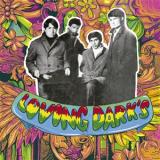
Los Amantes Oscuros" brings together for the first time on vinyl the recordings made between 1968 and 1969 by pioneers of Bolivian garage rock, Loving Darks, originally released on their three EPs. A selection packed with proto-punk covers of hits by the Stones, Cream, Tony Hatch, and more-often surpassing the originals in attitude and power. Their original records are highly sought after and are virtually impossible to find in any condition_ If we had to choose the Latin American country where the rawest and wildest garage and beat records of the '60s were recorded, Bolivia would be one of the clearest contenders. For some strange reason-surely related to the country's extreme conditions, its high altitude, and the influence of huayno-Bolivian recordings are truly unique and fascinating. A multitude of bands sprang up under the influence of groups-mainly British-that dominated the international charts. From the ashes of two of Bolivia's most important seminal bands, Los Black Byrds and The Turtles, two new groups fundamental to the history of Bolivian rock would be born: the mythical Climax and the legendary Loving Darks. "Los Amantes Oscuros" brings together for the first time on vinyl the recordings this band made between 1968 and 1969, originally released across three EPs on the local Lyra label. Their repertoire is packed with covers such as 'El Adivino,' a sped-up reinterpretation of 'Fortune Teller,' or even 'Algo de títere,' a reworking of 'Jumpin' Jack Flash.' They also adapt the classic 'Call Me' by Tony Hatch and 'Toad' by Cream, from whom they borrow the cover of one of their most iconic albums for the artwork of their EP "Complicado." In fact, 'Complicado'-a proto-punk version of the Rolling Stones' 'Complicated' and their signature track-is a perfect example of how a Bolivian band could outdo the British giants in attitude and power. Their importance lies in having paved the way for new sounds, styles, and aesthetics within a still-emerging scene. This compilation is a joint release with the Peruvian label Rey Record and includes an insert with notes on the band's history. First time vinyl reissue.
- A1: Les Masques - Il Faut Tenir (1969)
- A2: Isabelle Aubret - Casa Forte (1971)
- A3: Christianne Legrand - Hlm Et Ciné Roman (1972)
- A4: Jean Constantin - Pas Tant D'chichi Ponpon (1972)
- A5: Billy Nencioli & Baden Powell - Si Rien Ne Va (1969)
- B1-: Marpessa Dawn - Le Petit Cuica (1963)
- B2: Jean-Pierre Sabar - Vai Vai (1974)
- B3: Sophia Loren - De Jour En Jour (1963)
- B4: Isabelle - Jusqu’à La Tombée Du Jour (1969)
- B5: Sylvia Fels - Corto Maltesse (1974)
- C1: Frank Gérard - Comme Une Samba (1972)
- C2: Ann Sorel - La Poupée Des Favellas (1971)
- C3: Charles Level - Un Enfant Café Au Lait (1971)
- C4: Andrea Parisy - Les Mains Qui Font Du Bien (1970)
- C5: Audrey Arno - Quand Jean-Paul Rentrera (1969)
- C6: Aldo Frank - T’as Vu Ce Printemps (1970)
- D1: Christianne Legrand - Cent Mille Poissons Dans Ton Filet (1972)
- D2: Clarinha - Lemenja (1970)
- D3: Hit Parade Des Enfants - Aquarela (1976)
- D4: Jean-Pierre Lang - Tendresse (1965)
- D5: Magalie Noël - Une Énorme Samba (1970)
- D6: Françoise Legrand - La Lune
Ever since the late 1950s bossa-nova revolution, Brazil’s influence on French music has been undeniable. Pierre Barouh, Georges Moustaki and a vast array of lesser known artists, all made the Musica Popular Brasileira (MPB) an axis of promotion at the service of a cool and metaphysical, modern and mixed Brazilian lifestyle. Some were seduced by the poetic languors of the bossa, some were looking for fun, and others just loved the American hybridization of jazz-bossa, jazz-samba.
What is bossa nova? One of its creators, Joao Gilberto said: "Its style, cadence, everything is samba. At the very start, we didn't call it bossa nova, we sang a little samba made up of a single note - Samba de uma nota so .... The discussion around the origins of bossa nova is therefore useless”. It is nevertheless useful to remember that these magnificent Brazilian songs, which the guitarist describes as samba, were shifted and balanced around improbable chords. "I like things that lean, the in-betweens that limp with grace," said Pierre Barrouh, quoting Jean Cocteau.
With emotion, arrangements for violin and supple guitar licks, bossa nova rapidly changed. A transformation that can be heard in the Tchic, tchic, French Bossa Nova 1963-1974 compilation, the result of a cultural reappropriation, which traveled through the United States and supplemented itself in France.
A musical revolution that has remained significant, bossa nova was born in Rio. From 1956 to 1961, Brazil lived through its golden years. In five years, the country had invented its modernist style. Elected president in 1956, Juscelino Kubitschek de Oliveira, an elegant man with a broad forehead, brandished a promising slogan: "Fifty years of progress in five years". He quickly got to work. Not worried about increasing debt, he launched the project for a new federal capital, Brasilia, designed by the communist architect Oscar Niemeyer. Volkswagen opened state-of-the-art factories and created the “fusquinha”, the Beetle. In Rio, the Vespa made its first appearance. The Arpoador Surf Club crew run into the “girl” from Ipanema, Helô Pinheiro - the tanned garota ("chick"), between a flower and mermaid, who at 17 walked by the Veloso bar, where the fiery author and composer, Tom Jobim and Vinicius de Moraes, were getting drunk on whiskey. From then on, bossa symbolized cool.
In 1958, Joao Gilberto recorded Chega de Saudade, which the directors of Philips denied, calling it "music for fagots". The marketing director, who believed in it, secretly pressed 3000 78-inch vinyls and distributed them at schools around Rio, creating a tidal wave.
American jazzmen then took over. In particular, trumpeter Dizzy Gillespie and guitarist Charlie Byrd. In November 1962, the Brazilian Ministry of Foreign Affairs funded a "Bossa-Nova" concert at Carnegie Hall in New York, inviting the genre’s pioneers. Unprepared, the show soon turned to disaster. But the troupe was invited to the White House by Jackie Kennedy. The first lady loved "the new beat" and in particular Maria Ninguem, a song by Carlos Lyra, later covered by Brigitte Bardot.
In Brazil, the 1964 military coup quickly ended this euphoria. The destructive atmosphere that ensued pushed many Brazilian musicians to leave, if not to exile. Thus, Tom Jobim, Sergio Mendes and Joao Gilberto arrived to the United States. In New York, Joao Gilberto met saxophonist Stan Getz. At the time, he was married to the Bahianese Astrud Weinert Gilberto, who had a German father. She had never sung before, but she knew how to speak English. Getz therefore asked her to replace her husband on The Girl From Ipanema. The Getz/Gilberto record with Tom Jobim on piano, was released in March 1964. Phil Ramone, the "pope of pop" was in charge of sound.
Bossa nova arrived in Paris through the classic “guitar-voice” channel (Pierre Barouh, Baden Powell, Moustaki…) But France loved jazz and Paris had already welcomed its American contributors. All these good people were to pass through Saint-Germain-des-Prés. The cabaret l'Escale became the Mecca of Latin American sound where one could find Pierre Barrouh and his friends, such as the Camara Trio, samba-jazz aces, whose only record was published by the Saravah label. With a band strangely called Les Masques (a band that included Nicole Croisille and Pierre Vassiliu, among others), the Camara Trio recorded an interesting Brazilian Sound, including the track Il faut tenir which is present on this tasty compilation of rarities.
Other enlightened musicians can also be found on the compilation, such as Jean-Pierre Sabar (songwriter for Hardy, Auffray, Leforestier ...) and the French pop rock organist Balthazar. In 1975, Sabar recorded Aurinkoinen Musiikkimatka on a Finnish label, which featured the crazy Vai, Vai, included on this record. We are now following the footsteps of Brazilian electronic musicians such as Sergio Mendes, Eumir Deodato or Marcos Valle who created funk and disco sounds on their keyboards and synthesizers. A style that influenced Véronique Sanson when she wrote Jusqu’à la Tombée de la nuit in 1969 for Isabelle de Funès, the niece of Louis and a great friend of Michel Berger - Sanson did end up singing this track on her 1992 Sans Regret record.
The pinnacle of exoticism and travel, Sylvia Fels’ Corto Maltese includes bongos, sea mist and ocean sounds. The title was taken from Jacky Chalard’s concept album written in 1974, Je suis vivant, mais j’ai peur (I am alive, but I am scared), based on Gilbert Deflez’s science fiction novel.
However, bossa nova extended the scope of popularity. "In the 1970s, I was a fan of Sergio Mendes, Getz / Gilberto. I fell in love with this music that I knew because I had been an orchestral singer, " explained Isabelle Aubret, who in 1971 delivered a composite record of covers by the very funky Jorge Ben, Orfeu Negro, Tom Jobim, Vinicius de Morais and Jean Ferrat. "I recorded this album for Meys Records in Paris, far from Brazil, with wonderful musicians, François Raubert, Roland Vincent, Alain Goraguer...". The latter wrote the arrangements for Casa Forte, a very percussive title borrowed from Edu Lobo, one of the initiators of the bossa who spent time in California. "Jazz and bossa came together and produced very rhythmic music. I love singing, it allows me to dream, to have fun, to feel a high on stage, and these songs brought me joy, made me swing, my singing felt like a dance.”
The world tours of French singers and their desire for the tropics, often brought them to Rio with its hills, forests, caipirinhas and tanned bodies. There are surprises though, like this Iemenja (Iemenja is the goddess of the sea in the Afro-Brazilian candomblé religion). Not unlike the composer and musician Jean-Pierre Lang, based in Sao Paulo, Claire Chevalier taught Brazil to Brazil. In 1970, the singer and painter published a 45-inch vinyl, Mon mari et mes amants (My husband and my lovers), under the improbable pseudonym of Clarinha (little Claire). She was then living in Rio, with her husband, Joël Leibovitz, who founded a band called Azimuth, and who owned a record label specialized in "sambas enredos" songs for samba school parades.
For its B side, she asked Pierre Perret to come up with lyrics for a song composed by Carlos Imperial: "Oh goddess of the sea, o goddess Iemenja, I bring a white rose to adorn your long hair ..." . "Perret came to see us, and we had fun, remembers Joël Leibovitz. We wrote Lemenja for fun, we recorded it at the Havaí studio, behind the Central do Brasil the central station. Erlon Chaves, the arranger who worked with Elis Regina, joined us" adding his share of Afro-Brazilian percussions and funky brass to the mix.
There is a common misunderstanding in Franco-Brazilian history: that bossa, admittedly hedonistic, is perceived as funny, even though the poets who wrote the texts are often philosophizing on the human condition. Its French interpreters pull it towards a carnival inspired universe, far removed from its fundamental essence. Thus, Jean Constantin covered the famous Samba da minha terra, an ode to the art of samba written by the classic Bahian composer Dorival Caymmi, renaming it with the enticing title of Pas tant de tchi tchi pompon: "On your pier there is no tchi tchi / when you arch your back, you know everything is alright ”(lyrics by Gérard Calvi). This expedited bossa aims for the absurd, but retains a certain elegance.
Indeed, Jean Constantin was not an idiot, the rather large man had a huge mustache and liked fantasy, (Les pantoufles à papa, Le pacha, inspired by cha-cha-cha-cha, salsa and jazz) but he was also the lyricist of Mon manège à moi interpreted by Edith Piaf, the composer of Mon Truc en plume by Zizi Jeanmaire and the soundtrack of François Truffaut’s 400 Blows. Le Poulpe, published in 1970, from which this bossa is extract, was arranged by Jean-Claude Vannier, an accomplice of Serge Gainsbourg’s Melody Nelson. In short: "There is enough of samba / By looking at the parasol / Because my poor cabeza / Is going to die in the sun".
Even the American actress Marpessa Down, who was at the heart of the bossa nova revolution with her role as Euridyce in Marcel Camus’ film Orfeu Negro, winner of the 1959 Cannes Palme d'or, fed the clichée with Je voudrais parler au petit cuica - "Tell me how you manage to always make people want to dance / It's true, I must admit that I cannot resist your magic" - in consequence, once can hear the cuica, a little drum inherited from the Bantu.
But bossa nova had many angles. Societal, of course, pushing actresses who were symbols of women's liberation like Brigitte Bardot, Jeanne Moreau, or Sophia Loren to engage in the exercise of accelerated bossa. In February of 1963, Sophia Loren made a record in French in Rome, Je ne t'aime plus, featuring the song De jour en jour, a bossa written by two Italians, Armando Trovajoli and Tino Fornai, which was released a little later by Barclay. Bossa accompanied the 1960s, a decade of moral liberation. Ann Sorel, who interpreted La Poupée des favellas, caused a sensation with L’amour à plusieurs, a provocative song written by Frédéric Bottom and Jean-Claude Vannier. As for the actress Andrea Parisy, she displayed her bourgeois cheekiness in Marcel Carné's Les Tricheurs before interpreting Les mains qui font du bien. And Magalie Noël, the friend of Boris Vian, who sung Johnny fais-moi mal, was hired to sing Une énorme Samba, composed by Alain Goraguer (arranger to Gainsbourg, Bobby Lapointe and Jean Ferrat) with lyrics by Frédéric Botton.
But in the end, of what wood is bossa nova made of? The answer is given by Christianne Legrand, daughter of Raymond the conductor, and sister to Michel the composer: "With me, with jà" - jà means "immediately" in Portuguese. In 1972, the singer, an expert in vocal jazz and a member of the Double Six, published Le Brésil de Christianne Legrand. Two songs included on the Tchic Tchic compilation that demonstrate how bossa, jazz, funk, rock, etc. work like a swiss army knife: the music is used to denounce broken systems, or miracles, HLM et ciné roman, Cent mille poissons dans ton filet, two songs from the O Cafona soundtrack, a successful telenovela broadcast, at the time in black and white, on TV Globo. The first was adapted in French by the fighter and friend of the Legrand tribe, Agnès Varda. The second is content with a play on words, jostling them into a summer fun.
Véronique Mortaigne
- A1: Luna Rossa - Vincenzo De Crescenzo / Antonio Vian
- A2: Nature Boy - Iben Ahbez
- A3: Kommissar Maigret - Ernst August Quelle
- A4: Te Reto A Ser Mi Amante - Mulo Francel
- A5: Für Pauline - Mulo Francel
- A6: Our Spanish Love Song - Charlie Haden
- B1: Tango - Paul Barentsen / Mulo Francel
- B2: Valse Lento - Peter Ludwig / Mulo Francel
- B3: Valse Vivace - Mulo Francel
- B4: Bei Dir War Es Immer So Schön - Theo Mackeben
- B5: El Paño Moruno - Manuel De Falla
- B6: Il Sorriso D´amor - Pietro Frosini
- C1: Bonsoir Juliette - Mulo Francel
- C2: Flor De La Noche - Robert Wolf
- C3: Susannata - Mulo Francel
- C4: Gracias A La Vida - Violeta Parra
- C5: Allez, Glissez! - Joe Priva
- C6: La Palummella - Traditional Canzone Napoletana, Arr. Francel
- C7: Torna A Surriento - Ernesto De Curtis / Arr: Mulo Francel
- D1: Dimme ´Na Vota Si - Traditional Canzone Napoletana / Arr. Francel
- D2: Affaccete Nunziata - Traditional Canzone Romana / Arr. Francel
- D3: El Choclo - Angel Villoldo / Arr. Mulo Francel - Special Version With Jaime Liemann (Vocal)
- D4: Quiereme - Mulo Francel - Special Version With Jaime Liemann (Vocal)
- D5: Chitarra Romana - Eldo Di Lazzaro & Bruno Cherubini - Live Version
- Hasiera 00:50
- 2: Iratzarri 0:37
- Sarrakio 02:10
- Dantza Bihurritua 03:50
- Desagertu 03:18
- Meditazioa I 02:09
- Besarkatu Ninduzun (Cdr Y Basandere Ahotsak) 03:50
- Meditazioa Ii 02:53
- Ametza Iii 02:06
- Oroipen 04:04
- Fallen Gaza 03:09
- Atseginzale Dantza 02:14
- Sua Eta Heriotza 00:59
- Agur Maria (Cdr Y Basandere Ahotsak) 03:55
- Bukaerako Dantza 04:03
- Amaiera 00:36
Una interpretación de Soinuarenbidea II debería partir de esta premisa: todo es posible, nada es aleatorio, y en sí mismo es un imposible de aleatoriedades. El escenario planteado explora la idea de realidad aumentada desde una percepción sonora, ambiental y colectiva. La obra transita hacia adelante y hacia atrás recreando experiencias extintas de porvenir incierto, tratando de facilitar un fin pacificador. Cada pieza sonora se crea, se despliega, se repliega y se destruye, en una torsión permanente de toda la realidad que hace posible cada fragmento musical, cada identidad acústica, cada espacio sonoro. Lo onírico, la ficción, y el viaje están continuamente presentes, y es en el transitar de cada fragmento donde se produce el diálogo de la exposición musical. Los elementos de esta ficción se recrean continuamente, en un continuum donde se entrelazan y se van contorsionando a medida que crecen o decrecen con cada fragmento de síntesis concreta. Los temas explícitamente musicales son el magma que conduce a dar voluptuosidad al disco, siendo la piel un contexto o límite que en sí mismo fluctúa indefinidamente en texturas y configuraciones posibles. Y la urdimbre del silencio es la síntesis que está continuamente presente y que trata de cohesionar los fragmentos en continua colisión expresiva. Las grabaciones de campo proporcionan el material sonoro concreto, y como un fractal sonoro cada una de ellas ofrece diferentes grados de interpretación que a su vez conduce a nuevos fragmentos y nuevas creaciones. Así que se puede pensar que esta es una síntesis de una posible realidad, pero interpretable en infinidad de maneras. Un movimiento y una estaticidad implícitas que generan estructuras y dinámicas acústicas. Lo que se escucha no es real, pero en sí mismo forma parte de la realidad, creando un escenario expectante. Lo cinematográfico, plástico y teatral, danzante y dinámico cobra importancia en este juego, porque se trata de contar una historia, una experiencia recreada desde los puntos de vista del arte visual. Es a su vez hilo conductor y entretenimiento, discurso político y puro divertimento. Es desde este espacio de convivencia artística que tiene sentido la totalidad y justifica el formato sonoro planteado. La contradicción de la obra es patente en el formato, y es a su vez el planteamiento de una accidentalidad en el devenir vital. Contenedor de Ruido recoge todas estas contradicciones y las manifiesta en la obra Soinuarenbidea II. Es una historia sonora, es un cuento acústico. Es un fragmento de vitalidad en imágenes audibles. Es una invitación a la reflexión, a la crítica, al disfrute, a la meditación, a la celebración. Y sobre todo es esperanzadora apreciación de la realidad como algo maleable que confeccionamos colectivamente, que requiere de una paciente observación y la participación colectiva global, en un mundo finito pleno de diversidades y del que ignoramos prácticamente todo, al que deberíamos volver con respeto y devoción.
Soinuarenbidea II-ren interpretazio batek premisa honetatik abiatu beharko luke: dena da posible, ezer ez da ausazkoa, eta, berez, ausazkotasun ezinezko bat da. Planteatutako agertokiak errealitate areagotuaren ideia aztertzen du, soinu-, ingurumen- eta talde-pertzepzio batetik abiatuta. Lanak aurrera eta atzera egiten du, etorkizun zalantzagarriko esperientzia desagertuak birsortuz eta helburu baketsua lortzen saiatuz. Soinu-pieza bakoitza sortu, hedatu, tolestu eta suntsitu egiten da, musika-zati bakoitza, identitate akustiko bakoitza eta soinu-espazio bakoitza ahalbidetzen dituen errealitate osoaren etengabeko bihurdura batean. Onirikoa, fikzioa eta bidaia etengabe daude presente, eta pasarte bakoitzaren joan-etorrian gertatzen da musika-erakusketaren elkarrizketa. Fikzio honen elementuak etengabe birsortzen dira, continuum batean, non sintesi zati zehatz bakoitzarekin hazi edo txikitu ahala elkar lotzen eta bihurritzen diren. Esplizituki musikalak diren gaiak diskoari atsegintasuna ematera eramaten duen magma dira, azala testuingurua edo muga izanik, testura eta konfigurazio posibleetan mugarik gabe aldatzen dena. Eta isiltasunaren irazkia etengabe presente dagoen sintesia da, zatiak etengabeko adierazpen-talkan kohesionatzen saiatzen dena. Landa-grabazioek soinu-material zehatza ematen dute, eta soinu-fraktal batek bezala, horietako bakoitzak interpretazio-maila desberdinak eskaintzen ditu, eta horrek, aldi berean, zati eta sorkuntza berrietara eramaten du. Beraz, pentsa daiteke errealitate posible baten sintesia dela, baina hamaika modutan interpreta daitekeena. Egitura eta dinamika akustikoak sortzen dituzten mugimendu eta estatikotasun inplizitu bat. Entzuten dena ez da erreala, baina, berez, errealitatearen parte da, eta agertoki espektakularra sortzen du. Zinematografikoak, plastikoak eta antzerkikoak, dantzariak eta dinamikoak garrantzia hartzen dute joko honetan, ikusizko artearen ikuspegitik birsortutako istorio bat, esperientzia bat, kontatzea baita helburua. Aldi berean, hari gidaria eta entretenimendua da, diskurtso politikoa eta dibertimendu hutsa. Elkarbizitzarako espazio artistiko honetatik osotasunak zentzua du eta planteatutako soinu-formatua justifikatzen du. Obraren kontraesana nabarmena da formatuan, eta, aldi berean, bizi-bilakaeran istripu-tasa bat planteatzea da. Zarata-edukiontziak kontraesan horiek guztiak jasotzen ditu eta Soinuarenbidea II obran adierazten ditu. Soinu istorio bat da, ipuin akustiko bat. Bizitasun zati bat da, irudi entzungarrietan. Hausnarketarako, kritikarako, gozamenerako, meditaziorako eta ospakizunerako gonbidapena da. Eta, batez ere, itxaropentsua da errealitatea modu kolektiboan egiten dugun gauza xaflakor gisa hautematea, behaketa pazientea eta partaidetza kolektibo globala eskatzen dituena, dibertsitatez betetako mundu mugatu batean, ia guztia kontuan hartzen ez duguna, eta errespetuz eta debozioz itzuli beharko genukeena.
An interpretation of Soinuarenbidea II should start from this premise: everything is possible, nothing is random, and in itself is an impossible randomness. The proposed scenario explores the idea of augmented reality from a sonic, environmental, and collective perception. The work moves back and forth, recreating extinct experiences of an uncertain future, seeking to facilitate a peaceful end. Each sound piece is created, unfolds, retreats, and is destroyed, in a permanent twisting of all reality that makes each musical fragment, each acoustic identity, each sonic space possible. The dreamlike, the fictional, and the journey are continually present, and it is in the transit of each fragment that the dialogue of the musical exposition takes place. The elements of this fiction are continually recreated, in a continuum where they intertwine and contort as they grow or diminish with each fragment of concrete synthesis. The explicitly musical themes are the magma that leads to the work's voluptuousness, the skin being a context or boundary that in itself fluctuates indefinitely in possible textures and configurations. And the warp of silence is the synthesis that is continually present and seeks to unite the fragments in a continuous expressive collision. The field recordings provide the concrete sound material, and like a sonic fractal, each one offers different degrees of interpretation that in turn lead to new fragments and new creations. So one can think of this as a synthesis of a possible reality, but interpretable in an infinite number of ways. An implicit movement and staticity that generate acoustic structures and dynamics. What is heard is not real, but in itself is part of reality, creating an expectant scenario. The cinematic, plastic and theatrical, dance and dynamic aspects take on importance in this game, because it is about telling a story, an experience recreated from the perspective of visual art. It is at once a common thread and entertainment, political discourse and pure entertainment. It is from this space of artistic coexistence that the whole makes sense and justifies the proposed sound format. The contradiction of the work is evident in its format, and it is, in turn, the presentation of an accidentality in the course of life. Noise Container gathers all these contradictions and manifests them in the work Soinuarenbidea II. It is a sound story, an acoustic tale. It is a fragment of vitality in audible images. It is an invitation to reflection, to critique, to enjoyment, to meditation, to celebration. And above all, it is a hopeful appreciation of reality as something malleable that we collectively craft, requiring patient observation and global collective participation, in a finite world full of diversity and of which we know practically nothing, to which we should return with respect and devotion.
Paisajes sonoros, diseño sonoro, drones y música grabada, realizada y arreglada para Contenedor de Ruido por David Aranaz. Coro: Basandere Ahotsak. Producido y mezclado por David Aranaz. Mástering: Estanis Elorza. Fotografía: David Aranaz. Texto: David Aranaz. Traducción: Saioa Aranaz Oreja. Trabajo y Diseño artístico: Cristina Martinez. Edición: Contenedor de Ruido Producciones y Sarbide Music. Distribución: Contenedor de Ruido.
Contenedor de Ruido agradece el apoyo en la realización de Soinuarenbidea II al coro Basandere Ahotsak y en especial a Eva Orbara Goicoa.
Soinuarenbidea II está dedicado al pueblo palestino.
Paisajes y objetos Sonoros, samplers y otras músicas transformadas para Soinuarenbidea II
Burlada: Paseos sonoros matinales por Merindad de Sangüesa, Calle Mayor, Capuchinas, Parque Uranga y varias iglesias y plazas. Pasajes del cotidiano: basura de papel, cristal y plástico.
Pamplona: Cementerio de San José. CEIP Sanduzelai /// Quinto Real: Fábrica de Armas, Puerto de Urkiaga y alrededores. Suite del silencio, bosques en movimiento /// Fábrica de armas de Orbaiceta: regatas, biosques, paseo sonoro hasta regata /// Belate: Puerto de Belate y alrededores. Vacas en pradera junto a las turberas /// Bardenas Reales: Suite de guitarra y Suite del silencio, estepa desértica /// Austria: Tranvías de Graz y Viena. Muchedumbre del metro de Viena.
Voces cinematográficas de: Matanza en Texas, Robocop, Espíritu Sagrado, Solo los Amantes Sobreviven, Voces de Gaza, Yojimbo, Terciopelo Azul, Los 7 Magníficos.
La pista A2 está dedicada a la memoria de David Lynch.
La pista B4 está dedicada a Eva Orbara Goicoa.
Pista A4: Contiene interpretaciones de piano de Three Piano Pieces Op.11 de Arnold Schoenberg.
Pista A5: Es una interpretación expandida con síntesis FM del Concerto Op. 24 - Etwas lebhaft - de Anton Webern.
Pista A7: Contiene la canción Besarkatu ninduzun (Letra de Josune López y música de Josu Elberdin) en interpretación de Basandere Ahotsak en la iglesia de Burutain bajo la tormenta.
Pista B2: Contiene la canción Recuerdos de la Alhambra (Fernando Tárrega) en interpretación torsionada de David Aranaz Sarasa.
Pista B14: Contiene la canción Agur María (Letra y Música de Estíbaliz Robles “Estitxu” y arreglo exclusivo de Alfonso Ortiz para Basandere Ahotsak) en interpretación de Basandere Ahotsak.
Equipamiento para Soinuarenbidea II.
Micros de condensador SE7, configuración XY y ORTF; Micros de cinta ORTIZ LUTHIER configuración XY y Blumlein; Grabadoras MARANTZ y ZOOM; Sintetizadores y samplers Elektron MONOMACHINE SPS-1, MACHINEDRUM SFX6 y MODEL:SAMPLES. Dave Smith MOPHO. Torso Electronics S-4. Sintetizador Modular 333 DIY; Guitarra clásica ALHAMBRA 6P; Esculturas Sonoras tipo Baschet, cristal y metales; Mesa Soundcraft FX16ii; Interface de Audio RME Babyface Pro FS; DAW Logic Pro; Procesamiento de modelado analógico con Acústica Audio, Waves, Softube, Brainworx, Sonible, Analog Obsesion, Tokio Dawn. Metering de Logic y RME DigiCheck . Amplificación Hafler PRO2400. Monitorización BW DM602 S3. Mezcla digital; Mastering híbrido.
- A1: Diva (0 44)
- A2: Construct (1 29)
- A3: Turner (1 57)
- A4: Devastation (1 49)
- A5: Survivors (0 36)
- A6: Recursion (1 47)
- A7: Monstrua (1 19)
- A8: Bebe (1 41)
- A9: Amputee (0 53)
- A10: Chipilina (1 05)
- A11: In The Face (0 45)
- A12: Predator (1 30)
- A13: Pacifier (0 44)
- B1: Psychosexual (0 50)
- B2: Mujere (2 27)
- B3: Cypher (2 17)
- B4: Murcielaga (3 53)
- B5: Phantasy (1 52)
- B6: No Lo Digas (2 44)
- B7: Amantes (2 21)
- B8: Membrane (3 19)
- B9: Apuro (3 23)
- C1: Saintly Pride (2 43)
- C2: Avasallada (2 11)
- C5: Form (1 58)
- C6: Travesti (1 47)
- C7: Heaventsent (2 24)
- C8: X (1 14)
- C3: Dysphoria (1 10)
- C4: Gaita (1 53)
Eine streng limitierte Erstpressung von Arcas legendärem Mixtape @@@@@, das vor der Veröffentlichung ihrer KICK-Serie für Furore sorgte. Mit 62 Minuten voller Sounds, die jegliches musikalischen Quantensystem sprengen. Diese Arbeit ist eines ihrer bisher feinfühligsten und wohl erstaunlichsten Werke - hart, sanft, emotional, brutal, aufrichtig und verspielt - ein brutalistisches Kunstwerk auf Doppel-Vinyl mit einer gravierten D-Seite.
- A1: Édith Piaf - La Vie En Rose
- A2: Édith Piaf - Paris
- A3: Édith Piaf - J'm'en Fous Pas Mal
- A4: Édith Piaf - Plus Bleu Que Tes Yeux
- A5: Édith Piaf - L'homme À La Moto
- A6: Édith Piaf & Théo Sarapo - A Quoi Ca Sert L'amour ?
- A7: Édith Piaf - Hymne À L'amour
- B1: Édith Piaf - Les Amants De Paris
- B2: Édith Piaf - La Valse De L'amour
- B3: Édith Piaf - Le "Ça Ira
- B4: Édith Piaf - Cri Du Coeur
- B5: Édith Piaf & Les Compagnons De La Chanson - Les Trois C
- B6: Édith Piaf - L'accordéoniste
- B7: Édith Piaf - Padam, Padam
- C1: Edith Piaf - Sous Le Ciel De Paris
- C2: Édith Piaf - La Goualante Du Pauvre Jean
- C3: Édith Piaf - Autumn Leaves (Les Feuilles Mortes)
- C4: Édith Piaf - Mon Dieu
- C5: Édith Piaf - Exodus
- C6: Édith Piaf - Hymn To Love
- C7: Édith Piaf - La Foule
- D1: Édith Piaf - Mon Manège À Moi (Tu Me Fais Tourner La Tê
- D2: Édith Piaf - La Vie En Rose (English Version)
- D3: Édith Piaf - Tu Es Partout
- D4: Édith Piaf - Milord
- D5: Édith Piaf - Non, Je Ne Regrette Rien
- D6: Édith Piaf - Johnny, Tu N'es Pas Un Ange
- D7: Édith Piaf - Les Amants D'un Jour
Mit der exklusiven Doppelvinyl in zartem Pink erscheint eine Hommage an eine der größten Künstlerinnen Europas: Édith Piaf. Ihre Lieder sind nicht nur musikalische Meisterwerke, sondern auch emotionale Zeitdokumente, die Millionen Menschen berührt haben - in Frankreich, Deutschland und weit darüber hinaus. Geboren 1915 in Paris, wuchs Piaf unter schwierigen Umständen auf, sang auf den Straßen und wurde 1935 von einem Cabaret-Besitzer entdeckt. Ihr Spitzname "La Môme Piaf" - der kleine Spatz - wurde zum Symbol für ihre fragile Erscheinung und ihre kraftvolle Stimme. Ihre Musik war oft autobiografisch, geprägt von Liebe, Verlust und Hoffnung. Sie sang mit einer Intensität, die bis heute unter die Haut geht. Piaf wurde zur Nationalikone Frankreichs, besonders nach dem Zweiten Weltkrieg. Ihre Lieder wie "La Vie en Rose", "Non, Je Ne Regrette Rien" oder "Hymne à l"Amour" wurden zu Hymnen einer Generation. Auch in Deutschland und Europa wurde sie gefeiert - als Stimme der Versöhnung, der Leidenschaft und der Menschlichkeit. Diese Vinyl-Edition vereint ihre größten Werke in einem liebevoll gestalteten Sammlerstück - ein Muss für Musikliebhaber und Kulturinteressierte.
2025 Repress
Paris-based multi-instrumentalist Emile Sornin is currently on an impressive run of releases: two film soundtracks for De Nos Frères Blessés by Hélier Cisterne (2020) and Babysitter by Monia Chokri (2022), and a recent and acclaimed solo album, L'Idiophone on Born Bad Records, for which he has been touring Europe since march.
Forever Pavot is already back at it with his third film score for Monia Chokri's new movie Simple Comme Sylvain, inspired by Italian soundtracks and romantic grooves.
Domenique Dumont’s fourth album, Deux Paradis, arrives like the three that came before it – with an air of mystery and wonder. This is dance music for inner worlds – rituals, revelations and reveries.
Deux Paradis is a ten-track song cycle that leads the listener through the rhythm of a day, the bloom and fade of a relationship, or even the stages of a life.
It begins with a song about waking up – the candy-striped dub of “Enchantia” – and traces the sun’s arc with the pixelated reggae of “La Vie Va” and the sensuous rush of “Amants Ennemis”. As night falls, the songs take on a twilight quality in the
shimmering pop of “The Order of Invisible Things” and the seductive pulse of “Visages Visages” (a subtle nod to the Desireless classic). There’s also the baroque swoon of “Deux Paradis” and the soft exotica of “Visiteur de la Nuit”. Bolder and richer than before, it’s vintage Domenique Dumont – timeless and romantic, yet laced with an unplaceable sense of longing, like in an Éric Rohmer film. After the instrumental film score People On Sunday (Leaf, 2020) – composed solo by Arturs Liepins – singer Anete Stuce returns to Domenique Dumont, bringing her inimitable joie de vivre. Deux Paradis completes a trilogy of releases alongside Comme Ça (2015) and Miniatures De Auto Rhythm (2018) on the Antinote label.
Deux Paradis was composed, arranged and between 2022 and the end of 2024 in studios in Riga and Paris, and on the Estonian island of Hiiumaa.
Proudly presenting Maravilhosamente Bem the powerful, female-centred third album by Brazilian singer, songwriter, actress, and creative director, Julia Mestre.
Alongside being a member of the Latin Grammy-winning Brazilian supergroup, Bala Desejo, Julia has been steadily building a solo career where her unique vision and alluring soft, sultry voice take centre stage. Drawing inspiration from ‘80s ballads, MPB, pop and disco productions, each song on this third album finds Julia creatively exploring different characters and tones.
A love-song-driven LP at its core, Maravilhosamente Bem holds a playful mirror up to blissful days gone by, artfully reimagined with Julia’s own modern twist. An album filled with love and nostalgia, it pays homage to her love of classic female disco divas such as Donna Summer, Sade, Alcione, Lady Zu, and the Brazilian rock queens Rita Lee and Marina Lima. Of that latter pairing, the late iconic Brazilian vocalist and musician Rita Lee (Os Mutantes) is referenced in the music video for the first single, ‘Sou Fera’, blessing Julia with a magical guitar. Marina Lima then provides guest vocals on the album’s closing track, ‘Marinou, Limou’, with her name transformed into a mantra by Julia.
Channelling a lo-fi ‘80s ballad aesthetic, Julia navigates a multitude of themes across the nine sublime tracks. From the sexy, whispered performances on vintage horror movie-inspired tunes ‘Vampira’ and ‘Pra Lua’ to the delicate, fragile love lullabies of ‘Sentimento Blues’ and ‘Cariñito’, and the seductive disco diva embodiment on dance tracks ‘Veneno de Serente’ and title track ‘Maravilhosamente Bem’. Another hidden highlight is the palette-cleansing mini-suite, ‘Interlúdio dos Amantes’. A luscious strings instrumental piece that lends to the beautiful Sade-esque ‘Seu Romance’.
Produced by Julia and longtime collaborators Gabriel Quirino, Gabriel Quinto, and João Moreira, Maravilhosamente Bem sees Julia embarking on a new era of her musical career. This sensational third album is a captivating showcase of the creative vision and versatility of one of Brazil’s finest stars.
Released on Mr. Bongo (ROW) and Altafonte (Brazil).
- A1: Bob Crewe Pygar's Persecution / The Black Queen's Beads 4 39
- A2: Klaus Doldinger Sitar Beat 1 31
- A3: Serge Gainsbourg En Melody 3 08
- A4: Michel Legrand Marins, Amis, Amant Ou Maris 2 35
- A5: Nelson Riddle Lamento 2 59
- A6: Marian Mcpartland Love For Sale 6 15
- B1: Gabor Szabo Sophisticated Wheels 4 58
- B2: Phil Moore Iii Batucada 2 13
- B3: Luis Enriquez Mas Que Nada 2 58
- B4: George Garvarenz Hascisch Party 3 02
- B5: Shocking Blue Acka Raga 3 10
- B6: Claude Denjean Kiss This 3 04
- B7: George Shearing Aquarius 3 25
Back in an unmissable picture disc reissue: THE MOOD MOSAIC
Vol.1 – The Hashish Party, ready to win over collectors and vintage sound lovers. Originally released in 1997 by Yellowstone
Records, this iconic compilation blends jazz-funk, lounge, Latin
jazz, soul-jazz, and psychedelia into a truly unique musical
journey.
The tracklist features legendary artists like Serge Gainsbourg,
Michel Legrand, Gábor Szabó, George Shearing, and Shocking
Blue, delivering an irresistible mix of exotic grooves and retro
atmospheres. The picture disc format enhances the series’ visual
appeal, making every copy a true collector’s item
“Ti Ho Sposato Per Allegria” (1967) is a comedy directed by Luciano Salce, taken from the theatrical play of the same name (1965) by Natalia Ginzburg. The main characters are Pietro and Giuliana, respectively interpreted by Giorgio Albertazzi and Monica Vitti. A lawyer from a good family, serious, accustomed to a calm and regular life who got married to a indolent and dazed girl with a difficult past a month after meeting her at a party. Despite Giuliana's inability to transform herself into a good housewife, his relationship with Pietro continues to flourish, because he seems to find enjoyment in each of his wife's many mistakes. The reason for their union lies not in love but, perhaps, in a genuine sympathy, as strong as it is mutual. The story has become a minor classic with each new representation. On both stage and screen the themes of everyday life, and the more complex and existential ones, are addressed. The subtle irony of the work relies on recounting problematic events in a carefree tone: realities such as abortion, death, separation and the couple's incommunicability are underplayed with naturalness. The funny events of the film are commented on by Piero Piccioni's music, published for the first time on vinyl by Musica Per Immagini, with an harmonious tracklist. For this first orchestra rehearsal with the director, which will be followed by other important soundtracks, the composer makes an effective and elegant synthesis: on the one hand he reworks moods and aesthetic intuitions of some previous and happy experiences, while on the other he identifies and anticipates the first bars of that unmistakable sound between bossa nova, funk and lounge nuances that will characterize almost all the production of the Seventies. In fact, the Turin-native artist simplifies in a positive sense the articulated harmonic structures that have always distinguished his authorial figure – where the so called jazz features are to be considered more than central in the musical texture, as prominent elements of the harmonic syntax – and he tries a melodic reduction that will make the compositions more catchy or memorized, but not easier for this. Lightness of spirit and rarefied elegance are the keys of this new Dionysian world.
- Brtcd
- Got That Feeling
- Monday Mourning
- Rock On
- Find A Way
- Breakthrough
- Dead Meat
Un auténtico monstruo si hablamos de discos privados USA de hard–rock 70s. Bolder Damn provenían de Florida y editaron esta barbaridad en 1971. Potente y crudo sonido con devastadora guitarra ultra–distorsionada, apabullante sección rítmica y poderosa voz. En la onda de Sabbath, Blue Cheer, MC5, Pentagram, Sainte Anthony’s Fyre...Descubierto por el legendario sello Rockadelic en los 90, "Mourning" se ha convertido en estos últimos años en un disco de culto para amantes del hard–rock oscuro y proto–doom.
Después de años descatalogado, presentamos la reedición definitiva: arte original, sonido remasterizado e insert de 4 páginas con notas y entrevista a uno de los músicos.
- Maravilhosamente Bem
- Sou Fera
- Vampira
- Pra Lua
- Veneno Da Serpente
- Canto Da Sereia
- Sentimento Blues
- Interlúdio Dos Amantes
- Seu Romance
- Marinou, Limou Feat Marina Lima
- Cariñito
Light Blue VInyl[27,52 €]
Proudly presenting Maravilhosamente Bem the powerful, female-centred third album by Brazilian singer, songwriter, actress, and creative director, Julia Mestre.
Alongside being a member of the Latin Grammy-winning Brazilian supergroup, Bala Desejo, Julia has been steadily building a solo career where her unique vision and alluring soft, sultry voice take centre stage. Drawing inspiration from ‘80s ballads, MPB, pop and disco productions, each song on this third album finds Julia creatively exploring different characters and tones.
A love-song-driven LP at its core, Maravilhosamente Bem holds a playful mirror up to blissful days gone by, artfully reimagined with Julia’s own modern twist. An album filled with love and nostalgia, it pays homage to her love of classic female disco divas such as Donna Summer, Sade, Alcione, Lady Zu, and the Brazilian rock queens Rita Lee and Marina Lima. Of that latter pairing, the late iconic Brazilian vocalist and musician Rita Lee (Os Mutantes) is referenced in the music video for the first single, ‘Sou Fera’, blessing Julia with a magical guitar. Marina Lima then provides guest vocals on the album’s closing track, ‘Marinou, Limou’, with her name transformed into a mantra by Julia.
Channelling a lo-fi ‘80s ballad aesthetic, Julia navigates a multitude of themes across the nine sublime tracks. From the sexy, whispered performances on vintage horror movie-inspired tunes ‘Vampira’ and ‘Pra Lua’ to the delicate, fragile love lullabies of ‘Sentimento Blues’ and ‘Cariñito’, and the seductive disco diva embodiment on dance tracks ‘Veneno de Serente’ and title track ‘Maravilhosamente Bem’. Another hidden highlight is the palette-cleansing mini-suite, ‘Interlúdio dos Amantes’. A luscious strings instrumental piece that lends to the beautiful Sade-esque ‘Seu Romance’.
Produced by Julia and longtime collaborators Gabriel Quirino, Gabriel Quinto, and João Moreira, Maravilhosamente Bem sees Julia embarking on a new era of her musical career. This sensational third album is a captivating showcase of the creative vision and versatility of one of Brazil’s finest stars.
Released on Mr. Bongo (ROW) and Altafonte (Brazil).
- Adele
- Cogne

- Madame Tout Le Monde
- Sans Tes Mains
- La Maison En Bord De Mer
- Embrasse
- Marre De Mon Amant
- Sans Nous
- Ne L Oublie Jamais
- Le Jour Et L Heure
- La Langue Que Je Parle
- Ma Meteo Personnelle
- Ma Tristesse Est N Importe Ou
Patricia Kaas’ 2016 self-titled album Patricia Kaas marks her return to original material after a long hiatus. The album showcases a more personal and introspective side of Kaas, blending elements of French chanson, pop, and jazz. Known for her smoky vocals and emotional depth, Kaas explores themes of love, heartbreak, and resilience through tracks like "Le jour et l’heure" and "Madame tout le monde." The album's modern production enhances Kaas’ signature sound, offering a fresh yet familiar experience for longtime fans. Patricia Kaas reflects her maturity as an artist, highlighting her ability to connect with listeners on a deeply emotional level. For fans of French music and soulful storytelling, this album is a must-listen, embodying Patricia Kaas' timeless appeal and musical evolution. Discover Patricia Kaas for a captivating journey through heartfelt melodies and poignant lyrics. Patricia Kaas is available as a limited edition of 1500 numbered copies on blue coloured vinyl.
- Mon Dieu
- Padam Padam
- Avec Ce Soleil
- Milord
- The 9Th Hour
- La Belle Histoire D'amour
- Les Amants Merveilleux
- T'es Beau Tu Sais
- Hymne A L'amour
- C'est Un Gar
- Song For The Little Sparrow
- La Foule
- Mon Manege A Moi
- La Vie En Rose
- Non, Je Ne Regrette Rien
- Je T'ai Dans La Peau
Patricia Kaas' 2012 album Kaas Chante Piaf is a heartfelt tribute to the legendary French singer Édith Piaf, celebrating the 50th anniversary of her passing. The album features Kaas’ interpretations of 16 iconic Piaf songs, including classics like "La Vie en Rose," "Non, Je Ne Regrette Rien," and "Hymne à l'amour." Kaas infuses each track with her own unique style, while honoring the emotional depth and power of Piaf’s timeless music. Known for her smoky voice and dramatic delivery, Kaas breathes new life into these chansons, creating a nostalgic yet contemporary homage. Kaas Chante Piaf is more than just a cover album—it’s a celebration of Piaf’s enduring legacy and an opportunity for Kaas to showcase her deep connection to French musical heritage. For fans of French chanson, this album is a must-listen, capturing the spirit of both Piaf and Kaas. Kaas Chante Piaf is available as a limited edition of 1500 numbered copies on light green coloured vinyl.
- A1: Alfonso Zenga, Paolo Gatti – Sparklin' Conversation – 3:10 | From Sensi Caldi (1980) *
- A2: Gianni Ferrio – La Musica È – 3:21 | From L'infermiera Di Notte (1979) *
- A3: Carlo Savina – Una Vergine In Famiglia – 1:28 | From Una Vergine In Famiglia (1975)
- A4: Franco Campanino – Avere Vent'anni (Disco) 2:33 | From Avere Vent'anni (1978)*
- A5: Gianni Ferrio – Quando Vuoi Con Chi Vuoi – 2:52 | From La Liceale Seduce I Professori (1979)*
- B1: Don Powell – Amori Stellari – Giochi Erotici Nella Terza Galassia (Titoli) – 2:11 | From Amori Stellari – Giochi Erotici Nella Terza Galassia (Titoli) (1981)
- B2: Nico Fidenco – Eros Perversion (Orsino Rock) – 3:17 | From Eros Perversion (1979)
- B3: Nico Fidenco – Sexy Night – 3:09 | From Porno Holocaust (1977)
- B4: Pulsar Music Ltd. – Taxi Girl (Ritmico Disco) – 0:53 | From Taxi Girl (1977)
- B5: Stelvio Cipriani – Nude Odeon (Ritmico Funk) – 4:09 | From Nude Odeon (1978)
- C1: Riz Ortolani – L'erotomane (Beat) – 2:50 | From L'erotomane (1974)
- C2: Stelvio Cipriani – What Can I Do – 2:25 | From La Supplente Va In Citta' (1979)
- C3: Bruno Nicolai – Servizio Fotografico – 1:59 | From La Dama Rossa Uccide Sette Volte (1972)
- C4: Franco Campanino – Do It With The Pamango – 4:42 | From Una Moglie, Due Amici, Quattro Amanti (1980) °
- C5: Gianni Ferrio – La Settimana Bianca – 3:02 | From La Settimana Bianca (1980)
- D1: Giuseppe De Luca – Studio X – 2:35 | From L'altra Faccia Del Peccato (1969)
- D2: Giuseppe De Luca – Studio Z – 2:15 | From L'altra Faccia Del Peccato (1969)
- D3: Giacomo Dell'orso – I'm So Young – Versione Coro - 3:01 | From L'infermiera Di Mio Padre (1981)
- D4: Daniele Patucchi – Runnin' Around – 6:23 | From Bionda Fragola (1980)°
- D5: Stelvio Cipriani – Il Sesso Del Diavolo (Finale) – 2:51 | From Il Sesso Del Diavolo (1971)
Black Vinyl[33,82 €]
American director and actor Eli Roth takes you on a forbidden journey across the vaults of legendary Italian soundtrack label CAM Sugar. Setting the mood for his very own red light discothéque, Tarantino’s right-hand man and Italian B-movies connoisseur has sourced and selected 20 juicy tracks, spanning from kinky disco and funk to seductive bossa nova and psych, from Italian Sexy Comedy and softcore films (1969-1981). It includes 9 previously unreleased tracks with 4 previously unreleased on vinyl and music by some of Italian film music's most cult composers, including Stelvio Cipriani, Bruno Nicolai, Riz Ortolani, Franco Campanino, Gianni Ferrio, Nico Fidenco as well as unique vocal performances by actress and Italian sexy comedy actress Gloria Guida.
- A1: Alfonso Zenga, Paolo Gatti – Sparklin' Conversation – 3:10 From Sensi Caldi (1980) *
- A2: Gianni Ferrio – La Musica È – 3:21 From L'infermiera Di Notte (1979) *
- A3: Carlo Savina – Una Vergine In Famiglia – 1:28 From Una Vergine In Famiglia (1975)
- A4: Franco Campanino – Avere Vent'anni (Disco) 2:33 From Avere Vent'anni (1978)*
- A5: Gianni Ferrio – Quando Vuoi Con Chi Vuoi – 2:52 From La Liceale Seduce I Professori (1979)*
- B1: Don Powell – Amori Stellari – Giochi Erotici Nella Terza Galassia (Titoli) – 2:11 From Amori Stellari – Giochi Erotici Nella Terza Galassia (Titoli) (1981)
- B2: Nico Fidenco – Eros Perversion (Orsino Rock) – 3:17 From Eros Perversion (1979)
- B3: Nico Fidenco – Sexy Night – 3:09 From Porno Holocaust (1977)
- B4: Pulsar Music Ltd. – Taxi Girl (Ritmico Disco) – 0:53 From Taxi Girl (1977)
- B5: Stelvio Cipriani – Nude Odeon (Ritmico Funk) – 4:09 From Nude Odeon (1978)
- C1: Riz Ortolani – L'erotomane (Beat) – 2:50 From L'erotomane (1974)
- C2: Stelvio Cipriani – What Can I Do – 2:25 From La Supplente Va In Citta' (1979)
- C3: Bruno Nicolai – Servizio Fotografico – 1:59 From La Dama Rossa Uccide Sette Volte (1972)
- C4: Franco Campanino – Do It With The Pamango – 4:42 From Una Moglie, Due Amici, Quattro Amanti (1980) °
- C5: Gianni Ferrio – La Settimana Bianca – 3:02 From La Settimana Bianca (1980)
- D1: Giuseppe De Luca – Studio X – 2:35 From L'altra Faccia Del Peccato (1969)
- D2: Giuseppe De Luca – Studio Z – 2:15 From L'altra Faccia Del Peccato (1969)
- D3: Giacomo Dell'orso – I'm So Young – Versione Coro - 3:01 From L'infermiera Di Mio Padre (1981)
- D4: Daniele Patucchi – Runnin' Around – 6:23 From Bionda Fragola (1980)°
- D5: Stelvio Cipriani – Il Sesso Del Diavolo (Finale) – 2:51 From Il Sesso Del Diavolo (1971)
Red Vinyl[55,67 €]
Who is Isabelle Lewis, anyway?
What kind of music does she make? Is she an opera singer? Does she write pop songs? Does she compose ethereal ambient soundscapes? Does she play chamber music on the violin? Is she producing dark, electronic beats?
Well… yes. But Isabelle Lewis is not so much a person as a project. Isabelle’s debut album, Greetings, credits a trio of composer–performers at its heart: producer Valgeir Sigurðsson, vocalist Benjamin Abel Meirhaeghe, and violinist Elisabeth Klinck. The sound of the elusive Isabelle Lewis is heard most clearly in the push and pull between them, the three-way tension that gives the album its musical and emotional drive.
Each of the three brings more to the collaboration than those epithets might imply. Elisabeth’s solo performance practice incorporates composition, improvisation, live electronics, and a close command of bowing and fingering techniques that make her fiddle sing, whisper or whistle as required. Benjamin is a self-taught countertenor - keening, crooning, and swelling to a voluptuous sensuality—but also an interdisciplinary stage director and performer. Well known for his work as a producer and studio collaborator, and as a composer of scores for film and stage, Valgeir’s solo discography interweaves meticulously crafted electronics, drones, noise, and other digital elements with acoustic instruments and vocals recorded with naked, unflinching clarity.
But the extravagant theatricality Benjamin brings to the aptly titled “Drama”—also featuring a heroic violin solo from Elisabeth—grapples against the thudding bass of the implacable digital backdrop. On “Mother, Shelter Me” Valgeir’s austere and detailed production throws the hushed violin and vocals into stark relief. The result is an exquisitely uncanny juxtaposition of past and present, human and mechanical, like a Rococo treasure viewed under cold fluorescent lights, or an 18th-century automaton slowly opening its clockwork eyes.
Even the lyrics seem somehow out of time. On “O Solitude,” Benjamin goes so far as to quote an entire song by the first great English opera composer, Henry Purcell, verbatim. No stranger to Purcell’s music, which has made its way into Benjamin’s theatrical productions as well, here Isabelle Lewis removes Purcell’s melodies and harmonies and sets the text, Katherine Phillips’s 17th century translation of a poem by Antoine Girard de Saint-Amant, to new music whose heightened, archaic character nevertheless seems haunted by Baroque ghosts.
Throughout the album, the outsized emotions and timeless archetypes of Benjamin’s lyrics feel like relics from some half-forgotten past—from the neatly rhymed couplets of “Fisherman,” a seemingly straightforward (but still somewhat askew) character study, to the abstraction of “Moonshell,” whose words seem like the fragments of some ancient, lost lament. It is just another of many ways in which Isabelle Lewis carefully distorts the listener’s notions of time. On a more micro level, time can stop for a moment of weightless, drifting ambience, and then plunge forward as the cloud of harmonies suddenly lock into tempo with the drop of the bass or the change of a chord. Or else that weightless moment is allowed to be, as in the aptly named prologue and epilogue to these Greetings (“Voicemail”/“…and farewell”), or in the interstitial tracks that bind the album together, connecting its dramatic peaks with expanses of meditative stasis.
The album as a whole is elegantly shaped, swelling from an intimate, interpersonal statement into something deeper and more spacious. The first half of the album leans slightly towards self-contained pop songcraft and ticking beats, while side B jumps off from “O Solitude” into the almost symphonic grandeur of songs like “Moonshell” or the instrumental “Not the water, air, or the dirt.”
But as it progresses, the contrasts only grow more sublime: antique and postmodern, human and machinelike. The ominous weight of the droning sub-bass and trombone (guest player Helgi Hrafn Jónsson) only makes the interplay between vocals and violins (guest player Daniel Pioro joining Elisabeth) seem more delicate and vulnerable. The ethereal string tremolos of “Moonshell” seem to pull against the heavy, shuddering electronics and layers of crooning vocals.
And that, in short, is where you will find Isabelle Lewis. Like an ancient stone archway, or a delicate house of cards, the architecture of Greetings is held together by the tension between opposing forces. Not just in Elisabeth’s playing, Benjamin’s singing, or Valgeir’s arrangements and production but in the conflict and contrast that generates the synergy between them.
Oh—Isabelle says hi, by the way. She’s looking forward to meeting you.
Anlässlich des 20-jährigen Jubiläums des Albums „The Very Best Of“, erscheinen dieses und seine drei Vorgänger „The Mass“ (2003), „ERA I“ (2002) und „Era II“ (2000) zum ersten Mal auf Vinyl. Die ERA-Alben umfassen einen Mix aus Gregorianischen Gesängen, Rock, Pop, elektronischen Klängen und klassischer Musik. Für die Lyrics verwendet Eric Lévi, der Künstler hinter dem Projekt „ERA“, eine
imaginäre Sprache, die Latein ähnelt.
Statt Strukturen, die durch Zeit oder Kultur auferlegt wurden, zu folgen, ist der Künstler auf der Suche nach starken Emotionen. In seinen Alben setzt er diese anschließend musikalisch um. Außerdem, verfasst
Eric Lévi die meisten seiner Lieder mit dem Gedanken Soundtracks für epische Filme zu erschaffen. Die außergewöhnliche Arbeit von ERA berührt die Herzen und Seelen von Millionen Menschen weltweit.
ERAs Alben haben sich millionenfach verkauft und wurden in mehr als 18 Ländern mit Multi-Platin ausgezeichnet.
Nour Mobarak’s Dafne Phono is an adaptation of the first opera, Dafne, composed and written by Jacopo Peri and Ottavio Rinuccini in 1598. Drawing on the myth of Daphne and Apollo from Ovid’s Metamorphoses—a story of unrequited love, patriarchal possession, conquest, and transformation—Mobarak’s multimedia and multispecies reimagining splinters the opera’s Italian libretto. Alongside English and Greek versions, it is translated into some of the world’s most phonetically complex languages—Abkhaz, San Juan Quiahije Eastern Chatino, Silbo Gomero, and !Xoon. In this process, the narrative—and an artifact of Western culture—is dismantled, metabolized, and rendered into unruly utterances that shape the sensorium as much as they do the capacity for sense-making. These voices are given material form by a cast of mycelium sonic sculptures whose rhizomatic compositions and broadcasted recordings resemble the formation and mutation of language over time, reconstituting speech into a new, polyphonic body politic, composed of voices whose striking, poetic utterances transfix and transcend meaning.
The A-Side of the record presents a stereo version of Mobarak’s 15-channel sound installation, Dafne Phono. The B-Side uses a recording of a portion of the translation process the libretto underwent in Namibia, live-processed by the artist.
The LP is published on the occasion of Nour Mobarak’s exhibition at The Museum of Modern Art, New York (October 26, 2024–January 12, 2025), with support from Sylvia Kouvali.
Artist Bio:
Nour Pamela Mobarak (Lebanese-American, b. 1985, Cairo, Egypt) lives and works between Los Angeles; Bainbridge Island; and Athens, Greece. Her works have been shown at Sylvia Kouvali (formerly Rodeo), London/Paris; Schinkel Pavillon, Berlin; MIT List Visual Arts Center, Cambridge, MA; Amant, Brooklyn; JOAN, Los Angeles; Kim? Contemporary Art Centre, Riga; Miguel Abreu Gallery, New York; Hakuna Matata, Los Angeles; and Cubitt Gallery, London. Exhibitions at the Museum of Modern Art, New York, and Castello di Tivoli Museo d’Arte Contemporanea, Turin, are forthcoming. She has performed at Western Front, Vancouver; 2220, the Hammer Museum, and LAXART, Los Angeles; Cafe OTO, London; Renaissance Society, Chicago; the Museum of Contemporary Art, San Diego; and elsewhere. Her music has been released by Recital (Los Angeles), Cafe OTO’s TakuRoku (London), and Ultra Eczema (Antwerp), and she has had sessions on BBC Radio 3, NTS Radio, and Dublab Radio. Mobarak’s writing has been published in Triple Canopy, F.R. David, The Claudius App, and the Salzburg Review, and her first catalog, Sphere Studies and Subterranean Bounce was published by Recital (2021). She received a BA in English and Media Studies from Sussex University and did further studies at Université Paris-Sorbonne, Paris IV. She has held residencies at Denniston Hill, New York and the Institute of Contemporary Art, Los Angeles, and was the recipient of the 2023 FOCA fellowship award. Mobarak was a 2024 faculty at Bard College MFA program.
Dafne Phono Vocalists:
Apollo: Renato Grieco (Italian)
Cupid: Arnou Argun (Abkhaz)
Dafne: Agnes | xaye (!Xoon)
Ovid: Olivia O’Dwyer (Latin)
Venus: Don Eugenio Darias (Silbo Gomero)
Abkhaz Chorus: Liana Ebzhnou, Murman Guaramia, Fatima Kharzalia, and Gunda Osia
Chatino Chorus: Felix Daniel Peña Mendes, José Vasquez Canseco, Catalina Candelario Matias, and Claudia Garcia Baltazar
!Xoon Chorus: Franco Tsame, John Djujui Klosi Barase, and Charity Tsame
Clarinet: Steve Kado
Lucila Justina Sarcines Reyes was born on July 19, 1936, in the Rímac district. Lima, which had just mourned the death of the emblematic composer Felipe Pinglo two months earlier, was a city on the verge of modernization that clung to its colonial and racist ways. Having been born black marked a difficult path in her life: after the father's premature death and a fire that left her and her 15 siblings homeless, she takes the streets to financially support her mother, and at 5 years old learns to sing in bars while begging for money in the port of Callao. After being admitted to a Franciscan convent and studying only until the third grade of primary school, now a teenager, she returns home, but suffers an attempt of rape by her new stepfather; she is forced to move to the central neighborhood of Barrios Altos, to live with her uncle, a guitarist from the legendary Guardia Vieja, also known as the founders of the Peruvian criollo waltz. This group of non-professional musicians, made up of bricklayers, merchants, artisans, marble workers and other employees, prolonged the oral traditions of their African slave ancestors in working-class neighborhoods of the capital. While the wealthy reject the music of their peons, which they associate with alcohol and disorder, it is the workers who listen carefully to the European waltzes and Aragonese jotas at the aristocratic halls, and later, back in their famous one-pipe alleys, transform their music under the spell of the night. It is in these sociability spaces that house numerous low-income families, where these criollos cheer up birthdays, weddings, anniversaries and other parties until dawn with the trill of their guitars and cajones. It is there that Reyes, at 16 years old, picks up the legacy of the Guardia Vieja and her life changes forever: she is often asked to sing in jaranas (criollo parties), and since her voice stands out immediately, she is encouraged to make her debut on a radio show called "El Sentir de los Barrios", whereshe performs the waltz "Abandonada" by Sixto Carrera.
Dj Nitro, nos sorprende una vez más con un nuevo lanzamiento bajo el sello discográfico Blue Roots Label. Este artista incansable nos presenta su última creación mussical, un álbum cargado de energía y ritmos que te transportarán a otra dimensión.
Desde sus inicios, ha demostrado ser un talento excepcional. Su pasión por la música electrónica nació desde muy joven y se ha convertido en su vida. Ha logrado conquistar a miles de seguidores en todo el mundo, y ahora, con este nuevo lanzamiento, está listo para llegar a aún más personas.
Este artista eleva la escena Old School con su último lanzamiento.
El vinilo presenta tres pistas emblemáticas que encapsulan la esencia única del sonido de DJ Nitro. La primera, “A – Luminosity “, es un viaje hipnótico a través de capas de ritmos vibrantes, melodías y vocales que tejen una atmósfera de euforia sonora. Esta pista se erige como un faro de creatividad y energía pura, donde los beats trascienden el tiempo y el espacio.
Por otro lado, “B1 – All I Want You” encarna la pasión y el deseo con una fusión cautivadora de ritmos y progresiones melódicas que atrapan los sentidos. Esta pieza es un tributo a su amigo F.EE D.EE y nos demuestra la maestría para combinar la intensidad emocional con la profundidad musical.
El cierre de este excepcional vinilo lo lleva “B2 – Mixed Feelings”, una pista que refleja la versatilidad del DJ al explorar diversos matices sonoros. Esta composición lleva a los oyentes a un viaje emocional donde se entrelazan distintas sensaciones.
Con este nuevo lanzamiento, reafirma su posición como un pionero en el universo de la música electrónica Old School. Su habilidad para fusionar lo clásico con lo contemporáneo y su talento para crear paisajes sonoros únicos han consolidado su lugar en la vanguardia de la escena musical.
El vinilo estará disponible en edición limitada, lo que lo convierte en una joya codiciada para los coleccionistas y amantes de la música por igual. Prepárate para sumergirte en la magia de DJ Nitro con este cautivador lanzamiento en Blue Roots Label.
BRL0001 NITRO – BLUE ROOTS es un verdadero tesoro musical. Cada pista del álbum está cuidadosamente diseñada para llevar al oyente a un viaje sonoro inolvidable. Los pianos acompañados de bonitas vocales y los beats irresistibles te atrapan desde el primer segundo.
Este album sin duda es una combinación perfecta de elementos clásicos y vanguardistas
- 1: Me Falta La Resistencia - Tangos De La Pirula De Málaga
- 2: Al Pilarico Por Agua - Bulerías Por Soleá
- 3: Romance De Juan Osuna - Seguiriyas Tientos
- 4: Aunque Pongan En Tu Puerta - Alegrías
- 5: Se Comerá Mi Dolor - Soleares
- 6: La Corales - Cuplé Por Bulerías
- 7: Que Viene El Coco - Rumba
- 8: Bulerías Niño Ricardo - Solo De Guitarra
- 9: De Alfombra De Rosas - Liviana
- 10: Con Su Rebaño - Serrana
- 11: Que El Viento Se La Llevó - Polo
- 12: Voy A Tener Que Dejarte - Fandangos Naturales
- 13: Escucha Lo Que Te Digo - Bulerías
- 14: Con Una Rosa El Pico - Fandango Santa Eulalia
- 15: Las Estrellitas Del Cielo - Villancico Por Bulerías
- 16: Zapateado Niño Ricardo - Solo De Guitarra
- 17: Entre Compás Y Desplantes - Soleares De Cádiz
- 18: Amante De Abril Y Mayo - Cuplé Por Bulerías
- 19: Lo Que Pasó En Veracruz - Soleares De Triana/Apolás
- 20: Caminito De Alcalá - Bulerías
- 21: Soleá Niño Ricardo - Solo De Guitarra
In 1959, a family friend went to the home of Paco de Lucía and Pepe de Lucía where he made several recordings with a Grundig TK46 tape recorder. This tape disappeared in 1967 and, after a long search process, was rediscovered in 2022, when a restoration process started using AI tools.
The historical value of this recording is incalculable and it gathers in 21 pieces an anthology of flamenco where most of its variants are represented (tangos, soleá, seguiriyas, bulerías...).
It is, in short, the definitive recording to illustrate the transition from classical flamenco to modern flamenco as we know it today.
Llevamos mucho tiempo trabajando en este proyecto familia, y desde lo más profundo de la estepa manchega… tenemos el orgullo de presentar nuestra primera referencia en formato vinilo, un 12” que se introduce en el amplio espectro del amen breaks , jungle y esos sonidos rotos que tanto nos caracterizan, para ello quisimos contar con artistas que nos han apoyado siempre en el camino.
BELLOTA DUBS serán los encargados de ofreceros un breackcore mas que significativo , serio, elegante y contundente, como ya bien nos tienen acostumbrados.
BOOMBASS BROTHERS no podía faltar nuestros hermanos de alegrias y fatigas que tanto camino hemos recorrido juntos.
Los cordobeses se han encargado frecuencias más undergrounds fundiéndose con un amen breaks que tiene su esencia más que reconocible.
SILLY TANG y su amor por la cumbia, va a caracterizar mucho este track no dejará a nadie indiferente, para ello nos ofrece un tema de los que dejan huella allá donde vayas.
PABLO DREAD consideramos que las producciones de Pablo son “brutales”
En esta ocasión nos deja un track, que nos remonta años atras, en esas raves noventeras con teclados, y con esa finura y elegancia que tanto le caracteriza.
En definitiva un vinilo que engloba uno de los estilos que nos mueve, nos aporta,y nos da una gran amplitud donde todos nos vamos a sentir mas que a gusto, con los distintos enfoques que nos ofrecen estos pedazo de artistas, que han cumplido nuestras expectativas de largo y con en el cual nos sentimos realmente orgullosos de presentar este primer EP.
Increíble currazo que se ha pegado nuestro hermanito @adrian__bd millones de gracias Adri más contentos no podemos estar.
Esperamos que sea de vuestro agrado aunque solo sea una minima parte de lo que de verdad a sido este proyecto para nosotros.
Muy pronto en vuestra tienda de vinilos de confianza.
- A1: Analoid - Sans Issue
- A2: Alena - Les Ailes De La Nuit
- A3: Abitbol & Desperiez - Substance M
- A4: Martin Dupont - Nice Boy
- A5: Warum Joe - Ralph Und Karl
- A6: Les Magistrats De Syracuse - Genèse
- B1: Codek - Demo
- B2: Tintin Reporter - Chocs Émotionnels
- B3: Tokow Boys - Swinging-Pool
- B4: X Ray Pop - L'eurasienne
- B5: Elise Cabanes - Loup Garou
- B6: Les Stagiaires - Charles-Hubert
- C1: Les Anonymes - La Prochaine Crise
- C2: Opéra De Nuit - Ami! Amant!
- C3: Takenoko - Lee Harver Oswald
- C4: Nini Raviolette - Je Tu Nous
- C5: Megaherz - Manche Atlantique
- C6: Merveilles Attendues - Performance
- D1: Spleen Ideal - Encore Un Jour
- D2: Berlin 38 - Guerre Après Guerre
- D3: Oto - Anyway
- D4: Jours Meilleurs - Petruchka
- D5: Raison Pure - Data Girl
- D6: Atom Cristal - Boulevard Circulaire
Through the 24 pieces, rare and unpublished, carefully selected for this double LP, BEATITUDE agnès b. MUSIQUE and Kwaidan Records offer a retro-futuristic sound journey through this musical period so rich, so diverse and so innovative. And, in order to properly celebrate the launch of this long-awaited volume 3, the 1st DES YOUNG GENS MÖDERNES festival will be organized in November 2020 at La Station - Gare des mines, with an intergenerational line up highlighting the musical lineage and the influence that this cold wave scene continues to exert on many emerging artists.
- A1: Never Speak, Never Teach
- A2: Sauvette
- A3: The Landscape Has Changed
- A4: The Place No One Knew
- A5: Journal D’un Siècle
- A6: L’illusioniste
- A7: Doon
- B1: Les Amants De Pont Neuf/Field Song
- B2: Sorcière Déesse Du Boulevard De Magenta
- B3: On Le Pleure Mort
- B4: Uncommon Places
- B5: Calcite
- B6: La Rivière Rouge
- B7: For Eugene
Performed and produced entirely without the use of MIDI and other modern production techniques, MAINE’s IV is a fiercely analogue affair, a throwback to the electronic pioneers of the past. Real synthesizers, real drums, real strings – each instrument played live. Each layer of sound deconstructed and carefully rebuilt to create new sounds, giving way to a wholly unique sonic signature that permeates each track and is undeniably MAINE. Never have 14 individual compositions been more made for each other. With IV, Michel Dupay has crafted a deeply connected and emotive experience full of melancholy and tension; it’s heavy, gothic, and dark, but on occasion manages to let a bit of light seep in, providing the listener with a brief (and much needed) emotional reprieve. It’s this juxtaposition that makes the album so engaging and such a rewarding listen. Prepare yourself – you are going to get lost in this album, and when you finally find your way out, you won’t be the same. This is an effort that demands all of your attention. Best enjoyed from the comfort of your very own sensory deprivation tank. But if you’re having trouble locating it at the moment, a darkened room and a weighted blanket will likely do just fine.
Midnight Mannequin Records is proud to present MAINE’s IV on limited edition transparent Coke bottle green 2xLP 180 gram vinyl. Includes OBI strip and liner notes by Aaron Vehling.
- A1: Peter Brown - Burning Love Breakdown
- A2: The Rimshots - Do What You Feel, Pt 1
- A3: Lafayette Afro Rock Band - Hihache
- A4: The Beginning Of The End - Funky Nassau
- B1: Freedom - Get Up And Dance
- B2: Celi Bee & The Buzzy Bunch - Closer, Closer
- B3: Imagination - Flashback
- B4: T-Connection - Saturday Night
- B5: Koxo - Step By Step
- C1: Leon Ware - What's Your Name
- C2: Crown Heights Affair - The Rock Is Hot
- C3: Foxy - Get Off
- C4: Revanche - You Get High In N Y.c
- D1: Miami - Chicken Yellow (Let Me Do It To You)
- D2: Fire - You Don't Know
- D3: Amant - Hazy Shades Of Love (12" Version)
- D4: Jackie Moore - Old Time Sake
Rediscover the most sampled original titles in the history of music! After the success of the first 5 volumes Soul, Funk, Groove,Jazz and Reggae, the Sampled collection is back with a new volume: Sampled Disco Funk! Find original titles sampled by: The Prodigy - Beastie Boys - Tyler The Creator - George Michael - 2Pac...
- A1: Heroes 2 : 10
- A2: La Face B 4 : 36 Feat. Catsuko
- A3: Lana 0 : 48
- A4: M.a.d 2 : 04
- A5: Looking For Richard 1 : 57
- A6: Les Elus 2 : 06
- A7: Breakfast Twins 0 : 39
- A8: The Setup 1 : 18
- A9: Living Hell 3 : 50
- A10: Amant Secret Feat. Catsuko 2 : 43
- B1: Funeral 0 : 37
- B2: Transall 0 : 40
- B3: Ambulance 1 : 02
- B4: Fontaine 0 : 59
- B5: Bachelor Party 1 : 22
- B6: Nillipolis 1 : 34
- B7: Sexy Gangster Feat. Catsuko 2 : 20
- B8: Delphine 0 : 45
- B9: Undercover 1 : 38
- B10: Accroche-Toi Petite 1 : 18
- B11: Il A Réussi 3 : 10
- B12: Ceremonie 2 : 00
- B13: Ceremonie Finale 2 : 00
- B14: Howard 1 : 18
- A1: The Lady Caliph/La Califfa (From "Lady Caliph"/"La Califfa")
- A2: Encounter/Incontro (From "The Master & Margaret"/"Il Maestro E Margherita")
- A3: You Will See Me Coming Back/Mi Vedrai Tornare (From "Mi Vedrai Tornare")
- A4: For Love One Dies/Si Muore D'amore (From "For Love One Dies"/"D'amore Si Muore")
- A5: A Woman To Remember/Una Donna Da Ricordare (From "Maddalena")
- B1: This Kind Of Love/Questa Specie D'amore (From "This Kind Of Love"/"Questa Specie D'amore")
- B2: To Lydia/A Lydia (From "Listen, Let's Make Love"/"Scusi, Facciamo L'amore?")
- B3: Down The Ancient Staircase/Per Le Antiche Scale (From "Down The Ancient Staircase"/"Per Le Antiche Scale")
- B4: Children Ask Us Why/I Bambini Ci Chiedono Perche' (From "Why"/"I Figli Chiedono Perche")
- B5: Lullaby For Adulterers/Ninna Nanna Per Adulteri (From "Mother's Heart"/"Cuore Di Mamma")
- B6: Beyond The Grave Lovers/Amanti D'oltretomba (From "Nightmare Castle"/"Amanti D'oltretomba")
- C1: Reason, Heart, Love/La Ragione, Il Cuore, L'amore (From "Devil In The Brain"/"Il Diavolo Nel Cervello")
- C2: Veruschka (From "Veruschka - Poetry Of A Woman"/"Veruschka - Poesia Di Una Donna")
- C3: For Love/Per Amore (From "For Love"/"Per Amore")
- C4: Lullaby In Blue/Ninna Nanna In Blu (From "Cat O' Nine Tails"/"Il Gatto A Nove Code")
- C5: Trip With Anita/Viaggio Con Anita (From "Lovers & Liars"/"Viaggio Con Anita")
- D1: What Have You Done To Solange?/Cosa Avete Fatto A Solange? (From "What Have You Done To Solange?"/"Cosa Avete Fatto A Solange?")
- D2: The Two Seasons Of Life/Le Due Stagioni Della Vita (From "The Two Seasons Of Life"/"Le Due Stagioni Della Vita")
- D3: Maybe That's Enough/Forse Basta (From "Around The World With Peynet's Lovers"/"Il Giro Del Mondo Degli Innamorati Di Peynet")
- D4: Portrait Of An Author/Ritratto D'autore (From "The Invisible Woman"/"La Donna Invisibile")
- D5: Neighborhood Romance/Romanza Quartiere (From "Neighborhood"/"Quartiere")