For their second album 'The Foel Tower', Quade holed up in an old stone barn in the cradle of a Welsh mountain valley.
The valley was a stark and windswept backdrop with little daylight, as the band would huddle around crackling fires each evening. “There was very much a feeling of being on the complete fringes of society,” the band says. “The last vestiges of settlement before the unrelenting barren moors that loomed over us.”
It was an environment that would shape the band – a Bristol four piece made up of Barney Matthews, Leo Fini, Matt Griffiths and Tom Connolly – and the record they have made. It’s an album that is as dreamy as it is melancholic, and as quiet and tender as it is forceful and potent – gliding across genres like winds blowing over those wide-spanning Welsh hills – to arrive at something the band half-jokingly, yet somewhat accurately, describe as “doomer sad boy, ambient-dub, folk, experimental post-rock.”
Quade is a band but it’s also a very close-knit group that have been friends since childhood who use this musical vehicle for interpersonal explorations and connections. “We’ve individually experienced a lot of difficulty over the last several years and Quade has represented a space to shelter from these,” the band says. “This means we often communicate extensively with each other about the issues affecting us individually and collectively. These conversations and concerns are central to The Foel Tower.”
In many ways, the making of this record – or any Quade record – goes way deeper than the simple writing, construction and recording of music. It is a profoundly deep and meaningful experience. “A key theme of the album relates to why we connect with specific places in the way that we do,” the group says. “We often remove ourselves to isolated valleys, sheltered from some of the painful personal struggles that we have experienced as a band. These become spaces in which we collectively purge ourselves of some of these difficulties hoping to make Quade a physical and emotional place of solace. This album celebrates these places that we’ve been able to retreat to and recuperate.”
It is a deep, dense record that is stuffed with musical, cinematic and literary influences – from Ursula La Guin and Cormac MacCarthy through to RS Thomas and Yeats – but despite the heavy, introspective and anxious nature of some of the material, it is also a record that is remarkably deft, agile and considered.
Made with producer Jack Ogborne and mixer Larry ‘Bruce’ McCarthy, there is a pleasing duality to the final sound of the record. One that feels fragile and intimate but also powerful and forceful, as introspective as it is expansive, and a record that is as detailed and textured as it is wide open and spacious.
The album title also pays homage to the place that shaped it so greatly. Within this remote Welsh valley stands the Foel Tower, a stone structure filled with valves and cylinders that can raise and lower the level of the reservoir to draw off water. Which it can then send as far as 70 miles to Birmingham. However, in the late 1800s this land was occupied by local farmers and families in the hundreds until the British Government acquired the land, cleared the valleys, and promptly displaced them in order to begin serving the vastly expanding industrial English city. The band dug into the history and politics of this and wove it into the themes they were already thinking about, using what the Foel Tower stands for as something of a contemporary metaphor. “This tension was something that we wanted to explore without the haughty judgement of our more metropolitan lifestyles,” they say. “And to explore how this specifically relates to ourselves: how can we envisage a genuinely ecological future for ourselves – one that is accessible, affordable and in harmony with endangered rural practices.”
What makes The Foel Tower such an incredible record is that it feels born of a time, place and situation that only existed in that very moment. It’s a snapshot of those 10 days spent in rural Wales and all the feelings and anxieties the band were experiencing at that specific time, magically caught on tape. “The album very much feels tied to this valley for us and the conversations and experiences we shared there,” they say. “It brings up a great deal of poignancy for us, an emblem of some fleeting respite from the strains we all have to experience. But there’s also deep sadness knowing how transient these moments are – in fact, there’s just a great deal of sadness in this album. But it’s also a record that while personal, resigned, and emotionally burdened, is ultimately hopeful.”
Cerca:amb
- I Found
- M.f. (Interlude)
- Spark
- Hurricane
- Noah
- Pilot
- Cf (Interlude)
- 5: Am
- Just My Soul Responding
- Good Morning
- Shiver
- See You Soon
Amber Run is a British indie rock band from Nottingham. The band have released three albums and four EPs. They played Reading and Leeds festivals, enjoyed national radio support and had a strong press reaction: "Their vast sound has Coldplay stadium ambitions" (Independent); "Epic tunes that sound destined for arenas" (Daily Star); and "Incredibly effective" (The Sun).
Amber Run recorded their debut album throughout January and February 2014 with Sam Winfield and Brit Award-winning record producer Mike Crossey, who previously produced albums for Arctic Monkeys, The 1975, Twenty One Pilots, Walk the Moon, Foals, Keane, Jake Bugg and Yungblud. With Noah’s Mumford & Sons-like vocal melodies and the wisps of Bastille’s fist-pumping pop on single “Just My Soul Responding”, Amber Run maintains a legitimising rockstar edge.
There are comparisons with Coldplay on the single “I Found”, while the title track has London Grammar’s mellow trip-hop vibes.
To celebrate the 10th anniversary of 5 AM, Music On Vinyl in cooperation with Amber Run and Sony Music present a limited, individually numbered 10th anniversary edition on yellow & black marbled vinyl. The package includes an insert with lyrics.
- Collection 001 - 001 A 23:46
- Collection 001 - 001 B 23:48
- Collection 002 - 002 A 18:12
- Collection 002 - 002 B 20:54
- Collection 003 - 003 A 22:14
- Collection 003 - 003 B1 09:33
- Collection 003 - 003 B2 05:25
- Collection 004 - 004 A 16:11
- Collection 004 - 004 B1 07:08
- Collection 004 - 004 B2 09:52
- Collection 005 - 005 A1 08:38
- Collection 005 - 005 A2 08:54
- Collection 005 - 005 B1 07:14
- Collection 005 - 005 B2 03:53
- Collection 005 - 005 B3 03:57
- Collection 005 - 005 B4 04:03
- Collection 006 - 006 A1 17:35
- Collection 006 - 006 A2 05:12
- Collection 006 - 006 B 23:12
- Collection 007 - Merzrock B1 + Dubbing 5 11:21
- Collection 007 - Merzrock A1 + Anemic Pop 1 02:00
- Collection 007 - Merzrock A1 + Anemic Pop 2 08:32
- Collection 007 - E-Study #3-1 + Merzsolo 1 15:49
- Collection 007 - E-Study #3-1 + Merzsolo 2 05:58
- Collection 008 - Concrete Tape Ph#1~ 05:19
- Collection 008 - E8 A1 + 006 A1 06:03
- Collection 008 - Merzsolo 10/6.81 A1 10:36
- Collection 008 - E8 B2/Concrete Tape Ph#1~ 06:28
- Collection 008 - Sans Titre Merz 1 + Tape Loops 04:54
- Collection 008 E6 A3 + Concrete Tape Ph#1~ 06:46
- Collection 008 - Merzsolo 10/6.81 A5 + Violin 03:21
- Collection 009 - N.a.m.4 + E-8 06:11
- Collection 009 - Telecom 1/3 + N.a.m.5 17:32
- Collection 009 - E-3-1-1 11:24
- Collection 009 - E-3-1-2 01:50
- Collection 009 - Tape Loop + Noise 1 (Concrete Tapes) 02:39
- Collection 009 - Tape Loop + Noise 2 (Concrete Tapes) 04:25
- Collection 010 - 007 B1 + Ah Corps 11:47
- Collection 010 - E3 B2 + Ah Corps 11:28
- Collection 010 - N.a.m.6 With Radio & Tapes 22:47
Carrying on their longstanding dedication to the seminal output of Merzbow, Urashima returns with what is unquestionably their most ambitious release to date: “Collection 001-010”, a deluxe, 10 LP vinyl box set limited to 299 copies, gathering together the entirety of the project’s first ten releases, originally released in 1981. Encountering the band in its early incarnation of the duo of Masami Akita and Kiyoshi Mizutani, raw, exposed and bristling with energy, foreshadowing numerous trajectories they would follow over the coming years, these astounding full lengths - the majority of which have never been released on vinyl - come housed in a beautifully produced, deluxe wooden box, with each LP in its own individual sleeve reproducing the original artwork, and a LP-sized 32-page book containing reproductions of artworls and collages by Masami Akita, an interview conducted by Jim O'Rourke, and liner notes penned by Lasse Marhaug, Thurston Moore, and Akita himself, amounting to what is unquestionably one of the most historically significant releases we’re likely to encounter in 2025.
Deluxe Edition of 299 copies, remastered from the original analog tapes by Masami Akita, each LP comes in its individual sleeve reproducing the original artwork, also includes a LP-sized 32-page book. ** Since its founding during the late 2000s, the Italian imprint, Urashima, has become a definitive voice in the landscape of noise. Bringing forth beautiful limited edition releases, they’ve sculpted a singular vision of one of the most vibrant and revolutionary bodies of experimental sound to have graced the globe. Among the many projects that they have supported over the decades, there has been an undeniable dedication to the output of the seminal Japanese noise outfit, Merzbow, making a significant amount of the project’s out of print back catalog available across a range of formats. Now they return with what is arguably their most stunning and ambitious release dedicated to the project to date: “Collection 001-010”, gathering the entirety of Merzbow’s first ten releases, largely privately released by the band on cassette across 1981, in a deluxe, 10 LP vinyl box set. Representing what is effectively ground zero in Japanese noise and collectively amounting to some of the most sought after releases ever produced within that movement, Urashima’s truly beautiful collection comes fully remastered by Masami Akita himself from the original tapes, presenting all but a small number in their first ever vinyl pressings, with each LP housed in its own individual sleeve reproducing the original artwork, alongside a LP-sized 32-page book containing reproductions of artworks and collages by Masami Akita, an interview conducted by Jim O'Rourke, and liner notes penned by Lasse Marhaug, Thurston Moore and Akita himself. Towering with energy and groundbreaking creative vision, within the realms of noise and experimental music, releases don’t get more monumental or historically important than this!
Merzbow came roaring onto the Tokyo scene in 1979, and remains, to this day, one of the most prolific and aggressively forward-thinking projects in experimental music. Eventually becoming the solo vehicle for the efforts of Masami Akita, in its earliest incarnation the project was the duo of Akita and Kiyoshi Mizutani, taking their name from German artist Kurt Schwitters' pre-war architectural assemblage, The Cathedral of Erotic Misery or Merzbau, and quickly set out to challenge entrenched notions of what music could be. Embracing technology and the machine, even in its earliest iterations, Merzbow pushed toward new territories of the extreme, arriving at a space of pure, unadulterated sonic onslaught that has continued, for over 40 years, to set the pace for the entire genre of noise, and has remained one of the movement’s most important, definitive voices, continuously laying the groundwork for countless artists who have followed in its wake.
When dealing with historical gestures, there’s an invertible aura surrounding original line-ups and early statements, and rightfully so. It is often within a band’s debut that we catch the purest glimpse of the raw energy and creative ferment that made them what they are. This is certainly the case when regarding the coveted early releases of Merzbow, capturing the emergence of the project in its form as the duo of Masami Akita and Kiyoshi Mizutani as they helped set the blue print from the then emerging movement of Japanese noise. Over the course of its nearly five decades of activity, Merzbow has always been noted for how prolific and ambitious the project is. This was no less the case in the very beginning. While they were active for roughly two years prior, in 1981 alone they issued ten self-released cassettes numerically titled “Collection 001-010”, albums which have both individually and collectively become holy grails in the realms of noise, with only two - “Collection 007” and “Collection 009” - ever receiving vinyl reissues prior to now.
As Lasse Marhaug deftly articulates in the newly commissioned liner notes for “Collection 001-010”, despite having been recorded in different location across a span of time, the sum total of Merzbow’s first ten releases might be best regarded as a single release to be listened to in the same, durational sitting, with the material standing well apart from what most came to expect from Merzbow, while foreshadowing numerous trajectories the project would take over the coming years. Not only do these recordings feature a vast array of instrumentation - tapes, acoustic and electric guitar, violin, drums, voice, recorder, organ, found sounds, clarinet, homemade and prepared instruments, a vast arsenal of effects and electronics, and piano, to only begin to scratch the surface - the majority of which would disappear from the project’s active sources of sound generation over the subsequent years, but there is a slow pacing and raw sense of openness and exposure that reveals strong connections to the avant-garde improvisations of groups like AMM, Musica Elettronica Viva, and Gruppo di Improvvisazione Nuova Consonanza, the psychedelia of groups like Taj Mahal Travellers and Flower Traveling band (both of whom Akita mentions having seen in youth within his interview with Jim O’Rourke), and rock in general - albeit in fully abstracted forms - unspooling as brittle, pointillistic, textural, raw and abrasive forms, that occasionally flirts with unexpected tonal sensibilities. As Marhaug describes it in his excellent liner notes: «Sonically, “Collection” sounds more sparse and stripped. It’s dry sounding, up-front, no reverb, and there’s less heavy low-end grime and thin on the signature frequency sweeps. Viewed in a 1981 context, musically, it’s more akin to what the LAFMS (Los Angeles Free Music Society) pool of artists were doing at that time than what was happening in industrial music... There’s a strong playfulness throughout, like the sound objects are being explored for the first time, without neither restraint nor hurry. Events are allowed to be fully examined before the music moves on, or simply cuts off. To a large degree, the music on “Collection” feels acoustic in nature, although a Electro-Harmonix ring-modulator features prominently throughout.»
Easily described as a rarely encountered revelation into the original and earlier documented studio sound of Merzbow, “Collection 001-010” collectively amounts to an engrossing sonic journey in its own right, while also allowing for important, often overlooked connections drawn from numerous other creative wellsprings, notably free jazz, underground rock, the output of European and Japanese avant-garde music, as well as Dada, Fluxus, and Mail Art, much of which, beyond the illumination made possible by the sounds, Jim O’Rourke’s fantastic interview with Akita, published in the booklet, further explores, offering great insights into the origins of Merzbow and the thinking behind the project, as well as aspects of the earliest days of Japanese noise.
- I Heard That Noise
- Enything
- Take It From Me
- This House
- This Room
- Beginning Band Day One
- I Punched Through The Wall
- Hero
- Raven
- Drawn Away
- You Are
Mint Green Vinyl. Graham Jonson is drawn to the comforts of melody and noise. How the two conspire in tension, tonally and atonally, stirring up memory and mood. This quality animates the technicolor world of quickly, quickly, the psych-pop project that emanates from Kenton Sound, his basement studio in Portland, Oregon. "Everywhere your eye lands, there's another curio to marvel over," noted Pitchfork's Philip Sherburne when he visited Jonson's recording space for a Rising feature just after the release of his "strikingly original" 2021 debut LP, The Long and Short of It. Since then, Jonson formed a live band, released his Easy Listening EP in 2023, and navigated the up-and-downs of a young musician, the sustainability of tours and relationships. While shaped by personal bouts and fallouts, his highly-anticipated full-length follow-up finds Jonson making music that's universal, open-ended, and rewarding, like great songwriters can do. He set out to make a folk album but couldn't help coloring it in with noise; a confluence of lush instrumentation and unexpected sounds. Ambitious yet intimate, hi-fi yet homespun, the idiosyncratic songs on I Heard That Noise curve around the contours of everyday life with warmth, wit, and dissonance.
Low Fuzz is proudly debuting with Avoiding Traps LOWFUZZ001, an album by Georgian musical auteur Rezo Glonti. Created using only Max/MSP and the Soviet-era LOMO MKE-100 microphone, this work marks a departure from Glonti’s traditional approach to sound. Filled with subtle yet unconventional ambient shifts , each track weaves tranquil textures, flavored with vocoder and vocal-driven sounds.
LOW FUZZ is an independent record label, musical platform and event series est. 2022 in Georgia, Tbilisi curated by ESI (Irakli Shonia).
LOW FUZZ is closely affiliated with Mutant Radio and Left Bank in Tbilisi.
The concept started as a collaborative show with Mutant Radio, and it's grown with Left Bank to host regular event series in the club setting. With the proper sound system to showdown and the ability to extend the playtime, LOW FUZZ lines up all sorts of genres and styles to host locals and artists around the globe from time to time
"After more than 20 years, Band Of Brothers is still considered one of HBO's most important series. Produced by Steven Spielberg and Tom Hanks, the series has won major awards such as the Golden Globe for Best Miniseries and the Emmy Award for Outstanding Miniseries. Band Of Brothers is a war drama miniseries based on historian Stephen E. Ambrose's 1992 non-fiction same titled book. It follows the story of Easy Company of the U.S. Army 101st Airborne Division and their mission in World War II Europe, from Operation Overlord to V-J Day. The score, composed by the late Michael Kamen, is credited as one of the essential elements in creating the realistic atmosphere of the series. Kamen was best known for scoring movies such as Die Hard, Lethal Weapon and X-Men, and received an Academy Award nomination for both Don Juan DeMarco and Robin Hood: Prince Of Thieves. Revisit the Band Of Brothers score with this deluxe reissue on white coloured vinyl, available as a limited edition of 1500 individually numbered copies. The 2LP is housed in a sleeve finished with linen laminate and includes a 4-page booklet with a large cast picture on the inside."
2x12" Vinyl[32,98 €]
Lunchbox's legendary lost album "Evolver" is lost no more! Sparklingly remastered for the album’s twentieth (and a few!) anniversary and available on CD, cassette and (for the first time) vinyl, this psychedelic masterpiece fills a crucial hole in the band's discography. Recorded in the couple's 1990s Oakland basement between stays in Berlin, tour dates in London, and dreamy sojourns up the rugged Mendocino coastline, "Evolver" fuses jangle and jungle, ambient and dub into a striking pop statement.
Marrying refined songcraft to the serendipitous magic hidden in half-broken reel-to-reel tape decks and vintage synthesizers, the "Evolver" plants its pop flag on the terrain of magic and mystery. Dreamy jangle pop gems emerge seamlessly out of a sea of loops, drones, and dubbed-out horn fanfares, cascades of tape echo feedback and whispers from outer space providing a trance-inducing backdrop to the pop sensibility for which Lunchbox is well-known. Hook-filled and hypnotic, "Evolver" is a sublime slice of post-pop psychedelia that you won't want to miss.
For this special and long-overdue reissue we've raided the bands vaults for three previously unreleased tunes that add extra dimensions to the album's uniquely trippy flow. And for the vinyl heads we're pressing this as a double LP for maximum fidelity and playability, including a vinyl-only fourth side of beats, loops, interludes and puzzling aural ephemera, all taken directly from the original master tapes. Super cool!
- A1: Our Boys Are Doing It 19:33
- B1: Dennis Groove 10:03
- B2: Orlando 9:52
By the mid-1970s, trumpeter Dennis Mpale was a consummate musician with an auspicious resume that located him at all the key turning points in the evolution of modern South African jazz. In his mid-20s, he led the trumpet section of Chris McGregor’s Castle Lager Big Band and participated in the ensemble’s landmark 1963 album Jazz/The African Sound. 1968 saw him recording I Remember Nick with The Soul Giants, which joined a wave of notable late-1960s releases, including The Mankunku Quartet’s Yakhal' Inkomo and The Chris Schilder Quintet’s Spring, that ignited the ambitions of South African jazz artists and producers in the 1970s. In 1975, Mpale co-founded the “rock jazz” ensemble Roots, inaugurating the era of jazz fusion in South Africa and opening the door for Pacific Express and Spirits Rejoice.
By 1977, Mpale had earned the right to an album of his own and, having participated in the 1975 recording of Abdullah Ibrahim’s African Herbs, turned to producer Rashid Vally of the As-Shams/The Sun label for his solo debut. Vally financed the project and seized an opportunity to license it to the local subsidiary of a major international label. As such, Our Boys Are Doing It was issued in South Africa on the Mercury label in 1977. Featuring saxophone heavyweight Kippie Moketsi, the album was a response to the global direction taken by trumpeter Hugh Masekela on The Boy's Doin' It in 1975. In contrast, seeped in the bump jive style of popular urban township music, Our Boys Are Doing It was a manifesto for an authentic, exuberant, homegrown variety of South African jazz.
- 1: Forgiveness
- 2: Embrace
- 3: Present Past
- 4: Compassion
- 5: Reflection
- 6: Past Present
- 7: Revelation
- 8: Peace
- 9: Heart
- 10: Gratitude
- 11: Acceptance
past present (tone poems across time)" is Mark de Clive-Lowe's exquisite new solo album and his debut for Greg Boraman's Impressive Collective label in partnership with BBE Music. Previously the pair released the Pharoah Sanders tribute album 'Freedom', and the equally lauded 'Hotel San Claudio' in collaboration with Shigeto & Melanie Charles. A deeply personal sonic exploration by Mark, "past present" is a reflection on family, heritage, and healing which was created in tandem with retracing his late father’s journey across Japan 70 years ago. The project is a collection of ambient jazz, emotional cinematic soundscapes that weave analog synths with field recordings from Japanese sacred sites and nature locations. "past present” partially came into existence thanks to the perseverance of producer, percussionist and Mark’s friend Carlos Niño, who after experiencing Mark's multi-layered motifs in the studio and in live contexts over many years explains, "I kept hearing him make an album like this, I kept telling him that he needed to, and that it would be his best album yet. Subtle, poetic, solo, texturally rhythmic, expressive, full of rippling layers, and arrangements representing such profound thoughts, feelings, relationships, and memories". Mark also took on board Carlos' recommendation of recording the bulk of "past present" at Ken Barrientos’ analog synth studio, 'The Breath' in Pomona, California - where he utilized no less than 22 different keyboards to create the ethereal and engaging soundscapes across all 11 tracks, also intertwining his own field recordings made during a long, explorative stay in Japan. Being such an individual and personal concept, it was only correct that Mark wrote the extensive album liner notes, to fully illustrate the decades-long backstory to this stunning collection. Mark completes the album's presentation using archive images from his family's private photo collection - an entire process he likens to time travel and signs off to the listener by stating that he hopes "it takes you on your own journey of imagination and reflection, leading to unexpected places, just as it has for me
Limited edition of 500 copies.
Hard Top assembles the previously unreleased 1975 recordings of legendary South African saxophonist Kippie Moketsi (also spelled Moeketsi). The 2LP vinyl edition is presented in a gatefold sleeve featuring artwork by Mafa Ngwenya and comes from As-Shams Archive on the heels of the Tete Mbambisa's previously unreleased African Day album in 2024.
By 1975, at the age of 50, saxophonist Kippie Moketsi had already earned his stripes as a South African jazz figurehead. His tenure with the Jazz Epistles and the cast of the "South African Jazz Opera" King Kong in the late-1950s had not only marked his own rise to fame but also seen him help catalyse the ambitions of a younger generation of iconic artists who would go on to become the defining figures of modern South African jazz. While he didn't enjoy the same international attention as his protégés Miriam Makeba, Hugh Masekela and Abdullah Ibrahim, his humble and challenging career on the local jazz scene until his death in 1983 saw him forge an enduring legacy.
Owing to the efforts of record producer Rashid Vally, Kippie Moketsi's journey through the 1970s is beautifully documented, most notably on the albums Dollar Brand + 3 (1973), Tshona! (1975) and Blue Stompin' (1977), in which he shares the spotlight with Abdullah Ibrahim, Pat Matshikiza and Hal Singer respectively. As a featured performer on Soul of the City's Diagonal Street (1975) and Dennis Maple's Our Boys are Doing It (1977), Moketsi is seen embracing the popular orientations of South African jazz in 1970s but, having come up in the 1940s and 1950s, he never forgot his roots as a dedicated admirer and scholar of traditional American jazz.
While Moketsi did write some memorable compositions, it was in the role of interpreter that he shone most brightly. With its title derived from a good-natured nickname that nodded to Moketsi's elder status by way of his receding hairline, Hard Top is a covers album that looks back in time to the era of rhythm and blues while also indulging 1970s pop and funk with a decidedly South African vibe. Officially joining Kippie Moketsi's catalogue 50 years after it was recorded, Hard Top provides an opportunity to celebrate the multiple dimensions of a South African jazz legend and reflect on the unwavering support of his fan, producer and friend Rashid Vally, who passed away in December 2024.
Tornamented Walls is the first result of a collaboration that began in 2022. The album is a freeze-frame of emergence: personal preparations prior and minor aside, the album was live and improvised. Rosa Anschütz sings, speaks, plays harmonium, and utilizes a looper as an instrument in itself. Her symbolic prose is at the heart of the music, emotionally direct yet haunted by a translucent potential of meaning. In lockstep with the voice, Tennota dissolve the dense rhythmic complexity of their recent work into a creeping mantra, the material interrogated until the patina of the sound is the music itself.
Tornamented Walls floats on top of a wave of slow-motion techno influences, a deepened ambient and experimental perspective, and a feel of subtle and subdued lyricism not strictly limited to its vocal parts. It is a record of darkly ambient and abstracted techno pop, listening music to be played loud. More disenchanted than dark, it is confrontational through its fearless incorporation of a widely varying set of different states of mind.
Tennota are Tom Wheatley & Grundik Kasyansky. Since 2019, they have been reimagining the relationship between physical and digital worlds through music, using gut strings, sine waves, tree sap, and feedback, and flexing them over contemporary technologies into an elemental suspension. Not futuristic, but rather an alternative present.
Rosa Anschütz is an artist and musician whose sound-based practice is framed by sculpture, installation, and scenography. Her meditative and sometimes haunting compositions combine the dark ambiance of post-punk and cold wave with ethereal polyphony, synth-driven melodies, and spoken word.
Теnnota & Rosa Anschütz will be touring in April, stopping over in Eupen on April 18th for a concert night at the Galerie vorn und oben. Further on the bill that night will be Tristwch Y Fenywod.
- 01: Summer In Shibuya
- 02: Opening Credits
- 03: Thank You Kirin Kiki
- 04: Thank You Hiroshi Yoshimura
- 05: Closing Credits
Rindert Lammers' debut album is a heartfelt exploration of gratitude, blending personal narratives with cinematic imagery in a serene and soulful ambient jazz style. Inspired by Japanese cinema and the raw authenticity of YouTube confessions, the album captures a mood of introspection and appreciation. Central to the album is the track "Thank You, Kirin Kiki," which draws from a powerful scene in the film Shopliers. Lammers explains "It's one of my favorites. The Japanese actress Kirin Kiki plays the grandmother of a ‘chosen family’, all of whom have fled or lost their own families in some way. In this scene, one of her last scenes before her (real) death, Kirin Kiki (the grandmother) looks at her family and says, 'Thank You!' twice towards the children and the sea. Kirin Kiki improvised these words on the spot, and it's such a poignant moment in the film, but also indicative of her impending death. I found the gratitude so moving it fit perfectly with the gratitude I found in the voice clip from "Thank You Hiroshi Yoshimura. "The fourth song, "Thank You Hiroshi Yoshimura," opens with a voice clip that acts almost as the protagonist of a film, reflecting on a turbulent time of sleeping in parks and on the streets. This voiceover was inspired by a comment on a Hiroshi Yoshimura video on YouTube that began, “This album reminds me of...” Lammers noticed the deeply personal responses le on these videos, so he recorded various similar YouTube comments from people around the world, initially intending to set them to music. Though much of this idea evolved, this particular voice clip remained a central influence, ultimately inspiring a cinematic journey within the album. "Summer in Shibuya" sets the scene as a trailer, "Opening Credits" introduces the narrative, and "Closing Credits" gently brings it to a close. While there’s a Japanese and Tokyo theme running through the tracks, Lammers doesn’t view the album as a tribute to Japan or Tokyo specifically—he’s never visited and admits to knowing only fragments of the culture. Yet he's drawn to Japanese environmental music and is an avid Murakami reader, seeing Japan as a powerful, visual inspiration in his mind’s eye. In a way, the album is also his “thank you” to the beautiful art that Japan has shared with the world.
Japanese pianist Yumiko Morioka initially released Resonance, her first and only solo recording, on Akira Ito's ‘Green & Water’ imprint in 1987. Whilst by no means a commercial failure, the album was mostly found in the background of Japanese TV documentaries, maternity clinics and healing shops before drifting into relative obscurity.
By 1994, Morioka had relocated to America and her solo music career had given way to the joys of starting a family and her new life in California. It was, and still is, a shock for her to learn that Resonance had gained the attention of a new audience outside of Japan through blog posts and YouTube album uploads.
After hearing Resonance for the first time ourselves back in early 2017, we tried for months to track Morioka down about a reissue. This news reached her at a particularly trying time in her life following the devastating loss of her home in the 2017 California wildfires.
Her home had recently been razed, destroying all of her possessions, musical equipment, scores and recordings. Morioka was lucky to escape with her life; her quick thinking neighbour raised the alarm in the middle of the night giving her just enough time to escape safely before then tragically watching her home burn to the ground.
In the aftermath, Morioka returned to Japan in an attempt to rebuild her life. She found work writing music for commercial projects and pop acts before recently opening her own chocolate shop in the Jiyugaoka neighbourhood of Tokyo - back where it all began.
‘’Space and time moved at a different speed than now’’ – Yumiko Morioka
A lifelong student of the piano, Morioka was born in Tokyo in 1956. A child prodigy, she took up the instrument under her mother’s tutelage at just three years old and by her teens she had won multiple piano scholarships. Her talent was so obvious that she was invited to train in America, eventually graduating from the San Francisco Conservatory of Music with a piano major during John Adams’ reign as head of composition.
After graduation, Morioka returned to Japan but struggled to find her place musically, working mostly on commercial songwriting assignments. Frustrated, and at times embarrassed by her musical output, she turned to the works of Brian Eno and the surroundings of her coastal home in the Izu Peninsula south of Tokyo for inspiration. It was here that she began to work on the compositions that would eventually become Resonance.
Recorded on a Bösendorfer grand piano, much of Resonance was made in an attempt to soothe her creative soul. Constructed from unwritten improvisations with additional instrumentation added later, Resonance explores the space between notes. As such, it's a record that feels open and inviting, permeated throughout with a sense of confident serenity.
The sparse, delicately played notes are allowed to reverberate and echo through the spaces between themselves, giving each track a feeling of both grandeur and intimacy. Like the great pioneers of classical and ambient music, there's a timelessness to Resonance - a comforting, familiar feeling, as if these melodies have always existed.
Resonance drew influence from the popular environmental music culture prevalent in Japan during the late 80s, but it was also heavily inspired by Western musicians such as the avant-garde Parisian composer Erik Satie. Listening today, it still feels fresh and pertinent; a warm, contemplative reflection of a travelled woman.
Resonance has been lovingly remastered by Séance Centre's Brandon Hocura and given new artwork by Métron Records’ label head Jack Hardwicke.
First Terrace are thrilled to present the new album Lucid Dreams from the prolific Japanese artist Chihei Hatakeyama on January 23rd 2024.
Renowned ambient composer Chihei Hatakeyama is set to release his latest album, Lucid Dreams, an evocative sonic exploration that invites listeners to drift between the waking world and the dreamscape, to experience “dreams you are aware that you are dreaming”.
Known for his deep atmospheric textures and minimalist approach to sound, Hatakeyama’s new project expands on his signature style and with the help of collaborators Cucina Povera and LA based multi-instrumentalist Nailah Hunter charts new emotional territories.
Chihei expands on the concept of the album, sharing that “For the past two years or so, I have suffered from insomnia at times such as when the seasons change, and at those times all I can think about is wanting to sleep. However, when I'm in that state and I go through repeated light sleep, I can experience a state of "Lucid dreams" where I can't tell whether I'm dreaming or not, and am aware that I am dreaming. One aspect of this album is that it was inspired by that state of light sleep.”
“With that in mind, the theme of this album is the sense of time in a dream, situations that suddenly change unlike the flow of time in real life, surprises and nostalgia - I wanted to create an album that depicts those dream states.”
With a career spanning over two decades, Chihei Hatakeyama has gained an international following for his ability to consistently release music that enchants and rewards listeners. In Lucid Dreams, Hatakeyama continues to explore themes of nature, lucidity and calm, offering listeners an auditory escape from the hustle and noise of everyday life.
Tracks like “End of Summer” guide the listener blissfully through a five minute daydream, gently encouraged along by distant guitar strings on a bed of reverb whilst “Wind From The Mountains” (which features the beautiful work of Nailah Hunter) is the perfect example of what Chihei does so well with subtle movements that encourage your imagination & allow you to be lost in your own dream.
No less deep, in fact debatably deeper still, Ghost Dubs aka Michael Fiedler returns after the runaway success of his highly acclaimed 'Damaged' 2LP (1500 units sold and 'Dub/Reggae album of the year' for 2024 in The Wire Magazine), with 'Extended Damaged Versions'. Six dubbed out reworks of tracks from last year's album, deconstructed by the man himself, again for The Bug's PRESSURE label. Kicking off with the irresistible seismic grind of 'Dub Regulator', a dancefloor driven beast that miraculously eclipses the original mix, the opening cut increases in weight and intensity seductively, upping the fx drenched madness with its incessant droid hypnotics. The album's mutant dub techno relentlessly probes, stretches and disfigures all of the previous originals, version by version, on this fascinating follow up release to 'Damaged'.
As Fiedler surgically splices and dices his own original source material into successively more warped variants, gleefully atomizing the originals into molten space echo fragments. 'Thin Dub' is a masterclass in simultaneous saturation and evaporation, wilfully liquified in the heart of the echo chamber. Anyone already smitten by 'Damaged' (ie Pole, JK Flesh, Echospace, Valentina Magaletti etc have all graciously, recently acknowledged its greatness), will definitely find further reverb drenched nourishment on 'Chemical Version', which releases a whirlpool of heavily sedated delay trails, and ends up sounding like a wall of sound mirage, vaguely resembling prime Porter Ricks at their sub aquatic peak. Finally, the ambient pulsations of 'Lobotomy Version' sets the album adrift in deepest space, as this superbly crafted collection reflects Michael Fiedler doing what he does best, getting lost in his own mixing desk sorcery, whilst reflecting the captivating morphology of his live shows, where he magically revamps his heavyweight tracks into pure voodoo, casting spells effortlessly....Not an attempt to just milk 'Damaged', 'EDV' is itself a standalone triumph, an invaluable transformation of the original album's material into an epic, fresh, dub odyssey.
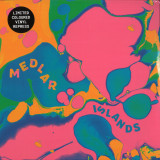
South Londons’ indomitable Medlar delivers an ambitious new album
The long-time underground favourite has collaborated with the likes of Dele Sosimi, Rebekah Reid, Deevoenay, Finn Peters, Sam Virdie, Afla Sackey and Arnau Obiols on an album that finds him taking his production to new levels.
From roots playing illegal raves in the South West to building up a cultured catalogue that bounces between house and garage, Medlar has long been part of the underground conversation. He has dropped a previous album and many innovative remixes and edits for the likes of Billy Cobham and Shirley Lites, worked in the studio and on stage with Afro legend Dele Sosimi and most recently released an album under his own name that collected myriad different sonic sketches from the past 15 years.
Islands is an altogether different proposition that comes after establishing himself as a mix engineer and producer of other people's music. In that time, Medlar has honed his skills, learnt new tricks and grown more able to express himself in sound. The result is an album that explores a more electronic palette inspired by '80s fusion sounds whilst maintaining a loose, organic flow through his use of live instrumentation. “The idea for the LP was for a collection of music which could sit alone as club tracks, but would work equally well as part of a whole. The name Islands came from this, as there's some connecting ideas but the tracks sit independently in their own little sonic worlds. I took a lot of inspiration from early 80’s electronic music produced during early years of MIDI technology… proto house, jazz fusion, electronic disco and experimental ambient. I wanted to juxtapose some of these methods with more contemporary production and make something that's ultimately quite fun!” says Medlar of the record which could easily soundtrack a summer road trip.
Across 11 tracks, he blends old-school techniques like a fusion of live instruments, FM synthesis and MIDI triggered vocal samples with more contemporary touches such as punchy, club-friendly drums and dub inspired, speaker-wobbling low end. The result is less reliant on samples than his previous works and makes for a perfect blend of retro authenticity and future freshness.
The Vendetta Suite is back to light up the early part of 2025 with a brilliant brace of singles on Hell Yeah. Kicking things off is a glorious acid house/disco thriller backed by a soothing out of body escape.
We’ve often referred to The Vendetta Suite as Belfast’s best kept secret, but with the quality music he keeps releasing he is rightly picking up ever more of a profile. The Hell Yeah regular has long been a key part of his native Northern Irish scene thanks to the way he mixes genres; ambient, post-rave Balearic, dub and acid house all in the mix with his own unique psychedelic magic.
First up is ‘The Jam Answer’, which taps into plenty of classic sounds but reinvents them for modern dancefloors. Bendy acid lines weave in between the dusty analogue drums, familiar acid house vocal samples and fizzing chord stabs bring the heat before a cosmic synth lead sings out with sunny soul. ‘Island Hill Microdot’ channels dreamy Chicago house, the futuristic styles of IDM with the blissed out warmth of Balearic. Carried along with gentle percussion, it’s an immersive soundscape that makes for the perfect tropical distraction.
Two very different but equally effective cuts from The Vendetta Suite.
- A1: Leuchtturm (Remastered 2025) 04 28
- A2: Neuland (Remastered 2025) 05 30
- A3: Ag Penthouse ( 2 Epoche ) (Remastered 2025) 05 17
- A4: Unland (Remastered 2025) 05 39
- A5: Ral 7035 (Remastered 2025) 04 09
- B1: Wanderlust (Remastered 2025) 06 50
- B2: Distel (Remastered 2025) 07 16
- B3: Traumschön (Remastered 2025) 05 29
- B4: Junge Männer Von Gestern (Remastered 2025) 01 43
- B5: Der Endlos Blaue Himmel (Remastered 2025) 01 55
Originally released on CD only – those were the days – “Triola im Fünftonraum“ counts as one of the most iconic albums of the early Kompakt era. Experience this timeless masterpiece of lush electronica lovingly restored and remastered for the first time on vinyl – 21 years after its inception.
We found this review from back in the days that perfectly sums up what “Triola im Fünftonraum” is all about:
The press material for “Triola im Fünftonraum” made allusions to home listening, when the album is mostly about movement… in a car …preferably a fast one … on a muggy spring day.
This might catch followers of producer Jörg Burger off guard. Up until this point, the producer’s Triola tracks – limited to three consecutive appearances on Kompakt’s yearly Pop Ambient series and a spot on “Leichtes Hören Teil 1” – were free-floating ambient washouts (albeit wondrous free-floating ambient washouts) with no pulse. The album, on the other hand, is beat-driven. Though still resolutely ambient – more an update of Burger’s lushest Bionaut tracks, only fully engaging instead of mildly diverting.
The soft, synthetic hand drums and tranquil vapors of “Leuchtturm” from Pop Ambient 2003, remain untouched and begin the album. Two other tracks that might sound familiar receive dynamic overhauls, now supported with quick dance rhythms and additional layers of synth gauze; the whispy flute trills and lightly flickering keys of “AG Penthouse”, for instance, are melted into a churning rhythm and some singing keyboard vamps that resemble a relaxed take on Tangerine Dream’s suspenseful soundtrack work for “Thief” (minus the crazy guitars).
What really makes the whole thing glow is the manner in which the tracks are attached, flowing in and out of another, rising and cresting and receding, with supreme poise – even if its title provides no indication, the album is as much a travelogue as Carl Craig’s “Landcruising”, Morgan Geist’s “Driving Memoirs” and Model 500’s “Deep Space”.
These are some of Burger’s most inventive productions, a remarkable feat since he’s been doing this so long. Catch yourself in the right frame of mind and you’ll wonder if everything he has released has been one extended ramp-up to this. In this age, it’s also refreshing to have a purely ambient techno album with absolutely no connection to “Boards of Canada”.
In other words, it’s a landmark for both its label and its genre.
Andy Kellman
Copyright 2025 TiVo Corporation
Ursprünglich nur auf CD veröffentlicht – das waren noch Zeiten – zählt „Triola im Fünftonraum“ zu den ikonischsten Alben der frühen Kompakt-Ära. Dieses zeitlose Meisterwerk schwelgerischer Electronica erscheint nun 21 Jahre nach seiner Entstehung erstmals liebevoll restauriert und remastered auf Vinyl.
Wir haben diese zeitgenössische Rezension gefunden, die perfekt zusammenfasst, worum es bei „Triola im Fünftonraum“ geht:
Das Pressematerial für „Triola im Fünftonraum“ spielt auf das Zuhören zu Hause an, obwohl es in dem Album hauptsächlich um Bewegung geht … in einem Auto … vorzugsweise einem schnellen … an einem schwülen Frühlingstag.
Das könnte die Fans des Produzenten Jörg Burger überraschen. Bis zu diesem Zeitpunkt waren die Triola-Tracks des Produzenten – beschränkt auf drei aufeinanderfolgende Auftritte in der jährlichen Pop-Ambient-Reihe von Kompakt und einen Platz auf „Leichtes Hören Teil 1“ – frei schwebende Ambient-Auswaschungen (wenn auch wundersame frei schwebende Ambient-Auswaschungen) ohne Puls. Das Album hingegen ist beatgetrieben, obwohl es immer noch entschieden Ambient ist – eher eine Aktualisierung von Burgers üppigsten Bionaut-Tracks, nur dass es voll und ganz fesselt, statt nur leicht abzulenken.
Die sanften, synthetischen Handtrommeln und die ruhigen Dämpfe von „Leuchtturm“ aus Pop Ambient 2003 bleiben unangetastet und bilden den Auftakt des Albums. Zwei weitere Stücke, die einem bekannt vorkommen könnten, erhalten eine dynamische Überarbeitung, die nun von schnellen Tanzrhythmen und zusätzlichen Schichten von Synthesizer-Gaze unterstützt wird; die flüsternden Flötentöne und leicht flackernden Tasten von „AG Penthouse“ zum Beispiel verschmelzen zu einem aufgewühlten Rhythmus und einigen singenden Keyboard-Vamps, die an eine entspannte Version des spannenden Soundtracks von Tangerine Dream erinnern, der für „Thief“ (ohne die verrückten Gitarren) verwendet wird.
Was das Ganze wirklich zum Leuchten bringt, ist die Art und Weise, wie die Tracks miteinander verbunden sind, wie sie ineinander fließen, ansteigen und ihren Höhepunkt erreichen und wieder abklingen, und das mit höchster Gelassenheit – auch wenn der Titel nichts darauf hindeutet, ist das Album ebenso ein Reisebericht wie Carl Craigs „Landcruising“, Morgan Geists „Driving Memoirs“ und Model 500s „Deep Space“.
Dies sind einige von Burgers einfallsreichsten Produktionen, eine bemerkenswerte Leistung, wenn man bedenkt, wie lange er schon dabei ist. Wenn man sich in die richtige Stimmung versetzt, fragt man sich, ob alles, was er bisher veröffentlicht hat, eine einzige Vorbereitung auf dieses Album war. In der heutigen Zeit ist es auch erfrischend, ein reines Ambient-Techno-Album zu hören, das absolut nichts mit „Boards of Canada“ zu tun hat.
Mit anderen Worten: Es ist ein Meilenstein für das Label und das Genre.
Andy Kellman
Copyright 2025 TiVo Corporation
‘SUN SHONE’ is a multidisciplinary music and art project of Istanbul-born, Amsterdam-based Deniz Omeroglu AKA Loradeniz,. ‘SUN SHONE’ marks the arrival of her debut full-length album: eight tracks of ambient electronic music painted masterfully with a palette of synthesizers, effects, percussion and ethereal voice.
‘SUN SHONE’ was conceived in two parts: the first tracks coming spontaneously to life in the aftermath of heartbreak, with Omeroglu trusting the creative flow and using it as a method of self- healing. What was initially planned as an EP release grew into a full-length album as she spent one month consciously working on the perfect B-side to complement the music.
Omeroglu wrote, performed and produced everything on the album, drawing on her deep knowledge of music theory and production; in addition to studying classical piano in the Conservatory from an early age, she holds both a Bachelor’s degree in Composition Studies and a Masters degree in Sound Design.
Many of the compositions on ‘SUN SHONE’ centre around interplaying synth arpeggios, oscillators expertly tuned for an equal degree of menace and sweetness that balances on a knife-edge. This ambiguity is echoed lyrically across the record, with its recurring themes of love lost and memories revisited. From the spoken word of opener ‘Saint Odds’ and ‘Swimmer’ to the layered choral swells of ‘No Moon’ and the melodic hooks of ‘Brick House’, Omeroglu’s voice is central to ‘SUN SHONE’, employed with impressive versatility. At times, it feels simultaneously fragile and powerful, perhaps nowhere more so than in the yearning swells of “Cloud Sofa’, a healing lullaby for lost love that offers up one of the most delicate moments on the album.
Whilst this may loosely be referred to as an ‘ambient’ album, Loradeniz’s knowledge of modern day production techniques and experience as both a sound designer and seasoned DJ (both in clubs and on radio) makes its presence felt throughout; echoes of Artificial Intelligence-era IDM appear in the dancing arpeggios and rhythmic pulses of ‘Sea Serpent’ and ‘Waterbear’, while the album closer ‘Aftersun’ could easily be imagined working as the euphoric last tune of a club set at sunrise.
With her debut album, Loradeniz weaves together an impressive breadth of styles and sounds, all held seamlessly together by a feeling; a cathartic desire to bring out all the melancholia from within. The album opens with the words ‘The search of love continues in the face of great odds’ a suitable mantra for a record that manages to combine melancholy with intense rushes of positivity and hopes for the future.
- Wave To Wave
- Shedding Shadows
- Mirages, Memories
- Ahead Of The Dawn
- Sudden Fruit
- Flowers Of Gravity
- Play Echoes
- Waltz For Returnal
- Disperse
Die in Kyoto geborene und heute in Berlin lebende Midori Hirano schafft minimalistische, ätherische Musik, in der akustisches Klavier nahtlos mit elektronischen Texturen verschmilzt. In Anlehnung an Ryuichi Sakamotos spätere Werke (Async, 12) erforscht, dekonstruiert und erfindet Hirano den traditionellen Rahmen der klassischen Musik neu und verwandelt jede Klaviernote in eine introspektive und immersive Reise. Unter ihrem Pseudonym Mimicof produziert sie auch elektronischere, Ambient Techno/IDM-orientierte Werke. Es war daher fast unvermeidlich, dass Midori eines Tages mit Ivan Pavlov zusammentreffen würde. Der russische Künstler, der heute in Frankreich lebt, ist eine Schlüsselfigur der experimentellen elektronischen Musik der letzten 30 Jahre. Als ehemaliger Akustikingenieur der russischen Marine ist COH ein Freigeist mit chirurgischer Präzision. In den späten 1990er Jahren trat er mit avantgardistischem, präzisem Post-Techno hervor, bevor er sich mit Glitch beschäftigte und später akustische und Ambient-Sounds in seine Klangskulpturen einbaute. Seine frühere Zusammenarbeit mit Peter Christopherson (COIL), Cosey Fanni Tutti und Abul Mogard (COH Meets Abul Mogard) sowie Veröffentlichungen auf renommierten Labels wie Raster-Noton und Editions Mego unterstreichen sowohl seinen Einfluss auf die elektronische Avantgarde als auch seine bemerkenswerte Fähigkeit zur Kollaboration. Mit Sudden Fruit liefern COH und Midori Hirano ein immersives und chimärisches Werk ab. Vom ersten Track an, ,Wave to Wave", spürt man das empfindliche Gleichgewicht zwischen dem Organischen und dem Digitalen, dem Fließen der Natur und der Poesie, die es verkörpert.