Acclaimed composer, artist, and producer Kaitlyn Aurelia Smith returns to Ghostly International with Let’s Turn it Into Sound, her most ambitious, intuitive, and inviting work to date. Though ambient and modern new age circles have embraced Smith’s catalog, Let’s Turn it Into Sound favors a more baroque and robust form of avant-pop. The music bursts with vertiginous vocal harmonies and detailed sound design, forming a truly unique sonic vision.
Suche:amb
Acclaimed composer, artist, and producer Kaitlyn Aurelia Smith returns to Ghostly International with Let’s Turn it Into Sound, her most ambitious, intuitive, and inviting work to date. Though ambient and modern new age circles have embraced Smith’s catalog, Let’s Turn it Into Sound favors a more baroque and robust form of avant-pop. The music bursts with vertiginous vocal harmonies and detailed sound design, forming a truly unique sonic vision.
- 1: Haizea - Egunaren Hastapena
- 2: Izukaitz - Xori Bele
- 3: William S. Fischer - Pello Joxepe
- 4: Magdalena - Lanera Sartzen
- 5: Enbor - Agurra Ii
- 6: Itoiz - Ezekielen Ikasgaia
- 7: Koska - Ogia Eska
- 8: Itziar - Ameskoi
- 9: Errobi - Andere
- 10: Lisker - Amets Jazarriak
- 11: Amaia Zubiria Eta Pascal Gaigne - Itxasoan Laino Dago
- 12: Gontzal Mendibil - Hasperen Itun
- 13: Urria - Arrano Beltza Eta Amaia
1972-1985 KATEBEGIAK - Prog-Rock, Psych-Folk & Jazz-Rock Music from the BASQUE COUNTRY. The album KATEBEGIAK, now published by ELKAR, contains 13 tunes on double LP gatefold edition from Haizea, Izukaitz, William S. Fischer, Magdalena, Enbor, Itoiz, Koska, Itziar, Errobi, Lisker, Amaia Zubiria & Pascal Gaigne, Gontzal Mendibil & Taldea and Urria, and the CD-Book edition adds an extra bonus track by the great unknown artist Juan Arkotxa. Complied by Mikel Unzurrunzaga Schmitz aka DJ Makala. Music produced in the 70's in the Basque Country got trapped between two earth shattering artistic currents; Ez Dok Amairu in the 60s and Basque Radical Rock in the 80's, and unfortunately, most of the lovely discs and tunes created at that magical time have been pushed to a remote (and sometimes even despised) corner of our collective memory. 60's and 80's music currents are almost opposite, and both work as magnetic poles with a very strong power of attraction, and maybe also as a burden for any of the later artistic currents. 60's generation of artists searched within their rich and ancient cultural roots to acknowledge and update them, in proud, hopeful and unforgettable folk songs. The 80's one on the other hand, worked in a flammable environment in constant social and political conflict and found in punk the perfect way to express their anger and weariness for so many unfulfilled promises and the lack of opportunities into short, noisy, direct and corrosive songs, technically sparse but full of energy and expressive power. Most of the "classic" names engraved in our memory come from one or the other like Benito Lertxundi, Mikel Laboa, Lourdes Iriondo and Xabier Lete or Kortatu, Hertzainak, Zarama, Las vulpes, Eskorbuto or Cicatriz. 70's generation and their music work somehow as the "missing link" ("katebegia" in Basque) between the two. They loved folky tunes and don't forget their ancient roots, but they also look outside for inspiration and experimentation. Just as the 80's boys and girls found punk the 70's guys found a completely different sonic and aesthetic landscape in the works of Grateful Dead, Fairport Convention, King Crimson, Soft Machine, Gong_ and worked closely with keen souls in other neighboring regions such as Maquina!, Pau Riba or Sisa in Catalonia or Smash and Triana in Andalusia. This resulted in more abstract and poetic lyrical content, much longer psych-folk-prog-jazz tunes, full of complex instrumental passages and mesmerizing structures of sheer ambition and masterful execution in many cases. But, most important of all, they found a voice of their own, rich, unique, and fascinating, and that's what makes them so valuable to us. Not only to us, but also to lots of vinyl collectors and crate-diggers around the world, who have in many cases paid fortunes for some of the original editions of LPs that are the source of tunes in this compilation. Mikel Unzurrunzaga Schmitz aka DJ Makala, DJ and producer of worldwide scope and wisdom, noticed this fact first and decided to pay homage to these wonderful tunes through this masterful and dedicated selection for your pleasure and as an open invitation to dig deeper into your adventures in the dark and hidden side of Basque popular music.
The Body has been an iconic force in heavy music for over 2 de- cades with a long history of collaborations. Recent collaborators include BUMMER, Full of Hell, Thou, Uniform. Lee Buford from The Body is also in Manslaughter 777 and Sightless Pit. BIG| BRAVE have a singular voice in heavy music, honed over 5 albums The Body and BIG|BRAVE are both bands possessed with an unequaled ability to convey overwhelming weight with simplicity, repetition, and detailed sonic atmospheres; artists who continue to alter the definition of what it means to be a heavy band. The Body are consistently prolific while increasingly ambitious as untethered producers and collaborators. BIG|BRAVE shape sound with dense waves of guitar and feedback, minimalist and hypnotic crashes, and emotionally exacting vocal melodies. In collaboration, The Body and BIG|BRAVE shift the gravity of their compositions to woven layers of percussion and unspooling guitars that sprawl through stark frameworks of earthy folk. Their debut collaborative album Leaving None But Small Birds distills the two ensembles" pioneering approach to heavy music into psalms for the forgotten, threnodies of lost love, and odes to vengeance. Typical to The Body"s creative process, Leaving None But Small Birds was composed almost entirely in the studio at Machine With Magnets with engineer/producer Seth Manchester. The Body and BIG|BRAVE aimed to challenge themselves to craft a fully realized and cohesive work that strayed outside the boundaries of the music they make individually. The Body"s Lee Buford set up the initial challenge: collaborating to make an album that evoked the country and folk roots of The Band. BIG|BRAVE"s Robin Wattie compiled lyrics and melodic lines from across Appalachian, Canadian, and English hymns and folk songs. Select phrases were then reworked and precisely arranged to center the experiences of marginalized characters, victims of hardship, and those yearning for love within each story. The despair and empowerment of these traditional tunes draw remarkable parallels with each group"s focus on championing people often cast aside in history. The Body and BIG|BRAVE, following a folk tradition, make each song their own through shifts in perspective and a synthesis of passages from kindred tales. BIG|BRAVE"s roots as a minimalist folk band and The Body"s love of old-time, country blues, and folk music enable the quintet to strike a formidable balance between sorrowful lamentation and uplifting resolve to weighty effect. Leaving None But Small Birds thatches together two monumental innovative forces that render the emotionally profound with lucid, devastating vitality
In Kooperation mit dem Künstler, Komponisten und Sounddesigner stonefromthesky (Oleksii Zinchenko) bringt Black Screen Records den Soundtrack von Undungeon auf eure Plattenspieler. Die Musik zum Action-RPG von Laughing Machines erscheint in limitierter Auflage auf Doppel-Vinyl.Alle Tracks wurden von Christian Bethge (Risk of Rain, Deadbolt, Divinity: Original Sin II, A Plague Tale) sorgfältig neu gemastert und auf 45RPM geschnitten. Der Soundtrack kommt in einem minimalistischen Gatefoldsleeve mit Artwork von Serhii Kochmar und "Glow-in-the-Dark" Spotlack."Nach 6 langen Jahren der Produktion, in denen wir auf viele harte Proben gestellt wurden, ist der Undungeon OST endlich fertiggestellt. Heruntergebrochen auf 16 Tracks, bleibt es der Idee treu, den Soundtrack als zusammenhängendes Album zu veröffentlichen. Geschnitten in 45RPM für höchste Qualität, nimmt der Soundtrack euch mit auf eine musikalische Reise durch das Multiversum und geleiteten euch in den Shift." -stonefromthesky"
Back in 2011 Markus Guentner and Heiko Badje formed Stareaway to follow their vision of creating both enchanting and haunting music from melodies and drones. Combining Guentners complex Wall of Electronic Sound and Badjes ethereal androgyn voice and multifaceted guitar play, they indeed produced some epic works between Ambient, Pop and Shoegaze, strangely shimmering and profoundly mysterious.
Now Stareaways fantastic (and back then maybe a little overlooked) album No Life In This Ghost Town sees its rerelease and is, for celebrational purposes, accompanied by this EP of four stunning remixes by stunning artists Rafael Anton Irisarri (who also did the mastering), Simon Scott (Slowdive), Thomas Fehlmann and David Westlake (ex Sneaker Pimps). Rafael Anton Irisarris magical take on O Suomi sparkles bright, still with melancholia always present. David Westlake emphasizes the Pop-aspect of Appointments, adding lush synth melodies and light-filled grooves while Thomas Fehlmann lets All Over You spiral into Popambients most majestic heights. Finally Simon Scott builds a Kathedrale aus Klang on Dreams May Never. Amazing remixes of amazing originals.
Polifonic Records is the melodic balance between antagonistic vibrations, spirits and energies that inhabit the land of Puglia since the dawn of time.
An harmonic exploration into colorful, vibrant sunrise atmospheres and emotional, introspective sunset sensations. One Body. Many Souls.
PF004 // The fourth vinyl of Polifonic Records label brings together artists from different cultures and ethnicities to create a seamless blend of sounds with diverse influences. Encompassing genres like house, Balearic beat, and acid, harmonized through ambient arrangements and 4-tothe-floor rhythm patterns to chill and groove to, this record is a material embodiment of the multicultural and polyhedric approach that Polifonic adopts throughout the multiple extensions of our projects.
The first track “Generations of Sunsets” by Lipelis joining with Andy Butler from Hercules and Love Affairs, vividly illustrates the extent of their sonic palette: a journey that runs through a Balearic groove - also with the use of guitar - and expands the mind to exotic places keeping the body moving with its acid touch.
Italian 90’s riviera house meets percussions and ethnic grooves in the born new track from the Milano duo Eternal Love. “Kuasi Riviera” reflects perfectly the nature of Polifonic between clubby atmospheres and connection with the wild world.
Then comes the darker side with Yu Su, who switches it up with new diversions in tempo and rhythm throughout “Oil” with a blend of deep basslines and obscure soundscapes contributing to this journey through space and time.
Benedek’s “Desperado” doesn’t shy away from deep diving right back to the 90s Italian house overlapping bold soundscapes through the lens of a contemporary producer. Distinctive,
immersive, and dauntless.
- A1: Let The Light In (Feat Douglas Dare)
- A2: Wknd (Feat Liz)
- A3: Don't Wanna Dance With U (Feat Albertina)
- A4: Sweat (Feat Liz)
- B1: X Hopeless Romantic (Feat Little Boots)
- B2: Remember To Forget Me (Feat Chester Lockhart)
- B3: Joyful Death (Feat Tyler Matthew Oyer)
- B4: Remember 2 Forget Me (Feat Douglas Dare - Piano Version)
SONIKKU announces the release of their new album ‘Joyful Death’, via Bella Union. “I love songs that make you want to cry and dance at the same time,” says Tony Donson, the London-based musician who records as SONIKKU. That sense of unfettered release and liberation drives their new album, ‘Joyful Death’. A fluent, fertile and full-colour hybrid of vibrant Italo-house, liquid synth-pop, righteous disco and French philosophical asides, it’s an album that signals the emergence proper of SONIKKU - a fully formed dancefloor artist. It’s also a farewell of sorts, perhaps, but with an emphatic rebirth at its heart. “This album feels like a transformation in the sense that I’m creating the music I’ve always wanted to make. A fully realised, coherent pop record that showcases my craft as a song-writer and producer.” Total control of their craft is swiftly asserted on ‘Let The Light In’, where the
influences of lost-in-music disco and the Pet Shop Boys merge under vocals from immersive, exploratory British singer-songwriter Douglas Dare. The pace accelerates as ‘WKND’ gets into a groove pitched somewhere between Madonna, Daft Punk and Indeep, with LA future-pop singer LIZ primed for dancefloor abandon on vocals. Meanwhile, SONIKKU’s independent intent is firmly asserted on the freestyle-inspired ‘Don’t Wanna Dance with You’, where singer Aisha Zoe coolly brushes off unwanted advances in favour of dancefloor pleasures.
LIZ assumes vocal duties again for ‘Sweat’, a song fully equipped to make dancefloor devotees do as its title suggests. Dreamily melodic evidence of SONIKKU’s dynamism (and love of melancholy Swedish electro-pop queen Robyn) beckons on ‘X Hopeless Romantic’, where Little Boots contributes a sweetly loved-up vocal over a sublimely
infectious chorus. Pummelling synths signal a dramatic shift of pace on the almost electro-darkwave dash of ‘Remember To Forget Me’, where actor/singer Chester Lockhart presides over a summit meeting between Depeche Mode and New Order. Performance artist Tyler Matthew Oyer takes the vocals for the Italo-disco-inspired title-track, a vividly imagined album manifesto - of sorts - inspired to varying degrees by an 1892 poem, French thinker Gilles Deleuze’s concept of the “body without organs” and a 1997 anime called The End Of Evangelion. Finally, that grand piano takes over as Dare returns, presiding over an achingly stripped-back version of ‘Remember To Forget Me’. With help from friends and artists they admires on vocals, ‘Joyful Death’ is a hugely confident and self-contained leap forward for SONIKKU after his time as a feted DJ. Having moved from Derby to London at the age of 18, Donson worked as an intern (at MTV, Dazed & Confused, SHOWstudio and elsewhere) then turned to DJing (from
London to Tokyo, Paris and Berlin) after they were signed to London label Lobster Theremin. Though they continues to DJ regularly at Tottenham’s LGBTQ rave-up Adonis, they have extra ambitions in mind: “I love DJing but I’m more looking forward to developing a live show.” LP pressed on mint green vinyl with digital download.
Bassist and composer Milo Fitzpatrick (Portico Quartet) launches new collaborative project with saxophonist Jordan Smart (Mammal Hands)
Vega Trails is a new project from double-bassist and composer Milo Fitzpatrick, a founder member of Portico Quartet, who has also performed with the likes of Nick Mulvey and Jono McCleary and features saxophonist Jordan Smart (Mammal Hands, Sunda Arc) in a richly powerful duo bringing together two powerfully charismatic musicians. The project which takes its name from Carl Sagan's science fiction novel 'Contact' (a book about signals of new life detected from the Vega system) andwas born out of a desire to bring the elements of bass and melody to the foreground in their rawest form and Fitzpatrick explains that he deliberatelychose the stripped back approach.
"There is so much in just one musician's sound; the emotional, the intellectual, the vulnerability and power of their character. But often these delicate nuances can be submerged in the quest for a group sound. In Vega Trails I wanted to grant the musicians space to breathe and be heard and for the listener to witness the intimacy and depth of a conversation between two voices, bass and melody. I was also interested in how the limitations would guide both the composition and performance and to push us both to places close to the limits of what we could play, and it is in this place where I believe the character of a musician blossoms and comes forward".
Tremors in the Static was composed during Lockdown as Fitzpatrick immersed himself in music that had space and sparseness such as Swedish fiddle music and Indian Classical music. Jan Johansson's legendary 'Jazz på Svenska' (jazz versions of Swedish folk songs) was another influence, as was a collection of ancient lullabies by Spanish soprano singer Montserrat Figueras. Through exploring the harmonic and textural possibilities on the bass, Fitzpatrick would cycle riffs and motifs whilst singing melodies, and he began to create the music debuted here. However, it was only after listening to Charlie Haden's album of duets, 'Closeness', that the project would come into focus as a duo, and Fitzpatrick immediately knew that the second musician had to be Jordan Smart.
"I saw Jordan play at two Gondwana Records events – in Berlin and Tokyo. Both times I was mesmerised by the intensity and conviction of his playing. His commitment to the cause of transcending himself and the listener made a lasting impression on me. When I began writing this record, I knew I needed a strong player who had equal conviction in their playing as me, but also someone who understood the importance of melody"
It was an inspired idea as Smart brought an openness and positivity which allowed the music to be both experimental and bold. Smart's ability to play tenor and soprano saxophone with equal command, as well as bass clarinet and Ney flute, allowed them to open up the pallet of sound and pull the melodies into varying emotional landscapes.The final piece of the puzzle was the performance space. Fitzpatrick knew that he wanted the two players to react off of a third element. The music was written for an ambient space which interacted with the notes: decaying and disintegrating them into silence. They found the perfect space in a church in Fitzpatrick's local neighbourhood of Stamford Hill.
"The recording space is the canvas on which the sound interacts and flows, it is the frame in which notes can live, breathe and die and is as important as the other elements. A resonant recording space, like a church, allows this stripped back sound to resonate, echo and linger, enough to create images and landscapes in which stories can play out".
This then is Vega Trails, a project that brings together two open-mined and communicative musicians for the first time, to tell beautiful winding stories together and to create something soulful and new.Something bigger than both of them and something that leaves us all richer for hearing it. Enjoy!
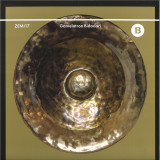
The Gamelatron is many things; one could call it a sculpture, a multimodal installation, an instrument, a robot, a feat of engineering, a vision—and it is all of these things. More importantly, though, it is a concept sustained by Aaron Taylor Kuffner, aka Zemi17, whose Gamelatrons are “sound producing kinetic sculptures” designed to create an immersive, visceral experience for the listener. Not a small feat, and yet the ambitions of Zemi17 are absolutely realized in this long-standing project, culminating now in his third release for The Bunker NY: Gamelatron Bidadari.
The Gamelatron Bidadari is not just a name—it is one of seventy-plus musical sculptures that Zemi17 has conceptualized, designed, and fabricated. Therefore, it would be inaccurate to think of this release as simply a series of arrangements composed in a finite period of time. Rather, it’s a window into a project and a process that is much larger than any single album can encapsulate. Gamelatron Bidardi is the culmination of more than a decade of work, and is central to Zemi17’s evolution, not only as a musician but as an artist.
Having studied gamelan for many years in Indonesian villages and at the Institut Seni Indonesia in Yogyakarta, Kuffner is a musician, an artist, technologist, and craftsman. The gongs in his sculptures are co-created with master Indonesian artisans. Each Gamelatron composition is site-responsive, meaning its sounds are composed for the acoustics and intentions of the space it inhabits, whether it’s an art gallery, a wooded landscape, or the inner temple of Burning Man. The Gamelatron does not stand alone: it is in constant co-creation with its physical environment, and in dialogue with gamelan’s long-standing history.
Originally exhibited at the Smithsonian Renwick as part of a show entitled, No Spectators: The Art of Burning Man, the Gamelatron Bidadari produces sounds that are delicate yet strong, and deeply hypnotic. Textured chiming creates intricate polyrhythmic patterns that are both complex and simple, or in a word, elegant. On Gamelan Bidadari, Zemi17 refrains from adhering to the strict musical structures; his approach to composition is free flowing.
He says, “I want to evoke what the music tells me it has to offer. It is like following water to its conclusion (or non-conclusion).” The arrangements on this album, written by Zemi17 and performed by the robotic arms of the Gamelatron, leaves the listener feeling enchanted, nourished and enriched.
A sense of the mystical comes through in the tonal quality of the instrument, and is conceptually felt in the sculpture’s name: the Bidadari, which loosely translates to “forest nymph.” The music conjures up natural wonder, and the four sculptures that make up the Gamelatron Bidadari, in fact, resemble trees. They are four independent yet connected entities, each with a large gong situated at their structural base—the sonic “roots” of the sculpture—while smaller gongs branch off of a golden, trunk-like spine. The Gamelatron Bidadari is as physically stunning as it is mesmerizing to the ear. A kind of divinity is invoked through its sound, or a sacred cohesion between past and present, tradition and new form. Meant to be viscerally experienced, the sounds of the Gamelatron call for sublime togetherness. Gamelatron Bidadari is not just an album but the crystallization of Kuffner’s work; it is a condensed yet spacious glimpse into the sonic power of Zemi17’s Gamelatrons, which have already been heard and experienced live by over a million people.
A previously unreleased project of Henning Christiansen, monumental in scope, traversing years, countries and now, formats. The Henning Christiansen Archive is proud to finally present one of the crown jewels of the archive, the masterpiece ‘Penthesilea’ as a 2LP and 5CD set. Both limited to 300 copies. Pentheseila is one of the most ambitious works in the entire Henning Christiansen oeuvre. A large-scale work from the mid eighties based on the play of the same name by Heinrich von Kleist (1808). Both Henning and his widow, Ursula Reuter Christiansen, were enthusiastic about Kleist’s text, both making works around the themes within this portent text. Henning Christiansen first developed a work around this text for the Rosenfest festival performed in Berlin in 1984. Rosenfest was curated by René Block and featured a variety of composers presenting works in response to Kleist’s work including Robert Ashley, “Blue” Gene Tyranny etc. Henning formulated a composition utilising tape, field recordings, voice, soprano, and violoncello alongside the home made instruments of Werner Durand. The live presentation was then expanded upon and first performed two years later at Teatro Olímpico, Rome on the 8th November 1986 as directed by Carlo Quartucci. The two releases presented here include a 2 x vinyl LP of the Rosenfest recordings in 1984 and a 5CD set sharing the four and a half hour backing track prepared for the Teatro Olímpico performance in Rome in 1986. Together these two releases make up a substantial overview of one of the most significant works in the entire Christiansen canon. THE REALITY IS A GHOST IN MY MIND (LP1) is a work that unfolds patiently with a mix of field recordings; wind, bird song and the sound of snow being crushed underfoot all unite in a foreboding atmosphere. IN PENTHESILEAS HÖHLE (LP2) features electronic treatments to the original field recordings found on THE REALITY IS A GHOST IN MY MIND, a representation of psychological reorientation perhaps? A deep ground tone (or ROOT as Henning calls it) leads the listener through a variety of realistic and unrealistic environments. As Henning says in his essay reprinted on the back sleeve: “Then comes a section where the field recordings of the sea, the storm, birds, cars and other things, are built together so that the realism of these sounds become unreal. For example the cars drive into the sea and the birds are singing within the storm. When you hear footsteps in the show, it’s Kleist sneaking past Deutsche Schauspielhaus. When you hear a deep, human sleeping noise, it’s Achilles sleeping. When you hear hammering it’s the weapon smith working. When you hear a stone being thrown it means the unanswered question: “Who threw the first stone?” These recordings lead to the finale where Carla Tatò’s haunted vocals into her singing mournfully along with Jan Tilman Schade’s violoncello and tuba, then a chainsaw appears. Presented in a deluxe di-cut sleeve with writings by Ursula Reuter Christiansen and Henning Christiansen and adorned with an artwork, Penthesilea by Ursula Reuter Christiansen, 1983.
Christopher 'Lav' Landin is a master of ambient sounds but it's been a while since we heard from him after 2017's collab with Purl on A Strangely Isolated Place. A New Landscape is a fresh album on Past Inside The Present that comes on limited and transparent orange vinyl. Contained within are a beguiling bunch of tunes with soul stirring pads, gently propulsive rhythms and gorgeous sound designs that call to mind various different references from deepest space to a warm spring day. It is an accomplished album design for mental escape.
Brewing another supremely heavy release on the horizon, Moonshine Recordings is stealing the spotlight once again. Proudly presenting Violinbwoy's first solo album, unadulterated sound system pressure at its finest. Slavic chants and drum rhythms meet the unrivalled power of Violinbwoy's eccentric take on modern bass music 'Fyetisov' kicks off the stellar 3x12' release with a high-powered Stepper emission. Setting the tone with a rumbling bassline and supremely energetic lead instrumentation, full force sound system music down to its core. Shining in a different light, 'Moonspell' reveals its melancholic nature - gradually intensifying through otherworldly percussion and anthemic vocal sample placements. Stripped down to its bare bones, 'Dubplate' unleashes its detuned, percussive shackles for a massive onslaught of four-to-the-floor, while keeping true to Jamaica's music roots. Warbling tape echo spheres and excellence in emotive expression Violinbwoy's collaboration with singer Marina P turns out to be an anthem by itself enthralling, whoever gets caught into the midst of this hymn of a track. Not backing down one step from the established level of quality, 'Sound System' featuring Junior Dread excels once more in a crystal-clear demonstration of modern roots music - mandatory repeat listening. Rejoicing in simplicity, 'Rig Alert' holds true to what the name suggests - cinematic bass meditation, fluidly scaling with the size of its speaker counterpart. Moving on to Dan's vocal skills in 'Wanted': Rastafarian wisdom chanting along a skanking rhythm and orchestral atmosphere. Ethereal bells being submerged in moving air and scattered white noise, 'Run & Hide' demonstrates a more experimental side within the LP - exhibiting Downtempo/Ambient inclinations in a magnificent combination with Dub characteristics, only increasing in energy to the call of the dub siren. Ready for more, the title track 'død' captures us within the expressive, introductory playing of the violin, deserting it for echoes and sub oscillations alike. Calling upon the prowess of Rider Shafique, his harmonic toasting is being escorted by a forward-minded halftime groove in 'Find The Way'. Topping the LP off with Sis' excellence in telling a story through song on a hypnotic instrumental. The nature of last tunes is often powerful, serving to concede with an explosion, appropriate of the session - as is the case with 'Surfacing' closing off the monumental EP with visceral lead movements, setting the tone alongside driving drums and one more murderous bassline, sure of receiving countless rewinds in the near future. Encompassing a plethora of current Roots- Dub- and Steppa- influenced styles, Moonshine's next LP installment is sure to be received for what it is: a definitive, quality expedition of what's firing up dance floors around the globe.
Runhild Gammelsæter and Lasse Marhaug are two Norwegian musicians/sound artists. Both started in the early 1990s music underground and have worked in many constellations with a wide range of collaborators.
Despite knowing each other for a long time, Gammelsæter and Marhaug’s first collaborative work was the “Quantum Entanglement” LP in 2014. The album ignited a collective spark that both wanted to pursue further. Still, other commitments got in the way, and the project lay dormant until Stephen O’Malley, and Greg Anderson invited them to open for Sunn O))) for a special gig in the St. James Church of Culture in Oslo in the autumn of 2019. The two gathered for a long series of rehearsals, and after the successful performance, it was clear that it was time to start working on new compositions and recordings. That process initiated in late 2019 and continued to early 2021, encompassing before and after the world went through the lockdown. The result of this long development to be heard accumulated upon their new album “Higgs Boson” on Ideologic Organ Music.
Throughout the profound process of creating “Higgs Boson”, Gammelsæter and Marhaug drew inspiration from various subjects and artists. For Marhaug, it was concepts informed by the structuralist experimental cinema of Japanese directors Takashi Ito and Toshio Matsumoto, futurist worlds of French comic book artists Philippe Druillet and Jean Moebius Giraud, landscape photography of Fay Godwin, Kåre Kivijärvi, and Tamiko Nishimura, amongst others.
It became a metaphysical juxtaposition involving Gammelsaeter’s research and lyrical ideas based on several seemingly unrelated principles. A process of association inspired by “the Glass Bead Game” by Herman Hesse. The discovery of the Higgs Boson as a confirmation of the physical universe. The work of Ernst Schrödinger on the uncertainty principle. The four forces of physics. The Force. Helplessness under armed forces - as the war sailors in World War II. The influence of magic as expressed in tarot.
Gammelsæter experiments with a boundary involving the thresholds amongst various states of focus and legibility by forensic experimentation with techniques such as exclusive expression of consonants, syllabic repetition, retrograde text vocalisations and multi-lingual layering. Her vocal inspirational sources include Sidsel Endresen, Diamanda Galas, Natacha Atlas, the choral works of Rachmaninov, and the bands Carcass and Grave.
Two worlds coming together, making the music special. Mixing hard facts with science fiction helps create a kaleidoscopic cross point between the complex realities of the past and a possible future.
“Quantum Entanglement” featured two long-form pieces centred around a prepared piano and layered voice, while “Higgs Boson” developed a much more elaborate and ambitious compositional work. Across eight parts, the two artists brought a broad palette of instrumentation and sound. Electronic and acoustic, objects and field recordings, and pipe organ define the structures of which the centre is Gammelsæter’s magnificent voice. She has become known for her legendary voice, with her vast and unique range of inflective techniques and affective colour through her 30 years creating music. In the mix, Lasse approached the instrumental elements like landscapes, then Runhild’s vocals as characters that inhabit those worlds. Often, Gammelsæter multiple characters fused with the landscape. Make them occupy space, sometimes blend into it, sometimes dominate it. Constructing and setting visual guidelines helps set focus and open possibilities.
As an album, “Higgs Boson” is direct and focused, drawing on song structures. Within these tracks are vast strata of sound, an immersive multi-dimensional depth of music. Creating a feeling of depth while working with a flat two-channel stereo format - and how dimensions of texture and distortion can help develop the illusion of a space. The album structure is a story-like arc, a malleable subjective path, set as the album traverses oblique and suggestive areas, opening the concepts for the listener to unpack as they like.
– exclusive consultation with Gammelsæter & Marhaug, edited by Stephen O’Malley, June 2022
Properly transcendent deep-dream jazz fantasy from prolific trumpet virtuoso Arve Henriksen (Supersilent) and Norwegian pianist Kjetil Husebø, together shaping an album that’s much, much more than the not so inconsiderable sum of its parts. Like a fever-dream comedown, it takes us from insanely rich sounding 4th world topographies to fizzing, electric ambience and fluttering prepared piano, perfectly soundtracking the humid un-reality we’re living through. read on / listen
Collins Dictionary Example sentence: „Other ocular signs include involuntary rhythmic movement of the eyeball.“ Someone in the editorial department wasn‘t paying attention and involuntarily spoke a deeply buried truth: The movement from the eye to rhythm and from there to sound is sometimes a small, puny one.
Now Infuso Giallo provides the proof at the same time and implements his live show for last year‘s debut album „Ocular Soda“ as an audio-visual show, as intertwined senses. Visible sound, audible images. Such ideas only last when they are put to the test and scrutinised by several experts.
The duo Globus, which consists of 2/5 of the post-hardcore band PTTRNS, examines the synth hook of the second part of the double-opener „Every Waking Hour Pt.2“ by playing it, varying it, letting it sway.
In contrast, Anatolian Weapons from Athens can‘t help but immerse the ambient, Soft Machine-production-like first minutes of „Every Waking Hour Pt.1“ in a sinister black light. Staggering into a basement club filled with nocturnal shadow people and indulge in carousing. Cautiously at first, then more and more determinedly.
From Hamburg and Berlin, the „Mole Gaze“ gets a special treatment. The trio Love-Songs drags the number off to Hamburg harbour, packs it onto a steamer, deep into the bow and lets it operate the sonar there. Conrad Schnitzler would have been delighted.
Infuso Giallo, meanwhile, realises that there is nothing more boring than standing still, so he revamps „Hello World“ and gives it a rear spoiler that keeps this number in lane even at club speed.
Speaking of „keeping in lane“: Niklas Wandt, the magician, doesn‘t even try such tricks. He simply throws an acid bolt on the closer „Ocular Soda“ and waits to see what happens. Alongside breakbeats from nowhere, Albert Hoffmann himself appears on a bicycle.
„Ocular Soda Remixes“ is the first tape on the Kame House label, so there‘s only one thing to do: open your eyes and listen!
The latest release on Livity Sound features an extensive insight into the work of Seb Uncles, aka Eusebeia. Uncles has been releasing his work prolifically over the past six years, from self-released tapes on Rebellion Electronics through to reams of 12”s and LPs for labels like Earthtrax, Western Lore, Rupture London and re:st. While his sound has often tilted towards drum & bass and jungle, he places atmosphere and composition ahead of genre boundaries and tempo restrictions.
Cosmos EP finds Uncles stretching out over eight varied tracks for a broader experience compared to the usual Livity EP. Glacial ambience and richly layered synthesis guides the record overall, at times leaving drums behind altogether, but even at its mellowest you can sense the overbearing bias towards soundsystem music. The melancholic electronica of ‘Becoming’ gets underpinned by dread bass, and ‘Solace’ places a haunting steppas-esque refrain in the midst of heavily dubbed downtempo. When he does turn to full-tilt drumfunk edits on the likes of ‘Hopes & Dreams’ and ‘Love + Light’, he approaches them with subtlety and finesse, matching rhythmic flair with melodic progressions which lend themselves to introspective listening as much as full dancefloor immersion.
Livity Sound is a label set up by Peverelist in 2011 as a vehicle for a raw and exploratory strain of UK techno, rooted in the heritage of UK dance music and sound system culture. It has since become one of the UK's foremost protagonists for cutting edge underground electronic music.
UK label Dawn State continue their hot streak this summer with further eclectic moods for the dance floor and beyond. On the tools for the fifth outing on the label is KIDWHO, a blossoming talent who through the last years whilst enduring the pandemic found light by burying himself in his studio experiencing new creative flows. The “Warez House” EP varies in tastes, similar to the highs and lows of the times that just passed us by.
Diving into the deep end is the title track, “Warez House”, loopy and hypnotic, swaying between shades of low end leaned house and techno. Off kilter synths and pads maneuver their way around the driving force of the track. “It came together layer by layer, eventually turning into a dense (and at times, unruly!) groove. A final touch
of atmospherics from an old Roland ROMpler and the track was done - bar a generous helping hand in mixdown from Joel Kane (who also turned out a heads-down dub version which might make an appearance!).”
Leaning in a more hazy direction is the blissful cruiser, “Leploop Lagoon”, a deep and emotive vibe crafted especially for the early mornings. A sophisticated deep house energy from the talented producer. “‘Leploop Lagoon’ is the oldest track on the EP, a cleaned-up version of a rough jam I made around four years back. It takes its name from the Leploop, a quirky semi-modular analogue groovebox of sorts, hand-built in Italy. A very unique and unpredictable machine, it’s on bass duties here as well as providing some percussion sounds via the MPC sampler.”
On the flip side lies “Spectral Pattern”, and it packs a certain punch. The rolling arrangement converses in harmony with icy hi-hats that flash in and out teasing the energy, all of the elements having space to breathe and work their magic.“‘Spectral Pattern’ came together quickly one very productive weekend in the studio last year. It developed from the bass sequence, which comes from a Yamaha TG-33, an unassuming 80s digital synth known for its glassy mix of ROM samples and FM tones - very New Age sounding, or 90s computer game soundtracks. But when you strip it back to basics, it punches hard in the low-end.”
Slipping on to the B side is a five minute transcendental trip, offering yet another series of textures to this otherworldly EP. The final track “At Least We Hav Music” is an ethereal soundscape waiting to be explored, wandering amongst ambient realms throughout. “The label was keen to include an ambient track on the release, and I wanted to record something specially for them. At first I had in mind something droning and melancholic, but after a few experiments with cassette
loops and reverb pedals this was the one that stood out. It was recorded during one of the lockdowns, and I guess I needed to create something that sounded more hopeful than brooding. I messaged DS boss Tom Haus with a rough version, and we went on to have a grumble about the gloomy state of things, locked-down in our respective cities and missing friends, family, activities… At some point I wrote ‘at least we have music’ - and almost as soon as I had sent it I knew I had found the track’s title. I’m very lucky to have had my home studio as a refuge through the long months of lockdown, and I’m honoured to have the chance share some of my output from this period on this record.”
KIDWHO fitting the Dawn State ethos to a tee here as they set up shop for what looks to be another fantastic release. “Each of these tracks came about in quite different ways. Like many creative people, I had moments of struggle during the pandemic, where the lack of variety and day-to-day stimulation lead to periods of writer’s block, and so I used those times to focus on smaller, more manageable projects such as making synth patches, recording sounds and and throwing together short loops in my samplers for later use. A number of
these short loops eventually laid the foundations for title track ‘Warez House’. Big thanks to Dawn State, Joel Kane, El Choop and everyone else who has helped make this happen.” -
KIDWHO
incl. mp3
A deepening sense of life, love, health, loss, and luck shaped the outlines of Tuttle’s fifth, and most collaborative album to date. Following a surprising exhilaration and exhaustion from the hitherto most innocuous of moments in mid-2020 - a half-hour drive to collect an online order, the furthest distance he’d traveled in months; Tuttle commenced working on new musical ideas loosely based around navigating the aftermaths and interregnums of a restless era. “I was thinking about what’s going on in the world and how localised it has become for so many of my friends in different places,” Tuttle explains. “Not in a negative way but more so focusing on how lovely it is when things are good.”
Thinking of musician friends and peers around the world – each confined to their own immediate surroundings – Tuttle’s generative and collaborative musical practice became a silvery through-line, connecting American innovators Steve Gunn, Chuck Johnson, Luke Schneider and Michael A. Muller (Balmorhea), to French/Swedish violinist Aurelie Ferriere and Spanish guitarist Conrado Isasa, back to Australian friends such as Voltfruit (aka Flora Wong and Luke Cuerel) and Darren Cross (Gerling) – among many others – each fitting seamlessly into Tuttle’s vibrant musical world.
Whilst previously a feature of Tuttle’s music, the exploration of space and texture found within Fleeting Adventure feels particularly vast and generous. The involvement of Chuck Johnson and Lawrence English mixing and mastering the album respectively, as with their work on Tuttle’s previous and breakthrough album Alexandra (Room40, 2020), inspired Andrew to develop songs that are as serene and patient as he’s ever sounded. Stripping elements back, the idea of pulling the songs apart somewhat, was just as important as adding the work of Andrew’s collaborators. “It is spacious through intent, process and assistance,” he confirms. "I thought carefully about what instruments - both what I played and what I asked others to provide based on my unadorned banjo track - would best work with what I was wanting to create.”
The road to Fleeting Adventure has been both long and short, but it sits as a tender and perhaps even vital reflection of an era in progress, in retrospect and in anticipation. A poignant contemplation on the many bonds that make up our lives from friends and family to the myriad places we inhabit and pass through along the way. The idea that an adventure doesn’t necessarily have to be a grand statement Andrew Tuttle has gathered up a number of his contemporaries and crafted something quietly spectacular, a new beginning to familiar habits.
“Tuttle’s plaintive banjo is encircled by an array of majestic sounds: serpentine electric guitar from Steve Gunn, enveloping electronics courtesy of Balmorhea’s Michael A Muller, violin swirls from Aurelie Ferriere , and the gentle saxophone of Joe Saxby. The result is a lush and unabashedly beautiful sonic landscape.’’ 8/10 UNCUT LEAD REVIEW
Andrew Tuttle's new single New Breakfast Habit is the perfect sonic condiment for the most important meal of the day. A banjo flecked ambient/cosmic journey with a psychedelic video courtesy of Matmos
His new album 'Fleeting Adventure' is the soundtrack of the world re-emerging and getting a release on Basin Rock (Julie Byrne, Aoife Nessa Frances, Johanna Samuels) this summer.
Hailing from Columbus, Ohio and bringing some of the Midwestern techno energy that makes scenes in nearby Cleveland, Pittsburgh and Detroit so revered, Shut Off Notice means business from the get-go. The first release on the label is a debut appearance from Rarelife, who knows exactly how to elicit the kind of nerve-shredding tension that makes a deep-in-the-night dancefloor take off. 'ALONE/alone' is a taut, hypnotic workout, which gets remixed into a trippier reverb freakout by FBK. FBK also delivers a remix of 'Endo.' which gets into the realms of Rrose-flavoured psych-out gear, and then Rarelife seals the deal with the edge of the world ambience of 'Solvent Swamp'.