Black Truffle is proud to announce the first vinyl reissue of Rafael Toral’s Aeriola Frequency, originally released by Perdition Plastics in 1998. Toral made his name in the world of mid-90’s experimental electronics with two releases, Sound Mind Sound Body (1994) and Wave Field (1995), both now recognised as classics and reissued on vinyl by Drag City, which saw him exploring the potential of electric guitar and pedals to immerse the listener in seemingly endless waves of sustained tones. On Wave Field, inspired by the striking resonance effects he experienced during a Buzzcocks gig with bad acoustics, he achieved a synthesis—often imitated but never bettered—of rock guitar, Ambient, and the acoustic exploration of Alvin Lucier, a kind of "liquid, abstract flux of rock sound".
On Aeriola Frequency, Toral continued the explorations of Wave Field but dropped the guitar, creating a series of extended pieces using only a simple feedback loop designed to work with pure electronic resonance. The result is far more delicate than Wave Field, a steady but unstable flow of filtered tones that continually reorder themselves into new forms. On both the LP’s sides, the tones, like growing plants, imperceptibly shift from drifting freely in ambient space to weaving strangely natural melodic patterns, as the loops unfold and the resonance gently outlines recurring rhythmic shapes.
The overall effect is strikingly organic, as David Toop noted in the liner notes included in the original release (and reprinted in this reissue): “A crystal garden, the sound grows in reeds and streams, blown like spider web strands, glittering and invisible, pulsing with translucent colour, bubbling and imploding, fraying and powdering.”
A classic of the non-academic approach to electronics that flourished in the 1990s— and a big influence at the time on Black Truffle head honcho Oren Ambarchi—Aeriola Frequency ushers listeners into an endlessly fascinating world of gliding tones and shifting details that they might never want to leave.
- Recorded at Noise Precision, Portugal, December 1997 and April 1998. Remastered by Rafael Toral in 2020.
- Liner notes by David Toop and Rafael Toral.
Search:amb
Birds are singing, a soft female voice embraces the stars, then the funk hits the fan: the second album of mysterious Japanese singer Nadja haunts immediately and marks one of the most exquisite reissues in the ever-growing catalogue of Studio Mule. Originally released in 1989 as promo only CD on the Japanese label Polystar, the album features some of the finest eighties pop funk fusion arrangements of the era. A deeply enchanting lost gem, that gets listeners instantly into heavy repeat addiction.
All ten songs are arranged by a group of grandmasters of their art. Japanese saxophonist, composer and music producer Yasuaki Shimizu, man behind the electronic ambient fusion classic “Kakashi”, was in charge for tunes like “Wac-Wack”, a neon light funk pop song, full of soft big city eroticism, ultra-slick synth lines and real funkateer explosions. It’s followed by “夢のとりこ”, the most stirring pop tune on the album, that originally was written by French composer, multi-instrumentalist, actor and singer Areski Belkacem, known for his and long-time collaborations with French avantgarde singer Brigitte Fontaine. Shimizu transformed the song into a low hanging funk jewel, with a cool rolling bassline, dub depth and synths that cry for cosmic help. Above all Nadja signs with a sexy chill, that somehow could only emerge in the 1980ees, when the cold war even made pop music real cool. The follow up is named “真珠のように”, features again music by Belkacem, this time transformed by Shimizu into electronic erotic pop - dreamy, witchy and precisely musical composed.
The B-Side opens with “Velvet Rain”, a funky urban boogie composition by Japanese keyboard player, composer and producer Akira Inoue, enlarged with glimmer camp kitsch, that immediately puts a smile on the listeners faces. It gets followed by “Paradise Catcher”, a soft pop tune with longing string and horn sections, arranged by legendary Jamaican rhythm and production duo Sly & Robbie. It somehow marks one of the strangest songs in their longstanding career, as it is largely minimal orchestral but yet super tight when it comes down to the rhythmic magnitudes. The next tune, “Private Tripper”, also stays soulful, funky and horn driven. Always pleasing the super tight, yet feathery voice of Nadja, that is dancing about boogie grooves and illuminating melodies with a seducing tragical coolness. Finally the album ends with a stylistic break in the overall musical atmosphere. It comes from Japanese musician Hiroaki Goto, it’s called “地図をずっと南へ”and features Afro-Brasilian voodoo rhythms, pan flutes, cosmic piano notes and Nadja, singing like a rain forest sorceress from outer space.
Ten arrangements by a bunch of high-grade arrangers, that all left Nadja’s voice enough space to widespread her talent as a supremely seducing singer, who wrote all lyrics, vocals and chorus by herself in order to present her touching vocal class in a vivid, bewitching timeless style. Come in and get ensnared!
Electronica duo Echaskech have been part of the Balkan Vinyl family since the very first releases back in 2010, but this is their debut solo outing. A mini-album of deep space electronica and cosmic ambience. A soundtrack across our solar system and interstellar travel onwards for 27 million light years.
Available on a limited edition of 30 hand-numbered cassettes.
A1: Dawn Over The Red Planet
A2: Kuiper Belt Life Support
A3: Andromeda
A4: Oort Cloud
A5: Machine Code
B1: Into Eta Carinae
B2: Disorder
B3: Pluto At Night
B4: Onset Of Panic
B5: Escape From Tau Ceti
B6: Messier 63
Hailing from Brussels, Bandler Ching is a creation of musical ideas from composer and saxophonist Ambroos De Schepper. Flawlessly blending contemporary jazz, electronics, hip-hop, noise and global beats, the sound is based around the freedom of expression and improvisation and performed with dazzling conviction.
After two years since her debut full-length release, Grand River presents her second album “Blink A Few Times To Clear Your Eyes” on Editions Mego. The 8 track LP shows an evolution towards a more experimental side of the Dutch-Italian composer which is here superbly combined with her ability of creating melodies previously heard on her 2xLP “Pineapple”, released on Spazio Disponibile in 2018.
“Blink A Few Times To Clear Your Eyes” expresses how acoustic instruments can be perfectly merged with electronic and analog synthesizers to become one new organic whole. The composer, whose birth-name is Aimée Portioli, brings the listener along on her personal explorational journey of expressions within a certain genre. The title of the album indicates the desire to explore what is new and see what is around us from different perspectives.
The album opens with the track “Side Lengths”, a complex and dreamy sequence made with one of her favorite synthesizers, the Yamaha DX-7. From there we are brought from extended panoramic sound design and cinematic ambiences, back and forth to synthetic melodies, field recordings, strings and for the first time ever, Aimée’s own modified voice in the closing track “All There Now”.
Recorded primarily at her home base in Berlin, Grand River’s music is pure, magnificent and elegant which documents a solemn atemporal story where her experiences are translated into another language.
Between Christmas 2000 and New Year 2001 producers Ekkehard Ehlers and Stephan Mathieu recorded an album of warm, soft, delicately crackling electronic music in the space of that week. It was christened with the ambivalent title "Heroin" and was released on CD via the label Brombron in 2001 and later in 2003 re-issued on Kit Clayton's Orthlorng Musork on double-LP with remixes the pair had commissioned as expansions.
17 years later Heroin sees its first vinyl release to include all 13 tracks from the original CD track-list on this LP + 12“ set. The centerpiece "Herz" finally receives its long deserved vinyl treatment (side C, at 45rpm) and on the flip side Thomas Brinkmann contributes a mirror in a magnificent remix of that very piece on side D.
Ehlers and Mathieu were both highly prolific solo artists during the period 2000-2004, and in just two years after the initial release of "Heroin" each had produced over half a dozen new solo recordings: among them the serial masterpiece Ehlers' "Plays" (Cornelius Cardew, Hurbert Fichte, John Cassavetes, Albert Ayler, Robert Johnson) released as 5 stunning LPs in a series on Staubgold, while Mathieu's 'Full Swing Edits' spread over five 10" records plus his album 'FrequencyLib' on Mille Plateaux, 'Die Entdeckung des Wetters' on Lucky Kitchen and ‘The Sad Mac’ on Atsushi Sasaki’s Headz label were greeted to critical acclaim.
Both artists were expanding their conceptual sonic approaches in the glow of developing laptop technologies which would to these times in 2020 seem quite primitive, but these two in that period used the state-of-the-art to aid and abet their conceptual visions, while at times the duo used unorthodox experimentation - yet always had a distinctively melodic and musical form at its heart and soul.
Ehlers can be seen as a conceptualist, as a meta-musician who interrogates the mediums and methods of sound production - reflecting on the conditions and possibilities of improvisation (e.g. "Plays Albert Ayler") and exploits ideas of mutation and distortion of popular aesthetics played out within a ghostly form of divine pop beauty in his project März.
Mathieu, originally a drummer and co-founder of what has come to be known as the Berlin 'Echtzeitmusik' scene. His approach could be similarly described as working a critical analyst and researcher: Subtly and precisely working in the realm of processing as a method of intervening in melodious/harmonic analog sound sources.
Ehlers and Mathieu may not think too much about their singular productions and publications outcomes, but instead concentrate on the process and musical personality that characterizes their gesture- style itself stays in the background - and they usher a music from small minimal sound sources coaching a patient music of slow intervention - much like a refraction of light than a concrete painting or a blurred photograph - beatus accident.
And indeed, "Heroin" is an album that embraces the happy accident being made up of reduced, often very catchy and very direct micro hooks which seem laser-guided into a space accepting obvious melodic beauty in what feels like an observation of musics unfolding and revealing it's DNA, embed with for a kind of yearning for innocence and naiveté - as if Satie were on the jukebox in "The Crying of Lot 49". Not to say the music is "reduced", but rather: 'restricted' and born from acceptance of limitations, and the artists allowing the sounds to just "be.." with some incremental degrees of coercion.
The album not only sounds like that of 2 producers who are both dreamers and scientists, but that Ehlers and Mathieu chose to work with these means in a dialogue together to reduce pop music to its musical/tonal core, it is not Pop music anymore, rather a ghostly pointilistic itteration of song. "Heroin" is located at this transition, around that point at which tracks, that were or could have become pop compositions, irrevocably slip into a static harmonic nirvana. We are invited to follow the arch of Heroin in a slow-motion morphine musical haze.
Heroin sounded timeless when originally released and proof is that it remains so, one wishes that Ehlers and Mathieu would convene again for a week, a month or an entire year to continue this process of slow rumination, picking affectionately over the sounds they both love - and then maybe when everything is condensed, evaporated they would write more songs with those sonic refractive elements that remain.
Following up on their debut LP Kick Drunk Love for Marcel Vogel’s Intimate Friends imprint a few years back, we are proud to present the next installment in the sporadic KAMM legacy: Cookie Policies.
Far more sonically rich and musically adventurous than its predecessor, Cookie Policies sees the band make bold strides into new territories where classically hardwired categories such as jazz, indie rock, and electronica melt into one another with immaculate, timeless ease.
The band members’ positions are more clear cut as well this round, with Marc David Barrite (aka Dave Aju, who also did one of his coveted mix engineering jobs on the LP) on prominent lead vocals in many of the pieces, Alland Byallo on trumpet, Kenneth Scott on synth bass, and Marc Smith adding guitar sections while the others shared the arranging and programming duties. This makes for a deeper continuation of the otherworldly combination of their known individual production styles, as well as a musical whole truly greater than the sum of its parts.
The set starts off with “Bird Call”, whose opening ode to Morricone ok corral-meets-samurai showdown riffs flow into a loose and drifting psychedelic boom bap blip, building until a glorious change-up of key and energy brings the track to its peak and deconstructed back down. “Rachel, the Largest Bullfrog” then takes things in a sweeter, slightly more traditionally-structured direction where dusty indie-folk ballad vibes intersect with an array of twisted cosmic tones, bits of computer keyboard percussion, and deep rolling sub bass. “Buckle Down” then moves things back away from acoustic restraints into a beautiful synth-laden musing on potential regret, with an ultra-potent horn section from Byallo vs a nasty stacked Roland SH-101 finish.
“CCBPGC” cools things off for a few minutes with an ambient field recording slice-and-dice motif, which slowly but surely evolves into a slinking jazz noir groove from another dimension. The more traditional song structures return on the lovely “La Luna”, where Barrite’s pen and soulful voice take to nautical longing themes over apropos waves of sonic textures. The ebb and flow of the verse/chorus sections eventually rise and give way to an absolutely gorgeous denouement. “Shleem” then takes us into pure unadulterated soaring sci-fi soundtrack ambient blast-off bliss, while the epic closing track “The Soft Glow of Electric Sex” gives a hearty nod to early masters of sprawling psychedelic jam sessions, from Pink Floyd and Can to In A Silent Way-era Miles and Liquid Liquid, while bringing it clearly into futurist millennia. The gradual evolution of the piece into its grand finale is the stuff we true music-lovers live and die for. We hope you enjoy the ride as much as we do.
Birthed from a radio show and event series with iconic Los Angeles radio station DUBLAB, SOS MUSIC’s goal is to provide a platform for diverse and forward-thinking electronic music, with a keen emphasis on womxn talent from around the world. In conjunction with Berlin-based !K7, the label’s debut release, SOS MUSIC Vol. 1 is a 14-track eclectic compilation showcasing dance music from some of the best producers working at the moment including rRoxymore, Violet, Nightwave, Umfang, LCY & Minimal Violence - lovingly curated to uplift and celebrate the global electronic community in a time of deep uncertainty in the music industry. SOS MUSIC Vol. 1 is international to its core, drawing on in?uences from the artists’ respective backgrounds including the UK, US, Serbia, Spain, Japan, Slovenia, Portugal, Germany & Canada.
SOS MUSIC was founded in Los Angeles by Maddy Maia (UK) and Tottie (Spain via the UK). Maddy has a long history in independent music, and is currently VP A&R in the US for famed British indie label Ninja Tune. Tottie is director of events and special projects at DUBLAB, and curates music, art and cultural programming that re?ects the diverse landscape of the city and beyond.
A shared love of underground music and culture, Maia and Tottie’s bond started strong via throwing events and later with hosting a monthly radio show; The SOS Music imprint is a natural next step in the pair’s progression as curators and its goal will continue early principles the duo stuck to- to seek out diverse underground talent and amplify their voice or community, whilst championing diversity on all sides of the industry. Maddy and Tottie’s music in?uences and styles span wide across the spectrum of experimental dance music, ranging from left?eld house, orchestral ambient sounds, not forgetting a nod to their youth growing up in the UK rave scene.
Videosphere, the debut album by Kompakt’s latest signing, the London-based artist Lake Turner (aka Andrew Halford), swoons into focus with “The Sunbird”, a teasing drift of lilting, ambient tones, riding out a submerged piston-pulse rhythm. Across its brief 109 seconds, it manages to traverse evocative terrain – something mythopoetic, something both humble and grandiose, a glimpse of the other behind the sky’s curtain. “I wanted to conjure up something resembling an ancient ceremony or death procession,” Turner nods. “Like a hymn to the surroundings of a faraway hill.” It’s both sky-bound and earthen, a ritual incantation to call in the music of the spheres.
Turner was introduced to the Kompakt family by his sometime collaborator Yannis Philippakis of Foals. He’d previously made music in post-punk and indie groups Great Eskimo Hoax and Trophy Wife, but Videosphere is the first time he’s fully articulated his own vision of electronic music, aside from one limited lathe-cut 12”, 2018’s Prime Mover EP, on Algebra. The lush ambient-disco-techno dreams of Videosphere were constructed and completed in his London studio and at his parents’ arable and sheep farm in Worcestershire, which might help explain the hazy, unhurried pastoralism of the album.
“There was a slight bittersweetness in finishing the record (in Worcestershire) as my parents were in the middle of selling my childhood home,” he sighs, before quipping, “on the plus, I ended up shearing a lot of sheep over the summer.” A student of archaeology and ancient history, Turner is no doubt carefully attuned to the twisting cogs of history and memory, and it’s no surprise that Videosphere has a nostalgic, melancholic cast; much of its beauty rests in the way it tugs, gently, at the heart strings – see the tear-stained cheeks of the lush, dappled “Honeycomb”, or the sweetly sad electro-roundelay of “No Way Back Forever.”
It’s not all drift-dream hypnosis, though – Videosphere is very much grounded in the now. ““No Way Back Forever” is a nod to the linear nature of time,” Turner explains by way of example, “and the tipping point of the world climate crisis that scientists have now declared.” Jayne Powell’s vocals are sent spinning through the song, wound like candyfloss; she takes centre stage on the techno hymnal title track, too. Throughout, there’s a sense of forward movement, despite the life stasis we find ourselves collectively bound by in mid-2020; there’s also a yearning for the communal, for community, that’s captured in the album title, a nod to an object Turner encountered at London’s Geoffrey Museum, “a television set in the shape of a spaceman’s helmet from the 1970s.”
“The vision I loosely had was to make an electronic record that had a communal warmth and almost ceremonial or ritual feel. I wanted to examine the relationship of our archaic minds in the trappings of the modern world,” Turner concludes. “What the Videosphere also symbolizes for me is the oneness of humanity and community, prevailing.”
Eröffnet wird "Videosphere", das Debütalbum von Kompakts jüngstem Signing, dem in London ansässigen Künstler Lake Turner (alias Andrew Halford), mit "The Sunbird" - einem herausfordernden Strom aus Ambient Sounds, die zu schweben scheinen, um sich dann in einen subtilen, maschinellen Rhythmus zu verwandeln. In gerade mal 109 Sekunden gelingt es dem Stück, ein gewaltiges Terrain abzuschreiten - etwas Mythopoetisches, bescheiden und grandios zugleich, gibt uns eine Ahnung davon, was sich hinter dem Himmel verbirgt. "Ich wollte etwas heraufbeschwören, das einer alten Zeremonie oder Totenprozession ähnelt", sagt Turner, "wie eine Hymne an die Umgebung eines weit entfernten Hügels." Himmlisch und irdisch zugleich, eine rituelle Beschwörung von Sphärenmusik.
Der Kompakt Label-Familie wurde Turner von dessen zeitweiligen Mitarbeiter Yannis Philippakis (Foals) vorgestellt. Zuvor hatte er in den Post Punk- und Indie-Bands Great Eskimo Hoax und Trophy Wife gespielt. Bis auf eine limitierte lathe-cut 12", der "Prime Mover EP" auf Algebra von 2018, artikuliert Turner mit "Videosphere" zum ersten Mal seine eigene Vision von elektronischer Musik.
Die üppigen Ambient-Disco-Techno-Träume von "Videosphere" hat Turner in seinem Londoner Studio und auf der Schaffarm seiner Eltern in Worcestershire produziert, was den nebulösen, gemächlichen und beinahe pastoralen Charakter des Albums erklären könnte.
"Es gab einen bittersüßen Moment als ich mit der Platte (in Worcestershire) fertig geworden war, da meine Eltern gerade dabei waren, das Haus meiner Kindheit zu verkaufen", seufzt er, bevor er witzelt, "das Positive war, dass ich im Laufe des Sommers eine Menge Schafe geschoren habe". Als Student der Archäologie und der Geschichte des Altertums ist Turner zweifellos mit den sich unaufhörlich drehenden Rädern der Geschichte und der daran geknüpften Erinnerungen vertraut, und es ist keine Überraschung, dass "Videosphere" einen nostalgischen, melancholischen Einschlag hat; viel von seiner Schönheit liegt in der Art und Weise, wie es einem sanft ans Herz geht - die Tränen benetzten Wangen von "Honeycomb" oder der ambivalente Elektro-Reigen von "No Way Back Forever".
Trotz allem hypnotischen Driften und Träumen - Videosphere ist sehr stark im Jetzt verankert. "`No Way Back Forever`ist eine Anspielung auf die lineare Natur der Zeit", erklärt Turner beispielhaft, "und auf den Wendepunkt der globalen Klimakrise, den Wissenschaftler gerade ausgerufen haben". Jayne Powells Gesang wirbelt dabei wie Zuckerwatte durch den Song und steht auch im Mittelpunkt des technoid hymnischen Titelstücks. Überall ist ein Gefühl der Vorwärtsbewegung zu spüren, trotz der Stagnation, in der wir uns Mitte 2020 kollektiv befinden; trotzdem existiert eine Sehnsucht nach dem Gemeinsamen, nach Gemeinschaft, die im Albumtitel eingefangen ist - eine Referenz an ein Objekt, dem Turner im Londoner Geoffrey-Museum begegnete, "ein Fernsehgerät in Form eines Raumfahrerhelms aus den 1970er Jahren".
„Die lose Vision, die ich hatte, bestand darin, eine elektronische Platte zu machen, die eine soziale Wärme und eine fast zeremonielle oder rituelle Atmosphäre ausstrahlt. Ich wollte die Beziehung unseres archaischen Geistes in den Fallstricken der modernen Welt untersuchen", so Turner abschließend. "Was `Videosphere` für mich auch symbolisiert, ist die Einheit von Menschlichkeit und Gemeinschaft, die am Ende obsiegt".
New Finnish imprint VIENO, kicks off with 10 track compilation of Finnish ambient, electronica & experimental music. Selection draws an emotionally infused red line throughout.
Travelling starts with "Pumpuli". Beautiful soft opener for ears and other senses. However, more deeper agenda follows. For darker soul searching Roberto Rodriguez provides 80´s synth driven "Third Act" followed by techno producer Satoi´s melancholic journey "Unohda".
B-Side goes on with dubby triphop influnced "Heimo M" by Aleksi Myllykoski with Finnish saxosphone legend Tapani Rinne. Paving the way for young and gifted Sansibar´s spacey techno breathing "ISS". Last track of the compilation, ”Ukki”, is a very personal, intriguingly gloomy, yet unpolished piano composition dedicated for recently deceased great grandfather of the artist, Mierka.
”I was just asked what’s my reason to create VIENO and bring out this compilation just now? I’ve been exploring the Finnish urban music and club scene for more than two decades and I recognize the space and craving is now present. Now is the right time to recreate and bring life to this art of subtle melancholy we Finns have always carried deep in us. In a way i´m tryin´to awaken the emotional energy more than just to paint insipid and expectedly ear friendly, atmospheric soundscapes.” - Jaako Hurme
Traditionally the liner notes of an album take on a kind of third-party address, where a writer is delivering their thoughts about how an album makes them feel without breaching that space where they are representing themselves or the moment in time directly to the reader. The goal is typically a kind of timelessness, but as we live in unprecedented times, unconventional methods take on new life, and hopefully importance. In the spirit of that idea... man, is this the kind of album we all need right now. So many of us feel like we're constantly walking a tightrope, are feeling like we can't unwind, are in genuine need of a few moments of respite. Every so often an album emerges from an artist that most likely did not realize when they were composing how timely the results would be, and Lofi Dimensions is exactly that kind of record. It doesn't really matter why it's coming when it is, what's important is that it's here, offering peace to the perturbed and inspiration for the downcast. The American Dollar have long been one of those artists operating in a kind of middle ground, a band with a long history of creating moving instrumental rock that has somehow avoided ever becoming synonymous with modern American post-rock acts. They retain a sort of autonomy in a valued position just outside the boundaries of classification. Blending electronic textures with moving guitar and keyboard melodies, their music has always traveled somewhere in the spaces between trip-hop, electronic, post-rock and ambient, and this inability to be defined is ultimately what sets them apart from the trappings of genre, allowing them to be whatever they want The American Dollar to be in a given moment, always on their terms.
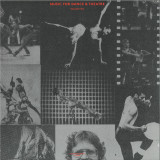
'Music For Theatre And Dance – Volume Two' is the second in a small series of EPs that will focus on music which was initially created for or inspired by dance and performance. Created as a dialogue with the avant-garde and highly experimental work in dance, theatre and art evolving at the time, the music was in turn at times greatly innovative.
That it was created for a dance or performance though means that such music was also often highly rhythmic and a number of pieces from this time stand out and seem greatly deserving of a new context.
Whether it's more ambient or atmospheric works or whether it's in the more rhythmic or percussive pieces, Music From Memory brings together another selection of tracks that aims to highlight this highly innovative direction in music.
“Owl Parade” is the result of solo work of Przemysław Adach, having 15 years of experience in sound production, which resulted in a wide range of projects and singles in cooperation with many vocalists, rappers and musicians in the country and outside. This album combines everything at once – ambient, trip-hop, chillout with a large admixture of electronics, while mixing flavors with a cello, electric guitar or dynamic drums
Five years after his critically acclaimed debut album Throwback, Glenn Astro returns with his deeply personal album Homespun.
Marking a change in course from his first release on Tartelet Records, Glenn Astro is set to showcase his sophomore album Homespun, a testament to a visionary artist who has come into his own. Made up of ten tracks spanning 45 minutes, the record twists and turns between electronic meditations, soulful vocals by Ajnascnet, and futuristic electro, carving out a world of spacey eclecticism that is as nostalgic as it is experimental.
“This album is in all facets different from the first one, which was a deliberate decision. No vintage sounds and references, no sampling, combined with futuristic sound design and song structures.I tried to keep it as current and intuitive as possible,” he says.
Known for his chunky beats and fuzzy textures, Glenn Astro has released on labels such as Ninja Tune and Apollo, leaving a distinctive signature on everything he touches.
But Glenn Astro has quietly been crafting a new sound for himself. Sometimes taking detours – morphing into his dark alter ego and experimenting with artist collaborations.
The sound of Homespun is a culmination of several years of reflection and artistic development – however, the album itself was produced in less than three months. “I set myself an ultimatum to finish the album within three months. If I didn’t make it, I’d
have to rethink my career path and keep music as a hobby, he says.
On the introspective first single and album title track “Homespun,” Ajnascent’s vocals lend a sincerity to the melancholic production. “It’s about the regret of not taking chances and giving in too much, but also about taking responsibility and being honest with yourself. Homespun is a nod to nostalgia and a desire for simplicity and prudence, being equally the culprit and the cure,” elaborates Ajnascent.
On “The Yancey,” an homage to J Dilla, Glenn Astro paints his vision of contemporary dance music with shimmering melodies, deep ambient soundscapes, and advanced drum programming. “Moreira” and “Look at You” feel like spaced-out electronic funk hybrids, while “Taking Care of Business” goes back to the future with Glenn Astro’s take on jungle. Other tracks such as “Mezzanine,” “Slow Poke Flange,” and “Viktor’s Meditation” provide the finest dubby electronics.
Tumultuous beats immersed with obscure ritualistic soundscapes. ‘Descending Void’ is a 5-track EP on Voidance Records (Berlin), marking the versatile character of Llimbs’ project. The opening tracks, ‘Oblivion’ and ‘Mass’, boldly pronounce Llimbs’ more abrasive aspect, carved through rhythmic broken beats, ominous chanting and sharp industrial textures. The following three tracks have a more experimental approach, with Side B composed of noisy ambiences and slow heavy rhythms. Voidance Records will be releasing a set of marbled vinyls and an exclusive bonus track for the first 100 limited edition copies of this release.
Favorite Recordings presents Jazz Traficantes by LE DEAL, a new musical adventure from the finest French jazzmen with Florian Pellissier (Piano & Fender Rhodes - Camaraõ Orkestra, Cotonete,
Aldorande, Setenta), Yoann Loustalot (Flugelhorn – Bruit Chic, Old & New Songs, Aerophone, Lucky Dog), Théo Girard (Upright Bass – Pensée Rotatives, Discobole) and Malick Koly (Drums - The Wallace
Roney Quintet). Needless to say, they’re used to play all over the globe and quite often to New York. During one of these
trips to the Big Apple, they discovered that the legendary Van Gelder studio (where most of Blue Note, Verve and CTI albums were recorded) was still active and opened so they decided to book a few days session.
Here is the story told by Florian Pellissier: “The tracks had been written the night before. We were going to run through them and then record. A simple plan. Van Gelder had passed a while back, but he left the keys and secret codes with his faithful assistant Maureen before heading off to create the right sound up in heaven. Nothing had changed in the atmosphere or configuration, not even the way the mics were placed. The studio and its wooden beams still exuded New York’s sixties jazz, dimly lit streets and clubs where anything might happen past midnight. Maureen knew just how to capture the ambiance of the sessions and bottle the energy without spilling a drop, taking infinite care to collect each cymbal tone, drum roll and trumpet phrase, without losing a single vibrating bass string or the slightest keyboard pause.”
Indeed, the four contrabandists succeeded to deliver an outstanding album, filled with themes that’ll get stuck in your head, just like in the 19 minutes long performance “Mexican Junkanoo Suite” and its three
parts. But more than just beautiful melodies, LE DEAL truly managed to bring a sense of drama to their compositions, going into the deepest emotions through gutted arrangements, improvising with great attention to the articulation of their ideas. From the beginning to the end, musicians and engineers did their best to emulate the proper vintage sound. Jazz Traficantes could prove once and for all that
French Jazz can indeed cross the borders. The album will be available as Tip-On Deluxe Vinyl LP but also on CD & Digital with a bonus track, “Noche en la Carcel”
RICO PUESTEL debuts on his TIME IN THE SPECIAL PRACTICE OF RELATIVITY label with a mind-boggling journey of 41 minutes — split in two parts to fit on vinyl! HEPTAKAIDEKA is what it won't be and will be what it never was: Something from in-between worlds, a place beyond far beyond, where time dissolves into relativity...
Every modern electronic music presenter should be able to find joyful, elevated, convulsing or simply useful moments within the extent of this track that is designed to have its inherent connecting factors and starting points in place for every DJ set — letting it be just a few minutes, well-placed groove looping or bigger amounts of its entirety for diving into a long night, bringing it to an end or making it standing out in-between.
Starting off with a hazy half-grasp hint of what's to come, a mysteriously pervasive bionic loop emerges, slowly coalescing with a bone-dry groove on the rise. Taking up a first quadrant of the track, already gnawing into the long-term memory, it manages to gradually establish itself along the pathway while the "rhythmatics" endure some subtle layer-shifting with occult-like strings come sliding in from somewhere unknown like an admonitory subtext.
Being halfway through (and all the way in), everything smoothly crumbles down to its basic framework, still shaking off its own reminiscences while foregone vestiges almost perilously try to reassemble themselves. All of that leading to a clearly unforeseen yet fortunate drift into a 1980's-like synth peak time section after about 27 minutes being in that track, finally cherishing an evolving emotional felicity and the climax of its own being that tends to feel like an overarching salvation.
As everything being eventually finite, the track starts to bring to mind where it came from by assuredly falling back into a story told before with the well-established bionic loop that once used to run free, sounding somehow different and more tamed now. Ending with dignity, the consistently resurfaced admonitory strings lead the way to its conclusion and possibly new beginnings, solely leaving behind the heartbeat-like booming that carried it all, now fading away...
Coming into existence during a series of multiple productions of exuberant proportions with Rico making the studio his citadel-like stronghold, this is an extensive story of desires, instincts, pride, fall, mirth, solicitude, tension, détente and basically life itself while subtly yet versatilely entertaining on a dodgy yet accessible level throughout the wingspread of Techno, House, Minimal, Dub, Electronica and Ambient influences.
The CD version not only brings you the title track in the guise of its non-split completeness but eminently churns out the extra drumming dub treat DEKAEPTA for a pleasurable groove-delight as well as the trippy bonus beauty VOSEM' that transits as a precious component of infinity.
Tape / Cassette
Maatsethe’s solo output is all about ambient and sound collage. Loads of processed guitars & samples meander between walls of sound, intimate harmonies and a kind of melancholic cinematic landscape. Stoic basslines are surrounded by soft and gentle spheres. A bit of post-rock feel every now and then, always wrapped up in a meditative monotony, slightly interrupted by small epic narratives to gaze up.
Maatsethe (Matthias Neuefeind, Berlin) curates the KeplarRev series with vinyl reissues of essential electronic albums from the 90’s and 00’s, he plays in the band Fonoda and is part of the project Washer, Zimmer & the Guitar People.
Tracks 1, 2, 3, 4, 6 composed by Maatsethe
Tracks 5, 7 composed by Fonoda
All tracks recorded by Maatsethe
Mastering by Edgar Medina
Artwork by Daniel Castrejón
Sequencias introduces MaSpaventi to their catalog with this EP called Le Cose Che Sentivo, which is a mixture of tempos with a melancholic feeling spread throughout.
The dexterity of MaSpaventi is shown on this one; from the funky drum programming and melodic lushness of "Una Piccola Amaca" on the A-side, to the more ethereal downtempo/ambient side of him with "Profondo Blu" and "Coralli Lia" on the B-side.