Amadis and The Ambassadors" are a music group who came together in London, through front man Amadis Ferreira; cooking up a blend of music with flavours of Afro, Funk, Reggae and Soul on the menu. Rich in melody and groove, it will take you on a journey of rhythm and conscious vibration.
I want to express my unconditional gratitude to my mother and my father for all the love they have given me, all the guidance and for showing me how to share the same with all peoples in the most prosperous manner. I would like to thank my musical family, The Ambassadors, for their courage, advice, musicianship and having believed in this vision, without visionaries beside me the journey would be much harder and dimmer to see. Words alone cannot describe the joy in my heart, this is why we play music. You are blessed. My infinite gratitude also spreads to my beautiful sisters and nieces along with family dotted around various parts of the world, Angola, Portugal, India, Switzerland, Spain, Luxemburg, France, England; and to my spiritual family of dear friends, cousins, uncles and aunties spread throughout this planet all under one firmament. You are loved. Last but not least, I would like to praise my brother and friend Jonathan Rogers for opening up his studio and being the binding cord that enabled the possibility of this album to come to fruition along with the love that only true higher spirituality brings.
Suche:amba
Acclaimed guitar duo Loren Connors and Alan Licht celebrate their 30-year collaboration with release of their eighth album - At The Top Of The Stairs. Across the decades, their improvisations turned increasingly abstract and atonal, while still maintaining complex, ethereal arrangements. The harmonious blend of Licht's meticulously crafted feedback and harmonic patterns with Connors' ghostly blue tones remains the core sound of this partnership. At The Top Of The Stairs was recorded live in 2018. Across two side-long pieces, the duo ascends slowly, through layers of atmospheric tension punctuated by thunderous waves of Connors' effects. For fifty years, Connors's adaptation of acoustic Delta blues has transmuted into miniature gray scale compositions and howling riffs. His collaborators include Oren Ambarchi, Keiji Haino, and Kim Gordon. Rock/experimental musician Alan Licht was a member of the bands Love Child, Run On, and Lee Ranaldo & the Dust, and has released a range of acclaimed rock and experimental albums. He is an author with books published by Rizzoli, W.W. Norton, Faber & Faber and Blank Forms.
The YUM YUMS, Europe's ambassadors of power-pop are back with a brandnew album!!! Their sixth full-length is called "Poppin' Up Again" you you can be sure that whenever they have a new album poppin' up, it's gonna be a hit record!!! It's stacked with catchy hi-energy, guitar-driven power-pop songs, complete with sugary multi-layered harmonies and lyrics that seems to be stolen from some 12 year-old girl's diary. Like Joss Hutton once wrote in Bucketfull Of Brains Magazine, "Let's consider the three minute pop-song for a second or two: so simple in it's construction, so inscrutable in it's perfection, so many who have tried and failed! For me the YUM YUMS have been THE band to watch over the past few years, their perfect (yep, it's true) take on the "power-pop" thang is a source of constant pleasure and amuzement". A pretty good description that is, but what more can we say about the undisputed kings of pop? This time they deliver their idea of REAL POWER-POP, where the word power is written in capital letters and fill it up with a perfect dose of classic rock'n'roll. Putting together the essential ingrediences of the music of the RAMONES, the REAL KIDS, the PLIMSOULS, the DEVIL DOGS, the early SWEET and the OHIO EXPRESS, the 6t's and the 7t's, bubblegum, glam and punk, pop and r'n'r, they create their very own YUMMY sound. So, what we're talking about is extremely catchy pop-music with a fat, rockin' guitar sound, well executed vocal-lines, ridin'-on-the-waves drums and a crunchy punk feel to it. It simply makes you feel good!
Das neueste Projekt der X Ambassadors ist von ihren eigenen Lebenserfahrungen inspiriert, die sie gemacht haben, als sie in einer Kleinstadt im Bundesstaat New York aufwuchsen (daher auch der Albumtitel ”Townie”). Die Texte sind zwar sehr spezifisch auf die Heimatstadt der Band bezogen, aber die Stimmung ist universell. Nostalgie nicht nur für die eigene Heimatstadt, sondern auch für die eigene Jugend und die glückselige Naivität der Jugend. Das Bedauern darüber, dass man mit zunehmendem Alter und der damit verbundenen klaren Rückschau wünscht, man hätte die Dinge anders gemacht oder sie als das gewürdigt, was sie zu jener Zeit wirklich waren. Das Gefühl, vergessen und zurückgelassen zu werden, während die Freunde kommen und gehen. Die Erleichterung, es überstanden zu haben. Die Schuld des Überlebenden, es geschafft zu haben
One of the greatest, heaviest, and most sought-after guitar records from 1970s West Africa, available on vinyl for the first time in over a decade!!!
Bamako, Mali, 1973: Rail Band, the official orchestra of the Malian state railway, drops their self-titled LP. It’s a relentlessly soulful and hypnotic blend of American funk, jazz horns, and Afro-Cuban music, reflected through centuries-old Mandé tradition and blasted at top volume by some of the continent’s greatest artists.
Led by legendary trumpet and saxman Tidiani Koné and held aloft by the intricate web of Djelimady Tounkara’s rumbling, reverb-soaked guitar, Rail Band’s sprawling compositions embody West African storytelling traditions while exulting in the technology and modernity of a newly independent Mali. Vocalists Salif Keita and Mory Kanté, two heroes of African music who would achieve global fame as soloists, are endlessly emotive, oscillating between silky ballads and funk screams. The band’s sound is filled out by layers of percussion, rolling guitars, and melodic horns filtered through the Caribbean.
Starting in 1970, Rail Band played five nights a week, from 2 pm til the early hours, at the Buffet Hotel de la Gare. Their audience was an international array of businessmen, young partiers, and people of the Bamako night. The band was incredibly versatile, switching genres, rhythms, and styles to meet their crowd. It was a volatile mix, one that would fall apart soon after these recordings were made, with Salif Keita’s departure to start the rival Les Ambassadeurs. Though Rail Band continued in many distinguished forms, the eight songs on this album reveal one of the greatest bands to ever exist, at the height of their creative powers.
On “Duga”, a composition dating back to the 13th century and passed on through oral tradition by the jelis (griots), the Rail Band replace balafon with the interplay of Cheick Tidiane’s speaker-rattling bass and Alfred Coulibaly’s tasteful organ. “Marabayasa,” with its iconic sax intro and Mory Kanté channeling James Brown, is a deep-cut favorite of DJs around the world. Part of a long and regal lineage of Malian guitar orchestras initially tasked with translating the region’s traditional music to modern instrumentation, Rail Band morphed and reenvisioned those traditions with a style and energy that has never been matched.
The latest in a prolific string of solo and collaborative releases by James Rushford, Turzets collects a pair of new works primarily created and recorded last year while the Australian composer-performer was in residence at La Becque, an art center on Lake Geneva in Switzerland. The side-length piece "Fallaway Whisk" explores hesitation in its many forms_reticence of speech, sonic restraint_using live, abstracted translations of text from English to German against a lush and swelling soundscape. On the flip side, "Quire" is a work in ten movements influenced by the composer's study of late medieval repertoire on portative organ, weaving the instrument's woodsy interlocking melodies with angelic Yamaha CS-80 synth sweeps and stuttering glitches. The combined effort is somewhat a departure for Rushford, working in traces of Klaus Schulze, concrete poetry, and ars subtilior into a precise and ever-unfolding tapestry. Rushford's work draws from a wide range of collagist and improvisatory musical languages, staking out an idiosyncratic stylistic space that has been variously described as "electro-acoustic experimentation with a beating heart" (Boomkat) and "haunted Jacobean ASMR" (The Wire). Investigating the creases, cracks, and folds in traditions ranging from early music to New Age, Rushford's work subtly exaggerates seemingly liminal aspects such as atmosphere and the bodily presence of the performer until these take on a weight equal to musical elements such as pitch, rhythm, and timbre. In recent years, Rushford's solo work has been guided by his theorization of sonic images, particularly the shadow, which has inspired pieces as diverse as an hour-long companion to Federico Mompou's 1959-67 piano cycle Música Callada (2016) and a sumptuous translation of the play of light across flat surfaces into synthetic sound (The Lake from the Louvers, Shelter Press, 2021). His long-standing performance practice for piano, portative organ, synthesizers, and electroacoustic devices, is constantly infused with a delicacy of touch and a harmonic sensibility in which unorthodox tunings coexist with influences from fin de siècle Impressionism, the twentieth century avant-garde, and popular musical structures. He has worked with a vast range artists including Klaus Lang, Annea Lockwood, David Behrman, Tashi Wada, Haroon Mirza, Dennis Cooper, Ora Clementi, crys cole, Oren Ambarchi, Kassel Jaeger, Will Guthrie, and Graham Lambkin. He has performed as Golden Fur (with Sam Dunscombe and Judith Hamann) and Food Court (with Joe Talia and Francis Plagne).
Sofia Portanet releases her highly anticipated 2nd album "Chasing Dreams" on 8th March 2024 via Duchess Box Records. The album features the top 100 Radio Charted singles Real Face and Unstoppable, as well as the hits Mi Amor, Ballon, and My Time as well as a piano version of Real Face featuring special guest Chilly Gonzales as a bonus track. In December 23, Sofia Portanet will be on tour in Germany as support to Betterov. Sofia has performed all over the world including showcase events such as SXSW, Eurosonic and Reeperbahn Festival. The new album Chasing Dreams features duets from the likes of Chilly Gonzales and Tobia Bamborschk, better known as lead singer from German indie rock group Isolation Berlin. Sofia Portanet who won Germany's prestigious VUT Award for Best Newcomer in 2021, following her critically acclaimed debut album Freier Geist, released in 2020 has gone on to be Spotify Equal Ambassador and make multiple national TV performances, duet with the likes of Chilly Gonzales and Kreator as well as making live sessions from NPR. Talking about her new album Sofia Portanet explains "Inhaltlich wollte ich ein poppigeres Album machen. Einfach, weil ich Pop Musik liebe und damit aufgewachsen bin. Ich möchte mich nicht auf ein Genre festnageln lassen. Ich werde immer die Musik machen, die ich für den gegebenen Moment fühle und gut finde. Es macht also auch wenig Sinn mich selbst mit meiner eigenen ersten Platte vergleichen zu wollen."
Chasing Dreams by Sofia Portanet, released 4 April 2024.
- A1: I Am Missing You
- A2: Kahān Gayelavā Shyām Saloné
- A3: Supané Mé Āyé Preetam Sainyā
- A4: I Am Missing You (Reprise)
- A5: Jaya Jagadish Haré
- B1: Overture
- B2: Festivity & Joy
- B3: Love - Dance Ecstasy
- B4: Lust (Rāga Chandrakauns)
- B5: Dispute & Violence
- B6: Disillusionment & Frustration
- B7: Despair & Sorrow (Rāga Marwā)
- B8: Awakening
- B9: Peace & Hope (Rāga Bhatiyār)
Purple Vinyl[27,52 €]
Out of print as a stand-alone release for decades since its original 1974 issue. Produced by George Harrison, Shankar Family & Friends is an almost-forgotten masterwork – an emotional and sonic pact between two like-minded souls to both advance their spiritually minded bond and unite musical styles, cultures, and sounds in wondrous fashion Contributions from Ringo Starr, David Bromberg, Billy Preston, Nicky Hopkins, Jim Keltner, Klaus Voorman, and a host of virtuosic Indian musicians add to a diverse album that melds Eastern and Western traditions; encompasses jazz, funk, bhajan, Indian, and pop; and represents the spirit and breadth of Harrison's Dark Horse Records imprint.
Memorable contributions from an A-list of American and English musicians — Ringo Starr (drums), David Bromberg (electric guitar), Billy Preston (organ), Nicky Hopkins (piano), Jim Keltner (drums), Klaus Voorman (bass), Robert Margouleff (Moog), Malcolm Cecil (Moog), Tom Scott (saxophone) included — add to the richness of a set that melds Eastern and Western traditions. These “names” mesh with a host of Indian virtuosos — Alla Rakha, Ashish Khan, Kamala Chakravarty, Hariprasad Chaurasia included — who turn Shankar Family & Friends into a journey laced with percussive, string, and vocal components that aren’t soon forgotten.
Throughout, Shankar Family & Friends remains true to its title — a mesmerizing record named to reflect the group participation approach of its creators. The idea started when Shankar told Harrison about a ballet he wrote. The Beatle, who first met Shankar in June 1966 — roughly a year after Harrison became interested in Indian music after overhearing it in a restaurant while filming Help! — immediately was convinced they needed to record it. Harrison’s staunch admiration of Shankar and serious approach to Eastern styles are reflected throughout the album.
Indeed, for Harrison, Shankar Family & Friends marks the culmination of a years-long effort to master the sitar, study Hinduism, and incorporate elements such as drones, unusual chords, and expressive picking into his own songs. The seeds of this unique collaboration can be heard in Beatles works such as “Norwegian Wood,” “Love to You,” and “Within You Without You.” Both musicians were also fresh from performing at the 1971 Concert for Bangladesh shows. Yet Shankar Family & Friends remains entirely unique in each visionary artist’s history — and ultimately, led to a collaborative tour Harrison and Shankar staged across North America.
Encompassing jazz, funk, bhajan, Indian, and pop, Shankar Family & Friends is thematically split into halves. Side One reveals Shankar’s uncanny ear for melody — even when applied to Western forms. The lead-off “I Am Missing You,” the first single ever released by Dark Horse Records and reportedly the first pop composition Shankar completed, underscores his skills as a composer and global ambassador. Beautifully sung across three octaves by his sister-in-law, Lakshmi Shankar, the devotional song features multiple drummers and production that mirrors Phil Spector’s Wall of Sound approach. Harrison plays autoharp and guitar; Starr sits in on drums; Scott handles flute and soprano saxophone. It’s the inviting start of a musical adventure teeming with color, majesty, and mysticism.
A second version of the track — designated with a “(Reprise)” tag — appears minutes later. Unfolding in different ways, it follows a folk ballad structure stitched together with Indian instrumentation. Here, according to Shankar, the musicians “attempted to convey the sounds and atmosphere of Vrindavan, the ancient holy place where Krishna grew up.” Both renditions speak to the cross-continental fusion that came so naturally to Harrison and Shankar, whose oversight on the side’s other vocal tracks ensures listeners familiar with Western methods gain easy access to the hypnotic allure of his native country’s music.
Nowhere is this more evident than on Dream, Nightmare & Dawn (Music for a Ballet), the side-long piece that served as the genesis for Shankar Family & Friends. Launched with an airy overture and unfolding across three movements, the mostly wordless suite features everything from call-and-response interplay and classical lyricism to uptempo dance figures, stacked rhythms, and intoxicating grooves. Blurring the lines between contemporary and traditional, and Western and Eastern, the inspirational work is the exclamation point on a record that defined “world music” well before the term became co-opted as a catch-all genre.
tapetopia 015 The name L’Ambassadeur des Ombres goes back to the
French science fiction comic “Valérian et Laureline”. The Ambassadors of the Shadows combined pop appeal and experimentation as the soundtrack to the zero hour of their generation in the GDR’s waning days. The music was made in a children’s room, but the edifice of ideas was a demolition site. L’Ambassadeur des Ombres existed as a hybrid of the wave bands Die Vision and Neuntage. The open ensemble’s family tree can however be traced back to buried DIY projects such as the Mahlsdorfer Wohnstuben Orchester, Zerstörte Umwelt and dark-wave protagonists Fellini Prostitutes or Nontoxic. In the short time of their existence in 1988/89, L’Ambassadeur des Ombres did not give a single concert. The tape “Strike Me If I Shriek” was circulated among friends and musicians only as an on-request work report – it’s a long overdue discovery. The tapetopia series, using the original layouts and track lists, publishes cassette editions from the GDR underground of the 1980s, especially from the “walled-in” scene in East Berlin. More than three decades after their initial “release”, most of these tapes have yet to be heard on either vinyl or CD, even though they made an audible mark in the canon of GDR subculture. Despite the tiny original editions of the time, many of the bands were considered cult in countercultural circles, which made them highly suspect in informed circles.
THE YUM YUMS have been Norway's leading power pop ambassadors for nearly 20 years, and still going strong with a solid following outside of Norway. Power-pop, with 70's punk and glam rock influences, played fast with sweet harmonies that would give The Beach Boys cavities. "Sweet As Candy" was originally released in two different versions. First in 1997 by german label Screaming Apple, then, a year later on Universal Music in Norway. This here is the Norwegian version on vinyl for the first time.
Nobu welcomes Japanese sound artist Doltz to his Bitta imprint for a full pack of hypnotic techno. Doltz started his musical career in 1998 as a drummer in a hardcore punk band, and had a fateful encounter with DJ Nobu, who shares the same musical roots, when they were billed alongside each other at a party called 'Broad' in Fukuoka-city in the winter of 2022. Impressed by Doltz's live performance, DJ Nobu immediately booked him for his residency party 'reprise' at Womb Tokyo. Set the stage for Doltz's sensational debut in Tokyo. The two hit it off and began exchanging tracks, with DJ Nobu actively playing out Doltz's tracks while touring across the world and receiving a good response. This first EP on Bitta consists of four of such tracks that were tested and proven. Doltz has already released several deeper techno and ambient works under the alias, but his encounter with DJ Nobu has allowed him to show his new potential on trippy and powerful tracks that are more dancefloor-oriented, and he has made rapid progress as an electronic music producer over the past year. More to come.

Fire! have always been about finding the essence by getting to the core of the music. Their 8th album sees the trio - for the first time on record - stripped down to the bare-bones essentials; with no flutes, no electronics, no guests and no extras, recorded live in the studio to analogue tape - the Steve Albini way - with the master himself at the controls in Electrical Audio in Chicago. Thus, this album stands as a true testament to the group's expressive power and glowing intimacy. Musically, Testament can be seen as an extension of their previous full length album Defeat, released two years ago, to the month. A solitary bass figure from Johan Berthling, quickly joined by a stout drum groove, gets it all going in a familiar fashion before Gustafsson adds desolate cries and whispers from his baritone sax. This approach is even more honed on the second track, with the most simplistic groove you're likely to hear in jazz and Gustafsson shifting between extended, lonely, tortured lines, only once abrupted by a series of short bursts. The third track starts with loose and relatively lively drums that continue throughout, but the mournful saxophone maintains a subdued atmosphere. Track four is a real beauty with the trio slipping into a trance-like dream state before shifting gear halfway into its nine minutes. The final track is the most dynamic of the lot, shifting between bursts of energy and lyrical beauty. Fire's debut album, You Liked Me Five Minutes Ago, was released in 2009 to wide international acclaim. "The basic strategy of pairing the expressive energy of free jazz with a sturdy sense of groove has yielded something potent and self-contained" (New York Times). Between this and Testament there's been six albums, including collaborations with Jim O'Rourke (Unreleased?) and Oren Ambarchi (In The Mouth A Hand), as well as the Requies EP with Stephen O'Malley and David Sandström in 2022. Testament was recorded and mixed during a three-day stint at Steve Albini's Electrical Audio studio in Chicago in December 2022. Mats Gustafsson - baritone sax Johan Berthling - bass Andreas Werliin - drums.
The 28th split of the series exudes a sweet perfume of raw energy and sweaty bodies banging in a feverished cellar. On the A-side, Switzerland-based duo Bound by Endogamy, coming from the punk scene, delivers three industrial-synth-rave-hardcore bombs that will definitely destroy your brain. On the B-side, italian producer Antonio Barbetta aka Raw Ambassador delivers two strong dark electroid cuts designed to heat up dancefloors around the globe. This is Acid Body Music, punks !
After 25 years of living his dream as one of hip hop’s most respected producers, Hi-Tek is digging back into his roots with a brand new trio of instrumental vinyl LPs. “Werk Road (1997 MPC 60)” is the third volume of the series, each featuring a selection of restored and remastered beats, carefully chosen from an archive of DAT tapes. These LPs manage to both provide a window into Tek’s development and to shine light on the work of an already enormously talented musician whose beats would’ve sounded right at home on classic releases from the mid-1990s.
1997 is when the name Hi-Tek began to develop a global buzz, largely due to the combustible indie-rap scene. He’d moved on from the now-shuttered Beatbox Studios in his hometown of Cincinnati and began building his first proper home studio in his new apartment on Werk Road. With a borrowed Akai MPC 60 drum machine as the foundation, he began churning out beats at a more prolific rate than ever.
In addition to placements on debut LPs by Mood and Royal Flush, Tek would make his name in 1997 as one-half of the duo Reflection Eternal with Brooklyn MC Talib Kweli. Their Rawkus Records debut 12” “Fortified Live” was an instant smash, and it quickly placed him at the top of the class of up-and-coming beatmakers. His unique balance of bassline-driven grooves behind soulful samples would eventually lead him to be in high demand for artists across the spectrum of the genre, and in short time he was producing for Common, Snoop Dogg, Raphael Saadiq, Dr. Dre, 50 Cent, and others from all over the country.
The work featured on “Werk Road (1997 MPC 60)” reveals an artist who would not only become one of the most respected producers in rap, but one of the cultural ambassadors of his home city of Cincinnati for over 25 years. In 2022, Hi-Tek was inducted into the Cincinnati Black Music Walk of Fame alongside luminaries like The Isley Brothers, Bootsy Collins and Midnight Star, and remains the most successful hip hop artist that the city has ever produced.
After her stunning collaborations with Vincent Royer (for Mode Records), Jim O"Rourke and Christoph Heemann (both for Oren Ambarchi"s Black Truffle Records) Brunhild Ferrari returns to the scene with this new solo album. Extérieur-jour is comprised of two previously unreleased compositions, one being the title track the album is named after and the other "Le Piano Englouti (version original)." Extérieur-jour translates to "Outside Day," and indicates an instruction for a film scene, a piece of cinéma pour l"oreille, a movie for the ears. It was recorded at Luc Ferrari"s Atelier Post Billig in January and February 2014. "Le Piano Englouti" ("The Sunken Piano"), another electroacoustic composition which was realized over a period of fourteen years between 1996 and 2010, also brings forth cinematic elements with sound sources recorded in places as diverse as a Greek island by the noisy Agean Sea, a Pachinko place and a quiet island in Japan. It comes across as a meditation on the loss and reappearance of memory and silence. The graphics for the album sleeve were created by the late Wolfgang Meyer Tormin, artist and composer and also father of Brunhild Ferrari. The album was mastered for vinyl from the original source by Jim O"Rourke.
Keiji Haino/Jim O'rourke/Oren Ambarchi
With pats on the head, just one too few is evil one too many...
- My “Watashi Dake?” Is Definitely Not Included In This Unequal Treaty, Is It?
- Right Brain, Left Brain; Right, Left; Right Wing, Left Wing. Just How Many Combinations Can Be Made From These?
- “Critical Consciousness?” That’s Been Abandoned In Corner Of A Shower Room In A 53-Storey Apartment Building Inhabited By Extra-Terrestrial Lifeforms…
- I Thought I Had Pulverized It Summarily But There Are Just Too Many Who Lack Reality Or Who Are Cowards So I Cannot Change A Thing
- E1: Still Divided Into Pieces? Let’s Reconnect Them Recognise That You Are A Point And The Longest Line Let It Become Light
- I Can No Longer Sense That Sacred Feeling Of Expression Just The Loitering Of Vulgar Vibrations That Can Only Be Described As A Half-Hearted Class Reunion Will You Consent To This?
- There Are Always Things I Wish To Say But I Can Only Convey Them In This Language August 6 August 9
The heavyweight trio of Keiji Haino, Jim O’Rourke and Oren Ambarchi return with their 12th and most epic release to date, the triple LP With pats on the head, just one too few is evil one too many is good that's all it is. Documenting the entirety of their final performance at the dearly departed Roppongi home of Tokyo underground institution SuperDeluxe in November 2018, the music spread across these six sides splits the difference between the guitar-bass-drums power trio moves and experiments with novel instrumentation that have defined the trio’s decade of working together. Containing some of the most delicate music the three have committed to wax since the gorgeous 12-string acoustic guitar and dulcimer tones of Only wanting to melt beautifully away is it a lack of contentment that stirs affection for those things said to be as of yet unseen (BT011), this wide-ranging release also offers up some of their most blistering free rock performances yet.
The side-long opening piece finds Haino on a single snare drum in duet with O’Rourke on unamplified electric guitar, playing in the lovely post-Bailey vein heard on his classic 90s recordings with Henry Kaiser and Mats Gustafsson. Spiky dissonance and ringing harmonics interweave with flowing melodic fragments as Haino single-mindedly explores the resonance of the snare like an untutored Han Bennink. On ‘Right brain, left brain; right, left; right wing, left wing. Just how many combinations can be made from these?’, O’Rourke moves to synth and electronics, joined by Ambarchi on drums, who at first focuses on sizzle cymbals before hypnotic cycles of gentle tom rhythms combine with electronic burbles and flutters to suggest a dream collaboration between Masahiko Togashi and Jean Schwarz. Ambarchi’s percussion is then joined by Haino on wandering, overblown flute, before the man in black switches back to the snare for a bizarre, stuttering drum duet.
For the first trio performance, Haino makes another new addition to his seemingly infinite catalogue of instruments, this time a homemade contraption he refers to as ‘Strings of Dubious Reputation’. Joined by O’Rourke on increasingly spaced-out electric guitar and Ambarchi on skittering percussion, Haino’s wonky, slack strings adds a definite ‘musique brut’ edge to this side-long performance, certainly one of the most enchantingly odd in the trio’s discography. When the group reconvene for the second set, spread out across the final three sides, they seem ready to breathe fire from the first instant. O’Rourke slashes distorted chords on the six-string bass, Ambarchi breaks into his signature irregular caveman thump, and Haino squeals and squawks on heavily delayed oboe before unleashing an overpowering electrical storm when he first picks up the guitar. For over half an hour, the trio pound out one of their most relentless performances, a constantly rearranging kaleidoscope of tortured fuzz guitar, insanely busy bass riffing and propulsive, tumbling drums. A hushed atmosphere initially reigns on the final long piece, given the mournful title ‘There are always things I wish to say but I can only convey them in this language August 6 August 9’. Haino’s clean guitar strumming calls up the shimmering tones of his PSF classic Affection, gradually building to a surging wall of sound, bass and drums lumbering through a roar of jet-engine guitar. Arriving in a deluxe trifold package with photos by Lasse Marhaug alongside inner sleeves with extensive live images, this epic release is perhaps the most remarkable document yet of this unique trio’s stamina and continuing inventiveness.
- A1: Son Of A Preacher Man (Lp1 This Girls In Love With You)
- A2: Share Your Love With Me
- A3: Dark End Of The Street
- A4: Let It Be
- A5: Eleanor Rigby
- B1: This Girl's In Love With You
- B2: It Ain't Fair
- B3: The Weight
- B4: Call Me
- B5: Sit Down & Cry
- C1: Don't Play That Song (You Lied) (You Lied)
- C2: The Thrill Is Gone (From Yesterday's Kiss) (From Yesterday's Kiss)
- C3: Pullin
- C4: You & Me
- C5: Honest I Do
- C6: Spirit In The Dark
- D1: When The Battle Is Over
- D2: One Way Ticket
- D3: Try Matty's
- D4: That's All I Want From You
- D5: Oh No Not My Baby
- D6: Why I Sing The Blues
- E1: Oh Me Oh My (I'm A Fool For You Baby) (I'm A Fool For You Baby)
- E2: Day Dreaming
- E5: All The King's Horses
- E6: A Brand New Me
- F1: April Fools
- F2: I've Been Loving You Too Long
- F3: First Snow In Kokomo
- F4: The Long And Winding Road
- F5: Didn't I (Blow Your Mind This Time) (Blow Your Mind This Time)
- F6: Border Song (Holy Moses) (Holy Moses)
- G1: Hey Now Hey (The Other Side Of The Sky) (The Other Side Of The Sky)
- G2: Somewhere (Feat Anneke Van Giersbergen)
- G3: So Swell When You're Well
- G4: Angel
- G5: Sister From Texas
- H1: Mister Spain
- H2: That's The Way I Feel About Cha
- H3: Moody's Mood
- H4: Just Right Tonight
- I1: Let Me In Your Life (Lp5 Let Me In Your Life)
- I2: Every Natural Thing
- I3: Ain't Nothing Like The Real Thing
- I4: I'm In Love
- I5: Until You Come Back To Me
- I6: The Masquerade Is Over
- J1: With Pen In Hand
- J2: Oh Baby
- J3: Eight Days On The Road
- E3: Rock Steady
- J4: If You Don't Think
- J5: A Song For You
- K1: Pledging My Love/The Clock (Lp6 Pledging My Love - Session Tracks)
- K2: You're Taking Up Another Man's Place
- K3: Are You Leaving Me
- K4: You're All I Need To Get By (Take 2)
- K5: Spanish Harlem (Aretha 3, Rough Mix, Reel 12150)
- L1: Lean On Me
- L2: Sweetest Smile & The Funkiest Style
- L3: Do You Know
- L4: At Last
- L5: Master Of Eyes (The Deepness Of Your Eyes) (The Deepness Of Your Eyes)
- L6: Til It's Over
- E4: Young Gifted & Black
FIVE CLASSIC ARETHA ALBUMS PRESENTING AN EARLY-’70S PORTRAIT OF THE QUEEN!
Also Includes A SIXTH BONUS LP of Session Alternates, Outtakes & Demos!
Original Albums Remastered From the Analog Master Tapes by Grammy® Award-Winning Engineer, Chris Bellman at Bernie Grundman Mastering Produced by Grammy® Award-Winner Cheryl Pawelski with Liner Notes from Billboard’s Gail Mitchell & British Ambassador of Soul, David Nathan Includes the hit Young, Gifted, & Black, released in 1972, which hit #2 on Billboard’s R&B albums survey and #11 on the Billboard Top 200 as well as being certified GOLD.
Aretha won the 1972 Grammy Award for Best Female R&B Vocal Performance the album ranked at number 388 on Rolling Stone’s 500 Greatest Albums of All Time.
Also includes This Girl’s In Love With You which features the first commercial release of “Let It Be,” and came out 2 months ahead of The Beatles. Both this album and Spirit In The Dark feature the Muscle Shoals Rhythm section and an appearance by Duane Allman. Along with production on both from Jerry Wexler, Tom Dowd & Arif Mardin.
Unseen Worlds presents new recordings of solo piano pieces by Ethiopian composer Girma Yifrashewa, the first release of Yifrashewa's music outside of Africa. Born in Addis Ababa in 1967, Girma Yifrashewa is a worthy new torchbearer of African pianism. His highly personalized approach to the piano likens him to Ethiopian composer Emahoy Tsege Mariam, while his use of Ethiopian pentatonic scale within the Western Art Music format places his compositions in conversation with more academically minded work. Traditionally Ethiopian in melody, cinematic in vision, and deep in beauty, his compositions occupy a lyrical middle ground between classical and jazz that is supremely listenable yet defies easy classification.
Repress!
James Brown. Who doesn't know about the godfather of soul Who doesn't know about the milestone anthem Cold Sweat' Maybe there is nobody, but we are sure that many of you don't know that hidden on that particular song, and in all of James Brown's productions, is one of the best kept secrets in soul music: Mrs. Martha High.
She is the one who sings that crazy soprano note at the very beginning of the song and she is the one who sang behind James Brown for about 35 years. She was with Brown and the Jb's in Boston on the infamous night after the Martin Luther King assassination, she flew with him in the dangerous Vietnam skies to entertain the US soldiers, and was also in Zaire celebrating the Rumble in the Jungle' between Ali and Foreman. Martha was truly a friend, confidant and supporter of the godfather of soul.
Maybe she was just too young and shy to jump over the other soul divas to ask for a solo record. Today is different.
singer of Maceo Parker's band but now she is on fire because finally, she has recorded the album she never made but always wanted to make.
11 killer original tunes produced and arranged by Luca Sapio, the Italian soul ambassador, in true analog super sound. The tunes evoke the best productions of the golden era of Southern soul as well as the sonic landscapes of the Italian soundtracks of the 60's. Here is the middle ground where these two unheralded musical traditions meet and Martha is the undisputed Queen.
Don't miss the chance to take a listen. This record is made of truth, soul, love, and pain - a full spectrum of emotions that only a Queen can deliver to your ears. She spent much time in the studio with Luca and his guys to make it happen. This is not a revival, this is not retro, this is NOW. She took it as a challenge and we are sure that she won.
- Cabaret
- Muskrat Ramble
- Blueberry Hill
- Black And Blue
- On The Sunny Side Of The Street
- Struttin' With Some Barbecue
- When The Saints Go Marching In
- Basin Street Blues
- Now You Has Jazz
- High Society Calypso
- When It's Sleepy Time Down South
- What A Wonderful World
- Indiana
- A Kiss To Build A Dream On
- The Bucket's Got A Hole In It
- New Orleans Function:flee As A Bird/Oh, Didn't He Ramble
- Mack The Knife
- S So Good)
- Ole Miss Blues
- La Vie En Rose
- The Faithful Hussar
- After You've Gone
- When It's Sleepy Time Down South
Louis Armstrong was a widely beloved American icon and cultural ambassador. On this vinyl some of his hits, o.a.: “What a Wonderful World”, “La Vie en Rose” and “Mack The Knife”’. LP 2 are live tracks performed on several different stages in Chicago, Germany, France and Sweden between 1956 and 1967.
Demuir's Visions album gets its first series of remixes here as standout cut 'Home Sweet Home (The Journey)' gets reworked by Baltimore's finest dance music ambassador and bona fide legend DJ Spen.
First up he brings some shuffling and deep soul to the groove with an irresistible skip to the drums and a lush vocal. The dub pairs things back a little further with more splash in the percussion and last of all comes the Hump mix. This one has noodling keys working their way up through the mix to bring real enlightenment.
- A1: Zak Abel - No Limit
- A2: All Stand - Together
- A3: Tom Gregory - Dive
- B1: Elley Duhé, X Ambassadors - Back To You
- B2: The Feeling
- B3: Leave You In The Past
- C1: Declan J Donovan - Just Wanna Know
- C2: Calum Scott - Where Are You Now
- C3: James Arthur - Questions
- D1: Alexander Stewart - Gone
- D2: Fall At Your Feet
Nach einem monumentalen Jahr macht sich der belgische Superstar-Produzent, DJ und Live-Performer Lost Frequencies bereit, das Jahr 2023 mit einem großen Finale abzuschließen: mit seinem dritten Album 'All Stand Together', das am 10. November über Sony Music erscheint! Auf "All Stand Together" nehmen Lost Frequencies und eine Reihe von alten und neuen Kollaborateuren die Zuhörer mit auf eine Reise voller Wohlfühl-Elektronik. Vom internationalen Nr. Hit 'Where Are You Now' mit Calum Scott, über die aktuelle Soloveröffentlichung 'The Feeling' und einem Titeltrack, der die Szene zum Kochen bringen wird. Featurings mit Netsky, James Arthur, Tom Gregory und vielen anderen. Von House- und Tropical-Sounds über Einflüsse von Folk, akustischen Instrumentals und starken Gesangsdarbietungen bis hin zu tanzbaren Hymnen - "All Stand Together" wird das bisher charakteristischste Album von Lost Frequencies.
Dreyblatt"s minimalist conception - a rhythmic drone played on a double-bass strung with piano wire, playing in concert with other stringed instruments performing in 20 unequal microtones per octave and changing key but keeping the same fundamental pitch - dates back to the 1970s, while he studied under La Monte Young and Pauline Oliveros. Resolve acts in intermittent dialogue with the first Orchestra of Excited Strings release, 1982"s Nodal Excitation.
Since then, Dreyblatt has formed new orchestras across various countries and decades, with each phase of his music requiring several overlapping periods of gestation and arrangement.
The current Orchestra is formed by Konrad Sprenger, Joachim Schütz and Oren Ambarchi. On Resolve, each of the members" playing brings new angles to the compositions. Konrad Sprenger"s involves solenoids, sine waves and a computer-controlled multi-channel electric guitar (as well as a relentless style behind the drum kit and oversight of the album production), while Joachim Schütz"s individual conception of electronics and electric guitar and Oren Ambarchi"s undeniable innovations with signal path work together with Dreyblatt"s bass (still strung with piano wire) as magnetic component parts of Resolve.
These contributions lead to Resolve"s dialogue with the early Orchestra of Excited Strings canon - for instance, the track previewed here, "Flight Path" takes off at a pace not often found in the minimalist genre - a rolling lope! Yet the sense of play is palpable: the ensemble scale their microtonal keys with punkish brio, a stance sharing much with the original Orchestra"s downtown pulse, even as as the new Orchestra burn their own path through Dreyblatt"s music.
Approaching his 70th birthday, with over 40 years of work as a solo artist, collaborator, composer, educator and bandleader, Arnold Dreyblatt views Resolve as an important expression within the long story of The Orchestra of Excited Strings. The album title"s tendency to mean different things is an indicator of the dynamic qualities of his music in all its different phases - an evolution that continues to produce new dimensions in acoustic sound with every new release.
With a familiar 1, 2, 3…Elliott BROOD count in a new album cycle, Town & Country, that explores the people and places that shape our lives, wherever we call home. On part one, Town, Elliott BROOD rumble and rock over a map of the towns and cities that populate their experiences and imaginations. With their brand of nitty gritty city folk mixed with retro nods, be it classic country or 60s surf, Elliott BROOD take us on a highly entertaining trip. Who better to write an ode to Windsor, ON (“Rose City”) than the band that has become the city’s unofficial ambassadors. Over bridges and into barrooms, lose your way to find yourself in Elliott BROOD’s "Town".
Seit ihrem Auftauchen Mitte der 1990er Jahre haben beide eine starke Präsenz im Kontext der amerikanischen experimentellen Musik und beide jeweils seitdem einige der fesselndsten Originalwerke produziert. Kenney ist eine experimentelle Vokalistin, Komponistin und Lehrerin, die sich auf die transformativen Kräfte der Stimme und die Beziehung des Klangs zu mystischen Erfahrungen konzentriert. Neben ihrer Zusammenarbeit mit Oren Ambarchi, Tashi Wada, Avey Tare, Alvin Lucier, Sarah Davachi, dem Ensemble Nist-Nah, Sunn O))) und zahlreichen anderen ist sie bekannt für ihre Aufführung indonesischer Vokalmusik (Sindhenan) und persischer Vokalmusik (Radifs) sowie für ihre eigenen Kompositionen, die Elemente beider Musikrichtungen aufgreifen. Kang, ein Komponist und Multi-Instrumentalist, der für seine einzigartige Herangehensweise an die Bratsche hoch angesehen ist, hat auf zahlreichen Gebieten gearbeitet und auf Alben von Bill Frisell, Joe McPhee, Sun City Girls, Wayne Horvitz, Ikue Mori, Laurie Anderson, Aki Onda, John Zorn, Blonde Redhead, William Hooker, Animal Collective, Lou Reed, Oren Ambarchi und zahlreichen anderen mitgewirkt sowie eine Reihe von Solowerken geschaffen, die Elemente seiner isländischen, dänischen und koreanischen Herkunft enthalten. Azure ist eine hypnotische Rückkehr zu Kenneys und Kangs einzigartigem Ausdruck von "Unisono-Musik" und gehört zu den am stärksten reduzierten und minimalistischen Arbeiten des Duos seit mehr als einem Jahrzehnt. Die fünf Kompositionen werden durch Anspielungen auf die natürliche Welt unterstrichen.
'Scapegoat' is the new album by TRIOLA, the project led by the prolific Tokyo-based composer & experimental string musician Atsuko Hatano, featuring the Japanese violinist Anzu Suhara.
Conceived as a strings project, with Hatano on viola and Suhara on violin, TRIOLA involves a rotating ensemble of guest musicians, including the likes of Chicago-born musician, composer & producer Jim O'Rourke (Drag City, Sonic Youth, Steamroom), the composer & musician Eiko Ishibashi (Drag City, Black Truffle), Australian composer Joe Talia (Touch, Room40, Feeding Tube Records), Yamaguchi-born drummer Tatsuhisa Yamamoto (releases on Black Truffle, Longform Editions, SUPERPANG, performances with Keiji Haino, Oren Ambarchi & Phew +++), Sendai-based vocalist & musician Koji Shibuya (Maher Shalal Hash Baz, Yumbo) & many more.
New Music Fix BBC Radio 6 8th August.
Corey Fuller and Tomoyoshi Date are the Illuha duo but for this new Tobira album they link with percussionist Tatsuhisa Yamamoto. He is a skilled drummer who has worked alone on Black Truffle but has also collaborated with Jim O'Rourke, Eiko Ishibashi, Keiji Haino, Phew and Oren Ambarchi among others. This new record focusses on electro-acoustic sounds that are run through with all manner of precise sonic details and are carried by Yamamoto's unique playing style and singular sense of groove which were recorded over two sessions. That playing style finds him playing very lightly with closely mic'ed drums so plenty of softness is captured and then interwoven with layers of Rhodes, piano, distant synths and metallic murmurations.
Works for the Ever Present Orchestra Vol. II continues Black Truffle’s documentation of the late work of legendary American experimental composer Alvin Lucier, who sadly passed away in 2021 at the age of 90. Like the first volume of the series, the two works recorded here were written for The Ever Present Orchestra, an ensemble founded in Zürich in 2016 to perform Lucier’s work exclusively. At the core of the music Lucier wrote for the ensemble is the electric guitar, an instrument he began to explore in 2013. Played with e-bows, in these works electric lap steel guitars take on roles akin to the slow sweep pure wave oscillators heard in many of Lucier’s works since the early 1980s. This strikingly elegant pair of compositions would serve as an ideal introduction to Lucier’s late music for a listener as yet unfamiliar with its graceful exploration of beating patterns and other acoustic phenomenon.
The two pieces have quite different characters, exemplifying Lucier’s ability to harvest a remarkable range of musical results from closely related compositional procedures and concerns. In Arrigoni Bridge (2019), Lucier uses a technique familiar from earlier works such as Still Lives (1995), where sine waves traced the shapes of household objects. Here, three lap steel electric guitars (played by Oren Ambarchi, Bernhard Rietbrock, and Jan Thoben) follow the form of the Arrigoni Bridge that connects Middletown and Portland, Connecticut. The bridge’s two enormous steel arcs become slowly sweeping pitches, alongside which alto saxophone (Joan Jordi Oliver Arcos), violin (Rebecca Thies) and cello (Lucy Railton) sustain long tones, creating a variety of audible beating patterns depending on their distance from or proximity to the guitars. With its stately pacing, warm middle register tones, and rich timbral variety in the sustaining instruments, Arrigoni Bridge is a beautiful example of compositional reduction producing immersive results. Flips (2020), on the other hand, is more austere. Scored for two lap steel electric guitars (Rietbock and Thoben), double bass (Ross Wightman) and glockenspiel (Trevor Saint), the two acoustic instruments played with bows, the piece zooms in on the range of a major second (two semitones). The two guitars sweep in opposite directions within the range, crossing every four minutes; the double bass and glockenspiel sustain long tones, producing beats of different speeds determined by their distance from the guitar tones. This limitation of the tonal range means the music is often dissonant and forces the phenomenon of audible beating to the surface, resulting in a paradoxical music composed entirely of long tones yet alive with pulsating rhythm. Exemplifying Lucier’s ability to uncover near-infinite complexity within seemingly simple materials, Works for the Ever Present Orchestra Vol. II is a fitting tribute to one of the major figures of the experimental music tradition and a testament to the continuing power of his work.
Hier hatten sich die Klänge aus dem nahen Mali und Guinea mit den lokalen Stilen vermischt und eine reiche Musikszene hervorgebracht: Bands wie Bembeya Jazz, Super Djata Band und andere Mandingue-Giganten gehörten zu den Bestsellern der Region. Leon Keïta, eine feste Größe in der malischen Musikszene, wurde 1947 in Conakry an der Atlantikküste von Guinea geboren. Leon half bei der Gründung der legendären Rail-Band, die zu einer gefeierten Stütze des Nachtlebens in Bamako wurde und die internationalen Karrieren von Salif Keita, Mory Kanté u.v.a. begründete. Leon selbst schloss sich Les Ambassadeurs Internationaux an, mit denen er durch Westafrika tourte, bevor er sich der Arbeit an seinen eigenen Kompositionen zuwandte. Als Leon bereit war, ins Aufnahmestudio zu gehen, lud er seine Freunde von Les Ambassadeurs Internationaux ein, ihm als Begleitband zu dienen; aus dieser Zusammenarbeit gingen zwei Platten hervor, die beide 1978 auf dem Label Papa Disco veröffentlicht wurden. Ein Jahr später veröffentlichte Leon "Rythmes et Mélodies du Mali", das er gemeinsam mit seinem Bruder Germain geschrieben hatte und das vom großartigen Orchestre Black Santiago begleitet wurde. Obwohl Leon nicht viele Soloaufnahmen gemacht hat, erwecken seine Lieder weiterhin die Verehrung aller, die das Glück haben, sie zu hören. In den letzten Jahren wurde der Song "Dalaka" von Carlos Estrada, dem Betreiber des Soundsystems in Barranquilla, wiederentdeckt und wurde zu einem unerwarteten Hit an der kolumbianischen Karibikküste. Zwölf Jahre nach der Veröffentlichung der von der Kritik hochgelobten Bambara Mystic Soul Compilation taucht diese neue Zusammenstellung erneut tief in die Mandingue-Kultur ein, die während Leon Keïtas legendären Sessions Ende der 70er Jahre aufgenommen wurden.
The ninth issue of We Jazz Magazine, "Oisters" for Petter Eldh. 128 pages, 170 x 240 mm in size and printed on 140g Edixion paper with laminated 300g Invercote covers.
All articles presented IN ENGLISH.
Petter Eldh by Peter Margasak, Oren Ambarchi by Daryl Worthington, Sven Wunder by Markus Karlqvist, Robyn Steward by Dave Waller, Jason Moran by Rui Miguel Abreu, Darius Jones by Stewart Smith, Carlos Garnett by Andy Thomas, Discaholic column by Mats Gustafsson, Black Fire by Danny Veekens, reviews, plus more.
Country of printing: Finland
Wegene is now available in a limited edition metallic grey pressing. Ayalew Mesfin stands aside the likes of Mulatu Astake, Mahmoud Ahmed, Hailu Mergia and Alemayehu Eshete as a legend of 1970s Ethiopia. Mesfin’s music is some of the funkiest to arise from this unconquerable East African nation. Mesfin’s recording career, captured in nearly two dozen 7” singles and numerous reel-to-reel tapes, shows the strata of the most fertile decade in Ethiopia’s 20th century recording industry, when records were pressed constantly by both independent upstarts and corporate behemoths, even if they were only distributed within the confines of this East African nation. Though Mesfin was forced underground by the Derg regime that took control of Ethiopia in 1974, he has returned almost 50 years later with this triumphant set albums – the first time that his music has been presented in this form. These albums give us a chance to discover a rare and beautiful moment in music history, in anthologies built from Mesfin’s uber-rare 7” single releases and from previously unreleased recordings taken from master tapes. Wegene gives us a chance to discover a rare & beautiful moment in music history, in an anthology built from his uber-rare 7” single releases. Contains an oversized 11” x 11” 16 page book that tells the story of modern Ethiopian music and Mesfin’s role within it.
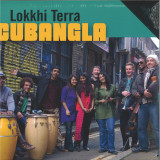
Funkiwala Records presents CUBANGLA - the sixth album by London fusionistas LoKkhi TeRra.
Following on from their hugely successful collaboration with UK afro-beat ambassador Dele Sosimi on 2018's "Cubafrobeat"(mixing afrobeat and Cuban Rumba/Timba), this album sees them return to their Bangla-Afro- Latin-Jazz-Roots.
8 tracks of 21st century London groove – from Sufi Samba to Baul Blues to Bengali folk-Son to Bangla Roots Reggae to London Descargas - recorded in between tours, sessions and collaborations – a true celebration of traditions taking on new forms as they travel and co-exist. In these divided times, their collective musical journey has never been so relevant.
Background
Kishon Khan's Lokkhi Terra have been blending the musical traditions that surround them in London, for many years now.
"Stunning Headliners... A majestic multi-cultural blend of sounds... effortlessly builds bridges between rolling Indian raga rhythms, Afro-Cuban grooves, Acid Jazz/funk and free flowing improvisation" (Timeout London).
The band is composed of musicians who take seriously the different languages of the different genres they mix. Each in their own right play with calibre purist outfits. Members have collaborated with the likes of Hugh Masekela, Tony Allen, Ibrahim Ferrer, Johnny Clarke, Orlando Poleo, Africa Express, Jazz Jamaica, Ska Cubano, Giles Peterson's Havana Cultura, Kyle Eastwood, Bellowhead, Akram Khan to name a very few.
The tracks on this album were gigged for a number of years before being recorded, with the exception of the last 2 tracks which were recorded in 2015 just before performing at Womad and Songlines Encounters.
With CUBANGLA the band has come round full circle – a journey that started a decade ago with their debut No Visa Required (2010). An urban London view on the musical world.
Le Magnifique is a cult film. Many a viewer has memorized the lines of this character, whose role was tailor-made for Jean-Paul Belmondo. In the year of our Lord 1973, Belmondo reunited with director Philippe de Broca, a pair who, decades before the Jean Dujardin version of OSS 117, were unknowingly making meta cinema. The film's soundtrack, by Claude Bolling, successfully navigates between the first and second degree, without ever sinking into the clumsiness of "fantasy music". For the record, Claude Bolling is none other than the chief composer of the all-female group Les Parisiennes and of some 100 film scores, including Borsalino, which is certainly the best-known. Above all, he is a genius of French jazz, whose talent makes his music sound relaxed and familiar, even when you're listening to it for the first Tme. From the very first track on the album, "TaQana", postcard images of Mexico spring to mind. Claude Bolling plays with the codes of film music without ever losing a certain communicaTve jubilaTon. With the soundtrack to Le Magnifique, Claude Bolling equals the Anglo-Saxon masters of the easy-jazz pop genre, such as Henri Mancini. Fans of jerks to dance to at the ambassador's parTes will be delighted by the composiTon "Pop Mod". Even today, those who invented the term "lounge core" would go out of their way to own an original Claude Bolling vinyl. Thanks to Claude Bolling and his original French Touch, before thedays of Dimitri From Paris and Bob Sinclar who, if they hadn't been able to take advantage of this musical and cinema to graphic heritage, wouldn't have had anything to sample.
Following nearly 20 years of working together as a trio, and numerous cross-collaborations in different configuration between them, Ideologic Organ presents Placelessness, the debut full-length by Chris Abrahams, Oren Ambarchi, and Robbie Avenaim, comprising two long-form works at juncture of ambient music, minimalism, rigorous experimentalism and improvisation, and machine music. Having carved distinct pathways across a diverse number of musical idioms for decades, Chris Abrahams, Oren Ambarchi, and Robbie Avenaim are each, respectively, among the most noteworthy and groundbreaking figures to have emerged from Australia's thriving experimental music scene. Ambarchi and Avenaim first encountered Abrahams when seeing the Necks - the project that has served as the primary vehicle for his singular approach to the piano since its founding in 1987 - together during the late 1980s, not long after having met in Sydney's underground music community. The pair's collaborations date back more than 35 years, criss-crossing Ambarchi's pioneering solo and ensemble work for guitar and Avenaim's visionary efforts for SARPS (Semi Automated Robotic Percussion System), robotic and kinetic extensions to his drum kit. In 2004, fate brought the three together in a trio performance at the What Is Music? Festival, the annual touring showcase of experimental music founded and run by Ambarchi and Avenaim between 1994-2012. For the nearly two decades since, Abrahams, Ambarchi, and Avenaim have intermittently reformed in exclusively live contexts, in Australia and abroad, cultivating and refining the fertile ground first tilled in that early meeting. Placelessness is the first album to present this remarkable trio's efforts in recorded form. Placelessness is the joining of three highly individualised streams, working in perfect harmony; the point at which friendship, mutual respect, and decades of creative exploration produce a singular spectrum of sound. Featuring Abrahams on piano, Ambarchi on guitar, and Avenaim on drums, the album's two sides draw on each artist's enduring dedication to long-form composition. Its two pieces, Placelessness I and Placelessness II, initially began as a single, 40 minute work, before being divided and reworked into distinct, complimentary gestures for the corresponding sides of the LP. Beginning with restrained clusters of reverberant piano tones, Placelessness I progresses at an almost glacial pace, with Abrahams' interventions increasing met by sparse responses, darting within vast ambiences, on guitar and percussion by Ambarchi and Avenaim. Remarkably conversational within its convergences of tonal, rhythmic, and textural abstraction, over the work's duration a progressive sense of tension unfurls and contracts, refusing release, as each of the ensemble's members contribute to an increasingly tangled sense of density at its resolve. While an entirely autonomous work, Placelessness II rapidly realises a distillation of the energy hinted at across the length of its predecessor. Following a luring passage of harmonious calm, Abrahams' launches into shimmering lines of repeating arpeggios, complimented at each escalation of tempo by Avenaim's machine gun fire percussion work and Ambarchi's masterful delivery of tonality and texture, as the trio collectively generate dense sheets of pointillistic ambience within which individual identity is almost lost, before slowly unspooling into unexpected abstractions and dissonances that deftly intervene with the work's inner logic and calm. What could easily be termed a maximalist take on Minimalism, Placelessness is a masterstroke of contemporary, real time composition, that blurs the boundaries between ambient music, experimentalism, free improvisation, and machine music. Drawing on Chris Abrahams, Oren Ambarchi, and Robbie Avenaim's decades of respective solo and collaborative practice, and the culmination of nearly twenty years of working together as a trio, it's two durational pieces - Placelessness I and Placelessness II - take form with a startling sense of effortlessness and grace, neither shying away from explicit beauty or rigorously tension within their forms.
- A1: Mystery Of You - Jeff Scott
- A2: Palavras - Caixa Cubo
- A3: I Had A Friend - Peter Gallway
- A4: We Don't Have To Talk About It - Bell Helium
- B1: Como Aprendi A Soportar Tus Inseguridades - Litto Nebbia & Los Músicos Del Centro
- B2: A Place In Space - Joe Thomas
- B3: Heaven - Crosswind
- C1: Life - Bugs Beddow
- C2: I Know (Demo Version) - Astronauts, Etc
- C3: Factory Rhythms - Jr Quintet
- D1: Make The Call (Extended Version) - Mf Robots
- D2: For Us - April Fulladosa
- D3: California (Shawn Lee Mix) - Kirk Reed
- D4: Smile Upon Your Brother - The Ambassador College Band & New World Singers
- D5: Easter Suite (Edit) - John Standefer
Curated by Reference Point residents Mark GV Taylor and George Arthur, this 15 track
compilation album features tracks the pair have played at their peripatetic, Europe wide
events since 2012.
Stretching from the 1970s to the present day the Reference Point compilation spans a whole
range of genres, tempos, languages and grooves where the quality of music is paramount
whether $1.00 bin records or $1000 rarities.
Reference Point, 'a place to hear the music', is a truly trans-global album with music from
Argentina, Brazil, Oakland, Detroit, Texas, London and more, including tracks from private
press albums, from artists who have played at Reference Point events and from current
artists such as MF Robots and Caixa Cubo.
Releasing as a CD, digital and a double LP, Reference Point is another essential compilation
from BBE Music and one that belongs in the collection of all collectors and lovers of great
music
“Upopo Sanke“ means “Let's sing a song" in the Ainu language. Umeko Ando (1932-2004) was one of the best-known artists of the Ainu, an indigenous, long-suppressed community in northern Japan. She sings their traditional songs together with Oki Kano on the Tonkori harp, who also recorded the album. The two are supported by members of the female vocal group Marewrew as well as Ainu percussionists, a string player and a male singer who provides rhythmic shouts and also throat singing. The call-and-response structure of many of the songs is performed with a mantric quality in a vocal style that is perhaps best described as elastic and breathing. There seems to be a gentle smile in every note and syllable. This music softly hits the heart.
Upopo Sanke was recorded on a farm in Tokachi in the summer of 2003. We hear dogs barking, a distant thunderstorm and voices imitating animals. The liner notes that accompany the 2LP release gather the anecdotal memories of Umeko Ando and Oki Kano about the stories of the 14 songs. Oki Kano is a musical ambassador of the Ainu culture who tours worldwide with his Oki Dub Ainu Band and also gives solo concerts, always playing the Tonkori, the five-stringed Ainu harp.
The Ainu have suffered from the oppression of their culture and language by Japan, especially since the 18th and 19th centuries. Only recently, in 2008, were the Ainu officially recognized again as an indigenous people culturally independent of Japan. As a result of the marginalization, there are now only a few hundred native speakers of the Ainu language left, making it a particularly worthy object of preservation.
"Upopo Sanke" was mixed again in part by Oki Kano, before being mastered and cut to vinyl by Kassian Troyer. The 2LP plays on 45rpm and it sounds fantastic. This album was the second album by Umeko Ando, the follow-up to „Ihunke" and also re-released in 2018 by Pingipung together with Oki Kano.
new music in nearly 30 years Includes 11 brand new songs written by the band The Cowsills will be on the road through 2023 supporting the new record Some of the best music made in the last 60 years has been delivered by musical families. Think about it . . . The Everly Brothers, The Beach Boys, Bee Gees, The Jackson 5, The Staple Singers, Pointer Sisters, Kings Of Leon, Oasis . . . and The Cowsills! Starting in 1965, The Cowsills was composed of six siblings, performing their instruments and singing those glorious harmonies as only families can. Originally starting as a regional act (from Newport, Rhode Island), the group was “founded” by Joda Records owners Danny Sims and reggae/pop singer Johnny Nash (“I Can See Clearly Now”) in the mid-’60s for whom they recorded a handful of singles before turning towards more national recognition when they were signed to MGM Records in 1967. At this point, the group’s mother Barbara and young sister Susan joined the act and they were awarded a Gold record for over one million copies sold of their very first single for MGM, the sublime, “The Rain, The Park & Other Things.” This began a series of chart records that dominated the Top 40 for the next three years. Among the classic Cowsills recordings are “We Can Fly,” “Indian Lake,” “Hair” (from the rock musical Hair), and “Love American Style” (the theme song from the popular ABC-TV show of the same name). The group also recorded and charted with five successful albums during this time period. The band and their story were even the inspiration for the popular 1970s sitcom The Partridge Family. The group was also a prosperous touring attraction up through 1972, spreading their harmonious hope and love to an adoring fan base. They even had their own comic book published in 1968. As all families do, the group went through a series of changes, disbanding in 1972. But music never left the soul of this tuneful and melodic kin. Over the years, the group, as individuals, continued to make music and even reunited in 1978 and 1993 to make historic records that are woefully out of print. Now, nearly 30 years after their last recordings as a group, The Cowsills are returning with new music for the new world! Omnivore Recordings is proud to announce the release of Rhythm Of The World. Eleven brand new songs written by the band. The ambassadors of goodwill and love will be on the road through 2023 thrilling fans with their classic hits and soon to be new favorites!
KAWALA today announce their emotionally resplendent debut album ‘Better with You’. The album marks the culmination of years of work which has seen the band grow from humble begging’s to the world class act they are today. Along the way they have done everything from support Bombay Bicycle Club on their European tour, play socially distanced shows in UK parks (after the first easing of restrictions in 2020), appear on FIFA 2021, write and perform in their own YouTube sitcom (the mad-cap Paradise Heights) and become ambassadors for the Music Venue Trust. Each step on the journey has seen the band grow and expand on what KAWALA means to their community. Ahead of the album’s release, the band are about to head out on their biggest UK and Ireland tour to date – including a sold-out show at the O2 Kentish Town Forum. NME describes them "the Bombay Bicycle Club-approved indie heroes making bangers without borders"
How sad, if timely: this stunning reissue of the 1994 live album arrived in the very week that trumpeter Masekela passed away. One of the most successful ambassadors ever for African music, his fusing of the continent's rhythms and instruments with contemporary jazz and rock proved irresistible. Nearly every one of you has heard him, thanks to guess spots with The Byrds and Paul Simon. His breakthough hit from 1968 — the infectious "Grazing In The Grass" — is here, along with another 11 tracks recorded at Blues Alley, the U.S. club that gave us Eva Cassidy. Notably, despite its early-1990s origins, this is all-analogue." — Sound Quality = 90% - Ken Kessler, HiFi News, May 2018
"...Hope is one of those intensely visceral, large as life, and immediately present recordings that will make pretty much any system sound at least very good, and will cause better ones to raise goose bumps." - Wayne Garcia, The Absolute Sound, August 2008
"...The high quality original mix plus Analogue Productions' superb mastering has resulted in a terrific, very transparent sonic with great impact." - John Henry, Audiophile Audition
What more can be captured from the masterpiece that the late trumpet great Hugh Masekela left devoted fans, the effervescent Hope. Now cut at 45 RPM and spread over four 200-gram premium LPs, you're about to discover the answer to that question. The eight sides of vinyl reduce distortion and high frequency loss as the wider-spaced grooves let your stereo cartridge track more accurately. And this set is plated and pressed at Quality Record Pressings, Acoustic Sounds' own industry-lauded LP manufacturer. Virtually silent surfaces coupled with sharp delineation of musical detail are QRP pressing hallmarks.
Two Stoughton Printing old-style tip-on gatefold jackets house the four LPs, which are contained in a custom-designed slipcase reproducing the original artwork.
A longtime audiophile demonstration disc. Hope will show off your system's dynamic range as well as any record ever released. Hugh Masekela, the outstanding South African trumpeter, assembled a seven-piece group and recorded this great set live at Washington, D.C.'s Blues Alley. The songs stretch over a period of nearly five decades and serve as an informal guided tour of Masekela's life. The songs are honest and bare, and as for the sound — WOW!
Unlike a prior 45 RPM version that included seven songs, this 45 RPM reissue contains the full program as originally recorded with all 12 tracks included! Plus, as an added bonus, we've included a special insert — featuring an exclusive interview with Grammy/Emmy Award-winning engineer David Hewitt, who recorded Hope originally.
"Hugh's record is right up near the top for a lot of reasons," Hewitt says.
Hewitt and his team were afforded the time they needed, and they pulled out all the stops to pull off what's now recognized as an all-time great recording. They used better-quality microphones, they were mic-ing the room for ambient sound, and Masekela was performing for a sophisticated and appreciative audience.
"We used stuff from our stash of mics as opposed to what you'd find typically at a jazz club. We actually had control via the record label and producers, so we could take our time. We had the ability to mic the room for abient sound. ... you've got people that actually know and appreciate the music and respond accordingly. What you've got there is all the right stuff at the right time and the right people, and then something magical happens."
Listen to that magic unfold — put on this Analogue Productions 45 RPM 4LP reissue of Hope, and be transported.