When Elena Colombi launched the Osàre! Editions label in the autumn of 2019, she explained that the label would become home to bold, daring, future-facing music rooted in experimentation and free-spirited musical abandon. These are all descriptions that could apply to the label’s latest release, a retrospective album of little-known works by Greek musician and producer Thanasis Zlatanos.
Many will not have heard of Zlatanos, or Nekropolis, the band he fronted alongside dear friend and regular collaborator Trygve Mathiesen, yet the music he made during the 1980s was otherworldly, intergalactic and undoubtedly alluring. These songs and instrumentals made extensive use of analogue synthesizers and lo-fi drum machines, as well as Zlatanos’s trusted Gibson Les Paul guitar and his own distinctive voice.
Stylistically, the musician and producer refused to settle on a specific sound, preferring instead to create inspired, often mind-altering pieces that join the dots between wave music, skewed leftfield pop, ambient, prototype electronic and Madedonian folk music. Operating for much of the period from a crumbling house earmarked for demolition, Zlatanos kept up a daily music-making vigil that resulted in a vast vault of music, most of which has remained unissued since the 1980s.
The breadth of and width of Zlatanos’s distinctive approach is laid bare on Retrospective, a compilation album prepared by Colombi and the artist himself that draws on tracks from his numerous albums, those by Nekropolis – whose sophomore set “The New Europeans” was banned in Norway – and his epic archive of previously unheard material.
The artist’s singular but wide-ranging musical vision is free for all to see across the 13 tracks stretched across the vinyl version of the album (digital buyers also get a further four superb cuts). It veers attractively from the ghostly, traditional-meets-futuristic new age electronica of “The Crystal Sight (Excerpt)” and the doom-laden coldwave throb of “Master Chameleon”, to the undulating, soft-touch creepiness of “Surreal Moment”, the Vocoder-laden operatic poignancy of “The New Barbarians” and the squally guitar solos and effects-laden electronics of “The Light”.
Words from the artist___:
"I live in the Internet. Visits from outer space make me compose. I breathe here. I am the master chameleon, the psychedelic clown. I am not here anymore, neither in the picture, nor the reflection. Our bed is a boat that takes us tomorrow without us.
Here is an album of dreams and digital emotions. Analogue recordings made with a Prophet, a Moog Rogue, a tape recorder and a Gibson Les Paul guitar.
As far as I can remember I have always been in a recording studio. I listen to, understand and live my life through songs and music. I have worked alone and with friends such as Trygve Mathiesen. Although I am a guitarist, I continue to work with synthesizers on music that blends elements of Macedonian folk music, recordings from the streets and embryonic electronic sounds.
Some of my albums have been critically acclaimed, others banned by radio stations. For years I worked on endless recording sessions in a crumbling house that should have been torn down. The music on this retrospective compilation was recorded at various points between 1982 and the present day. Some of the compositions first appeared on previous albums, while others have never been released before. They were sat on tapes waiting for a saviour. Now that saviour has arrived and they can be free.
For further proof of Zlatanos’s unique sonic approach, check the startling contrast between the bass-laden slacker pop headiness of “No Expectations” and the spacey ambience of “The Dead Don’t Remember”. Considered together, the selected pieces and those elsewhere on Retrospective forms a snapshot of a genuinely unique and visionary musician, composer and producer. It’s a celebration of someone whose work has previously been overlooked."
quête:ambient
Singing bowls, bronze bells and gongs resonate through the mindful layers of Japanese percussionist and ambient producer Kazuya Nagaya's music. In Zen Buddhism, bells are believed to wash away the cares of the mortal world, as the listener follows the resonance of the bell into the silence and stillness within all beings. It is a penetration into the depths of one's self.
Nagaya's music is rooted in Buddhist (Zenzhu) philosophy and sensibilities unique to Japan. Concurrently, his work and interests are also contemporary and traverse a broad spectrum of cultures.
AIDAN BAKER (NADJA, B/B/S) and bass clarinetist GARETH DAVIS continue their fruitful collaboration with "Invisible Cities II" - five new tracks of finest ambient/chamber jazz/subtle drones of a highly meditative quality. Two years ago, the Canadian guitar player AIDAN BAKER and clarinetist GARETH DAVIS from Belgium released their duo debut "Invisible Cities" that surprised many by it's quiet, even meditative quality.
DAVIS had made himself a name in a wide range of fields, from the postrock of A-SUN AMISSA or OISEAUX-TEMPÊTE, new music (PETER ABLINGER, BERNHARD LANG), or experimentation with the likes of ELLIOTT SHARP, MERZBOW or SCANNER, while BAKER is mostly known for his drone/postmetal duo NADJA, but that's just one out of several steady projects (e.g.B/B/S with ANDREA BELFI and ERIK SKODVIN aka SVARTE GREINER) and a multitude of solo albums.
On "Invisible Cities" the duo explored the calmer side of things – from chamber jazz to ambient/drone and back, giving much space and air to breathe to their respective instrument. Subtle guitar drones, sonore clarinet sounds, a sonic scenery of peacefullness and meditative introspection – all this you'll also find on the new album "Invisible Cities II" which is an accomplished continuation and refinement of the duo's first collaborative effort from 2018.
Recorded between 2018 and 2019 in Berlin and Amsterdam, mastered and cut at D&M Berlin by KASSIAN TROYER.
On October 4th Erased Tapes present Handfuls of Night — the highly anticipated follow-up to Penguin Cafe’s much applauded 2017 album The Imperfect Sea — inspired by the Antarctic, Arthur Jeffes’ journey following in Scott’s footsteps and our penguin friends that reside there. Using gut-stringed violins, viola, cello, bass, percussion, upright and grand pianos, synthesiser, harmonium and more, Arthur Jeffes and his cohorts have crafted a vivid series of panoramic sonic landscapes, that are as rich in cerebral poignancy as they are in emotional depth.
Bookended by the atmospheric ambient piano pieces ‘Winter Sun’ and ‘Midnight Sun’, the album traverses glacial minimalism with ease, combining their signature contemporary classical panoramas, such as the melancholic yet upbeat lead track ‘At the Top of the Hill, They Stood...’ and the colossal cinematic piece ‘Chapter’, with the crystalline folktronica on ‘Pythagorus on the Line Again’ — a re-visiting and continuation of the Penguin Cafe Orchestra’s 1993 Union Cafe song on the principles of harmonics.
- A1: Concrete & Glass
- A2: Back To Your Heart (Feat Kate Nv)
- A3: We Forgot To Love (Feat Kadhja Bonet)
- A4: What Makes Me Think About You
- A5: Time On My Hands (Feat Kirin J Callinan)
- B1: The Foundation (Feat Cola Boyy)
- B2: Catch Yourself Falling (Feat Alexis Taylor)
- B3: The Border
- B4: Turn Right, Turn Left
- B5: Cite Radieuse
- C1: Concrete & Glass
- C2: Back To Your Heart (Feat Kate Nv)
- C3: We Forgot To Love (Feat Kadhja Bonet)
- C4: What Makes Me Think About You
- C5: Time On My Hands (Feat Kirin J Callinan)
- C6: The Foundation (Feat Cola Boyy)
- C7: Catch Yourself Falling (Feat Alexis Taylor)
- C8: The Border
- C9: Turn Right, Turn Left
- C10: Cite Radieuse
When Air’s Nicolas Godin released his debut solo album, Contrepoint (2015), he channelled the influence of Bach into a rich, resonant and hugely rewarding spread of musical explorations. One soundtrack (A Very Secret Service) later, Godin builds on equally fertile conceptual foundations for the follow-up. Released through Because Music on 24th January, Concrete and Glass is an exquisitely crafted set of variations on architectural reference points: mounted with minimalist precision and delivered with an abundance of pop warmth, it finds Godin in his element, working seductive wonders with poise and style to spare.
For Godin, the album circles back to his formative work as half of ground-breaking French electronic group Air. Revered modern architect Le Corbusier was an influence on the young architecture graduate’s music, notably on his 1997 debut “Modular Mix”. Twenty-plus years later, Le Corbusier featured on a list of modernist architects Godin was invited to compose tributes for, tributes intended to be heard as the soundtrack to site-specific installations around the world.
In its soft ambient pulse and melting minimalism, lead track “The Border” is a perfect entry-point to Godin’s hymns to buildings, arranged and co-produced with Pierre Rousseau. Its levitating synths, vocoder vocals and scudding bass hove into view with understated elegance, all the better to accommodate the discreet slow-build of delicate details within. As with Air, Godin makes gorgeously light work of every angle: this is music that seems entirely unperturbed by gravity, occupying an elevated atmosphere of its own.
Elsewhere, the title-track’s clean synth lines, crisply apportioned arrangements and tender timpani offer another inviting entry-point, sculpted with architectural clarity. While Godin’s vocoder vocals also hark back to Air’s early work, the album accommodates a diverse spread of guest vocalists elsewhere. Hot Chip’s Alexis Taylor guests on the falsetto-soul dream-pop of “Catch Yourself Falling”, one of Godin’s sweetest melodies yet. Oxnard singer/activist Cola Boyy brings soul to the righteously engaged “The Foundation”; the squelchy synths and buoyant grooves burn slow, allowing the stealthy arrangements and message room to resonate. Psychedelic soul singer Kadhja Bonet sings with measured serenity over tremulous synths on “We Forgot Love”, while Russian experi-pop artist Kate NV brings a gracefully aching romanticism to the blissful swoon-pop of “Back to Your Heart”.
Additionally, Australian conceptual provocateur Kirin J Callinan contributes a vocal of restrained drama to “Time on My Hands”, a midnight-drift soft-pop ballad with a silky allure. One of the quickest tracks to record for the album, it emerged in collaborations between Los Angeles (”During some lively sessions in Mac DeMarco’s studio,” notes Godin) and Paris. After he missed his flight home, Callinan stayed in France for a day as the guitar solos were recorded, complementing the song's air of sleek luxuriousness.
Between its title-track and the sultry, smoky jazz stylings of closer “Cité Radieuse”, Concrete and Glass is an album that truly travels, in tune with its global pitch. For Godin, it marks another milestone in a musical journey that began when Air’s 1998 debut album, Moon Safari, became the sublimely weightless soundtrack of its time. For Concrete and Glass, Godin builds on his storied past with tremendous finesse, charm and fluency, opening fresh windows of perspective at every lovingly executed turn.
- A1: Nobody Knows
- A2: When You Died (Feat Sean Martin)
- A3: Ohm And Raga
- A4: Little Girl (Feat Rahma Hafsi)
- A5: Astratto
- B1: Art Is A Cat (Feat Beatrice Velasco Moreno)
- B2: Alli Guai
- B3: Carpet Of Green (Feat Georgeanne Kalweit)
- B4: Summer Blues
- B5: Sweet Love (Feat Beatrice Velasco Moreno)
- C1: Nella Sua Loca Realtà (Feat Lola Kola)
- C2: Ghosts
- C3: Two Thousand Parts (Feat Sean Martin)
- C4: Mare Della Tranquillità
- C5: Teach Me To Dance (Feat Beatrice Velasco Moreno & Sean Martin)
- D1: Intreccio
- D2: No Frame (Feat Georgeanne Kalweit)
- D3: I Love You
- D4: She Says I'm Bad
"Art Is A Cat" is The Dining Rooms' eighth studio album - thirteenth if we also consider five remix and rework records - in over twenty years of career. It comes out five years after the fully instrumental "Do Hipsters Love Sun (Ra)?", and shows itself as a new milestone in the artistic path of the Milanese duo formed by Stefano Ghittoni and Cesare Malfatti.
In fact, "Art Is A Cat" hosts every facet of The Dining Rooms' music, mostly nourishing the intuitions delivered in past albums such as "Experiments in Ambient Soul" (2005) and "Ink" (2007). It preserves all the characteristics of their typical signature: songs balanced between folk and soul, dub expansions, instrumental hip hop and cinematic atmospheres. Not to renounce to any of these aspects and given the high quality of the recorded material, Stefano and Cesare decided not to sacrifice anything, and wrote and produced a 19-song full-length for a total duration of about sixty minutes.
"Art Is A Cat" also hosts a large group of guest singers, both historical voices of the band and absolute novelties, who also co-wrote the lyrics; the vocal parts are interspersed with the group's instrumental classics, from funk-fueled visionary downtempos to more experimental micro-songs. Sean Martin and Georgeanne Kalweit therefore return with two songs each (one of the two sung by Georgeanne has its lyrics written by Jake Reid, a London-based singer who already collaborated with The Dining Rooms in "Lonesome Traveler" in 2011).
Among the new entries we have, first of all, the Italian-Tunisian Rahma Hafsi on the sensual ballad "Little Girl" sung both in English and Arabic, while the very young Italian-Salvadoran Beatrice Velasco Moreno sings, together with Sean on backing vocals, the spoken-word "Teach Me To Dance", the spiritual "Sweet Love" and the title-track, an orchestral folk moment among the most inspired ones in the entire band's history; Lola Kola, queen of Tropicantesimo, also brings an absolute novelty in the world of The Dining Rooms, presenting for the first time an Italian-sung piece: "Nella Sua Loca Realtà", a post-melodic song dedicated to the fragility of love.
The vocal parts series ends with two episodes in which Stefano resumes his past as a singer (in the '80s with Peter Sellers & The Hollywood Party) with the Indian-flavoured "Ohm And Raga" and the existentialist ballad "She Says I'm Bad".
"Art Is A Cat" is therefore a complete and very fascinating album, destined to excite and leave its mark.
Portuguese artist Armando Mendes makes a huge statement with his debut album 'Parallel Universe', which was written and recorded over two and half years between LA, London and Berlin with legends including Robert Owens,Ithaka from the N.W.A. crew and Defected's Jinadu.
Armando Mendes is one of Portugal's most assured artists. His rich and musical sound is informed by jazz and funk and he has played all over the world from Russia to Australia, all while picking up more than 80,000 monthly plays on Spotify for his music. His tremendous debut album ranges across the electronic music spectrum from downbeat and jazzy to deep house and electronica.
Ithaka is the guest on the album opener 'This Life's All We Got,' which is a lush downbeat song with pensive lyrics. Late night jazz house stylings define 'Things U Do 2 Me' while 'Acid Yardies' looks to the club with its serrated 303s and dub wise drums. Chicago vocal royalty Robert Owens lends his heartfelt and buttery tones to the perfectly deep 'No Regrets' and after an acid and piano ambient fusion on 'MS20 Interlude' there is more rich, spiritual and jazzy house ('Parallel Universe,' ' Khun Pui - Mae Nam' and 'The Melody Inside') as well as more synth laden and electronic grooves to get dance floors moving ('One Night in Bangkok').
The majestic, percussive and colourful 'Tropical Affair' is just that, then things get tender and introspective on the gorgeous 'Electric 88' before a radio edit of the classy pop house that is 'The Melody Inside' feat. Jinadu closes things out in emotional fashion. This is a widescreen musical journey that makes a lasting impact from an artist who is looking set for big things.
'WRWTFWW Records' is insanely excited to announce the first ever vinyl release of Tom Raybould’s award-winning movie soundtrack for excellent AI-themed sci-fi thriller The Machine (2013). The limited edition LP boasts 16 superb tracks and is housed in a special glow in the dark sleeve.
"Tom Raybould’s Music For The Machine Is Amazing" - Bloody Disgusting.
Undoubtedly one of the greatest (and most overlooked) movie scores of the 2010's, The Machine finds its influences in the works of John Carpenter, Vangelis, Brad Fiedel, and Tangerine Dream, but presents its own unique twist, one that cleverly evokes the thin line between man and machine that haunts the whole film.
Cold and tenacious rhythms suggest mechanical killer instincts, brooding synths crystallize the fear of an AI-controlled future, but the warm and gentle sounds of guitar and piano ease the tension and bring hope of humanity. From its menacing introduction to it's tender ending, Tom Raybould’s masterwork ingenuously blends ambient, electronic, neoclassical, and synthwave to recontextualize and upgrade the classic 80's sci-fi movie score template, holding it's own against mammoth soundtracks like Blade Runner or The Terminator. Truly.
Cold with a touch of humanity like the perfect machine, Tom Raybould’s movie score won the BAFTA Cymru award for Best Original Music in 2013.
The newest solo work by Roger Eno in nearly a decade. This Floating World holds rustic and melancholic piano works, as grey and mossy as a country cottage. I hear the LP chiming from the dark corners of a pub, soaking in the damp wood like spilled ale.
I first fell in love with Roger's music with his 1985 debut album Voices, which cradled many rainy and caffeinated mornings when I was living in San Francisco years back. He played on the infamous Apollo, Music for Films vol. 3, and recorded a theme for the Dune soundtrack. Pad-keyboards and veils of reverb pour through those processed tracks.
I later rediscovered Roger Eno in a different light with his 1997 album The Music of Neglected English Composers. A playful and beautiful album of chamber pieces guised as the works of forgotten (and fabricated) composers from the past century. His compositional sensibilities remind me of my favorite recent English composers... Hobbs, White, Bryars, Skempton, etc.
This Floating World feels like a hybrid of these two styles, a melding of both his ambient and 'prelude'-esque compositions. Warm and feathered furniture music. An antique on the shelf gifted from an a cherished relative.
In our communication Roger has been a real charmer, ending every email with Roger and out.' A curious fellow, with a knack for tracing the understated beauties of this world.
In addition to the lovely LP, Roger wrote some brief stories which are set in a 12-page booklet alongside his photography.
AIRCHINA is a weightless instrumental machine music, sometimes ghostly anthropomorphized with a hushed voice or a synthetic choir. AIRCHINA is playful-melodious electronic music of and for today, which also takes its cue from global ambient and pop music from the end of the 1970's to the end of the 1980's. AIRCHINA is a solo project by Nikolai Szymanski. 'LP 2' is his second release, his debut album 'LP 1' was released in summer 2018 on ITALIC.
Nikolai Szymanski (*1986, Düsseldorf) is an artist living and working in Cologne and Düsseldorf, Germany. He uses a wide variety of media with a focus on film/video, performance and music - whereby all areas give each other impulses. In a narrower artistic framework (exhibition, gallery) he stages his works site-specifically and installatively. Performative interventions (for example at BER - Berlin Brandenburg Airport, Summer 2019) from the soft transition to his musical work.
Together with Lucas Croon and Martin Sonnensberger Nikolai Szymanski is a founding member as well as singer of the band Stabil Elite. After concerts in China, Szymanski created the video work AIRCHINA, the title he uses as a name for his current solo project; in his musical work Nikolai Szymanski is responsible for composition, lyrics, production, singing and performance, paying attention to a stringent appearance from cover design to stage appearance.
Stellar full-length album selection of archival material from Tim Jackiw ranging from timeless late night techno and deep space soundtracks through to electronic jazz and ambient atmospheres. All music sequenced and recorded in Tim's Adelaide-based bedroom studio between 1995 to 1997 using an Amiga 500 interfaced to various analog synthesizers, drum machines and samplers. Limited colour vinyl double pack - big tip!
'Moira', the new album by Monolithe Noir opens it's doors to the voices of a few fellow artists who can easily be described as "peers" - 'ROZI PLAIN' on the spellbinding 'Blinded Folded'.
'PETER BRODERICK' on the intimate 'By Twos' and Belgian Elsie dx on the haunting 'Valslava' - who are fuelled by the same drive not to settle for a single colour or tone.
Unpredictable by nature, surprising by choice, Monolithe Noir's music escapes all the over-used adjectives that divide our record collections but cheerfully digs into clearly distinct repertoires: from prog to ambient segueing into electronica and folk with a dip into the hidden gems of the Italian music library.
... It never hides behind a screen of fake complexity, clearly it speaks straight to us! Hope, you enjoy.
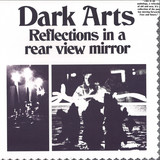
"When we played live, we would bring out lawnmowers, pots and pans and pipes we would smash rhythmically with a mallet. Anything that made noise. And then there was also the
kraut-influenced, more ambient Dark Arts. I loved percussion, I loved beautiful things, but then, I could also whip out a chainsaw, you know."
- A1: Glass Candy - The Possessed
- A2: Chromatics - Cherry
- A3: Symmetry - Bicycle
- A4: Mirage - Lady Operator
- A5: Symmetry - Wave Goodbye
- A6: Chromatics - Magazine
- A7: Symmetry - Memories Are Forever
- B1: Johnny Jewel - Digital Rain
- B2: Johnny Jewel - What If
- B3: Johnny Jewel - Street Lights
- B4: Johnny Jewel - Saline
- B5: Johnny Jewel - Dusk
- B6: Johnny Jewel - Death Valley
- B7: Chromatics - The River
Music From The Original Motion Picture Soundtrack. The music of Johnny Jewel, Glass Candy, Chromatics, Mirage, & Symmetry all articulate different visions for different moments — the pure ecstasy of a Saturday night out; unrestrained romantic devotion between vulnerable people; walks on wet streets on foggy nights; isolated twilight meditations. They make music for all moments, all feelings, all stories — in films & in life. Theirs is natural soundtrack music. Bruce Thierry Cheung brings their cinematic music to celluloid to tell the story of a family’s struggles in Don’t Come Back from the Moon, starring James Franco, Rashida Jones, & Jeffrey Wahlberg. The soundtrack mixes new & beloved work from the Italians family. Classic cuts such as Chromatics’ revered “Cherry” & “The River” (alongside the newer “Magazine”) & the disco-bliss of Mirage’s “Lady Operator” are alongside cues from Johnny’s instrumental solo album Digital Rain, all remastered to articulate the resonance of the visuals. Joining them is new music from Johnny & Symmetry. “Bicycle” finds Symmetry taking their Tangerine Dream and John Carpenter vibes into a haunting modern R&B space. Cues like “Street Lights” & “Dusk” use twinkling piano keys & glassy, minimal synthesizers to craft ambient electronic bliss. “Death Valley” is a foreboding & atmosphere track, laced with spectres of fading memories. Once you go to the moon with these songs, you’ll never want to come back.
Produced & Mixed By Johnny Jewel
Mastered By Mike Bozzi At Bernie Grundman Mastering
Cut By Bernie Grundman In Hollywood
Sam Goku's music showcases bonds of ambient, acic, house, techno and melodies. It's perfect for both club environments and home listening. The modern production style in combination with old-school elements/non-repetitive vocal sample work give Goku's music a unique, trippy twist that is topped off with Chinese percussive instrumentation.
Repress
Mr. G embarked on his first US tour in 2019. The result has been a ton of new inspiration, after which he wrote ''The Alien With Extraordinary Abilities''. PG062 is a collection of six versatile tracks ranging from thumping G sound House / Techno to hazy works of ambient textures.
The release of Marc‘s album „Voyage de la planète“ in 2017 marked a new era of his career. With ten rather beatless tracks where he combined his definition of electronica with classical instruments like violine, cello, double bass and piano Marc began to walk the path of fresh sounding music for the brain.
The title track has been the most successful one so that Marc called no one else than Erased Tape‘s poster boy Ben Lukas Boysen from Berlin to contribute his very own interpretation. Ben created a typical and unique version which comes along with a, believe it or not, 4/4 kick pattetn towards the end. But listen yourself, it totally makes sense. And Bordeaux‘s best Ocoeur made a short but epic ambient version you also should not miss.
As electronic musician Lorenz Brunner sketched his vision for the first Recondite full-length on Ghostly in five years he took a step back to assess who and where he was as an artist. 2013’s Hinterland accelerated a progression — he’s since been touring around the world and releasing music with labels such as Hotflush and his own Plangent Records — yet, for him, the album cast a shadow of pressure that widened over time. As with most art forms, perhaps especially music, there is an expectation to change, to creatively pivot elsewhere with each project. After careful consideration, Brunner rejects this notion with his new work, opting alternately to use the icy Hinterland as an aesthetic and tonal template for a like-minded map of evocative compositions aptly titled after the German word “stillstand,” now presented as Dwell.
“I am coherent with what I do, even if I’m not reinventing myself,” Brunner says contentedly. In regards to the album title, he adds, “It’s like when you’re on a hike and you stop and look at the scenery; you may know which path you want to go next but right now you are dwelling.” The title also doubles as a reference to everyday domestic life, a restorative haven for Brunner between tours. Like Hinterland, he incorporates a subtle range of field recordings to intensify the textural atmosphere. While he worked at home on “Mirror Games,” Brunner noticed the buzz coming from across the room, where his wife was using an electric toothbrush, naturally harmonized with the track. He decided to push that frequency further and record the device directly, syncing vibrations for added urgency across the propulsive piece as well as parts of the ambient “Interlude 2.”
Windswept, moody, and melodic, moments on Dwell linger with emotional resonance. The title track sends an eerie synth loop through a field of techno kicks. The beats recede for a breather four minutes in as if to survey the surroundings. If Brunner pivots anywhere — possibly just a new perspective afforded by being confidently stationary in his craft — it’s by leaning more into hip-hop structures. He’s an avid rap fan and his love for those production techniques is notably present on “Nobilia,” a queasy shuffler (titled in reference to the Super Nintendo game Secret of Evermore), “Interlude 1,” which skitters in lockstep with contemplative synth chords, and “Surface,” an isolatory, ruminative sequence. The closer “Moon Pearl” soothes and shimmers like its namesake, a cherished gem in The Legend of Zelda series that allows carriers of the gem to retain their shape and essence in the Dark World.
In an era where constant reinvention and highly self-reflexive brand awareness reigns supreme in the music industry, Brunner as Recondite does something many artists try to avoid, he dwells in his own established identity, one that has garnered him a devoted fanbase. His murky electronic productions, built around mirage-like pads and clipped drum programming, have proven to be highly functional and spectrally enveloping; Dwell is not a return to form, it is a further study of the shapes, it is the modes, and the structures Brunner has trademarked.
As electronic musician Lorenz Brunner sketched his vision for the first Recondite full-length on Ghostly in five years he took a step back to assess who and where he was as an artist. 2013’s Hinterland accelerated a progression — he’s since been touring around the world and releasing music with labels such as Hotflush and his own Plangent Records — yet, for him, the album cast a shadow of pressure that widened over time. As with most art forms, perhaps especially music, there is an expectation to change, to creatively pivot elsewhere with each project. After careful consideration, Brunner rejects this notion with his new work, opting alternately to use the icy Hinterland as an aesthetic and tonal template for a like-minded map of evocative compositions aptly titled after the German word “stillstand,” now presented as Dwell.
“I am coherent with what I do, even if I’m not reinventing myself,” Brunner says contentedly. In regards to the album title, he adds, “It’s like when you’re on a hike and you stop and look at the scenery; you may know which path you want to go next but right now you are dwelling.” The title also doubles as a reference to everyday domestic life, a restorative haven for Brunner between tours. Like Hinterland, he incorporates a subtle range of field recordings to intensify the textural atmosphere. While he worked at home on “Mirror Games,” Brunner noticed the buzz coming from across the room, where his wife was using an electric toothbrush, naturally harmonized with the track. He decided to push that frequency further and record the device directly, syncing vibrations for added urgency across the propulsive piece as well as parts of the ambient “Interlude 2.”
Windswept, moody, and melodic, moments on Dwell linger with emotional resonance. The title track sends an eerie synth loop through a field of techno kicks. The beats recede for a breather four minutes in as if to survey the surroundings. If Brunner pivots anywhere — possibly just a new perspective afforded by being confidently stationary in his craft — it’s by leaning more into hip-hop structures. He’s an avid rap fan and his love for those production techniques is notably present on “Nobilia,” a queasy shuffler (titled in reference to the Super Nintendo game Secret of Evermore), “Interlude 1,” which skitters in lockstep with contemplative synth chords, and “Surface,” an isolatory, ruminative sequence. The closer “Moon Pearl” soothes and shimmers like its namesake, a cherished gem in The Legend of Zelda series that allows carriers of the gem to retain their shape and essence in the Dark World.
In an era where constant reinvention and highly self-reflexive brand awareness reigns supreme in the music industry, Brunner as Recondite does something many artists try to avoid, he dwells in his own established identity, one that has garnered him a devoted fanbase. His murky electronic productions, built around mirage-like pads and clipped drum programming, have proven to be highly functional and spectrally enveloping; Dwell is not a return to form, it is a further study of the shapes, it is the modes, and the structures Brunner has trademarked.
Chicago-based contemporary electronic musician Steve Hauschildt has composed panoramas of synthesized sound for over a decade. First within his former band, Emeralds, an American touchstone of 2000s home-recorded psychedelic noise music, and later across a steady and critically-acclaimed stream of solo releases spanning ambient techno, arpeggiated electronica and post-kosmische styles utilizing synthesizers, computers, and digital processing. In 2018, he extended a collection of rich, visceral tracks titled Dissolvi, his first release on Ghostly International and his most collaborative work to date. Just a year later, Hauschildt returns with Nonlin, an album that's freer, leaner, and looser, both structurally and conceptually; less linear compared to its predecessor, but still captivating. Developed and recorded in several studios during and around the edges of tour - Chicago, Los Angeles, New York, Tbilisi, and Brussels - this material emulates an alienating encounter with a smattering of places, a replicant of culture shock, a solitary and stark experience with uncanny environments, melody and dissonance as oblique locales. Nonlin finds Hauschildt evolving his palette of tools, integrating modular and granular synthesis. The improvisatory and generative nature of modular systems, when paired with his signature grid-oriented and hand-played techniques, guides these compositions slightly out of line to hypnotic effect. Opener "Cloudloss" permeates the mix with an unsettling smog, which reappears and all but engulfs "A Planet Left Behind." On cuts like "Attractor B" and "Subtractive Skies," pockets of air rest between sequenced pulses, whose crumpling and flattening folds build into a restrained rapture of crisp frequencies and milky reverb-swallowed coruscations. The album's title track and centerpiece logs on to a foreign network, a fractured percussion signal that modulates and stutters into static amidst curious melodic sparkling in the hazy bandwidth. "Reverse Culture Music" casts an elegant and brooding stream of strings, pizzicato and churning bow from Chicago cellist Lia Kohl, against chiming minimalist synth frameworks. A surprising pattern emerges in the taciturn systems at work. Hauschildt continues to expand his already horizon-wide repertoire, here exploring the effects of corrupting coordinates; a flight subject to the collapsable abilities of time in remote spaces, a smearing of the axis to elegiac ends.