Akte is a series of events at the renowned Club Gewölbe to keep the vision of timeless Ambient, Minimal and Techno in Cologne alive and is now expanding to develop a record label.
The first release will be a 12" EP by founder Philipp Stoffel featuring 4 originals and a remix by living legend .VRIL. A modern interpretation of techno with strong dub influences, produced in different styles and put together to form a meaningful listening journey. Akte pursues an EP concept away from pure techno tools towards the idea of packing the diverse listening experience of an LP into an EP, striving for a texturally cohesive aural aesthetic.
Mastering engineer Stefan Betke, also known as Pole, gave the record its sonic polish. The EP is rounded off by the grainy cover design by Berlin-based artist Friedrich Breidenich, which visually captures the sonic aesthetic and translates the listening experience into a striking visual form.
quête:ambient
I must admit to being a sucker for two-guitar bands. Ok, Hendrix pulled off a trio. But I don’t care what anybody says: The Yardbirds were a better band than anything that came out of them (Ok, maybe not Zep. But Cream?).
Maybe the reason I go back so far in my references is that, within the two-guitar band format, original new roles are difficult and rare. There’s the classic (socially problematic and often boring) “rhythm/lead” solution. There’s the JB’s or Nile Rodgers’ chicken pickin’ vs comping solution (which avoids chordal clashes by relegating one of the guitars to the role of single-note percussion instrument). There’s Ornette’s Prime Time division between Bern Nix’s rolled-off “jazz” tone and Charles Ellerbee’s trebly wah. Almost everything else is a variation on one of these.
In Ches Smith’s record Clone Row, each piece is built around a different concept for guitar interaction. The delightful and gifted weirdness of Mary Halvorson’s playing is counterpointed, contrasted, unisoned with, played off, juxtaposed (that is to say, enters every relationship possible) with Liberty Ellman’s equally amazing sound palette, chops, and imagination. This definitely ain’t your father’s guitar band.
The overall vibe of the record—despite Halvorson’s occasional noise outbursts or Ellman’s distorted guitar lines (see Mixed Fridge) is neither punk/funk, nor Zorn-ish metal—and certainly not the looser parameters of Ornette’s improvised harmolodics. Smith’s vibraphone playing, Halvorson’s guitar tone (whammy pedal squiggles aside), the brilliant electronics, and (most of all) the compositions themselves are somehow strangely West Coast cool. It’s as if I’m hearing a Jim Hall concert in which one of us did a lot of mushrooms, or (dare I write this?) some post-punk post-Dave Brubeck post-trip-hop experiment with classical form.
This recording is, most of all, about Ches as composer. He’s picked up a lot on his long, strange trip of the last few decades. The Haitian funkiness of his work with We All Break is audible—but deeply buried, encoded in the polyrhythms (check out Heart Breakthrough). His long-running side musician collaborations with John Zorn and Tim Berne are also evident but sublimated here into something new.
Not that improvising is absent. Check out the compelling collective statements in Sustained Nightmare and Ready Beat. Check out the brilliant interplay and bass soloing on Abrade With Me (a Weather Report for the age of extreme weather?) Nick Dunston is my favorite bassist of the new generation, and he plays brilliantly throughout. And Ches’ drumming here has all the groove, energy, and incredible range that have kept him in demand from Saturday night Vodou services to jazz and new music recording sessions (…the thinking man’s rock barbarian?).
The sus chords in Abrade With Me do build, for a moment, towards a fusion type of climax...but just at the moment I was gritting my teeth in anticipated defense against some horrible synth solo, the drums drop out, and we’re transported to the ambient lounge at the rave, and we suddenly understand we’re in the hands of a composer with the power to transport us just about anywhere.
So, this is a composer’s record most of all; a composer’s record performed by musicians who happen to be great improvisers. Ches Smith builds here on his reputation as a gifted new voice with an important vision, while showcasing some of the most creative musicians of our time.
You might think that Yassin Omidi is a newcomer, but in fact it is the new-coming of an already accomplished and respected head who now delves deep into the world of dub techno on Steve O'Sullivan's Mosaic. The beatless 'Sluder Dub' is coated in heavy fog and static with conscious vocal musings and the roomiest of chords landing with great drama and tons of echo. On the flip is another analogue sound that features buffed metal dub chords, classic effects and a shapeshifting ambient hiss. It's dramatic despite being such a minimal piece.
Norwegian electronic pioneer Lindstrøm returns with Sirius Syntoms – seven tracks of melodic, cosmic disco and shimmering synth grooves. This album marks a more focused and open sound than his previous work, with warm analog textures, pulsating rhythms, and hypnotic basslines at the core.
Combining the uplifting energy of house and the introspective tone of ambient synth music, Sirius Syntoms blends dancefloor elegance with emotional depth. The lead single “Cirkl” sets the tone for a record that’s both refined and playful.
This is also the relaunch of Lindstrøm’s Feedelity label, with artwork by longtime collaborator Ole Martin Lund Bø. For fans of cosmic disco, nu-disco, synth-driven house, and electronic explorations with heart and soul.
Mit 'Under a Familiar Sun' veröffentlicht The Vernon Spring alias Sam Beste ein faszinierendes Album zwischen Jazz, Ambient, experimentellem Pop und elektronischem Songwriting. Beste, einst Pianist in Amy Winehouse’ Band und Kollaborateur von u. a. MF DOOM, Joy Crookes und Beth Orton, entfaltet hier ein vielschichtiges Werk voller emotionaler Tiefe und klanglicher Finesse.
Entstanden in seinem Heimstudio in Brighton, verarbeitet das Album persönliche Themen wie Vaterschaft, Verantwortung und Selbstverortung in einer instabilen Welt - getragen von Beste’s charakteristischem, improvisationsnahem Klavierspiel und feinfühliger Produktion. Mitwirkende wie Autor Max Porter (Grief is the Thing with Feathers), Cellistin Kate Ellis und die in Brooklyn lebende Künstlerin aden verleihen dem Album zusätzliche Tiefe.
Ein durchkomponiertes, atmosphärisches Werk mit klarer Handschrift - für Fans von Bon Iver, James Blake, Nils Frahm oder Moses Sumney.
Bristol’s techno dreamweaver A Sagittariun returns to the fray with new music. A trio of tracks are featured on ‘The 23 Enigma’, and A Sagittariun’s first release since 2022’s ‘Strange Brew’ EP for Radio Slave’s REKIDS label.
A production career spanning near to fifteen years, with albums and single releases on labels such as Hypercolour, Running Back, Craigie Knowes, Permanent Vacation, Idle Hands and Secretsundaze, A Sagittariun traverses genres with ease, peddling raw and hypnotic techno, ambient dub, breakbeat and deep electronic sounds each tinged with a heavy dose of psychedelia and cosmic power!
‘Fountainhead’ and ‘Mind Games’ take it back to the raw, with panel beating drums, frenetic percussion and wigged out synths designed for the more discerning of dancefloors, whilst lead track ‘The 23 Enigma’ goes down a wormhole of muscular electronica as deep as a wizard’s sleeve.
A Sagittariun ‘The 23 Enigma’ is released from 16th May 2025.
Morning Stone is Pacific nostalgia. Now based in Mohkintsis territory on the Eastern side of the Rocky Mountains, Benoit Guimond, under his moniker Angel Science, draws us into his early life in Vancouver. That coast is still home, and his conifer-covered memories have been shaped into the organic textures of this record. Waving filtrations, archival recordings, rewinding spins and ethereal pads signal a return to the stones, sand and organic beach drift of the Pacific Northwest. Environmental rhythm and free-flowing flourishes reveal a musician in the core of his memory, at the forefront of an ever-evolving sonic journey.
Guimond has rapidly become a standout figure in Canada’s underground dance scene, celebrated for his subtle grooves and esoteric soundscapes with releases on PHTM, Echolocations, PPRZ and more. While he’s often linked to techno, Morning Stone reveals a softer, slower side that pushes through any previously held genres he has been confined to. The euphoria of Madrugada, the deep and hypnotic energy that reverberates in tracks Cee Dub and Shale, alongside the ambient textures of Alborz, all come together to strike a specifically pacific balance between the blissful and the raw. It offers a refreshing growth and a hit of balearic beyond conventional techno, while retaining the depth and edge that encapsulate a signature style.
Elena Colombi approved material!
Tondiue “Yesssssss”
- A1: Patina Shift
- A2: Blistex
- A3: Rust Halo
- A4-: Lesio
- B1: Sightjacker Ft. Visio
- B2: Here Used To Be A Star
- B3: Spume (Formerly An Icefield)
- B4: Hypnoxia
- C1: Astral Trepidation Ft Jiyoung Wi
- C2: Spotshadowsphere
- C3: Cable Eater
- C4: Velvet Myst Ft. Heith
- D1: Nerveghost
- D2: Relaxus
- D3: L’ Inaperçu Nous Traverse Ft. Bernardino Femminielli And Habib Bardi
Corrosiv, the sophomore album from Orchestroll, reveals the duo at their most mature and vulnerable. Originally conceived as a reflection on hybridity and bastardization, the album deploys New Age and ambient compositional tropes as a launchpad, exposing their trite sanctity to the realities of corrosion. Having come of age in the 1970s and 1980s, the New Age movement perdures today as a domain of contradictions; its promise of transcendence riddled with the very commercialized dogma from which its adherents claim to flee. Healing modalities such as reiki, crystal therapy, and sound baths are simultaneously pathways to solace and sites of exploitation; their sonic counterparts—ethereal synth pads, shimmering textures, celestial drones—claim to facilitate meditation and enlightenment while devolving into empty signifiers of vitality. With Corrosiv, Orchestroll displays neither reverence nor disdain toward New Age: they exhume it instead, revealing the saccharine effervescence and commodified murk undergirding its aesthetics. The result is intoxicating—disquieting.
Born from a two-week residency at EMS Studios and expanded through a performance at MUTEK Montreal’s 25th anniversary, Corrosiv has since outgrown its original conceptual nucleus, taking on a broader scope. Its inquiry into New Age ideology’s voided rhetoric and aesthetic mysticism now informs a broader interrogation of cultural mediocrity, anti-authoritarianism, gatekeeping, music industry toxicity, and the crumbling edifice of late capitalism and techno-feudalism—all the mechanisms by which meaning is stripped from ceremony, and once-potent forms of knowledge are subsumed into the machinery of economic extraction, severed from their original essence, and transformed into hollow simulacra. Corrosiv distills these themes through a loose narrative: a soul, fixated on wellness as dictated by cosmetic economism, becomes ensnared in an endless afterlife, unable to transcend and shed its dilapidated consciousness.
Framed as an act of audio dissolution, the album thus engages in an alchemical process, whereby complex waveshaping, morphing synthesis, and distortion enact a ritual of fragmentation. There is also friction: between the rigid, mechanical imposition of systematized order and the untamed, chaotic force of organic metamorphosis. Here corrosion and confinement are not solely conceptual motifs; they are enacted in real time, sculpting the album’s terrain. Scraping, tarnishing, degradation—the languid wear of form and substance—become instruments in their own right: buffing as abrasion, entrapment as transformation, corrosion as a means of reconfiguration. The ‘protagonist,’ if there must be one, is the listener, caught within the throes of structural determinism and the potential for emancipation, unable to pass into something greater as the specters of collapsed futures accumulate in the margins.
Corrosiv extends its reach through collaborations with familiar voices: Heith (PAN), VISIO (Haunter), Femminielli (Drowned by Locals), Habib Bardi (Interzone), and Jiyoung Wi (Enmossed, Psychic Liberation, Doyenne) each leave their imprint on its sprawling landscape. At 1h16m, it is a procession, dense with earworms that burrow into the listener’s unconscious.
Misshapen, broken-down metals leach copper into blood, acid reflux burning through the core. Psyche disaggregates into cosmic turmoil, drifting between planes—tongue on rustline, gullet laced with solvent hymns, molars unlatching, bitcrushed to marrowspill. A spasm of brine, ferrous scripture, venomtext blooming in leaden rivulets, cartilage smoldering in phosphor decomposition, synapses drowning in a quicksilver choir. Crest of bile, churning ore, breath clotting into arsenic mist, vein-thread cinched, a corrosive gospel, limb by limb, oxidized to silence.
Ultimately, as the music exhales its final breath, its residue refuses to dissipate—and stillness alone remains. There are no conclusions here—no resolution, no collapse—only the slow drift outward of a vessel unmoored, lost in the sea of symbolic souring. Corrosiv sings the song of a world barren of prophecy, littered with aesthetic detritus. Whether this magic has been transfigured or simply worn away is unclear: the last breath dissipates, but the oxidation does not stop. The silence, too, will decay.
Conceptualized, composed, performed, recorded, mixed, engineered and produced by Jesse Osborne-Lanthier, and Asaël Richard-Robitaille in 2023 and 2024 at Elektron Musik Studion (EMS) - Stockholm, Sweden and Landsc8pe Studio - Montréal, QC, Canada.
Artwork by Jesse Osborne-Lanthier.
Mastered by Stephan Mathieu @ Schwebung Mastering.
COMPUMA's new new album “horizons”now available on vinyl via his own label Something About!
The album “horizons” is a further development of COMPUMA's “horizons EP”, which was released in July 2023 as a digital-only EP on his Bandcamp. The songs are inspired by the scenery and environment of Lake Ezu, Kumamoto, where the artist's roots lie, and by his walks in various places around Japan.
Horizons 1”, in which the undulations of electronic sounds seem to represent a leisurely walk across a clear expanse of sky and lake scenery, and the vocoder voice somewhat reminds us of people's activities, and the piece changes to a more minimalistic play of rhythms and electronic sounds, as if focusing on introspection in the midst of walking. The album also includes “horizons 2,” which changes with exquisite salinity, “horizons 3,” which pays homage to early electronic music, and “horizons 4,” a more stoic minimal electro-dubwise piece that seems to be immersed in the act of walking, The last track on the album, “horizons 5,” is a non-beat ambient track with a hint of the waterfront, as if the artist is gazing at the vast sky, as if the steps of the first half of the album are expanding into a faint memory, and is accompanied by a field recording. The album includes “horizons 5”, a non-beating ambient taste that is covered by field recordings and depicts the atmosphere of a wandering waterfront, and five versions of “horizons” that remind us of the days of “walking”, sometimes immersed in the scenery and walking, sometimes lost in thought, with “horizons interlude” in between, which reminds us of the surface of a bobbing lake, and is a self-titled version of “View 2” from the previous album, “A View”. The album contains seven songs in total, including a self-remix of “View 2” and an electro version of “view 2 electro”, reminiscent of the shimmering surface of a lake.
Personally speaking, this work reminds me somewhat of Kraftwerk's “Autobahn,” which depicted the countryside of West Germany with minimal electronic sounds, and this work also seems to depict a scene of a “walk” with electronic sounds. However, what is different from “Autobahn” is that there is an element in the middle part of the album that seems to go into introspection in the midst of walking, and it is a work that shows various views (including feelings) throughout the album. From a macro perspective, this album is a new response to the recent environmental music revival and generalization of ambient music, which he has introduced as a DJ and record buyer for a long time.
The album was co-produced by hacchi, who also works with Deavid Soul, Urban Volcano Sound, and as a recording/mastering engineer, and mastered by Nakamura Soichiro of Peace Music, a studio that has produced many masterpieces, including Shintaro Sakamoto's solo work. The package artwork is by designer Seiichiro Suzuki. The package artwork is by designer Sei Suzuki. (The package artwork was designed by designer Sei Suzuki.)
******
Compuma is a Tokyo-based log-serving DJ whose extensive knowledge of obscure and left-field music across so many genres and different regions of the world established himself as one of the most respected record buyers in Japan,
a country well known as record collectors’ paradise. While he built his career in record business over decades, he has also been sharing his expertise in music as a DJ just as long. Not only the breath and the depth of where his selection derives are hard to compete, the way he blends them all together is also a state of art. Often intricately layered and collaged, Compuma is capable of sculpting something entirely new with bits and pieces of existing tracks in various forms such as ambient soundscapes to dubbed out club sets. In 2017, his unique ability caught the attention of Berlin Atonal directors and he was invited to play at the festival in Berlin.
He extends his skills into remixing which can be heard on the released from EM Records - “Compuma meets Haku” (2015) and “Bangkok Nights” (2017.) In June 2022, he released his first solo album, A View.
He is also an active member of a DJ trio called Akuma No Numa (which translates to “devil’s swamp”) in which he explores darker and more psychedelic periphery of dance music.
2025 repress
Wilson Tanner come to shore with a new album of floating melodies, lightly salted. Throwing electroacoustic conventions overboard, Andrew Wilson (Andras) and John Tanner (Eleventeen Eston) recorded this new work aboard a 1950s riverboat with a resourceful array of weatherproof electronic instruments and a long extension lead. These eight compositions pull in a by-catch of maritime folklore; of Siren and Selkie, Seagull and engine oil slick. A change of course from their debut album 69 (Growing Bin Records, 2016), the ambient temperature drops as II casts out to sea in uncertain weather and returns to the safe harbours of Port Phillip Bay.
The seafarers head out to My Gull's poised optimism. The birds watch but do they listen? By the arrival of Loch and Key, the shoreline has dissolved completely, the boat floating in serene infinity as the rest of the world spins. Conditions soon take a treacherous turn on Killcord Pts I-III - a 12 minute odyssey that battens down the hatches as these sailors eye merciless waves and blinding ocean spray, jointly channelling Berlin-school electronics and sea legs. In the aftermath, the waterlogged bleeps of Idle survey the damage as our parched crew sound the distress signal and ultimately descend into delirium.
Known for navigating individual courses as solo musicians, Wilson and Tanner's collective storytelling is saturated in detail, buoying between tension and harmony. II modestly stands as some of both artists' most accomplished material.
Shiken Hanzo is an artist not easily forgotten. His sound splices the fractious traditions of jungle with more ambient touches and this hybridisation has us incredibly excited to bring you his first full length album - ‘Fate Worlds’. In doing so, his boundless creativity is brandished through complete artistic freedom. The result is a special blend of foreboding atmospherics and tightly-bound percussive force, an odyssey of an album which takes influences from across the jungle spectrum and twists them into a unique musical journey. Hanzo's record on label's like Samurai Music and Cylon Recordings is clearly audible, a palpable legacy that has given breadth to his current creative purpose: to make ever-evolving music with no respect for conventions or boundaries.
- A1: Dave Watts Aka Kinglman - The Loop Jerk
- A2: Kiki Hitomi - Red Mustang
- A3: Kris Kemist - Casio Hiphop
- A4: El Fata - Boom Sound
- A5: Jura Soundsystem - On My Way (Dub)
- B1: Pupajim - Tidal Wave (Raggattack Disco Dub)
- B2: Noda Wolfers - Cabal Of Puppeteers
- B3: Speng Bond - Wha Mek
- B4: Namahage - Voidout Dub
- B5: Tiiu Helina - Muuri Dub
Jahtari label compilation full of all-new Outsider Dubs, Dancehall bangers and lots of cosmic low end, marking twenty years of Reggae oddness from Leipzig.
Vol. 5 is the first addition to the Jahtarian Dubbers series in over ten years, starting off with ‘The Loop Jerk’ by DJ and activist Dave Watts aka KingLMan (who sadly passed away in 2024).
Kiki Hitomi turns up the heat with ‘Red Mustang’, a raw but sweet PG 18-rated Japanese lofi Reggae gem, followed by ‘Casio HipHop’, an addictive synth & drum machine session by UK bedrock producer Kris Kemist (Reality Shock Records).
Singjay miracle El Fata brings the positive energy with ‘Boom Sound’, a synthie dancehall scorcher hot off the tape reels at Naram’s studio in the New Zealand bush, while Jura Soundsystem’s hypnotizing ‘On My Way (Dub)’ easily shifts gears into Sly & Robbie-mode.
Side B starts off with Pupajim’s prophetic ‘Tidal Wave’, produced by digi-reggae specialist Raggattack and coming in an epic extended Disco Dub version.
Melodica wizard Taka Noda (Mystica Tribe) and synth shaman Danny Wolfers (Legowelt) enter into deep magnetic communion with their Sacred Tascam tape deck on ‘Cabal of Puppeteers’, followed by DJ veteran Speng Bond chanting ‘Wha Mek’ over a spaced out depth charge by Jahtari co-founder Rootah.
Gameboy-whisperer DJ Scotch Egg (WaqWaq Kingdom, Seefeel) joins forces with disrupt and Dub trumpet black belt Pablo Volt (STA) for a mindbending journey going all the way from synth heavy Roots to Acid Jazz, on Namahage‘s ‘Voidout Dub’.
The voyage ends with a hazy and mystical Ambient Dub version of ‘Muuri’ by Finish singer Tiiu Helinä, with Tapes on keys – not to be missed!
All lovingly mixed by disrupt, coming with iconic artwork by Disko 69 (Doppeldenk).
Indifferent Engine is a post-hardcore punk band from Cambridge, UK, known for their genre-defying sound and visceral live performances. Drawing inspiration from early hardcore, art punk, post-rock, ambient music, pulp science fiction and obsolete electronics, the band creates a soundscape that is as eclectic as it is intense. Originally conceived as a solo project by frontman Adam Paul, Indifferent Engine evolved into a full band in 2019, bringing their unique blend of chaotic energy and experimental sound to stages across the UK. Their performances are a sensory experience, often featuring the largest rig of vintage CRT TVs in the UK live scene, bathing the stage in the soft, eerie glow of static. This visual backdrop, combined with Adam's commanding stage presence -- fluctuating between Mark E. Smith-esque monologues and raw, visceral screams -- creates an emotional atmosphere that is equal parts unsettling and captivating.
Outstanding, heart-warming, experienced Techno & Ambient manifesto - Tip. (w/ download code)
Stereogum: »Here’s a cool new musical project that feels both out-there and extremely mundane. In 2022, the great Colorado experimentalist M. Sage teamed up with Lieven Martens (Dolphins into the Future) under the name Sage Martens. Their album, »Riding Fences«, was an ambient classical exercise designed to explore the idea of ›Western‹ music. They’re back this year with another conceptual offering (...)«
»Chamber Music for Lawn Mowers« is the second album by Sage Martens. This time, Matthew Sage (RVNG, Fuubutsushi) and Lieven Martens (Edições CN, Dolphins into the Future) sing the lawn.
Did you know a clean-cut lawn is a desire we inherited from the British?
Yes, the British dumped this pleasure into our collective consciousness. Those humorless Victorians who enjoyed having their black pudding on the lawn. They came to this uninspired impression while mis-looking at Italian paintings. Yes indeed, while gazing at these paintings they mistook green lanes for green lawns. Thus it became hip. Every stuffed truffle commanded his gardener to cut the grass.
As a result, this Victorian lust for sterile gardens with pretty green lawns nudged our world into water spillage and pesticide clouds. This new priority produced exhaust clouds and prudish monocultural landscapes. Just by looking at Italian paintings.
As with most of Western history, the practice was exported to America and then turbocharged. By shearing clear the prolific brush of pastures, prairies, forests and glens, biodiversity becomes an aesthetic casualty with long-suffering ecological ripples. An inherited practice narrows the bandwidth of experience.
And so, the childhood habit of humming along in key to the drone of a gas-powered mower while trimming a suburban lawn extrapolates into something expanded — an unanswered question about the harmonics of landscape practices.
M. Sage: Bb clarinet, alto saxophone, sine wave, lawn mowing, processing L. Martens: computer, analog synthesis, digital processing With W. Van Gils: lawn mowing
The debut release of Collective Direction explores the incredibly broad and fascinating variety of work of Tasti Box, operating in San Francisco in the early 90’s.
This previously unreleased album, made in the early 90’s, captures the spirit of the San Francisco free party scene that exploded around that time. DJ Harvey, Doc Martin, the Hardkiss Brothers, the Wicked Crew and a host of international guests played at legendary all-night parties at locations such as under the Golden Gate Bridge, on huge custom-built sound systems. Helping to define not only the West Coast scene but also influencing the rest of the country throughout that decade. The cultural impact of this moment in time continues to inspire today’s dance music landscape.
Opening on the delicate and melodic ambient tracks Mim and Quetzcal, the A side closes on Dr Tripi, a house-infused track preluding the uniqueness and diversity of the emblematic Tasti Box sound, explored more broadly on the B side with the triptych of Desire, U Can Fly and Box, a trippy journey melting influences from breaks, house, experimental and techno, one that can be experimented at home or in a club setting. The C side opens with the killer trancey and psychedelic club track Feel It, one expected to be definitely heard on dancefloors over the Summer. It is complemented by the almost balearic Story of O and bleepy and esoteric Electrons. On the D side, some Daisy Glow tracks, showing strong late Tasti Box influence, close the musical journey with four tracks of joyful and melodic house music, a perfect ending to a night and to the double LP.
It’s a compilation for music collectors and dancers alike and those excited to explore the history of a sound not afraid to experiment. The vinyl includes a limited edition A4 design of the artwork cover, an exclusive conversation with the artists and two vinyl exclusive tracks. One not to miss!
- Introduction - 5:52
- Fast Guitars - 1:04
- Basses - 0:46
- Latin - 2:18
- A Minor Tune - 1:21
- Blues - 2:40
- Thrash - 0:44
- Jazz - 0:48
- Ghost Bells - 0:30
- Russian - 0:44
- Finale - 8:32 (Featuring John Cleese)
- Harmonics - 5:12
- Peace - 3:30
- Bagpipe Guitars - 3:08
- Caveman - 4:33
- Ambient Guitars - 5:10
- The Sailor’s Hornpipe - 1:46
Mike Oldfield’s Tublar Bells 2003 is being released on a 1LP blue vinyl and 1CD. Originally delivered by Warner Music Spain on May 26th 2003, this is the final album of the Tubular Bells series. It is a re-recording of Oldfield’s debut album, Tubular Bells, which was released first in 1973.
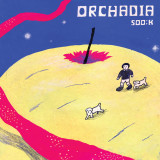
Ambient explorers SWIMS unpeel another heady debut, with the maiden effort by Korean artist Soo Kyung Kim, also known as soo:k. The curtain raises on Orchadia with an elysian glow: electro-acoustic compositions painting a golden topography of impossible fruit and uncanny astronomy.
soo:k's utopic brushwork finds obvious comparisons in the work of Hiroshi Yoshimura, and his meditations on the glacial pace of hidden, verdant spaces. Frida Kahlo's portraits of everyday life, intertwined with pain and magic symbology, also resonate in the album's exploration of fleeting moments.
Dissonance and experimentation take hold as the record progresses, Soo's Edenic vision creaking open to reveal ripe, fetid spaces between ribs of earth. Recommended if you like Ulla, Kara-Lis Coverdale, Visible Cloaks, Perila...