Search:america

Styles
All
Everything Is Recorded & Noah Cyrus & Bill Callahan - Porcupine Tattoo

Everything Is Recorded, the collaborative music project centred around producer Richard Russell, returns with a brand new single, “Porcupine Tattoo” - a stripped-back lament featuring two American musical icons - Noah Cyrus and Bill Callahan - who appear on record together for the very first time. The collaboration came together while Russell was hosting sessions for a forthcoming Everything Is Recorded album, one set to build on previous acclaimed releases including 2018’s eponymous, Mercury Prize-nominated debut album. Reaching out to Callahan - an artist he’s long admired and whose song “I’m New Here” was covered by, and provided the title for, Gil Scott-Heron’s final, Russell-produced studio album - Russell asked the simple question “who would you like to write a song for?”. “Noah Cyrus” was Callahan’s reply. The final single features Callahan’s original demo vocal, pitched down and resting on layers of sub bass and complemented by Cyrus’ crystalline counterpoint vocal. It was recorded during a rainy week of sessions in a bungalow at Los Angeles’ Chateau Marmont, which Russell described as “comfortable but haunted”. The song continues a lineage of Russell productions – from “I’m New Here” to Bobby Womack’s “Deep River” and Damon Albarn’s “History of a Cheating Heart” – that explore a sparser, more acoustic side of his sound. The limited edition 7” vinyl single is released on XL Recordings in partnership with Drag City, Bill Callahan’s long term label home. The 7” exclusively features a second collaboration between Everything Is Recorded and Callahan in the form of “Norm”, a tribute to the Austin-based singer songwriter’s favourite comedian Norm MacDonald”

out of Stock

Order now and we will order the item for you at our supplier.

11,13

Last In: 8 months ago
Various - Dolores: Salsa & Guaracha From 70's French West Indies

In Guadeloupe, many people think that jazz and ka music are like a ring and a finger. To some extent, the same could be said about so called Latin music and the music played in the French West Indies.

Both aesthetics were born in the Caribbean and bear so many connections that they can easily be considered cousins. In constant dialogue, there are lots of examples of their fruitful alliance and have been for a while. The English country dance that used to be practiced in European lounges came to be called kadrille in Martinique and contradanza in Cuba. They both featured additional percussion instruments inherited from the transatlantic deportation. Drawing from shared feelings about the same traumatized identity – later to be creolized – it would be hard not to assume that they were meant to inspire each other. The golden age of the orchestras that graced the Pigalle nights during the interwar period further proves the point. As soon as the 1930s, Havana-born Don Barreto naturally mixed danzón and biguine music in a combo based at Melody's Bar. In the following decade, Félix Valvert, a conductor who was born and raised in Basse-Terre in Guadelupe, also worked wonders in Montparnasse with La Coupole, which was an orchestra made up of eclectic musicians. Afro- Caribbean performers of various origins were often hired on rhythm and brass sections in jazz bands, which used to enliven the typical French balls of the capital. In the 1930s and onwards, Rico’s Creole Band was one of them.


Martinican violinist-clarinettist Ernest Léardée, who would become the king of biguine music as well as the main figure of French Uncle Ben's TV commercials (a dark stigma of post-colonial stereotypes), had musicians from the whole Caribbean sphere play at his Bal Blomet – and they all enchanted "ces Zazous-là" (according the words of Léardée's biguine-calypso piece). In les Antilles (French for French West Indies), music history started to speed up in the 1950s, when trade expanded and radio stations grew bigger. The Guadelupean and Martiniquais youth tuned in their old galena radio sets to South American and Caribbean music. As for the women traders, les pacotilleuses, they bought and sold goods across different islands (the "passing of items through various hands" was thought to be most pleasurable) and brought back countless sounds in their luggage. Such was the case of Madame Balthazar, who once returned from Puerto Rico with the first 45rpm and 33rpm to ever enter Martinique.

Out of this adventure was created the famous Martinican label La Maison des Merengues, a music business she opened and undertook with her husband and which proved to be a major landmark. At the end of the 1950s, in Puerto Rico, Marius Cultier competed in the Piano International Contest playing a version of Monk's Round 'Midnight. He won the first prize and this distinction foreshadowed everything that was to come. Cultier, the heretic Monk of jazz, was quickly praised for writing superb melodies, always tinged with a twist that conferred a unique sound to his music. It didn't take long for the gifted self-taught musician to get to play with Los Cubanos, making a name for himself thanks to his impressive maestria on merengues.

The rest is history. Besides, in the late 1950s, Frantz Charles-Denis, born into the upper middle class in Saint-Pierre and better known by his first name Francisco, went back home after working at La Cabane Cubaine – a club located rue Fontaine where he had caught the Latin fever. Francisco's music was therefore heavily marked by his Cuban cousins' influence, which gave the combos he led a specific style and also led to renewal. Things were swinging hard in La Savane, located in the main square in Fort-de-France. He set up the Shango club close by and tested out the biguine lélé there, a new music formula spiced up with Latin rhythms. Soon afterwards, fate had him fly to Puerto Rico and Venezuela.

As for percussionist Henri Guédon (percussions were only a part of his many talents), he was born in Fort-de-France in May 22nd 1944, the day marking the celebration of the abolition of slavery. As an old man, he could remember that in " his father's Teppaz, a lot of hectic 6/8 music was constantly playing...". In the opening lines of his Lettre à Dizzy, a small illustrated collection of writings published by Del Arco, he highlighted the huge impact that cubop had on him as a teenage boy, around 1960. He eventually turned out to be the lider maximo in La Contesta, a big band steeped in Latin jazz. He was also the one who originated the word zouk to describe music which brought the sound of the New York barrio to Paris. It was the culmination of a journey that started in Sainte-Marie: "a mythical place for bélé, the equivalent of Cuban guaguancó". In the early 1960s, the tertiary economy developed to the detriment of agriculture. Yet rural life was where roots music emerged in Martinique and in Guadeloupe.

Record companies played a major part in the process of Latin versions sweeping across the islands – before reaching everywhere else. Producer Célini, boss of the great Aux Ondes label, and Marcel Mavounzy, both the head of Émeraude records - a firm which was founded in 1953 - as well as the brother of famous saxophonist Robert Mavounzy, were big names to bear in mind. Although there were many of them - all of whom are featured on this record - Henri Debs was definitely the major figure in the recording adventure. He proved to be so influential that he even got compared to Berry Gordy. In the mid 1950s, when he acquired his first Teppaz, he worked on his first compositions: a bolero and a chachacha. Then, he became the one man who made people discover Caribbean music, from calypso to merengue. He was among the first ones to rush out to San Juan, Puerto Rico, to buy records and distribute them through a store run by one of his brothers in Fort-de-France. He had members of the Fania All Star come and perform there, which he was madly proud about. He was also the first one to pay attention to Haitian music, such as compas direct and various other rhythms which would soon flood the market. As a result, many of the combos hitting his legendary studio would end up boosted by widespread "Afro-Latin" rhythms. However, he never denied his identity: gwo ka drums were given a major role, although they were instruments which had long been banned from the "official" music spheres. The present selection bears witness to such a creative swarming. Here are fourteen tracks of untimely yet unprecedented cross-fertilization: all types of music rooted in the Creole archipelago have found their way, whatsoever, to the tracklisting. Whether originating from the city or being more rural, they all go back to what Edouard Glissant, in an interview about the place of West Indian music in the Afro-American scope, called "the trace of singing, the one which got erased by slavery." "It is so in jazz, but also in reggae, calypso, biguine, salsa... This trace also manifests through the drums, whether Guadelupean, Dominican, Jamaican or Cuban... None of them being quite the same. They all point to the idea of a trace, seeking it out and connecting to each other through it. This is the hallmark of the African diaspora: its ability to create something new, in relation to itself, out of a trace. It may be the memory of a rhythm, the crafting of a drum, a means of expression which doesn't resort to an old language but to the modalities of it." The opening track features one of the emblematic orchestras of this aesthetic identity, criscrossing many music types from the archipelago. The 1974 Ray Barretto guajira – Ray Barretto was a major New York drummer influenced by Charlie Parker and Chano Pozzo – is magnificently performed by Malavoi, a legendary Fayolais group (i.e from Fort-de-France). Additionally, the compilation ends on a piece by Los Martiniqueños de Francisco. It symbolically closes the circle as it is a genuine potomitan of Martinique culture which also functions as a tireless campaigner for Afro-Caribbean music. Practicing the danmyé rounds (a kind of capoeiria) to the rhythm of the bèlè drum, it delivers a terrific Caterete, a kind of champeta of Afro- Colombian obedience which was originally composed by Colombian Fabián Ramón Veloz Fernández for the group Wgenda Kenya. The icing on the cake is Brazilian Marku Ribas, who found refuge in Martinique in the early 1970s, bringing his singing to the last trance-inducing track. These two "versions" convey the whole tone of a selection composed of rarities and classics of the tropicalized genre, swarming with tonic accents and convoluted rhythms. It is the sort of cocktail that the West Indians never failed to spice up with their own ingredients. For instance, the Los Caraïbes cover of Dónde, a famous Cuban theme composed by producer Ernesto Duarte Brito, has a typical violin and features renowned Martinique singer Joby Valente and his piquant voice.


The track used to be – or so we think – their only existing 45rpm. The meaningful Amor en chachachá by L'Ensemble Tropicana, a band which included Haitian musicians among whom was composer and leader Michel Desgrotte, also recalls how Latin music was pervasive in the tropics in the mid-1960s. They were the ones keeping people dancing at Le Cocoteraie in Guadelupe and La Bananeraie in Martinique. Around the same time, another "foreign" band, Congolese Freddy Mars N'Kounkou's Ryco Jazz, achieved some success on both islands by covering Latin jazz classics – such as their adaptation of Wachi Wara, a "soul sauce" by Dizzy Gillespie and Chano Pozo whose interweaving of strings and percussions can have anyone hit the dancefloor. How can you resist Dap Pinian indeed, a powerful guaguancó by Eugene Balthazar, performed by the Tropicana Orchestra and published by the Martinique-founded La Maison des Merengues? It also acts as a symbol of the maelstrom at work. Going by the name Paco et L'orchestre Cachunga, Roger Jaffory used to play guaguancó too: his Fania-inspired Oye mi consejo is one example of his style. Baila!!!!! Dancing was also one of the Kings' focus points. Oriza is a Puerto Rican bomba and a "classic" originally composed by Nuevayorquino trumpeter Ernie Agosto, which reserves major space for brasses, giving it a special sheen.

Emerging from the New York barrios crucible was also La Perfecta, a Martinique group originating from Trinidad, whose name directly references the totemic Eddie Palmieri figure as well as his own band, also called La Perfecta. Here they borrow Toumbadora from Colombian producer and composer Efraín Lancheros and interpret it by emphasizing percussions, which set fire to the track even more than the wind instruments. The same goes for Martinique's Super Jaguars, who use Tatalibaba – a composition by Cuban guitarist Florencio "Picolo" Santana which was made famous by Celia Cruz & La Sonora Matencera – as a pretext for sending their cadences into a frenzy. In a more typically salsa vein, the Super Combo, a famous Guadelupean orchestra from Pointe-Noire that was formed around the Desplan family and had Roger Plonquitte and Elie Bianay on board, adapt Serana, a theme by Roberto Angleró Pepín, a Puerto Rican composer, singer and musician also known for his song Soy Boricua. Here again, their vision comes close to surpassing the original. In the 1970s, L'Ensemble Abricot provided a handful of tracks of different syles, hence reaching the pinnacle of the art of achieving variety and giving pleasure. They played boleros, biguines, compas direct, guaguancó and even a good old boogaloo - the type they wanted to keep close to their hearts for ever, "pour toujours", as they sang along together in one of their songs. Léon Bertide's Martinican ensemble excelled at the boogaloo which had been composed by Puerto Rican saxophonist Hector Santos for the legendary El Gran Combo.


Three years later, in 1972, Henri Guédon, with the help of Paul Rosine on the vibraphone, tackled the Bilongo made famous by Eddie Palmieri. Such a classic!!!!! And so were the Aiglons, the band from Guadelupe: choosing to execute Pensando en tí, a composition by Dominican Aniceto Batista, on a cooler tempo than the original, they noticeably used a wonderfully (un)tuned keyboard in place of the accordion. On the high-value collectible single – the first one released by Les Aiglons under the Duli Disc label – there is a sticker classifying the track under the generic name "Afro". Now that is what we call a symbol. Jacques Denis

out of Stock

Order now and we will order the item for you at our supplier.

21,43

Last In: 57 days ago
Holly Johnson - Hollelujah MC

Holly Johnson

Hollelujah MC

CassettePLDMC15
Pleasuredome
05.09.2025
  • Love Train (Americanos Big Beat 109 Bpm Version)
  • Atomic City (Enviro – Mental Mix)
  • Perfume (Aromatherapy-Mix)
  • Americanos (The Perfect Taco Mix)
  • Heaven's Here (Mount Olympus Mix)
  • Hollelujah

MC-Neuauflage des Holly Johnson-Remixalbums "Hollelujah!" (1990), das ein Jahr nach seinem Nr.1 Solodebütalbum "Blast" (1989) erschien. Mit 6 Remixen der Single-Hits "Americanos", "Atomic City", "Heaven's Here" sowie dem gesuchten Frankie Knuckles-Remix von "Love Train". Zum 25. Jubiläum erscheint eine neue gelb-schwarze MC-Auflage.

pre-order now05.09.2025

expected to be published on 05.09.2025

18,45
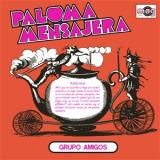
GRUPO AMIGOS - PALOMA MENSAJERA
  • No Sabes Que Me Siento Bien
  • Mujer
  • Dama
  • Son Las 5
  • En El Campo
  • Everybody Is Free Bonus Track
  • Ensueño
  • El Tren Del Señor Taylor
  • Atardecer De Un Verano
  • Buscando Un Hogar
  • Psiquiatra
  • Dirty Girl Bonus Track

"Paloma mensajera" (featuring members of New Juggler Sound / Laghonia) shows the shift that was taking place within Peruvian rock away from psych and hard rock which had predominated during the early 70s. The style adopted by Grupo Amigos (and other bands and artists during this period) highlights the influence of soft rock, UK, US and Latin American folk rock and, above all, the desire to keep the melodic greatness of The Beatles alive. This reissue includes bonus tracks and extensive liner notes. DESCRIPTION "Paloma mensajera" (featuring members of New Juggler Sound / Laghonia) shows the shift that was taking place within Peruvian rock away from psych and hard rock which had predominated during the early 70s. The style adopted by Grupo Amigos (and other bands and artists during this period) highlights the influence of soft rock, UK, US and Latin American folk rock and, above all, the desire to keep the melodic greatness of The Beatles alive. The positive reception albums by artists such as We All Together, Telegraph Avenue and Zulu garnered between 1972 and 1975, marked a change of paradigm and in preferences within the Peruvian rock scene. Eclecticism gained new ground, to the detriment of the sectarian and orthodox, while melody grew more present and visible, moving away from the progressive experimentation that typified underground Peruvian rock up to the beginning of the 70s. For their first single on MAG, included on this reissue, the band adopted a formula in which Beatles harmonies converged symmetrically with folk motifs. 'Dirty Girl' was a hit on the radio. A full album followed but only a fairly small number of copies of the album were pressed, which seems to have been the main reason for omitting it from the historical accounts of Peruvian rock music from the late 90s onwards. In "Paloma mensajera" all compositions were penned by the group, after several years during which cover versions were a staple. Some of the musical resources that the band had at their disposal in terms of composition and arrangements are striking and even surprising, considering that they were a debut band, whose members were under the age of 20. The arrangements included the clever use of a Moog synthesizer which had just arrived at the MAG studio. The success achieved by the Beatles tribute performances played by the members of Grupo Amigos for decades have eclipsed the songs that Edmundo, Andrés Da Ros and Simón Ames composed with youthful enthusiasm and energy between 1972 and 1973 to the point where they have almost been forgotten. This re-release of "Paloma mensajera" should help rectify this major injustice. It includes bonus tracks and extensive liner notes.

pre-order now05.09.2025

expected to be published on 05.09.2025

22,27
Various - Friday Night In San Fransisco LP
  • A1: Mediterranean Sundance / Rio Ancho
  • A2: Short Tales Of The Black Forest
  • B1: Frevo Rasgado
  • B2: Fantasia Suite
  • B3: Guardian Angel

Friday Night in San Francisco is a live album by Al Di Meola, John McLaughlin, and Paco de Lucía.

It was recorded live at the Warfield Theatre in San Francisco,

on December 5 in 1980. The album is considered an iconic recording and was described by jazz author Walter Kolosky as
"a musical event that could be compared to the Benny Goodman Band's performance at Carnegie Hall in 1938...
it may be considered the most influential of all live acoustic guitar albums."

Al Di Meola is an acclaimed Italian American jazz fusion and Latin jazz guitarist, composer, and record producer.
He experienced a celebrated career that has spanned four decades and earned him critical accolades,
three gold albums and more than six million record sales worldwide.
Di Meola has amassed over 20 albums as a leader while collaborating on a dozen or so others.


John McLaughlin, also known as Mahavishnu, is an English guitarist, bandleader, and composer.
He is a pioneer of jazz fusion, combining elements of jazz with rock, world music,
Indian classical music, Western classical music, flamenco, and blues. He received multiple "Guitarist of the Year"
and "Best Jazz Guitarist" Awards from magazines such as Downbeat and Guitar Player and was ranked 49th in Rolling Stone
magazine's list of "100 Greatest Guitarists of All Time". Jeff Beck called him "the best guitarist alive".

Paco de Lucía was a Spanish virtuoso flamenco guitarist, composer, and record producer.
He was one of the first flamenco guitarists to branch into classical and jazz. De Lucía was noted for his fast and fluent fingerstyle runs
and gained popularity outside Spain after collaborating with McLaughlin and Di Meola. Richard Chapman and
Eric Clapton described de Lucía as a "titanic figure in the world of flamenco guitar."


Friday Night in San Francisco is available as a limited edition of 1000 individually numbered copies on purple coloured vinyl and includes an insert.

pre-order now05.09.2025

expected to be published on 05.09.2025

31,30
Various - Fragments Of Reality Vol 7

Fragments Of Reality is an ongoing series from 20/20 Visions that explores interplanetary sounds, and this seventh outing is another doozy. American artist Miles Mercer kicks off with the crunchy drums and big hits of his acid-laced electro-tech fusion, 'Voice Control.' Shaked flip the script with a funky minimal jam that's wired up with innocent sounding melodies and lush colours that feel psychoactive. Label curator Luther Vine then flips things once again with his punchy 'Take The Wheel' with its bold bassline and tight tech bounce, while London's Pach serves up 'Critical Emergency' which hits a sweet spot between trip-out cosmic synth work and kinetic drum programming. Four tasteful tools once more from this fine old label.

out of Stock

Order now and we will order the item for you at our supplier.

14,92

Last In: 3 months ago
GHOSTWOMAN - Welcome to the Civilized World (LP)
  • Welcome To The Civilized World
  • Alive
  • That Jesus
  • 5: Gold Pieces
  • Levon
  • Dime A Dozen
  • When You All Were Young
  • Song For Sunny
  • From Now On
  • Anhedonia
  • Who Are You?
also available

Orange Vinyl, Special Poster[25,63 €]


Auf ihrem 4.Album "Welcome to the Civilized World" sind Ghostwoman schärfer als je zuvor. Hypnotische Anflüge von Psych-Grunge, verfallendem Americana und zerfetzten Blues-Instrumentalstücken bilden die intuitive Tracklist; Evan Uschenkos dreckige Gitarren und knurrender, lebendiger Gesang und Ille van Dessels ätzende Schlagzeugbeats festigen die Essenz des Albums. Aufgenommen auf alten Instrumenten und einer Bandmaschine, ist die Kraft und das Gefühl der Platte stark - rücksichtslos, unlogisch und frei.

pre-order now05.09.2025

expected to be published on 05.09.2025

25,63
GHOSTWOMAN - Welcome to the Civilized World (LP)

Auf ihrem 4.Album "Welcome to the Civilized World" sind Ghostwoman schärfer als je zuvor. Hypnotische Anflüge von Psych-Grunge, verfallendem Americana und zerfetzten Blues-Instrumentalstücken bilden die intuitive Tracklist; Evan Uschenkos dreckige Gitarren und knurrender, lebendiger Gesang und Ille van Dessels ätzende Schlagzeugbeats festigen die Essenz des Albums. Aufgenommen auf alten Instrumenten und einer Bandmaschine, ist die Kraft und das Gefühl der Platte stark - rücksichtslos, unlogisch und frei.

pre-order now05.09.2025

expected to be published on 05.09.2025

25,63
DAVID BYRNE - WHO IS THE SKY?
  • Everybody Laughs
  • When We Are Singing
  • My Apartment Is My Friend
  • A Door Called No
  • What Is The Reason For It?
  • I Met The Buddha At A Downtown Party
  • Don't Be Like That
  • The Avant Garde
  • Moisturizing Thing
  • I'm An Outsider
  • She Explains Things To Me
  • The Truth
also available

APPLE GREEN COLOURED Vinyl[21,81 €]

LEMON YELLOW COLOURED Vinyl[21,81 €]


Mit seinem neuen Album Who Is The Sky? schlägt David Byrne ein weiteres spannendes Kapitel seiner künstlerischen Laufbahn auf. Nach dem weltweiten Erfolg von American Utopia - gefeiert als Album, Broadway-Show und HBO-Film - richtet Byrne nun den Blick nach innen: Was bedeutet es, kreativ zu sein? Was ist Liebe? Was ist unser Platz in der Welt? Gemeinsam mit dem Grammy-prämierten Produzenten Kid Harpoon (Harry Styles, Miley Cyrus) und dem New Yorker Kammerensemble Ghost Train Orchestra ist ein Werk entstanden, das persönliche Geschichten mit orchestraler Klangvielfalt und popmusikalischem Feinsinn verbindet. Gäste wie Hayley Williams (Paramore), St. Vincent und Tom Skinner (The Smile) verleihen dem Album zusätzliche Tiefe. Songs wie "My Apartment Is My Friend", "She Explains Things to Me" oder "I Met the Buddha at a Downtown Party" erzählen Alltagsbeobachtungen mit Witz, Menschlichkeit und einem Hauch Absurdität. Byrne gelingt es wie kaum jemand anderem, komplexe Gedanken in eingängige Musik zu verpacken und so stets zugänglich zu bleiben. Who Is The Sky? ist verspielt, tiefsinnig und durch und durch Byrne: voller Fragen, Überraschungen und Momente echter Verbundenheit. Ein Album, das zum Zuhören, Nachdenken und Tanzen einlädt, ein orchestraler, verspielter und tiefgründiger Blick auf das Menschsein selbst.

pre-order now05.09.2025

expected to be published on 05.09.2025

21,81
Various - Nihon No Wave  2x12" + 7"

Japan’s electronic music scene has always stood out as uniquely distinctive. In the late 1970s and early 1980s, a wave of underground projects, bands, and independent labels—primarily based in Tokyo and Osaka—began crafting their own sound. Inspired by the post-punk, new wave, and experimental movements emerging from Europe and North America, these artists embraced a DIY ethic, using whatever technology they had access to in order to forge something entirely their own.

This movement, often referred to as the "Nippon-wave" scene, remained largely hidden from the outside world. Many of its releases—on cassette tapes, flexi-discs, and privately pressed vinyl—were never distributed beyond Japan’s borders, making them rare treasures for the few who managed to discover them. “Nihon No Wave” presents a selection of these long-overlooked recordings, making them accessible to listeners beyond Japan for the first time.

pre-order now05.09.2025

expected to be published on 05.09.2025

39,45
FURY - FAILED ENTERTAINMENT
  • Angels Over Berlin
  • Goodtime
  • Vacation
  • America
  • Inevitable Need To Reach Out
  • Birds Of Paradise
  • Mono No Aware
  • Lost In The Funhouse
  • New Years Days
  • New Years Eve
  • Crazy Horses Run Free

Forming in 2014, Fury established themselves quickly, releasing both a demo on Washington, D.C.'s Mosher Delight Records and the "Kingdom Come" EP on Boston's Triple B Records in the same calendar year. They built on the melodic legacy of Orange County by way of heavy, rhythmic, start-stop guitars and Stith's wordy and referential lyrics. Then, in 2016, came their debut LP on Triple B Records, "Paramount," which was met with respect from the hardcore community and praise from outsider critics."Failed Entertainment" documents the work, both personal and creative, undertaken since the release of "Paramount," a period of time marked by as many difficulties as successes. Stith said, "I've asked myself `Why have I done this?' and `Why do I continue to do this?' more times in the last two years than the rest of my life combined." Those eternal, existential questions form the thematic foundation of the new songs, which look past the superficial concerns about status and popularity that preoccupy so many musicians, focusing instead on life's inevitable, inescapable problems and the ways in which they can be compounded by the banal realities of art-making _ the isolation of being on tour, the pressure of being expected to somehow transform that universal angst into nice, catchy songs that provide simple lessons.

pre-order now05.09.2025

expected to be published on 05.09.2025

22,65
JOHNNY DAVIS - Expand Your Mind (7")
  • A1: Original
  • B1: Instrumental

Johnny Davis and Reggie Hudson were American songwriters stationed at a G.I. base in Germany when they composed "Expand Your Mind”, a
song they originally wrote for Marvin Gaye but decided to put out on their own. Davis and Hudson stayed on in Germany where their music
careers flourished.

Johnny Davis, who handled the lead vocals, became one of the real voices of Milli Vanilli years later. Recorded in 1985, featured here is the original 12" version of "Expand Your Mind" including the original instrumental version.

pre-order now05.09.2025

expected to be published on 05.09.2025

17,23
TARA LAINE - You Made Me Believe (7")
  • A1: Original
  • B1: Instrumental

The talented Canadian vocalist Tara Laine recorded the funky gem “You Made Me Believe” with members of the band Change, an Italian-
American post-disco group that was heavily influenced by Chic. Recorded in 1985 for the legendary Street Level label, featured here is he
original 12” version complete with bonus instrumental. This session was produced by in-demand session drummer Leslie Ming, whose fine work
can be heard on the records of Kashif, Melba Moore, B.T. Express and many others.

pre-order now05.09.2025

expected to be published on 05.09.2025

14,66
LEMURIA - Thunder In Your Love (7")
  • A1: Original
  • B1: Instrumental

A hard-hitting slab of electro-boogie released on the legendary Street Level label in 1985, Lemuria’s Thunder In Your Love was written and
produced by Phil Valentine, who also provides the gritty lead vocals, and features backing from members of the influential Italo-American post-
disco outfits B. B. & Q. Band and Change, including New York session aces Leslie Ming (drums), Timmy Allen (bass) and guitarists Kevin
Robinson and Ira Siegel, whose impressive fret work powers this highly addictive track. This is a must-have for collectors of funky sounds and
rare groove from the mid-1980s.

pre-order now05.09.2025

expected to be published on 05.09.2025

14,66
Ryan Adams - Heartbreaker 25th Anniversary Edition
  • A1: Damn, Sam (I Love A Woman That Rains)
  • A2: My Winding Wheel
  • A3: To Be Young (Is To Be Sad, Is To Be High)
  • A4: Why Do They Leave?
  • A5: Oh My Sweet Carolina
  • A6: Amy
  • B1: Bartering Lines
  • B2: Shakedown On 9Th Street
  • B3: In My Time Of Need
  • B4: Come Pick Me Up
  • B5: Call Me On Your Way Back Home

Celebrating a quarter-century of Ryan Adams’ 2000 debut solo album release Heartbreaker. This release features 11 re-imagined tracks from the critically acclaimed record that helped define a generation of alt-country and Americana.

Newly re-worked with fresh emotion and stripped-back intensity, these new versions offer a deeper take on the originals with a sprinkling of strings.The heartbreak never ended.

pre-order now05.09.2025

expected to be published on 05.09.2025

27,69
DIANE DENOIR & EDUARDO MATEO - INEDITAS
  • Je Suis Sans Toi
  • Rendez-Vous D'automne
  • La Dernière Valse
  • Le Lendemain
  • Un Amour, Un Sourire, Une Fleur
  • Corcovado
  • Gua De Beber
  • Berimbau
  • Vivo Sonhando
  • Fever
  • Garota De Ipanema
  • So Nice
  • Las Flores Nuevas
  • Y Hoy Te Vi
  • Esa Tristeza
  • Mejor Me Voy

Born as Diana Reches, Diane Denoir made her debut as a singer in 1966, backed by Eduardo Mateo on guitar. Influenced by Françoise Hardy and Astrud Gilberto, along with her own unique style, she performed a special blend of chanson française, bossa nova (sung in Portuguese, English, and French), and jazz. By then, Mateo was already a well-known guitarist in the Uruguayan music scene and a sought-after arranger. He was also beginning to establish himself as an incredible songwriter, connecting different musical universes in unique ways. The two formed a fruitful artistic partnership that lasted until the early seventies. This album, originally released in 1998 on CD, is a compilation of various unreleased recordings from different sources (concerts, radio and TV recordings, homemade tapes) made between 1966 and 1968. It is a unique document that showcases their incredible musicianship and creativity in their early years. The duo swings from bossa nova classics like "The Girl from Ipanema" to the rhythm and blues of "Fever," including chanson française standards like "Le lendemain" and "La Dernière Valse." The album also features earlier versions of the three best-known Mateo songs performed by Diane: "Y hoy te vi," "Esa tristeza," and "Mejor me voy," all of which were inspired by Diane. Inéditas unveils a new dimension of South American music from an unforgettable era.

pre-order now05.09.2025

expected to be published on 05.09.2025

35,50
YOU SAID STRANGE - THOUSAND SHADOWS VOL.1
  • Mourning Colors
  • So Sorry
  • Transition
  • Thousand Shadows
  • Mediterranean
  • Transition 2
  • Runaway
  • Treat Me
  • Landed

First part of second album! Originating from Normandy, France, psychedelic noise-pop quartet You Said Strange presents a unique blend of indie rock that incorporates elements of psych pop-rock, shoegaze, and proto-grunge. The band recorded their first album, Salvation Prayer, in 2018 in Portland (USA), with Peter G. Holmstrom from The Dandy Warhols, which saw release via Fuzz Club Recirds. In 2022, the band shared their LP Thousand Shadows Vol. 1. Mythomaniac kings, the Mediterranean, the colors of mourning _ these are the detailed subjects, described against a backdrop of psychedelic pop, proto grunge, and shoegaze. The first part of a powerful, reverberant, melodious second album, drawing its inspiration and production stem from encounters during their 2022 European and North American tours, between Normandy, New York, and Oregon. Most recently, You Said Strange shared the second part of their sophomore release, a follow-up to Vol. 1 entitled Thousand Shadows Vol. 2.

pre-order now05.09.2025

expected to be published on 05.09.2025

19,29
YOU SAID STRANGE - THOUSAND SHADOWS VOL.2

YOU SAID STRANGE

THOUSAND SHADOWS VOL.2

12inchXAGLPW42
Exag Records
05.09.2025

Second part of second album! Originating from Normandy, France, psychedelic noise-pop quartet You Said Strange presents a unique blend of indie rock that incorporates elements of psych pop-rock, shoegaze, and proto-grunge. Thousand Shadows volume 2, a second chapter was needed to highlight the many shadows that still linger everywhere. The shadows that linger on the borders, hiding the violence of the fights for them. The shadows that time has on the relationships and their persistence, because the shadows move. Plato's cave, modern version, would be the one of toxic relationships, antidepressants and the acceptance of the regression of freedom and/or the vision of a dying world... Between shoegaze, noise pop and psychedelic rock, You Said Strange absorbs its time to incant a music in which melancholy, love and the search for plenitude meet. The band recorded their first album, Salvation Prayer, in 2018 in Portland (USA), with Peter G. Holmstrom from The Dandy Warhols, which saw release via Fuzz Club Recirds. In 2022, the band shared their LP Thousand Shadows Vol. 1. Mythomaniac kings, the Mediterranean, the colors of mourning _ these are the detailed subjects, described against a backdrop of psychedelic pop, proto grunge, and shoegaze. The first part of a powerful, reverberant, melodious second album, drawing its inspiration and production stem from encounters during their 2022 European and North American tours, between Normandy, New York, and Oregon. Most recently, You Said Strange shared the second part of their sophomore release, a follow-up to Vol. 1 entitled Thousand Shadows Vol. 2.

pre-order now05.09.2025

expected to be published on 05.09.2025

22,27
Feat Factory - Obsolete

feat.Factory

Obsolete

12inchMOVLPC2215
Music On Vinyl
04.09.2025

Obsolete is the third studio album by American industrial metal band Fear Factory, released in 1998. It was produced by Fear Factory, Greg Reely and Rhys Fulber, the latter of whom wrote, arranged and performed all of the album's keyboard parts, and this was the band's first full album to feature bassist Christian Olde Wolbers.

Musically, the album saw Fear Factory experiment with their sound and it was the band's first fully fledged concept album. Obsolete revolves around a story penned by vocalist Burton C. Bell, "Conception 5", set in the year 2076 where machines have taken over mankind.

Obsolete would break Fear Factory into the mainstream and remains their highest selling album.

Obsolete is available as a limited numbered edition of 3000 copies on crystal clear & black marbled vinyl and contains a 4 page booklet

out of Stock

Order now and we will order the item for you at our supplier.

31,51

Last In: 8 months ago
Items per Page:
N/ABPM
Vinyl