Los Angeles post-punkers SHARK TOYS delight with off-kilter clatter of the highest caliber, possessing a jagged beauty that defies the songs shamble-pop brevity. Swell Maps and Television Personalities flavor the proceedings without dominating, with SHARK TOYS retaining their own American-DIY-art-punk identity through their wonderfully constructed and sonically thrilling songs. From Gainesville Florida, UV-TV's debut vinyl offering is a unique hybrid of infectious psyche-punk and dynamic indiepop. C86/Shop Assistants-esque melodies coupled with pounding toms and soaring dark angular post-punk guitar. This is stripped down 3 piece brutal-pop, with smatterings of feedback, counter balanced perfectly by the sweet melodic vocal delivery of Rose Vastola.
Cerca:american beauty
Penny Records presents the vinyl version of the soundtrack from the TV Series "Anna" written and directed by Niccolò Ammaniti. Fueled by Niccolò Ammaniti's passionate and immersive creative style, the score for 'Anna' was approached almost as a character study. 'Anna' exposes a world of extreme conditions where the essentials of human existence flourish in a wide range of emotions and sentiments tainted through the eyes of children. Striking brutality and primal savagery go hand in hand with the beauty of innocence and hope. Rauelsson's musical language for 'Anna' includes tense and spare textures that blend seamlessly with intimate ambient minimalism; classical elements that coexist with electronic drone experimentation and tribal rhythms, candid piano melodies buried in tape loops and otherworldly rituals of wordless voices. To arrive at this music landscape, Rauelsson enlisted an international cast of collaborators including Finnish percussionist Tatu Rönkkö, German cellist Anne Müller, American multi-instrumentalist Peter Broderick and Oslo-based vocalist Simin Tander. With this ensemble, Rauelsson's music documents a journey of survival that highlights the power of imagination and love.
Credits:
Music by Raúl Pastor Medall except A3 (Salvatore Cardillo, lyrics by Riccardo Cordiferro), A5 (Raúl Pastor Medall, Peter Broderick and Anne Müller), B3 (Raúl Pastor Medall and Anne Müller) and A2, B1, B2 (Raúl Pastor Medall and Tatu Rönkkö)
Played by Peter Broderick (Violin), Anne Müller (Cello), Raúl Pastor Medall (Piano, Electric Piano, Synthesizers, Electronics), Tatu Rönkkö (Drums, Percussion) and Simin Tander (Voice) with additional contributions from Christoph Berg (Violin), Aisha Burns (Violin) and Giulia Dragotto (Voice)
Recorded in 2020 at Rockaway Studios (Castelló, Spain; engineered by Raúl Artana), Niu (Benicàssim, Spain; engineered by Raúl Pastor Medall), Old House at Galgeberg (Oslo, Norway; engineered by Olav Torget), Tanum Church (Bærum, Norway; engineered by Olav Torget) and Indigo Studios (Palermo, Italy; engineered by Fabio Rizzo)
Additional recordings by Peter Broderick (Co. Galway, Ireland), Anne Müller (Berlin, Germany) and Tatu Rönkkö (Helsinki, Finland)
Produced by Raúl Pastor Medall and Niccolò Ammaniti. Mixed by Raúl Pastor Medall and Adam Selzer at Niu and Type Foundry (Portland, OR). Mastered by Adam Gonsalves and Adam Selzer at Telegraph Audio Mastering (Portland, OR). Lacquer mastercut by Andreas LUPO Lubich at Loop-O (Berlin, Germany). Artwork by Emiliano "Stand" Cataldo.
The Byson Family started 2021 in style, when their self-released, limited
edition debut album ‘Kick The Traces’ made a big impact from its soft
release.
It debuted at #1 on Independent Breakers; #3 on Scottish Albums; #5 on Americana Albums; and #9 on Independent Albums. Now ‘Kick The Traces’ is set for
a much wider discovery, with the release of its Expanded Edition on September
10th via their own Seshlehem Records label.
Press play on ‘Kick The Traces’ and you’ll discover rootsy heartland rock that’s
as evocative of sprawling road trips through America’s open highways as it is
soundtracking an escape into the Scottish Highlands. It’s a sound that echoes
the great bands whose music never ages: the strut of The Stones, the beatific
beauty of The Byrds, the riffs and reflection of Neil Young. But they’re also kindred spirits to the artists who extend that lineage in new ways: the joyous rush
of The War on Drugs and the alt-country adventures of Wilco, with a touch of
Calexico’s desert noir.
The Byson Family will make their long awaited return to live shows in September. They’re set to headline a homecoming show at Glasgow’s historic St. Luke’s
on September 25th. They’re also confirmed to support the resurgent Del Amitri
on a tour that includes the London Palladium and two nights at Glasgow’s Barrowlands.
Tape
Pauline Oliveros' Tara's Room has long been a favorite in the Imprec office and it's a great honor to be able to release it on LP for the very first time. Tara's Room was cut by John Golden and pressed at RTI in order to achieve a quiet, dynamic pressing. Originally released on cassette in 1987 following the 1986 release of "Sounding / Way" with Guy Klucevsek which is also available on LP via Imprec.
"Both pieces are intended to aid the listener in times of spiritual change, but are just fine for 'everyday' use as well. Highly recommended." Charles S. Russell, Ear Magazine
This LP features two long sides of infinite depth and sensitivity. Oliveros performs these pieces using a Just Intonation accordion and her Expanded Instrument System in order to bend both time and pitch.
Pauline Oliveros, composer, performer and humanitarian is an important pioneer in American Music. Acclaimed internationally, for four decades she has explored sound - forging new ground for herself and others. Through improvisation, electronic music, ritual, teaching and meditation she has created a body of work with such breadth of vision that it profoundly effects those who experience it, and eludes many who try to write about it. Oliveros has been honored with awards, grants and concerts internationally. Whether performing at the John F. Kennedy Center in Washington D.C., in an underground cavern, or in the studios of West German Radio, Oliveros' commitment to interaction with the moment is unchanged. She can make the sound of a sweeping siren into another instrument of the ensemble.
"On some level, music, sound consciousness and religion are all one, and she would seem to be very close to that level." John Rockwell
"Through Pauline Oliveros and Deep Listening, I now know what harmony is. It's about the pleasure of making music." John Cage
- 1: Unsuccessfully Coping With The Natural Beauty Of Infidelity
- 2: Der Untermensch
- 3: Xero Tolerance
- 1: Prelude To Agony
- 2: Glass Walls Of Limbo (Dance Mix)
- 1: The Misinterpretation Of Silence
- 2: And Its Disastrous Consequences
- 3: Gravitational Constant
- 4: G = 6.67 X 10 – 8 Cm – 3 Gm – 1 Sec – 2
- 5: Hey Pete (Pete’s Ego Trip Version)
Type O Negative is an American goth-metal band formed in Brooklyn in 1989 by Peter Steele (lead vocals, bass), Kenny Hickey (guitar, backing vocals), Josh Silver (keyboards, backing vocals), and Sal Abruscato (drums, percussions), who was later replaced by Johnny Kelly. Slow, Deep and Hard is their debut studio album, released in 1991 on Roadrunner Records. The album, originally titled None More Negative and released in 1990 under the group’s former name Repulsion, launched the band’s career. The album has a rawness that was prominent in Peter Steele’s previous band, Carnivore, but it incorporates elements that became standard for Type O Negative, merging styles including doom metal, gothic rock, new wave and industrial music.
Slow, Deep and Hard is a semi-autobiographical album with heavy amounts of black humour, based on a failed relationship in which the vocalist/bass guitarist Peter Steele was involved. In keeping with the band’s notable humour, the album’s cover artwork is a blurred image of sexual penetration. According to guitarist Kenny Hickey, Steele based a riff of “Gravitational Constant: G = 6.67 x 10 – 8 cm – 3 gm – 1 sec – 2” (later known as “Gravity”) from the theme song of the 1964 American sitcom The Munsters. For the 30th anniversary of Slow, Deep and Hard, Roadrunner Records in conjunction with Run Out Groove, is reissuing the debut on vinyl in all it’s remastered glory.
Debut physical release on RCA Records from Irish singer/rapper Jessica Smith, aka BIIG PIIG. This is a 6 track EP released on limited 12" vinyl, having been released digitally to critical acclaim in May this year. Key supporters include Annie Mac, Clara Amfo, Jack Saunders, Zane Lowe. Strong radio support across R1, 6Music, Apple Music, Capital, ILR network. Video rotation across MTV, Tik-Tok and Vevo. Online/social media activity. Focus track 'American Beauty' is streaming well and featuring across multiple playlists. Ads, features, interviews and reviews across all press. Upcoming UK tour supports to Jungle and Glass Animals. Poster campaign/database mailout.
Written with a libidinal urgency that has come to characterize Kool Keith’s legendary lyricism, “Keith’s Salon” explores our current obsessions with luxury, beauty, and notoriety. But rather than fetishize the beautiful dum-dums who walk red carpets in black Prada gowns,
Kool Keith's most recent studio album shifts our attention to the work and workers that underpin our fantasies of American excess and the good life.
As such, the album is also a timely meditation, during quarantine, on the economic precarity many of us now find ourselves in. Having doubled-up with Triple Parked, the production team of avant-techno maven Bruno Pronsato and Benjamin Jay, “Keith’s Salon” moves between halcyon sonics and atonal warlord dystopia, while keeping beats minimal for Kool Keith to spread extra ketchup on the hamburger. An album at once topical and futuristic, lush and bizarre, "Keith's Salon" is about the business of making people beautiful. It's time to work.
Deep spiritual jazz recorded in Germany, performed by Jamaican born saxophone player Fitz Gore and his international group The Talismen, featuring a.o. bassist Gérard Ebbo from Morocco and drummer Philippe Zobda-Quitman from Martinique. This is the first reissue of their second album, released in 1976 by the small private label GorBra from Bonn, including "Delilah" and "Requiem For Julian Cannonball Adderley". The rare LP comes in a newly mastered version with original cover design and sleeve notes. Fitz Gore's music is full of tremendous tension and movement between deep seriousness, inwardness and humility; it affects your life, it liberates and heals.
Original sleeve notes from 1976:
"Soundmagnificat" is the successor to "Soundnitia" (GorBra Records F 665 532), the first release from the Talismen, an international group with Jamaican Tenor saxophonist Fitz Gore (born1935) as founder, spiritual and musical leader, main soloist. "Soundnitia" contained concert performances of June, 1975, including compositions by John Coltrane, Horace Silver and one by Gérard "Prof. Dr. Splüm" Ebbo, bassist of the Talismen.
This second offering from the Talismen is more varied. It has four tracks recorded at four different occasions. It presents Fitz Gore as a singer, a composer, as well as, a tenor saxophonist. The opener, Requiem for Julian "Cannonball" Adderley, is a moving tribute to a great American artist, the late alto saxophonist "Cannonball" Adderley. On this track, Hungarian drummer Janos Sudy is heard with the Talismen, for the first time. The playing by the quartet on this slow lament very adequately illustrates the mood of the composition
For the next piece, a concert performance, Gore selected a gem from the American Negro Song Tradition and he displays a mighty, masculine and soulful voice in Steal Away. An example of a modern artist using an old traditional to express his own inner feelings. Delilah is taken from another concert performance, the same concert as the music on "Soundnitia". It has extensive playing by Gore, a bass solo by Gérard Ebbo, leading into some exciting conga playing by Lamont Hampton.
The final track, A Sinner Kissed An Angel, was recorded by another tenor player, Wardell Gray, in 1950, but this version is all Gore's. After the piano introduction, Gore delivers the melody with authority and with an expressive use especially of the high register of his instrument. In his improvisation, Gore's playing becomes more dissonant. Some of his playing here causes me to think of the way the late Albert Ayler sounded on his first recordings done in Sweden, in the beginning of the 60s. No drums here, but nice accompaniment and solo work of Jochen Paul on vibes.
I met Fitz Gore in Copenhagen in the fall of 1975. We were both listening to the trumpet playing of Harry "Sweets" Edison at the now defunct Café Montmartre. Prior to that time, I did not know Gore and his music, but listening to his playing on this album and the earlier one, has once more widened my musical horizon. His music has struck some chords within me. "Music is communication", John Coltrane once said. I feel sure that as you listen to the music of Fitz Gore and his Talismen, you will get the message.
In these notes, I have mentioned a couple of jazz artists and another one ought to be named primarily, because he has meant a lot to Gore: Sonny Rollins. The two met in Paris in 1966. Gore says of Rollins: "He openend my eyes ...big man … phenomenon … my man". As Sonny Rollins's artistry, the music of Fitz Gore holds many aspects, some being aggressive and even hysterical, others being those of beauty and peace. As life itself … (Roland Baggenaes, June 1976)
The music of Fitz Gore, rooted in the blues, is full of tremendous tension and movement between deep seriousness, inwardness, humility and humor, hardness and tenderness; it affects your life, it liberates and heals - a hopeful, a truly groundbreaking, a timeless, a new music - Newsic!
(Gisela Braasch, 1976)
In memory of Fitz Gore.
Mastered 2020 by Roskow Kretschmann at Audiomoto,
kindly supported by Tom Sky. Vinyl cut at SST.
Producer for reissue: Ekkehart Fleischhammer,
reproduction of original cover design by Gisela Gore:
Patrick Haase aka rab.bit.
- A1: Stupid Now
- A2: Who Needs To Dream?
- A3: Again And Again
- A4: Old Highs, New Lows
- A5: Return To Dust
- B1: The Silence Between Us
- B2: Shelter Me
- B3: Very Temporary
- B4: Miniature Parade
- B5: Walls In Time
- C1: Life And Times
- C2: The Breach
- C3: City Lights (Days Go By)
- C4: Mm 17
- C5: Argos
- D1: Bad Blood Better
- D2: Wasted World
- D3: Spiraling Down
- D4: I'm Sorry, Baby, But You Can’t Stand In My Light Any More
- D5: Lifetime
- E1: Star Machine
- E2: Silver Age
- E3: The Descent
- E4: Briefest Moment
- F2: Round The City Square
- F3: Angels Rearrange
- F4: Keep Believing
- F5: First Time Joy
- G1: Low Season
- G2: Little Glass Pill
- G3: I Don't Know You Anymore
- G4: Kid With Crooked Face
- G5: Nemeses Are Laughing
- G6: The War
- H1: Forgiveness
- H2: Hey Mr. Grey
- H3: Fire In The City
- H4: Tomorrow Morning
- H5: Let The Beauty Be
- H6: Fix It
- I1: Voices In My Head
- I2: The End Of Things
- I3: Hold On
- I4: You Say You
- I5: Losing Sleep
- I6: Pray For Rain
- Halfway To Pa
- J1: Lucifer And God
- J2: Daddy's Favorite
- J3: Hands Are Tied
- E5: Steam Of Hercules
- J4: Black Confetti
- J5: Losing Time
- J6: Monument
- K1: Sunshine Rock
- K2: What Do You Want Me To Do
- K3: Sunny Love Song
- K4: Thirty Dozen Roses
- K5: The Final Years
- K6: Irrational Poison
- L1: I Fought
- L2: Sin King
- L3: Lost Faith
- L4: Camp Sunshine
- L5: Send Me A Postcard
- L6: Western Sunset
- M1: Dear Rosemary (Foo Fighters)
- M2: Father's Day (Butch Walker)
- M3: I Don't Mind
- F1: Fugue State
Demon Records presents Distortion: 2008-2019, the third in a series of four expansive vinyl box sets chronicling the solo career of legendary American musician Bob Mould.
Bob Mould’s career began in 1979 with the iconic underground punk group Hüsker Dü before forming the beloved alternative rock band Sugar and releasing numerous critically acclaimed solo albums. Volume three in this new series covers the period 2008-2019 and contains many of Bob Mould’s most celebrated recordings including Silver Age (2012), Patch The Sky (2016), and Sunshine Rock (2019).
The collaborative debut of American minimal techno pioneer Troy Pierce and Colombian audiovisual artist Natalia Escobar aka Poison Arrow was conceived in reverse: first they created a collection of shadowy surrealist videos, then wrote music inspired by them. This inverted process proved remarkably fruitful. Shatter is a simmering, slow-burn noir odyssey inspired by the Greek myth of Echo and Narcissus, traversing subtle shades of sleepwalker dub, metallic lament, broken beats, and erotic negative space. It's an effectively unsettling evocation of the legend's core theme: "There is nothing more complex than a shattered heart, or a heart that can't love." Considering their shared background trafficking in darkened dance floor modes, what's most striking about Pierce with Arrow's partnership is its rhythmic restraint. The album's 10 tracks seethe and shudder between glamor and gloom, with only occasional dread-steeped metronomes mapping the malaise to a grid. They speak of pursuing a "spatial approach" with this project, which manifests in the music's immersive design and patient execution, each mangled clang and rippling pool of bass allowed to reverberate its full flickering waveform. Guest appearances by austere techno producer Konrad Black ("Obsidian Glass") and drum n bass institution dBridge ("It's A Love Story, After All") flow seamlessly into the whole, subtle sculptural accents on a dimly lit descent through purgatories of longing and lust. But the shadows recede for the record's closing cut, "Narcissus," which swells elegiacally in a mass of devotional drones over a muted heartbeat, like Narcissus gazing upon his reflection in holy awe: elusive true beauty, finally beheld, by itself.
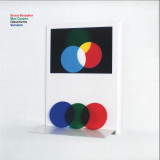
Laurel Halo, Donato Dozzy and Teheran sound artist Tegh give us their "Glassforms Versions"alongside a new edit by Max Cooper. The works of Philip Glass are reflected and refracted in a myriad of ways by some of the most renowned electronic artists alive, making for a blissful, multi-dimensional listening experience.
Textextext - (add your write up)
With "Glassforms", Max Cooper and Bruce Brubaker set out on an intimate, nuanced exploration of the works of Philip Glass. The resulting recordings, developed in a fluctuating exchange between the American pianist and the Irish scientist-artist, are an astounding testament to the innovation that artistic collaboration can achieve and what depths are yet to discover in Philip Glass' compositions. The two artists did not just rework, but fundamentally rewired the original songs using algorithmic software to process and augment the musical data it received from Brubaker's piano live on stage.
When approaching his remix, Donato Dozzy also tapped into that inspiration to create something new rather than just reworking it, which is one of the core motives that emanates from "Glassforms". The Italian producer and label owner is known for his drive to explore: he develops installations for public spaces and museums, uses obscure musical instruments and collaborates with classical singers or visual artists. "I chose "Two Pages" for it's hypnotic feel in the notes repetition", he says, "but I did not want to merely sample the piano, but instead ask someone I trust and admire to carve it from scratch and even go further." So he followed the lead of Brubaker and Cooper and teamed up with the renowned Italian percussionist and jazz musician Daniele Di Gregorio to completely rewire "Two Pages" into a gorgeous piece of endlessly modulating ambient electronica.
Laurel Halo, the second remixer on "Glassforms Versions", does not need a long introduction either: the American musician is at the forefront of electronic music in 2020, a bright star today after releasing her debut "Quarantine" on Hyperdub in 2012. Her remix of "Opening" brings to mind the string section of an orchestra tuning their violins before the performance - forever. They glide in and out of tune, sometimes individually, then together, then are accompanied by keys that are most likely a ghostly representation of Brubaker's piano, sampled and pitched down, but sound almost jazzy in the context of Halo's remix. It's a blissful listening experience, calling to mind her recent collaboration with cellist Oliver Coates on "Raw Silk Uncut Wood" and showing a deep understanding of Philip Glass' work.
Sound artist Tegh is the third on the remix bill - the electronic musician from Teheran delivers his take on "ƒTwo Pages", once again showcasing how versatile, how inherently complex the works of Philip Glass are. They can be interpreted in a myriad of ways - Tegh's version is a bounding, brooding piece filled with raw energy that feels like it is performed live, just for you, every single time you listen. His version is, at first, much more focused on the underlying moods, electronic undercurrents of the original than Dozzy's version, and yet, when the piano finally does break through, it becomes clear that we are listening to Philip Glass, reflected manifold: through the piano of Bruce Brubaker, the synths of Max Cooper, and then again through the mind of the artist Tegh.
Concluding the new "Glassforms Versions" is a previously unheard edit of "Two Pages". It's difficult to edit a piece of minimalistic beauty without losing it's essence, but Max Cooper - after many efforts and close conversations with Bruce Brubaker - managed to bring these shorter edit into a satisfying, conclusive form.
The second offering by Julie Carpenter’s textural orchestral entity Less Bells takes its title from a storied strain of decorative objects worn in remembrance of lost loved ones: Mourning Jewelry.
The album shares a similar mood of devotional pageantry, stirring ornamental laments born from a need to “create beauty out of grief.” Utilising an amalgam of strings, synthesisers, and choirs, the pieces ascend and descend in grand, glimmering arcs, ebbing from passages of “baroque complexity” to expanses of haunting emptiness. Certain songs also skew more overtly western than ever before, deeply reverbed plucks of banjo refracted against glowing horizons of sunrise drone: Americana gone ambient.
Furthering the music’s mystic intentionality, the track titles comprise “the major arcana of a tarot deck from an alternate universe,” lorded over by the “Queen Of Crickets,” ruler of “The Gates,” “The Fault,” and “The Fang.” Even so, the record requires no psychic divination to glean its fragile majesty, its muted tumult of mirage and melody. The beauty it possesses is too blatant, and bountiful.
Steve Von Till has charted an extraordinary musical path over the last several decades, from his main duties as singer and guitarist of the boundary-breaking Neurosis to the psychedelic music of his Harvestman project and the gothic Americana he's released under his own name. But No Wilderness Deep Enough is truly like nothing you've ever heard from him before—an album that's devastatingly beautiful and overwhelming in its scope, reminiscent of the tragic ecstasy of Nick Cave and the Bad Seeds' recent work as well as the borderless ambient music pioneered by Brian Eno, late composer Jóhann Jóhannsson's glacial compositions, and the electronic mutations of Coil.
FOR FANS OF : MARK LANEGAN/MICHAEL GIRA/NICK CAVE.
Over the course of recent time, an aching, growing void has developed where our normal way of life has resided. Uncertainty abounds, and Steve Von Till's No Wilderness Deep Enough provides a voice of existential wisdom and experience to offer comfort and perspective in an era of uncharted territory. These six pieces of music shape a hallucinatory landscape of sound that plumbs the depths of the natural world's mysteries and uncertainties—questions that have vexed humanity since the dawn of time asked anew amidst a backdrop that's as haunting as it is holistic.
Von Till’s fifth solo album is a swirling and iridescent blend of ambient, neo-classical, and gothic Americana that swan-dives into the darkness of modern life, with the resulting emergence a sonic document of rural psychedelia that transcends the physical world—towards a greater spiritual acceptance that connects naturalism, spiritualism, and the corporeal form.
With a foundation of simple melancholy piano chord progressions embellished with mellotron, cello, french horn and electronic treatments Von Till's scorched ache spreads across the terrain of No Wilderness Deep Enough like a brushfire, adding a tactile level to his sonic creation as well as an inviting level of friction to the burning beauty painted across the album's framework.
With a foundation of simple melancholy piano chord progressions that came to fruition during jetlagged nights in his wife’s childhood home in Germany, No Wilderness Deep Enough was further embellished with mellotron and electronic treatments in Von Till’s home studio in North Idaho. Viewing the emerging result as an ambient instrumental album, he consulted friend and engineer Randall Dunn (Marissa Nadler, Earth) about adding live cello and french horn and piano in a proper studio. After enlisting Brent Arnold on cello and Aaron Korn on french horn, he challenged Von Till to sing over the music and make it his next solo album—which is exactly what happened, with final work being completed at Tucker Martine’s (the Decemberists, Neko Case) Flora Recording and Playback in Portland.
2020 Re-issue of Keith Kenniff's debut under his Goldmund moniker. Originally only released on CD in 2005 via John Twells' Type Recordings, this album of rare and unusual minimalist beauty is now presented as a vinyl edition for the first time.
Multi-instrumentalist Keith Kenniff is a busy man. He has appeared as Helios on a number of acclaimed releases, including Deaf Center’s ‘Neon City EP’, and released a debut album ‘Unomia’ on Merck records which has appeared on many best of 2004 lists. All this while studying at the prestigious Berklee College of Music, and playing drums, guitar or contributing production to a host of amazing musicians. Kenniff lives and breathes music, something that is very obvious when hearing tracks under any of his pseudonyms.
As Goldmund, Kenniff has disregarded the electronic elements of his music almost entirely in favour of just a piano, a microphone and occasionally a guitar. ‘Corduroy Road’ is thirteen tracks of pure recording, the sound of the piano being opened and the feet on the pedals, the sound of fingers pressing lovingly onto the keys. This is a record of rare and unusual beauty, so shocking and yet unpretentious in its simplicity. When the guitar does emerge from beside the delicately touched piano, it serves as a balancing point for the record. Weaving in and out of the melodies, it adds another layer to what is already incredibly moving music.
‘Corduroy Road’ is rooted in Kenniff’s love of folk music from the American Civil War. We can hear this directly from his rendition of Civil War era classic ‘Marching Through Georgia’, but the influence carries throughout the record. There is an unheard voice which propels each track through history, maybe the ghosts of dying soldiers whispering in a long forgotten bar. Every haunting note drifts deep into the psyche and is lost in the ether of nostalgia. In this way it is a concept recording of sorts, it certainly has a narrative and has to be listened to in sequence. The story has clear themes; loss, history, friendship, camaraderie, forgiveness and hope, all clearly marked out by musical segments. It is no surprise that Kenniff’s passion for cinema shines through so strongly.
It would be hard to draw comparisons to music so rooted in folk traditions, but the music evokes traces of Ryuichi Sakamoto, Mark Hollis, Keith Jarret or even Eno’s more piano based compositions. Yet influence seems unimportant when listening to this deeply personal work. Just let it sink in and drift into the psyche.
Pleamar(Spanish for high tide) is the first collaborative release between Chancha Vía Circuito and El Búho for Wonderwheel Recordings, and stands as one of the most refreshing EP's within the Latin American downtempo electronic genre.
On this release the vision of both artists is united as one. This unity is reflected through "Real Fun, Wow!"'s artwork, presenting an image of a centered eye, reminiscent of historic drawings from tide studies. The representation of Earth, with a central circle surrounded by two ellipsoids that rotate and align in perfect harmony, mirrors the meeting of the two producers, the moment when the seawater reaches its apex andPleamaroccurs.
Like a metamorphosis that - without knowing it - we had been waiting a long time for, the EP reconstructs Pedro and Robin's encounters over the years. It transports us into the history of migrant sounds, the salvaged sound of floral jungles, high mountain forests and the ocean deep. We hear a sonic beauty filled out by deep personal stories - four humble and honest tracks that demonstrate the fusion of these artists and both them and the genre into new territory.
Starting with "Oruga"'s deep ambience, dub atmospheres and space echo reverberations, the album follows this line of reverberated rhythms and relaxed percussion lines throughout, carrying us along with a pulsating, deep, natural tempo. "El Mago Georges", perhaps the Pleamar'sjewel, is bursting with life - impactful depth and perfectly tuned melodies yet tribal and delicate at the same time. "Murga del Viento'' recalls another meeting of these two minds: El Búho's much-loved remix of "Sueño en Paraguay" a beautiful track from Chancha Vía Circuito ("Amansará" 2014). Here the whistle meets the owl from the previous track and the two birds take us a step forward in this collaboration with chords superimposed on a haunting bass. The release ends with "Una Pulgada de Silencio", a track of cosmic synthesizers, trickling water samples and the voice of argentine folk singer Gus Goncalves. Through Pleamar we come to find a much needed peace and clarity hidden beneath the rolling waves, a deep-sound escape to get lost in.
The Soulpop Continuum – by Arno Raffeiner
Six songs, one sound signature, one vision. Supreme Beats Series by Drei Farben House is an album
that firmly stands in the tradition of the big records of the disco era: a vinyl disc full of kicks and licks,
just as much as two sides in amazing sound quality can hold.
The album is the latest work of Michael Siegle, the Berlin-based producer and owner of Tenderpark
Records. 13 years after Drei Farben House's first full-length on the acclaimed Force Tracks label, it
features contributions by singer and songwriter Mavin and none other than Robert Owens who's voice
shaped house music forever. The trademark sonic elegance of Drei Farben House blends perfectly
with the timbre of the man behind Fingers Inc.'s Mysteries Of Love. Siegle's work as a producer is not
so much about turning this rich heritage upside down, but about refining it and creating a space within
that realm that's very much his own.
The title of the opening song with Owens states it: I’m Remaining Here. And Supreme Beats Series
invites you to come over and stay there, too, in a refuge of class and funkiness. The record offers
dense layers of rhythm, vintage keyboard sounds, chucking guitar, and vocal samples that indulge in a
many-voiced conversation. Not to forget the prominent, singing rather than walking bass lines
performed by the hands of Michael Siegle himself with his bass guitar.
New Release Information
You could think of Supreme Beats Series as a cross-section in time and space. It allows you to take a
closer look at the here and now of a much bigger picture, both aesthetically and socially. Siegle uses
the vocabulary of house music in a way that transcends its conception as merely a genre and speaks
of the historic evolution and the profound roots of this music as a movement. His record takes
inspiration from 60s Motown hits as well as the blue eyed soul of the 80s, you can discover influences
ranging from Philly's pre-disco craze to new jack swing and on to the heyday when house-pop divas
stormed the charts. By drawing these lines, Siegle deliberately opens up the space of a visionary
Soulpop Continuum.
In the 1950s, the American issue of Vogue magazine had their say about Coco Chanel's work and its
ever-lasting impression on fashion and design. They claimed it was all about “infinite variety within
narrow limits,“ and meant that as a compliment, of course. Michael Siegle likes to think about Drei
Farben House in a similar way. And you should, too.
Info about the artwork:
As far as the cover artwork of 'Supreme Beats Series‘ is concerned, the release of Drei Farben
House’s new album shows the second part of an image series which has been started with TDPR
release # 021 and which revolves around architectural photos taken by Achim Valbracht. Tenderpark
art director Till Sperrle and photographer Achim Valbracht like these pictures of various commercial
buildings erected in Berlin in the 1990s to be seen as a critique of investor-driven architecture which
has been dominating Berlin for several decades now.
The fascination of these pictures lies in their ambivalence of staging a normalised and globally
standardised kind of beauty, but at the same time revealing a strong sense of isolation - noticeable not
only but also in the absence of human beings. This new series of images is to some extent a
continuation of art director Till Sperrle's and label manager Michael Siegle’s interest in architectural
photography. However, at the same time the photo series also embodies a new angle on the subject
since all previous picture series on Tenderpark had been an affirmation of socially progressive
architecture which expressed a longing for socio-cultural utopia.
- A1: Ich Will Dir Helfen
- A2: A La Manière (With Roya Arab)
- A3: Ondine
- B1: Aspiration (With Mona Soyoc)
- B2: One Of These Days (With Hafdis Huld)
- B3: Théorème
- B4: Mortel Battement / Nocturne (With Alain Bashung)
- C1: Organique
- C2: The Watcher (With Mona Soyoc)
- C3: Qu’est-Ce Qui M’a Pris (With Philippe Poirier)
- D1: Xr 116 / Messe Rouge
- D2: Untitled
- D3: Ondine (Alt Take)
- D4: Piasong
The sensitive mountain » (la montagne sensible) is the nickname Alain Bashung came up with for Arnaud Rebotini. At the height of his fame, after the success of Fantaisie Militaire in 1998, Bashung readily agreed to create an album with Rebotini. The two men didn’t know each other; their record label had introduced them. Bashung brought in “Mortel Battement” and “Nocturne,” two poems by Jean Tardieu, which he recited in a voice simultaneously warm and flat, and Arnaud produced an impressionist soundscape that ended with an apocalypse of metal. Bashung was so proud of their collaboration that he offered to give several interviews to promote the record. Today, listening back to this moving Léo Ferré influenced "talking singing" exercise, it’s hard not to hear the template for L'Imprudence, the album that Bashung went on to record with Rebotini two years later. In a similar way, the album Organique sparked a productive partnership between Rebotini and filmmaker Robin Campillo, which resulted in their being awarded a César for Best Original Music in 2018. The director, who trusted Rebotini to create the soundtracks for his films Eastern Boys and 120 Beats per Minute, never kept his love for the 2000 record a secret.
Yet it’s an understatement to say that when it was released, Organique was not in the spirit of times. That year was all about the French touch. The funky samples of Modjo’s “Lady” and Superfunk’s “Lucky Star” ruled the sweaty dancefloors. Although Rebotini was familiar with the electronic scene, he had something else in mind when he set about creating Organique. Under his own name or under the pseudonyms Aleph, Avalanche, Black Strobe, Maison Laffitte, and of course Zend Avesta, he had already released several quite bizarre and experimental techno, house, or jungle maxi singles on pioneering labels like P.O.F., Source, and Artefact, run by his friend Jérôme Mestre’s, whom he had met back when both were working as record salesmen at Rough Trade’s ephemeral Parisian store. It was at Artefact, still financed at the time by Barclay and Universal, that he naturally proposed this record project, which was a bit "different." It was his first real album.
Arnaud Rebotini has never hidden his love-hate relationship with the electronic scene. He’s a fan of rave music, Rex, and later Pulp, but he listens mostly to metal and contemporary music, mainly American minimalists such as Terry Riley, Philip Glass, Steve Reich. He wanted to mix this genre with a more French aesthetic inspired by Debussy, whose unconventionality fascinates him. From the first suspended guitar note of Organique, you can pick up another influence, possibly poppier. In the style of Mark Hollis, the erratic leader of Talk Talk, whose only solo album’s silences and dissonances left their mark two years earlier, we hear the fingers touching the keys of the clarinet on “Ondine.” The instruments have presence, character. Nothing is smooth. Everything is organic.
Although it’s sometimes labeled as electronica because of Rebotini’s career, there’s nothing digital about Organique. No "pro tools" editing or samples, only programmed drums and some synth layering. And his guest vocalists. Playing the role of electro producer, he invited Bashung, of course, to join him on the album, but also Roya Arab, who Rebotini first spotted while she was playing in Archive, and her sister Leila, Gus Gus alum Hafdis Huld, Kat Onoma’s Philippe Poirier on the “Samuel Hall” inspired track “Qu’est ce qui m’a pris,” and former KaS Product member Mona Soyoc.
The frustration of a tour where he had "little to do on stage," the desire to sing himself, and the creation of the Black Strobe project, a haunting mix of blues and rock, stopped Zend Avesta from putting out another album. Eighteen years later, the Organique we rediscover today has lost nothing of its strangeness, nor beauty. When it came out, Bashung said, "What is interesting for a musician is to feel that you have a piece of wasteland in front of you, something to clear.” That remains true today.
Ever since his widely acclaimed debut LP "Migrations" was released in 2006, tone color has always been an important aspect of Emanuele Errante's music. Drawing from both electronic and acoustic sources, his compositions paint impressionistic vignettes with sonic intensities.
His fourth LP "The Evanescence of a Thousand Colors", his second solo release on the Berlin-based Karaoke Kalk label, deals more explicitly with color than before. The album's title plays with the double meaning of term and was inspired by a TEDx Talk by the US-American scientist Pratyusha Pilla on the subject of colorism, i.e. discrimination based solely on skintone. "I felt like I wanted to say something about the shameful racist regurgitation that we are experiencing in almost all the countries that claim to be the champions of civilization," says the Italian composer about the topic that informed his new album. "Pratyusha lit a light in me." In fact, a passage of her lecture is sampled on the album's centerpiece "Beauty", making Pitta a protagonist of the album on which voice can be heard loud and clearly.
Errante's music feeds on gentle guitar sounds, classical instrumentation, field recordings, and electronic elements that range from rhythmic ambient to granular noise. The eight tracks at times recall the early works of Oval and Fennesz or even Aphex Twin while showcasing the Italian's trademark approach to electroacoustic minimalism. As a follow-up to Errante's recent collaboration album with Dakota Suite and Dag Rosenqvist on Karaoke Kalk, the sonically rich soundscapes of "The Evanescence of a Thousand Colors" again highlight the importance of listening to one another - they are an almost wordless appeal for a more colorful world.
- A1: Stamkoko -Izintombi Zesi Manje Manje (1965)
- A2: Udali - Maphela (1960)
- A3: Sabela - Maphela (1960)
- A4: Usana Lwam - Mississippi Brothers & Beauty Diloane (1940)
- A5: Ukhiye - Susan Gabashane & Her Honeybees (1960)
- A6: Ukuhlupheka - Susan Gabashane & Her Honeybees (1960)
- A7: Umsakazo E Grahamstown - Alabhama Kids (1960)
- A8: Lizzy - Mississippi Brothers (1940)
- A9: Asinamali - Alabhama Kids (1960)
- B1: Baboon Shepherd - Black Duke & Peter Makana (1950)
- B2: Battle Of The Flutes - Black Duke & Peter Makana (1950)
- B3: Shukuma Duke - Black Duke (1950)
- B4: Duke Blues - Black Duke (1950)
- B5: Black John - Peter Makana (1950)
- B6: Blood Mixture - Peter Makana - (1950)
- B7: Egoli Zinyozi - Alfred Dlezi & Dlamini (1950)
16 early vocal & jazzy tunes from the Golden Age of Jive & Kwela in South Africa. Released originally on fragile shellac discs only. Shellac is a very delicate material but the music survived thanks to the archives of ILAM. A truly great source of South African music is being preserved here for new generations, to inspire young and hopeful musicians and singers from all over the world. 180gram vinyl.These pearls of musical genius were recorded in the glory years of jive and kwela, the years 1940-1965 . On side A it is not difficult to recognise the similarities to American popular music like R&B and small combo close harmony singing.
But most of all notice that typical South African swing, that jive, that incredible smooth form of African jazz on side B; Kwela!
The rarest and most treasured finds are collected here, some with the original spoken intro's, 'sketches' as these were called. Characteristic conversations between the musicians, often in a humoristic slang, always extremely funny.
Now available as the fourth issue in the series 'Township Jive & Kwela Jazz'.