
pré-commande02.08.2024
il devrait être publié sur 02.08.2024
24,58 €
il devrait être publié sur 02.08.2024
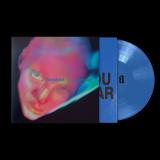
Fontaines D.C. announce their fifth studio album, Dopamine Chamber, released on 16th October via XL Recordings. Produced by James Ford, it is the follow-up to 2024’s UK platinum-certified Romance – and the sound of a band moving decisively away from the guitar language of their early records into something colder, stranger and more synthetic. It arrives today alongside lead single “Marianne” and its accompanying video, directed by Dave Meyers.
Dopamine Chamber arrives like a constellation behind undulating sighs of smog: potent balladry, anthemic melodies glinting through the murk. In a world tipping towards collapse, it asks how pleasure mutates amid peril—and what our pursuit of it reveals about us. Across the album, Fontaines D.C. – Grian Chatten, Carlos O’Connell, Conor Curley, Conor Deegan and Tom Coll – move between gratification and dread until the two meld together, reflecting the overwhelm of artificial intelligence, environmental collapse and political violence all riding the same algorithms as memes, jokes and celebrity culture. “The album itself is a dopamine chamber,” says Chatten. “You step inside and we test these different mind- or mood-altering pieces of music on you.”
Where Romance held its tension in balance, this record tips it. “I think Romance was maybe 60 per cent human and 40 per cent corrupted by automation, and a loss of feeling,” says Chatten, who spent time among the faded grandeur of Venice, Vienna and Sicily in search of lyrical inspiration. “This one feels more like 60 per cent corrupted — the mask is wearing the face a little more.” He resisted any pull towards easy optimism: “I felt it would be more powerful to leave the hope out and reflect the ugliness honestly. This one needed to feel more like a catastrophic warning.”
“Our albums have always questioned a sense of place,” says bassist Conor Deegan. “First Dublin, then being away from Dublin, and then trying to find the romance elsewhere. On this record, the question became: where do you escape to?” Into the self, perhaps – or hedonism, fantasy, cosmetic perfection, eternal youth or the endless refresh of a screen.
Fontaines D.C. have spent five albums refusing to repeat themselves – from Dogrel (2019) through A Hero’s Death (2020), the No. 1 Skinty Fia (2022) and the anarchic, kaleidoscopic Romance (2024). Dopamine Chamber is their most radical turn yet: cold synthesiser tones, marching drums, samples and triggers, several songs with no guitars at all, and the swooning strings of 1960s Italian pop pulled into something synthetic. For guitarist Conor Curley, the aim was to break from the band’s own reference points: “I was trying to find stuff that pointed into the future.” It was made with James Ford between London, the English countryside and Palermo, where Chatten recorded vocals in a makeshift booth built from mattresses and cushions.
“There’s a poignant sense of us being on the brink of some other kind of form of humanity, or non-humanity,” says Chatten. For their fifth album, Fontaines D.C. have built the chamber. What happens to the listener inside it will be the experiment.
il devrait être publié sur 16.10.2026
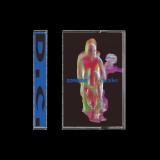
Fontaines D.C. announce their fifth studio album, Dopamine Chamber, released on 16th October via XL Recordings. Produced by James Ford, it is the follow-up to 2024’s UK platinum-certified Romance – and the sound of a band moving decisively away from the guitar language of their early records into something colder, stranger and more synthetic. It arrives today alongside lead single “Marianne” and its accompanying video, directed by Dave Meyers.
Dopamine Chamber arrives like a constellation behind undulating sighs of smog: potent balladry, anthemic melodies glinting through the murk. In a world tipping towards collapse, it asks how pleasure mutates amid peril—and what our pursuit of it reveals about us. Across the album, Fontaines D.C. – Grian Chatten, Carlos O’Connell, Conor Curley, Conor Deegan and Tom Coll – move between gratification and dread until the two meld together, reflecting the overwhelm of artificial intelligence, environmental collapse and political violence all riding the same algorithms as memes, jokes and celebrity culture. “The album itself is a dopamine chamber,” says Chatten. “You step inside and we test these different mind- or mood-altering pieces of music on you.”
Where Romance held its tension in balance, this record tips it. “I think Romance was maybe 60 per cent human and 40 per cent corrupted by automation, and a loss of feeling,” says Chatten, who spent time among the faded grandeur of Venice, Vienna and Sicily in search of lyrical inspiration. “This one feels more like 60 per cent corrupted — the mask is wearing the face a little more.” He resisted any pull towards easy optimism: “I felt it would be more powerful to leave the hope out and reflect the ugliness honestly. This one needed to feel more like a catastrophic warning.”
“Our albums have always questioned a sense of place,” says bassist Conor Deegan. “First Dublin, then being away from Dublin, and then trying to find the romance elsewhere. On this record, the question became: where do you escape to?” Into the self, perhaps – or hedonism, fantasy, cosmetic perfection, eternal youth or the endless refresh of a screen.
Fontaines D.C. have spent five albums refusing to repeat themselves – from Dogrel (2019) through A Hero’s Death (2020), the No. 1 Skinty Fia (2022) and the anarchic, kaleidoscopic Romance (2024). Dopamine Chamber is their most radical turn yet: cold synthesiser tones, marching drums, samples and triggers, several songs with no guitars at all, and the swooning strings of 1960s Italian pop pulled into something synthetic. For guitarist Conor Curley, the aim was to break from the band’s own reference points: “I was trying to find stuff that pointed into the future.” It was made with James Ford between London, the English countryside and Palermo, where Chatten recorded vocals in a makeshift booth built from mattresses and cushions.
“There’s a poignant sense of us being on the brink of some other kind of form of humanity, or non-humanity,” says Chatten. For their fifth album, Fontaines D.C. have built the chamber. What happens to the listener inside it will be the experiment.
il devrait être publié sur 16.10.2026

From playing chaotic house parties in their home city of Oxford to becoming major festival headliners across Europe, Foals' trajectory has been remarkable. They've earned critical acclaim (NME and Q Award wins, plus Mercury Prize, Ivor Novello and BRIT Award nominations) and fan devotion (1.7 million sales of their four Gold-certified albums) in equal measure. And while the majority of contemporaries have fallen by the wayside, Foals continue to hit new peaks.
After more than a decade in the game, Foals again embrace that love for the unconventional with the bravest and most ambitious project of their career: not one, but two astonishing new albums: 'Everything Not Saved Will Be Lost'. A pair of releases, separate but related, they share a title, themes and artwork. 'Part 1' will be released on March 8th, with 'Part 2' following later in the year.
'They're two halves of the same locket,' frontman Yannis Philippakis explains. 'They can be listened to and appreciated individually, but fundamentally, they are companion pieces.
Fundamentally tethered but possessing their own personalities, the two bodies capture the most compelling, ambitious and cohesive creations they've ever produced. Eager to break the traditional pop song structure which they felt they were becoming increasingly tapered to, the 20 tracks defy expectation. There are exploratory, progressive-tinged tracks alongside atmospheric segues which make the music an experience rather than a mere collection of songs. Yet the band's renowned ability to wield relentless grooves with striking power and skyscraper hooks also reaches new heights.
The album's lead single 'Exits' is a case in point, featuring Philippakis conjuring the image of a disorienting world via a contagious vocal melody. It's a fresh anthem for Foals' formidable arsenal, but also an ominous forecast.
'There's a definite idea about the world being no longer habitable in the way that it was,' says Yannis. 'A kind of perilousness lack of predictability and a feeling of being overwhelmed by the magnitudes of the problems we face. What's the response And what's the purpose of any response that one individual can have'
'Exits' signposts what to expect thematically from both instalments of 'Everything Not Saved Will Be Lost'. The title is a warning that anything - from the tiniest fleeting moment of inspiration through to the planet's own biological diversity - can be under threat of being irrevocably erased.
It's a theme that permeates throughout the album's material, as Foal mirror the public neuroses that have been provoked by our current cultural climate. Paranoia of state surveillance Fear of environmental collapse Anxiety over Trump's next potentially cataclysmic move It's all there in these apocalyptic songs.
'Lyrically, there are resonances with what's going on in the world at the moment,' summarises Yannis. 'I just feel like, what's the utility of being a musician these days, if you can't engage with at least some of this stuff These songs are white flags, or they're SOSs, or they're cries for help... each in a different way.'
The new albums' journeys began as the 'What Went Down' era ended. Founding bassist Walter Gervers departed on amicable terms after playing the Festival Paredes de Coura in Portugal in August 2017. Foals felt that he couldn't be replaced - a decision that ushered in a period of recalibration, reorganisation and, ultimately, rejuvenation.
After taking a little time out, Foals - completed by Jimmy Smith (guitar), Jack Bevan (drums) and Edwin Congreave (keys) reconvened - with Yannis on production duties, who, together with Edwin, also covered the bass parts. They began by writing in a rehearsal space before exporting those sketches into the recording phase at 123 Studios, Peckham, with the assistance of engineer Brett Shaw. They'd repeat the cycle between the two spaces, effectively creating an ongoing feedback loop as they sought to push every new idea to the finish line.
1 x 12" black vinyl 180gsm
- label 4/c
- discobag on reverse board with matt varnish
- gatefold on reverse board with matt varnish
- shrinkwrap
Disponible en stock et prêt pour l'expédition

Limited to 250 copies !
The Deadheads had never had much luck with spaceships. Their first mission had ended in a catastrophic engine failure, leaving them adrift in deep space for weeks. This time, their craft was hardly more reassuring. A hodgepodge of outdated technology and shoddy repairs made it more of a floating death trap than a reliable cruiser. As they began their descent toward the strange planet, the hull creaked and rattled, sending a wave of dread through the crew.
"Hold on," Matt's voice crackled over the intercom, without much conviction, as if he himself doubted they would make it out alive. Outside, a thick, grayish atmosphere swirled ominously, while the planet's gravity became far stronger than anticipated.
“Fuck, we’re gonna burn at the entrance!” M yelled, his hands flailing on the console as sparks flew from the control panel. The ship’s sensors were completely jammed, and the navigation system flickered intermittently, like a dying light. Below, the planet’s surface was a tangle of lava rivers and jagged rock formations, the kind of place no sane person would ever land. But the Deadheads had never pretended to be. They lived in a state of constant emergency.
As the descent intensified, the alarms blared. On the bridge, the screens lit up with red warnings and flashing messages: "SYSTEM ERROR," "UNSTABLE TRAJECTORY," "SUIVITY SYSTEM COMPROMISED." The lines of code scrolled by too quickly to be read, while a mechanical voice repeated relentlessly: "Imminent impact. Structural integrity at twenty percent."
The once pristine shell of the vessel began to disintegrate, with shards of metal breaking away and disappearing into the atmosphere.
With a final, piercing screech, the ship crashed onto the planet's surface, sending up a cloud of dust and debris. The crew was violently thrown from their seats, stunned but barely alive. They struggled to their feet amidst the wreckage, the ship reduced to a charred shell around them.
"Well," M said, wiping the dirt off his suit with a grimace, "at least the air is breathable." Matt scanned the hostile expanse stretching before them and smiled slightly. "Perfect. Let's hope we have better luck with the planet than with our ships."
With that, the Deadheads gathered their equipment and headed into the unknown, while the remains of their ship slowly sank into the unstable soil of the planet.
Commandez maintenant et nous commanderons l'article pour vous chez notre fournisseur.
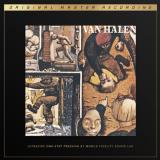
The song titles on Van Halen's aptly titled Fair Warning don't lie. The likes of "Unchained," "Mean Street," "Push Comes to Shove," "One Foot Out the Door," and more indicate the mood the band channels on its double-platinum 1981 record — the nastiest, darkest, and fiercest album of the group's storied career. For the fourth time in four years, Van Halen throws down the gauntlet to all challengers and emerges victorious.
Sourced from the original analog tapes, pressed on MoFi SuperVinyl at Fidelity Record Pressing, and strictly limited to 5,000 numbered copies, Mobile Fidelity's UltraDisc One-Step 180g 45RPM 2LP set plays with unfettered clarity, dynamics, and immediacy. Benefitting from superb groove definition, an ultra-low noise floor, and dead-quiet surfaces, this vinyl edition captures what went down in the studio with tremendous realism and involving presence.
Taking a more controlled approach in the studio and still completing everything in less than two weeks, Van Halen and producer Ted Templeman relied on studio amplifiers to direct the sound. Further diverging from the live-on-the-floor approach of its earlier albums, the ensemble also employed overdubs to great effect. The result: Dense, stacked architecture that underlines the hard-hitting tenor of the songs — and which comes alive like never before on this reference edition that looks as good as it sounds.
The premium packaging and gorgeous presentation befit the reissue's select status. Housed in a deluxe slipcase, it features special foil-stamped jackets and faithful-to-the-original graphics that illuminate the splendor of the recording. Aurally and visually, it is made for listeners who want to immerse themselves in everything involved with the album, including the iconic cover art adopted from William Kurelek's haunting painting, "The Maze."
Isolated frames from Kurelek's childhood-inspired work — including a man bashing his head into a brick wall, a guy pinning down an adversary as he delivers bare-fist blows to his face and others watch with apparent glee, a boy tied down on a conveyer belt and being sent through the equivalent of a meat saw — adorn the front and back covers. The sunnier visual disposition of Van Halen's prior efforts gives way to something sinister and tortured, traits reflective of the music within. The band members, too, are visually depicted not in glamorous shots but in a serious black-and-white portrait in which the quartet is clad in black leather jackets.
Tough, aggressive, stark: Fair Warning comes on like a series of bare-knuckled punches to the solar plexus and boasts lyrical narratives to match. Though not a concept record, the concise album revolves around themes of roughing it on the streets and struggling to survive amid dim prospects. Singer David Lee Roth reportedly penned many of the initial lyrics after traveling to Haiti and observing extreme poverty. The characters and situations populating Fair Warning reflect hardscrabble existence, last-chance desperation, and underlying danger.
Witness the crazies, poor folks, and hunters of “Mean Street”; the former prom queen turned pornographic actress on “Dirty Movies”; the menace and vice of “Sinners Swing!”; the streetwise hustle of “Unchained”; the isolation and alienation of “Push Comes to Shove”; the desire for escape on “One Foot Out the Door”: A carefree California beach party Fair Warning is not.
Having said he felt angry and frustrated during the sessions, guitarist Eddie Van Halen uses the forceful arrangements as a playground for his seemingly unlimited arsenal. Supported by a crack rhythm section and a hyped-up Roth, he performs with an almost impossible combination of punk-like intensity, technical finesse, lyrical fluidity, and unbridled emotion. The virtuoso was increasingly butting heads with Templeton and seeking a freedom in the studio he believed denied him.
No wonder he plays like a bat out of hell. Listen to the rapid-fire manner in which he slaps the high and low E strings on the 12th fret of his instrument on “Mean Street,” instilling the tune with funk flair and metal-spiked sharpness. For the pouty strut of “Dirty Movies,” Eddie Van Halen contributes slide guitar magic made possible after he sawed off the lower portion of a Gibson SG so he could reach further down the fretboard.
Related intensity, urgency, and daredevil momentum punctuate the surging “Sinner’s Swing!” A heavily flanged, delicately melodic introduction frames the attitudinal “Hear About It Later,” among the most creative arrangements of Van Halen’s career. And do riffs come any bigger or magnetic than those on the high-wire kick of “Unchained”? As for the out-of-left-field “Sunday in the Park,” an instrumental composed on an Electro-Harmonix micro-synthesizer: Who but Eddie Van Halen to supply creep factor in such an ingenious way?
Despite selling fewer quantities than Van Halen’s prior efforts, Fair Warning remains for many diehards the record that epitomizes all of the band’s immense strengths —Roth’s manic energy and tongue-wagging humor, Alex Van Halen’s rhythmic heartbeat-in-your-chest bombast, and Michael Anthony’s lucid bass lines included. Arriving when the New Wave of British Heavy Metal and new-wave movements were taking flight, it signaled a shot across the bow from a band determined to stay a step ahead and provide proof nobody could touch what it delivered.
More than four decades later, Fair Warning still sounds that alarm.
Cet article n'a pas encore été publié. Vous pouvez pré-commander le produit maintenant.

Recorded amidst the Vietnam War's turmoil and the tragic Kent State shootings of 1970, Alarm Clock was Havens' urgent wake- up call to a generation - a powerful warning against an overreaching government. This reissue includes two never- before- released tracks: ' Nobody Knows', recorded during the same sessions, and a deeply moving rendition of Graham Nash's 'Military Madness'. A testament to Havens' artistic integrity and commitment to social justice, Alarm Clock remains a timeless masterpiece. "Alarm Clock was just as the title suggested: a warning. It was also one of the few times I have used a song's title to name one of my albums.
Alarm Clock was being made in the context of the Vietnam War that was still raging. Four students protesting the war had been shot dead in May 1970 on the Kent State University campus in Ohio. Large crowds were gathering in many cities, pleading for the end to America's involvement, but the administration did not care about anything the public seemed to feel. The war would go on, regardless of public sentiment. We were seeing our government step way over bounds. Alarm Clock felt like a warning to awaken." - Richie Havens
il devrait être publié sur 12.12.2025

“sitting in the terminal at Barcelona airport, health safety warnings echo through empty architecture. feeling slow, and fast, out of sync with rituals and routines. structure and rhythm disintegrate into micro gestures appearing in random order, a daily psychedelia... amid all of the chaos and distraction in the last few years, it’s only through letting go that I've found solid ground to stand on.”
These are some of the experiences and reflections that gave shape to Slipstream, a hallucinatory mini-album by the artist PVAS and the fourth release on Objekt's label, Kapsela. Slipstream is an aural document of PVAS's interior life, conceived not as a grab-bag of DJ-friendly tracks (although it’s clearly inspired by the club) but as a single, delicately crafted artistic statement. The entire record is shrouded in a flickering haze, worn through by smudged breakbeats and wiry drum machines. “Wetland”, with its swampy percussion and crystalline arps, echoes T++ and Kraftwerk. The radiant incandescence of “Gathering Drift” recalls GAS or Monolake's “Hong Kong.” Sampled breakbeats dip and swerve asymmetrically through “Boba” and “Terminal”. Across the record, textures and voices are reshaped by PVAS's homemade algo-software, UMT, which, in PVAS’ own words, “reconstructs one audio file by sampling another, resulting in output that merges their aesthetic qualities, creating rhythm with non-rhythmic sound files and abusing the stereo field.” But the most striking union of technology and poetic self-exploration comes at the end of the record, in the title track, from words murmured through a classic vocoder:
“when i stop framing myself as a boundaried stone
immovable, and powerful, and heavy
when i stop figuring my deepest space as my own
something which i am solely responsible
i surrender, i surrender”
PVAS is Jordan Juras, a Berlin-based artist who grew up outside of Windsor, Ontario. He has released solo EPs on Isla and xpq?, and is half the duo NUG (3XL, West Mineral Ltd.). In addition to developing music software professionally, he has used his UMT software on records by Lyra Pramuk and Dylan Kerr. Slipstream was recorded from 2022 to 2025.
Written and produced by PVAS
Mixed by TJ Hertz
Mastered by Anne Taegert at D&M
Artwork and design by Brodie Kaman
Commandez maintenant et nous commanderons l'article pour vous chez notre fournisseur.

Mit "Lieben wir" präsentiert OEHL ein intimes und packendes Konzeptalbum über die Liebe in all ihren Facetten – von Knutschflecken bis zu den Momenten, die unser Leben prägen. Ariel Oehl wagt Neues und bleibt sich treu: Sein "Gitarrenalbum" vereint handgemachte Klangwelten mit verführerischen Melodien, die zwischen Nostalgie und großer Emotion pendeln. Produzent Niklas Apfel sorgt für ein ausdrucksstarkes, organisches Sounderlebnis.Ein Album, das von Enttäuschungen, Glück und der Magie flüchtiger Augenblicke erzählt – Musik für Menschen, die etwas von Musik verstehen – und ein Herz haben.
- Ausstattung: Rot-transparentes Vinyl mit silberfarbiger Innentasche mit Songtexten & Herz
il devrait être publié sur 14.03.2025

2026 Repress
MOLA's music is the unadorned antithesis to a rosy world. She celebrates herself to death, pulls you into her inner chaos and does without the usual romanticising transfiguration of the merciless disorientation that catches up with you on the way home after the last cigarette.
MOLA knows better than anyone that she is a border commuter - and she has never made a secret of it. Perhaps it was fate that the course of events abandoned her shortly after her birth in Erba, Italy, in Germany's most austere metropolis. In Munich, where flying free and falling free are a little more complicated than in the cesspit of Berlin, where one would naturally place Isabella Streifeneder and her music if one didn't know better.
Temporarily reduced to intimacy, then escalating into iconic 80s "Purpel Rain" pathos, MOLA illustrates the emotional chaos that the inner dialogue of left and right brain triggers in her. Unconventional pop music that bundles the nonchalance of great soul anthems, the grace of the Italo-disco of the eighties and the ingenuousness of lascivious hip-hop bangers instead of trying to sound modern by force.
MOLA celebrates defeat, exposes life lies, criticises adulthood, documents radical mood swings. She balances along the abyss in her ball gown, jokes about things you don't joke about, praises and curses intoxication and love - "Vino Bianco no longer tastes like dolce vita, it only tastes like losing".
You can now see MOLA supporting Fatoni, Roy Bianco & the Abbrunzati Boys, Mayberg and Kaffkiez in a flurry of strobe lights after sold-out "nothing breaks me" shows in Munich, Cologne, Berlin & Hamburg. In addition to a festival season that couldn't have been more beautiful, they finally have a big tour of their own coming up for their next album, which will see the light of day in September.
After more than 40 festivals "Snow in Summer" on well-known stages like Lollapalooza Berlin, Rocken am Brocken, Puls Open Air, but also as support for Udo Lindenberg at the Hermann-Hesse-Festival, "Life is Beautiful", the darned second record, sounds almost cynical, ironic or simply naive? In the end, it doesn't matter, because when you are overcome by this spontaneous feeling that is far removed from any rationality, you don't ask any questions. It tastes like the melancholy of a summer in its last breaths, like the last drink of an uncompromisingly insane night.
There is sweating, pogoing and feeling together. Even where it hurts.
You are not just an onlooker or a silent spectator, but part of this empowering feeling of "we".
il devrait être publié sur 27.02.2025

All those creatures, standing there, making time. Fury eyes, golden dust on artificial fog. Dancing on glass, repetitive poems, looping long after the last loop looped away. Oriental acid, frenzied samples, low hanging film noir suspense. This is DALO. Or not. She is many. Dry maniac downbeat is her craft. Or dark-ish pop-not-pop. There is dub, trance, techno, too. She is known for releases on labels like ESP Institute, WARNING, or Tresor. She is part of bands like Init. She played them all, those clubs, that matter, and those that matter more. Live. Alone. As an artist. With a band. Here she comes with her first album. On the R.i.O. sphere. Her homebase. A trusted zone for experimentation. She brings “Duster”. Seven tunes twisted in different dreams. Fast, slow, veiled, enchanted, haunting trenchant. She sings. These songs. To dance. For a different, stripped-back trance. DALO. Her record longs for a stage. Exporting grace, face to face. A work like a mirror. Hypnotizing. A psychedelic portrait of a performer. Nuanced industrial veils ceremonial journey music. Claps, Jungle. Desolate vocal snippets. A whirlwind of words. All those chords, hanging there, kick drum time. Fury eyes, golden horns amid acid fog. Dancing on glass, cyclic synth-lines. DALO. Duster. A-round-and-a-around. Circulating the ritual.
Commandez maintenant et nous commanderons l'article pour vous chez notre fournisseur.

This November, American cult hero Dev/Null debuts on Trickfinger & Aura T-09's Evar Records with MICROJUNGLIZM, an 8-track album that explores the power and beauty of darkcore, jungle tekno and breakbeat rave. Chopped drums, hairpin turns and alluringly emotional pads open up a time portal between the past and the future, decorated with haunting samples and musical Easter eggs that show off Boston-based Dev/Null's deep history as a rave historian and scholar.
MICROJUNGLIZM's fantasy suite was written over the last year, arranged and sequenced entirely without a computer. Dev/Null fell in love with Teenage Engineering's PO-33 Pocket Operator – a portable, pocket-sized sequencer that he started using during his DJ sets to create special versions on the fly. The limitations of making entire tracks inside the PO-33 immediately suggested the sampling techniques and stylistic hallmarks of early jungle, already one of Pete's longtime obsessions.
"The PO-33 has some of the same low-fi sonic charm as retro gear used back in the day," Pete explains. "8-bit samples, 11khz mono sound, kind of like an Amiga computer. It's been really fun and exciting to have my own tracks to throw into sets – even if they're raw, unfinished 3-minute things which get played once and never again. A few of these tunes were done for my sets at parties thrown by Aura T-09 in L.A., so I'm happy they're coming out on her label."
Commandez maintenant et nous commanderons l'article pour vous chez notre fournisseur.
