Search:amon

Styles
All
Various - Federation Of Rytm I 2x12"

- 2026 repress -

SHDW & Obscure Shape launch new label Mutual Rytm with powerful eight-track V/A "Federation Of Rytm I", featuring VIL & Cravo, Lars Huismann, Grindvik and more.

Favourites for many within today's modern techno landscape, Stuttgart-based pairing Marco Blasi and Luigi Urban, aka SHDW & Obscure Shape, continue to grow their profile and position as artists leading the current new wave of techno. Having launched their first label From Another Mind in 2014, releasing material from themselves alongside remixes from the likes of Rodhad, James Ruskin and Dax J, early December welcomes the arrival of a new project and a second imprint to the fold, Mutual Rytm.

Showcasing a new dimension of techno and electronic music, celebrating originality and innovation by combining timeless cuts from the past with cutting edge sounds of the present and the future, the label will serve as a breeding ground for new artists alongside established talent and legends from the scene. Opening the imprint in style, the label bosses head up the first-ever release and the first V/A "Federation Of Rytm I" as they welcome a selection of new and established talent.

"Since the beginning of the global pandemic, we have been diving deep into the roots of our music and working on the aesthetics of our sound. That's when we realized that now is the right time to start a new project which differs from FAM, in both musical and artistic direction. The project will showcase a new dimension that aims to channel the authentic perspectives of both established and up-and-coming talents. With our new label, we want to give all artists the opportunity of musical freedom and expression of their versatility as producers. It is an honour to accompany the young artists on their careers, to see them grow and to help them in their development as musicians." - SHDW & Obscure Shape

The duos rolling opener "Conquest Of Paradise" quickly sets the tone and builds to reveal a classy and slick offering, combining rich stabs with tough drums and sharp hats, while Invexis keeps the tempo high as he weaves escalating synths and pacy kicks across "Elektronenwind". VIL & Cravo combine on the jacking and lively "Apolonia Loop", as eerie synths work amongst warped vocals across a tweaked out peak-time effort, before Alarico keeps the energy levels up throughout the relentless funk of "I'm Into You".

The second half of the package sees Lars Huismann enter the fray with the no-nonsense, snaking grooves of "Hyper Dub", with Nicolas Vogler's "Sauva Bite" fusing hypnotic tones with straight regimented claps for an intense yet playful ride through sounds and sonics. "Your Dry Lips" switches up the aesthetic as Grindvik journeys down a wormhole of metallic percussion and warping low-ends, before closing the show with authority via Stigmata's grinding and menacing offering "Gestas".

out of Stock

Order now and we will order the item for you at our supplier.

23,95

Last In: 15 days ago
Angelique Kidjo - HOPE!! (2x12")

Angelique Kidjo

HOPE!! (2x12")

2x12inch5026854805634
Parlophone
24.04.2026
  • 1: Bando (Feat. Pharrell & Quavo)
  • 2: Aye Kan (Feat. Ayra Starr)
  • 3: No Stopping Us
  • 4: Fall On Me (Feat. Pj Morton)
  • 5: Oyaya (Feat. Nile Rodgers & Iza)
  • 6: Superwoman (Feat. Dadju)
  • 7: I'm On Fire (Feat. The Cavemen)
  • 8: You Can
  • 9: Kakua (Feat. Diamond Platnumz)
  • 10: Sunlight To My Soul (Feat. Soweto Gospel Choir)
  • 11: For Me (Feat. Charlie Wilson)
  • 12: Big Heart
  • 13: Jerusalema
  • 14: Joy (Feat. Davido)
  • 15: Nadi Balance (Feat. Fally Ipupa, The Cavemen, Sheila Maurice-Grey)
  • 16: Malaika (Feat. Florent Pagny)

Global icon and five-time GRAMMY® winner Angelique Kidjo returns with HOPE!!, a revelatory 16-track collection that serves as a vibrant antidote to the times. Following her 2021 success Mother Nature, this album bridges continents and genres, featuring a star-studded lineup including Pharrell Williams, Quavo, Ayra Starr, Nile Rodgers, and Davido among other A-listers

Produced by Pharrell and Shizzi, and featuring songwriting by the legendary Diane Warren, HOPE!! is more than an album—it’s a global musical movement dedicated to the resilience of the human spirit.

pre-order now24.04.2026

expected to be published on 24.04.2026

38,61
Donald Beaman - Fog On Mirror Glass LP
  • 1: Glass Bottom Boat
  • 2: Paper Screen
  • 3: Awhile
  • 4: Fog On Mirror Glass
  • 5: Old Universe
  • 6: Makeshift Room
  • 7: Your Dreaming Eyes
  • 8: Valley Floor
  • 9: Usual Phantom
  • 10: Bamboo

Fog On Mirror Glass introduces a new aesthetic amongst Donald Beaman albums. After four albums of varied full-band arrangements, this album emerged as an idea to present solo performances in conversation with full-band work. The bulk of the songs were recorded in the same place they were written: Beaman’s living room. Long time bandmate and producer Kirt Lind set up a makeshift studio at Beaman’s house to record the guitar parts in the same room where they were written, using the same guitars on which they were first played.

Unfurling with a measured pace, the resulting album combines elegiac lyrics with elemental arrangements played with an almost jazz-like reverential expressiveness, calling to mind the works of Cass McCombs, Will Oldham, and Jake Xerxes Fussell. Album opener “Glass Bottom Boat” sets the tone for the album with just Beaman and his guitar – written during the final months of a decade-long stay in New York City, the song was finished upon his arrival back in California. Meanwhile the title track, long a staple in live sets, lands near the middle of the album to recalibrate the mood, featuring the ghostly guitar work of longtime collaborator Ken Lovgren. “Old Universe” lifts things up a bit, propelled by the brushwork of drummer Michael Nalin and the jaunty bass playing of Kirt Lind. Finally, the album ends much the way it began, with Beaman and his guitar on album closer “Bamboo”.

“The dictionary definition of less is more.” - ---- Mojo
“His ability to carve universal empathy from mundane domesticity is remarkable.” - ---- RNR Magazine
“...a collection of evocative scenes and vivid emotions sung to sparse musical arrangements in Beaman’s distinctive sonorous tones” - Americana UK
“...pure and simmering, like a tattoo dedicated to a long lost friend, slightly fading from years in the sun, a memory that will always bring a tear in those quiet reflective moments.” - Psychedelic Baby Magazine

pre-order now24.04.2026

expected to be published on 24.04.2026

23,49
Bobby Hamilton Quintet Unlimited - Dream Queen LP
  • A1: Pearl (Among The Swine)
  • A2: Priscilla
  • A3: In The Mouth Of The Beast
  • B1: Roll Your Own
  • B2: Dream Queen

RSD title from 2022 pressed again. Reissue of the sought-after deep/spiritual jazz album, the first time it’s been pressed from the master tapes. All analog lacquer by Bernie Grundman. Bobby Hamilton founded the band Anubis in Syracuse, New York, and they put out their awesome ‘Ecology’ single on Charles Bazen’s Salt City imprint. It’s a highlight on the Soul-Cal anthology Now-Again issued in 2012, something akin to Terry Callier and Gil Scott Heron’s most soulful works. Shortly after issuing that single, Bobby put together the Bobby Hamilton Quintet Unlimited and recorded and issued ‘Dream Queen’ in 1972. The last clean copy Bobby Hamilton had, he sold to the musician Jamie XX in 2021 for a princely sum. Few originals will ever surface again, its original run of 500 units having disappeared into the ether decades ago. This is your chance to hear a masterwork of deep, spiritual jazz lacquered directly from its original master tape in an all analog transfer by the legendary Bernie Grundman.

out of Stock

Order now and we will order the item for you at our supplier.

31,05

Last In: 22 days ago
Steve Kuhn - Steve Kuhn LP
  • A1: Pearlie's Swine
  • A2: Silver
  • A3: Time To Go
  • A4: The Heat Of The Moment
  • B1: The Baby
  • B2: Hold Out Your Hand
  • B3: The Meaning Of Love
  • B4: Ulla

180g Vinyl

The album features the group playing Gary McFarland arrangements of Kuhn's compositions, accompanied by a string section on several tracks, with Kuhn delivering stream of consciousness lyrics in an unplanned and largely improvised fashion in the studio. However, that wasn't the only surprising aspect to the session. Airto Moreira's appearance was more by chance than design, he having just popped by the studio, again, unplanned. The 'Steve Kuhn' album is all the stronger for these extemporaneous and serendipitous elements and showcases a band at the top of their game; tight and funky yet relaxed and flowing like molten gold, with stabs and washes of keyboard from Kuhn. Splashes of free playing enter the session, but the band never stray too far from a melodic and harmonious centre of gravity. Kuhn's deft keyboard skills provide melodic embroidery to the impressive rhythmic textures and tonal colours of Carter, Cobham and Moreira. As if the music wasn't enough, the album is given extra significance by the fact that, within a few months of the recording, McFarland would die after being mysteriously poisoned by methadone in a New York bar. In a sense, it is a valedictory album from McFarland, channeled by Kuhn and the band. It's among the hardest of Kuhn's albums to find so this reissue is most welcome. Luxuriate in the glow of Kuhn's Fender Rhodes and the pliant funky bass of Ron Carter; immerse yourself in the percussive interplay of Moreira and Cobham, a pairing that has rarely sounded so good. This is such an exquisite album; you will lose yourself in its delicate power and find yourself coming back to it again and again. "It's a beautiful picture, and it helped me to comprehend things, life a bit, you know. And as I'm thinking about it, I hope it does that for whoever listens to it too." - Thundercat, Musician Details: Heavyweight Vinyl 45 RPM Cut / Original glued prints on Thick Cardboard 700 gram / 2 Separated parts hand-glued / Glossy lamination / PVC outer / 30x60 cm insert printed on 300 gram DNS paper with interview to Steve Kuhn by Tony Higgins.

pre-order now24.04.2026

expected to be published on 24.04.2026

48,11
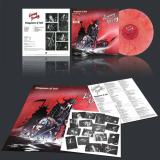
Living Death - Vengeance Of Hell LP
  • 1: You And Me
  • 2: Living Death
  • 3: Night Light
  • 4: My Victim
  • 5: Labyrinth
  • 6: Heavy Metal Hurricane
  • 7: Hellpike
  • 8: Riding A Virgin
  • 9: Vengeance Of Hell
  • 10: Watch Out! (Bonus Track)

When asked about the founding fathers of German thrash metal, band names such as Kreator, Sodom, and Destruction come to mind. Perhaps even Tankard. The name Living Death is usually not among them. There is a simple reason for this. Similar to the Swiss band Hellhammer, Living Death from Velbert were simply a tad too extreme for most fans and the press. Thorsten “Toto” Bergmann's truly shrill vocals and the poor production of the first two (legendary) albums did not make it easy for the public to adequately assess the band's musical significance. Living Death was founded in 1981 by the two Kelch brothers, Reiner on guitar and Dieter on bass. In the early days, guest drummer Eric sat behind the drums. The line-up was completed by Frank Fricke on second guitar and the aforementioned singer Thorsten “Toto” Bergmann. Living Death recorded their first demo with three tracks in 1981, which earned them a deal with the Belgian label Mausoleum Records. A year later, their debut album “Vengeance of Hell” was released, which actually suffered from its very thin (and treble-heavy) production (in 1985, the record was re-released as a remix – with slightly improved results). However, the below-average production should not obscure the fact that “Vengeance of Hell” offers a few timeless thrash metal classics with “My Victim,” “Heavy Metal Hurricane,” “Hellpike,” and the title track “Vengeance of Hell.” The raw, unpolished sound of Living Death sounds more contemporary than ever today, 30 years after its initial release. This only proves that it took the music world three decades to catch up with Living Death.

pre-order now24.04.2026

expected to be published on 24.04.2026

23,95
Elephanz - LOVE. HURT. REPEAT LP
  • A1: Follow Your Love
  • A2: That's In My Head
  • A3: The Novel Of Our End
  • A4: Mother
  • A5: I Don't Wanna Know
  • B1: My Feet On The Ground
  • B2: Invisible
  • B3: Streets Of Rage
  • B4: In A Porcelain Shop
  • B5: What Is Love

Fifteen years after their first album "Time for a Change", and drawing on the experience of two others ("Elephanz" 2017, and "Rien de personnel" 2023), ELEPHANZ now returns with a fourth album that carries the scent of first loves, the kind you sing from the heart with your hands gripping a guitar.

"Love. Hurt. Repeat." tells, across ten songs, the story of a return to oneself, like coming home after years spent roaming the world, only to realize that everything you needed to understand yourself was already there at the starting line.

To help you understand what this new album makes me feel, I'd like to tell you about my first meeting with Jon and Max in 2009, when I became the band's bassist. Sixteen years ago, I discovered these two young men and set off in their family Kangoo van on my very first tour.

Through our early rehearsals around the piano of their childhood, I discovered their love for pop music in all its breadth, always in search of harmonies and melodies that touch the heart in the simplest way and gently ease your sorrows along the way. With them, I learned to appreciate the mainstream hits I had previously dismissed on principle, and I discovered the demanding art of melody as I listened to them sing about love and friendship through unforgettable catchphrases.

Listening today to some of the songs from their new album, I think back to those two young men with a big-city rock look, shut away in the living room of their family home, talking only about leaving that dull countryside behind to live the big life in the capital (Streets of Rage). What I once took for a kind of revenge against the hostile environment of their adolescence was in fact an almost vital need to find their place among others, to feel understood in order to feel at ease in their own skin.

Today, I find them again with the same guitar and the same inexpensive Juno as back then, but with the confidence shaped by years of concerts, writing, studio encounters, and all kinds of experimentation. The music of this fourth album has never been so close to that of their earliest days, but their voices have been set free. They no longer sing about who they dreamed of becoming, but about who they have always been, their most distant concerns, sometimes even their darkest ones, yet always in search of the light.

It is as if ELEPHANZ had to travel all the way around the world to come face to face with themselves again. There is no longer any shame in being who you are, and it is even the best way to understand yourself, to exist and to heal. To heal from grief and heartbreak, to understand the child you once were and the one who carried them (Mother), to forgive yourself and finally learn to love yourself.

That is what makes this record as sensitive as it is powerful and strikingly truthful. It was written and recorded like a cry, live, in just a few weeks, using the instruments of their beginnings: sharp bass and drums, powerful guitars, and synthesizers that are at times soaring, at times carriers of liberating melodies. The art of ballads remains, as does that of universal pop songs.

There is a beautiful urgency here, the urgency of finding oneself again in order to understand oneself through both pain and beauty, and "Love. Hurt. Repeat." is its most perfect expression.

pre-order now24.04.2026

expected to be published on 24.04.2026

22,65
Fatboi Sharif & Child Actor - Crayola Circles LP

Backwoodz Studioz is excited to announce the release of Crayola Circles, a collaboration between rapper Fatboi Sharif and producer Child Actor. While both artists have long standing connections to Backwoodz, this album marks their first collaboration of any kind and breaks new artistic ground for all parties.


Sharif’s previous album, Decay, released on Backwoodz in 2023, was a haunting experimental rap masterpiece, an acid trip in a mental hospital. On Crayola Circles Sharif trades menacing psychedelia for a simmering stew of blacklight expressionism, his verses slipping effortlessly through the swells and tides of Child Actor’s masterful production. No matter how uneasy the waves grow, Sharif is at ease, a truth teller whispering anti-riddles in your ear. This album feels like a new chamber for Child Actor, as well. The producer has been on an impressive run since dropping CINE- a collaboration with rapper Cavalier- on Backwoodz in late 2024. Child Actor has shown up in the liner notes of everyone from Navy Blue (The Sword & The Soaring) to Earl Sweatshirt (Live, Laugh, Love) to ELUCID (Revelator) to Open Mike Eagle (Neighborhood Gods Unlimited), to Ghais Guevara (A Quest to Self-Mythologize), amongst others. On Crayola Circles Child Actor’s production is dynamic, shifting and sliding into new phases and movements in an instant. The beats are full and knotty, leaning into jazz and folk, while remaining tethered to the tender minimalism that is his signature. It’s a difficult balance for any producer, and here it is executed perfectly, placing us in a world of wood and brass, cowhide and undersea piano. On any other record, this soundscape would steal the show — and it very nearly does — but Sharif’s command never wavers, ever in control; a lucid dreamer in an induced coma.
There are no guests, no skits, and no interludes. There might not even be songs, instead Crayola Circles seems akin to a great river; singular, traversing forest and jungle, mountain and valley, running from mouth to endless sea.

out of Stock

Order now and we will order the item for you at our supplier.

32,35

Last In: 20 days ago
Harlem Underground Band/Mighty Tom Cats - Smokin’ Cheeba-Cheeba / Dance Girl 7"

7 Inch Orange Dinked Vinyl in Label Branded Sleeve

Originally issued on Paul Winley Records in 1973, “Smokin' Cheeba-Cheeba”—with Ann Winley on vocals—became a cornerstone of the 1980s UK Rare Groove scene, earning cult-classic status among collectors and DJs alike. On the flip, “Dance Girl”—also released under the Rimshots name—serves up one of the era’s most revered up-tempo breaks. Its unmistakable groove has been sampled by The Roots, Large Professor, and many others, cementing its place in hip-hop production history. The creative nucleus behind both The Mighty Tom Cats and The Rimshots would later evolve into the legendary Fatback Band, adding another layer of pedigree to this essential pairing. With original copies fetching high prices on Discogs, this special-edition Orange vinyl Dinked 7-inch, housed in a branded Paul Winley Records sleeve for Record Store Day, offers a rare chance to own two deep-cut funk/soul essentials on one collectible release.

out of Stock

Order now and we will order the item for you at our supplier.

13,87

Last In: 2 days ago
ARBEID ADELT FT. PARKAPARAPLU - AA! FT. PKPP

ARBEID ADELT FT. PARKAPARAPLU

AA! FT. PKPP

12inchSMR521
STARMAN Records
17.04.2026

Belgian minimalist, Dutch-language new wave/synth pop, since 1981! The historic album ‘Jonge Helden’ (1981) brought them instant eternal fame, the single ‘Lekker Westers’ (1983) a Belpop classic & the line-up changed wildly with icons such as Luc Van Acker (Revolting Cocks), Dani Klein (Vaya Con Dios), Willy Willy (The Scabs) or Andrew Chi Claes (Stuff) ...

However, MARCEL VANTHILT (lyrics & music) continues to rock the anarcho-Dadaist-electro-super-tronica scene to this day. Side note: Vanthilt often strayed into TV land (BRT, VPRO, MTV-EUROPE, BBC) and is now a DJ at Radio WILLY with the alternative ‘De M-Show’.

AA! is once again performing frequently in the best clubs (Depot, Casino, Macca) and on major stages (Pukkelpop, Villa Pace, Paulus Oostende). This will also be the case in 2026! This is due to the fresh and spicy new album ‘AA!PKPP’ in collaboration with PARKAPARAPLU.

PARKAPARAPLU: New dark wave duo from Antwerp. With ...

> EMMA ROTSAERT, singer and actress. She plays the lead role in the Ensor-nominated TV drama series ‘How To Kill Your Sister’ (2025). And comes from the same absurd planet as Vanthilt.
> GEERT VANBEVER, veteran of Wizards Of Ooze, Rudy Trouvé Septet, Dead Man Ray, Tuff Guac, among others... worked with Hugh Cornwell (The Stranglers) and Budgie (The Banshees), among others. Together, Emma & Geert also have a Sisters Of Mercy tribute band: Body Electric.

pre-order now17.04.2026

expected to be published on 17.04.2026

23,95
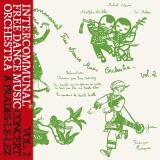
Intercommunal Free Dance Music Orchestra - Vol. 2 Concert A Prades Le Lez

Concert at Prades-le-Lez marks the origins of the Intercommunal Free Dance Music Orchestra. In 1974, François Tusques and his companions (Michel Marre, Jo Maka, Adolf Winkler and Guem), in the spirit of Don Cherry or Chris McGregor, playfully dismantle all borders and all styles of creative music.

On this second volume, the Intercommunal builds unprecedented soundscapes around a song of revolt, a dance tune, or a burst of dissonance. The journey is unforgettable, no question about it. On repeat listening, it even becomes… lunar!

“The music that we make is primarily meant to be listened to live,” warned a leaflet from the Intercommunal Free Dance Music Orchestra. This is precisely why the (restored!) reissue of the two volumes of Concert at Prades-le-Lez, recorded on January 25 and 26, 1974 by François Tusques and his comrades, is such an important event.

In 1971, after recording a series of albums that would leave a lasting mark on French jazz (Free Jazz, of course, with Michel Portal, François Jeanneau, Bernard Vitet, Beb Guérin and Charles Saudrais, but also Le Nouveau Jazz with Barney Wilen, or the solo Piano Dazibao), François Tusques founded the Intercommunal—a grouping whose very name called for the fraternization of the various communities making up the country: Our music will help, we hope, to resolve the contradictions that exist between workers be longing to different communities, by breaking down various forms of national chauvinism, and more particularly the chauvinism of certain French people toward the cultures of Third World countries… Long live the friendship between the peoples of the whole world!

Among the great records made by the Intercommunal Free Dance Music Orchestra, the two volumes of Concert at Prades-le-Lez come first, before L’Inter Communal, Vol. 4, Le Musichien, and Après la marée noire (four titles already reissued by Souffle Continu). François Tusques and his companions (Michel Marre and Jo Maka on saxophones, Adolf Winkler on trombone, and Guem on percussion) performed on January 25 and 26, 1974 at the Moulin de Prades-le-Lez, a few kilometers from Montpellier. It was thus in the southern region of Occitanie that the first echoes of this musical vision of a borderless brotherhood were recorded.

“We’re not among the Colonels,” the Intercommunal reassures us right away, performing a stride piano tune carried by African winds that the audience cannot resist for long. The energy is already striking and it never lets up throughout these two recordings, from start to finish: jazz, blues, traditional music, minimalism, even funk… The musicians of the Intercommunal have heard a lot of great music and now delight in reinventing it by mixing it all together.

“We want the song form to take its place as a weapon in the struggle against capitalist exploitation and all those who oppress us morally and materially,” declared an Intercommunal leaflet, quoting Jean-Baptiste Clément, author of the lyrics to “Le Temps des cerises.” The struggle was therefore serious—but it did not prevent François Tusques and his group from waging it in a festive spirit: each piece on Concert at Prades-le- Lez sends out a call for love and fraternity. Fifty years later, the message remains as relevant as ever—and once again, it is François Tusques who makes it heard.

pre-order now17.04.2026

expected to be published on 17.04.2026

23,95
Intercommunal Free Dance Music Orchestra - Vol. 1 Concert A Prades Le Lez
  • On N'est Pas Chez Les Colonels
  • Intercommunal Blues
  • Mazir
  • Kan-Ha-Diskan - We Shall Over Come
  • African Rythm-N-Logy
also available

2[23,95 €]


Concert at Prades-le-Lez marks the origins of the Intercommunal Free Dance Music Orchestra. In 1974, François Tusques and his companions (Michel Marre, Jo Maka, Adolf Winkler and Guem), in the spirit of Don Cherry or Chris McGregor, playfully dismantle all borders and all styles of creative music.

On this first volume, the Intercommunal takes its audience from New Orleans to Brittany and on to North Africa. The journey was bold, without a doubt—and its memory remains unforgettable.

“The music that we make is primarily meant to be listened to live,” warned a leaflet from the Intercommunal Free Dance Music Orchestra. This is precisely why the (restored!) reissue of the two volumes of Concert at Prades-le-Lez, recorded on January 25 and 26, 1974 by François Tusques and his comrades, is such an important event.

In 1971, after recording a series of albums that would leave a lasting mark on French jazz (Free Jazz, of course, with Michel Portal, François Jeanneau, Bernard Vitet, Beb Guérin and Charles Saudrais, but also Le Nouveau Jazz with Barney Wilen, or the solo Piano Dazibao), François Tusques founded the Intercommunal—a grouping whose very name called for the fraternization of the various communities making up the country: Our music will help, we hope, to resolve the contradictions that exist between workers be longing to different communities, by breaking down various forms of national chauvinism, and more particularly the chauvinism of certain French people toward the cultures of Third World countries… Long live the friendship between the peoples of the whole world!

Among the great records made by the Intercommunal Free Dance Music Orchestra, the two volumes of Concert at Prades-le-Lez come first, before L’Inter Communal, Vol. 4, Le Musichien, and Après la marée noire (four titles already reissued by Souffle Continu). François Tusques and his companions (Michel Marre and Jo Maka on saxophones, Adolf Winkler on trombone, and Guem on percussion) performed on January 25 and 26, 1974 at the Moulin de Prades-le-Lez, a few kilometers from Montpellier. It was thus in the southern region of Occitanie that the first echoes of this musical vision of a borderless brotherhood were recorded.

“We’re not among the Colonels,” the Intercommunal reassures us right away, performing a stride piano tune carried by African winds that the audience cannot resist for long. The energy is already striking and it never lets up throughout these two recordings, from start to finish: jazz, blues, traditional music, minimalism, even funk… The musicians of the Intercommunal have heard a lot of great music and now delight in reinventing it by mixing it all together.

“We want the song form to take its place as a weapon in the struggle against capitalist exploitation and all those who oppress us morally and materially,” declared an Intercommunal leaflet, quoting Jean-Baptiste Clément, author of the lyrics to “Le Temps des cerises.” The struggle was therefore serious—but it did not prevent François Tusques and his group from waging it in a festive spirit: each piece on Concert at Prades-le- Lez sends out a call for love and fraternity. Fifty years later, the message remains as relevant as ever—and once again, it is François Tusques who makes it heard.

pre-order now17.04.2026

expected to be published on 17.04.2026

23,95
Diorama - Pacific Trak EP

Diorama

Pacific Trak EP

12inchDRMA001
Diorama Label
17.04.2026

A new duo and record label based in Madrid lands on the underground techno scene, led by Mike Gómez and José Castillo, the latter known for his aliases Milford and UHF, and also the owner of the electro label Gladio Operations.

Diorama is born with the intention of recovering the soul and essence lost in electronic music, which for some time has become practically homogeneous and predictable. With a timeless, fresh, and warm sound, Diorama produce rhythms close to dub and Detroit techno, mainly influenced by Juan Atkins, UR, and Basic Channel, among others.

This EP, titled Pacific Trak, begins with a nod to the old Scottish school, where they revive a forgotten track by British producer Anthony Scott, adding its imposing main chord to a true sea of melodic textures, bathed in exquisite acid. Spanish techno master Tadeo gives us his vision of Pacific Trak, exploring dub territories that remind us of past pieces released under the incomparable Maurizio label.

The B-side opens with Soul Memories, a manifesto of resistance that vibrates with detuned harmonies and raw bass lines, recalling the origins of Detroit’s primitive sound. The package closes with Polymorphic, a progression of relentless aquatic chords, set among careful and precise minimalist rhythms that oscillate between high-dynamics tech and dub.

out of Stock

Order now and we will order the item for you at our supplier.

14,08

Last In: 26 days ago
Kink Gong - The Lisu LP

Kink Gong

The Lisu LP

12inchCREP114
Discrepant
17.04.2026
  • A1: The Lisu Mix A Side
  • B1: The Lisu Mix B Side

One of the longest standing figures amidst the Discrepant wolfpack, the unstoppable alias of sound collector Laurent Jeanneau returns to the fold 2 years after 'Tanzania II' with this 2.0 update of the celebrated 'The Lisu' sort-of-mixtape released way back in 2014.

Based on recordings of music from the Lisu communities in China and Thailand captured on site, this mix shows Gong more like a selector or dj, restricting electronic processing to a bare minimum in order to convey different histories, places and timeframes within the same mesmerising continuum. A respectful and deeply vivid evocation of all the richness and diversity found among the different strands of lisu music, from ceremonial vocal incantations through a chibeu string instrument "processed" in loco through saturated street speakers to moments of pure poetic radiance, 'The Lisu' flows gracefully with the keen sense of wonder and knowledge of one of this century's most thoughtful and insightful sonic travellers.

pre-order now17.04.2026

expected to be published on 17.04.2026

21,81
Various - Tchic Tchic: French Bossa Nova 1963-1974  Colored Edition LP 2x12"
  • A1: Les Masques - Il Faut Tenir (1969)
  • A2: Isabelle Aubret - Casa Forte (1971)
  • A3: Christianne Legrand - Hlm Et Ciné Roman (1972)
  • A4: Jean Constantin - Pas Tant D'chichi Ponpon (1972)
  • A5: Billy Nencioli & Baden Powell - Si Rien Ne Va (1969)
  • B1-: Marpessa Dawn - Le Petit Cuica (1963)
  • B2: Jean-Pierre Sabar - Vai Vai (1974)
  • B3: Sophia Loren - De Jour En Jour (1963)
  • B4: Isabelle - Jusqu’à La Tombée Du Jour (1969)
  • B5: Sylvia Fels - Corto Maltesse (1974)
  • C1: Frank Gérard - Comme Une Samba (1972)
  • C2: Ann Sorel - La Poupée Des Favellas (1971)
  • C3: Charles Level - Un Enfant Café Au Lait (1971)
  • C4: Andrea Parisy - Les Mains Qui Font Du Bien (1970)
  • C5: Audrey Arno - Quand Jean-Paul Rentrera (1969)
  • C6: Aldo Frank - T’as Vu Ce Printemps (1970)
  • D1: Christianne Legrand - Cent Mille Poissons Dans Ton Filet (1972)
  • D2: Clarinha - Lemenja (1970)
  • D3: Hit Parade Des Enfants - Aquarela (1976)
  • D4: Jean-Pierre Lang - Tendresse (1965)
  • D5: Magalie Noël - Une Énorme Samba (1970)
  • D6: Françoise Legrand - La Lune

Ever since the late 1950s bossa-nova revolution, Brazil’s influence on French music has been undeniable. Pierre Barouh, Georges Moustaki and a vast array of lesser known artists, all made the Musica Popular Brasileira (MPB) an axis of promotion at the service of a cool and metaphysical, modern and mixed Brazilian lifestyle. Some were seduced by the poetic languors of the bossa, some were looking for fun, and others just loved the American hybridization of jazz-bossa, jazz-samba.


What is bossa nova? One of its creators, Joao Gilberto said: "Its style, cadence, everything is samba. At the very start, we didn't call it bossa nova, we sang a little samba made up of a single note - Samba de uma nota so .... The discussion around the origins of bossa nova is therefore useless”. It is nevertheless useful to remember that these magnificent Brazilian songs, which the guitarist describes as samba, were shifted and balanced around improbable chords. "I like things that lean, the in-betweens that limp with grace," said Pierre Barrouh, quoting Jean Cocteau.


With emotion, arrangements for violin and supple guitar licks, bossa nova rapidly changed. A transformation that can be heard in the Tchic, tchic, French Bossa Nova 1963-1974 compilation, the result of a cultural reappropriation, which traveled through the United States and supplemented itself in France.

A musical revolution that has remained significant, bossa nova was born in Rio. From 1956 to 1961, Brazil lived through its golden years. In five years, the country had invented its modernist style. Elected president in 1956, Juscelino Kubitschek de Oliveira, an elegant man with a broad forehead, brandished a promising slogan: "Fifty years of progress in five years". He quickly got to work. Not worried about increasing debt, he launched the project for a new federal capital, Brasilia, designed by the communist architect Oscar Niemeyer. Volkswagen opened state-of-the-art factories and created the “fusquinha”, the Beetle. In Rio, the Vespa made its first appearance. The Arpoador Surf Club crew run into the “girl” from Ipanema, Helô Pinheiro - the tanned garota ("chick"), between a flower and mermaid, who at 17 walked by the Veloso bar, where the fiery author and composer, Tom Jobim and Vinicius de Moraes, were getting drunk on whiskey. From then on, bossa symbolized cool.

In 1958, Joao Gilberto recorded Chega de Saudade, which the directors of Philips denied, calling it "music for fagots". The marketing director, who believed in it, secretly pressed 3000 78-inch vinyls and distributed them at schools around Rio, creating a tidal wave.

American jazzmen then took over. In particular, trumpeter Dizzy Gillespie and guitarist Charlie Byrd. In November 1962, the Brazilian Ministry of Foreign Affairs funded a "Bossa-Nova" concert at Carnegie Hall in New York, inviting the genre’s pioneers. Unprepared, the show soon turned to disaster. But the troupe was invited to the White House by Jackie Kennedy. The first lady loved "the new beat" and in particular Maria Ninguem, a song by Carlos Lyra, later covered by Brigitte Bardot.

In Brazil, the 1964 military coup quickly ended this euphoria. The destructive atmosphere that ensued pushed many Brazilian musicians to leave, if not to exile. Thus, Tom Jobim, Sergio Mendes and Joao Gilberto arrived to the United States. In New York, Joao Gilberto met saxophonist Stan Getz. At the time, he was married to the Bahianese Astrud Weinert Gilberto, who had a German father. She had never sung before, but she knew how to speak English. Getz therefore asked her to replace her husband on The Girl From Ipanema. The Getz/Gilberto record with Tom Jobim on piano, was released in March 1964. Phil Ramone, the "pope of pop" was in charge of sound.

Bossa nova arrived in Paris through the classic “guitar-voice” channel (Pierre Barouh, Baden Powell, Moustaki…) But France loved jazz and Paris had already welcomed its American contributors. All these good people were to pass through Saint-Germain-des-Prés. The cabaret l'Escale became the Mecca of Latin American sound where one could find Pierre Barrouh and his friends, such as the Camara Trio, samba-jazz aces, whose only record was published by the Saravah label. With a band strangely called Les Masques (a band that included Nicole Croisille and Pierre Vassiliu, among others), the Camara Trio recorded an interesting Brazilian Sound, including the track Il faut tenir which is present on this tasty compilation of rarities.

Other enlightened musicians can also be found on the compilation, such as Jean-Pierre Sabar (songwriter for Hardy, Auffray, Leforestier ...) and the French pop rock organist Balthazar. In 1975, Sabar recorded Aurinkoinen Musiikkimatka on a Finnish label, which featured the crazy Vai, Vai, included on this record. We are now following the footsteps of Brazilian electronic musicians such as Sergio Mendes, Eumir Deodato or Marcos Valle who created funk and disco sounds on their keyboards and synthesizers. A style that influenced Véronique Sanson when she wrote Jusqu’à la Tombée de la nuit in 1969 for Isabelle de Funès, the niece of Louis and a great friend of Michel Berger - Sanson did end up singing this track on her 1992 Sans Regret record.


The pinnacle of exoticism and travel, Sylvia Fels’ Corto Maltese includes bongos, sea mist and ocean sounds. The title was taken from Jacky Chalard’s concept album written in 1974, Je suis vivant, mais j’ai peur (I am alive, but I am scared), based on Gilbert Deflez’s science fiction novel.


However, bossa nova extended the scope of popularity. "In the 1970s, I was a fan of Sergio Mendes, Getz / Gilberto. I fell in love with this music that I knew because I had been an orchestral singer, " explained Isabelle Aubret, who in 1971 delivered a composite record of covers by the very funky Jorge Ben, Orfeu Negro, Tom Jobim, Vinicius de Morais and Jean Ferrat. "I recorded this album for Meys Records in Paris, far from Brazil, with wonderful musicians, François Raubert, Roland Vincent, Alain Goraguer...". The latter wrote the arrangements for Casa Forte, a very percussive title borrowed from Edu Lobo, one of the initiators of the bossa who spent time in California. "Jazz and bossa came together and produced very rhythmic music. I love singing, it allows me to dream, to have fun, to feel a high on stage, and these songs brought me joy, made me swing, my singing felt like a dance.”


The world tours of French singers and their desire for the tropics, often brought them to Rio with its hills, forests, caipirinhas and tanned bodies. There are surprises though, like this Iemenja (Iemenja is the goddess of the sea in the Afro-Brazilian candomblé religion). Not unlike the composer and musician Jean-Pierre Lang, based in Sao Paulo, Claire Chevalier taught Brazil to Brazil. In 1970, the singer and painter published a 45-inch vinyl, Mon mari et mes amants (My husband and my lovers), under the improbable pseudonym of Clarinha (little Claire). She was then living in Rio, with her husband, Joël Leibovitz, who founded a band called Azimuth, and who owned a record label specialized in "sambas enredos" songs for samba school parades.


For its B side, she asked Pierre Perret to come up with lyrics for a song composed by Carlos Imperial: "Oh goddess of the sea, o goddess Iemenja, I bring a white rose to adorn your long hair ..." . "Perret came to see us, and we had fun, remembers Joël Leibovitz. We wrote Lemenja for fun, we recorded it at the Havaí studio, behind the Central do Brasil the central station. Erlon Chaves, the arranger who worked with Elis Regina, joined us" adding his share of Afro-Brazilian percussions and funky brass to the mix.

There is a common misunderstanding in Franco-Brazilian history: that bossa, admittedly hedonistic, is perceived as funny, even though the poets who wrote the texts are often philosophizing on the human condition. Its French interpreters pull it towards a carnival inspired universe, far removed from its fundamental essence. Thus, Jean Constantin covered the famous Samba da minha terra, an ode to the art of samba written by the classic Bahian composer Dorival Caymmi, renaming it with the enticing title of Pas tant de tchi tchi pompon: "On your pier there is no tchi tchi / when you arch your back, you know everything is alright ”(lyrics by Gérard Calvi). This expedited bossa aims for the absurd, but retains a certain elegance.

Indeed, Jean Constantin was not an idiot, the rather large man had a huge mustache and liked fantasy, (Les pantoufles à papa, Le pacha, inspired by cha-cha-cha-cha, salsa and jazz) but he was also the lyricist of Mon manège à moi interpreted by Edith Piaf, the composer of Mon Truc en plume by Zizi Jeanmaire and the soundtrack of François Truffaut’s 400 Blows. Le Poulpe, published in 1970, from which this bossa is extract, was arranged by Jean-Claude Vannier, an accomplice of Serge Gainsbourg’s Melody Nelson. In short: "There is enough of samba / By looking at the parasol / Because my poor cabeza / Is going to die in the sun".

Even the American actress Marpessa Down, who was at the heart of the bossa nova revolution with her role as Euridyce in Marcel Camus’ film Orfeu Negro, winner of the 1959 Cannes Palme d'or, fed the clichée with Je voudrais parler au petit cuica - "Tell me how you manage to always make people want to dance / It's true, I must admit that I cannot resist your magic" - in consequence, once can hear the cuica, a little drum inherited from the Bantu.


But bossa nova had many angles. Societal, of course, pushing actresses who were symbols of women's liberation like Brigitte Bardot, Jeanne Moreau, or Sophia Loren to engage in the exercise of accelerated bossa. In February of 1963, Sophia Loren made a record in French in Rome, Je ne t'aime plus, featuring the song De jour en jour, a bossa written by two Italians, Armando Trovajoli and Tino Fornai, which was released a little later by Barclay. Bossa accompanied the 1960s, a decade of moral liberation. Ann Sorel, who interpreted La Poupée des favellas, caused a sensation with L’amour à plusieurs, a provocative song written by Frédéric Bottom and Jean-Claude Vannier. As for the actress Andrea Parisy, she displayed her bourgeois cheekiness in Marcel Carné's Les Tricheurs before interpreting Les mains qui font du bien. And Magalie Noël, the friend of Boris Vian, who sung Johnny fais-moi mal, was hired to sing Une énorme Samba, composed by Alain Goraguer (arranger to Gainsbourg, Bobby Lapointe and Jean Ferrat) with lyrics by Frédéric Botton.

But in the end, of what wood is bossa nova made of? The answer is given by Christianne Legrand, daughter of Raymond the conductor, and sister to Michel the composer: "With me, with jà" - jà means "immediately" in Portuguese. In 1972, the singer, an expert in vocal jazz and a member of the Double Six, published Le Brésil de Christianne Legrand. Two songs included on the Tchic Tchic compilation that demonstrate how bossa, jazz, funk, rock, etc. work like a swiss army knife: the music is used to denounce broken systems, or miracles, HLM et ciné roman, Cent mille poissons dans ton filet, two songs from the O Cafona soundtrack, a successful telenovela broadcast, at the time in black and white, on TV Globo. The first was adapted in French by the fighter and friend of the Legrand tribe, Agnès Varda. The second is content with a play on words, jostling them into a summer fun.


Véronique Mortaigne

pre-order now17.04.2026

expected to be published on 17.04.2026

27,31
Joe Acosta - The Power of Love

Joe Acosta

The Power of Love

12inchVAMPI354
Vampisoul
17.04.2026
  • 1: I Need Her
  • 2: Bendita Ilusin
  • 3: Una Traicin
  • 4: Amor Perdido
  • 5: Juliana
  • 6: Phoenix
  • 7: La Bendicin
  • 8: La Realidad

Joe Bataan's Ghetto Records released Joe Acosta's "The Power of Love" LP in 1971. It is now beloved among both salsa dura fans for the tough uptempo numbers and with the lowrider "souldies" crowd for its sweet and slow Latin soul track 'I Need Her.' There are a number of funky mid-tempo son montunos, as well as three super hard guaguancos enough variety to make for a solid dancing-and listening experience. Reissued once again thanks to our collaboration with Now-Again Records. Our release includes an insert with liner notes.

pre-order now17.04.2026

expected to be published on 17.04.2026

23,11
Morita Vargas - III

“III” is an intimate, cinematic and dream-like body of work — written, produced and mixed by Morita Vargas, and recorded in Buenos Aires between 2014 and 2025. The album was mastered by Rafael Anton Irisarri at Black Knoll Studio (NY), adding depth and clarity to its carefully built sonic landscape.

The visual world of the record is an essential part of the release. The cover artwork was crafted by Juliana Guglielmi, Ariadna Aylen Barrios, and Noelia Garreffa, whose combined vision creates a unified visual narrative that reflects the album’s emotional depth and atmospheric essence. The LP layout and full manufacturing realization were carefully executed by Ilja Tulit, translating the complex design ideas into their final tangible form of a vinyl release.

“III” marks a special release for Hidden Harmony Recordings. Morita Vargas was among the first artists released when the label began in 2020–2021, and her work played an important role in shaping the spirit and direction of Hidden Harmony.

pre-order now17.04.2026

expected to be published on 17.04.2026

27,52
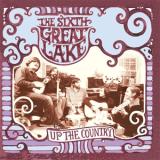
THE SIXTH GREAT LAKE - UP THE COUNTRY
  • 1: Duck Pond
  • 2: Across The Northern Border
  • 3: Up The Country
  • 4: The Ballad Of A Sometimes Traveller
  • 5: Cannon Beach
  • 6: Descending Star
  • 7: Blue
  • 8: Last In Line
  • 9: You Make The Call
  • 10: Shade Of Love
  • 1127: Forever
  • 12: Spin Your Wheels
  • 1330: 0 Miles
  • 14: Rockin' Chair
  • 15: Lovely Today

Originally released in 2001, Up The Country is the debut album by The Sixth Great Lake and a quietly revered title within the late-'90s / early-2000s indie scene. Rooted in jangly guitars, melodic songwriting, and a distinctly pastoral sensibility, the album sits at the intersection of indie pop, folk-rock, and classic guitar-driven pop. Although initially released with modest exposure, Up The Country steadily developed a loyal following, earning cult status among fans of understated, melody-focused indie. Its charm lies in its simplicity: clean arrangements, memorable hooks, and an unforced warmth that has allowed the record to age exceptionally well over the past 25 years. This 25th anniversary reissue presents an opportunity to reintroduce an overlooked catalogue gem to today's market, appealing both to original fans and to a new audience drawn to timeless, guitar-led indie records. With renewed interest in archival and heritage releases, Up The Country offers strong long-term catalogue potential beyond initial anniversary demand. A timeless, understated record with strong appeal for fans of melodic, guitar-driven indie.

pre-order now17.04.2026

expected to be published on 17.04.2026

29,83
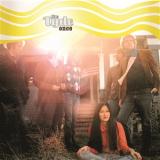
THE TYDE - ONCE

THE TYDE

ONCE

12inchDM3
DUST AND MEMORY
17.04.2026

Originally released in 2001, Once is the debut album by The Tyde and a quietly influential title from the late-'90s / early-2000s West Coast indie pop scene. Rooted in warm melodic guitars, subtle psychedelic textures, and introspective songwriting, the album occupies a distinctive space between indie pop, folk-rock, and California psychedelia. While never a mainstream release, Once steadily built a loyal following over the years, earning its reputation as a cult classic among fans and collectors. Its understated production, emotional restraint, and timeless melodies have allowed the album to age exceptionally well, making it as relevant today as it was upon release. This 25th anniversary reissue offers a strong opportunity to reintroduce an overlooked catalogue gem to both established fans and new listeners. With the continued demand for high-quality reissues and historically important indie titles, Once fits perfectly within current collector and indie-focused retail trends. The album's enduring appeal, combined with the anniversary context, gives it solid long-term catalogue value beyond initial release interest.

pre-order now17.04.2026

expected to be published on 17.04.2026

29,83
Items per Page:
N/ABPM
Vinyl