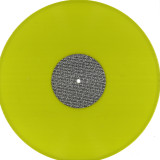
Limited Edition COLOR green lime Vinyl – 75 units Hand numbered
Orlando Voorn is a Dutch DJ and electronic music producer. As a solo artist he has released work since the early 80s under a large amount of aliases containing Balance, Frequency, Baruka, Basic Bastard, Fix, Dope Dog, Boy, Stalker and The Nighttripper. He also produced tracks with Blake Baxter under the name Ghetto Brothers and with Jeff Porter as Designer Loops.
Voorn won the Dutch DMC DJ Championships in 1986 which meant the beginning of a large number of released tracks. As a professional DJ he released his first club tracks under the record label Lower East Side Records. Together with Detroit techno music pioneers Juan Atkins, Derrick May and Blake Baxter he produced tracks under various labels. Voorn's music is characterized by its variety of styles such as Techno, Drum n bass, Ambient, Hip hop and Electro. By many people Orlando Voorn is considered the first one to establish a connection (in music) between Detroit and Amsterdam.
Suche:amount
The fifth transmission on BRUK comes from Chewlie, a breakthrough artist from Switzerland adept at sculpting tense, sharply defined atmospheres with eerie amounts of space and dreadful amounts of bass. Following up on her 2022 Creature LP for YUKU, this eight-track deep dive explores nervous hallways of dislocated rhythm with a UK soundsystem attitude and a subtle but striking approach to sound design.
In contrast with the strident melodic tones of Creature, Chewlie demonstrates her versatility as a sonic artist (alongside her established work as a graphic designer). Understated moodiness is the key here, resulting in powerful heads-down immersion heaters with stand-out moments to make the floor fall in line amidst meditative, patient pauses in between. In the field of leftfield dubwise club music, Chewlie's voice strikes out with purpose and poise, slotting into the firmament of BRUK as another natural misfit in the many-sided bassweight landscape.
Prinz & Prinz is one of the most mysterious bands from 1980s Austria. It remains unknown who the two of them actually were. Their music has never been sold in shops, either. It only appeared on one of the obscure Youngers of Vienna-compilations, which were the outcome of a local band contest. If this was a one-off project, it certainly was a brilliant one. The first song on this 7“, “Kleine Segelschiffe” (little sailboats), does everything right in combining reggae rhythms and German vocals. The second track, “Einsamkeit” (loneliness), is a weird, organic lo-fi disco tune that amounts to the best Austrian take on Philly disco we have heard yet. Neither of the pieces disappoints. Both will make you want to find out more about Prinz & Prinz.
- A1: Phoniks - Up In The Sky
- A2: Kaspahauser - Magic Mellow
- A3: Flofilz & Saib - Matcha Pond
- A4: Luchii - 229
- A5: Konteks - 2002
- B1: Move 78 - Hal Wandered Off
- B2: Cookin Soul - Rainbow City
- B3: Jadu Jadu & Tambala - Lunar Juice
- B4: Klim - Oh World
- B5: Leaf Beach & The Deli - Twoday
- C1: Desh & Delaney. - Sunbeams
- C2: Wun Two - Adele
- C3: Koralle - Labirinto
- C4: Swum & Eden Ladin - Above
- C5: Knowmadic - Summer Walk
- D1: Flughand & Steichi - Fugla
- D2: Mama Aiuto & Daphné - Tangs Kantine
- D3: Samuw - Kount It Up
- D4: Dualizm - Cassandra
- D5: Soulchef - Here
In 2015, when we launched Hip Dozer, we were overwhelmed by the amount of talent that was still championing this old school way of making beats and the incredible creativity that was circulating in the scene.
In a period where hip hop was evolving so much and going further (sometimes for the better but also for the worse), it was obvious to us that we had to defend this rising scene of young beatmakers who were so attached to the roots of old-school beatmaking but who were always taking it to another level.
It's been 7 years since we created Hip Dozer Records with our first anniversary compilation and that's what makes this compilation so special every time. Its purpose remains the same and will always be to champion the art of beatmaking that we love and to help showcase new artists in the scene.
This year we are lucky enough to have some of our favourite talents from the scene on board with artists like Saib, Flughand, Phoniks, Cookin Soul, SoulChef and Wun Two.
We would like to say a huge thank you to all the artists who have been involved in this project and who have been as enthusiastic as we are in making it happen. It has been such a pleasure since the beginning of this adventure and this is only the beginning. Much love to all of you who listen and support wherever you are.
Black Vinyl[17,61 €]
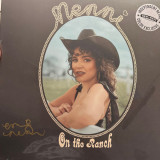
The sun sets over the ranch, a can of beer cracks, and an acoustic guitar
wrangles the day's thoughts and memories into a semblance of orderDuring moments like these, California-born and Nashville-based singer
and songwriter Emily Nenni chronicles her life through delicate songcraft
rife with honky-tonk spirit and spiked with just the right amount of soul
In possession of a deep understanding of music stoked by a lifelong passion and
sharp chops shaped by endless sets in smoky bars and sizzling doublewides, she
asserts herself as the consummate country storyteller on her full- length debut
album, On The Ranch.
- A1: Laissez-Nous Rentrer Dans Vos Coeurs
- A2: Tina
- A3: L'homme Au Grand Chapeau
- A4: Une Vie Moderne
- B1: French Kiss
- B2: Telstar
- B3: Zazou Sur La Piste
- B4: La Ballade Des Cardiaques
- C1: La Noosphere, La Noosphere
- C2: Rue Merlan
- C3: Le Retour De L'homme Au Grand Chapeau
- C4: Anyhow For The Tennis
- C5: En Hommage A Pop Corn
- C6: Les Ergs N°1, 2, 3 Et 4
- C7: Outpop
- C8: Drone E. M
- D1: Tina Blues
- D2: Telstar Jungle
- D3: Zazou Sur La Piste
- D4: Sequences S.i.r
- D5: Night Tonight
- D6: Love In Loops
- D7: Some Never Fired
- D8: The Gause Mask Serves A Purpose
After the experience of Camizole, Dominique Grimaud began a new (and different) adventure in 1979 with Monique Alba. Alongside Gilbert Artman (Urban Sax), Guigou Chenevier (Etron Fou Leloublan), Jean-Pierre Grasset (Verto) and Cyril Lefebvre (Maajun), Vidéo-Aventures is composed of instrumentals capable of reconciliating Captain Beefheart, Henry Cow, Suicide and... John Barry. All with the backing of Rock In Opposition, which enabled this Musiques pour garçons et filles to become known worldwide.
“Let us enter your hearts”: is the request made by Vidéo-Aventures, and how can we refuse? Especially as Musiques pour garçons et filles, recorded by Dominique Grimaud and Monique Alba fifty years ago along with handpicked colleagues, is as fresh as ever.
1979: having improvised a huge amount (and how!) with Camizole, Grimaud tried his hand at composition and studio recording with Alba. Their first instrument was the AKS synthetiser, with which the duo recorded the instrumental tracks that were then offered to their comrades Guigou Chenevier (Etron Fou Leloublan), Gilbert Artman (Lard Free, Urban Sax), Jean-Pierre Grasset (Verto) and Cyril Lefebvre (Maajun).
At the end of the year, they all came into the studio for a week to record the eight tracks of this mini- album that Chris Cutler would issue a few months later on his label, Recommended. In France it was the beginning of the agitation around Rock In Opposition, to such a point that Musiques pour Garçons et Filles would rise to second place in the NME independent Charts. And this is hardly surprising...
For these instrumental miniatures (here with the bonus of rare archives, some of which are previously unpublished) are uncontrollable: electronics augmented by lap-steel guitar (“Tina”), cunning pop (“Zazou sur la piste”), mechanic sound (“Une vie modern”), street piano (« French Kiss »), disturbing atmospheres (“La ballade des cardiaques”) or something like a TV theme tune capable of adjusting all the colours (“Telstar”)... With such promising ingredients, why stop Vidéo-Aventures from entering?
Originally released in 2007, None Shall Pass was the fifth studio album by Aesop Rock. It features production by Blockhead, El-P (Run The Jewels), Rob Sonic (Hail Mary Mallon), and Aesop Rock himself. Guest features include El-P (Run The Jewels), Cage, Breeze Brewin (Juggaknots), Rob Sonic (Hail Mary Mallon), and John Darnielle (The Mountain Goats). Created over a two year period following the release of his Fast Cars, Danger, Fire & Knives EP, the album would prove to be Aesop's final release on the now defunct Def Jux label. The critically acclaimed album debuted at #50 on Billboard's Top 200 chart and #35 on their Hip-Hop and R&B charts, and includes the title track "None Shall Pass" which has proven to be one of Aesop's most popular songs to date. None Shall Pass documents the vast amounts of personal change Aesop had been experiencing at this time while still deftly depicting scenes and stories relative to all ages of life.
Sacramento, CA duo Blank Gloss’s third album, Cornered, is an exquisite statement of pop ambient starkness, an album that oscillates between lush beauty and spare melancholy. It follows from their 2021 debut for Kompakt, Melt, an album that saw Morgan Fox (piano, synths) and Patrick Hills (guitar) aligned, loosely, with the cosmic pastorale of the ‘ambient Americana’ movement. Cornered feels like a significant step forward, though – by peeling back the layers of their music, they’ve revealed both its restful core and its solemn gravitas. It is unendingly lovely, but with something disquieting at its centre.
Cornered was recorded quickly, over two days in December 2020. There’s nothing rushed or haphazard about the album, though; everything has its place, with each sonic element contributing profoundly to these nine miniature dioramas. It signals change, quietly but perceptibly, through the way the duo sculpts their material, building out of loose improvisations that morphed into songs. While there was no plan in mind when Blank Gloss settled into the studio, Fox recalls that “right away we realised that things were sounding and feeling a bit different than any of the sessions we had previously.”
That difference can be heard in the increased amount of space Blank Gloss gift to their sound sources. Some of the most moving moments on Cornered come when Fox and Hills strip everything back – see, for example, “Crossing”, which sets pensive piano across a shyly humming drone and quiet arcs of guitar, recalling the driftworks of Roger Eno. Curiously, the album’s distinctive shape and mood develops, at least in part, from a change in instrumentation, with Hills using a MIDI pick-up on his guitar. “This resulted in making things happen a lot quicker,” Fox says. “It also helped create what I think is a bit more sombre, dark feeling to some of the songs.”
Elsewhere, on songs like “Salt”, the piano tussles with flecks of guitar, single tones sent out to mingle with the stars, like Morricone at 16 RPM, while Cornered’s centrepiece, the eleven-minute “No Appetite”, lets long arcs of electronic texture breathe and sigh, tangling together in a cat’s cradle of bliss. Throughout, it feels as though the music is blossoming as you hear it, like watching time-lapse footage of flora in bloom. But perhaps the most seductive thing about Cornered is the sense you get, listening, that the music was something unexpected, a visitation. “It almost felt like we weren’t dictating where the music went and how it sounded,” Fox agrees. “We were just there in a room together in December and these sounds were happening, and we were lucky enough to be recording the process.”
Cornered, das dritte Album des kalifornischen Duos Blank Gloss aus Sacramento, ist ein exquisites Statement von pop ambienter Krassheit, ein Album, das zwischen üppiger Schönheit und sparsamer Melancholie oszilliert. Es folgt ihrem 2021er Debüt für Kompakt, Melt, einem Album, auf dem sich Morgan Fox (Klavier, Synthesizer) und Patrick Hills (Gitarre) locker an der kosmischen Pastorale der „Ambient Americana“-Bewegung ausrichteten. Cornered fühlt sich jedoch wie ein bedeutender Schritt nach vorne an – indem sie die Schichten ihrer Musik abschälen, haben sie sowohl ihren ruhigen Kern als auch ihre feierliche Schwere offenbart. Es ist unendlich schön, aber mit etwas Beunruhigendem in seiner Mitte.
Cornered wurde relativ schnell aufgenommen, über zwei Tage im Dezember 2020. Es klingt jedoch nichts überstürzt oder willkürlich an diesem Album; alles hat seinen Platz, wobei jedes Klangelement einen wesentlichen Beitrag zu diesen neun Miniaturdioramen leistet. Es signalisiert Veränderung, leise, aber wahrnehmbar, durch die Art und Weise, wie das Duo sein Material formt und aus losen Improvisationen aufbaut, die sich in Songs verwandeln. Als Blank Gloss sich im Studio niederließen, gab es zwar keinen Plan, aber Fox erinnert sich: „Uns war sofort klar, dass sich die Dinge etwas anders anhörten und anfühlten als bei allen vorherigen Sessions.“
Dieser Unterschied ist in der größeren Menge an Raum zu hören, die Blank Gloss ihren Klangquellen bietet. Einige der bewegendsten Momente auf Cornered kommen, wenn Fox und Hills alles zurücknehmen – siehe zum Beispiel „Crossing“, wo ein nachdenkliches Klavier über einen schüchtern summenden Drone und leise Gitarrenloops setzt und an die Driftworks von Roger Eno erinnert. Seltsamerweise entwickelt sich die unverwechselbare Form und Stimmung des Albums zumindest teilweise aus einer Änderung der Instrumentierung, bei der Hills einen MIDI-Tonabnehmer an seiner Gitarre verwendet. „Dies führte dazu, dass die Dinge viel schneller abliefen“, sagt Fox. „Es hat auch dazu beigetragen, einigen der Songs ein etwas düstereres, dunkleres Gefühl zu verleihen.“ An anderer Stelle, bei Songs wie „Salt“, spielt das Klavier mit Gitarrenfetzen, einzelne Töne werden ausgesandt, um sich mit den Sternen zu vermischen, wie Morricone bei 16 U/min, während Cornereds Herzstück, das elfminütige „No Appetite“, lange Bögen schlägt, elektronische Texturen atmet und seufzt, um sich in einem Katzenkörbchen der Glückseligkeit zu verheddern. Während des Hörens fühlt es sich an, als ob die Musik blüht, als würde man sich Zeitrafferaufnahmen von blühenden Pflanzen ansehen. Aber das Verführerischste an Cornered ist vielleicht das Gefühl, das man beim Zuhören bekommt, dass die Musik etwas Unerwartetes war, eine Heimsuchung. „Es fühlte sich fast so an, als hätten WIR nicht diktiert, wohin die Musik geht und wie sie klingt“, stimmt Fox zu. „Wir waren just im Dezember zusammen in einem Raum, als diese Geräusche passierten, und wir hatten das Glück, dass die Aufnahme mitlief.”
Sebastian Gummersbach's Yore debut brings with it a further refinement of the material he's created for the German label Raw Soul. It specializes in material infusing modern house and techno grooves with flavourings of jazz, funk, and soul, the result a timeless take on house music. Anyone who's been keeping tabs on Andy Vaz's Yore releases will realize immediately that the same description could be applied to his imprint.
Given all that, it's easy to understand why Gummersbach, a producer hailing from Neuss, Germany, is such a natural fit for Yore. There's no small amount of artistry in play in the EP's four tracks, each one arguing strongly on behalf of his skills as an arranger and mood shaper. No cut better shows that than the opening “Rough Edges,” which is, frankly, anything but rough. He builds the arrangement methodically, starting with warm, billowing washes and then layering in step-by-step dub atmospherics, a strutting house pulse, congas, and synth ear-worms—a seductively smooth intro to the release.Gummersbach might have been listening to Hall and Oates's “I Can't Go for That (No Can Do)” prior to crafting “Calming Solitude” when the latter sounds so much like a clubby instrumental riff on the hit. Here too silky chords and synth textures merge with a rousing beat pattern to draw listeners to the dance floor.
On the flip side, “Eden” initially changes things up with a classic B-Boy beat and handclaps, but the tune gradually aligns itself to the character of the EP's other body-movers, even if acid-tinged synths become part of the mix. Closing out the release is the most techno-oriented of the four cuts, “Undisclosed Thoughts,” acid once again central to the track's identity and the chugging groove frothy. The word Eden naturally calls to mind the Biblical paradise, and consistent with that the tone of Gummersbach's EP, its A-side cuts especially, is generally smooth, serene, and harmonious; it's also, as stated, a seamless addition to the Yore catalogue.
Axel Holy and Marka San deliver three songs off their first collaborative effort, the Chess (EP), available on limited 7" vinyl. "Strange World," "Parlez Vous," and "Chess," are the first offerings from the pair's EP.
All 7" include a free download code for the full EP.
The full 6-track features six original tracks with an incredible amount of depth: grime, hip-hop, and trap. Axel Holy delivers gritty UK grime vocals over Marka San's dark post-apocalyptic atmospheric soundscapes.
Bouncing nitty gritty beats and rhythms between Ljubljana and Bristol, Axel Holy and Marka San's goal of a small EP quickly turned into 20-plus songs. The duo handed the songs over to their label, rx:tx, to finalize the track list of what would become the Chess (EP).
Make sure you check out this exclusive 3-track release from Axel Holy and Marka San's upcoming Chess (EP). Don't miss out, get yourself a limited vinyl while supplies last!
Dragon Dance Long Sleeve
Hand printed and dyed in house on 100% pre-shrunk cotton. Fits a half size small due to shrinking during the dye process. Shirts vary with the amount of blue and grey tones.
A Detroit resident, William Odell Hughes is a much-loved street educated singer-songwriter and music composer. As a regular passenger riding to work on the Detroit East Side bus route in the early eighties, he met jazz pianist Pamela Wise who also rode the bus to work every day and who he noticed was always reading music. Pamela told him about saxophonist, clarinetist, and producer Wendell Harrison (founder of the legendary Tribe collective and a regular collaborator of Pamela Wise). She introduced Odell to Wendell, who was impressed with William’s compositions and felt that it would be a great project for release on his WenHa record label.
Hughes and Harrison began producing and recording the album to be called “Cruisin”featuring musical arrangements by both Wendell Harrison and Pamela Wise. This album (released in 1981) was the first recording for Hughes and the beginning of a long musical journey that continues to this day. Cruisin’ features an all-star line-up that includes Andrew Gibson (The Counts), Pamela Wise (Tribe) and award-winning Detroit Jazz icon Wendell Harrison…all doing their bit and making this a monster of an album!
William Odell Hughes’ debut album has all the best characteristics of an 80s album: it’s filled with funky playful beats and has excellent soulful honey-dipped vocals. On Cruisin’ the listener is treated to both mellow soul sounds and electrifying disco boogie (that’ll make even the shyest of club goers want to get up and dance) and Wendell Harrison’s instantly recognizable flute-playing and synth pads give the record a warm, relaxed groove. Prepare yourself for funky vibes, cool soothing feet-tapping rhythms, fantastic interplays on vocal tempos…all backed by a beautiful array of soulful synthesized and cosmic music.
References to universal awareness are plentiful throughout and the spirituality of The Tribe remains a constant undertone; a gentle reminder of WenHa’s roots. With a sound like this, it’s no wonder that this album has long been considered a grail for crate diggers around the world. All of the above makes this incredible record both timeless and as relevant today as it was back when it was initially released.
Tidal Waves Music now proudly presents the first ever vinyl reissue of this rare funk & soul album (original copies go for large amounts on the second-hand market) originally released in 1981 on WenHa records. This unique record comes as a deluxe 180g vinyl edition (strictly limited to 500 copies worldwide) with obi strip. This vinyl edition also features the original photography by acclaimed British photographer Brian Smith known for his work with artists such as Screamin’ Jay Hawkins, Howlin’ Wolf, Chuck Berry and John Lee Hooker.
- A1: Transmission Of Life
- A2: Negative Flash
- B1: Walking With Clouds
- B2: Cerebral Cortex Malfunction 5 - Cluben In Guyana
- C1: Look Within
- C2: Unordinary Realities
- D1: Dimensional Glide
- D2: War Of The Clones
- E1: Crossing Into The Mental Astroplane
- E2: Do You Want To Get Down
- F1: Do You Want To Get Down (Vocal De Void)
repress!
3x12'' Re-issue of this Drexciyan masterpiece that was previously released on Supremat. Now including the tracks that were only available on the CD version when the album first came out in 2001.
If the late James Marcel Stinson left anything in his wake it's certainly the staggering amount of beauty he produced over the years. Tresor Records prepare to re issue a slice of that beauty on October 10th.
Thematically, 'The Opening Of The Cerebral Gate' saw Stinson shift away from the grand narrative of the Drexciyan saga, instead exploring a sub-plot of esoteric concepts revolving around internal, mental and psychedelic tropes. Musically, it presents the electro genius at the height of his game.
After a year and a half writing and recording rock music, I needed to clear my head. I listened to and made music where things generally happen gradually rather than suddenly. I would set up patches on a Monomachine or Analog Four and listen to them, hearing one sound morph into others, making changes to a patch only after having listened for quite a while, gradually adding elements, and finally manipulating the sounds on the fly. All tracks were recorded live to CD burner, with no overdubs, and executed on one or two machines.
While I was almost exclusively listening to artists such as Chris Watson, Peter Rehberg, Bernard Parmegiani, CM Von Hausswolff, Jana Winderen, Oren Ambarchi, Hazard, Bruce Gilbert, Klara Lewis, Ryoji Ikeda, and so on, I was also inspired by my mental image of John Lennon's tape and mellotron experiments he made at home during his time in the Beatles, as well as events like the first minute of Bowie's Station To Station, ...And The Gods Made Love by Jimi Hendrix, the synths in the song Mass Production by Iggy Pop, and the general idea of Eno's initial concept of Ambient music.
Music being a solitary sculpture in sonic space was the main motivating thought. I was looking at pictures of sculptures and trying to make music that simultaneously conveyed both movement and stillness. I refrained from sudden musical changes, especially avoiding sequences of notes and rhythms. In fact, this music was made from sequences which never exceed a single note, many of these pieces being made on a single pattern. The movement which a good sculptor conveys when the shape of his medium meets the eyes of the viewer who walks around the piece, or the sun changes its position, are the kinds of movement which it was the role of the synth patches to communicate.
I've been listening to music like this since I was 13 or so, but I felt that making it was out of my reach because of the amount of restraint I imagined it required. Once I found myself making this music, it did not feel like a matter of restraint at all. I wanted to build a certain type of building, and hear certain types of movement, and I knew when it was complete. There was no place for sequences of notes and rhythms in my plans.
I also cannot overstate the role that being in my band played. I had previously spent 12 years programming and engineering my own music, and then spent a year and a half making music where my role was basically to write songs and play guitar. When the band's recording phase was completed, I needed to go back to my adopted language. I had done enough with chords, rhythms, notes, defined sections, sharp transitions, etc.. What I needed was to create music from the ground up with nothing but sound, and have that music reflect "being" rather than "doing". It was a therapeutic way of re-balancing myself, before and during my band's mixing process.
This music seeks to just exist, and is not attempting to manipulate or grab the listener in any way. I believe it works well if one listens loud and focuses on it, but also works well at soft volumes and in the background. It can compete with silence on silence's own terms, and it can also happily wipe silence out.
There are two versions of this album. The CD version is pronounced "two" and called : I I . This is the longer version. The vinyl version is pronounced "one", and called . I : This version is shorter, but contains one vinyl-only track. The reason the vinyl is shorter is that some of the tracks have sounds that can not be pressed on vinyl.
John Frusciante
Glasgow’s Seated Records return with more archival Scottish New Wave material; this time, in the form of Pop Wallpaper’s disco-not-disco interpretation of the Shuggie Otis classic, “Strawberry Letter 23”. And interpretation is the right word, guitarist Evan Henderson confesses that the lyrics sang by Audrey Redpath on the record were, “err inaccurate due to pre-internet home recording translation”.
The Edinburgh band first released “Strawberry Letter 23” in 1986 as a double A side 12” alongside original song, “Nothing Can Call Me Back". The 1986 record’s sleeve states that the original - “Strawberry Letter 23" has been “re-modelled for special pleasures, namely on the dance floor”. Here the re-model has been re-modelled once more. The track is recontextualised for 2022 playing on a four track 12” that includes an unreleased instrumental demo version of the track, as well as mixes from label founder Pigeon Steve and close friend of the label, Useful Tom.
Wallpaper’s first EP “Over Your Shoulder” was released in 1984. The release received a considerable amount of radio support, not least from Radio 1’s John Peel and Janice Long, which culminated with a live session for Long’s show at the BBC’s studios in London. Released a couple of years later, Strawberry Letter received similar levels of radio play. Despite (much to the band’s confusion) being tracked by Motown UK at one point, Pop Wallpaper did not go on to receive commercial success and eventually went their separate ways.
“Strawberry Letter 23” sits in the singular historical, cultural context of mid-80s Britain. Following the explosion of punk at the end of the 1970s, in the 1980s many British bands began experimenting with new styles and instruments - always keeping an eye firmly on their punk roots. The loose percussion and synthesiser melodies have an almost new-age, balearic mood, while the falsetto vocals of singer Audrey Redpath are an unmistakable embodiment the Post-punk style of the time. The prominent bass-line suggests a reggae or disco inspiration, and bass player Myles Raymond admits that he obsessed over a Sly & Robbie Taxi records compilation around the time the band put the tune together.
This reissue includes an unreleased, unheard instrumental demo-version of the cover, “SL23”. The band recorded the demo during an nighter at Wilf’s Planet studios in Edinburgh, just after Wet Wet Wet had just finished up their own demo for “Wishing I Was Lucky” (Pop Wallpaper all insist they thought it would never be a hit). In this version, we hear the band messing around with drum machines and synths which, in a similar style to Kevin Low and Fiona Carlin on Seated 001, creates a stripped back dance floor work-out that bares almost no resemblance to any version of “Strawberry Letter 23”. In an attempt to emulate the Trevor Horne production style of the time, the band’s drummer Les Cook recalls pushing for more and more reverb on the drums during the session to a reluctant producer Chic Medley, who “eventually obliged, but needed a lot of persuading”. Much to Cook’s disappointment “the reverb was toned down when we got to the final release”.
On the B side, label boss Pigeon Steve delivers a dubbed-out and acid drenched, cosmic rendition of the track with “SL24”, before Useful Tom (son of Pop Wallpaper bass player Myles Raymond) brings the EP to an end with spacey de-construction of fractured vocals and gliding synths on the B2 with “SL25”.
- A1: State Of The Nation (Feat. Damon Albarn)
- A2: 3030
- A3: The Fantabulous Rap Extravaganza (Feat. Prince Paul)
- A4: Things You Can Do
- B1: Positive Contact
- B2: St. Catherine St. (Feat. Beans, Mr. Lif, P. Wingerter, Peanut Butter Wolf, Verna Brown)
- B3: Virus
- B4: Upgrade (A Brymar College Course)
- B5: New Coke (Feat. Mark Ramos-Nishita)
- C1: Mastermind
- C2: National Movie Review (Feat. Brad Roberts)
- C3: Madness
- C4: Meet Cleofis Randolph The Patriarch (Feat. Mc Paul Barman)
- C5: Time Keeps On Slipping Feat. (Damon Albarn)
- C6: The News (A Wholly Owned Subsidiary Of Microsoft Inc.) (Feat. Hafdis Huld)
- D1: Turbulence (Remix By Mark Bell)
- D2: The Fantabulous Rap Extravaganza Part Ii (Feat. Prince Paul)
- D3: Battlesong
- D4: Love Story
- D5: Memory Loss (Feat. Sean Lennon)
- D6: The Assmann 640 Speaks
RESOLICITATION - PRICE CHANGE, ALL ORDERS CANCELLED, PLEASE RE-ORDER! The super group Deltron 3030 is composed of producer Dan the Automator, rapper Del tha Funkee Homosapien and DJ Kid Koala and sometimes features guest artists who also take on varying futuristic pseudonyms. Originally released in 2000 on the now-defunct 75ARK record label, this Hip Hop concept album was released the same year as Gorillaz’ first 12” and is on a similar plane. Following the release of Deltron 3030, all three members participated in Gorillaz’ self-titled debut album. With Del aka Deltron Zero on vocals, Dan the Automator aka The Cantankerous Captain Aptos on production, and Kid Koala aka Skiznoid the Boy Wonder on turntables, this album takes the listener on a paranoid journey set in a dystopian year 3030 dealing with viruses, the apocalypse, an oppressive government, and a war waged against a huge company called the Corporate Bank of Time that rules the universe, all to the well-crafted and consistent musical backing of the Automator. Appearances by Damon Albarn (Gorillaz, Blur), Prince Paul, Peanut Butter Wolf, DJ Money Mark, Paul Barman, Mark Bell (Bjork, production), Sean Lennon, and Mr. Lif compliment Del’s vocal style and add the right amount of flavor to this classic period piece.
Little is known about Norman Feels_but we do know that he was an underground soul sensation in the 1970s. He released two classic albums on Just Sunshine Records (the label that was also responsible for putting out milestone recordings by artists like Betty Davis, Karen Dalton and Arica). Over the years, Norman's songs have been sampled by renowned acts from the likes of Ghostface Killah, Nas and Kanye West. The sound his songs emit reminds of the classic soul coming out of New Jersey at the time, but it just has that extra thing going for it_something alternative and exceptional. This made for an excellent match with the `Just Sunshine' label that released both of his albums. Just like his labelmate Betty Davis, Norman Feels was an artist that was hard to typecast and compare with his contemporaries/peers_this makes Norman's work very interesting and worth every soul/funk connoisseur's time. In 1973 Norman Feels released his self-titled debut album which has become a much sought after funk/soul classic. Behind Norman's floating (and extremely soulful) voice hides a dark and almost psychedelic instrumentation that makes this album particularly unique. The recordings have been beautifully arranged by David Van De Pitte (who is world-famous for the arrangements heard on Marvin Gaye's `What's Going On') and topped off by Sal Scaltro's slick production work. Next to Norman Feels' fascinating writing skills and trademark voice, on this album you'll find complicated (and at times brooding) compositions that takes the listener on a dreamy musical journey filled with themes about struggle, relationships and social commentary. Love, beauty and sadness is lingering in every track on this album_all of this makes his self-titled debut a total `must-have' album that begs for a special place in your record collection! Tidal Waves Music now proudly presents the FIRST ever vinyl reissue of this fantastic album (originally released in 1973 on Just Sunshine Records). This rare record (original copies tend to go for large amounts on the secondary market) is now finally back available as a 180g vinyl edition (500 copies). This reissue comes packaged in a gatefold jacket complete with the original 1973 artwork, photographs and lyrics.
Expanded Edition[176,43 €]
Double LP[41,13 €]
Black Vinyl[9,12 €]
Blue Vinyl[10,29 €]
Translucent Blue vinyl[35,92 €]
15 years after the album’s release, ‘City Of Echoes’ is now
available in a deluxe 2LP edition, newly remastered by
Josh Bonati and featuring a full LP’s-worth of bonus
material, including original album demos, alternate takes,
and pieces originally only available on the rare ‘Pink
Mammoth’ EP.
‘City Of Echoes’, originally released in 2007 by Hydra
Head Records, marked a paradigm shift for Pelican.
Coming off the heels of the glacial ‘Australasia’ and their
even more expansive and acclaimed follow-up, ‘The Fire
In Our Throats Will Beckon The Thaw’, their third album is
a study in precision.
Inspired by their non-stop tour schedule following ‘The Fire
In Our Throats Will Beckon The Thaw’’s release, the
quartet composed ‘City Of Echoes’ to be a lean
powerhouse of non-stop melodic hooks and lurching
rhythms that reflected the energy of live performance.
Guitarists Trevor Shelley de Brauw and Laurent
Schroeder-Lebec trade crisp riffs that twirl in opposition
before thundering together in monoliths. The sheer
amount of potent interplay between the two, often
borrowing from disparate edges of rock and metal at a
whim before completely transforming, is mind-boggling.
Bassist Bryan Herweg and rhythm section compatriot /
drummer / brother Larry Herweg lock into a wider array of
grooves than ever before. Their considered bedrock
guides the band’s dynamics into some of the ensemble’s
most tender moments as well as their most ferocious.
Recorded by Andrew Schneider at Electrical Audio Cover.
Art designed by ISIS and SUMAC founder Aaron Turner,
with photography by Robin Laananen.
Also available to independent retailers on Translucent Blue
vinyl.
Expanded Edition[176,43 €]
Double LP[41,13 €]
Black Vinyl[9,12 €]
Blue Vinyl[10,29 €]
Black Vinyl[34,24 €]
15 years after the album’s release, ‘City Of Echoes’ is now
available in a deluxe 2LP edition, newly remastered by
Josh Bonati and featuring a full LP’s-worth of bonus
material, including original album demos, alternate takes,
and pieces originally only available on the rare ‘Pink
Mammoth’ EP.
‘City Of Echoes’, originally released in 2007 by Hydra
Head Records, marked a paradigm shift for Pelican.
Coming off the heels of the glacial ‘Australasia’ and their
even more expansive and acclaimed follow-up, ‘The Fire
In Our Throats Will Beckon The Thaw’, their third album is
a study in precision.
Inspired by their non-stop tour schedule following ‘The Fire
In Our Throats Will Beckon The Thaw’’s release, the
quartet composed ‘City Of Echoes’ to be a lean
powerhouse of non-stop melodic hooks and lurching
rhythms that reflected the energy of live performance.
Guitarists Trevor Shelley de Brauw and Laurent
Schroeder-Lebec trade crisp riffs that twirl in opposition
before thundering together in monoliths. The sheer
amount of potent interplay between the two, often
borrowing from disparate edges of rock and metal at a
whim before completely transforming, is mind-boggling.
Bassist Bryan Herweg and rhythm section compatriot /
drummer / brother Larry Herweg lock into a wider array of
grooves than ever before. Their considered bedrock
guides the band’s dynamics into some of the ensemble’s
most tender moments as well as their most ferocious.
Recorded by Andrew Schneider at Electrical Audio Cover.
Art designed by ISIS and SUMAC founder Aaron Turner,
with photography by Robin Laananen.
Also available to independent retailers on Translucent Blue
vinyl.
- A1: Louise Freeman - Mirage
- A2: Mark - Dreamland
- B1: Loukas Thanos - Jazzburger
- B2: Galvanica - Nightlights In Japan
- B3: Santoro - Lover Message
- C1: Jet Set - Love Break
- C2: Silvia Dheve - Night Ranger
- C3: Isamar & Compañia - No Estas
- D1: Robert Sandrini - Occhi Su Di Me
- D2: Tom Hooker - Talk With Your Body (Instrumental)
- D3: I M S. - An English '93
* 2022 Repress ** Profondo Nero compiled by Cinema Royale
Profondo Nero narrates a storyline that goes beyond the borders of Italy’s musical legacy. Cutting across the face of Italo disco’s leftfield musicians between the early and late ‘80s, Profondo Nero champions a multi-faceted sound that nods to the blueprint of Italo disco but tries to dig deeper. The music is unmistakably Italo disco but moves away from the familiar classic sound. Amsterdam based collector Cinema Royale stitches together eleven tracks from 1983 – 1989, celebrating a sound he fittingly describes as ‘leftfield Italo’.
The compilation connects the dots between soulful disco (Louise Freeman – Mirage), synth-pop (Mark – Dreamland), electro-rap (Loukas Thanos – Jazzburger), breaks (Santoro – Lover Message), 80s dub disco (Jet Set – Love Break), Balearic (Isamar & Compañia - No Estas), boogie (Tom Hooker – Talk With Your Body) and proto-house (International Music System - An English ’93).
Profondo Nero’s title salutes the legendary oeuvre of Italian horror director Dario Argento. His Profondo Rosso (1975) is a classic example of exquisite cinematic storytelling, boasting courageous colors, expressionist camera angles and an unforgettable Goblin score forming the ingredients for an intriguing piece of art. Profondo Rosso’s music, created the spark for a new Dekmantel Records endeavor led by Amsterdam based experimental film score connoisseur, record collector and DJ Cinema Royale.
For those in the know of underground Amsterdam music culture, Arne Visser aka Cinema Royale is among the city’s longest standing record collectors. Born to an Italian mother and Dutch father, Arne was brought up on a diet of Italo disco in the 80s. Cinema Royale explains: ‘For Profondo Nero I took a plunge into the lesser known fringes of Italo disco. From there I tried to connect, among others, San Francisco boogie, Balearic, Japanese late era Italo-electro and synth-pop funk. I hope you can hear what I had in mind: an infectious showcase of my take on traditional Italo disco that will hopefully get a lot of listeners itching for a spin. It’s fair to say that lately this particular sound has seen a reappraisal and renewed interest.
As a party-starting collection for entry-level connoisseurs or suave but lazy types, I hope Profondo Nero can be an education. I’m not claiming I’m the first DJ or collector to do so, but I did try do present something special by digging deep.’ It wasn’t my goal to unearth the most obscure tracks, instead I wanted to compose a compilation that takes you on a journey.
‘In my opinion the best DJs create something extraordinary out of illogical selections by combining music against all odds and showing different kind of moods along the way. There’s a certain amount of arrogance involved: you take the music out of its original context. But by doing so in a very conscious way, you might be able to enhance the power of the individual records. Hopefully each song on Profondo Nero provides an intimate and memorable experience.’