Pomalo, means 'take it easy' in Croatian Dalmatia region's slang, is the latest addition to the Burek/Barba family.
A 12" by CL Dawkins titled 'Affirmation Of Love' comes as a wonderful postcard from Detroit. Written and produced by Alex Israel, remixed by Amp Fiddler, and with a vocal contribution by Lavell Williams, the record features three different generations of Detroit artists.
Alex Israel, here debuting his CL Dawkins moniker, is a mechanical engineer and synth aficionado with a deep respect for soul music.
Since 2011, Alex has released a string of successful releases under his real name on labels such as Creme Organization, Stilove4music, Night Gallery and W.T. Records.
In tune with the mood and title of the label, Alex delivers two mid-tempo jams which are hard to ignore. 'Affirmation Of Love' is a soulful tune that works equally as the last song of the night, in your living room, or at a boat party.
Mr. Williams, whose vocals envelop the song, is vice president of the Detroit Sound Conservancy, an organisation deeply involved with Detroit's musical heritage education.
CL's second tune on the record is 'Blue Falconry', an instrumental with a subtle synth line reminiscent of Alex's previous work threading through the whole length.
Finally, Amp Fiddler contributes his take on the vocal cut. Fiddler's career connects the worlds of George Clinton, Sly and Robbie, Prince, and Brand New Heavies to artists like Moodymann, J Dilla, Theo Parrish, and A Tribe Called Quest.
A one-man musical hub, and an artist whose impressive biography would take up more space than we have here, spins the title with a dancefloor edge while retaining all the things we love about the original, a soulful Detroit house take that leaves a lasting impression...
Search:amp
- A1: Sexy Ways (Recloose Disco Flip)
- A2: You Can't Miss What You Can't Measure (Alton Miller Mix)
- A3: Get Your Ass Off And Jam (Marcellus Pittman Remix)
- B1: Cosmic Slop (Moodyman Mix)
- B2: Music For My Mother (Andres Wo Ahh Ay Vocal Mix)
- B3: Super Stupid (Dirtbombs Version)
- C1: Music 4 My Mother (Underground Resistance Mix)
- C2: Undisco Kidd (Gay Marvine Edit)
- C3: Take Your Dead Ass Home (The Fantasy Version)
- D1: Let's Take It To The Stage (Amp Fiddler Laughin @Ya Mix)
- D2: Standing On The Verge (Anthony Shake Shakir & T Dancer Remix)
- D3: You And Your Folks (Claude Young Jr Club Mix)
- E1: Be My Beach (Mophono & Tom Thump)
- E2: You And Your Folks (Claude Young Jr Dub)
- E3: Let's Make It Last (Kenny Dixon Jr Edit)
- F1: Looking Back At You (Ectomorph Stripped And Dubbed)
- F2: Maggot Brain (Bmg Dub)
Funkadelic have created an enduring legacy, and the power of their impact is visceral in Detroit. Their records not only played with genre, but possessed a diabolical sense of humour that led to music domination by the late 70s with Parliament, Funkadelic, Parlet, Bootsy's Rubber Band and the Brides Of Funkenstein all releasing albums the same year for two years in a row.
The music itself is beyond stereotype, but equally huge is that they were a black band not allowing themselves to be limited by anyone else's notions of who they could be, having a massive impact on the next generation of Detroit music, Detroit Techno.
But more than just Techno, it is a freedom of thinking that extends beyond boxes, so we included all sorts of today's generation of Detroit musicians and producers to show the wide range of music that was Funkadelic and how these ideas are still contemporary, they endure and inspire.
- A1: The Fatback Band - Yum Yum (Gimme Some)
- A2: The Philly Armada Orchestra - For The Love Of Money
- A3: Ray Camacho - Movin', On
- A4: Billy Garner - Brand New Girl (Part 1)
- A5: Robert Jay - Alcohol (Part 1)
- A6: King Floyd - Baby Let Me Kiss You
- B1: Uncle Louie - I Like Funky Music
- B2: 87Th Off Broadway - Moving Woman
- B3: Tommy Stewart - Bump &Amp, Hustle Music
- B4: T-Connection - Do What Ya Wanna Do
- B5: Little Beaver - Concrete Jungle
- B6: The Barons Ltd - Making It Better
- A1: History-Los Charlys Orchestra Feat. Omar
- A2: Love On Hold (Extended Mix)-Aeroplane Feat. Tawatha Agee
- A3: 2Nd Time Around-Tuxedo
- A4: Love X Love-Thames River Soul Feat. Kenny Thomas
- B1: There 4 U-Leela James
- B2: When I Luv -Mike City Feat. Faith Evans
- B3: Lost Without You-Will Sessions And Amp Fiddler
- B4: T's All Divine (Extended Boogie Back Mix)- James Day Songs Feat. Trina Broussard, Tim Owens & Joe Cunningham
- C1: Good Kinda Lovin-Jay King
- C2: Doublin' Down-The Jack Moves
- C3: Keepin' Love New (Club Mix)-Wez
- C4: Flowered Tears (Dj Spen Soul Flower Remix)-S.e.l
- D1: One For The Money (Gold Digger Mix)-The Groove Association Feat. Georgie B, Wez & Everis
- D2: Back To You-Paul Craver
- D3: Kissing You (Original Mix)-Wipe The Needle Feat. Lifford
Expansion's most successful and longest running compilation series returns with a 2017 edition. The concept remains the same, fifteen must-have modern soul room gems taken from the year's biggest dance floor spins on the soul scene. While tracks here have topped UK soul charts, many have not been available in all formats. Once again, attention is paid to the 'flow' of the 15 gems chosen here from shuffling beats to boogie to more soulful house as played at modern soul events. Participants this year include Omar with Los Charly's Orchestra, Tawatha Agree (voice of Mtume's Juicy Fruit') with Aeroplane, Kenny Thomas with Thames River Soul produced by and featuring Incognito, and both Wez and The Groove Association formerly members of Brit Funk group Second Image. Leela James is here after her stint in a US realty TV show R&B Divas: Los Angeles', other guests including Amp Fiddler, Faith Evans, Trina Broussard and Lifford.
I feel unstoppable, I feel unstoppable, I feel unstoppable, singen Superfood auf ihrem zweiten Album.
Und diesen Anflug von Unaufhaltsamkeit kann man tatsächlich spüren. Schließlich kann man seine
gesamte musikalische DNA nicht einfach neuschreiben und den fanatischen Indie-Bombast des
Debüts für eine neue Morgendämmerung hinter sich lassen - so wie es das Duo auf Bambino tut -
ohne dass einem eine übermenschliche Dosis Selbstvertrauen durch die Venen schießt.
Far too few labels these days are releasing decent electronic music. Acre Records from Edinburgh, Scotland set out to regress the balance
- 01: Somyot Tassanphan - It`s Not Raining All Over The Sky
- 02: Wongchan Pairot - Deceived
- 03: Ruangthong Thonglantom - Wedding Tomorrow
- 04: Wongchan Pairot - Begging The Moon
- 05: Songphan Kwanphoon - Touch
- 06: Komin Nilwong - Majesty Above The Sky
- 07: Poonsak Pattayakosol - Look
- 08: Phongsri Woranuch - Sorry Letter
- 09: Phon Pornphakdee - Frightening
- 10: Thanongsak Phakdithewa - One Love
- 11: Wongchan Pairot - Lonely
- 12: Ruangthong Thonglantom &Amp; Winai Chulabusapa - Swan And Crow
- 13: Phongsri Woranuch - The Farmstead Awaits You
- 14: Chen Yenkhae - Poor Homeless People
- 15: Nanta Pitanilapalin & Naris Aree - Love Me For A Long Time
- 16: Suwanna Seneewong - Beyond Desire
LP[23,32 €]
For her new and most radical album »Electroacoustic Works for Halldorophone«, Martina Bertoni used the electronic instrument at EMS Stockholm to create four pieces that are massive in scale and incredibly intimate, sonically restrained and emotionally overwhelming—almost ambient and always demanding your full attention.
Martina Bertoni returns to Karlrecords with »Electroacoustic Works for Halldorophone,« her most radical album yet. The foundation for the four electroacoustic pieces was laid during a residency at Stockholm’s legendary Elektronmusikstudion (EMS) that the Berlin-based cellist and composer used to explore the curious instrument, originally designed by Halldór Úlfarsson in 2008, as an algorithmic system in order to examine tunings and the mathematical relationships between Aiming to analyse and understand their interaction beyond the composer’s control, Bertoni sought to engage more deeply with the concepts of time, tuning, and, most importantly, control. Accordingly, her four »Electroacoustic Works for Halldorophone« seem both massive in scale and incredibly intimate, sonically restrained and emotionally overwhelming— almost ambient and always demanding your full attention.
While the halldorophone—famously used by Hildur Guðnadóttir for her »Joker« score—roughly resembles a cello and can be played like one, it is an electronic instrument. The vibration of its strings is being picked up, amplified, and then routed through a speaker. This creates a feedback loop that becomes increasingly complex depending on how much gain is added to individual strings. Úlfarsson gave Bertoni a carte blanche for how to handle the instrument, but she stresses that she relied on »minimal interventions—some string strumming and plucking« that set the interactions of different sounds and frequencies into motion. »I decided to not approach it like a cellist would,« she explains. »Instead I used it as a kind of generative organ by turning it into a feedback machine, with tuned feedback triggering more feedback depending on the tuning, which was based on tetraphonic scales that I could apply on the four main strings as well as the sympathetic group of strings.«
Bertoni recorded the material in the EMS studio, later composing and arranging the four complex pieces in her home in Berlin, after which they were mixed and mastered by Ciaran O’Shea. While this can be considered a compositional abstraction process, traces of her concrete work as a performer are firmly ingrained in the music. »The halldorophone doesn’t have a line output, just a double set of speakers, which is why I recorded all sounds with two microphones in the EMS studio,« she explains. »That’s why there’s plenty of breathing sounds here and there—label owner Thomas Herbst and I jokingly refer to the album as my ›chamber music record‹.« And indeed, there is a striking sense of intimacy to these four pieces throughout which individual sounds, harmonic frequencies, and even subtle rhythmic figures seem to move both on their own accord but also according to a underlying vision that steers their interplay.
Indeed, »Electroacoustic Works for Halldorophone« is an album built on and marked by contrasts. The soothing polylogue of single sounds in the higher register on opener »Omen in G« is counterpointed by massive bass drones, while the second piece, »Nominal in D,« plays a cunning game of repetition and difference by combining thick textures with all kinds of rhythmic elements. »Fades in C«—the longest of the four pieces, clocking in at 17 minutes—unlocks the emotional potentials of the sonic qualities of the halldorophone, sounding at once serene and anthemic, and »Organon in D« closes the album by underscoring how Bertoni’s unconventional approach allows her to seamlessly transform simple, quiet tones into complex, towering walls of sound.
Available for the first time on any format, the soundtrack of Pier Paolo Pasolini's controversial 1975 vision of the Marquis De Sade's 120 Days Of Sodom, featuring beautiful and discordant classical compositions, in stark contrast to the shocking and cruel events unfolding onscreen.
Three weeks before the scandalous release of "Salò, or The 120 Days Of Sodom", Pasolini was brutally murdered in Ostia, Italy. In the wake of the tragedy, legendary composer Ennio Morricone wrote 'Addio a Pier Paolo Pasolini' (Goodbye to Pier Paolo Pasolini) for the late filmmaker, included in the final edit.
Following the narrative of one of Pasolini's defining cinematic moments, the soundtrack opens with Ennio Morricone's "Son Tanto Triste", descends into the melancholic minor chords of Bach, Chopin, Orff, Puccini, and Graziosi, incorporates sinister renditions by the cast, and includes Morricone's own sombre tribute to the director.
Disgusted by the flood of crass sexploitation movies which filled the space opened up by his "Trilogy Of Life", Pasolini turned to the most nihilistic thinker in European history for what became his final film. His version of De Sade's 120 Days Of Sodom, amplified with motifs from Dante's Inferno, confronts the ultimate implications of fascism in a series of sexual and moral atrocities. "The only true anarchy is power".
The LP / CD will be released on Friday 13th February 2026, exactly 249 years since the Marquis de Sade was arrested and imprisoned in the dungeon of the Vincennes fortress for charges of "debauchery and immoderate libertinage" that scandalised his contemporaries.
Long part of Portugal's ever expanding house scene, Bogdan Ra loves acid, and frankly, don't we all. This new drop on his Love Affair label offers up four more 303-inspired works full of dirtiness, sleazy texture and analogue punch. Side A opens with the classic leanings of 'Damn Fine' with a rasping acid line and hefty groove, while 'Habibi' is where eastern melodies meet jacked up drum work. Side B amps up the vibe with 'Feel', offering a faster, more edgy sound and 'Action' is a driving New Beat-inspired sound with phased bass, withering sci-fi synth motifs and darker, snappier moods and grooves for when the lights go down low and things get naughty.
Back in 2022, Is It Balearic? Recordings founders Coyote (AKA long-serving producers Richard Hampson aka Ampo and Timm Sure) took time out from releasing music on their own labels to deliver a near perfect mini-album on Phil Cooper’s similarly mind-ed NuNorthern Soul imprint, Everything Moves, Nothing Rests.
A superb exploration of their trademark sound, where gentle downtempo rhythms and nods to dub came cloaked in colourful ambient chords, sun-bright melodic motifs, organic instrumenta-tion and quirky spoken word samples, Everything Moves, Nothing Rests deserved a sequel. So, three and a half years on, the duo has delivered just that: a fine six-track EP that offers an even deeper and more atmospheric exploration of their signature sound.
It is a sonic approach that should now be familiar to Balearic en-thusiasts the world over. Aside from delivering a steady stream of singles, albums and remixes on their own imprint, Hampson and Sure have also showcased their skills and loved-up musical mis-sives on International Feel, Music For Dreams, Needwant, MM Discos and Citizens of Vice.
The Higher The Sky, The Deeper The Ocean, their hotly anticipated NuNorthern Soul return, is named in honour of a quote from Ped-ro Alonso’s documentary series On the Ship of Enchantment, an extended voyage in which the Money Heist movie star meets healers and masters of ancestral medicine across his native Mexi-co.
There’s naturally a meditative and slightly psychedelic sound to much of The Higher The Sky, The Deeper The Ocean, which offers a subtly varied exploration of Coyote’s style and influence. Yearning, soft-focus opener ‘Muted Beauty’ – the kind of immersive, effects-laden and sample-sporting ambient bliss found nestling on Fila Brazillia albums of the mid 1990s – is followed by the similarly gentle ‘Go All The Way’, where delay-laden acoustic guitars, spo-ken word snippets and gaseous chords stretch out atop a languid, slow-motion groove.
‘A Drop in the Ocean’ picks up the pace a little via a glorious hat-tip to turn of the 90s ambient house – all dub-wise bass, heady deep house sonics, spaced-out chords and half-buried references to sunrise-ready Balearic synth-pop records of the late 1980s. Late psychedelic guru Terrence McKenna appears in sampled form on ‘Dolce Far Niente’, a tabla-driven drift and musical hallucination which conjures mental images of lying in the Mexican desert, gazing intently at a starry sky.
In contrast, ‘Riviera Sound’ is a chunkier, brighter and more sun-splashed affair – all deep, dubby bass, sustained piano parts, punchy downtempo breaks and the duo’s trademark ambient pads – while superb closing cut ‘No Coincidences’ fixes jazzy double bass samples, twinkling keyboard motifs, subtle acid lines and Latin-laced percussion to a street soul-adjacent beat.
Heady, impeccably crafted and thoroughly enveloping, The Higher The Sky, The Deeper The Ocean is Coyote at their dazzling best. It marks another significant chapter in their ever-evolving musical journey.
- A1: Me Pega
- A2: Tem Carnaval
- A3: Sexy Doce
- B1: Coeur
- B2: Então Tá Bem
- B3: Para Ser Feliz
- B4: Tô Nem Aí
Fresh from releasing projects on Method 808 and Future Classic, landing a huge collaboration with Chloé Caillet, and delivering an official remix for Fatboy Slim, PPJ are entering a new chapter in full force. Their expansive take on global street sounds, ranging from neoperreo to Miami bass, gets a cool re-coating.
Led by the magnetic vocalist Páula, with production from Povoa (individually supported by Four Tet, Ben UFO, and Barry Can't Swim, with recent releases on Live From Earth), the duo operates in maximalist mode: playful, sensual, and slightly unhinged.PPJ’s new era, JOKER, embraces a figure that appears everywhere from card decks to carnival culture as a symbol that mirrors their own DNA: funny, eerie, seductive, unpredictable. The EP leans further into club territory, but rather than polishing their edges, PPJ amplify them.
At the emotional core of the record sits “Coeur,” co-produced with Chloé Caillet. It begins with an MPB-tinged foundation flirting with bossa nova. It’s unmistakably Brazilian, bathed in sunset hues before being sped up and twisted into a dance-floor-ready electronic form. The groove shimmers with tension: warm percussion, elastic basslines, and Páula’s voice hovering between intimacy and tease. It feels like a remix of itself, romantic, but slightly untrustworthy.
If “Coeur” glows, “To Nem Ai” is a slow burner. A very deep and downtempo house cut, it unfolds slowly, almost luxuriously, guided by sensual vocals that feel whispered directly into the ear of the listener. A hypnotizing piano sample that feels like a late-night confession. It’s the kind of record that transforms a dancefloor into something tactile.
Elsewhere, “Me Pega” is a high-energy reinterpretation of the tech-house sounds from Santa Catarina, one of southern Brazil’s most feverish party states, twisted and accelerated for ferocious impact. Drawing direct inspiration from Sarro, a raw and vibrant Brazilian street dance, the track captures physical intensity in its purest form: sweat, bass pressure, collective release.
Its counterpart, “Tem Carnaval” channels Páula’s vivid storytelling into a thunderous ode to Rio’s carnival spirit, euphoric, chaotic, cinematic landed just in time for this year’s celebrations.
On “Sexy Doce,” rugged electroclash melodies collide with unexpected references. “It was inspired by Budots, which is dance music from the streets in the Philippines,” Povoa explains. “Then we mixed it with Páula’s Brazilian vocals. Baile funk is similarly from the streets, so there is a connection.” The result is raw yet futuristic, a cross-continental flirtation that feels both underground and explosive.
With this new EP, PPJ make music like they’re tuning into a dozen pirate frequencies at once. Pirate radio from Rio to Berlin to Manila intercepting fragments of street culture, sensuality, and chaos, and stitching them into something deliriously cohesive.
JOKER doesn’t just nod to club culture. It challenges it, twists expectation and leaves a lasting impression.
2026 Repress
The Architects of Shadows explores the volatile undercurrents shaping today's polarized world, where extremes on all sides vie for influence and control. Against a backdrop of rising nationalism, digital echo chambers, and deepening distrust, each track captures a stage in the gradual radicalization of society. Through dark, immersive soundscapes, the album delves into how unseen architects exploit fear, amplify division, and pull the strings of public sentiment, leading society toward ideological extremes. The Architects of Shadows invites listeners to confront the forces behind the fracturing of Western societies in an era marked by profound political and cultural polarization.
This first-time reissue of Quinteplus’ 1971 album revives a key moment in Argentine jazz, featuring crisp trumpet and tenor sax, electric piano-driven funk and modal grooves, and a tight, spacious rhythm section. It showcases prominent figures like Jorge Anders and “Pocho” Lapouble.
==================================
Quinteplus was born in Buenos Aires at the end of the 1960s, emerging directly from the ideas and experiments of the legendary Agrupación Nuevo Jazz. Founded in the early ’60s, this collective brought together some of the most forward thinking figures in Argentine jazz functioned as a creative lab where musicians questioned where jazz could go next. Among the key ideas discussed was the fusion of jazz with Argentine folk styles such as zamba, chacarera, malambo, cueca, and candombe, as well as a deeper look into African rhythms as a bridge between musical worlds.
Two members of that collective, keyboardist Santiago Giacobbe and bassist Jorge “Negro” González, carried those ideas forward when they formed Quinteplus in 1969. The group came together naturally: all the musicians already knew each other and had played in different projects around the Buenos Aires scene. They shared a strong admiration for Julian “Cannonball” Adderley’s quintet, along with a clear goal—to develop a modern jazz language grounded in local Argentine rhythms.
From the start, Quinteplus stood out for its openness and adventurous spirit. Rhythm was central, and so was experimentation. The band belonged to a generation of Argentine jazz musicians eager to explore electric instruments and new textures, anticipating what would soon be known as jazz-rock. This was happening in Buenos Aires at the very same time Miles Davis was opening new doors with “In a Silent Way” and “Bitches Brew”. Giacobbe introduced one of the first Fender electric pianos in Argentina, while González pioneered the amplification of the upright bass and even developed a hybrid electric, boxless version of the instrument. Trumpeter Gustavo Bergalli, meanwhile, maintained close ties with the emerging Argentine rock scene, collaborating with Luis Alberto Spinetta and appearing on Almendra’s first album.
In 1971, Quinteplus recorded its first and only studio album for EMI. The original lineup featured Jorge Anders on tenor saxophone, Bergalli on trumpet, Giacobbe on keyboards, González on upright and electric bass, and Norberto “Pocho” Lapouble on drums and percussion—who also illustrated the album’s iconic sleeve. The record is a refined showcase of the band’s musical vision: original compositions, fluent jazz language, folk-derived rhythms, funky electric textures, tight ensemble playing, and standout brass solos. Though critically praised, the album received little label support and sold modestly, eventually becoming a sought-after collector’s item.
Quinteplus disbanded in 1973, their music was perhaps too bold and unconventional for its time.
- 1: Nuvole I
- 2: Nuvole Ii
- 3: Nuvole Iii
- 4: Nuvole Iv
- 5: Nuvole Ix
- 6: Nuvole V
- 7: Nuvole Vi
- 8: Nuvole Vii
- 9: Nuvole Viii
- 10: Nuvole X
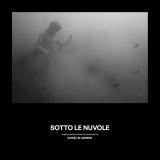
In Gianfranco Rosi’s portrait of Naples, Sotto le Nuvole, the ground shakes periodically. Between Mount Vesuvius and the Tyrrhenian Sea, the fumaroles of the Phlegraean Fields hiss volcanic gas and steam. Below the sleeping volcano, modern day Naples emerges in black and white and fills with voices, with lives. From the traces of history and the concerns of the present, Rosi documents a city immersed in its continuous past, with Daniel Blumberg’s minimal soundscape hovering in a sonic space between liquid and air.
Tasked with creating a soundscape that would suspend space within Rosi’s film, Blumberg called upon the extended technique of saxophonists Seymour Wright and John Butcher to create a gossamer fabric of traces and sounds abstracted from their instruments. Having transitioned from theoretical physics to the saxophone, John Butcher has always deeply considered space in the context of his playing. His concerns are with flow, density and how the saxophone is situated in the living world. Zeroing in on the core sonic properties of the mechanical and acoustic components of the saxophone, Seymour Wright has integrated its every breath, reed vibration, keypad clatter and hissed microtone of his alto into his own, unique improvisational language. In his work with these two seminal players, Blumberg makes his most concentrated soundtrack to date - reinforcing the film's sense of overlapping time and space, and pushing at the limits of experimentation.
Initially recorded in Daniel’s flat in London, Butcher and Wright centre themselves around long, consistent tones, so soft that it seems breath is being gently pulled from the saxophone's bell by an invisible hand. Blumberg himself adds haunting bass harmonica, and recordings of Wright’s launeddas - a traditional and ancient triple pipe polyphonic reed instrument from Sardinia, Italy. Blumberg then travelled to the volcanic region of Baia, next to Pompeii. Once a flourishing classical Roman city loved by Nero, Baia slowly sank under hydrothermal pressure, leaving the city in a kind of geological purgatory. Using specialised geophones and hydrophones, Blumberg took those initial recordings and amplified them underwater, sending them calling out across the ruins of Baia’s mosaics, Nymphaeum statues and villas.
“It was important to me that the music was whispered in the same landscape that Gianfranco has worked for the past three years, so that you can hear the volcanic air gulping, the lapping of the waves, the steam and bubbles popping against John and Seymour’s saxophone breaths – an echo from a suspended time.”
What emerges is deeply melancholic, tender, subtle and right at the edges of audio technology. Submerged in an aquarian mausoleum, the mysterious vibrations of the saxophone and its bell become an echo of an echo, wading from the future into the past. ‘Sotto le Nuvole’ is less a soundtrack than a process of aeration - a sonic puncture in the material of the film which allows its central message to breathe, and a remarkable experiment at the limits of the saxophone’s possibility.
Giom's Supremus Records has been dropping digital heat for more than a decade and now, in collaboration with us, they are making their vinyl debut with the Giom Classics series featuring tried and tested gems that have been fully remastered. 'The Message' is first up and back in 2015 when it originally dropped quickly became a favourite of the don Bill Brewster. It's patient, low-slung and slow burning with an irresistibly hypnotic effect. 'People' then gets more party with chopped vocals and disco samples all bristling with energy and big drums carrying it onwards and upwards. 'Last Dance' closes out with more warm, soul-infused and patient house depths with musical chords and another well-chosen and expertly deployed vocal that adds just the right amount of fire to amp up the energy.