40th Anniversary Edition - newly remastered from the master tapes, with an additional bonus LP of instrumentals and the previously unreleased "Narration Theme."
Daytime Viewing (1979-80) is an extended narrative song, based on a casual analysis of daytime television drama and the audience phenomena such programming addresses. The piece explores the use of fantasy as a survival mechanism against loneliness, illustrating the human compulsion to inflate the mundane to mythological proportions. A central female character weaves tales, using threads of personal experience and the idea of TV as friend, as mantra, and as transformational window between imagined spectacle and the pedestrian plane.
Originally released as a private cassette edition recorded, 1982; Chez Hum-Boom release, 1983 documenting the collaborative performance piece of the same name by Jacqueline Humbert g David Rosenboom. This heady, thoroughly enjoyable work was first made available on CD and LP in 2013 by Unseen Worlds. Jacqueline Humbert (aka J. Jasmine) is a songwriter of brains and wit on
par with Robert Ashley, with whom she's worked extensively. David Rosenboom's complex, harmonic electronic arrangements are accentuated brilliantly by percussion from William Winant. Daytime Viewing can happily be added.
Buscar:analysis
The previously untold story of British dance music’s first sub-bass revolution, tracing the origins, development, impact and influence of bleep techno, and the subsequent musical styles it inspired, on UK club culture.
Originally published in 2019, it has now been revised, updated and expanded. Errors have been corrected, some chapters have been expanded, analysis has been added and further footnotes have been included to include even more information and citations.
There’s also now an additional ‘Afterword’ chapter that reflects on the story, the author’s journey as a researcher, and changing perspectives around UK dance music history.
The second instalment from London Odense Ensemble digs deeper into the group's vision of what modern psychedelic jazz should sound like. Cut from the same sessions as Jaiyede Sessions vol. 1, released last summer, vol. 2 presents a more nuanced approach to the material. On this set the ensemble focuses on shorter, layered pieces - travelling from deep spiritual jazz grooves to gorgeous free-flowing minimalism to full-on acid jazz. There's echo-drenched flutes being absorbed into layers of analog synth pads and guitars, bossa beats and double bass sequences merging with electronics. It's an intoxicating mélange of sounds and styles, spanning wide temporal and geographical distances. London Odense Ensemble came together when two of the finest exponents of London's flourishing jazz scene, flautist and saxofonist Tamar Osborn and keyboard specialist Al MacSween, came over to Denmark to explore new sounds with Causa Sui's Jakob Skott and Jonas Munk, as well as local bass player Martin Rude. For two days the group laid down grooves and ideas and experimented in the studio, and later the best segments were edited and mixed by Jonas Munk, who took a somewhat liberal approach to the mixing process, often dyeing the material with external effects and synthesizers. Jaiyede Sessions are the kinds of records that defy genre-terms, yet have its own instantly recognizable fingerprint. It carries a unique shared vision between the players of what modern psychedelic jazz sounds like. bios: Tamar Osborn: Saxophonist, composer and multi-wind instrumentalist is the creative force behind modal jazz ensemble Collocutor (On The Corner Records). She is a member of the Dele Sosimi Afrobeat Orchestra, performs and collaborates regularly with Sarathy Korwar, Jessica Lauren, Emanative, Ill Considered and DJ Khalab. Al MacSween: Keyboard player & founding member of Kefaya. Collaborations include American jazz legend Gary Bartz, Syrian qanun master Maya Youseff, London Community Gospel Choir, Palestinian jazz singer Reem Kelani & kora player Kadialy Kouyate. Martin Rude: Multi-string instrumentalist & lead singer in Sun River & Edena Gardens with members of Papir & Causa Sui. Jakob Skott: Drummer in Causa Sui with a slew of side projects on El Paraiso, including Chicago Odense Ensemble, Jonas Munk: Guitarist in Causa Sui & studio wizard on most releases on El Paraiso.
Three O’Clock High war eine unkonventionelle Interpretation einer Highschool-Komödie der 80er Jahre.
Der Film, bei dem Phil Joanou (U2’s Rattle and Hum, State of Grace, Final Analysis) stilvoll Regie führte,
erinnert mehr an Scorsese als an John Hughes und zeigt Casey Siemaszko in der Hauptrolle als Streber,
der sich nach der Schule mit einem psychopathischen Tyrannen (gespielt von Richard Tyson) herumschlagen muss. Der Film wurde auf Heimvideos zum Kulthit, wozu auch die stimmungsvolle, dynamische und
pulsierende Musik der deutschen Synthpop-Legenden Tangerine Dream (Sorcerer, Thief, Risky Business)
beitrug.
Regisseur Joanou wollte die Band unbedingt für den Film engagieren und war überglücklich, als sie zusagten:
”Die Berliner Sessions mit Edgar Froese und Paul Haslinger waren ein wahr gewordener (Tangerine-)Traum”,
schreibt er in den neuen Linernotes zu dieser Veröffentlichung. ”In ihrem Studio direkt an der Berliner
Mauer arbeiteten wir mehrere Wochen lang an jedem einzelnen Stück... Was sie einem Keyboard, aber
auch Gitarren, Bass und Schlagzeug entlocken konnten, war einfach unglaublich. Ich war wie weggeblasen.”
Die 15 Tracks von Tangerine Dream werden durch zusätzliche Musik von Sylvester Levay (als die Filmemacher
mehr Cues brauchten und es sich nicht leisten konnten, nach Berlin zurückzukehren) und den bekannten
Song von Jim Walker, ”Something to Remember Me By”, ergänzt.
Recorded both in Spain and Finland, the 13-track album Myriadi documents Tatu Rönkkö and Raúl Pastor Medall's first standalone collaboration, entirely created, performed and mixed by the pair. With Myriadi, the two artists walk listeners into a world that somehow manages to feel ancient and modern at the same time. It is peaceful and dreamy but also raw, solemn and unsettling. Tatu's improvisational, crude and almost ritualistic sonic approach blends in seamlessly with Raúl's more melodic and melancholic schemes of composition. With its simplicity and clarity, Myriadi belongs in the realms of dark ambient and drone as much as it belongs to a tradition of minimal acoustic music. Myriadi embraces loose ends, harmonic freedom and even atonality; regardless of whether it involves the sound of glass-blowing water bottles, a small Finnish harp, bell-like sounding metal plates or piano strings played with paint brushes and sticks, the overall improv-based character of the project gives Myriadi a primal, unpredictable and meditative feel. This spontaneous study of form and timbre has room for bold rhythmic pieces played with a drum set consisting of six floor toms, but also for hypnotic chants of granular flute-like sounds and spoken word poetry (featuring voices by Raúl and Tatu's moms). The spontaneity and lack of premeditation that permeate through Myriadi paradoxically reinforce the cohesiveness of the record, reminding us that sometimes creativity really benefits from avoiding too much analysis and overthinking. Rauelsson (Raúl Pastor Medall's musical moniker) and Tatu Rönkkö met in 2015 through common friends. They both have released music on the Berlin-based label Sonic Pieces and have collaborated on stage and in the studio on a number of occasions. Tatu appeared as a guest musician on Rauelsson's Mirall (2018) and contributed significantly on some film and TV projects that Raúl has worked on for the last couple of years. For the recording sessions of the dystopian TV Series Anna (2021) Tatu travelled to Spain where they explored countless rhythmic ideas with relatively untraditional instrumentation. These free and relaxed creative meetings led to other recording sessions completely unconnected to any scoring project, planting the seed for what Myriadi would become. RIYL: Ben Salisbury and Geoff Barrow, Alva Noto and Ryuichi Sakamoto, Jefre Cantu-Ledesma, Rafael Anton Irisarri, Brian Eno TRACKLIST: A1 Rombo A2 Vidre A3 T A4 Keinu A5 Ryminä A6 Ö B1 K B2 Silta B3 Golondrina B4 U B5 Kuvakudos B6 Pont B7 Muinoin
LIMITED EDITION PICTURE DISC EDITION OF PAUL DRAPER'S NEW
ALBUM CULT LEADER TACTICS .Meaty art-rock, austere orchestral
interludes & driving future pop - Classic Rock 8/10 Cult Leader Tactics is
sleek & smart, full of melody, humour and flair - Record Collector 4*
Former Mansun frontman, Paul Draper, returned in early 2022 with a
collection of his finest songwriting since the bands' imperial phase
Cult Leader Tactics', is a self-help manual on how to become a complete cult in
the music industry & is his first solo album since 2017's much- lauded Spooky
Action'. Cult Leader Tactics' offers a satirical analysis of the self- help manual
genre. A guide on how you can get to the top of your chosen profession, or ahead
in life & in affairs of the heart, by acting in a Machiavellian manner, employing
dirty tricks or Cult Leader Tactics' to achieve your life goals. After experiencing
these types of human behaviours & themes, the album arrives at the conclusion
that the only true answer in life is love. Paul plays most of the instruments on the
album, including lead vocals, guitar & various Moogs & synthesisers. An album
produced with long-time collaborator & acclaimed producer Paul P-Dub' Walton
(Massive Attack, The Cure, Bjork) at Loft Studios, it also includes guest
appearances from Porcupine Tree's Steven Wilson & Gam of the band Sweat' as
well as featuring a 288-person C.L.T. Lockdown Choir. Cult Leader Tactics' offers
a selection of Paul's most focused & ambitious work so far, a brilliantly dark
commentary on an industry he is all too aware of. Kscope are proud to present a
limited Picture Disc edition of Cult Leader Tactics'.
Talkbox is multidisciplinary artist Michael O’Mahony’s third album and his first for 33-33. It’s his most complete and cohesive music project to date, a culmination of ideas, happy accidents and compositions that have been cut up and re-arranged over many years. The album’s sonic signature is the Vocaloid software synthesizer – the titular ‘talkbox’ – famously by Japanese cartoon Hatsune Miku. O’Mahony became aware of Vocaloid in 2015 through the popular Nyan Cat meme, which em marketed ploys the software. Excited by the emotive potential and realism of Vocaloid’s voice synthesis, he began to imagine an album that combined its capabilities with italo disco- and UK garage-inflected sounds. As the version of Vocaloid O’Mahony had access to sang only in Japanese, O’Mahony relied on Google Translate to obtain the required characters to enter into the software. In early experiments with the software, the north Londoner translated BBC match reports from his beloved Arsenal FC. Eventually, he amassed a library of syllables and phonetic sounds, from which he created the melodies crystallised on the record. As far as we know, these vocal lines have no meaning in lyrical terms. O’Mahony works largely in an iterative way; song ideas are reworked over and over in different styles, sometimes over a period of years. Multiple versions of a song might appear on an album, each one with its own particular nuances in feeling. Music perhaps does not always flow out of O’Mahony, but emerges over time. O’Mahony’s album forms part of his wider project: an analysis of his subjectivity through art and psychotherapy. The music complements his writing and video work, which feature in his performances. He writes in chains of association, speculating on topics such as family dynamics, or the meaning of recurring dreams about a childhood game console. His video practice features footage of objects found in his parents’ house, such as his sister’s childhood My Little Pony toy and his retired psychiatrist father’s lecture tapes. The music, at once synthetic and heartfelt, imbues the writing and video work with a strange tenderness. Taken together, these various aspects of O’Mahony’s work form a meditation on the emotional attachments we make to consumer objects and the role of early life in character formation. Tracklist 1/Talkbox 2/More Succinct 3/Electricity 4/Not Giving Up 5/Dinosaur 6/Trumpet 7/Electricity (Rock Version) 8/Aliss 9/Be Good 10/Not Giving Up (Slow Version)
In a time where electronic music gets harder and faster each day, Berlin-based duo Brigade‘s debut album „Hard Times, Soft Music“ reclaims easy listening as a badge of honour. Being released on 14.10.2022, the record is a meticulously calibrated work of room temperature, a home cooked meal between friends or a warm sonic blanket that tugs you in after a rainy day. Pushing their club roots to the side, Brigade‘s debut album con- dently sits between ambient, house and hip hop. „We took the pandemic as a cue to take a break from dance floor productions and play around with different genres and production styles.“ The rst single „International CommunicationTM“ showcases that breadth and introduces an album pretty much anyone in the post-Shrek cultural landscape could agree on. Basically, if you appreciate a good hug, chances are you‘ll enjoy this LP. Also, there's a pretty cute dog on the cover.
Aurora Records is proud to present asamisimasa's latest album with two
pieces by composer Trond Reinholdtsen – Unsichtbare Musik (Invisible
Music) and SPASTIL (Late Style)
After nearly twenty years of collaboration, this is their first collaborative release.
Reinholdtsen is among Norway's most prominent composers of his generation
and has a significant international position with a long list of commissions on his
resume. asamisimasa has premiered seven works by Reinholdtsen at festivals
such as Donaueschingen, Ultima, Huddersfield, and Darmstadt. Being a prolific
voice within the experimental opera and music theatre scene, Reinholdtsen has
previously only released two works on CD. With this release asamisimasa wishes
to shed a light on his instrumental chamber music. This is the ensemble's fifth
portrait album, their second on Aurora Records. "Unsichtbare Musik" was
commissioned for a concert at the Berliner Philharmonie in 2009, and explores
the relationship between language and music, between words and sonorous
representation. The piece challenges both the act of listening, our perception of
musical sounds, and the attempt to conceptualize musical impressions and
experiences. Composed ten years later,"Spatstil" is based on the semantic
analysis of "Unsichtbare Musik" and the ensemble's performance history with this
work. "SPATSTIL" marks a clear, yet ironic distance from the previous piece
through a dystopian self- criticism. The pieces have a unique sonorous
sophistication and aims to inspire philosophical reflection as well as aesthetic
pleasure. The aim is that the album can contribute to a reflection on music's
conditions today by focusing on the solitary and secluded listening one does at
home.
asamisimasa was founded in 2001 by musicians who shared an interest for
experimental music. Since then the ensemble has won two Spellemann Awards
(2012, 2015) and premiered more than 80 new pieces and toured all over Europe,
USA and Asia.
(Cargo Collective Title) RIYL: Barker, burger/ink, Andy Stott, Shackleton, Monolake, Jan Jelinek, Perila, Fax. 180gLP in 350gsm jacket + 190gsm inner + DL. CD in custom mini-gatefold paperboard jacket. T. Gowdy has kept up a productive albeit mostly virtual pace since the release of Therapy With Colour (his third full-length album and first for Constellation) which dropped just as things were locking down back in spring 2020: performances at numerous festivals including MUTEK Montréal, Node Festival and NEW NOW; audiovisual pieces exhibited at various European galleries and events; a track and video for Constellation’s Corona Borealis Longplay Singles Series; sound design for the documentary Atalaya by filmmaker Emma Roufs. Gowdy now returns with Miracles, his second full-length for Constellation, which draws on source materials originally performed in 2018 for an unreleased audio/visual project based around surveillance footage—a precursor to video1capped, monitor-based horizons that soon took on new meanings. Re-immersing himself in those recordings, Gowdy disassembles and deploys them as raw source material for new experiments with vactrols, noise gates and analog-to-digital triggering and aliasing, the original recordings juxtaposed anew amidst their successive textural and rhythmic treatments. Gowdy keeps this re-composition process stripped down, elemental and purposive, guided by an ascetic Aufhebung: synthesis as sublation—subjecting a temporal material/theme to analysis and transformation, reintegrating to form a whole that overcomes what it preserves without erasure, reshaping and intrinsically carrying its origins forward. Where Therapy With Colour was strictly and rigorously a set of stereo live performances, Miracles fuses iterative—though still spartan—layers of performance. “Therapy With Colour was about healing through self-hypnosis; Miracles is about forging a future with memory through subjection to trigger mechanisms” notes Gowdy. The result is a captivating collection of minimal IDM and oscillated electronics from the Montréal/Berlin producer, working primarily in a 120-140 BPM zone of tonal percussion and corrugated pulse. Gowdy’s sensibility and sound palette gets deeper and dirtier, summoning new pathways of alluvial flicker and abraded euphoria. As the album progresses, low-pass gate vactrols coalesce into a clear and vital theme, conveying immanence through woody timbres at times reminiscent of the Shinrin-yoku aesthetic (Japanese ‘forest bathing’), though always with a grainy transcendence rather than invoking any clean pure sheen. Gowdy consistently heats and heightens the presence of each component in the mix, balancing different elements in democratic compression/distortion, attaining an unornamental and earnest form of mantric-industrial majesty. Miracles is live, corporeal, activated electronic music of the highest caliber, deployed with monastic and meditative focus. Tracklist: 1 350J 2 Miracles 3 Déneigeuse 4 Transcend I 5 U4A 6 Vidisions 7 Clipse 8 Transcend II
White Vinyl[43,07 €]
Tradition and experimentation are two familiar territories that C"mon Tigre, a duo who find their identity by working with musicians from all over the world, can balance between very well. As they did for their debut album (2014), they have put together a multicolored collective for their second record Racines (2019) and now their third album Scenario. Sailing from the Mediterranean basin and being guided by the fascination for Africa and the Middle East, C"mon Tigre give rise to a personal language, made up of mixtures with jazz, afrojazz, the rhythmics of hip hop, funk, club music. All without ever confining their songs to one style, but pushing the exploration as much as possible, into a dimension that every journey worthy of this name should encompass. With the musicians they work with, the exchange and experimentation continue till the end, the songs can take different directions at any time. The result is a mixed, cosmopolitan record, which escapes from any label for the affirmation of a free attitude. It led C"mon Tigre to seek a connection with dancefloor culture, even if considered only as an evocation to revisit in a personal way. This cinematic imagery pushed C"mon Tigre to translate their musical wandering into a visual form, as they already did in the past with animated videos made with the painter Gianluigi Toccafondo and 3d artist Sic Est for "Underground Lovers" and "Behold The Man", two tracks from the previous record. Now the will to merge music and images is even greater: Scenario is also released in a colored vinyl + book version, including a volume to browse through with a wide selection of photo taken by Paolo Pellegrin. Paolo has spent the last 30 years documenting the world. He lives and testifies to issues regarding living conditions, poverty, sufferance and violence, always implementing an anthropological approach. A subjective but detached gaze, which is both a reflection and an analysis, that coincides with an attitude of openness, respect, and interest in the times of history, an odyssey between human and inhuman. Scenario wants to tell about what defines us as human beings: joy, connection, anger, sense of belonging, pain, anguish, violence, dignity. These are tales of someone observing with stretched ears.
Black Vinyl[28,53 €]
Tradition and experimentation are two familiar territories that C"mon Tigre, a duo who find their identity by working with musicians from all over the world, can balance between very well. As they did for their debut album (2014), they have put together a multicolored collective for their second record Racines (2019) and now their third album Scenario. Sailing from the Mediterranean basin and being guided by the fascination for Africa and the Middle East, C"mon Tigre give rise to a personal language, made up of mixtures with jazz, afrojazz, the rhythmics of hip hop, funk, club music. All without ever confining their songs to one style, but pushing the exploration as much as possible, into a dimension that every journey worthy of this name should encompass. With the musicians they work with, the exchange and experimentation continue till the end, the songs can take different directions at any time. The result is a mixed, cosmopolitan record, which escapes from any label for the affirmation of a free attitude. It led C"mon Tigre to seek a connection with dancefloor culture, even if considered only as an evocation to revisit in a personal way. This cinematic imagery pushed C"mon Tigre to translate their musical wandering into a visual form, as they already did in the past with animated videos made with the painter Gianluigi Toccafondo and 3d artist Sic Est for "Underground Lovers" and "Behold The Man", two tracks from the previous record. Now the will to merge music and images is even greater: Scenario is also released in a colored vinyl + book version, including a volume to browse through with a wide selection of photo taken by Paolo Pellegrin. Paolo has spent the last 30 years documenting the world. He lives and testifies to issues regarding living conditions, poverty, sufferance and violence, always implementing an anthropological approach. A subjective but detached gaze, which is both a reflection and an analysis, that coincides with an attitude of openness, respect, and interest in the times of history, an odyssey between human and inhuman. Scenario wants to tell about what defines us as human beings: joy, connection, anger, sense of belonging, pain, anguish, violence, dignity. These are tales of someone observing with stretched ears.
Idiology was originally released in 2001 and is now finally back on vinyl. This re-issue is pressed on white color vinyl and presented in a die cut jacket with artworked inner sleeve and free download card. From their beginnings in 1992, Cologne native Jan St. Werner and Dusseldorfer Andi Toma have consistently challenged electronic music"s paradigm in often surprising and always intriguing ways. Idiology is the duo"s seventh album and is no exception to this rule, as Mouse on Mars surround themselves with strings, woodwinds, brass and the band"s own heavily modified fleet of machines in the St. Martin"s Tonstudio. Fans should once again brace themselves for the inevitable shock of the new as Germany"s most irreverent audio renegades have created the perfect soundtrack for a highly sinister dance party. Kicking off with "Actionist Respoke", the album"s first single, Mouse on Mars officially declare their independence from glitchtronica"s shoegazing legions. Longtime collaborator Dodo Nkishi lends a uniquely warped vocal sensibility to the track which already features Mouse on Mars"s darkest grooves to date. The rest of the album continues to thicken the group"s sonic stew. Tracks such as "Presence" and "Catching Butterflies With Hands" have their populist intentions undermined by Werner and Toma"s meddling hands, while the duo reprise their flirtation with the orchestral as heard on the opening tracks from 2000"s Niun Niggung. At the other end of the spectrum, "Introduce" is a truly evil slice of twisted lympho-zoid hip-hop. Idiology takes no prisoners in its dual-pronged assault on the conventions of modern music. Only with the loungy closing number, "Fantastic Analysis" (a term Werner and Toma invented to describe their working process), do Mouse on Mars let the arrangements breathe a long sigh of relief, the calm after the storm. To enable these stylistic achievements Mouse on Mars enlist the help of partners in crime such as: Nkishi, the multi-talented Harald "Sack" Ziegler, house icon Matthew Herbert on piano, violinist Matty Arouse, in addition to fellow programming wizards Adam "Vert" Butler and F.X. Randomiz. The latter two toured with Mouse on Mars in 2000 as they successfully triumphed over audiences around the globe.
- A1: Dj Ghost - Techno Trip
- A2: Insider - Boots On The Run
- A3: Body-Shock - Invasion Of The Body-Snatchers
- A4: Dj Looney Tune - Workstation
- A5: Body-Shock - Sleepless
- A6: Liquid Overdose - Contact
- A7: Cherrymoon Trax - House House House
- A8: Dj Looney Tune - Beatbox (Acieed Mix)
- A9: Liquid Overdose - Fearsome Bass
- B1: Jan Vervloet & Dj Ghost - Super Dry
- B10: Joyrider - The Deadline (Ny Mix)
- B11: Body-Shock - Attack Of The Body Snatchers
- B2: Jones & Stephenson - The First Rebirth (Dj Ghost & Danny C Remix)
- B3: Push - Universal Nation (Dj Ghost & Danny C Remix)
- B4: Traxcalibur - The Dreamer
- B5: Repulsive 2 - Recactussed
- B6: Dave Davis - Transfiguration
- B7: Blue Alphabet - Cybertrance
- B8: Final Analyzis - El Punto Final (Power Mix)
- B9: Dreamland - Mind Penetration
Our next mixtape features a superb, tight blend of some of the very best tracks to fly out of the speakers at the Cherry Moon Club. At the helm we have DJ Ghost, spinning the grooves to take us on a journey through the ages, through the genres, from twisted acid concepts to hypnotic trance and gut busting hardcore. Ghost aka Bjorn Wendelen has been a stalwart for us at Bonzai since the very early days. He’s delivered several cuts for us over the years and has branched out with his own Ghoststyle brand with great success. The famous Cherry Moon was and remains one of the biggest names in Belgian club-life, with 30 years of embracing club culture. Since the start in 1991, they have brought the best techno, hard-trance and house to the scene. During the 90's and early 00's, Cherry Moon was the place to be for clubbers from all over Belgium, France, the Netherlands and even other European countries. Housed on classic K7 tape, this comp features a host of tracks from the likes of DJ Ghost, Insider, Body-Shock, DJ Looney Tune, Jones & Stephenson, Push, Blue Alphabet, Final Analysis, Joyrider, Dreamland and more. So, dust off your vintage cassette machine and prepare to be blown away by the sound of Cherry Moon.
T. Gowdy has kept up a productive albeit mostly virtual pace since the release of Therapy With Colour (his third full-length album and first for Constellation) which dropped just as things were locking down back in spring 2020: performances at numerous festivals including MUTEK Montréal, Node Festival and NEW NOW; audiovisual pieces exhibited at various European galleries and events; a track and video for Constellation's Corona Borealis Longplay Singles Series; sound design for the documentary Atalaya by filmmaker Emma Roufs. Gowdy now returns with Miracles, his second full-length for Constellation, which draws on source materials originally performed in 2018 for an unreleased audio/visual project based around surveillance footage_a precursor to videocapped, monitor-based horizons that soon took on new meanings. Re-immersing himself in those recordings, Gowdy disassembles and deploys them as raw source material for new experiments with vactrols, noise gates and analog-to-digital triggering and aliasing, the original recordings juxtaposed anew amidst their successive textural and rhythmic treatments. Gowdy keeps this re-composition process stripped down, elemental and purposive, guided by an ascetic Aufhebung: synthesis as sublation_subjecting a temporal material/theme to analysis and transformation, reintegrating to form a whole that overcomes what it preserves without erasure, reshaping and intrinsically carrying its origins forward. Where Therapy With Colour was strictly and rigorously a set of stereo live performances, Miracles fuses iterative_though still spartan_layers of performance. "Therapy With Colour was about healing through self-hypnosis; Miracles is about forging a future with memory through subjection to trigger mechanisms" notes Gowdy. The result is a captivating collection of minimal IDM and oscillated electronics from the Montréal/Berlin producer, working primarily in a 120-140 BPM zone of tonal percussion and corrugated pulse. Gowdy's sensibility and sound palette gets deeper and dirtier, summoning new pathways of alluvial flicker and abraded euphoria. As the album progresses, low-pass gate vactrols coalesce into a clear and vital theme, conveying immanence through woody timbres at times reminiscent of the Shinrin-yoku aesthetic (Japanese `forest bathing'), though always with a grainy transcendence rather than invoking any clean pure sheen. Gowdy consistently heats and heightens the presence of each component in the mix, balancing different elements in democratic compression/distortion, attaining an unornamental and earnest form of mantric-industrial majesty. Miracles is live, corporeal, activated electronic music of the highest caliber, deployed with monastic and meditative focus.
'Memory Box' - the new album by Rodney Cromwell - fuses a European synthpop sensibility with a world of magical realism. It was inspired as much by the literature of Alice in Wonderland, Franz Kafka and Anna Kavan, as by its musical influences of artists such as Kraftwerk, Neu!, The Cure, Silver Apples, Oppenheimer Analysis and Polyrock. The sonic pallet of 'Memory Box' is rich, colourful, often surprising and utterly unique. Since the release of his debut 'Age of Anxiety' album in 2015, Rodney Cromwell has been featured by the likes of NME, Electronic Sound Magazine, Huffington Post, Paste, BBC6 Music and national RNE3 in Spain for whom he recorded a live session. 'Age of Anxiety' was included in a wealth of Best of Lists, not least that of Electronic Sound. He has appeared on compilations alongside Cavern of Anti-Matter, John Foxx, Devo, OMD, Katy Perry and many more. Rodney Cromwell is the project of Adam Cresswell. The first band he founded was SALOON, who were John Peel darlings, who recorded three Peel Sessions and the Festive 50 number 1 of 2002. They released three acclaimed albums on Track & Field (UK) and Darla Records (US) and played with a host of alternative acts including Stereolab, Electrelane, Quickspace, Laika, Of Montreal & Movietone. He followed Saloon with ARTHUR & MARTHA the acclaimed tweetronica duo that released the sole album 'Navigation' before vanishing. In addition to performing as Rodney Cromwell, he runs the Happy Robots record label. The Rodney Cromwell live set is a joyful mixed-media extravaganza, incorporating analogue synths, video visuals and live instrumentation, interjected by Rodney's 'offbeat wit'. His debut festival appearance at Indietracks in 2015 was described as 'like a spiritual experience". He has shared stages with acts including Pram, Marsheaux, Death & Vanilla, Rowetta and Steve Davis. His sole performance in 2020 was as part of Damo Suzuki's backing band. He will be promoting the album with a series of live-dates in 2022. Cromwell's recent singles 'Memory Box' and 'Get Me To Prague' received play on BBC 6 Music as well as national play in Spain, Finland and Japan. 'Memory Box' featured in the Official Festive 50 on Dandelion Radio. To coincide with the album we have early confirmed reviews with Electronic Sound Magazine and interviews with ElectricityClub, Pennyback Music and You haven't heard this music vodcast.
- A1 22: 02 Fm
- A2: Radio Skit 1
- A3: Changed
- A4: Falling Featuring – Melanin 9*
- A5: Summer In The Bits
- A6: Scences
- B1: Radio Skit 2
- B2: Decline Of Self Featuring – Confucius Mc, Coops
- B3: Piece Of Shit
- B4: Hold Ur Own
- B5: Kno Tha Status Featuring – Axel Holy, Datkid, Upfront*
- C1: Radio Skit 3
- C2: The Rain Featuring – Riah
- C3: Weekend Blues Featuring – Indira May
- C4: Men Can Breathe Featuring – Benaddict
- C5: Limitless
- D1: Radio Skit 4
- D2: My Wonders Featuring – Fliptrix
- D3: The Feeling
- D4: Hope Featuring – Dialect
- D5: In My Mind
- D6: Radio Skit 5
Rapper and producer duo Verbz & Mr Slipz announce their latest album ‘Radio Waves’ due out 13th November 2020. Released on the acclaimed Hip-Hop label High Focus Records, the 22-track project sits perfectly between present-day greatness and unrivalled nostalgia welcoming us into their unique rap landscape. The cover, designed by Matt Littler, captures the essence of the album perfectly.
Born and raised in Croydon, rapper Verbz has proven himself time after time with his innovative rhyming style and distinct flow. The creative partnership wouldn’t be complete without Brighton based producer Mr Slipz who marries Verbz’ form with his laid back jazzy sound as well as unmistakable attention to detail. The pair started making music together in 2017 when they released their debut collaboration ‘Lessons Of Adolescence’. This was followed by extensive tours and studio sessions where their musical alliance was cemented and their bond has been untouchable ever since.
Kicking off the album with humour and personality, '2202 FM’ is a full-bodied track which sees Verbz spit tales of admiration for his city whilst at the same time striving to escape. With London on the brain,
‘Summer In The Bits’ is an introspective analysis of a summer's day in the capital full of tense trials and tribulations. Moving throughout the album, ‘Kno The Status’ welcomes three potent guest verses from Alex Holy, Datkid & Upfront paired with an unrivaled arrangement and instrumentation magnifying Mr Slipz’ craft. Once again his incomparable production delivers on ‘Weekend Blues’ which see’s Verbz regretfully address craving more from his weekend to then be greeted by numbness on a Monday morning. High Focus linchpin Fliptrix delivers some captivating combinations on ‘My Wonders’ honing n on the current state of the world from his point of view. Up next is one of the lead singles
‘The Feeling’, which is a refreshing and rare representation of the classic Boom Bap sound. Before signing out, Verbz’ impressive storytelling shines through on ‘In My Mind’ offering insight into his artistry as he allows access to his inner thoughts via vivid storytelling lyrics. Sandwiched amongst the project are evocative radio skits placed to perfection, offering angles of comedy including a mini-interview acting as the final pieces to the puzzle.
This record is the culmination of two years of hard work packed with skill and finesse, as we have all come to expect. With their unrivalled chemistry, the dynamic duo have proven themselves to be some the most exciting artists on the scene, and 'Radio Waves' is going to cement their position at the top of the ranks.
The new album from Cambridge's pop-surrealist Pete Um, a world unto
himself, but also a standard-bearer for the kind of heroic DIY
befuddlement and unfinching self-analysis that Deep Freeze Mice, Mick
Hobbs, Robert Storey and the Homosexuals minted
Pete Um is a lyrical troubadour and lo-f electronic maverick. Um has supported
Thom Yorke, received critical acclaim from The Wire and released more music
than most artists have written.Um's sprawling catalogue is a beast that can't be
tamed or reasoned with, but it's endlessly rewarding: time and time again he nails
that going-mad-in-the-potting-shed-ness that is the historic, and perhaps eternal,
English condition. Even at its most demented and disorderly your man sounds
like he's wrenching everything he possibly can out of his primitive keyboard-andmic set-up.
While the infuence of 80s UK squat-whimsy looms large, we're reminded too of
the synth-fuelled early-noughts of the The Soft Pink Truth and Safety Scissors,
and, more than anything or one, R. Stevie Moore – unexpectedly powerful and
unforgettable songs emerging unexpectedly out of awkward, enervating loops
and the more obviously pranky vignettes.
"It takes a while to enter Pete Um's world: his songs are brief, dense and
ramshackle; he revels in a reviewer's dismissal of his live act as "grindingly
awkward shithop", and wears his self-doubt on his sleeve - Can't Get Started is an
ironic title, for Um is prolifc across videos, blogs and music. A Remarkable,
coherent document, an excellent introduction to Um's misft creativity." The Wire
PAUL DRAPER RETURNS WITH HIS NEW ALBUM, 'CULT LEADER
TACTICS'
Former Mansun frontman, Paul Draper, returns with a collection of his
fnest songwriting since the bands' imperial phase
'Cult Leader Tactics' is a self-help manual on how to become a complete cult in
the music industry & is his frst solo album since 2017's much- lauded 'Spooky
Action'.
'Cult Leader Tactics' offers a satirical analysis of the self-help manual genre. A
guide on how you can get to the top of your chosen profession, or ahead in life &
in affairs of the heart, by acting in a Machiavellian manner, employing dirty tricks
or 'Cult Leader Tactics' to achieve your life goals. After experiencing these types
of human behaviours & themes, the album arrives at the conclusion that the only
true answer in life is love.
Paul plays most of the instruments on the album, including lead vocals, guitar &
various Moogs & synthesisers. An album produced with long-time collaborator &
acclaimed producer Paul 'P-Dub' Walton (Massive Attack, The Cure, Bjork) at Loft
Studios, it also includes guest appearances from Porcupine Tree's Steven Wilson
& Gam of the band 'Sweat' as well as featuring a 288- person C.L.T. Lockdown
Choir.
'Cult Leader Tactics' offers a selection of Paul's most focused & ambitious work
so far, a brilliantly dark commentary on an industry he is all too aware of.
Digipack edition with 16-page bookletOn tour across the UK from 27th February
to 23rd March 2022.'Cult Leader Tactics' will be available via Kscope.
Minimal Wave presents an exquisite 7" EP release by Martin Lloyd entitled "L'Amant Electronique". Martin is mainly known for his Oppenheimer Analysis (Minimal Wave) and Analysis (Survival Records) projects, yet through the years he recorded over two dozen tracks on his own, most of which never saw the light of day. The four selected tracks were recorded between 1980 and 1984 in his own "Feedback Studios" in Battersea , London. Martin Lloyd delivers vocals via the vocoder and carefully layers synth melodies which range from upbeat and danceable, to what could be the soundtrack to a 1981 post-apocalyptic science fiction film. The record is pressed on white vinyl with a heavy black jacket (spot gloss) and is limited to 999 hand-numbered copies.
Ten years after its release, the reissue of this fabulous Matt Elliott record seemed essential to us since it was eagerly expected! It is undoubtedly the most dramatic sequel to the songs trilogy being outstanding for its darkness, from which he has progressively turned away. The Songs Trilogy is over, A new chapter entitled 'The Broken Man' is about to open and is the most delicate of Elliott's albums to date. The angry noise has all but abated, making way for more fragile melodies and a more subtle approach to intensity to immerse the listener. Ideally listened to in total darkness to discover the hope hidden deep within the guitars, voice, choirs, bells, ethereal trumpets, the howl of the dog beneath the skin, in the sincerity of the music. Inspired by the ghosts of European folk music, the voice often resigned but always expressive. Always finding new ways of working, Elliott collaborated with Katia Labeque who interpreted an improvisation of his that became the backbone of one of the central epic pieces on this album 'If Anyone Ever Tells Me That it is Better to Have Loved and Lost Than to Have Never Loved At All I Will Stab Them in the Face'. 'Dust Flesh and Bones', another of the epic pieces on this album, is perhaps Elliott's most beautiful and moving work to date, simple in it's form but emotionally profound. 'The Pain that's Yet to Come' hints at a new almost psychedelic era to come. 'The Broken Man' is an album to be discovered gradually over many listens, and with each one a new depth is surrendered until one can appreciate the panorama in it's entirety. Each track is an invitation to explore one mans analysis of his own descent reflecting the frustrations and sadness that touch us all at some point. Mixed by Yann Tiersen this album is a bridge between the more acoustic work of 'Songs' and the more electronic, ethereal work of Third Eye Foundation. It is finely balanced in the centre of Matt's musical universe.
- 1: Orders Of Magnitude
- 2: Circumspect
- 3: Think Tank Trials
- 4: Errors In The Signals
- 5: Everyday Pox
- 6: Blank Look About Face
- 7: Protection Racket
- 8: Leper Colony
- 9: The Wolf I Feed
- 10: Nom De Guerre
- 11: Quarantined
- 12: Analysis Paralysis
- 13: Opposites Repellent
- 14: Fall On Their Swords
- 15: Collision Course
- 16: A Gag Reflex
British Grindcore pioneers NAPALM DEATH never slow down, but after their much lauded 16th studio album “Throes of Joy in the Jaws of Defeatism” (2020) and a total of by now 4 decades (!) of intense and restless activity, it’s time to look back and re-issue two of the outstanding albums from their ample and valuable back-catalogue: “Time Waits For No Slave” (2009) and “Utilitarian” (2012). Both albums are now finally available again as Jewelcase CD for Midprice and as LP on 180g vinyl. Look out for further NAPALM DEATH re-issues coming soon…
Red Vinyl
Cinema Paradiso Recordings is proud to announce the release of the soundtrack to the motion picture 'The Parallax View', on vinyl for the first time ever, this coming April 30th 2021. Based on the book by Loren Singer, ‘The Parallax View’ is directed and produced by Alan J Pakula as the second instalment of his Political Paranoia trilogy - alongside Klute (1971) and All the President's Men (1976). With cinematography by Gordon Willis (The Godfather trilogy, Annie Hall) and starring Warren Beatty, this political thriller from 1974 is perhaps even more relevant today than it was back then.
The legendary score by composer Michael Small is regarded as a benchmark in the sound of paranoia thrillers that dominated cinema in the 1970s, with revered film critic Pauline Kael hailing the film as an essential for all fans of the genre. Now, 47 years later, the soundtrack will finally be available to own on vinyl.
The CPR edition of ‘The Parallax View’ soundtrack includes for the first time the infamous brainwashing scene, an influence on countless films and TV shows over the years. Notably, most recently with the Watchmen series and shows Mr Robot and Homecoming even using the music from the film. Whilst researching to gain approval for this usage we discovered from Jon Boorstin, (Assistant to Pakula on The Parallax View), that the unaccredited disembodied voice from the ‘Parallax Test’ scene belonged to director Pakula himself.
The single LP, deluxe gatefold limited edition in coloured vinyl comes with liner notes that include two essays by Scott Bettencourt and Alexander Kaplan (of Film Score Monthly), which provide a fascinating insight into the making of the film and an analysis of the score.
“The Parallax View embodies a particularly paranoid moment for America, when assassination wounds were still fresh and the President’s bungling burglars were running him out of the White House. Michael Small’s music beautifully captures our hope, our dread, and our nostalgia for truer values. In the Parallax Test sequence, he brilliantly seduces the assassin in all of us. Watching this today, wrapped in Michael's music, what was once wild fantasy feels at least as credible as the pronouncements of our Kool-Aid drinking Congressmen. “
- Jon Boorstin
The venerable composer and keyboardist Stale Storlokken follows up his previous Hubro release (and solo debut recording), The Haze of
Sleeplessness, with a second solo album performed entirely on pipe organ and recorded at Steinkjer Church by Stian Westerhus.
He describes the album as “a cavernous cathedral of sound”. While the Norwegian Grammy-nominated ‘The Haze of Sleeplessness’ used a whole keyboardmuseum’s worth of antique synths and contemporary digital software to create
its vast array of sounds, everything on ‘Ghost Caravan’ is the product of one organ’s pedals, pipes and sonic plumbing.
“There’s not so much of a relationship to ‘Haze’, says Stale Storlokken of the new album. “That album was more based on improvised ideas that were tweaked and arranged , while this one is all improvised with almost no editing at all. Everything you hear is from the church organ, with no additional instruments.
The basic concept of the record, and the arrangement of the titles and pieces, is done in such a way that they alternate between a fluent, “on the move”, abstract mood and a more recognisable, concrete and grounded mood. At the same time it should be so open that listeners will hopefully have their own unique experience. The organ at Steinkjer is not a big organ but it has some really nice sounds, with a number of quirks and mechanical eccentricities that suit my music.”
The organ is partly a reconstruction based on a Wagner organ in Nidarosdomen built originally in 1741, the organ is housed in the strikingly modernistic Steinkjer kirke, designed by Olav S. Platou in 1965, and featuring glass panels by the artist Annar Millidahl. What Ghost Caravan does share with its predecessor is a seemingly limitless acoustic space for the listener’s imagination to roam in, with Storlokken creating a cavernous cathedral of sound.
The audio dynamics span an enormous range, capable of stretching from the quietest breathy whisper to a basso profundo squawk or scream, sometimes within seconds of each other. Similarly, the incredible variety of sounds that Storlokken coaxes from the organ can defy rational analysis, with the resolutely analogue instrument appearing to echo the industrial, found-sounds of clanking machinery or buzzing electronics that one might expect to encounter through digital sampling or the tape-based experiments of musique concrete.
Over ten separate improvised pieces which connect into an informal suite through the repetition of key elements and sequential titles (with four ‘Spheres’ and four ‘Cloudlands’, plus ‘Ghost Caravan’ and ‘Drifting on Wasteland Ocean’), Storlokken has made a strikingly unified, self-referential aesthetic world that can stand as a true work of art.
Statistique Synthétique draws as much from the history of computer sound synthesis as from its latest developments. But well beyond developing simply as a proof of concept, this piece aims to transcend the abstract status of synthetic sound objects and lead them to a properly hallucinatory state, that is to say to a meeting point where the object and perception dissolve into each other, in a sort of transcendental field. Beyond, also, hylomorphism, to reach the world of matter-form fusions, where perception knows how to see "shoulders of hills", as Cézanne wrote.
Teum (the Silvery Slit) is, as the title suggests, an overture, an opening to the game of multiplications, fragmentations, duplications. But it is also the opening understood as the void that blossoms between two borders, a break from which escapes a double tension, both the pulling force of these two edges which move apart and the opposite force of reconciliation, of compression. Okkyung Lee invites us to a truly telluric moment, a rare moment of expression where tectonic movements and shear stresses become music. If the earthquakes were, as we thought in the 18th century, due to underground thunderstorms, there is no doubt that this piece of music, both celestial and continental, could have been their audible manifestation.
Text by François Bonnet
HeckerStatistique Synthétique2020 / 25'15Computer-generated sound with resynthesized situated texture recordingsWritten and produced by Florian Hecker, 2019 - 2020Texture analysis and resynthesis algorithm: Axel Röbel, Analysis/Synthesis Team, IRCAM, ParisMastered by Rashad BeckerPhoto by Mauricio Guillén, 2019
Thanks to Axel Röbel for his commitment to the project and special appreciation to GRM, Luke Fowler, Mauricio Guillén, Dirk Mayer and Porta33
Location Texture Recordings, using DPA 4060, DPA 4017B, DPA 4021 and DPA 4060 microphones to Sound Devices 702 recorder; except segment 04:31 - 05:37, recorded by Luke Fowler, April 2019 using Sony M10.
00:00 - 02:00 Lopud, Croatia, June 200802:00 - 03:12 Ponta do Sol, Madeira, ER 101, April 201903:12 - 04:14 Prentiss St, Cambridge, MA, February 201504:14 - 04:31 Anjos, Ponta do Sol, Madeira, ER 101, April 201904:31 - 05:37 Atelier Cézanne, Aix-en-Provence, April 201905:37 - 08:31 Anjos, Ponta do Sol, Madeira, ER 101, April 201908:31 - 09:46 Praia dos Anjos, Ponta do Sol, Madeira, ER 101, April 201909:46 - 10:39 Private garden, Kissing, September 200910:39 - 11:15 Praia dos Anjos, Ponta do Sol, Madeira, ER 101, April 201911:15 - 15:11 Porto do Paul do Mar, Calheta, Madeira, April 201915:11 - 16:53 Prinz Eugen Strasse, Vienna, June 200816:53 - 24:27 Risco, Rabaçal, Madeira, April 201924:27 - 25:15 Bois de Boulogne, Avenue du Mahatma Gandhi, Paris, September 2015
:::::::::::::::::::::::::::::
Okkyung LeeTeum (the Silvery Slit)2019 / 20'03Performed, recorded and composed by Okkyung Lee (ASCAP)Mixed by Lasse MarhaugMastered by Guuseppe IelasiPhoto by Lasse MarhaugPart of Re-Imagine Europe, co-funded by the Creative Europe Programme of the European Union.
Cut by Andreas Kauffelt at Schnittstelle, Berlin, September 2020Sleeve design by Stephen O'Malley
- A1: Instant Karma! (We All Shine On) (We All Shine On)
- A2: Cold Turkey
- A3: Isolation
- A4: Power To The People
- B1: Imagine
- B2: Jealous Guy
- B3: Gimme Some Truth
- B4: Come Together (Live)
- B5: #9 Dream
- C1: Mind Games
- C2: Whatever Gets You Thru The Night
- C3: Stand By Me
- C4: (Just Like) Starting Over (Just Like)
- C5: Beautiful Boy (Darling Boy) (Darling Boy)
- D1: Watching The Wheels
- D2: Woman
- D3: Grow Old With Me
- D4: Happy Xmas (War Is Over) (War Is Over)
- D5: Give Peace A Chance
John Winston Ono Lennon would have been 80 on October 9th 2020. In celebration of his life and the incredible pleasure his music has brought to millions in his lifetime, a new Best Of will be released. A multi-format collection, entitled GIMME SOME TRUTH., this set has been personally curated by the Lennon estate and mixes the biggest hits like the classic and timeless “Imagine” with campaigning songs such as “Give Peace A Chance” and the evergreen classics like “Happy Christmas (War Is Over)” and is culled from all of his solo albums including the posthumous “Milk And Honey”.
John Lennon is simply one of the most recognised and respected musicians of the modern era. As one half of perhaps the most successful songwriting partnerships of all time he deserves his place in history. That this partnership was with Paul McCartney in The Beatles means that he is also one of the most successful recording artists in history. With every succeeding generation falling for their genius, their legend continues to grow and they dominate the pop landscape.
Their split in 1970 allowed each of the band members, by now literally some of the most famous people on the planet, to find their own voice as solo artists and to grow beyond the confines of the band. For John Lennon, this meant throwing himself headlong into life with his new wife, Yoko Ono and eventually a new life in New York City.
Being a solo artist meant that he could delve deep within himself and realise music that was both deeply personal and challenging and which sometimes required a commitment from the audience too. His songs during his solo career mixed accessible pop melodies with sometimes stark and heart-rending simplicity and all points inbetween. His lyrics ranged from deep introspection and self-analysis to subjects that were more concerned with politics (of self, of relationships, of the campaign for peace, of the place of mankind as well as global politics). After a first rush of creativity, he took a step back from the limelight to care for his son, Sean, at home in New York, but when he was ready he returned to recording with one of his most successful and impactful albums. Double Fantasy, preceded by the single (Just Like) Starting Over had been released the month before his life was tragically cut short on 8th December 1980. But this album joins the rest of his solo canon as testament to one of the truly great and truly iconoclastic musicians and personalities of the era.
»Efia,« the sophomore album by Rosaceae, picks up where the Hamburg-based sound artist’s 2019 debut on Neoprimitive left off, further exploring the topics that had already informed »Nadia’s Es- cape«. From its confrontative front cover to the eight tracks on the album, »Efia« is fully dedicated to the motif of resistance, but does not exhaust itself in polemics. Rather, it masterfully translates the complexities of its underlying central themes into a visceral narrative.
»Efia« was originally conceived as a commissioned work for the 2019 edition of Hamburg’s Noise- xistance festival and departed from a sentence uttered in the British 1980s TV show »Sapphire & Steel« which inspired cultural theorist Mark Fisher in his analysis of what he had coined »hauntolo-gy,« a term originally coined by the Algerian-French philosopher Jacques Derrida in the early 1990s: »There is no time here, not anymore.«
The album again showcases Rosaceae’s knack for combining abstract experimental sound art with a form of storytelling that had already been at the centre of »Nadia’s Escape« and which relies on both verbal and musical means of giving a voice to the voiceless. The disembodied voice of - amongst others - Jesseline Preach and manipulated vocal samples blend in with dense soundscapes, elements of Neue Musik and occasional pure harsh noise. It’s a mix that deliberately puts different artistic tradi-tions into a dialogue with each other: the hallmarks of European salon culture are con- fronted with Kurdish wedding music and the unnerving loop of someone demanding a »Zugabe« (»encore«).
Thus, »Efia« not only blurs the lines between cultural and regional traditions, but also conjures up the ghosts of a past, ghosts that are more than ready to haunt the timeless present trying so hard to repress the atrocities happening at its fringes. As a whole, this makes »Efia« both a chilling work of sound art and a vibrant political statement fuelled by burning hot energy.
La Sabbia is a group of friends who share the passion for music. In the last five years we succeeded in building and developing our own studio, where nine people are working and researching. We see music as a universal language to connect people, telling stories and creating new life shapes and patterns accessible to everybody, without boundaries of any kind.
Voltage Controlled Fingerz is Alessandro Paolone's first album, the synthesis of his trip in the various forms of electronic music. From the obsession for the Yamaha DX7's and Roland 707's raw sounds, through the complexity of jungle drums and poly-rhythm, to an almost maniacal analysis of the '70s progressive rock scene, you will taste these classic ingredients mixed in the new recipe of Doc Pavlonium.
- A1: China Crisis - Jean Walks In Fresh Fields
- A2: Turquoise Days - Grey Skies
- A3: Simple Minds - Real To Real
- A4: Illustration - Tidal Flow
- A5: Care - An Evening In The Ray
- A6: Soft Cell - Youth
- A7: John Foxx - Europe After The Rain
- A8: Patrik Fitzgerald - Personal Loss (Mono)
- A9: Eyeless In Gaza - Lights Of April
- A10: Orchestral Manoeuvres In The Dark - Sealand
- A11: Thomas Leer - Private Plane
- A12: The Electronic Circus - Direct Lines
- A13: The Pale Fountains - Unless
- A14: Chris & Cosey - October (Love Song) (Love Song)
- A15: New Musik - A Map Of You
- A16: The Human League - Wxjl Tonight
- A17: Paul Haig - Christiana
- A18: The Teardrop Explodes - Tiny Children
- A19: Oppenheimer Analysis - Behind The Shades
- A20: Trevor Bastow - Feather Bed
At the turn of the 80's, a new generation of musicians appeared who saw synthesisers not as dehumanizing machines but as musical instruments that could be coaxed into creating modern, beautiful and decidedly emotional music. It was almost as if the musicians were intentionally creating this music to prove the doubters wrong.
Compiled by Saint Etienne’s Bob Stanley and Pete Wiggs, “The Tears Of Technology” celebrates this brief period when scruffy synth duos from the provinces broke through and took over British pop. Like mellotrons before them, synths could project a strange and deep emotion; listen to OMD’s ‘Sealand’, or the Human League’s ‘WXJL Tonight’, and it was clear that something in the wiring had an inherent melancholy.
In the 60's and 70's, the synthesiser had mostly been regarded as either a novelty or a threat. Tomorrow’s World warned us that the cold, heartless synth would soon make orchestras redundant. But by 1980, Korgs, Moogs and Rolands were becoming affordable for all, and post-punk had created a safe place for new groups to experiment with these new toys.
The influence of Kraftwerk – who had made a landmark appearance on Tomorrow’s World in 1975 – is all over this collection. Big names rub shoulders with obscurities by Turquoise Days, Electronic Circus and Illustration, all highly prized recordings among ‘cold wave’ and ‘minimal synth’ afficionados. There are pioneers like John Foxx and Thomas Leer, alongside unexpected synth sadness from Simple Minds and the Teardrop Explodes.
“The Tears Of Technology” celebrates an era of electronic melancholia, synthesized intimacies and insights – even Tomorrow’s World didn’t see that coming.
- A1: Overpowered By Vega Radiations
- A2: Three Suns On Proxima Centauri
- A3: Koi500 System Spacewalk
- B1: Convective Heat Transfer
- B2: Gravity Darkening
- B3: Li-Fi Connected With Rigel B
- C1: Gravity Stirs The Depths Of Insomnia
- C2: Planetary Romance
- C3: Intergalactic Sniper
- D1: Losing Wits On Infnite Moons
- D2: Dark Physical Cosmology
2x12" 180 grams / white vinyl
"The universe,
purity, simplicity and deceits,
profundity, solitude and hardness.
A brilliant yet dark setting.
A place of fleeting ephemeral encounters, real and intense nonetheless, where the forces sustaining it all are neither dark matter nor dark energy, but rather the outcome of the explosion of infinite ancestral love between the creation and its creator, in an era where one was still everything.
Gravity Darkening is an astronomic phenomenon, in which the light emanating from a star is distorted to the eyes of the beholder. A bridge of playful mirrors between reality and its perception in a binary code world, where man can dream unconditionally when reflecting himself in the absence of light.
This album is an expression of the allegorical essence of my lived experience and its resulting analysis, projected into another timeline, parallel to ours".
- Specialivery
A frustration with trends, hype and the system itself that permeates our current society has influenced LDWG to create ‘Hyperidiocracy’, an in-depth, aural analysis on the modern world in the form of a frenzied, fractured recollection of club influences from the past 20 years.
An angry dozen of tracks that shift genres and form, LDWG switches from mangled 80's to jungle-era drops to what sounds like porn heard through a walkie talkie faster than you can like a selfie on Instagram.
I remember the first time I read W.E.B. DuBois eclectic masterpiece The Souls of Black Folk. The way in which this Weberian scholar flowed from personal account to prose to sociological analysis to music and even political intervention has had a lasting impact on my own work as a cultural anthropologist. It made me understand that as scholars we must use different means in order to give expression to the totality of the lived experience: There is only so much in an academic text.
The experience of alienation has always been at the heart of my scholarly and artistic practice. I have used academic writing, lecturing, theatre performance and electronic improvisation to understand and represent it as a theoretical concept, postcolonial condition and lived experience. I believe, some issues need to be told like a story, some analyzed in most abstract terms and others need to be sung like a gospel. The medium changes the message.
In this sense, I guess, I’m a singing cultural anthropologist.
For some time now I have been engaged in the use of dystopian themes and sounds to paint a sonic picture of structural racism and whiteness of our present. But recently I have grown weary of this Ballardian idea of Future Now and the resulting phantasmagorian aesthetics myself and others have been invested in. The widespread availability of Digital Audio Workstations, sequencers, loopers and delay pedals has lead us into a futuristic cul de sac best described by Mark Fisher as the very absence of future.
Likewise, I am most skeptical of the “naturalist” countermovement, the return of folk. Especially in Germany, I am convinced there is no such thing as an innocent or progressive folk musical expression as it is always connected to the idea of the homeland (“Heimat”) which in turn produces the colony. It seems to me, the current zeitgeist is stuck between a “museum of a dystopian future” and a “museum of an idealized past”, but I wanted to sing about the present.
So, I involuntarily returned to pop music in its two-folded meaning of something popular and addressing not an essentialist notion of “Volk” or its woke cousin “communities”, but society as a whole.
I entered the studio just with a few lo-fi sounding melodies and rhythms from my circuit bent CASIO synthesizer. I had no clue what the finished product would sound like. But as soon as Markus started drumming, in a way strangely reminding me of CAN’s Ethnographic Forgery Series, my uptight sounds were suddenly embedded within a warmer global sound spectrum. The alien at home and abroad and the strange overlapped: We were seeing one and the same sound differently but were gently held together by Tobias’ producing.
Making music is about building coalitions. It’s about suggesting an articulation of styles, sounds and people, that hasn’t materialized, yet, but may help us in the current crisis: I wanted Amon Düül II to send their drug induced archangel thunderbird to rescue the refugees, that had tried to escape the police by climbing up a tree in Munich in 2016. I wanted Sun Ra to taunt far-right protesters in Chemnitz in 2018. And I wanted to mourn the loss of a former kebab shop cum discotheque that served as proof that there is such a thing as a minoritarian universalism.
SCHLAND IS THE PLACE FOR ME is a pop album featuring songs of alienation, not only as a tragic experience, but as a pop-cultural promise. Maybe Bill Callahan sung it best, “I am Star Wars today, I am no longer English grey”. I want those who suffer from alienation to stand in alliance with those who seek alienation, and vice-versa. A coalition, that tolerates the possibility that we are moved by the same groove for contrary reasons.
Fehler Kuti
Munich, Autumn 2019
Music by Julian Warner, Markus Acher & Tobias Siegert
Saxophone on RINDERMARKT by Franz Brunner
Trombone on RINDERMARKT and IL by Matthias Götz
Recorded and mixed by Tobias Siegert in Munich.
SONTAGSFAVORIT mixed by Dario Albiez in Dusseldorf.
Mastered by Duphonic in Augsburg.
Artwork by Atelier Grande, Munich.
“Experimental trio Giraffe crystalize time on ‘Desert Haze’, their new LP on Marionette. Giraffe is the musical project of Sascha Demand (guitar), Jürgen Hall (keys), and Charly Schöppner (percussion). Sascha Demand is a composer that comes from a contemporary and improvised musical background, collaborating with the likes of Ensemble Integrales and Vinko Globokar. Jürgen Hall works in electroacoustic experimental projects, theatre and film scores, with releases on Staubgold and Edition Stora. Charly Schöppner is known for his popular music releases such as Boytronic on major production companies in the 1980´s and composes for theatre, dance, and film scores. With only a couple of releases to date on the wonderful Meakusma imprint as well as an EP on Marmo, little is known about Giraffe. After letting go of other artistic projects, the trio now focuses solely on Giraffe by continuously searching for and finding their own unique language.
Sascha, Jürgen and Charly have quite diverse musical backgrounds, though morphing into Giraffe they tower into one single composer. Their music is a critical statement, not in a political sense but rather an artistic one. Being mindful about what it means to create and how to position themselves as artists nowadays (without the constant hassle of being en vogue and short-lived trends) shaped their rather rare and stoic artistic stance. It is refreshingly honest to see their expression develop so naturally.
On Desert Haze, they’ve created a vibrant and minimalistic tribal sound that feels inspired by the Saharan traditional music of the Tuareg, Jazz, and German psychedelic krautrock. Giraffe themselves also list the radical music of the Viennese School (Schoenberg along with his pupils Berg and Webern) as well as the Köln School with its early electronic experiments as their main influence and inspiration. More precisely the composition process and the organization of musical material within space and time, where a conceptual and intellectual approach melds with an experimental yet expressive sound searching method.
Side A focuses on the trios studio work; it is built around tone color and pitch analysis of resonating prepared guitar sounds. Through a unique mixture of free improvisation and a serialism "rule set”, they develop instrumental layers and structures to form their tracks. Side B sees Giraffe playing more freely with a reduced setup - representative of what you may hear when listening to them live.
Desert Haze, along with its track-titles, showcases an almost mimetic approach to art. The haptic music grabs the listener not as a passive recipient but as an active resonant body to vibrate through. One can almost feel the Elements, pressure and heat forming a diamond, hypnotic overtones ringing through windy caves, shamanistic rhythms conjuring up mysterious and ancient landscapes - where the constant cycle of sedimentation and erosion reveals structures of fragile beauty - always gentle to the hand’s touch and the mind’s eye.”
+ circuit board[30,21 €]
Marguerita marks the next stage of Cosmic Force's recalibration and he's rolling deep with kindred spirits such as fellow Dutchman Sjamsoedin who has the honour of re-launching the label and does so in fine style; 'Research' comprises five pieces of uncompromised electro, often fractured with necksnap technoid breaks and laced with infectious acid, they rekindle Marguerita's spicy kick and full-flavoured taste for experimentalism.
Regular 12"[13,15 €]
Limited edition version record with printed circuit board with artwork done by Delta aka Boris Tellegen! The label's return hasn't been taken lightly. The artwork for 'Research' is created through a series of photos of custom printed circuit boards made specifically for this release in collaboration with Delta. 100 of this special edition are available and they wont be available forever!!
- A1: Theme For Us Feat Joshua Idehen & Chip Wickham
- A2: The Socials Feat Soothsayers
- A3: Life Is Valuable Feat James Alexander Bright
- A4: Before
- A5: After Feat And Is Phi
- B1: I Never Feat Madison Mcferrin
- B2: Won’t Get Better Feat Emma-Jean Thackray
- B3: Don’t Stop Here Feat Ego Ella May
- B4: Thru You Feat Georgia Anne Muldrow
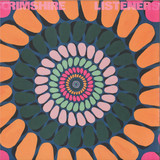
Albert’s Favourites co-founder Adam Scrimshire is set to release his fourth album 'Listeners'. Musically, 'Listeners' draws from Scrimshire's passion for jazz, soul and electronic music of all styles; from an energetic combination of Afrobeat and garage on 'Won't Get Better', to the lushly orchestrated neo-soul of 'Thru You', and the harmonious jazz experimentations of 'I Never'. The album features a host of esteemed guest vocalists and musicians telling their own personal stories, including Georgia Anne Muldrow, Emma-Jean Thackray, Joshua Idehen, Madison McFerrin, Chip Wickham, and James Alexander Bright.
"With this album I wanted to get a more focused sound after six years of relearning and development in the studio. But I also struggled to find my own words, to speak about where I/we are now. So I allowed my collaborators total freedom to tell their own story and as they came back to me, they were telling the same stories I wanted to. It's resulted in some deeply personal confessional pieces: mourning family, collapsing relationships, extremes of self doubt and analysis, trying to balance public and inner persona, and a reminder that life in all forms is important.
It’s called 'Listeners' as I am a listener here, I feel like I've been given these very personal experiences to care for. Listeners because, the travesty of the last few years is that we stopped listening to each other, everyone is shouting at each other and no one is learning. And Listeners because I hope I've made something that is for other people more than I have before. I've tried to craft something warmer and more enjoyable, made for those who give me their time in listening to my music."
- Adam Scrimshire
Since joining the Wah Wah 45s label in 2007, Scrimshire has released three albums of experimental cinematic jazz, and electronic sounds. Following his 2009 debut ‘Along Came The Devil One Night’, his second album ‘The Hollow’ (2011) was a BBC 6 Music Album of the Week, with Gilles Peterson calling it “A late contender for album of the year”.
In the time since the release of his last album ‘Bight’ (“An eclectic range of influences ranging from disco to fusion to more contemporary electronic styles” XLR8R) in 2013, Adam has worked with long-time musical accomplice Dave Koor on new project Modified Man, and launched Albert’s Favourites releasing projects by The Expansions, Hector Plimmer and Jonny Drop. He has continued to gain radio and DJ support for his successful “Scrimshire Edits” series and has produced and mixed records for artist including Stac, Daudi Matsiko, Bastien Keb, Ronin Arkestra, Jonny Drop. He has also continued to develop the Wah Wah 45s label, where he is now a co-owner and director.
Preceded by singles 'Thru You' featuring Georgia Anne Muldrow and 'Life Is Valuable' featuring James Alexander Bright; 'Listeners' is set for release on LP and digital formats via Albert’s Favourites on 19th July 2019.
DJ Support / Press:
Huey Morgan (BBC Radio 6 Music)
Jamie Cullum support on BBC Radio 2
Jamz Supernova on BBC Radio 1Xtra
Thru You Premiered By Mary Anne Hobbs on BBC 6 Music “So Beautiful
Winner of the 2018 BASCA British Composer Award for Solo or Duo
"Bloody hell that was good" Tim McKinney, BBC Radio 3
Dominic Murcott – The Harmonic Canon
A music project featuring a specifically design half-tonne double bell, an array of rare percussion and two highly virtuosic percussionists.
Dominic Murcott is a composer, percussionist, curator and educator based in London. Much of his work combines acoustic instruments with computers, film and other media. He has a continuing interest in work that is personalised for specific performers and has created acoustic/electronic pieces for trumpeter Noel Langley, percussionist Joby Burgess, clarinetist Joan Enric Lluna, harpist Sioned Williams and the Elysian String Quartet among many others. He has taken an unusual path to his current position, starting out as a self taught musician, his early career included playing drums with no-wave pioneers 'Blurt' and composing for the highly successful V-Tol Dance Company throughout their ten-year history. Changing from drums to vibraphone he became a member of art-pop band The High Llamas and has played on records by many influential artists including Stereolab and Pavement.
Created in collaboration with sculptor Marcus Vergette, The Harmonic Canon is both the name of the piece and the double bell that was custom-made for it. Comprising of two bells tuned a semitone apart, the bell was created using Finite Element Analysis, a type of structural analysis that determines the vibration patterns of the bell, manipulating its harmonic series to create a complex series of frequencies that make up a note. Part One is made up of rapid, high energy, virtuosic passages, articulated with the ominous striking of the bell while the second part contrasts with a single resonant tone that evolves and shifts over time. This is part of nonclassical's 21 Minutes series, a new project commissioning 21-minute pieces.
The piece won the BASCA British Composer Award for Solo or Duo. Premiered in 2018, the piece has had radio play on BBC Radio 3, broadcast from Huddersfield Contemporary Music Festival.
- A1: If God Were Alive (& He Is) You Could Reach Him By Telephone
- A2: R4T
- A3: Et Tu, Klaatu
- B1: Eenie Meenie Chillie Beenie
- B2: Novena
- B3: Mind Power
- B4: Yellow Yankee
- C1: Want You
- C2: Vocal Variety
- C3: Kokole
- C4: Cincinnati 1830-1850
- D1: Edison's Piano
- D2: The Lecture Of Comrade Stalin At The Extraordinary 8Th Plenary Congress
Paul DeMarinis is a key figure in the history of electronic music since the 1970s. Collaborator with the likes of Robert Ashley, David Behrman, and David Tudor, DeMarinis is a pioneer in the development of gallery sound installation and digital music technologies. Black Truffle is thrilled to announce the release of a double-LP collection, selected in collaboration with the artist, focussing on DeMarinis's exploration of synthesized voice and the digital analysis and manipulation of speech sounds. Drawing together tracks dispersed on compilations along with a number of pieces previously unheard in any form, Songs Without Throats offers a revelatory look into DeMarinis's alternately accessible and uncompromising production between 1978 and 1995. Opening with a mesmerizing piece from 1978 pairing the voice and tamboura playing of Anne Klingensmith with strings of letters spat out by a Speak n' Spell to the accompaniment of the randomised melodic patterns of DeMarinis's homebuilt electronic instrument 'The Pygmy Gamelan', the record then dispenses with the live human voice in favour of its recorded and synthetic doubles. We follow DeMarinis's restless probing of the possibilities of new technologies, from the hacked Speak n' Spell (which gives us the austere 'Et Tu, Klaatu' 1979, another duet with Klingensmith, this time on bowed psaltery, in which the toy's synthetic voice is stretched into an alien song) through to the use of digital audio samples manipulated with home computer technology in the early 1990s (including a remarkable dream-like collage piece that weaves a rare recording of Stalin's voice and bird-like electronic twittering derived from its formant-glides into a rich tapestry of samples reflective of the dictator's musical life). In between we get a rich sampling of DeMarinis's signature work with speech melodies - usually unnoticed melodic inflections that lie within speech patterns - which he analyses and translates into synthesized musical accompaniment. These pieces draw on a wide variety of textual and vocal sources, which range from the hilarious to the menacing ('Cincinatti (1830-1850)' sets a detailed description of butchering techniques, for example) and an equally broad range of musical conceptions, combining elements as seemingly unlikely as Beethoven's Opus 31 pianos sonatas and the sounds of 80s synth pop. The results are an extraordinary combination of the alien and the familiar. As DeMarinis himself characterises his work with vocal synthesis, this is 'a kind of signal that simultaneously carried and obscured meaning and ideation, even as it created a sound world totally alien in esthetic'. Presented in a deluxe gatefold sleeve with archival images and liner notes by Paul DeMarinis. Design by Stephen O'Malley. Mastered and cut by Rashad Becker at D&M, Berlin




