FINALLY BACK IN STOCK ON LP!!! Ozma was recorded soon after Melvins made the move from Washington to San Francisco, and was their first release to include the diminutive yet mighty Lorax (Lori Temple Black) on bass. In fact, the first sound one hears at the album’s opening is Lori standing on her tiptoes to switch on her amp, thereby warning the listener of the onslaught to come. Distorted, down-tuned doom riffs start, stop, lurch sideways with no warning, and seem to end before they start. Buzz Osborne adds extraneous guitar static and vocal squeals. Drummer Dale Crover plays as if he’s inside a barrel going over Niagara Falls; the long, slow fall allows the space between beats to grow and grow until he crashes into the water with the vessel blasting apart in an explosion of drum rolls. The classic Melvins heavy grind is set up and broken up by assorted odd sidetracks: “Revulsion / We Reach” flows forward slower and slower until it eventually melts into a gooey feedback drone. “Raise a Paw” is a superball paddled against one’s head by a grinning village idiot. “Love Thing” enlists in the Kiss Army before getting dishonorably discharged.
This blue coloured vinyl is exclusive to Indie stores, very probably including a DLC as extra bonus. The classic third album from the Black Lips, originally released in 2005 and now back on vinyl and part of a series of Fire re-issues celebrating 20 years of the legendary garage rock gurus from Atlanta, Georgia. 16 tracks of grimy and chaotic punk, scuzzy and raw, and catchy as hell. The band at their trashy best, more melodic but every bit as psychotic. If The Royal Trux had listened to the Troggs instead of the Rolling Stones, they might have recorded this album. This baby is a masterpiece. Unapologetic southern-fried twang, crunching through the gears in a blitz of grimy bravado. Their music twitches with an engaging, wired vigour." **** Uncut - "Their strongest effort to date." All Music
Kelsea’s fourth album, SUBJECT TO CHANGE, arrived on September 23, 2022. The first single, “HEARTFIRST,” quickly took over airwaves, and was the “most added song at country radio” the week of its release. Most recently, Kelsea earned a GRAMMY® nomination for “Best Country Solo Performance” for “HEARTFIRST.” Kelsea Ballerini is ready to continue making history in 2023 and beyond. The two-time Grammy nominee previously teased Subject To Change in April, and said that the '90s-tinged "Heartfirst" set the tone for what's to come. "There is a lot of nostalgia to this record," she said. "It does sound really '90s-inspired, '90s country and '90s pop... I really just wanted to start this next chapter with something that feels good. It's breezy, it's happy, and I hope people hear that."
unique cut, record plays inside/out and has big engraved grooves between the tracks
Rude 66 dusted off some of his vintage digital samplers and came up with probably one of the most anomalous releases of his discography. In these tracks you can hear influences of early 90s Meat Beat Manifesto and Coil weaving with the typical West-coast vocoder and synths, making "Fragmented Living" sound like it could have been produced anytime from the early days of industrial music to a few decades ahead from now. Another essential release on Pinkman.
out of Stock
Last delivered 2 years ago available to reorder, subject to availability
20th Anniversary Edition of the long-deleted fifth album by THE PEARLFISHERS from 2003.
Deluxe 2-LP set in a beautiful gatefold sleeve with enhanced artwork and all lyrics. The album has been remastered and features four previously unreleased bonus tracks. Non-Returnable.
Masterful, melody-laden classic pop music, driven by main man DAVID SCOTT’s exceptional songwriting which has often been compared to PAUL MCCARTNEY, BURT BACHARACH, JIMMY WEBB, TODD RUNDGREN and BRIAN WILSON
Sorry Girls have danced out of the darkness into the light. Since forming in 2015, the Montreal duo of Heather Foster Kirkpatrick and Dylan KonradObront have transformed an eerie, dream like sound into lush, pleasure seeking pop. Expanding upon their debut album, Deborah, the band’s deftly arranged sophomore LP, Bravo!, sings to the back rows of the stadium, drawing listeners inward with a newfound focus on personal lyrics. “These songs are all about self-acceptance, self-affrmation, personal freedom, and letting go,” says Kirkpatrick. “There are a lot of lyrics about the creative process itself, identity shaping, and how those things intertwine.”
In a world of endless, bottomless content, to find something that stands out from the crowd is a rare thing. But it’s something that 7ebra manage without breaking a sweat. Based in Malmö, twin sisters Inez and Ella Johansson deal in sparkling indie-rock that’s pretty without being soft, sweet without losing its edge and catchy without being cheap. With Inez on guitar and vocals and Ella on keys, organ and Mellotron, their minimal set-up makes a virtue of simplicity – with a sliver of guitar fuzz, and organ lines snaking around stark, striking vocals, augmented by shivering harmonies, they don’t need a lot to make music that’s colourful, kaleidoscopic, and effortlessly original.
7ebra debuted in 2022 with the double-single “I Have A Lot To Say”/ “If I Ask Her”, two helpings of psych-tinged, street-smart rock and roll, and the music scene around them wasn’t slow to notice. They opened for the Future Islands and the Dandy Warhols, were picked out by Apple Music’s Matt Wilkinson as a Hidden Gem of 2022 and were booked for prestigious showcases SXSW and Eurosonic. With a packed schedule of shows across Europe and the UK already planned for 2023, their world looks set to get a lot bigger – something that their debut album Bird Hour makes certain. The record is a warm, elegant introduction to the sound 7ebra have crafted. The songs are full of personality and character, but also retain a little bit of enigma, a sense of keeping something secret to themselves. To unwrap that elusiveness is a daunting task, but one the listener can’t resist leaping into.
Ella and Inez’s parents played in bands as they were growing up, so picking up music was a natural thing for them. The origins of 7ebra start with Inez whiling away the hours playing guitar in her bedroom. “I learned by playing covers by myself in my room”, she says. “Ella didn’t do that as much, but we sometimes played and sang together, country songs”. Eventually she would start writing her own. Ella wasn’t involved originally (“we did play together a few times”, she says, “and it just went to shit laughs. We fought a lot”), and Inez was originally reluctant: “I was a bit unsure whether I wanted to be in a band with my sister. Because you get clumped together all the time, when you’re twins”. But Ella was keen to join, and eventually persuaded Inez to let her join for a show. It went – so well that producer Tore Johansson (The Cardigans, Franz Ferdinand), saw it and asked if they’d like to record with him. That changed things, says Ella: “It made us think there might be something in this music”. As a duo, 7ebra were in flight. “In the end, it’s kind of a nice thing too being sisters in a band”, Inez says. “It doesn’t bother me anymore. It just made sense to play together”.
On the album that they eventually came up with, the talent that caught Johansson’s eye is immediately obvious. Opener “Secretly Bad” has a way of walking along your nerves, an eerie echo of a hymn in Inez’s vocal backed by a swirl of woozy blend of guitars and organ. That’s followed up by “I Like To Pretend”, an easily charming song that has a sleepy brightness about it, like morning sunlight breaking through a window. They take a couple of different genres for a whirl on Bird Hour – they’re tense and snappy on “If I Ask Her”, breezy and cocky on “Lighter Better”, and there’s even a couple of droplets of blues and folk in the mix, in the raw intensity of the emotions in the slower songs, the vulnerability and aching of songs like “Lean” and “Stripey Horsey”. The record has a way of sweeping you along in its mood and tones, fuelled in part by the band’s use of repetition, sometimes fast and fevered, sometimes crawling and hypnotic. The duo’s musical input blends perfectly, with Inez’s guitar and vocals forming the core, and Ella drawing in the detail with keys, organ, and harmonies, to really bring out the vivid nature of the songs. Indie rock that’s melodic and sweet, but with enough shadow mixed in to make it really compelling.
On Bird Hour, what strikes you first about 7ebra’s sound is how fully formed it is, how much they’ve carved out their own sonic territory, perfected by trial and error in the studio with Johansson. “Tore wanted us to try everything possible”, says Ella. “We had moments where things weren’t working. But that was necessary in order to find the good stuff”. 7ebra’s signature might be found in the deft way they deal with emotion – unafraid of being open, but a little too clever to make things too clear cut: “You can’t take yourself that seriously. It’s too emotional to take it seriously, to start hating yourself. But at the same time, it is quite serious”, says Ella. Another trademark is the simplicity – a 7ebra song has just enough to make it work, and nothing more. “I think it was important for me that our voices were at the centre of the songs”, says Inez, “that all the little melodies have their place, and don’t get overwhelmed. With lyrics, I sometimes come up with something, and just feel ‘there’s no need to add more to this’. Sometimes a line works by itself. You don’t have to add a bunch of lyrics”. Finally, the album’s themes are ones that will resonate with most people that have set foot on this planet. “I guess it’s about trying to understand yourself, in relation to others. Just life. ‘Why am I not good at this, why is this thing happening to me, why is this thing so hard, why am I so stupid?’”, laughs Ella.
7ebra haven’t been around for very long – but a handful of songs and their fizzing live shows have stirred up the biggest buzz in Scandinavian music in quite a while. Their debut album justifies it all. It showcases the magic they’re capable of conjuring up, and hints at even more to come in the future. But from where they are right now, they’ve made something very special. Bird Hour takes all that promise and turns it into something concrete, in the form of one of the year’s best rock debuts.
Korpses Katatonik was a musical solo project of Zoe DeWitt during the years 1982 and 1983. Unlike DeWitt's later project Zero Kama, the work of Korpses Katatonik remains entirely within the realm of electronic music and shows an uncompromising experimental style comparable to that of other industrial bands like Throbbing Gristle, SPK, or Cabaret Voltaire.
Carole King’s The Legendary Demos will be released April 24th, 2012 via Hear Music / Concord Music Group. A previously unreleased collection of 13 history-making Carole King recordings of some of her most celebrated songs, The Legendary Demos traces King's journey from her days as an Aldon staff writer in the 1960's, where she crafted hit after hit for other artists, to the dawn of her own triumphant solo career in the 1970's, and contains her original recordings of future standards like "(You Make Me Feel Like) A Natural Woman," "It's Too Late," and "You've Got A Friend." Featuring liner notes by acclaimed author and Rolling Stone contributing editor David Browne, the collection brings to light a heretofore missing link in the chain of King's career. Fittingly, The Legendary Demos serves as a companion to King’s long-awaited memoir, A Natural Woman, which is being released April 10th, 2012 via Grand Central Publishing.
Aldon Music used these demos—short for “demonstration records”—to pitch King's material to other artists, from Gene Pitney and Bobby Vee to Aretha Franklin and the Monkees. While the recordings have long been coveted and collected within the industry, they have never before been released to the public.
Whether it was a potential single for the Monkees or a solo performer like Pitney, King’s demos were remarkable in their completeness. “When she sat down to the piano and played a demo of one of her songs, the whole arrangement appeared right in front of your eyes magically,” recalls Brooks Arthur, who engineered a number of these efficient sessions for King at one of several midtown Manhattan studios. “A lot of the smarter producers would adhere to Carole’s demos. If you stuck to that, you’d come home a winner.”
King and then-husband / songwriting partner Gerry Goffin signed with Aldon Music in 1959, and anyone who listened to the radio during the first half of the ‘60s will recognize the songs of teen passion and devastating heartbreak heard in King’s original recordings. “Take Good Care of My Baby” was a No. 1 hit for Bobby Vee in 1961. Goffin’s gift for tapping into teen anguish—in this case, hiding behind a stoic public face—was never conveyed better than in “Crying in the Rain,” which the Everly Brothers took into the top 10 in early 1962. “Just Once in My Life” was the Righteous Brothers’ follow-up to their still-spine-tingling “You’ve Lost That Lovin’ Feelin’,” and King’s demo reveals how she and Goffin were instantly able to tap into the duo’s (and producer Phil Spector’s) dramatic, impassioned sound.
Like many of their fellow songwriters at the time, King and Goffin wrote songs for Don Kirshner’s TV show about a fictional, Beatles-derived pop band that debuted in September 1966. The Monkees turned out to be more credible singers (and musicians) than anyone initially expected, as their high-charting 1967 version of King and Goffin's “Pleasant Valley Sunday” revealed. The Monkees also cut “So Goes Love,” a dreamier ballad heard here, but the track didn’t make their first album and wasn’t released until long after they’d disbanded.
The Legendary Demos includes early takes of six tracks that formed the basis for King’s world-wide solo breakthrough Tapestry. King and lyricist Toni Stern’s ever-poignant “It’s Too Late” is here, along with King’s own “Way Over Yonder,” “Beautiful” and “Tapestry,” all three bursting with the artistic and spiritual renewal infusing King’s life during this period.
Among the collection’s numerous gems is the original 1967 demo for Goffin, King, and producer Jerry Wexler’s “(You Make Me Feel Like) A Natural Woman,” a song that would later appear on Tapestry and of course be famously cut by Aretha Franklin later that same year. King’s version offers several different takes from the Franklin and Tapestry versions. Her delivery in the opening lines is looser (check out the way she stretches out “Lord” in “Lord, it made me feel so tired”), and the bridge is even more imbued with palpable romantic and sexual heat.
And finally, there’s King’s initial take on “You’ve Got a Friend,” a classic entry in the Great American Rock Songbook. Milling around in the Troubadour balcony during soundcheck, her friend James Taylor heard King perform the song on a bare stage and was immediately taken with it; his own version, a massive hit, would arrive the following year.
First time reissue of mega rare 1972 psych-folk album from Venezuela.
180g LP.
One of the most obscure records ever released in Venezuela that was originally distributed in tiny quantities as a promo-only album.
A magic blend of protest songwriting, with a strong environmentalist statement, and folky pop with psych ingredients —such as the use of sitar sounds— recorded by the collective of artists “Una Luz”, and “El Zigui” who was once described as the local Bob Dylan.
The late ‘60s was a short period of time, long enough to turn the world upside down.
Music, paying attention to the ancient Greeks who said that changes in society are also reflected in it, also undergoes violent transformations in its structure. The turbulent joy of rock and roll and twist gives way to the meditative sounds of the waves of the sea contained in surf to finally welcome music of soft and delicate harmonies with songs full of references in their lyrics to the state of society and their relationships with the environment.
On the other hand, in Venezuela, although the expansive wave of May 68 had not reached it, a certain degree of dissatisfaction began to be perceived, especially through the music of a singer-songwriter from the countryside of Venezuela known as Ali Primera, El Cantor del Pueblo. Thanks to a scholarship from the German government, he studied for a few years in that country, and it was there that he recorded his first album, with songs whose lyrics reflect the essence of authors such as Bob Dylan and Atahualpa Yupanqui. And Ali Primera becomes one of the greatest influences of our artist: El Zigui.
Guillermo Sánchez Corao —known as El Zigui for some strange reason— was born in the Venezuelan city of Maracay, capital of the State of Aragua, on January 13, 1948. From a very young age he began to study guitar playing and, already in his teens, we can find him as part of the duo El Zigui & Franklin together with Franklin Laudelino Mejías, another young man with a great musical pedigree.
It is during his bohemian phase as a troubadour, in the surroundings of the Ateneo de Caracas, when his music caught the attention of producer Mario Tepedino, the most important youth music producer at the time. Mario takes him to his TV show “2001 Juvenil”. With the incorporation of other musicians such as Rubén "Micho" Correa —who would later become a great arranger and record producer— he created the group El Zigui y Una Luz, which would later be joined by musicians such as Carlos "Nene" Quintero and Alfredo Padilla, members of the amazing Grupo Pan. Later on, another outstanding singer would also join Una Luz: Guillermo Carrasco.
With this formation they made it into a recording studio in 1972 where they managed to record, in just 30 hours, a long-playing album of which only 60 copies were pressed and has therefore gained cult status among collectors. As expected, the strong content of the lyrics was not supported by the media, making the promotion of the album impossible to accomplish. However, it was with the help of Mario Tepedino that they made it to television, with appearances on “2001 Juvenil” and “Antesala Lunar”, a show that was especially produced for the broadcast of the arrival of man on the Moon.
That was probably one of the main reasons for El Zigui to move to Canada and then France until 1978 when he returns to Venezuela. He would then join bands like Xabañón, Fogón and De Vuelta al Futuro, a 12-member super group. The former members of Una Luz had become well known musicians in the country, especially Guillermo Carrasco who was one of the greatest ballad artists in the ‘80s and targeted by the biggest record companies at the time. El Zigui died in a traffic accident on June 22, 1999. If he had lived through these crazy times... where would he have gone?
Bound To Rise is the quietly impressive debut album from Yorkshireman Chris Brain. His songs have a gentleness and ethereality, enhanced by his softly husky, smoky vocals coupled with delicate finger-picked guitar patterns based around his alternate tunings.
The self-composed songs draw on the pastoral and the traditional, heavily centred in natural imagery featuring both as itself and as allegory. A misty ambiguity, suggestions of layered meaning and hints of multiple interpretations permeate the lyrics. And darker moods throw long shadows across this landscape.
A pre-dawn longing for the sun in title track ‘Bound To Rise’ seems to obliquely evoke springtime, primitive beliefs and lifting mood. ‘Bird Count’ is another daybreak song hinting at other, more intimate, preoccupations, “calling out your name / never to be tame”.
‘Chance To See’ celebrates the emotional significance of a relationship, and it’s easy to interpret ‘Golden Eagle’ as its flipside partner, “but you can’t choose her, she chooses you” – or maybe it’s simply a song about birdwatching. ‘Flying On Time’ continues with rare sightings paired with impressions of human air travel and distance, “she’s due tonight / just for one night / to visit our skies”.
Non-specific doubt and uncertainty edgily patrol ‘If I Could’, whilst the cheerfully pattering guitar motif of ‘Peace And Quiet’ belies an inner melancholy, and ‘Rare Find’ charmingly bookends Mary Jane Walker’s plangent violin and Simeon Walker’s subtle piano.
‘Sunday Morn’ “lays the week to rest” amongst other things but, despite the laid-back vibe, all is not sunny and “melancholy calls to greet us once more”. Brain’s songs are intriguing shifts of light and shade, and the details improve with each listen.
Coming full circle thematically, the joyous simplicity of expression in ‘Sun Song’ makes it close kin to the mighty Bright Phoebus, “the sun was born and she’s beautiful / the sun was born from the ground”. It’s an optimistic ending to an emotionally ambiguous album.
Influenced by, among others, Nick Drake, John Martyn and Joni Mitchell, it’s not hard to see where Chris Brain is coming from. More interesting is where he’s going to. Bound To Rise makes a very promising start.
Korpses Katatonik was a musical solo project of Zoe DeWitt during the years 1982 and 1983. Unlike DeWitt's later project Zero Kama, the work of Korpses Katatonik remains entirely within the realm of electronic music and shows an uncompromising experimental style comparable to that of other industrial bands like Throbbing Gristle, SPK, or Cabaret Voltaire.
Sylvie Vartan's most wonderful songs beautifully remastered by Mr. Nick Robbins at Sound Mastering... Super cute, lovely, yet Rock n Roll artwork by Mr. Allan NoMan
Detailed liner notes by M.Jean-Emmanuel Deluxe, author of the acclaimed, beautiful, and definitive book "Ye-Ye Girls of '60s French Pop"
Imagine..if you will...a world in which your dearest chic girl pop singer guests a couple of humour records, goes on to have hit after hit, is all over TV and media, with the coolest radio shows and magazines for youngsters being almost fanzines for her. Then she gets her own TV shows and um, marries Elvis, and does a multi-night stand at the Paris Olympia where The Beatles are supporting HER! That world existed, it was early 1960s France, a marvellous, self contained world of music, film and art, where Vince Taylor was not a weird guy in leather pants who never really clicked with the kids,but the major star he was in his own head! And..Well, obviously, it wasn't really Elvis, but the French-World analogue Johnny Hallyday (handsome, good hair, and a great dancer!), so..in France it WAS!... But the hits? The TV shows? And the magazines and radio? Yes! Those really happened....and The Beatles did support her (and it was a big and lucky night in their career!)...Now, don't you wish we were there, in that world? A bizarro technicolor mix of....I don't know, Viva Las Vegas/HELP!/Les Demoiselles de Rochefort? I certainly do...or maybe pop this record on and let's pretend? Oh, I think so, yes...
Previously unavailable on vinyl for more than 50 years, this rare collection of tracks presents a wealth of hits that helped define country music in the ‘60s - and beyond!
If you don’t remember Western Swing in its heyday, or the first generation of Texas Honky Tonk, you may not know Billy Gray. Aside from a select group of music aficionados and musicologists, Billy Gray’s name and significant contributions to country music and western swing have simply gone unrecognized for far too long.
Musically, there were many shades of Billy Gray. Singer, Songwriter, Musician, Performer, Arranger, Bandleader. Whether on stage or in the studio, Billy Gray personified what this music was – and still is – all about.
Billy played behind some of Country Music’s biggest names – Hank Thompson, Ray Price and Willie Nelson – served as Thompson’s and Price’s bandleader – and built quite a following in his own right with his own bands, The Western Okies, The Nuggets and The Cowtowners.
Billy Gray, together with the legendary Hank Thompson created a wealth of hits that helped to define the country music of an era, and beyond, helped launch the career of future rockabilly legend Wanda Jackson, and greatly influenced the future sound of country music.
1956 album from the 'King of Mambo'. Perez Prado and His Orchestra "Havana, 3 a.m."
Hear the most wonderful sounds beautifully remastered by Mr. Nick Robbins at Sound Mastering...
* Super cute, lovely, Mambo-Tastic yet Rock n Roll artwork by Mr. Allan NoMan
Imagine..if you will...a world in which your dreams of a HOT crazy, sexy, dancing Havana 3 A.M in 1956 come to outrageous life? Try here then my friends, a recreation in studio Hi Fi blaring horns-tastic percussion heavy sounds, as perhaps the first ever concept album (fighting it out for the honour with Frank Sinatra’s Songs For Young Lovers) blasts from your system, taking you in a personal Tardis with Mambo King Perez Prado, to dance the night away….large Mojitos and giant cigars are optional….dance is not…..the other super sexy dancers are in YOUR mind!
Vladislav Delay presents the third EP in his "Hide Behind The Silence" series with five 10" releases coming throughout 2023. Intuitive and raw music, momentary and reflective, released on Ripatti's own label "Rajaton".
--
Stillness is a myth. Consider concepts such as ”still water”, or ”still air” for that matter. Go to a restaurant, ask them for a glass of still water, hold it against the light and see where we’re at. Even though the water itself has been captured and imprisoned in the glass, it never stops breathing. It’s filled with tiny particles, dancing. Everything can be explained on a molecular level, but since we’re not scientists – and even if you happen to be – it’s the natural world of perception that moves me.
Still air is very similar. A hot summer’s day with zero wind feels completely still. It’s the closest I have felt to complete stillness. Or for a more urban adaptation, imagine the same vibe inside a normal apartment. In those moments, revelations and mind- blowing experiences can be had with experiments in stillness.
Try this: Just sit down for a minute on a sunny day, making sure there’s enough natural light. Do absolutely nothing. Try not to breathe for a bit. (If you need a mental anchor, you can play Cage’s 4’33” in your head but nothing else.) Watch the tiny dots of dust dancing :..’ ̈.:; ́ ́*°.,’:,. ̈ ̈ ̈ ̈:,.’
The movement is crazy, but the feeling of stillness comes from witnessing how subtle it is. In (perceived) complete stillness, every act of microscopic mobility seems to speak volumes. Yet, it feels both reassuring and oddly threatening that the stillness is never complete. What if we would need absolute stillness? Or is it just enough that we can perceive something as such? Extremes attract, so for both water and air, extraordinary movement is equally fascinating. That is also a luxury item of sorts. For us to enjoy a very ”loud” body of water or air, we need to be safe, in enough control of the situation. So when you are, it’s worthwhile to pay attention and take it all in.
A rapid flowing free with extreme strength and just barely in control. Look at that water go! No still water on this one, only ”sparkling”. A windy day when birds seem surprised how hard it is to fly, but in the end they make it. Trees bend but don’t break. The wind shows you its movement but doesn’t hurt you. It feels friendly, like a big clumsy dog that doesn’t quite understand its size.
It’s beautiful to be a guest of the elements, but not at the mercy of them. A new kind of dialogue forms.
out of Stock
Last delivered 3 years ago available to reorder, subject to availability
Pointillist club rhythms and dense, porous dub clouds encircle the Wrecked Lightship as Laurie Osborne and Adam Winchester set sail for phantom islands once more. The nocturnal boatswains chart a course guided by pronounced percussive impulses, using physicality to navigate the looming atmospheric pressure that has become their signature style.
Opening tracks ‘Arial’ and ‘Third Law’ speak to the roots of Osborne and Winchester’s respective work as Appleblim and Wedge, dealing in dancefloor abstractions where techno, electro and dubstep once stood, but there’s much more at play than simple genre tags could ever express. ‘Third Law’s electro-static interference calls back to Winchester’s work in Dot Product, while the twitchy urgency and gnarly bass echoes Osborne’s ALSO project with Second Storey.
Wrecked Lightship is an anchorless concern, free to drift into experimental waters if the currents surge that way, and so ‘Kill Mirror’ and ‘Hydrotower’ head away from forthright structures to play around with sound design and full-frequency manipulation. It’s too kinetic and jagged to be considered ambient, even if it willfully shirks the dancefloor. But for every starboard swerve there’s a prevailing wind, and the likes of finely-tuned club weapon ‘Take It Back’ whip ahead with laser-eyed focus.
Nailing their split interests between immediacy and the avant-garde to the mast, Wrecked Lightship deepen the reach of their project on their second album. Whatever shape a specific track might take, Oceans & Seas serves as a paean to the art of sonic manipulation and spatial processing.
Written and produced by Adam Winchester and Laurence Osborne
Artwork by Chloe Grove
Layout by Takashi Makabe
Text by Oliver Warwick
Mastered and cut by Simon at The Exchange
out of Stock
Last delivered 2 years ago available to reorder, subject to availability
Originally released as a limited edition three-CD set in 1997, Enya’s ‘A Box of Dreams’ has become a must-have collector’s item among fans. 25 years later, ‘A Box of Dreams’ will receive a long-awaited reissue when it is released on vinyl for the very first time, within a beautifully designed six-disc eco-friendly box set which has been manufactured using 100% recycled board and vinyl. The set compiles highlights from the first half of Enya’s storied career, spanning selections from her self-titled debut album (later reissued and expanded as ‘The Celts’) through to the single ‘Only If…’ which had just been released and featured on her first ‘best of’ ‘Paint The Sky With Stars’.
How does one properly introduce an epochal record? Perhaps by unequivocally stating that it is the best-selling jazz album in history. Or by affirming that, every year, it sells tens of thousands of copies more than five decades after its original release. There's also the matter of its status as the most-referenced, and arguably, most important, jazz recording of all-time. And the Dream Team line-up of Miles Davis, Cannonball Adderley, John Coltrane, Bill Evans, Wynton Kelly, Paul Chambers, and Jimmy Cobb. Yes, Kind of Blue is utterly inimitable.
In its three-decade-plus history, Mobile Fidelity has never been prouder to have the honour of handling efforts as important as Davis' key recordings. It's why the our engineers took every available measure to transport listeners to the March and April 1959 sessions that parlayed modal jazz into mainstream language. The blueprint for melodic improvisation and vamping, Kind of Blue simplifies tonal organization and chordal progression into an eminently beautiful, introspective tapestry stitched with swinging poetry, mellifluous soloing, compositional lyricism, transcendental harmonies, and group interplay of the highest calibre.
While no one has ever completely identified the magic behind the record's allure – the otherworldly nature is part of its inherent charm – much of the success lies with the band members. Davis intentionally hand-picked these musicians to comprise this particular cast, with everyone from former foil Evans to blues maestro Kelly to percussive genius Cobb interacting and reacting with peerless skill.
An audiophile favourite from the day it was issued, Kind of Blue takes on nirvanic sonic proportions via Mobile Fidelity's reissue. The expressive warmth, imaging clarity, frequency extension, and window-on-the-world breadth afforded by this new edition places music lovers right in the studio with the sextet. Close your eyes and, no matter how many times you may have heard it before, your experience will parallel that of the players that recorded these gems. Everyone shares in the excitement of not knowing what will happen and, as the music begins to lie out in front of you, you'll feel as if you've been whisked away to a jazz holy land. Quintessential.
The 1975 album "That's The Way Of the World" was also the soundtrack for a 1975 motion picture of the same name which featured some of the band members of Earth, Wind, & Fire in cameo roles. The album includes the ballad "Reasons" alongside the #1 US pop and R&B hit single "Shining Star" as well as the title track which reached #12 on the pop chart.
"Earth, Wind & Fire has delivered more than its share of excellent albums, but if a person could own only one EWF release, the logical choice would be That's the Way of the World, which was the band's best album as well as its best-selling. Open Our Eyes had been a major hit and sold over half a million units, but it was World that established EWF as major-league, multi-platinum superstars. Fueled by gems ranging from the sweaty funk of "Shining Star" and "Yearnin' Learnin'" to the gorgeous ballad "Reasons" and the unforgettable title song, EWF's sixth album sold at least five million units. And some of the tracks that weren't major hits, such as the exuberant "Happy Feelin'" and the gospel-influenced "See the Light," are equally powerful. There are no dull moments on World, one of the strongest albums of the 1970s and EWF's crowning achievement."
Sasu Ripatti presents the third volume in his "Dancefloor Classics" series with five 10" releases coming throughout 2023. Music for imaginary dancefloors, released on Ripatti's own label "Rajaton".
--
”Look up, into the light” she said, while the camera shutter clicked. ”Like this? Does it look holy?” His neck felt stiff. Her reply: ”Yes, just like that. What do you mean holy? Like religious? ”No, more like trying to look very far, somewhere beyond what we can see.” ”Okay, stand still, I’m going to come close to you now. The light hits your face great.” click, click, click.
He noticed her fingernails. They were not polished. Natural. Even somewhat rugged, as if something wore out the fingers slightly. What had these hands held besides the camera? What made the edges of her fingernails drift off?
He thought it’s weird to look straight into the camera. The photographer had closed her left eye, the one not looking into the lens. Then it opened, she looked up, perusing the surroundings, then she closed her eye again, then looked up, closed, looking up, very quickly. It all seemed very professional. Maybe she calculated the light, making sure it’s close to perfect. ”What will these photos look like?” – the thought popped into his head briefly. It was liberating to think it wouldn’t matter.
”What’s that song playing?” he asked. ”Wait a sec, Ol’ Dirty Bastard?” she replied. ”Oh yeah, right. But the sample?” ”Hey, could you look up again, like that. No, lower.”
New directions: ”Look out from the window, turn left.” ”My left or yours?” ”Yours, I always try to think from the direction of my model.” How professional! This is a good shoot, so natural. Should I worry about how the photos look like? No, I don’t want to. His thoughts bounced around. What would the story be like? It’s a big newspaper, everyone will read it. Maybe someone drinks coffee and eats a stroopwafel while they do it. Will they place the waffle on top of the mug for a brief while, so that it gets hot and the syrup melts a little? Then it feels wet, and you can bend the cookie.
She broke his train of thought off midway through: ”Now turn right, but look left, and slightly up, but don’t turn your face right.” ”Umm, like this? Sounds like a set of pilates instructions.” she laughed ”You do pilates?” ”Yeah, it’s hard sometimes. Have you tried?” ”No”, she said. ”I’m not good for sports that are done in groups.” ”Yeah, but in pilates you can just be inside your mind, drowning in your private thoughts.”
”What are you thinking in pilates?” she asked, taking more photos. ”Well, mostly just which way is right. And which left.” click, click.
--
out of Stock
Last delivered 3 years ago available to reorder, subject to availability
Unlike the majority of previous Davis albums, E.S.P. consisted entirely of new compositions written by members of the group. Despite the profusion of new material, only one tune ("Agitation") is known to have appeared in the group's live performances. "Little One" might be best known for being revisited on Hancock's landmark album, Maiden Voyage, recorded a few weeks later. This version is somewhat more embryonic; Carter's bass is halting, and Davis and Shorter state the theme with winding, interlocking contrapuntal lines that evoke Davis and Coltrane's version of "Round Midnight". Hancock's solo on Carter's composition, "Eighty-One", also presages his work on that LP - particularly its title track.
The title track is reminiscent of Jackie McLean's "Little Melonae", which Davis had recorded with John Coltrane in 1956. "Iris", by contrast, is another Coltrane-like ballad, not too dissimilar to "Infant Eyes" on Shorter's Speak No Evil album. Shortly thereafter, Shorter's compositions would begin to dominate the Quintet's recordings, though here he contributes only two of the seven songs.
This was the first time Wayne Shorter recorded with Miles, and the band - in this configuration - had been together for less than a year. As you will hear, the connection between the musicians is uncanny, as if they had been playing together for decades. Especially notice Wayne Shorter's brilliant interplay with Miles on the closing track "Mood," the haunting ballad written by bassist Ron Carter. At over forty-eight minutes, E.S.P. is one of the longest jazz albums of its period.
Black vinyl pressing 2022! "Funny to think there was a time not so long ago when Stiff Richards was a name that required explanation - but not to you, of course, o punk connoisseur. This is your territory, after all. Music is your oxygen and the sound of the underground is your clarion call. You can explain the distinction between 'Know Your Product' and 'No, You're Product'. Hey, you're probably pretty good-looking too. You know your shit, either way. So no wonder you're drawn to this relative holy grail of modern garage rock - the 2017 self-titled debut album by the aforementioned Stiff Richards. Originally released on their own Stiff Records (and again by Legless in 2020), it lays down all the elements that made last year's mighty 'State of Mind' LP such an instant classic. OK, we've established you know the drill, but let's recap: scintillating Aus-punk that recalls the heroic high-speed riffs of their countrymen The Saints and Radio Birdman. It sounds like Royal Headache covering Motörhead, or maybe the other way around. It's a full-on riot in 30 minutes - the rawest of rock'n'roll bleeding into the grimiest of power chords with hooks for days. You already know you're gonna love it. Whether going full-throttle and aiming straight for the nerve receptors that get your head a-nodding and your toes a-tapping - like on sub-three-minute highlight 'Strung Out' - or sludgin' their way through groovier cuts like 'Bustin' Out', they're never less than a treat that's guaranteed to get your serotonin flowing and your speakers up to 11 (or beyond). As a certain similarly-named record label once said, if it ain't Stiff, it ain't worth a fuck. Frightfully rude, but that's rock music for you, I suppose. Get it in your ears." - Will Fitzpatrick.
Jimmy LaValle’s The Album Leaf has spun from solo outlet to full band and back in its nearly 25 years. His acclaimed catalog spans releases for labels such as Sub Pop, City Slang, Relapse, and others. He also composes music for film and television, scoring over 20 projects (narrative features, documentaries, and TV series) since 2009. The cinematic sensibilities of The Album Leaf were present from the beginning. His 1999 debut introduced the start of a signature sound: melodic and meditative electro-organic soundscapes constructed with guitar, percussion, Rhodes, and field recordings.
His seventh full-length LP, and first since 2016, arrives in 2023 via Vancouver’s Nettwerk Records. FUTURE FALLING finds LaValle working with an array of musicians, shaping slightly darker, more spacious, and synth-driven songs with contributions from Bat For Lashes, Kimbra, and many others.
The music registers a shade darker and more synth-driven than most moments in his acclaimed catalog, a bridge between shadowy, cerebral terrain and dreamy precision pop, where softly percussive frameworks meet shimmering sound design and emotive instrumentation.
LaValle sees the construction of FUTURE FALLING as less conventional than past work. Contributions were done remotely with a “throw everything at it” mindset, making LaValle the arranger of layers from all over: drums, synths, horns, violins, voice, and more. LaValle created a pastiche of these layers and elements; in some cases even moving vocal takes to new tracks entirely. Without the in-the-room dynamics, he had more time to experiment, adding and subtracting ad infinitum.
The album opens on “PROLOGUE,” an evocative, slow-building instrumental that rides a pattern into a symphonic sea of static. Keys and horns glide atop the rhythmic pulse of “DUST COLLECTS,” setting the contemplative scene for “AFTERGLOW,” the record’s most pop-minded performance. Here Kimbra, the Grammy-winning New Zealand singer-songwriter, renders a striking recollection of past love as percussive elements shimmer and swirl.
A plaintive piano line moves throughout “Cycles 19.9” encircled by light ambient washes, both a valley between two peaks and a powerful composition in its own right. “Future Falling” follows; with origins tracing back to 2015, the track embodies the full sonic journey LaValle has taken. All the hallmarks of The Album Leaf — melodic builds, vivid sprawl, tonal shape-shifting — assemble to a blissful finish.
For the next stretch, “Cycles” begins with a uneasy Rhodes loop that builds and erupts into a wall of texture paving its way into “Give In,” where LaValle models a movement that begins subtle and measured before curving up with skyward, percussive bursts (“Stride”) and settling back down to the album’s back-half centerpiece, “Near” featuring the acclaimed English artist Natasha Khan aka Bat For Lashes. “Do you feel me near?” she sings into a mist of widescreen synths and soothing, distant drum beats as if searching through the dark.
out of Stock
Last delivered 3 years ago available to reorder, subject to availability
Baby Rose makes healing music for the aimless and heartbroken. The Grammy-nominated singer/songwriter and producer's uniquely rich voice naturally lends itself to her powerful, smoke-filled ballads lamenting lost loves and broken futures. "I make music to help myself get through things," she says. The piercing honesty and vulnerability she brings to her lyrics in turn helps others process their feelings and find a place of healing. For Rose, it's a journey that's still ongoing. "If I'm going to leave anything behind, it's going to be getting people back to themselves," she says. "As I get back to myself, it's a constant reset: Remember who you are, remember who you want to be." You can hear the impact of this approach in Baby Rose's upcoming second album, Through and Through. Take the hypnotic "Fight Club." Over the track's simmering baseline and crashing cymbals, she declares, "I don't need no one else to show me the way." She describes the song as a "breaking of the shell. It encourages me to just go for it and not care about what anyone else thinks." Therein lies Baby Rose's strength: a determination to live, love, and create on her own terms. "I'm not just a singer with a unique voice," she says. "I'm somebody that has something to say." In the years since releasing her last album, To Myself, Rose has been painstakingly piecing together its sequel. Started almost immediately after its release, her new body of work finds her in a state of musical and personal transition. It's a subtle merging of new sounds_stirring rock, upbeat r&b, psychedelic funk, pop, and soulful ballads_, all mastered through analog tape to make the music feel warmer and all-encompassing. It's also a journey inward as she battles past fear and self-doubt to finally discover_and love_who she is, where she is. Finishing an album with such peace and firm resolution is a first for Rose, but she makes it clear: She's nowhere near done writing her story. "I think as long as I'm being raw and trying to push past my comfort zone, it will feel rewarding," she says. "I don't want to be the type that doesn't take risks because I'm afraid. I have to trust that as long as the music is honest and innovative, it'll be timeless."
out of Stock
Last delivered 16 months ago available to reorder, subject to availability
Fuzz is Ty Segall (drums/vocals), Charlie Moothart (guitar/vocals)
and Roland Cosio (bass). They’re heavy rock lifers—three Californiabred dudes who have been refining their riffs and getting weird together since high school (which wasn’t that long ago, actually). If you are not already aware of Segall, well, what’s up? He’s one of garage rock’s most prolific sons. He said he was going to take it easy this year, but by the time you finish reading this, the onesheet for his next record will have already arrived in your inbox. Moothart
plays guitar in The Ty Segall Band and was also a member of The Moonhearts, which included Cosio on guitar.
Way back in the early ’00s, all three played in the Epsilons. Fuzz was formed a couple years ago as a collaboration between Segall and Moothart, but only recently did the pair have sufficient time to guide
the band out of side-project limbo and into a recording studio. Since then, they have released two singles, “This Time I Got a Reason” (Trouble In Mind) and “Sleigh Ride” (In The Red). Around the time of the latter, Cosio joined on bass.
They are not dabblers or dilettantes. Fuzz flipped through used bins,
hard drives and record collections of the world, seeking out the finest
weirdo cuts. The band’s self-titled debut LP, which was recorded by Chris Woodhouse (Thee Oh Sees, The Intelligence), dives deep, drawing inspiration from the more esoteric reaches of heavy metal pre-history. There are Sabbath and Hendrix nods, obviously, but on “Sleigh Bells” you might also catch a whiff of UK progressive blues business like The Groundhogs, particularly when the song quits its 10/4-time intro and reboots into fullbore choogle.
Maybe you’ll even glimpse the ghost of Australian guitar legend/sharpie guru Lobby Lloyde sniffing around “Raise.”
The mood is not light. The songs project a state of perpetual paranoia
and eroding mental health. And as it should be, you know? It’s a record for the burners.
Romano, bassist Jean-François Jenny-Clark and pianist Joachim Kühn.
They hadn’t rehearsed anything, as if entering the studio to record an
album without any plan was something normal. The musicians were
obviously very used to playing with each other, as the five tracks on
Our Meanings And Our Feelings seem to flow perfectly without any
hint of improvisation. The zokra, an oriental clarinet that Michel Portal
plays on “Walking through the land” and “Dear old Morocco” brings a
singular touch to this album. This singularity is transcended by
Joachim Kühn’s ability to easily go from the piano to the saxophone
alto, from supporting to soloing, before playing the bells, then the
tambourine, opening the soundscape. Our Meanings And Our
Feelings may not be the first French free jazz record – as it was
preceded by the fantastic Free Jazz by François Tusques, released in
1965 and on which Michel Portal plays as well - but it remains one of
the most important. Its incredible outburst of sounds and melodies is
completely free yet never turns into cacophony. 44 years after its
release, it is still urgent to listen to Our Meanings And Our Feelings
and what these five talented musicians had to tell us.
On June 27th, 1969, Michel Portal pushed the door of the Pathé
Marconi studios. With him were drummers Jacques Thollot and Aldo
Fellow violinist Stuff Smith marveled, "He plays violin like Coltrane plays saxophone." Born in 1942, the French violinist Jean- Luc Ponty transported jazz violin playing into the world of modern jazz. On Frank Zappa's urging, Ponty moved to the States in 1970. Over the next years he toured with Zappa, the Mahavishnu Orchestra, and Chick Corea's "Return to Forever".If Ponty's 1983 album Individual Choice was the sketchbook of his decision to take his music in a new direction, Open Mind (1984), released the following year, was a deeper
exploration of the emerging world of synthesizers and sequencers and their impact on live and studio performance. Here, complex rhythmic patterns shift in the background while new sounds appear and disappear on the surface in colorful bursts, and outstanding jazz improvisors create familiar music in new settings. It's almost an audio version of a kinetic wind sculpture.
Ponty chose to use a Roland rhythm machine instead of faking real drum and percussion sounds and played all the keyboard parts himself in order to further explore the concept he had introduced in Individual Choice. He additionally asked two longtime friends to solo on various tracks: George Benson, whom JLP had met and played with when they were both 21 years old, and Chick Corea, who
excels on two tracks with his Moog synthesizer. Open Mind has been re-mastered by 2023 Grammy Nominee Christoph Stickeland includes new liner notes.
It's a cohesive song cycle purpose-built for pit stops at points beyond along the California country corridor. Sonically, Stay In It feels equally at home in 2022 as it might in 1972, evidenced by nods to "After The Gold Rush"- era Neil Young, Jonathan Wilson,and The War on Drugs.
The singer-songwriter trucked Jerry Garcia's old console to the desert to embrace the analog. The kind where if you want to rip a guitar solo at 3am with the windows open, you go for it, cowboy. A flurry of calls reverberated back and forth until Eric and his producer Damien Lewis (Kevin Parker, JamesBay), crash-landed in the tiny high desert outpost of Landers, California...in August.
"Stay In It" is a way of saying be present, it's "Be Here Now" says Silverman, an accomplished veteran of the Bay Area live music scene (with appearances at festivals such as Outside Lands and Noise Pop under his belt). "So the record is really about just finding that moment where it all locks in and flows. Get there and stay there."
This is music that picks up influences and imagery and shapes and colors as it encounters them on Interstate 62, before dropping them off as they turn into specks of dust on the horizon. There's the two-step lilt of "Better Days", where we start awash in melancholy synths but end up hopeful for possibility. There's the synthesizer summoning courtesy of first- call session keyboardist Adam MacDougall (Black Crowes, Circles Around The Sun) on "All In My Head" where
things get fully cosmic.
But no matter the track, there's something bigger happening here.
Finally back on vinyl, this time a limited pressing of 500 copies on 180g white vinyl, 'More Wealth Than Money' by Normil Hawaiians quickly sold-out upon its initial release in 2017.
'More Wealth Than Money' proved a vastly ambitious debut album, sprawling across four sides of vinyl in a way that still feels truly expansive, brave, cinematic even. From the plaintive pastoralism of 'British Warm' to the transcendental vistas of 'Other Ways Of Knowing', the album constantly surprises with its ringing trails of guitar, motorik pulse and synth rambles. From the striving incursion of 'Sally IV' to the softly spoken disbelief of 'Yellow Rain' the album is nothing short of a waking dream. Guy Smith's vocal floats through the album in a haunting manner, at times heartfelt at others overcome. He's on a quest to his own celestial city and we can stay for the whole journey if we only listen.
Described by the press upon its release in 1982 as an "absolutely mesmerising double album travelling through progressive rock, via industrial folk to freaky art-punk whilst sounding delightfully coherent" and "a huge slab of mindblowing dark psychedelia" the album was critically acknowledged for its peculiarly British kosmische. However, for an album so indebted to the fertile soil from which it sprang, it's curious that 'More Wealth Than Money' never came out officially in the UK. The band's label Illuminated were temporarily blacklisted by their distributor because of unpaid debts and so the album was only available from the band at concerts within the UK. The bulk of the record's sales went to mainland Europe on export.
Upset The Rhythm are now very proud to finally give 'More Wealth Than Money' the release it's always deserved. On December 1st, 35 years since the album first appeared, Upset The Rhythm will be reissuing the newly re-mastered 'More Wealth Than Money' album, alongside a further full-length collection of demos and unreleased tracks from the album's overlooked corners. Both the 2xCD and DLP versions also come with a booklet contextualizing the release, full of anecdotes and photos from all band members.
Track listing:
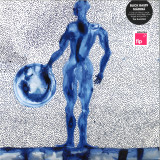
African Singer-songwriter Blick Bassy is back with a fifth album, again sung in the Baasa language of Cameroon. Madíbá brings together twelve songs in the form of fables, dedicated to the theme of water, in which his high and angelic voice dominates, carried by delicate guitar, synthesizer melodies, and sober brass arrangements. The cuts are diaphanous and nevertheless modernist songs, which testify to a contemporary and poetic Africanity at the crossroads of soul, folk, and electro.
Blick Bassy’s albums have a humanist and universal dimension. His fifth and new solo album, titled Madíbá, which means water in the Douala language of Cameroon, comes in the form of songs close to the fable, in which Bassy explores "a theme shared by all” of water, the source of life.
The fables of the album, all born in the imagination of Blick, explore in a more concrete way different themes related to water, its rarity, its necessity, its energy or its vital power. The twelve songs all bring together a series of figures, animals, or various characters, embodied in turn by Blick Bassy. "I have fun stepping into the shoes of a bird, a cat conversing with an elephant, a flower worrying about its declining beauty, a monkey looking for a spring or a storyteller with his grandchildren. In these texts, water can even take on a human appearance.”
Beyond the tale, the texts of the album also refer to our climate crisis, or to the problems of access to water, a way for the artist to approach serious subjects through a poetic form which avoids didactic or moralizing speeches.
out of Stock
Last delivered 3 years ago available to reorder, subject to availability
His best work to date is presented to us as Ivan’s voice is centre stage, with layered harmonies added to the soundscape of delay-soaked electric guitars, and essentials-only drums and bass.
Drawing from new life experiences, musical influences from the likes of J.J. Cale, Nina Simone and Tim Buckley, along with the freedom to create at his leisure; Ivan’s original and unique sound remains recognisably present, creating a fusion of 1960s/70s folk and blues. If you’re a fan of John Martyn’s drowsy melancholia you’ll love this album.
Bowling out of Offenbach with a swing in his step, Dogpatrol returns for round three on Sneaker Social packing another four-strong payload of mutant rave clout. If you caught the previous missives then you should have some idea of where he's coming from, getting freaky with rave signifiers and laying down ear-snagging swerves to juice up the dance good and proper.
On this latest release we dip-dive into the grime-licked garage-tech shuffle of 'Non PGR' only for the script to get flipped at the mid-section in favour of diced up Think breaks. The pressure doesn't ease once Nasty King Kurl comes on board for a rolling remix strapped to a disgustingly massive kick drum impulse.
'Sassafras' takes a leaner approach to bleepy breakbeat contortions on the B side, holding down the arrangement and letting the track rip when everyone's wound up and hungry. NKK returns again to partner up with our resident Dog for the collab joint 'Creepin', chopping out the RnB samples and whipping up square wave synth flurries shouting out that overlooked substrata of dubstep - the Purple sound. It's a cheeky hint at the deep-level affinity for all rave gear which powers this EP, another sure step on from your favourite canine soundsystem practitioner.
out of Stock
Last delivered 2 years ago available to reorder, subject to availability
Back with his second full-length release of 2022 and follow-up to the wildly successful album, “FACE,” Babyface Ray gifts fans with “MOB,” an 18-track album featuring tightly selected appearances by Lil Durk, Blxst, Ninja, Doe Boy, Samuel Shabazz,King Hendrick$ & GMO Stax. 2022 was a banner year for Ray, with him being named to XXLs Freshmen class of 2022, as well as being elected to be part of the 2022 class for YouTube Music’s Black Voices Fund. He also embarked on his first sold out nationwide headlining tour, and appeared at several notable festivals, including Rolling Loud, Lyrical Lemonade's Summer Smash, Made In America, Wireless Fest, Broccoli City and others. After making a late night appearance on Jimmy Fallon, Ray announced his second headline tour slated for 2023, entitled “Courtesy of the MOB.” If one thing is clear, it’s that Babyface Ray is a force to stay for years to come.
out of Stock
Last delivered 3 years ago available to reorder, subject to availability
DJ Paul Sitter returns with a new batch of hot hits, this time we get into Sergio Leone's westerns, with great music by Ennio Morricone, whose riffs are used on this 45. This is complemented by rap Anderson.Paak, T.I., Method Man and Busta Rhymes. Definitely a bomb for the dance floors (ask if you want to the b-side clip sent)
out of Stock
Last delivered 3 years ago available to reorder, subject to availability
Erstmalig erscheint die 1975 nur in den USA und Kanada veröffentlichte Best Of-LP als CD-Reissue. Das aufgrund seines Artworks als 'Sheep-Album' bezeichnete Album vereint 10 ausgesuchte Tracks aus den ersten sechs Alben der legendären Band. Darunter 'I'll Bet You', 'Loose Booty', 'Hit And Quit It', 'Funky Dollar Bill' etc. Da die LP seinerzeit klangtechnisch abfiel, wurden die Tracks für diese Version remastert.
out of Stock
Last delivered 3 years ago available to reorder, subject to availability
Hania Rani announces "On Giacometti" a tender meditation on the life and art of Alberto Giacometti and family. "On Giacometti" is a collection of beautiful recordings inspired by the renowned artist and family and features some of Rani's most profoundly delicate compositions to date. Invited by film director Susanna Fanzun, to score her forthcoming documentary on the legendary artist Alberto Giacometti, Hania Rani took herself to the Swiss mountains to compose in blissful isolation. As Rani explains eloquently below the compositions are based on improvised melodies, simple harmonies and structures and inspired by the silence of the mountains as Rani returns to her main instrument, the piano. The results are beguilingly reminiscent of her beloved debut album Esja, but with subtle extra layers of synthesiser, and on two tracks cello from friend and long-running collaborator Dobrawa Czocher.
'On Giacometti' is presented as a limited edition LP with bespoke packaging featuring Les Naturals - Chocolat (Gmund) sustainable recycled paperboard made from 100 % recovered paper with Foil Artwork by Łukasz Pałczyński. Plus Double sided printed insert and download code inside.
Hania Rani "On Giacometti":
‘When I was asked to compose a soundtrack for a movie about the family of Giacometti I didn't think twice.
Alberto Giacometti, a Swiss artist, who worked mainly as painter and sculptor has been one of my favourite artists for a long time. His individual style, aesthetics and the character of his creative process is still fascinating to me on many levels, so being able to dive even deeper into his universe, getting to know not only him but also his family was an opportunity that I couldn't miss. Little did I know how far this "yes" will take me - not only mentally and on a creative level but also physically. Thanks to the director of the documentary - Susanna Fanzun and by a stroke of luck and a couple of extra questions I decided to move for a couple of months to the Swiss mountains, not far away from the place where Giacometti was born and where the place he called home was, although he didn't live there. Susanna showed me a place close to her hometown where I could rent a studio and work on the soundtrack but also for my other projects. It was the middle of a winter, the area was full of ice and snow, just like only it can happen still in the mountains. The residency house was located in a valley surrounded by high mountains and the sun in the winter season was not coming up for too long during the day. I remember she told me about it and added "that not everyone is feeling well there, but I hope you will". I did.
Being almost separated from reality, the city and its entertainments, people rushing and everything that usually takes my attention I could fully concentrate on the music and soundtrack, spending most of the day with my own thoughts and having enough space to experiment and be free in a creative process. This soundtrack would probably be a very different thing if composed in a place that I am usually living in. I took this a chance to explore something new about myself as a composer and human being, taking the opposite direction that I would usually choose for myself.
The album "On Giacometti" includes the excerpts from the soundtrack, the most representative tracks and those which became a strong voice itself. Based a lot on improvised melodies, simple harmonies, structures and silence it reminds me of my debut album "Esja" which was partly composed and recorded in another chilly place - Iceland. All these components, both mental and physical, guided me back to my main instrument - piano, which I tried to redefine again with a language of the space that I was working in. The space is usually the key element that gives me the answer about the arrangement or character of the project. Space seems to be the first to appear and music is the invisible power which is changing its angels.’ Living surrounded by mountains makes you change the perspective and understanding of scale as Alberto Giacometti once famously wrote in a letter: It gives an impression that things that are actually far away, like mountains, are close and the other ones that are not so far away, like people, seem small, watched from a distance. You feel like touching the mountain top with your finger could be as easy as touching the tip of your nose. The snow additionally protects the whole area from the noise, each sound lands softly on the ground accompanied by echoes of immeasurable space. Each scratch or whisper is becoming an autonomic entity, opening the gate to the world of ghosts and lost spirits. It's easy to think that time stands still there, while nothing is moving and changing at the first sight. But the ubiquitous ice and snow reveal the passage of time, transforming frozen paysage into the wild stream of water - each day, hour and second. Melting and vanishing, clearing the space from white powder and noise consuming surface. Invisible process for a one night traveller, becomes painfully real for longer time settlers. Time flows with each new wave of sound coming through the river, reminding us that we are part of the cycle, which endlessly repeats itself.
out of Stock
Last delivered 2 years ago available to reorder, subject to availability
After "Afro Exotique - Adventures In The Leftfield, Africa 1972-88" was enthusiastically embraced by heads, collectors and core Africa Seven enthusiasts alike, we dived back down into the vaults, and hope we've come up with another volume of listenable esoterica from roughly the same period.
"The Quest", courtesy of fleeting 1978 leftfield supergroup Afro Cult Foundation (featuring Joni Haastrup, Remi Kabaka and friends) sets the tone-bar high and sideways, with 4.50 mins of atmospheric, effected solo piano drift to get things started.
Congolese ensemble band "Orchestre Lipua Lipua" introduces gently lilting Soukous with 1977's, "Distingue", before BG and Fibre's "Thanks and Praises" introduces some wobbly, Moog tinged Lagos reggae shuffle to proceedings.
Akwassa's 1974 funker "I Don't Want Nobody" peels off into a Hammond / wah wah / moog mini odyssey half way through, before Tongolese chanteuse Akofa Akoussah's stirring "Ramer San Rame" introduces emotional charge into proceedings.
Francis Bebey's "La Condition Masculine" (1976) is a centre piece of the album, with it's skippy drum machine rhythm and spoken world vocal, but we'll admit, we probably wouldn't have used it if we'd read a translation of that vocal first.
Benis Cletin's "Jungle Magic" (1979) acid funk intro then gives way to a blatant, and at times slightly unhinged homage to the all conquering (at the time) "I Feel Love", Sorry Bamba's "M'Bife Je T'Aime" keeps the leftfield funk groove rolling, before the mournful, immersive croon of Gregoire Lawani's "Elle M'a Mordu La Langue" brings proceedings to a reflective close.
out of Stock
Last delivered 3 years ago available to reorder, subject to availability
Here comes round 2 of Dimitri From Paris and Chatobaron’s live sessions on Le Heartbeat records. In a clear departure from their Silly Not Silly debut “I like (The Music That You Play)” the 10 piece crew returns with a slightly more trippy mid-tempo groover.
“Chez Madame La Baronne” nonchalantly mixes highly skilled musicianship with vintage lo-fi recording. Here, Chatobaron echo the sound of West Coast Jazz-Funk, as if trapped in a French sexploitation flick - imagine the Mizell Brothers visiting heady Baroness Brigitte Lahaie’s mansion, and you get the picture.
Once again, a lot of pleasure was taken by Dimitri From Paris who directed the proceedings, meticulously arranging the sophisticated material: drum breaks, solos and horny sections, leading to an orgasmic climax. It's lush but raw, and as enjoyable at home as it is effective in the club.
Long time friends The Idjut Boys join the party, deconstructing the original piece from the top down. Ripping it apart to hone in on its darker parts, they deliver a solid and psychedelic Fazz Junk Version in their signature dubbed out style.
With label partner & vinyl digger supremo Melik Ben Cheikh, Le Heartbeat Records continue their quest to bring the higher standards of yesterday’s music to today’s ears.
Early support from François K, Red Greg, Volcov, DJ Deep, Alex From Tokyo, Alex Attias, Hugo LX.
out of Stock
Last delivered 2 years ago available to reorder, subject to availability