Leute, bildet Gruppen! Und hört diese Musik dabei. Und davor. Und danach. Unbedingt. (Joachim Hentschel) Ja, Panik bestehen 2021 aus Andreas Spechtl, Stefan Pabst (Bass), Laura Landergott (Keyboards & Gitarre) und Sebastian Janata (Schlagzeug). Als Gast ist hier Rabea Erradi dabei, die offiziell nicht zur Besetzung gehört, als Saxophonistin für die neue Musik jedoch eine absolut tragende Rolle spielt. "Die Gruppe", das nach "Libertatia" von 2014 insgesamt sechste Album, ist zudem das erste überhaupt, das Andreas Spechtl ganz ohne fremde Hilfe produziert hat. Es ist ein Album voller Wunder und Schrecken, Rätsel und Leuchtfeuer, Gewebe und Löcher, fließender Geschichten und Slogans, die man sich auf die Stirn stempeln will. Vor allem: ein Werk, wie man es in der an Höhepunkten nun wirklich nicht geizigen Diskografie von Ja, Panik noch nicht gehört hat, nicht ansatzweise.
Leute, bildet Gruppen! Und hört diese Musik dabei. Und davor. Und danach. Unbedingt. (Joachim Hentschel) Ja, Panik bestehen 2021 aus Andreas Spechtl, Stefan Pabst (Bass), Laura Landergott (Keyboards & Gitarre) und Sebastian Janata (Schlagzeug). Als Gast ist hier Rabea Erradi dabei, die offiziell nicht zur Besetzung gehört, als Saxophonistin für die neue Musik jedoch eine absolut tragende Rolle spielt. "Die Gruppe", das nach "Libertatia" von 2014 insgesamt sechste Album, ist zudem das erste überhaupt, das Andreas Spechtl ganz ohne fremde Hilfe produziert hat. Es ist ein Album voller Wunder und Schrecken, Rätsel und Leuchtfeuer, Gewebe und Löcher, fließender Geschichten und Slogans, die man sich auf die Stirn stempeln will. Vor allem: ein Werk, wie man es in der an Höhepunkten nun wirklich nicht geizigen Diskografie von Ja, Panik noch nicht gehört hat, nicht ansatzweise.
Show No Mercy is the debut studio crusher by American thrash metal masters Slayer, originally released on December 3, 1983, by Metal Blade Records. Almost five months before Metallica released Kill ‘Em All, Metal Blade owner Brian Slagel saw Slayer open a show for Bitch at the Woodstock Theater in LA. Blown away, he asked the band if it would submit a track to his upcoming compilation album Metal Massacre III. They agreed and when he heard the song they turned in, “Aggressive Perfector,” Slagel offered Slayer a record contract. On Dec. 3, 1983, the band released its scorching debut, Show No Mercy.
The second reissue of NETWORK 23 classics features remastered tracks by R-ZAC (Crystal Distortion and 69db) also known as the original Spiral Tribe Live Set. If you missed out on these tracks from the past you should definitely get your hands on it now.
out of Stock
Last delivered 2 years ago available to reorder, subject to availability
Das Blackberry Smoke Quintett aus Atlanta, das als "die amtierenden Schwergewichts-Champions des Southern Rock" (No Depression) gilt, ist mit seinem 8. Studioalbum "Be Right Here" zurück, produziert von Dave Cobb.
"Viele versuchen, den heiligen Gral, die goldene Ära des Classic Rock, mit ihren sechssaitigen Eskapaden zu reproduzieren, doch nur eine Handvoll schafft es. Eine dieser Bands, der das in hohem Maße gelingt, ist Blackberry Smoke." - Guitar World
Das Blackberry Smoke Quintett aus Atlanta, das als "die amtierenden Schwergewichts-Champions des Southern Rock" (No Depression) gilt, ist mit seinem 8. Studioalbum "Be Right Here" zurück, produziert von Dave Cobb.
"Viele versuchen, den heiligen Gral, die goldene Ära des Classic Rock, mit ihren sechssaitigen Eskapaden zu reproduzieren, doch nur eine Handvoll schafft es. Eine dieser Bands, der das in hohem Maße gelingt, ist Blackberry Smoke." - Guitar World
Twin readings from Joy Division’s post-punk gospels, on 7” for the first time. Codeine’s 1994 take on “Atmosphere” were the New York slowcore band’s final recorded moments, a glum, if not melodic, take on the Salford quartet’s requiem to solitude. On the flip, Dallas’ Bedhead tackle the opener for Unknown Pleasures, reimagining “Disorder” as jangly indie rock. Housed in an elegant black and silver sleeve, with embossed braille lettering for the visually impaired.
Twin readings from Joy Division’s post-punk gospels, on 7” for the first time. Codeine’s 1994 take on “Atmosphere” were the New York slowcore band’s final recorded moments, a glum, if not melodic, take on the Salford quartet’s requiem to solitude. On the flip, Dallas’ Bedhead tackle the opener for Unknown Pleasures, reimagining “Disorder” as jangly indie rock. Housed in an elegant black and silver sleeve, with embossed braille lettering for the visually impaired.
With '100% Dope' we find Central Processing Unit bringing up their hundredth catalogue number, and you'd struggle to find a more fitting artist to ring in a century of releases for the label than Cygnus. The one born Phillip Washington has been with CPU since the very beginning, his 2012 LP 'Newmark Phase' representing the first record ever released on the imprint. That album's combination of textured techno and grizzly Drexciyan electro set the tone for CPU perfectly, and it's no surprise that Cygnus has returned to the Sheffield imprint several times down the years.
While '100% Dope' is an expert demonstration of what Cygnus and CPU do, this EP also shows just how much both artist and label have grown over the past nine years. At its heart '100% Dope' is a set of prime machine-funk from a master of the form, but these are also some of the most daring and innovative tracks that Cygnus has ever produced.
Take opening cut 'Bad RGB Controller'. In the undulating synth lines we have a ghost of grime as well as Drexciyan drive, and as such the track reminds one as much of Mr. Mitch or Last Japan as it does, say, Dopplereffekt. Furthermore, 'Bad RGB Controller' shifts gear around the halfway mark into a highwire electronica mode which has the wit and spark of prime Bogdan Raczynski. Entries like 'Float Back To The Surface' are similarly unpredictable. There's some lovely industrial techno bite to this one - the snare drum will echo in your head long after the party's died down - but Cygnus periodically pulls out the rug from underneath us with passages of impressionistic texture that almost border on sound art.
'Float Back To The Surface' is one of a trio of vocoder-led jams here. On 'Throwing Shade' we hear I-F and Egyptian Lover, with Cygnus' vocals clattering around like pronouncements from some funked-out robot overlord atop hissing-piston drums. Then there's the enticingly-titled 'CPU Records'. 'CPU Records' delivers all the crisp electro snap we've come to expect from a record emblazoned with that signature black-and-white artwork, yet this thing is also widescreen and cinematic in ways that demonstrate the maturation of the Cygnus sound. With a wicked vocoder vocal that celebrates the label's many achievements, 'CPU Records' is a victory lap tune if ever we've heard one.
Central Processing Unit keep it 100 on for this new EP. '100% Dope' by Cygnus is CPU's 100th catalogue number, and the Texan producer delivers on the promise of the record's title with a collection of brilliantly unique electro joints.
out of Stock
Last delivered 2 years ago available to reorder, subject to availability
Musica Per Immagini is about to go beyond vinyl reissues of soundtracks and music libraries, with a brand new series of products.
From 2024 onwards, it will release a series of albums of contemporary and electronic music often "inspired by" different sources, both sonic, if not literary and cinematographic. A way to embrace the future without forgetting the past.
Heinrich Dressel's “Polarlys” is the first album of unreleased tracks published by Musica Per Immagini, or a soundtrack for a imaginary noir film set in the icy waters of northern Europe, inspired by the book “The Mystery of the Polarlys” by Georges Simenon. Drones and ethereal atmospheres are paired with a cinematic background in order to describe the frost of the northern seas and the restlessness of the journey: beyond the classic analog sounds, a specific use of additive and vector synthesis particularly in vogue during the Nineties and typical of vintage synthesizers.
out of Stock
Last delivered 2 years ago available to reorder, subject to availability
Egil Kalman has levelled up on this one; we were stunned by his last solo opus, and on ‘Forest of Tines’, the bassist/synthesist has traded the EMS Synthi 100 for the Buchla Series 200, recording at Stockholm’s illustrious Elektronmusikstudion (EMS). Here, he builds on themes he explored on his debut with a generous 20 track double album that marks firmer lines between Scandinavian folk music and contemporary electro- acoustic minimalism.
Using woody, synthesised tones that gradually open into sawing wails, Kalman suggests harmonies that lie between the 17th century polska and earlier, pre-Renaissance sounds, mimicking the tonal and textural fluctuations of strings with advanced tuning and sequencing techniques. There are plenty of artists delving into the past to unravel their identity, but Kalman’s approach is refreshingly unadulterated. He recorded the entire set on the fly, using just spring reverb to add extra texture, without overdubs or modern DAW-style layering, the Buchla 200 played almost like an acoustic instrument.
There’s a glimmer of vintage acid on the lithe ‘Dub One’, a complex, rhythmic experiment that lashes its pulses together with willowy portamento slides. And on ‘Klystron’, he absorbs warehouse techno’s architectural oomph, splaying psychedelic, reverberating ascending sequences over jagged kicks; listen carefully, and there’s something else going on in the background too, as Kalman meets his stabs with flute-like echoes. It’s a peculiar cocktail of ideas and provocations: ‘Mbira’ finds the composer shaping his synth into dusty, fluttering hits that resemble the titular Zimbabwean finger harp, and on ‘Drums’, he pipes pre-recorded percussion through the system, triggering its oscillators and helping shape its rhythmic patterns. He’s most comfortable when he’s mines a hazier past, ‘Autumn Leaves’ is a mystickal, just intoned droner that harmonises with Mattias Petersson’s awesome ‘Triangular Progressions’, and ‘Subtines’ sounds as if Kalman has deployed his instrument in a subterranean crevice, resonating his rumbles around synthetic water droplets.
If it’s uncanny court music you’re particularly interested in, there’s plenty of that too. ‘Polska’ is another sublimely hauntological Swedish folk interpolation, while closing track ‘Ocquet’ appears to blur Kalman’s ideas more thoroughly, melting folk phrasing and peaceful, uneasy drones to draw us to a neat conclusion. Soft-hearted but animated, it’s modern electronic music that isn’t afraid of employing vintage techniques to suggest new directions.
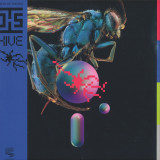
In Frank Herbert’s 1973 novel Hellstrom’s Hive, the Dune writer tells of a sinister narrative surrounding the maverick scientist Nils Hellstrom, who has created subterranean Hive of 50,000 insect-human hybrid life-forms. Ultimately his plan being for the inhabitants of the Hive to usurp humanity and take over the world. The decade thus far may not have seen anything quite so daunting, but it’s provided more than its fair share of challenges. Yet in such dystopian environments, Teeth Of The Sea flourish. This band has created a kaleidoscopic inner world all its own in Hive, their sixth and most outlandish album. Fundamental to Teeth Of The Sea’s mission thus far is that this band can go anywhere and make short work of any obstacles in their path. Inspiration flowed into Hive from all dimensions, with the band’s sphere of influence expanding to take in everything from Italo-disco to minimal techno, from dubbed-out studio madness to their most brazen forays thus far into pop songwriting. Here is a headspace where the psychic charges from records by Labradford, Nurse With Wound, Vangelis, The Knife, Nine Inch Nails and John Barry can happily co-exist. Hive is more than just a transformative force from subterranean origins. It’s an alchemical headspace where monochrome animates into vivid colour. It may not be a carefully ordered insectoid militia set to overthrow society, but it’s a transmission which transcends anything Teeth Of The Sea have thus far offered in their time on Earth. Step inside Hive, if you dare
out of Stock
Last delivered 2 years ago available to reorder, subject to availability
Vladislav Delay presents the fifth and last EP in his "Hide Behind The Silence" series. Intuitive and raw music, momentary and reflective, released on Ripatti's own label "Rajaton".
--
Stillness is a myth. Consider concepts such as ”still water”, or ”still air” for that matter. Go to a restaurant, ask them for a glass of still water, hold it against the light and see where we’re at. Even though the water itself has been captured and imprisoned in the glass, it never stops breathing. It’s filled with tiny particles, dancing. Everything can be explained on a molecular level, but since we’re not scientists – and even if you happen to be – it’s the natural world of perception that moves me.
Still air is very similar. A hot summer’s day with zero wind feels completely still. It’s the closest I have felt to complete stillness. Or for a more urban adaptation, imagine the same vibe inside a normal apartment. In those moments, revelations and mind- blowing experiences can be had with experiments in stillness.
Try this: Just sit down for a minute on a sunny day, making sure there’s enough natural light. Do absolutely nothing. Try not to breathe for a bit. (If you need a mental anchor, you can play Cage’s 4’33” in your head but nothing else.) Watch the tiny dots of dust dancing :..’ ̈.:; ́ ́*°.,’:,. ̈ ̈ ̈ ̈:,.’
The movement is crazy, but the feeling of stillness comes from witnessing how subtle it is. In (perceived) complete stillness, every act of microscopic mobility seems to speak volumes. Yet, it feels both reassuring and oddly threatening that the stillness is never complete. What if we would need absolute stillness? Or is it just enough that we can perceive something as such? Extremes attract, so for both water and air, extraordinary movement is equally fascinating. That is also a luxury item of sorts. For us to enjoy a very ”loud” body of water or air, we need to be safe, in enough control of the situation. So when you are, it’s worthwhile to pay attention and take it all in.
A rapid flowing free with extreme strength and just barely in control. Look at that water go! No still water on this one, only ”sparkling”. A windy day when birds seem surprised how hard it is to fly, but in the end they make it. Trees bend but don’t break. The wind shows you its movement but doesn’t hurt you. It feels friendly, like a big clumsy dog that doesn’t quite understand its size.
It’s beautiful to be a guest of the elements, but not at the mercy of them. A new kind of dialogue forms.
out of Stock
Last delivered 2 years ago available to reorder, subject to availability
White vinyl, limited to 500 copies. Liam Cromby, known for his work as the lead singer and songwriter of We Are The Ocean until 2017, has today announced his forthcoming debut solo album What Can I Trust, If I Can't Trust True Love, due for release on December 1st 2023, also sharing the title track, available to stream/download worldwide now. "Drawing from my own experiences, this song is a testament to those early, fragile moments of a relationship_where every misstep feels like a fall and every kind gesture feels like flying," he explains. "Choosing to name the album after this song was instinctive, given that it was among the final tracks to be crafted. Even though it came later in the creative journey, it perfectly embodies the central theme of the album." Since revealing the first taste of new music in March, with the release of `Here I Am' - accompanied only by a contemplative, artful film featuring an elaborate dance between two performers - followed by `Breakdown', and last month, `At This Table', this new phase of his career is already off to an impressive start. With early airplay from BBC Introducing and Absolute Radio Country among others, an appearance at The Great Escape festival and sold-out headline shows across the country, Cromby was invited to play at the prestigious Black Deer Festival of Americana, and along with a full-band set, joined Brandy Clark, Drake White, Elles Bailey and Bella White for a Songwriter Session. Although recorded in a matter of days, the project was at least five years in the making.
For their first album, Seth Troxler and Phil Moffa joined forces and became multidimensional creative dissidents Lost Souls Of Saturn. This time, even further into the vortex, they’ve metamorphosed into sci-fi AR comic characters John and Frank who’ve explored the galaxy and returned with this perception-melting new LP.
Although ‘Reality’ still possesses the wigged-out conceptual brilliance which garnered installations and performances at Saatchi Gallery (London), Fondation Beyeler (Basel), The Metropolitan Museum of Art (NYC), and Museum of Contemporary Art Detroit, plus live sets at Field Day, Glastonbury and Kappa Futur, as its title might suggest, there’s vividness amidst the mind-bending. Where its predecessor was a murky exploration of weird and dark cerebral passageways, this album – though still fathoms deep – has a dazzling clarity of sound, as if listeners are beginning to crack the arcane codes, and reach for enlightenment.
A prime example of these newfound beams of light guiding participants through the maze is their recent single; the chugging cosmic techno synth pop of ‘Mirage’, featuring the voice of Adam Ohr. Also guesting on the album is Lvv Gvn, whose honeyed Billie-Holiday-meets-Rickie-Lee-Jones tones adorn the tranquil pixelated broken beat of ‘Click’, Greg Paulus’s trumpet sessions on ‘Zorg Arrival’ and ‘Scram City’, and Protomartyr’s vocalist Joe Casey and guitarist Greg Ahee, who grace the liminal drifting celestial plane of ‘Lilac Chasers’. Sitarist Rishab Sharma, the last disciple of guru Ravi Shankar, also shreds on ‘Scram City’.
Elsewhere, across the LP’s immensely inventive instrumental passages techno, dub, house, jazz, psych and ambient are vapourised into an expansive yet pleasingly concise series of morphing dream states. Fans of Air Liquide, Ravi Shankar, Ray Manzarek, Carl Craig, Pole, The Orb and ‘Son Of A Lung’ era FSOL should find much to like.
out of Stock
Last delivered 2 years ago available to reorder, subject to availability
Agrio is a duo from Madrid, Spain and using a "what if..." methodology they write instrumental songs that they send later to a revolving cast of their talented and generous friends so they can add their magic. With this in mind they sent music to MARK LANEGAN, Enablers frontman PETE SIMONELLI & to SCOTT MCCLOUD from Girls Against Boys, Soulside and so much more. 'El Amigo Americano' is the result of these collaborations, 10 tracks of some of the most beautifully striking music around. The work with Mark Lanegan and Pete Simonelli were originally released as two vinyl EPs and Scott McCloud as a digital EP. EP 1 - EP one 'La Murga Ep' with Mark Lanegan was their debut on feb. 2020. EP2 - followed it that same autumn with The Thin Man EP featuring Pete Simonelli (Enablers). Both were originally released on vinyl via the San Francisco based label Broken Clover Records. These records sold out fast. EP 3 - "Repeat to Infinity EP" (digital only), with Scott McCloud's (Girls Against Boys, New Wet Kojak, Paramount Styles) on voice and guitar. The three EPs are compiled together on one LP as "El Amigo Americano". La Murga Ep* + The Thin Man Ep** + Repeat To Infinity EP*** = EL AMIGO AMERICANO AA I. Nike Italy France *** II. Dj's In Heaven*** III. People Used To Dream*** IV. A Mayores * V. Nomeolvides ** B I. A Drink Of Poison Water * II. Cisnes * III. The Scales Of Embrace ** IV. Waking ∦ ∆** The album is mastered by John McBain (Monster Magnet, Wellwater Conspiracy) Agrio is David Flores and Jorge Fuertes with Mark Lanegan, Pete Simonelli and Scott McCloud.
This is a drug record, but not in the way you might think. Chances are, if you’re reading this you’re burnt out. You’re tired, you’re stressed, you’re working. You’re surviving. So what do we do? We consume. Turning to screens, alcohol, substances and transactional relationships for a quick fix of dopamine, a little endorphin rush, a sharp boost of oxytocin. As we move along, our tolerance for all of these things rises, and our capacity to operate without them falls. We block up our neurotransmitters, and need more and more hits just to function and feel human. Put simply, it’s addiction. It’s ruining our brains, taking over our lives, but it’s all so… gratifying. Set in a not-too-distant and - crucially - not-at-all-unrealistic future, Normandie’s fourth album, ‘Dopamine’ finds the band asking and answering two unsettling questions: what if we pushed our brains and bodies far beyond their limits? And what if we already are? “The whole album is about the chase for different highs and natural chemicals: oxytocin, serotonin, dopamine, endorphins, adrenaline…” starts frontman Philip Strand. “What if dopamine had to be clinically provided because we've burned through our receptors?” “Making this album futuristic and dystopian came very naturally when we started discussing the current state of the world. We’re all on overdrive. We’re upping the stakes all the time, and everybody has a higher tolerance now for stress in a way that nobody saw coming,” he explains.
Harm’s Way is Duck Ltd.’s most intuitive and organic album yet, the result of keen observation, self-possessed songwriting, and a collaborative spirit. Building on the successes of their previous releases, the deeply relatable album displays a band operating at a nuanced, lyrical and musical best.
Ducks Ltd. make inviting and frenetic guitar pop for when life feels overwhelming. While the band’s songs are ostensibly breezy, a palpable anxiety boils underneath that communicates something deeper about everyday existence. On their latest album Harm’s Way, the Toronto duo of Tom McGreevy and Evan Lewis hones in on interpersonal and societal collapses, urban decay, and the near-impossibility of keeping a level head when everything around you seems to be falling apart.
“They’re songs about struggling,” says singer and lyricist McGreevy (who also plays bass and rhythm guitar). “About watching people I care for suffer, and trying to figure out how to be there for them. And about the strain of living in the world when it feels like it's ready to collapse.”
Even with its often dark subject matter, Harm’s Way is Ducks Ltd.’s most vividly rendered and collaborative collection yet. It’s an undeniable evolution for the band, not just in how these songs soar, but in their entire writing and recording processes. Composed on tour while supporting acts like Nation of Language, Illuminati Hotties, and Archers of Loaf, the album displays the band’s finely tuned songcraft and well-earned, road-tested confidence. “When we got signed, we had played maybe five or six shows ever. After last year, it’s in the hundreds. That experience can change your perception of your own music and songwriting,” says McGreevy. “In the past when we got stuck on a song we had a tendency to look at our favourite records to see how they tackled it. But now, instead of asking ‘what would Orange Juice do?’, we’d ask, ‘what would we do?’.” Lewis adds, “We have this really great thing where every decision with the band is filtered through both of us. Here especially, we really figured out how to make something that truly sounds like us.”
The band, fortified by this strong sense of sonic identity and a self-assurance in their new material—and in contrast to their critically acclaimed 2021 debut Modern Fiction and 2019 EP Get Bleak, both self-recorded and self-produced in a Toronto basement—wanted to bring Harm’s Way to life in a new city, with an outside producer, and with some of their favourite musicians. “We realised that so many of our favourite bands who are making guitar music right now are from Chicago,” says McGreevy. Working with producer Dave Vettraino (Dehd, Deeper, Lala Lala), they enlisted a marquee cast of Windy City collaborators to round out the tracks on Harm’s Way, including: Finom’s Macie Stewart (violin, string arrangements); Ratboys’ Marcus Nuccio (drums on most tracks); Dehd’s Jason Balla (who helped arrange the backing vocals, to which he also contributed); and backing vocals from Julia Steiner (Ratboys), Nathan O’Dell (Dummy), Margaret McCarthy (Moontype), Rui De Magalhaes (Lawn), and Lindsey-Paige McCloy (Patio). The band’s touring drummer, Jonathan Pappo, and bassist Julia Wittman also appear on the LP.
Ducks Ltd. are a band that already thrives on skirting the edges of buoyant jangle pop and driving power pop, and the duo credits these collaborators with helping to push their sound even further. “Historically our process has been really tightly controlled and insular. On this record, we worked with people who we trusted with a pretty wide range of musical backgrounds and they had approaches and ideas that helped open up the record's sonic palette,” explains McGreevy. “Jason thinks about backing vocals in a totally different way than I do and is super intuitive with melodic ideas. Julia and Margaret have a really deeo understanding of harmony. Macie and Dave were comfortable with the idea of improvising string parts which took some of those layers in some surprising directions. Dave also has an amazing ability to create atmosphere on a recording, and encouraged us to use a bunch of different techniques, tones, and processes to achieve that.”
Harm’s Way’s lush, melodic swagger is clear from the first notes of opener “Hollowed Out.” A song about living with decline (inspired by a Toronto sinkhole), its bright, indelible catchiness serves in contrast to its lyrical unease. Anchored by Lewis’ shimmering electric guitar, “The Main Thing” laments growing apart from a person whose views you once shared while managing to toss in references to both the unglamorous lives of middle relief baseball pitchers and the occult. Other songs split the difference between country and krautrock, like the rollicking “Train Full of Gasoline,” which uses the 2013 Lac-Mégantic rail disaster in Quebec as a metaphor for self-destructive patterns. Meanwhile, “Deleted Scenes” mourns the absence of someone no longer in your life (even if for very good reasons) and recalls The Cure at their most direct, and closer “Heavy Bag” employs enveloping, mournful strings to evoke a sense of how misery frequently loves company.
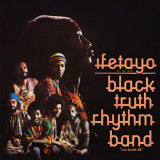
Soundway presents a long-awaited remaster and re-cut of the 1976 album ‘Ifetayo’ by Black Truth Rhythm Band, an important and overlooked chapter in Trinidad’s rich musical history that blends West African influences with jazz, funk and the social commentary of the calypso tradition.
Led by the charismatic Oluko Imo, the group drew on the strong connections to Yoruba culture and Orisa traditions in Trinidad, looking to Africa for inspiration and reflecting the burgeoning Black Power movement of the time.
Currently celebrating ten years of releasing music on vinyl & cassette and following hype for recent releases from Moscow (via Tallinn)’s Galun (glagol album) and Osaka's Kiji Suedo (Hosek EP & Riot album), Edinburgh's Hobbes Music label continues to mine a leftfield seam with this brand new album from singer/songwriter George Demure (Tirk, Output) aka DJ/producer George T (Greco Roman, Optimo), better known as George Thomson to his mum. And it’s another absolute peach if you have a taste for post-club sounds of a more leftfield persuasion.
This is the follow-up to his 'The Record Store' EP which came out via George's own All Noise imprint in 2021. He has also released the Roll On, King's Cross single via Hobbes Music under his George T moniker last November (plus various bits for the Paradise Palms and Ramrock labels in the interim).
“It all began with the Record Store EP in 2021,” explains George. “Limit my options. No samples, one drum machine, two analog synths (mono and poly), computer simply to record. I was so happy with the results I began with what you hear today. Same drums, same machines (or lack thereof) maybe some real percussion and melodica but hey, I only answer to me.”
Imagine, if you will, Scott Walker jamming with Kruder & Dorfmeister in a very small studio…
Bonus Album ‘Dandy In Dub’ features dubs, instrumentals and bonus tracks, with yet more regular flashes of pure brilliance. Be sure to check out opener 'After' and closer 'Blue Lou', which sound like George might well have sound-tracked some French 80s flick of the 'cinema du look' period (Betty Blue, Diva et al) in another life. Plus ‘Mr Minilogue’ with its clarinet-like synth.... Does it really get any better than this?!!
Sleeve art by the amazingly talented Bernie Reid, another local legend.
Feedback/Reviews to date:
'He's so talented!' JD TWITCH (Optimo)
'Love the LP. Sounds really together, production is awesome. I love the aesthetic. Vocal tracks sit nicely with instrumentals. Vocals sound light-hearted' THE MAGHREBAN
"On a bobbled and float-y, light sunbeam dappled vapor of deep house, garage, electro, kosmische, leftfield pop electronica, dub and new wave (both the German and UK’s), the Edinburgh DJ/producer and singer-songwriter George Thomson continues the good work he laid down on the last EP... It’s a most lovely, swimmingly blend of motivations, feels and deep grooves that effortlessly comes together in a generous offering of electronic music: the very epitome of the Hobbes label’s remit in delivering leftfield unique visions of now techno, house and club sounds." MONOLITH COCKTAIL
‘I love the album’ LEO MAS
‘Lovely stuff’ S/A/M (Music For Dreams/DK, Cafe Del Mar, Pikes, Playasol Radio and many more, Ibiza)
Plus play/s from Andy Wilson on ‘Balearia’ Ibiza Sonica Radio
+ DJ Dribbler (Pikes, Ibiza // Paradise Lost, Red Light Radio, Pure)
One of his best albums from the mid-Sixties, Yusef Lateef's 1984 is a truly experimental work. With bassist Reggie Workman, pianist Mike Nock, and drummer James Black, it goes from the eight-minute title track that opens the album to the two-minute, angular modal ballad "Try Love." Reviewer Thom Jurek gave it four out of five stars in AllMusic, stating that "1984 certainly seems to be shaping up into one weird record.
The title is an experimental, noodling improv with Lateef moaning as if in mourning. But then with 'Soul Sister,' featuring Lateef's deep, bluesy, tenor blowing around a gorgeous lyric figure, and Mike Nock's stunningly beautiful soloing on 'Love Waltz,' the entire album moves in another direction, even if it isn't terribly focused. In all, a complex yet emotionally and musically rewarding effort by a master.”
The story of Astral Bakers is an obvious one. Four experienced musicians get together in the same room, and make music as if it were the first time. Some say acoustic rock, others say soft grunge. Songs in English, halfway between Big Thief, Supertramp and an unplugged Nirvana concert. Initially, Sage (formerly of Revolver), Theodora, Nico Lockhart and Zoé Hochberg know each other from having collaborated together on other tours and records. All have worked with artists as varied as Clara Luciani, November Ultra, Woodkid, Pomme and Revolver. Together, they crave something different: epiphanies and presence, friendship and purity. No demos, no re-recording: just circular listening, between two guitars (Sage and Nicolas) that converse with each other, a bass (Theodora) that holds time, and soft drums (Zoé)thatenfoldthewhole.Selected by Spotify for their RADAR program, and already acclaimed by critics,this10-trackdebutalbum,writteninalivesetting,isalreadymakingitsmarkonthe 2024 indie landscape.
Alara Music is releasing the new album of OXY, the new stunning electronic project by Ivan Pavlov (COH) and Sasha Galianov (Shortparis).
OXY is a transient project combining talents of Ivan Pavlov, major electronic artist better known as CoH who has collaborated with Coil, and Sasha Galianov, the main force behind the electronic sound of the avant-garde performance collective Shortparis. The two once met at a festival where they performed a semi-improvised live set. The first performance sparked mutual interest in continuing joint experimentation, which, after a series of concerts, eventually led to this studio recording.
The name of the album is constructed of the two titles presented each on one side of the LP. The first side, AETHER, delivers a powerfully charged contemplative exploration, in which the two seem to carefully study the sound of each other's instruments. The search for balance between the analogue and the digital reveals a murky terrain of focused sonic pressure interwoven with potent silence filled with echoes. Towards the end, AETHER, amorphous in the beginning, gains structure and rhythm, as if preparing the listener to its more agitated sequel, GUST.
Side two, starting with trademark minimalistic patterns of CoH quickly picks up in intensity and wanders into the domains of digital heavy-metal, in which Sasha's menacing guitar riffs are meticulously disjointed in favour of power focus. Then GUST takes the listener through a minor apocalypse, past a few relieving joyful moments of temporal enlightenment, and towards a strange peace found in a disorienting, synth-framed collage of acoustic guitar sounds.
AETHER GUST is a record that requires listener's full attention, offering in return a captivating journey though peculiar landscapes at the intersection of the worlds of two adventurous music explorers, exchanging their sonic beliefs and passions. An intense journey through a landscape of contrasts, between the warmth of analogue sounds and the aridity of demanding electro, both minimalist and abundant. This journey, these intersections, but also this permanent encounter between analogue and digital, are magnified by the physical version of AETHER GUST: it comes as a bundle of both Vinyl + CD versions of the album, all in a 12" vinyl sleeve then nestled in a thick crafted carboard black embossed sheath.
Desmond Dekker recorded some of his best known songs together with his backing group the Aces. Their single “007 (Shanty Town)” made him Jamaican music’s first outernational superstar, reaching the 14th place in the UK charts. The Leslie Kong produced Double Dekker was first issued in 1973 and consists of the best material Desmond recorded during his early years. In 1969 he scored a number one hit with the legendary song “Israelites”. You’ll hear how the Ska music from the mid-60s developed to the Rocksteady sound. This was “Ska” or “Blue Beat”—(or its new name for the slower tempo “Rock Steady”), and the lyrics come from the Calypso-Mento method of telling about current events in music. He was really at his prime from 1969 to 1971, and recorded classics such as “It Mek” (1969) and “You Can Get It If You Really Want” (1970), which you’ll both find on this record. Even before Bob Marley and Jimmy Cliff Jamaica already had their own international superstar, Desmond Dekker was his name.
Double Dekker is available as a limited edition of 750 individually numbered copies on orange coloured vinyl.
He's back - again! Years after the end of the Heisei era, the big G came back to film in 1999 with the first of a new era: GODZILLA 2000: MILLENNIUM. Directed by Takao Okawara (GODZILLA VS. DESTOROYAH), a new look Godzilla is still harassing Tokyo, with the Godzilla Prediction Network out there trying to figure out where he'll show up next. To make matters worse, the government's Crisis Control Intelligence care more about firing missiles, but everything changes when they discover a mysterious meteor has a UFO inside. All of this results in Orga, a kaiju made from Godzilla's DNA, and of course it's up to the Big G to kick its ass back to space. Scoring GODZILLA 2000 was Takayuki Hattori, who had previously composed 1994's GODZILLA VS. SPACEGODZILLA. Hattori's music is very much about mood; the composer brings a sense of lyricism to proceedings, but of course, he also knows how to get us excited for Godzilla's appearances. Hattori does that with a spectacular new theme for the Big G that perfectly captures the creature's grandeur and immense power. There's also a fantastic piece for the UFO that has a wonderfully primevil beat, and of course, Akira Ifukube's classic theme for Godzilla returns in a big way. A perfect start to the Millennium era! (Charlie Brigden)
Birthed at the turn of the ‘80s, synth and wave music has remained a constant force over the last four decades, with a recent spike in interest in the sound offering further proof of its’ timeless, out-of-this-world quality. It’s against this backdrop that Dutch DJ Interstellar Funk presents his celebration of the style, “Artificial Dancers – Waves of Synth”.
A bumper compilation bristling with obscure and hard-to-find gems, the set sees the Artificial Dance label founder joining the dots between synthesizer and drum machine-driven tracks in a variety of subtly different styles. It’s the result of hundreds of hours spent digging through dusty old records, tapes, and the Bandcamp accounts of DIY musicians who have been active since the sound’s first boom in the early 1980s.
The 11-track set draws on tracks made and released at different times over the last 40 years, with the earliest cut committed to tape in 1978 and the most recent in 2018. While the tracks date from the ‘80s, ‘90s, noughties and 2010s, the showcased cuts are united by a primitive but futuristic quality that makes dating them difficult. In many cases, it’s hard to tell which tracks were made in the early 1980s and which were conjured up in 21st century studios.
As you’d expect, highlights are plentiful with a number of the most unknown or sought-after cuts appearing on vinyl for the first time. In this category you’ll find the Human League’s odd but inspired early number “4JG”, a near mythical 1982 live version of Liasons Dangereuses’ “Dias Cortas” (previously only available on a VHS video) and Chris and Cosey’s “Hybrid C”, a brilliant mid-’90s cut plucked from their CD-only album “Skimble Skamble”. You’ll also find a rare demo version of Clan of Xymox’s Dutch darkwave classic “Stranger”, which became a club smash across Europe in 1983.
Interstellar Funk has also chosen to showcase tracks by a range of DIY producers and lesser-known artists. These include Californian band Batang Frisco, who self-released a sole private press album in 1986 (their contribution, “Sewing Machine”, is dedicated to founder member Bill DiMichele, who passed away this year), Matthias Schuster’s Im Namen Des Volkes project – which contributes the previously unreleased 2014 track “Alles Ist Gewinn” – and Zahgurim, a short-lived early ‘80s act who reunited in 2018 to record their first new material since 1983.
If that wasn’t enough to set pulses racing, the compilation also showcases a solo track by sadly departed Psyche member Stephen Huss. Nobody is quite sure when Huss recorded “Infinity Sign”, but we can confirm this is the first time that one of his solo productions has ever appeared on vinyl.
out of Stock
Last delivered 2 years ago available to reorder, subject to availability
What happens when a four-headed human drum computer meets a classical trained vilonist turned beatmaker to spend time in the studio? A beautiful lily blossoms. At least this was the case when Bokoya and FloFilz entered Atelier 21 in Aachen (a Produzentengalerie für globale Kunst) for a musical encounter with no goals set. The music that was born out of these sessions is simply amazing and we are more than happy to release them as an album under the name “Yurika” - which is a Japanese name that means “beautiful lily”.
The artwork was created by Jens Roth & Jeremias Diekmann who are responsible for almost all Bokoya artworks yet. The 19-track strong instrumental album includes one vocal track featuring Japanese singer Kan Sano.
FloFilz is one of Europe's most acclaimed Jazzbeat-producers with four albums on MPM under his belt. His last album “Close Distance” came out in 2022 an featured artists Alfa Mist, Blue Lab Beats, Jerome Thomas and Summers Sons. FloFilz is a classical trained musician who not only plays the TR 404 but also violin.
Bokoya describe themselves as a four-headed human drum machine that play improvised beat music. You can call it jazz if you like (all four members are graduated jazz musicians ) but be ready to stumble over some Dilla, Kraut Rock, Ambient or Dub in the mix. In 2022 Bokoya released their second album Hausensession on MPM , followed by a collabo album with Cologne-based producer Ginanni Brezzo (Jakarta Records) called „Minari“.
out of Stock
Last delivered 2 years ago available to reorder, subject to availability
Auf seinem neuen Album BEFORE AND AFTER hat Young eine vielseitige Sammlung meist obskurer Songs wie ein Maler mit einer neuen Palette neu aufgegriffen. Für das Album hat Young als Reise in seine Musikgeschichte aus einer großen Anzahl seiner Originale und Favoriten aus seinem Katalog ausgewählt und führt sie hier auf dem Album auf, meist alleine, auf einer akustischen Soloreise an einen neuen Ort . Jeder der Songs fließt ineinander und erzeugt einen kontinuierlichen Fluss, der zu einem 48-minütigen reinen und intimen Hörerlebnis führt. Ein Album wie nichts anderes, was er bisher veröffentlicht hat. Das Album wurde von Lou Adler und Neil Young produziert und von Young und Niko Bolas, auch bekannt als The Volume Dealers, gemischt.
Neue Versionen der Songs selbst bewegen sich nahtlos und verwandeln sich mit faszinierender Klarheit in neue Dimensionen, angefangen bei seinem frühesten Auftritt in Buffalo Springfield, Burned, bis hin zum neuesten Don't Forget Love (aus BARN aus dem Jahr 2021) und einschließlich des bisher unveröffentlichten - veröffentlichten Song If You Got Love.
out of Stock
Last delivered 2 years ago available to reorder, subject to availability
Opening a new chapter for DNO Records, PLLFRY debuts on the label with five raucous halftime tracks that also feature collaborations with two vocalists – NST & Genoveva. The ‘Overexciting’ EP is built around iron-clad percussion and a healthy dose of mangled sonic futurism, but the dominating flavour throughout is big, bold, unadulterated bass.
As might be expected of tracks called ‘Demolition’ and ‘Collapse Of The System’, there’s plenty of damage being dealt; the former’s wrecking ball bassline spins violently as its supporting beats splinter and fall, while the latter’s destructive low-end hacks chunks from its itchy sci-fi soundscape like some psychotic sentient buzzsaw.
There’s room for nuance too, however. The title track is all about contrast, its rumbling bassline winding along like a colossal serpent, while hi-hats chitter, and Macedonian vocalist and producer Genoveva delivers a haunting, silvery vocal that’s cold and alluring in equal measure. And as if the undulating low-end and metallic melody of ‘Water Fire’ weren’t enough to make heads spin, the track features a vocal from South Russian up-and-comer NST that seems to slip and slide at will, pulling the track forward and always remaining just out of reach.
Bonus track ‘Old School’ nods to the golden age of hip-hop, taking a tough boom bap-style beat and scratch samples, but flipping it script with machine glitches and pellets of acid.
Like a collection of missives sent back from a hi-tek future, the ‘Overexciting’ EP serves as a reminder that DNO can’t be pigeonholed, and always stays one step ahead.
Rhythms of postmodern realism at the very bottom of the DNO.
out of Stock
Last delivered 18 months ago available to reorder, subject to availability
Optimo (Espacio) started life as a weekly club night. It was born at The Sub Club in Glasgow on a wet, windy, wintry November Sunday night in 1997. Run by JD Twitch and partner in crime Jonnie Wilkes. Optimo was a reaction against what felt like an increasingly conservative musical soundtrack in clubs here at that time. Clubland felt as if it had become very bland and a bit too serious; it was the era of the dawn of the Superstar DJ. Clubs often felt like bastions of male energy. It seemed dance music and culture was going somewhere far, far away from where it was meant to be. The notion of fun had got lost.
It was no longer the world they had devoted ten years of their lives to already, and lots of their friends felt the same. When the opportunity came up to do a Sunday night at The Sub Club it felt like the perfect opportunity to rip it all up and start again. So they did. There was nothing in the city (or possibly anywhere) like it. As the club believed wholeheartedly in what they were doing, there was no pressure from The Sub Club to fill the club. So, they embraced the freedom. Groups of people who had never been in the same room at the same time before came together. A community of kindred spirits started to emerge.
Word spread, slowly. Lots of people checked it out. Many loved it, some hated it. The core of the Optimo idea was to embrace music they loved that might work on the dancefloor from whatever era or genre they thought felt right. It might not seem very radical now but at that time it was revolutionary.
After about a year and a half, the club went from having 100 people attending most nights to suddenly one week having 500 people turn up. It was very weird. It was as if a collective light bulb went off in people’s heads in Glasgow. From that week on, until the very last weekly Sunday night at the Sub Club, in 2010, over a decade later, it was packed.
There were 550 Sunday Optimo nights. A LOT of music was played. So, what was the music? People often find it hard to pin down exactly what Optimo is. This has been a positive but also a negative as we live in a world where people want easily defined “brand identities”. The simplest definition of the music played is “music for dancing”, which of course is a very broad definition. Even better than trying to define it in words, we have these 2 volumes of music that give a hint of what that might be.
This is not a “Best of Optimo” or a “Greatest Hits of Optimo” compilation. For people who come to, or used to come to the nights there are of course “Greatest Hits”. But, over such a long timespan they are “hits” belonging to a certain moment in time and space. Someone who came to Optimo in 1997 would have a completely different notion of the big tracks at the club to someone coming in 2003, or 2010, or today. This compilation is just a snap shot missing several genres that might make up the DNA of Optimo. There is though a broad sweep through lots of music Optimo loves, that they believe is amazing. Music that they know will rock a dancefloor, that they have played between 1997 and 2023. Of course Optimo nights were not all about rocking the dancefloor. The first hour was always a time for them to play music they loved that often was far removed from the dance. Side 1, Volume 1 of this compilation is the kind of music one might hear at the very start of an Optimo night.
Optimo have always loved a good slogan. The most long lived, and fitting Optimo slogan is "We Love Your Ears", which is in essence what it is all about to them.
out of Stock
Last delivered 2 years ago available to reorder, subject to availability
Optimo (Espacio) started life as a weekly club night. It was born at The Sub Club in Glasgow on a wet, windy, wintry November Sunday night in 1997. Run by JD Twitch and partner in crime Jonnie Wilkes. Optimo was a reaction against what felt like an increasingly conservative musical soundtrack in clubs here at that time. Clubland felt as if it had become very bland and a bit too serious; it was the era of the dawn of the Superstar DJ. Clubs often felt like bastions of male energy. It seemed dance music and culture was going somewhere far, far away from where it was meant to be. The notion of fun had got lost.
It was no longer the world they had devoted ten years of their lives to already, and lots of their friends felt the same. When the opportunity came up to do a Sunday night at The Sub Club it felt like the perfect opportunity to rip it all up and start again. So they did. There was nothing in the city (or possibly anywhere) like it. As the club believed wholeheartedly in what they were doing, there was no pressure from The Sub Club to fill the club. So, they embraced the freedom. Groups of people who had never been in the same room at the same time before came together. A community of kindred spirits started to emerge.
Word spread, slowly. Lots of people checked it out. Many loved it, some hated it. The core of the Optimo idea was to embrace music they loved that might work on the dancefloor from whatever era or genre they thought felt right. It might not seem very radical now but at that time it was revolutionary.
After about a year and a half, the club went from having 100 people attending most nights to suddenly one week having 500 people turn up. It was very weird. It was as if a collective light bulb went off in people’s heads in Glasgow. From that week on, until the very last weekly Sunday night at the Sub Club, in 2010, over a decade later, it was packed.
There were 550 Sunday Optimo nights. A LOT of music was played. So, what was the music? People often find it hard to pin down exactly what Optimo is. This has been a positive but also a negative as we live in a world where people want easily defined “brand identities”. The simplest definition of the music played is “music for dancing”, which of course is a very broad definition. Even better than trying to define it in words, we have these 2 volumes of music that give a hint of what that might be.
This is not a “Best of Optimo” or a “Greatest Hits of Optimo” compilation. For people who come to, or used to come to the nights there are of course “Greatest Hits”. But, over such a long timespan they are “hits” belonging to a certain moment in time and space. Someone who came to Optimo in 1997 would have a completely different notion of the big tracks at the club to someone coming in 2003, or 2010, or today. This compilation is just a snap shot missing several genres that might make up the DNA of Optimo. There is though a broad sweep through lots of music Optimo loves, that they believe is amazing. Music that they know will rock a dancefloor, that they have played between 1997 and 2023. Of course Optimo nights were not all about rocking the dancefloor. The first hour was always a time for them to play music they loved that often was far removed from the dance. Side 1, Volume 1 of this compilation is the kind of music one might hear at the very start of an Optimo night.
Optimo have always loved a good slogan. The most long lived, and fitting Optimo slogan is "We Love Your Ears", which is in essence what it is all about to them.
out of Stock
Last delivered 11 months ago available to reorder, subject to availability
Side A / Double A / Iko (Never Felt This Way)
Back once again with his signature big breaks sound, Double A dips into a multitude of sample genres for this party sure-shot.
A building intro pays off with a drop of bangin’ drums and funky
horns, and features a nod to his D&B / hardcore breaks origins with a sneaky vocal sample throwback around the halfway mark. If you’re looking for a sure-fire set-starter, you found it!
Side AA / Jim Sharp / Tell Me What To Do
The man who needs absolutely no introduction in the 45s world returns for his second release with Mountain 45s.
Jim takes a classic funk sample and with his usual polished touch, pays his respects to its earliest iteration as a New York party breaks mainstay.
Piano stabs, funky guitars and horns, mixed with call and response vocals alongside the originals make this one yet
another can’t miss from the maestro. Don’t sleep!
out of Stock
Last delivered 15 months ago available to reorder, subject to availability
The Sex featuring members of Mercenary God and No Suicide. A mixture of different elements with a rock substrate for an uncategorized result. Another Post-Punk gem from the 80's Italian North-Eastern scene.
My adventure buddies? The silent, enigmatic Patti, former singer of the mysterious No Suicide, and the young, faithful Chris, a passionate Police fan, we met on the battlefield and he immediately became my brother. For him, learning to play the bass was a way to get close to Sting, in other words, just one step below Paradise. Patti instead played keyboards as an extension of her mysterious and glacial presence, so still and distant that the audience sometimes wondered if she was real. And then there was my fixation for the drum machine, a futuristic device which could transform the drumming sweat into an invisible, yet physical, dreamlike pulsation. A particular combination of characters and a special astral conjunction, that’s what you need to get a nucleus source of sonic emotions, and in some ways this is what we were. You could clearly feel it during the concerts. When at the end of ‘81 My Mercenary God lost their drummer and had to disband, I felt clearly that the music had already changed.
Our old 70’s rock ‘n’ roll sound was no longer representative of the day. We were like some sort of yesterday’s newspaper. Thus I Sex was born (later The Sex). According to Freudian thought that sees sexual instinct as the driving force behind every (creative or destructive) human act. And in fact we immediately started creating, destroying, assembling and deconstructing our sound. Suddenly “tomorrow became now”. It was an outburst of creative independence in the form of homemade cassettes put together with makeshift tools, at least until the arrival of the legendary 4 track recorder. I was 19 years old, Chris was only 17. Nothing more than kids after all. Yet we were already veterans, veterans of a lost war. Wise, naive, disillusioned dreamers, everything and the opposite of everything. But, above all, we were totally devoted to our creative delirium up to the point of losing touch with reality, crossing limits, breaking down barriers and almost bordering on madness. Perhaps we were just too involved, especially if in relationship with what we could receive in return. We always spread our energies as if there was no future. We unconsciously felt that we had to live in the moment, now or never, and in retrospect it really was like that, and this is why these songs exist now. Songs created with the intent to tell an inner universe that is, now as then, far from any convention.
If the genesis of The Big Idea was written both in the corridors of their high school and the surroundings of La Rochelle, the first chapter truly takes place in a big house in outskirts of Paris, where the six boys settled once they got their baccalaureate in 2015. Throughout these five years, The Big Idea hosted every European band playing in Paris with no landing place. The house of Champigny-sur-Marne, almost invisible in the monstrous metropolis, became a central location of the capital’s underground scene.
That creative cyclone within which the band is placed quickly shows results and the band hit it hard with their debut LP “La Passion du crime 3” (2017). This quadruple album, written as the movie score of a police investigation story, affirms something fundamental: The Big Idea is determined not to do things like everybody else. The influences of the great psychedelic rock’n’roll tribes naturally appear, the band release several record, start touring all around Europe allowing them to develop a furious alchemy on stage. But then covid brought everything to a halt. However, the band returned to La Rochelle and plotted a new, mad project.
The Big Idea becomes the first band to record an album on a sailing boat while crossing the Atlantic. Once again, the idea is fabulous, and “The Fabulous Expedition of Le Grand Vésigue” represents both the thirst of adventure of the sextet from La Rochelle, and their yearning for calm, psychedelic horizons. After the release of the documentary film and the big tour that followed this extraordinary adventure, the band decides to reaffirm the most essential part of its identity and announces for February 2024 the releasing of a new record more electric and radical, in the image of their live performance with more and more intensity. “Tales of Crematie” is a story built on a fantasy medieval backdrop, but could have however taken place in our modern era. If the elegant, psychedelics parts have not disappeared, the record’s tone is clearly more rock than what the band has ever created before, and as The Big Idea always likes to go overboard, the album will be released as a double LP in which you’ll hear trumpets as well as pianos, violins, tropical influences, post-punk, and above all, loads, loads of fuzz. Just like a toy chest whose key would’ve been thrown away on purpose, hidden arrangement treasures abound inside of “Tales of Crematie” , along with a violent revolt against the modern archetypes of “too normal music.”
Dog Eat Dog is an American band founded in Bergen County, New Jersey. All Boro Kings is their first full-length album, released in 1994. It is the first time they brought their trademark saxophone sound to the foreground on singles like “If These Are Good Times, “Who’s The King” and “No Fronts”, of which the latter two became their biggest hits and received heavy rotation on MTV. The band were even voted Breakthrough Artists of the Year at the MTV Europe Music Awards. Dog Eat Dog became highly popular, especially in Europe, where they played large festivals and arena-sized shows. The songs released from All Boro Kings also charted on Europe's top forty heavy metal charts.
The album is available as a limited edition of 2000 individually numbered copies on gold coloured vinyl, and contains an insert.
First time vinyl release for this classic LOW holiday recording.
Their attention to musical detail combined with the heavenly vocal harmonies of ALAN SPARHAWK and MIMI PARKER (R.I.P.) are perfectly attuned to both traditional carols like “Silent Night” and more contemporary tunes such as “Blue Christmas.”
Christmas contains a selection of seasonal songs, including four originals by the band, mostly recorded at Lowʼs 20º Below studio in Duluth, MN. “If You Were Born Today” and “Blue Christmas” were released as a 7-inch single in 1997 on the English Wurlitzer Jukebox label, while “Taking Down The Tree” is taken from a 1998 compilation of live recordings issue by the Dutch VPRO radio station.
out of Stock
Last delivered 2 years ago available to reorder, subject to availability
The international four-piece, collectively hailing from Istanbul and Berlin, are intent on using their years of experience in the heaviest music scenes to push at the boundaries of contemporary metal. By mixing classic death-metal aggression and with cutting-edge production and processing techniques, Bipolar Architecture have created a balance of sound that is raw, frenzied and extreme whilst also nuanced, refined and pliable. On `Depressionland', the band's 2022 debut full-length, this truly progressive approach was realised in full as frontman, rhythm guitarist and principal songwriter Sarp Keski's unmistakable banshee howl soars over Fatih Kanik's punishing blast beats and delay-soaked euphoria courtesy of lead guitarist Marcus Sander and bassist Enes Akovali; unifying Bipolar Architecture's diverse influences whilst simultaneously holding them poles apart for maximum, abrasive impact. If `Depressionland' was a distillation of Bipolar Architecture's signature sonics though, 2024's sophomore album `Metaphysicize' is alchemical gold. Still determined to drive at the bleeding edge of extreme metal, `Metaphysicize' uses the existentialist, introspective themes of `Depressionland' as fuel for an even deeper, more haunting exploration of the human condition. Tracks such as `Immor(t)al' and `Dysphoria' resound with a musical maturity and patience testament to experience gained and lessons learned, whilst `Disillusioned' and `Alienated' shake with all the full-throttle, apocalyptic indignation of the band's blackened metal origins. Significantly, `Metaphysicize' is also Bipolar Architecture's first work to feature lyrics in Keski's native Turkish; sitting at the heart of the record, the swirling post-rock suspense and white-knuckle thrash metal of `Kaygi' is a perfect embodiment of the album's dichotic balance of culture, genre, calm and chaos.
First album in seven years from Maple Death Records founder James Jonathan Clancy (Italy/Canada), and the first under his birth name following previous ensembles His Clancyness (Fat Cat, Maple Death) and Brutal Birthday (Total Punk, Improved Sequence). In the interim between those projects and this latest, ‘Sprecato’, Clancy has refined and honed his vision —steadily and carefully drawing from a host of disparate influences to create a new kind of singer-songwriter album that bridges the divide between cosmic loner-folk, proto-ambient music, and the epic, intricately arranged world of vintage Italian soundtrack music. For ‘Sprecato’, Clancy has assembled a transnational cast of renowned guest collaborators; including Stefano Pilia (co-producer/guitar/modular/synths/bass), Andrea Belfi (drums), Enrico Gabrielli (flutes, PJ Harvey/Calibro 35), Francesca Bono (piano, Bono/Burattini) —while the core of the band features Dominique Vaccaro (guitars, J.H. Guraj), Andrea De Franco (synths, Fera) and Kyle Knapp (sax, Cindy Lee/Deliluh).
Written and recorded between London & Bologna, the initial spark for the album was to be found in the book length work ‘Gli Sprecati’ (Canicola Edizioni), by visionary Italian comic’s artist Michelangelo Setola, who ultimately provided Clancy with the graphics
that grace the album’s cover and overall visual sensibility. Something of Setola’s near apocalyptic pastoralism runs through the record, even as Clancy’s themes grow beyond the seed they’d originally planted. Drum machines that sound as if they’ve been excavated from the earth meet detuned pianos and guitars; bucolic traces of synths stretched beyond all reckoning. While the band is both loping and epic —with shades of Pentangle’s Terry Cox in the live drumming in particular —there’s a new emotional depth and
What Do We Do Now is the fifth solo studio LP recorded by J Mascis since 1996. This is obviously not a very aggressive release schedule, but when you figure in the live albums, guest spots, and records done with his various other bands (Dinosaur Jr., The Fog, Heavy Blanket, Witch, Sweet Apple, and so on), well, to paraphrase Lou Reed, "J's week beats your year." What Do We Do Now began to come together during the waning days of the Pandemic. Utilizing his own Bisquiteen Studio, J started working on writing a series of tunes on acoustic with a different dynamic than the stuff he creates for Dino. "When I'm writing for the band," he says, "I'm always trying to think of doing things Lou and Murph would fit into. For myself, I'm thinking more about what I can do with just an acoustic guitar, even for the leads. Of course, this time, I added full drums and electric leads, although the rhythm parts are still all acoustic. Usually, I try to do the solo stuff more simply so I can play it by myself, but I really wanted to add the drums. Once that started, everything else just fell into place. So it ended up sounding a lot more like a band record. I dunno why I did that exactly, but it's just what happened." Two guest musicians are playing this time out; Western Mass local Ken Mauri (of the B52s) plays piano on several tracks. Since J himself has some experience with keys, when asked why he needed a hired gun, he says, "Ken is great, and he plays all the keys. I tried playing some keyboards on the first Fog album, but I'm really only comfortable playing the white notes, so it's kind of limiting. laughs Nowadays, I could just turn the pitch on a mini Mellotron to play different sounds, but black keys just seem hard. For whatever reason, I just like banging on the white ones. Seems like it's harder to figure out how to stretch your fingers around the other ones." Mauri has no such qualms and plays all the keys very damn well. He sounds especially great on "I Can't Find You," where he is Jack Nitzsche to J's Neil Young, creating one of the album's loveliest tunes. The other guest musician, Matthew "Doc" Dunn, is also prominent on this track. Dunn's steel guitar manages to both widen and soften the musical edges of the music, giving it a full classicist profile. Dunn is an Ontario-based polymath who J met through Matt Valentine. After J played on Doc's great 2022 Sub Pop single, "Your Feel," he figured it was time for payback. Both Dunn and Mauri add beautifully to the songs here, helping to transform them from acoustic sketches into full-blown post-core power ballads. What Do We Do Now is the finest set of solo tunes J has yet penned, and the way they're presented is just about perfect. Asked if he would be touring to support the album, J says he'll be doing some weekend dates, but he probably won't be putting a band together. And I'm sure these songs will sound great solo and acoustic, but the arrangements on this album are truly great and put a cool, different spin on Mascis' instantly Recognizable approach to making music. So, what do we do now? Not sure. But apparently, what J does is to make one of his most killer records ever. Hats off to him. - Byron Coley
What Do We Do Now is the fifth solo studio LP recorded by J Mascis since 1996. This is obviously not a very aggressive release schedule, but when you figure in the live albums, guest spots, and records done with his various other bands (Dinosaur Jr., The Fog, Heavy Blanket, Witch, Sweet Apple, and so on), well, to paraphrase Lou Reed, "J's week beats your year." What Do We Do Now began to come together during the waning days of the Pandemic. Utilizing his own Bisquiteen Studio, J started working on writing a series of tunes on acoustic with a different dynamic than the stuff he creates for Dino. "When I'm writing for the band," he says, "I'm always trying to think of doing things Lou and Murph would fit into. For myself, I'm thinking more about what I can do with just an acoustic guitar, even for the leads. Of course, this time, I added full drums and electric leads, although the rhythm parts are still all acoustic. Usually, I try to do the solo stuff more simply so I can play it by myself, but I really wanted to add the drums. Once that started, everything else just fell into place. So it ended up sounding a lot more like a band record. I dunno why I did that exactly, but it's just what happened." Two guest musicians are playing this time out; Western Mass local Ken Mauri (of the B52s) plays piano on several tracks. Since J himself has some experience with keys, when asked why he needed a hired gun, he says, "Ken is great, and he plays all the keys. I tried playing some keyboards on the first Fog album, but I'm really only comfortable playing the white notes, so it's kind of limiting. laughs Nowadays, I could just turn the pitch on a mini Mellotron to play different sounds, but black keys just seem hard. For whatever reason, I just like banging on the white ones. Seems like it's harder to figure out how to stretch your fingers around the other ones." Mauri has no such qualms and plays all the keys very damn well. He sounds especially great on "I Can't Find You," where he is Jack Nitzsche to J's Neil Young, creating one of the album's loveliest tunes. The other guest musician, Matthew "Doc" Dunn, is also prominent on this track. Dunn's steel guitar manages to both widen and soften the musical edges of the music, giving it a full classicist profile. Dunn is an Ontario-based polymath who J met through Matt Valentine. After J played on Doc's great 2022 Sub Pop single, "Your Feel," he figured it was time for payback. Both Dunn and Mauri add beautifully to the songs here, helping to transform them from acoustic sketches into full-blown post-core power ballads. What Do We Do Now is the finest set of solo tunes J has yet penned, and the way they're presented is just about perfect. Asked if he would be touring to support the album, J says he'll be doing some weekend dates, but he probably won't be putting a band together. And I'm sure these songs will sound great solo and acoustic, but the arrangements on this album are truly great and put a cool, different spin on Mascis' instantly Recognizable approach to making music. So, what do we do now? Not sure. But apparently, what J does is to make one of his most killer records ever. Hats off to him. - Byron Coley