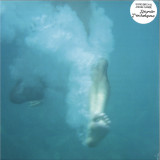
Kiefer is one of the US jazz and beat scene’s most
exciting artists, with a broad international fanbase.
He won a Grammy for his collaboration with
Anderson .Paak and has also collaborated with
SiR.
‘Between Days’ is the final instalment in Kiefer’s
trilogy of EPs (with 2019’s ‘Bridges’ and
‘Superbloom’).
With the exception of the final track, all the songs
on ‘Between Days’ were recorded in quarantine,
between 2020 and 2021. While the EP reflects the
time in which it was written and recorded,
‘Between Days’ is about transition, nostalgia,
finding purpose and remaining hopeful.
Artwork by Mason London.
Includes the Roy Ayers classic that’s also a fan
and radio favourite, ‘Everybody Loves The
Sunshine’.
For fans of Alfa Mist, Blue Lab Beats, Thundercat,
D’Angelo, Knxwledge, Mndsgn, Samiyam, Sam
Gendel.
Search:anders
- 1: Worlds Beyond (English Version)
- 2: Adrenaline Oasis (English Version)
- 3: Let Go (English Version)
- 4: City Life (English Version)
- 5: If I Had Wings (English Version) 00:04:23
- 6: Electric Sheep (English Version)
- 7: Daily Heroes (English Version)
- 8: Kindred Souls (English Version)
- 9: Transhumance (English Version)
- 10: Transhumance Jam (English Version)
- 1: Mondi Paralleli (Italian Version)
- 2: Umani Alieni (Italian Version)
- 3: Ombre Amiche (Italian Version)
- 4: La Grande Corsa (Italian Version)
- 5: Atmospace (Italian Version)
- 6: Pecore Elettriche (Italian Version)
- 7: Mr. Non Lo So (Italian Version)
- 8: Il Respiro Del Tempo (Italian Version)
- 9: Transumanza (Italian Version)
- 10: Transumanza Jam (Italian Version)
The making of “I Dreamed of Electric Sheep” was heavily influenced by the situation everyone had to face lately. “We were forced to work under very peculiar circumstances, often interrupting our studio activity because of the lockdown”, says Franz Di Cioccio (lead vocals, drums). The whole process took one year spent mostly working at home, sharing ideas and meeting at Patrick Djivas’ (bass, keyboards) home studio, before the band was able to record the album at White Studios in Milan, Italy. Being the rhythm section Cioccio and Djivas make a perfectly working team. “We both have a great passion for SciFi movies. In the past we watched many of them together. In the case of ‘Blade Runner’ we were hit by the question: Do Androids dream of Electric Sheep? - The world has been changing around us. Computers are taking over and Covid has accelerated the process. However, we strongly believe in the power of people to use their imagination and fantasy. To us this is what really makes the difference between human beings and androids.” The band considers themselves being in a similar place when it comes to music that Impressionists were in when it comes to painting: They didn’t paint fixed somatic traits for their figures with their brush strokes while PFM (Premiata Forneria Marconi) do not consider themselves limited to a specific genre. While the album tells multiple stories they are all linked to passion, love and the power of imagination. As a real treat PMF invited a couple of musicians they have been friends with for a long time: Ian Anderson (Jethro Tull) on flute and Steve Hackett (ex-Genesis) on electric guitar. “I Dreamed of Electric Sheep” is simultaneously released in both English and Italian versions, hence the Italian subtitle, “Ho Sognato Pecore Elettriche". PMF’s “I Dreamed of Electric Sheep” is available in the following formats: Special 2 CD Digipak with O-Card, Gatefold 2LP+2CD & Special LP-Booklet and Digital Album.
After a four-year hiatus exploring ambient and meditation music, Danish multi- instrumentalist Anders Rhedin has returned to his indie roots. Dream Work, his third album as Dinner, is a lush collection of synth and guitar-laden indie pop that expertly channels Ryuichi Sakamoto, early British indie, and the sound of water.
Like most worthwhile pursuits, the path to Dream Work hasn’t been straight. After signing to Captured Tracks in 2014, he released a series of synth-based avant-pop albums and toured the world with the likes of Mac Demarco, Sean Nicholas Savage, Prince Rama, and King Gizzard, all while splitting his time be - tween Berlin, LA and his native Copenhagen. This whirlwind period ended when, following the release of 2017’s New Work, Rhedin relocated to Copenhagen and took a step back from the Dinner project in order to explore his long standing personal interest in ambient production and guided meditation. Over the last few years, he’s released a series of ambient releases under his own name geared towards meditation, sleep, and relaxation. He’s also led live guided sound baths and meditations at art museums, churches, and rooftops all over the world.
Born in Majorca, Marc Melià is a composer/producer, who’s been based in Brussels for over 10 years. First spotted alongside Françoiz Breut, Lonely Drifter Karen or Borja Flames, he released Music for Prophet in 2017. It was issued on Gaspar Claus’s label Les Disques du Festival Permanent, as part of Flavien Berger’s curation.
On that first album, Marc Melià had explored the possibilities of a mythic synth; on Veus, as if sloughing, he applied the process of sound modification to his own voice, until becoming an android. But an android who sings of love and dreams, a sensitive automaton who plays with the tropes of pop music. Through this device, Marc Melià knowingly seeks poetry and beauty within transgenics, in the search of a universe where one can surf though waves of profoundly moving chord patterns, hear voices unconstrained by range limitations, or dance freely, as in zero gravity.
Part of the album has been recorded in Une ferme dans les Vosges, courtesy of Rodolphe Burger. It was recorded with Roméo Poirier, one of the most promising figures of ambient, and the elegant multi-talented Lou Rotzinger. As if progressing in parallel with his own linguistic experience, to add another layer to the sloughing, side A is sung in Catalan, Marc Melià’s mother tongue, and side B in French, his adopted language.
Like an echo to his previous album, Veus opens with an instrumental, “Pulse on a E”, which starts with a sequence created with a single note transposed to its octave, just like “Fata Fou”, the last song on Music for Prophet.
Although the title seems to reference an iconic 80s synth, “DX7” is actually about the seven days of the week. It is a love song, about the temperamental oscillations which make every morning the blank canvas of an unpredictable story. Wednesday, I hate you, Sunday, I love you. With few words and a lot of emotion, a synthetic voice is trying to grow more human each day.
“Dent de Serra” deals with the weight of memory on our relationships, but also with the way we revisit them constantly in order to integrate souvenirs within present relationships. Suddenly, the song stops and enters a new dimension, everything is different, as if what had just happened was now forgotten forever.
Oxytocin (“Oxitocines” in Catalan) is said to be the hormone of love. This song deals in a playful way with the duality between science and faith, between rational and magic, when it comes to sentimental relationships. Love is a universal theme, it is everywhere in the world, and love songs have been written for a very long time. But this particular love song is an ode to an aspect of love that has been less sung about: biology, which makes it possible to feel like you’re floating in space when you fall in love.
“Les étoiles” is a trio with Flavien Berger and Pi Ja Ma. The song is about attraction. What attracts humans to each other, but also the inevitable gravitational attraction. The song is also about accidents, magic moments that take us outside of our daily lives and give us the possibility to imagine a sidereal, infinite love.
“A propos d’une chanson” was born after Marc Melià had dreamed he had written the most beautiful song he’d ever created. When he woke up, he realized that song was actually O Superman by Laurie Anderson.
Aside from these songs, Marc Melià offers a few breaks, instrumental but no less narrative.
“Final d’hivern” conjures these quiet moments between two intense events; sleeping at night between two days; the calm that settles in after a hard winter, right before spring properly starts.
Using a musical language that clearly references Ryuichi Sakamoto, “Romain”, with its theme based on a melancholic chord pattern, could be the soundtrack to a 1970s movie lost in time. Little by little, elements that seem to come from a completely different context find their place, while turning the initial mood into something strange and unexpected.
Finally, “Retorn”, which finishes the album, is a reprise of the theme of “DX7”.
From the chords that make up a song, to the days that make up our lives, existence is but a cycle, and Veus is an exploration of them. Marc Melià keeps on drifting on his personal path, between homage to the past and visions of the future.
Manchester reggae band X-O-Dus are best known for their single English Black Boys, produced by Dennis ‘Blackbeard’ Bovell and released on Factory Records (Fac 11) in February 1980. This remastered compilation collects together 7 of their best tracks and is limited to 500 copies on 180 gsm vinyl (plus digital copy)
Talent-spotted by Joy Division manager Rob Gretton, X-O-Dus performed at live events such as Zoo Meets Factory Halfway (August 1979) and Factory By Moonlight (April 1980). In time-honoured Factory fashion Fac 11 was released almost a year late, being the only reggae record to appear in a sleeve designed by Peter Saville.
Digitally remastered by Peter Beckmann in 2021, this 7 track vinyl edition includes both sides of the Factory single as well as 5 album demos recorded in 1980. For optimum sound quality the album is pressed on 180 gsm vinyl.
The vinyl inner bag contains sleeve notes by former manager Martin Dunlop, along with archive images including previously unseen shots from the Moonlight Club show on 4 April 1980 by Peter Anderson.
Das kanadische Ensemble BADBADNOTGOOD machte sich einen Namen als sie kurzerhand Jazz und HipHop miteinander verbanden - nun kehren sie mit ihrem Debüt auf XL Recordings zu ihren instrumentellen Anfängen zurück! Mit dem Talk Memory reflektieren sie die Geschichte und die Innovationen der Musiker und Komponisten, die sie auf dem Weg zum eigenen Sound beeinflussten. Die Band formte sich 2010 im Humber College Jazz Kurs in Toronto, das feste Trio-Line-Up mit Alexander Sowinski (Drums), Chester Hansen (Bass) und Leland Whitty (Gitarre und Holzbläser) existiert seit 2015. Für die drei ist ein Song ein lebender und atmender Organismus, der sich natürlich entwickelt und je nach Umgebung anders klingt. "Talk Memory" ist ein Album, das ganz in diesem Sinne entstanden ist und markiert auch einen Wechsel vom Ego hin zum Kollektiv, zur Balance und zur Harmonie. Es enthält musikalische Beiträge von Arthur Verocai, Karriem Riggins, Terrace Martin, Laraaji und der gefeierten Harfenistin Brandee Younger, die bereits mit Moses Sumney und Thundercat gearbeitet hat. Die Visuals entwarf Virgil Abloh mit seiner Designfirma Alaska-Alaska_äó, der auch das Albumcover gestaltet hat. "Talk Memory" ist ein Album, das betont, wie Musik als Konversation unabdingbar kollektiv und improvisiert sein muss. Es erinnert dabei an die typischen Momente einer Live Jazz- oder Soul-Show, in der der Frontmann jedes einzelne Bandmitglied vorstellt, um ihm/ihr den gebührenden Applaus zukommen zu lassen. Und so ist ein Album voller tiefer Zuneigung zur Musik und zur Community entstanden.
Neon Christ, the Atlanta hardcore luminaries founded by Alice in Chains singer William DuVall have announced the official release of 1984 for 17th September. This collaboration between Southern Lord Recordings/DVL Recordings was originally released on Record Store Day U.S.only, now to be made available more widely.
The package includes a full-colour gatefold sleeve and a 12-page oral history booklet featuring dozens of never-before-seen photographs. Heavyweight vinyl at 45 RPM for maximum fidelity.
Neon Christ formed in the fall of 1983 with William DuVall on guitar, Jimmy Demer on drums, Danny Lankford on bass, and Randy DuTeau on vocals. They made their debut in the early morning hours of New Year’s Day 1984. That March, they recorded their eponymous debut 10-song EP. Released in June ’84, the EP's songs exemplify the band's signature musical diversity, from DRI-style thrashers like "Parental Suppression" to the atmospheric improv of "After." A short east coast tour followed. On Labor Day 1984, the band recorded four tracks in the home studio of Nick Jameson, of Foghat fame. A few months later, "Ashes to Ashes" was included on the International Peace/War compilation released by MDC's R Radical Records, bringing the band worldwide exposure.
Neon Christ shared the stage with the luminaries of 80s hardcore including the Dead Kennedys, Circle Jerks, and Corrosion of Conformity. In 1985, the band added Shawn Devine on second guitar, as their sound and songs became slower, heavier, and more melodic. DuVall wrote an album's worth of songs in 1985, but only "Savior (Drawn In)" was ever recorded in what would be the band’s final studio session on December 26, 1985 (the master tapes were lost). Returning to the four-piece original lineup, the band played a handful of Atlanta shows and then took a break in March of 1986. A few months later, William moved to Santa Cruz, CA, to join BL’AST!, and Jimmy, Danny, and Randy formed Gardens of…William later founded jazz/punk/world improvisers No Walls. In 1999, he would form Comes With The Fall and move the band to Los Angeles, where he struck up a friendship and musical collaboration with Jerry Cantrell. William joined Alice in Chains as vocalist and guitarist in 2006. On February 2, 2008, Neon Christ reunited to headline the Ratlanta Punkfest 2.
To this day, the band members maintain a close friendship, as well as a desire to honour the legacy of the group. So when longtime fan Greg Anderson of Southern Lord contacted them about reissuing a deluxe edition of Neon Christ's 1984 sessions, "1984" quickly came to life. To remaster the original tapes using an all-analog process, William DuVall made multiple trips to Nashville to one of the few remaining studios maintaining the vintage technology to play and process the audio. Side one of "1984" features the original Neon Christ 7" EP, and side two contains the four songs of the Labor Day session
- 1: Novocaine/Astronaut Mile Thunder
- 2: Novocaine
- 3: The Needle And The Damage Done
- 4: The Little Drummer Boy
- 5: Astronaut
- 6: Treasure Chest
- 7: Furnace
- 1: Bear Catching Fish . Bear Catching Fish
- 2: Rockford Files
- 3: Treasure Chest
- 4: Cabin Fever
- 5: 1/4 Mile Thunder
- 6: Bullfight
- 7: Mountain High
- 8: Winter Time
- 1: Angel Wings . Holes To Fight In
- 2: Windsheildn
- 3: Nailgun
- 4: Fanbelt
- 5: Anchor
- 6: Herbie Hancock
- 7: Expressionists
- 8: Jumper Cables
- 9: Stitches
- 10: A Quinn Martin Production
- 11: Angel Dust
- 12: Lies Like Knives
- 13: Olé
- 1: Split With Iceburn & Everything Left . Trailhead At Lake 22
- 2: Hiking The Circumference Of The Mountaintop Lake
- 3: The Shining Path
- 4: Insulate
- 5: Thigh With A Desolate Thorn
- 6: Breakdown
- 7: The Heater Sweats Nails
- 8: Husk
VERY LIMITED COPIES OF THIS PREVIOUSLY RSD U.S. ONLY RELEASE
Engine Kid, the post hardcore collective featuring Greg Anderson (Southern Lord label owner, also in Sunn O))), Goatsnake & Thorr's Hammer) announce a special Record Store Day 6 x LP box set release Everything Left Inside, featuring the Novocaine/Astronaut 12 inch, Bear Catching Fish 2xLP, Angel Wings 2xLP and Split w/ Iceburn / Everything Left Inside 12 inch.
Almost 30 years since the inception of Engine Kid and the trio find themselves comprehending the enormity of their creation, honouring and celebrating the mountains they formed and the canyons they created.
Engine Kid was born in Seattle, WA 1991. The band's original lineup consisted of guitarist/vocalist Greg Anderson (Southern Lord, Sunn O))), Thorr's Hammer, Goatsnake), drummer Chris Vandebrooke & bassist Art Behrman. The three had all been in hardcore/punk bands around town and all had a burning desire to create a sound that was unlike anything they had done in the past. After just a few months of existence they quickly recorded and self-released the Novocaine 7”. Circa 92’ a close friend and bassist Brian Kraft (Krafty) replaced Behrman, and at that moment the entire aesthetic and execution of sound became heavier, darker and extremely dynamic. The power trio was picked up by local label C/Z records and set out upon recording the new music they were quickly creating. In 1993 the band had two releases on C/Z; their first offering was the Astronaut five song EP recorded by John Goodmanson. The songs were primitive and exemplified the bands worship of Slint and their loud/quiet song dynamic In the summer of 93’ the band drove all the way to Chicago to record with their hero Steve Albini in the basement of his house. They emerged with the eight song album they called: Bear Catching Fish. Albini intuitively captured the band exactly as they were at that moment: raw, vulnerable and mammoth.
Shortly after the albums’ release Jade Devitt replaced Vandebrooke on drums. This transition was extremely crucial in the “second phase” of the group. Devitt was an absolute beast and his power helped launch the band miles beyond where they had ever been before. The sound of “The Kid” started to transform into a sound much more of their own. The three dudes were hellbent on pushing the bounds of sonic exploration to its absolute fullest. Suddenly there was an abundance of depth within the sounds they were creating. Eclectic influences of punk/hardcore (Black Flag, Die Kreuzen), Metal (Entombed, Carcass) and even jazz (Mahavishnu Orchestra, Miles Davis electric era) were in a full collision course with the already dynamically heavy foundation of the band. The levee had broken and the resulting flood of sound completely saturated everything in its path.
Engine Kid toured relentlessly. They were constantly on the road playing every nook and cranny they possibly could. Any moment not spent on the road was instead spent focused on making their new material as potent as possible. Early in 94' the band decided to pay homage to their mutual love of jazz/fusion and recorded three instrumental pieces that would become a split album with like minded powerhouse Iceburn. The Engine Kid/Iceburn album showcased each group's love of jazz loosely framed by the intense enthusiasm of underground music. The album was released by Revelation records in 1994.
During the summer of 94’ the band reconvened with producer John Goodmanson at Bad Animals & AVAST! studios to record the new material that was literally bleeding out of the reinvigorated trio. These recorded songs were much more progressive, heavier, harder and more focused than past works. They even tackled John Coltranes’ “OLE” adding saxophone and trumpet from their brothers in Silkworm. In March of 1995, Revelation Records released these recordings as the Angel Wings album. Unfortunately "the Kid" flew too close to the sun and broke up very shortly after the album's release.
Everything Left Inside 6xLP box set (RSD release) includes:
LORD 288.1 Engine Kid-“Novocaine/Astronaut” 12”
LORD 289 Engine Kid-Bear Catching Fish 2xLP
LORD 290 Engine Kid-Angel Wings 2xLP
LORD 288.2 Engine Kid-Split w/ Iceburn /Everything Left Inside 12”
16-page color photo/liner note booklet.
Tape
Pauline Oliveros and Guy Klucevsek's "Sounding / Way" was originally released on cassette in 1986 and has been out of print ever since. This LP was cut by John Golden and pressed at RTI in order to achieve a quiet, dynamic pressing.
The Sounding / Way concept was simple. Each artist would write a piece for two accordions and then they would perform them together. Thus, side A contains Guy Klucevsek's Tremolo No. 6 performed by Guy Klucevsek and Pauline Oliveros. Side B contains Pauline's composition The Tuning Meditation, also performed by both Pauline and Guy.
This is the second release in an on-going effort between Important Records and the Pauline Oliveros Trust to maintain and promote the music, philosophy and legacy of Pauline Oliveros.
Guy Klucevsek is one of the world’s most versatile and highly-respected accordionists. He has performed and/or recorded with Laurie Anderson, Bang On a Can, Brave Combo, Anthony Braxton, Anthony Coleman, Dave Douglas, Bill Frisell, Rahim al Haj, Robin Holcomb, Kepa Junkera, the Kronos Quartet, Natalie Merchant, Present Music, Relâche, Zeitgeist, and John Zorn.
Pauline Oliveros, composer, performer and humanitarian is an important pioneer in American Music. Acclaimed internationally, for four decades she has explored sound - forging new ground for herself and others.
Through improvisation, electronic music, ritual, teaching and meditation she has created a body of work with such breadth of vision that it profoundly effects those who experience it, and eludes many who try to write about it. Oliveros has been honored with awards, grants and concerts internationally. Whether performing at the John F. Kennedy Center in Washington D.C., in an underground cavern, or in the studios of West German Radio, Oliveros' commitment to interaction with the moment is unchanged. She can make the sound of a sweeping siren into another instrument of the ensemble.
"On some level, music, sound consciousness and religion are all one, and she would seem to be very close to that level." John Rockwell
"Through Pauline Oliveros and Deep Listening, I now know what harmony is. It's about the pleasure of making music." John Cage
'The Works and Days: The Black Sections' is a sound collage album that emerged out of the production material of the film, The Works and Days (of Tayoko Shiojiri in the Shiotani Basin). The film — winner of the Encounters Golden Bear for Best Film at the 2020 Berlinale — is the second feature of C.W. Winter & Anders Edström. It is an eight-hour fiction shot for a total of twenty-seven weeks, over a period of fourteen months, in a village population forty-seven in the mountains of Kyoto Prefecture, Japan. It is a geographic description of the work and non-work of a farmer. A portrait, over five seasons, of a family, of a terrain, of a sound space, and of a duration. The film was named one of the Ten Best Films of the Year by critics at: Artforum, Cargo, Cinema Scope, Desistfilm, Filo, La Internacional Cinéfila, Mubi, Nobody, Senses of Cinema, and Sight & Sound.
The film is accompanied by this LP, TheWorks and Days: The Black Sections, by C.W. Winter, and the photo book, Shiotani, by Anders Edström. The album features musical excerpts from Tim Berne & Bill Frisell, Tony Conrad, Graham Lambkin, Mary Jane Leach, Alvin Lucier, Phill Niblock, Folke Rabe, Éliane Radigue, and Akio Suzuki. Producing, editing, and recordings by C.W. Winter. Mastered by Stephan Mathieu.
Winter & Edström’s first feature, The Anchorage, won a Golden Leopard at Locarno Film Festival and won the Douglas E. Edwards Independent/Experimental Film/Video Award from the Los Angeles Film Critics Association. It was named one of the Ten Best Films of the Year by critics at Cinema Scope, Film Comment, Senses of Cinema, Variety, and Indie Wire and was named Best First Film of the Year by The New York Times. Their first film, a documentary short called One Plus One 2 was made in collaboration with the late British guitarist, Derek Bailey. Their film/video work has shown at such venues as the Institute of Contemporary Art (Boston), Centre national de la photographie (Paris), Kunstmuseum Wolfsburg, Fotomuseum Winterthur, NRW-Forum (Düsseldorf), the Harvard Film Archive, Anthology Film Archives, the Wexner Center for the Arts (Columbus), Centre de cultura contemporània de Barcelona, the Tokyo Metropolitan Museum of Photography, and the National Museum of Modern Art (Kyoto).
C.W. Winter was born in California. In 2020, he completed his DPhil in Art Practice & Theory at The Ruskin School of Art at the University of Oxford. He received his MFA from California Institute of the Arts where he studied closely under Thom Andersen, James Benning, and Allan Sekula. His writing has appeared in Cinema Scope, Moving Image Source, Purple, and Too Much. He lives in the United Kingdom where he is currently a Visiting Professor at the Royal College of Art and a Lecturer at the University of Oxford.
Side A excerpts:
“Thursday, May 5, 1977 & Friday, May 6, 1977: Part 4” Performed by Tony Conrad. Used by arrangement with The Tony Conrad Estate
“Sethwork” Performed by Phill Niblock. Used by arrangement with Phill Niblock
“What?? (Second Version)” Performed by Folke Rabe. Used by arrangement with the Folke Rabe Estate
“Pipe Dreams” Performed by Mary Jane Leach. Used by arrangement with Mary Jane Leach
“What?? (Second Version)” Performed by Folke Rabe. Used by arrangement with the Folke Rabe Estate
“2011” Performed by Tim Berne & Bill Frisell. Written by Tim Berne. Published by Party Time Music BMI. Recording courtesy of Minor Music Records/Screwgun Records
Side B excerpts:
“Ceremoniolose” Recorded by Graham Lambkin. Used by arrangement with Graham Lambkin
“Kugiuchi” Performed by Akio Suzuki. Recorded live for TheWorks and Days Used by arrangement with Akio Suzuki
“Music on a Long Thin Wire (Side A)” Performed by Alvin Lucier. Used by arrangement with Alvin Lucier
“A Third Trombone” Performed by Phill Niblock. Used by arrangement with Phill Niblock
“Triptych: Part 1” Performed by Éliane Radigue. Used by arrangement with Éliane Radigue
The Other End Of The Circle by OPICA
The second release on Nikolaj Jakobsen/Sugar's new Perfumery label is a complete departure from the signature Copenhagen fast techno sound, and unequivocal notice of the varied and experimental plans he has for the imprint.
OPICA is Anders Bo Eriksen, a cimbalom-, tuba player, percussionist and producer, who has created an ambitious, diverse and mind warping debut album ranging from soothing acoustic ambient pieces, electronica-esque live-drum cut up tunes, mutant house music, and 180 bpm breakbeat madness.
In this goodiebag there's something for everyone, so don't be shy! In the making of this album OPICA is featuring vocalist Astrid Engberg, drummer Anders Vestergaard, and Sven Dam Meinild on sax and flute, and the album is co-produced and mixed by Nikolaj Jakobsen.
This album is for the late night acid fueled deep listening sessions!
- A1: The Dark Side Of The Moon
- A2: Space 1999 Main Titles
- A3: People Are Dying Up Here
- A4: Massive Nuclear Explosion
- A5: Human Decision Required
- A6: The Entity
- A7: We´re At War
- A8: A Plague Of Fear
- B1: Ultima Thule
- B2: The Ultra Probe
- B3: The Daria
- B4: Asteroid
- B5: Force Shield
- B6: The Survival Ship
- B7: Home
- C1: Welcome To Piri
- C2: Balor´s World
- C3: The Prodigal Husband
- C4: Too Good To Be True
- C5: Anti Matter World
- C6: Paradise Lost
- C7: Gwent
- D1: Up There Again
- D2: Regina´s World
- D5: Arkadia
- D6: Space 1999 End Titles
- D3: Santa Maria
- D4: Captives Of Triton
The latest release in the series exploring the musical worlds of Gerry Anderson is the most extensive yet. Space: 1999 ran for two series from 1976 to 1977 and depicted the occupants of Moonbase Alpha and their struggle for survival when, after the explosion of a nuclear waste dump, the Moon is hurtled into space.
The series was the most expensive produced for British television at that time and the most musically diverse of all the shows made by Anderson for ITC. Gerry Anderson’s long-time musical partner in all the previous adventures was Barry Gray and Space: 1999 proved to be the last of their collaborations.
Uncut Magazine referred to Series 1 music as “Pink Floyd without the mythology”. The first recording session for Space: 1999 took place on December 11th 1973 with a 52-piece orchestra performing the opening and closing title music. For the series’ incidental music between 32 and 38 instruments were utilised at any one session, all conducted by Barry Gray. The selections from Year 1 show Gray’s skills in creating a memorable opening theme as well as dramatically evocative cues highlighting the plight of the Alphans as they became known. The Year 1 album also showcases a selection of library cues which featured throughout the series.
Barry Gray was a classically trained composer and a versatile musician and was amongst the first composers to use electronic instruments in music for television. Best known for creating the music for most of the Gerry & Sylvia Anderson television series in the 1960's and 70's (Fireball XL5, Thunderbirds, UFO, Space:1999), Barry Gray’s complete musical opus is still not commercially available in its entirety. Fanderson, dedicated to the productions of Gerry Anderson, has gained access to all Barry Gray's original studio tapes and have undertaken a major re-issue project. Together with Fanderson, Silva Screen Records is championing Barry Gray’s incredible musical opus and is releasing the material in a series of physical and digital albums and vinyl records.
- A1: Space: 1999 Year 2 Main Theme
- A2: Strange Light
- A3: Rendezvous In Space
- A4: The Death Of Psychon
- B1: We're All Aliens
- B2: Swarm Of Space Bees
- B3: The First Capsule
- B4: A Kiss For Helena/The Power Room
- B5: Return To Golos
- B6: Make Me A Pretty Nose
- C1: The Garden Of Vega
- C2: Seduction
- C3: Ss Emporium
- C4: Transaction Complete
- D1: Light Years Away
- D2: Space Animal On The Loose
- D3: Showdown At Copernicus
- D4: Space: 1999 End Titles
The latest release in the series exploring the musical worlds of Gerry Anderson is the most extensive yet. Space: 1999 ran for two series from 1976 to 1977 and depicted the occupants of Moonbase Alpha and their struggle for survival when, after the explosion of a nuclear waste dump, the Moon is hurtled into space.
The series was the most expensive produced for British television at that time and the most musically diverse of all the shows made by Anderson for ITC. Gerry Anderson’s long-time musical partner in all the previous adventures was Barry Gray and Space: 1999 Series 1 proved to be the last of their collaborations. For Series 2, composer Derek Wadsworth took over the reins to provide a more contemporary sound.
The Year 2 album contains Wadsworth’s score, specially selected cues to provide a driving and exciting narrative to convey the new adventures. Record Collector perfectly describes it as “classic 1976 period stuff: fast, furious and occasionally over the top in a dramatic way; nicely atmospheric for Sci-Fi and a touch funky every now and again.”
Derek Wadsworth enjoyed a long and successful career as a composer, trombonist and session musician. For over half-a-century he played, arranged, and conducted for some of the biggest names in music including Dusty Springfield, George Harrison, Judy Garland, Dionne Warwick and many more.
Guitarists Marisa Anderson and William Tyler distil deeply
rooted and varied traditions into distinctive voices all their own.
Anderson and Tyler are each unyielding in their desire to extend
through those traditions and the confines of ‘guitar music’ to
craft music at once intimate and expansive, conversational and
transcendent.
The duo’s debut collaborative album tethers together their
singular voices into unified narratives that glisten, drive and
sway. On ‘Lost Futures’, Anderson and Tyler’s guitars dance
through lush arrangements and pastoral duets serpentine and
reverent.
‘Lost Futures’ takes its name from writer Mark Fisher’s cultural
theory of the loss of potential futures, the hopes and ideals
which once felt inevitable but have since been interrupted.
Anderson and Tyler’s use of textural drones, rhythmic repetition
and harmonic shifts embody the building tensions of uncertainty
created by profound loss: loss of life, experience,
companionship, compassion. Across ‘Lost Futures’, Anderson
and Tyler mold their instruments into breathtaking panoramas of
blight and bliss. Each movement contains a dense biome of
transportive sound.
The duo’s music together reckons with mounting pressures as
well as the joy of newfound friendship and gratitude for being
able to play together. In tandem, Marisa Anderson and William
Tyler have composed a work of remarkable breadth, brimming
with resplendent odes of solace.
Marisa Anderson and William Tyler are both prolific solo artists.
Tyler has also toured with groups including Lambchop and
Silver Jews and Marisa has contributed to recordings by Beth
Ditto, Sharon Van Etten and Circuit Des Yeux among others.
‘Lost Futures’ features guests Gisela Rodriguez Fernandez on
violin and Patricia Vázquez Gómez playing quijada.
Package features artwork by Sam Smith. LPs include artworked
inner-sleeve featuring photography by Marisa Anderson.
Canadian collective The Hello Darlins, dubbed “the Broken Social Scene of
Americana”, release their first full-length LP Go By Feel on June 11, 2021.
With over 500,000 combined Spotify streams for their initial three singles, it’s
safe to say there’s a lot of anticipation for their debut album. The buzz began
building almost immediately after the Calgary, Alberta-based Americana collective debuted on the scene in early 2020, with American Songwriter calling the
group “the product of a talented pool of session musicians craving more,” while
Americana UK stated, “It’s great to see a band put together by the talented
folks who would usually be ‘behind the scenes.’”
So, who exactly are The Hello Darlins? The seeds of the band took root in 2016
when vocalist/producer Candace Lacina crossed paths again with keyboardist/
producer Mike Little after first meeting at a recording studio years earlier. Once
reconnected, they soon found themselves making music together in between
their work with other artists, an impressive list that ranges from Shania Twain
to Charlie Major, The Road Hammers to George Canyon as well as the late B.B.
King.
In short order, the couple began inviting others within their circle to participate, including Murray Pulver (Crash Test Dummies), Clay- ton Bellamy (The
Road Hammers), Matt Andersen, Dave and Joey Landreth (aka The Bros. Landreth), Russell Broom (Jann Arden), and ace fiddler Shane Guse.
On Go By Feel, this incredible collection of talent has forged a hybrid of country,
gospel and blues like no other, from the heart-wrenching ballads “Aberdeen”
and “Prayer For A Sparrow” to the classic country-rocker “Mountain Time” and
the album’s soulful title track.
Making music influenced by times of joy and sorrow is natural for Candace and
Mike, as both come from families with long musical traditions within Canada.
It all adds up to The Hello Darlins preferring to add “North” to the Americana
genre, a more than symbolic gesture that’s in line with a musical vision that will
continue to evolve as soon as the band gets a chance to play live with a lineup that could potentially consist of anywhere between five to nine players on
stage.
Until then, audiences will now be able to fully savour the tunes, musicianship
and production of Go By Feel, proof positive that teamwork ultimately leads to
exceptional results.
An album evolving around disruptive and chaotic life events. A testament to putting the pieces back together through love and support from friends and loved ones.
All tracks are built on two improvised live sessions recorded on a Roland Juno-60, Moog Sub 37, Roland XP 30 by Sofie Birch and Johan Carøe in Copenhagen in 2019.
Edited and reworked to 11 tracks during residency at Andersabo in Sweden the summer of 2020 with new recordings of acoustic elements.
Alex Nemec (Mirabilis Label Boss / Tronic / Bush Records) & Nik Feral (Dynamic Reflection / Stahlplatten) gave us the labels best selling release of 2020 and so we follow up with a all star remix EP featuring Barem (Minus / Sci+Tec), Simon Baker (Get Physical / Cocoon / Rekids), Iain Taylor (Dirtybird / Balance / Rejekt Music Boss) alongside a previously unreleased rework of original track Ultra from last year’s release.
Early DJ support from Apollonia, Marco Carola, Davide Squillace, Butch, Cristian Varela, Tim Green, Michel De Hey, Tomasz Guiddo, Anderson Noise, Dave Angel with radio plays from Kiss FM, Ibiza Radio 1, Ibiza Global Radio, Ibiza Sonica Radio, Warm FM, Eldarado FM, Dance TV, Dancetrippin TV, Pioneer DJ Radio, Datatransmission Radio and Digitally Imported Radio Belgium.
Maybe We Never Die, Anderson East's third release for Elektra/Low Country Sound takes the Alabama born, Nashville-based singer-songwriter’s seductively vintage voice in a decidedly fresh direction. The 12 tracks flow together with an overarching sense of ambience but maintain distinct musical boundaries. The energy toggles between a hunger for vulnerability in togetherness and a clinging to solitude as a romantic self-defense. There is consternation with the speed and volume at which the world operates and solace to be found in the simple act of getting up and going. And the beguiling title track, with its woozy strings swirling around East’s celestial falsetto as it curls towards the ceiling like smoke is, as they say, a whole mood; a sense of a single night’s dusk-to-sunrise contemplation. Collaborating once again with Dave Cobb along with longtime bandleader and now co-producer Philip Towns, East has found an enticing new avenue, one that maintains a connection to his past but keeps his eyes on the road ahead.
Maybe We Never Die is East's first new music since 2018's breakthrough album, Encore, which featured the Grammy-nominated #1 AAA radio single, "All On My Mind." Heralded by critics, The New York Times praised Encore as, “…an often lustrous revisiting of raucous Southern soul, rousingly delivered and pinpoint precise. He has a voice full of extremely careful scrape and crunch, but his howls never feel unhinged," while Rolling Stone declared, “On Encore, East’s influences meld seamlessly, stacking the album with Stax-worthy R&B grooves, gospel-blues ooohs and aaahs, surging keys and blasting brass.” Known for his magnetic live performances, East and his band have performed sold-out shows worldwide and have been featured on ABC's "Jimmy Kimmel Live!," CBS' "The Late Show with Stephen Colbert" and "CBS This Morning Saturday," NBC's "TODAY" and "Late Night with Seth Meyers," PBS' "Austin City Limits" and more.
The full-length debut from Bendigo Fletcher, Fits of Laughter is a collection of moments both enchanted and mundane, sorrowful and ecstatic: basking in the beauty of a glorious lightning storm, waking with a strand of your beloved’s hair happily caught in your mouth, drinking malt liquor while bingeing “The X-Files” on a lonesome Saturday night. As lead songwriter for the Louisville, KY-based band, frontman Ryan Anderson crafts the patchwork poetry of his lyrics by serenely observing the world around him, often while working his grocery-store day job or walking aimlessly in nature (a practice partly borrowed from the late poet Mary Oliver). When matched with Bendigo Fletcher’s gorgeously jangly collision of country and folk-rock and dreamy psychedelia, the result is a batch of story-songs graced with so much raw humanity, wildly offbeat humor, and a transcendent sense of wonder.
True to its spirit of purposeful wandering, Fits of Laughter unfolds in a wayward yet lushly detailed sound, embroidered with everything from crystalline harmonies to blistering guitar riffs to heady drum-machine beats. For help in forging the album’s ragged elegance, Bendigo Fletcher worked with producer Ken Coomer (the original drummer for Wilco and Uncle Tupelo), whom Anderson met in a flash of strange serendipity. Soon after he’d connected with Coomer via phone and bonded over a shared affection for Pink Floyd’s Obscured by Clouds, the band headed to Nashville to record in Coomer’s garage studio, laying down the album’s eight songs in nine frenetic days.
In keeping with the regional perspective that defines much of folk and country music, Fits of Laughter ponders certain paradoxes inherent in the band’s homeland. “In Kentucky there’s a long-running frustration of tradition and stubbornness versus progress,” says Anderson. “On one side you’re looking at things like the coal industry or Mitch McConnell, but then there’s also a feeling of togetherness and a fuck-the-man attitude and a loving desire for everyone to be left alone.” Referring to Fits of Laughter as a coming-of-age album, Anderson also examines a more internal conflict throughout the songs, including his choice to abandon his medical-school aspirations in favor of pursuing a career in music. “The title’s really about the spectrum of emotions I’ve felt on the way to finding what makes me feel like I’m living truthfully, rather than holding onto what I think other people’s expectations are of me,” he says. “It’s a phrase that bridges all of those emotions—everything from joy to hysteria.”